Connect with us

Business

From Batch Risk to Brand Strength With the Right Oil Packaging

Published

on

From Batch Risk to Brand Strength With the Right Oil Packaging

Anyone selling natural oils knows that quality is not just about the formula. Essential oils, serums, and botanical blends are sensitive to light and oxygen.

Once an oil starts to oxidise, the difference may show up in its smell, colour or general character. Customers notice those things. A product that seems different from the last bottle can quickly turn into a question, a complaint or a return. For a smaller brand, even a modest number of cases like this can become expensive, particularly when trust and repeat orders are still being built.

This matters even more as natural beauty and wellness products become a bigger part of the market. Many buyers now look closely at ingredient lists and prefer products with fewer preservatives. They also pay attention to what the product comes in, including whether the packaging feels responsible and appropriate for natural oils.That puts pressure on producers to safeguard shelf life without making the formula heavier. This is exactly where packaging becomes a strategic choice.

Why Light and Oxygen Eat Into Your Margin

Many brands default to amber glass or plastic. That is understandable, it is widely available and relatively affordable. But for light sensitive oils, the total cost can end up higher than the purchase price of the bottle itself. Think of:

  • More rejected batches due to instability
    • Shorter shelf life and therefore faster stock turnover
    • Extra customer service due to scent or color deviations
    • Risk of negative reviews

Photodegradation can play a role especially in products with unsaturated fatty acids, natural antioxidants, or volatile aroma components. Packaging that reduces light exposure therefore supports not only product quality, but also predictability across the supply chain and retail.

Biophotonic Violet Glass as an Option for Light Sensitive Formulas

Biophotonic violet glass is designed to protect contents from a large part of the visible light spectrum that can accelerate degradation, while still allowing certain wavelengths through. The premise is simple: less light stress means a better chance of preserving scent, color, and efficacy.

Advertisement

Aromatherapy and wellness oils are often sold in small dropper bottles, which makes sense for products that are used a few drops at a time.In that segment, essential oil bottles in violet glass are relevant when you want to combine premium positioning with protection against light exposure.

In skincare and personal care, ease of use matters alongside protection, think pipettes, pumps, and consistent dosing. For brands seeking a uniform, luxury look, cosmetic bottles in violet glass are a logical option, especially when bringing multiple SKUs into the same design line.

The Closure Matters as Much as the Bottle

The bottle receives most of the attention, but the closure can be just as important for product stability. A high-quality glass container will not compensate for a poorly fitted dropper, loose cap, or pump that allows too much air into the package.

This is particularly relevant for oils with volatile aromatic compounds. Every time the bottle is opened, the formula is exposed to fresh air. The amount of exposure depends on the opening size, the dosing system, how often the product is used, and how well the closure seals between applications.

Advertisement

For that reason, packaging development should consider the bottle and closure as one system. A dropper that works well with a facial serum may not be ideal for a thinner essential oil. Pumps may offer cleaner dosing for some cosmetic products, while reducer inserts can make more sense for concentrated oils.

It is worth checking the smaller parts of the closure too, not just the bottle itself. Strong botanical oils can sometimes react with rubber, plastic, liners or seals in ways that are not obvious at first. Testing the full bottle and closure together before launch can reveal problems such as swelling, softening, leaks or changes in the product.

Headspace Can Influence Product Stability

Even the air left inside the bottle deserves some attention. When there is a lot of empty space above the oil, there is also more oxygen in the container, and that can slowly affect formulas that are sensitive to air.

This is worth thinking about when the bottle is much larger than the amount inside it. A 30 ml oil in an oversized container may look impressive on the shelf, but the extra air inside can work against the effort to keep the product stable.

Advertisement

A better fit between the fill amount and the bottle size can make sense for both protection and presentation. It also avoids using more packaging than the product really needs.

For formulas that react quickly to oxygen, the filling stage may need closer attention as well. Some producers reduce air contact during filling, while others use inert gas where the formula and production setup justify it.These decisions depend on the formula and manufacturing setup, but they show why packaging performance cannot be separated completely from the filling process.

Packaging Choices Affect Inventory Planning

Shelf stability is not only a laboratory concern. The type of packaging a brand uses can also shape its stock planning, including how much product it keeps on hand and when the next production run needs to happen.

For a smaller business, this can be a difficult balance. Minimum order quantities, batch sizes and storage costs all have to be planned around demand that may change from month to month. When an oil has a limited stability window, older stock can become a concern sooner than expected, sometimes leading to smaller production runs or early discounts just to keep inventory moving.

Advertisement

Packaging that gives the formula better protection can make that planning a little less restrictive.

Stock can potentially remain commercially viable for longer, retailers may face fewer quality concerns, and the business has more room to manage slower-moving SKUs.

This does not mean every product automatically needs the highest specification bottle available. It means packaging should be evaluated against the cost of instability. A slightly higher packaging cost can be easier to justify when it helps reduce write-offs, replacements, or emergency production runs.

Storage and Distribution Should Be Part of the Test

A formula may perform perfectly in controlled storage and still experience problems during real-world distribution.

Advertisement

Products can spend days in delivery vans, warehouses, fulfillmentcenters, retail stockrooms, or customer mailboxes. Conditions during delivery are rarely consistent. A package may sit in a warm van, move through a cool warehouse, get shaken during transport, or spend time in direct light before it reaches the customer.

That makes transport testing just as useful as checking shelf stability. The aim is to see what happens to the complete pack under movement and temperature changes. Closures can loosen, droppers can seep, labels can lift, and the formula itself may respond differently after repeated heat exposure.

For online sellers, even a small leak can become a much bigger problem.One failed bottle can ruin the outer packaging, stain other products in the shipment, and create an immediate negative first impression.

Testing packaging under conditions that resemble the actual supply chain gives a more useful picture than testing the formula in isolation.

Advertisement

Premium Packaging Also Shapes Customer Perception

Packaging protection has a technical role, but it also affects how customers interpret the product.

Natural oils often compete in crowded categories where formulas can appear similar at first glance. Bottle weight, glass color, closure quality, label finish, and dispensing experience all influence perceived value before the customer has fully evaluated the product itself.

Violet glass can create a distinctive visual identity compared with conventional clear or amber packaging. For premium wellness, aromatherapy, and skincare brands, that differentiation can support higher-value positioning when it fits the broader brand story.

The important point is consistency. A premium bottle paired with a low-quality dropper, weak label, or poor outer carton creates mixed signals. Everything should work together, from the bottle and cap to the label, dispensing method and how the product feels in the customer’s hand.

Advertisement

Sustainability Needs More Than a Material Claim

There is more to sustainable packaging than deciding between glass and plastic. The amount of material, shipping distance and what happens to the pack once it is empty all count.

Glass has the advantage of being recyclable and suitable for reuse, but its weight can make transport more demanding. A lighter pack may be easier to ship, although it will not always give a sensitive oil the same protection.Refillable systems can reduce packaging use, but only when customers actually reuse them.

Brands therefore need to consider the complete packaging system rather than relying on one environmental claim.

Useful questions include whether the glass can enter established recycling streams, whether components can be separated easily, whether unnecessary secondary packaging can be removed, and whether the container is durable enough for reuse.

Advertisement

There is also a product-waste angle. If stronger protection helps prevent oils from degrading before they are used, that can reduce wasted formula, ingredients, labor, and production energy. Sustainability is therefore connected not only to the container itself, but also to how successfully the packaging preserves the product inside it.

Build Packaging Around Future Growth

A packaging solution that works for the first 500 units may become difficult when monthly production reaches 10,000 units.

Growing brands should consider supply continuity early. That means looking beyond the bottle itself. Brands also need to know whether the supplier can keep the same packaging available, how long orders take to arrive, what quantities must be purchased, and whether matching closures and finishes will still be available as demand grows.

Using some of the same components across several products can make purchasing easier. Different oils, for example, might use the same neck size and closure even when the bottle size or label changes.That reduces the number of separate packaging components the business needs to manage.

Advertisement

It also helps maintain a recognizable visual identity as the product range expands.

Packaging decisions are therefore partly about today’s formula and partly about tomorrow’s assortment. A scalable system can reduce redesign work, supplier changes, and packaging inconsistencies later.

How to Make Claims Measurable Without Marketing Risk

A common pitfall in packaging communication is making absolute claims such as doubles shelf life or 100% protection. In practice, performance depends on the formula, headspace, closure, storage, and logistics. What you can do is test and back up your claims with data.

A small team can keep the testing fairly straightforward:

Advertisement
  1. Start with each formula on its own. Look at how easily it reacts to light, air and changes in storage conditions.
  2. Test the current bottle and the new option side by side, keeping the closure and test conditions the same for both.
  3. Measure not only shelf life, but also sensory attributes (scent and color) and key actives.

A compact stability setup can already reveal where the real gains lie: fewer complaints, less waste, and a more consistent product on the shelf.

Three Checks for Your Next Packaging Decision

  • Does the closure fit the product, and has leakage been tested during transport?
    • Is the packaging scalable in terms of volumes and availability as you grow?
    • Does the material support your brand story around sustainability and premium quality?

These three questions are a useful starting point, but the strongest packaging decisions usually come from looking at the complete journey of the product. That includes filling, storage, transport, retail exposure, customer use, and eventual disposal or reuse.

Unit price still matters, especially for smaller brands working with tight margins. But it should not be considered in isolation. Packaging that reduces product degradation, limits leakage, supports smoother inventory planning, and creates a stronger customer experience can deliver value long after the bottle has been purchased.

For natural oil, wellness, and cosmetic brands, the right packaging is therefore more than a container around the formula. It is part of quality control, logistics, positioning, sustainability, and growth. Choosing it with the same care given to the ingredients can turn a potential source of batch risk into a practical source of brand strength.

Advertisement
Continue Reading
Click to comment

You must be logged in to post a comment Login

Leave a Reply

Business

Nearly 12 million Rohto eye drops recalled over sterility concerns

Published

on

FDA issues Class II recall for Lupin steroid eye drops after material found

Nearly 12 million bottles of Rohto eye drops have been recalled over concerns they may not be sterile, according to a Food and Drug Administration (FDA) enforcement report.

The voluntary recall was issued by Vietnam-based Rohto-Mentholatum and includes eye drops marketed to relieve redness, dryness and eye strain.

Advertisement

According to the FDA, the recall affects 11,960,623 cartons of Rohto Cooling Eye Drops distributed nationwide.

The FDA said the products were recalled because of a “lack of assurance of sterility,” meaning the eye drops cannot be guaranteed to be free of potentially harmful microorganisms.

MILLIONS OF PRESCRIPTION EYE DROPS RECALLED NATIONWIDE OVER CONTAMINATION CONCERNS

Rohto Cooling Eye Drops are being recalled nationwide after the FDA cited concerns about the products’ sterility. (Getty Images / Getty Images)

Federal regulators classified the action as a Class II recall, meaning use of the products could cause temporary or medically reversible health effects, but serious adverse health consequences are unlikely.

Advertisement

The recall covers eight Rohto Cooling Eye Drops products — including ALL-IN-ONE, Max Strength, Optic Glow, Digi Eye, Dry Aid and Cool Relief — in single and twin-pack configurations.

Affected products carry expiration dates ranging from July 2025 through February 2029. Consumers should compare the lot number and expiration date on their packaging with the manufacturer’s recall notice or the FDA’s website to determine whether their product is included.

MORE THAN 120K REFRIGERATORS RECALLED AFTER 34 FIRES AND ONE REPORTED DEATH

Woman putting in eye drops.

The FDA said millions of bottles of Rohto eye drops are included in a nationwide recall over sterility concerns. (Getty Images / Getty Images)

The eye drops were manufactured by Rohto-Mentholatum in Vietnam and distributed by The Mentholatum Company, based in Orchard Park, New York.

Advertisement

Consumers whose products are included in the recall should stop using them immediately and either dispose of them or return them to the place of purchase for a full refund.

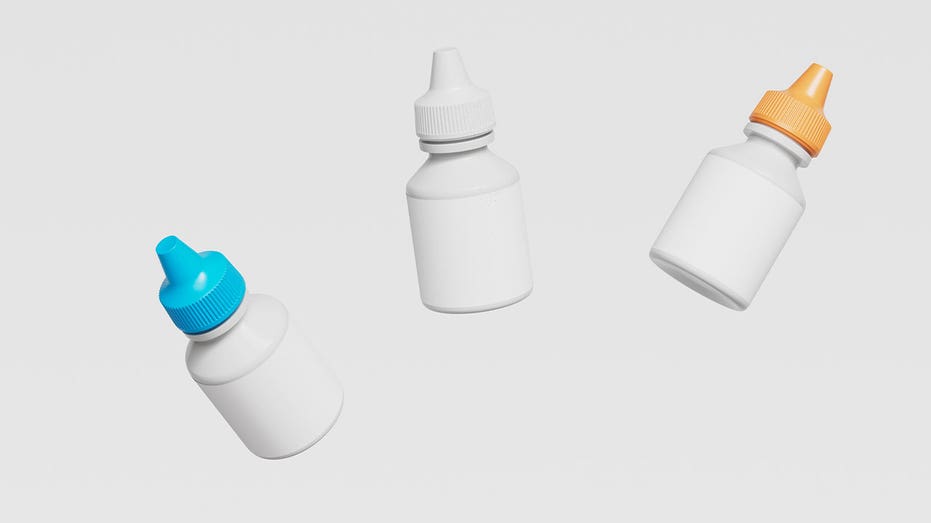
three unlabled eyedrop bottles

Rohto eye drops sold in the United States are being recalled after the FDA reported a lack of assurance of sterility. (Getty Images / Getty Images)

The recall comes after the FDA recently classified the recall of more than 2.5 million bottles of a prescription steroid eye medication as a Class II action because of concerns about foreign material found in certain lots.

CLICK HERE TO GET FOX BUSINESS ON THE GO

Lupin Pharmaceuticals Inc. voluntarily recalled 2,530,182 bottles of prednisolone acetate ophthalmic suspension USP, 1%, after the presence of a foreign substance was identified, according to an FDA enforcement report.

Advertisement

Last month, the FDA also announced the recall of certain lots of generic cetirizine hydrochloride tablets, commonly sold as generic versions of Zyrtec, over concerns they may have been cross-contaminated with another medication that could trigger potentially life-threatening reactions.

FOX Business’ Brittany Miller and Bonny Chu contributed to this report.

Continue Reading

Business

Chris Wood warns AI capex binge may burn billions as markets turn against Big Tech spending

Published

on

Chris Wood warns AI capex binge may burn billions as markets turn against Big Tech spending
The artificial intelligence (AI) boom is entering a more unforgiving phase as investors begin questioning whether Big Tech’s unprecedented spending will generate adequate returns or merely consume billions of dollars in cash. Jefferies’ Head of Global Equity Strategy Chris Wood said markets are now responding negatively to increases in capital expenditure, a warning signal for hyperscalers that have committed vast sums to AI infrastructure. While announced results have yet to indicate an outright decline in spending, deteriorating free cash flow and sharp share price reactions suggest investors are no longer prepared to reward capex at any cost.

Wood’s long-standing view is that the “hyperscalers will end up blowing a lot of money on their capex binge” and that AI could resemble the airline industry more than the winner-takes-all economics of the internet era.

The warning follows sharp investor reactions to earnings and spending plans from some of the world’s biggest technology companies.

Alphabet was punished after turning free cash flow negative in the second quarter of 2026 for the first time since its IPO in 2004, according to Wood’s GREED & fear report.

Advertisement

Meta shares fell as its free cash flow plunged 91% to $784 million in the second quarter, from $8.5 billion in the same period last year. The company also raised the lower end of its 2026 capex guidance, taking the range to $130-$145 billion from $125-$145 billion.


Microsoft provided the contrast. Its shares gained 8% after it maintained calendar year 2026 capex guidance at approximately $175 billion. That figure was adjusted from an earlier $190 billion estimate because of accounting changes related to the useful life of assets and the movement of finance leases to operating leases, which are not included in capex.
Also Read | Chris Wood’s big warning: The specific risk that will finally trigger the end of AI tradeThe divergent market reactions suggest investors are becoming more selective about AI spending. Companies may still be able to commit billions of dollars to infrastructure, but the market increasingly wants evidence that this spending can support revenue and cash-flow growth.

Wood said results announced so far have not signalled a decline in hyperscaler capex, which is why analysts have yet to cut earnings forecasts for companies such as memory chip producers. But the negative response to higher spending represents an important shift in market behaviour.

The continuing unwind in semiconductor stocks has already pushed some companies close to their 200-day moving averages. Wood said the correction could be limited if it merely represents a technical flushing out of leveraged positions accumulated by momentum traders. The bigger risk is that the violent selloff is anticipating an eventual slowdown in hyperscaler spending.

Korea’s AI trade suffers a brutal reversal

The scale of the speculative unwind is particularly evident in South Korea, one of the biggest beneficiaries of the global semiconductor rally.

Advertisement

The Kospi has fallen 40% from its all-time high of 9,385.6 reached on June 19. Foreign investors have sold a net $116 billion of Korean equities so far this year across the cash and futures markets, with technology stocks accounting for $104 billion of that selling.

Assets in domestic leveraged exchange-traded funds tracking Korean equities have collapsed to $17 billion, down 66% from their $50 billion peak on June 22. However, retail margin-loan balances remain elevated at $22.8 billion, only $2.4 billion below their peak in late May.

Dedicated domestic ETFs tracking Korean equities have received net creations of $48 billion this year, providing some counterweight to the foreign exodus.

Korea’s neutral weighting in the MSCI AC Asia Pacific ex-Japan Index has meanwhile fallen to 17.5% from a peak of 24.6% in late June. The sharp decline highlights how rapidly index exposure and foreign positioning can reverse when investors begin questioning the assumptions underpinning a crowded trade.

Advertisement

Wood sees China emerging as the AI winner

Wood continues to believe that China is best positioned to prevail in AI, particularly in the mass consumer market. His thesis does not assume that demand for computing power will collapse. Instead, he expects demand to keep expanding even if the customers and eventual winners change.

That distinction is central to his outlook that AI may continue transforming the economy while still delivering disappointing financial returns for companies funding the infrastructure buildout.

China’s rapidly growing semiconductor industry also provides a striking counterpoint to the selloff elsewhere. CXMT, the country’s leading DRAM manufacturer, surged 500% after listing. Its market capitalisation reached $523 billion, briefly making it the most valuable company listed in mainland China.

CXMT’s valuation exceeded Industrial and Commercial Bank of China’s $410 billion market capitalisation and was just below Hong Kong-listed Tencent’s $547 billion.

Advertisement

The extraordinary debut came during a week in which global memory stocks remained under intense pressure, demonstrating that investor appetite for AI has not disappeared. Instead, capital may be rotating towards companies offering lower starting valuations or greater exposure to China’s domestic technology ecosystem.

The critical question is no longer whether AI demand will grow, but who will capture the economics of that growth. Wood’s warning is that the companies spending the most may not necessarily emerge as the biggest winners and the market has started demanding proof before financing the next phase of the capex boom.

Continue Reading

Business

FTHNX: A Buy On Proven Behavioral Edge Into A Small-Cap Rotation (MUTF:FTHNX)

Published

on

Northern Small Cap Index Fund Q1 2026 Commentary (Mutual Fund:NSIDX)

This article was written by

I focus on a rigorous fundamentals-foremost equity and credit research. I currently work as a financial advisor/planner, and do analysis in my free time. I have an undergrad in business administration, an MBA in finance, and currently am a doctoral candidate (a DBA with a concentration in Finance and Investment Management). My research style typically involves process-driven research, followed by blending several valuation models together to get a blended, 12 month price target. I enjoy utilizing full DCF analysis in conjunction with SOTP, peer/multiples analysis, and risk-adjusted approaches. I thoroughly enjoy reading filings, technical documentation relevant to the sector, and then translating that data into conclusions with actionable insights. I enjoy learning about the various sectors and companies I find myself researching, and always feel like there is something to learn. As a curious individual, equity and credit research is very fulfilling, and even fun!I always try to find 2-4 variables that drive value or hinder growth, stress test them, and then let fundamental evidence incorporated with book-value set my viewpoint for the research project. I enjoy the energy sector, commodities, tech, and financial sectors the most. I joined Seeking Alpha to share my thoughts with a wide audience. I originally started with sharing my analysis with a few of my friends who are also advisors and/or analysts. I am always open to a myriad of viewpoints, as I feel the most accurate viewpoints and research is made through a collection of great minds working together to figure something out. If you appreciate thorough research, and want to learn more about a company beyond just what is inside of their books, then I believe you will enjoy the research that I work on.

Analyst’s Disclosure: I/we have a beneficial long position in the shares of FTHNX either through stock ownership, options, or other derivatives. I wrote this article myself, and it expresses my own opinions. I am not receiving compensation for it (other than from Seeking Alpha). I have no business relationship with any company whose stock is mentioned in this article.

Seeking Alpha’s Disclosure: Past performance is no guarantee of future results. No recommendation or advice is being given as to whether any investment is suitable for a particular investor. Any views or opinions expressed above may not reflect those of Seeking Alpha as a whole. Seeking Alpha is not a licensed securities dealer, broker or US investment adviser or investment bank. Our analysts are third party authors that include both professional investors and individual investors who may not be licensed or certified by any institute or regulatory body.

Advertisement
Continue Reading

Business

Soccer-FIFA faces fresh transparency calls after retreat on World Cup sell-off plan

Published

on


Soccer-FIFA faces fresh transparency calls after retreat on World Cup sell-off plan

Continue Reading

Business

The New York Times Company Has Exceeded My Expectations (NYSE:NYT)

Published

on

The New York Times Company Has Exceeded My Expectations (NYSE:NYT)

This article was written by

Daniel is an avid and active professional investor.
He runs Crude Value Insights, a value-oriented newsletter aimed at analyzing the cash flows and assessing the value of companies in the oil and gas space. His primary focus is on finding businesses that are trading at a significant discount to their intrinsic value by employing a combination of Benjamin Graham’s investment philosophy and a contrarian approach to the market and the securities therein. Learn more.

Analyst’s Disclosure: I/we have no stock, option or similar derivative position in any of the companies mentioned, and no plans to initiate any such positions within the next 72 hours. I wrote this article myself, and it expresses my own opinions. I am not receiving compensation for it (other than from Seeking Alpha). I have no business relationship with any company whose stock is mentioned in this article.

Seeking Alpha’s Disclosure: Past performance is no guarantee of future results. No recommendation or advice is being given as to whether any investment is suitable for a particular investor. Any views or opinions expressed above may not reflect those of Seeking Alpha as a whole. Seeking Alpha is not a licensed securities dealer, broker or US investment adviser or investment bank. Our analysts are third party authors that include both professional investors and individual investors who may not be licensed or certified by any institute or regulatory body.

Advertisement
Continue Reading

Business

Divi’s Labs Q1 Results: Net profit rises 66% YoY to Rs 902 crore, revenue up 28%

Published

on

Divi's Labs Q1 Results: Net profit rises 66% YoY to Rs 902 crore, revenue up 28%
Pharma player Divi’s Laboratories on Saturday reported a consolidated net profit of Rs 902 crore for the April-June quarter of FY26, marking a 65.5% year-on-year rise from the Rs 545 crore reported in the corresponding quarter of the previous financial year.

The firm’s revenue from operations meanwhile rose around 28% YoY to Rs 3,080 crore in Q1 FY27, from Rs 2,410 crore reported in the year-ago period. Its total income increased over 24% YoY to Rs 3,144 crore, while total expenses rose more than 9% YoY to Rs 1,964 crore during the quarter which ended on June 30, 2026.

For the quarter, Divi’s Labs reported a forex loss of Rs 7 crore as against a forex gain of Rs 39 crore for the corresponding quarter of the previous financial year. Profit before tax (PBT) for the quarter rose to Rs 1,180 crore, as against a PBT of Rs 733 crores for the corresponding quarter of the previous financial year.

Along with the Q1 earnings, Divi’s Labs said that its board of directors have approved the appointment of B Vara Prasad and J Srinivasa Rao as senior management personnel of the company, with effect from August 1.

Advertisement


Also read |
ITC Q1 profit plunges 27% due to record cigarette taxes and West Asia crisis

Divi’s Labs share price

Divi’s Labs shares gained nearly 3% to close at Rs 8,056 apiece on Friday, before the quarterly earnings were announced on Saturday. The stock has gained over 11.5% in one week and 23% in a month.

The shares of the company have overall jumped more than 27% in 2026 so far. In the longer term, the stock has delivered 23% returns over one year, 119% in three years and 65% in five years. The company’s market capitalisation stands at nearly Rs 2.15 lakh crore.
Also read | Bajaj Finserv Q1 Results: Net profit rises 12% YoY to Rs 3,132 crore; shares rally 5%
(Disclaimer: Recommendations, suggestions, views and opinions given by the experts are their own. These do not represent the views of The Economic Times)

Continue Reading

Business

AlzChem Group AG (ALZCF) Q2 2026 Earnings Call Transcript

Published

on

OneWater Marine Inc. (ONEW) Q1 2026 Earnings Call Transcript