
Crypto World
New York sues Kalshi over prediction market gambling


The state is seeking at least $36 billion in damages from the prediction market platform it calls an unlicensed gambling operation, and has filed for a temporary restraining order to halt its contracts immediately.
Summary
- New York Attorney General Letitia James and Governor Kathy Hochul sued KalshiEX on July 31, 2026, in New York Supreme Court, Manhattan, seeking at least $36 billion in compensatory damages, triple-gains penalties, and $100,000 per unauthorized sports wagering offer.
- The state simultaneously filed a motion for a temporary restraining order to halt Kalshi’s event contracts in New York immediately, citing ongoing harm to consumers including users under the legal gambling age of 21.
- Kalshi users bet over $1 billion monthly on the platform in 2025, with 90% of that volume on sports, according to figures cited in the AG’s own release, a concentration that makes the bipartisan Senate proposal to ban sports event contracts existential for the business.
- Kalshi, valued at roughly $22 billion with annualized volume of approximately $178 billion, calls the suit “political theater” and argues its CFTC registration as a designated contract market means exclusive federal oversight.
- A bipartisan coalition of 38 state attorneys general has already filed an amicus brief supporting Massachusetts in a parallel case, signaling that the enforcement wave extends far beyond the 13 states with active litigation.
The lawsuit that prediction markets knew was coming
Two days after the Second Circuit denied Kalshi emergency relief on July 29, New York filed the most aggressive state action yet against the prediction market industry. The suit arrived with a coordinated announcement from AG James and Governor Hochul, counts spanning multiple bodies of state law, a $36 billion damages demand, and a motion for an immediate restraining order.
The $36 billion figure, reported by The Block based on the court filings, is roughly 1.6 times Kalshi’s reported valuation. It is the number every major outlet is leading with, and it signals that New York is treating this as a revenue-extraction case, not merely a cease-and-desist.
This piece examines the filing, the legal arguments on both sides, the federal regulator caught between them, and what the case means for an industry now fighting a war on two fronts: in courtrooms and in Congress.
What the complaint actually alleges
The core claim is straightforward: Kalshi is running an unlicensed gambling business in New York.
The AG’s office says the platform lets users place wagers on uncertain future events, from Super Bowl outcomes to reality TV winners to election results, without a Gaming Commission license and without paying state gaming taxes. New York treats these as bets, not derivatives, regardless of Kalshi’s CFTC registration.
The complaint goes further. It alleges Kalshi allows users aged 18 to 20 to place bets, violating New York’s 21-and-older minimum for mobile sports betting. It alleges the platform offered wagers on games involving New York college teams, a separate violation under state law.
The AG’s investigators placed test wagers from New York accounts as evidence: four “Yes” contracts on a UConn-Michigan basketball game at $1.14 in April 2026, and ten contracts on the winner of “Big Brother” in July 2026. Both transactions completed without obstruction.
The filing also introduces a count under the federal Interstate Wire Act, alleging Kalshi used wire communications to transmit bets across state lines. This is significant because it widens the legal exposure beyond state gambling statutes into federal criminal law, giving the state an argument that operates independently of the preemption question. Even if Kalshi’s CFTC registration were found to preempt state gambling law, the Wire Act is a federal statute, and the state is arguing that Kalshi violates it.
The complaint details the investigative methods in unusual specificity. Rather than relying on industry reports or third-party data, the OAG built its case from the inside. Investigators created accounts, placed real wagers, and documented each step. This matters for the TRO motion: the state can present firsthand evidence that illegal gambling is actively occurring in New York, not merely that it could occur.
“Prediction markets like Kalshi are gambling platforms, plain and simple,” James said in a statement accompanying the filing.
Governor Hochul framed the action around consumer protection, saying Kalshi “has chosen to ignore New York’s gaming laws, which exist to protect consumers, prevent problematic gambling, deliver funding for critical public services, and ensure that every company plays by the same rules.” The coordinated announcement from both the AG and the Governor signals that this is not a routine regulatory action. It is a political priority.
The $36 billion in damages and the TRO
New York is not seeking a slap on the wrist. The headline number is at least $36 billion in compensatory damages, pending a full accounting of Kalshi’s operations. The remedies demand:
- A permanent injunction barring Kalshi from operating unlicensed gambling in the state
- A temporary restraining order halting Kalshi’s event contracts in New York immediately
- A full accounting of every customer bet and loss processed through the platform
- Forfeiture and disgorgement of all gains the state deems illegal
- Restitution to affected consumers
- Penalties of three times Kalshi’s gains under Penal Law Section 80.10
- A fine of $100,000 per unauthorized sports wagering offer under the Racing Law
The TRO is the near-term threat. If granted, Kalshi would need to suspend operations in New York while the case proceeds, potentially for years. The triple-damages provision is the long-term one. At $36 billion, New York is claiming a figure that exceeds the platform’s reported valuation of $22 billion by more than 60%.
The per-offer fine structure adds another layer. The AG’s release notes that Kalshi users bet over $1 billion monthly in 2025, with 90% of that volume on sports. Each unauthorized sports offering carries a $100,000 fine under the Racing Law. At that volume, the per-offer penalties alone could produce a figure in the hundreds of millions.
The damages calculation itself reveals the state’s theory of the case. New York is not treating Kalshi as a minor regulatory violator that failed to file paperwork. It is treating Kalshi as a gambling operation that processed billions in unlicensed wagers over multiple years, and it wants the full economic benefit of that activity returned. The $36 billion figure presumably reflects the total volume of wagers placed by New York users, or a substantial fraction of it, multiplied by the treble-damages provision. The final number will depend on the full accounting the state is requesting, but the opening demand is meant to establish the scale of the alleged violation.
The TRO motion deserves separate attention because it operates on a different timeline from the main case. A TRO hearing can happen within days or weeks, while the underlying lawsuit could take years. If New York secures the restraining order, Kalshi faces an immediate operational decision: comply and lose the New York market, or challenge the order and risk contempt proceedings. Either outcome sets a precedent that other states can follow. Michigan and Nevada secured their own TROs through similar procedural mechanisms, and each one reduced Kalshi’s geographic footprint.
The $1 billion monthly number and why it matters
The AG’s release includes a figure that has received less attention than the $36 billion headline: Kalshi users bet over $1 billion every month on the platform in 2025, and 90% of that money went to sports betting.
This is the number that makes the bipartisan Senate proposal to ban CFTC-licensed platforms from offering sports event contracts existential. Sports are not a side product for Kalshi. They are the product. If sports contracts are removed, whether by state enforcement or federal legislation, the platform loses nine-tenths of its recorded consumer activity.
The figure also undercuts Kalshi’s framing of its offerings as sophisticated financial derivatives. A billion dollars a month on the Super Bowl, the NBA, and college basketball looks like a sportsbook by any name. New York is making exactly that argument, and the AG’s investigators have the receipts.
The concentration matters for investors and market participants as well. Kalshi’s $22 billion valuation implies a diversified event-contract platform serving a range of use cases: elections, weather, economics, entertainment. The AG’s data shows something closer to a sports gambling platform with a derivatives label. If the valuation was underwritten on the assumption of product diversity, the 90% sports concentration represents a disclosure risk independent of the legal outcome.
Kalshi’s federal preemption defense
Kalshi’s position rests on a single legal premise: that its 2020 registration with the CFTC as a designated contract market means its event contracts are regulated derivatives under the Commodity Exchange Act, subject to exclusive federal oversight.
The company calls the suit “political theater” and argues states cannot simply shut down a federally licensed exchange. The framing is deliberate. Kalshi wants this treated as a jurisdictional question, not a gambling question.
It is the strongest version of their argument, and it carries legal weight. The CFTC itself has backed the position, filing lawsuits against multiple states and claiming exclusive regulatory authority over prediction markets. On the same day New York filed its suit, the CFTC filed an emergency counter-motion in Manhattan federal court less than one hour before the state complaint dropped, attempting to reassert federal jurisdiction preemptively.
The federal regulator has now challenged state enforcement in at least nine states, including filing suit against Arizona, Connecticut, and Illinois in April 2026. The CFTC is not a passive bystander in this dispute. It is an active combatant on Kalshi’s side.
Why the federal shield is cracking
On July 7, U.S. District Judge Analisa Torres denied Kalshi’s preliminary injunction against New York’s Gaming Commission enforcement. Her reasoning cut directly at the preemption argument.
Torres cited Section 2 of the Commodity Exchange Act, which states the law “shall not supersede or limit the jurisdiction conferred on other regulatory authorities under the laws of the United States or of any state.” She wrote that “Congress did not intend to regulate so broadly as to exclude all state gambling laws from regulating transactions involving swaps.”
Her conclusion was blunt: “There is nothing preventing Kalshi from obtaining a license pursuant to New York law.”
The Second Circuit denied Kalshi emergency relief on July 29. With the appellate safety net gone, the state had a clear path to file.
The Torres ruling matters beyond New York because it provides a template. Other states facing Kalshi’s preemption argument can cite it directly. The decision rejects the premise that CFTC registration creates a blanket exemption from state gambling law, and it does so by citing the Commodity Exchange Act’s own text. Before Torres, Kalshi could argue that no court had squarely addressed the question. That argument is gone.
The legal logic is worth following in detail. Kalshi’s preemption claim rests on the idea that CFTC registration means its products are regulated derivatives, full stop. Torres responded that the Commodity Exchange Act explicitly preserves state jurisdiction, that the products in question resemble gambling under New York law, and that nothing in federal statute prevents Kalshi from obtaining a state gaming license if it wants to operate in New York. The decision does not say Kalshi cannot exist. It says Kalshi cannot avoid state gambling law by pointing to a federal license that, by its own statute’s terms, was never meant to override it.
The Second Circuit’s refusal to grant emergency relief on July 29 reinforced this reasoning. It did not issue a full opinion, but the denial means Kalshi failed to show a likelihood of success on the merits, which is the standard for emergency relief. Two levels of federal courts have now declined to protect the company from state enforcement.
The result is a genuine constitutional question about the boundary between federal commodity regulation and state gambling law. Kalshi needs either a circuit court reversal or Congressional action to restore the shield it thought it had.
The 38-state coalition
The count that matters is not 13 states with active litigation. It is 38.
In April 2026, James joined a bipartisan coalition of 38 state attorneys general filing an amicus brief supporting Massachusetts in its parallel case against Kalshi. The coalition spans from Alabama to Wisconsin, including red states, blue states, and the District of Columbia. The full list: Alabama, Alaska, Arizona, Arkansas, California, Colorado, Connecticut, Delaware, Hawaii, Idaho, Illinois, Iowa, Kansas, Louisiana, Maine, Maryland, Michigan, Minnesota, Mississippi, Nebraska, Nevada, New Jersey, New Mexico, New York, North Carolina, Ohio, Oklahoma, Oregon, Pennsylvania, Rhode Island, South Carolina, South Dakota, Tennessee, Utah, Vermont, Virginia, Wisconsin, and DC.
On the same day the AGs filed, the CFTC filed its own amicus brief at the Massachusetts Supreme Judicial Court asserting exclusive federal jurisdiction, creating a direct confrontation between the federal regulator and a supermajority of state enforcement agencies.
New York is not operating in isolation. The suit fits into a pattern of escalating state enforcement that has accelerated through 2026:
Massachusetts has a court order restricting Kalshi. Polymarket has countersued the state, opening a second front.
Michigan secured a temporary restraining order against the platform under AG Dana Nessel, making it the third state to obtain a court order.
Nevada issued a TRO covering sports, election, and entertainment contracts. Kalshi responded by removing those categories for Nevada users, effectively conceding the state’s authority in practice while contesting it in court.
Washington holds its own court order restricting the platform. The state’s Gambling Commission issued a cease-and-desist, and Kalshi did not challenge it in court.
Wisconsin handed down an adverse ruling the week of July 28, adding another state to the enforcement column in a decision that received less coverage than the New York and Massachusetts actions but follows the same legal reasoning.
New York itself previously sued Coinbase and Gemini in April 2026 on similar prediction-market allegations. That suit broadened the target set beyond pure-play prediction platforms, signaling that New York views any company offering prediction-style products to state residents as subject to gaming law, regardless of whether the company’s primary business is elsewhere.
In Congress, a bipartisan Senate proposal has emerged that would ban CFTC-licensed prediction market platforms from offering sports event contracts, which would remove the category that accounts for 90% of Kalshi’s recorded volume.
The arithmetic that matters
Kalshi’s reported valuation of $22 billion rests on the assumption that its CFTC registration provides a durable regulatory moat. The annualized transaction volume of $178 billion flows through that assumption. If the federal preemption argument fails at the circuit level, the business model does not downgrade gracefully.
The platform cannot operate as a state-licensed gambling business without fundamental changes to its product, its economics, and its user base. State gaming licenses come with specific requirements: age floors (21 in New York for mobile betting), tax obligations, product restrictions, and compliance infrastructure that a CFTC-registered exchange was never built to support.
Nevada’s example is instructive. When the state issued its TRO, Kalshi did not fight to keep sports, election, and entertainment contracts available to Nevada users. It removed them. If that pattern repeats across additional states, the platform’s addressable market contracts with each new enforcement action.
The numbers tell the story in three layers. First, $36 billion in damages sought in New York alone, exceeding the company’s valuation by 60%. Second, 38 state attorneys general aligned against the federal preemption argument, representing a supermajority of American enforcement capacity. Third, 90% of Kalshi’s monthly volume concentrated in sports, the single category most vulnerable to both state enforcement and the pending Senate ban.
The counter-argument deserves its strongest form. Kalshi’s $178 billion in annualized volume proves genuine consumer demand for event contracts. The CFTC registration is not a legal fiction, and federal regulators are actively fighting to preserve federal jurisdiction. The Commodity Exchange Act does grant the CFTC authority over designated contract markets, and a reasonable reading of federal preemption could conclude that state gambling law should not apply to products traded on a federally licensed exchange. If the CFTC prevails at the appellate level, or if Congress acts to clarify federal preemption, the state cases collapse. Kalshi’s appeal of the Torres ruling remains live, and the Second Circuit has not yet ruled on the merits.
There is also a policy argument that Kalshi rarely makes explicitly but that supports its position. Prediction markets have informational value. Research from academic institutions and the CFTC’s own prior statements have recognized that event contracts can produce useful price signals about future events. A state-by-state licensing regime could effectively kill a market structure that regulators, academics, and the public have found valuable for forecasting elections, economic indicators, and policy outcomes.
But the burden has shifted. Two federal courts have declined to protect Kalshi from state enforcement. Thirty-eight attorneys general have aligned against the federal preemption argument. And 90% of Kalshi’s volume is concentrated in sports, the single category most politically vulnerable. The question is no longer whether states can regulate prediction markets. The question is whether Kalshi can find a court that says they cannot.
What to watch
- The TRO hearing in New York Supreme Court. If granted, Kalshi must suspend operations in the state while the case proceeds. The timeline and conditions of this hearing will set the pace for the entire case.
- The Second Circuit appeal of Judge Torres’s July 7 ruling. If the court reverses on federal preemption, the state enforcement wave stalls. If it affirms, expect additional state filings within weeks.
- The CFTC’s emergency motion filed hours before New York’s suit. The federal court’s handling of this motion will signal whether the judiciary treats CFTC registration as a meaningful shield or a regulatory label.
- Congressional action on the bipartisan Senate proposal to ban sports event contracts. At 90% of Kalshi’s volume, this would be a structural blow regardless of court outcomes.
- Kalshi’s operational response in states with active enforcement. Nevada’s pattern, removal of categories rather than legal confrontation, is the leading indicator of how the business adapts under pressure.
What did New York sue Kalshi for?
New York filed a lawsuit alleging Kalshi operates an unlicensed gambling business by offering wagers on sports, entertainment, and election outcomes without a Gaming Commission license and without paying state gaming taxes. The suit includes counts under the state constitution, Penal Law gambling provisions, the Racing Law, and the federal Interstate Wire Act.
How much is New York seeking in damages?
The state is seeking at least $36 billion in compensatory damages, pending a full accounting of Kalshi’s operations. Additional penalties include three times the company’s gains under Penal Law and $100,000 per unauthorized sports wagering offer under the Racing Law.
What is the temporary restraining order?
Alongside the lawsuit, New York filed a motion for a TRO to halt Kalshi’s event contracts in the state immediately while the case proceeds. If granted, Kalshi would need to suspend operations in New York, potentially for years.
What is Kalshi’s defense?
Kalshi argues that its registration with the CFTC as a designated contract market since 2020 means its event contracts fall under exclusive federal oversight and that states cannot regulate them as gambling. The company calls the suit “political theater.”
How did the court rule on federal preemption?
U.S. District Judge Analisa Torres denied Kalshi’s preliminary injunction on July 7, ruling that the Commodity Exchange Act does not prevent states from applying their gambling laws to event contracts. The Second Circuit denied emergency relief on July 29.
How many states are aligned against Kalshi?
A bipartisan coalition of 38 state attorneys general filed an amicus brief supporting Massachusetts in a parallel case. At least five states, Massachusetts, Michigan, Nevada, Washington, and Wisconsin, have active court orders or adverse rulings restricting Kalshi’s operations.
What role is the CFTC playing?
The CFTC has positioned itself as the exclusive federal regulator of prediction markets, filing lawsuits against multiple states and an emergency motion less than one hour before New York’s suit. The agency has challenged state enforcement in at least nine states and filed an amicus brief directly opposing the 38-state attorney general coalition.
Could this lawsuit shut down prediction markets entirely?
The New York case alone would not end the industry, but it tests whether CFTC registration shields platforms from state gambling laws. With 38 attorneys general aligned against the federal preemption argument and 90% of Kalshi’s volume concentrated in sports betting, the combination of state enforcement and the pending Senate ban on sports event contracts could force a fundamental restructuring of the business model. This is educational analysis, not investment advice.
This article is for informational purposes only and does not constitute legal, financial, or investment advice. The information presented reflects the state of events as of July 31, 2026, and may change as legal proceedings develop. Readers should consult qualified professionals before making decisions based on this material.

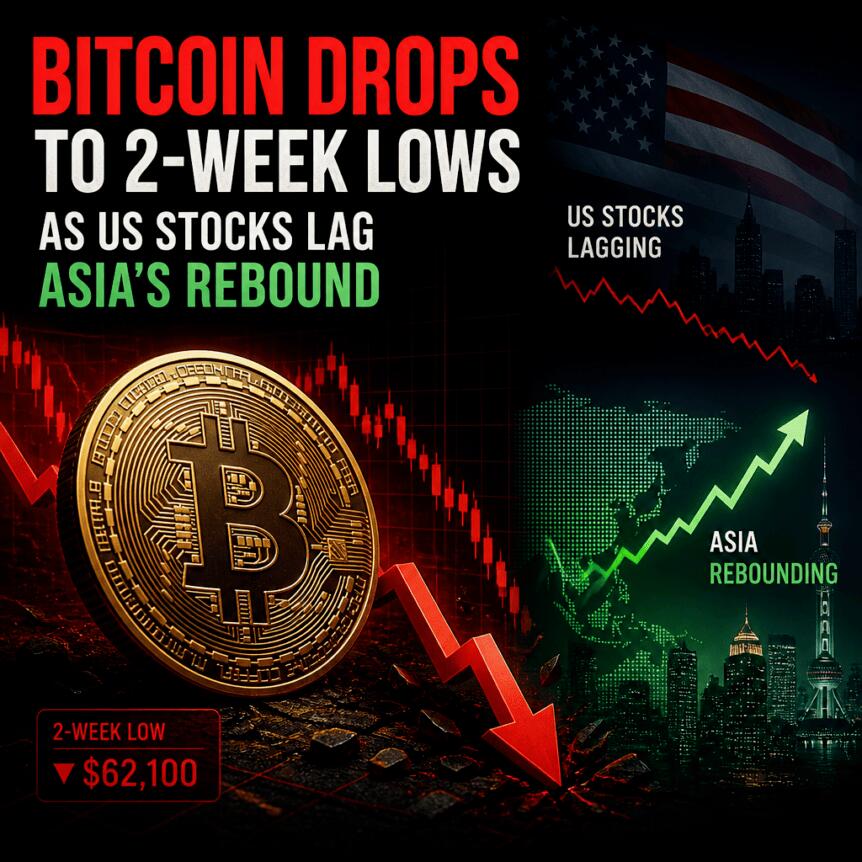
Bitcoin slipped Friday and tested its weakest levels in more than two weeks as market participants pushed risk assets toward the end of the monthly trading window. According to TradingView data, BTC/USD dropped about 3.5% to trade near $62,369 on Bitstamp, a price zone last seen on July 14.
While crypto did not seem to receive the same tailwind as parts of Asia’s equity rebound, the day’s macro cross-currents were hard to ignore. QCP Capital pointed to the outsized role of semiconductor and AI-related exposures in driving swings across regional markets—an environment that appears to be feeding back into crypto liquidity and positioning.
Key takeaways
- BTC/USD fell roughly 3.5% to around $62,369 on Bitstamp, the lowest level in over two weeks.
- US stocks weakened around the monthly close, contrasting with Asia’s rally—especially South Korea’s KOSPI.
- QCP Capital linked crypto activity to the relationship between equity positioning, regional tech sentiment, and crypto liquidity.
- Analysts at CoinGlass showed July ended with strong gains, but at least one trader warns August could bring a rollover similar to 2022.
- Rekt Capital highlighted the 50-month EMA around $65,820 as ongoing resistance after failed breakouts since mid-June.
BTC drifts lower as US equities soften into month-end
TradingView indicated BTC/USD lost ground during Friday’s session, moving toward $62,000 amid broader pressure into the monthly close. The move came despite a rebound elsewhere earlier in the day, when parts of Asia stabilized after a semiconductor-led sell-off.
According to the same macro framing cited by QCP Capital, semiconductor stocks drove both the decline and subsequent recovery because major indices remain heavily weighted to the global AI and memory-chip cycle. That concentration helps explain why an equity catalyst can quickly translate into shifts in sentiment—and potentially liquidity—across correlated markets, including crypto.
QCP Capital added that crypto trading activity increased around the KOSPI’s sharp swings, describing it as evidence of a growing relationship between crypto liquidity, regional equity positioning, and broader technology-sector sentiment. The firm’s argument is less about a single day’s price and more about how the plumbing of liquidity may be changing alongside technology-driven equity narratives.
Asia rebounds while the US turns cautious
US stocks traded red at the open before leveling out, which diverged from the earlier rebound seen in Asia. South Korea’s KOSPI index finished the day up 17.9%, its largest single-day gain on record, according to figures referenced in the market commentary.
The day’s backdrop also included currency and rate dynamics. The commentary noted that both Japan and Korea reportedly engaged in currency interventions on Thursday, while Japan’s central bank kept benchmark interest rates at 1.0% after the US Federal Reserve decided to hold steady earlier in the week, following the US PCE inflation update.
For crypto traders, the practical takeaway is that “risk-on” can appear in pockets while “risk management” remains active in other major venues. When that happens, BTC can still underperform even as some regional equities bounce—particularly when liquidity flows are being reallocated quickly between markets.
July strength sets up a test for August
Even with Friday’s pullback, BTC’s monthly performance has looked constructive. CoinGlass data referenced in the article showed BTC/USD was up 8.5% for the month as of the end of the monthly candle, its strongest July showing since 2022.
That improvement mattered because earlier positioning had already shifted toward the idea of a relief bounce extending into August. The comparison traders were drawing was specifically to the 2022 bear-market structure: a rally that ultimately transitioned into a subsequent move toward a next longer-term bottom.
Rekt Capital—one of the analysts cited for that 2022 mapping—forecast that any bullish attempt might not hold immediately. In an X post on Friday, he wrote that price could try to “maintain these highs in the early stages of August,” but that history suggests a rollover similar to what occurred in 2022.
Technical resistance remains in focus near the 50-month EMA
Rekt Capital also pointed to a technical level that has limited follow-through. He reiterated that Bitcoin’s 50-month exponential moving average (EMA), currently around $65,820, has continued to act as resistance. In his view, that has been visible through two failed breakouts since mid-June.
For investors and traders, the implication is straightforward: even when BTC can put together a strong July, the next phase depends on whether it can clear longer-term trend resistance rather than merely bounce within an existing range. Levels like the 50-month EMA tend to attract both systematic and discretionary attention because they represent a longer horizon for trend definition.
That context also helps reconcile the mixed picture on Friday. BTC weakening toward the low-$60,000 area may be consistent with traders taking profits or reducing exposure as the market transitions from a month-end catalyst period into a new monthly cycle—especially if macro uncertainty and equity volatility persist.
Going forward, readers should watch whether BTC can reclaim and hold above the mid-$60,000 resistance area highlighted by the 50-month EMA and whether August follows through on the “rollover” scenario traders cite from 2022—or instead breaks the pattern and sustains higher levels despite the month-start shift.
Wintermute reported that institutional investors accounted for a record 72% of spot OTC trading volume on its desk in the first half of 2026, up from roughly 61% in the second half of 2024, a structural shift that the firm says makes broad-based altcoin rallies significantly less likely going forward.
The implication is direct: the capital formation mechanism that historically sent profits cascading from Bitcoin into ETH and then down the altcoin long tail is no longer functioning the same way, and retail traders still positioning for an indiscriminate altseason may be running an outdated playbook.
Discover: Everyone’s Got a Take. Get Free $25 to Actually Trade Yours
Wintermute: Capital Is Concentrating, Not Dispersing
Wintermute’s analysis frames the shift as fundamentally about mandate-driven versus speculation-driven capital. Institutional participants operate under defined risk limits and hold positions over longer periods, which means their flow concentrates in assets with demonstrated liquidity, regulatory clarity, and identifiable fundamentals, not in tokens riding narrative momentum.
The report noted that realized volatility has declined from roughly 70% in earlier market cycles to around 45% in the current one, a direct consequence of institutional order flow replacing retail-driven speculation as the marginal price setter.
Lower volatility compresses the explosive upside that defined 2021-style altseasons, but it also reduces the severity of the unwind.
For traders, the operational takeaway is that OTC block flow, executed away from public order books, is increasingly where price direction gets established. Retail participants reacting to exchange order book moves may consistently find themselves a step behind positioning that was set in bilateral institutional trades.
This dynamic is visible in the institutional infrastructure buildout accelerating across major crypto venues.
Discover: Your Market Calls Are Worth Something. Start With Free $25 on Kalshi
RWA Tokenization as the Institutional On-Ramp
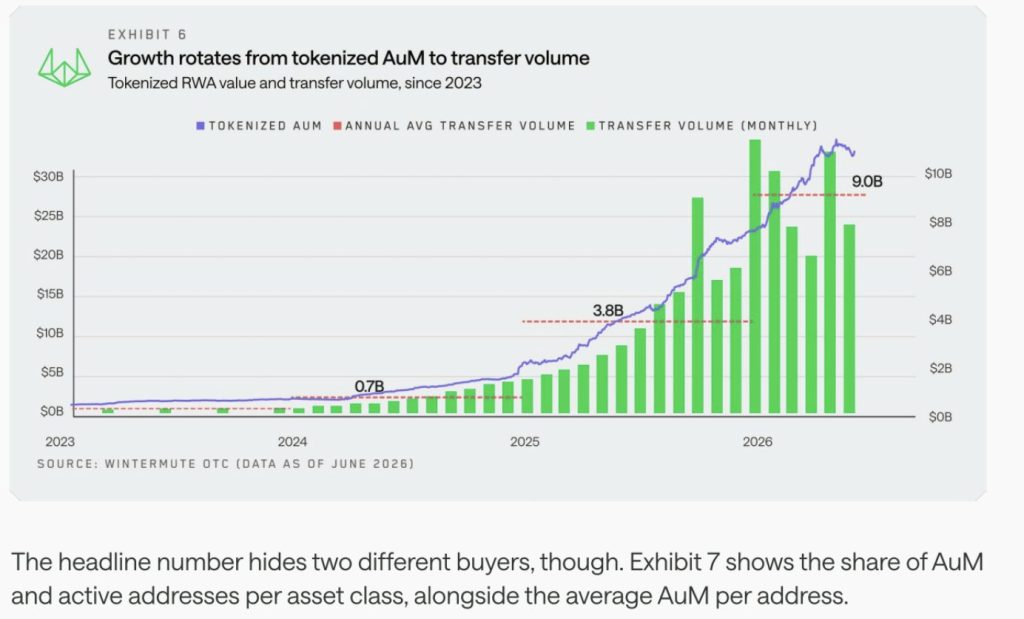
The tokenized real-world asset market reached $31 billion in H1 2026, representing roughly a 50% increase over the prior period, according to Wintermute’s data.
Average monthly transfer volume more than doubled to $9 billion, which signals operational adoption rather than speculative positioning, institutions are moving these assets, not just accumulating them.

The primary instruments attracting institutional capital are U.S. Treasuries, money market funds, and private credit, yield-bearing products where blockchain infrastructure delivers settlement efficiency and programmatic compliance without changing the underlying risk-return profile. This is not institutions chasing crypto-native yield; it is traditional finance running familiar instruments on new rails.
Wintermute also noted that altcoin options notional volume on its OTC desk increased approximately 3.4 times from the second half of 2025 to the first half of 2026, driven by yield-seeking strategies rather than outright directional bets.
Contracts for difference are being deployed across a wider range of tokens for hedging and basket strategies. The derivatives expansion reinforces the same thesis: institutional participants want structured exposure, not raw token speculation. The pattern mirrors broader institutional demand for collateral-grade crypto assets with defined utility.
Discover: Get Paid to Be Right, $25 to Start on Kalshi
The post Wintermute Data Shows Institutional Flow Is Killing Broad Altcoin Rallies appeared first on Cryptonews.
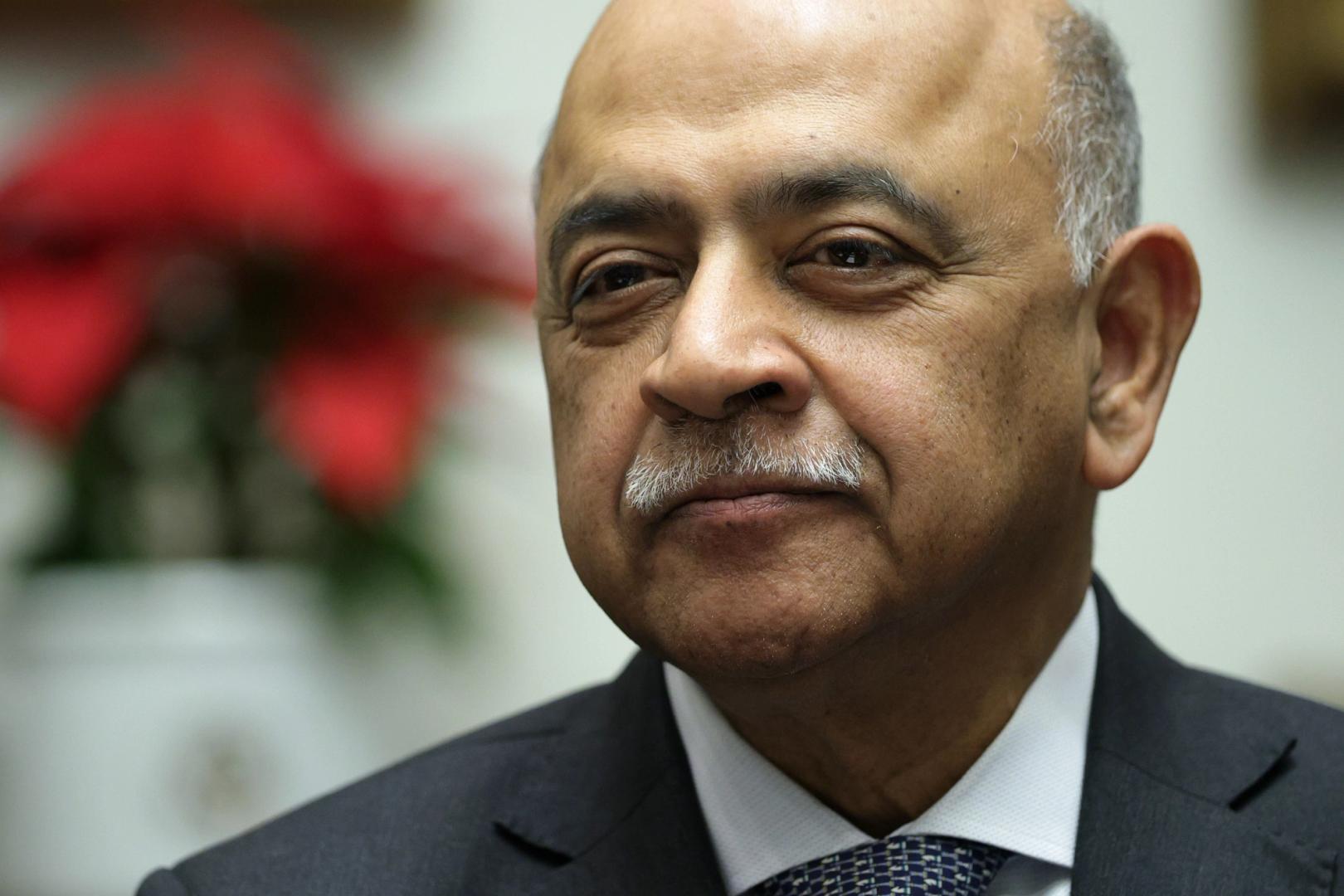
Unlike AI, which has driven a surge in demand for graphics processors to train and run large language models, quantum computing targets a different class of challenges. Researchers say the technology could accelerate molecular simulations, optimize complex logistics networks, advance materials science and improve cryptography.
Krishna said IBM has already demonstrated some of that potential, using quantum computers to uncover properties of materials that conventional computers had been unable to model. Those insights could eventually contribute to longer-lasting batteries, new materials, fusion energy research and drug discovery.
Growing confidence around commercialization has been matched by rising investment. In May, IBM announced plans for a standalone quantum chip foundry backed by a $1 billion commitment from the U.S. Department of Commerce through the CHIPS incentive program, alongside a matching $1 billion investment from the company. Other developers have also expanded manufacturing capacity and research partnerships as they push toward fault-tolerant quantum computers.
The industry’s progress is also drawing attention from the digital asset sector. Several publicly traded bitcoin miners, including MARA Holdings (MARA), Riot Platforms (RIOT) and CleanSpark (CLSP), have diversified into AI and high-performance computing, leveraging their data centers and power infrastructure for new computing workloads.
Quantum computers won’t simply slot into today’s AI data centers. They require entirely different hardware and operating environments, meaning the industry will need new facilities and supply chains as the technology matures.
Bitcoin is still under pressure across the higher time frame despite stabilizing above recent swing lows. While the short-term structure has shifted into consolidation, the broader trend continues to favor sellers unless BTC can reclaim several key resistance levels.
Meanwhile, futures market data shows aggressive market buying beginning to return, potentially laying the groundwork for a relief rally if the price confirms the move.
Bitcoin Price Analysis: The Daily Chart
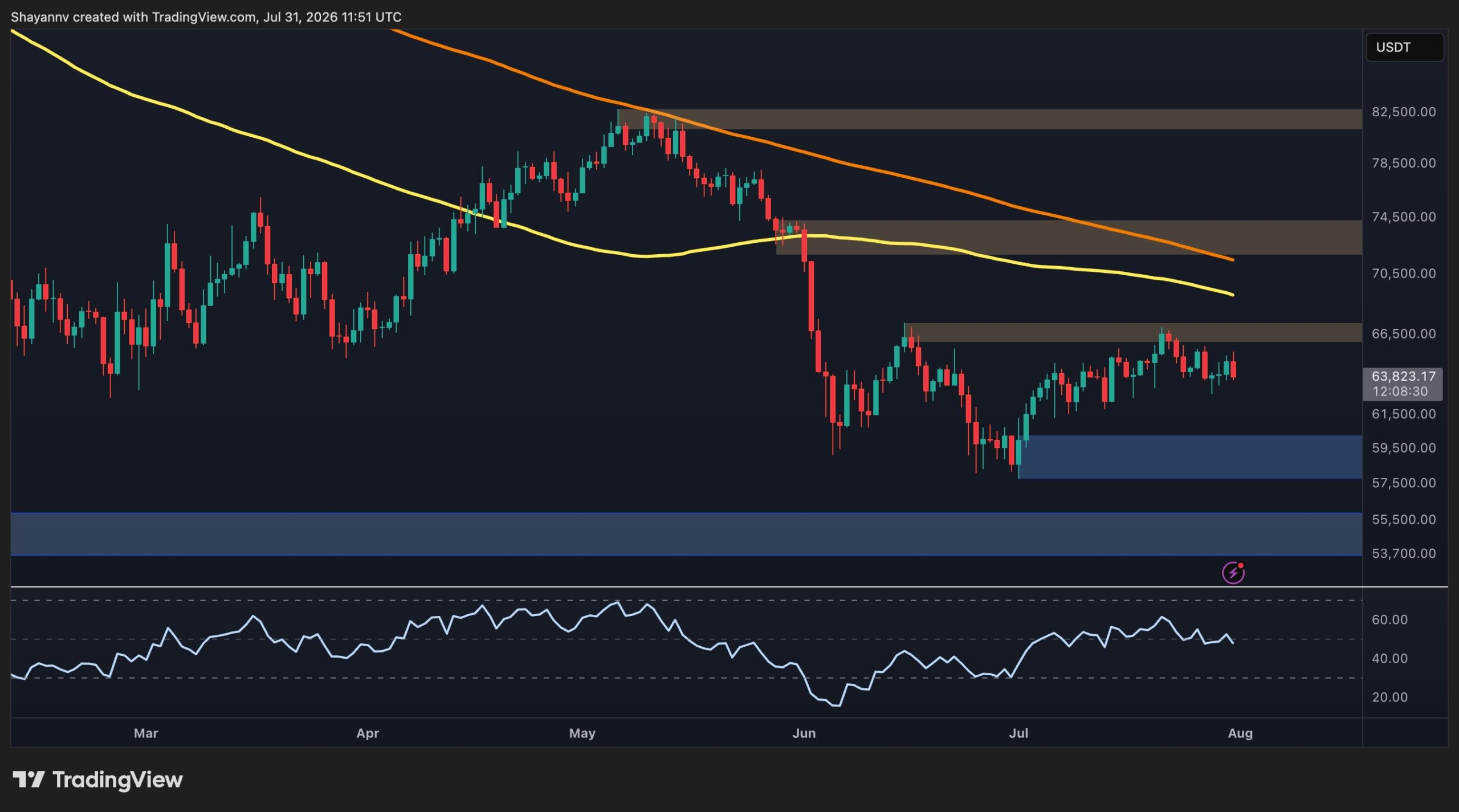
The daily chart shows BTC trading around $63.3K after its sharp late May breakdown from the $74K region. The selloff pushed the asset well below both the 100-day moving average, currently around $69K, and the 200-day moving average near $71K, leaving the broader market structure bearish.
Since the decline, BTC has entered a sideways consolidation between roughly $60K and $67K. Buyers have repeatedly defended the lower boundary of this range, while the $67K resistance zone continues to cap every recovery attempt.
Beyond the major resistance at $67K, the confluence of the 200-day moving average and the $72K to $74K supply zone is the next potential target, if an upside move materializes. A successful reclaim of those levels would improve the medium-term outlook and could expose the next resistance around $82.5K.
On the downside, immediate support remains around $60K. Losing this level would likely shift attention toward the broader support area around $54K if selling pressure accelerates, which will make the bear market both longer and deeper.
BTC/USDT 4-Hour Chart
The 4-hour timeframe shows Bitcoin consolidating after breaking below a rising channel that had supported the recovery throughout July. The channel breakdown suggests that bullish momentum has weakened and that the recent advance has transitioned into a corrective phase.
The price is currently testing the short-term support around $63K to $63.5K after rejecting the $65K resistance area. As long as this support holds, BTC could continue ranging inside this zone or potentially have another go at the $65K resistance in the coming weeks. On the other hand, a decisive breakdown below $63K would likely increase the probability of another move toward the previous demand zone around $60K.
On the upside, reclaiming the resistance area around $65K to $65.5K would be the first indication that buyers are regaining control, with the broader resistance near $67K remaining the key hurdle for a stronger recovery.

Sentiment Analysis
The Taker Buy Sell Ratio offers insight into whether market participants are executing more aggressive buy orders or sell orders. Values above 1 generally indicate buyers are taking the initiative, while readings below 1 suggest sellers remain dominant.
Although Bitcoin’s price has remained trapped near $64K, the 100-period EMA of the Taker Buy Sell Ratio has climbed above the neutral 1.0 level and continues to hold above the threshold. This divergence indicates that aggressive buying activity has strengthened even as price has failed to respond meaningfully.
Historically, sustained periods where taker buying leads while price consolidates can precede stronger directional moves if spot demand eventually absorbs overhead supply. While this does not guarantee an immediate breakout, it suggests underlying demand is improving beneath the surface.
For now, this bullish futures signal still requires confirmation from price. A break above the $67K resistance zone would align improving order flow with bullish price action, while a loss of the $60K support area would invalidate the near-term constructive outlook despite the positive shift in taker behavior, and potentially lead to another long liquidation cascade.

The post Bitcoin Price Analysis: Is BTC Heading Below $60K After the Latest Rejection? appeared first on CryptoPotato.
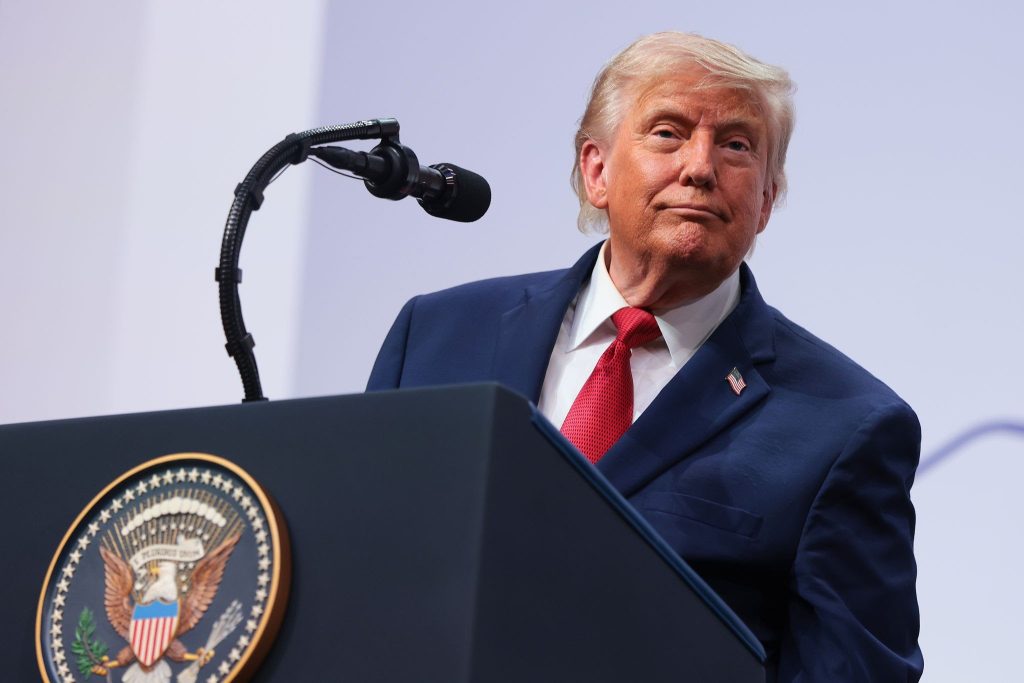
Treasury Secretary Scott Bessent posted a lengthy statement on X on July 30, 2026 demanding the Senate vote immediately on the Clarity Act, closing with Bitcoin creator Satoshi Nakamoto’s dismissal, that he had no time to convince those who don’t understand, in what amounted to the most aggressive public pressure campaign from a sitting Treasury Secretary on crypto legislation in recent memory.
The move followed Bessent’s earlier Wall Street Journal op-ed arguing the U.S. risks forfeiting its role as a global financial leader if Congress fails to act.
Bessent argued that Senate Banking and Agriculture Committee staff had spent thousands of hours negotiating bipartisan revisions since the House passed the Clarity Act over a year ago, and that Republicans now have a floor-ready bill awaiting a vote. His post framed the Democratic holdout not as principled opposition but as political deference to Warren’s bloc, a direct accusation that the delay is manufactured rather than substantive.
The op-ed Bessent published through The Hill made the economic case explicitly: the U.S. risks pushing the digital assets industry offshore through regulatory inaction, ceding ground that cannot easily be reclaimed.
He pointed to the GENIUS Act, signed into law last year and establishing the first federal stablecoin framework, as proof that bipartisan progress is achievable when the political will exists.
“The U.S. didn’t become the world’s financial center by hesitating in moments of technological change. It led by setting standards that others followed. By passing comprehensive digital-asset market-structure legislation, Congress will ensure that the next generation of financial innovation is built on American rails, backed by American institutions, and denominated in American dollars.”
Bessent also pushed back on Democratic claims that the bill lacks consumer protections, arguing that Titles II and III would substantially expand compliance requirements for digital asset intermediaries, moving them closer to the standards applied to traditional financial institutions.
He additionally defended the Blockchain Regulatory Certainty Act provision within the Clarity Act, which protects decentralized software developers from Bank Secrecy Act registration requirements, noting the Fraternal Order of Police, which previously opposed the measure, now supports it.
Discover: Everyone’s Got a Take. Get Free $25 to Actually Trade Yours
Clarity ACT: The Ethics Provisions Deadlock
The substantive obstacle to passage is not consumer protection language, it is the ethics provisions Senate Republicans introduced in May 2026.
Those provisions would bar the president and other federal officials from issuing or sponsoring digital assets while in office, language explicitly aimed at curtailing President Trump’s crypto activity after disclosures showed he generated over $1.2 billion from crypto ventures in 2025 alone.

Democrats have criticized the proposal on three grounds: the restrictions expire in 2029, enforcement rests solely with the Justice Department, and the language does not extend to officials’ children.
That gap between what Republicans offered and what Democrats consider minimally credible enforcement is where negotiations have stalled. Sens. Angela Alsobrooks and Thom Tillis appeared to reach a bipartisan agreement late last month, but whether that deal commands sufficient support from both industries remains unresolved, per The Hill’s reporting.
Meanwhile, the broader crypto market on July 30 was digesting the FOMC decision and ETF flow data, with Bitcoin largely shrugging off the political noise around Senate scheduling, a pattern that held into the following session, where Bitcoin price continued ignoring the political stalemate even as the legislative calendar compressed.
Discover: Get Paid to Be Right, $25 to Start on Kalshi
The post Bessent Invokes Satoshi to Force Senate Vote on Crypto Clarity Act appeared first on Cryptonews.

The team behind the second-largest meme coin introduced an interesting challenge for its community aimed at increasing the token’s global popularity.
Some members said they plan to take advantage of the initiative soon, while others pointed to important reasons to avoid it.
SHIB in the Air
Earlier this week, the major international airline Emirates shook hands with Crypto.com, thus allowing UAE residents to book flights using the digital payment solution on the exchange’s website and application.
Shiba Inu’s official X account shared the update, reminding that SHIB is among the numerous tokens supported by the platform. It also encouraged its community to put the initiative to the test.
Many users applauded the news, and some asserted that they will use the meme coin as a payment method in the coming days. Others said they will never part with their coins, reminding the case of the programmer Laszlo Hanyecs, who bought pizza with Bitcoin (BTC) in 2010.
“Never using my SHIB for paying for anything, I don’t wanna end up being like that guy that bought pizza with his Bitcoin,” CryptoKing stated.
In the crypto world, Hanyecs’s story is considered both legendary and deeply instructive. 16 years ago, he spent 10,000 BTC to buy two pizzas, showing that the cryptocurrency can already be used as a payment method. At that time, the stash was worth around $40, yet at current rates it equals over $630 million.
Alongside promoting the idea of purchasing flight tickets with SHIB, the team has kicked off preparations for its sixth birthday, set for August 1. The community is already speculating whether the celebration will come with a major ecosystem update, but so far there are no signs that this will happen.
SHIB Price Outlook
Last weekend, the self-proclaimed Dogecoin killer posted a sudden and somewhat unexpected daily increase of 35%. Among the potential catalysts that have triggered the pump are a mysterious whale who has resumed accumulating after more than half a year of inactivity, as well as the notable resurgence of the burning mechanism.
In the following days, though, the bears stepped in and erased most of the gains, with SHIB currently trading at around $0.000004702, which is still a 12% jump on a weekly scale. According to Santiment, there were 52 whale transactions amid the rally, suggesting that large holders took profits. At the same time, retail investors joined the party too late and gave whales the necessary liquidity to reduce their exposure.
The analytics platform suggested that the optimal approach with meme coins like SHIB is to exit when retail FOMO surges and return once the crowd turns hostile and labels the token a scam.
The post Shiba Inu Team Sets a New Challenge for the SHIB Army: Who Goes First? appeared first on CryptoPotato.

What is Ceuta?
The city of Ceuta, a peninsular region covering 19.9 sq. km (7.7 sq. mi) on Africa’s northern coast, is one of two Spanish exclaves on the continent, along with Melilla, which is about 220 km (140 mi) southeast. The two Spanish autonomous cities represent the European Union’s only land borders with Africa. Spain has possessed Ceuta, which is separated from mainland Spain by the Strait of Gibraltar, since 1580.
Ceuta has a population of more than 83,000, a mix of Christians and Muslims, including residents and day workers from Morocco and Spain. Ceuta’s population has generally lived harmoniously.
But Morocco, which largely surrounds the two exclaves, still treats them as occupied lands and challenges Spain’s sovereignty, citing history dating back to the Islamic conquests during the 8th century.
Over the years, Rabat, the political seat of the African nation, has triggered diplomatic incidents as part of the dispute. In 2002, Morocco and Spain had a standoff after both sent forces to a small uninhabited island off Ceuta. And in May 2021, amid a deepening diplomatic spat over the disputed Western Sahara region, the Moroccan government loosened its border controls, resulting in nearly 8,000 people from Morocco and sub-Saharan countries pouring into Ceuta in just two days. Some of the migrants eventually returned, but the diplomatic rupture was only repaired when Spain backed Morocco’s autonomy plan for Western Sahara in 2022.
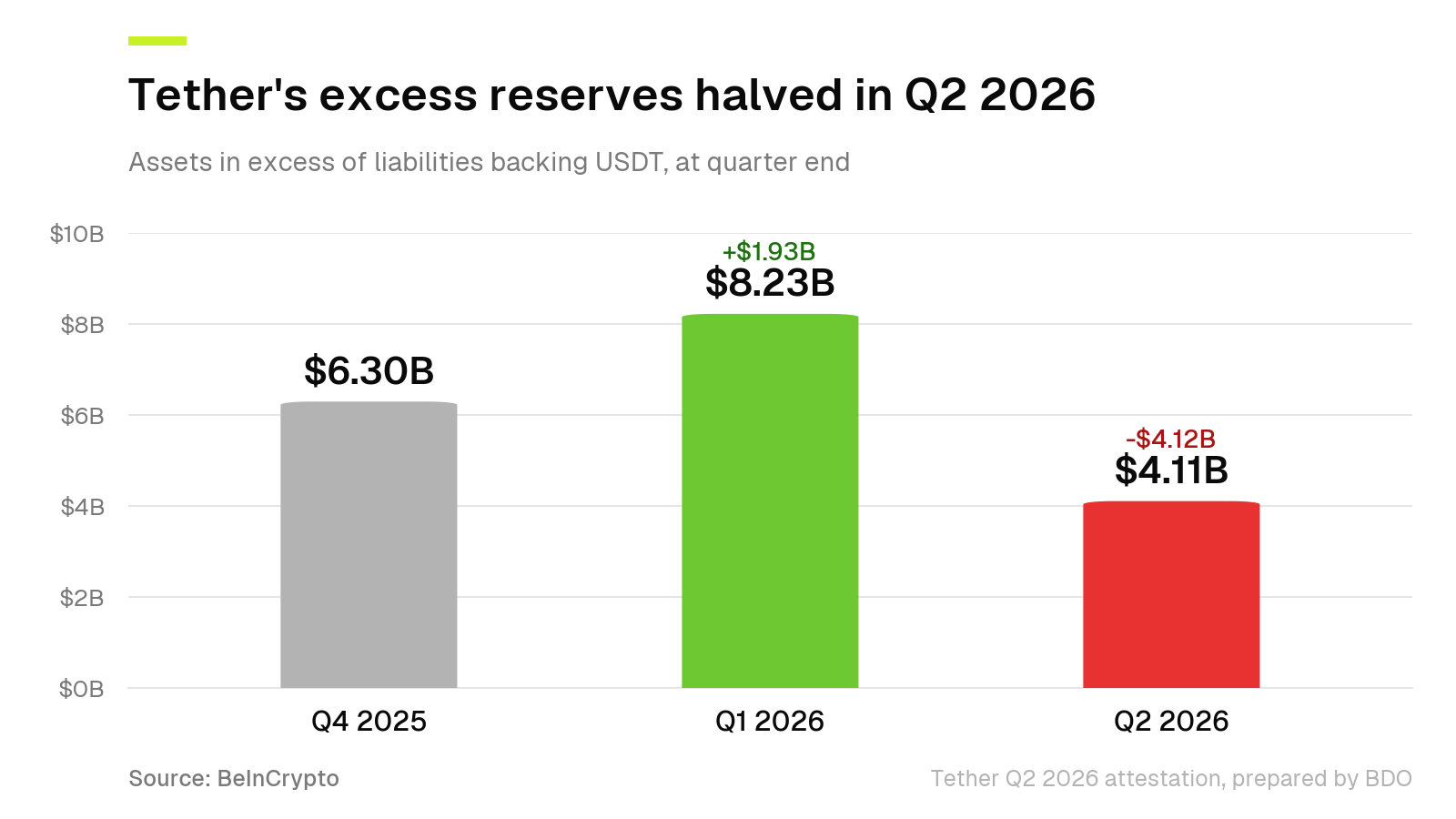
Tether earned roughly $1.5 billion in the second quarter, yet the cushion protecting Tether (USDT) holders shrank by half. Excess reserves closed June at $4.11 billion, down from a record $8.23 billion.
The stablecoin issuer published its Q2 2026 attestation on Friday, prepared by accounting firm BDO. The report confirms USDT stays overcollateralized. It does not explain where more than $5 billion of surplus went.
The Arithmetic the Report Skips
Tether reported total assets of $187.75 billion against liabilities of $183.64 billion on June 30. Three months earlier, assets stood at $191.77 billion.
The asset side therefore fell about $4 billion while token liabilities barely moved. In May, the record Q1 reserve buffer was the company’s headline number.
Add the $1.5 billion earned during the quarter and the gap implies roughly $5.6 billion of unrealized losses or outflows. Tether entered April holding about $20 billion in gold and $7 billion in Bitcoin.
The wording moved as well. The Q1 release reported “net profit.” Friday’s release reports “net operating profit.”
That second measure strips out mark-to-market swings on exactly those assets. Gold and Bitcoin both saw sharp moves during the quarter.
Three Disclosures That Disappeared
Tether’s Q1 report attached a dollar figure to every major asset class. It listed $141 billion in Treasury bills, roughly $20 billion in gold, and about $7 billion in Bitcoin.
Friday’s report attaches none of the three. Gold now appears only as a tonnage count of more than 146 tons.
Meanwhile, Tether’s US Treasury holdings are described as a majority share of reserves. Readers get no figure to compare against the $141 billion disclosed in May.
The company also dropped a boast. In Q1 it noted the buffer alone would rank as the third-largest stablecoin in circulation.
CEO Paolo Ardoino set a different standard in March, when the company hired a Big Four firm.
“Trust is built when institutions are willing to open themselves fully to scrutiny,” the attestation read, citing Paolo Ardoino, CEO of Tether said.
Follow us on X to get the latest news as it happens
The Audit Clock Is Still Running
Tether signed its auditor on March 24. The Financial Times identified KPMG as its auditor three days later. Four months on, Friday’s release says only that the process continued.
That March announcement also stated the group retains earnings instead of paying out profits. If that still holds, distributions cannot explain the decline, which leaves asset values.
Ardoino conceded pressure without sizing it. He said the assets behind part of the reserves came under direct strain during the quarter.
USDT itself never wobbled. The token held its peg near $0.9986 and keeps a third-place market capitalization of $183.5 billion.
Demand held up too, even after Revolut announced a USDT delisting in Europe this month. Tether says it added more than 30 million users during the quarter.
A halved buffer on a $183 billion book is not a solvency event. It is a disclosure question.
At $4.11 billion, the cushion now sits below the $6.3 billion Tether carried at the end of 2025. KPMG will be the first outside party in a position to explain why.

The post Tether Made $1.5 Billion in Q2 and Its Reserve Cushion Still Halved appeared first on BeInCrypto.
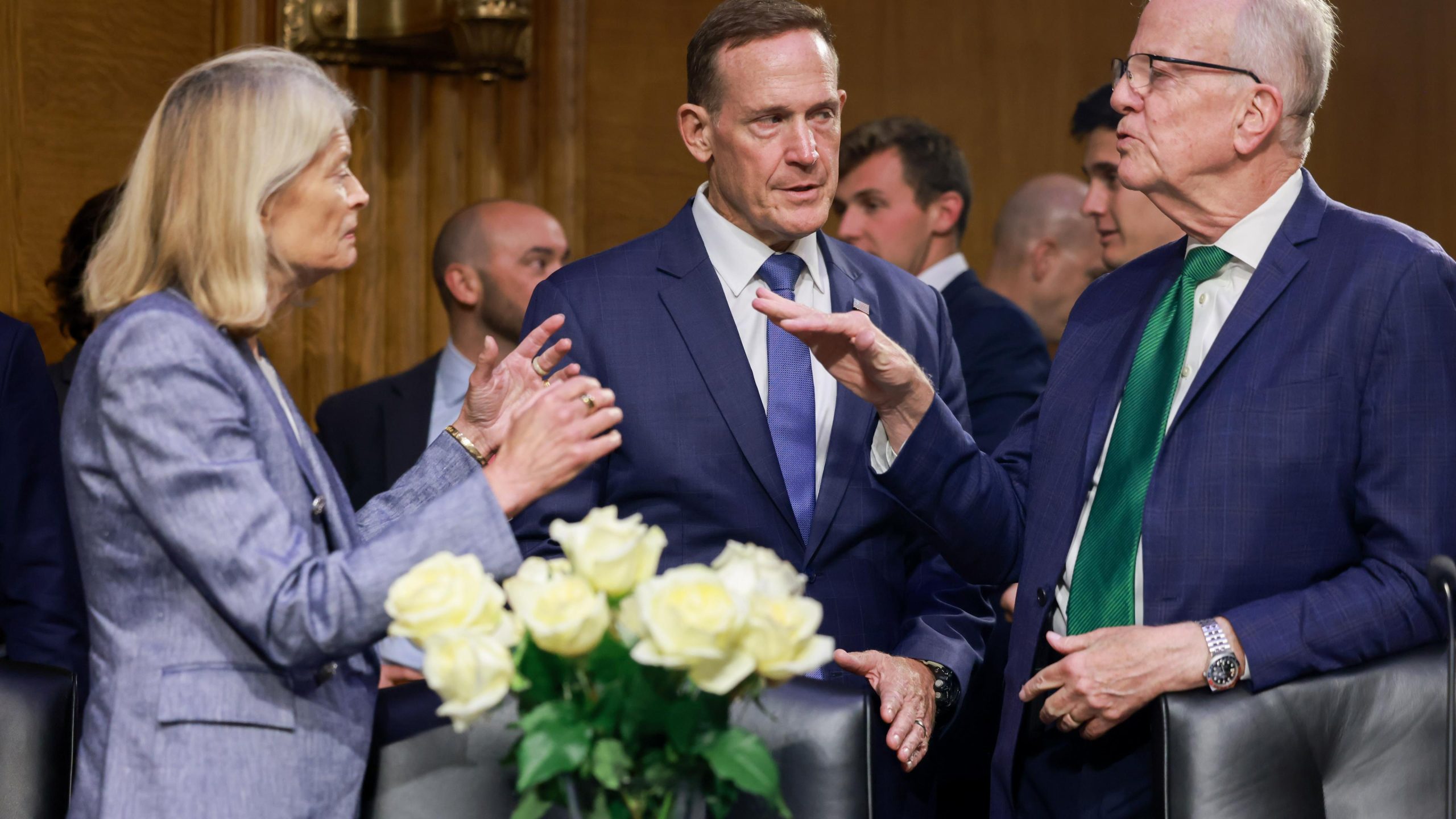
“These Senators have just made my job more difficult, but I will get it done, one way or the other, because I always get it done,” he vowed in late June.
Outside of Congress, public sentiment in America is also showing unease over the conflict and its financial ramifications.
A nationwide AP-NORC poll, conducted between July 23 and July 27, found that 64% of Americans believe the war with Iran has not been worth fighting.
In an earlier poll from Reuters/Ipsos, which surveyed 1,262 American adults across the country over June 18 to 22, just 24% of Americans thought that the war with Iran was worth the costs.
On July 21, Defense Secretary Pete Hegseth was grilled by the Senate Appropriations Committee over the $37.5 billion cost of the Iran war.
The death of 18 American service members during the conflict has also prompted strong reactions, with lawmakers demanding an immediate end to the hostilities. These simmering issues pose a threat to the Republicans ahead of the November midterm elections.
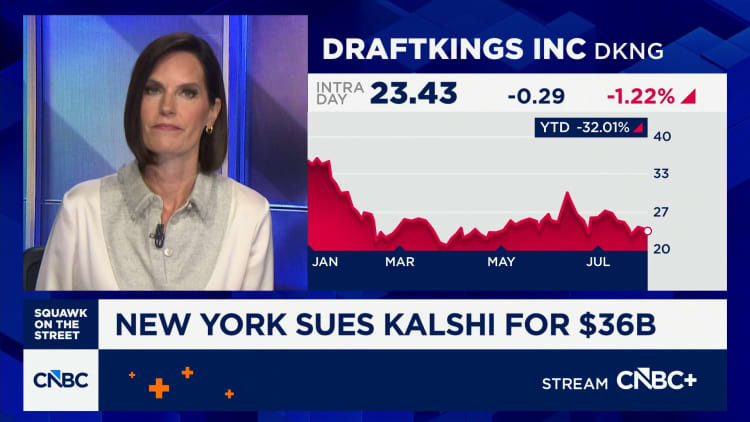

New York state sued prediction market platform Kalshi on Friday, alleging that the company is running an “illegal gambling operation.”
In a case filed in a Manhattan state court, the lawsuit claims that Kalshi accepts wagers as a gambling business in disregard for the state’s constitution and laws by not being registered with the New York State Gaming Commission.
“No matter what they call themselves, prediction markets like Kalshi are gambling platforms, plain and simple,” said New York Attorney General Letitia James in a press release announcing the lawsuit. “By ignoring our laws, Kalshi is running an illegal operation and harming New Yorkers in the process.”
New York Governor Kathy Hochul speaks during the grand opening of the Urban League Empowerment Center by the National Urban League in Harlem in New York City, on Nov. 12, 2025.
Charly Triballeau | AFP | Getty Images
Governor Kathy Hochul in the press release said the state is taking the action to stop what it views as illegal behavior and bring the company into compliance with New York law. The lawsuit is seeking a permanent injunction against Kalshi.
Kalshi, which has its headquarters offices in New York City, expressed disappointment with the decision by the state.
“It’s sad to see this type of political theater from the leadership in our own state,” a Kalshi spokesperson said in a statement. “States can’t just shut down a federally licensed exchange… We love New York, we love New Yorkers, and New Yorkers love our product.”
The suit by the state is also seeking a total restitution to users who have placed trades on the platform, a $100,000 penalty for each attempt to offer sports wagering, and another penalty three times the amount the company has gained while allegedly operating in violation of New York law. The state estimates that could total $36 billion.
Kalshi originally sued New York state in October after the state’s Gaming Commission sent a cease and desist letter to the company. Earlier this month, a judge for the Southern District of New York denied the company’s request for a preliminary injunction and temporary restraining order against the commission.
A supporter checks the gambling site ‘Kalshi” just before State Assembly member, Alex Bores (D-NY) gives a speech to supporters at his watch party at The Freehand Hotel after conceding the congressional race to Micah Lasher who will replace Rep Jerry Nadler (D-NY) in NY’s 12th Congressional District on June 23, 2026 in New York City.
Laura Brett | Getty Images
The same judge denied a request by Kalshi earlier this month for an injunction pending an appeal.
The Commodity Futures Trading Commission, which sees itself as the federal regulator for prediction markets, filed for a temporary restraining order against enforcement actions by New York just before the state’s lawsuit was announced. That comes after the CFTC in April sued the state, requesting a permanent injunction from enforcing its state laws on commission-registered platforms.
“Rather than seek reasoned answers from the courts, Letitia James and New York seek to force an unprecedented sudden shutdown of prediction markets nationwide,” CFTC Chairman Michael Selig wrote in a post on X. “The CFTC has already sued to stop this and will continue to defend its jurisdiction.”
States across the country are locked in battles with the federal government and platforms over prediction markets, which have seen their volumes surge as their sports-related event contracts have become popular with retail traders.
Kalshi — along with other prediction market platforms — and the CFTC believe all event contracts are swaps, and thus are exclusively regulated by the commission. However, states across the country believe the sports offerings are equivalent to sports betting, which is regulated by them.
44 state attorneys General on Monday sent a letter to the CFTC, claiming that the commission has no right to regulate sports-related event contracts, as part of a public comment period for the agency’s first draft of regulations on prediction markets.
While New York cited Kalshi’s sports offering as the reason for its lawsuit, the state also went further. It claims in the lawsuit that the company’s elections, culture and some other event contract offerings also put it in contradiction with the state’s laws.
Disclosure: CNBC and Kalshi have a commercial relationship that includes customer acquisition and a minority investment.


A third of physical PS5 games and half of Xbox Series discs need downloads to work properly, report shows

Male Bulimia & Body Image: What I Learned As The Only Man In Eating Disorder Therapy

Budget to be held on 28 October, John Healey announces


-

 Fashion7 days ago
Weekend Open Thread: Brooks Brothers
-
 Sports5 days ago
Commonwealth Games boxing: Jadumani Singh seals dominant 5-0 win over Pakistan’s Sumama Rehman to enter quarter-finals | Commonwealth Games News
-

 Business2 days ago
Why Trees Belong on the Risk Register
-

 Tech5 days ago
Intel is reversing course and bringing hyper-threading back to its server chips
-

 Crypto World6 days ago
Ripple bought a bank in pieces. The $4 billion audit
-

 Politics4 days ago
Luke Littler dismantles Gerwyn Price to retain title in Blackpool
-

 Politics3 days ago
The Part of the Electric Transition Nobody Wants to Discuss
-

 News Videos5 days ago
BITCOIN JUST ENTERED THIS CRITICAL ZONE…
-

 Business2 days ago
Major shareholder moves on Canyon
-

 Crypto World5 days ago
XRP Ledger adds $2.6B as RWA inflows rank second
-

 News Videos1 day ago
Bitcoin Enters the 3rd Stage of the Bear Market
-

 Politics5 days ago
Spain sweeps the board at 2026 World Cup with individual awards
-
 Entertainment3 days ago
‘Stargate’ Creator’s New Sci-Fi Series Returns for Season 3 Tomorrow
-

 Entertainment6 days ago
Sara Gilson Killed By Husband After Viral “Pedophile” TikTok Video
-

 Crypto World3 days ago
Kraken Enables Retail Access to Jersey Mike’s IPO via Tokenized Shares
-

 Tech7 days ago
Anthropic launches Claude Opus 5, a cheaper AI model for coding, agents and enterprise workflows
-

 Tech4 days ago
New macOS Sequoia & Sonoma security updates for older Macs
-

 News Videos3 days ago
Claude: Build Financial Dashboards in Minutes (2026)
-

 Politics1 day ago
Luke Littler’s dominance sparks GOAT debate
-

 Sports16 hours ago
Seema Kaliramna Wins Discus Throw Bronze, Takes India’s CWG Medals Tally To 17
You must be logged in to post a comment Login