
Business
How to Collect Data From Legacy Machines Without Replacing Them

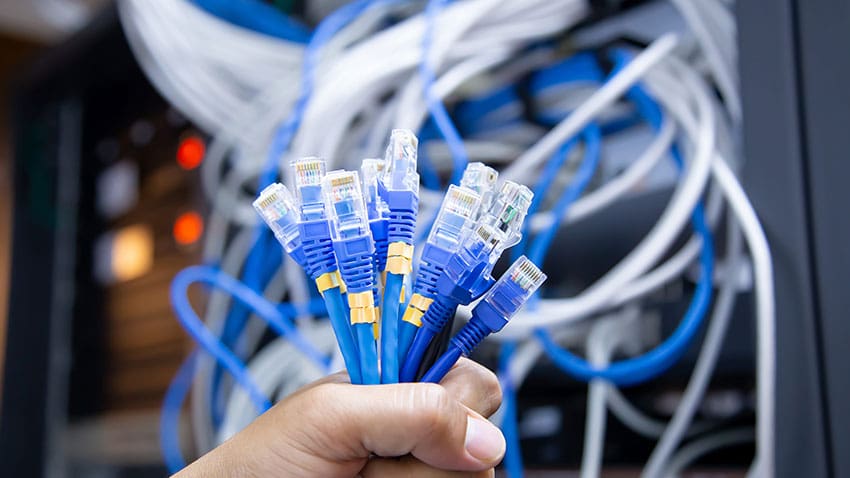
Most manufacturing plants in the United States run on equipment that predates the smart factory era. A 2003 CNC mill, a PLC installed during the Clinton administration, a packaging line that speaks a serial protocol nobody under forty has heard of.
These machines still make good parts, which is exactly why nobody wants to rip them out. The problem appears when the business asks for data: OEE dashboards, downtime analysis, energy monitoring, predictive maintenance. Suddenly the plant discovers that its most productive assets are also its most silent ones.
The good news is that you do not need a capital project to make legacy equipment talk. What you need is a structured approach to connectivity. Here is how to do it, step by step.
Step 1: Audit what you actually have
Before buying anything, walk the floor and build an asset inventory. For every machine you want data from, record four things: the controller make and model, the communication interface it exposes (Ethernet, RS-232/485, proprietary fieldbus, or nothing at all), the protocol it speaks, and the firmware version.
This sounds tedious, and it is. It is also the single highest-value activity in the entire project. Plants that skip this step end up buying gateways that cannot talk to half their equipment, or discovering mid-project that a critical machine only exposes data through a maintenance port the vendor locked years ago.
A typical brownfield audit in a mid-sized US plant surfaces somewhere between five and fifteen distinct protocols: Modbus RTU and TCP, Allen-Bradley DF1 and EtherNet/IP, Siemens S7, Fanuc FOCAS, GE SRTP, Mitsubishi MELSEC, plus a few vendor-specific oddities. Write them all down. This list drives every decision that follows.
Step 2: Decide which data matters before you collect any of it
The instinct is to collect everything and sort it out later. Resist it. Every tag you poll consumes network bandwidth, gateway capacity, and storage, and most of it will never be looked at.
Start from the business question instead. If the goal is downtime analysis, you need machine state, fault codes, and timestamps. If it is quality, you need process parameters tied to part IDs. If it is energy, you need power draw per asset. A focused list of 20 to 50 tags per machine usually covers the first two or three use cases. You can always expand later; it is much harder to untangle a data lake full of unlabeled noise.
This is also the moment to define naming conventions. A tag called Line3_Press2_MotorTemp_degF will still make sense in five years. A tag called N7:42 will not.
Step 3: Put a protocol translation layer between machines and everything else
Here is the architectural decision that determines whether the project scales or stalls. You have two options for getting data out of legacy controllers.
The first is point-to-point integration: custom drivers, vendor utilities, or scripts that connect each machine directly to each consuming application. This works for one machine and one dashboard. It collapses at plant scale, because every new machine or application multiplies the number of connections you have to build and maintain.
The second, and the one that has become standard practice in industrial environments, is a dedicated connectivity layer: an industrial connectivity platform such as Kepware by Velotic that sits between the machines and the applications. The platform speaks the native protocol of each device on one side (Kepware alone ships with more than 150 drivers covering most controllers built in the last three decades) and presents the data through open standards on the other. Applications no longer care whether the source is a 1998 Modbus device or a brand-new OPC UA server; they see one consistent interface.
The practical benefit for legacy equipment is significant. A serial-only machine gets connected through a serial-to-Ethernet converter, the connectivity server polls it in its native protocol, and from that point on it behaves like any modern asset. No PLC reprogramming, no firmware upgrades, no downtime beyond the commissioning window.
Step 4: Normalize the data into open standards
Getting bits off the machine is only half the job. The other half is making those bits usable by systems that were never designed for factory floors: MES, historians, cloud analytics, ERP.
Two standards do most of the heavy lifting here. OPC UA provides secure, structured, vendor-neutral access for on-premises systems such as SCADA and MES. MQTT, often with the Sparkplug B specification, handles lightweight publish-subscribe messaging to cloud platforms and IIoT applications. A good connectivity layer outputs both simultaneously from the same source data; Kepware, for example, can serve a legacy Modbus tag to a local MES over OPC UA while publishing the same tag to a cloud platform over MQTT, so you are not forced to choose between the plant network and the cloud.
Normalization also means adding context. Raw register values become named tags with engineering units, scaling, and metadata about which line, cell, and asset they belong to. Do this once, at the connectivity layer, and every downstream application inherits clean data. Do it separately in every application, and you will spend years reconciling mismatched numbers between reports.
Step 5: Treat security as part of the design, not an afterthought
Connecting a 20-year-old controller to the network changes its risk profile. Legacy protocols like Modbus have no authentication and no encryption; anyone on the network segment can read or write to the device.
The mitigation is architectural. Keep native, insecure protocols confined to a segmented OT network. Let the connectivity server act as the security boundary: it talks Modbus or DF1 downward, inside the protected segment, and exposes only encrypted, certificate-authenticated OPC UA or TLS-secured MQTT upward. Disable write access for any tag that does not strictly require it. Log who connects and what they read.
This pattern, sometimes described as a secure data diode for legacy equipment, lets you extract value from old machines without extending their attack surface into the enterprise network.
Step 6: Start with one line, then scale the template
Pick one production line for the pilot. Ideally one with a mix of old and new equipment, a clear business question, and a supervisor who wants the data. Connect it, build the first dashboard, and measure the result for four to six weeks.
Then, and this is the part most projects miss, turn what you built into a template: the tag naming convention, the driver configurations, the security settings, the documentation. Rolling out to the second line should take a fraction of the time the first one did. Plants that follow this pattern typically connect their remaining lines in weeks rather than months.
The bottom line
Legacy machines are not a barrier to plant data; unmanaged protocol diversity is. Audit your assets, define the data you need, translate everything through one connectivity layer, normalize into OPC UA and MQTT, secure the boundary, and scale from a pilot. The machines that have been quietly making parts for twenty years have plenty to say. You just need to give them a common language.


This is an edition of the Markets P.M. newsletter, a recap of the day’s most important markets moves, delivered after the closing bell. If you’re not subscribed, sign up here.
What Happened in Markets Today
Amazon shares surged 15% on strong cloud sales. The company reported 37% revenue growth in Amazon Web Services, the fastest growth rate in 18 quarters. Apple stock fell roughly 7% after it gave a disappointing forecast for the September quarter. Supply chain constraints are making it difficult for the company to source components for its iPhones and iPads.
Copyright ©2026 Dow Jones & Company, Inc. All Rights Reserved. 87990cbe856818d5eddac44c7b1cdeb8


I’m an individual investor looking to grow my wealth over the long term. I’ve tried many different styles of investing over the last 25 years and have found that buying dividend growth stocks and reinvesting the dividends is one of the easiest ways to grow wealth over the long term. Over the years, I’ve owned stocks, options, ETFs, treasury notes, and mutual funds. I operate a blog, HarvestingDividends.com, that provides information on the S&P Dividend Aristocrats and other dividend growth stocks.
Analyst’s Disclosure: I/we have no stock, option or similar derivative position in any of the companies mentioned, and no plans to initiate any such positions within the next 72 hours. I wrote this article myself, and it expresses my own opinions. I am not receiving compensation for it (other than from Seeking Alpha). I have no business relationship with any company whose stock is mentioned in this article.
I may take a position in any of the stocks mentioned in this article in the near future.
Seeking Alpha’s Disclosure: Past performance is no guarantee of future results. No recommendation or advice is being given as to whether any investment is suitable for a particular investor. Any views or opinions expressed above may not reflect those of Seeking Alpha as a whole. Seeking Alpha is not a licensed securities dealer, broker or US investment adviser or investment bank. Our analysts are third party authors that include both professional investors and individual investors who may not be licensed or certified by any institute or regulatory body.

Why Roblox Had Its Worst Day Ever After Earnings
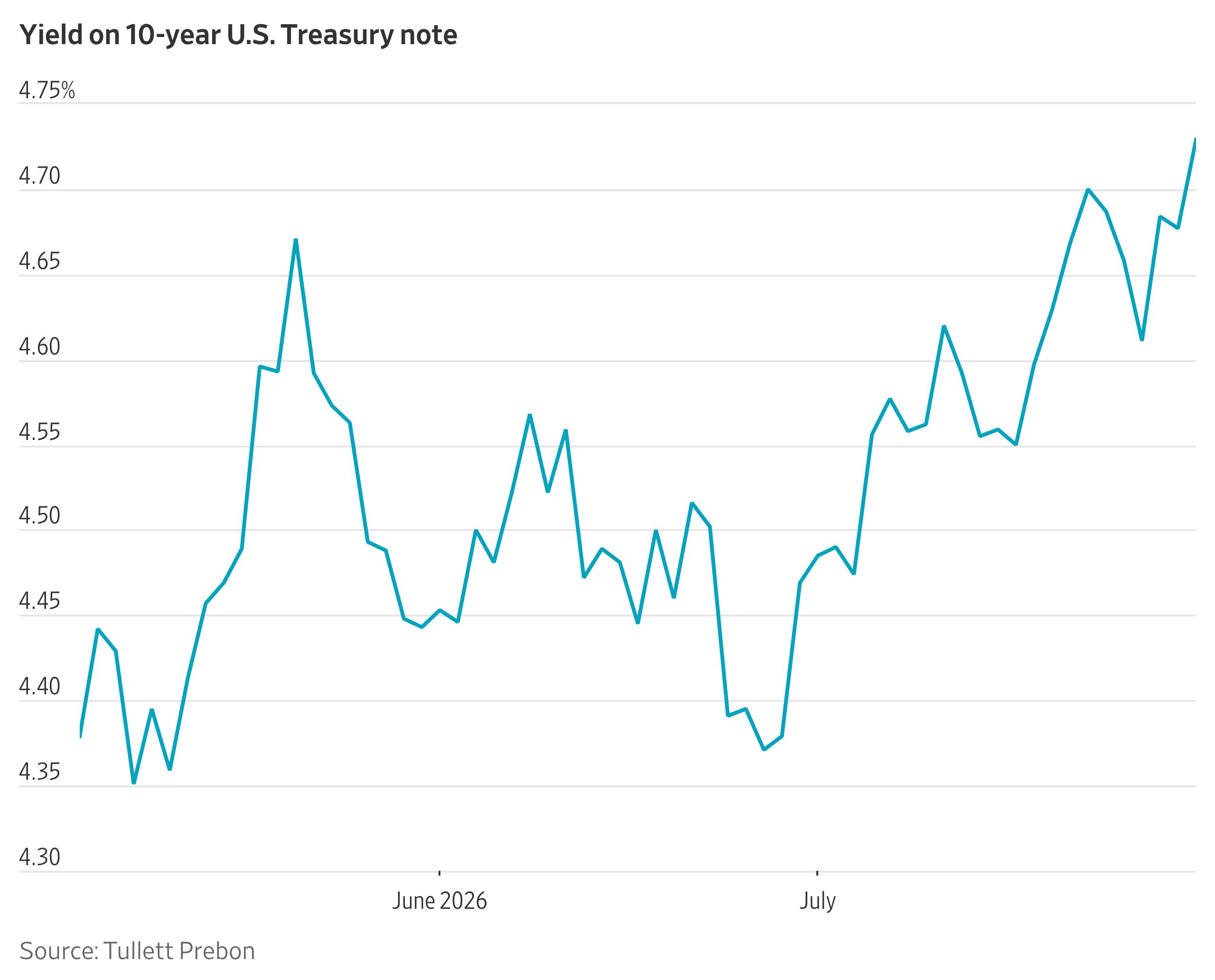
Treasury yields extended their recent gains Friday after three Federal Reserve officials explained why they cast dissenting votes in favor of raising interest rate this week.
Yields, which rise when bond prices fall, were also driven higher by economic data, including a stronger-than-expected reading on Chicago-area economic activity.
The yield on the 10-year U.S. Treasury note settled at 4.743%, according to Tradeweb, its highest closing level since January 2025. The 30-year yield closed at 5.274%, its highest since July 2007.

South Korean stocks surged on Friday, with the KOSPI index rising nearly 18%.
Despite the dramatic gains, the index was still down for the week and the month, a testament to how volatile Korean equities have been as of late.
Not counting today, the KOSPI has gained more than 10% in a single day in only six instances, according to Dow Jones Market Data. History shows that in the week following those six times, the S&P 500 traded lower two-thirds of the time, with an average decline of 1.6%.

1539 ET – Oil futures end July with hefty gains as the month saw renewed Iranian attacks on shipping in a dispute with the U.S. over control of the Strait of Hormuz. Concerns that a return to negotiations could quickly reduce risk premium and lead to oversupply have kept prices from reaching the lofty levels seen in March and April. “Traders are essentially betting on two very different geopolitical outcomes, and neither one is a safe assumption right now,” says Baron Lamarre, co-founder of Index Litro and former head of trading at Petronas. “My base view is we won’t end up with either a massive glut or a full-blown supply crisis by the end of the year,” he adds. “Instead, we’re in for a period of stubbornly tight, volatile conditions that will stick around longer than the optimists are hoping.” WTI settles up 1.3% at $84.67 a barrel for a 22% monthly gain. Brent for September delivery goes off the board at $90.12 a barrel, up 1.2% on the day and up 24% from the end of June.(anthony.harrup@wsj.com)
Oil Futures on Track for Big Monthly Gains
0951 ET – Oil futures turn higher in early U.S. trading and are on track for hefty gains for July, which saw the U.S.-Iran Memorandum of Understanding fall apart and Iran resume attacks on shipping in the Strait of Hormuz. “All things held equal, the market should go a lot higher and led by diesel and gasoline as refinery run rates arejust too low on a lack of crude,” Scott Shelton of TP ICAP says in a note. “The reality is that we are back to a very small amount of crude versus what is needed.” WTI is up 2.2% at $85.42 a barrel. September Brent is 1.5% higher at $90.36 ahead of today’s expiry, while the October contract gains 1.8% to $88.47.(anthony.harrup@wsj.com)
Copyright ©2026 Dow Jones & Company, Inc. All Rights Reserved. 87990cbe856818d5eddac44c7b1cdeb8
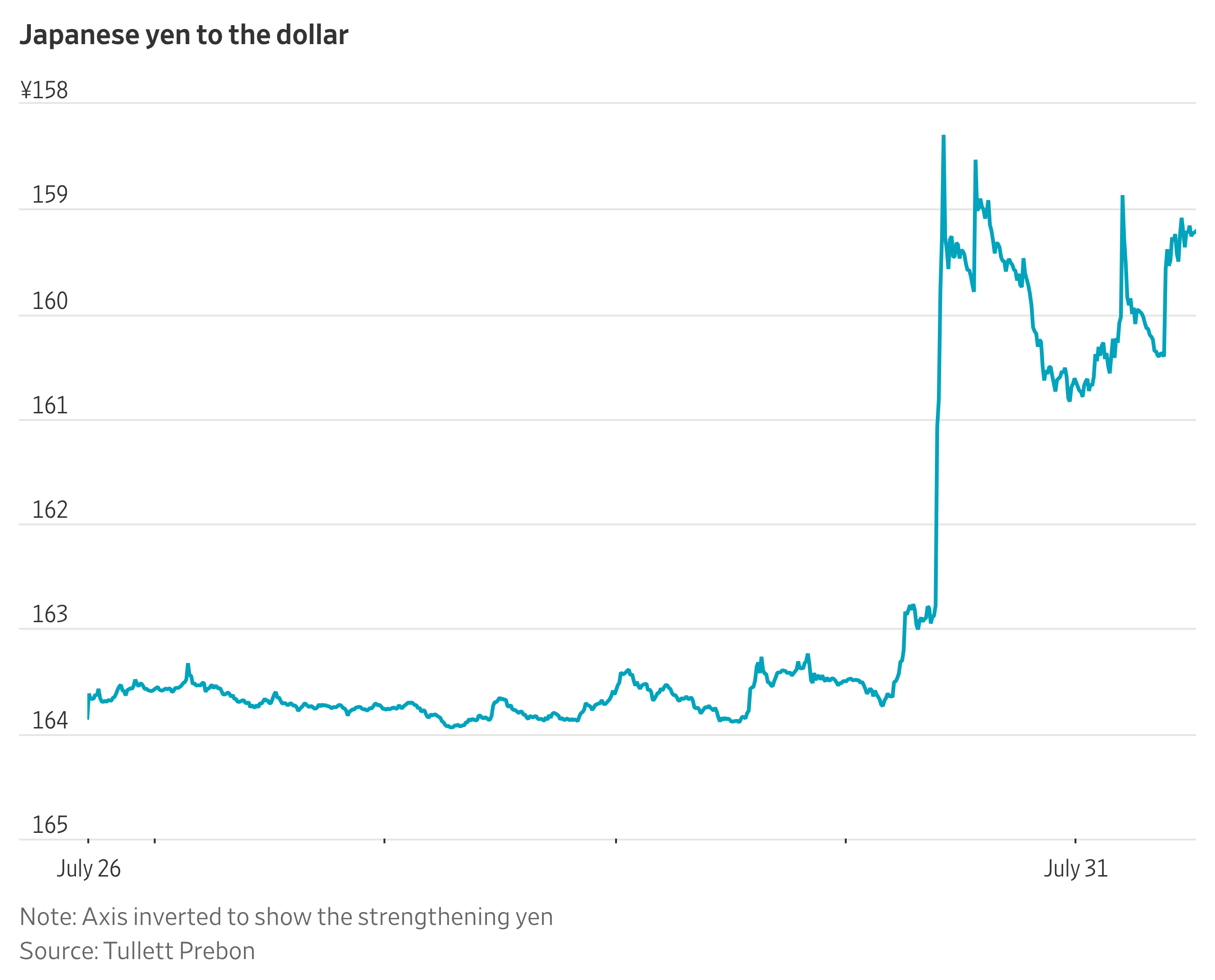
Currency traders broadly believe that the yen’s recent strengthening reflected yen purchases by Japanese authorities, as well as speculation of a possible U.S. intervention. The U.S. Treasury Department meanwhile has informed banks that it might make currency trades on Friday to support the Japanese yen and strengthen its exchange rate against the dollar, the Wall Street Journal reported today.

Global reforms emphasize control and decision-making authority over legal forms, shifting regional headquarters evaluation to governance, risk management, and value creation, impacted by tax rates and regulatory expectations.
Evolving Evaluation of Regional Headquarters
Global minimum tax, stricter substance enforcement, and geopolitical fragmentation have reshaped how regional headquarters are assessed. Singapore, Hong Kong, and Dubai now serve distinct roles, each aligned with different strategies for controlling operations and managing risks. They are no longer interchangeable hubs competing on similar benefits, but rather centers tailored to specific business models and regulatory environments.
Authority and Control Define a Headquarters
The focus has shifted from a legal entity’s structure to the authority it exercises within an organization. Regulators and counterparties increasingly scrutinize where key decisions—related to capital allocation, pricing, treasury, and risk management—are made. An entity exercising discretion in these areas is viewed as a true control center, influencing regulatory treatment and compliance risk instead of mere administrative support.
Governance and Control in Practice
Beyond reporting functions, the extent of authority impacts governance, documentation, and accountability standards. These factors determine a company’s regulatory exposure and defenses. While corporate tax rates like Singapore’s 17% and Hong Kong’s 16.5% are still relevant, emphasis now also rests on where value creation and control are evidenced within the organization.
Read the original article : Singapore vs Hong Kong vs Dubai: Regional HQ Trade-Offs for Investors
Other People are Reading
Are you tired? I’m tired. In addition to four Big Tech companies reporting earnings this past week, the calendar included results for second-quarter gross domestic product and the June personal consumption expenditures price index, along with the Federal Reserve’s interest-rate decision. Unscheduled, there was a meltdown of the artificial-intelligence trade, as highly leveraged bull positions were liquidated. The iShares Semiconductor exchange-traded fund was down 12% across three days, and one of the most successful AI investors—hedge fund Situational Awareness—saw margin calls and forced sales.

Private-equity firm KKR KKR is near a deal to take medical-device outsourcing company Integer Holdings ITGR private, according to people familiar with the matter.
The details
The deal, which could come as soon as next week, would value the Plano, Texas-based company at roughly $127 a share, the people said. There are no guarantees a deal will come together.
Copyright ©2026 Dow Jones & Company, Inc. All Rights Reserved. 87990cbe856818d5eddac44c7b1cdeb8

Daily horoscope August 2, 2026: Predictions for your star sign
Amazon Surges and Apple Falls on Latest Earnings

Recovery Seeds Reportedly Breached for Coldcard Hardware Bitcoin Wallets, $75M Taken


-
 Sports6 days ago
Commonwealth Games boxing: Jadumani Singh seals dominant 5-0 win over Pakistan’s Sumama Rehman to enter quarter-finals | Commonwealth Games News
-

 Business3 days ago
Why Trees Belong on the Risk Register
-

 Fashion1 day ago
Weekend Open Thread: Wit & Wisdom
-

 Tech6 days ago
Intel is reversing course and bringing hyper-threading back to its server chips
-

 Politics1 day ago
Meta enters AI-training agreement with far-right ‘propaganda rag’ Newsmax
-

 Politics6 days ago
Luke Littler dismantles Gerwyn Price to retain title in Blackpool
-

 Crypto World12 hours ago
MicroStrategy Post-Earnings CLARITY Act Push Could Add New Catalyst for Its Stock
-

 Politics5 days ago
The Part of the Electric Transition Nobody Wants to Discuss
-

 News Videos6 days ago
BITCOIN JUST ENTERED THIS CRITICAL ZONE…
-
 Entertainment4 days ago
‘Stargate’ Creator’s New Sci-Fi Series Returns for Season 3 Tomorrow
-

 Business4 days ago
Major shareholder moves on Canyon
-

 Crypto World7 days ago
XRP Ledger adds $2.6B as RWA inflows rank second
-

 Politics7 days ago
Spain sweeps the board at 2026 World Cup with individual awards
-

 News Videos3 days ago
Bitcoin Enters the 3rd Stage of the Bear Market
-
Crypto World21 hours ago
XRP Ledger v3.3.0 brings five institutional features
-

 Crypto World4 days ago
Kraken Enables Retail Access to Jersey Mike’s IPO via Tokenized Shares
-

 Tech5 days ago
New macOS Sequoia & Sonoma security updates for older Macs
-

 News Videos4 days ago
Claude: Build Financial Dashboards in Minutes (2026)
-

 Sports2 days ago
Seema Kaliramna Wins Discus Throw Bronze, Takes India’s CWG Medals Tally To 17
-

 Politics2 days ago
Luke Littler’s dominance sparks GOAT debate
You must be logged in to post a comment Login