
Politics
Polanski explains how Greens would deal with fly-tipping

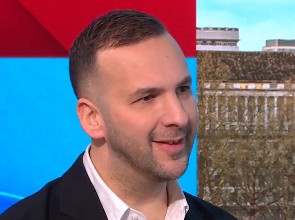
“I think more than anything it’s making sure that the big polluters are also being taxed properly.”
Zack Polanski tells @TrevorPTweets how the Green Party would deal with fly-tipping.#TrevorPhillips
— Sky News (@SkyNews) February 15, 2026

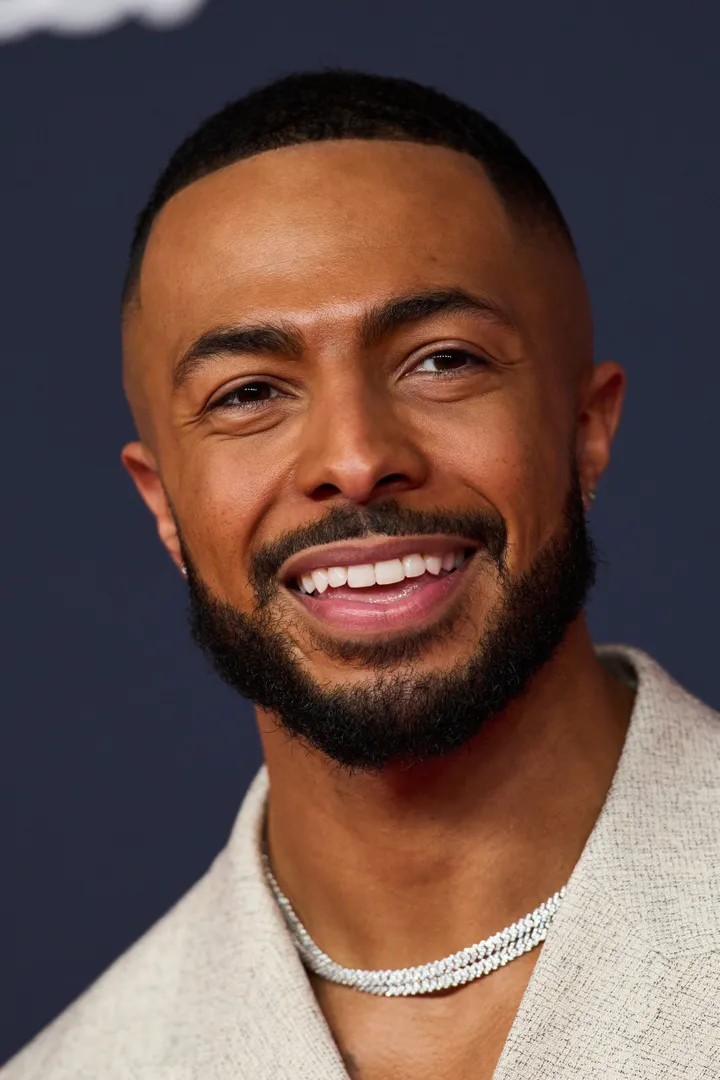
Tyler West is replacing Scott Mills as the host of a new Race Across The World companion podcast.
Last month, the BBC revealed that when the new season of Race Across The World launches, it would be accompanied by a video-podcast series diving into the highs and lows of what’s gone on in the hit reality show.
Race Across The World: The Detour was originally supposed to be co-presented by Mills, who took part in the second season of Celebrity Race Across The World back in 2024 alongside his now-husband, going on to win the show.
However, following the news that he has been fired by the BBC effective immediately, the series will now be hosted by fellow Celebrity Race Across The World alum Tyler West in a last-minute scheduling change.

Tyler will be joined each week by Alfie Watts, who won the regular show in 2024.
A BBC press release previously teased that The Detour would be Race Across The World’s “younger, wilder sibling, charting the ups and downs of the new series.
“Each week the podcast will welcome guests from travel-savvy creators, to comedians and celebrity fans of the show, as they dissect destinations, swap tales of adventure, and celebrate the real life stories and unforgettable journeys of Race Across The World,” the synopsis continued.

Mills’ departure from the BBC was confirmed on Monday, with the national broadcaster later saying: “In recent weeks, we obtained new information relating to Scott and we spoke directly with him. As a result, the BBC acted decisively in line with our culture and values and terminated his contracts.”
“Separately, we can confirm the BBC was made aware in 2017 of the existence of an ongoing police investigation, which was subsequently closed in 2019 with no arrest or charge being made,” a spokesperson continued.
“We are doing more work to understand the detail of what was known by the BBC at this time.”
Mills broke his silence on the matter on Wednesday night, saying: “The recent announcement that I am no longer contracted to the BBC has led to the publication of rumour and speculation. In response to this, the Metropolitan Police has made a statement, which I confirm relates to me.
“An allegation was made against me in 2016 of a historic sexual offence which was the subject of a police investigation in which I fully cooperated and responded to in 2018. As the police have stated, a file of evidence was submitted to the Crown Prosecution Service, which determined that the evidential threshold had not been met to bring charges.
“Since the investigation related to an allegation that dates back nearly 30 years and the police investigation was closed seven years ago, I hope that the public and the media will understand and respect my wish not to make any further public comment on this matter.”
The BBC has also issued an apology for failing to “follow up on” an additional allegation about Mills that was raised by a freelance journalist last year.

Hezbollah have injured at least 48 Israeli officers and soldiers whilst defending Lebanon from Israel’s illegal invasion.
BREAKING: The Israeli army says 48 Israeli officers and soldiers have been wounded in fighting in southern Lebanon over the past 24 hours.
🔴 LIVE updates: https://t.co/1Br1Hzf0B8 pic.twitter.com/iE5VjxDLZA
— Al Jazeera English (@AJEnglish) April 1, 2026
Hezbollah also eliminated four Israeli soldiers in Southern Lebanon:
JUST IN:
Israeli army announced the deaths of 4 soldiers killed by Hezbollah in southern Lebanon. pic.twitter.com/8mN4cZJm5D
— Current Report (@Currentreport1) March 31, 2026
Lebanon fights back
This takes the total number of dead soldiers that Israel has reported to 10, with 309 injured since it launched its illegal attacks.
On March 30, the IOF reported that 5 soldiers had been killed in Lebanon. However, they used 10 helicopters to evacuate those bodies. Seems a little suss?
The IDF just used 10 helicopters moments ago to evacuate dead Israeli soldiers from southern Lebanon.
Remember they only claim 5 are dead.
Hezbollah is kicking their ass.
— Ethan Levins 🇺🇸 (@EthanLevins2) March 30, 2026
Of course, we know that the true number of injured and dead terrorists must be far higher – because we cannot expect a genocidal supremacist army to ever tell the truth.
If that’s what Israel says, then the true figure must be significantly higher.
— Laura Blum (@laura8blum) April 1, 2026
Additionally, Israel is under military censorship. This means that every reporter in Israel, along with every member of the public, is prohibited from:
reporting or broadcasting any material that could reveal sensitive information or pose a threat to the country’s security interests.
This includes things like images and videos of missile strikes, along with the locations of interceptor missiles.
Some estimates suggest that Israel may have lost 1,281 soldiers during the first few weeks of its illegal attacks on Iran and Lebanon.
Not so tough now
Israeli soldiers are not so tough when they’re faced with grown adults with guns, instead of toddlers.
Like most over-confident bullies, whenever the apartheid Epstein army faces actual fighters instead of children and refugees, they get their asses kicked. https://t.co/Snl6MmpUO3
— Thamina Eff 🇵🇸 (@Thamina_F) April 1, 2026
Maybe they should have stayed at home? In Europe and the US.
Should have stayed at home. https://t.co/HG4rLQqdgI
— Dr Iain Darcy 🍉 🇮🇪 💚 (@doctoriaindarcy) April 1, 2026
Importantly, though, Hezbollah are going after Israeli soldiers, who are valid military targets under international law, especially when they are invading a sovereign country.
The IOF fuck about, the IOF find out.
Meanwhile, that same IOF are targeting civilians, medical workers, hospitals, schools, journalists, and UN workers.
Every day, the headline out of Lebanon is the same:
Hezbollah forces kill or injure scores of Israeli soldiers.
Israeli forces kill or injure scores of Lebanese civilians, journalists & medics.
And yet they want us to think Hezbollah are the “terrorists.” ok https://t.co/EHZvFJTnfW
— Zachary Foster (@_ZachFoster) April 1, 2026
Yet they want us to believe that Hezbollah are the bad guys?
‘God’s chosen people’
Why don’t ‘God’s chosen people’ on ‘God’s chosen land’ have some sort of magnetic force-field around them at all times? Where are the superpowers protecting them from these pretend terrorists?
The only thing choosing Israeli soldiers is the bullets in their chests.
I would have thought the bullets and rockets would bounce off of their bodies, similar to Superman, with God acting like a force field. This is what you would expect to happen if they are specially chosen by God, placed above the moral and physical laws governing the universe.
— Piotr Kopylowicz (@PKopylowicz) April 1, 2026
Unless every illegal settler is secretly Iron Man…
The US and Israel will NOT be honest about the number of Jewish settlers and IDF soldiers killed.
The US and Israel consistently lie and only claim “injuries.”
Have all Jewish settlers suddenly turned into ” Iron man ” who only suffer “injuries” when hit by missiles ?
— Ayu Blossom🌸 (@AyuBlossom1) April 2, 2026
Israel deserves to suffer in the same way that it has made Gaza suffer for the last two and a half years.
Not enough, we need more. We want the IDF to suffer in exactly the way they make Palestinians suffer. https://t.co/S1LWvzBu4y
— Bushra Shaikh (@Bushra1Shaikh) April 1, 2026
Israeli soldiers are clearly dropping like flies – and the sooner the better, because Israel should not exist
We may never know how many Israeli soldiers are actually dead because of Israel’s strict censorship rules. But as long as Israel is still starving, maiming, and killing innocent people, then clearly too many of them are still alive.
Featured image via Al Jazeera English/ YouTube

According to the NHS, most adults should consider taking vitamin D supplements from October to early March.
But now that the Easter eggs have been unwrapped and April Fool’s Day has passed, is it time to put the supplements down?
Not always, said Kyle Crowley, a chief product officer and nutritionist at Protein Works.
Who may still need vitamin D supplements in spring?
“It’s suggested that optimal exposure to sunlight is between five and 30 minutes a day. Therefore, if you don’t hit these requirements each day, you may need to consider supplementing,” said Crowley.
That rises to 25 minutes a day for people with darker skin tones.
“In fact, studies show that nearly half of UK adults have below-optimal levels of vitamin D. Most surprisingly, adults aged 18–29 have the lowest average. So, if you’re a student studying indoors or working all day indoors, this lifestyle will limit your daily exposure and taking vitamin D would be recommended.”
The NHS said that “People at high risk of not getting enough vitamin D, all children aged 1 to 4, and all babies (unless they’re having more than 500ml of infant formula a day) should take a daily supplement throughout the year.”
They include people who are not often outdoors (e.g. those in care homes or who are housebound), those who wear clothes that cover most or all of their skin while outdoors, and those with darker skin in that “at-risk” category.
Crowley advised taking vitamin D3 supplements if you choose to, instead of vitamin D2 kinds, as vitamin D3 seems better for our immune systems.
What if I’m not sure whether I need vitamin D?
“It is important to note that there is a difference between having a vitamin D deficiency and being below optimal levels. A deficiency, which is usually a vitamin D level below 25 nmol/L, should be addressed by a medical professional,” Crowley stated.
“The best way to find out about your vitamin D levels is to get a blood test. This is definitely worth it if you tend to get ill often, or generally feel like your health is not at its best.”
The NHS’ vitamin D benchmarks are:
-
below 25 nmol/L – Deficient
-
25-50 nmol/L – Insufficient
-
50-75 nmol/L – Adequate
-
75 nmol/L or above – Optimum.
How much vitamin D should I take?
Don’t take vitamin D supplements if you don’t need them, as too much over a long period of time can lead to hypercalcaemia.
- Babies (0-12 months) – 8.5-10 mcg/day (340-400 IU/day)
- Children (1 year and over) – 10 mcg/day (400 IU/day)
- Adults (including pregnant or breastfeeding people) – 10 mcg/day (400 IU/day).
Politics
CAAT condemns conviction of peaceful protest organisers as part of ongoing assault on civil liberties
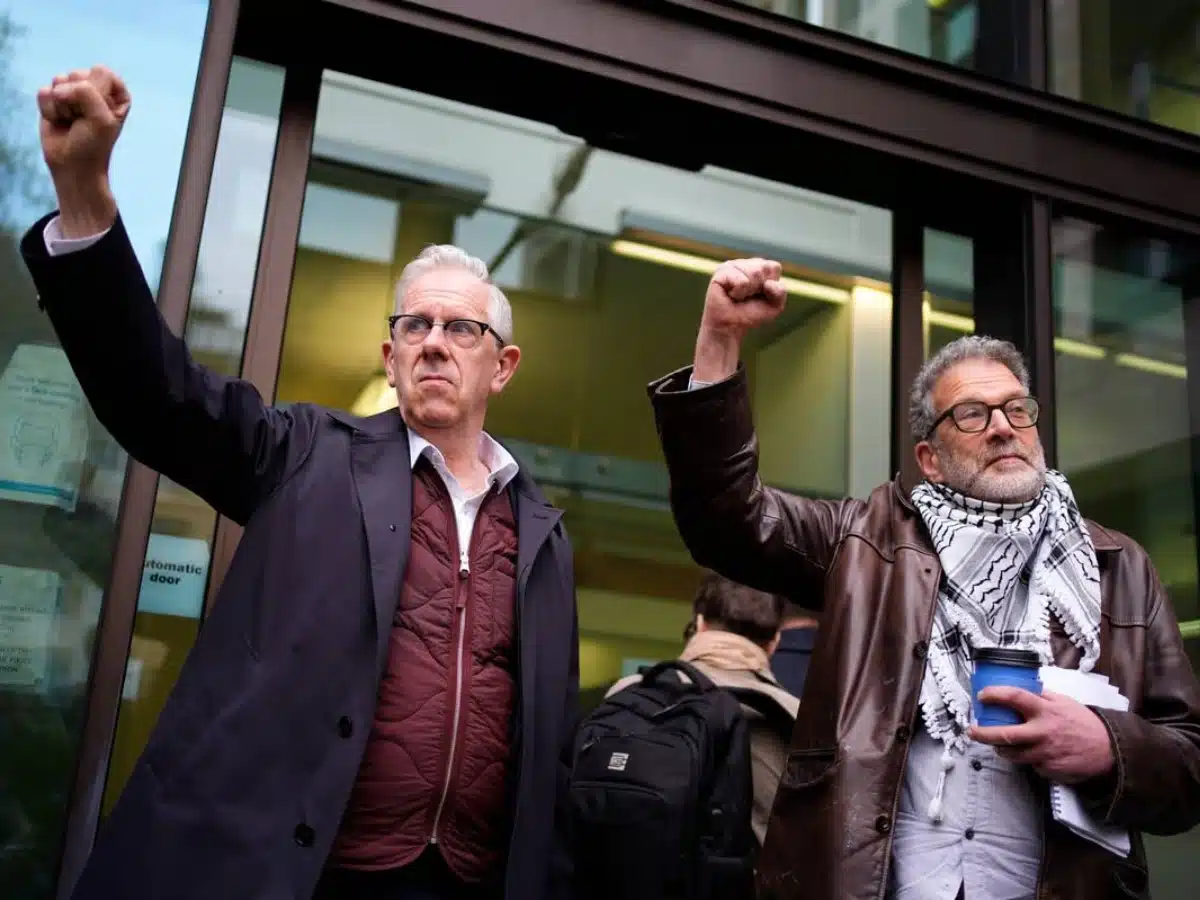
Campaign Against Arms Trade (CAAT) has spoken out following the conviction of Palestine Solidarity Campaign director Ben Jamal and Stop the War Coalition vice-chair Chris Nineham. They were convicted on 1 April of public order offences at Westminster magistrates court. The charges related to a peaceful protest in January.
Additionally, district judge Daniel Sternberg convicted Jamal of ‘incitement’, claiming that his speech at the peaceful protest breached “lawfully imposed conditions”.
The Metropolitan police had originally allowed the 18 January protest to take place but then reversed its decision. It cited spurious claims of “cumulative impact” on Jewish Londoners. The reversal came after lobbying by pro-Israel individuals and groups, including the Jewish Leadership Council.
On the day of the illegal US-Israeli aggression on Iran, the Jewish Leadership Council expressed its support for the unprecedented bombing campaign, claiming it “will make the world a safer place.”
CAAT speaks out on political policing
CAAT notes that the conditions the Met imposed were far from lawful. They prohibited peaceful protesters from gathering outside the BBC’s office to protest its systematic editorialising in favour of Israel.
As Netpol pointed out in a recent report titled How Repression Became Routine, police – specifically, the Met – are exercising powers beyond or ahead of lawful authority. Cumulative disruption powers, for example, have yet to pass through parliament.
Moreover, in reflection of the government’s zeal for suppressing anti-genocide protest, police use of powers to restrict assemblies in 2024–25 rose by 230% across Britain.
As part of the trial against Jamal and Nineham, district judge Sternberg threw out a “no case to answer” defence. However, Sternberg curiously declined to give reasons for doing so.
The 18 January protest was designed to start or end at BBC headquarters in Portland Place to protest against the broadcaster’s coverage of the Israeli genocide in Gaza. The BBC’s systematic bias, which downplays Israeli crimes against humanity, while dehumanising its Palestinian victims, has provoked documented turmoil at the organisation.
CAAT notes that the zeal with which the police and Crown have pursued peaceful protesters demonstrating against the UK-backed Israeli genocide stands in contrast to its gross inaction against UK nationals serving in the Israeli Occupation Forces, as well as executives of companies providing weapons to Israel.
In February the Public Interest Law Centre, supported by CAAT, submitted a detailed complaint to Metropolitan Police Counter Terrorism Command (SO15). This asked it to open a criminal investigation into four current and former British directors of Elbit Systems UK Ltd for possible complicity in war crimes, crimes against humanity and genocide in Gaza. No response, or acknowledgement, has come from the Met.
A spokesperson for CAAT said:
As members of an anti-genocide movement proud to share its platform with Ben Jamal and Chris Nineham, we are dismayed at Westminster magistrate court’s decision to convict them in a trial that should never have taken place.
Jamal and Nineham should be feted for their service to humanity, and opposition to crimes against it. Yet, in this dire state of affairs, our government gets away with supporting Israel’s systematic slaughter of Palestinians, the ongoing theft of their land, and providing a steady stream of murder weapons, while prosecuting those protesting against it. The Met police’s failure to even acknowledge the Public Interest Law Centre complaint against Elbit directors, over possible complicity in war crimes, crimes against humanity and genocide in Gaza, shows just how politicised the police has become.
Featured image via the Canary
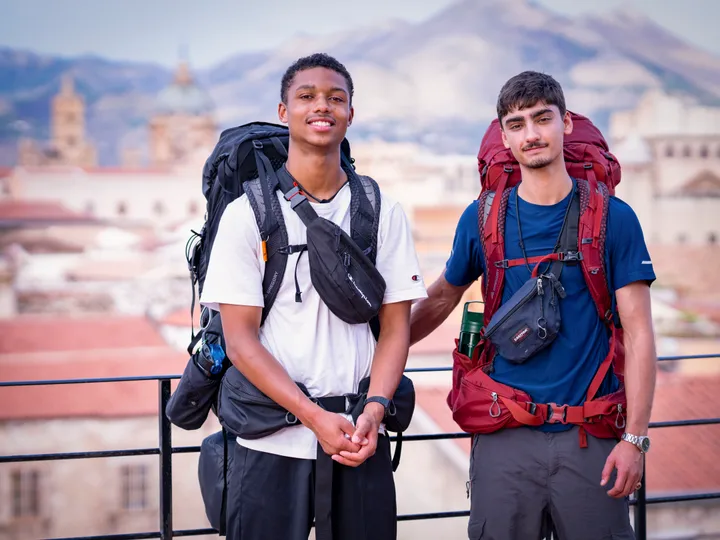
Race Across the World returns for its sixth series on Thursday night, with five new intrepid teams taking on the journey of a lifetime in the hopes of getting their hands on a hefty cash prize.
This time around, the pairs must race more than 12,000km across Europe and Asia, taking in the sights of Italy, Greece, Türkiye, Georgia, Kazakhstan, Uzbekistan, Kyrgyzstan and Mongolia. With no smartphones, internet access or bank cards, the duos are armed with nothing but the cash equivalent of flying the same route, in the hopes of reaching the finish point before their time or money runs out.
As fans get ready for the exciting launch show, here are those taking on the challenge of the most extreme race to date in this year’s series of Race Across The World…
Jo and Kush

Childhood best friends from Liverpool, Jo and Kush, are the youngest duo in the race, both aged just 19. Still living at home, and fresh from finishing their A-levels, the pair are taking on independence in the most extreme way.
Both at a crossroads in their lives, the two thought Race Across The World would be a great opportunity to travel before going to uni.
“When the opportunity came up, we thought it would be a fantastic experience and something we could look back on and learn from,” Kush said.
Though they may be young, they have some experience travelling, as Kush has spent three months backpacking through Thailand – although the idea of making their way across Europe and Asia without their phones will no doubt still come as a shock to the duo.
Jo and Kush hope their social skills and ability to talk to strangers will help them on this mammoth journey, although it sounds like they are far more concerned with enjoying new experiences than winning the competition.
“I believe hardship builds personality and this is a very niche but intense situation so coming out of the experience with a bit more maturity and different perspective on life – it’s not just Liverpool,” Kush said.
Katie and Harrison

Katie, a 21-year-old account manager, and her 23-year-old brother, finance assistant Harrison, hope their opposing personalities will help them during the race.
Harrison wanted to join the show to push himself and his sister out of their comfort zones. The competitive siblings have their eyes on the prize and think their money-management skills will help them cross the finish line first.
Their weakness? Harrison might want to blow their limited budget on food.
“I think mine will be hunger, or not even hunger but just wanting to eat,” he claimed when asked about his biggest challenge.
While competitive, neither sibling is very adventurous, so Race Across The World promises to broaden their perspective and build their confidence as travellers.
“The motivation isn’t the money at the end, it’s to try and live a different life for a couple of months and just experience everything, and if we can win it whilst doing it, that is great,” Harrison added.
Hilariously, one of the items Harrison brought on his journey was a list of Man United fixtures, so he knew when to ask people for the football scores on his travels.
Molly and Andrew

Junior doctor Molly wants to prove to her geography teacher dad, Andrew, that she’s more capable than he gives her credit for.
For Andrew, backpacking is a lifelong dream that the 54-year-old has never had the time or money to complete. While travelling on the cheap was his wife’s nightmare, he finally gets to live out his dream with his daughter.
Their strengths and weaknesses on this trip might be the same, as 23-year-old Molly is very sociable and chatty – but her dad worries that he might not be able to keep her quiet!
“I kind of just go and lead by directness, and I need to rein that in every now and then, but Molly is quite good at reining that in for me,” Andrew explained, but admitted that it can balance out his quiet personality.
He added: “I can sometimes get caught in my own world instead of externalising it which in some ways is good, but I need to work on it.”
While the duo are inexperienced travellers, they hope their competitive edge and strong father-daughter relationship will help them take the lead in the competition.
However, Molly does worry about being away from her beloved celebrity gossip and hair-dryer.
Puja and Roshni

Cousins Puja and Roshni spent their twenties building successful careers in London, but are looking for some adventure now they’re in their early 30s.
Puja, a big fan of Race Across The World, was inspired to sign up after hitting a career block and feeling like her life was passing her by too quickly.
“I think living in London and having a job, you kind of live your life in fast forward, and then before you know it, you’re 50 years old,” she admitted.
Doctor Puja had previously backpacked, and her software engineer cousin Roshni has also travelled around Cuba, so both were experienced at visiting a country without fancy hotels or pre-planned itineraries.
Because of their jobs, Puja and Roshni feel confident racing under pressure and think their strengths will be keeping to the tight budget and staying organised.
Although a win would be great for the cousins, the duo are more concerned with making the most of their time off, spending much-needed time together, and learning about new cultures.
Puja explained: “Being able to accomplish that and get to the end, I think is going to be a massive accomplishment and proof to both of us that we can pretty much do anything we set our mind to. The other bits of it are just like what we learn from local people, from different lifestyles, different cultures, and learning more about how life can be a lot slower than what we live at home.”
Mark and Margo

Lastly, there is the unlikely duo of 66-year-old Mark and his 59-year-old sister-in-law, Margo. The retired London-based architect and the Liverpudlian hypnotherapist have had a fractious relationship for the last four decades, but recently became close after the death of Margo’s sister and Mark’s wife.
Margo signed the pair up for Race Across The World to celebrate their late loved one.
“We’ve been through this experience with losing my big sister and him losing his wife,” she said. “It seemed like a celebratory thing that we could do together. This was a new journey that could be exciting and like a renewal.”
Both are adventurous and don’t believe in living life with limits, having interrailed in their youth, as well as skydived, hiked, and done… well… pretty much any other dangerous thing they could think of.
“There isn’t a limit on what we’d have a go at. We’re going to live as dangerously as they’ll allow us,” Margot revealed.
Mark and Margo admit they are in it to win it, with a track record of travelling the world, although the duo do admit they can get a little cranky when hungry and tired, and Mark fears he could crumble under pressure.
Race Across The World airs on Thursday nights at 8pm on BBC One.

On Wednesday 1 April, Donald Trump delivered one of the worst speeches of his career — and this was no April Fool’s.
The White House has removed this video from their social media channels.
But not before we could post it. https://t.co/arlnXPVhc2
— Headquarters (@HQNewsNow) April 2, 2026
The above is really just the tip of the iceberg too.
Bombs not babies
In the clip above, Trump starts talking about daycare but progresses to the national health insurance systems of Medicare and Medicaid (emphasis added):
the United States can’t take care of daycare. That has to be up to a state.
We can’t take care of daycare. We’re a big country. We have 50 states. We have all these other people. We’re fighting wars.
We can’t take care of daycare.
You got to let a state take care of daycare, and they should pay for it too. They should pay. They have to raise their taxes, but they should pay for it. And we could lower our taxes a little bit to them to make up for it.
But it’s not possible for us to take care of daycare. Medicaid, Medicare, all these individual things. They can do it on a state basis. You can’t do it on a federal.
We have to take care of one thing, military protection.
We have to guard the country.
As most people now realise, the US isn’t ‘guarding the homeland’—it’s instead doing the opposite to other countries.
If America stopped waging forever wars, it could easily afford daycare and universal health coverage. It could probably afford to give everyone in the world healthcare with how much they spend on war (set to be $1.5tn by 2027).
Even the administration is starting to realise that its military endeavours aren’t money well spent:
SECRETARY RUBIO: Why are we in NATO? You have to ask that question. Why do we send trillions of dollars and have all of these American forces stationed in the region, if in our time of need, we won’t be allowed to use those bases? pic.twitter.com/DdYahXhli0
— Department of State (@StateDept) April 1, 2026
Trump had more to say too.
Bad to worse
As the Majority Report’s Emma Vigeland sarcastically highlighted, Trump admitted that he basically likes anyone who sucks up to him—no matter how repellant they are (presumably he’s thinking about Benjamin Netanyahu):
This is so moving https://t.co/NG3QuaQOcF
— Emma Vigeland (@EmmaVigeland) April 1, 2026
Having failed to achieve any of his objectives in the Iran war, Trump is now asking his allies to clean up his mess:
Trump on re-opening the Strait of Hormuz: “Let France do it, they get a lot of oil from the strait. Let the Europeans do it. Let South Korea, who is not helpful to us, by the way…Let South Korea do it. Let Japan do it… This was not part of what I wanted to do.” pic.twitter.com/yOcweaBOcW
— The Bulwark (@BulwarkOnline) April 1, 2026
Trump gave an idea of why the war has gone so badly:
Absolute bombshell confession! Trump casually admits on camera that he assassinated 88 Iranian leaders “by accident” while they were voting for a new regime. He is openly bragging about mass murder and illegal regime change. This is a blatant war crime! pic.twitter.com/uBR8sKpogu
— Furkan Gözükara (@FurkanGozukara) April 1, 2026
Trump also did some race science:
This would have been an impeachably scandalous thing for a president to say even a decade ago. https://t.co/rM56hI8cjL
— Aaron Reichlin-Melnick (@ReichlinMelnick) April 1, 2026
This is the same guy who has repeatedly bragged about passing cognition tests because he thinks they’re testing his intelligence — not whether he has dementia.
Shocking but not unsurprising
While the things Trump says are constantly unprecedented, we’re at a point now where nothing really shocks.
Of course he’d launch a stupid war and then bail when it got too much.
Of course he’d be the politician to finally admit the US prioritises death over health.
Of course he’d go off on some racist tangent that has nothing to do with the speech at hand.
As grim as this all is, hopefully it makes Americans realise their country is not a force for good, and that this is a situation it can’t keep repeating.
Featured image via the Canary

Five years after the implementation of the Police Race Action Plan (PRAP), progress has been patchy, slow, and all-too-easily reversed. Worse still, it’s been overly dependant on “individual goodwill”, rather than a true commitment to change across the force.
That’s according to the final report from the Independent Scrutiny and Oversight Board (ISOB), whose job was to oversee the PRAP. It also marks the end of both the PRAP as a standalone programme, and the ISOB itself.
As ever when we write on police racism at the Canary, the report observed that forces used inquiries and action plans as a substitute for real change.
The report drew on 36 interviews with civil organisations, community leaders and policing professionals. It found that, in spite of everything, the very institutional racism of the police is still a point of contention. In fact, just 6 of the 44 individual forces covered by the PRAP had even deigned to acknowledge their institutional racism.
‘That commitment has not yet been met’
Abimbola Johnson, ISOB chair, said:
Five years ago, policing committed to improving outcomes for Black communities. That commitment has not been met. Progress has been slow, uneven and too dependent on individual effort rather than institutional change.
The National Police Chiefs’ Council (NPCC) and the College of Policing established the PRAP back in 2020. It followed the police murder of George Floyd in the US, and the consequential wave of international Black Lives Matter demonstrations.
Ostensibly, the PRAP aimed to improve policing for Black people — both the public and within the police. However, that promise has not materialised. Johnson went on to state that:
Without properly enforced legal obligations, a robust inspection framework and clear consequences for failure, progress on race equity within policing will remain partial and reversible. This mirrors the pattern of previous reforms, dating back to Scarman and Macpherson. Black communities now deserve structural accountability. Government and policing must decide whether to deliver it or allow reform to stall again.
Final findings
As these reports and inquiries have found repeatedly, the single most significant barrier to progress is the racist culture of the police. There’s no external framework or imposed solution that can fix a system that doesn’t want to change.
And make no mistake — this is a systemic problem. Whilst individual police show shocking and flagrant racism, that bigotry is also embedded within the structures of policing. As such, any framework that treats racism as an individual problem in the forces will inevitably fail to make meaningful impact.
Likewise, race and racism cannot be understood within a vacuum. Police understanding of intersectionality remains a “significant and under-addressed gap.” Failure to address this means that the greatest harms will inevitably fall on multiple marginalised individuals.
The report also found that the single biggest driver of real change was the commitment of police leadership. When senior leaders were visibly committed to anti-racism, the forces under them showed greater progress. Conversely, where leaders’ commitment was lacking or clearly performative, nothing improved.
Alongside this, the police have been far better at making plans to tackle racism than actually delivering change. However, and far too often, these plans are spoken about as if they are “the change.” Repeatedly and consistently, actual impact has fallen short of the stated aims.
As such, it’s both unsurprising and appalling that Black communities still can’t trust the police. The report stated plainly that forces can’t built this trust through words and gestures of goodwill. Rather, they must show a real and sustained change in their behaviour before community attitudes can improve.
Progress ‘is now being reversed’
Regarding the ISOB’s final findings, Andy George – leader of the National Black Police Association – stated that:
After more than £10m of investment, it has failed to deliver on its core aim: improving the experience of policing for Black people.
The reality is the environment is becoming more toxic and the progress made since the Macpherson report is now being reversed.
The report itself indicated that any lasting progress is undermined by the utter lack of statutory accountability in making change. It made clear that:
Without legal duties, enforceable standards and independent inspection, progress depends entirely on goodwill and voluntary programs, leading to the PRAP inevitably being de-prioritised and treated as an ‘add-on’.
Both illustrating and compounding this issue, the end of the PRAP and ISOB, leaves absolutely no independent oversight in place. As such, the report urged the Home Office to:
establish and fund independent scrutiny, mandate national data standards, and embed race equity within inspection and performance frameworks.
We at the Canary have lost count of the number of times that new reports, new reviews, independent external and internal enquiries, and public bodies have highlighted and exposed institutional police racism, and the utter lack of willingness to change.
Time and again, we’ve watch police trot out their plans to fix racism, then sit back and pretend that the plan was the work itself.
So, we sign off as just as we have before. How many times do we have to write this same article?
UK police are racist because racism is embedded in the very core of their mission. It’s not one bad apple. It’s not one bad barrel. Its root and branch, tree and orchard.
Featured image via NPCC

What Kids Are Carrying is a HuffPost UK series focusing on how the nation’s youngest generation is *really* feeling right now – and how parents and caregivers can support them.
Children are feeling increasingly lonely and unheard, according to therapists, who say it was one of the top issues brought up by kids in therapy in 2025.
Counselling Directory member Mandi Simons said her practice is seeing more children and young people describe “a sense of loneliness”, but it’s not always about being alone.
“Many are surrounded by people, yet still feel unheard and misunderstood,” she told HuffPost UK.
Similarly, therapist Debbie Keenan, also a Counselling Directory member, said there’s been “an increase of children not just feeling isolated, but feeling unheard”.
One in three young people say they do not feel part of their local community, and young people in Britain are more likely to report feelings of loneliness than any other age group, with 70% of 18- to 24-year-olds reporting they feel lonely at least some of the time.
What is driving loneliness among children?
“From our therapists’ experience, this rarely comes from a lack of care,” said Simons. “More often, it reflects the reality of modern day family life, with busy parents juggling multiple demands, alongside conversations that can feel rushed or move too quickly into fixing or reassuring.”
She noted “social media can add to this, creating pressure and comparison while reducing genuine connection”.
Keenan agrees social media usage is playing into this, as is social thinning, where everyday opportunities for meaningful interactions have greatly reduced.
Between 2010 and 2023, more than 1,200 council run youth centres closed across England and Wales, and local authority spending on youth services in England plummeted by just over 70%.
Meanwhile, between 2014 and 2024, the number of young people (aged 16-24) experiencing common mental health conditions rose from 19% to 26%.
Research suggests that today’s children have significantly less freedom to roam, play outdoors, or gather with friends than previous generations.
“Regular, meaningful and constant connections are the key to reducing isolation. Without these connections, children miss out on building the foundations of relationships, trust and a sense of belonging,” said Keenan.
“Years ago, there were youth clubs etc, where children could meet and socialise, they have now become a thing of the past.
“The world in general has got so busy, people are juggling many shifts of emotional, work and childcare needs.”
The issue is, when adults are busy or distracted, children can feel “dismissed”, said the therapist. “Over time, this can create a sense of ‘my voice doesn’t matter’. They then become quieter and withdraw.”
Supporting children who are lonely
“Don’t highlight the issue, start noticing behaviour,” advises Keenan. Have they become withdrawn? Are they spending longer periods of time isolated?
Both therapists advise carving out time to be emotionally available and present. “Pause distractions and give your child your full attention,” said Keenan. Create pockets of “special time” where you can spend quality time together.
They also both recommend active listening – giving your child your full attention, without interrupting, and repeating back what you have heard.
“What children need most is to feel properly listened to,” said Simons.
“That means slowing conversations down, showing genuine curiosity, and acknowledging feelings before offering solutions.”
Simple family mindfulness practices, even brief moments of being fully present together without distraction, can help create the space for this, she added.
Not only that but spending time together as a family – whether that’s playing board games or sitting down for dinner together, without interruptions from phones and devices – can provide an opportunity for kids to feel seen, heard, and connected.
“When a child says they feel unheard, we would encourage parents to see this not as criticism, but as an invitation to reconnect. Small shifts in how and when we listen can make a meaningful difference,” added Simons.
As well as carving out time for you to hang out as a family, Keenan advised organising play dates and offering your child support to build their social connections – for example, through extracurricular activities.
She concludes: “Don’t be hard on yourself, the world is evolving at a fast speed. Have compassion for yourself, parenting is hard.”
With connection, compassion, communication; all while being listened to, acknowledged, and valued; “children can naturally start to grow in confidence, feel less isolated and feel like their voice is being heard”.
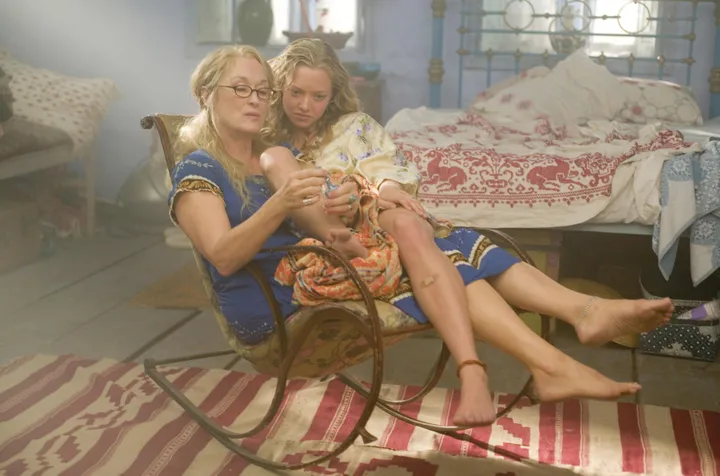
Meryl Streep is ready to don those famous blue overalls once again, hinting that she wants to reprise one of her most beloved film roles.
During an appearance on Wednesday’s edition of The Late Show With Stephen Colbert, the host asked the three-time Oscar winner if she would want to star in another Mamma Mia! film.
Without taking a second to think about it, an enthusiastic Meryl enthused: “Damn, yes!”
Speculation has been swirling since the second Mamma Mia! film came out in 2018 about whether another sequel could be on its way.
The rumour drill then went into overdrive in 2025, when several cast members revealed they’d been in talks with the producers about returning to the musical franchise.
Amanda Seyfried, who played Sophie Sheridan in both films, claimed in November 2025 that the wheels were in motion for the threequel, sharing with Entertainment Tonight: “Of course it’s not off the table, it’s searing a hole into the table.”
She added: “Maybe I should just be coy, or maybe I’m just naïve, but I’m pretty sure Mamma Mia! 3 is a done deal. I love portraying a mum, so I would love to see Sophie with her kids.”

Universal Pictures/Relativity Media/Littlestar/Playtone/Kobal/Shutterstock
Meryl’s latest comments are not the first time she has expressed her interest in reprising her role in another ABBA jukebox musical.
Speaking at the Cannes Film Festival in 2024, the Death Becomes Her actor said: “Of course I want to do it. I think folks love it.”
Of course, considering Meryl’s character, Donna, died off-screen in the second film, it’s unclear exactly how the Mamma Mia! team would go about bringing Donna back.
NBCUniversal Entertainment chairman Donna Langley told Deadline earlier this year that they would find a way around Donna’s death if Meryl wanted to return, insisting: “If Meryl Streep would like to come back, we’ll find a way to bring her back.”
Meanwhile, Stellan Skarsgård – who played Bill, one of Donna’s former flings, in the film – commented in January about how desperate people are to bring Meryl’s character back from the dead.
“Everybody can be brought back from the dead in the movies – and in the movies, she’s fantastic,” the Oscar nominee insisted. “A lot of people are working on it, to bring her back.”
Other cast members who have hinted at their return to Mamma Mia! 3 include Christine Baranski and Pierce Brosnan, who have both revealed that they had met with producer Judy Craymer to discuss the threequel.
Craymer has also hinted that Sabrina Carpenter could be involved in a potential third film, and that the team have their eye on adding the Grammy winner to the cast.
“She’d be a goddess or some relation who would look very much like Meryl Streep,” she told Deadline about the House Tour singer.
Before she (hopefully!) returns as Donna, Meryl is about to reprise another of her most iconic roles, starring in the upcoming The Devil Wears Prada sequel as Miranda Priestly.
Mamma Mia! and Mamma Mia! Here We Go Again are currently streaming on Netflix.

Since 2012, the UK’s fertility rate has dropped dramatically.
In 2023, it reached a new low of 1.6 children; thinktank The Resolution Foundation said in their recent “Bye Bye Baby” report that 2024 figures suggest it could “fall further still”.
Some are concerned we’re “unprepared” for the consequences of this trend, worrying that an ageing population might place enormous pressure on public services without a broad tax base to counterbalance that strain.
But the Bye Bye Baby report suggests that not all of this change comes down to choice.
They write that “preferences for family size have remained stable,” and that the “recent decline appears to be driven, in part, by financial constraints facing young non-graduates, rather than a shift in what people actually want”.
Housing and economic pressures matter
The research showed that the number of women who don’t have kids by 30 has risen in England and Wales from 48% for those born in the late 1980s to 58% for those born in the early 1990s.
Of course, they add, these women might go on to have kids. Still, the change is not seen equally across groups of women.
“Non-graduate women in their late 20s have seen the sharpest rise in childlessness,” they write.
“This has happened alongside falling partnership rates and a major shift away from homeownership towards costly private renting and living with parents, both of which make starting a family harder.”
In fact, added financial pressure seems to affect more than just fertility rates: it might impact the number of women who feel the desire to have children to begin with.
Among childless 32-year-old women, those in the lowest income quarter are almost twice as likely as those in the top income quarter to say they’ve permanently decided against having kids.
Overall, about 30% of women and 25% of men said they hadn’t had a child yet because of their financial situation.
So, while the report stresses that some people simply never wanted kids, the data suggest others’ hands are being somewhat forced.
These findings mirror those found in similar research
A 2025 global survey of over 14,000 people by the United Nations Population Fund (UNFPA) found similar results.
54% of respondents from 14 countries cited “economic concerns” as the top reason they didn’t have children, or couldn’t have as many as they wanted.
That made it the most common issue among those asked.
An anonymous Mexican woman who was a part of the survey said, “It is impossible to buy or have affordable rent in my city”.
The UNFPA said that the solution is not to pressure women into having children they don’t want, but for policymakers to consider that “Many people would choose to have children if they could be sure the world they are bringing them into offered a clean environment, a healthy economy and a safe place to live”.

Coinbase’s AI payments system joins Linux Foundation, gathers support from Google, Stripe, AWS and others
Did Chicago Med Kill Off Oliver Platt’s Dr. Charles Before Finale?

Google’s New Quantum Computer Could Kill Crypto By 2029


-

 Business7 days ago
Instagram, YouTube Found Responsible for Teen’s Mental Health Struggle in Historic Ruling
-

 NewsBeat6 days ago
The Story hosts event on Durham’s historic registers
-
 Tech7 days ago
Intercom’s new post-trained Fin Apex 1.0 beats GPT-5.4 and Claude Sonnet 4.6 at customer service resolutions
-

 Sports6 days ago
Sweet Sixteen Game Thread: Tide vs Michigan
-
Entertainment3 days ago
Fans slam 'heartbreaking' Barbie Dream Fest convention debacle with 'cardboard cutout' experience
-
 Entertainment5 days ago
Lana Del Rey Celebrates Her Husband’s 51st Birthday In New Post
-
Crypto World2 days ago
Dems press CFTC, ethics board on prediction-market insider trades
-

 Crypto World17 hours ago
Gold Price Prediction: Worst Month in 17 Years fo Save Haven Rock
-

 Tech3 days ago
The Pixel 10a doesn’t have a camera bump, and it’s great
-

 Sports2 days ago
Tallest college basketball player ever, standing at 7-foot-9, entering transfer portal
-

 Tech2 days ago
EE TV is using AI to help you find something to watch
-

 Fashion4 days ago
Amazon Sundays: Soft Spring Layers
-

 Tech3 days ago
Apple will hide your email address from apps and websites, but not cops
-

 Tech2 days ago
Flipsnack and the shift toward motion-first business content with living visuals
-

 Tech2 days ago
How to back up your iPhone & iPad to your Mac before something goes wrong
-

 Politics3 days ago
Should Trump Be Scared Strait?
-

 Crypto World3 days ago
U.S. rule change may open trillions in 401(k) funds to crypto
-

 Fashion7 days ago
En Vogue in Brown Leather and Tailored Neutrals by Atelier Savoir, Styled by J Bolin
-

 Fashion7 days ago
What Are Your Favorite T-Shirts for the Weekend?
-

 Business6 days ago
Chinese universities with military links bought Super Micro servers with restricted AI chips
You must be logged in to post a comment Login