
Business
LinkedIn ranks top colleges for career success with Princeton No. 1


Marist graduate Samantha Kehler discusses the evolving landscape of the job market in the AI era and shares her experience navigating a world where AI is both a powerful tool for candidates and a significant barrier for entry-level applicants.
A new report by LinkedIn ranked the top 50 colleges in the U.S. based on how they prepare students for long-term success in their careers, using a range of factors that leverage the career networking platform’s data.
The report uses LinkedIn data to rank colleges based on five categories: job placement, internships and recruiter demand, career success, network strength and knowledge breadth.
The job placement data tracks cohorts of recent graduates from 2020 to 2025 who start a full-time position or graduate school program within a year of their graduation, while network strength tracks how connected recent alumni cohorts are to each other as well as to all past alumni and current students.
“We’re seeing students think about career success differently than previous generations. They want to build skills, grow their networks and position themselves for a labor market that’s rapidly changing,” said Andrew Seaman, editor-at-large for jobs and careers development at LinkedIn.
SOUTHERN CITIES DOMINATE RANKINGS OF BEST JOB MARKETS FOR NEW COLLEGE GRADUATES

Stanford University made LinkedIn’s list this year. (David Paul Morris/Bloomberg via Getty Images)
“In today’s slower hiring market, professional relationships can make a meaningful difference. Skills and experience remain critical, but a strong alumni network can help open doors throughout a career, whether that’s through internships, mentorship, professional guidance, or new job opportunities,” Seaman added.
Compared with last year’s report, 43 of the top 50 schools, or 86%, returned to the rankings this year, which LinkedIn explained shows the continued strength of institutions that consistently prepare graduates for long-term career success.
US WORKERS INCREASINGLY TRAPPED IN THE ‘GREAT DETACHMENT’ AS HIRING SLOWS, REPORT SHOWS

Harvard ranked third on this year’s list. (Getty Images)
Seven new schools debuted in the rankings, including Middlebury College (No. 37), Claremont McKenna College (No. 40), Washington University in St. Louis (No. 42), University of North Carolina at Chapel Hill (No. 45), Davidson College (No. 47), Williams College (No. 48) and Bowdoin College (No. 49).
There was modest movement in the top 10 compared with last year’s edition of the report, with Princeton and Duke holding firm in the top two spots. Harvard rose to third and Dartmouth to fifth, while Yale returned to the top 10 with a ninth-place ranking.
WHY 529 PLANS REMAIN A POWERFUL TOOL FOR COLLEGE, TRADE SCHOOL SAVINGS

Princeton remained in the top spot of LinkedIn’s top colleges list. (Loop Images/Universal Images Group via Getty Images)
LinkedIn’s Top 50 Colleges
- Princeton University
- Duke University
- Harvard University
- Massachusetts Institute of Technology
- Dartmouth College
- University of Pennsylvania
- University of Notre Dame
- Cornell University
- Yale University
- Stanford University
- Vanderbilt University
- Brown University
- Babson College
- Northwestern University
- University of Virginia
- Bucknell University
- Wake Forest University
- Tufts University
- Washington and Lee University
- Carnegie Mellon University
- Boston College
- University of Chicago
- Lehigh University
- Columbia University
- Villanova University
- Rice University
- Fairfield University
- Bentley University
- University of California-Berkeley
- Colgate University
- California Institute of Technology
- Georgetown University
- University of Southern California
- University of Illinois Urbana-Champaign
- University of Richmond
- Trinity College
- Middlebury College
- University of Michigan-Ann Arbor
- Southern Methodist University
- Claremont McKenna College
- Bryant University
- Washington University in St Louis
- Providence College
- Miami University
- University of North Carolina at Chapel Hill
- Lafayette College
- Davidson College
- Williams College
- Bowdoin College
- Purdue University

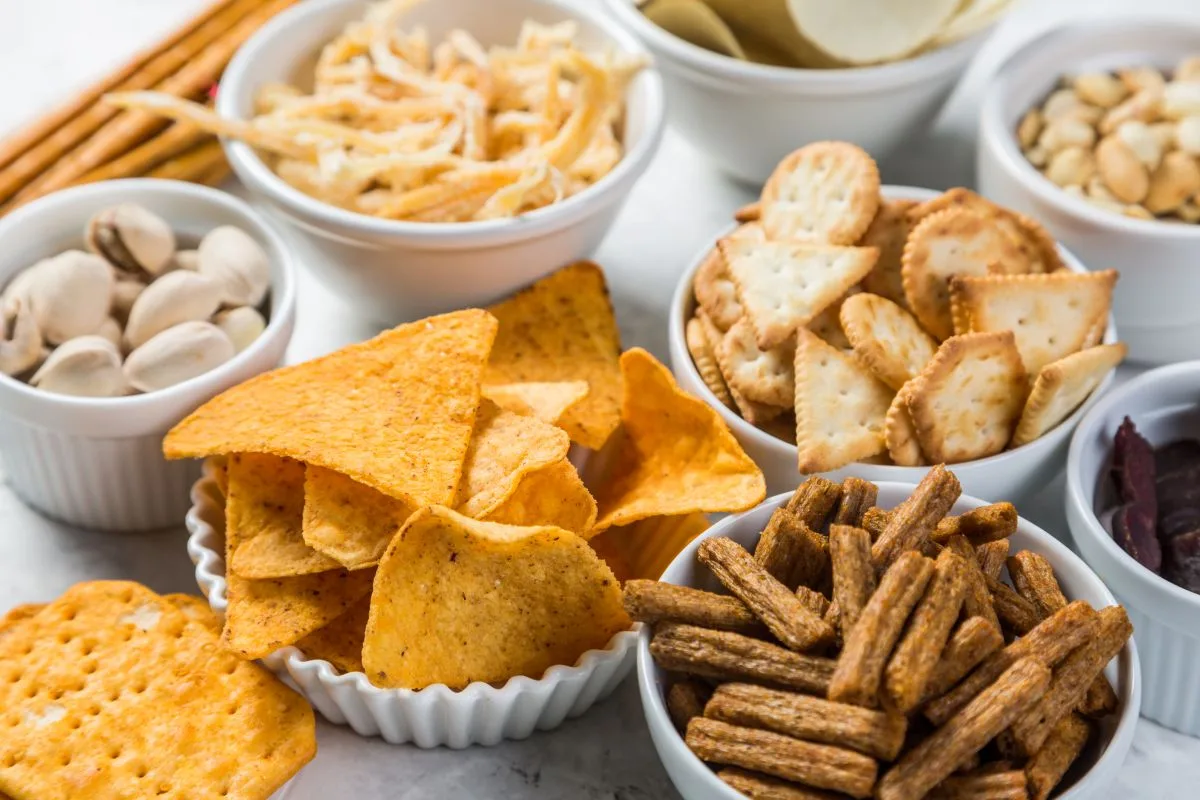

More than half of US consumers eat at least three snacks daily.
Business
Wayfair Stock Rockets Nearly 30% as Strong Earnings Beat Fuels a Massive Short Squeeze Rally Tuesday
Wayfair shares surged nearly 30% Tuesday, trading at $115.97 as of 11:54 a.m. Eastern time, after the online home goods retailer posted second-quarter results that topped Wall Street expectations, a rally that analysts say was significantly amplified by a wave of short sellers being forced to cover their bets.
The stock’s dramatic move came after Wayfair reported earnings before the market opened Tuesday, delivering its strongest quarterly performance in years and prompting a sharp reassessment of the company’s growth trajectory among investors who had spent much of 2026 skeptical of the retailer’s prospects.
A quarter that beat on every major metric
Wayfair reported adjusted second-quarter earnings of 95 cents per share, comfortably topping the analyst consensus estimate of roughly 89 to 90 cents. Revenue rose 7.5% year-over-year to $3.52 billion, ahead of the Street’s expectation of $3.47 billion, according to estimates compiled by LSEG.
On a GAAP basis, the company reported a net loss of $1 million, or 1 cent per share, compared with a profit of $15 million, or 11 cents per share, in the same period a year earlier. After adjusting for nonrecurring charges such as equity-based compensation, however, the company’s earnings picture looked considerably stronger, reflected in the 95-cent adjusted per-share figure that beat estimates.
Perhaps most notably, Wayfair reported its strongest post-pandemic U.S. revenue growth, with domestic sales rising nearly 9% year-over-year, a performance the company attributed to continued market share gains and growing momentum across its specialty and premium home goods brands.
Cash flow reaches its best level since 2020
Wayfair’s improved sales performance translated directly into stronger cash generation, with free cash flow reaching $301 million during the quarter, the company’s strongest cash flow performance since 2020. That figure marked a significant milestone for a company that has struggled with profitability and cash burn for much of its history as a public company.
Looking ahead, Wayfair told analysts on its earnings call that it expects sales momentum to continue into the current quarter, guiding toward “high single-digit” percentage revenue growth, well above the roughly 5% growth rate analysts had been modeling, according to LSEG. The company also guided toward a gross margin between 29.5% and 30.5% for the coming quarter.
Executives credit market share gains
Speaking with CNBC following the results, Wayfair’s chief financial officer, Kate Gulliver, attributed much of the company’s growth to taking market share primarily from traditional brick-and-mortar furniture and home goods retailers, even as the broader U.S. housing market has remained largely stalled. That dynamic, Gulliver suggested, has allowed Wayfair to continue expanding its customer base despite a challenging environment for big-ticket home purchases tied to a sluggish housing market.
In a separate statement accompanying the results, Wayfair CEO Niraj Shah pointed to the company’s continued success attracting higher-spending shoppers through Perigold, its luxury-focused home goods brand, as another contributor to the quarter’s strength.
A short squeeze adds fuel to the rally
While Wayfair’s underlying results were strong on their own, analysts noted that Tuesday’s outsized stock move was likely magnified by elevated short interest heading into the report. According to data cited by Benzinga, roughly 18.38% of Wayfair’s publicly traded float, or approximately 14.75 million shares, had been sold short ahead of the earnings release, an exceptionally high level of bearish positioning for a stock of Wayfair’s size. When the earnings beat sent shares sharply higher, many of those short sellers appeared to rush to cover their positions, buying back shares to limit losses and pushing the stock’s gains even further in what traders commonly describe as a short squeeze.
A stock already showing signs of momentum
Tuesday’s surge builds on a stretch of improving performance for Wayfair shares heading into the report. Despite being down roughly 6% for 2026 prior to Tuesday’s rally, the stock had already climbed about 70% since hitting a 52-week low on May 19, and was up roughly 45% over the trailing 12 months even before Tuesday’s move. Technical analysts had also pointed to the stock’s 30-day moving average recently crossing above its 200-day moving average, a signal some traders interpret as a sign of shifting momentum, for only the second time in roughly two years.
Ahead of the report, Piper Sandler had maintained an Overweight rating on Wayfair with a $115 price target, citing the company’s physical store expansion strategy as a key driver behind what the firm projected could be roughly 20% annual sales growth, a target that appeared broadly consistent with Tuesday’s results.
A company still working toward sustained profitability
Despite Tuesday’s strong quarter, Wayfair’s longer-term financial history underscores the scale of the turnaround still underway at the company. Since going public in 2014, Wayfair has posted an annual GAAP profit only once, in 2020, when it earned $1.86 per share on $14.15 billion in revenue during a pandemic-driven surge in home goods spending. The company is not expected to return to that level of annual revenue until 2028. Its operating margin, which stood at 2.5% during that 2020 peak, had fallen to just 0.14% by 2025, illustrating how far the company’s profitability has drifted from its best-ever year even as revenue has grown in absolute terms.
With Tuesday’s earnings beat and raised near-term guidance now in hand, investors will be watching closely in the coming quarters to see whether Wayfair can sustain its recent market share gains and translate them into more consistent profitability, particularly given the company’s continued exposure to a housing market that remains far from fully recovered. The scale of Tuesday’s short squeeze also raises questions about how much of the stock’s gain reflects genuine confidence in Wayfair’s turnaround versus temporary technical pressure from short sellers unwinding their positions, a distinction that is likely to become clearer as trading settles in the days ahead.

Ford Motor vehicles are displayed for sale at the Leif Johnson Ford dealership on June 30, 2026, in Austin, Texas.
Brandon Bell | Getty Images
DETROIT — Despite reporting a 10.2% decline in its July U.S. vehicle sales Tuesday, Ford Motor is touting the results as a “good sales month.”
That’s according to Rob Kaffl, Ford’s director of U.S. sales, who said the steep decline from the previous year was “by design,” as the Detroit automaker phases out two vehicles and lowered its daily rental fleet business.
“July was a good sales month for a number of reasons. Our July results reflect a strategy that is working exactly as planned: we’ve intentionally been sunsetting select models and pulled back on low-margin rental fleet volume to make room for an onslaught of new-product introductions by the end of the decade,” Kaffl said in an emailed statement.
Many times, automakers do not cancel products — like Ford has done with its Ford Escape and Lincoln Corsair — until closer to production of newer models. Or they build up inventories to assist sales during the changeover in production for new vehicles.
Kaffl said the company prioritized retail sales of its F-Series pickup trucks as the automaker continues to recover production after two aluminum fires last year at a major aluminum supplier. The company said rental sales, which are typically at lower profits, were reduced by 96% compared to a year earlier.
Without such actions, Ford contends its sales would be down less than 1%, slightly better than an estimated 2% fall for the overall industry compared to July 2025.
Planned or not, the decline last month adds to a lackluster sales year for the automaker following the problematic F-Series production as well as a pullback in all-electric vehicle sales. Ford’s sales year to date through July are down 9.7%.
Ford’s U.S. sales through June were already off 9.6% from a year earlier. That compares to an estimated 2.4% sales decline for the overall industry through the first half of the year, which doesn’t include July, according to the most recent data from Cox Automotive’s Kelley Blue Book.
Higher prices and consumer economic concerns are weighing on the overall auto industry, which Cox and other forecasters expect to be off about 3% compared to last year to 15.8 million vehicles sold.
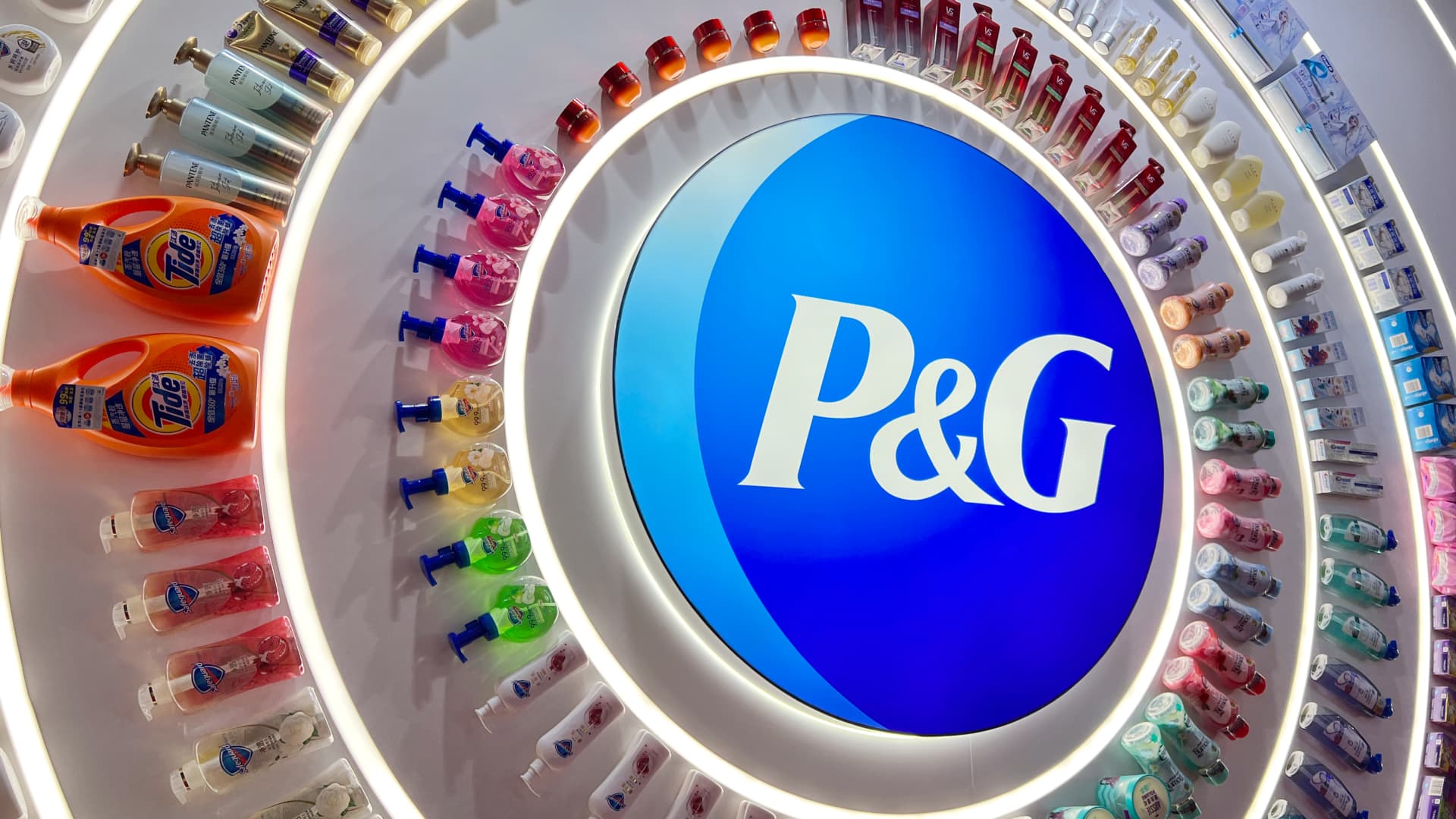

Procter & Gamble is buying supplement brand Thorne for $3.8 billion, CEO Shailesh Jejurikar said on CNBC’s “Squawk on the Street.”
The acquisition, which is set to be announced Tuesday, is a bid for P&G to grow its health and wellness division. The consumer goods giant already owns other health brands, like Vick’s and Oral-B.
“We are really happy with the asset itself,” Jejurikar told CNBC’s Sara Eisen. “It’s a really well-run operation, and it’s been around for a long time.”
Thorne’s Magnesium Glycinate and Ginseng Plus supplements.
Courtesy: Thorne
The supplement brand was founded in 1984 and went public in late 2021 at a valuation of $525 million. L Catterton then took the company private in 2023 in a deal valued at $680 million. Its annual revenue surpassed $500 million in 2025, according to Thorne.
Thorne CEO Colin Watts told CNBC earlier this year that it had the potential to become a billion dollar brand within the next few years.
The majority of Thorne’s revenue comes from shoppers under the age of 40. The supplement brand has also seen a surge in direct-to-consumer sales.
Shares of P&G were trading up less than 1% in morning trading on Tuesday.
— CNBC’s Gabrielle Fonrouge contributed to this report
This is breaking news. Please refresh for updates.

Here are more details:
The Securities and Exchange Board of India proposed aligning the rules for depository receipts issued against REITs and InvITs with those applicable to equity depository receipts.
Depository receipts are foreign-currency-denominated instruments issued by a foreign institution against securities held with a domestic custodian, allowing investors to trade those securities in an overseas market.
REITs and InvITs listed in India already accept foreign investment, subject to government and central bank rules.

The proposed rules would give overseas investors an additional route to invest and trade REITs and InvITs units in foreign currency through depository receipts, SEBI said.
SEBI has sought public comments on the proposals by August 25.

Available for over a year
How amid the tents and the rubble Gaza is developing once again as an unlikely tech hub.
Even before the 7 October 2023 attack and the subsequent war between Israel and Hamas, NGOs, with the backing of Google, had sought to develop tech start-ups in the Gaza strip. The digital economy was one of the few areas in which young Gazans in particular could seek to earn money for their families.
During the two years of war they struggled for food and water. Forced to move from place to place, most of them lost their homes, their work, sometimes their laptops and plenty lost family members. Now 80% of Gazans are unemployed and have no income. Many of them live amid the rubble in tents. Stable electricity and internet are difficult to come by. And yet co-working hubs have begun to pop up, giving well educated graduates a chance to work remotely for foreign companies as coders, software engineers and app developers. With Israel controlling what comes in and out of Gaza, they still face significant obstacles, not least finding decent internet, electricity and spare parts for their laptops. And with near-daily bombings continuing, Gaza’s wider recovery remains uncertain. Yolande Knell reports on how its tech workers give a glimpse of a brighter, possible future, open to the world beyond Gaza’s borders.
(Photo: A man sits on a chair outside and is typing on the keyboard of a laptop on his lap. Behind him is a small tree and shrubs and rubble from destroyed apartments bathed in sunlight. He has short brown hair and wears a maroon long-sleeved shirt and jeans)
Producer: John Murphy
Studio engineer: Gareth Jones
Programme co-ordinator: Gemma Ashman
Editor: Penny Murphy

Revenue from operations rose 63% to Rs 1,566 crore from Rs 958 crore a year earlier. Investment income also rose sharply to Rs 135 crore from Rs 79 crore, while other income stood at Rs 5 crore against Rs 7 crore in the year-ago period.
BSE’s profit before tax rose 66% to Rs 1,164 crore from Rs 701 crore in Q1FY26. Profit before contribution to the core settlement guarantee fund stood at Rs 1,177 crore, up 72% from Rs 685 crore a year earlier.
The company made a Rs 26 crore contribution to the core settlement guarantee fund during the quarter. Profit before tax and share of profit of associates stood at Rs 1,144 crore. Tax expense for the quarter stood at Rs 291 crore, compared with Rs 175 crore a year earlier.
Total expenses rose 49% to Rs 537 crore from Rs 359 crore in the same quarter last year. Employee benefit expenses increased to Rs 87 crore from Rs 70 crore. Technology expense rose to Rs 61 crore from Rs 50 crore.
Clearing and settlement expenses increased to Rs 90 crore from Rs 55 crore. Regulatory contribution rose to Rs 193 crore from Rs 116 crore. Other expenses stood at Rs 63 crore, compared with Rs 41 crore a year earlier. Depreciation expense increased to Rs 43 crore from Rs 27 crore.


Funding is fueling Peppertux’s continued retail expansion and expansion into foodservice.

Oil prices fell to a three-week low on Tuesday as senior US officials raised hopes of a deal with Iran to reopen the key Strait of Hormuz waterway.
US Secretary of State Marco Rubio and Treasury Secretary Scott Bessent both announced talks had progressed to allow shipments to potentially resume as soon as this week.
The cost of a barrel of brent crude, the global benchmark for oil prices, fell by almost 5% to under $80 on the news of supply disruptions potentially being eased.
But the failure of previous negotiations in recent months to de-escalate the conflict between the US and Iran have led to a volatile oil market, with drivers ultimately being hit by higher fuel prices at the pumps.
On Tuesday, along with the drop in Brent crude, US West Texas Intermediate prices were down more than 5%, to $76 a barrel. Both contracts dropped to their lowest levels since 13 July.
US Secretary of State Marco Rubio said there had been progress made in discussions on getting more ships through the Strait with Iran and Oman.
“There’s been progress made in those talks, but not finality yet. We’re hoping that will happen very shortly,” he told reporters at the State Department.
Bessent said a deal to reopen the Strait of Hormuz could be agreed as soon as Tuesday or Wednesday.
There was a “chance we may have a deal today or tomorrow to open the strait and move towards a more normalized position in this conflict,” he told CNBC.
“It would be freedom of movement,” he added, when asked whether Iran would be allowed to charge for ships passing through.
While senior figures in the US government have announced talks have been progressing, no details of what a potential deal may look like have been released.
The Strait of Hormuz has been a central point in negotiations between the US and Iran. Before the conflict began in late February, the waterway handled about one-fifth of global daily oil and liquefied natural gas supplies.

National Chocolate Chip Cookie Day arrives Tuesday, giving fans of the classic baked treat a fresh excuse to indulge, with dozens of restaurant chains, bakeries and hotels offering free cookies and discounted deals to mark the occasion.
The holiday, celebrated annually on Aug. 4, honors one of America’s most beloved desserts. According to estimates from Mrs. Fields, Americans eat roughly 7 billion chocolate chip cookies every single year, cementing the treat’s status as a staple of the American dessert landscape.
Where the chocolate chip cookie came from
The most widely told origin story credits Ruth Wakefield, a chef who ran the Toll House Inn with her husband in Whitman, Massachusetts, with inventing the chocolate chip cookie in 1937. According to the popular account, Wakefield cut up a semi-sweet chocolate bar and added the bits to her Butter Drop Do cookie recipe, expecting the chocolate to melt smoothly into the dough. Instead, the chocolate held its shape, creating the now-iconic cookie studded with distinct chocolate chunks. Wakefield published her recipe in 1938, and Nestlé soon began promoting it on its chocolate packaging and in the company’s advertising, helping cement the cookie’s popularity nationwide.
But the full history may be more complicated than the popular Toll House legend suggests. Pastry chef and author Stella Parks, in her 2017 book “BraveTart: Iconic American Desserts,” uncovered evidence that chocolate chip cookies were advertised in supermarket circulars as early as the 1930s, and that recipes for similar treats called “Chocolate Jumbles,” made with grated chocolate, were published as far back as 1877, decades before Wakefield’s famous recipe.
Even so, Parks has credited Wakefield with playing a pivotal role in the cookie’s lasting popularity. Wakefield having “popularized and developed a recipe that is still in use 100 years later” is an impressive feat, Parks said during an April 2022 appearance on the Gastropod podcast, hosted by the food news site Eater.
Deals at cookie shops and bakeries
Several cookie-focused chains are offering direct deals tied to the holiday. Insomnia Cookies is running a buy-one-get-one-free promotion on its Chocolate Chunk cookies through Tuesday, covering flavors including Chocolate Chunk, Double Chocolate Chunk, Vegan Chocolate Chunk, Vegan Double Chocolate Chunk and Gluten-Free Chocolate Chunk. The deal is valid both in-store and online.
Crumbl, while not running a promotion specifically tied to National Chocolate Chip Cookie Day, is offering customers a free 12-ounce drink through its app when they order, valid August 3 through August 8, though the offer is limited to select locations and flavors.
4th Street Cookie Company is offering 12 free mini chocolate chip cookies to customers who spend $50, limited to one box per order, while Cookies & Dreams, a woman-owned bakery based in Iowa, is hosting a giveaway offering two winners a free dozen of its signature chocolate chip cookies, along with free mini cookies for the first 15 in-store purchases at its two Iowa locations.
Hotel chains and restaurants join in
DoubleTree by Hilton, long known for greeting hotel guests with a warm chocolate chip cookie at check-in, is extending that tradition to the general public for the day. The hotel chain is offering a free DoubleTree chocolate chip cookie to guests and non-guests alike, with no reservation required.
BJ’s Restaurant & Brewhouse is offering its signature “Pizookie” chocolate chip cookie dessert for $5, though the promotion is technically a standing weekly special that happens to coincide with this year’s holiday. Burger King is also joining the celebration, offering Royal Perks members two free cookies in exchange for 150 crowns redeemed through the chain’s app.
Delivery apps and grocery chains get involved
Delivery platform Gopuff is running two cookie-related promotions Tuesday, offering customers the chance to buy two packs of Basically Cookie Thins for $8, along with a 20% discount when purchasing two packs of Crave Shoppe Chocolate Chip Cookie Dough.
Nothing Bundt Cakes is offering Bundtastic Rewards members 100 bonus points when they purchase any size of the chain’s Gluten-Free Chocolate Chip Cookie cake, while Tate’s Bake Shop is treating the first 1,000 customers at its Lexington Avenue and Madison Avenue locations in New York City to a frozen yogurt cup topped with one of the brand’s signature crisp chocolate chip cookies.
Where to find more deals
Beyond the major national chains, smaller local bakeries and regional coffee shops frequently run their own promotions tied to food holidays like this one, and shoppers are encouraged to check social media accounts of their favorite local spots to see whether they’re participating. National retailers with loyalty apps, including grocery chains like Publix and BJ’s Wholesale, have also historically featured limited-time offers tied to the holiday, making it worth checking individual retailer apps and websites for exclusions, participating locations and exact terms before heading out.
A holiday born from two others
National Chocolate Chip Cookie Day is technically a combination of two related but separate food holidays: National Chocolate Chip Day, observed each year on May 15, and National Cookie Day, observed on Dec. 4. The Aug. 4 date specifically celebrates the intersection of the two, chocolate and cookies together, giving fans of the classic treat a dedicated day each summer to seek out deals and freebies from their favorite bakeries and restaurant chains.
What to keep in mind
As with most retail promotions tied to unofficial food holidays, availability can vary significantly by location, and some deals require app downloads, loyalty program membership or minimum purchase amounts to redeem. Shoppers planning to take advantage of Tuesday’s offers are encouraged to double-check participating locations and any fine print before visiting, since not every chain location may honor national promotions uniformly, and several of Tuesday’s deals, including offers from Crumbl and BJ’s, are either ongoing weekly specials or promotions that extend beyond the holiday itself.

When Sir Don Bradman Scored A Century In Just 3 Overs

Spotify expands AI remix and covers project with Merlin partnership

Man arrested on suspicion of murder after woman’s death in Breightmet


-

 Business6 days ago
Why Trees Belong on the Risk Register
-

 Fashion4 days ago
Weekend Open Thread: Wit & Wisdom
-

 Politics4 days ago
Meta enters AI-training agreement with far-right ‘propaganda rag’ Newsmax
-
 Entertainment7 days ago
‘Stargate’ Creator’s New Sci-Fi Series Returns for Season 3 Tomorrow
-

 Crypto World3 days ago
MicroStrategy Post-Earnings CLARITY Act Push Could Add New Catalyst for Its Stock
-

 Politics6 days ago
Reform UK betrays West Mids residents by running from party pledges
-

 Business6 days ago
Major shareholder moves on Canyon
-

 Crypto World3 days ago
XRP Ledger v3.3.0 brings five institutional features
-

 News Videos5 days ago
Bitcoin Enters the 3rd Stage of the Bear Market
-

 Crypto World7 days ago
Kraken Enables Retail Access to Jersey Mike’s IPO via Tokenized Shares
-

 Politics5 days ago
Luke Littler’s dominance sparks GOAT debate
-

 Sports5 days ago
Seema Kaliramna Wins Discus Throw Bronze, Takes India’s CWG Medals Tally To 17
-

 News Videos7 days ago
Claude: Build Financial Dashboards in Minutes (2026)
-

 Crypto World4 days ago
New York sues Kalshi over prediction market gambling
-

 Crypto World2 days ago
Crypto PAC spending tops $2M in Michigan House race
-

 Politics2 days ago
Zack Polanski: an incitement to murder Nigel Farage?
-

 Business7 days ago
Johnson & Johnson agrees to $5.5B settlement over talc cancer claims
-

 Business4 days ago
Trump Announces Hamas Disarmament Agreement as Iran Strikes Kuwait Air Base and US Attacks Pause Overnight
-

 Tech6 days ago
Gemini can now summarize the messiest comment threads in Google Docs
-

 Tech2 days ago
ESET tracks rise in malicious AI skills and adaptable malware
You must be logged in to post a comment Login