
Business
Procter & Gamble to buy Thorne for $3.8 billion, CEO tells CNBC


Procter & Gamble is buying supplement brand Thorne for $3.8 billion, CEO Shailesh Jejurikar said on CNBC’s “Squawk on the Street.”
The acquisition, which is set to be announced Tuesday, is a bid for P&G to grow its health and wellness division. The consumer goods giant already owns other health brands, like Vick’s and Oral-B.
“We are really happy with the asset itself,” Jejurikar told CNBC’s Sara Eisen. “It’s a really well-run operation, and it’s been around for a long time.”
Thorne’s Magnesium Glycinate and Ginseng Plus supplements.
Courtesy: Thorne
The supplement brand was founded in 1984 and went public in late 2021 at a valuation of $525 million. L Catterton then took the company private in 2023 in a deal valued at $680 million. Its annual revenue surpassed $500 million in 2025, according to Thorne.
Thorne CEO Colin Watts told CNBC earlier this year that it had the potential to become a billion dollar brand within the next few years.
The majority of Thorne’s revenue comes from shoppers under the age of 40. The supplement brand has also seen a surge in direct-to-consumer sales.
Shares of P&G were trading up less than 1% in morning trading on Tuesday.
— CNBC’s Gabrielle Fonrouge contributed to this report
This is breaking news. Please refresh for updates.

Business
Royal Author Says Harry and Meghan’s Exit Caused ‘Very Serious Damage’ to the British Monarchy Today
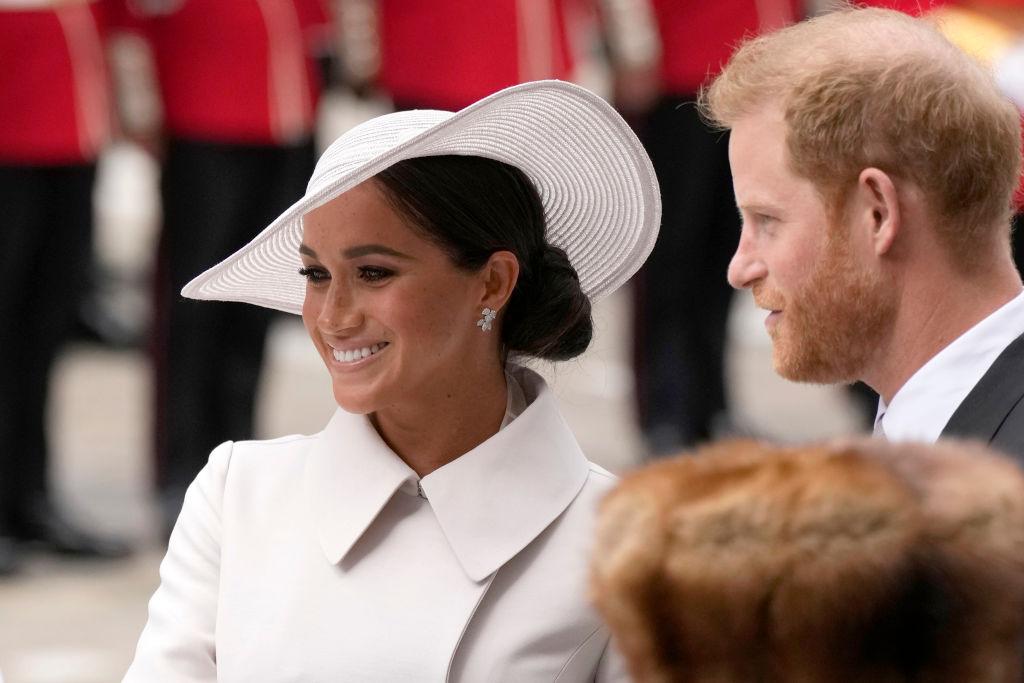
LONDON — Prince Harry and Meghan Markle’s departure from royal life has inflicted lasting harm on the British monarchy’s ability to connect with younger generations, according to royal author Catherine Mayer, who argues the couple’s exit left a gap in the institution’s public appeal that has yet to be filled.
Mayer, whose new book “Divide & Rule” is now out, made the comments to Fox News Digital as Meghan celebrated her 45th birthday on Monday, offering a fresh assessment of how the Sussexes’ 2020 departure from senior royal duties continues to shape public perception of the monarchy more than five years later.
A rupture with lasting consequences
Speaking about the impact of Harry and Meghan’s exit, Mayer was direct in her assessment of the institutional fallout. “Has done very serious damage to the monarchy,” Mayer said, describing the broader rupture within the royal family that led the couple to relocate to the United States.
Mayer was careful to clarify that her assessment was not intended as criticism of Harry and Meghan themselves. She said the framing of the situation as something the couple did to the monarchy oversimplifies what she described as a genuinely painful episode for everyone involved, including the institution as a whole. She pointed to recent public opinion polling on the monarchy’s popularity as evidence that the institution’s standing has continued to erode in the years since the Sussexes stepped back.
A missing generational bridge
Central to Mayer’s argument is the idea that Harry and Meghan once served as a bridge between the monarchy and younger, more diverse audiences, a role she argues has gone unfilled since their departure. She suggested that Prince William and Catherine, Princess of Wales, while central figures in the modern monarchy, tend toward a more traditionally cautious public approach compared with the broader appeal Harry and Meghan once offered.
Mayer also noted a generational gap within the family itself, observing that there is currently no adult royal positioned between Prince George, still a child, and his parents, William and Catherine, capable of capturing the imagination of younger audiences the way Harry and Meghan once did. She argued that despite being roughly the same age as William and Catherine, Harry and Meghan carried a broader public appeal that has since been lost to the institution.
A birthday marked by continued distance
Mayer’s comments arrived on the same day Meghan turned 45, a milestone marked amid what remains an unresolved rift between the Sussexes and the wider royal family. The couple had a private meeting with King Charles and Queen Camilla on July 10, marking Meghan’s first return to England since 2022, though she made no public appearances during that visit, underscoring the continued distance between the Sussexes and official royal life.
The couple stepped back from their roles as senior working royals in 2020, citing intrusive media coverage and what they described as insufficient support from the palace. As part of that departure, Harry and Meghan lost their taxpayer-funded security detail, a change Harry has long sought to reverse, citing ongoing concerns for his family’s safety while in the United Kingdom.
Where Mayer places the real blame
Despite her assessment that the Sussexes’ departure damaged the monarchy’s broader appeal, Mayer pointed elsewhere when identifying the primary driver behind the institution’s declining popularity in recent polling. She argued that the steepest losses in public support trace back to Andrew Mountbatten-Windsor, who was formally stripped of his princely title following the fallout from his widely scrutinized associations, a controversy Mayer suggested has done more sustained reputational harm to the monarchy than Harry and Meghan’s exit.
A recurring theme among royal commentators
Mayer’s comments echo broader debate among royal authors and commentators over the lasting impact of the Sussexes’ departure, a discussion that has resurfaced repeatedly since Harry and Meghan first stepped back from official duties. Earlier assessments of the couple’s high-profile interviews and media projects, including their sit-down with Oprah Winfrey and subsequent Netflix documentary series, similarly described the revelations as damaging to the institution’s carefully managed public image, even as royal watchers have generally predicted the monarchy would ultimately withstand the controversy.
The Sussexes have previously pushed back forcefully against authors and commentators they viewed as unfairly characterizing their motives or actions, at times issuing formal statements disputing specific claims made about their departure and its aftermath. Neither Harry nor Meghan’s representatives had issued a public response to Mayer’s latest comments as of Monday.
A monarchy navigating multiple challenges
Mayer’s broader assessment reflects a monarchy currently facing scrutiny on several fronts simultaneously, from the continued fallout surrounding Andrew Mountbatten-Windsor to ongoing questions about how the institution can maintain relevance with younger, more diverse audiences in an era of declining public deference toward traditional institutions. Her comments suggest that, in her view, no single royal currently occupies the space Harry and Meghan once filled in projecting a more modern, broadly appealing image of the monarchy to younger generations both in Britain and internationally.
With Meghan’s birthday passing largely out of the public eye and the Sussexes continuing to operate primarily from their base in California, questions about whether, or how, the family’s rift might eventually narrow remain unresolved. Mayer’s comments add to a growing body of commentary suggesting that regardless of how relations between Harry, Meghan and the wider royal family ultimately develop, the institutional impact of their 2020 departure continues to shape public conversation about the monarchy’s future years later, with no clear resolution in sight for either the family rift or the broader generational gap Mayer describes.
Business
People Incorporated 2026 Q2 – Results – Earnings Call Presentation (NASDAQ:PPLI) 2026-08-04


Seeking Alpha’s transcripts team is responsible for the development of all of our transcript-related projects. We currently publish thousands of quarterly earnings calls per quarter on our site and are continuing to grow and expand our coverage. The purpose of this profile is to allow us to share with our readers new transcript-related developments. Thanks, SA Transcripts Team

The Court of Appeal has refused campaigners permission to challenge the government’s approval of a two-runway operation at Gatwick Airport, clearing the way for the £2.2bn Northern Runway project to move into design and delivery.
Lord Justice Holgate and Lord Justice Dove dismissed the appeal bids in a ruling on Tuesday. In a 29-page judgment, they said: “We conclude that each of the grounds of appeal raised by each appellant is unarguable. Neither appeal has a real prospect of success. We also consider that there are no other compelling reasons for either appeal to be heard.”
The challenge was brought by Peter Barclay and campaign group Communities Against Gatwick Noise Emissions (Cagne), who had taken legal action against the Department for Transport over the decision to approve the plans, including over claims that the government did not properly assess the climate impact of the scheme.
The scheme moves the West Sussex airport’s emergency runway 12m (39ft) north to allow 100,000 more flights a year. The development consent order for the Northern Runway project was granted by the Transport Secretary. The expansion will allow the site to be used for departures of narrow-bodied planes such as Airbus A320s and Boeing 737s.
Mr Justice Mould dismissed the original challenges in June, finding that it was “neither illogical nor contradictory” for Transport Secretary Heidi Alexander not to refuse the proposed development “on the basis that it would have a material impact on the ability of Government to meet its carbon reduction targets”. He also rejected an argument about the need for expansion at Gatwick given the proximity to Heathrow. The two senior judges said that ruling was “detailed and thorough”.
Gatwick is the UK’s second busiest airport and one of the busiest single-runway airports in the world.
Barclay said: “We are very disappointed with the Court’s decision. We took this challenge as far as we could because we believed that the decision to allow Gatwick to expand was fundamentally flawed. It was not supported by government policy, would only serve to line the pockets of the airport and airlines, and would do so at the expense of local residents and the climate.”
Cagne said: “Residents should be immensely proud of what they have achieved in holding Gatwick Airport’s shareholders to account. This proposed new runway will come at a significant cost to both the taxpayer and the planet.”
Pierre-Hugues Schmit, chief executive of London Gatwick, said the decision to approve the plans “was taken properly and lawfully”.
He added: “We are also very pleased that this ruling, from senior Court of Appeal Judges, brings to an end an eight-year planning and legal process which has carefully tested and scrutinised every aspect of our expansion plans on multiple occasions. This final ruling means that we can now press on with the important job of bringing this exciting project to life and move forward into the design and delivery phase.”
Schmit said the Northern Runway project was expected to deliver 14,000 new jobs and a £1bn boost to the economy every year.
Muniya Barua, deputy chief executive at BusinessLDN, said: “Today’s ruling is the final step in a long-running process that clears the way for Gatwick’s Northern Runway project to move forward, providing welcome certainty for businesses, investors and communities.”
She added: “The airport’s expansion will strengthen London’s connections with key international markets, help to create 14,000 jobs and provide a £1bn boost to the economy every year. With the UK seeking to drive investment and growth, expanding aviation capacity is a vital part of maintaining London’s position as a leading global city.”
Alexander said the decision was “a major milestone for Gatwick and for local communities, with expansion unlocking investment and creating thousands of new jobs”.
She said: “Around 13 million more passengers and 100,000 more flights will give holidaymakers greater choice and strengthen global links to help make the UK one of the most attractive places in the world to invest. We’ll back expansion that supports growth and our climate goals.”
Alexander said the government was also investing over £219 million for green fuel production to cut emissions from flying and secure the future of aviation.
The ruling comes as Heathrow’s separate third runway proposals continue to draw scrutiny over costs and timelines, with Gatwick having previously reported a 7.7 per cent rise in passenger numbers on short-haul demand. Chancellor Rachel Reeves gave official backing to Heathrow expansion earlier in the process.

Amy Ingham
Amy Ingham is a reporter at Business Matters, covering UK business news with a focus on breaking news, business policy, late payments and insolvency. She joined the magazine in 2026 after completing the NCTJ Diploma in Journalism at Harlow College’s journalism school. Her recent reporting includes British Steel’s nationalisation and its impact on SME suppliers, the decline in late payments by large firms, and Insolvency Service director disqualifications. Reach her at aingham@cbmeg.co.uk.
Business
Elon Musk likely to face tough questions during SpaceX’s first earnings call after stock market listing

SpaceX shares are down by half from their June peak as investors worry Musk may have oversold them on its future prospects. They’re also bracing for volatile trading as some company insiders get the opportunity to sell shares after the expiration of what’s known as a lockup provision later in the week.
The shares jumped 19% on their first day of trading, making Musk the first-ever trillionaire. The subsequent drop in SpaceX, as well as a decline in the shares of Musk’s electric vehicle company Tesla, have knocked his wealth down to $726 billion, according to Forbes.
Part visionary engineer, part stock salesman, Musk is likely to be asked about when he expects to finish testing SpaceX’s giant Starship rockets that NASA hopes to use to put men on the moon again, his plans for its satellite network and the prospects of putting football-field sized data centers in orbit.
Given rumors of SpaceX possibly merging with Musk’s Tesla car company, he may also face questions about that tie-up but that is likely to yield few details. Neither company has confirmed plans for a combination and Musk has parried questions before by noting securities regulations bar him from discussing the issue.

SpaceX is losing money fast, with net losses for its first half this year expected to exceed more than the $5 billion in losses for all of last year. Some analysts have penciled in a strong rebound for the rest of the year that will return it to profitability.
For the second quarter ended June 30, SpaceX is expected to report a net loss of $1.9 billion, or 23 cents a share, according to a FactSet survey of analysts.SpaceX insiders were barred from selling in the public offering in June but that prohibition begins to ease on Thursday when more than 900,000 shares are released for trading, more than doubling the amount currently available for trading. The prospect has weighed on the shares, which closed Monday at $114.46, down from both the peak of $225 in June and also the IPO price of $135.
The lockup release is the first of several tranches of stock that will be freed to trade over the next several months.
After an abandoned launch, the Starship rocket successfully deployed satellites in orbit during a test late last month. Future tests could include trying to use giant arms at its Starbase launching site in Texas to grab the rocket and its booster upon its hovering return to earth.
SpaceX’s satellite communication business, Starlink, is a big cash generator for the company with contracts around the world. The company also runs a money-losing AI business, known for its Grok tool, as well as the social media platform X, the renamed Twitter.
Pfizer on Tuesday reported second-quarter results that topped estimates and hiked the low end of its revenue outlook, citing an expected $1.5 billion bump in sales from its non-Covid products.
The company is now expecting full-year revenue to total $60.5 billion to $62.5 billion, which compares to a previous outlook of $59.5 billion to $62.5 billion. That sales range would still be roughly flat or down slightly compared with 2025 revenue of $62.6 billion.
Pfizer said it cut its full-year revenue expectation for its Covid products – the vaccine Comirnaty and antiviral pill Paxlovid – to $4 billion, down from around $5 billion previously.
“Low COVID-19 incidence could continue to limit Paxlovid utilization,” Pfizer’s incoming interim CFO Cecile Guegan said during the company’s second quarter earnings call. “Our plan also assumes the majority of Comirnaty sales will occur toward year-end, consistent with the vaccination season.”
The pharmaceutical giant reiterated its full-year adjusted profit outlook of between $2.80 and $3 per share.
Pfizer also announced additional savings of $2.5 billion from two separate cost-cutting programs, which will be achieved starting in 2027 and through 2029.
“With our strong performance through the first half of the year and our ongoing productivity enhancement discipline, we remain confident in our business,” Pfizer CEO Albert Bourla said on the call.
Here’s what the company reported for the second quarter compared with what Wall Street was expecting, based on a survey of analysts by LSEG:
- Earnings per share: 77 cents adjusted vs. 68 cents expected
- Revenue: $15.03 billion vs. $14.41 billion expected
Pfizer reported revenue of $15.03 billion for the first quarter, up 3% from the same period a year ago. Sales increases for key products, including its blood thinner Eliquis and targeted cancer drug Padcev, helped to counteract struggles in its Covid business.
Eliquis in particular blew past estimates for the quarter, raking in $2.43 billion in sales, up 19%. Analysts were expecting revenue of $2.08 billion, according to StreetAccount.
Recently launched and acquired products also delivered $3.2 billion in revenue during the quarter, Guegan said during the call.
“Our commercial performance has also helped mitigate the impact of currently low COVID infection levels,” she said.
The company booked a net loss of $248 million, or 4 cents per share, for the period. That compares with net income of $2.91 billion, or 51 cents per share, during the second quarter of 2025.
The quarterly loss largely reflected a $4.3 billion non-cash impairment charge after Pfizer lowered its revenue expectations for certain products, primarily following disappointing late-stage trial results for its drug sigvotatug vedotin in previously treated non-small cell lung cancer.
The charge also reflected the removal of revenue projections for its sickle cell disease drug Oxbryta after recent discussions with the FDA. Pfizer pulled that product from the market in 2024.
Excluding certain items, including restructuring charges and costs associated with intangible assets, Pfizer posted earnings per share of 77 cents for the quarter.
The company also announced the second phase of a multi-year initiative to slash costs, which targets around $1.5 billion in savings through 2029. That phase focuses on what the company called product portfolio enhancements, network structure changes and additional operational efficiencies.
The first part of that effort is on track to deliver $1.5 billion in savings by the end of 2027.
Pfizer announced an additional $1 billion in savings from a separate cost-cutting program, which will be achieved from 2027 to 2029. That adds to the previously announced $5.7 billion in cost savings the company will achieve through the program by the end of the year.
The pharmaceutical giant is looking to longer-term investments in its pipeline, including its recent $10 billion acquisition of the obesity biotech Metsera, to counter waning Covid product sales and declines from older drugs. Investors are focused on several crucial data releases from Pfizer this year, including data on a combination regimen that includes its GLP-1 injection and an amylin asset.


More than half of US consumers eat at least three snacks daily.
Business
Wayfair Stock Rockets Nearly 30% as Strong Earnings Beat Fuels a Massive Short Squeeze Rally Tuesday
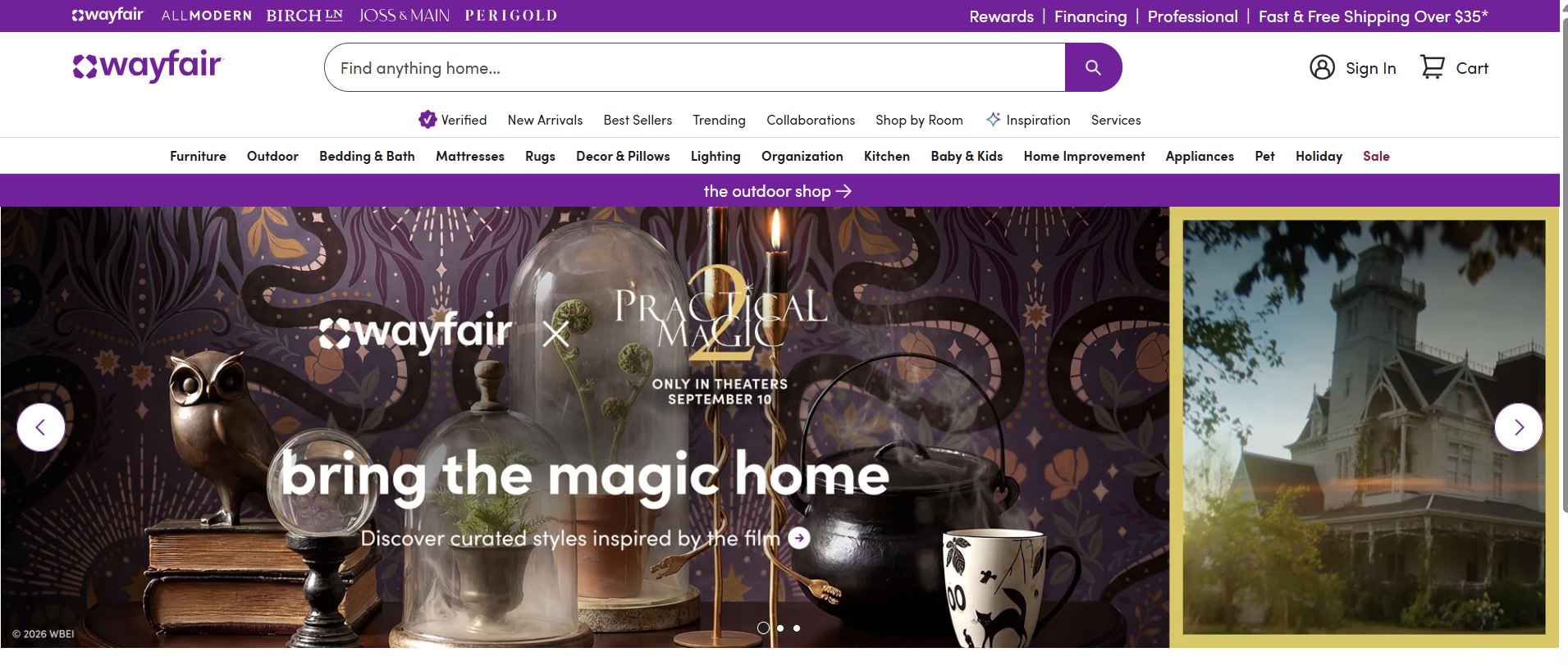
Wayfair shares surged nearly 30% Tuesday, trading at $115.97 as of 11:54 a.m. Eastern time, after the online home goods retailer posted second-quarter results that topped Wall Street expectations, a rally that analysts say was significantly amplified by a wave of short sellers being forced to cover their bets.
The stock’s dramatic move came after Wayfair reported earnings before the market opened Tuesday, delivering its strongest quarterly performance in years and prompting a sharp reassessment of the company’s growth trajectory among investors who had spent much of 2026 skeptical of the retailer’s prospects.
A quarter that beat on every major metric
Wayfair reported adjusted second-quarter earnings of 95 cents per share, comfortably topping the analyst consensus estimate of roughly 89 to 90 cents. Revenue rose 7.5% year-over-year to $3.52 billion, ahead of the Street’s expectation of $3.47 billion, according to estimates compiled by LSEG.
On a GAAP basis, the company reported a net loss of $1 million, or 1 cent per share, compared with a profit of $15 million, or 11 cents per share, in the same period a year earlier. After adjusting for nonrecurring charges such as equity-based compensation, however, the company’s earnings picture looked considerably stronger, reflected in the 95-cent adjusted per-share figure that beat estimates.
Perhaps most notably, Wayfair reported its strongest post-pandemic U.S. revenue growth, with domestic sales rising nearly 9% year-over-year, a performance the company attributed to continued market share gains and growing momentum across its specialty and premium home goods brands.
Cash flow reaches its best level since 2020
Wayfair’s improved sales performance translated directly into stronger cash generation, with free cash flow reaching $301 million during the quarter, the company’s strongest cash flow performance since 2020. That figure marked a significant milestone for a company that has struggled with profitability and cash burn for much of its history as a public company.
Looking ahead, Wayfair told analysts on its earnings call that it expects sales momentum to continue into the current quarter, guiding toward “high single-digit” percentage revenue growth, well above the roughly 5% growth rate analysts had been modeling, according to LSEG. The company also guided toward a gross margin between 29.5% and 30.5% for the coming quarter.
Executives credit market share gains
Speaking with CNBC following the results, Wayfair’s chief financial officer, Kate Gulliver, attributed much of the company’s growth to taking market share primarily from traditional brick-and-mortar furniture and home goods retailers, even as the broader U.S. housing market has remained largely stalled. That dynamic, Gulliver suggested, has allowed Wayfair to continue expanding its customer base despite a challenging environment for big-ticket home purchases tied to a sluggish housing market.
In a separate statement accompanying the results, Wayfair CEO Niraj Shah pointed to the company’s continued success attracting higher-spending shoppers through Perigold, its luxury-focused home goods brand, as another contributor to the quarter’s strength.
A short squeeze adds fuel to the rally
While Wayfair’s underlying results were strong on their own, analysts noted that Tuesday’s outsized stock move was likely magnified by elevated short interest heading into the report. According to data cited by Benzinga, roughly 18.38% of Wayfair’s publicly traded float, or approximately 14.75 million shares, had been sold short ahead of the earnings release, an exceptionally high level of bearish positioning for a stock of Wayfair’s size. When the earnings beat sent shares sharply higher, many of those short sellers appeared to rush to cover their positions, buying back shares to limit losses and pushing the stock’s gains even further in what traders commonly describe as a short squeeze.
A stock already showing signs of momentum
Tuesday’s surge builds on a stretch of improving performance for Wayfair shares heading into the report. Despite being down roughly 6% for 2026 prior to Tuesday’s rally, the stock had already climbed about 70% since hitting a 52-week low on May 19, and was up roughly 45% over the trailing 12 months even before Tuesday’s move. Technical analysts had also pointed to the stock’s 30-day moving average recently crossing above its 200-day moving average, a signal some traders interpret as a sign of shifting momentum, for only the second time in roughly two years.
Ahead of the report, Piper Sandler had maintained an Overweight rating on Wayfair with a $115 price target, citing the company’s physical store expansion strategy as a key driver behind what the firm projected could be roughly 20% annual sales growth, a target that appeared broadly consistent with Tuesday’s results.
A company still working toward sustained profitability
Despite Tuesday’s strong quarter, Wayfair’s longer-term financial history underscores the scale of the turnaround still underway at the company. Since going public in 2014, Wayfair has posted an annual GAAP profit only once, in 2020, when it earned $1.86 per share on $14.15 billion in revenue during a pandemic-driven surge in home goods spending. The company is not expected to return to that level of annual revenue until 2028. Its operating margin, which stood at 2.5% during that 2020 peak, had fallen to just 0.14% by 2025, illustrating how far the company’s profitability has drifted from its best-ever year even as revenue has grown in absolute terms.
With Tuesday’s earnings beat and raised near-term guidance now in hand, investors will be watching closely in the coming quarters to see whether Wayfair can sustain its recent market share gains and translate them into more consistent profitability, particularly given the company’s continued exposure to a housing market that remains far from fully recovered. The scale of Tuesday’s short squeeze also raises questions about how much of the stock’s gain reflects genuine confidence in Wayfair’s turnaround versus temporary technical pressure from short sellers unwinding their positions, a distinction that is likely to become clearer as trading settles in the days ahead.

Ford Motor vehicles are displayed for sale at the Leif Johnson Ford dealership on June 30, 2026, in Austin, Texas.
Brandon Bell | Getty Images
DETROIT — Despite reporting a 10.2% decline in its July U.S. vehicle sales Tuesday, Ford Motor is touting the results as a “good sales month.”
That’s according to Rob Kaffl, Ford’s director of U.S. sales, who said the steep decline from the previous year was “by design,” as the Detroit automaker phases out two vehicles and lowered its daily rental fleet business.
“July was a good sales month for a number of reasons. Our July results reflect a strategy that is working exactly as planned: we’ve intentionally been sunsetting select models and pulled back on low-margin rental fleet volume to make room for an onslaught of new-product introductions by the end of the decade,” Kaffl said in an emailed statement.
Many times, automakers do not cancel products — like Ford has done with its Ford Escape and Lincoln Corsair — until closer to production of newer models. Or they build up inventories to assist sales during the changeover in production for new vehicles.
Kaffl said the company prioritized retail sales of its F-Series pickup trucks as the automaker continues to recover production after two aluminum fires last year at a major aluminum supplier. The company said rental sales, which are typically at lower profits, were reduced by 96% compared to a year earlier.
Without such actions, Ford contends its sales would be down less than 1%, slightly better than an estimated 2% fall for the overall industry compared to July 2025.
Planned or not, the decline last month adds to a lackluster sales year for the automaker following the problematic F-Series production as well as a pullback in all-electric vehicle sales. Ford’s sales year to date through July are down 9.7%.
Ford’s U.S. sales through June were already off 9.6% from a year earlier. That compares to an estimated 2.4% sales decline for the overall industry through the first half of the year, which doesn’t include July, according to the most recent data from Cox Automotive’s Kelley Blue Book.
Higher prices and consumer economic concerns are weighing on the overall auto industry, which Cox and other forecasters expect to be off about 3% compared to last year to 15.8 million vehicles sold.

Here are more details:
The Securities and Exchange Board of India proposed aligning the rules for depository receipts issued against REITs and InvITs with those applicable to equity depository receipts.
Depository receipts are foreign-currency-denominated instruments issued by a foreign institution against securities held with a domestic custodian, allowing investors to trade those securities in an overseas market.
REITs and InvITs listed in India already accept foreign investment, subject to government and central bank rules.
The proposed rules would give overseas investors an additional route to invest and trade REITs and InvITs units in foreign currency through depository receipts, SEBI said.
SEBI has sought public comments on the proposals by August 25.

Available for over a year
How amid the tents and the rubble Gaza is developing once again as an unlikely tech hub.
Even before the 7 October 2023 attack and the subsequent war between Israel and Hamas, NGOs, with the backing of Google, had sought to develop tech start-ups in the Gaza strip. The digital economy was one of the few areas in which young Gazans in particular could seek to earn money for their families.
During the two years of war they struggled for food and water. Forced to move from place to place, most of them lost their homes, their work, sometimes their laptops and plenty lost family members. Now 80% of Gazans are unemployed and have no income. Many of them live amid the rubble in tents. Stable electricity and internet are difficult to come by. And yet co-working hubs have begun to pop up, giving well educated graduates a chance to work remotely for foreign companies as coders, software engineers and app developers. With Israel controlling what comes in and out of Gaza, they still face significant obstacles, not least finding decent internet, electricity and spare parts for their laptops. And with near-daily bombings continuing, Gaza’s wider recovery remains uncertain. Yolande Knell reports on how its tech workers give a glimpse of a brighter, possible future, open to the world beyond Gaza’s borders.
(Photo: A man sits on a chair outside and is typing on the keyboard of a laptop on his lap. Behind him is a small tree and shrubs and rubble from destroyed apartments bathed in sunlight. He has short brown hair and wears a maroon long-sleeved shirt and jeans)
Producer: John Murphy
Studio engineer: Gareth Jones
Programme co-ordinator: Gemma Ashman
Editor: Penny Murphy

Trisha Paytas Calls Out Commentary on Ariana Grande’s Body

Palestinians face escalating settler attacks in the West Bank

POV: Financial peace became your favorite luxury.


-

 Business6 days ago
Why Trees Belong on the Risk Register
-

 Fashion4 days ago
Weekend Open Thread: Wit & Wisdom
-

 Politics4 days ago
Meta enters AI-training agreement with far-right ‘propaganda rag’ Newsmax
-
 Entertainment7 days ago
‘Stargate’ Creator’s New Sci-Fi Series Returns for Season 3 Tomorrow
-

 Crypto World3 days ago
MicroStrategy Post-Earnings CLARITY Act Push Could Add New Catalyst for Its Stock
-

 Politics6 days ago
Reform UK betrays West Mids residents by running from party pledges
-

 Business6 days ago
Major shareholder moves on Canyon
-

 Crypto World3 days ago
XRP Ledger v3.3.0 brings five institutional features
-

 News Videos5 days ago
Bitcoin Enters the 3rd Stage of the Bear Market
-

 Crypto World7 days ago
Kraken Enables Retail Access to Jersey Mike’s IPO via Tokenized Shares
-

 Politics5 days ago
Luke Littler’s dominance sparks GOAT debate
-

 Sports5 days ago
Seema Kaliramna Wins Discus Throw Bronze, Takes India’s CWG Medals Tally To 17
-

 News Videos7 days ago
Claude: Build Financial Dashboards in Minutes (2026)
-

 Politics2 days ago
Zack Polanski: an incitement to murder Nigel Farage?
-

 Crypto World4 days ago
New York sues Kalshi over prediction market gambling
-

 Crypto World2 days ago
Crypto PAC spending tops $2M in Michigan House race
-

 Business7 days ago
Johnson & Johnson agrees to $5.5B settlement over talc cancer claims
-

 Business4 days ago
Trump Announces Hamas Disarmament Agreement as Iran Strikes Kuwait Air Base and US Attacks Pause Overnight
-

 Tech6 days ago
Gemini can now summarize the messiest comment threads in Google Docs
-

 Tech2 days ago
ESET tracks rise in malicious AI skills and adaptable malware
You must be logged in to post a comment Login