Connect with us

Business

SpaceX Stock Jumps Nearly 6% Ahead of First Public Earnings Report as Massive Share Lockup Nears Fast

Published

on

VIZIO

SpaceX shares climbed nearly 6% Tuesday morning, trading at $121.28 as of 9:35 a.m. Eastern time, as investors positioned ahead of the company’s first quarterly earnings report as a publicly traded company, due after the closing bell.

Tuesday’s gains extend a rebound that began Monday, when SpaceX shares rose 5.7%, snapping a seven-session losing streak that had pushed the stock well below its June initial public offering price. Despite the two-day rally, shares remain down roughly 30% from SpaceX’s $135 IPO price and more than 45% below the $225.64 all-time high the stock reached on June 16, just days after it began trading on the Nasdaq.

A defining week for the newly public company

Tuesday’s earnings report marks SpaceX’s first financial disclosure as a public company since its record-setting $85.7 billion IPO in June, the largest in history. Management is scheduled to discuss the results on a live audio-only webcast at 4:30 p.m. Eastern time, giving investors their first detailed look at the company’s second-quarter performance across its three main business lines: space launch operations, Starlink connectivity, and a growing push into artificial-intelligence infrastructure.

Advertisement

The report also carries added significance because it triggers the first major release of insider-held shares under SpaceX’s staggered lock-up structure. Beginning Thursday, Aug. 6, roughly 911.5 million shares, representing up to 20% of eligible insider holdings, become eligible for sale, a pool of stock worth well over $100 billion at current prices. That looming supply increase has weighed heavily on investor sentiment in recent weeks, with some analysts warning that a wave of insider selling could pressure the stock further regardless of how Tuesday’s earnings are received.

Analysts remain broadly bullish despite the slide

Even as the stock has struggled since its debut, Wall Street’s overall outlook on SpaceX remains largely positive. Of 28 analysts covering the stock, 27 carry buy-equivalent ratings, with only one recommending a sell, according to data compiled by Benzinga. Consensus price targets sit in the range of $231 to $236, implying substantial potential upside from current levels, while Morgan Stanley has set a particularly bullish $300 price target. RBC Capital has maintained an Outperform rating with a $225 target heading into Tuesday’s results, and Bernstein has recommended buying the stock with a $239 price forecast.

Bernstein analysts told CNBC that Starship, SpaceX’s massive next-generation rocket system, remains the central factor investors should watch in justifying the company’s valuation, alongside its access to semiconductor supply, regulatory approvals and compute capacity for its expanding AI ambitions. The firm has argued that quarterly financial results matter less to the long-term investment case than management’s demonstrated confidence in the company’s broader growth trajectory.

Advertisement

A financial picture still defined by heavy losses

SpaceX’s underlying financials continue to show a company operating deep in the red even as revenue grows. The company posted a net loss of nearly $5 billion in 2025 on $18.7 billion in sales, followed by a first-quarter 2026 loss of about $4.28 billion. Within that overall picture, Starlink has emerged as the company’s lone clearly profitable segment, generating $1.19 billion in operating profit on $3.26 billion in first-quarter revenue, while SpaceX’s newer AI infrastructure segment posted a $2.47 billion operating loss over the same period.

Looking further ahead, SpaceX’s own capital expenditure projections point to a dramatic escalation in spending, growing from nearly $49 billion this year to as much as $118 billion by 2028, with total company debt projected to exceed $218 billion over that same stretch. That scale of planned investment, aimed largely at expanding launch capacity, Starlink infrastructure and AI computing power, has fueled ongoing debate among investors over whether SpaceX’s current valuation adequately accounts for the years of heavy spending still ahead.

Heavy short interest adds to the volatility

Advertisement

SpaceX has also become one of the most heavily shorted stocks on Wall Street since its debut, with bearish positions against the company valued at roughly $24.6 billion, a figure that exceeds the short interest built up against Tesla. Investors betting against the stock have accumulated an estimated $7.3 billion in mark-to-market gains since SpaceX began trading, reflecting the sharp decline in shares since their June peak. The options market is currently pricing an implied move of roughly 14% to 15% in either direction around Tuesday’s earnings release, underscoring just how much uncertainty remains heading into the report.

Broader market backdrop

SpaceX’s rally Tuesday came alongside broader strength across Wall Street, with Nasdaq futures up more than 0.6% and S&P 500 futures also higher in early trading, as investors digested a wave of strong corporate earnings from other major companies and continued optimism around easing tensions in the Middle East. That supportive backdrop has helped several beaten-down growth stocks, including SpaceX, find some footing in recent sessions even as company-specific concerns around valuation and share supply persist.

With earnings due after Tuesday’s close and the lock-up expiration following just two days later on Thursday, SpaceX faces a compressed window in which both its financial performance and the market’s appetite for a massive new supply of shares will be tested simultaneously. Analysts widely view the earnings report as the company’s best near-term opportunity to stabilize investor sentiment before insider selling potentially accelerates, though the scale of uncertainty reflected in the options market suggests Wall Street remains far from settled on how the results, and the days that follow, will ultimately play out for one of this year’s most closely watched newly public companies.

Advertisement
Continue Reading
Click to comment

You must be logged in to post a comment Login

Leave a Reply

Business

Marriott: The Loyalty Engine Is Outgrowing The Hotel Cycle

Published

on

Marriott: The Loyalty Engine Is Outgrowing The Hotel Cycle

Marriott: The Loyalty Engine Is Outgrowing The Hotel Cycle

Continue Reading

Business

ACCC launches Regional Mobile Inquiry

Published

on

ACCC launches Regional Mobile Inquiry

WA farmers and remote communities could soon see a boost to mobile connectivity after the competition watchdog decided to launch an inquiry into regional mobile coverage.

Continue Reading

Business

MRE increase for Forrestania at British Hill

Published

on

MRE increase for Forrestania at British Hill

Yes. Corporate subscriptions are available for teams and organisations, with discounted rates as user numbers increase. Pricing starts from $1,625 + GST per user.
Get in touch
to discuss the right option for your organisation.

Business News subscriptions are used by executives, investors, consultants and professionals who need to stay informed and make better decisions about the WA market. When you subscribe you’ll get

  • Unlimited access to WA’s most trusted business journalism
  • Data & Insights — detailed profiles of WA companies, people, projects and deals
  • MyBN — a personalised feed based on the companies, people and sectors you follow
  • Special publications and industry reports
  • Daily and weekly email newsletters

Data & Insights is a research tool built specifically for the WA market. It draws on more than 30 years of Business News reporting, updated regularly to reflect what’s happening now. Use it to:

  • Look up detailed profiles of WA companies, including financials, directors and ownership
  • Find decision-makers and track their career movements
  • Research live and completed projects across WA industries
  • Monitor deals, appointments and market activity
  • Access industry rankings and league tables

Data & Insights is updated daily by our dedicated research team, which uses the latest announcements, ASX filings and editorial coverage to keep our person, company, list and project records up to date.

Business News welcome all opportunities to make our dataset accurate, complete and current, so if you have an update request, please email the team at
general@businessnews.com.au, and we’d be happy to assist.

Advertisement

MyBN
is part of every subscription. It’s your personalised view of Business News. You can follow the companies, people, sectors and projects that matter to you, and get a news feed and alerts tailored to your interests. You can save articles to read later and retain only what you need.

Only subscribers have full access to all content on the Business News website.

Advertisement

If staying informed about the WA economy is part of your job, and/or you’re looking for networking opportunities in WA, Business News is built for you.

Business News subscribers are:

  • Executives and directors tracking competitors, clients and market movements
  • Investors and advisers researching companies, deals and industry trends
  • Consultants and professionals staying across sectors relevant to their clients
  • Business owners looking for leads, context and market intelligence

Most Business News publications cover national or global markets. Business News is focused entirely on Western Australia, which means the journalism, the data and the intelligence are all built around WA companies, people and projects — not adapted from a national feed. Data & Insights, included with every subscription, combines more than 30 years of WA-specific editorial research with live business data. There’s no comparable product for the WA market.

Advertisement

The Morning Digest Email provides a comprehensive wrap of the major headlines, relevant to WA business, and includes with a snapshot of the overnight news covering oil, gold and ASX-listed companies.

The Afternoon Wrap Email focuses on the news covered by our team of journalists during the course of the working day, including exclusive stories and analysis, all of which relates to WA business and the local economy.

The BN Weekender Email contains a wrap of the Business News from the week that was, highlighting the top stories in each area of WA business.
Sign up for free.

Advertisement

We’re happy to help.
Get in touch
and our team will come back to you.

Advertisement
Continue Reading

Business

McDonald’s (MCD) Q2 2026 earnings

Published

on

McDonald's (MCD) Q2 2026 earnings

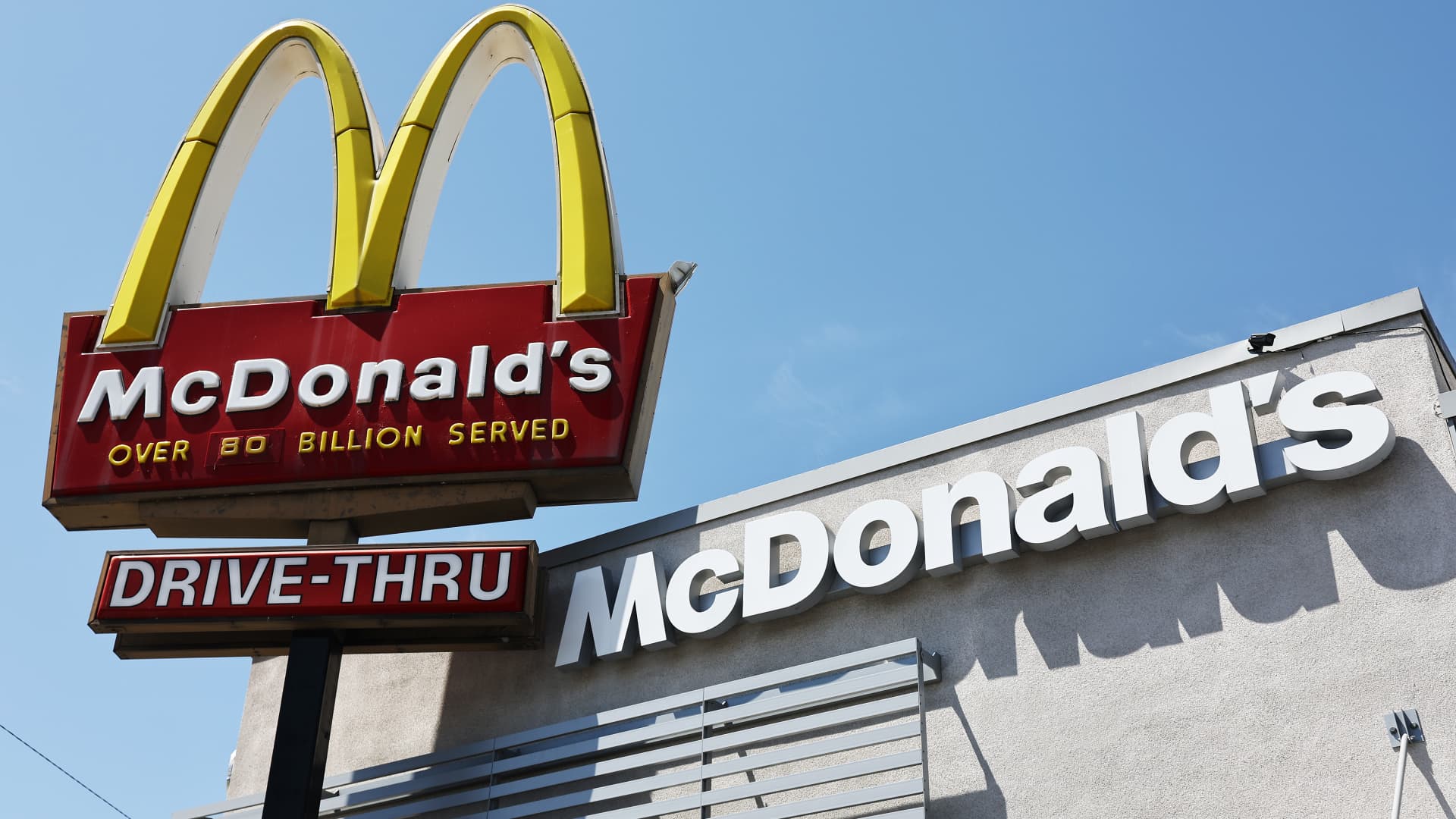
The sun illuminates a corporate logo for McDonald’s on the front of their restaurant on 72nd Street on May 4 2026, in New York City.

Gary Hershorn | Corbis News | Getty Images

McDonald’s on Tuesday reported mixed quarterly results as the chain’s U.S. performance fell short of executives’ expectations.

Advertisement

“We don’t have a strategy problem,” CEO Chris Kempczinski said on the company’s earnings conference call. “We simply didn’t execute at the level we needed to in the second quarter.”

The company also announced that Skye Anderson is assuming the role of president of its U.S. business, effective Tuesday, as it tries to boost performance in its home market. She succeeds Joe Erlinger, who led the division for more than six years. Anderson, a 26-year McDonald’s veteran, previously served as chief operating officer of McDonald’s USA and led its Global Business Services unit before that.

“While our playbook is working around the world, we see an opportunity to raise the bar in the U.S. and accelerate performance in our largest market,” Kempczinski said in a statement.

Shares of the company closed about 1% higher on Tuesday.

Advertisement

Here’s what the company reported for its second quarter ended June 30 compared with what Wall Street was expecting, based on a survey of analysts by LSEG:

  • Earnings per share: $3.38 adjusted vs. $3.32 expected
  • Revenue: $7.10 billion vs. $7.13 billion expected

The burger giant reported second-quarter net income of $2.36 billion, or $3.32 per share, up from $2.25 billion, or $3.14 per share, a year earlier. Excluding restructuring charges and other items, McDonald’s earned $3.38 per share.

Net revenue rose 4% to $7.1 billion.

The company’s global same-store sales ticked up 1.3%, meeting Wall Street’s expectations, according to StreetAccount estimates.

McDonald’s U.S. same-store sales increased 0.8% in the quarter. The chain said that average check rose, but traffic to its domestic restaurants fell.

Advertisement

McDonald’s value challenges

Executives said that McDonald’s U.S. performance was disappointing, starting with the implementation of its value strategy.

Kempczinski said that its U.S. restaurants, which are predominantly operated by franchisees, have not consistently executed its strategy for discounts. McDonald’s allows franchisees to set their own prices, although the company assesses how operators’ menu prices help the chain deliver value. For franchisees, discounts can grow sales but eat into profits.

Only about 60% to 65% of its system has implemented its “under $3 menu,” which should include 10 items, according to Kempczinski. The loose $3 parameter meant some franchisees actually raised prices on items like a small-size order of fries. At the same time, McDonald’s pulled back on many national digital offers, which play an important role in McDonald’s loyalty program.

“There was a fairly significant amount of price [increases] that got taken in Q2 as a result of those two moves,” Kempczinski said.

Advertisement

Additionally, too many complicated launches slowed down restaurant operations, adding to service times and hurting customer satisfaction scores, Kempczinski said.

Plus, McDonald’s faced tough comparisons its popular “Minecraft” movie tie-in from last April, and its World Cup campaign that launched during the last month of the quarter underperformed expectations.

If it succeeds at improving its operations and marketing, McDonald’s is expecting its U.S. same-store sales to be back on track with its expectations in 2027.

There were some bright spots, like the launch of its new lineup of refreshers and crafted sodas. Kempczinski said the drinks are introducing new visits and lifting average customer check. In the coming weeks, McDonald’s will also add Red Bull Energizers to its beverage options.

Advertisement

McDonald’s saw stronger results outside of the U.S. Its international operated markets segment reported same-store sales growth of 1.5%, while its international developmental licensed markets division saw same-store sales rise 1.9%.

In June, the company revealed a new growth strategy at its biennial worldwide convention for franchisees. A new restaurant design, better-tasting food and drinks, consumer-led innovation, and improved customer service are the four cornerstones of the new plan. The chain wants to become diners’ first choice, every time.

Executives also said that McDonald’s now expects to reach 50,000 restaurants worldwide by the end of 2028, a slight delay from its prior projection of the end of 2027. CFO Ian Borden said the lag is due to the current consumer environment and inflation to development costs.

Choose CNBC as your preferred source on Google and never miss a moment from the most trusted name in business news.

Advertisement
Continue Reading

Business

BSE shares fall 2% despite 62% jump in Q1 net profit to Rs 874 crore. Should you buy, sell or hold?

Published

on

BSE shares fall 2% despite 62% jump in Q1 net profit to Rs 874 crore. Should you buy, sell or hold?
The shares of BSE declined 2% to their day’s low of Rs 3,550 on the NSE on Wednesday even as India’s oldest stock exchange reported a 62% year-on-year (YoY) jump in consolidated net profit to Rs 874 crore for the April-June quarter of FY27, helped by strong growth in revenue from operations and higher investment income.

BSE’s revenue from operations meanwhile rose 63% to Rs 1,566 crore in the first quarter of the ongoing financial year 2027, from Rs 958 crore reported in the corresponding quarter of the previous financial year. Investment income also rose sharply to Rs 135 crore from Rs 79 crore, while other income stood at Rs 5 crore against Rs 7 crore in the year-ago period.

The company contributed Rs 26 crore to the core settlement guarantee fund during the quarter. Total expenses rose 49% to Rs 537 crore from Rs 359 crore in the same quarter last year. Employee benefit expenses increased to Rs 87 crore from Rs 70 crore. Technology expenses rose to Rs 61 crore from Rs 50 crore.

Also Read | BSE Q1 Results: Profit soars 62% YoY to Rs 874 crore, revenue surges 63%

Advertisement

Nuvama on BSE share price

Nuvama maintained its ‘Buy’ call on the shares of BSE, but reduced its target price to Rs 4,090 apiece from Rs 4,570 apiece. The latest target price implies an upside potential of 13% from the stock’s previous closing price of Rs 3,618 apiece on NSE.


The brokerage said that the company reported a strong performance in Q1, but the momentum needs monitoring. Industry volumes declined due to recent regulation, Nuvama said, explaining why it reduced its FY27 and FY28 profit estimates by up to 17%, resulting in the decline in target price.

Centrum Broking on BSE share price

Centrum Broking maintained its ‘Neutral’ call on the shares of BSE, but increased its target price to Rs 3,940 apiece from Rs 3,902 apiece. The latest target price implies around 9% upside potential from the stock’s previous closing price.The brokerage said that BSE’s Q1 performance was broadly in line with expectations, with operating revenue rising 63% YoY, driven by a 93% YoY surge in the equity derivatives segment. Most other business segments also posted healthy growth, with the exception of services to corporates, it added.

“That said, BSE continues to derive a significant share of its revenue from the equity options segment, where trading volumes have been impacted by the regulatory changes effective July 1. We expect this moderation in volumes to persist, although higher investor participation and further market share gains should partly offset the impact. Operating expenses also increased sharply during the quarter. Factoring in these trends, we expect operating revenue to register a 19% CAGR over FY26–FY29E. We also forecast both reported PAT and core PAT to deliver an 18% CAGR over the same period,” Centrum further said.

Advertisement

BSE share price

BSE had announced its Q1 results in the post market hours of Tuesday. Earlier during the day, the shares gained more than 1% to close at Rs 3,618 apiece. The stock has gained more than 2% in a week but fell over 5% in a month. The stock is overall up 38% in 2026 so far.

In the longer term, BSE shares have gained 53% in a year, and delivered stellar returns of 1,160% in three years and 2,548% in five years. The company has a market capitalisation of more than Rs 1.47 lakh crore.

Also Read |LIC OFS opens for retail investors today: Should you apply in insurance behemoth’s offer?

(Disclaimer: Recommendations, suggestions, views and opinions given by the experts are their own. These do not represent the views of The Economic Times)

Advertisement
Continue Reading

Business

Bank of England overseas working: 12,889 days logged

Published

on

Bank of England overseas working: 12,889 days logged

More than 1,000 Bank of England employees spent a combined 12,889 days working outside the UK under the central bank’s working from abroad policy, according to freedom of information data first reported by The Telegraph.

Some 6,000 staff are eligible to work overseas for up to 40 days a year, on top of an entitlement to work from home for three days a week, the Bank’s official guidance states.

The Bank said on Tuesday: “The Bank’s working-from-abroad policy is in place for staff who temporarily work outside the UK. As an organisation with a significant international make-up, we recognise that colleagues may at times need to spend short periods overseas.

“Due to continued investment in modern technology and secure systems, staff are able to carry out their roles effectively while working remotely.

“The policy is subject to time limits and other conditions, including security-related restrictions, and staff are required to fulfil their usual duties and responsibilities professionally and effectively.”

Advertisement

The latest publicly available staff handbook, which sets out the terms alongside the Bank’s other staff codes and policies, states: “The Bank is committed to supporting colleagues working flexibly and allows colleagues to work from abroad for a maximum of 40 working days a year.”

Disclosure lands during rate debate

The figures were released a week after the Bank’s monetary policy committee, which sets Bank Rate, held the cost of borrowing for a fifth time this year.

The nine-strong committee voted by six to three on 29 July to maintain Bank Rate at 3.75 per cent, according to the published minutes. Megan Greene, Catherine L Mann and Huw Pill voted for a rise of 0.25 percentage points, to 4 per cent.

The minutes state that consumer price inflation “has fallen to 2.6 per cent since the previous meeting, although it is expected to rise later this year as the effects of higher energy prices continue to pass through”. The Bank’s target is 2 per cent.

Advertisement

Figures published by the Office for National Statistics in July showed inflation of 2.6 per cent in June, down from 2.8 per cent in May. Grant Fitzner, chief economist at the ONS, said: “A fall in motor fuel prices, particularly diesel, helped ease inflation in June.”

Andrew Bailey, the governor of the Bank of England, said at the time of the decision that the path for rates depended on whether the war between America and Iran continued.

“So it depends on how the events in the Middle East, frankly, unfold. And sadly, we all know this is highly unpredictable. What goes on in the Gulf is not, I’m afraid, under our control,” he said.

Bailey had already indicated that cuts were off the table ahead of the July meeting.

Advertisement

Employers diverge on remote rules

Other large UK employers have tightened office attendance requirements over the same period. Santander instructed its UK office-based staff to work the equivalent of 12 days a month at its sites, replacing a two-day-a-week requirement, in an update sent to 10,000 employees. The bank said in-office presence was important for supporting and developing employees, particularly those early in their careers.

PwC told its 26,000 UK employees they must spend at least three days a week in the office or at client sites, up from two to three days previously.

The Bank’s next Bank Rate decision is due on 17 September, according to its published schedule.


Jamie Young

Jamie Young

Jamie Young is Senior Reporter at Business Matters, covering SME finance, employment law and Westminster policy since 2016. He has reported on every Budget and Autumn Statement since 2018, helped make sense of the ‘covid era’ and the bounce-back loan scheme from launch through the fraud investigations, and broke the magazine’s coverage of the 2024 late-payment reforms. He joined Business Matters straight from completing his BA in Administration from Exeter University and is NCTJ-qualified. Reach him at jyoung@cbmeg.co.uk

Advertisement

Continue Reading

Business

GM, Chinese automaker extend tie-up amid geopolitical tensions with US

Published

on

GM, Chinese automaker extend tie-up amid geopolitical tensions with US

Workers assemble cars at a car plant of SAIC-GM-Wuling in Qingdao city in east China’s Shandong province, Feb. 5, 2025.

ZHANG JINGANG | Future Publishing | Getty Images

DETROIT — General Motors and China’s SAIC Motor have extended a decadeslong Chinese joint venture that was set to end next year, the U.S. automaker said Tuesday night.

Advertisement

The extension comes amid a rapidly changing automotive landscape in China that has included the swift rise of domestic automakers and a shift away from traditional Western brands and legacy joint ventures.

GM declined to provide financial details of the extension, which comes amid heightened geopolitical tensions between the U.S. and China, including a potential stateside ban of Chinese brands and vehicles.

The largest disclosed change in the dynamic of the agreement is its length. The initial deal established in 1997 was for 30 years, and now the companies have announced a 20-year extension of the 50-50 joint venture to 2047.

GM noted that the deal will focus on refocus domestic sales of Buick and Cadillac models in China in addition to exporting products, including Chevrolet models, built in China for non-U.S. markets.

Advertisement

“We are committed to strong performance in the China market, and we see meaningful opportunities to compete in select international markets: the Middle East, Africa, South America, Mexico and Asia-Pacific,” GM China President John Roth said in a release.

The optimism about exporting comes as China quickly went from a reclusive market to the largest global exporter of vehicles in recent years.

China’s growth has been fueled by government funding for companies as well as a culture of innovation and speed the country has instilled in its workers, experts have said. But a slowing Chinese market and plant underutilization have forced companies to begin exporting to major auto markets globally.

China was GM’s top sales market from 2010 to 2023, but the shifting dynamics caused the Detroit automaker and its joint-venture partners to restructure operations.

Advertisement

The automaker’s earnings from China fell from around $2 billion annually in 2018 to two consecutive years of losses in 2024 and 2025. GM has reported $248 million in equity income through the first six months of this year following restructuring actions that cost the automaker $1.1 billion in special charges last year.

GM reports the joint venture has produced and delivered more than 20 million vehicles since it was established in China. 

Choose CNBC as your preferred source on Google and never miss a moment from the most trusted name in business news.
Continue Reading

Business

Bristol racket sports platform that ranks and matches players secures major investment

Published

on

Business Live

The business is now looking to expand into the fast-growing padel market

Levels Technologies has developed a rankings, ratings and community platform for racket sports

Levels Technologies has developed a rankings, ratings and community platform for racket sports(Image: British Business Bank)

A Bristol company that has developed a rankings, ratings and community platform designed to modernise how racket sports are played and organised has secured a £500,000 investment.

Levels Technologies – originally launched as SquashLevels – uses data-led insights to provide more accurate player ratings, helping to match players of similar ability and improve participation and engagement.

The business, which also has an office in London, will use the funding to further develop its platform, including launching new sports verticals and investing in commercial and data teams to accelerate user growth and partnerships, it said.

The round was led by The FSE Group, which invested £250,000 through the British Business Bank’s South West Investment Fund. It also included participation from Akira Financial, the Professional Squash Association (PSA), and the Haley Family Office.

Advertisement

Levels Technologies’ platform is available across web and mobile, and combines player performance data, dynamic rankings and social features, giving users a way to track progress, compete and connect.

Having already built a strong user base in squash, the business is now expanding into other fast-growing racket sports markets, starting with padel.

Co-chief executive Jethro Binns, a former professional squash player, said: “We built Levels to bring a more accurate and engaging way for people to play racket sports, starting with squash and now expanding into much larger global markets. This investment allows us to accelerate that vision, develop the platform further and grow our partnerships internationally.

“The support from FSE and our co-investors brings valuable experience as well as capital, and we’re looking forward to working closely together as we scale.”

Advertisement

Matt Browning, investment manager at FSE, added: “Levels has developed a differentiated platform that is already demonstrating strong engagement from its user base.

“The team has built a product that solves a clear problem in how players are ranked and matched, and there is a significant opportunity to apply this across a range of growing racket sports. With proven traction and clear expansion plans, we believe the business is well positioned for further growth.”

Continue Reading

Business

Disney (DIS) earnings Q3 2026

Published

on

Disney (DIS) earnings Q3 2026

Merchandise is displayed on a shelf at the Times Square Disney store on May 6, 2026 in New York City.

Michael M. Santiago | Getty Images

Disney reports quarterly earnings before the bell on Wednesday, and investors will be focused on the direction of the company’s streaming and theme parks business — as well as further updates on CEO Josh D’Amaro’s strategy for growth.

Advertisement

Disney’s fiscal third-quarter earnings will be released less than five months since D’Amaro took over for Bob Iger as CEO. In that time the company has seen layoffs across the company, the most recent round reportedly occurring in July at divisions including ESPN.

Here’s how Disney is expected to perform in its fiscal third quarter, according to LSEG:

  • Earnings per share: $1.86 expected
  • Revenue: $25.40 billion expected

Last quarter D’Amaro outlined his plans for future growth, much of which focused on investing in intellectual property and advancing technology around storytelling, particularly in the context of boosting theme parks and streaming.

In addition to details around layoffs and other cost-cutting measures, Wall Street will be keen to hear how current macroeconomic conditions are affecting Disney’s businesses.

Theme parks remain a driver of revenue and profit. But the effects of the U.S.-Israel conflict with Iran and related jump in oil prices has affected some of Disney’s peers.

Advertisement

In July, Comcast’s NBCUniversal reported that its Orlando parks experienced lower attendance during its most recent quarter due to what executives called “weakness in consumer sentiment and higher travel costs.”

Last quarter Disney said that despite these trends and broader uncertainty for consumers, demand at domestic parks remained healthy and there had been an increase in guest spending during the quarter.

In addition to Disney’s experiences division, streaming will once again take up much of the attention for investors.

Wall Street will be looking for updates on subscriber and advertising growth for both its flagship platform Disney+, as well as ESPN’s direct-to-consumer app that was launched nearly a year ago.

Advertisement
Choose CNBC as your preferred source on Google and never miss a moment from the most trusted name in business news.
Continue Reading

Business

Under treasurer Joann Wilkie departs after one year

Published

on

Under treasurer Joann Wilkie departs after one year

The state’s under treasurer Joann Wilkie has left her role one year to the day since moving to Western Australia.

Continue Reading

Trending

Copyright © 2025