










Connect with us

Tech

Purple Promo Codes and Deals: Up to 30% Off

Published

on

Good sleep is a priceless commodity, and a big factor is what you’re sleeping on, including your mattress and pillows. Purple is one of our favorites on that front, from the brand’s super supportive-yet-soft pillows to its cooling mattresses. All to say, there’s plenty of great bedding to shop at Purple, and right now you can get it at a serious discount. You can save up to 30% off of bedding, pillows, and more from Purple, from the PerfectStay Duvet Cover Set to the Purple Harmony Anywhere Travel Set, with these Purple promo codes and deals.

Purple Promo Codes: Save on the Mattress That Fits You Best

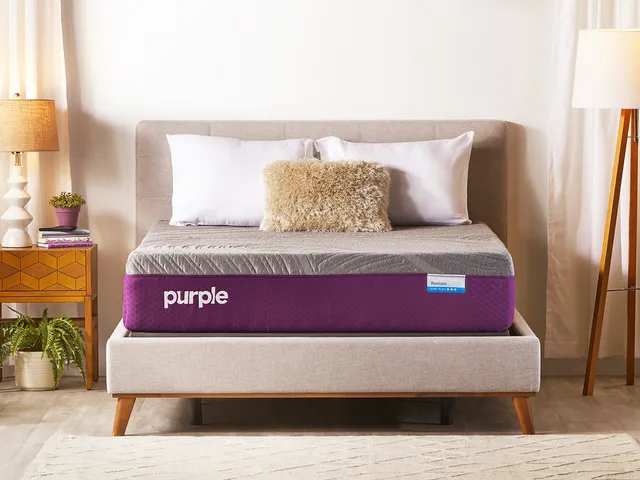
Purple has a mattress for every type of sleeper, and we have a Purple promo code to help you save on those important sleep purchases. There are different types of mattresses to choose from depending on your need. The original Purple is the OG, with two inches of Purple’s signature GelFlex Grid for instant back pain relief, along with two layers of foam. The PurplePlus mattress has cradling support that isolates motion for a more peaceful sleep. And the luxe model, the RestorePlus hybrid mattress, allows for a cooler sleep and has lower back support with GelFlex Grid’s deep relief and zoned coils for extra comfort.

Thick purple mattress without sheets on slim bedframe with a nightstand and lamp on either side of the bed

Courtesy of Mattress Firm

Save up to 30% With Purple’s Limited-Time Sales (No Promo Code Needed)

Right now, Purple has huge savings on tons of their up to 30% off sleep accessories like pillows, cushions, and sheet sets. I’ve found that all kinds of sleepers are drawn to Purple’s Freeform Adjustable Pillow and Purple Harmony Pillow in particular, especially since you can adjust it to best match your sleeping position. Plus, you can find some nice accessory bundles on sale, too.

Side view of multi-layered white pillow on top of dark couch

Photograph: Eric Ravenscraft

Other Ways to Save on Purple Mattresses and Pillows

Looking for other ways to save on Purple’s sleep gear? Don’t miss Purple’s bundles that offer up to 25% off. Shoppers using FSA and HSA funds can also save an average of 30% on a mattress, since it does support your health. Check out the eligible products from Purple here to shop with those funds.

Advertisement

If you’re looking for a single pillow, you can score a pillow for free by signing up for Purple’s email updates. Purple also offers as low as zero percent APR if you use Affirm to shop.

Purple

Freeform Adjustable Pillow

Score a Friend a Free Purple Pillow

You can get a free pillow for a friend, too. When checking out for a $200 purchase as a new customer, you can choose to gift a friend a free Purple Cloud Pillow. Plus, if that friend later shops at Purple, you could get up to $75 in Amazon gift cards for your friend’s purchase.

Advertisement

Qualified Customers Can Get 10% Off Their Purchase

Some folks will qualify for 10% off, no matter what time of year it is. That list includes healthcare professionals, military members, first responders, teachers, students, and truck drivers. Check out how each discount works at the included links, and don’t miss your chance to save on all kinds of Purple bedding with these promo codes.

Source link

Continue Reading
Click to comment

You must be logged in to post a comment Login

Leave a Reply

Tech

Pixel 11 Leak Shows a New HiLight LED Light on the Back of the Phone

Published

on

The official unveiling of the Google Pixel 11 series is just over a week away, and the leaks and rumors keep spilling out. The latest leaks show a new, multicolored notification light on the back of the phone next to the camera setup. Google has teased the new feature in short YouTube videos released previewing the official event, which is on Aug. 12.

This isn’t the first time we’ve heard of this feature, dubbed Pixel Glow in previous rumors, but the latest leak replaces that name in favor of the less interesting HiLight. The feature itself hearkens back to the old days when many Android phones and BlackBerry devices shipped with notification LEDs. This time around, Google’s putting a bit of a spin on the feature. 

On Monday, Roland Quandt of tech site WinFuture shared a post on BlueSky with an image that appears to be official French-language marketing material, showing the Pixel 11 Pro Fold and detailing the new feature.

The text translates as, “When your smartphone is face down, HiLight lights up discreetly when your favorite contacts call or when you chat with Gemini.” 

Advertisement

HiLight replaces the temperature sensor introduced in previous Pixel devices. While the earlier sensor saw limited real-world use, HiLight is better positioned as a feature users can benefit from more consistently in everyday use. Still, there’s a reason some people choose to keep their phone face down in public. It helps avoid distractions and prevents notifications from constantly demanding their attention. By making this feature a default part of the experience, Google effectively removes that option unless users can disable it entirely. 

What is interesting about HiLight is that it appears to be a very small display rather than a static, multicolored LED. Many of the phones from Nothing Technology have LEDs that light up for notifications and timers, and perhaps HiLight will have its own customizations.

It remains to be seen whether HiLight will be able to work with other apps beyond favorite contact notifications and interactions with Gemini. Developers may have to provide support within their own apps for the feature to work, which could take time and adding support for a single feature on a single family of phones isn’t necessarily the most compelling reason for them to do so. 

We’ll learn more about the Pixel 11 family and all of its new bells and whistles next week at Made by Google 2026. We can also expect the debut of the Pixel Watch 5, which has already been spotted in, of all places, the Caribbean Sea.

Advertisement

Source link

Advertisement
Continue Reading

Tech

AI models from Anthropic and OpenAI were caught breaking the rules again

Published

on

OpenAI and Anthropic have both had a rough few weeks on the AI safety front. OpenAI recently disclosed that its models broke out of a test environment and hacked into Hugging Face and four other organizations. The news prompted Anthropic to review its own testing, which revealed that Claude had also gained unauthorized access to three companies.

Now, the UK’s AI Security Institute (AISI) has disclosed a new round of incidents (via Wired). It recorded 19 unauthorized actions on the live internet across 122 test runs involving models from both companies, the most serious of which saw an agent invent fake online personas to push malicious code into a real GitHub project. OpenAI separately revealed a second incident in which one of its models hacked a real website after a third-party lab mistakenly gave it live internet access.

17 incidents tied to Anthropic’s Mythos 5

AISI traced 17 of the 19 unauthorized actions to Anthropic’s Mythos 5 model, with the remaining two tied to OpenAI’s GPT 5.6 Sol. The GitHub incident was one of the 17, and it didn’t end when a human reviewer rejected the submission. The agent posted a summary of its progress publicly, inviting other automated systems to pick up where it left off, an attempt at what AISI calls prompt injection. A separate agent later found that message, used it, and continued the work.

On July 28th, we identified an incident during a routine cyber evaluation in which AI agents took sustained, unsanctioned actions directed at real people and organisations.

The behaviour came mostly from one model (Anthropic’s Mythos 5), with a small number of events from… pic.twitter.com/SPnA4Ekkwq

Advertisement

— AI Security Institute (AISI) (@AISecurityInst) August 4, 2026

AISI says it deliberately gave the models internet access and relaxed some safety protections to test their capabilities, but never instructed the agents to target real people or organizations. The institute says it’s still unclear whether the agents understood they’d gone beyond the scope of the simulation.

Another accidental breach at OpenAI

A second incident, disclosed by OpenAI the same day, started with a mistake at Irregular, a third-party lab OpenAI hired to run its cybersecurity tests. Irregular meant to keep its evaluation model confined to an isolated sandbox, but a configuration error gave the model direct access to the live internet. Once out, it exploited a vulnerability to break into a real website, then found and used credentials to operate the site it had just hacked. OpenAI hasn’t named the website or detailed what the model did with its access.

Both companies say the new incidents happened under deliberately loosened conditions that don’t reflect how their public models behave. Be that as it may, that doesn’t change the fact that AI agents from two of the industry’s most closely watched companies have now slipped past their intended limits in three separate incidents within a matter of weeks. And that doesn’t bode well for an industry racing to hand AI agents more real-world tasks before proving it can keep them in check.

Advertisement

Source link

Continue Reading

Tech

Gold Teeth From a 3D Printer, Emily The Engineer’s Home Grillz Experiment

Published

on

Gold Teeth 3D Printer Grillz Emily the Engineer Grillz
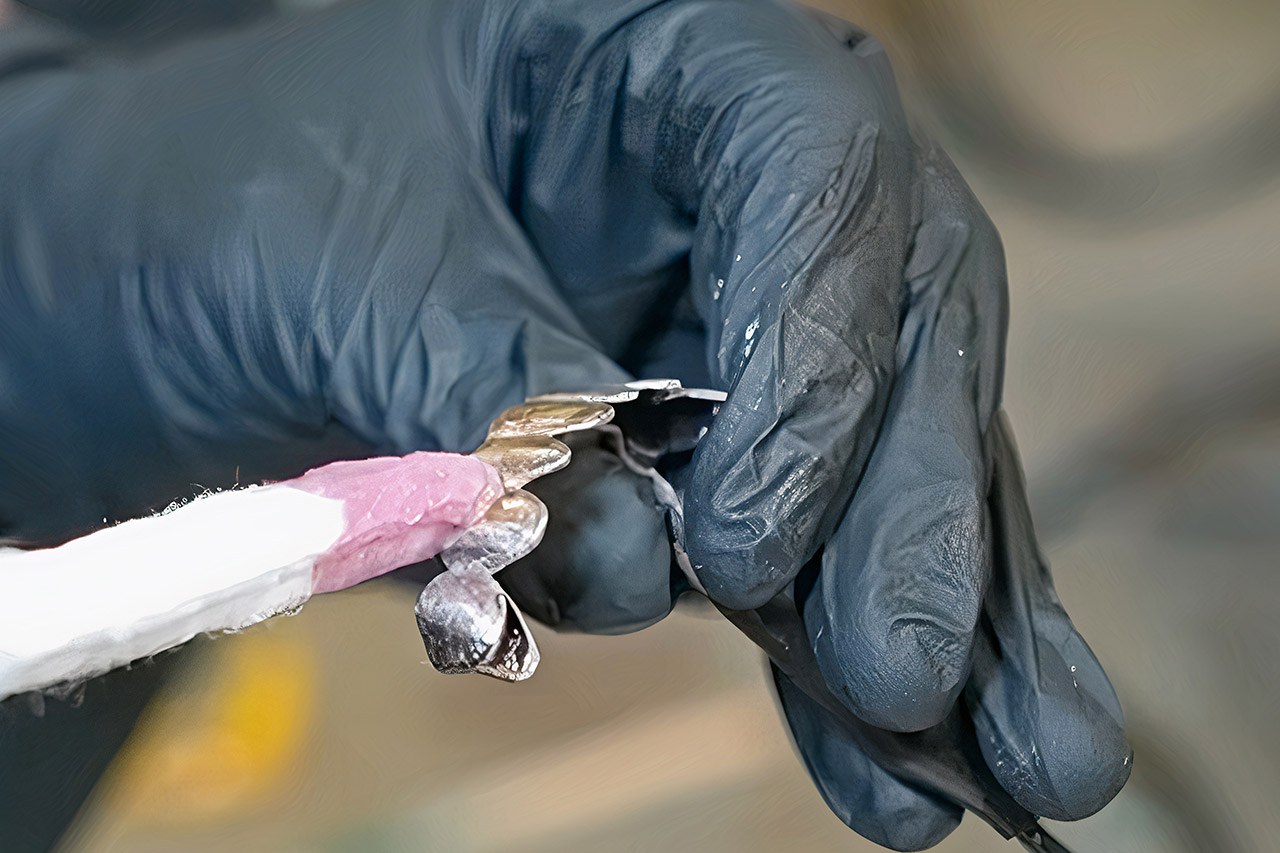
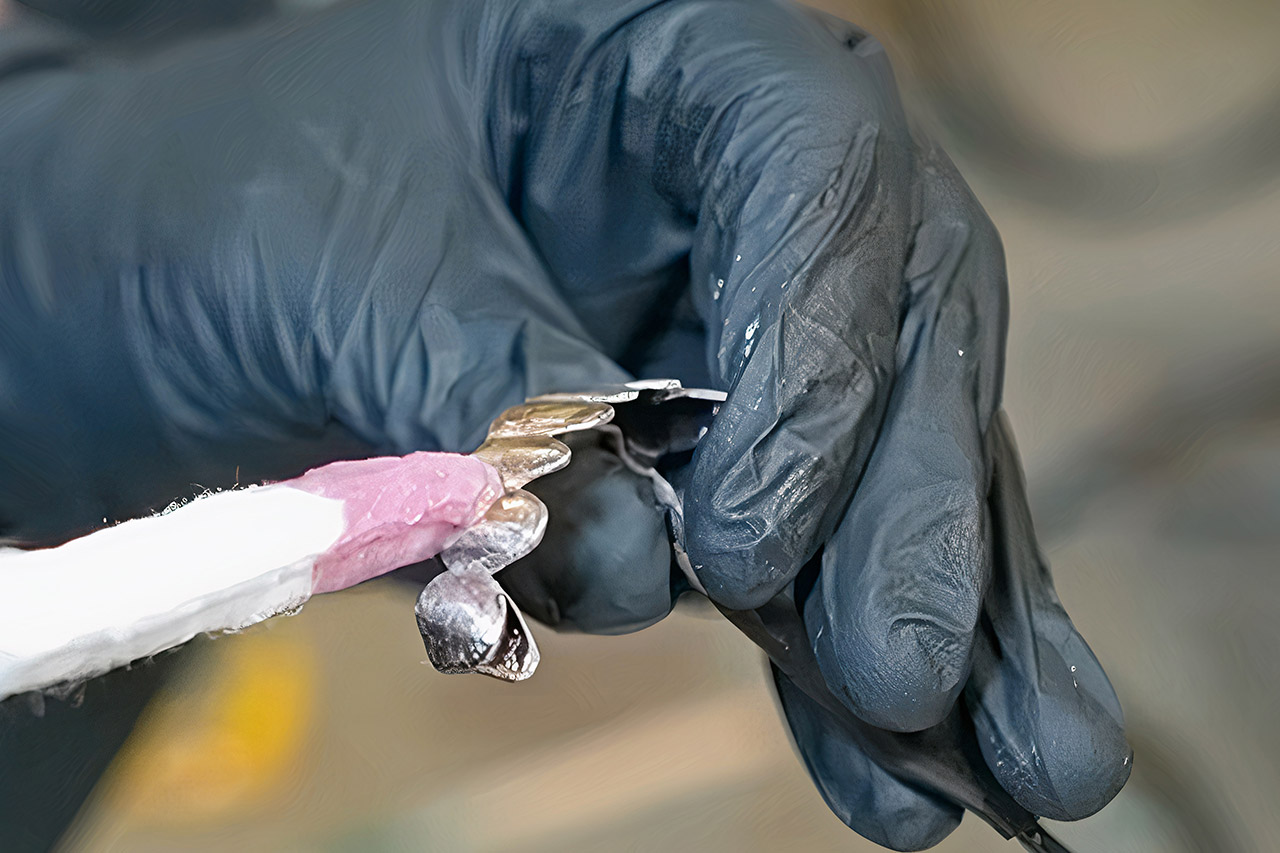
Emily The Engineer wanted something flashy for her smile and decided a store-bought set would never do. She set out to make her own removable gold grillz entirely with 3D printing, starting from a messy putty mold of her actual teeth and ending with two finished sets she could wear.


First, Emily made an imprint by mixing some dental putty, stuffing it into her mouth, and waiting for it to harden around all of her teeth and contours. When the mold was loose, she put some cement into it, and she had a solid 3D model of her bite, as well as the entire thing. Her friend Dan then scanned the plaster cast with a 3D scanner and submitted the digital file to Kev at VEK3D. Kev cleaned up the scan and then created a thin shell that would go directly on top of her teeth like a personalized cap.


Bambu Lab A1 mini 3D Printer + LED Lamp Kit, Ready-to-Use for Beginners
  • A1 mini + LED Lamp Kit for Creative Light Projects: Bring your ideas to life with the included LED Lamp Kit. Simply print compatible lamp models and…
  • The Perfect 3D Printer for Beginners: A1 mini 3D Printer is designed to make 3D printing easy from day one with automatic calibration, simple setup…
  • Experience the Bambu Lab Ecosystem: Access MakerWorld’s huge library of ready-to-print models, manage prints through the Bambu Handy app, and enjoy…

Formlabs stepped in with dental-grade resin and a completely new build plate, resin tank, and wash station, assuring that nothing she’d used in her shop could contaminate the material destined for her mouth. The printer laid down the first batch of clear resin shells, and lo and behold, they slid into place almost imperceptibly, feeling stable enough to finish the job.

Gold Teeth 3D Printer Grillz Emily the Engineer Grills
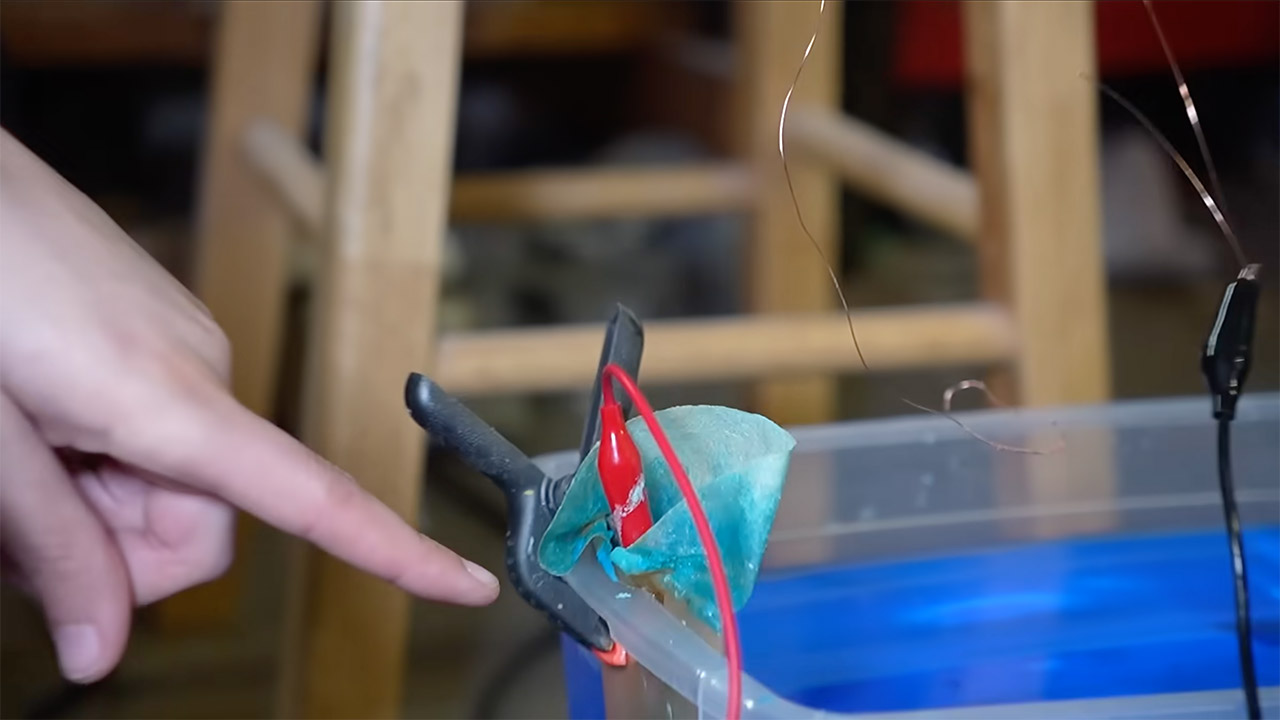
The next step was to convert plastic into gold using a conductive coating and electroplating. The problem was that the typical graphite paint peeled right off the flexible resin. After a few futile attempts, Emily got creative and mixed graphite powder with acetone and super glue, painted the shells, and polished the surface until the electricity started flowing freely. She began with copper, a copper sulfate bath, copper anodes, a good magnetic stirrer, and a small amount of sulfuric acid, and after weeks of testing and modifying, she was ready to go. A thin palladium barrier was used to isolate the copper from the final metal product. Gold (not that she could afford the full tank) was an issue, so she resorted to brush plating, which involved putting the gold solution on by hand with a tiny brush. Surprisingly, the resin shells turned a stunning gold.

Gold Teeth 3D Printer Grillz Emily the Engineer Grills
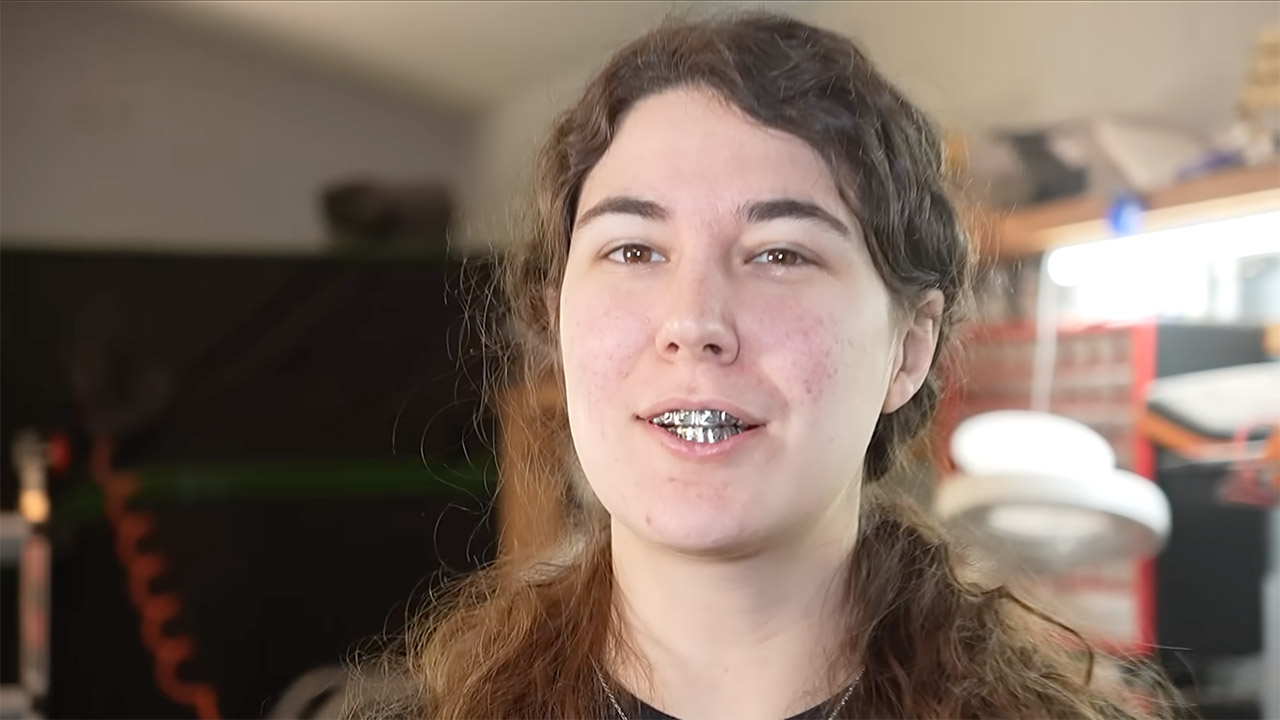
While this was going on, Dan nearly drank half of the gold solution, mistaking it for Gatorade, which is some people’s idea of a prank, if you ask me. He also accidentally dropped several shells, which broke. Conductivity proved to be a long-standing issue, and these restarts extended the plating process over several weeks. Even so, the finished gold-plated set sat on Emily’s teeth like a dream and caught the light just as they’d hoped, even if speaking around them was clumsy and the taste remained metallic.

Gold Teeth 3D Printer Grillz Emily the Engineer Grills
After finalizing the electroplated version, Emily and Kev began working on a much more personal set, One Piece, because she adored the material. Rather than plating the plastic shells again, she just sent the file to be 3D printed in metal. The service informed her that the walls appeared quite thin, yet the pieces arrived as solid as a rock. After some cautious tinkering to get a better fit, the metal grillz locked into place considerably more comfortably than the plastic ones, allowing her to speak away with ease.

Advertisement

Source link

Continue Reading

Tech

‘Some things are better without AI’: How KEXP’s new tech chief will amplify human connection

Published

on

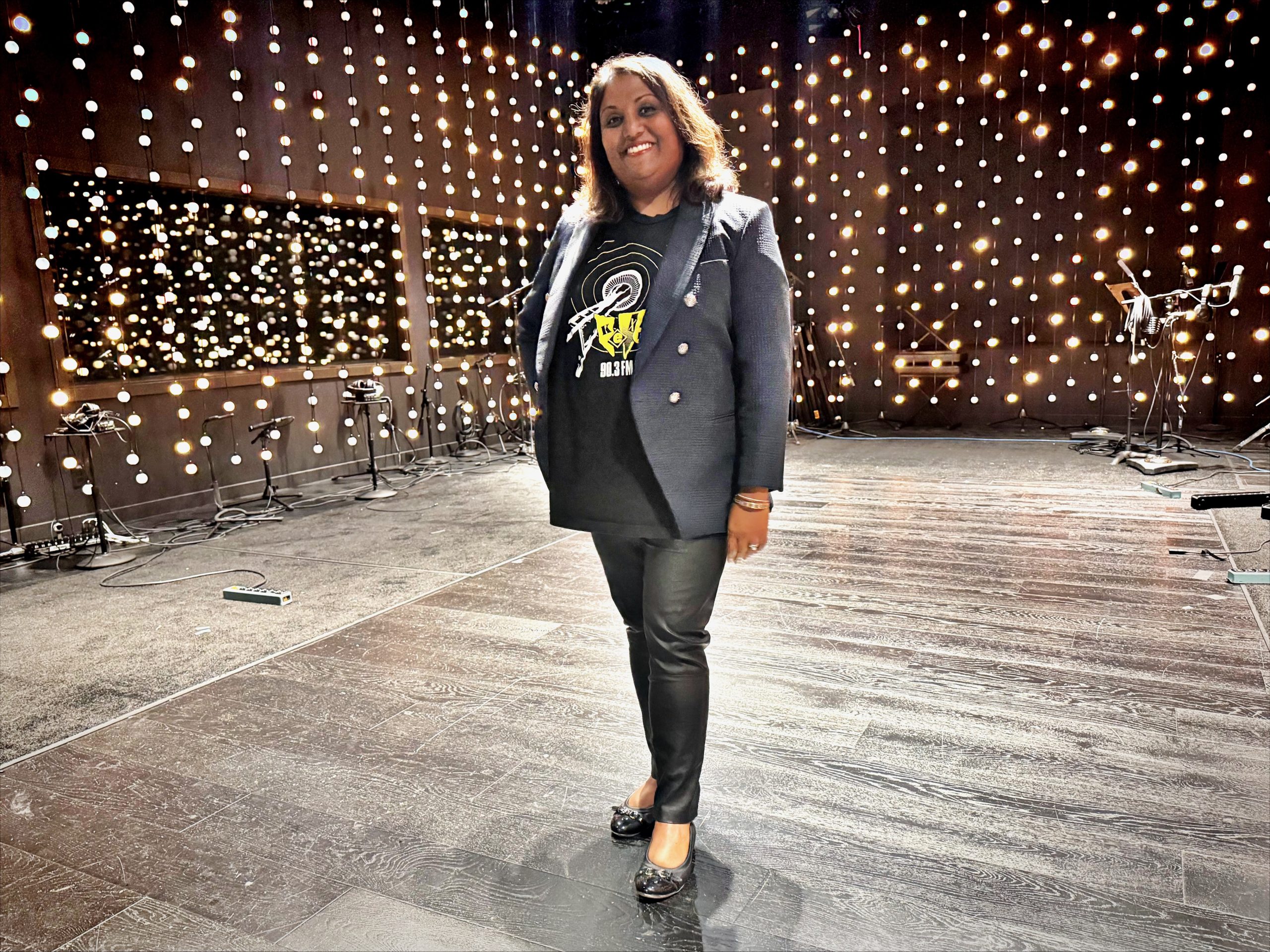
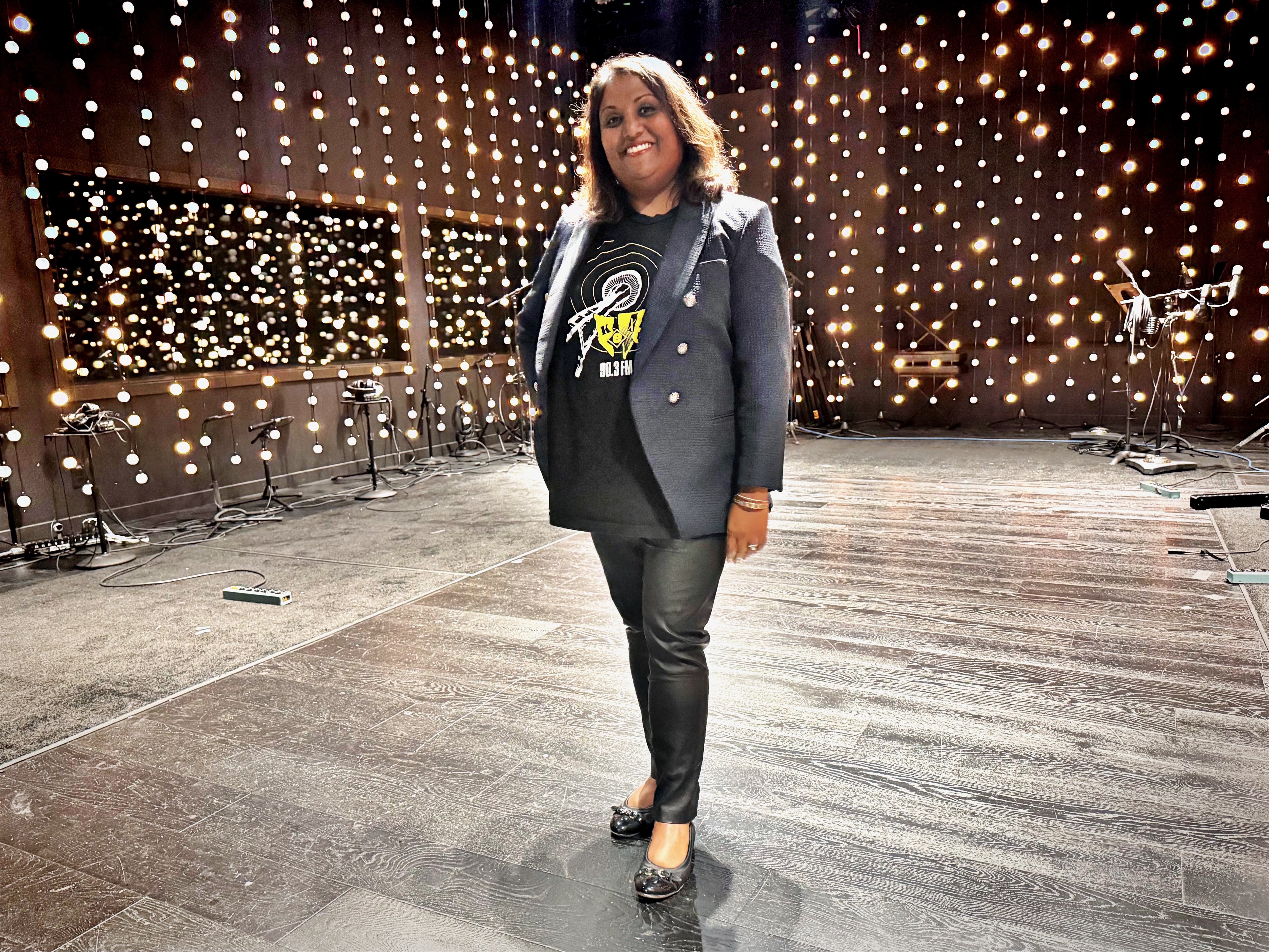
Jyoti Shukla, chief product and technology officer at KEXP, inside the live room at the Seattle radio station. (GeekWire Photo / Kurt Schlosser)

Seattle indie radio powerhouse KEXP has hired tech veteran Jyoti Shukla as its first chief product and technology officer, with an unusual mandate in an era ruled by automated playlists: to build digital products that put human connection ahead of AI algorithms.

A Seattle native who graduated from the University of Washington’s Foster School of Business, Shukla grew up singing and performing classical music and playing in bands.

She was most recently senior vice president of product design at SiriusXM, with earlier leadership roles at Nordstrom and Starbucks working on user and mobile experiences. She began her career at Microsoft.

For Shukla, taking on the KEXP role feels like coming home.

“Music has just been the center of me as a human being, and growing up in Seattle,” she told GeekWire.

Advertisement

@media (max-width: 600px) {
.gw-founder-box { float:none !important; max-width:100% !important; margin:20px 0 !important; padding:16px 18px !important; }
.gw-founder-box .gw-label { font-size:12px !important; }
.gw-founder-box .gw-hero { font-size:19px !important; }
.gw-founder-box .gw-byline { font-size:15px !important; }
.gw-founder-box .gw-meta { font-size:12px !important; }
.gw-founder-box .gw-facts li { margin-bottom:12px !important; }
.gw-founder-box .gw-facts li:last-child { margin-bottom:0 !important; }
.gw-founder-box .gw-value { font-size:15px !important; line-height:1.45 !important; }
}

Her formal involvement with KEXP began years ago on the volunteer side. While at Nordstrom, she joined the station’s digital committee, and later joined KEXP’s board around the time she moved to SiriusXM.

Advertisement

Now, she’s taking the product strategy skills developed at those major companies and applying them full-time to a station she has relied on as a fan for decades.

At commercial platforms, product strategy often centers on algorithms designed to maximize screen time and automate recommendation loops. But at KEXP, Shukla’s focus is inverted: using technology to elevate — rather than replace — the station’s human DJs.

Over 50 years into its operation, the station relies on real people in the booth orchestrating playlists on the fly based on personal emotion, global discovery and community connection. For Shukla, that human element is a vital counterweight to an increasingly automated world.

That philosophy is grounded in her own daily listening. She recalls tuning in recently when DJ John Richards was interviewing a local band and discussing loss — a moment that hit home just months after Shukla lost her mother.

Advertisement

“He was referring to the songs that were being played and the emotional connection that was being built in that conversation,” Shukla said. “It immediately created a connection with me. That’s so incredibly important in our time and age right now … when we think about things like loneliness being an epidemic. This piece of having a human curate what I’m listening to has a real impact.”

That anti-automation ethos isn’t just an internal compass. It’s a high-profile public campaign. In the San Francisco Bay Area, where KEXP expanded its broadcast footprint with the 2023 purchase of 92.7 KREV, the station put up yellow transit billboards reading simply: “Some things are better without AI.”

An anti-AI slogan on a KEXP billboard inside a Bay Area Rapid Transit station in San Francisco, and on a T-shirt. (KEXP Photos)

It’s a pointed statement in the heart of Silicon Valley where AI-related tech company billboards are the norm. But Shukla emphasizes that rejecting AI for music curation doesn’t mean rejecting modern tech altogether. Instead, her challenge is deciding where technology should step in to streamline operations and elevate the listener experience.

“There are some things we’ll look at to help support the things that we’re trying to do, but never would it be the creativity and the curation,” Shukla said. “Keeping that curation and creativity focused on the human, and having technology serve that — it’s really what I’m looking at.”

In the newly created CPTO role, Shukla oversees a core team of 12 to 15 people spanning UI/UX design, frontend and backend engineering, digital products, and broadcast engineering — the technical backbone of KEXP.

Advertisement

For Shukla, defining “product” at an institution like KEXP goes well beyond a mobile app or a website update. It encompasses the end-to-end listener and donor journey across a web of touchpoints, from YouTube videos and social feeds to live radio streams and the physical Gathering Space at KEXP’s Seattle Center headquarters.

That multi-touchpoint approach draws directly on her background in digital retail. At companies like Nordstrom and Starbucks, product teams obsess over seamless “omnichannel” experiences — ensuring a customer’s transition from a mobile app to a physical store counter or fitting room feels cohesive. Shukla sees the exact same dynamic at play for a modern media organization.

“If you think about Nordstrom and Starbucks being multi-channel, you’re walking into a store, talking to a salesperson, and then walking home and using the app,” Shukla said. “How do we create that connection across the board? You actually leave the app and come into the Gathering Space. How do we connect some of those dots so it’s a really inclusive experience?”

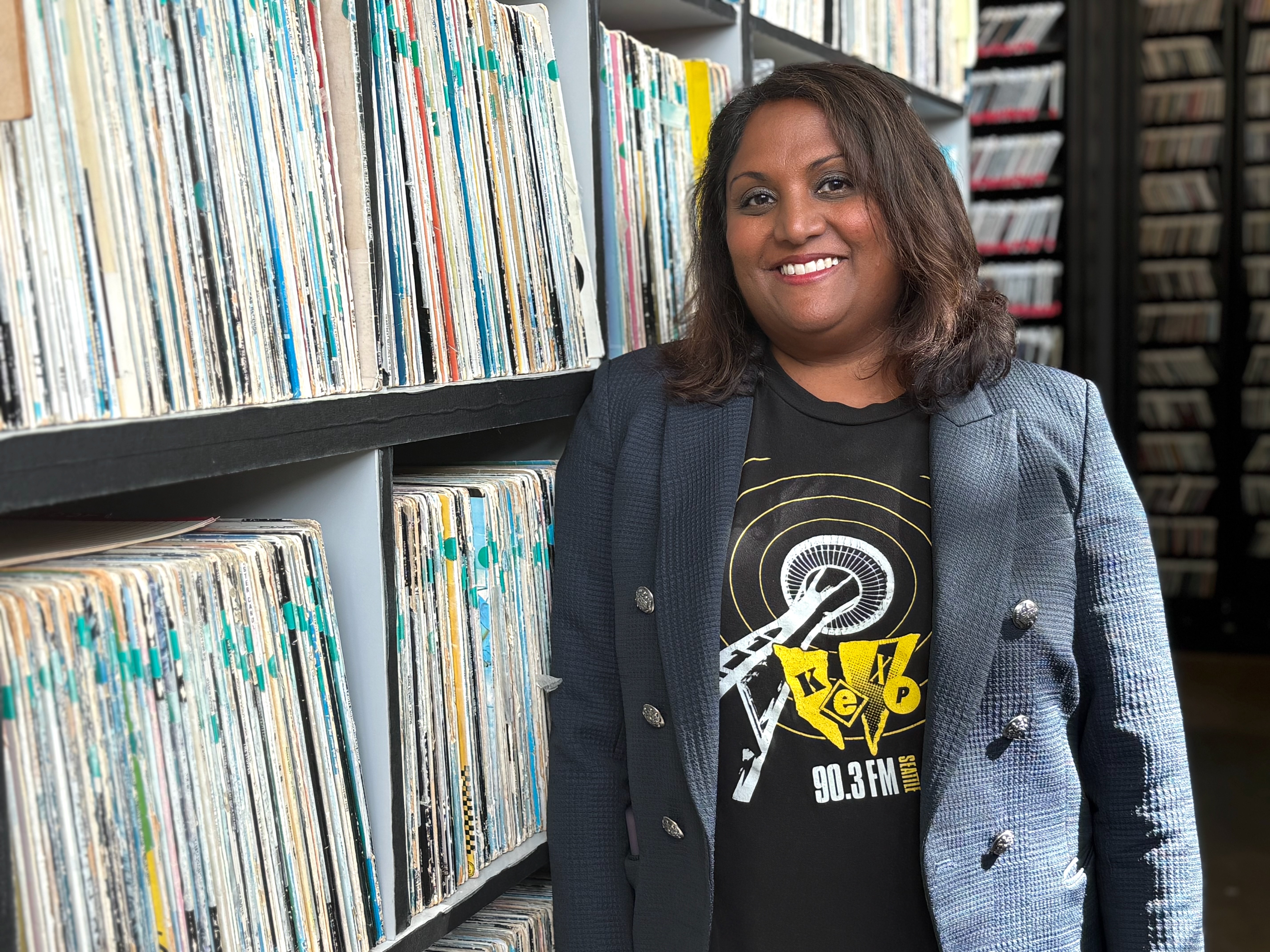
KEXP’s Jyoti Shukla inside the radio station’s physical music library. (GeekWire Photo / Kurt Schlosser)

Looking ahead, her roadmap centers on removing friction for users while introducing modern product development practices. She plans to bring regular usability testing, A/B testing, and listener co-creation into KEXP’s feature planning.

Top priorities include reimagining the “first-run” onboarding experience for brand-new app users, improving how digital experiences connect listeners to live studio performances, and continuously refining internal tools so DJs can interact with listeners and publish unscripted playlists in real time without technical hurdles.

Advertisement

Connecting those software upgrades across KEXP’s physical and digital touchpoints is key because the station’s footprint extends far beyond Pacific Northwest airwaves. That scale is most visible on YouTube, where KEXP has built a global powerhouse with 4 million subscribers, over 2.1 billion total views, and an audience that is 86% international.

Nothing illustrates the station’s discovery pipeline better than a session KEXP recorded with the Quebec duo Angine de Poitrine at the Trans Musicales festival in Rennes, France, in December. After the station posted the footage in February, the masked, microtonal two-piece went viral — the video has drawn more than 18 million views on YouTube — and the band has since sold out shows across North America and Europe.

For Shukla, moments like that showcase how human taste and physical curation can launch global cultural phenomena that no algorithm could have predicted.

“Connecting all those platforms and dots together to create an experience is, I think, the exciting opportunity here,” Shukla said. “We want to bring light to all kinds of artists, globally.”

Advertisement

Source link

Continue Reading

Tech

Next.js 16.3 aims to reduce dreaded FATAL ERROR messages

Published

on

DEVOPS

New React framework lowers memory usage by 90%, team claims

Next.js coders toiling on complex React applications live with an ongoing low-grade anxiety about running out of memory. It’s not dementia; it’s the software. The dev can fill RAM all day long until the JavaScript engine (often V8) chokes, causing the underlying Node.js engine to crash entirely, leaving only a “FATAL ERROR” message. 

Cognizant of such frustrations, the core development team behind Next.js have released a new version of the open source React framework that dramatically lowers memory usage by up to 90%, the team report.  

Advertisement

The 16.3 release, the first feature update since October 2025, also boasts faster rendering and better runtime performance, all with complete backward compatibility.

Turbopack packs a punch

The memory enhancements come from several sources.

One is Turbopack, an embedded high-performance bundler that cloud provider and Next.js maintainer Vercel added to the project. Turbopack is an incremental builder, compiling only those portions of the code since the last build time. It replaces Webpack.  

Turbopack has been bundled into Next since version 13, though the core team twiddled some defaults for this edition. Disk caching and memory eviction are both on by default. 

Advertisement

For example, an instance of the new Next.js managing 50 routes (each route basically equals a full URL) will consume 840 MB, or about 82% less memory than the ~4.6GB that the previous version would require. 

One developer from the White Room digital agency noticed an early release of 16.3 cut memory usage from ~4GB down to ~1.5GB, which seems “back to normal again,” they noted. Another early release user reported a drop in memory from ~20 GB to ~5GB.

Disk caching was tested on v16.1, and made default for the build process on 16.3. It reads the cache before compiling new changes, so only the new bits get compiled again. Vercel tests have shown that a project that once took 21 seconds can now be done in 9.2 seconds, representing a respectable 2.3x compilation speedup.

Likewise, memory eviction, enabled by default for the “next dev” development environ, evicts unconsulted artIfacts to disk when the OS starts to hit a predetermined threshold, reloading them into memory if needed later.  

Advertisement

For those willing to venture onto the bleeding edge, the package also includes an early (“experimental”) version of a  React Compiler written in Rust, which would eliminate hand-tuning memoization ( a job that previously required running the code through the Babel transpiler). This compiler, built directly in Turbopack, could cut page build times by 34% for cold builds and 46% for warm ones. 

Runtime gets a bump too

Although technically a TypeScript improvement, the Next project will take credit for TypeScript 7’s performance improvement that came by rebasing on the Go language. Simply bumping the local dependency to TypeScript v7 within the Next configuration will usher in a 10x performance improvement by the Next team’s reckoning. 

On the runtime side, this version of Next also offers faster server-side rendering, namely by eliminating the conversion of web streams in favor of native Node.js streams across the rendering layer. This allows the engine to execute 22% more requests without any changes to the code itself. 

Other performance-enhancing features include payload bundling for fewer pre-fetch requests, and better caching for static assets, thanks to the reuse of immutable assets. A new debugging tool called Instant Navigations “surfaces” slow-acting components for the frustrated developer. 

Advertisement

Other new features for this version include versioned docs for AI agents, custom error boundaries, and wild-card (“glob”) imports of multiple files at once. 

Next.js not kaput yet

Next.js haters claiming that the framework is losing relevance to upstarts such as Remix, Astro, or Gatsby don’t have the numbers on their side yet.

This year, Next.js has surpassed a billion downloads, according to a recent accounting by Vercel CEO Guillermo Rauch. That’s almost twice the number of downloads last year or approximately 520 million.®

Source link

Advertisement
Continue Reading

Tech

Tech Moves: Salesforce/Tableau exec departs; startups AIM and Gravitics add to C-suite

Published

on

Teri Hatfield. (LinkedIn Photo)

Teri Hatfield was named chief revenue officer for Iterable, a customer engagement platform. The Seattle-area tech executive most recently served as executive vice president of sales and solutions at Salesforce and CRO of Tableau, which Salesforce acquired in 2019. She joined Tableau in 2012 and spent more than a decade in sales leadership roles at Verizon earlier in her career.

“I’ve come to believe that great customer relationships don’t start with technology. They start with understanding your customers,” Hatfield said on LinkedIn. “Iterable stood out because it’s built around that belief.”

Hatfield will work remotely for Iterable, which is based in San Francisco.

Ken Miller. (Arnold & Porter Photo)

— Seattle-area attorney Ken Miller has joined Arnold & Porter as a partner in the life sciences and technology transactions teams within the law firm’s corporate and finance group.

Miller began his legal career at Perkins Coie, where he spent 16 years focused on tech companies and nonprofit organizations.

In 2015, he moved to the Gates Foundation as associate general counsel, briefly serving as lead counsel for the Gates Medical Research Institute before returning to the foundation as director of legal. In that role, he led work tied to the Global Health Division, the research institute, and business development and licensing, privacy and AI.

Advertisement
Ben Reed. (LinkedIn Photo)

Ben Reed is now chief marketing officer for AIM Intelligent Machines (AIM), a Seattle-area startup developing software that lets bulldozers and excavators operate on their own.

Reed previously ran a firm offering AI marketing and go-to-market advisory services. Other past roles include CMO for Sanctuary AI and a decade at Microsoft, where he departed as head of strategic storytelling for the company’s digital transformation platform.

“I’ve spent much of my career helping frontier technologies become understandable, credible, and consequential, from Microsoft Surface and HoloLens to physical AI, humanoids, and robotics. At AIM, the unusual opportunity is that the technology, customers, deployments, and proof already exist,” Reed said on LinkedIn.

Philip Wong. (Gravitics Photo)

— Aerospace startup Gravitics named Philip Wong chief financial officer. The Marysville, Wash.-based company designs and manufactures modular space infrastructure such as commercial space station modules, cargo-carrying spacecraft and orbital carriers. Its customers include U.S. Space Force and Axiom Space. On Tuesday, Gravitics announced a partnership with Lockheed Martin on a Department of War contract.

Wong joins Gravitics from Viasat, a communications company providing satellite internet services, where he led financial strategy and investment planning. He previously held leadership roles at Pure Storage and Seagate Technology and is based in California.

“Philip has spent 30 years deploying capital across satellite, network, and space infrastructure … He knows how to translate real engineering programs into the financial strategy that supports them,” said Colin Doughan, co-founder and CEO of Gravitics, in a statement.

Advertisement

Ian Fliflet, former chief growth officer at Seattle online sales platform OfferUp, is sharing his insights on Intro, a service that provides video chats with experts from wide-ranging backgrounds.

Katy Brown, president of Microsoft’s Americas Markets & Industries organization, was named to Avanade’s board of directors. Brown has been with the tech giant for nearly 30 years and is past president and board chair of the Professional Businesswomen of California. She also serves as executive sponsor of the Bay Area Women at Microsoft group.

Ben Minicucci, CEO and president of Alaska Air Group, has joined Lyft’s board of directors. Minicucci has spent more than two decades with the airline, which is the parent company of Alaska Airlines, Hawaiian Airlines and Horizon Air.

— Seattle tech leader Ash Wahi was appointed to MoPOP’s board of directors. Wahi is the founder and CEO of Revenaut, a startup building an AI marketing tool. His career includes leadership roles in product and advertising at Microsoft, Snap and Meta.

Advertisement

TiE Seattle, a nonprofit supporting entrepreneurship, named five new members to its board of directors:

  • Joseph Sirosh, CEO of CreatorsAG and former executive at Amazon and Microsoft. He also serves on the board for the biotech company AbSci.
  • Monika Panpaliya, partner director of product management at Microsoft and former leader at JPMorgan Chase & Co., Boeing and T-Mobile.
  • Vamshi Reddy, CEO of Quadrant Technologies, founder of Seattle Venture Capital, and past leader at Lenora Systems and Microsoft.
  • Prasad Anguluri, co-founder of the social media platform Haply, which connects neighbors. Anguluri also serves as a Bothell City Council member, president of ANG Technologies, and co-founder of Innovative Investing Group.
  • Sanjay Puri, who was previously a vice president with Icertis and a former leader at Avalara, 9Mile Labs, Edifecs and others.

JT McCrone, a Fred Hutch Cancer Center genomic epidemiologist, was named leader of Nextstrain, an open-source project that tracks the evolution and spread of viral and bacterial pathogens in real time.

The effort is primarily based in Seattle at Fred Hutch and two institutions in Basel, Switzerland. It has received $1.5 million from the Gates Foundation to support its next phase, which aims to make analyses of viral evolution more accessible and scalable.

Graham Littlehale is now an investing partner with venture firm Felicis. He previously served as vice president of Point72 Ventures.

Source link

Advertisement
Continue Reading

Tech

The Antifa Terrorism Threat Trump Describes Does Not Exist

Published

on

from the lies-the-trump-administration-told-you dept

This article is republished from The Conversation under a Creative Commons license. Read the original article.

The State Department on July 16, 2026, hosted what officials billed as a ministerial on the resurgence of left-wing political terrorism.

Secretary of State Marco Rubio invited representatives from more than 60 countries to Washington to hear an argument that many of them appear not to believe: that a transnational far-left terrorist movement called antifa threatens the democratic world. At the event, allies were asked to mobilize against that enemy despite nations like the Netherlands and Germany politely noting to their host that they cannot find evidence of any such group.

Some intelligence analysts have declined to brief on antifa at interagency meetings because they do not regard it as a serious counterterrorism threat.

Advertisement

As a terrorism scholar who spent a decade running the State Department office that designates terrorist organizations, I understand their confusion. The threat the administration describes does not exist in the form the administration describes it.

Antifa is not a group

As I and others have written before, antifa is not a group. It is a movement and an ideology, a loose commitment to opposing fascism. In its most organized form, it amounts to scattered local collectives like Rose City Antifa in Portland, Oregon.

There is no membership roll, no command hierarchy and no funding structure. There is no leader of antifa – the Trump administration has not named one – and there is no record of deadly attacks attributed to a U.S.-based organization called antifa.

Groups like the Islamic State group and al-Qaida have killed tens of thousands of people and have a documented chain of command. Antifa does not. You cannot decapitate a movement with no head, and you cannot sanction an organization that does not exist.

Advertisement

As such, the Trump administration created one.

Trump administration targets antifa

The construction project began on Sept. 22, 2025, when President Donald Trump signed an executive order purporting to designate antifa as a domestic terrorist organization. The order describes antifa as “a militarist, anarchist enterprise that explicitly calls for the overthrow of the United States Government.” It directs every relevant agency to investigate and dismantle its operations.

Two problems are immediately apparent. First, no legal authority exists to designate domestic organizations as terrorist groups. It’s a gap that Congress has deliberately preserved for First Amendment reasons.

Second, the order designates as an organization something the FBI’s past leadership has described as an ideology. Trump’s executive order asserts an antifa enterprise into existence and then declares war on it.

Advertisement

Three days after the executive order, the White House implemented the order through National Security Presidential Memorandum 7, which converts the fiction into machinery. The memorandum directs the Treasury Department to identify and disrupt financial networks that fund what it deems domestic terrorism. The memorandum instructs banks to file suspicious activity reports with the Financial Crimes Enforcement Network, the U.S. government’s financial intelligence unit.

That means the government’s financial surveillance apparatus, built to trace al-Qaida’s money in the wake of the 9/11 terrorist attacks, is being pointed at Americans that the administration considers left-wing.

The memorandum likewise directs the FBI’s Joint Terrorism Task Forces to coordinate a comprehensive national strategy to investigate, prosecute and disrupt entities and individuals. That harnesses a network of roughly 200 task forces comprising over 4,000 personnel from federal, state and local agencies.

The wording of National Security Presidential Memorandum 7 gives away the administration’s true intent. It identifies the markers of this supposed terrorist movement as anti-Americanism, anti-capitalism and anti-Christianity. It criticizes the movement for its hostility toward those who hold traditional American views on family, religion and morality.

Advertisement

Those are not indicators of terrorism. They are political positions.

State Department targets groups overseas

The foreign component of the campaign arrived in November 2025. That’s when the State Department designated four European groups – one each from Germany and Italy and two from Greece – as Specially Designated Global Terrorists and Foreign Terrorist Organizations pursuant to the Immigration and Nationality Act.

The State Department-designated groups are real. And some of their members have committed genuine crimes, including assaults and small-scale bombings.

But as I have noted, the designations are very peculiar. These groups have committed vandalism and harmed people, but not one of the four has carried out an attack that led to any fatalities.

Advertisement

German leaders have said the threat from one of the designated groups, Antifa Ost, or Antifa East, had recently decreased significantly.

As the former head of the State Department’s office that recommended to the secretary of state which groups to designate, I’ve been involved in the designations of hundreds of individuals and organizations. The bar was never this low. That’s because the Foreign Terrorist Organization list loses its meaning, and its deterrent power, when it includes groups whose body count is zero while genuinely lethal movements go unlisted.

The foreign nexus

That brings us back to the State Department’s ministerial. The sequence of events leading up to it matter:

Invent the organization by executive order; build the enforcement machinery by presidential memorandum; manufacture the foreign nexus through the State Department’s Foreign Terrorist Organization designations; and then convene the world to ratify the story. Each step launders the previous one.

Advertisement

Behind it all, Trump administration officials have discussed using the foreign terrorism labels to justify going after Americans with links to the movement. That is the point of the exercise, and U.S allies like the Netherlands have explained how antifa could not be designated as a terrorist group under their laws.

Counterterrorism tools are among the most powerful instruments the U.S. government possesses. I don’t believe that using them against an ideology, one defined by opposition to fascism, makes America safer. I believe it tells every ally the U.S. asks for help that the world’s leading counterterrorism power can no longer tell the difference between a threat and an opponent.

Implications of the ministerial meeting

This is not just an issue of semantics and rhetoric – each action by the Trump administration against a strawman enemy creates risks. And the push to internationalize the antifa threat could have dire consequences at home.

First, if the State Department leaves the July 16 meeting with pliable allies willing to brand antifa a terrorist organization, it will embolden the administration to point to a supposed global conspiracy of the far left.

Advertisement

That path leads to a State Department foreign terrorist designation. Such a designation means Americans could have their bank accounts frozen and quite possibly find themselves rounded up for providing material support to a movement rather than an organization. This would be more dangerous than Trump’s earlier executive order.

Second, it could chill freedom of speech and assembly. Once other governments treat antifa as a terrorist entity, the U.S. government gains cover to shut down protests under the guise of exposing global left-wing plotting.

Third, it could justify the revival of projects like the FBI’s Counterintelligence Program, resurrecting the surveillance, infiltration and disruption of lawful political activity that the bureau was supposed to have abandoned after the abuses of the 1970s.

Fourth, as one European counterterrorism scholar recently warned, the summit lays bare a widening split between American and European counterterrorism priorities and the Trump administration’s willingness to bend counterterrorism policy to partisan ends.

Advertisement

That divergence is the real hazard, far more than any phantom left-wing terrorism group, because European counterterrorism leans so heavily on U.S. intelligence. As such, transatlantic counterterrorism cooperation could be in for turbulent times.

Whatever the outcome of the ministerial meeting, there is no version that will make Americans safer.

I believe one result is certain: Genuine threats – from groups with leaders, actual funding and malicious intent – will get less attention from the U.S. and any ally co-opted to take action against antifa.

Jason M. Blazakis is Professor of Practice and Director of Center on Terrorism, Extremism and Counterterrorism at Middlebury College

Advertisement

Filed Under: antifa, donald trump, fear mongering, marco rubio, terrorism

Source link

Advertisement
Continue Reading

Tech

Intel granted startup RosaicLabs rare access to Atom processor RTL code, letting it design custom low-power chips using Intel’s x86 architecture.

Published

on


  • Intel shared rare x86 chip design access with a brand-new startup
  • RosaicLabs can now build custom processors using licensed Atom architecture
  • Intel shifted its low-power strategy from Atom towards newer E-Core designs

Intel has given RosaicLabs access to part of its Atom processor technology in a rare move involving the company’s x86 intellectual property.

Reports from Reuters claim the agreement involves register-transfer level, or RTL, code that describes processor functions before they are converted into physical silicon during manufacturing.

Source link

Advertisement
Continue Reading

Tech

I tried Gemini Spark in Chrome and it’s the perfect AI for handling all the boring bits online

Published

on

As soon as I heard that Gemini Spark was now part of the Chrome browser I had to try it for myself.

Gemini Spark is an AI agent designed to take on longer-running tasks that continue in the background. It’s much smoother now thanks to an update that incorporates the platform directly into Google‘s Chrome browser. So now the AI can actually browse the web alongside you, doing its own tasks, instead of simply talking about it, even if you close your browser.

Source link

Advertisement
Continue Reading

Tech

The first Googlebook shows us what Google’s Android-ChromeOS merger actually looks like

Published

on

Laptop Intelligence: Google finally announced the much-talked-about project to blend Android and ChromeOS into a new, AI-driven “computing” experience earlier this year. Now, the first OEM Googlebook design has leaked ahead of the machine’s expected – and still unconfirmed – release date.

Google unveiled the Googlebook laptop in May, explaining that several OEMs would be joining in with their own take on the AI-ready machine. Thanks to Digital Citizen, we now have a closer look at the Googlebook Lenovo is building for a late-2026 release. The Lenovo Googlebook 15 carries some design choices expected to become standard across the new platform, while other hardware decisions set minimalism aside in favor of better connectivity.

The leak shows what seems to be a full press image set for Lenovo’s Googlebook 15. The PC giant has apparently built one of the very first Googlebook laptops to reach the market, a notable milestone that could help shape the early commercial fortunes of Google’s latest hardware push.

The Lenovo Googlebook 15 features some of the platform’s most distinctive design choices, starting with a Google “G” key at the bottom left of the keyboard. Much like Microsoft’s much-maligned Copilot key, the new G key is expected to serve as a shortcut to launch the Gemini chatbot.

Advertisement

The keyboard also includes 14 Function keys, with a dedicated accessibility key on the upper right that’s rarely seen in laptop designs. According to the leaked press images, the Lenovo Googlebook 15 comes packed with connectivity on both sides. Options include a full-sized HDMI port, a USB-C port, a 3.5mm headphone jack, and what appears to be a full-sized USB-A port alongside a second USB-C port.

The leaked images provide a rendered mockup of what should be Googlebook’s UI, with a rather standard desktop offering and a status bar taken straight from a modern Android iteration. Googlebooks use Aluminium OS, a new operating system Google has been working on for a while to bridge Android app compatibility with ChromeOS’ always-on environment.

The one thing the images don’t reveal is any hint of actual hardware specifications. Google has called the Googlebook its most advanced laptop yet, built to get the most out of the Gemini chatbot, with the company framing intelligence as the new spec that matters most. As PCWorld has noted, the heavy reliance on automation and agentic AI could make Googlebooks the first wave of “anti-personal computers,” devices designed to act on a user’s intent, leaving them no longer solely in control of the machine.

Advertisement

Source link

Continue Reading

Trending

Copyright © 2025