
Crypto World
Putin Signs Russia’s Crypto Law; Key Rules Begin in 2026

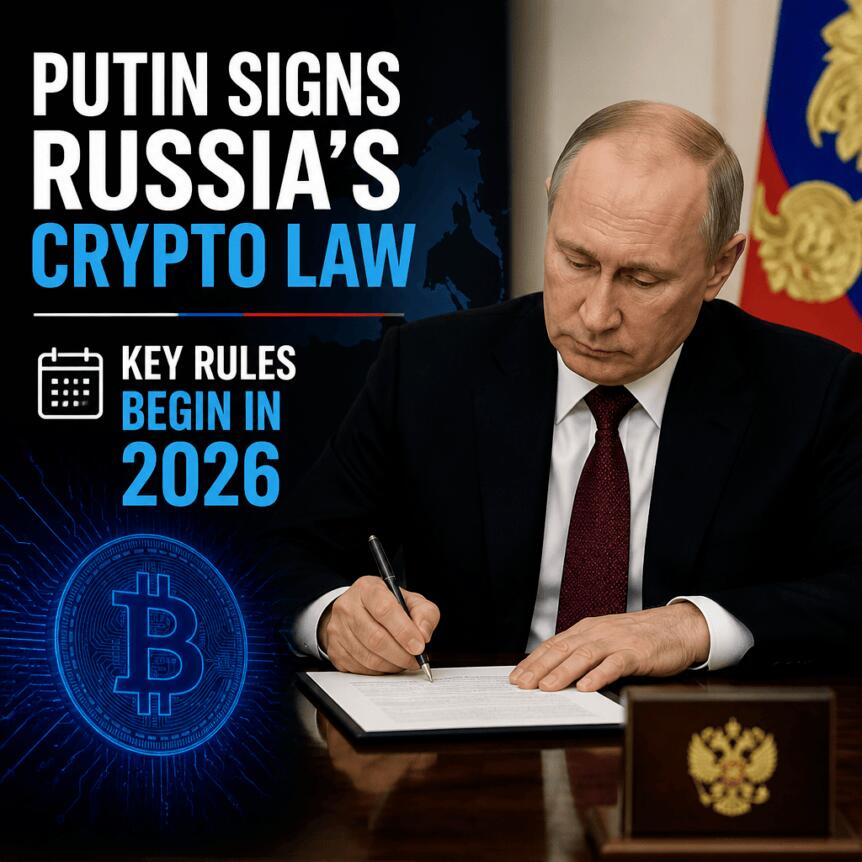
Russian President Vladimir Putin has signed legislation that lays out a regulated framework for cryptocurrency markets in Russia, marking a significant shift from the country’s largely restrictive posture toward a formal rules-based approach for licensed crypto activity.
The law, identified as bill No. 1194918-8 and titled “On Digital Currencies and Digital Rights,” was signed on Tuesday, according to official records from the State Duma, Russia’s lower house of parliament. It sets out requirements for major categories of crypto market participants, including exchanges, brokers, custodians, and other service providers.
Key takeaways
- Russia has moved toward a regulated crypto market through bill No. 1194918-8 (“On Digital Currencies and Digital Rights”).
- Crypto exchanges must meet regulatory conditions and join a financial market self-regulatory organization.
- Retail investors will be limited to purchasing only approved digital assets via intermediaries, with a 300,000 ruble annual cap per intermediary.
- Qualified investors are expected to face fewer restrictions and be able to buy any cryptocurrency.
- The law keeps Russia’s ban on using crypto assets to pay for goods and services domestically.
What the law changes for Russian crypto activity
At the center of the new bill is a licensing and oversight model intended to bring Russia’s crypto market into a clearer regulatory structure. The legislation defines rules for key participants across the crypto ecosystem, including trading venues (exchanges) and intermediary services such as brokerage and custody.
Under the framework, operators of crypto exchanges are required to comply with regulatory requirements and become members of a financial market self-regulatory organization. That combination suggests that, beyond direct supervision, exchanges will likely be subject to additional industry-level governance through the self-regulatory body.
Limits for retail investors, flexibility for qualified investors
A major practical feature of the law is how it differentiates between types of market participants. The bill limits retail investors’ access to cryptocurrencies by requiring intermediaries to sell only approved crypto assets and by imposing a quantitative ceiling on purchasing activity.
Specifically, the law sets an annual cap of 300,000 rubles (about $3,700) per intermediary for retail investors. Qualified investors, by contrast, will be allowed to purchase any cryptocurrency without the same restrictions.
For everyday users and smaller investors, the implication is straightforward: access to the broader crypto market could become more fragmented and filtered through intermediaries—while larger or more formally designated investors may be able to maintain wider exposure.
Regulatory oversight and the approval process
According to the law as reported through official parliamentary records, the Bank of Russia will be responsible for overseeing the regulated crypto market. That includes issuing related regulatory rules and determining which crypto assets licensed intermediaries can offer to investors.
In late July, the State Duma approved the legislation after final readings, an earlier step referenced in separate coverage at Cointelegraph. With the signing now completed, implementation becomes the next critical phase—particularly because different parts of the law take effect at different times.
When rules take effect—and what stays prohibited
Timing matters for investors, exchanges, and service providers because regulatory obligations rarely arrive all at once. The core provisions of the law take effect on Sept. 1, 2026. Some elements—including rules covering non-resident digital depositories—are scheduled to begin on July 1, 2027.
The law also preserves an existing prohibition on using crypto assets to pay for goods and services within Russia. That means the new regulatory structure is aimed at governance of crypto market participants and investor access, rather than enabling everyday crypto spending domestically.
Why this framework could reshape Russia’s crypto market
This legislation matters beyond legal formality because it defines who can participate, what assets can be offered through licensed channels, and how investors access those markets. By placing responsibility on the Bank of Russia to issue rules and approve which assets intermediaries may provide, the law effectively creates a gatekeeping mechanism—one that could influence liquidity, available trading pairs, and the list of cryptocurrencies that reach retail customers.
The retail investment cap per intermediary may also affect product design for brokers and custodians, since their compliance exposure would be linked to both approved asset lists and distribution limits. Meanwhile, the distinction between retail and qualified investors suggests that market access will not be uniform: segments of the investor base could experience different levels of flexibility and risk exposure depending on their classification.
As the implementation dates draw closer, market participants will likely focus on how the Bank of Russia translates the law into operational guidance—especially around licensing conditions, asset approval procedures, and the treatment of non-resident digital depositories.
Investors and builders should watch closely for the Bank of Russia’s rulemaking and for how “approved” crypto assets are selected, since those decisions will determine what retail users can realistically access before the Sept. 1, 2026 start date.

There was nothing much happening in Jerome and Benno Leuer’s yard in Hamel, Minn. on August 11, 1948. It was noontime in the thick of summer and the boys, 10 and 8, were idly playing when, as they later described it, something overhead caught their eyes. They looked up and their jaws dropped.
Roughly 12 ft. up in the air was a dull gray, circular object, about 1 ft. thick and 2 ft. in diameter, slowly descending between them. They stood transfixed as the object settled onto the ground, making a clattering sound like metal hitting metal. The object rested there a moment, and then began emitting a high-pitched whistle that, to the boys, sounded like a teakettle. It spun in place once, then shot 20 ft. into the air, hovered for a moment, and ascended to 30 ft., maneuvering around tree branches and telephone wires in its path. Finally, it jetted out of sight.
Jerome and Benno ran inside and told their parents what they had seen. Their father notified the only authority he could think of: R.R. Sheridan, the local postmaster. Sheridan, in turn, called the FBI field office in St. Paul. To the family’s surprise, the bureau sent an agent. He interviewed the boys and inspected the yard.
“The spot where the alleged ‘flying saucer’ had landed was approximately 2 ft. in diameter and appeared as though a heavy object had landed there or had touched down,” read the statement in the official report. “The ground was dented and protruding rocks had been leveled.”
The boys grew up and moved on. Nothing came of their mysterious sighting, but the government preserved the report all the same, filing it away in a cache of documents it had already begun keeping, of both civilian and military accounts of flying, hovering, blinking objects that appeared in the skies, skittering about, sometimes touching down, and then vanishing back the way they came, just as Jerome’s and Benno’s object had. For 78 years, the boys’ story—and hundreds of others like it—had languished in storage. Until May 8, 2026, when President Donald Trump began a serial release of four tranches of more than 450 official reports going back to the middle of the last century, ordering that they be posted on a Department of Defense website and made available for public perusal.
After decades of secrecy, stigma, and sometimes silliness—like the conspiratorial tales about recovered spacecraft and alien remains at a place known as Area 51 in Roswell, N.M.—the government has at long last begun taking things seriously. What used to be called UFOs and now go by the more decorous handle of UAPs—or unidentified anomalous phenomena—are being given the full investigatory treatment.
Congressional hearings into the origins of the sightings were held in 2022 and 2023. In 2022, the All-domain Anomaly Resolution Office (AARO) was established “to detect, identify and attribute objects of interest.” In December 2023, then President Joe Biden signed into law the Unidentified Anomalous Phenomena Disclosure Act, requiring the collection, review, and public disclosure of all sightings and encounters.

On June 12, capturing the global hunger for answers to the UAP mystery, director Steven Spielberg—who has long had a sort of seismographic sense of the popular mood—released his latest film, Disclosure Day, in which a government cover-up of extraterrestrial visitations is exposed. The movie grossed $94 million worldwide on its opening weekend alone. At about the same time, the White House established the UAP Science Advisory Council, a body led by Harvard astrophysicist and cosmologist Avi Loeb to study the national-security risks posed by UAPs.
“I was tasked to create a panel for the White House, AARO, the Director of National Intelligence, the FBI, and related agencies, so that all of these organizations are in contact [about UAPs],” says Loeb. “It’s clear, based on much better sensors that we have, that there are objects the intelligence agencies and the Pentagon do not, cannot figure out.”
It’s not just for the government, academia, and Hollywood to do that figuring. Last year, the nonprofit Disclosure Foundation, led by former Deputy Assistant Secretary of Defense for Intelligence Christopher Mellon launched, was launched, with the aim of encouraging the release of UAP reports, promoting scientific investigation of sightings, supporting whistle-blowers, and formulating policy related to UAPs. On June 25 of this year the group convened a Capitol Hill forum in the Kennedy Caucus Room of the Russell Senate Office Building.
The daylong event featured political figures including Representatives Eric Burlison (Republican, Missouri), Anna Paulina Luna (Republican, Florida), André Carson (Democrat, Indiana), and Suhas Subramanyam (Democrat, Virginia), and Senator Mike Rounds (Republican, South Dakota). Loeb was present, as were other well-lettered experts discussing the technological, national-security, economic, psychological, and even religious implications of UAPs. The speakers acknowledged that in some respects they were there at their peril, since publicly discussing flying saucers still carries reputational risk.
“You’re black, you’re Muslim, you represent a district in Indiana,” Carson said of himself, “and now you want to talk about UAPs?”
But it’s a measure of the growing public interest in the phenomena and the mounting evidence that something is out there that more and more serious people are willing to take that risk. Even former President Barack Obama weighed in on the topic. In a February interview, Obama was asked if extra-terrestrial life exists, and he responded, “They’re real,” hastening to add, “But I haven’t seen them. They’re not being kept at Area 51. There’s no underground facility—unless there’s this enormous conspiracy and they hid it from the President of the United States.”
Obama added that he based his belief in the likelihood of extraterrestrial beings in part on the fact that “statistically, the universe is so vast that the odds are good there’s life out there.” That’s a point a lot of believers make, especially since NASA’s Kepler Space Telescope and other space-based and Earth-based observatories have discovered thousands of exoplanets—or planets orbiting other stars—leading astronomers to conclude that virtually every one of the trillions of stars in the sky has at least one world circling it.
As with all things in a loud, messy, pluralistic democracy, public opinion plays a role here too—and Americans are clearly ready for action. According to a poll conducted by the Disclosure Foundation just weeks before the Capitol Hill forum, 84% of respondents want more information from the government on UAPs, 69% believe UAPs are real, 59% support hearings and transparency laws, and just 21% trust the federal government to be telling the complete truth. The responses are bipartisan. A statistically meaningless 1% separates the whopping 89% of Republicans and 88% of Democrats who say they want more information on UAPs.
“You could be a single-issue candidate running in the U.S.,” says Jordan Flowers, the Disclosure Foundation’s executive director. “That single issue could be [UAP] transparency, and you could get elected just based on that.”
Unlike other single issues like taxation, immigration, or climate, which unfold indefinitely over decades, UAP transparency has a fixed end point. The government will tell all it knows, the sightings will be investigated, and their origins will be determined to be terrestrial—highly advanced military or other assets—or, epochally, extraterrestrial.
“My null hypothesis would be that these are human-made objects being operated by adversarial nations, near strategic assets of the U.S.,” says Loeb. And if they’re not? If they do come from … elsewhere? “That will be the biggest discovery ever made by humanity.”
A Question of Security
The U.S. Senate doesn’t lend out the Kennedy Caucus Room to just anybody. Opened in 1909, the room is a prepossessing place, with carved marble walls measuring 74 ft. long, 54 ft. wide, and 35 ft. high—climbing to an ornate ceiling decorated with gilded rosettes and acanthus leaves. The doors of the room open onto the Russell Building’s vaulted, marble rotunda, which rises three stories high.
The caucus room has seen a lot of history: it was the site of hearings on the sinking of the Titanic, the Teapot Dome scandal, Pearl Harbor, the Vietnam War, Watergate, Iran-Contra, and more. Both John and Robert Kennedy announced their presidential runs there. It was thus no small thing that the Disclosure Foundation was cleared to use the space to hold its June 25 summit. The 300-plus people in attendance took the event exceedingly seriously. Despite the once flaky, fringey, fantastical topic under discussion, the vibe was clearly not Burning Man, Comic Con, or South by Southwest. One attendee was decked out in a T-shirt featuring a bug-eyed alien playing electric guitar, but for everyone else in the room, business attire was the order of the day.
“Today, experts that rarely occupy the same room—physicists, historians, economists, intelligence professionals, educators, journalists, and policymakers—are gathered here in this room,” said Mellon in his opening remarks, “to discuss a subject that was, until very recently, untouchable.”
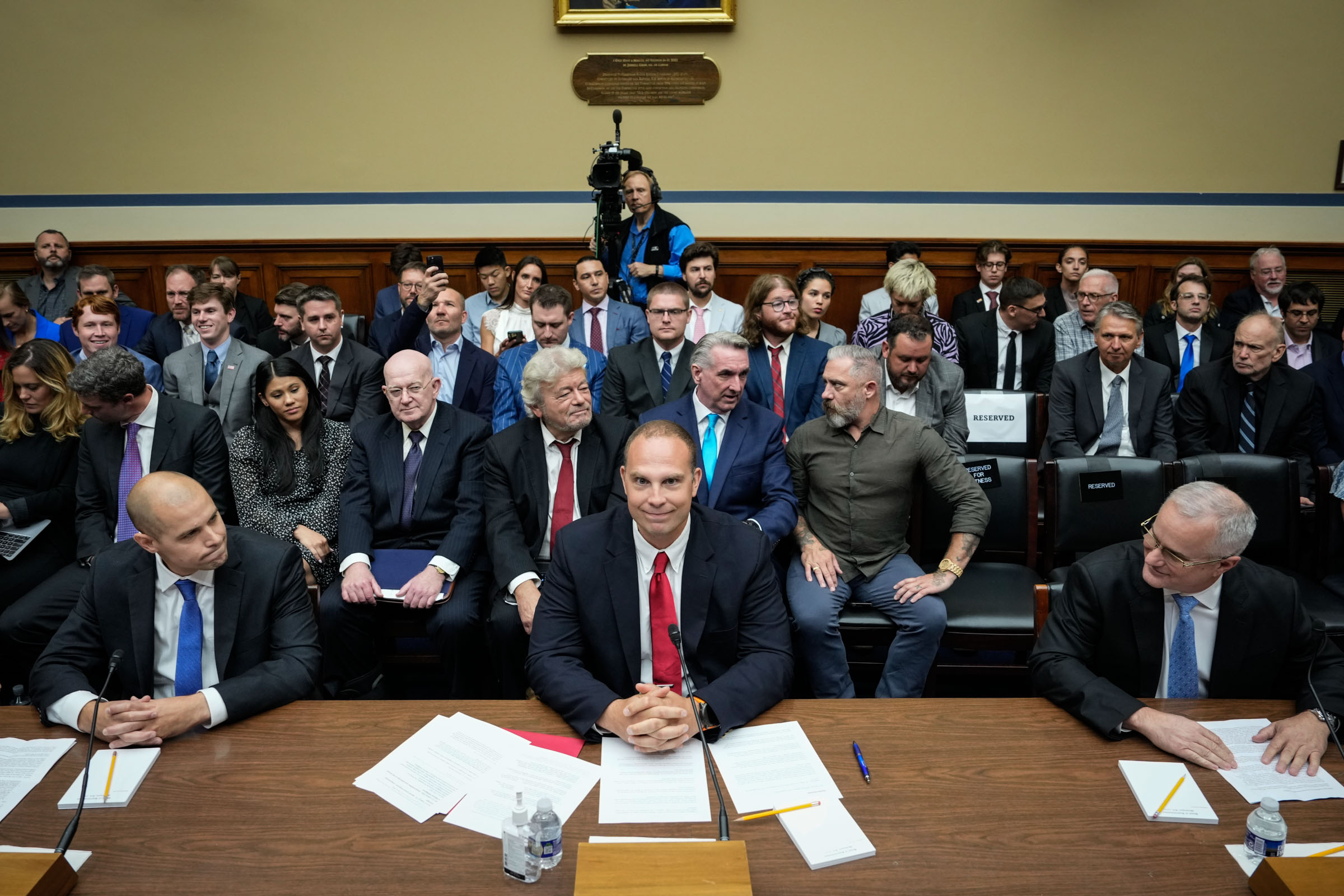
Of all of the panels that appeared throughout the day, it was a morning session on the security and defense implications of UAPs that had the most gravity. The panelists discussed the repeated sightings of UAPs both by naval pilots and personnel at military bases, raising concern about the permeability of armed American airspace. If the objects’ origins were indeed found to be extraterrestrial, the technology of the alien species far eclipses any flying machines human beings have ever developed. If they are terrestrial—built and flown by rival nations—they signal an arms race that we are already losing.
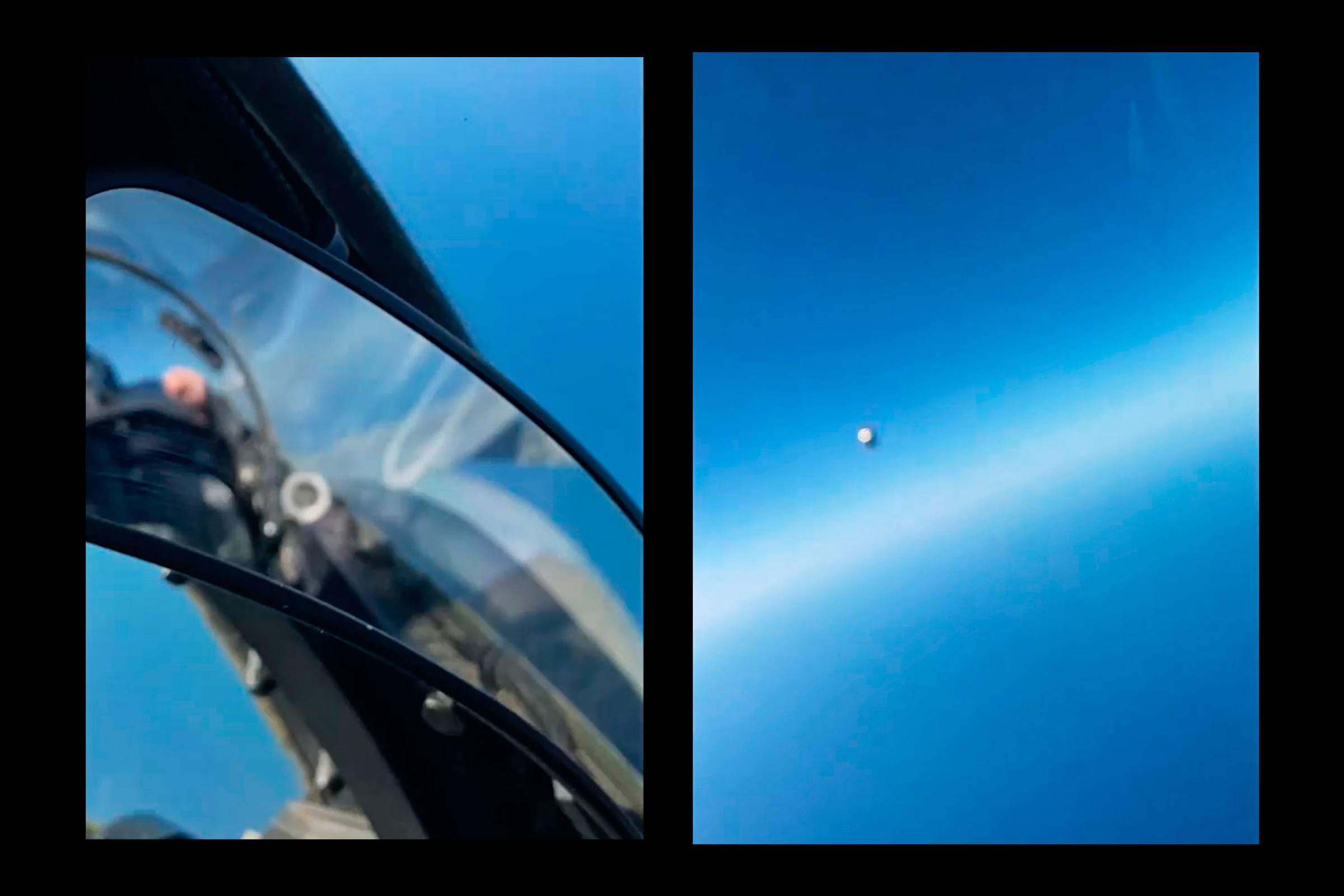
Retired naval Lieutenant Ryan Graves had his first encounter with UAPs off the East Coast of the U.S. 14 years ago and more in the two years that followed. “We came back from a deployment in 2012 and began to upgrade our radar systems,” he told TIME, “and we immediately saw objects in our working area that we were not expecting. There were usually anywhere between three and six objects within the airspace off the coast of Virginia Beach. Sometimes [they were] completely stationary at very high winds, sometimes flying at 250 to 350 knots [288 to 402 m.p.h.].”
The objects, Graves said, were 5 to 15 ft. in diameter, and appeared to be a gray or black cube inside a clear sphere. They gave off no exhaust and flew in such a way—diving and soaring and suddenly changing direction—that any human passenger would be subject to potentially deadly g-forces. Sometimes they flew so close to the Navy jets that the pilots were required to file hazard reports so that other planes operating in the vicinity could be warned.
“They would be outside doing these behaviors all day,” Graves says. “It might appear that these objects are using magical physics we don’t understand.” As part of the pilots’ routine rotation, they later shifted their operations to the waters off Jacksonville, Fla. They got no peace there either. The UAPs, says Graves, “were either already down there or they had followed us down, because we had over a dozen incidents.”
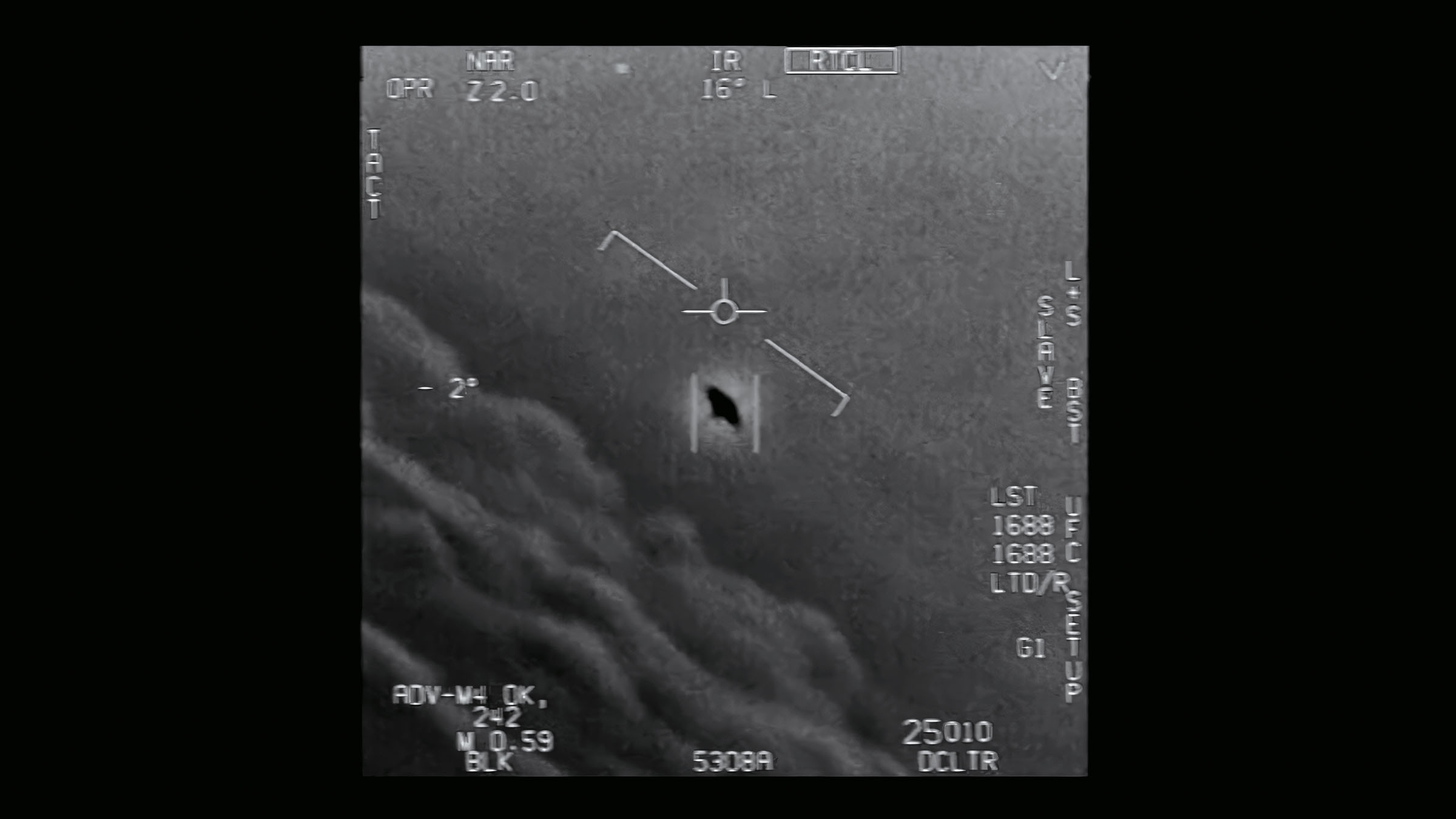
The naval flyers’ Virginia and Florida encounters are by no means the only experience the military has had with UAPs. One of the most compelling is the so-called Tic Tac incident, which occurred off the coast of California in 2004. During an otherwise routine deployment that year, radar personnel repeatedly noticed the reflection of a skittering airborne object they could not explain—looping and diving, climbing and then dropping from an altitude of 80,000 ft. to 20,000 ft. To crack the mystery, a team of flyers was scrambled into the sky. Once aloft, they discovered what they estimated to be a 45-ft.-long flying machine that bore a striking resemblance to a Tic Tac breath mint.
“All four of us looked down and saw a Tic Tac object moving very abruptly over the water,” said pilot David Fravor in a 2023 appearance before a congressional committee. “There were no rotors, no rotor wash, or any sign of visible control surfaces like wings. As we pulled nose onto the object within about a half-mile of it, it rapidly accelerated and disappeared.” Cockpit video preserved the encounter.
Military assets on the ground have been harassed too. For 17 straight nights in December 2024, Langley Air Force Base in Hampton, Va. was swarmed by objects that appeared overhead 45 minutes after sundown and repeatedly flew over the base. According to one eyewitness—former astronaut Scott Kelly, who in 2022 was tapped to serve on a NASA UAP study team—the objects appeared to be 20 ft. long, flying at an altitude of 3,000 to 4,000 ft., at a speed of 100 m.p.h. The incursions became serious enough that Langley canceled nighttime training flights and moved its F-22 jets to another air base.
More dramatic was a reported sighting by six federal law-enforcement officers in October 2023, near what the official memorandum described as “a sensitive national security site in the western United States.” For two consecutive days, just at dusk, the witnesses reported observing “a luminous ‘mother orb’ appear[ing] to produce smaller red orbs, one after another, multiple times over a period of several hours. The ‘red orbs’ reportedly persisted for several seconds before disappearing.”
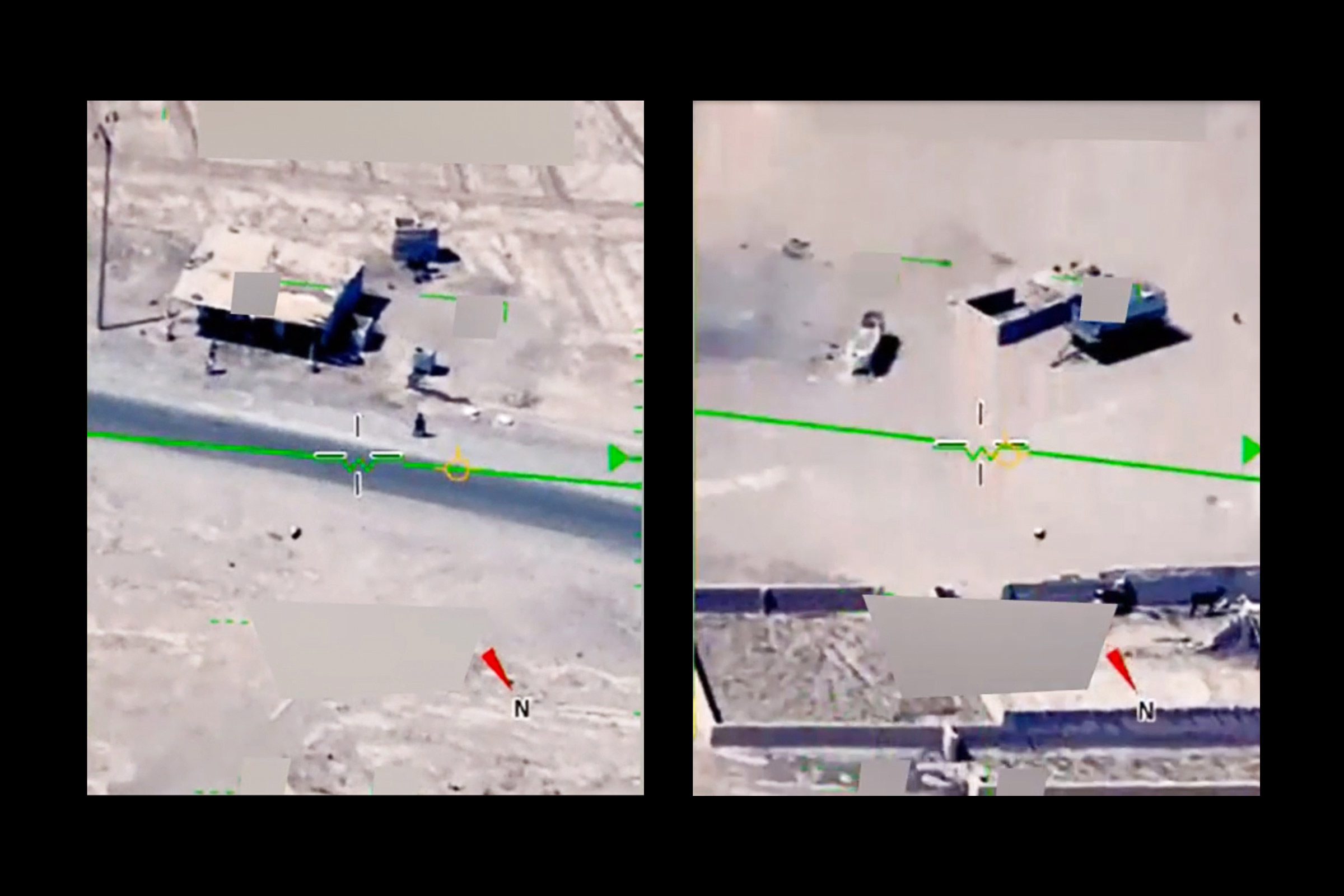
“It is clear that we have lost control of our airspace. Full stop,” says Flowers. “Whether this is some form of human intelligence, or whether it’s something else, I am not creative enough to say.”
“Many of these things are certainly not drones,” says Luis Elizondo, a former intelligence officer with the government’s Advanced Aerospace Threat Identification Program (AATIP). “They are advanced technology from somewhere. If you’re scrambling jets off Langley, you’ve got a problem.”
Not everyone is persuaded by the reports. “Great claims require great evidence,” says Jon Kosloski, director of AARO, “and the evidence just isn’t there yet.” Kelly does not minimize the security risk posed by rogue objects but does not think they have to have an exotic origin. “In science, eyewitness testimony is kind of opinion; it’s not data,” he says. “I have never seen anything that couldn’t be explained.”
Kelly points to a sighting he made during his days as a military pilot when he was flying a Tomcat jet off the coast of Virginia. In the midst of the maneuvers, the pilot in the back seat of the plane suddenly announced, “We just passed something. It looks like a UFO.”
“What?” Kelly asked.
“Yeah, maybe it was like an alien spaceship or something. It looked really weird.”
Kelly banked the jet around in the opposite direction, looking for an object through his wind screen, and indeed saw it in the distance, though it wasn’t showing up on radar. He drew closer and closer until he was on an intercept course, and the bogey at last resolved itself.
“It was Bart Simpson,” Kelly says. “It was a balloon.”
Are We Ready For Extraterrestrial Disclosure?
If UAPs are ever confirmed to have an extraterrestrial origin it will represent what Carlos Eire, professor of history and religious studies at Yale University and a speaker at the Disclosure Forum, calls a “rupture” in human civilization.
“A rupture is something after which nothing is the same,” he says. “It’s similar to the rupture that occurred for the natives of North and South America when Europeans showed up.”
Clinical psychologist Jennice Vilhauer, a member of the advisory boards of both Loeb’s UAP Council and the Disclosure Foundation, spoke at the June 25 event, and her words were sobering. “If this news were to come out tomorrow,” she says, “we’re entirely unprepared.”
An emotional contagion like panic is always possible, but Vilhauer does not think most people would react that way even to such paradigm-shifting news as nonhuman intelligence. “There are certain communities that would look at this through a catastrophic lens, like an end-times event,” she says. “But I don’t see this being something that would spread across the entire population.”
That doesn’t mean that there would not be a psychic impact. A lot, she says, would depend on whether alien life was perceived as either benevolent, indifferent, or hostile. Even a microbe could be hostile if it posed a risk of infection—a peril about which humans have always been mindful. During the first three moon-landing missions, returning astronauts were required to spend three weeks in medical quarantine against the chance that they picked up alien germs—a practical impossibility since no microorganisms could survive on the dry, airless moon.

Also playing a role would be the question of what Vilhauer calls personal relevance—whether the news of nonhuman life affected any one person directly. The greatest emotional reaction would occur in people who perceive a high threat level and high personal relevance; the least effect would be in people who see low threat and low personal relevance. “Disclosure alone would be a huge, unprecedented event,” Vilhauer says. “Those two things together—personal relevance and threat—could create a really negative response.”
Mental health will not be the only thing that’s affected by UAP disclosure; spiritual health will be too. As long ago as the 1970s, divinity scholars established the concept of exotheology—a branch of Christian thought that includes the possibility of life in the cosmos. That can come in handy now. Eire believes that the three leading monotheistic religions—Christianity, Judaism, and Islam—will have the most work to do coming to terms with nonhuman intelligence. That’s because all three of them share the idea that there is one God, and that he created everything including human beings. Our species, we like to think, is his crowning creation—a belief that will be harder to hold onto if a cosmic species comes along that’s better, smarter, fitter than us. “The book of Genesis, which is shared in different ways by Jews, Christians, and Muslims, poses this very troubling story about human origins,” says Eire.
Christianity, Eire believes, will have a special hurdle to overcome in adjusting to the idea of off-Earth life because of its teaching that God became human. On the other hand, all three mono-theistic religions do have some practice with the idea of intelligent, nonhuman life. “Jews, Christians, and Muslims accept as a given that human beings are not alone in God’s creation,” says Eire. “There have always been angels.”
The puzzle of how to marry theology and extraterrestrial life predates the current surge in UAP disclosures. In 2014, Brother Guy Consolmagno, then the director of the Vatican Observatory, coauthored the cheeky book Would You Baptize an Extraterrestrial?…and Other Questions From the Astronomer’s In-Box at the Vatican Observatory. When someone posed the baptism question to him directly, he famously answered “Only if she asked.”
The Likelihood of Extraterrestrial Life
Questions about UAPs and the life-forms that may or may not have sent them our way may turn in part on faith, but they also turn on physics. While exobiologists continue to explore the possibility of microbial life on Mars and on ocean moons like Jupiter’s Europa and Saturn’s Enceladus, it is well accepted that our solar system has just one world with advanced, intelligent life, and that’s ours. That means looking for exceptional beings farther afield.
The closest star system to Earth is Proxima Centauri, a tidy 4.25 light-years—or 25 trillion miles—distant. Getting from there to here would in theory take at least 4.25 years, and only if you’re traveling at the speed of light—which Albert Einstein long ago proved can’t be done. Other star systems lie thousands and billions of light-years away, meaning that traveling the trans-Earth distance could take almost as long as the age of the universe itself.
Still, plenty of academics don’t rule out the possibility of alien visitors from the stars. “I would put the estimate of the chances that we’ve been visited—and I would define that as an exploration through our solar system, leading to them being aware that Earth has life and civilization—at maybe something like 50%,” says Jack Singal, professor of physics at the University of Richmond. He puts the odds that any of the claimed UFO or UAP sightings over the past century have actually been one of those visitations at a much lower 5%. “I think there’s just enough mundane explanations for these things,” he says.
Jonathan Miller, a program engineer for MIT’s department of mechanical engineering and the director of an academic program called Confronting Unknowns, which explores the question of UAPs, does not go as far as Singal, but he is open to the possibility that other civilizations are not as constrained by Einsteinian physics as we think they’d be. “There are the physics of traveling from point A to point B,” he says. “But there may be alternative ways to sort of bridge that gap. There’s probably an iceberg of possibilities [to explain UAPs] below the waterline.”
Some of those explanations may be straightforward—at least compared with extraterrestrials. If it’s possible that some rival power has developed advanced technology that can perform the acrobatics the UAPs do, it’s equally possible that the U.S. has as well and that witnesses are simply observing domestic hardware. The military is nothing if not secretive, and all of this work could be done in the dark—much the way the Manhattan Project, which developed the world’s first nuclear weapons, operated silently, invisibly, from June 1942 to August 1947.
It’s possible too that there is something even more prosaic than earthly or alien space technology at play. Miller speaks admiringly of the “mark one eyeballs of a well-trained pilot” as perhaps the most reliable sensor system on any plane—better than radar, infrared, or motion sensors. But those eyeballs can be fooled—especially given the thermal, chemical, and physical complexity of the atmosphere in which the UAPs are being seen and reported.
“The atmosphere is a crazy place,” says Singal. “You can see double, triple rainbows. You can go to some Arctic regions and see the sun appear several times at several different angles in the sky. You can have tornadoes that pick up and throw a car or impale a cow on a tree. Could it make a black triangle move across the sky for 10 seconds? I would say it could.”
“You get a lot of reports from naval officers, more so than from the Air Force,” says Kelly. “That’s because the Navy flies over water and it’s an environment that is very subject to optical illusions.”
Witnesses, of course, swear by the evidence of their eyes, and sightings like those of Graves and his fellow pilots, which involved large objects moving at close proximity between two naval jets, are hard to dismiss as just the hallucinatory interplay of light and air.
“We came within 50 ft. of the lead aircraft,” says Graves. “I think some of what we were seeing were true UAPs. What I mean by that is that these were true airborne assets that were physical in nature, that were exhibiting capabilities beyond our state of the art.”
The community of people who believe accounts like these and want to get to the bottom of them is growing. In addition to chairing the UAP Science Advisory Council, Loeb is co-directing the Harvard-based Galileo Project, which scans the skies looking for hints of extraterrestrial technology. Galileo relies on three Earth-based telescopes—in Massachusetts, Pennsylvania, and Nevada—using infrared, visible, and radio sensors to track moving objects that seem to deviate from the performance of earthly technology. In 2018, Loeb and his colleague Shmuel Bialy, then a post-doctorate researcher, made headlines with a paper in the Astrophysical Journal Letters, in which they entertained the idea that the cigar-shaped interstellar comet Oumuamua “may be a fully operational probe sent intentionally to Earth vicinity by an alien civilization.”
In 2017, the object flew into our solar system, whipped around the sun like a comet, and flew back out. On that departing leg of the journey, it accelerated when it should have been slowing down due to the gravitational pull of the sun. That suggested some propulsion system was at work. It is possible, Loeb and Bialy wrote, that the object is “floating in interstellar space as a debris from an advanced technological equipment.”
Other astronomers dismiss that idea, arguing that Oumuamua was pushed either by solar wind, the storm of charged particles forever streaming from the sun, or by solar radiation pressure, the gentle force imparted by electromagnetic energy when it contacts an object. The object has since soared back into deep space, taking the possibility of any answers with it.
Congress is staying on the UAP case—in its own dilatory way. In 2024, lawmakers took up the UAP Transparency Act, which would mandate declassification of all documents related to UAPs. The bill has not yet become law, and its potential impact has been partly mooted by the White House going ahead and releasing the four tranches of documents on its own.
For now, UAPs remain a riddle. They may be real, they may be illusion, they may simply be artifacts of human desire—something we see because we want to see them. A universe with other life-forms, after all, is a lot less lonely than one in which we are the only world with lights in the windows. The eyewitnesses, of course, would differ—knowing what they saw, believing what they saw, and remaining, in some cases, transformed by what they saw. In time—if the proof is found, if biological intelligence is discovered in the void—we may all be transformed the same way.
Crypto World
Gate Pre-IPOs Phase 3 Launches Moonshot AI (KIMI), Supporting Subscription with USDT and GUSD


Gate, one of the global leading digital asset platforms, has announced the launch of its Pre-IPOs Phase 3 Project Moonshot AI (KIMI), focusing on artificial intelligence company Moonshot AI. The project introduces KIMI Asset Certificates, allowing users to subscribe with either USDT or GUSD and gain early exposure to potential value opportunities ahead of the AI unicorn’s IPO.
Moonshot AI is one of the leading artificial intelligence companies, focusing on large language model development and the exploration of artificial general intelligence. Its Kimi AI assistant has attracted market attention through its long-context understanding, multimodal capabilities, and intelligent Agent technology, while continuing to advance the application of AI in knowledge processing, content creation, and productivity scenarios.
KIMI Asset Certificates are Mirror Notes issued prior to the Moonshot AI IPO. They are designed to mirror the market value of Moonshot AI before and after its listing and constitute a type of Contingent Payout Note. Through a dedicated market trading mechanism, Gate provides users with an opportunity to participate in potential value appreciation ahead of the target company’s IPO and pursue long-term holding.
The Moonshot AI (KIMI) subscription period will run from August 11, 2026, at 07:00 to August 13, 2026, at 07:00 (UTC). The subscription price is set at $105–$115 per share, subject to the final pricing result, with an implied project valuation of approximately $50 billion. The project supports subscriptions with both USDT and GUSD, with a minimum single subscription amount of 10,000 USDT or 10,000 GUSD. A 5% underwriting service fee applies to this project. In addition, if excess returns are generated in the future, a 20% performance fee (Carry) will be charged.
Following the subscription period, KIMI Asset Certificates will be distributed on August 17 at 07:00 (UTC), with 100% of the assets unlocked. They are expected to enter the dedicated market for trading in about one month. The Maker fee for the dedicated trading market is 0.5%, and the Taker fee is 1.5%. A 1% trading fee applies to the dedicated secondary market. If the target company ultimately completes its IPO, Gate will provide subsequent asset handling arrangements based on the actual circumstances.
Meanwhile, Gate is simultaneously launching multiple subscription benefits: eligible VIP users can participate in the Moonshot AI (KIMI) exclusive airdrop program; users subscribing with GUSD can enjoy a 3.8% APR yield from U.S. Treasury bills, distributed daily automatically with zero redemption fees in the original currency. If USDT subscribers do not receive an allocation, the platform will subsidize the subscription funds at a 3.8% APR, calculated based on hourly snapshots, and distribute the yield alongside the refunded funds to their spot accounts.
Gate also reminds users to carefully consider the associated risks. As the target company has not yet gone public, the project is subject to risks including uncertainty regarding the IPO timeline, market volatility, and changes in liquidity. If the target company ultimately fails to complete its IPO, or if the underlying asset is canceled due to factors such as a Right of First Refusal (ROFR), refunds will be processed in accordance with the applicable rules. Any profits, losses, and fees arising from secondary market trading will be adjusted according to the relevant mechanisms.
As AI, RWA, and digital assets continue to converge, Pre-IPOs are emerging as an area of exploration for connecting growth opportunities in innovative companies with global investors. Gate has built a diversified asset service ecosystem spanning Pre-IPOs, IPO Access, stock trading, and gStocks tokenized securities, exploring new connections between traditional financial assets and the digital asset ecosystem. Looking ahead, Gate will continue to expand its presence across stocks, ETFs, RWA, and other innovative asset categories in line with the ongoing digitization of global assets, creating more diverse investment opportunities and providing users with a one-stop experience covering asset discovery, participation, and value transfer.
Users can learn more on the official landing and subscribe here.
About Gate
Gate, founded in 2013 by Dr. Han, is one of the world’s leading cryptocurrency and integrated financial services platforms. Serving over 58 million users globally, it supports trading across 4,900+ digital assets and 12,500+ stock assets, while providing access to a comprehensive range of TradFi assets, including metals, stocks, indices, forex, and commodities, delivering users a one-stop, multi-asset trading experience and blockchain-related services. As an industry benchmark, Gate was among the first platforms to implement 100% Proof of Reserves. Its ecosystem includes Gate Wallet, Gate Ventures, Gate for AI Agent, and a wide range of products and services.
For more information, please visit: Website | X | Telegram | LinkedIn | Instagram | YouTube
Disclaimer:
This content does not constitute an offer, solicitation, or recommendation. You should always seek independent professional advice before making investment decisions. Note that Gate may restrict or prohibit certain services in specific jurisdictions. For more information, please read the User Agreement.
The post Gate Pre-IPOs Phase 3 Launches Moonshot AI (KIMI), Supporting Subscription with USDT and GUSD appeared first on BeInCrypto.


Tokenized real-world assets accounted for more than a third of Hyperliquid’s quarterly trading volume, generating 6.6% of the protocol’s $169 million quarterly revenue.


Blockchain.com secured a VASP custody license from the Cayman Islands Monetary Authority, expanding its regulated crypto services in the region.


Inflows into Hyperliquid (HYPE) exchange-traded funds (ETFs) have largely ground to a halt after surging in May and June, reflecting growing concerns over the protocol’s competitive outlook, according to Wall Street bank JPMorgan (JPM).
The bank said Hyperliquid ETFs led non-bitcoin crypto funds in inflows relative to assets under management in May and June, though that momentum faded in July and early August.
“We see significant challenges to the market share of decentralized platforms such as Hyperliquid,” analysts led by Nikolaos Panigirtzoglou said in a Thursday report.
Hyperliquid has been one of crypto’s biggest breakout stories this year, with its HYPE token surging as traders flocked to the protocol’s decentralized perpetual futures exchange.
The rapid growth has turned Hyperliquid into one of the largest crypto ecosystems outside bitcoin and ether, attracting institutional capital, corporate treasury buyers and ETF issuers.
According to JPMorgan analysts, the cooling demand comes as decentralized derivatives platforms face mounting competition from regulated centralized exchanges.
The report said the rollout of U.S.-regulated crypto perpetual futures products could shift trading activity away from offshore decentralized venues such as Hyperliquid, which remain exposed to concerns around licensing, compliance and investor protections.

Crypto’s security threat is no longer confined to hacked exchanges, phishing links, or compromised custody. According to a report released this week by blockchain analytics firm Chainalysis, criminals carried out more than $30 million in thefts through “wrench attacks” in the first half of the year—an alarming category of violent crimes that targets crypto holders using threats, coercion, kidnappings, and home invasions.
Chainalysis documented 46 violent crypto-related incidents globally through late June, up from 40 in the same period of 2025. If the pace holds, the year would exceed the $58 million record reported stolen via these physical attacks in 2025.
Key takeaways
- Chainalysis tracked 46 “wrench attacks” worldwide through late June, rising from 40 during the same period in 2025.
- Despite the violence, attacker “success” remains relatively low: only 12 of the 46 incidents resulted in payment (about 26%).
- France is the clear hotspot, with 30 publicly known incidents by midyear versus 19 throughout all of 2025; authorities reportedly recorded more than 70.
- Chainalysis links the increase to suspected data leaks and targeted selection of victims, not random violence.
- Some attackers appear operationally sophisticated—moving funds through exchanges, bridges, decentralized platforms, and laundering services—suggesting ties to broader criminal networks.
What Chainalysis calls “wrench attacks”
In Chainalysis’s terminology, wrench attacks are physical coercion attempts used to force victims to hand over crypto. The report highlights scenarios including kidnappings, home invasions, and hostage situations. While these crimes are often described in sensational terms, Chainalysis frames them as a structured threat model: victims are selected in advance, and the violence is used to extract access or payments.
The report underscores a key tension for investors, traders, and everyday holders: the risk extends well beyond software security and custody choices. Even people who hold funds safely—offline or with reputable custody solutions—could still be targeted if criminals believe they can force them to act under duress.
Chainalysis also cautioned that the totals likely understate the real problem. The firm noted that many attacks go unreported, meaning public documentation can lag behind actual victimization.
Fewer payments than last year, but the volume is rising
Although the number of violent incidents is increasing, Chainalysis reports that outcomes are not as consistently successful as the headlines might suggest. Of the 46 incidents recorded, only 12 resulted in a payment, producing a 26% success rate.
That rate is down significantly from 49% in 2025, when nearly half of documented attempts resulted in payments. For readers, this matters because it suggests attackers are facing more resistance—or, alternatively, that they are running larger operations with a higher proportion of failed attempts. In either case, a lower success rate does not necessarily mean the threat is shrinking; it can simply mean criminals are conducting more operations to reach the same or greater totals.
Chainalysis described the modus operandi as uneven in capability: “tradecraft tends to be amateur at the point of violence, but professional at both ends.” In other words, criminals may not execute the coercion with high technical skill, but the processes before and after the violence—such as identifying targets and monetizing stolen funds—can be more refined.
France emerges as the main battleground
The most striking geographic detail in the Chainalysis report is France’s concentration of documented incidents. The firm says France recorded 30 publicly known wrench attacks by midyear, compared with 19 incidents reported during all of 2025.
Chainalysis further notes that French authorities have counted more than 70 incidents overall. That gap implies that public figures represent only a portion of what investigators and officials are tracking, again reinforcing the likelihood that reported totals undercount the true scale.
The report also aligns with official comments earlier in the year. In July, France’s Interior Minister Laurent Nuñez put the first-half count at 77 kidnappings, extortions, or attempted extortions—rising from 45 across all of 2025. According to that reporting, France has introduced a rapid-alert and protection system and promised enhanced intelligence-sharing and coordination with the crypto industry.
Data leaks, suspected tax-record misuse, and how criminals move money
Chainalysis attributes the surge in France largely to suspected misuse of French tax records. The report states that a French tax official allegedly accessed and sold information about crypto investors to criminals. Chainalysis also references a separate breach at crypto tax-reporting company Waltio, which was reportedly linked to exposure of data for about 50,000 users.
For holders, the implication is direct: wrench attacks appear to rely on victim identification rather than luck. If criminals can pinpoint which individuals likely hold valuable crypto and when they might be vulnerable, the physical attack becomes more targeted—and potentially more scalable.
The report also describes how stolen funds may be handled differently depending on the sophistication of the perpetrators. In some cases, attackers allegedly sent funds straight to centralized exchanges. Other cases involved the use of bridges, decentralized exchanges, and laundering services. Chainalysis said the most advanced incidents showed links to broader criminal networks, suggesting that the people carrying out violence may not be the same actors responsible for the entire financial operation.
That split matters for prevention: it suggests that public safety measures alone may not be sufficient. A credible response likely needs both improved physical protection for potential victims and stronger controls around data access—especially in areas where personal financial information can be accessed or exported improperly.
As this threat evolves, readers should watch whether the reported incident counts continue to rise in France and whether success rates remain suppressed or begin to climb again. Chainalysis’s findings also point to a key indicator for future risk: the extent to which leaked or misused financial data continues to supply criminals with targets.

Ripple XRP price is trading at $1.05, down 1.94% on the day, pressing directly into the support zone that traders have been watching for weeks. That level either holds and becomes a launchpad, or it doesn’t, and the next conversation is about $0.95.
Meanwhile, Ethereum sits at $1,908.88, off 0.43% over the 24-hour period, caught in its own consolidation as the market waits on ETF-related catalysts that keep getting priced in but not yet delivered.
XRP’s current setup is less about fundamentals and more about their absence. No fresh court ruling, no new U.S. exchange listing catalyst, just technicals and community sentiment keeping the $1.00–$1.05 band in focus.

Traders have been explicit: $1.05 is the line for near-term bulls. With price now testing that zone in real time, the next 48 hours carry outsized weight for short-term positioning.
Broader crypto markets are in a wait-and-see posture. Macro signals are mixed, regulatory clarity remains deferred, and volume is thin enough that a single catalyst, ETF news, a legal update, or a macro print could resolve these ranges quickly in either direction.
Discover: Everyone’s Got a Take. Get Free $25 to Actually Trade Yours
Can XRP Price Recover Above $1.15 This Week?
XRP is trading at $1.05, sitting on support that has been tested multiple times within the current consolidation. The range is defined.
Support at $1.05 to $1.07, resistance clustered at $1.15 to $1.18. Price is now at the lower bound of that band, which compresses the risk/reward for long entries but sets up a clean binary outcome.
Broader market structure shows sideways consolidation with no decisive momentum in either direction. Volume context matters here.

Thin volume on a test of support is less alarming than high-volume selling pressure. Traders should watch whether today’s move holds or accelerates into the close.
Support at $1.05 holding, price coiling, and a break above $1.18 opens a run toward analyst targets of $1.25 to $1.30, with a regulatory headline or renewed ETF speculation as the likely trigger.
XRP grinding sideways in the $1.05 to $1.15 band for another week, digesting the range with no decisive break, is the base case. Frustrating for directional traders, but the structure remains intact. A daily close below $1.05 invalidates the current support thesis and puts $0.95 to $1.00 back on the table, a level many longs entered to avoid revisiting.
Today’s price action is effectively a live stress test of the $1.05 support thesis that has been a focal point for XRP technicians.
Without a macro or regulatory catalyst, the setup resolves on its own terms. Slowly, and probably with a headfake first.
Discover: Your Market Calls Are Worth Something. Start With Free $25 on Kalshi
LiquidChain Targets Early-Mover Positioning as XRP Tests Critical Support
With XRP price pressing against support with $1.30 upside as its best-case outcome is a useful reminder of what stage-of-cycle risk actually looks like. Assets already in the billions of dollars in market cap need significant capital inflows to move the needle; early-stage infrastructure is a different calculus entirely.
LiquidChain ($LIQUID) is an L3 infrastructure project building what it calls the Cross-Chain Liquidity Layer, fusing Bitcoin, Ethereum, and Solana liquidity into a single execution environment.
The architecture centers on a Unified Liquidity Layer with single-step cross-chain execution, verifiable settlement, and a deploy-once model for developers who want access to all three ecosystems without rebuilding for each.
The presale is currently priced at $0.01487, with $931,581.74 raised to date. More context on the project’s market positioning is covered in this earlier market analysis. As with any presale, liquidity risk and execution uncertainty are real, this is not a liquid market exit.
Research LiquidChain’s presale terms directly before forming a position view.
Discover: Get Paid to Be Right, $25 to Start on Kalshi
Don’t Miss Out on Our $1,000 USDT Airdrop on ByBit
The post Is XRP Price About to Fall Below $1 for the First Time in Years? appeared first on Cryptonews.

Introduction
For centuries, money has served a simple purpose: it stores value, facilitates trade, and acts as a unit of account. Whether in the form of coins, paper bills, or digital bank balances, money has traditionally remained passive. It waits for humans to decide when, where, and how it should be used.
Blockchain technology is changing that assumption.
The emergence of programmable capital transforms money from a static asset into an intelligent financial tool capable of executing predefined rules automatically. Instead of relying on banks, intermediaries, or manual approvals, programmable capital allows digital assets to move, invest, distribute, or lock themselves according to transparent code.
This innovation is rapidly becoming one of the foundational building blocks of decentralized finance (DeFi), tokenized assets, digital commerce, and the future internet economy.
What Is Programmable Capital?
Programmable capital refers to digital assets that can automatically perform financial actions based on predefined conditions encoded in smart contracts.
Unlike traditional money, programmable capital can:
- Release payments automatically
- Distribute revenue instantly
- Enforce financial agreements
- Trigger investments
- Pay royalties
- Lock or unlock funds
- Manage collateral
- Execute trades
—all without requiring manual intervention.
In simple terms:
Traditional money waits for instructions. Programmable capital already knows what to do.
The Technology Behind It
Programmable capital is made possible through smart contracts.
A smart contract is software deployed on a blockchain that automatically executes when predefined conditions are met.
For example:
“If Product A is delivered…”
→ Release payment.
“If staking rewards reach 100 tokens…”
→ Automatically compound rewards.
“If a loan becomes undercollateralized…”
→ Liquidate collateral.
No human approval is needed once the contract has been deployed.
The blockchain guarantees that the code executes exactly as written.
Why Programmable Capital Matters
The traditional financial system depends heavily on intermediaries.
Banks verify transfers.
Lawyers enforce agreements.
Accountants calculate distributions.
Payment processors settle transactions.
These layers increase:
- Cost
- Time
- Complexity
- Operational risk
Programmable capital removes much of this friction by embedding financial logic directly into the asset itself.
Money becomes capable of enforcing its own rules.
Real-World Examples
1. Payroll Automation
Imagine an international company with employees across 30 countries.
Instead of manually processing salaries every month, programmable capital could:
- Verify employment status
- Calculate tax deductions
- Convert currencies
- Send salaries automatically
- Record transactions on-chain
Payroll becomes instant and transparent.
2. Streaming Payments
Instead of paying freelancers after completing an entire project, programmable capital can stream earnings continuously.
For every second worked:
- Funds are released automatically.
No invoices.
No waiting periods.
No delayed payments.
3. Automated Royalties
Artists, musicians, writers, and game developers often rely on royalty collection agencies.
Programmable capital enables royalties to be distributed automatically whenever digital content is sold or used.
Revenue instantly reaches:
- Creator
- Collaborators
- Publishers
- Investors
Each party receives their predefined percentage without disputes.
4. Decentralized Lending
In DeFi lending protocols:
Users deposit collateral.
Borrowers receive loans.
Interest accumulates automatically.
If collateral falls below safety thresholds:
Smart contracts initiate liquidation instantly.
No bank employee makes the decision.
The protocol operates autonomously.
5. Revenue Sharing
Businesses can tokenize their revenue streams.
Every time profits arrive:
Smart contracts automatically distribute income among:
- Investors
- Founders
- Treasury
- Community
- Liquidity providers
Distribution becomes transparent and verifiable.
Programmable Capital in DeFi
DeFi is perhaps the best example of programmable capital in action.
Every major DeFi application relies on automated financial logic.
Examples include:
Lending
Funds earn interest automatically.
Staking
Rewards are calculated and distributed continuously.
Automated Market Makers (AMMs)
Liquidity pools price assets without centralized exchanges.
Yield Farming
Rewards follow mathematical formulas encoded in smart contracts.
Stablecoins
Supply expands or contracts based on protocol rules.
Everything operates through programmable financial infrastructure.
Benefits of Programmable Capital
Greater Efficiency
Transactions occur automatically.
No paperwork.
No manual processing.
No unnecessary delays.
Lower Costs
Removing intermediaries significantly reduces transaction fees and administrative expenses.
Businesses save both time and money.
Transparency
Every transaction is publicly verifiable on-chain.
Rules cannot be secretly changed after deployment.
Global Accessibility
Anyone with an internet connection and a compatible wallet can interact with programmable capital.
Geography becomes far less relevant.
24/7 Operation
Traditional financial institutions close after business hours.
Programmable capital never sleeps.
Transactions execute around the clock, every day of the year.
Challenges and Risks
Despite its advantages, programmable capital is still evolving.
Smart Contract Bugs
Code errors may lead to financial losses if contracts are poorly audited.
Regulatory Uncertainty
Governments worldwide are still determining how programmable financial assets should be regulated.
Future policies may shape adoption.
Oracle Dependency
Many smart contracts depend on external data feeds.
If an oracle provides inaccurate information, contracts may execute incorrectly.
User Experience
Managing wallets, private keys, and blockchain transactions remains difficult for many newcomers.
Improved interfaces will be essential for mass adoption.
Industries That Could Be Transformed
Programmable capital extends well beyond cryptocurrency.
Potential applications include:
- Real estate settlements
- Insurance claims
- Supply chain finance
- Healthcare reimbursements
- Subscription services
- Government aid distribution
- Corporate treasury management
- Carbon credit markets
- Cross-border trade
- Gaming economies
Any financial workflow based on predefined rules can potentially become programmable.
The Future of Money
As tokenization expands and real-world assets move on-chain, programmable capital will become increasingly common.
Imagine a future where:
- Mortgages adjust automatically to interest rate changes.
- Investments rebalance themselves according to market conditions.
- Businesses distribute dividends instantly.
- Insurance claims settle within minutes.
- Supply chain payments execute immediately after delivery confirmation.
- Autonomous AI agents manage portfolios using programmable financial rules.
Money evolves from being merely digital to becoming intelligent.
Conclusion
Programmable capital represents one of the most significant innovations enabled by blockchain technology. By embedding logic directly into digital assets, it allows money to move, invest, distribute, and enforce agreements automatically without relying on traditional intermediaries.
While challenges around security, regulation, and usability remain, the potential benefits—greater efficiency, transparency, lower costs, and global accessibility—are driving rapid adoption across decentralized finance and beyond.
As blockchain infrastructure matures, programmable capital is poised to reshape how individuals, businesses, and governments interact with value. In the years ahead, the question may no longer be whether money can be programmed—but how much of the global economy will eventually run on it.
REQUEST AN ARTICLE
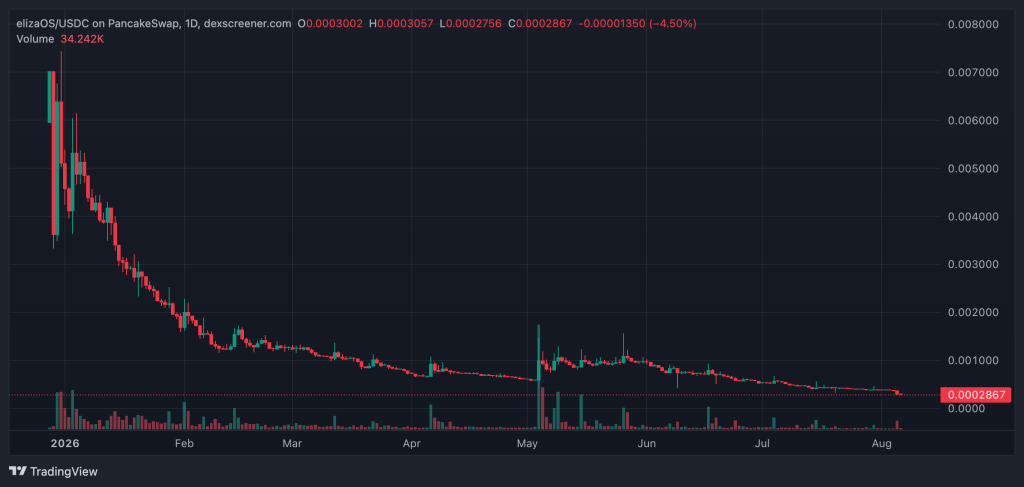
Shaw Walters, founder of Eliza Labs, declared the ELIZAOS token finished on August 4, 2026, after a class-action lawsuit settlement exhausted the project’s remaining treasury, sending the token to a record low near $0.000289 and closing the book on one of the AI-agent cycle’s most prominent names.
The declaration forces a blunt question onto the table: when a founder explicitly abandons a token with no buyback plan and no replacement, what exactly are residual holders trading against?
Discover: Everyone’s Got a Take. Get Free $25 to Actually Trade Yours
Burwick Law Lawsuit Drained What Was Left
The immediate trigger was a settlement with Burwick Law, which had filed a federal class-action suit alleging misleading marketing, deceptive business practices, and investor harm tied to the AI16Z project and its later migration to ELIZAOS.
Walters said the foundation lacked the capital to contest the claims in court, so it surrendered its remaining funds to settle. The settlement left zero treasury, which Walters said means zero support infrastructure for the token going forward.
In a lengthy post on X dated August 4, Walters declared the token dead and the foundation in wind-down, stating there would be no buybacks, no supply reductions, and no replacement token.
He added that he owns the IP and intends to start over, with no future token attached to the Eliza name. Holders were explicitly told not to expect any organized financial support from the project side.
Discover: Your Market Calls Are Worth Something. Start With Free $25 on Kalshi
97% Drawdown Predates the Final Blow
The lawsuit settlement was the terminal event, but the deterioration was already structural. The original AI16Z token launched on Solana during the late-2024 AI-agent boom, reached a combined ecosystem valuation of roughly $2.4–2.5 billion across Eliza-styled tokens, then migrated and rebranded to ELIZAOS in a token swap that expanded supply dramatically and immediately pressured price.
By the time Walters made his declaration, ELIZAOS had already shed more than 97% from its peak value.

The token now trades at a fraction of a cent, a stark contrast to the peak valuation of roughly $2.4 to $2.5 billion the broader Eliza ecosystem once commanded.
That gap between narrative peak and current reality is not unusual for AI-agent tokens from the 2024 cohort, but the combination of a supply expansion rebrand, prolonged underperformance, and now an explicit founder abandonment makes ELIZAOS an unusually complete case study in how that archetype unravels.
Broader altcoin selling pressure has compounded the damage across the AI-agent sector, but ELIZAOS was already underperforming comparable tokens well before market-wide conditions worsened. The lawsuit was the proximate cause of the final collapse; the structural causes go back to the token swap mechanics and the sustained erosion of community confidence that followed.
ElizaOS Framework Survives, Token Does Not
Walters drew a clear line between the token and the underlying software. The open-source ElizaOS framework, which allows developers to build autonomous AI agents that interface with social platforms, blockchain networks, and digital wallets, will continue development independently of any token.
Walters said the team remains active and characterized the software development as accelerating rather than stalling.
He also offered a pointed critique of crypto token culture, arguing it systematically rewards speculation over product development and that he views the AI developer community as operating with a fundamentally different, more productive orientation.
Whether that assessment translates into continued developer adoption of the ElizaOS framework without a token incentive structure is the open question the statement leaves unresolved.
For holders still carrying ELIZAOS, the practical implications are stark. There is no foundation, no treasury, no planned catalyst. Walters acknowledged this directly, telling remaining holders there is no supply event or buyback mechanism coming to support price.
The token will trade on whatever speculative interest exists without any fundamental backstop, a dynamic that token concentration and thin liquidity tend to make structurally volatile rather than merely weak.
Residual trading continues on centralized exchanges despite the absence of any project support. The more consequential signal going forward will be whether developers continue adopting the ElizaOS framework without an associated token, that question will ultimately determine the software project’s long-term legacy.
The token story is closed. The software story remains open, though without a financial incentive layer to drive adoption, the path is considerably narrower than it was eighteen months ago.
Discover: Get Paid to Be Right, $25 to Start on Kalshi
Don’t Miss Out on Our $1,000 USDT Airdrop on ByBit
The post ELIZAOS Founder Abandons Token After Lawsuit Drains Treasury to Zero appeared first on Cryptonews.
Crypto World
JPYC raises $38 million Series B led by major Japanese logistics firm AZ-COM Maruwa (9090)
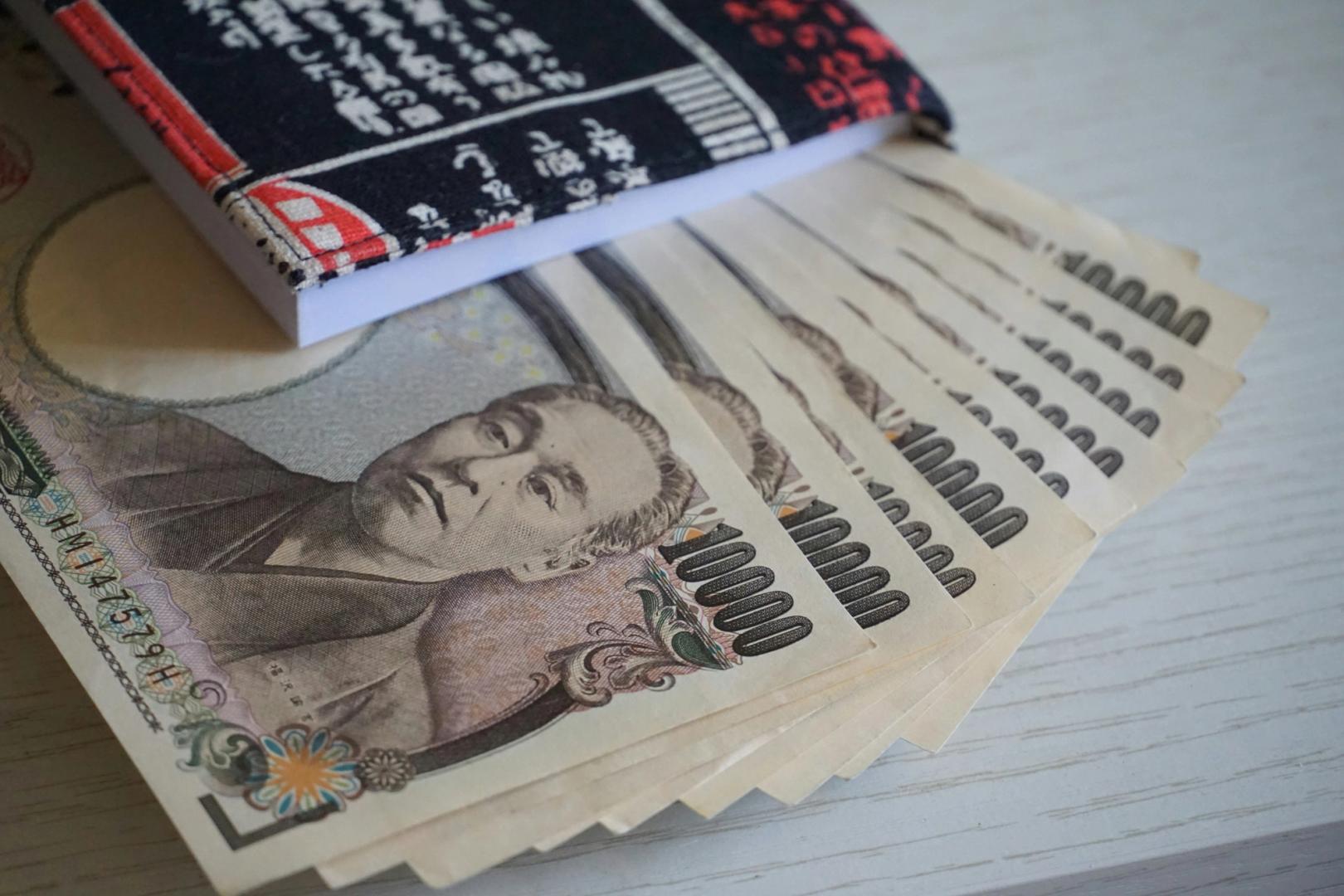
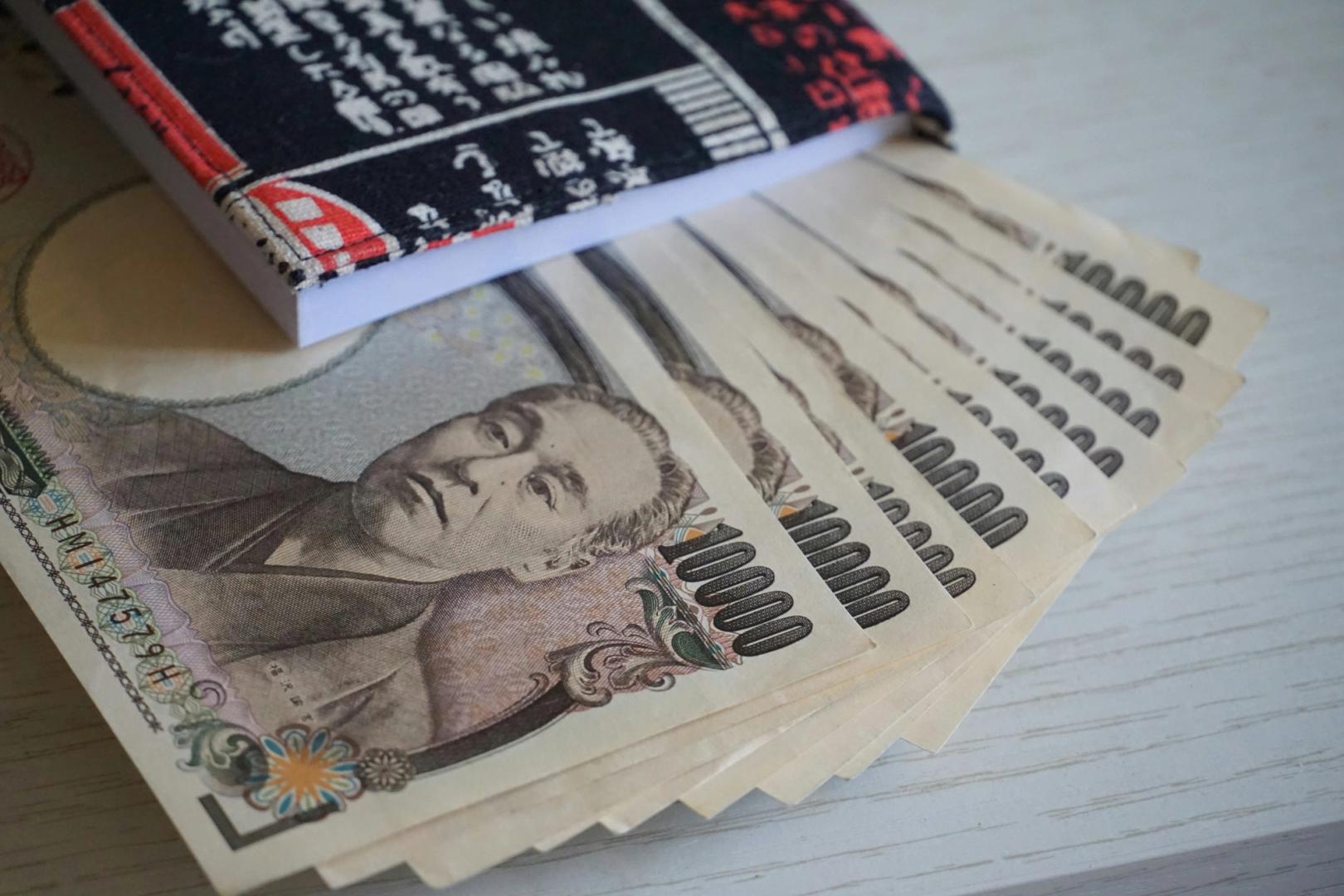
JPYC Inc. raised 6 billion yen ($38 million) in an extension of its Series B funding round to accelerate the expansion of its yen-pegged stablecoin.
The investment brings the company’s total raised to $106 million across seven funding rounds since November 2021, according to venture capital data site Tracxn.
New investors in the latest round include AZ-COM Maruwa Holdings (9090), a major Japanese logistics company.
AZ-COM plans to settle payments in JPYC with its clients, including Amazon Japan. Its network of around 2,300 partners is made up of subcontractors, drivers and so on. The move marked the first large-scale corporate use of a stablecoin for daily business operations in Japan.
JPYC is one of the most prominent stablecoins pegged to the Japanese yen with a market cap of $55.5 million, according to data tracked by CoinGecko.
Stablecoins are digital tokens pegged to the value of a traditional financial asset, usually a fiat currency. The market is overwhelmingly dominated by tokens pegged to the U.S. dollar. The yen stablecoin sector is growing, helped by adoption among some of Japan’s largest financial institutions, but remains negligible in the context of the USD-dominated market.

America Is Finally Taking Extraterrestrials Seriously
Wings Over Scotland | The Party Of The Dead

Carabao Cup first round TV schedule: How to watch every game live this weekend


-

 Fashion6 days ago
Weekend Open Thread: Wit & Wisdom
-

 Politics6 days ago
Meta enters AI-training agreement with far-right ‘propaganda rag’ Newsmax
-

 Politics4 days ago
Zack Polanski: an incitement to murder Nigel Farage?
-

 Crypto World5 days ago
MicroStrategy Post-Earnings CLARITY Act Push Could Add New Catalyst for Its Stock
-

 Crypto World5 days ago
XRP Ledger v3.3.0 brings five institutional features
-

 Politics7 days ago
Luke Littler’s dominance sparks GOAT debate
-

 Crypto World6 days ago
New York sues Kalshi over prediction market gambling
-

 Sports7 days ago
Seema Kaliramna Wins Discus Throw Bronze, Takes India’s CWG Medals Tally To 17
-

 Crypto World4 days ago
Crypto PAC spending tops $2M in Michigan House race
-

 Business4 days ago
DTCR: Deleveraging And A Hedge Fund Collapse Point To A Possible AI Bottom
-

 Business6 days ago
Trump Announces Hamas Disarmament Agreement as Iran Strikes Kuwait Air Base and US Attacks Pause Overnight
-

 Crypto World6 days ago
3 Fed Officials Just Explained Their Rate Hike Vote: Is Inflation Winning?
-

 Tech4 days ago
ESET tracks rise in malicious AI skills and adaptable malware
-

 Tech6 days ago
Gemini Spark can now use Chrome logins and saved passwords to run errands on your behalf
-

 Sports5 days ago
France Cricket implodes: letters hidden in a drawer and a board at war
-
Crypto World4 days ago
XRP Ledger urges node upgrade after manifest flood
-

 Tech6 days ago
Building A Reproduction PlayStation Motherboard
-

 Crypto World5 days ago
Moneyflip CEO charged in $40K murder-for-hire plot
-
 Sports6 days ago
Bruno Fernandes decision made as Man United ‘discuss’ striker transfer option
-

 News Videos5 days ago
Financial Crash Expert: The 90-Day Collapse Timeline They Are Desperately Hiding.
You must be logged in to post a comment Login