
Connect with us

Sports

Lionel Messi breaks Leagues Cup record on World Cup return with stunning Inter Miami brace | Football News

Published

on

Lionel Messi breaks Leagues Cup record on World Cup return with stunning Inter Miami brace
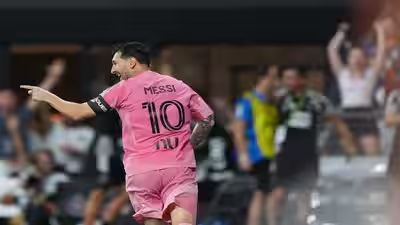
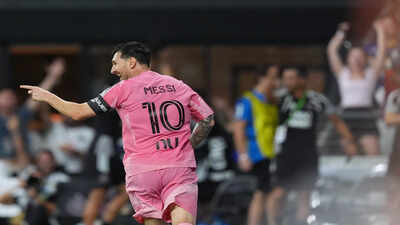
Inter Miami forward Lionel Messi (10) celebrates after scoring his side’s third goal during the first half of a Leagues Cup soccer match against Atletico de San Luis, Wednesday, Aug. 5, 2026, in Miami. (AP Photo/Rebecca Blackwell)

Lionel Messi needed just one full game after returning from the FIFA World Cup to add another record to his extraordinary career. Making his first start since captaining Argentina to a second successive World Cup final, the Inter Miami forward scored twice in a 4-2 victory over Atlético San Luis to become the all-time leading scorer in Leagues Cup history as the MLS side opened its 2026 campaign with an impressive comeback win.

Record falls on World Cup return

There was little sign of rust after Messi’s post-World Cup break.Having made a brief substitute appearance in Inter Miami’s 2-2 MLS draw with the Columbus Crew, the Argentine returned to the starting lineup on Wednesday and immediately reminded supporters why he remains the centrepiece of the club’s attack.Atlético San Luis struck first when David Rodríguez glanced home in the fourth minute, but Inter Miami’s response was immediate.Running onto Noah Allen’s cross, Messi met the delivery with a superb first-time volley in the 11th minute to bring his side level before later producing another composed finish in the closing stages of the first half after intricate build-up play involving Allen.Those two goals took his tally in the competition to 14 goals in just 12 appearances, moving him ahead of Los Angeles FC forward Denis Bouanga to become the outright leading scorer in Leagues Cup history.

Inter Miami turn the game around

Messi was involved in almost everything Inter Miami created after the break.He also registered an assist as Inter Miami overturned the early deficit, with Telasco Segovia giving the hosts the lead midway through the first half after another excellent pass from Allen.Defender Micael added the fourth goal after the interval to complete a convincing 4-2 victory, while Allen enjoyed one of the finest performances of his career by providing three assists in a single match for the first time.

Advertisement
The top photos of the day by AP's photojournalists

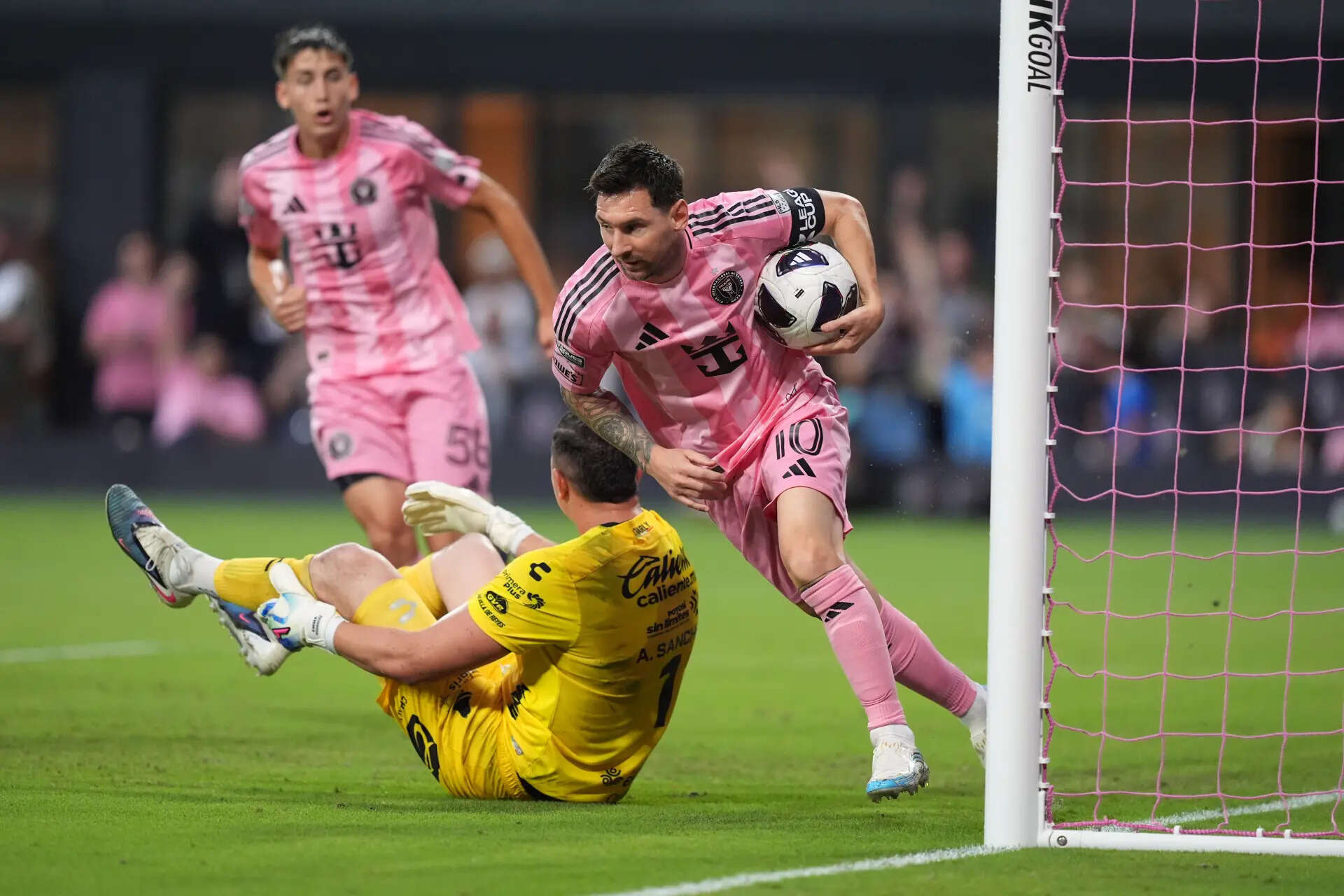
Inter Miami forward Lionel Messi (10) picks up the ball and runs after scoring his side’s first goal past Atletico de San Luis goalkeeper Andres Sanchez (1) during the first half of a Leagues Cup soccer match, Wednesday, Aug. 5, 2026, in Miami. (AP Photo/Rebecca Blackwell)

The result extended Inter Miami’s unbeaten run to eight matches across all competitions and provided the ideal start to another Leagues Cup campaign.

Competition where Messi continues to thrive

Few tournaments have suited Messi quite like the Leagues Cup.Shortly after arriving in the United States in 2023, he inspired Inter Miami to the club’s first major trophy by leading them to the inaugural Leagues Cup title. Three years later, he has now added another individual milestone to that success.The brace against Atlético San Luis also became his fifth multi-goal performance in just 12 Leagues Cup appearances, underlining the consistency with which he has influenced the competition since its expansion to include clubs from Major League Soccer and Liga MX.

Advertisement

Perfect response after the World Cup

Messi’s return had been eagerly anticipated after Argentina’s run to a second consecutive FIFA World Cup final, where the defending champions were beaten 1-0 by Spain.Inter Miami managed to remain competitive during his absence, with Luis Suárez helping steady the team in MLS action following the World Cup. However, the Uruguayan was unavailable against San Luis as he began serving the first match of a six-game suspension.Messi’s immediate return to form ensured Miami scarcely felt that absence.With Monterrey next on the schedule in the Leagues Cup, Inter Miami have not only welcomed back their captain but also seen him resume a familiar habit—breaking another record almost as soon as he stepped back onto the pitch.

Source link

Continue Reading
Click to comment

You must be logged in to post a comment Login

Leave a Reply

Sports

Vortex Golf’s new rangefinder solves one annoying issue

Published

on

Source link

Advertisement
Continue Reading

Sports

Mark Martin tells Dale Earnhardt Jr. how Dale Sr. pushed NASCAR further down the downforce path

Published

on

Mark Martin revisited NASCAR’s long-running technical debate around the Next Gen car during his appearance on the latest Dale Jr. Download. While promoting his new book Never Lift, the conversation shifted to how he would fix the racing produced by the Gen-7 car, and the Hall of Famer pointed to downforce and why he believes the sport took the wrong direction more than three decades ago.

The discussion comes at a time when NASCAR continues to face criticism over the Next Gen car’s racing on short tracks and road courses. While the car has improved safety and reduced costs through standardized components, many drivers and fans believe the current aerodynamic package makes passing too difficult, particularly when cars run close together.

Looking back at the evolution of Cup Series aerodynamics, Martin argued that NASCAR’s current problems can be traced to the early 1990s, when teams increasingly chased downforce to improve cornering speed. That was also when drivers first began talking about cars becoming ‘aero-tight,’ with disturbed airflow making it harder for a trailing car to stay close through the corners.

Advertisement

“In 1990, when we went to Atlanta to race your dad for the championship at the end of the year, we had three cars that we wind-tunneled,” Mark Martin said (1:16:48 onwards). “We had two that, in race trim, that had lift in the front, and one that was zero… We all raced that way. Your dad (Dale Earnhardt Sr.) had the same. Everybody had it. Then we got into the mid-’90s. We started making some serious downforce by 1993… In my opinion, it went off the rails (when) we started making downforce, and then people started saying ‘aero-tight.”

“They come with the five-and-five rule. That didn’t suit your dad’s cars, and it probably suited Fords better. I don’t know what the story was. Everybody’s calling aero-tight, and I said we need less front downforce. Your dad said we needed more, and that’s a fact. And your dad had a lot of pull, and it just kept going,” Mark Martin added.

The Next Gen car today generates much of their grip through a sealed underbody and rear diffuser. That creates a large pocket of turbulent “dirty air” behind the leading car. When a trailing driver enters that disturbed airflow, the front splitter and nose lose clean air, reducing front grip and causing understeer in the corners.

With every car producing similar aerodynamic performance and mechanical grip, following drivers struggle to close the final few feet needed to complete a pass, especially at superspeedways. Mark Martin believes the solution is to remove that dependency on front aerodynamic grip almost entirely:

“I’d want virtually zero front downforce in the front, or lift. Start with 300 (pounds) in the back. Maybe you need more. You don’t need a ton, but you need the front to be virtually nothing. If it’s nothing, it shouldn’t lose anything when it gets behind another car.”

youtube-cover

His view is that reducing front downforce would make airflow far less influential, allowing drivers to race each other rather than fight aerodynamic turbulence.


Mark Martin explains why he never liked the Next Gen car’s design
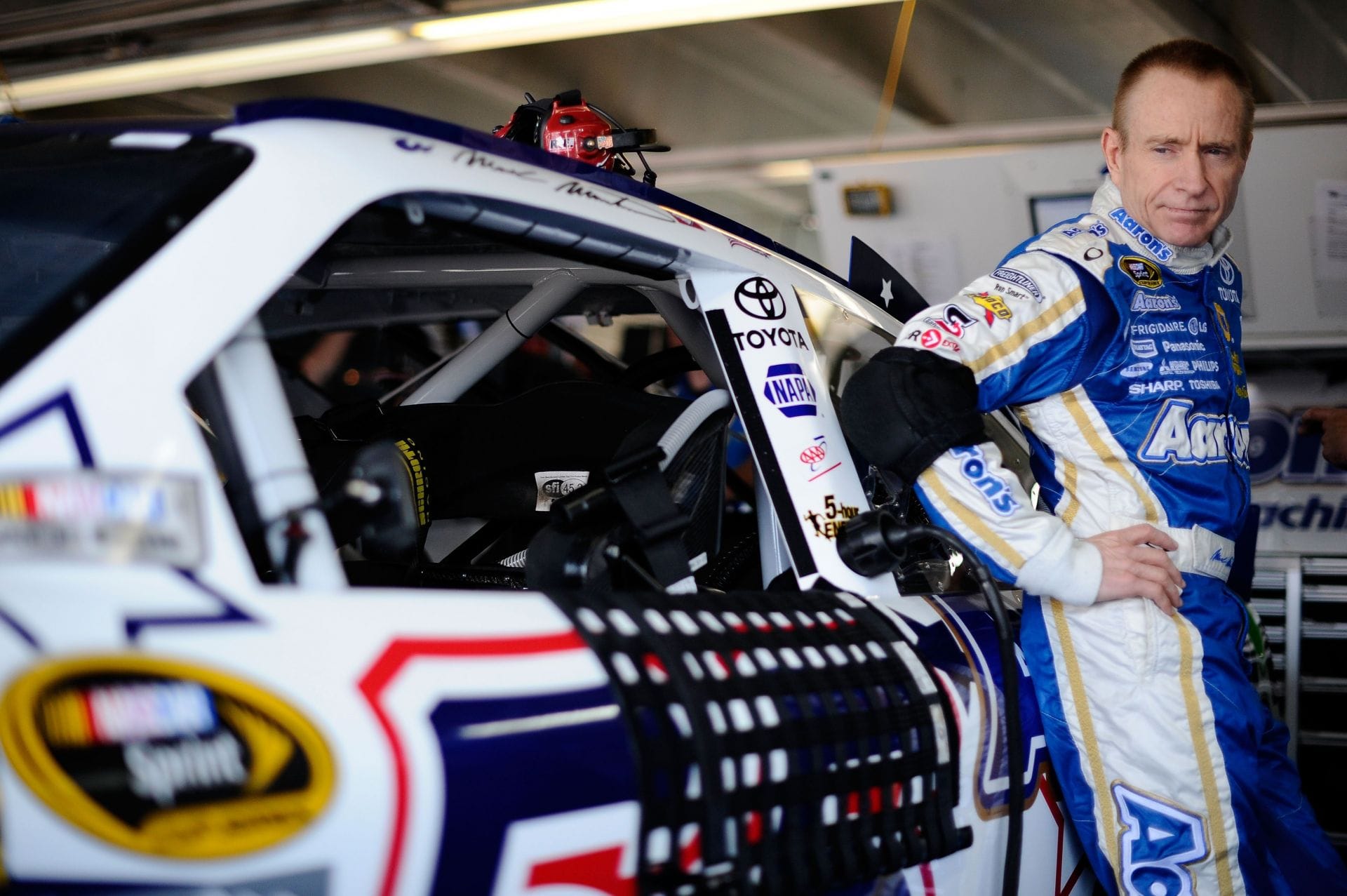
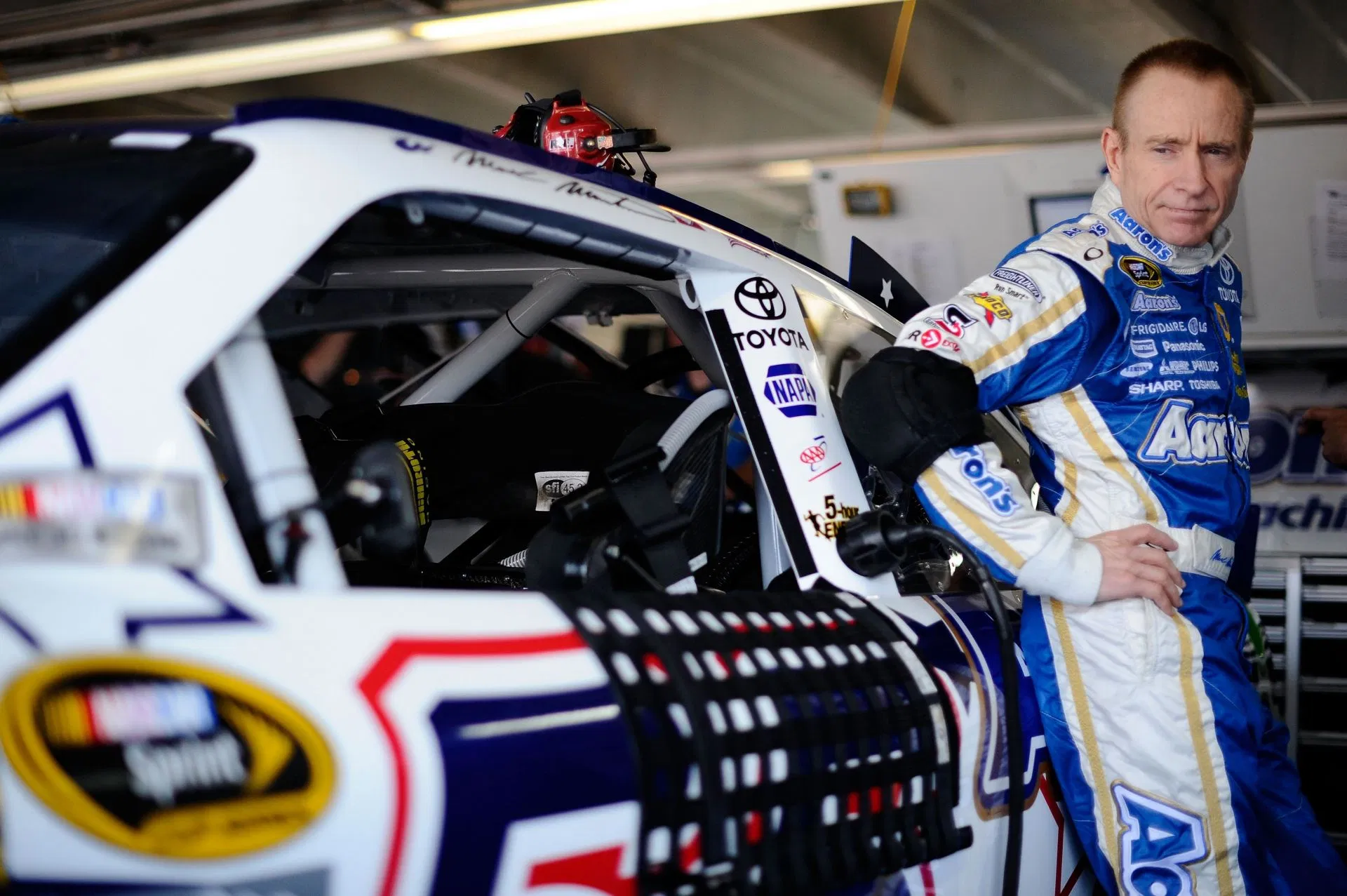
Mark Martin in front of the No. 55 Toyota at Charlotte Motor Speedway. Source: GettyMark Martin in front of the No. 55 Toyota at Charlotte Motor Speedway. Source: Getty

Mark Martin in front of the No. 55 Toyota at Charlotte Motor Speedway. Source: Getty

Later in the conversation, Mark Martin suggested that NASCAR should continue exploring ways to reduce the aerodynamic influence on the Next Gen car. NASCAR has already reduced overall downforce by roughly 30 percent from the earlier generation, and also increased the horsepower in 2026.

Martin then revealed that his concerns about the Next Gen car actually began before it ever turned a lap (1:13:47 onwards):

Advertisement

“The first thing I would’ve said when I saw the first drawing of the Gen 7 was, ‘What’s wrong with the quarter panels? What’d y’all do?’ It doesn’t have a trunk lid. It looks like a hatchback.”

“When I first saw it, I said, ‘Why didn’t they push the body back?’ Then I got to looking more, and it’s like the rear wheels are rubbing the back bumper. Why is that? It just looks so not like a race car. Well the OEMs wanted all that.”

Despite those styling concerns, Mark Martin stressed that his biggest priority remains fixing how the cars race. Rather than focusing on setup changes, he believes the aerodynamic philosophy itself needs to change:

“I’d work with the engineers from the teams to make the underbody not work at all.”

While Mark Martin acknowledged the need for underbody, he believes reducing its aerodynamic influence is the best path toward improving side-by-side racing and giving drivers more opportunities to pass on merit rather than clean air.