Connect with us

Sports

Manchester United finally announce new signing as statement released

Published

on

Manchester United agreed the youngster Cristian Orozco’s transfer last year, but had to wait until this summer for his arrival

Advertisement

Manchester United have officially announced the signing of Cristian Orozco, who arrived from Fortaleza CEIF. United agreed a deal with the Colombian club last year, but the terms stated he would only make the move once the summer window opened, as he needed to turn 18 to complete the transfer.

Orozco officially began his United career when he celebrated his 18th birthday last month. He then made his first public appearance for United in the friendly against Altrincham last week, coming off the bench just after the hour mark and offering a glimpse of his quality during a bright cameo.

Early glimpses have been positive, and he already appears more physically advanced than previous United signings of a similar profile, such as Sekou Kone and Diego Leon.

The midfielder does not speak English, so coaches have been relaying instructions through a handful of Spanish‑speaking players – including Leon, who has been particularly helpful in passing information on.

Sources close to the club stress they will ‘take it slowly’ with Orozco as he still needs time to adapt to the demands of the club and the level.

Orozco’s signing was formally announced on Thursday. A club statement confirming the move, read: “Manchester United have completed the signing of exciting young midfielder Cristian Orozco. The 18-year-old joins from Colombian Categoria Primera A side, Fortaleza CEIF.

“Orozco, who was developed in Rojo FC’s academy, played five first-team games for Fortaleza last season and has represented Colombia up to Under-17s level. He will initially be supported by the Academy while he settles into life at Manchester United.

Advertisement

FOLLOW OUR MAN UNITED FB PAGE! Latest news and analysis via the MEN’s Manchester United Facebook page

“Everyone at the club would like to welcome Cristian to United and wish him the very best of luck.”

United boss Michael Carrick has continued to hand opportunities to youngsters throughout pre‑season.

Carrick has been a strong advocate for the academy since his interim appointment in January, regularly attending youth fixtures, and he has maintained that faith in emerging talent during the current pre‑season campaign.

Advertisement

Orozco could soon be among the next youngsters to be handed an opportunity.

United’s under‑21s will kick off their season on August 18 with an away trip to Middlesbrough (7pm).

Source link

Advertisement
Continue Reading
Click to comment

You must be logged in to post a comment Login

Leave a Reply

Sports

Mark Martin tells Dale Earnhardt Jr. how Dale Sr. pushed NASCAR further down the downforce path

Published

on

Mark Martin revisited NASCAR’s long-running technical debate around the Next Gen car during his appearance on the latest Dale Jr. Download. While promoting his new book Never Lift, the conversation shifted to how he would fix the racing produced by the Gen-7 car, and the Hall of Famer pointed to downforce and why he believes the sport took the wrong direction more than three decades ago.

The discussion comes at a time when NASCAR continues to face criticism over the Next Gen car’s racing on short tracks and road courses. While the car has improved safety and reduced costs through standardized components, many drivers and fans believe the current aerodynamic package makes passing too difficult, particularly when cars run close together.

Looking back at the evolution of Cup Series aerodynamics, Martin argued that NASCAR’s current problems can be traced to the early 1990s, when teams increasingly chased downforce to improve cornering speed. That was also when drivers first began talking about cars becoming ‘aero-tight,’ with disturbed airflow making it harder for a trailing car to stay close through the corners.

Advertisement

“In 1990, when we went to Atlanta to race your dad for the championship at the end of the year, we had three cars that we wind-tunneled,” Mark Martin said (1:16:48 onwards). “We had two that, in race trim, that had lift in the front, and one that was zero… We all raced that way. Your dad (Dale Earnhardt Sr.) had the same. Everybody had it. Then we got into the mid-’90s. We started making some serious downforce by 1993… In my opinion, it went off the rails (when) we started making downforce, and then people started saying ‘aero-tight.”

“They come with the five-and-five rule. That didn’t suit your dad’s cars, and it probably suited Fords better. I don’t know what the story was. Everybody’s calling aero-tight, and I said we need less front downforce. Your dad said we needed more, and that’s a fact. And your dad had a lot of pull, and it just kept going,” Mark Martin added.

The Next Gen car today generates much of their grip through a sealed underbody and rear diffuser. That creates a large pocket of turbulent “dirty air” behind the leading car. When a trailing driver enters that disturbed airflow, the front splitter and nose lose clean air, reducing front grip and causing understeer in the corners.

With every car producing similar aerodynamic performance and mechanical grip, following drivers struggle to close the final few feet needed to complete a pass, especially at superspeedways. Mark Martin believes the solution is to remove that dependency on front aerodynamic grip almost entirely:

“I’d want virtually zero front downforce in the front, or lift. Start with 300 (pounds) in the back. Maybe you need more. You don’t need a ton, but you need the front to be virtually nothing. If it’s nothing, it shouldn’t lose anything when it gets behind another car.”

youtube-cover

His view is that reducing front downforce would make airflow far less influential, allowing drivers to race each other rather than fight aerodynamic turbulence.


Mark Martin explains why he never liked the Next Gen car’s design

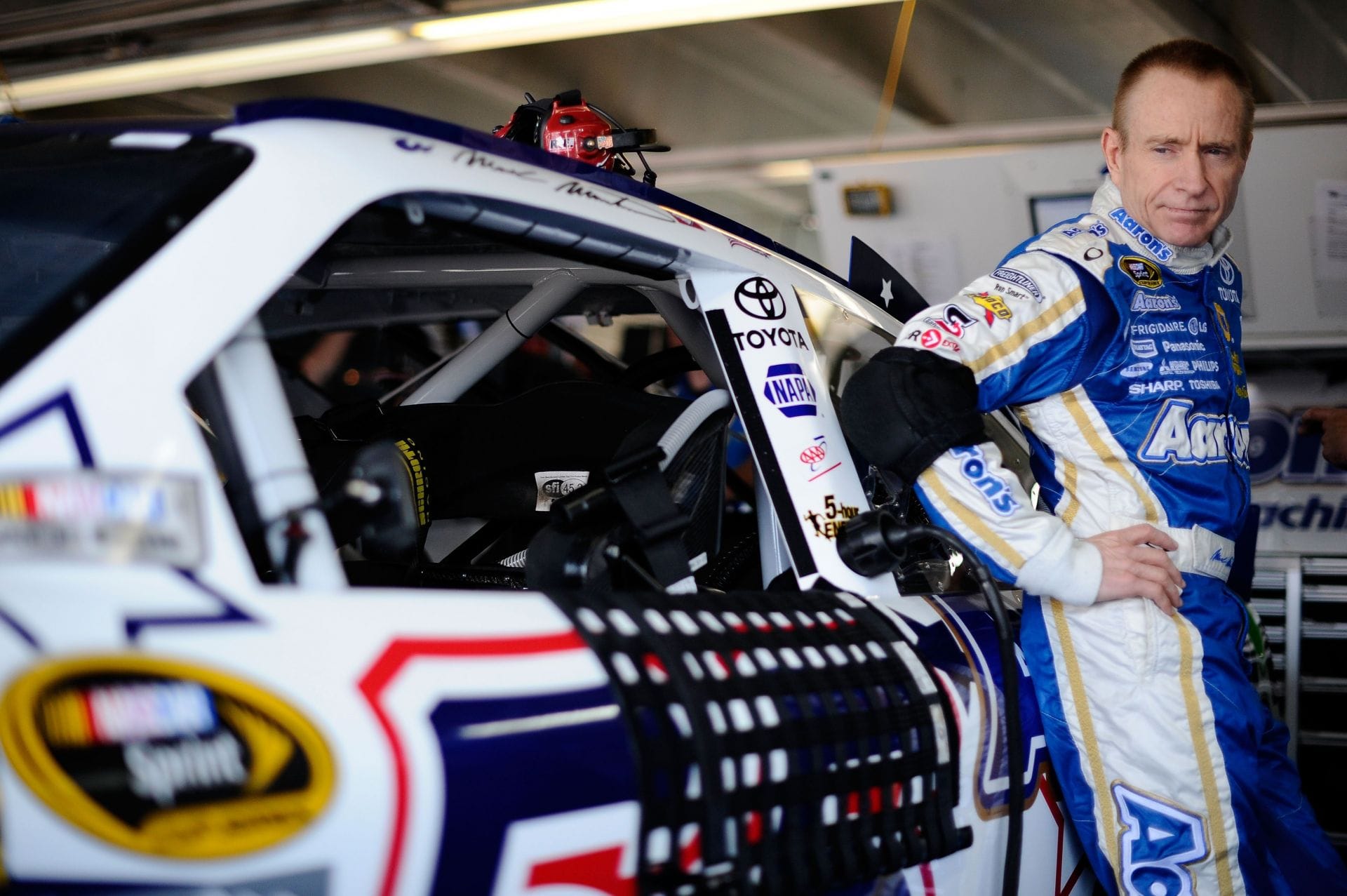
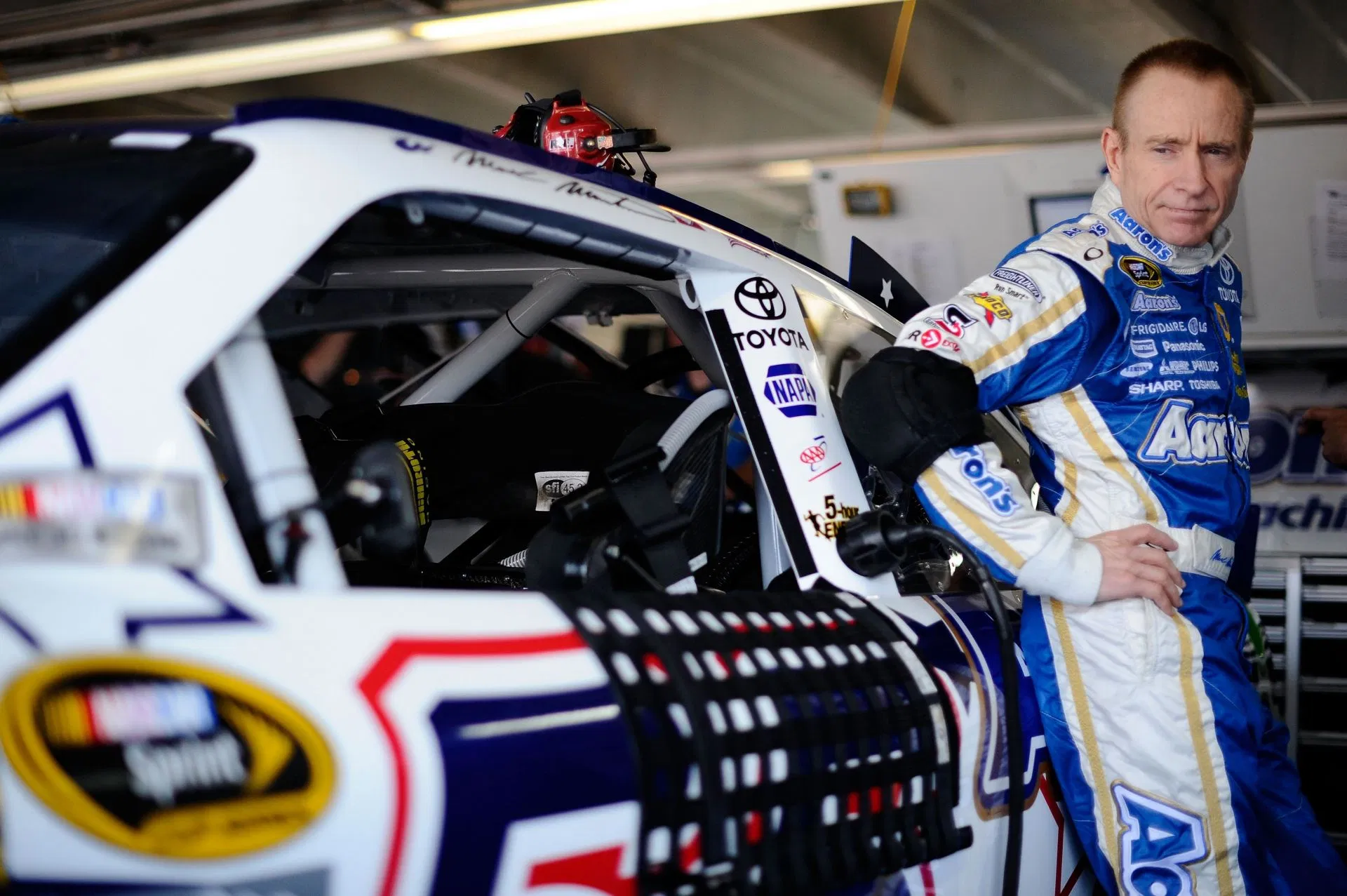
Mark Martin in front of the No. 55 Toyota at Charlotte Motor Speedway. Source: GettyMark Martin in front of the No. 55 Toyota at Charlotte Motor Speedway. Source: Getty
Mark Martin in front of the No. 55 Toyota at Charlotte Motor Speedway. Source: Getty

Later in the conversation, Mark Martin suggested that NASCAR should continue exploring ways to reduce the aerodynamic influence on the Next Gen car. NASCAR has already reduced overall downforce by roughly 30 percent from the earlier generation, and also increased the horsepower in 2026.

Martin then revealed that his concerns about the Next Gen car actually began before it ever turned a lap (1:13:47 onwards):

Advertisement

“The first thing I would’ve said when I saw the first drawing of the Gen 7 was, ‘What’s wrong with the quarter panels? What’d y’all do?’ It doesn’t have a trunk lid. It looks like a hatchback.”

“When I first saw it, I said, ‘Why didn’t they push the body back?’ Then I got to looking more, and it’s like the rear wheels are rubbing the back bumper. Why is that? It just looks so not like a race car. Well the OEMs wanted all that.”

Despite those styling concerns, Mark Martin stressed that his biggest priority remains fixing how the cars race. Rather than focusing on setup changes, he believes the aerodynamic philosophy itself needs to change:

“I’d work with the engineers from the teams to make the underbody not work at all.”

While Mark Martin acknowledged the need for underbody, he believes reducing its aerodynamic influence is the best path toward improving side-by-side racing and giving drivers more opportunities to pass on merit rather than clean air.