The latest Manchester City transfer news includes updates on Rodri and Ayyoub Bouaddi as the club enter the final weeks of the transfer window
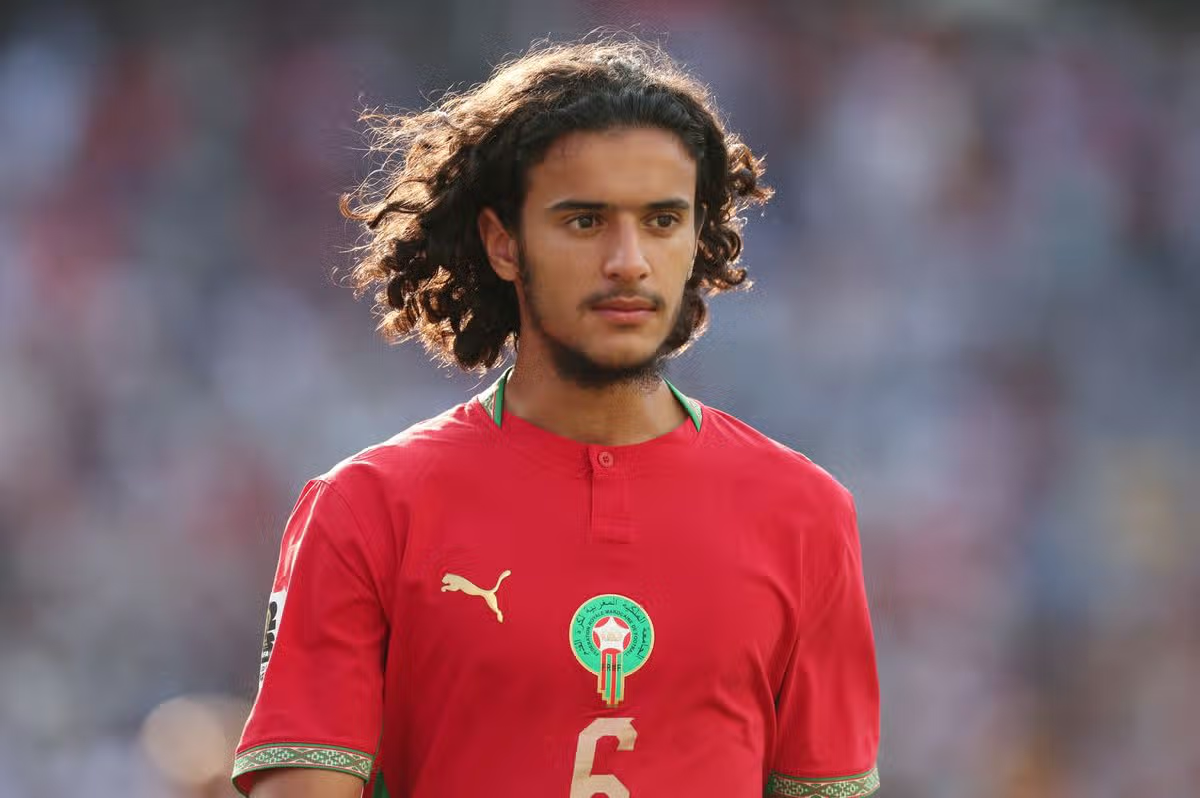
Manchester City are ready to replace any midfield players who leave this month in addition to bringing in Ayyoub Bouaddi. The club are making progress in their efforts to sign the Lille midfielder, who will arrive regardless of any departures.
While the arrivals of both Bouaddi and club record signing Elliot Anderson for a combined fee that could reach up to £200m would be an exciting and needed refresh of the midfield, City fans are desperately hoping that they will not lose both Bernardo Silva and Rodri in the same summer. Silva has left on a free transfer for Real Madrid and Real and Barcelona are also circling for Rodri, who is into the final year of his contract at the Etihad and has not been moved by City’s attempts to keep him.
Advertisement
City would only consider losing Rodri for the right fee but also if they were able to sign a replacement, and the same goes for Tijjani Reijnders. The Dutch midfielder only signed last summer but had a frustrating year under Pep Guardiola and is looking likely to leave amid interest from Nottingham Forest, Newcastle and Galatasaray.
Were both Reijnders and Rodri to be sold, City would sign another two midfield players on top of Bouaddi and Anderson. Mateo Kovacic is content to stay at the club for the final year of his contract after being told that the club are counting on him, and Nico Gonzalez is also planning on being part of Enzo Maresca’s squad.
City’s replacement policy also applies to other positions, so there would be another signing if Tottenham seal a deal for Brazilian winger Savinho. Maresca could not offer any assurances that Savinho or Reijnders would remain at the club when asked on Wednesday in Seoul after City’s second friendly of their Asia trip.
Advertisement
Together with the January signings of Antoine Semenyo and Marc Guehi, the club are confident that the summer will back up their recent business to give Maresca the best possible chance of achieving success at the Etihad.
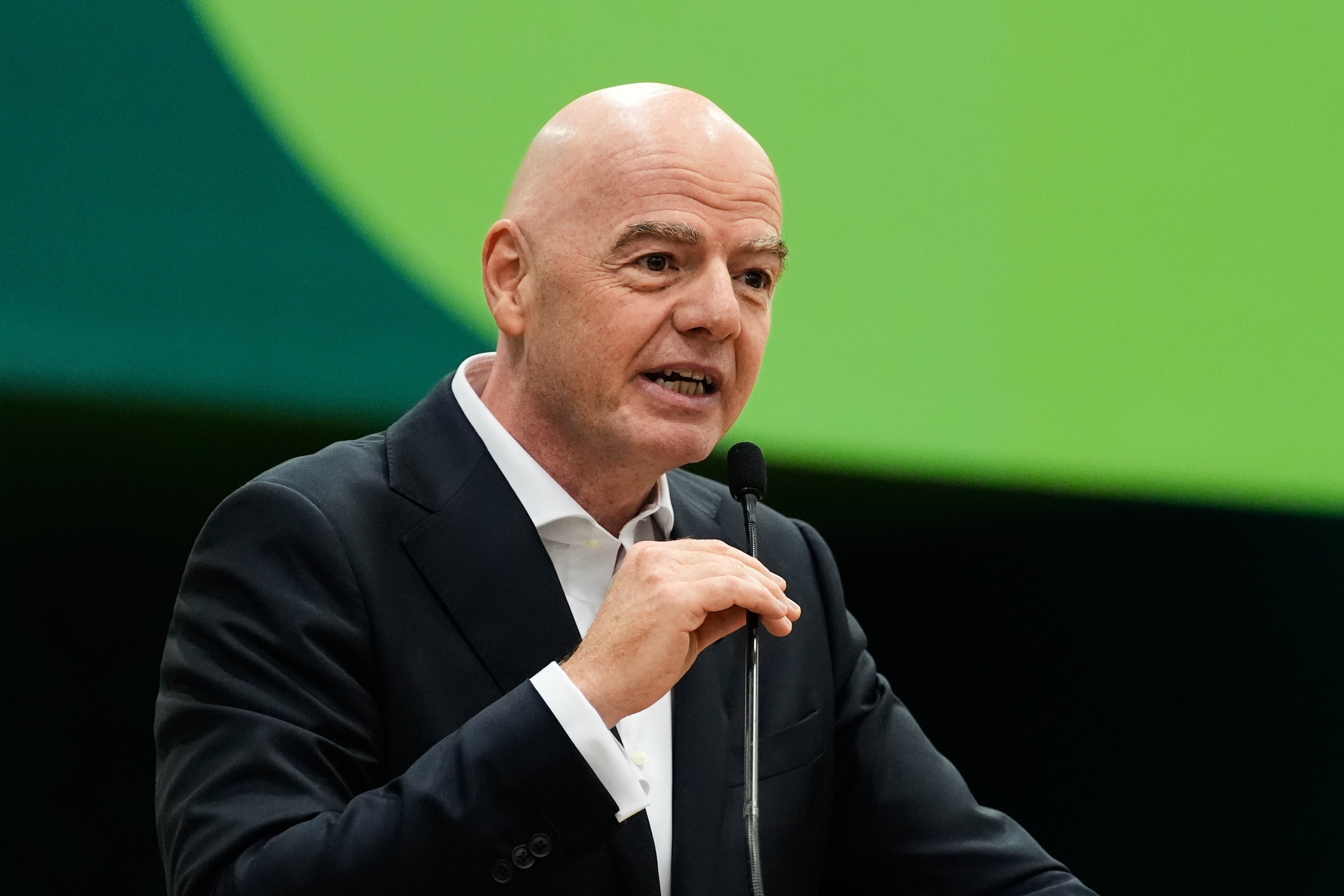
Fifpro, which represents more than 70 player unions globally, stated that footballers’ confidence in Fifa had been “fundamentally broken” by the conduct of the global governing body’s president.
In response, Fifa issued a statement acknowledging that “mistakes” had been made in the plans to create Fifa Forward Enterprise (FFE).
Fifpro noted the tone of that statement with “deep concern” in a communication issued on Thursday, adding: “The withdrawal of FFE was inevitable. But withdrawing the proposal does not erase what it revealed.
“A plan capable of permanently altering the ownership and governance of the Fifa World Cup, and commercialising the competitions built by generations of players, was conceived in secrecy, negotiated behind closed doors and brought to the brink of agreement before the Fifa Council, the member associations, players and football’s recognised stakeholders even knew it existed.
Infantino abandoned Fifa’s FFE plans (AP)
“That is not merely a governance failure. It is a profound abuse of presidential power.
“The withdrawal of FFE prevented an irreversible decision. It did not restore the confidence that made such a proposal possible in the first place. That confidence has now been fundamentally broken.
“It cannot be rebuilt through carefully drafted statements, internal reviews or promises to improve processes. Nor can it be restored simply by announcing governance and structural reforms that should always have existed.
Advertisement
“These reforms are now indispensable. But they are the responsibility of the future, not an absolution of the past.
“The players did not create this crisis. They will insist that football emerges from it with stronger institutions, stronger safeguards and leadership worthy of the trust the game demands.”
Fifpro has also written to Fifa secretary general Mattias Grafstrom outlining its demands for governance reform.
Its letter, seen by the Press Association, stated: “The role of Fifa president exists to protect institutions, not to circumvent them. The World Cup is not the personal asset of any president. Nor is Fifa itself. They are held in trust for football.”
Advertisement
Fifpro’s letter said the FFE proposal’s handling was part of a “broader pattern” of decisions being taken without proper consultation – citing the introduction of hydration breaks as another example.
Fifpro said the breaks had been “presented under the banner of player health” but appeared in reality to be “closer to a proof-of-concept for future commercial exploitation by FFE-type investors than a genuine welfare measure”.
The players’ body signed a Memorandum of Understanding with Fifa the day before the World Cup kicked off, but wrote in its letter to Grafstrom: “The FFE episode demonstrated that commitments, however welcome, are of little value if they can be circumvented whenever one individual chooses to act outside the institutional framework.”
Vortex Golf is a fairly new brand to the golf world, but a leader in the shooting and hunting optics world. Their physical glass quality and optics technology rival that of the best in the world, and bringing that optics technology into pieces of technology is what Vortex does best.
When the brand came into golf a little over a year ago, they offered three different models — each with an increasing price point and feature set, including the flagship Vortex Golf Anarch. Today, they’re releasing an update to the Anarch model with the new Anarch+, and there’s one feature that really pushed me over the edge.
The new Vortex Golf Anarch+ is an update to the older Anarch model and comes absolutely stacked with features that you have the ability to toggle on and off depending on how you want to set up your rangefinder experience. The first decision you have to make: deciding whether you want your rangefinder to display in yards or meters.
Not only does the display have three levels of red LED brightness, it will also automatically switch between a standard black display and the low-light friendly red LED display.
Advertisement
What the display looks like for the Anarch+
Vortex Golf
You can also turn the slope feature on or off, and when slope mode is engaged there is a very large and very bright green light on both sides of the rangefinder so there is no question of whether the slope feature is turned on or not.
You can also toggle the pin spotter mode on or off. This features allows you to scan around the course to range different yardages, but it will also detect when you are crossing over the pin and put a marker on the display to give you a heads up. This is particularly useful in low-light conditions where you may not see the pin perfectly, or at courses with busy backgrounds behind the pin. I can’t tell you how many times I’ve accidentally ranged a tree in the background instead of the pin, and this helps to cut down on those issues.
The Vortex Golf Anarch+ Pinspotter technology in action, along with a look at the image stabilization.
Vortex Golf
Advertisement
The flagship feature of the Anarch+ is their digital stabilization. This is something you can toggle on and off, although I don’t know why you would want to. When you’re on the 15th hole of your early morning round and the halfway house wasn’t open to snag a Snickers, you’re going to be thankful to have the image stabilization. It quiets the optics and provides a clear image and quick ability to range the flag and get a distance — even with shaky hands.
Now. For THE feature: Dual. Magnets.
Vortex Golf’s new flagship rangefinder, the Anarch+.
Vortex Golf
This sounds like such a silly thing to be so overjoyed by, but oh my goodness is it such an amazing thing to have a magnet on either side of the device. I have dropped my rangefinder onto the ground more times than I can count because I put it up on the cart with the wrong side and let go. NO MORE!
Advertisement
That being said, if for some reason you do drop the rangefinder, or you’re attacked by an animal, or you play a round using the rangefinder as your ball, Vortex has you covered with the best warranty service in optics. Period. Full Stop. Clock it. (I think that’s what the kids are sayin’.) The only question Vortex is going to ask is, “What address can we send the replacement product to?”
The Anarch+ retails for $599.99 USD and you can snag one for yourself from vortexgolf.com
The new Tour V7 Shift features Bushnell Golf’s all-new Slope First Technology, a new state-of-the-art OLED display, and Link Enabled MyBag play as distances and club recommendations. Bushnell’s Slope Technology has led on Tour for decades, and with Slope First Technology, it now shows your compensated, “play as” distance in Green. Built on our patented Slope technology trusted by 99% of the PGA Tour, you now get the most important number first in the display to have it first in your mind. See (and hit) the Green with Slope First from Bushnell Golf. List of Tour V7 Shift Features: NEW Dual Color OLED Display with Slope First NEW Yardage Range Recall NEW Link Enabled MyBag Play As Distances and Club Recommendations Patented, Tour-Trusted Slope Technology Slope-Switch Technology PinSeeker with Visual JOLT Technology Integrated BITE Magnetic Cart Mount Ranges 500+ Yards to a Flag 6X Magnification Weather Resistant Design (iPX6) Bright, Clear Optics Premium Carry Case & CR2 Battery Included
ELITE PRECISION, NOW WITH CLUB SELECTION TECHNOLOGY! The New Callaway CSI PRO Laser Rangefinder features Club Selection Information, a proprietary technology that will suggest a club based on distance to the flagstick. This laser is designed to deliver precise distance measurements in a compact, and easy to use device. Slope Technology: Device measures angle of incline/decline then calculates the slope adjusted distance. Activated with an easy on/off toggle switch. P.A.T. with Pulse Technology delivers a short vibration when the laser hits the pin. Lock onto the pin up to 300 yards away! Club reccomendation based on adjusted distance measurement Magnahold: integrated magnets allow for quick access and storage on golf carts Scan landscape to acquire multiple targets 6X Magnification; Range: 5-1000 yards Measure in yards or meters Superior Accuracy [+/- 1 Yard] Water/Fog resistant Legal for tournament play w/ slope disabled Includes premium molded hard carrying case Size: 4” x 2.75” x 1.5” Weight: 5.6 oz.
ADD RANGE TO YOUR GAME This laser range finder provides your distance to the flag from up to 400 yards and is the perfect companion to your Garmin golf smartwatch or handheld. RANGED DISTANCE SYNCS TO COMPATIBLE DEVICES SEE DISTANCE FROM THE PIN TO THE FRONT AND BACK OF GREEN PLAYSLIKE DISTANCE FEATURE ADJUSTS YARDAGE BASED ON ELEVATION CHANGES RANGE UP TO 400 YARDS WITH 6X MAGNIFICATION BUILT-IN MAGNETIC CART MOUNT GET UP TO 1 YEAR OF PLAY WITH A REPLACEABLE BATTERY
Captain Air delivers Bluetooth connectivity and next-gen simplicity in a streamlined, accessible rangefinder. Built on the trusted S4 platform and fully integrated into the Blue Tees ecosystem, it provides essential performance in a clean, waterproof design. Whether it’s your first rangefinder or a smart upgrade, CAPTAIN Air makes connected golf easier, smarter, and more enjoyable. Features Red / Black HD Display: A high-contrast display with dual color modes keeps yardages easy to read in any lighting. 6X MAGNIFICATION with 1000 Yard Precision: Lock onto pins faster with 6X optical magnification and a 1000-yard measurement range. Together, they give you the long-range visibility and tour-level accuracy to attack every shot with confidence. FRONT, CENTER, BACK GPS DISTANCES: Instantly see crystal-clear yardages for any course you play, helping you choose smarter targets and commit with confidence. Built-in Bluetooth tracking helps you locate your device in seconds—no more digging through carts or bags to find it.
The new and improved Prism+ Laser Rangefinder. Word on the course is that it is the most user friendly rangefinder ever created. It’s packed with new cutting edge software, a dialed in performance aesthetic and never before seen features. The Prism+ is a stylish testament to our commitment to innovation and making the game of golf more fun.
Mark Martin revisited NASCAR’s long-running technical debate around the Next Gen car during his appearance on the latest Dale Jr. Download. While promoting his new book Never Lift, the conversation shifted to how he would fix the racing produced by the Gen-7 car, and the Hall of Famer pointed to downforce and why he believes the sport took the wrong direction more than three decades ago.
The discussion comes at a time when NASCAR continues to face criticism over the Next Gen car’s racing on short tracks and road courses. While the car has improved safety and reduced costs through standardized components, many drivers and fans believe the current aerodynamic package makes passing too difficult, particularly when cars run close together.
Thanks for the submission!
Advertisement
Looking back at the evolution of Cup Series aerodynamics, Martin argued that NASCAR’s current problems can be traced to the early 1990s, when teams increasingly chased downforce to improve cornering speed. That was also when drivers first began talking about cars becoming ‘aero-tight,’ with disturbed airflow making it harder for a trailing car to stay close through the corners.
Advertisement
“In 1990, when we went to Atlanta to race your dad for the championship at the end of the year, we had three cars that we wind-tunneled,” Mark Martin said (1:16:48 onwards). “We had two that, in race trim, that had lift in the front, and one that was zero… We all raced that way. Your dad (Dale Earnhardt Sr.) had the same. Everybody had it. Then we got into the mid-’90s. We started making some serious downforce by 1993… In my opinion, it went off the rails (when) we started making downforce, and then people started saying ‘aero-tight.”
“They come with the five-and-five rule. That didn’t suit your dad’s cars, and it probably suited Fords better. I don’t know what the story was. Everybody’s calling aero-tight, and I said we need less front downforce. Your dad said we needed more, and that’s a fact. And your dad had a lot of pull, and it just kept going,” Mark Martin added.
The Next Gen car today generates much of their grip through a sealed underbody and rear diffuser. That creates a large pocket of turbulent “dirty air” behind the leading car. When a trailing driver enters that disturbed airflow, the front splitter and nose lose clean air, reducing front grip and causing understeer in the corners.
With every car producing similar aerodynamic performance and mechanical grip, following drivers struggle to close the final few feet needed to complete a pass, especially at superspeedways. Mark Martin believes the solution is to remove that dependency on front aerodynamic grip almost entirely:
“I’d want virtually zero front downforce in the front, or lift. Start with 300 (pounds) in the back. Maybe you need more. You don’t need a ton, but you need the front to be virtually nothing. If it’s nothing, it shouldn’t lose anything when it gets behind another car.”
His view is that reducing front downforce would make airflow far less influential, allowing drivers to race each other rather than fight aerodynamic turbulence.
Mark Martin explains why he never liked the Next Gen car’s design
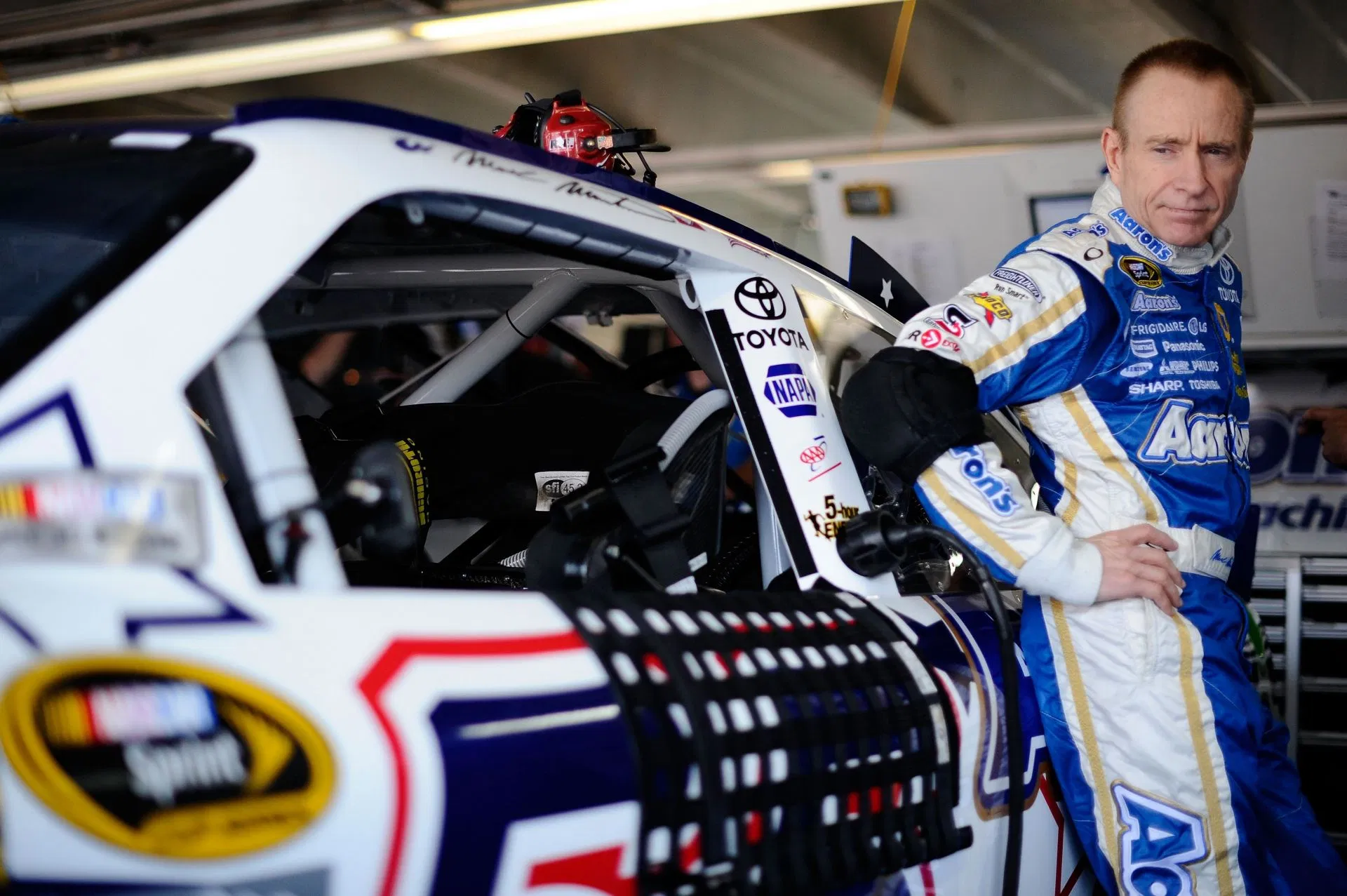
Mark Martin in front of the No. 55 Toyota at Charlotte Motor Speedway. Source: Getty
Later in the conversation, Mark Martin suggested that NASCAR should continue exploring ways to reduce the aerodynamic influence on the Next Gen car. NASCAR has already reduced overall downforce by roughly 30 percent from the earlier generation, and also increased the horsepower in 2026.
Martin then revealed that his concerns about the Next Gen car actually began before it ever turned a lap (1:13:47 onwards):
Advertisement
“The first thing I would’ve said when I saw the first drawing of the Gen 7 was, ‘What’s wrong with the quarter panels? What’d y’all do?’ It doesn’t have a trunk lid. It looks like a hatchback.”
“When I first saw it, I said, ‘Why didn’t they push the body back?’ Then I got to looking more, and it’s like the rear wheels are rubbing the back bumper. Why is that? It just looks so not like a race car. Well the OEMs wanted all that.”
Despite those styling concerns, Mark Martin stressed that his biggest priority remains fixing how the cars race. Rather than focusing on setup changes, he believes the aerodynamic philosophy itself needs to change:
“I’d work with the engineers from the teams to make the underbody not work at all.”
While Mark Martin acknowledged the need for underbody, he believes reducing its aerodynamic influence is the best path toward improving side-by-side racing and giving drivers more opportunities to pass on merit rather than clean air.
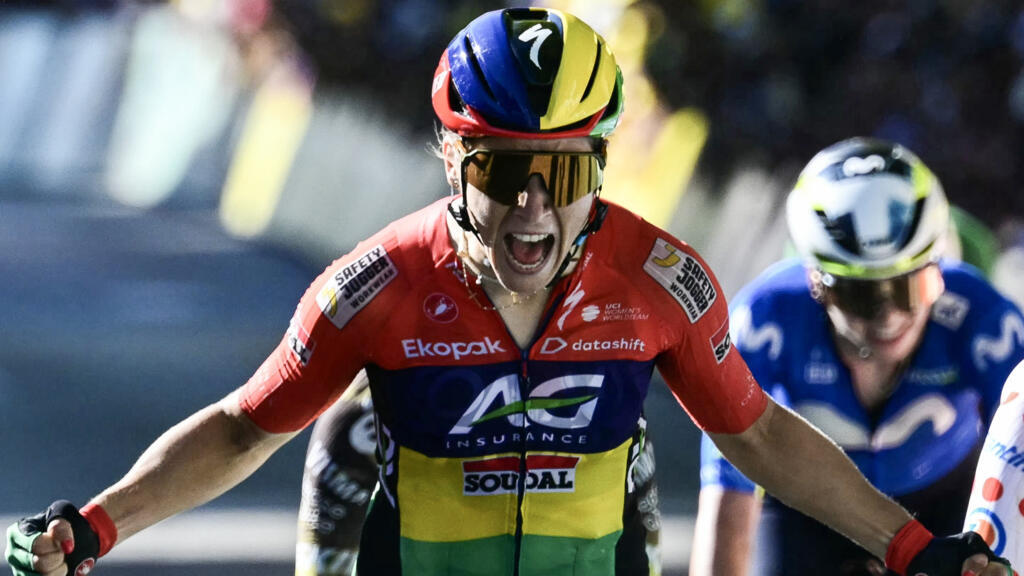
Mauritian rider Kim Le Court overcame an early fall and mechanical problems on Thursday to win a sprint finish for stage six of the Tour de France Femmes as Swiss rival Marlen Reusser retained the leader’s yellow jersey.
Le Court, 30, was part of an eight-rider breakaway group but pipped her rivals to finish ahead of France‘s Cedrine Kerbaol and the Netherlands‘ Puck Pieterse after the hilly 153km run from Montbrison to Tournon-sur-Rhone in south-eastern France.
Reusser, 34, remains in overall control on the eve of the queen stage which finishes on the summit of Mont Ventoux in the French Alps on Friday.
For the Mauritian champion it was a second stage victory in the Grande Boucle following her win last year in Guéret.
Le Court earned her victory, after crashing early in the stage she suffered mechanical issues that forced her to change bikes just 15 km from the finish line.
Alongside Dutch rider Riejanne Markus, she caught up to the six other breakaway riders shortly before the day’s final climb 10km from Tournon-sur-Rhône, before then proving too strong in the sprint.
“It was a truly crazy stage. The team did such a great job positioning me at the front of the race that I couldn’t give up the fight,” the winner explained.
Advertisement
The overall race favourites finished in a chasing group 28 seconds behind the breakaway.
Reusser maintained a 12-second advantage in the general classification on Dutch rider Demi Vollering and a 1min 17sec gap over Poland‘s Kasia Niewiadoma.
Friday’s stage seven concludes at the summit of the legendary Mont Ventoux via the Bedoin climb over 15.7km at a gradient of 8.8 percent.
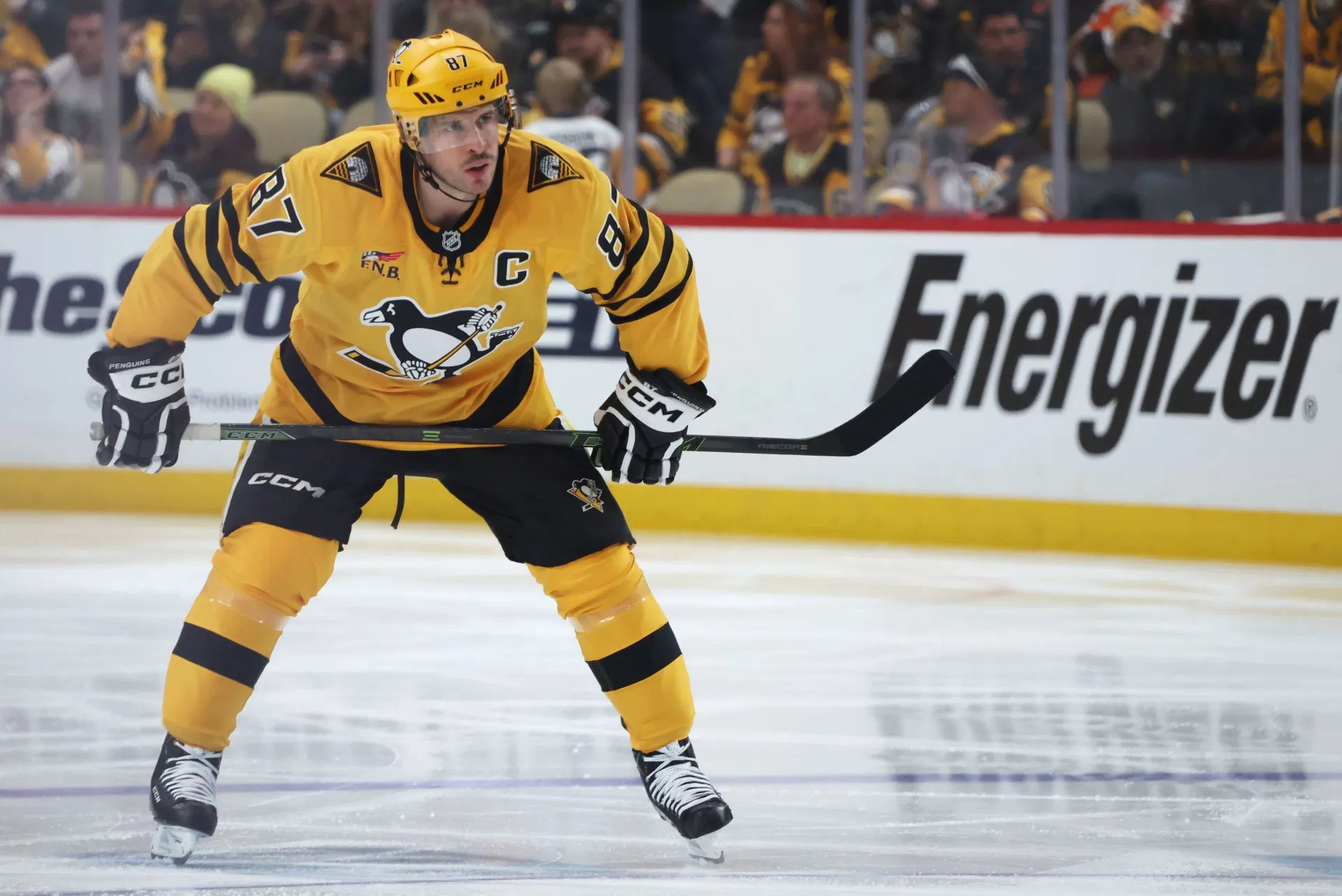
Pittsburgh Penguins prospect Bill Zonnon recently shared how a simple gesture from Sidney Crosby stood out during his first training camp with the organization. While recovering from an injury, Zonnon said the Penguins captain regularly checked in to see how he was doing.
Speaking with ESPN’s Emily Kaplan, Zonnon reflected on his first experience at Penguins training camp and what it has been like entering an organization led by Crosby. He said Crosby made an effort to see how his recovery was progressing, even though the two barely knew each other.
“I was injured during training camp, but I was still hanging out there every day and he would come to me and ask me questions about my injury. And I mean, he didn’t have to do that. He was probably one of the only guys that did it, but that just tells you that he has time for everyone, and he’s a great person all around.”
Advertisement
Zonnon was selected by the Penguins with the 22nd overall pick in the 2025 NHL Draft after playing for the Blainville-Boisbriand Armada of the Quebec Maritimes Junior Hockey League (QMJHL). He is now working toward earning a full-time spot with Pittsburgh
Sidney Crosby recently made another young fan’s day in the Bahamas
Bill Zonnon’s story isn’t the only recent example of Sidney Crosby going out of his way for others. Earlier this week, while vacationing in the Bahamas, the Penguins captain took time to meet a 10-year-old fan after she approached him for a photo.
According to Pittsburgh Hockey Now, what began as a quick picture turned into a much longer interaction. Crosby met the girl’s family, talked hockey with them, posed for several photos and quietly paid for their meal without telling anyone. He also left behind an autograph and a handwritten note before leaving.
The gesture came after another strong season for Crosby with the Penguins. The 38 year old recorded 29 goals and 45 assists for 74 points in 68 games while surpassing 1,700 career NHL points and overtaking Mario Lemieux as the franchise’s all-time leading scorer.
Advertisement
Sidney Crosby also captained Canada to a silver medal at the 2026 Winter Olympics in Milan-Cortina. He missed 11 games after returning to Pittsburgh because of a lower-body injury sustained during the Olympic tournament before rejoining the lineup.
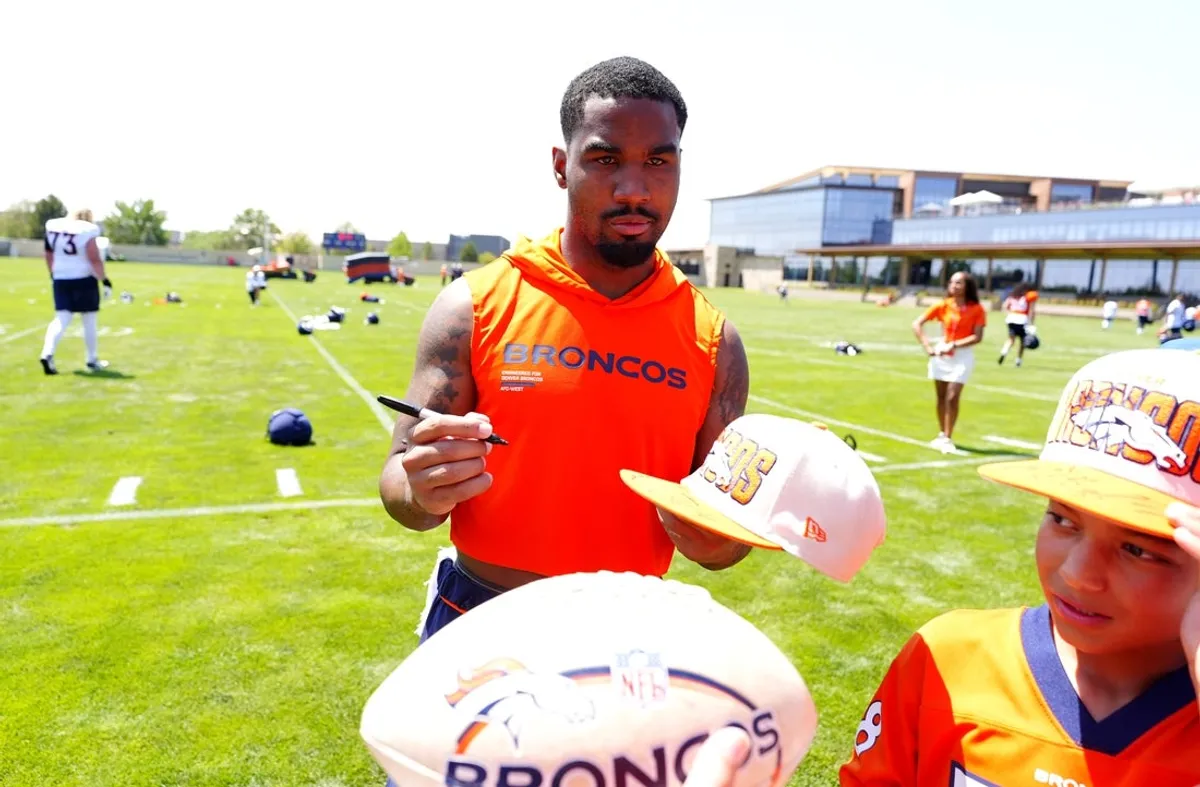
Jul 31, 2026; Englewood, CO, USA; Denver Broncos wide receiver Jaylen Waddle (17) signs autographs following training camp at Broncos Park. Mandatory Credit: Ron Chenoy-Imagn Images
Denver Broncos offseason acquisition Jaylen Waddle is nursing a muscle strain in his leg and will sit out the next few days as a precaution, head coach Sean Payton said Thursday.
Waddle, a wide receiver, did not participate in practice on Thursday and was seen limping while wearing a sleeve on his left leg.
“He has a strain. I think we’ll see him back in the next four to five days,” Payton said
The Broncos acquired Waddle and a fourth-round pick in the 2026 NFL Draft from the Miami Dolphins on March 17 in exchange for first-, third- and fourth-round selections.
Advertisement
Waddle, 27, recorded 64 catches for 910 yards and six touchdowns in 16 games (all starts) last season for the rebuilding Dolphins. He is owed $68.6 million over the next three seasons.
He has 373 receptions for 5,039 yards and 26 touchdowns in 78 career games (all starts) since being selected by Miami with the sixth overall pick of the 2021 NFL Draft out of Alabama.
Manchester United agreed the youngster Cristian Orozco’s transfer last year, but had to wait until this summer for his arrival
19:56, 06 Aug 2026Updated 20:25, 06 Aug 2026
Advertisement
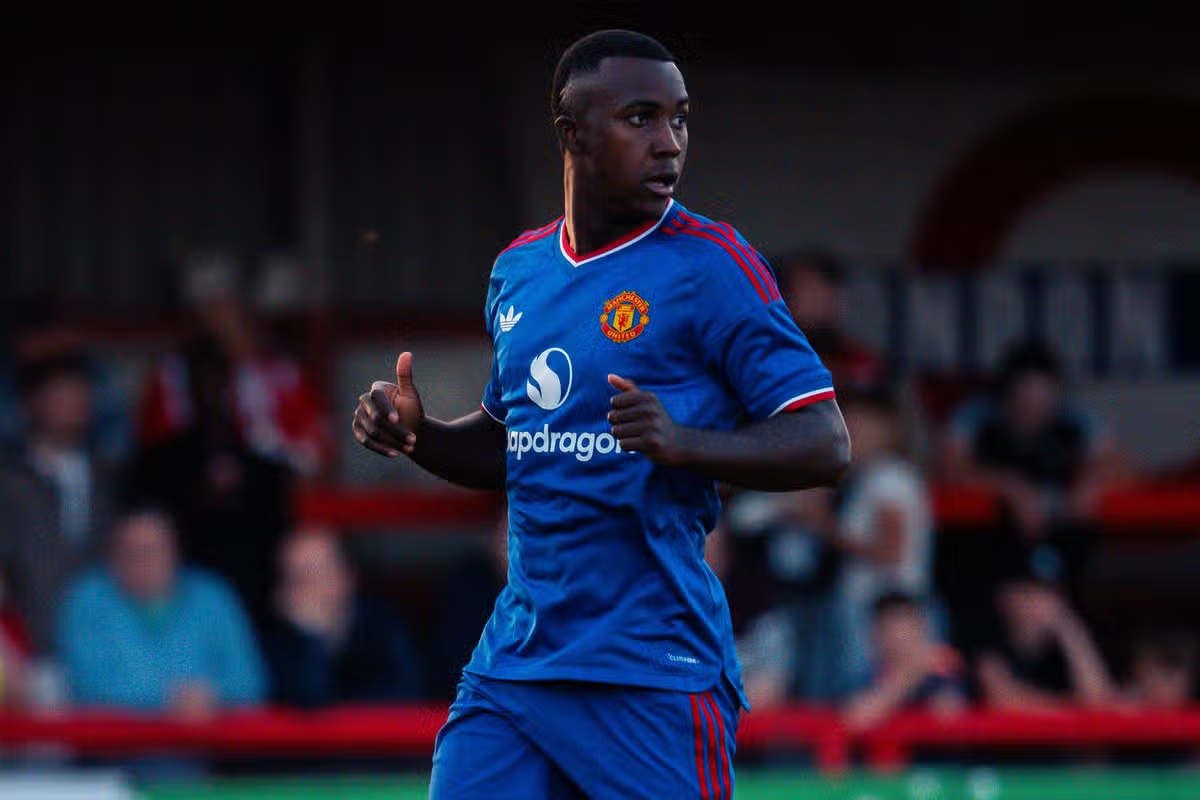
Manchester United have officially announced the signing of Cristian Orozco, who arrived from Fortaleza CEIF. United agreed a deal with the Colombian club last year, but the terms stated he would only make the move once the summer window opened, as he needed to turn 18 to complete the transfer.
Orozco officially began his United career when he celebrated his 18th birthday last month. He then made his first public appearance for United in the friendly against Altrincham last week, coming off the bench just after the hour mark and offering a glimpse of his quality during a bright cameo.
The midfielder does not speak English, so coaches have been relaying instructions through a handful of Spanish‑speaking players – including Leon, who has been particularly helpful in passing information on.
Sources close to the club stress they will ‘take it slowly’ with Orozco as he still needs time to adapt to the demands of the club and the level.
Orozco’s signing was formally announced on Thursday. A club statement confirming the move, read: “Manchester United have completed the signing of exciting young midfielder Cristian Orozco. The 18-year-old joins from Colombian Categoria Primera A side, Fortaleza CEIF.
“Orozco, who was developed in Rojo FC’s academy, played five first-team games for Fortaleza last season and has represented Colombia up to Under-17s level. He will initially be supported by the Academy while he settles into life at Manchester United.
“Everyone at the club would like to welcome Cristian to United and wish him the very best of luck.”
United boss Michael Carrick has continued to hand opportunities to youngsters throughout pre‑season.
Carrick has been a strong advocate for the academy since his interim appointment in January, regularly attending youth fixtures, and he has maintained that faith in emerging talent during the current pre‑season campaign.
Advertisement
Orozco could soon be among the next youngsters to be handed an opportunity.
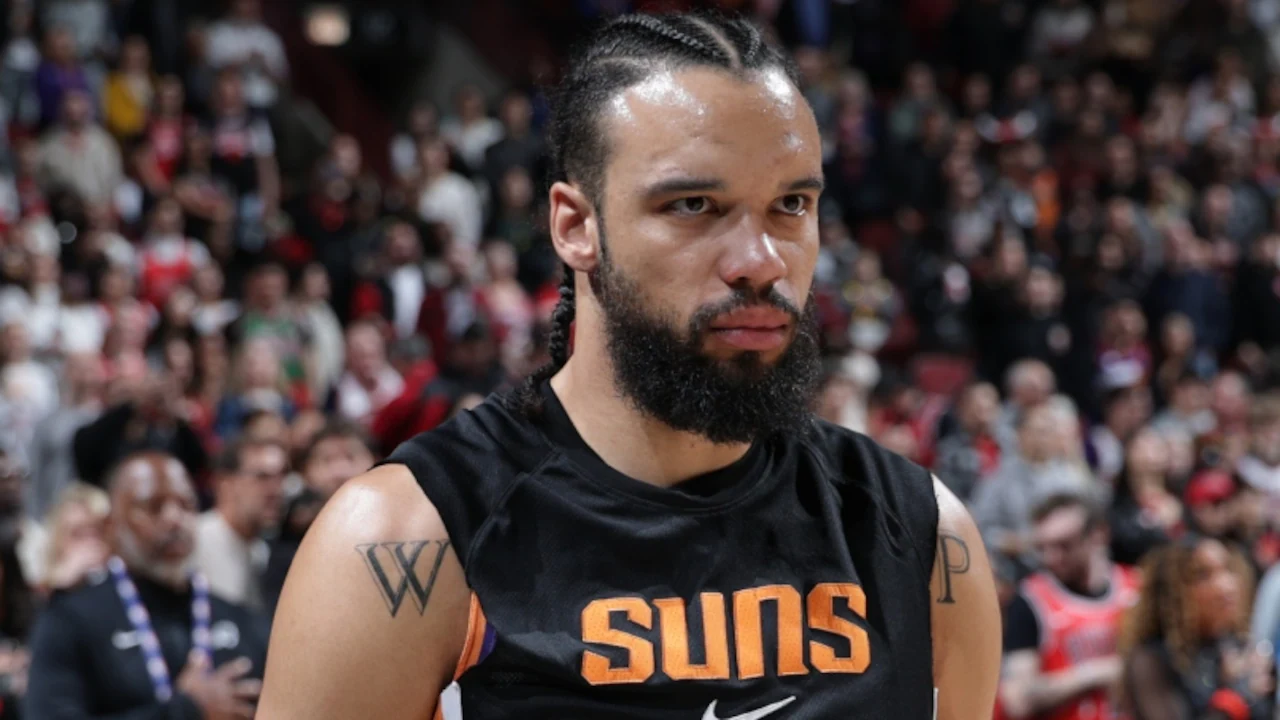
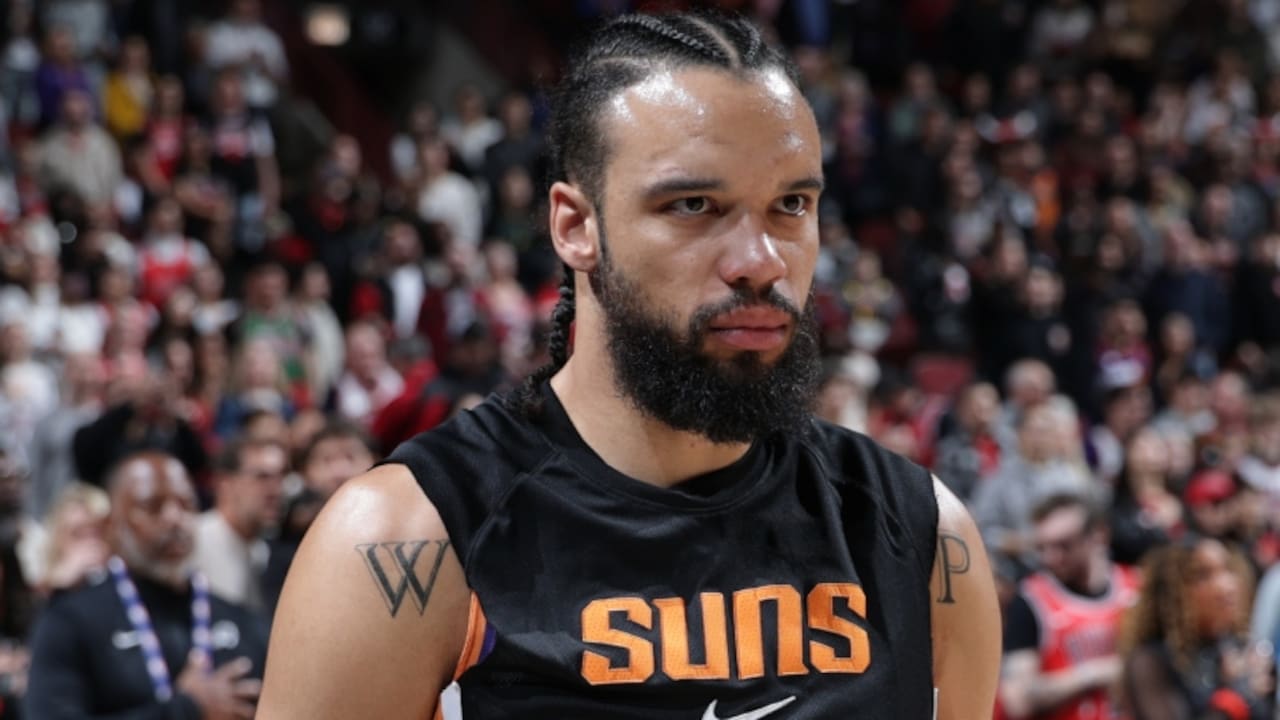
The Phoenix Suns and veteran forward Dillon Brooks agreed to a $73 million, three-year extension on Wednesday that will keep him with the team through 2030, according to a report.
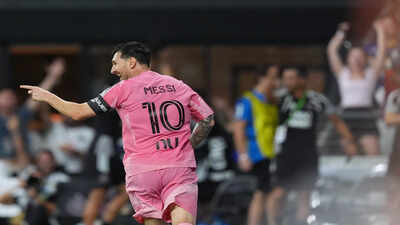
Inter Miami forward Lionel Messi (10) celebrates after scoring his side’s third goal during the first half of a Leagues Cup soccer match against Atletico de San Luis, Wednesday, Aug. 5, 2026, in Miami. (AP Photo/Rebecca Blackwell)
Lionel Messi needed just one full game after returning from the FIFA World Cup to add another record to his extraordinary career. Making his first start since captaining Argentina to a second successive World Cup final, the Inter Miami forward scored twice in a 4-2 victory over Atlético San Luis to become the all-time leading scorer in Leagues Cup history as the MLS side opened its 2026 campaign with an impressive comeback win.
Record falls on World Cup return
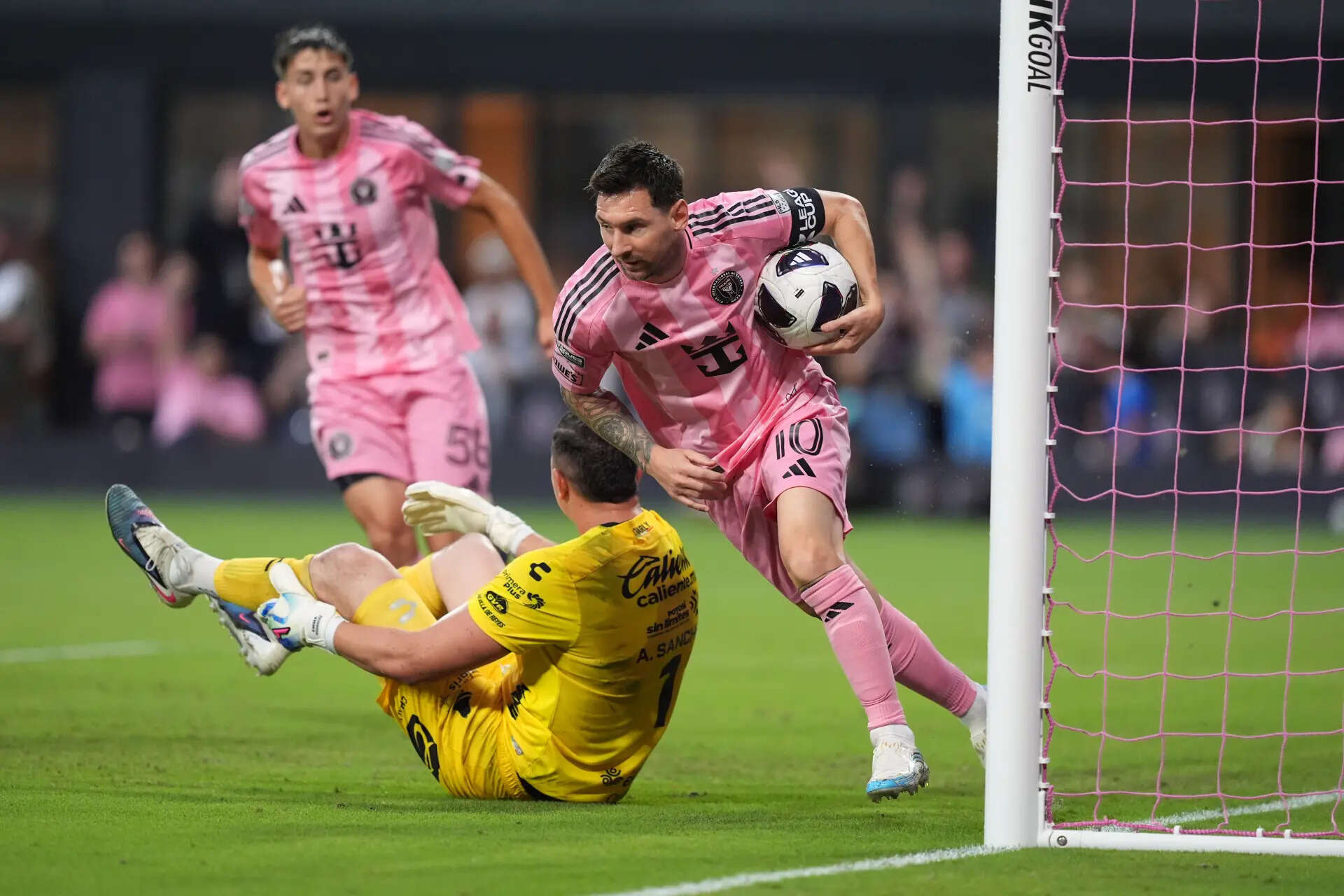
There was little sign of rust after Messi’s post-World Cup break.Having made a brief substitute appearance in Inter Miami’s 2-2 MLS draw with the Columbus Crew, the Argentine returned to the starting lineup on Wednesday and immediately reminded supporters why he remains the centrepiece of the club’s attack.Atlético San Luis struck first when David Rodríguez glanced home in the fourth minute, but Inter Miami’s response was immediate.Running onto Noah Allen’s cross, Messi met the delivery with a superb first-time volley in the 11th minute to bring his side level before later producing another composed finish in the closing stages of the first half after intricate build-up play involving Allen.Those two goals took his tally in the competition to 14 goals in just 12 appearances, moving him ahead of Los Angeles FC forward Denis Bouanga to become the outright leading scorer in Leagues Cup history.
Inter Miami turn the game around
Messi was involved in almost everything Inter Miami created after the break.He also registered an assist as Inter Miami overturned the early deficit, with Telasco Segovia giving the hosts the lead midway through the first half after another excellent pass from Allen.Defender Micael added the fourth goal after the interval to complete a convincing 4-2 victory, while Allen enjoyed one of the finest performances of his career by providing three assists in a single match for the first time.
Advertisement
Inter Miami forward Lionel Messi (10) picks up the ball and runs after scoring his side’s first goal past Atletico de San Luis goalkeeper Andres Sanchez (1) during the first half of a Leagues Cup soccer match, Wednesday, Aug. 5, 2026, in Miami. (AP Photo/Rebecca Blackwell)
The result extended Inter Miami’s unbeaten run to eight matches across all competitions and provided the ideal start to another Leagues Cup campaign.
Competition where Messi continues to thrive
Few tournaments have suited Messi quite like the Leagues Cup.Shortly after arriving in the United States in 2023, he inspired Inter Miami to the club’s first major trophy by leading them to the inaugural Leagues Cup title. Three years later, he has now added another individual milestone to that success.The brace against Atlético San Luis also became his fifth multi-goal performance in just 12 Leagues Cup appearances, underlining the consistency with which he has influenced the competition since its expansion to include clubs from Major League Soccer and Liga MX.
Advertisement
Perfect response after the World Cup
Messi’s return had been eagerly anticipated after Argentina’s run to a second consecutive FIFA World Cup final, where the defending champions were beaten 1-0 by Spain.Inter Miami managed to remain competitive during his absence, with Luis Suárez helping steady the team in MLS action following the World Cup. However, the Uruguayan was unavailable against San Luis as he began serving the first match of a six-game suspension.Messi’s immediate return to form ensured Miami scarcely felt that absence.With Monterrey next on the schedule in the Leagues Cup, Inter Miami have not only welcomed back their captain but also seen him resume a familiar habit—breaking another record almost as soon as he stepped back onto the pitch.
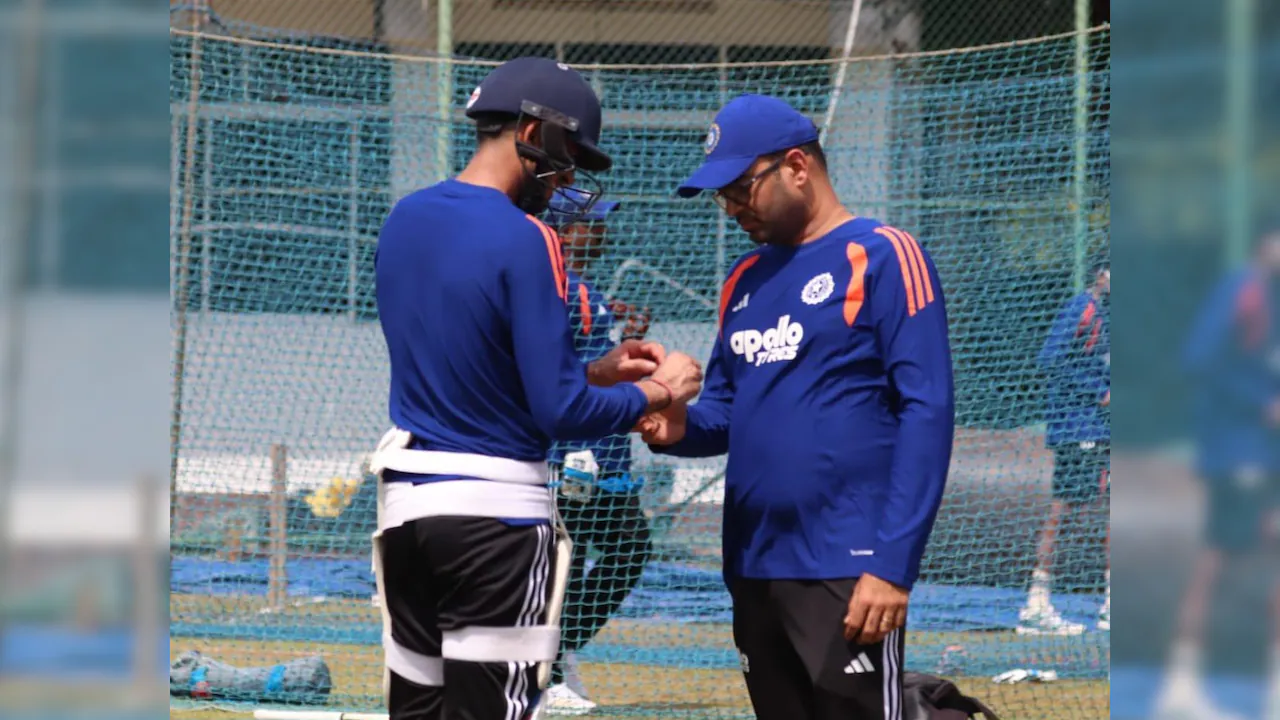
India captain Shubman Gill reportedly copped multiple blows during the team’s training session in Colombo on the eve of the three-day practice game against Sri Lanka XI. According to a report in Times Now, Gill was struck on his right thumb while batting against seamer Gurnoor Brar. While he continued his practice after the physio strapped up his thumb, Gill was once again hit while fielding at first slip. Fortunately, the Indian skipper was able to continue his session without any discomfort.
“After facing a few more deliveries against the pacers, Gill moved to the spin nets and completed the remainder of his batting session,” the report said.
The Indian team arrived in Colombo earlier this week, ahead of a two-match series against the hosts. The first Test gets underway in Galle on August 15, while the second game will be played at the SSC in Colombo from August 23.
Advertisement
India had a light training session on Wednesday, more focused on acclimatising to the Sri Lankan conditions. However, the Gill-led side had a full-fledged session under the watchful eyes of head coach Gautam Gambhir on Thursday.
The series marks India’s first assignment in the ICC World Test Championship since their disappointing home defeat to South Africa late last year.
Since then, India have responded positively, registering a victory in the one-off Test against Afghanistan in June. However, the young side will be determined to clinch the series in Sri Lanka, knowing a strong start to their World Test Championship campaign could significantly boost their hopes of reaching next year’s final at The Oval.
India currently sit fifth on the World Test Championship standings with a points percentage of 48.15, trailing Australia, South Africa, New Zealand, and Bangladesh.
Advertisement
India’s squad for the series features a mix of promising young talent and a couple of new faces.
(With ANI Inputs)
Featured Video Of The Day
Yamal Laughs At Paredes vs Gavi ‘Fight Of The Year’ Poster During Parade




;)
;)
;)




![F.HERO x URBOYTJ Ft. MINNIE ((G)I-DLE) - MONEY HONEY (Prod. By URBOYTJ) [Official MV]](https://wordupnews.com/wp-content/uploads/2026/02/1770112248_maxresdefault-80x80.jpg)





































You must be logged in to post a comment Login