



A consultation has just ended on new regulations for pet rescue centres, electric shock collars, microchipping and dog licenses
Northern Ireland’s dog licensing regime and proposals coming from Stormont as part of a proposed animal welfare bill are “ridiculous”, a Belfast councillor has claimed.
A series of warnings have come from Belfast City Hall, from elected representatives as well as officials, regarding a public consultation on proposed animal welfare policy reforms in Northern Ireland. The consultation, from the Department of Agriculture, Environment and Rural Affairs, ended last month.
In the most recent full Belfast City Council meeting, elected representatives signed off on an official response in which City Hall gave no-holds barred criticisms of DAERA proposals, stressing the lack of finance involved.
READ MORE: Belfast Council spends £250,000 on Fleadh street dressing
READ MORE: Five key moments from Belfast Council in July
The council states: “The consultation proposals reflect a concerning and growing trend which concerns officers, whereby central government seeks to devolve enforcement responsibilities to local government without a corresponding transfer of financial resources, powers or legal protections.” Meanwhile a Belfast Green Party Councillor has described a proposal to raise dog licences according to inflation as “nonsense”.
The Stormont department has proposed changes around the regulation of rescue and rehoming organisations, a ban on so-called “aversive training devices,” such as electric shock collars, strengthened microchipping requirements for dogs, and an inflationary increase in dog licence fees.
It follows a consultation in summer 2025 over Stormont’s proposed new rules for selling and supplying puppies and kittens, which involve giving councils new powers. Belfast Council highlighted concerns in relation to the lack of animal welfare funding from DAERA to facilitate these changes.
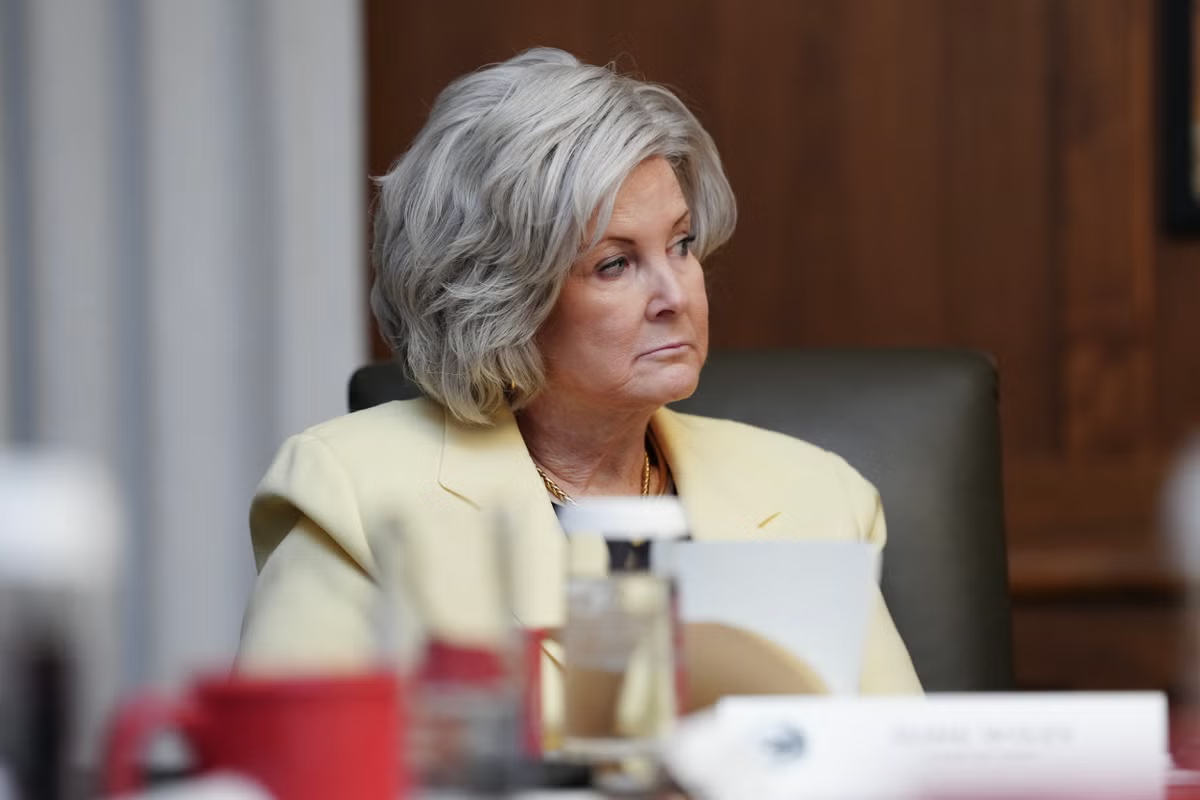
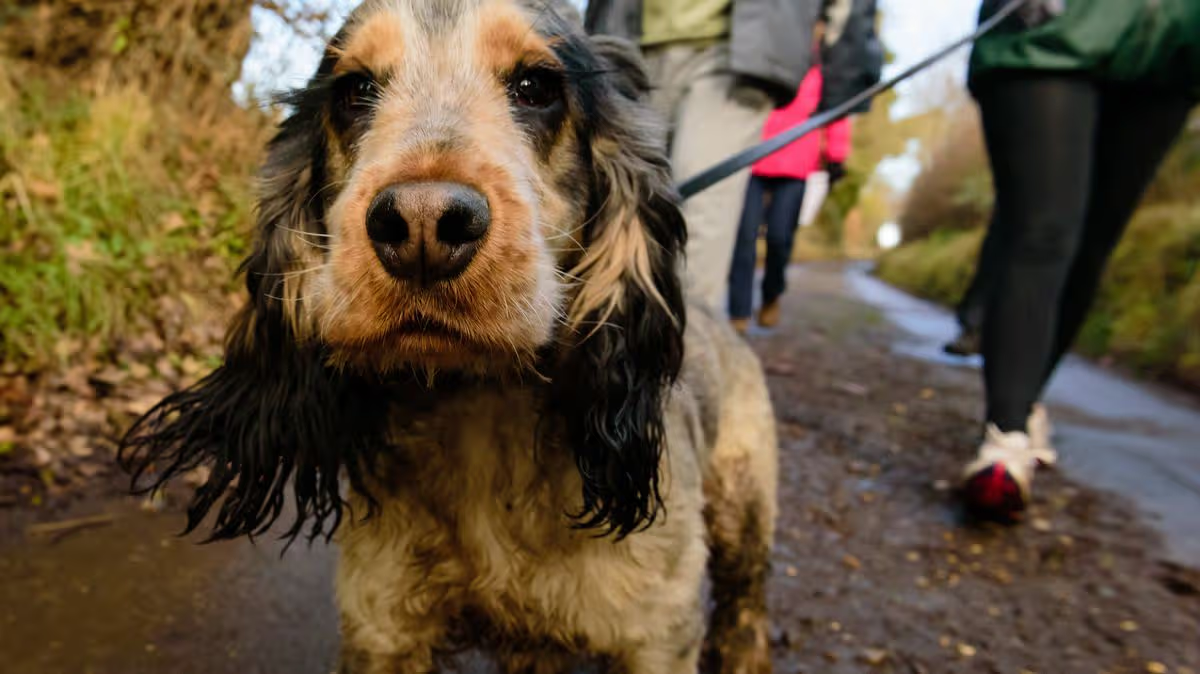
At the most recent meeting of the council’s People and Communities Committee, Green Party Councillor Anthony Flynn admonished DAERA’s proposal to raise the current licence fee of £12.50 to £18.50. Those on income related benefits, or who have had their dog neutered, may pay a reduced fee of £5.
Councillor Flynn praised the council officer’s response to the consultation, and added: “We need strong animal welfare and legislation, which I absolutely agree with, but the other issue here is where councils should fit into that regime. Where councils are given additional powers, they should be given additional resources, and legal tools, to do animal welfare effectively.”
He said: “I have been calling for the devolution of dog licence fee regulations for years. And I want to point out that just having an inflationary increase is the most ridiculous thing I have heard in my entire life, when it comes to this.
“The entire licensing regime needs to be scrapped, and we need to start again. On doing some research on this, Northern Ireland is one of the few places with a licensing regime done in this way. It is incredibly ineffective.
“What it essentially does is place the burden upon someone who gets a dog, to know they have to licence their dog with a local council. Information is simply non-existent when it comes to that.
“I live in the Lisburn and Castlereagh Council area, and when I register my dog, they send me a text and that is essentially it. They have no idea if my dog is still alive, whether it is neutered, and all those things.”
He added: “And the amount of money councils get through licensing is miniscule, compared to what it actually costs to run an animal welfare service or a dog warden service. What we get through licensing is 10 percent of the animal welfare budget, so what is the point of it?
“Is it to cover costs, or to put focus on responsible ownership? Because, for me, that is what we should be heading towards.” He said the minister’s position was “nonsense” and said the council response should be stronger on licences and should be changed on cat microchipping.
Councils currently have a statutory responsibility for the enforcement of Welfare of Animals Act 2011 in respect of “non-farmed” animals, that is companion animals and horses and donkeys. They are also responsible for licensing and enforcement activities under The Dogs (Northern Ireland) Order 1983, including dog breeding establishments.
Councils have no role in relation to the breeding, sale, licensing, microchipping, ownership or management of cat behaviour. Councils have no role in relation to rescue and rehoming organisations, ‘doggy day care’, pet shops, and boarding kennels. These are either unregulated or controlled by Stormont.
A council report on the consultation said: “Whilst officers welcome strategies and policies to improve animal welfare, we do not agree that councils should be required to take on new and additional statutory responsibility for the regulation of rescue and rehoming organisations and enforcement of additional offences, without the regulatory and financial impacts being fully assessed and consulted upon with councils.
“These proposals would create additional responsibilities for premises and activities which are either unregulated or currently dealt with by other agencies including DEARA.
“Councils are still dealing with the impact of the legislation on XL bully safeguards and incurring ongoing costs, which are being absorbed by rate payers. The XL bully legislation is still impacting on dog warden service capacity, with other enforcement activities having to be reprioritised.”
It adds: “While we understand the department’s difficult budgetary position, the decision to withdraw the annual £1.25 million NI funding for animal welfare has left councils in a challenging position. In the absence of any commitment of future allocation of funds to councils, the cost of providing our current animal welfare service continues to be borne by the ratepayers.”
The council said proposed regulation and licensing of rescue centres “aligns much more closely with DAERA’s current licensing functions of establishments such as boarding kennels, zoos and pet shops and should sit with them.
The council added on the matter “It is likely there will be unintended consequences for small volunteer-led rescues, leading to risks in a reduction of capacity, closures and the risk of reduced rehoming availability.” Officers said Belfast Council “would not be able to deliver the proposed enforcement regime within existing resources.”
Regarding a proposed ban on so-called “aversive training devices” the council said: “Whilst officers strongly support a ban on the use of handheld remote controlled electric shock collars, choke collars and prong collars on dogs and cats, we would prefer a ban on the sale and possession of these devices. It is felt that further effective enforcement should include powers to seize devices and the use of fixed penalty notices.”
The council reiterated that they could not enforce any new regulations on microchipping without financial support.
For all the latest news, visit the Belfast Live homepage here and sign up to our daily newsletter here.















































You must be logged in to post a comment Login