Earlier this week, the AI startup Liquid, formed in 2023 by former MIT computer scientists, debuted LFM2.5-2.6B, a new open-weight language model designed specifically for agentic workloads.
In release materials and a recent interview with VentureBeat, Liquid’s researchers said LFM2.5-2.6B can run entirely on local hardware — from smartphones and laptops down to a Raspberry Pi — without relying on cloud inference or GPUs, unlocking edge AI applications and giving more options to enterprises working in regulated industries or with sensitive information they don’t want to send up to the cloud.
It’s best suited for high-volume, well-defined agentic tasks that run locally — tool calling, document management, calendar and workflow automation, and always-on background routines — and for connectivity-limited environments like vehicles and robotics, though coding-heavy work is better left to larger models.
Even for those businesses without such concerns, the appeal of running performant, task-specific agents at the cost of essentially electricity, may be enough to make the new model quite appealing.
LFM2.5-2.6B contains 2.6 billion parameters, supports a 128,000-token context window, and includes native tool calling. The somewhat tricky name is explained by the generation of model (2.5) combined with the parameter count (2.6B).
Both the post-trained model and a base checkpoint (LFM2.5-2.6B-Base) for developers who want to fine-tune it are available now on Hugging Face, with day-one support for major inference stacks including llama.cpp, MLX, vLLM, SGLang, and ONNX — positioning it for deployment across consumer hardware, enterprise infrastructure, and embedded systems.
Liquid also offers an open source fine-tuning framework, LEAP.
Advertisement
Rather than positioning LFM2.5-2.6B as a competitor to the largest frontier models, the company is making a different argument: that a sufficiently capable small model can unlock categories of enterprise applications where latency, privacy, deployment flexibility, or inference costs matter more than absolute benchmark leadership.
“I do also believe that the best models will be in the cloud, and there’s no problem with that,” Maxime Labonne, Liquid AI’s head of post-training, told VentureBeat in an interview following the launch. “We want to make models for another type of user, and the best way of describing it is: you should use [edge AI] when you can’t use a cloud model.”
Small enough for a Raspberry Pi
Asked about the minimum viable hardware, Labonne said the model runs “very, very well” on CPUs — and that the LFM2 architecture underlying the model was explicitly designed around real-world CPU performance rather than GPU benchmarks.
“I think the best example is a Raspberry Pi,” he said. “We have a lot of demos that show that actually, it works pretty fast on the Raspberry Pi.”
Advertisement
Company-reported measurements indicate decoding throughput of approximately 220 tokens per second on an Apple M5 Max and 113 tokens per second on an AMD Ryzen AI Max+ 395, while using less than 2.5 GB of memory — and around 30 tokens per second on a smartphone. Users can try the models on their phones through Apollo, Liquid AI’s mobile app.
At the other end of the deployment spectrum, Liquid AI reports the model reaches nearly 15,000 output tokens per second on a single Nvidia H100 GPU under sustained concurrent load — roughly 1.3 billion tokens per day on one card. These figures are vendor benchmarks and have not been independently verified.
For Labonne, memory footprint and speed are not conveniences but hard constraints that determine what can be deployed at all.
“What we want to show is that it’s a really good trade-off, because you get the level of quality that you get with much bigger models, but in a tiny, tiny form factor,” he said. “You can deploy it in target devices where you are not able to deploy the other ones at all.”
Advertisement
Trained for agents instead of chatbots
Liquid AI says LFM2.5-2.6B was developed around the assumption that language models are increasingly consumed through agent frameworks rather than traditional conversational interfaces.
“Models are not consumed in chatbots anymore. They’re really consumed through agentic harnesses, like OpenClaw, like Hermes Agent,” Labonne said. “We wanted to make sure that this model is not just good at math or at code, but it’s good at using tools.”
The model is pretrained on approximately 34 trillion tokens, with a vocabulary doubled to 128K to better support non-Latin scripts and a dedicated mid-training phase to extend the context window to 128K tokens for long-running agent workflows.
Post-training follows a four-stage pipeline: supervised fine-tuning, teacher specialization (training separate expert models for domains like instruction following, math, code, and tool use), multi-domain on-policy distillation (MOPD) to merge those experts’ capabilities back into a single student model, and finally agentic reinforcement learning.
Advertisement
During that last stage, the model was trained directly inside production agent harnesses — including Hermes Agent and OpenClaw — on realistic productivity tasks involving research, coding, document management, tool invocation, and workflow automation, exposing it to those harnesses’ actual tools, system prompts, and interaction patterns.
Labonne described the pipeline overhaul as producing a “happy accident”: gains that extended well beyond the agentic targets.
“Through these new training techniques, we also got a lot better at everything. We got better at math, at instruction following. We’ve never been good at code, actually — and with this, we even got really good at code,” he said.
Building the model — and the harness
Notably, Liquid AI also built its own agent harness rather than relying solely on existing frameworks, and demonstrated the model running inside it on a phone, planning and calling tools entirely on-device.
Advertisement
“This is a harness running on a phone, and I don’t know if there’s any other harness running on a phone,” Labonne said.
The company had two reasons, he explained. The first was necessity — no phone-native harness existed. The second is a different interaction model: today’s harnesses wait for a prompt, and Liquid AI wants assistants that act on their own.
“We want proactive agents. We want agents that run in the background, check what you’re doing, check your calendar, and based on this context, do tasks,” he said. “That doesn’t exist today, really.”
Co-designing the harness and model also lets the software compensate for the model’s weak spots. “Everything that the model is bad at, the harness should help the model with — provide as much assistance as possible to make it more reliable,” Labonne said. “End users don’t care if it’s the model or the harness. What they want is that the task is achieved at the end of the day.”
Advertisement
The model nevertheless works out of the box with established harnesses including Hermes Agent, OpenClaw, and Pi, served behind any OpenAI-compatible endpoint.
Swap the harness, not the model
For enterprise deployment, Labonne argued the release marks a shift in what small models can be used for. Until now, he said, local models made economic sense mainly as narrowly fine-tuned specialists — trained to do one thing at cloud-model quality, much faster and cheaper. Agentic capability changes that calculus, because the same model can be repurposed by changing the tools around it rather than the model itself.
“You can have a calendar assistant, and you can reuse the same model and make a meeting assistant that will record what everybody said and summarize it — a bit like Granola, for example,” he said. “You don’t change the model; you just change the harness. You just change the tools around it. This gives much more generalizability, and it’s a lot easier to do and a lot cheaper as well.”
He still recommends fine-tuning for production deployments whenever feasible: “If you don’t fine-tune it, you leave some quality on the table. If you fine-tune it well, it’s going to match the performance of GPT and Claude — really, if your task is not the most complex task in the world,” he said, adding that the barrier to entry has collapsed: “The bar to be able to do fine-tuning now is super low. It’s very accessible to everyone.”
Advertisement
How it stacks up against DeepSeek-V4-Flash, Google’s Gemma and Alibaba’s Qwen
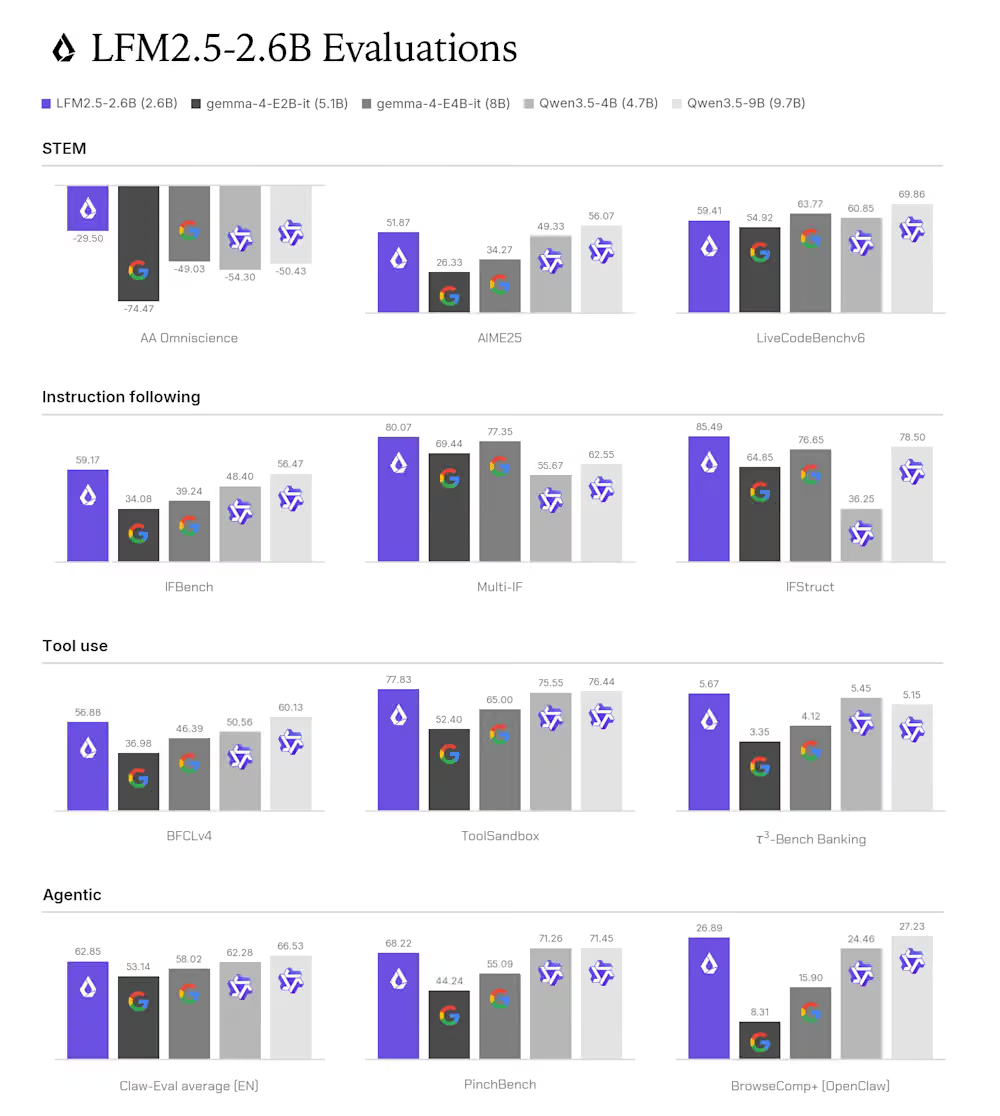
Liquid AI released its own benchmark comparison charts pitting LFM2.5-2.6B against the models enterprises are most likely to shortlist for the same edge deployments: Google’s Gemma 4 E2B (5.1B parameters) and E4B (8B), and Alibaba’s Qwen3.5-4B (4.7B) and Qwen3.5-9B (9.7B).
A separate test by local AI client platform Atomic Chat found that LFM2.5-2.6B completed 35 tool calls to complete three tasks (checking weather and local time in six cities, converting one budget into six currencies, checking four hotels and booking for a date) 3.7 times faster than DeepSeek-V4-Flash (a whopping 284B parameters), the model has skyrocketed to the top of OpenRouter since its release last week.
Gemma 4’s small models are multimodal generalists, accepting image and audio input alongside text, and use a Per-Layer Embeddings design that keeps only a fraction of their weights active per token — which is why Google markets them by “effective” size (2.3B and 4.5B) despite total footprints of 5.1B and 8B. Alibaba’s Qwen3.5 small series, released in March, is natively multimodal from 4B up and leans on scaled reinforcement learning to chase frontier-style reasoning — Alibaba touts the 9B model as matching or beating OpenAI’s far larger gpt-oss-120B on reasoning benchmarks.
LFM2.5-2.6B takes a narrower path: it is text-only, dense, and specialized for agentic work, with Liquid AI shipping separate vision and audio variants of the LFM family rather than folding everything into one checkpoint.
Advertisement
Where Qwen’s post-training reinforcement learning targets reasoning, Liquid’s targets tool use inside real agent harnesses.
The result, per the company’s published numbers, is that the smallest model in the comparison leads every instruction-following benchmark (IFBench, Multi-IF, IFStruct) and nearly every tool-use benchmark — 77.83 on ToolSandbox versus 76.44 for Qwen3.5-9B, a model nearly four times its size — trailing only that 9B model on BFCLv4.
On agentic evaluations it beats both Gemma models across the board and essentially ties the Qwens: 26.89 on BrowseComp+ versus 27.23 for Qwen3.5-9B. It also posts the best score on AA Omniscience, a knowledge benchmark that penalizes hallucination.
The Qwen models keep the edge where their training focus lies: math (Qwen3.5-9B leads AIME25) and coding, where larger models retain an advantage on LiveCodeBench — though Labonne noted the gap is smaller than the parameter counts would suggest.
“With LiveCodeBench v6, we might not be the best among these models, but we’re also by far the smallest. Showing that we’re competitive with them is already quite a big win for me,” he said.
Meanwhile, Liquid AI’s revenue-gated license (detailed below) asks larger companies to strike a commercial deal. Enterprises above the threshold are effectively trading license friction for footprint and tool-use performance.
Licensing reflects a commercial middle ground
LFM2.5-2.6B is distributed under the LFM Open License v1.0, which permits use, modification, and redistribution — including commercial use — for organizations with less than $10 million in annual revenue. Commercial use by larger companies is not covered by the license, requiring a separate arrangement with Liquid AI; qualified nonprofits are exempt from the threshold for non-commercial and research purposes.
Labonne framed the structure as a way to sustain model development — “the models are really the moats, so we need to be sensible in the way that we license them; otherwise, we cannot make money, so we can’t make more models” — while characterizing the threshold as a light-touch mechanism in practice.
Advertisement
Asked how the company would even know if a large enterprise quietly deployed the open weights, he was candid: “I think this is a question for our legal team, but personally, I don’t know. And even if you’re above $10 million, the only thing that we ask you is to contact us.”
The company pairs its licensed model releases with freely published research, he added, including new structured-output evaluations and a training technique that mitigates the repetition loops common in small models — a failure mode he noted Qwen models are “kind of guilty of.”
Small model, big enterprise implications
The launch coincided with an announcement from MacPaw, the Ukrainian software company behind CleanMyMac and Setapp, of a long-term strategic partnership with Liquid AI to build an on-device AI stack for the Mac.
Liquid AI will design and fine-tune foundation models for Eney, MacPaw’s macOS assistant, running locally on Apple silicon through MacPaw’s Elix inference engine and Mnemos memory layer, with results expected later this year.
Advertisement
Labonne pointed to the deal as a concrete validation of the size argument: “One of the reasons why they chose us is also because the model is quite small, and they don’t have all the memory budget to run the other models.”
The release arrives as hardware vendors, operating system developers, and enterprise software companies increasingly invest in local AI execution — and as agent harnesses proliferate across the industry. Liquid AI’s bet is that deployment economics, not raw scale, will define an important segment of that market: agents running continuously, everywhere, at zero marginal token cost.
Whether small, highly optimized agent models become a significant segment of enterprise AI will ultimately depend less on benchmark scores than on operational reliability. But Liquid AI’s latest release suggests the next competitive frontier is no longer simply building larger models — it’s building models small enough, and capable enough, to run wherever enterprise workflows already live.
The programme aims to teach professionals to use generative AI tools effectively, safely and responsibly at work.
A new, fully funded course designed to help professionals develop their practical AI prompt engineering skills for use within their organisations is to be offered by CeADAR, Ireland’s national centre for applied AI.
Developed by CeADAR’s European Digital Innovation Hub (EDIH), the Prompt Engineering for You programme aims to teach professionals to use generative AI tools effectively, safely and responsibly in real-world settings.
Funded by the European Commission and Enterprise Ireland, and aligning with the Department of Enterprise, Tourism and Employment’s ‘AI – Good for Business’ initiative, the course will teachhands-on skills via five modules that explore what prompt engineering is, relevant techniques, and how to design clear and effective prompts.
Advertisement
The course can be engaged with flexibly, is aimed at professionals at any stage of their AI journey, and does not require a technical or coding background. Once the course has been finished, participants will receive a certificate of completion from CeADAR’s EDIH for AI programme.
CeADAR’s director of innovation, development and EDIH for AI, Ricardo Simon Carbajo, said, “With so much noise surrounding AI, it can be difficult for people and organisations to know where to turn for trusted guidance.
“At CeADAR, our goal is to cut through that clutter and help organisations navigate as they adopt AI. Building on the success of our AI for You course, CeADAR is now releasing Prompt Engineering for You to continue equipping organisations to confidently live and work alongside these technologies.”
The announcement of the new course comes at the same time as a report showing that Ireland remains one of the EU’s strongest digital performers.
Advertisement
The European Commission’s ‘2026 Digital Decade Country Report for Ireland’ indicated that the country now ranks second in the EU for basic digital skills, with 83pc of the population possessing at least basic digital skills, compared with an EU average of 60pc.
The report also ranked Ireland fifth in the EU for generative AI adoption, at 45pc, significantly above the EU average of 33pc.
Commenting on the report, Minister for Enterprise, Tourism and Employment Peter Burke, TD said, “The Digital Decade report confirms Ireland’s position as one of Europe’s leading digital economies. Our strong performance reflects sustained investment in digital infrastructure, skills and innovation.
“As Ireland holds the Presidency of the Council of the European Union, we welcome the progress being made across Europe towards the Digital Decade 2030 targets and look forward to working with our European partners to strengthen Europe’s digital competitiveness and AI ambitions.”
Advertisement
Minister of State for Trade Promotion, AI and Digital Transformation Niamh Smyth, TD added, “Ireland’s strong performance reflects the progress we are making through sustained investment in skills, connectivity and innovation. It is particularly encouraging to see strong levels of AI adoption among Irish businesses.”
Don’t miss out on the knowledge you need to succeed. Sign up for the Daily Brief, Silicon Republic’s digest of need-to-know sci-tech news.
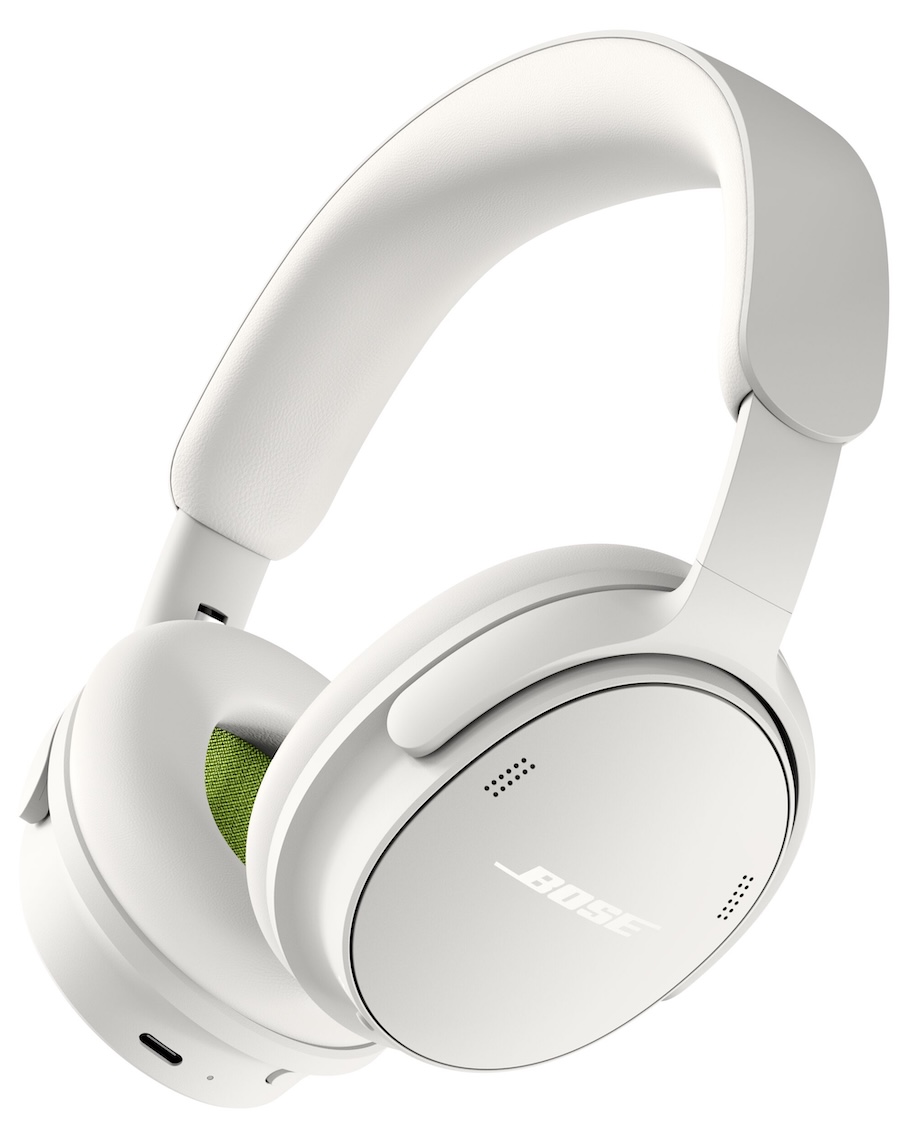
The wireless headphone market has become a knife fight, with Sony, Apple, Sennheiser, Bowers & Wilkins, and Bose all competing for the same premium buyers. The newly announced Bose QuietComfort Headphones 2nd Gen enter that battle by borrowing one of the QuietComfort Ultra 2nd Gen’s biggest features, further blurring the line between Bose’s two flagship noise-cancelling models.
Built around the company’s long-running noise-reduction platform, the QC Gen 2 combines a refreshed industrial design with Bose TrueSpatial technology and three Immersive Audio modes: Still, Motion, and Cinema. The result is a more modern version of one of the most recognizable wireless headphones on the market, although Bose may now have to explain why some buyers should still pay more for the Ultra.
Related Reviews:
Bose QuietComfort (2nd Gen)
Immersive Audio Is No Longer Reserved for the Ultra
Bose TrueSpatial technology is the most significant upgrade, bringing three Immersive Audio modes—Still, Motion, and Cinema—to the standard QuietComfort line for the first time.
Unlike spatial-audio systems that require content mixed in Dolby Atmos or another immersive format, Bose Immersive Audio can process conventional stereo from virtually any source. Its digital signal processing moves the presentation outside the listener’s head and creates the impression of listening to a pair of stereo loudspeakers positioned in front of them.
Still Mode: Anchors the virtual soundstage in front of the listener. As the listener turns their head, the apparent position of the music remains fixed in the room, similar to listening to stationary loudspeakers.
Advertisement
Motion Mode: Keeps the virtual soundstage aligned with the listener’s head as they move. It is intended for walking, commuting, and other situations in which a room-anchored presentation could become distracting.
Cinema Mode: Expands the perceived soundstage for movies, television, and spoken-word content while keeping dialogue focused in the center. Background effects are distributed more broadly to create a larger, more theatrical presentation without requiring a native surround or spatial-audio soundtrack.
The important distinction is that Bose is not adding more channels to the original recording. TrueSpatial uses processing and head tracking to reinterpret two-channel audio as a wider, externalized listening experience.
Sound Design
The QuietComfort Gen 2 retains Bose’s proprietary SoundDesign digital signal processing, but adds lossless wired playback over USB-C at up to 24-bit/48 kHz. The distinction matters: lossless audio is available through the USB-C connection, not over Bluetooth.
Advertisement
Noise Cancellation That Adapts to the Fit
Bose has renamed its noise-cancellation platform QuietControl, but the QuietComfort Gen 2 also introduces several meaningful refinements over the first-generation model.
New adaptive feedforward controls are designed to improve performance when the earcups cannot form a perfect seal, which can happen when listeners wear glasses, hats, or have hair trapped beneath the cushions.
Advertisement. Scroll to continue reading.
The six-microphone system can now better compensate for those small gaps, helping the headphones maintain more consistent noise cancellation under less-than-ideal fit conditions.
Advertisement
Bose has also refined ActiveSense in Aware Mode. The system applies noise cancellation more smoothly and naturally when sudden sounds occur, reducing sharp spikes from passing trains, traffic, or other loud interruptions without completely shutting out the listener’s surroundings.
For a more traditional listening experience, noise cancellation can be adjusted manually or switched off entirely through the Bose app for Android and iOS.
Listeners can also create Custom Modes that combine their preferred levels of noise cancellation and acoustic transparency. These settings can be cycled quickly using the action button on the left earcup.
Refined Comfort and Style
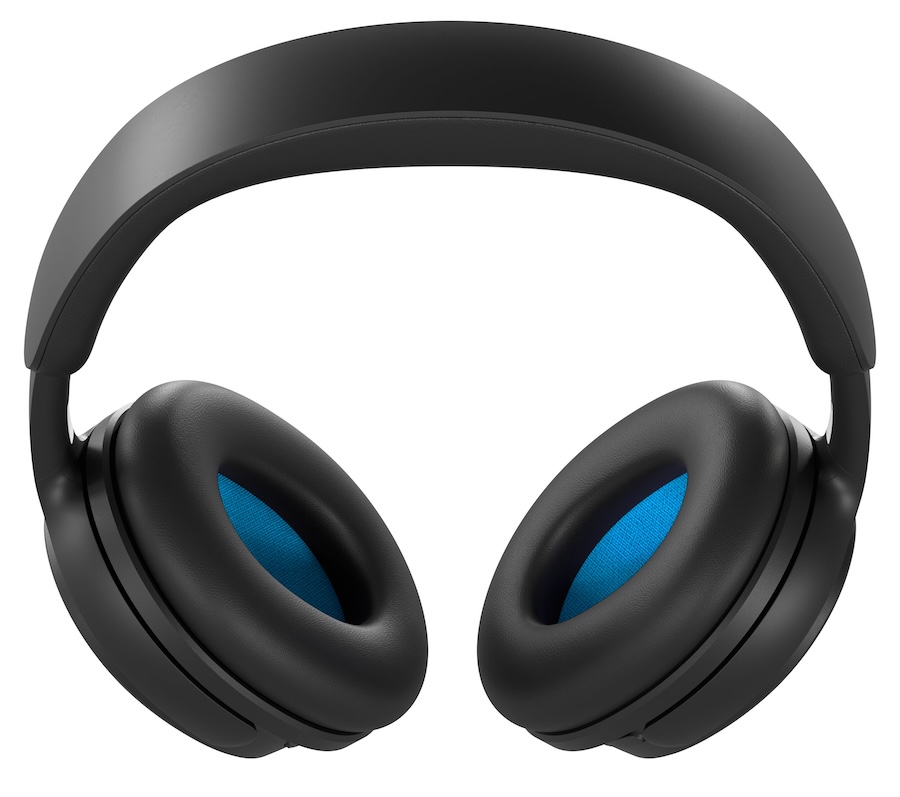
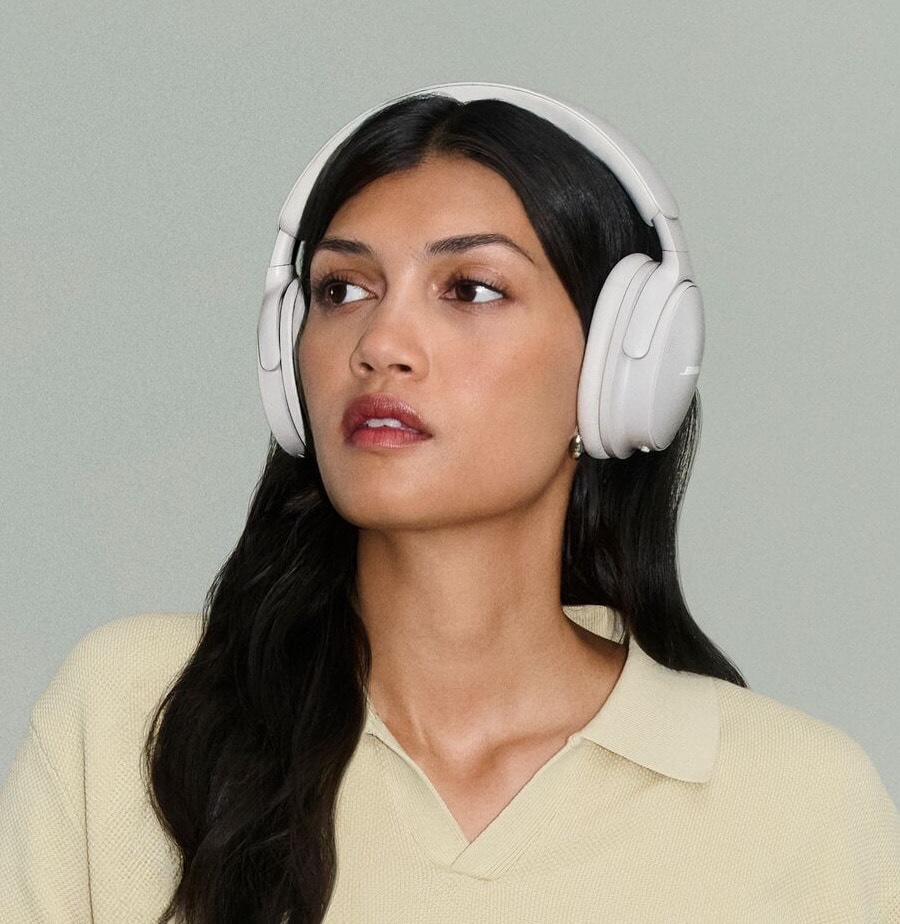
The QuietComfort Gen 2 features a redesigned headband with smoother adjustable sliders and softer synthetic leather cushioning that rests more comfortably against the head.
Advertisement
Bose has also optimized the clamping force to provide a secure fit without making the headphones feel heavy or overly tight. Newly shaped oval earcups are designed to follow the natural contours of the listener’s head and improve long-term comfort.
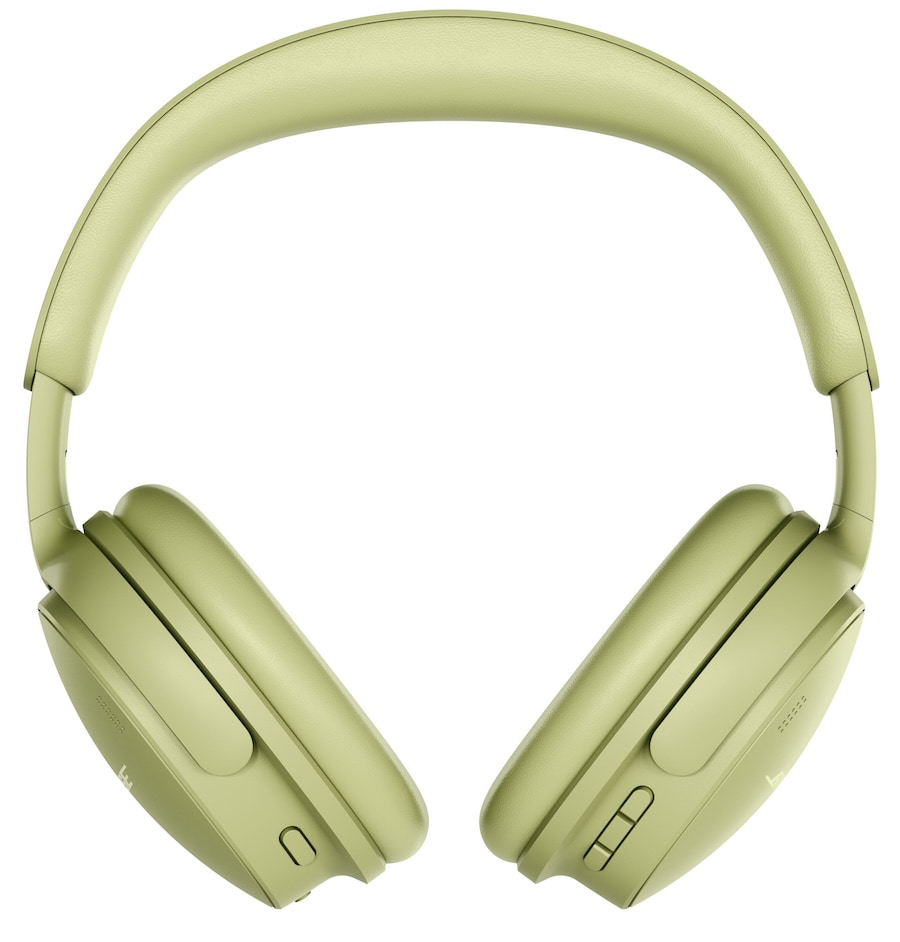
Contrasting color accents inside the earcups add a subtle two-tone look that gives the familiar QuietComfort design a more modern appearance.
New Colors
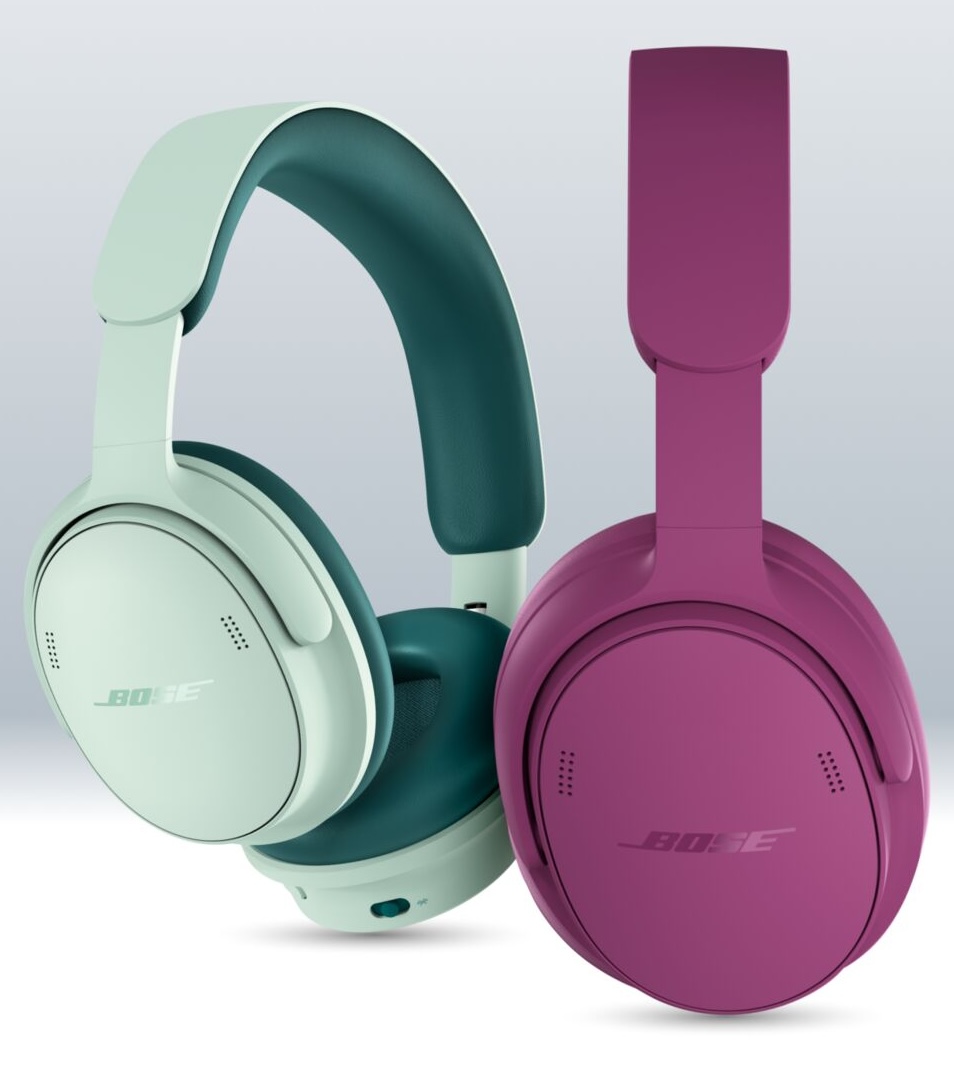
Alongside the standard Black and White Smoke finishes, Bose is offering three limited-edition color options:
Eucalyptus Green: A muted, nature-inspired green with warm yellow undertones, designed to complement current fashion and interior color trends.
Dewdrop Mint: A playful 1990s-inspired finish that combines a soft mint exterior with teal accents inside the earcups.
Rosewood Mauve: A deeper, more expressive option that pairs a rich mauve finish with vibrant fuchsia accents for a bold two-tone appearance.
Controls
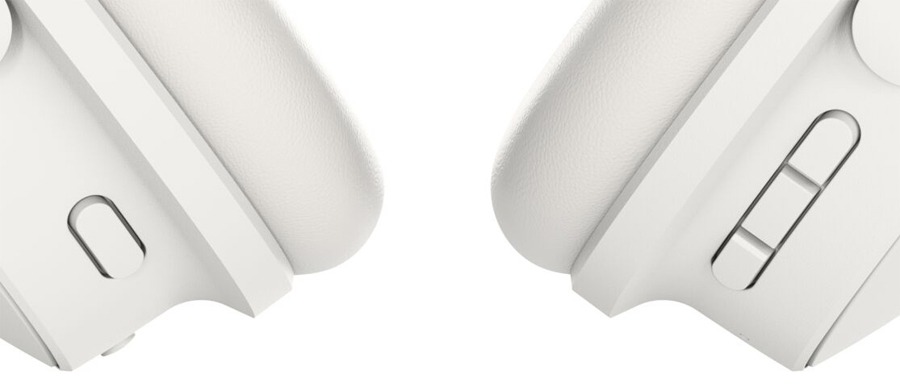
The QuietComfort Gen 2 uses physical buttons positioned on both earcups, allowing listeners to control playback, calls, and listening modes without reaching for their phone.
Buttons on the right earcup handle primary functions, including play/pause, volume adjustment, and answering or ending calls. A dedicated button on the left earcup cycles through listening modes and can be assigned as a shortcut for the connected device’s voice assistant or Spotify Tap.
Spotify Tap should not be confused with Spinal Tap, although Bose has yet to confirm whether the volume control goes to 11.
Connectivity
Wireless connectivity for the QuietComfort Gen 2 is provided by Bluetooth Core 5.4 with multipoint connectivity that allows seamless switching between two connected devices. This makes it easy to move between music, calls, and more. Android users can also take advantage of Google Fast Pair for simplified setup.
Advertisement
Advertisement. Scroll to continue reading.
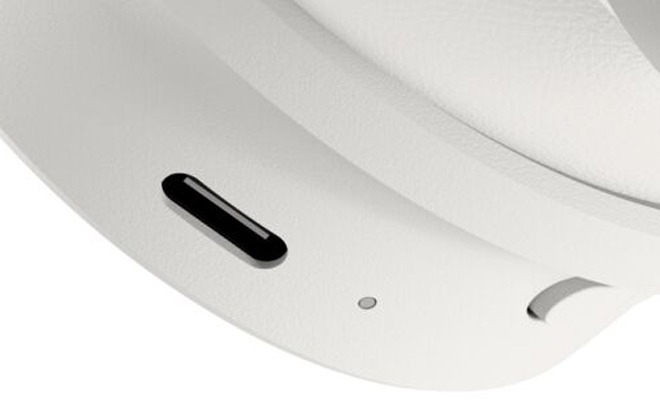
Two-way USB-C audio supports both high-quality wired playback and voice input through the headphones’ microphones, making the QuietComfort Gen 2 suitable for calls and videoconferencing through apps such as Zoom and Microsoft Teams.
Bose also includes a USB-C-to-3.5 mm cable for connecting the headphones to analog sources, including seatback entertainment systems on aircraft.
Battery Life
The QuietComfort Gen 2 provides up to 24 hours of listening time, dropping to 18 hours when Bose Immersive Audio is enabled. That places it ahead of the AirPods Max 2, which delivers up to 20 hours with Active Noise Cancellation, but behind the Sony WH-1000XM6 and its 30-hour rating with noise cancellation switched on. Apple’s 20-hour estimate includes Spatial Audio, however, giving it a slight advantage when Bose’s comparable Immersive Audio processing is active.
Bose allows the headphones to continue playing while they are being charged, so a depleted battery does not have to end a wired listening session. A 15-minute quick charge provides up to 2.5 hours of additional playback.
Advertisement
Bose App
The Bose app for Android and iOS provides a three-band equalizer, customizable listening modes, and configurable shortcut controls. Users can also manage connected Bluetooth devices, install firmware updates, and adjust additional headphone settings from one central interface.
Rigid hard-shell EVA foam core wrapped in a durable, color-matched woven fabric exterior and finished with a soft fabric interior lining
Ear Cushion Material
Not specified
Protein Leather
Protein Leather
Rechargeable
Yes
Yes
Yes
Battery Life
Up to 24 hours* (18 in Immersive)
Up to 24 hours
Up to 30 hrs (23 with Immersive Audio, 45 with ANC off)
Battery Charge Time
Fully charge in 3 hours
Advertisement
15-minute quick charge provides 2.5 hours
Charge over USB while using the headphones.
Full Charge 2.5 hours
15-minute quick charge provides 2.5 hours
Advertisement
3 hrs full charge
15 min quick charge provides 3 hrs playback
USB-C charging (usable while charging)
Auto power-off/low-power modes
Advertisement
Charging Accessory included
Yes
Yes
Yes
Charging Interface(s)
USB
USB
USB
Wireless Connectivity
Bluetooth 5.4 with multipoint
Spotify Tap
Google Fast Pair
Bluetooth 5.1
Bluetooth 5.4 with multipoint
Advertisement
Spotify Tap
Google Fast Pair
Wired Connectivity
Lossless audio via USB
Yes
Yes
Bose App
Yes
Yes
Yes
Colors
Black
White Smoke
Advertisement
Eucalyptus Green
Dewdrop Mint
Rosewood Mauve
Black
Advertisement
White Smoke
Moonlight Grey
Cypress Green
Twilight Blue
Advertisement
Ice Blue
Sandstone
Petal Pink
Black
Advertisement
White Smoke
Midnight Violet
Driftwood Sand
What’s In The Box
QuietComfort Headphones (2nd Gen)
Advertisement
Carry case
USB-C to C cable (39 in (1m))
3.5mm to USB-C Aux audio cable (39 in (1m))
Safety Sheet
Advertisement
Bose QuietComfort Headphones
Carry Case
3.5 mm to 2.5 mm audio cable
USB-C (A to C) cable (12″)
Advertisement
Safety Sheet
Bose QuietComfort Ultra Headphones (2nd Gen)
Carry case
3.5 mm to 2.5 mm audio cable
Advertisement
USB-C (C to C) cable (39″)
Safety sheet
USB charger requirement
The Bottom Line
Bose built its reputation on noise-reducing headphones, and the QuietComfort 2nd Gen continues that tradition. It also enters one of the most competitive segments of the wireless headphone market, facing the Sony WH-1000XM6, Apple AirPods Max 2, Sennheiser MOMENTUM 5 Wireless, and Bowers & Wilkins Px7 S3 at nearby premium price points.
Bose and Sony remain the strongest choices for buyers who prioritize noise cancellation and travel comfort, while AirPods Max 2 will have considerable appeal for listeners already invested in Apple’s ecosystem. Those who place sound quality ahead of maximum noise isolation should also audition the Px7 S3 and MOMENTUM 5 Wireless, both of which offer compelling alternatives without moving into a substantially higher price category.
Advertisement
That brings us to the $450 question that will matter most to potential buyers: if the QuietComfort Gen 2 now includes Bose Immersive Audio, USB-C lossless playback, and many of the features that once separated the two models, does spending more on the flagship still make sense?
Bose has not announced a QuietComfort Ultra 3rd Gen, but the shrinking feature gap raises an obvious question: how long can the current Ultra remain sufficiently different to justify its higher price?
For now, the QuietComfort Ultra 2nd Gen remains Bose’s flagship over-ear model and retains several meaningful advantages:
A more premium design with polished metal components and softer cushioning
Bose’s most advanced over-ear noise-cancellation performance
CustomTune technology, which calibrates the sound and noise cancellation to the listener’s ears
On-head detection with automatic Bluetooth standby and a low-energy deep-sleep mode
A capacitive touch strip for volume adjustment
Snapdragon Sound support, including lossless wireless playback with compatible Android devices
Those extras make the Ultra the stronger choice for frequent travelers, Android users with compatible Snapdragon Sound devices, and buyers who want the best noise cancellation Bose currently offers.
For everyone else, the QuietComfort Gen 2 may now represent the better value. It delivers the core Bose experience, including Immersive Audio, physical controls, USB-C audio, and adaptive noise cancellation, without charging buyers for every premium feature in the cabinet.
Advertisement
Advertisement. Scroll to continue reading.
That leaves Bose with a positioning problem. The QuietComfort Ultra remains more luxurious and technically complete, but it no longer feels like an entirely different class of headphone. Whether its stronger noise cancellation, CustomTune processing, premium construction, and lossless wireless support are enough to justify the higher price will ultimately depend on real-world performance.
eCoustics Headphone Editor Will Jennings is currently testing our review pair, so we should have answers to those questions rather soon.
Price & Availability
The new Bose QuietComfort Gen 2 Headphones will open for preorder beginning August 8 on Bose.com and through select resellers for $359, and will start shipping on August 13. Available in Black, White Smoke, or three new limited-edition colors: Eucalyptus Green, Dewdrop Mint, and Rosewood Mauve.
Advertisement
The previous Bose QuietComfort headphones are priced at $359 at Amazon, but are likely to go on sale as phased out.
The Bose QuietComfort Ultra Gen 2 headphones are priced at $449 at Amazon
A New Mexico court ordered (PDF) Meta to create a $567 million fund to address harms linked to youth mental health and child sexual exploitation after finding its platforms constituted a public nuisance. “In sum, the Court finds that New Mexico is in the midst of a teen mental health crisis affecting public health and public safety in and throughout the state, and that Meta’s platforms are a significant contributing cause to the crisis,” wrote Chief Judge Bryan Biedscheid in the decision. The fund comes on top of $375 million in civil penalties, though the judge declined to mandate changes to features such as infinite scroll and autoplay, citing potential First Amendment and Section 230 concerns. Tech Policy Press reports: The decision follows the second phase of in the State of New Mexico v. Meta Platforms Inc., which consisted of a bench trial. Its central question was whether Meta’s platforms amounted to a public nuisance in New Mexico, and, if the court found that they did, what remedy would be needed to address it. In March, a Santa Fe jury found Meta liable for violations of New Mexico’s Unfair Practices Act, awarding $375 million in civil penalties. The jury deliberated less than a day following that nearly seven-week trial. The $567 million abatement fund would be in addition to the civil penalties, according to today’s decision.
New Mexico Attorney General Raul Torrez sued Meta in December 2023, alleging the company made false public statements about the safety of its platforms while knowing internally that its products facilitated child sexual exploitation. The court denied Meta’s Section 230 defense in May 2024. In today’s decision, the court again asserted that “Section 230 does not preclude the State’s public nuisance claim,” but the decision attempted to thread the needle on issues that the court determined might have run “afoul” of the statute, or of the First Amendment, such as issuing remedies around any particular product feature.
More details continue to trickle out about OpenAI’s mysterious new hardware device — described previously as an AI-fueled smart speaker that will be the “physical manifestation” of ChatGPT.
Bloomberg now reports that the device will be “donut-shaped,” designed thusly to allow users to carry it around their home and place it in different locations, like a bedside table or a kitchen counter.
It will be constructed from “high-quality metal,” have a “premium look,” and (in a detail that mystifies) will have distinct “moving parts,” sources told Bloomberg.
It also could be slightly more expensive than your average smart speaker, perhaps $300 to $400 per unit, according to this report. For comparison, most of Amazon’s smart home speakers range in price from $40 on the low end to $240 on the high end.
Advertisement
So, to sum up: an expensive talking AI donut that has … moving parts? OpenAI releasing a smart home device has a certain logic to it, in that it would further integrate ChatGPT into users’ lives. However, historically speaking, smart speakers have not always been profitable and may prove a difficult market to break into. The potentially high price point also might not help.
The device, which is being developed in partnership with LoveFrom, the design studio founded by famous former Apple developer Jony Ive, will likely be released at some point in 2027, Bloomberg writes.
WeatherNext can deliver a 15-day forecast predicting storms’ track and intensity.
Google
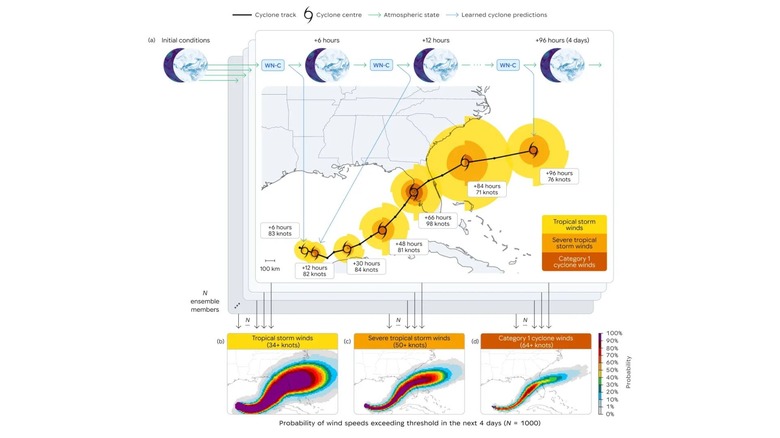
Researchers from the Google DeepMind and Google Research teams have helped train the WeatherNext AI weather prediction model to offer improved cyclone warnings. The National Hurricane Center, the Cooperative Institute for Research in the Atmosphere, the UK Met Office and other weather agencies around the world also contributed to the model’s development. Both the code and the model weights behind the project are being made open source on GitHub, so other scientists can also take advantage of this work.
A study about WeatherNext was published in the journal Nature, and a more layperson version was also shared in a blog post from Google. Tropical cyclones, also known as hurricanes or typhoons depending on where you are in the world, pose a unique challenge to predict because global atmospheric currents that determine a storm’s path have traditionally been best analyzed by coarser global models. In contrast, a storm’s intensity is best predicted by specialized local models that can assess the thermodynamics processes at the cyclone’s core. WeatherNext trained on nearly 20 terabytes of global atmospheric data and historic information collected by the International Best Track Archive for Climate Stewardship to predict both a cyclone’s track and intensity with a single model.
“We can now generate a single 15-day forecast in less than a minute on a TPU, empowering forecasters to quickly evaluate the probability distribution of potentially devastating tail-risks,” the WeatherNext researchers wrote.
Advertisement
Google introduced the second generation of WeatherNext last year. The company’s research teams have also worked on using AI to help predict flash floods.
Salesforce offices in Seattle’s Fremont neighborhood. (GeekWire Photo / Kurt Schlosser)
Salesforce is cutting 59 jobs in Washington state, impacting a wide variety of tech roles at offices in Seattle and Bellevue, according to a new state filing.
The layoffs at the San Francisco-based enterprise software giant, as well as data visualization company Tableau, are effective Oct. 5 according to a Worker Adjustment and Retraining Notification from the state’s Employment Security Department.
Affected positions include software engineers, product management directors, incident commanders, technical support engineers, and leadership roles across marketing and sustainability.
GeekWire reached out to Salesforce for comment on the reason behind the layoffs and for updated workforce numbers in the Seattle area. We’ll update this story when we hear back.
Last September, 93 employees in Washington state were laid off by Salesforce. At the same time, CEO Marc Benioff was touting efficiency gains at the company achieved through the use of AI tools.
Advertisement
The latest reductions come amid a broader restructuring at Salesforce, marking its third round of job cuts this year. The San Francisco Business Times reported that 74 employees are being laid off at the company’s headquarters, accompanied by a reshuffle in the C-suite that promoted Miguel Milano to COO.
Amid the restructuring, the company continues to pull in top regional leadership. Longtime Microsoft cybersecurity executive Krishna Kumar Parthasarathy announced last week that he’s joining Salesforce as executive vice president of engineering.
Salesforce acquired Seattle-based Tableau in 2019 for $15.7 billion. Despite the recurring job reductions, the company recently renewed its lease for roughly 114,000 square feet at the Data 1 office building in Seattle’s Fremont neighborhood, signaling an ongoing commitment to its long-term home in the city.
In other tech industry layoffs this week, Google announced it was eliminating 52 jobs in Washington and Zillow is cutting 91 jobs.
The explainer starts with the periodic table. Rubidium and cesium are both alkali metals, with a single electron in their outermost electron shell. Rubidium has 37 electrons, with the outermost one relatively loosely bound. Naturally occurring rubidium consists mainly of two isotopes, rubidium-85 and rubidium-87, which have the same number of protons and electrons but different numbers of neutrons.
A rubidium standard typically has three gas cells that have a bit of rubidium in them. An RF-excited rubidium-87 discharge lamp produces light at very specific wavelengths. The RF energy excites rubidium atoms into higher electronic states, and when their electrons fall back to lower-energy states, the atoms emit photons.
That light passes through a filter cell containing rubidium-85. The filter preferentially absorbs part of the lamp’s spectrum, leaving light that optically pumps the rubidium-87 atoms in the second resonance cell into one of two closely spaced hyperfine states of the atom’s ground state.
Advertisement
Those two states differ because of the interaction between the magnetic moment of the outer electron and that of the rubidium-87 nucleus. Their energy separation corresponds to a microwave frequency of about 6.835 GHz.
The resonance cell is illuminated by the filtered light while also being exposed to microwave energy from a local oscillator. When the microwave frequency is exactly equal to the rubidium-87 hyperfine transition frequency, it transfers atoms between the two ground-state hyperfine levels. That changes how strongly the cell absorbs the optical pumping light, producing a detectable dip in the light reaching a photodetector.
Electronics then servo the microwave oscillator onto the center of that absorption dip, using a feedback technique somewhat analogous to a phase-locked loop. Once locked, the oscillator is effectively referenced to an atomic transition rather than to the dimensions or mechanical properties of a crystal, giving you an extremely stable frequency standard.
Big batteries are quickly becoming the norm on mid-range Android phones, but Xiaomi is taking things a step further with the new REDMI Note 17 5G. The company has launched the smartphone in India with a massive 8,000mAh silicon-carbon battery, the biggest ever fitted inside a REDMI smartphone. What’s perhaps more impressive is that Xiaomi has managed to squeeze that battery inside an 8.4mm-thick body.
The REDMI Note 17 5G starts at an introductory price of ₹24,999 and also features a 120Hz AMOLED display, the Snapdragon 4 Gen 4 chipset, a 50MP main camera, and Android 16 out of the box. Xiaomi is also promising four years of OS updates and six years of security patches.
REDMI Note 17 5G Features and Specifications
Of course, the headline feature of the REDMI Note 17 is its massive 8,000mAh silicon-carbon battery. Xiaomi claims the phone can last for up to three days of typical usage on a single charge, although real-world endurance will naturally depend on how you use it. The phone supports 45W wired fast charging, and thankfully, Xiaomi still includes the charger in the box. Interestingly, the Note 17 can also double as a power bank in a pinch, thanks to 22.5W reverse wired charging. Xiaomi says the battery is TÜV-certified to retain at least 80% of its original capacity after 1,600 charging cycles, which should help with long-term battery health.
Moving to the front, the REDMI Note 17 features a 6.9-inch TrueColour AMOLED display with a 120Hz AdaptiveSync refresh rate, 100% DCI-P3 coverage, and up to 1,800 nits of peak brightness. The phone also gets Xiaomi’s HydroTouch 2.0 technology, which is designed to keep the touchscreen responsive when your fingers are wet or oily. You also get stereo speakers capable of reaching 200% volume. Under the hood, the REDMI Note 17 is powered by the Snapdragon 4 Gen 4, built on a 4nm process. The chipset is paired with up to 8GB of RAM, while Xiaomi’s memory extension feature can virtually add another 8GB using the phone’s internal storage. There’s also support for expandable storage of up to 2TB and a 10,416mm² graphite cooling system to keep temperatures under control.
Xiaomi claims the phone has been engineered to deliver up to 48 months of lag-free usage. As always, that’s a manufacturer claim, and we’ll have to see how the phone actually holds up after years of software updates and everyday use.
Advertisement
Cameras, Software, and Durability
For photography, the REDMI Note 17 features a 50MP AI dual-camera setup on the back. Xiaomi hasn’t detailed the secondary sensor in its announcement, but the main camera supports features such as Night Mode, AI HDR, Dynamic Shots, 2x in-sensor zoom, and the company’s AI Editor. There’s also an 8MP camera on the front for selfies and video calls. Durability hasn’t been ignored either. The phone gets Corning Gorilla Glass 7i protection on the front, an IP65 rating against dust and water, and a reinforced chassis. The REDMI Note 17 is available in three colors: Arctic Blue, Starlight Purple, and Dark Night.
On the software side, the phone ships with HyperOS 3 based on Android 16. Xiaomi is promising four years of major OS updates and six years of security patches. The software also includes HyperIsland, Xiaomi’s AI features, and Google Gemini integration.
The REDMI Note 17 5G starts at an introductory price of ₹24,999 for the 6GB + 128GB variant, down from its ₹27,999 MRP. The higher-end 8GB + 128GB model costs ₹27,999 as part of the introductory offer, compared with its ₹30,999 MRP.
HItchPiggy founder Skylar Windham, left, on a trip to Florida with his friend and former graduate school professor Alexis Cancemi.
Planning a trip to a college campus, concert or Northwest landmark? Portland startup HitchPiggy is betting the ride you need may already be headed out on the road.
The company’s new marketplace allows drivers to post trips they’re already planning and connect with passengers heading the same way. Unlike on-demand services such as Uber or Lyft, HitchPiggy is focusing on regional travel, allowing drivers to choose who rides with them and what passengers contribute toward the trip.
Founder Skylar Windham says the idea has been percolating in his head for years, sparked from experiences traveling through Europe. Only recently, AI-powered coding tools allowed him to build the platform he always imagined.
The bootstrapped startup is small, with a little more than 100 registered users signing up for Pacific Northwest trips since its launch on June 1. No rides have been completed through the platform just yet, but Windham is looking to grow college ridership this fall through a partnership with the Portland State Business Accelerator.
Arsh Haque, director of the Portland State Business Accelerator, said he loves startup ideas like HitchPiggy that are hatched from international experiences.
Advertisement
“I got to firsthand experience a solution like HitchPiggy abroad, have always wanted it in the U.S., and think Skylar has the raw talent to bring it here,” said Haque.
Windham — a therapist and sailboat instructor by training — believes the service is on the right course as it tackles the complex challenge of matching drivers and riders. In fact, Windham’s background as a certified counselor and sailor is proving to be a useful in getting HitchPiggy on the road.
Counseling has honed listening skills, while sailing has taught adaptability.
“When you’re trying to reach a destination and the conditions change, you have to stay calm and adjust your course without losing sight of where you’re going,” Windham tells GeekWire. “That applies to building a startup too.” Let’s meet our latest Startup Spotlight company: HitchPiggy.
Advertisement
In 50 words or less, give us your elevator pitch.
Skylar Windham using the ridesharing service BlaBlaCar in France in 2015, which later inspired him to start HitchPiggy.
HitchPiggy is like Airbnb for the empty seats in your car. It helps drivers already traveling between cities connect with passengers heading the same way, making travel more affordable and putting existing empty seats to better use.
What problem are you obsessed with solving?
There are already thousands of empty seats traveling between cities every day. I want to help drivers and passengers fill them instead of letting them go to waste.
What surprised you after talking to customers?
Advertisement
I’ve been pleasantly surprised by how encouraging and helpful people have been. Even when there’s been a hiccup, users have been patient and supportive. I think HitchPiggy naturally attracts community-minded people who genuinely want to help each other.
How has AI changed the way you build your company?
I first tried building this idea in 2016 by hiring engineers overseas, but getting the product right was difficult. Eventually, I put the project on the back burner. Today’s AI tools gave me the ability to finally build the platform I had envisioned, despite having no coding background.
What’s one thing people misunderstand about your startup?
Many people assume HitchPiggy is like Uber or Lyft. It isn’t. It’s a community-based rideshare platform for intercity travel, not local, on-demand rides.
Another common misconception is that the idea itself is unusually risky. In reality, people have been sharing rides for years through Craigslist, Facebook groups, and word of mouth. HitchPiggy makes that process more transparent and easier to use. It won’t be for everyone, and that’s okay. But for people who already like the idea of sharing rides, I think it’s a much better option than what has existed before.
What about safety?
Like any platform that connects people online, there is some inherent risk, and HitchPiggy can’t eliminate that entirely. What the platform can do is help people feel more informed and comfortable before deciding to ride together. Users can see details about who they may be traveling with, the vehicle, pickup location, route, timing, cost, and other important trip information. They can also message each other beforehand and ask any questions they need.
Advertisement
What’s the toughest decision you’ve made in the past year?
The toughest decision I’ve made was deciding not to pursue investors, at least not yet. There’s a lot of pressure in the startup world to raise money and grow as quickly as possible, but I wanted to build HitchPiggy differently. I’d rather grow steadily and learn from real users before trying to scale. It hasn’t been the fastest path, but it has felt like the right one.
What’s the one piece of advice you give to other entrepreneurs?
Have thick skin. Most feedback will be positive, but there will always be people who are quick to tell you why your idea won’t work. Anything worth building comes with challenges. Focus on what’s possible instead of everything that could go wrong. If entrepreneurs listened too closely to every critic, very little would ever get built.
Advertisement
We’ll know our company has made it when…
It’s a household name and people naturally check HitchPiggy before looking for a bus or train ticket whenever they’re traveling between cities.
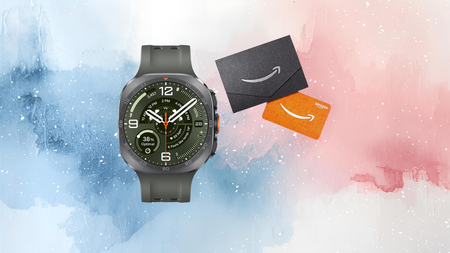
Our review found the standout here is the screen, a 1.52-inch AMOLED panel that hits 5,000 nits of peak brightness, which our reviewer described as bright enough to remain legible in dazzling midday sunshine that left other wearables struggling to keep up.
Advertisement
That kind of visibility earns its keep once you’re actually outdoors, and our testing found the Galaxy Watch Ultra 2‘s dual-GPS setup held a straight, accurate line through Canary Wharf, an area of tall skyscrapers and rivers that regularly throws GPS tracking off course entirely.
That accuracy now extends into a new trail running mode built for this generation, letting you load custom GPX routes with turn-by-turn directions, elevation tracking and personalised hydration alerts as you push further off the beaten path.
Durability hasn’t been sacrificed for any of this either, since the watch retains its shockproof titanium body and now carries an IP69K rating alongside 10ATM water resistance, protecting it through dust, hot water jets and deep submersion.
Advertisement
Built-in LTE connectivity means you can make calls, send texts and get updates straight from your wrist even when your phone stays behind, which our reviewer noted makes it one of the more genuinely useful cellular smartwatches around right now.
Our review did flag that battery life still tops out around two days of real-world use and that several health features remain locked to Samsung phones, so this pre-order bonus suits committed outdoor athletes more than casual browsers.
At $699.99 instead of $799.99, with a $100 Amazon gift card thrown in on top, this is the cheapest way to lock in the Galaxy Watch Ultra 2 before it ships on the 7th of August.






















































You must be logged in to post a comment Login