
Crypto World
Aave Moves to Retire 50 Low-Adoption Assets, Wind Down Six Chains



Aave, the largest DeFi lending protocol with $14.3 billion in deposits, is moving to deprecate 50 low-adoption asset reserves and fully wind down its deployments on Sonic, Scroll, zkSync, Metis, Soneium and Aptos, under a governance proposal posted Wednesday by risk provider LlamaRisk. The changes… Read the full story at The Defiant



Senate Majority Leader John Thune reportedly confirmed that the chamber was “punting” the vote until September.


Lightning Labs, the company behind Lightning Network developer tools, announced a dedicated website for L402 on Wednesday, positioning the protocol as a rail for AI agents to pay in bitcoin. "With L402, agents can pay with bitcoin and natively authenticate. No accounts, no intermediaries, no humans… Read the full story at The Defiant

Uber Technologies (UBER) stock slid Wednesday after the tech giant offered mixed second-quarter results. The ride-hailing and food-delivery company’s bookings and adjusted profit forecast missed estimates. The San Francisco-based Uber earned an adjusted 81 cents per share for the June-ended quarter, up 35% from a year earlier. That beat the 80 cents per share that analysts polled by FactSet were forecasting.…
Copyright ©2026 Investor’s Business Daily, LLC. All rights reserved. 87990cbe856818d5eddac44c7b1cdeb8
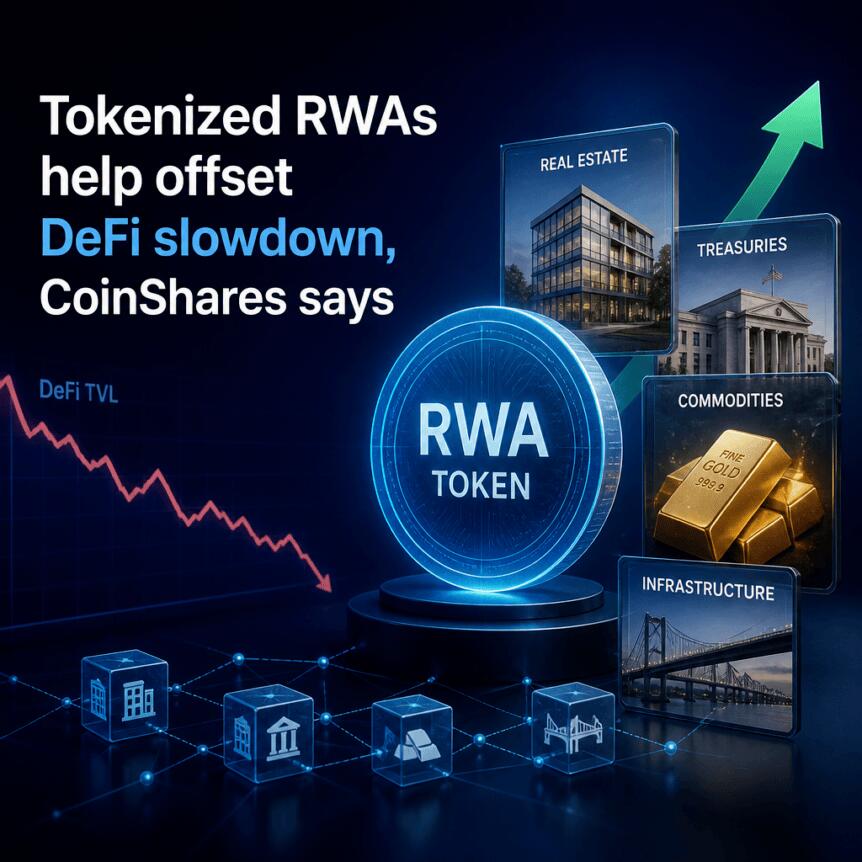
Real-world assets are moving from the “issuance” phase into onchain utility, with activity on decentralized finance platforms increasingly tied to tokenized yield and collateral rather than general DeFi momentum. According to a joint report from CoinShares and Token Terminal released Thursday, RWA deposits across DeFi more than tripled year over year to $7.4 billion in Q2 2026, even as total DeFi deposits declined by about 15%.
CoinShares CEO Jean-Marie Mognetti said the split between rising RWA balances and weakening broader DeFi inflows points to demand rooted in functional use cases. In his view, when a category expands while its host ecosystem softens, it is typically because users want financial utility—not because market conditions are broadly improving.
Key takeaways
- RWA deposits in DeFi surged to $7.4 billion in Q2 2026, while overall DeFi deposits fell about 15% year over year.
- Yield-bearing stablecoins and tokenized Treasury products are currently the largest RWA categories used onchain, including Sky Protocol’s sUSDS and BlackRock’s BUIDL.
- RWA spot trading on decentralized exchanges rose about 220% year over year, even though overall DEX volumes dropped roughly 70%.
- Gold-backed tokens and yield-oriented dollar products are central to RWA activity, with traders responding to price moves and yield strategies.
- RWA exposure is extending into derivatives: RWA perpetual futures volumes have continued rising despite a broader slowdown, including on an RWA-focused platform built on Hyperliquid.
RWA deposits rise while DeFi liquidity contracts
The most notable signal in CoinShares and Token Terminal’s report is the divergence between RWA growth and the broader health of DeFi lending and staking liquidity. While total DeFi deposits fell by about 15% year over year, RWA deposits expanded sharply—more than tripling to $7.4 billion in Q2 2026.
This pattern matters because it suggests that RWA onboarding is not simply an extension of generalized risk appetite across crypto. If investors were responding mainly to a favorable overall market cycle, RWA and non-RWA flows would likely track each other more closely. Instead, the report frames RWA growth as being driven by “financial utility” such as collateral value, yield generation, and tradable access to real-world exposure.
CoinShares’ CEO characterized the dynamic as an asset class expanding through a downturn in its host ecosystem—an interpretation consistent with the report’s broader conclusion that RWAs are transitioning into a more durable role inside onchain markets.
Why yield-bearing tokens and Treasuries are winning
Within RWAs, the report identifies yield-bearing stablecoins and tokenized Treasury products as the dominant categories showing meaningful onchain usage. In Q2, Sky Protocol’s sUSDS led the category, giving holders exposure to a yield-generating version of its USDS stablecoin.
Tokenized Treasury funds are also highlighted as a major source of onchain collateral. The report points to BlackRock’s USD Institutional Digital Liquidity Fund (BUIDL) among the products being used in decentralized lending markets, where yield-generating assets can play a role in collateral strategies.
CoinShares and Token Terminal further suggest that the RWA landscape currently spans a broad yield spectrum. The report states that RWA products offer yields ranging from about 3.2% to 5.5%, with Treasury-oriented products toward the lower end of that range and higher-yield strategies carrying additional risks.
For investors and DeFi participants, the key takeaway is structural: tokenized Treasuries and yield-bearing stablecoins are not just “wrapped exposure,” but assets designed to plug into DeFi systems where liquidity, collateral management, and yield accounting can be operationally valuable—particularly when broader deposit trends are weakening.
Gold tokens and yield dollars power DEX activity
The report also describes where RWAs show up most clearly in day-to-day trading. On decentralized exchanges, gold-backed tokens and yield-bearing dollar products account for a large share of RWA trading activity.
CoinShares classifies gold-backed stablecoins such as Tether Gold (XAUt) and Paxos Gold (PAXG) as tokenized gold within its RWA reporting framework. The report indicates that these products generate significant trading volume as market participants trade around gold price swings, effectively turning gold exposure into an onchain, secondary-market instrument.
On the dollar side, yield-bearing products such as Ethena’s sUSDe are also described as contributing to RWA spot activity. While RWAs are often discussed in terms of long-horizon investment access, the report emphasizes how trading behavior on DEXs increasingly resembles active market participation—an important distinction from one-time minting and holding.
Supporting that view, the report notes that RWA spot trading volumes rose roughly 220% year over year. This occurred even while overall DEX volumes fell by about 70%, reinforcing the idea that RWAs are gaining traction as tradable assets with a growing secondary-market role, rather than riding broader DEX tailwinds.
RWAs are moving into leveraged derivatives
Beyond spot trading and lending collateral, the report highlights an expansion of RWA exposure into derivatives—particularly perpetual futures, where traders can take leveraged positions without owning the underlying tokenized asset.
RWA perpetual futures trading, the report says, has continued growing despite a broader slowdown in crypto-native derivatives markets. It points to an RWA-focused perpetual futures venue on tradeXYZ, built on Hyperliquid, where trading volume has increased by roughly 20 times since launch.
The report adds that activity has concentrated around commodities and equity index exposure, citing products tied to the S&P 500 and Nasdaq-100, along with technology stocks. Open interest has also been rising, suggesting that participation is not limited to brief bursts of speculation.
For traders and market makers, this matters because derivatives liquidity can change how RWAs are priced and hedged across onchain markets. As leveraged instruments become more common, RWAs may attract a wider range of participants—though it also introduces additional risks typical of leverage and derivatives exposure.
What to watch next
With RWA deposits accelerating while broader DeFi deposits contract, the next question is whether this pattern persists beyond Q2 2026 and whether growth remains concentrated in yield-bearing stablecoins and tokenized Treasuries—or broadens further into other real-world categories. Traders and DeFi users should also watch how expanding derivatives access affects liquidity, hedging behavior, and the risk profile of onchain RWA strategies.


OpenAI has acquired patent assets from AI chip startup Rain AI after earlier negotiations to buy the company ended without an agreement, according to The Information.
Summary
- OpenAI acquired some Rain AI patents, but the financial terms and number of assets were not disclosed.
- Earlier negotiations for a complete takeover failed to produce a deal, leaving Rain AI close to shutting down.
- Rain AI developed energy-efficient chips for AI workloads and previously secured backing from Sam Altman.
- The transaction expands OpenAI’s hardware assets as advanced computing capacity becomes a strategic priority.
OpenAI buys Rain AI patents after failed takeover
OpenAI purchased some of Rain AI’s patents after the companies were unable to complete a broader acquisition, The Information reported. Neither company has publicly disclosed the price, the number of patents transferred, or the technologies covered by the transaction.
Rain AI has nearly ceased operating following the failed takeover talks, according to the report. Most of its employees have also left the startup, although it remains unclear whether any former Rain AI staff joined OpenAI as part of a separate arrangement.
The deal allows OpenAI to obtain selected intellectual property without assuming ownership of the entire company. It may also give the ChatGPT developer access to chip designs or related research that could support its work on AI computing infrastructure.
However, OpenAI has not explained how it plans to use the patents. Any connection between the acquired assets and a future OpenAI chip remains unconfirmed.
Rain AI pursued energy-efficient AI chips
Founded around eight years ago, Rain AI worked on specialized processors designed for artificial intelligence workloads. Its technology focused on lowering the energy and computing costs of training and running AI models.
Rain developed what it called neuromorphic processing units, or NPUs. The company sought to build chips that reproduced some features of the human brain while supporting both AI training and inference.
Rain’s investors included Altman, who made a personal investment in the company. The relationship later drew attention because OpenAI also explored commercial arrangements with the startup.
In 2019, OpenAI signed a nonbinding letter of intent to purchase $51 million worth of Rain AI chips once they became available, according to documents previously reviewed by Wired. The agreement did not result in a completed chip purchase.
Rain later struggled to secure sufficient funding and commercial demand. Reports in 2025 said the company began exploring a sale after a planned $150 million Series B funding round fell through.
Patent deal adds to OpenAI’s hardware push
The Rain AI transaction comes as OpenAI seeks more control over the infrastructure used to develop and operate its models. Advanced AI systems require large numbers of accelerators, considerable electricity and extensive data center capacity.
Purchasing patent assets could help OpenAI bring additional chip expertise in-house or strengthen its position when working with external semiconductor companies. It could also prevent potentially useful technology from disappearing as Rain AI winds down.
The arrangement does not establish that companies backed personally by Altman automatically receive financial support from OpenAI. Instead, the limited patent purchase suggests OpenAI selected specific technological assets after deciding against acquiring Rain AI outright.
Altman’s investment makes the transaction relevant from a governance perspective, although the available reporting does not identify any conflict or describe his involvement in approving the deal.
US oversight expands alongside AI infrastructure
OpenAI’s hardware expansion is unfolding as Washington increases its focus on advanced AI systems and the infrastructure supporting them.
Crypto.news reported in late July that OpenAI and Anthropic were working with the Trump administration on a consistent federal review process for models with advanced cybersecurity or national security capabilities. Despite competing for customers, researchers and computing resources, both companies sought standards that would apply across the industry.
Under the federal framework, developers could provide designated “covered frontier models” to the government for evaluation for up to 30 days before releasing them to other trusted partners. The White House finalized a voluntary framework in early August, though questions remain about which models will qualify.
The Rain AI patent acquisition addresses a different part of OpenAI’s strategy, but both developments reflect the growing importance of U.S.-controlled technology, computing capacity and intellectual property. OpenAI has not announced whether the Rain patents will support an internal chip project, a licensing program or future partnerships.


CFTC Chairman Michael Selig said regulators must give financial innovation room to lead as the global derivatives market enters a new phase of development.
Summary
- Global derivatives contracts now have a combined notional value exceeding $1.2 quadrillion, according to Selig.
- The CFTC oversees markets representing nearly half of that total, giving it substantial global influence.
- Selig said the agency would support innovation while retaining safeguards against fraud, manipulation and market abuse.
- Prediction markets and crypto derivatives are becoming important tests of the CFTC’s regulatory approach.
Selig rejects restrictive derivatives rules
Writing in The Economist, Selig argued that regulators should avoid importing or copying rules that could limit competition and prevent new financial products from reaching the market.
“The new era of finance needs innovation, not consensus,” Selig said.
Derivatives, including futures, options and swaps, allow companies, farmers, investors and financial institutions to manage risk and allocate capital. Selig placed the global notional value of those contracts above $1.2 quadrillion, with markets under CFTC supervision accounting for nearly half of the total.
The chairman said U.S. leadership developed through market competition, strong institutions, effective oversight and openness to new technology. Regulators in other countries have consequently treated the CFTC’s approach as a model for derivatives supervision.
However, Selig warned that international regulatory consensus should not become a reason for the United States to adopt restrictive frameworks. His position suggests the agency will weigh market efficiency and competitiveness alongside consumer protection when considering new products.
CFTC expands its innovation-focused agenda
Selig’s remarks extend the approach he outlined after becoming the CFTC’s 16th chairman in December 2025. In his first public address, he called for clear rules, principles-based oversight and “permissionless innovation.”
The chairman has also instructed staff to use the agency’s existing authority to modernize its regulations while Congress considers legislation that could expand the CFTC’s role in digital asset markets.
Under Project Crypto, the CFTC is working with the Securities and Exchange Commission to coordinate the treatment of products that cross traditional regulatory boundaries. Selig has said the initiative should create durable rules for crypto trading platforms and other emerging markets.
Still, the agency has said innovation will not replace its core responsibilities. In his January address, Selig identified investor protection, anti-fraud rules, market integrity and safeguards against manipulation as continuing priorities. The CFTC described the policy as an effort to modernize regulation without abandoning those principles.
Prediction markets test innovation and enforcement
Prediction markets provide an early test of that balance. Binance.US plans to apply for a designated contract market license that could allow it to list federally regulated event contracts, futures and options for retail customers.
Chief Executive Stephen Gregory disclosed the plan during the Rare Evo conference in Las Vegas. The exchange was expected to submit its application in August, although CFTC approval is not guaranteed.
A successful application would move Binance.US beyond spot cryptocurrency trading and place its event contracts under direct federal supervision. Designated contract markets must meet CFTC requirements covering system safeguards, recordkeeping, conflicts of interest and market monitoring.
Meanwhile, the regulator has continued pursuing misconduct on existing platforms. Former U.S. Representative George Santos recently settled a CFTC case involving Kalshi contracts tied to whether he would attend President Donald Trump’s State of the Union address.
The CFTC’s July 31 order required Santos to return $17,569.98 in profits, pay a $17,500 penalty and accept a three-year ban from trading on CFTC-registered markets. Santos neither admitted nor denied the agency’s findings.
What Selig’s approach means for US markets
Selig’s position could support more crypto derivatives, tokenized products and prediction contracts entering regulated U.S. venues. It may also encourage financial companies to pursue federal registration instead of launching products offshore or operating through less defined legal structures.
The key question will be how the CFTC converts its innovation-focused language into licensing decisions and formal rules. Applications from companies such as Binance.US will show how much flexibility the agency is prepared to offer while protecting retail traders and preserving market integrity.
Selig said the United States intends to remain influential in setting global derivatives standards. That leadership will depend on whether the CFTC can expand access to new products without weakening its response to fraud and manipulation.


Bitcoin miner MARA swung to a net loss of $611.3 million from a year-earlier profit in the second quarter of 2026, driven primarily by a change in the value of its Bitcoin holdings, despite reporting its highest quarterly Bitcoin production in more than a year.
The net loss, equivalent to $1.60 per diluted share, is down compared to a net income of $808.2 million, or $1.84 per diluted share, in the second quarter of 2025, according to the company’s 10-Q SEC filing. MARA mined 2,422 Bitcoin in the quarter, 3% more than the prior year period, but higher production was more than offset by a 28% decline in the average Bitcoin price.
“Two things defined Q2 for MARA. Bitcoin prices created a challenging revenue environment [and] we used the quarter to fundamentally transform our power portfolio and capital structure,” said MARA chief financial officer Salman Khan during an earnings call on Thursday.
The quarter highlights MARA’s exposure to Bitcoin prices even as it expands mining capacity and pursues AI and high-performance computing infrastructure. As of June 30, MARA held a total of 35,577 Bitcoin, with a total fair value of $2.1 billion, making it the fourth-largest public Bitcoin holder after Strategy, Twenty One Capital and Metaplanet.
MARA eyes continued AI expansion
In February, the company acquired a majority stake in Exaion SaS, which operates high-performance computing (HPC) data centers and secure cloud and AI infrastructure.
In the same month, MARA also announced a partnership with Starwood Capital Group and its data center development platform Starwood Digital Ventures to enable the conversion of select MARA sites to meet demand from “enterprise, hyperscale and AI customers.”
Related: Bitcoin miners’ AI pivot loses Wall Street’s wow factor
MARA said it is targeting at least two AI/HPC lease signings by year-end.
“Working alongside Starwood, we are progressing lease discussions across multiple sites, and we remain confident in our ability to sign at least 2 leases before year-end,” MARA CEO Fred Thiel said on Thursday.
In July, MARA also agreed to acquire a 1,200-acre powered land site in Matagorda County, Texas, with expected access to up to 2 gigawatts of grid capacity by April 2028. The company said it intends to develop the site for AI and HPC workloads as well as Bitcoin mining.
MARA’s expansion plans also include its pending acquisition of Long Ridge Energy & Power in Ohio, a $1.5 billion deal that MARA has said could support up to 600 megawatts of AI and critical-IT load over time.
Related: Galaxy, MARA Holdings deepen Texas expansion with land acquisitions
Bitcoin mining remains foundational
In a letter to shareholders on Thursday, Thiel said Bitcoin mining still represents the core of MARA’s business and will continue to generate cash flow that supports its other investments.
“Ultimately, we do not view Bitcoin mining and AI infrastructure as competing businesses,” said Thiel.
“Our capital allocation philosophy remains straightforward. Every megawatt should be deployed into its highest-value application. In some markets, that will continue to be Bitcoin mining. In others, it will be AI infrastructure, sovereign cloud, or enterprise computing.”
Magazine: 10 weirdest things ever tokenized… including farts
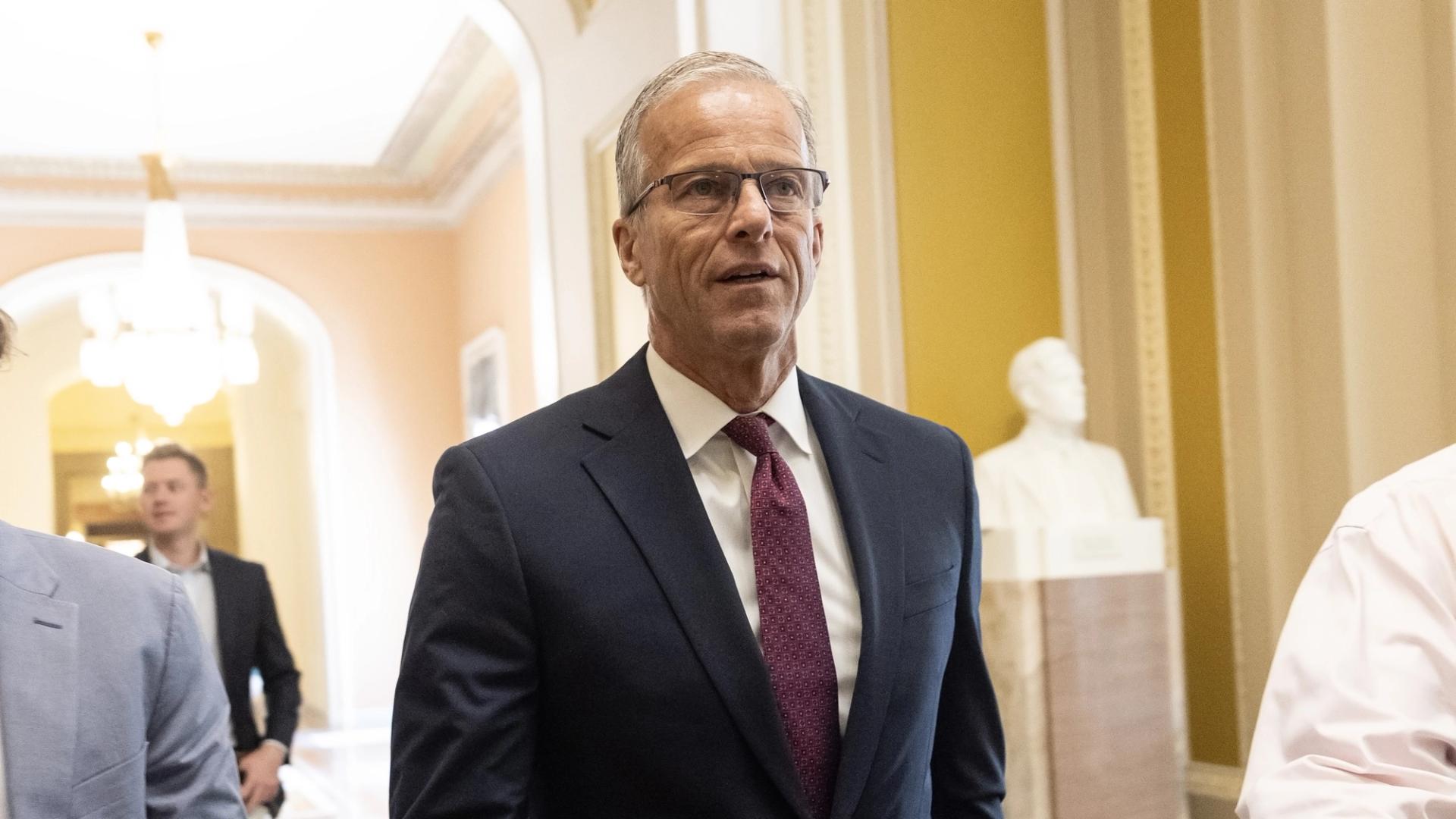
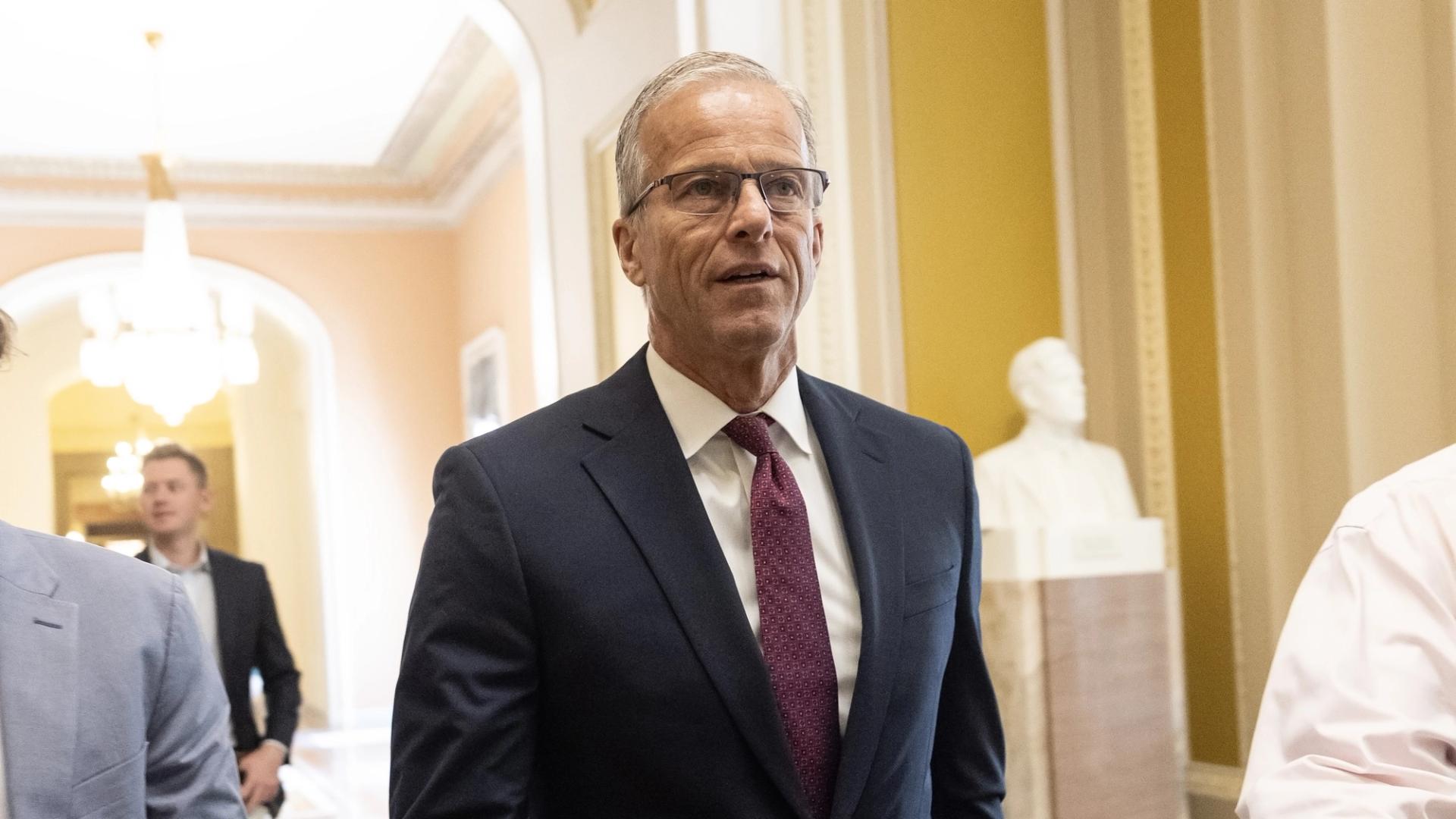
The U.S. Senate will not vote on the crypto market structure bill before it breaks for the rest of the month, but industry leaders still hope for a vote in September, when the Senate returns to Washington, D.C., multiple individuals following the legislation told CoinDesk.
The crypto industry hoped that the Senate would stay in session for a few more days to resolve outstanding issues, including the Digital Asset Market Clarity Act, but Senators from both parties had major unresolved issues on the legislation. The Senate will return to D.C. on Sept. 14, 2026, and will have three weeks to work on this and other outstanding issues then.
The Senate will hold votes on a continuing resolution to fund the federal government through the midterm election; a Russia sanctions bill championed by and now named after Senator Lindsey Graham and a group of nominations on Friday morning, the last day before it is scheduled to leave.
Politico first reported late Thursday that the Senate did not expect to hold a first vote on Clarity before the recess.
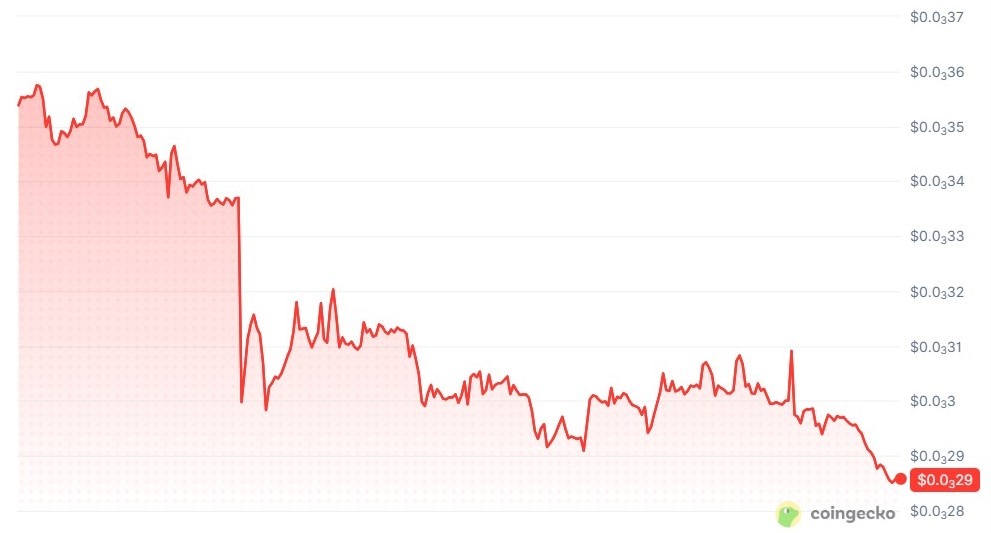
ElizaOS fell 19% over 24 hours to an all-time low after Eliza Labs founder Shaw Walters said the token was “dead” and that the Eliza Foundation was winding down.
CoinGecko data showed the token trading at $0.000285 at the time of writing after touching a record low of $0.000284 on Thursday with a market capitalization of $2.1 million.
The drop came after an announcement from Walters that the foundation was winding down. “The token is dead. Completely,” Walters said, adding that he no longer owned or supported the token. He said the development of the open-source Eliza software would continue without the token or the foundation.
The decline represents a stark reversal for one of the AI-agent sector’s former breakout tokens. Before the project rebranded as ElizaOS, the token, then known as AI16Z, reached a peak market capitalization of $2.5 billion in January 2025, according to CoinGecko.
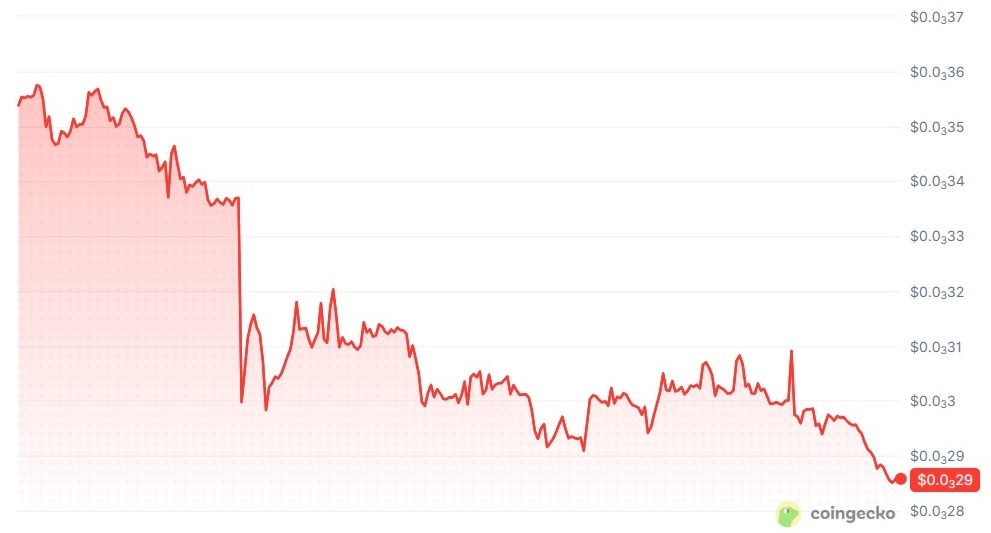
ElizaOS’ 24-hour price chart. Source: CoinGecko
Founder blames lawsuit and token culture
Walters said Eliza Labs privately settled with a group of tokenholders represented by Burwick Law by agreeing to give them its remaining treasury and funds.
He called the suit “ridiculous” but said the project lacked the capital to continue fighting it.
The lawsuit, filed in April, named Eliza Labs, Walters, Sebastian Quinn-Watson and the AI16Z DAO as defendants. It alleged false advertising, deceptive practices, negligent misrepresentation and unjust enrichment.
Court records show the named plaintiff’s claims were dismissed with prejudice by stipulation on July 8, while the proposed class’s claims were dismissed without prejudice.
Cointelegraph contacted Walters and Burwick Law founder Max Burwick for comment but had not received a response by the time of publication.
Related: Not every AI agent needs its own cryptocurrency: CZ
Walters said there were no more funds for token buybacks and no foundation or future supply intervention to support the token.
He also said he would not allow another token to be associated with Eliza while continuing to build its underlying operating system.
“I am starting over, since I own the IP, and I am never letting a token come close to Eliza again […] I’m never going to support an Eliza token,” he wrote.
ElizaOS is an open-source framework for building and managing AI agents. The project launched in October 2024 as ai16z with an initial goal of raising $75,000 to build an autonomous investor.
In January 2025, it rebranded to ElizaOS after Andreessen Horowitz raised concerns about confusion with its a16z brand. The token was also later migrated.
Magazine: Do the Coldcard attacks mean all hardware wallets are now insecure?
Crypto World
Wall Street optimism fuels new market momentum as XRP ETF inflows expected to surpass $1.51 billion

Disclosure: This article does not represent investment advice. The content and materials featured on this page are for educational purposes only.
XRP ETF inflows have surpassed $1.51 billion as investors increasingly explore UE Crypto’s cloud mining and yield strategies for long-term participation.
Summary
- XRP ETF inflows top $1.51B as institutional demand grows and UE Crypto gains attention from yield seekers.
- Institutional inflows push XRP ETFs past $1.51B while investors explore long-term income strategies with UE Crypto.
- Institutional demand continues to drive XRP ETF growth, while UE Crypto focuses on providing users with long-term and sustainable crypto income solutions.
Wall Street’s increasingly bullish outlook on XRP ETFs is fueling a new wave of market optimism, with total inflows expected to exceed $1.51 billion.
At the same time, a growing number of investors are exploring alternative digital asset strategies, including cloud mining and crypto yield platforms, in pursuit of more stable long-term returns while continuing to hold digital assets. This trend is also driving greater interest in XRP ETFs.
ETF products backed by XRP have recently reached another significant milestone in capital inflows, further strengthening institutional confidence in the asset.

Meanwhile, more investors are turning their attention to the crypto market, seeking long-term income opportunities beyond simply waiting for the price of XRP to appreciate.
The continued inflow of capital into XRP ETFs highlights the growing institutional demand for XRP. Although many retail investors remain cautious due to market volatility and price uncertainty, institutional funds continue allocating capital to XRP through regulated financial products, making it one of the most closely watched mainstream digital assets.
As the regulatory environment continues to improve and financing conditions become more favorable, more investors are asking an important question: Is there a more efficient and sustainable way to benefit from XRP beyond simply waiting for its price to rise?
XRP ETF inflows surpass $1.51 billion, reaching a major milestone
Since the close of trading on August 1, cumulative inflows into XRP-related exchange-traded funds (ETFs) have exceeded $1.51 billion, according to data released by market analysis platform uToday, marking another significant milestone driven by sustained net inflows.
At the same time, overall market liquidity continues to improve. Although trading activity in the secondary market has slowed somewhat and retail investor sentiment remains relatively cautious, institutional demand has stayed strong, resulting in net inflows on most trading days.
A new opportunity for XRP investors: UE crypto’s long-term income strategy
Against this backdrop, an increasing number of XRP investors are turning to UE Crypto, leveraging its cloud mining and yield aggregation mechanisms to pursue a more stable and sustainable digital asset income model.
Compared with highly volatile futures trading or ETF investing, UE Crypto offers a more straightforward and accessible way to participate in the digital asset market while improving the efficiency of digital asset utilization as users benefit from the continued growth of the XRP ecosystem.
For investors with a certain level of capital, this model offers the potential to generate more consistent daily returns, providing an alternative approach to long-term digital asset allocation.
About UE Crypto
Headquartered in the United Kingdom, UE Crypto operates under European regulatory frameworks such as MiCA and MiFID II, continuously enhancing platform transparency, operational standards, and user protection.
The platform employs a multi-layer security architecture, including:
- Annual financial and security compliance audits by PwC;
- Digital asset custody insurance provided by Lloyd’s of London;
- Enterprise-grade cybersecurity protection from Cloudflare and McAfee® security systems;
- Bank-grade encryption technology combined with professional security infrastructure to comprehensively safeguard user assets and accounts.
UE Crypto currently supports a wide range of mainstream digital assets, including XRP, BTC, ETH, USDT, USDC, DOGE, LTC, and SOL, providing users with a flexible and efficient digital asset service experience.
Start earning daily rewards in three simple steps
Step 1: Register an account
Step 2: Choose a mining plan
Select a cloud mining contract that best fits a particular investment budget and objectives, then start mining with just one click.
Step 3: Start earning
Once a contract is activated, computing power is automatically allocated, and rewards are settled every 24 hours. Users can withdraw earnings at any time or continue participating to benefit from long-term compound growth.
Popular cloud mining contract examples
BTC (beginner trial plan)
- Investment: $100
- Contract Term: 2 Days
- Daily Reward: $4
- Total Return: $100 + $8
DOGE (digital intelligent system plan)
- Investment: $500
- Contract Term: 5 Days
- Daily Reward: $6.25
- Total Return: $500 + $31.25
BTC (super computing system plan)
- Investment: $1,000
- Contract Term: 10 Days
- Daily Reward: $13.10
- Total Return: $1,000 + $131
LTC (algorithm-driven system plan)
- Investment: $5,000
- Contract Term: 25 Days
- Daily Reward: $72
- Total Return: $5,000 + $1,800
BTC (quantitative intelligent system plan)
- Investment: $10,000
- Contract Term: 35 Days
- Daily Reward: $158
- Total Return: $10,000 + $5,530
For more information about available contracts, please visit the official UE Crypto website.
Conclusion
The continued inflow of capital into XRP ETFs, together with ongoing improvements in the regulatory environment, reflects XRP’s steady integration into the mainstream financial system.
At the same time, UE Crypto offers XRP investors a more diversified way to participate in the digital asset economy, shifting from relying solely on price appreciation toward a strategy that combines capital growth with continuous passive income.
As the next market cycle unfolds, investors are increasingly focusing not only on price movements but also on more stable and sustainable wealth management strategies. This trend reflects the continued maturation of the digital asset investment landscape.
Join UE Crypto today and start earning passive daily income through digital assets.
Disclosure: This content is provided by a third party. Neither crypto.news nor the author of this article endorses any product mentioned on this page. Users should conduct their own research before taking any action related to the company.

OMFG WALLSTREET JUST MADE XRP THE ONLY WORTHY CRYPTO???!!! (WALL-STREET ALL IN???)

For some, so-called ‘Skynet Day’ came too close to sci-fi after a rogue agent hacked into a startup

Best Inventory Management Software for Small Businesses in 2026


-

 Fashion6 days ago
Weekend Open Thread: Wit & Wisdom
-

 Politics6 days ago
Meta enters AI-training agreement with far-right ‘propaganda rag’ Newsmax
-

 Politics4 days ago
Zack Polanski: an incitement to murder Nigel Farage?
-

 Crypto World6 days ago
MicroStrategy Post-Earnings CLARITY Act Push Could Add New Catalyst for Its Stock
-

 Crypto World6 days ago
XRP Ledger v3.3.0 brings five institutional features
-

 Crypto World6 days ago
New York sues Kalshi over prediction market gambling
-

 Crypto World5 days ago
Crypto PAC spending tops $2M in Michigan House race
-

 Business4 days ago
DTCR: Deleveraging And A Hedge Fund Collapse Point To A Possible AI Bottom
-

 Business7 days ago
Trump Announces Hamas Disarmament Agreement as Iran Strikes Kuwait Air Base and US Attacks Pause Overnight
-
 Crypto World6 days ago
3 Fed Officials Just Explained Their Rate Hike Vote: Is Inflation Winning?
-

 Tech5 days ago
ESET tracks rise in malicious AI skills and adaptable malware
-
Crypto World4 days ago
XRP Ledger urges node upgrade after manifest flood
-

 Tech7 days ago
Gemini Spark can now use Chrome logins and saved passwords to run errands on your behalf
-

 Tech7 days ago
Building A Reproduction PlayStation Motherboard
-

 Sports6 days ago
France Cricket implodes: letters hidden in a drawer and a board at war
-

 Crypto World6 days ago
Moneyflip CEO charged in $40K murder-for-hire plot
-
 Sports6 days ago
Bruno Fernandes decision made as Man United ‘discuss’ striker transfer option
-

 News Videos5 days ago
Financial Crash Expert: The 90-Day Collapse Timeline They Are Desperately Hiding.
-

 NewsBeat7 days ago
Spain sending troops as thousands enter enclave of Ceuta from Morocco
-

 Sports6 days ago
Commonwealth Games 2026 Live Updates | Day 9 CWG 2026: Lovlina Borgohain, Sachin Siwach Enter Final After Indian Judokas Script History
You must be logged in to post a comment Login