
Business
RXO: Expectations Seem Imaginary As Core Metrics Worsen In Q2




An assured smile is one of the most powerful aspects of personal presentation. Beyond the obvious social benefits, a healthy, well-balanced smile plays a fundamental role in dental function, structural health, and overall self-esteem.
When individuals explore options for dental aesthetics, they seek a highly personal balance between visual balance and biological health.
In recent years, the search for high-quality cosmetic dentistry has led millions of patients abroad. Among global destinations, Turkey and specifically Istanbul have established themselves as major hubs. This guide presents an objective, detailed look at what dental aesthetics in Istanbul entails, the available clinical procedures, price factors, and how to identify a clinic that meets international medical standards.
Why Istanbul Has Become a Global Center for Dental Aesthetics
The popularity of choosing dental aesthetics in Istanbul is not a temporary trend. It is the result of long-term investment in medical infrastructure, specialized university training, and a geographic position that makes travel highly accessible for patients from Europe, the Middle East, and North America.
Several distinct components contribute to the city’s reputation in this field:
- Specialized Medical Education: Dental training in Turkey is rigorous. Specialists in cosmetic dentistry, prosthodontics, and oral surgery undergo years of additional postgraduate training, making sure they are competent in both clinical health and aesthetic principles.
- Technological Incorporation: Premier clinics in the city use cutting-edge diagnostic tools, including 3D intraoral scanners, CAD/CAM (Computer-Aided Design/Computer-Aided Manufacturing) technology, and digital smile design software. This allows patients to see a digital rendering of their potential results before any physical treatment begins.
- Comprehensive Service Standards: Because Istanbul hosts a highly competitive medical tourism market, clinics value the patient experience. This includes providing multilingual staff, detailed consultations, and transparent treatment plans.
Choosing dental aesthetics in Turkey allows patients to access advanced technologies and specialist expertise free of prohibitive wait times or premium prices often found in other Western countries.
Key Procedures in Aesthetic Dentistry:
Aesthetic dentistry is not a single treatment; it is a collection of customized procedures meant to tackle specific concerns, from minor discoloration to complex structural reconstructions. A reputable dental aesthetics clinic typically offers a combination of the following treatments:
Porcelain Veneers and Lumeneers
Veneers are ultra-thin shells of dental porcelain designed to cover the front surface of the teeth. They are ideal for correcting permanent discoloration, minor misalignment, chips, or gaps.
- IPS e.max vs. Zirconium: High-quality clinics offer materials customized to the specific tooth. For the front teeth, lithium disilicate (IPS e.max) is commonly preferred for its natural translucency. For posterior teeth needing higher strength, zirconium dioxide is often recommended.
- Lumineers: These are even thinner than traditional veneers and often require minimal to no tooth preparation, preserving more of the original tooth structure.
Dental Implants
An essential part of restorative and cosmetic care, implants replace missing teeth from the root up. An experienced Istanbul Dental clinic will use titanium or zirconia implants to support custom-made porcelain crowns, restoring the patient’s bite force and smile.
Teeth Whitening (Bleaching)
Professional in-office teeth whitening uses medical-grade peroxide gels activated by specialized light sources. This method can brighten teeth by several shades in a single session, offering far more predictable and safer results than over-the-counter alternatives.
Full Mouth Reconstruction
For patients with extensive wear, decay, or multiple missing teeth, a full mouth reconstruction combines crowns, dental implants in Turkey, and veneers to restore both function and appearance. This detailed approach is a primary reason patients seek a dedicated dental aesthetics clinic in Turkey.
Understanding Dental Aesthetics in Turkey Cost
One of the most common questions prospective patients have relates to financial investment. The cost of dental aesthetics in Turkey is significantly lower than in countries like the UK, Germany, or the United States, often saving patients between 50% and 70% on equivalent treatments.
| Procedure Type | Average Cost Range (Western Europe / US) | Average Cost Range (Turkey) |
| Single Porcelain Veneer | $1.000 – $2.500 | $250 – $450 |
| Single Dental Implant | $1.500 – $4.000 | $400 – $900 |
| Professional Whitening | $500 – $1.000 | $150 – $300 |
Why Are the Costs Lower?
It is a common misconception that lower costs equate to lower quality. Macroeconomic factors drive the affordability of Dental Aesthetics in Turkey:
- Lower Overhead Costs: Operating expenses, clinic rentals, laboratory fees, and administrative costs are naturally lower in Turkey than in Western Europe or North America.
- Exchange Rates: Beneficial exchange rates give international patients substantial buying power.
- Local manufacturing: Turkey has a highly developed dental manufacturing and laboratory ecosystem, lessening the need to import individual components at retail prices.
How to Choose the Right Dental Aesthetics Clinic in Istanbul
With hundreds of clinics operating in the city, selecting a safe, professional, and reliable provider is the most critical step of your journey. To ensure you receive world-class care, look for the following benchmarks:
- Accreditations and Licensing: Ensure the Turkish Ministry of Health licenses the clinic and holds international certifications (such as ISO standards or Joint Commission International accreditation).
- Dentist Qualifications: Verify that your treating dentist is a registered specialist (e.g., a prosthodontist or orthodontist), not a general practitioner performing complex cosmetic procedures.
- Before-and-After Portfolio: Request real patient case studies. A reputable clinic will have a diverse portfolio showing natural-looking transformations rather than identical, unnaturally bright white smiles.
- Clear Dialogue and Transparency: Avoid clinics that pressure you into rapid decisions or offer “one-size-fits-all” packages without diagnostic exams.
As an example of these high clinical standards, Celyxmed Dental Clinic has established itself as a leading dental aesthetics clinic in Istanbul. By focusing on highly individualized treatment paths, they combine state-of-the-art diagnostic imaging with a conservative approach to tooth preservation. Instead of offering generic smile packages, their specialists work closely with each patient to design restorations that match the natural anatomy, facial structure, and skin shade of the individual, reflecting the level of accuracy that patients should expect from premier providers.
What to Expect: The Patient Journey
Undergoing dental treatment abroad is a multi-step process that demands careful planning. Here is a typical timeline for a patient going to Istanbul:
Step 1: Virtual Consultation:
Before traveling, you will submit dental photographs and, if available, recent X-rays or panoramic scans. The clinic’s medical team analyzes these to provide an initial, provisional treatment plan and cost estimate.
Step 2: In-Person Diagnostics
Upon arrival at the clinic, your dentist will perform a thorough clinical examination. This entails evaluating your gum health, bone density, and occlusion alignment. Any active decay or periodontal disease must be treated before aesthetic procedures begin.
Step 3: Digital Smile Design
Using intraoral scanners, the clinical team creates a 3D digital model of your mouth. You can discuss the shape, length, and shade of your future teeth, allowing you to co-design your smile with the specialist.
Step 4: Treatment Execution
For veneers or crowns, the teeth are minimally prepared, and temporary restorations are placed to protect them. While the dental laboratory crafts your permanent porcelain restorations, you can comfortably explore Istanbul.
Step 5: Final Fitting and Adjustment
Once the laboratory completes your custom pieces, they are tried in your mouth. The dentist checks the bite, margins, and aesthetics. Only when both you and the dentist are fully satisfied are the restorations permanently bonded.
Long-Term Maintenance and Aftercare
The longevity of your aesthetic dental work depends heavily on your daily habits. High-quality porcelain restorations can last between 10 and 15 years or even longer with proper maintenance:
- Commit to Diligent Oral Hygiene: Brush twice a day with a non-abrasive fluoride toothpaste and floss daily. Keeping the margins where restoration meets the natural gumline clean is vital to avoid decay.
- Use a Nightguard if Necessary: If you have a habit of grinding or clenching your teeth (bruxism), your dentist should provide a custom nightguard to protect your new restorations from excessive pressure.
- Schedule routine check-ups: Even if you live abroad, continue to visit a local dentist twice a year for professional cleanings and examinations to monitor your overall oral health.
Conclusion
Investing in dental aesthetics in Turkey is a highly effective way to achieve a balanced, healthy smile while gaining access to world-class dental expertise. By focusing on clinics that emphasize diagnostic accuracy, natural-looking results, and transparent patient care, you can ensure that your cosmetic dental process is safe, predictable, and highly rewarding.

U.S. Senate passes short-term funding bill to avert federal shutdown before election
Business
F&O Talk: Smallcaps look strong on charts, says Sudeep Shah; outlines Trent, Swiggy, Kalyan Jewellers strategy

Sensex closed nearly 456 points lower (0.58%) at 78,499 while Nifty 50 fell only 65 points (0.27%) to end the session at 24,571. Broader markets were mixed, with Nifty Smallcap 100 closing in the red, while Nifty Midcap 100 gained 0.2%.
Analyst Sudeep Shah, Vice President and Head of Technical & Derivatives Research at SBI Securities, interacted with ETMarkets regarding the outlook for the Nifty and smallcaps, as well as an index strategy for the upcoming week. The following are the edited excerpts from his chat:
1) What is your view on Nifty and Sensex for the coming week?
The market spent another week searching for direction. Although Nifty started the week with a technical breakout above a downward-sloping trendline on the daily chart, the move quickly lost momentum as buyers failed to capitalize on the breakout. The result was a remarkably narrow trading range of just 346 points, the tightest weekly range since the last week of December 2025. Historically, such low-volatility phases seldom persist, often paving the way for a sharp directional move.
On the weekly chart, the index formed a Doji candle, reflecting indecisiveness among market participants. Despite the lack of directional conviction, Nifty continues to trade above its key short-term and long-term moving averages, indicating that the broader trend remains constructive. However, momentum indicators and oscillators continue to portray a sideways bias, suggesting the market is waiting for a fresh trigger before its next meaningful move.

Going ahead, the zone of 24,700-24,750 is likely to act as an immediate hurdle for the index. A decisive move above 24,750 could trigger a fresh rally towards the psychological level of 25,000, followed by 25,200 in the short term.
On the downside, the 200-day EMA zone of 24,400-24,350 is expected to provide strong support. The index is now approaching a crucial technical inflection point, and whichever side breaks first is likely to dictate the market’s next major trend.Last week, the benchmark index Sensex traded within a narrow range of 931 points. On the weekly chart, it formed a small-bodied candle with shadows on both sides, reflecting a phase of indecision among market participants.
From a trend perspective, the index continues to trade above its 20-day, 50-day, and 100-day EMAs, underscoring the presence of a broader positive bias. However, it has been hovering around its 200-day EMA over the past five trading sessions, indicating a lack of clear directional momentum. Momentum indicators also point towards consolidation, with the daily RSI slipped below the 60 mark. Additionally, the daily ADX is currently placed at 12.36, suggesting weak trend strength and the absence of a decisive move in either direction.
Going forward, the 79,100-79,200 zone remains a critical resistance area. A sustained breakout above 79200 could trigger a strong upside move towards 80000, followed by 80700 in the short term.
On the downside, the 20-day EMA region of 77,800-77,700 is expected to provide immediate support. A hold above this zone would help maintain the prevailing positive undertone, while a breach could lead to increased selling pressure.
2.) Smallcap index rose nearly 3% this week, outperforming midcaps and largecaps. What’s the strategy going ahead?
The Nifty Smallcap 100 continued to outperform its midcap and largecap peers during the week, gaining nearly 3% and scaling a fresh all-time high. The index displayed strong relative strength and formed a robust bullish candle on the weekly chart, reflecting sustained buying interest across the broader market.
A key technical development was the breakout above a horizontal trendline resistance, which signals a continuation of the prevailing uptrend. This breakout is backed by healthy price action and suggests that the smallcap segment could continue to attract investor interest in the near term.
From a trend perspective, the index remains comfortably positioned above its key short and long-term moving averages, while momentum indicators and oscillators continue to maintain a positive bias. These signals indicate that the broader bullish structure remains firmly intact.
Going ahead, the 19,550-19,500 zone will act as a crucial support area for the Nifty Smallcap 100. As long as the index sustains above 19,500, the positive momentum is likely to continue, with potential upside targets placed at 20100 and 20,400 in the short term.
Investors and traders should maintain a buy-on-dips approach, with any decline towards the support zone being viewed as an opportunity to accumulate quality smallcap stocks.
3.) What is the options data indicating about Nifty’s near-term trading range, and where are the key Call and Put positions building up?
For the entire week, Nifty consolidated within the 24,774–24,428 range, reflecting a phase of consolidation after witnessing a sharp pullback from the low of 23,606 in the last week of July.
Looking at the options data, the 24,800 strike has witnessed aggressive Call writing, with Call open interest nearly 10 times higher than Put writing, making it a strong resistance zone. A decisive breakout above 24,800 could trigger fresh short covering and pave the way for further upside.
On the downside, the 24,300 strike has significant open interest, with Put writing nearly seven times higher than Call writing. This makes 24,300 an important support level. However, a sustained breach below this mark could force Put writers to unwind their positions, potentially accelerating the downside.
Therefore, the 24,300–24,800 zone is likely to remain the key trading range for Nifty, with a decisive breakout on either side setting the tone for the next directional move.
4.) What is the FII activity looking like with respect to Long-Short Ratio?
The FII Long-Short ratio stood at its lowest level of 7.79% on July 23. The following day, Nifty made a swing low of 23,606 and subsequently witnessed a sharp pullback of more than 4%. During this period, the Long-Short ratio steadily improved, reaching 12.91% on August 7. At the same time, net Index Futures contracts moved from -2.63 lakh to -1.50 lakh, indicating significant short covering by FIIs, which aided Nifty’s recovery.
The 24,800 level remains an important resistance to watch. A strong and decisive breakout above this level could trigger further short covering by FIIs, potentially helping Nifty extend its gains.
5.) What would be your preferred F&O strategy for August: buy on dips, sell on rallies or trade the range?
Given that Nifty continues to trade above its key short and long-term moving averages, while major support is placed near the 24,400-24,350 zone, the broader trend remains constructive despite the ongoing consolidation. Hence, our preferred strategy for the August series would be “Buy on Dips.”
While the index has been moving in a narrow range and momentum indicators are currently neutral, we believe the consolidation is likely to serve as a base-building process before the next directional move. Traders can utilize declines towards key support levels to create long positions, with a sustained move above 24,750 potentially opening the doors for 25,000-25,200 in the near term.
6.) What should be the strategy for SBI, Trent, Kalyan Jewellers, and Swiggy?
Trent formed a sizable bearish candle on the daily timeframe on August 7 and slipped below its 20-day EMA, indicating some weakness in the near-term trend. The RSI has witnessed a sharp decline from above the 60 mark, signalling a shift in momentum from bullish to bearish. The Rs 3,130–3,150 zone is likely to act as an immediate resistance, and the stock may remain sideways to bearish as long as it trades below this zone.
Kalyan Jewellers formed a thin-bodied candle with a noticeable upper wick, indicating profit booking at higher levels. Despite the profit booking, the stock continues to trade above key short and long-term moving averages. Following a breakout above a downward-sloping trendline on the weekly timeframe five weeks ago, the stock has moved sharply higher. The Rs 560–550 zone is likely to act as immediate support, and the stock may extend its uptrend as long as it sustains above this zone.
Swiggy has been consolidating within the Rs 305–277 range for the last seven trading sessions. The consolidation follows a strong pullback from the low of Rs 243 recorded on July 24. The ADX has turned flat, reflecting a period of low volatility and lack of a clear directional trend. A decisive breakout on either side of the range is likely to provide the next directional cue for the stock.
(Disclaimer: Recommendations, suggestions, views and opinions given by the experts are their own. These do not represent the views of The Economic Times)
Business
Would a 5th Ring With the 76ers Finally Settle the LeBron vs. Kobe GOAT Debate This Season For Good?
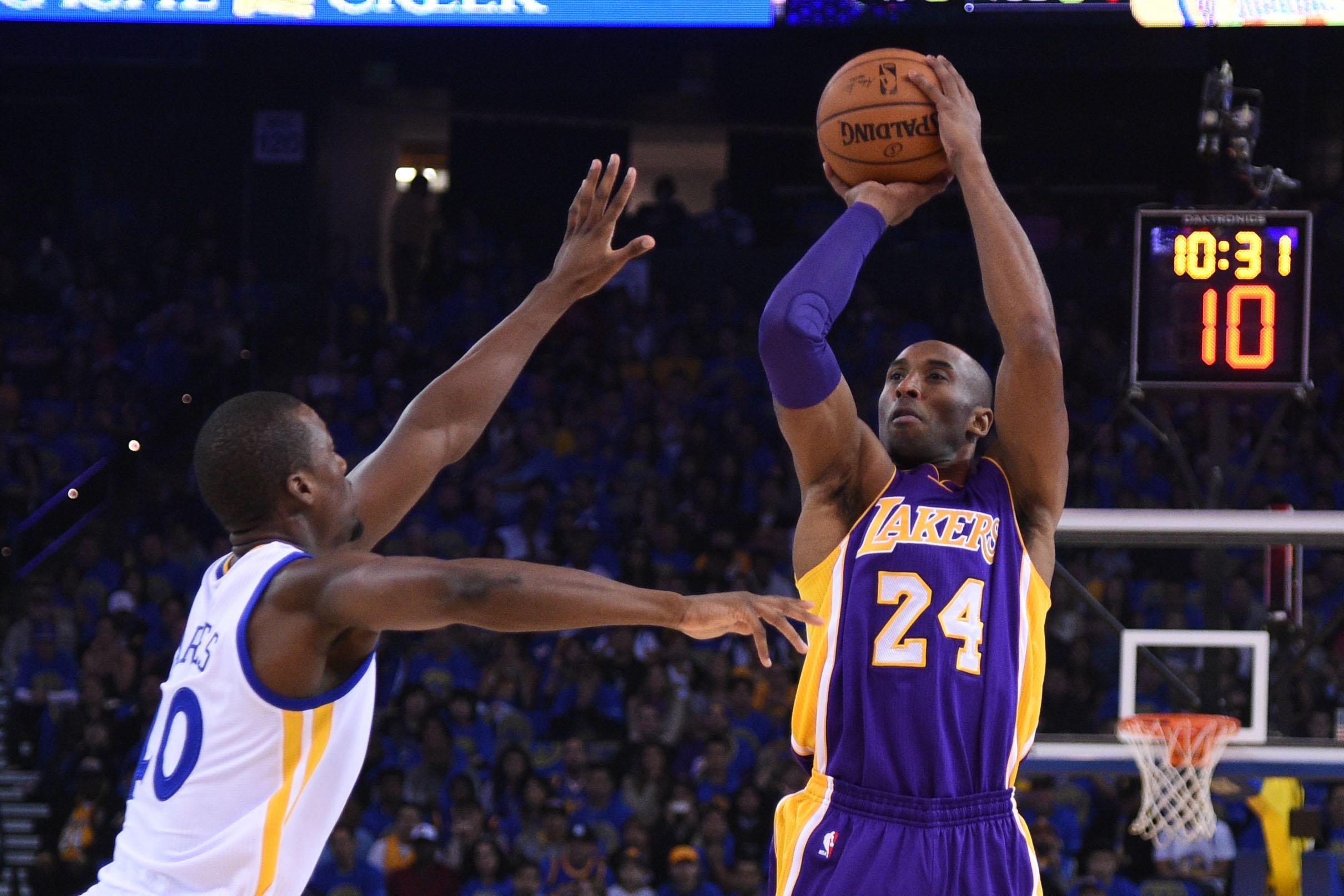
LeBron James’ decision to sign with the Philadelphia 76ers this offseason has reignited one of basketball’s most persistent arguments: whether a fifth championship, matching the career total of the late Kobe Bryant, would finally settle the long-running debate over which player deserves to rank above the other in NBA history.
James, now 41 and entering his 24th NBA season, currently holds four championships, four Finals MVP awards and four regular-season MVP awards across stints with the Cleveland Cavaliers, Miami Heat and Los Angeles Lakers. Bryant, who died in a 2020 helicopter crash, won five titles and two Finals MVPs across a 20-year career spent entirely with the Lakers. Should James capture a title in Philadelphia, he would match Bryant’s championship count for the first time, a milestone that has already prompted speculation about whether the numbers alone would be enough to shift public opinion.
The Case That Rings Alone Won’t Decide It
Several prominent voices in basketball have argued that championship totals, while significant, have never been the sole determining factor in how fans and analysts rank the sport’s greatest players. Former NBA guard Stephen Jackson, who played against both Bryant and James during their careers, has pointed instead to the intangible sense of fear Bryant instilled in opponents. “When you play against Kobe, it’s a fear. He is really trying to embarrass you,” Jackson said, describing an intensity he suggested set Bryant apart regardless of raw statistical comparisons.
Former NBA champion Stephen Johnson made a similar argument more directly tied to the ring count, saying that James falls short of Bryant specifically because of a difference in competitive temperament rather than accomplishment. “If LeBron had the Mamba Mentality, he would be the best ever,” Johnson said, adding, “LeBron would be in that conversation even more, but without that competitive fire, that Mamba Mentality, and without always dominating when he has the chance, he falls short. Playing to the level of your competition? That’s something Kobe never did.”
Why Some Analysts Say Bryant Is Overrated in the Discussion
Not everyone agrees that Bryant should automatically rank above James, ring count aside. Fox Sports analyst Nick Wright has argued that Bryant’s stylistic similarity to Michael Jordan has artificially inflated his standing in GOAT conversations, suggesting the debate has become less about identifying the greatest player objectively and more about identifying whoever most closely resembles Jordan. “It’s why Kobe is probably a touch, historically overrated, because he is the most similar to Michael Jordan,” Wright said, drawing a comparison to Tim Duncan, who also won five championships but with an additional Finals MVP and regular-season MVP compared with Bryant, yet rarely receives the same GOAT-conversation attention.
Basketball Hall of Famer Reggie Miller offered his own stack ranking of the three most commonly discussed players when asked directly on the “Dan Patrick Show,” placing Jordan first, Bryant second, and James third. “If we’re going stack-for-stack player – to me: MJ, Kobe, and then LeBron,” Miller said, while acknowledging the exercise remains inherently subjective.
The Statistical Case for James
James’ supporters typically point to a different set of measures entirely. He currently holds the NBA’s all-time career scoring record, with more than 40,000 points across over 1,500 games, a total that surpassed both Bryant and Jordan during his career. Shaquille O’Neal, who played alongside Bryant for years in Los Angeles, has acknowledged James’ statistical dominance directly, saying, “He already passed Kobe and Jordan in points… he’s gonna be creeping on Kareem [Abdul-Jabbar] too,” while separately suggesting James could ultimately surpass Jordan in the broader GOAT conversation depending on how his career continues to unfold.
Former NBA forward Carlos Boozer has taken a somewhat different angle, arguing that Bryant’s exclusion from many modern GOAT conversations, which have increasingly narrowed to a binary choice between Jordan and James, represents its own form of disrespect to Bryant’s legacy. “Everybody right now is trying to pick between Michael and LeBron as who the best player ever is, but Kobe was an animal,” Boozer said. “It’s hard to not include him in that conversation because he won five championships.”
Even Jordan and Bryant Weighed In Themselves
The debate has not been confined to outside commentators. Bryant himself addressed the comparison directly in a 2013 interview, acknowledging James’ dominance at the time even while maintaining his own place in the conversation. Jordan, for his part, has generally avoided direct rankings of his own but once remarked, “In terms of the dominance of the game of basketball, at this stage it’s LeBron,” a comment often cited by James’ supporters as evidence that even Jordan recognized James’ impact on the sport during his prime years.
Why a Fifth Ring May Not Fully Resolve the Question
Based on the range of arguments already circulating among former players, analysts and fans, a fifth championship for James in Philadelphia would likely shift the statistical comparison in his favor without necessarily ending the broader debate. Voices like Johnson and Jackson have grounded their preference for Bryant in intangible qualities, competitive temperament, perceived killer instinct, and stylistic resemblance to Jordan, factors that a fifth ring alone would not directly address. Meanwhile, analysts like Wright and O’Neal have suggested the numbers, scoring records, longevity and continued production well into his 40s, already favor James regardless of whether he adds another championship.
Should James help lead the 76ers to a championship this season, alongside teammates including Joel Embiid, Tyrese Maxey and Jaylen Brown, the moment would undoubtedly reignite the Bryant comparison in earnest, given the symbolic weight of James matching a number so closely associated with Bryant’s own legacy. Whether that milestone shifts public consensus meaningfully, however, will likely depend less on the ring count itself and more on how the broader basketball community continues weighing intangible qualities against measurable statistics, a balancing act that has defined the GOAT debate for years and shows no clear sign of resolving even as James’ career total continues to climb.

A moving prototype can reveal scale, atmosphere, traversal, and visual continuity long before a studio commits to final assets or a complete playable build.
Game worlds often exist in conversation long before they exist on screen. A creative director describes a flooded market beneath an elevated railway. A concept artist paints one memorable corner. A level designer draws routes through spaces that have no final architecture yet. Everyone may like the idea, but each person can still be imagining a different place.
This uncertainty is normal during pre-production. It can even be productive, because early ideas need room to change. The difficulty begins when a team must evaluate movement, scale, mood, and visual identity using only static images and written descriptions. A beautiful concept painting cannot show how long it takes to cross a square or whether an entrance feels important when approached from the player’s point of view.
A multimodal tool such as Seedance 2.0 can help turn those fragments into short moving studies. The purpose is not to generate a finished game environment. It is to make the team’s assumptions visible early enough to discuss, challenge, and revise them.
What a World Prototype Should Answer
When I hear “world prototype,” I do not think of a polished trailer. I think of a question expressed through moving images. How dense should the street feel? Does the player approach the fortress from below or arrive at its height? Is the forest inviting in daylight but difficult to read after sunset? These questions affect art, level design, animation, sound, and narrative.
A useful prototype should be narrow enough to evaluate. One clip might explore how architecture frames the path toward a landmark. Another could test the contrast between a safe settlement and the terrain outside it. A third might examine whether a vehicle makes the world feel expansive or merely empty.
Seedance 2.0 is most practical here when the team separates exploration from approval. Generated studies can reveal possibilities, but they should not quietly become final design decisions. Someone still needs to identify what the clip proves, what remains uncertain, and which details are temporary.
I would add a short question to every prototype before showing it to the team. That label changes the review from “Do you like this?” to “Does this approach make the central tower readable from the lower district?” Specific questions lead to specific feedback.
Assembling a Shared Visual Vocabulary
World development usually produces many references: character sketches, material samples, location photographs, lighting studies, interface mockups, and clips that demonstrate movement or weather. The challenge is not collecting more inspiration. It is agreeing on which references define the project and which are only temporary sparks.
I would prepare a compact visual kit for each prototype. A few images establish architecture and materials. One character or object provides a sense of scale. A motion reference describes the camera or a recurring environmental action. An audio fragment can suggest whether the place feels crowded, mechanical, exposed, or calm.
Because Seedance 2.0 accepts different reference types, the team can assign a clearer role to each source. The architecture may come from one image, the atmosphere from another, and the forward camera movement from a short video. A written instruction then explains the desired relationship instead of attempting to describe the whole world from nothing.
Conflicting references should be removed before generation. If one image suggests monumental stone construction and another shows lightweight modular structures, the output may blend them without understanding the design reason behind either choice. Curating the input is part of designing the world.
Testing Scale Through Motion
Scale is difficult to judge in a still image. A structure can look enormous until a camera moves through it too quickly. A narrow alley can feel intimate in a painting but become inconvenient when imagined as a traversal route. Motion exposes these contradictions.
For an early study, I might hold the environment constant and create several approaches to the same landmark. One begins at ground level among market stalls. Another arrives across rooftops. A third follows a vehicle along an outer wall. The building has not changed, but its relationship to the player has.
Camera references can help Seedance 2.0 express these approaches without requiring the prompt to describe every curve and acceleration. The resulting clips are not measurements, and they cannot replace a blockout inside a game engine. They are useful because they show how a route might feel before the team spends time constructing it.
Once a direction seems promising, level designers can translate it into actual dimensions and playable space. The moving study becomes a conversation starter for the blockout, not a substitute for one.
Exploring Atmosphere as a System
Atmosphere is more than color grading. It comes from light, weather, movement, sound, density, and the behavior of objects in the scene. A windy location should affect fabric, vegetation, particles, and perhaps the way characters move. Rain changes surfaces and visibility, not only the sky.
I find it helpful to prototype one environmental rule at a time. If the world is defined by constant ashfall, the first study should show how ash affects depth, silhouettes, and light. If machinery never stops, the prototype should explore repeated motion and sound rather than adding mechanical decoration to every wall.
Seedance 2.0 can combine visual and audio references, making it possible to consider atmosphere as an audiovisual experience. A temporary soundscape may reveal that a visually busy space needs quieter movement, or that a sparse landscape feels convincing only when distant activity is audible.
These studies are especially useful for comparing states of the same location. Morning and night, calm and storm, occupied and abandoned, or safe and threatened can be developed from a common foundation. The team can then decide which elements must remain recognizable as the world changes.
Checking Continuity Across Locations
A game world can contain striking individual areas and still feel disconnected. The problem often appears at the boundaries: a material language disappears, geography becomes unclear, or the transition between cultures and climates happens without visual preparation.
Short transition studies can expose that issue. Instead of generating another heroic view of a destination, I would explore the road leaving one region and entering the next. What changes first: vegetation, architecture, sound, weather, or population density? A believable transition rarely changes everything at the same moment.
Maintaining consistent references in Seedance 2.0 can help the team carry recurring shapes, colors, costumes, or props across several clips. Still, continuity requires deliberate direction. If a symbol belongs to a faction, the team should define where it appears, how it changes, and where it should be absent.
Reviewing transition clips side by side is often more informative than reviewing isolated beauty shots. It encourages the team to think about the world as a connected journey rather than a portfolio of locations.
Prototyping Encounters Without Final Animation
World design becomes easier to evaluate when characters do something inside it. A marketplace can look convincing while remaining unclear as a playable space. Showing a character moving through the crowd, avoiding an obstacle, or reacting to a sudden event reveals whether the environment supports readable action.
These encounter studies do not need final combat systems or polished performances. Their job is to explore staging. Where does danger enter the frame? Can the player understand the source of the threat? Does the environment provide cover, elevation, or a reason to change direction?
Motion references can give Seedance 2.0 a clearer indication of the intended action, while character and location images establish visual continuity. The output may help narrative, animation, and level-design teams discuss the same encounter before their individual work becomes expensive to revise.
Generated action should be treated carefully. If movement is physically confusing or an object behaves inconsistently, that problem should be noted rather than interpreted as an intentional mechanic. The prototype is evidence for discussion, not proof that the design already works.
Keeping Prototypes Separate from Promises
A moving concept can appear more finished than it really is. That makes it persuasive inside a studio, but it also creates risk. Viewers may assume that every creature, environment, and action shown in the clip has been approved and can be reproduced in the final game.
I would label prototypes clearly with their purpose, date, source references, and unresolved questions. If a clip is shared outside the immediate team, it should be obvious that the material represents exploration. This protects both the production schedule and the people making difficult technical decisions later.
Rights and permissions matter as well. References should come from approved internal assets, licensed sources, or material the team is authorized to use. A generation workflow does not erase the ownership or consent requirements attached to images, footage, audio, or recognizable characters.
Teams looking for older project access may also benefit from the service’s explanation of the transition from Seedance2.ai to Seevio.ai. Recording the current platform address in production documentation helps prevent broken routines when prototypes are revisited months later.
Turning Exploration into Production Decisions
A prototype creates value only when the team captures what it learned. After a review, I would record which visual rule was accepted, which question remains open, and what the next discipline needs to test. A promising camera approach may become guidance for level blockout. An atmospheric study may define lighting targets. A failed encounter can reveal that the space needs a clearer landmark.
Seedance 2.0 can accelerate the creation of these studies, but speed should not encourage endless variation. Once a prototype answers its question, the team should move the decision into concept art, engine work, animation tests, or whichever production stage can validate it more precisely.
The strongest use of Seedance 2.0 in game development is therefore not automatic world building. It is shared imagination made visible. Designers can see whether they are describing the same place, challenge ideas while they are still flexible, and enter production with a clearer understanding of what the world should feel like.
A game world eventually has to function under real rules, real hardware constraints, and real player behavior. Moving prototypes cannot solve those challenges. They can, however, help a team choose which version of the world is worth building before the cost of answering that question becomes much higher.


Seeking Alpha’s transcripts team is responsible for the development of all of our transcript-related projects. We currently publish thousands of quarterly earnings calls per quarter on our site and are continuing to grow and expand our coverage. The purpose of this profile is to allow us to share with our readers new transcript-related developments. Thanks, SA Transcripts Team

When Damian Creamer describes the companies he has built, he reaches for a phrase that sounds like a joke until you do the math. “We’re a 25 year overnight success,” he said in a recent Ideamensch interview, “and that only happens when you stay obsessed long enough to earn it.”
The math checks out. Creamer founded Primavera Online School in 2001, when online education was barely a category, and built StrongMind into a comprehensive K-12 learning ecosystem serving online schools and homeschool families. This June, Primavera announced that well over 1,000 students are expected to graduate in its Class of 2026, the latest cohort from a school that has served hundreds of thousands of Arizona students over a quarter century.
Twenty-five years is long enough to make every mistake, and Creamer is unusually candid about having made them. What follows are the leadership lessons he says the journey actually taught him, in his own words.
Lesson One: Make Your Important Decisions Before 2 P.M.
Start with the most concrete habit in Creamer’s playbook because it reveals how he thinks about a CEO’s job. He treats his own judgment as a finite resource and budgets it like one.
“I aim to make all important decisions by 2pm,” he says. “That’s intentional. Decision fatigue is real, and I want my best thinking going into the choices that matter most. After that, the day is about execution, follow-ups, and clearing blockers.”
The structure around that deadline is deliberate. Mornings start with coffee and a quick scan of what actually needs his attention, followed by aggressively protected focus time for strategy, product direction, and hard decisions. The gym is non-negotiable, in his words as much about mental clarity as physical health. By late morning he is in meetings where alignment happens, and by early afternoon the deciding is done.
The underlying principle scales beyond calendars: “Less noise, more signal. Fewer meetings, better decisions.” Most executives measure themselves by how much they process. Creamer measures himself by the quality of a small number of choices, and engineers his day so those choices get his best hours rather than his leftovers.
Lesson Two: Trust Your Own Instincts, Because Someone Has to Decide
The habit of decisive leadership did not come naturally. Asked about his biggest career failure, Creamer does not point to a product or a deal. He points inward.
“Early in my career, one of my biggest failures was not trusting myself to make decisions. I deferred too often to others, especially in moments where I already had the instincts but lacked the confidence to act on them. Letting others call the shots felt safer at the time, but it slowed momentum and diluted ownership,” he says.
The fix was not a tactic. “I overcame it by doing a lot of internal work, building self-trust, strengthening boundaries, and getting honest about where I was giving my power away. Confidence didn’t come from external validation. It came from making decisions, owning the outcomes, and learning quickly when things didn’t go as planned.”
The lesson he distills from it is the closest thing to a leadership thesis he offers: “Leadership requires conviction. You can listen deeply and stay open, but at the end of the day, someone has to decide.”
It shows up in his advice to his younger self, too, which begins: “I’d tell my younger self to listen to his intuition because it’s usually right.” For founders in the habit of outsourcing conviction, to boards, to consultants, to whoever spoke last, Creamer’s experience is a warning that deference can feel like humility while functioning as abdication.
Lesson Three: Stay Obsessed With One Problem Long Enough to Earn Results
Creamer’s “25 year overnight success” line comes from his answer to a question about business ideas, and his full answer is a quiet argument against the way most people start companies.
“Ideas are a dime a dozen,” he says. “I would start with one painfully annoying problem and let it run your life. Seriously. Find something that bothers people so much they complain about it, then become obsessed with fixing it. Businesses don’t fail because the idea is bad. They fail because the founder gets distracted, bored, or moves on too quickly.”
His own career is the case study. The problem that has run Creamer’s life since 2001 is the mismatch between how students actually learn and how school is structured, students who work, students who fall behind, students the traditional classroom loses. Primavera was one answer to that problem. StrongMind, with its AI-powered personalization platform, is a second, deeper answer to the same problem. Twenty-five years, two organizations, one obsession.
He is equally clear that obsession has to be paired with execution rather than romance. “Ideas are easy. Execution is everything,” he says. “I bring ideas to life by pressure-testing them early and grounding them in purpose. If an idea doesn’t clearly improve learning, empower people, or move the mission forward, it doesn’t make the cut.” And once something clears the bar: “I believe in shipping, learning, and iterating. Progress beats perfection every time. We launch, we listen, we adjust and we keep moving.”
Lesson Four: Great Work Requires Caring About the Outcome
Asked what he believes that almost nobody agrees with, Creamer offers something that sounds mild and turns out to be a hiring philosophy, a management philosophy, and a self-diagnosis tool in one sentence.
“I believe it’s really hard to do truly great work on something you don’t actually care about,” he says. He acknowledges the counterargument, that professionalism and discipline should be enough, and concedes you can produce acceptable work that way. “But great work is different. It requires extreme ownership, curiosity, and an extra level of thought that’s hard to fake. When people care about the outcome, the quality goes up, the thinking gets sharper, and accountability shows up naturally.”
The managerial implication is the interesting part: “I don’t see disengagement as a work ethic problem. I see it as an alignment problem. When there’s a real connection to the ‘why’, effort feels lighter and momentum follows. When there isn’t, even small tasks feel heavy, no matter how capable someone is.”
Most leaders treat a disengaged employee as a performance issue. Creamer treats it as a signal that the connection between the person and the purpose has broken, and that the fix is alignment rather than pressure. In mission-driven work like education, where the outcomes are children’s futures rather than quarterly numbers, that framing is less sentimental than it sounds. It is operational.
Where the Lessons Lead
Strip the four lessons down and they share a spine: protect your judgment, trust it, point it at one problem, and staff the work with people who care about solving it. None of it is flashy. All of it compounds, which is rather the point of a 25 year overnight success.
The compounding is visible in the results. Creamer’s own summary of what it produces came in Primavera’s Class of 2026 announcement: “Every graduate represents a student who found a path that worked for them, often after the traditional route did not. Watching well over a thousand students cross that finish line is the most rewarding part of what we do, and it is exactly why Primavera exists.”
A thousand graduates in a single year, from a school that did not exist until one founder decided a painfully annoying problem was worth several decades of his life. That is what obsession earns, eventually. Overnight.
Business
How a Decade of Preparation Helped Kumamoto Cut Earthquake Deaths From 277 to 38 in This Summer’s Quake

TOKYO — When a powerful earthquake struck Kumamoto Prefecture on July 28, matching the intensity of the region’s devastating 2016 quakes, the death toll climbed into the dozens rather than the hundreds, a stark contrast that officials and disaster experts say reflects a decade of deliberate investment in earthquake-resistant construction, search-and-rescue training and community preparedness.
The magnitude 7.1 earthquake struck near the coastal city of Uto in southern Kumamoto Prefecture at 4:27 p.m. local time, registering a maximum intensity of 7 on Japan’s seismic scale, the same top-tier reading recorded during the region’s catastrophic 2016 earthquake sequence. By Aug. 3, Kumamoto’s prefectural disaster response headquarters confirmed at least 38 deaths and more than 120 injuries, according to Nippon.com. While every loss of life represents a tragedy, the toll stood in sharp contrast to the 277 people killed across Kumamoto and neighboring Oita Prefecture during the twin earthquakes that struck the same region in April 2016.
A Grimly Familiar Setting, a Different Outcome
The 2016 Kumamoto earthquakes remain one of the deadliest disasters in modern Japanese history, with a magnitude 6.5 foreshock on April 14 followed just 28 hours later by a magnitude 7.3 mainshock, the first time in recorded history that two intensity-7 shocks struck the same area in such close succession. Of the 277 total deaths from that sequence, roughly 50 were direct casualties of the shaking itself, while the majority, 218 deaths, were classified as disaster-related, resulting from aggravated injuries or illness during the prolonged evacuation period that followed.
This summer’s earthquake brought its own significant destruction, including a partial collapse of the second floor of an Aeon Mall in Kashima Town, followed roughly an hour later by a suspected gas-leak explosion that tore through the complex, killing several people and leaving others missing. A chimney also collapsed at a Nippon Paper Industries mill in Yatsushiro, and widespread disruptions to water, electricity and transportation infrastructure were reported across the region, according to Nippon.com. Japanese Prime Minister Sanae Takaichi mobilized thousands of military personnel in the earthquake’s immediate aftermath, telling reporters at the time that “every second counts” in the search for survivors, according to CNN.
Lessons Written Into Buildings
Disaster researchers point to Kumamoto’s investment in earthquake-resistant and seismically isolated construction as one of the clearest structural factors behind the reduced death toll. At the time of the 2016 earthquakes, Kumamoto Prefecture already had 24 seismically isolated buildings, and engineering assessments found that those structures performed markedly better than conventional buildings during the shaking, according to reporting from Prism News. In the years since, the prefecture and local institutions used that evidence to push a broader shift toward earthquake-resistant and seismically isolated construction standards across the region, moving building codes and public investment from a reactive posture toward proactive risk reduction.
That structural evidence has also influenced disaster planning well beyond Japan’s borders. In the United States, Los Angeles adopted its Mandatory Soft Story Seismic Retrofitting Program in 2015, targeting vulnerable wood-frame buildings with weak ground floors, an effort that has since identified roughly 13,500 buildings across the city in need of similar retrofitting, according to Prism News, illustrating both the scale of earthquake risk in seismically active regions and the difficulty of comprehensively addressing it even with dedicated policy attention.
Training Locals for the First Critical Hours
Beyond construction standards, Kumamoto has spent the past decade building out community-level disaster response capacity, training residents directly in search-and-rescue techniques rather than relying solely on professional emergency responders to reach victims in the earliest, most critical hours after a major quake. Kumamoto University’s Kumamoto Earthquake Experience Project, known as KEEP, has delivered lectures and training sessions across Japan since its first workshop in July 2016, with recent activities including disaster preparedness training specifically for foreign residents living in Kumamoto City this year, according to the university.
Dr. Hisao Ogawa, president of Kumamoto University, reflected on the institution’s role in translating the trauma of 2016 into lasting institutional knowledge, describing how he returned to Kumamoto within days of the original disaster to work alongside medical teams providing emergency relief, including efforts to raise awareness about “economy-class syndrome,” a blood-clotting condition that affected residents forced to shelter in their vehicles for extended periods during the earlier crisis.
A Region Still Rebuilding Its Cultural Heritage
Even as Kumamoto’s disaster preparedness measures appear to have significantly reduced casualties in this summer’s earthquake, the region’s long recovery from 2016 remains far from complete. Kumamoto Castle, one of Japan’s most significant cultural landmarks, sustained extensive damage in the 2016 quakes, with all 13 of its buildings designated as Important Cultural Properties damaged and stone walls collapsing at approximately 50 separate locations, affecting nearly a third of the castle’s total stonework. The target date for completing the castle’s full restoration is not until fiscal year 2052, according to the Spiritual Japan Journal, underscoring just how long-term the rebuilding process for a major cultural landmark can stretch even under a well-resourced recovery effort.
Continued Seismic Risk Across the Region
Seismologists have cautioned that the underlying tectonic risk facing Kumamoto has not disappeared following this summer’s earthquake. According to Wikipedia’s summary of the event, researchers noted that while the July 28 rupture relieved seismic strain along one fault segment, it simultaneously added stress to adjacent segments, including the Yatsushiro and southwestern Hinagu segments further south, which researchers say carry a greater probability of rupturing in a future event potentially capable of producing a magnitude 7.3 earthquake and associated tsunami risk.
With search and recovery operations largely concluded and reconstruction efforts now beginning in earnest, Kumamoto’s experience this summer is likely to serve as a closely studied case study for disaster researchers and policymakers in other earthquake-prone regions worldwide. The prefecture’s decade-long investment in seismically resilient construction, community-based rescue training and institutional disaster knowledge offers a rare, direct before-and-after comparison, two earthquakes of comparable intensity striking the same region a decade apart, with the death toll from the more recent event coming in at roughly one-seventh the scale of the 2016 disaster, even as officials caution that continued vigilance remains necessary given the region’s ongoing seismic activity.

“AWS Certified AI Practitioner Early Adopter”I am a DevOps Engineer for a major, wholly owned subsidiary of a large-cap Fortune 500. I have been the primary driver of Anthropic-based tooling in our company’s division, and have successfully pushed for the division-wide integration of tools like Claude Code via AWS Bedrock. I am currently spearheading the implementation of AI-infrastructure in our division.I am a true subject-matter expert on the actual buildout, deployment, and maintenance of AI tools and applications. I have increasingly deep knowledge on the science behind generative AI systems as a result of first-hand experience with machine learning algorithms, model training, and model deployment.I contribute to Seeking Alpha as an outlet to share my AI and machine learning insights through an investment-focused lens.Closely associated with LL InsightsPer TipRanks (6/26/25) – 2 Year Timeframe#716 out of 31,463 Financial Bloggers #1,222 out of 41,143 experts
Analyst’s Disclosure: I/we have no stock, option or similar derivative position in any of the companies mentioned, and no plans to initiate any such positions within the next 72 hours. I wrote this article myself, and it expresses my own opinions. I am not receiving compensation for it (other than from Seeking Alpha). I have no business relationship with any company whose stock is mentioned in this article.
Seeking Alpha’s Disclosure: Past performance is no guarantee of future results. No recommendation or advice is being given as to whether any investment is suitable for a particular investor. Any views or opinions expressed above may not reflect those of Seeking Alpha as a whole. Seeking Alpha is not a licensed securities dealer, broker or US investment adviser or investment bank. Our analysts are third party authors that include both professional investors and individual investors who may not be licensed or certified by any institute or regulatory body.
PHILADELPHIA — WWE’s “SmackDown” rolled into Xfinity Mobile Arena on Friday night, building directly on the fallout from SummerSlam 2026 with the returns of Kevin Owens and Randy Orton and a surprise NXT call-up that closed the show on a high note.
The episode was headlined by a long-anticipated singles showdown between Charlotte Flair and Jade Cargill, a match that had been building since Cargill’s arrival in WWE but had never materialized as a one-on-one contest until Friday’s broadcast, delivering what recap coverage described as an “absolute banger” despite some botched spots along the way.
A Chaotic Main Event Closes the Show
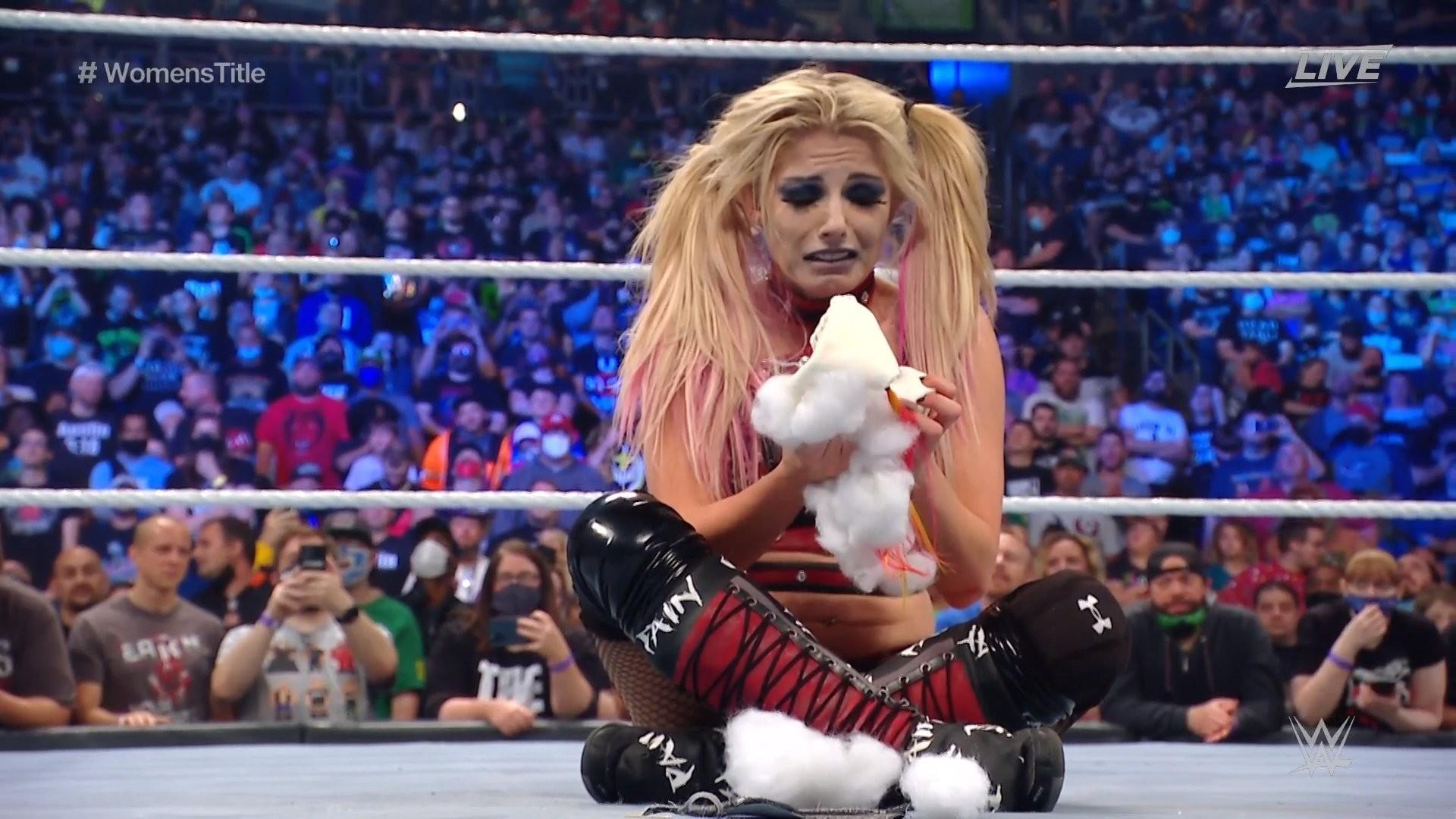
Flair and Cargill traded a physical, back-and-forth main event that saw Cargill hit a Black-Hole Slam, a sleeper hold and an avalanche Batista Bomb, while Flair countered with a Queen’s Boot, a German suplex and, most dramatically, a diving Natural Selection off the top rope. The match’s finish turned chaotic when Cargill’s allies, B-Fab and Michin, interfered to break up Flair’s Figure 8 submission attempt, prompting the returning Alexa Bliss to appear holding her signature Lilly doll before the arena lights cut out entirely.
When the lights returned, former NXT Champion Tatum Paxley had arrived, taking out both interfering competitors and clearing the way for Flair to hit a Sister’s Abigail DDT before finishing Cargill off. The debut immediately fueled speculation about a new alliance forming between Flair, Bliss and Paxley heading into the fall.
Punk and Rhodes Reignite Their Rivalry
The show’s opening segment picked up directly from SummerSlam, where CM Punk retained the Undisputed WWE Championship over Cody Rhodes after a surprise return from Randy Orton, who delivered an RKO to Rhodes before Punk finished him off with a Go To Sleep. On Friday, Rhodes opened “SmackDown” and pressed Punk on whether he had known in advance that Orton was returning to interfere in their SummerSlam match. Punk responded, “Say when,” setting the tone for a tense exchange that carried into Kevin Owens’ return later in the night.
Once Owens appeared, he directly confronted Punk over his continued arrogance, telling him, “You’re out here proving me right,” and later adding, “If it wasn’t for me you wouldn’t even be here right now.” Tension between the two nearly boiled over when Owens shoved Punk, prompting WWE SmackDown General Manager Nick Aldis to look on nervously from ringside. According to recap coverage, Owens has requested that his match against Punk take place on the Aug. 21 edition of “SmackDown” in Toronto.
Orton and Rhodes Finally Face Off
Later in the show, Orton made his first “SmackDown” entrance since WrestleMania, prompting an immediate confrontation with Rhodes. Orton explained that he had specifically asked to face the best version of Rhodes, but that in pushing him toward that peak, he had also drawn out Rhodes’ worst instincts. Rhodes fired back, telling Orton that with the WWE Championship no longer around his waist, he had no reason left to continue playing the role of a “good guy.” The heated exchange strongly suggested a program between the two former allies is being set up for the coming weeks.
Championship Storylines Continue to Develop
Elsewhere on the card, Baron Corbin retained the United States Championship against Trick Williams, while the Women’s Tag Team Championship saw Fatal Influence, made up of Lainey Reid and Fallon Henley, retain their titles in a match against new Women’s World Champion Chelsea Green and Tiffany Stratton. Notably, Green ate the pin in the loss during just her first match since winning the title, a booking decision that recap coverage suggested reflected poorly on how WWE has positioned the new champion so far. Green’s title win came after Rhea Ripley underwent knee surgery this week, forcing a change at the top of the women’s division; WWE has notably listed Green simply as champion without any interim designation on her official profile.
Green and Stratton are now set to face off for the U.S. Women’s Championship the following week, continuing a storyline that has also involved Jacy Jayne, who appeared in a managerial role during the segment rather than as an active competitor.
Other Notable Moments
Friday’s broadcast also featured a vignette from Shinsuke Nakamura, who remains locked in an ongoing feud with The Tongans, teasing that he would return with additional support rather than facing the group alone. Separately, Nikki Bella addressed her recent heel turn against Paige, framing her actions as part of a deliberate mission to make Paige’s life difficult going forward. Sami Zayn also factored into the night’s storytelling, interacting with both Owens and Punk at various points, fueling speculation that he could eventually reinsert himself into their developing rivalry. Notably, Gunther, who has recently moved from WWE’s Raw brand over to SmackDown, was absent from Friday’s card entirely, a choice recap coverage attributed to deliberate misdirection around his character rather than any behind-the-scenes issue.
Full Card Results
Charlotte Flair defeated Jade Cargill in the show’s main event. In the Women’s Tag Team Championship match, Fatal Influence, Lainey Reid and Fallon Henley, defeated challengers Tiffany Stratton and Chelsea Green to retain their titles. In the United States Championship match, Baron Corbin defeated Trick Williams to retain the title.
With Owens and Punk now set to collide in Toronto on Aug. 21, and the Orton-Rhodes rivalry appearing to be building toward a more concrete program, WWE’s “SmackDown” brand appears to be entering an extended stretch of storyline payoff following SummerSlam. Meanwhile, the debut of Tatum Paxley alongside the returning Alexa Bliss and established star Charlotte Flair opens a new storyline thread on the women’s side of the roster, one that fans and analysts will be watching closely in the coming weeks to see whether WWE fully capitalizes on the trio’s on-screen chemistry.

Finally, medals for France in open water swimming – Sports

Your Complete Guide to Dental Aesthetics in Istanbul

Apple TV’s Smartest Sci-Fi Thriller Is Officially One of Streaming’s Biggest Hits


-

 Politics6 days ago
Zack Polanski: an incitement to murder Nigel Farage?
-

 Crypto World7 days ago
MicroStrategy Post-Earnings CLARITY Act Push Could Add New Catalyst for Its Stock
-

 Crypto World6 days ago
Crypto PAC spending tops $2M in Michigan House race
-

 Business5 days ago
DTCR: Deleveraging And A Hedge Fund Collapse Point To A Possible AI Bottom
-

 Tech6 days ago
ESET tracks rise in malicious AI skills and adaptable malware
-

 Fashion20 hours ago
Frugal Friday’s Workwear Report: Cap-Sleeve Pointelle Crewneck Sweater
-
 Sports7 days ago
France Cricket implodes: letters hidden in a drawer and a board at war
-

 Crypto World6 days ago
XRP Ledger urges node upgrade after manifest flood
-

 News Videos6 days ago
Financial Crash Expert: The 90-Day Collapse Timeline They Are Desperately Hiding.
-

 Sports2 days ago
Jordan Coyle & Cordiamo take Laya Arena Stakes at RDS
-

 Fashion15 hours ago
Weekend Open Thread: Mattifying Sunscreen
-
 Crypto World4 days ago
US Tech Stocks See Largest 5-Week Inflow in History: Can Nasdaq Break Its Downtrend?
-
 NewsBeat6 days ago
Tourist plane on sightseeing flight in Peru crashes into a field, killing all 13 people on board
-
 Business2 days ago
US stocks: Dow closes at record on Mideast optimism; SpaceX, AMD drag Nasdaq
-

 NewsBeat7 days ago
Arsenal reach full agreement with Newcastle over Bruno Guimaraes transfer | Football
-

 Tech6 days ago
Page Not Found | WIRED
-
 NewsBeat6 days ago
Bikini-clad Jennifer Aniston, 57, kisses hypnotist boyfriend Jim Curtis as they enjoy a romantic getaway aboard a luxury yacht in Spain
-

 Politics2 days ago
Reform UK And Greens Sink To Lowest Favourability Ratings To Date
-

 Crypto World4 days ago
Polymarket targets $20 billion valuation as competition heats up in prediction market sector
-

 Business3 days ago
Nvidia Stock Climbs 2.5% as Chip Sector Rally Builds Ahead of AMD Earnings, Nvidia’s Own Report Looms
You must be logged in to post a comment Login