
Business
Prototyping Worlds Before Production Begins


A moving prototype can reveal scale, atmosphere, traversal, and visual continuity long before a studio commits to final assets or a complete playable build.
Game worlds often exist in conversation long before they exist on screen. A creative director describes a flooded market beneath an elevated railway. A concept artist paints one memorable corner. A level designer draws routes through spaces that have no final architecture yet. Everyone may like the idea, but each person can still be imagining a different place.
This uncertainty is normal during pre-production. It can even be productive, because early ideas need room to change. The difficulty begins when a team must evaluate movement, scale, mood, and visual identity using only static images and written descriptions. A beautiful concept painting cannot show how long it takes to cross a square or whether an entrance feels important when approached from the player’s point of view.
A multimodal tool such as Seedance 2.0 can help turn those fragments into short moving studies. The purpose is not to generate a finished game environment. It is to make the team’s assumptions visible early enough to discuss, challenge, and revise them.
What a World Prototype Should Answer
When I hear “world prototype,” I do not think of a polished trailer. I think of a question expressed through moving images. How dense should the street feel? Does the player approach the fortress from below or arrive at its height? Is the forest inviting in daylight but difficult to read after sunset? These questions affect art, level design, animation, sound, and narrative.
A useful prototype should be narrow enough to evaluate. One clip might explore how architecture frames the path toward a landmark. Another could test the contrast between a safe settlement and the terrain outside it. A third might examine whether a vehicle makes the world feel expansive or merely empty.
Seedance 2.0 is most practical here when the team separates exploration from approval. Generated studies can reveal possibilities, but they should not quietly become final design decisions. Someone still needs to identify what the clip proves, what remains uncertain, and which details are temporary.
I would add a short question to every prototype before showing it to the team. That label changes the review from “Do you like this?” to “Does this approach make the central tower readable from the lower district?” Specific questions lead to specific feedback.
Assembling a Shared Visual Vocabulary
World development usually produces many references: character sketches, material samples, location photographs, lighting studies, interface mockups, and clips that demonstrate movement or weather. The challenge is not collecting more inspiration. It is agreeing on which references define the project and which are only temporary sparks.
I would prepare a compact visual kit for each prototype. A few images establish architecture and materials. One character or object provides a sense of scale. A motion reference describes the camera or a recurring environmental action. An audio fragment can suggest whether the place feels crowded, mechanical, exposed, or calm.
Because Seedance 2.0 accepts different reference types, the team can assign a clearer role to each source. The architecture may come from one image, the atmosphere from another, and the forward camera movement from a short video. A written instruction then explains the desired relationship instead of attempting to describe the whole world from nothing.
Conflicting references should be removed before generation. If one image suggests monumental stone construction and another shows lightweight modular structures, the output may blend them without understanding the design reason behind either choice. Curating the input is part of designing the world.
Testing Scale Through Motion
Scale is difficult to judge in a still image. A structure can look enormous until a camera moves through it too quickly. A narrow alley can feel intimate in a painting but become inconvenient when imagined as a traversal route. Motion exposes these contradictions.
For an early study, I might hold the environment constant and create several approaches to the same landmark. One begins at ground level among market stalls. Another arrives across rooftops. A third follows a vehicle along an outer wall. The building has not changed, but its relationship to the player has.
Camera references can help Seedance 2.0 express these approaches without requiring the prompt to describe every curve and acceleration. The resulting clips are not measurements, and they cannot replace a blockout inside a game engine. They are useful because they show how a route might feel before the team spends time constructing it.
Once a direction seems promising, level designers can translate it into actual dimensions and playable space. The moving study becomes a conversation starter for the blockout, not a substitute for one.
Exploring Atmosphere as a System
Atmosphere is more than color grading. It comes from light, weather, movement, sound, density, and the behavior of objects in the scene. A windy location should affect fabric, vegetation, particles, and perhaps the way characters move. Rain changes surfaces and visibility, not only the sky.
I find it helpful to prototype one environmental rule at a time. If the world is defined by constant ashfall, the first study should show how ash affects depth, silhouettes, and light. If machinery never stops, the prototype should explore repeated motion and sound rather than adding mechanical decoration to every wall.
Seedance 2.0 can combine visual and audio references, making it possible to consider atmosphere as an audiovisual experience. A temporary soundscape may reveal that a visually busy space needs quieter movement, or that a sparse landscape feels convincing only when distant activity is audible.
These studies are especially useful for comparing states of the same location. Morning and night, calm and storm, occupied and abandoned, or safe and threatened can be developed from a common foundation. The team can then decide which elements must remain recognizable as the world changes.
Checking Continuity Across Locations
A game world can contain striking individual areas and still feel disconnected. The problem often appears at the boundaries: a material language disappears, geography becomes unclear, or the transition between cultures and climates happens without visual preparation.
Short transition studies can expose that issue. Instead of generating another heroic view of a destination, I would explore the road leaving one region and entering the next. What changes first: vegetation, architecture, sound, weather, or population density? A believable transition rarely changes everything at the same moment.
Maintaining consistent references in Seedance 2.0 can help the team carry recurring shapes, colors, costumes, or props across several clips. Still, continuity requires deliberate direction. If a symbol belongs to a faction, the team should define where it appears, how it changes, and where it should be absent.
Reviewing transition clips side by side is often more informative than reviewing isolated beauty shots. It encourages the team to think about the world as a connected journey rather than a portfolio of locations.
Prototyping Encounters Without Final Animation
World design becomes easier to evaluate when characters do something inside it. A marketplace can look convincing while remaining unclear as a playable space. Showing a character moving through the crowd, avoiding an obstacle, or reacting to a sudden event reveals whether the environment supports readable action.
These encounter studies do not need final combat systems or polished performances. Their job is to explore staging. Where does danger enter the frame? Can the player understand the source of the threat? Does the environment provide cover, elevation, or a reason to change direction?
Motion references can give Seedance 2.0 a clearer indication of the intended action, while character and location images establish visual continuity. The output may help narrative, animation, and level-design teams discuss the same encounter before their individual work becomes expensive to revise.
Generated action should be treated carefully. If movement is physically confusing or an object behaves inconsistently, that problem should be noted rather than interpreted as an intentional mechanic. The prototype is evidence for discussion, not proof that the design already works.
Keeping Prototypes Separate from Promises
A moving concept can appear more finished than it really is. That makes it persuasive inside a studio, but it also creates risk. Viewers may assume that every creature, environment, and action shown in the clip has been approved and can be reproduced in the final game.
I would label prototypes clearly with their purpose, date, source references, and unresolved questions. If a clip is shared outside the immediate team, it should be obvious that the material represents exploration. This protects both the production schedule and the people making difficult technical decisions later.
Rights and permissions matter as well. References should come from approved internal assets, licensed sources, or material the team is authorized to use. A generation workflow does not erase the ownership or consent requirements attached to images, footage, audio, or recognizable characters.
Teams looking for older project access may also benefit from the service’s explanation of the transition from Seedance2.ai to Seevio.ai. Recording the current platform address in production documentation helps prevent broken routines when prototypes are revisited months later.
Turning Exploration into Production Decisions
A prototype creates value only when the team captures what it learned. After a review, I would record which visual rule was accepted, which question remains open, and what the next discipline needs to test. A promising camera approach may become guidance for level blockout. An atmospheric study may define lighting targets. A failed encounter can reveal that the space needs a clearer landmark.
Seedance 2.0 can accelerate the creation of these studies, but speed should not encourage endless variation. Once a prototype answers its question, the team should move the decision into concept art, engine work, animation tests, or whichever production stage can validate it more precisely.
The strongest use of Seedance 2.0 in game development is therefore not automatic world building. It is shared imagination made visible. Designers can see whether they are describing the same place, challenge ideas while they are still flexible, and enter production with a clearer understanding of what the world should feel like.
A game world eventually has to function under real rules, real hardware constraints, and real player behavior. Moving prototypes cannot solve those challenges. They can, however, help a team choose which version of the world is worth building before the cost of answering that question becomes much higher.

Business
Will LeBron James Be the Sixers Top Offensive Option in 2027? Insiders Weigh In on the New-Look Roster
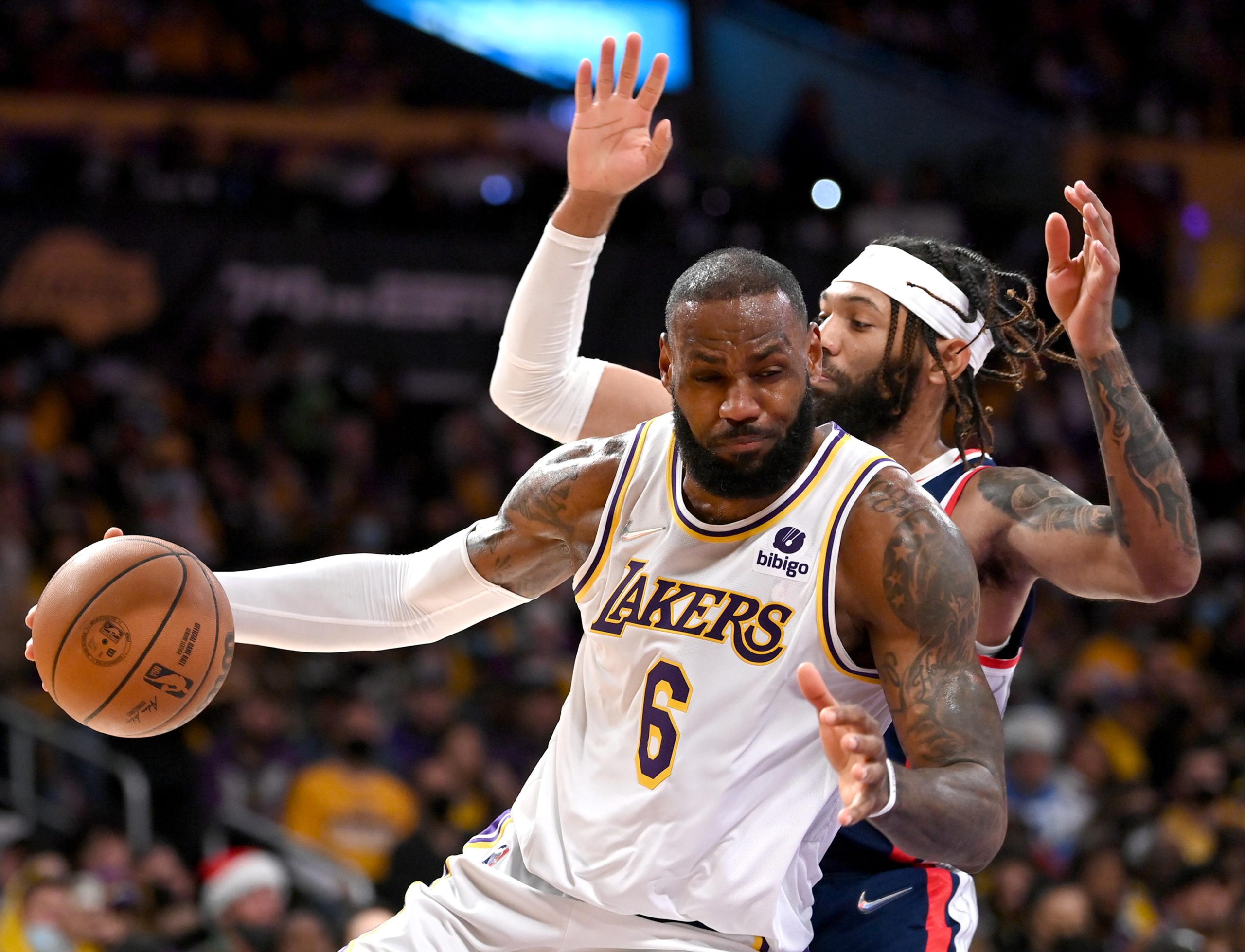
PHILADELPHIA — LeBron James is entering his 23rd NBA season with a new team, a new city and a question that will shape the entire Philadelphia 76ers season: Who actually runs this offense?
James signed a two-year, $8 million contract with the 76ers in late July, a stunning pay cut from the roughly $52.6 million he made last season with the Los Angeles Lakers, as he chases a fifth championship in what he has called his final chapter in the league. He joins a roster that already features center Joel Embiid, All-NBA guard Tyrese Maxey and newly acquired forward Jaylen Brown, along with rising second-year wing VJ Edgecombe — giving Philadelphia arguably its deepest collection of scoring talent in franchise history, and setting up a genuine competition for touches once the season tips off.
Based on how James, Brown and the Sixers’ front office have described their plans, the early answer appears to be that no single player will function as a traditional No. 1 option — least of all James, who is expected to slide into more of a playmaking role rather than serve as Philadelphia’s primary scorer.
LeBron as playmaker, not primary scorer
According to reporting from Yardbarker, Brown will have to embrace not being the No. 1 option, with James expected to be Philadelphia’s playmaking point guard, setting up Maxey and Brown in off-ball scoring situations. That framing lines up with how James performed last season in Los Angeles, where he averaged 20.9 points, 7.2 assists and 6.1 rebounds across 60 games while increasingly deferring to Luka Doncic and Austin Reaves late in games.
ESPN’s Vincent Goodwill noted that James has already shown in Los Angeles that he can take a back seat as a primary scoring option, playing behind Doncic and Reaves in small sample sizes. That adaptability is central to how the Sixers envision deploying him — less as a bucket-getter and more as a connector who can simplify the game for a roster loaded with players used to shouldering heavy offensive burdens.
A crowded hierarchy at the top
The more pressing question inside the organization may not be about James specifically, but about how four accomplished offensive players — James, Brown, Maxey and Embiid — divide shots and shot-creation responsibility. Brown arrives in Philadelphia coming off a season in which he was, according to ESPN, second in the NBA in usage rate while playing as Boston’s No. 1 option in place of an injured Jayson Tatum, with Maxey ranking 15th in usage over that same stretch.
Analysts at NBA Analysis Network argued that the arrangement is designed specifically to avoid overloading any one player: the starting lineup “has more than enough offense and versatility to make sure that no one player is put in a position where they get overwhelmed due to their responsibilities,” with Maxey now able to defer to two elite on-ball options in Brown and James, while Embiid may be able to manage his workload more effectively knowing the two new starters can absorb his offensive load.
Yardbarker’s reporting suggested that if Brown performs at the level he did in Boston — where he averaged 28.7 points, 6.9 rebounds and 5.1 assists — he, rather than James, may end up as Philadelphia’s primary offensive option as the team leans on merit rather than reputation to sort out its pecking order.
Coach Nick Nurse faces a delicate balancing act
Sixers head coach Nick Nurse has been candid about the challenge of establishing a clear hierarchy among four players accustomed to being featured scorers. Speaking to ESPN, Nurse laid out the questions he’s still working through: “What’s their belief when s— gets tough? What sets are they running? Who’s the leader? Does Jaylen Brown become the vocal leader? Is it Bron? What about Maxey, is he one of the guys?” Nurse called those interpersonal dynamics “more important than the physical stuff” as training camp approaches.
One Eastern Conference assistant coach told ESPN he expects the group to sort out roles organically, saying, “They all know they’re going to have to sacrifice,” and predicting that “the respect for each other’s individual games is already established, and the crown will be passed around and understood.”
Why Maxey still matters most to the plan
Despite the star power added around him, Maxey remains central to Philadelphia’s identity. He was reportedly cited directly by James’ agent, Rich Paul, as one of the primary factors in James’ decision to sign with the Sixers, given the two players’ existing relationship through Klutch Sports. Maxey led the NBA in minutes last season while averaging 28.3 points, 4.1 rebounds and 6.6 assists, and the organization has built its recent identity around his development as its floor general.
Health, not hierarchy, may decide the answer
Ultimately, James’ actual offensive role in 2027 may hinge less on strategy and more on availability. The 76ers are expected to load-manage both Embiid, now 32, and James, who will turn 42 during the season, given Embiid’s injury history and James having played 60 games last season in Los Angeles. If either or both players miss extended stretches, Brown and Maxey would almost certainly assume larger offensive burdens by necessity rather than design.
For now, no formal statement from the Sixers or head coach Nick Nurse has definitively named a first offensive option heading into 2026-27. Based on available reporting, the most likely outcome is not a single primary scorer, but a rotating offensive hierarchy that shifts game to game — with James positioned as facilitator first, scorer second, at least to start the season.

Datadog: Best Of Breed For Multiple Reasons

NioCorp: Cautious About The Financing Optionality And Not The 2022 Project-NPV

Zevia: The Fanbase Nobody Can Find

Shopify: The Next Era Of E-Commerce
Business
Top 10 Countries With the Best Views of the Rare August 2026 Total Solar Eclipse, According to Experts

MADRID — The moon’s shadow is about to make a rare loop over the top of the world, and when it comes down, it will bring the first total solar eclipse to mainland Europe in nearly three decades.
The eclipse, set for Wednesday, Aug. 12, will trace a narrow band of totality that begins over Russia’s remote Taymyr Peninsula, arcs across the North Pole, sweeps down through Greenland and Iceland, and finally curves into northern Spain before exiting over the Balearic Islands, according to eclipse-tracking site Mappr. Only a handful of countries will fall directly inside that path, but tens of millions more across three continents will get a partial view. Here are the 10 countries best positioned to witness the spectacle.
1. Spain
Spain is shaping up to be the marquee destination for this eclipse, and for good reason. According to Time Out, Spain is expected to be the best place to watch largely because the eclipse occurs right around sunset there, paired with more reliably clear weather conditions than the rest of the path. The path of totality crosses northern and eastern Spain, and cities like León and Burgos, though not directly on the centerline, are still positioned to see totality lasting close to two minutes. For Spain, this marks the country’s first total solar eclipse in more than a hundred years.
Dr. Doug Duncan, an astronomer at the University of Colorado and former director of the Fiske Planetarium, is leading a sold-out trip to Zaragoza for the event. Duncan cautioned that “the biggest wrong idea about eclipses is that if you’ve seen a 90% eclipse, you’ve seen most of the show,” underscoring how different a brush with totality is from a merely partial view.
2. Iceland
Iceland offers eclipse-chasers a dramatic Arctic backdrop, with the best views expected around western Iceland, particularly in Reykjavík, Reykjanes, Snæfellsnes and the Westfjords, according to Time Out. Timeanddate.com estimates the eclipse there will begin around 4:42 p.m. local time, reach totality at 5:43 p.m., and last roughly three minutes from start to finish, with totality itself lasting close to a minute in Reykjavík. Iceland’s sparse population also means low light pollution, which should sharpen the view. A four-day Iceland Eclipse music festival is being held in the country to mark the occasion.
3. Greenland
Greenland sits squarely in the path of totality, with the eclipse crossing its remote eastern reaches in the late afternoon or early evening, according to NASA. Along with Russia and the North Atlantic, the area near Greenland’s centerline is expected to see some of the longest totality of the entire event — up to roughly 2 minutes and 18 seconds, the maximum duration anywhere along the path, according to eclipse-mapping site Mappr.
4. Portugal
A small corner of northwestern Portugal falls within the path of totality, giving the country a brief but genuine shot at full darkness before sunset. NASA notes the sun won’t be completely eclipsed there until late evening, just before it dips below the horizon — creating what several outlets have described as the potential for a striking “sunset eclipse.”
5. Russia
The eclipse technically begins over Russian territory, specifically the remote and largely uninhabited Taymyr Peninsula in Siberia. According to eclipse-guide site NationalEclipse.com, totality begins there at an unusual local time near midnight, since the sun never fully sets in that region during summer months near the Arctic Circle. While population in the immediate path is minimal, it remains one of only a handful of nations where totality is technically visible from land.
6. Morocco
Northwestern Africa is positioned to catch a deep partial eclipse as the moon’s shadow exits toward the Atlantic. NASA lists northwestern Africa among the regions that will experience a substantial partial eclipse, giving Morocco some of the best non-totality views on the African continent.
7. United Kingdom
Much of the United Kingdom will see a large partial eclipse, according to Mappr, with the depth of the eclipse increasing the closer viewers are to the path of totality passing just to the south. Skywatchers across England, Scotland and Wales are expected to see the moon take a significant bite out of the sun during the afternoon hours.
8. France
France sits close enough to the path to see a substantial partial eclipse as well, with Mappr noting that France, the British Isles and the rest of Iberia will see a large partial eclipse that tapers off further south and east across the continent.
9. Canada
On the North American side of the Atlantic, NASA notes that most of Canada will experience a partial solar eclipse that day, making it one of the best-positioned countries in the Western Hemisphere to catch a glimpse, even without reaching totality.
10. United States
Parts of the northern United States, stretching from Alaska to North Carolina, are expected to see a partial solar eclipse as well, according to NASA — giving American skywatchers a reason to look up, even though the path of full totality remains firmly on the other side of the Atlantic.
A rare and narrow window
Regardless of location, experts stress the path of totality itself is remarkably thin — only about 290 kilometers wide, according to Mappr — meaning travelers hoping to experience full darkness need to be precisely positioned within that band, not simply in a country the path technically touches. Everywhere outside the path, and during the partial phases even within it, eclipse safety experts emphasize that certified eclipse glasses meeting the ISO 12312-2 standard are required; ordinary sunglasses, no matter how dark, do not provide adequate protection. Only during the brief seconds or minutes of full totality is it safe to look at the eclipsed sun without protective eyewear.
For those weighing where to plant themselves this August, meteorologists at Eclipsophile note that roughly two-thirds of the eclipse’s path runs over open ocean, making land-based viewing sites in Spain and its islands, along with Iceland, the most weather-reliable bets for anyone chasing a clear view of totality.

European stocks draw investors as earnings and growth strengthen
Business
Meghan Markle Accused by Former Royal Butler of Trying to ‘One-Up’ Kate Middleton With Birthday Video

LONDON — A birthday video posted by Meghan Markle has drawn criticism from a former royal household staffer, who says the Duchess of Sussex’s latest social media posts closely mirror the style used by Prince William and Kate Middleton, the Prince and Princess of Wales.
Markle, who turned 45 on Aug. 4, shared a series of personal clips and photos on Instagram documenting her celebration. One image showed her jumping into a swimming pool while holding a bunch of birthday balloons. Other footage, captured by Prince Harry, showed her dancing in the kitchen of the couple’s Montecito, California, home and placing small party hats on the family’s dogs.
A former butler weighs in
Grant Harrold, who served as a butler to King Charles for seven years and also looked after William, Catherine and Harry during stays at Highgrove House, said the tone and format of Markle’s video reminded him of content the Waleses have posted in recent months.
Speaking to Showbiz Cheat Sheet through the betting analysis site OLBG, Harrold said: “This video of Meghan reminded me of how William and Kate have posted fun videos of them on holiday to mark special occasions and say thank you to the public. But on this occasion I don’t think [Meghan and Harry] needed to say ‘Thank you for the birthday messages.’ I think they could have said something different. This is still them acting like senior members of the royal family, which is interesting, particularly after their recent visit.”
Harrold went further in comments carried by RealityTea, saying, “When I first saw it, I thought it was them almost trying to one-up William and Kate,” adding that he found the style of the videos “very close to the bone” when compared with how the Waleses currently communicate with the public online.
Questioning the videos’ spontaneity
Harrold also raised questions about how the footage was produced, telling Reality Tea that while the clips appeared designed to look spontaneous, he claimed it was “obvious” Markle knew she was being filmed. He did, however, acknowledge that Markle had every right to mark her birthday publicly, saying only that he believed there were other ways the occasion could have been shared.
Since leaving royal service, Harrold has built a public career as a U.K. etiquette expert. He published his first book, “The Royal Butler,” in 2025, which became an Amazon bestseller, and now appears regularly on television offering commentary on royal news.
Other commentators offer a different take
Harrold was not alone in commenting on the video, though not every royal watcher framed it as a comparison to William and Kate. Broadcaster Rupert Bell, speaking on TalkTV with Ian Collins, offered a separate critique focused on the couple’s broader approach to sharing their private life. According to Bell, “I think it’s their desperate need to always seem to be posting how wonderfully fun they are.”
Bell suggested the timing of Markle’s post may have been influenced by recent public attention on the Wales family, saying, “We saw the pictures of the Waleses and their children plastered everywhere when they went to the Commonwealth Games.” He added: “It feels like they’re showing that they’re one big happy family and everything is alright in their world.”
Context: a complicated family relationship
The commentary comes against a backdrop of ongoing public speculation about the relationship between Meghan and Kate, which has remained a subject of tabloid interest since Harry and Meghan stepped back from royal duties in 2020. Harrold, in separate comments reported by AceOdds and carried by the Daily Express, previously suggested that Meghan missed a chance to publicly extend goodwill toward Kate on the princess’s birthday in January, saying a public message would have sent a strong signal that relations were improving.
At the time, Harrold said he believed any reconciliation between the two women was likely happening privately rather than in public view, telling AceOdds, “I absolutely believe that privately there will be birthday wishes — whether that is a phone call, a video call, birthday cards being sent, and possibly even gifts.”
Little confirmed about the day itself
Beyond what Markle posted online, few details have been confirmed about how she actually spent her birthday. Reports indicate she is believed to have marked the occasion with Harry and their two children, Prince Archie and Princess Lilibet, at the family’s California home. Harry can reportedly be heard speaking in the background of some of the Instagram clips, though neither he nor Markle has commented publicly on the criticism.
Representatives for the Duke and Duchess of Sussex did not respond to the various claims made by royal commentators about the video’s intent or execution.
A recurring pattern of scrutiny
The episode reflects a familiar dynamic in British tabloid coverage, in which the Sussexes’ social media activity is routinely analyzed and compared against that of the Wales family, often by royal commentators without direct knowledge of either couple’s private intentions. Since Markle rejoined Instagram in January 2025 after a five-year absence from the platform, her posts — from family photos to behind-the-scenes glimpses of life in Montecito — have consistently drawn this kind of comparative commentary from royal watchers in the U.K. press.
No formal statement addressing the comparisons has been issued by Kensington Palace or by representatives for the Sussexes as of this writing.

META: Why The Market's Reaction Is Justified This Time Around (Rating Downgrade)
Business
What Car Does Elon Musk Actually Drive? Mostly a Tesla, Despite His Sprawling Car Collection
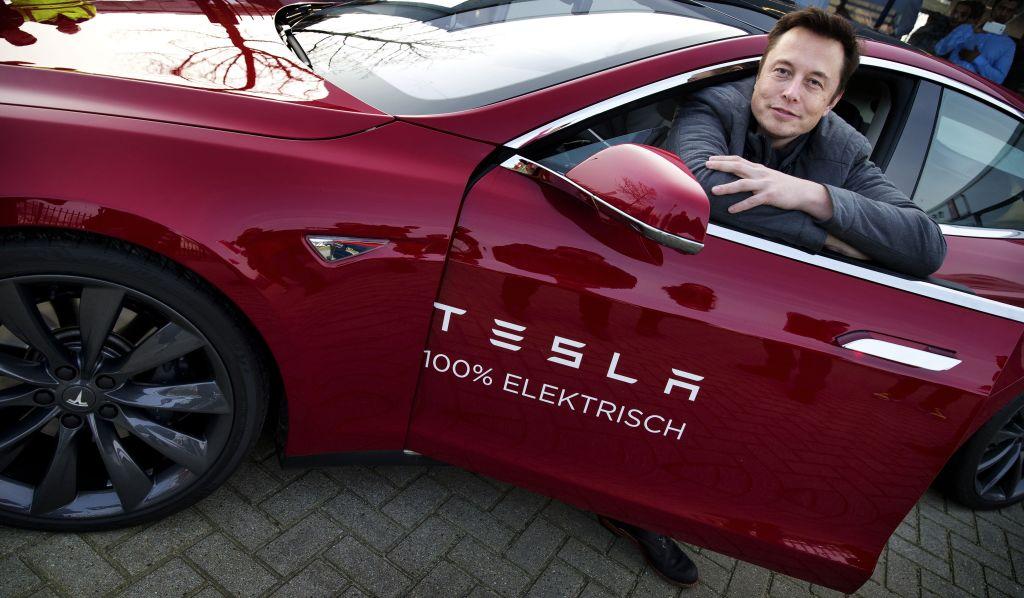
AUSTIN, Texas — Elon Musk built the world’s most valuable electric vehicle company, but the question of what he actually drives day to day has lingered for years, fueled by his own scattered social media confirmations and a personal garage that spans everything from Cybertrucks to a submarine car once used in a James Bond film.
The short answer: yes, Musk’s primary vehicles are Teslas. Over the past several years, Musk has repeatedly confirmed through his own posts and interviews that his everyday driving is split mainly between two Tesla models — the Model S and the Model X — with more recent public appearances showing him behind the wheel of the Cybertruck as well.
The Model S: Musk’s longtime go-to
Musk’s connection to the Model S predates most of Tesla’s current product lineup. According to Yahoo Autos, Musk told Time magazine at Tesla’s annual shareholder meeting as early as 2015 that “I’m testing the latest version of autopilot every week. Typically, two or three builds per week that I’m testing on my car,” a reference to the vehicle he was driving at the time.
The relationship was confirmed more directly in 2018, when Musk appeared on “The Joe Rogan Experience” podcast and was asked which car he personally drove. According to Yahoo Autos, Musk answered simply, “Model S P100D.”
That preference carried into 2019, when Musk posted on then-Twitter that his day-to-day vehicle was a Tesla Model S Performance, according to InsideEVs, which cited earlier reporting on the disclosure. The outlet also noted that Musk said in the same post that he drives a Model 3 Performance in addition to the Model S.
The Model X steps in for family duty
When Musk is driving with his children, he has said he switches to the Tesla Model X, the brand’s SUV known for its distinctive “Falcon Wing” rear doors — a design detail Musk has said originated from his own frustration with cramped access to third-row seating in other SUVs. According to CarFromJapan, Musk disclosed that his day-to-day vehicle is a Tesla Model S, but that when he has his kids with him, he drives the Model X SUV for the extra room.
A more recent addition: the Cybertruck
Since Tesla ramped up production of the Cybertruck, Musk has increasingly been photographed and filmed in the angular, stainless-steel pickup, both at Tesla’s Gigafactory in Texas and elsewhere. In August 2023, Musk posted on X after testing a production-candidate Cybertruck at Gigafactory Texas, writing simply, “Just drove the production candidate Cybertruck at Tesla Giga Texas!”
By 2024, Musk was publicly joking about splitting his daily driving time between two of his most iconic vehicles. Responding to a post about the choice between the Model S and the Cybertruck, Musk wrote on X, “That is an actual choice I face every day,” followed by a laughing emoji, according to CarTalk.
Beyond Teslas: a wide-ranging personal collection
While Musk’s daily drivers are exclusively Tesla vehicles, his broader personal car collection includes a number of notable non-Tesla classics. Among the most famous is a 1976 Lotus Esprit, nicknamed “Wet Nellie,” which appeared as a submarine car in the 1977 James Bond film “The Spy Who Loved Me.” According to CarFromJapan, Musk purchased the vehicle at auction in 2013 for nearly $1 million after having been fascinated with the car since childhood, when he saw Bond convert it into a submersible on screen.
His collection has also reportedly included a McLaren F1 sports car, purchased with proceeds from the sale of his first company, Zip2, in the late 1990s. According to Yahoo Autos, Musk crashed the McLaren while uninsured years later and watched it catch fire, though the vehicle was ultimately rebuilt by McLaren Special Operations. Musk has previously written on social media that the McLaren F1 remains, in his view, the best car ever made.
Other vehicles associated with Musk’s personal garage include a 1978 BMW 320i, described as his first car, a modified BMW M5, an Audi Q7, and a Porsche 911 Turbo, according to InsideEVs.
The Roadster that went to space
Perhaps Musk’s most famous Tesla is not one he currently drives at all. The original Tesla Roadster — the company’s first production car, based on the Lotus Elise chassis — was launched into orbit aboard a SpaceX Falcon Heavy rocket in 2018 and remains in space today. According to the Petersen Automotive Museum, cited by InsideEVs, Musk used the Roadster as his actual daily driver in the vehicle’s early years, commuting from his home in Bel Air to Tesla’s offices in Hawthorne, California.
What’s next for Musk’s daily driver
Musk has also indicated his personal fleet may shift again as Tesla’s next-generation Roadster, a high-performance sports car years in development, moves closer to production. According to Automotive News, Musk said the upcoming Roadster is expected to be Tesla’s only manually driven vehicle over the long term, with the rest of the company’s lineup transitioning toward fully autonomous models — a shift that, if it plays out as Musk has described, could eventually make the new Roadster the last car Musk himself gets to drive by hand.

New at Fairway Jockey: Lusso Cloud slides

Computer maker Framework notifies ‘all customers’ of a data breach
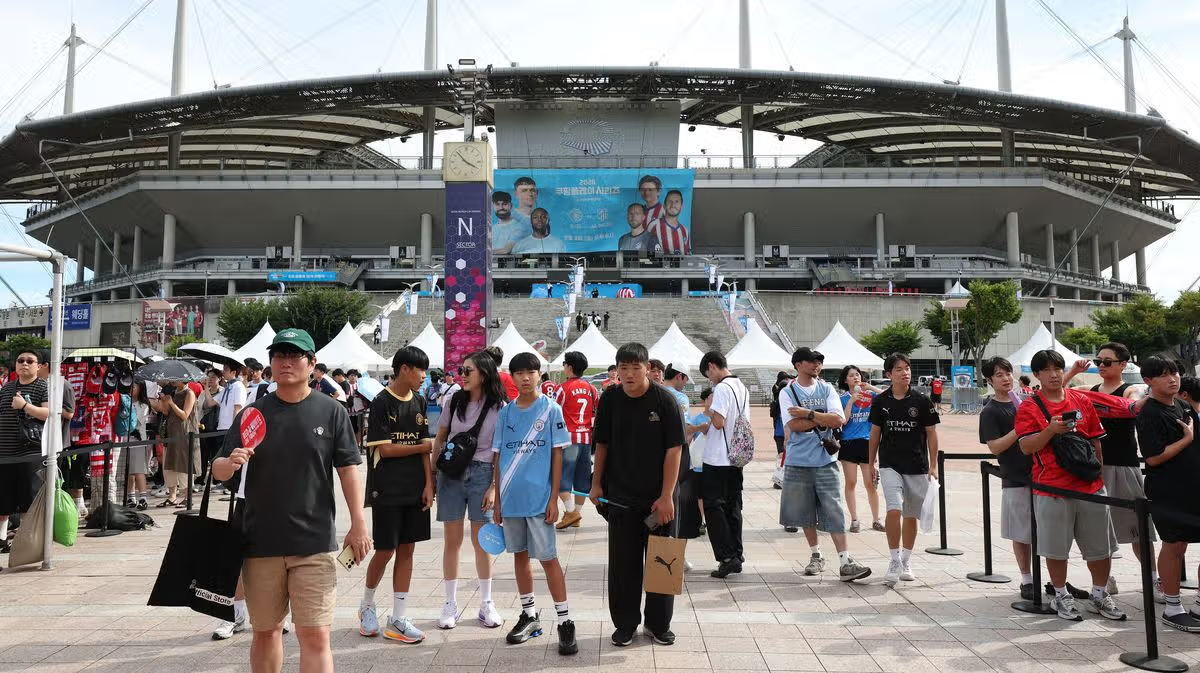
Man City vs Atletico Madrid LIVE goal and score updates as Reis and Savinho start final friendly


-

 Politics7 days ago
Zack Polanski: an incitement to murder Nigel Farage?
-

 Fashion2 days ago
Frugal Friday’s Workwear Report: Cap-Sleeve Pointelle Crewneck Sweater
-

 Fashion2 days ago
Weekend Open Thread: Mattifying Sunscreen
-

 Business6 days ago
DTCR: Deleveraging And A Hedge Fund Collapse Point To A Possible AI Bottom
-

 Crypto World7 days ago
XRP Ledger urges node upgrade after manifest flood
-

 Sports3 days ago
Jordan Coyle & Cordiamo take Laya Arena Stakes at RDS
-

 News Videos1 day ago
Can Astrology Help Find Gold and Silver Trends? A Financial Astrology Guide
-
 Crypto World5 days ago
US Tech Stocks See Largest 5-Week Inflow in History: Can Nasdaq Break Its Downtrend?
-
 Business3 days ago
US stocks: Dow closes at record on Mideast optimism; SpaceX, AMD drag Nasdaq
-

 Politics3 days ago
Reform UK And Greens Sink To Lowest Favourability Ratings To Date
-

 Business4 days ago
Nvidia Stock Climbs 2.5% as Chip Sector Rally Builds Ahead of AMD Earnings, Nvidia’s Own Report Looms
-

 Crypto World5 days ago
Polymarket targets $20 billion valuation as competition heats up in prediction market sector
-

 Tech6 days ago
OpenAI teases Astra, its next major AI model, after it solves 10 long-standing math problems
-

 Tech4 days ago
OpenAI, Anthropic AI agents targeted real people and systems in cyber tests
-

 Business4 days ago
Supply chain issues impact Ingredion
-

 News Videos6 days ago
#crypto #cryptocurrency #cryptonews #cuet2026 #ceuta
-

 Business6 days ago
Myspace owners announce plans to relaunch the once-popular platform
-

 News Videos6 days ago
Crypto.com Partners with UFC for UFC 331 Event
-
 Crypto World5 days ago
CLARITY Act Senate Vote Locked In, But 60-Vote Hurdle Looms Large
-

 News Videos6 days ago
Huge SPINS!! (for me) #slots #casino #gambling #money #jackpot
You must be logged in to post a comment Login