
Business
Apple tests China’s CXMT memory chips for iPhones and MacBooks, WSJ reports



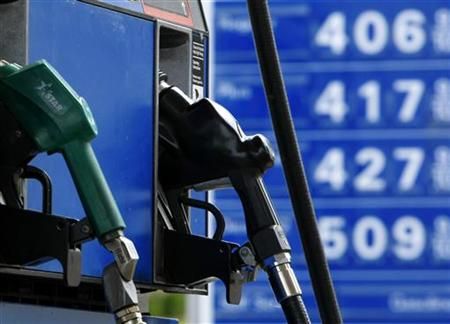
Global oil prices remained volatile heading into the weekend, trading well below recent highs as investors weighed conflicting signals from Iran and the United States over a potential agreement to restore shipping through the Strait of Hormuz, one of the world’s most critical energy chokepoints.
West Texas Intermediate futures opened at $78.31 a barrel on Aug. 7, according to Forbes Advisor, while Brent crude opened at $83.49 a barrel that same day. As of Sunday, live pricing data from PriceOfOil.com showed both benchmarks continuing to trade in that general range, with Brent hovering near $83 and WTI near $78, according to tracking from Trading Economics and Oilprice.com.
A market still reacting to the Hormuz standoff
Brent crude has swung sharply in recent sessions as traders try to gauge the likelihood of a breakthrough in talks between Iran and Oman over managing navigation through the strait. According to Trading Economics, Brent traded below $82 a barrel on Friday, moving between gains and losses throughout the session as investors weighed the state of those negotiations.
Optimism over a potential partial reopening of the waterway faded after reports that Iran was seeking to exclude U.S. and Israeli vessels from the strait entirely and impose fees on countries it considers hostile — terms that stand in sharp contrast to Washington’s push for unrestricted transit and a full return to pre-war shipping conditions. President Donald Trump has maintained an optimistic public tone throughout the negotiations, saying the broader conflict could end “pretty soon” and that discussions were progressing, according to Trading Economics’ market coverage.
Adding to the uncertainty, Abu Dhabi National Oil Co. reported attacks on multiple vessels transiting the strait, with Iran reportedly targeting ships it considers hostile even as diplomatic talks continued. Iran-backed Houthi militants separately claimed a large-scale attack against Saudi-aligned forces in Yemen, further complicating the security picture across the broader region.
A proposed Iranian framework worries markets
Trading Economics reported that Iran has proposed penalties equal to 20% of a vessel’s cargo value for violations of its terms, while insisting the strait would only be fully reopened once the U.S. maritime blockade of Iran is lifted. That draft proposal, outlining stricter conditions for commercial shipping than markets had anticipated, remains under review by the Iranian parliament.
Oil briefly reversed some gains in post-settlement trading last week following reports that the U.S. could lift its naval blockade once commercial shipping through the strait resumes without restrictions — a potential off-ramp that traders continue to watch closely for signs of a genuine breakthrough.
Prices well off their April peak, despite the conflict
Even with the ongoing disruption, oil prices remain considerably below levels seen earlier this year. According to the U.S. Energy Information Administration’s Short-Term Energy Outlook, published July 7, the Brent crude spot price averaged $85 a barrel in June, down $22 a barrel from May and $32 a barrel from its recent April 2026 peak.
The EIA’s forecast, issued before the current wave of Hormuz-related volatility intensified, projected Brent averaging $74 a barrel in the third quarter of 2026 — a $27-a-barrel reduction from the agency’s prior monthly outlook at the time — citing expectations of ongoing oil inventory accumulation that would continue pressuring prices lower. The agency’s outlook had assumed that a June 18 memorandum of understanding between the U.S. and Iran to end the conflict and reopen the strait would hold, projecting most crude oil production would return to near pre-conflict averages by the end of the year. Given the subsequent breakdown in that agreement and the renewed attacks on shipping, market conditions have shifted meaningfully since that forecast was published, and the EIA’s next outlook, due Aug. 11, is likely to reflect the changed picture.
What it means at the pump
Lower crude prices earlier in the summer had been expected to translate into cheaper gasoline for American drivers. The EIA’s July forecast projected U.S. gasoline prices averaging $3.80 a gallon in the third quarter, down from more than $4.20 a gallon in the second quarter, though the agency cautioned that a portion of the crude-driven savings could be offset by rising wholesale and retail margins tied to low gasoline inventories.
Broader market ripple effects
The prolonged uncertainty over Middle East energy supply has also influenced other markets. According to Oilprice.com’s broader coverage, lower oil prices in recent weeks have helped boost gold, as easing inflation concerns and softer U.S. economic data reduce expectations for further Federal Reserve policy tightening. Separately, some governments have leaned more heavily on coal in the short term while accelerating investments in renewable energy, as the ongoing Middle East conflict tightens global liquefied natural gas markets and raises broader concerns about energy security.
Looking ahead
With Iran’s parliament still reviewing its proposed shipping framework and no finalized agreement between Tehran and Washington in place, analysts expect oil prices to remain highly sensitive to any fresh developments out of the Strait of Hormuz talks in the days ahead. Traders are likely to continue closely tracking statements from Iranian officials, the Trump administration, and Gulf shipping authorities for signs of whether a genuine de-escalation — or a further breakdown — is more likely in the near term.
Berkshire Hathaway earnings on deck as Abel faces cash test

CEVA earnings on deck: Can licensing sustain royalty wait?

Luckin Coffee: Downgrading To A Hold On Insider Selling

Which economies and sectors are most exposed to AI earnings bust?

Inflation data to test record-setting US stocks, Fed rate views

Bitcoin heads for 2% weekly gain as risk assets rally, Fed rate hike bets ease

Users of the film social network Letterboxd began reporting access problems Sunday morning, with outage-tracking service Downdetector logging complaints starting at 9:14 a.m. EDT and the hashtag #LetterboxdDown gaining traction on social media as frustrated users sought answers.
Downdetector, which aggregates real-time user reports to flag potential service outages, posted about the issue on X, asking users how the disruption was affecting them and linking to its live outage tracker for the platform.
What users are experiencing
Reports collected across multiple outage-monitoring services point to sign-in and login issues as the primary complaint among affected users. According to StatusGator, which monitors service health using a combination of issue reports, page visits and signal strength, the platform showed signs of a possible outage detected around 1:05 p.m. Eastern time Sunday, with the specific issue identified as “sign-in issues after unexpected logouts.”
Separately, outage-tracking site UpDownRadar collected numerous firsthand complaints from users across multiple countries describing difficulty accessing the service. Reports came in from locations including the United Kingdom, Germany, France, the Philippines and the United States, with users describing being unable to log in on both the Letterboxd website and its mobile app. One user’s comment, relayed through the tracker, described the outage lasting “like 3 hours,” while another described receiving an “internal server issue” message when attempting to load features like their watchlist or friends’ reviews.
A history of intermittent outages
Sunday’s disruption is not the first time Letterboxd has experienced service issues. According to StatusGator’s tracked incident history, the platform has faced several previous outages and login problems throughout 2026, including a reported service outage lasting just over three hours in May and separate login and page-loading issues in March and February. The platform has also experienced connectivity issues tied to third-party infrastructure providers in the past, though it was not immediately clear Sunday whether a similar underlying cause was responsible for the latest reports.
Mixed signals from automated monitors
Not all outage-tracking services detected the same severity of disruption. Automated monitoring service UptimeRobot reported that its most recent automated check, run at 1:02 p.m. GMT Sunday from North America, did not detect any unusual response times or error codes from Letterboxd’s servers. Similarly, status-tracking site Entireweb reported that Letterboxd was “operating normally” as of Sunday, citing 15 user reports over the previous 24 hours but none in the hour immediately preceding its check.
The discrepancy between automated uptime checks and user-submitted reports is common during intermittent or regionally concentrated outages, where a service’s core infrastructure may remain technically online even as specific features — such as user authentication or login sessions — experience disruptions for a subset of users.
About Letterboxd
Letterboxd functions as a combined movie database, personal film journal and social network, allowing its reported 17 million worldwide users to rate films on a five-star scale, write reviews, tag movies with relevant keywords, and maintain lists of films watched or planned to watch, according to Wikipedia’s overview of the platform. The service allows anyone to browse content without an account, though creating a profile is required to rate, review or otherwise interact with the platform’s social features.
The platform has faced security issues in the past as well. In March 2024, Letterboxd disclosed that it had suffered a data breach the previous month after a staff account was compromised, though the company said at the time that the breach affected “significantly less than 1% of all accounts,” according to Wikipedia.
What to do if you’re affected
For users currently experiencing issues, general troubleshooting steps recommended by outage-tracking services include trying to access the platform from a different browser, device or network — such as switching to a mobile hotspot — as well as clearing your device’s DNS cache, disabling any active VPN connection, or restarting your router. If the platform loads normally through an alternate connection, the issue is likely isolated to the original network rather than reflecting a broader, confirmed outage affecting all users.
As of this writing, Letterboxd had not issued an official public statement acknowledging the outage or providing a timeline for full resolution. The situation remains fluid, and Downdetector’s live tracker continues to log new user reports as they come in.
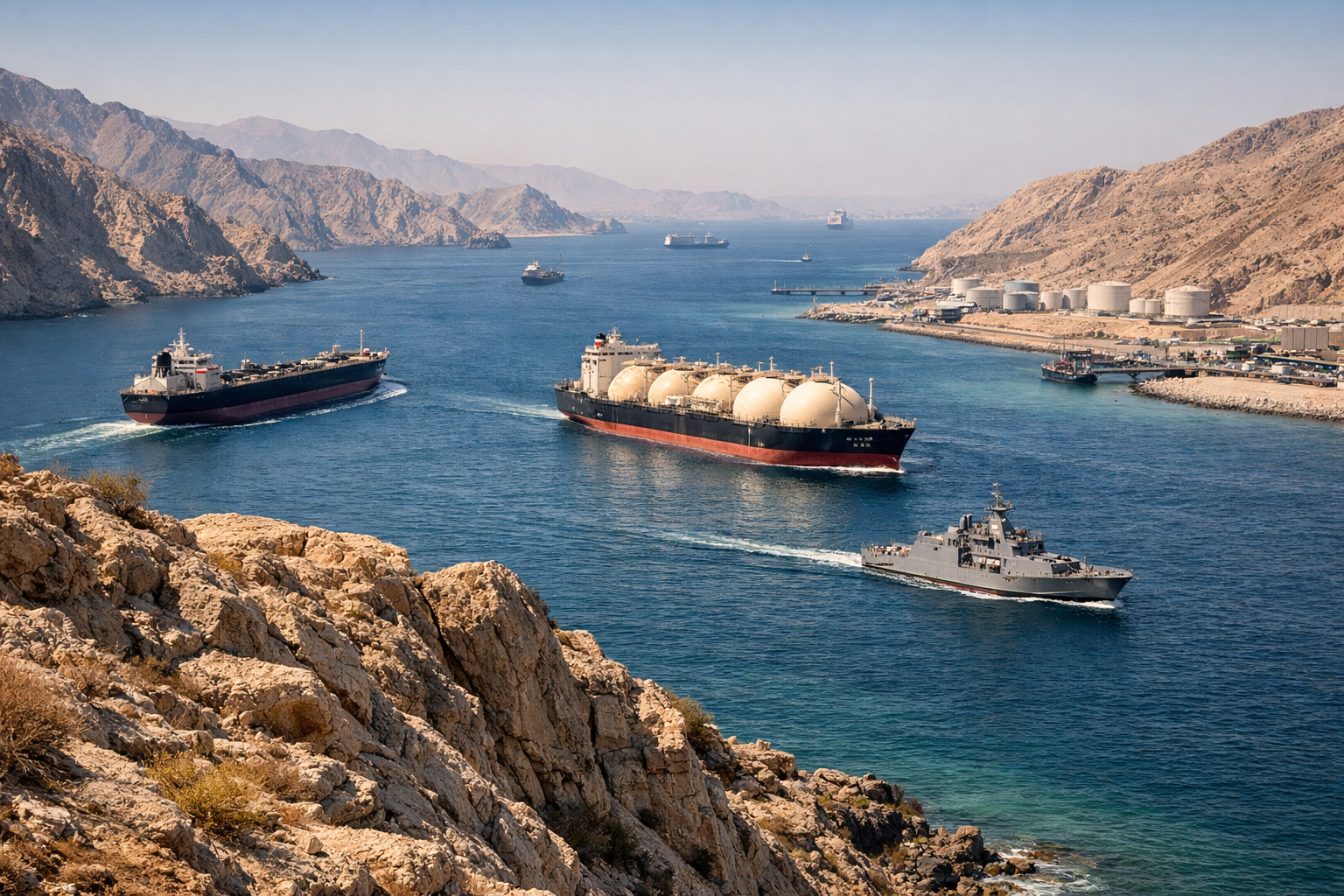
The Strait of Hormuz remains effectively closed to commercial shipping as of Sunday, five months into a crisis that has cut off one of the world’s most critical energy chokepoints, even as Iran and Oman signal they are nearing an agreement on how to manage traffic through the waterway.
According to tracking data from the monitoring site straits.live, only two ships transited the strait on Aug. 2, compared with a pre-crisis baseline of roughly 73 transits per day — a stark illustration of how thoroughly the waterway has been shut down since the crisis began. The site’s independent assessment currently classifies the strait’s status as closed to commercial shipping.
A crisis now in its sixth month
The closure traces back to Feb. 28, 2026, when the United States and Israel conducted airstrikes on Iranian military targets, including the assassination of Iran’s Supreme Leader, Ali Khamenei, according to Wikipedia’s documented timeline of the conflict. In response, Iran closed the strait to all foreign shipping, with the Islamic Revolutionary Guard Corps transmitting warnings over VHF radio declaring that no ship would be allowed to pass. Britain’s Royal Navy said at the time that the closure was not legally binding, though it acknowledged that safety could not be guaranteed for vessels attempting to transit.
By early March 2026, the IRGC confirmed the strait was closed specifically to “unfriendly nations,” while continuing to allow Iran-approved vessels — largely petroleum shipments bound for China and India — to pass, sometimes under military escort.
The toll on shipping has been substantial. According to Wikipedia’s tally, the crisis has resulted in one tugboat sunk, at least 17 merchant ships damaged, two merchant ships captured, and 12 seafarers killed or missing, along with one port worker killed and two wounded in a related incident in Bahrain.
New Iranian demands complicate the path forward
Iran issued a fresh round of demands Saturday for what it would take to fully reopen the strait, according to reporting from NBC News based on Associated Press coverage. Iran’s Supreme National Security Council, in a statement delivered by council secretary Mohammad Bagher Zolghadr, said the waterway would not reopen until the United States “corrects its behavior” — a list of conditions that includes lifting the U.S. naval blockade of Iran, ending sanctions, withdrawing American military forces from the region, paying war reparations and unfreezing Iranian assets.
The statement came the same day the United Arab Emirates said one of its oil tankers, affiliated with the Abu Dhabi National Oil Company, was targeted by a missile while transiting the strait — an incident that underscored the continued danger facing commercial vessels even amid active diplomatic talks.
Progress with Oman, but caveats attached
Despite the hardened rhetoric aimed at Washington, Iran has signaled more constructive engagement with Oman, the Gulf Arab nation that has served as a mediator in the broader conflict and shares a border along the strait. Iranian Foreign Minister Abbas Araghchi said Saturday that talks with Oman over how to manage navigation through the waterway were “approaching the final stages,” according to CBS News.
However, Araghchi was careful to separate that progress from any broader reopening of the strait to international traffic. “This is not a sign of the reopening of the Strait of Hormuz,” he said, adding that full reopening remains “subject to other conditions and compensation for the violations” Iran attributes to the United States and its allies.
A U.S. military leadership seeking an exit
Behind the scenes, there are signs that top U.S. military officials are growing wary of further escalation. According to sources cited by CNN, the chairman of the Joint Chiefs of Staff has privately made clear that the United States needs to find an “off-ramp” from the broader war with Iran, warning that available military options to further escalate the conflict could backfire.
Separately, Israeli Prime Minister Benjamin Netanyahu vowed Sunday to prevent Iran from acquiring nuclear weapons, reiterating a long-standing goal regardless of how diplomatic talks between Tehran and Washington ultimately unfold, according to CBS News’ live coverage of the situation.
Economic fallout continues to mount
The prolonged closure has driven global energy costs sharply higher. According to tracking site Global Energy Flow, Brent crude settled up 9.59% on a recent Monday at $83.30 a barrel — its largest single-day gain in more than six years — and has traded as high as roughly $86 a barrel intraday since, putting prices about 19% above pre-war levels.
A Congressional Research Service report published by the Library of Congress noted that periodic Iranian attacks on shipping, combined with retaliatory U.S. strikes against Iran, have severely disrupted traffic through the strait for most of the past five months. The report also cautioned that even with Iran’s military capabilities diminished, the mere threat of future attacks could continue producing closure-like conditions if shipping companies conclude the risk of transiting the strait outweighs the potential benefit.
What would it take to fully reopen the strait
Based on Iran’s stated conditions, a full reopening appears contingent on a broader resolution to the underlying U.S.-Iran conflict rather than a standalone navigation agreement with Oman. Prior diplomatic efforts have repeatedly stalled: an April 7 ceasefire agreement between the U.S. and Iran, which President Trump said at the time was contingent on the “complete, immediate, and safe opening of the Strait of Hormuz,” broke down after Iran halted shipping traffic in response to separate Israeli attacks in Lebanon, according to the Congressional Research Service report.
For now, with roughly 20% of the world’s oil trade and a significant share of global liquefied natural gas normally passing through the strait before the crisis, the waterway’s continued closure remains a central pressure point shaping both regional diplomacy and global energy markets — with no clear timeline yet for when normal shipping traffic might resume.
Business
Charlamagne Tha God Explains Why Kevin Durant Ring-Chased but LeBron James Built Champions Everywhere

Radio host and media personality Charlamagne Tha God has weighed in on one of the NBA’s most persistent debates, arguing that LeBron James’ decision to join the Philadelphia 76ers should not be lumped in with Kevin Durant’s move to the Golden State Warriors nearly a decade ago, despite both being framed by critics as examples of “ring chasing.”
The comparison has resurfaced since James announced he was signing with Philadelphia, joining a roster that already features Tyrese Maxey and Jaylen Brown — both of whom averaged more than 28 points per game and earned All-NBA selections during the 2025-26 season — along with 2023 MVP Joel Embiid and rising young wing VJ Edgecombe. On paper, it’s a roster loaded with talent for a 41-year-old superstar chasing another championship late in his career.
Two very different paths to a stacked roster
Charlamagne Tha God laid out his case by contrasting the situations James and Durant walked into when they joined their respective new teams. When Durant signed with Golden State in 2016, he was joining a team that had already won a championship in 2015 and had posted the best regular-season record in NBA history, going 73-9, during the 2015-16 season. That Warriors team had also eliminated Durant’s Oklahoma City Thunder in the Western Conference Finals and came within one win of a second consecutive title before falling in the NBA Finals. The core of Draymond Green, Klay Thompson and Stephen Curry was already firmly established as a championship-caliber nucleus before Durant arrived.
James’ path, by contrast, involved joining teams that were far from championship contenders at the time. When he signed with the Miami Heat and helped lead the franchise to four consecutive NBA Finals appearances, Miami had been eliminated in the first round of the playoffs three times over the previous four seasons. When James later returned to the Cleveland Cavaliers, the franchise had missed the playoffs entirely in each of the four years he had been away. And when James led the Los Angeles Lakers to a championship in 2020, that franchise had missed the playoffs for six consecutive seasons beforehand.
‘That’s not ring chasing’
Charlamagne Tha God argued that this pattern — joining struggling franchises and turning them into contenders, rather than joining an already-established powerhouse — is what separates James’ latest move from Durant’s decision nearly a decade earlier.
“KD to Golden State is ring chasing because KD never won a ring anywhere and still hasn’t won a ring anywhere else. He went to Golden State because Golden State were champions and won two rings,” Charlamagne Tha God said. “LeBron has won everywhere he went; he has been the difference maker. So he goes to Philly, that’s not ring chasing.”
The framing positions James’ move to the 76ers as consistent with a career-long pattern, given that Philadelphia has not reached a Conference Finals appearance since 2001 — meaning James is, once again by this logic, joining a team he’ll need to help build up rather than one already positioned at the top of the league.
A perception shift already underway in Philadelphia
Beyond the historical comparison, Charlamagne Tha God’s broader point touches on how James’ presence has already reshaped outside expectations for the 76ers. Before James committed to signing with Philadelphia, the team was not widely regarded as an overwhelming championship favorite. His arrival has visibly shifted that perception across NBA media coverage.
James has also continued to demonstrate he can still influence winning basketball at an advanced stage of his career. During the 2026 playoffs, he averaged 23.2 points per game after being handed increased offensive responsibility following injuries to teammates Luka Doncic and Austin Reaves — a stretch that underscored his continued ability to take over games when circumstances demand it.
A different kind of role in Philadelphia
Unlike previous stops in his career, James isn’t expected to be the unquestioned primary option for the 76ers. Instead, his value in Philadelphia is expected to come from a more situational role — knowing when to take over offensively, when to defer to Maxey and Brown, and how to help stabilize the team when pressure mounts during high-stakes moments.
Should Embiid continue to face the injury issues that have limited him throughout much of his career, James’ role could shift further toward helping keep the team organized while developing Edgecombe and getting the most out of bench contributors such as Anfernee Simons and Dean Wade.
An ongoing debate among NBA fans and media
The comparison between James’ and Durant’s team-building paths remains a point of active debate among fans and analysts alike, with reactions to Charlamagne Tha God’s framing reflecting a broader divide in how people evaluate legacy-building moves late in a superstar’s career. Whether the distinction ultimately holds up may depend on how James and the 76ers perform together this coming season — and whether Philadelphia can translate its newfound star power into the deep playoff runs that have eluded the franchise for more than two decades.

Trump administration has spent nearly $4B to cancel offshore wind farms

URGENT CLARITY ACT NEWS!! (THIS WILL CHANGE XRP FOREVER)

We live in the colourful cottages in Wales’ best place to live by the sea


-

 Politics7 days ago
Zack Polanski: an incitement to murder Nigel Farage?
-

 Fashion2 days ago
Frugal Friday’s Workwear Report: Cap-Sleeve Pointelle Crewneck Sweater
-

 Fashion2 days ago
Weekend Open Thread: Mattifying Sunscreen
-

 Business7 days ago
DTCR: Deleveraging And A Hedge Fund Collapse Point To A Possible AI Bottom
-

 Crypto World7 days ago
XRP Ledger urges node upgrade after manifest flood
-

 Sports3 days ago
Jordan Coyle & Cordiamo take Laya Arena Stakes at RDS
-

 News Videos1 day ago
Can Astrology Help Find Gold and Silver Trends? A Financial Astrology Guide
-

 Crypto World6 days ago
US Tech Stocks See Largest 5-Week Inflow in History: Can Nasdaq Break Its Downtrend?
-
 Business4 days ago
US stocks: Dow closes at record on Mideast optimism; SpaceX, AMD drag Nasdaq
-

 Politics3 days ago
Reform UK And Greens Sink To Lowest Favourability Ratings To Date
-

 Business5 days ago
Nvidia Stock Climbs 2.5% as Chip Sector Rally Builds Ahead of AMD Earnings, Nvidia’s Own Report Looms
-

 Tech7 days ago
OpenAI teases Astra, its next major AI model, after it solves 10 long-standing math problems
-

 Crypto World5 days ago
Polymarket targets $20 billion valuation as competition heats up in prediction market sector
-

 Tech4 days ago
OpenAI, Anthropic AI agents targeted real people and systems in cyber tests
-

 Business4 days ago
Supply chain issues impact Ingredion
-

 News Videos7 days ago
#crypto #cryptocurrency #cryptonews #cuet2026 #ceuta
-

 Business7 days ago
Myspace owners announce plans to relaunch the once-popular platform
-

 News Videos7 days ago
Crypto.com Partners with UFC for UFC 331 Event
-
 Crypto World5 days ago
CLARITY Act Senate Vote Locked In, But 60-Vote Hurdle Looms Large
-

 News Videos7 days ago
Huge SPINS!! (for me) #slots #casino #gambling #money #jackpot
You must be logged in to post a comment Login