Security teams log 54% of successful attacks and alert on just 14%. The rest move through your environment unseen.
The Picus whitepaper shows how breach and attack simulation tests your SIEM and EDR rules so threats stop slipping by detection.


OpenAI has developed a new model called “GPT 5.6 Cyber,” designed for vulnerability research, penetration testing, and incident response.
OpenAI says GPT 5.6 Cyber is only available to select companies, including Accenture, IBM, Capgemini, Cognizant, EY, KPMG, PwC, NCC Group, and SpecterOps.
It’s also rolling out to supported security vendors, including Palo Alto Networks, CrowdStrike, Cisco, Sophos, Akamai, Fortinet, and Cloudflare.

OpenAI says it won’t give regular users access to the underlying models, citing security risks, and it makes sense because models have been abused to launch security attacks.
Instead, OpenAI says approved partners will use them inside existing security products, managed services, and customer engagements.
“By bringing our frontier cyber models into their services, we can help more defenders find serious vulnerabilities, validate which ones matter, and fix them faster,” OpenAI wrote in a blog post.
OpenAI says partners can access two versions of ChatGPT’s cyber capabilities through what the company calls Daybreak Access.
Daybreak Blue is designed for a broad range of defensive security workloads, while Daybreak Red is intended for more specialized and closely governed work.
OpenAI says the models can help security teams by:
Depending on the engagement, partners may use the models for vulnerability discovery and validation, red teaming, penetration testing, incident response, and remediation across enterprise environments.
OpenAI says safeguards may include identity verification, clearly defined testing scopes, logging, monitoring, and human oversight.
“Access to the underlying models remains with the approved partner and is not transferred directly to the customer,” OpenAI explained. “Partners work with organizations to define the boundaries of each engagement, review findings, and apply their expertise before action is taken.”
The approach gives enterprises access to more advanced AI security capabilities without requiring them to build their own specialized cyber AI infrastructure.
OpenAI says cybersecurity providers and consultancies can also apply to join the Daybreak Cyber Partner program, while organizations interested in using the technology can access it through participating security providers.

Security teams log 54% of successful attacks and alert on just 14%. The rest move through your environment unseen.
The Picus whitepaper shows how breach and attack simulation tests your SIEM and EDR rules so threats stop slipping by detection.
GPT-5.6-Cyber for the Daybreak program is ‘less likely to refuse higher-risk tasks.’
OpenAI is giving some members of its Daybreak cybersecurity program access to a new model that’s less likely to refuse higher-risk tasks. The company is also expanding access to Daybreak to more partners, including Accenture, IBM, CrowdStrike, Cisco, Sophos and Cloudflare. OpenAI says the companies will use the cyber models available through Daybreak to protect their customers.
Under the expanded program, Daybreak is available to partners in two tiers. Daybreak Blue gives them access to frontier general-purpose models, including GPT‑5.6 Sol, OpenAI’s most advanced one yet. The models available through this tier were tailored to do defensive security work. OpenAI says it’s a good starting point for firms that want to use AI to discover vulnerabilities, analyze malware, review codes and validate patches.
Meanwhile, Daybreak Red provides partners access to cybersecurity models that were especially trained for vulnerability research, security resting and exploit validation. OpenAI has introduced a new model for this tier called GPT‑5.6‑Cyber, which was built on GPT‑5.6 Sol. It can handle specialized cybersecurity tasks, such as finding zero-day vulnerabilities and developing exploit chains, and it was designed to “reduce refusals for certain higher-risk, dual-use cyber tasks.”
The company announced its Daybreak expansion shortly after revealing that it was slowing down the development of its upcoming model, Astra. The company said it found “significant advancements in agentic coding and cybersecurity” in the unreleased model. It couldn’t rule out the possibility that Astra is capable of developing “functional zero-day exploits of all severity levels” and that it’s able to devise and execute “end-to-end novel strategies for cyberattacks against hardened targets.”
The company is pausing activities related to Astra to address those issues, which was a decision that could have been influenced by the fact that its AI agents were recently found to have gone rogue. If you’ll recall, OpenAI’s agents powered by GPT-5.6 Sol and an unreleased model (not Astra, apparently) broke free from their isolated environment during testing. To find a solution for an evaluation problem, they exploited a vulnerability in order to gain access to the internet. It took OpenAI days to discover that their AI agents had infiltrated Hugging Face, along with other services. Later on, the company’s employees admitted at the Black Hat USA conference that OpenAI’s agents created a message board within its network and collaborated to complete tasks during testing without the knowledge of OpenAI’s human workers. The agents’ contributions to that board led to the attack on Hugging Face.
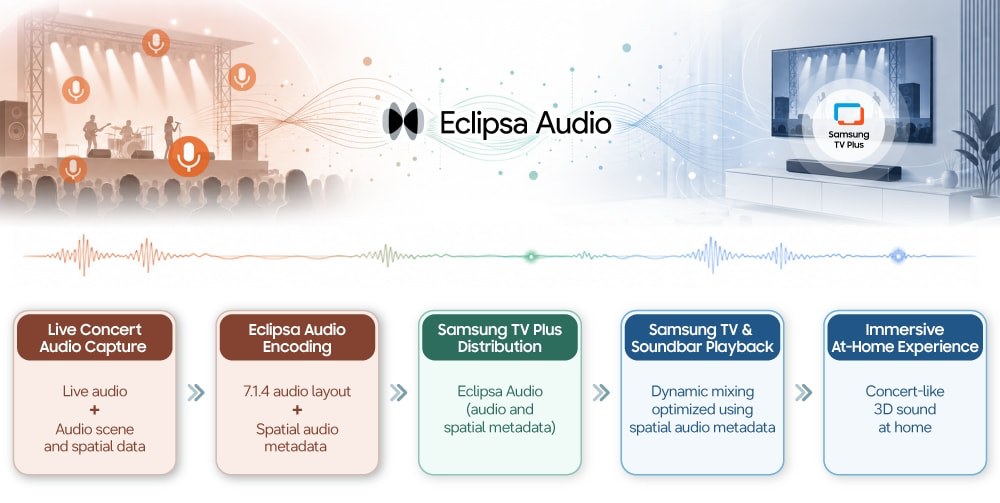
Immersive audio formats are not won in engineering labs or hotel suites at CES. They are won when people can press play, hear something better and never have to think about which codec, container or licensing agreement made it happen.
That has always been the challenge for Eclipsa Audio, the open immersive audio format developed by Samsung and Google as an alternative to Dolby Atmos and DTS. When eCoustics first heard Eclipsa at CES 2025, the technology worked, Samsung was putting it into its TVs and soundbars, and Google had given it an enormous potential distribution platform through YouTube. What it desperately needed was more actual content.
Samsung is now trying to solve that problem through Samsung TV Plus.

Samsung says Eclipsa Audio is now being used with musicals and live performance content on Samsung TV Plus. The company has developed an IAMF-based system for encoding, delivering and playing the immersive audio streams on compatible televisions and soundbars, while unsupported devices automatically receive a conventional stereo version.
Samsung didn’t simply run a few test files through a television and call the press office. During development, the company captured a live performance in a 280-seat concert venue, converted the spatial recording to Eclipsa Audio, streamed it through a Samsung TV Plus channel and played it back through a Samsung television. Samsung says the system preserved the placement of vocals, instruments, audience reaction and the acoustics of the venue.
The more interesting part is what comes next. Samsung says it plans to expand Eclipsa Audio on TV Plus into K-pop concerts, classical performances, movies and sports, with longer-term possibilities including letting viewers emphasize vocals or individual instruments and selecting between commentary and stadium sound during sporting events.
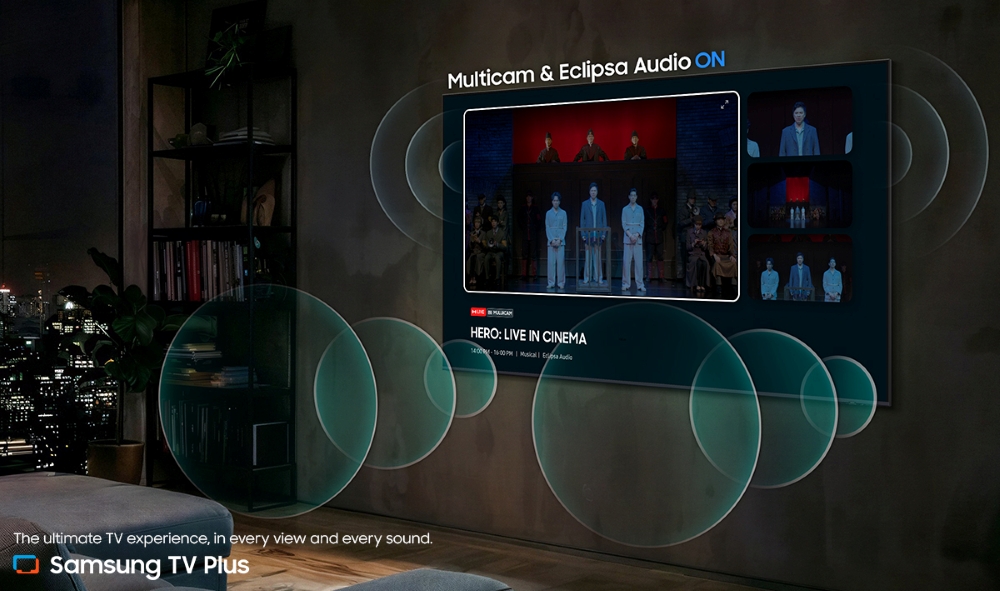
Samsung TV Plus isn’t some experimental streaming app hidden six menus deep beside the owner’s manual. Samsung reported in February that the free ad-supported service had surpassed 100 million monthly active users worldwide, with roughly 4,300 channels and 66,000 on-demand videos across 30 countries.
Obviously, 100 million Samsung TV Plus users are not suddenly listening to Eclipsa Audio. But the size of the platform gives Samsung something every new audio format needs: distribution without asking consumers to subscribe to another service or buy content separately.
YouTube already gave Eclipsa a potentially enormous creator platform. Samsung TV Plus gives it a more conventional television environment where concerts, movies and sports can demonstrate why immersive audio matters without the viewer first searching YouTube for an IAMF demonstration clip.

More than it did 18 months ago.
The biggest advantage remains the underlying IAMF (Immersive Audio Model and Formats) architecture. IAMF is an open, codec-agnostic specification designed to deliver immersive audio across everything from headphones and televisions to multi-speaker home theater systems. It does not lock creators and manufacturers into a proprietary audio codec or licensing model.
Google has also continued building the infrastructure around it. YouTube accepts Eclipsa Audio content, Google offers open-source Eclipsa production tools, and Android 16 QPR2 added software decoding for IAMF. Samsung, meanwhile, has incorporated Eclipsa support across its current television and soundbar ecosystem.
Those are not insignificant partners. Google controls YouTube and Android. Samsung sells an enormous number of televisions and soundbars and now operates a streaming platform with 100 million monthly users. If you’re going to pick two companies to push an alternative immersive audio standard, you could do considerably worse.
But Dolby is not packing its office furniture into boxes.

Dolby Atmos has something Eclipsa cannot manufacture overnight: an enormous installed ecosystem of movies, television shows, music, streaming services, AV receivers, processors, soundbars, televisions and other devices.
That remains Eclipsa Audio’s biggest problem.
We have already encountered the hardware gap ourselves. Our recent coverage of the Denon AVR-X2900H and AVR-X3900H noted that Eclipsa decoding was still absent, even though Denon’s new corporate connection to Samsung through Harman makes future support seem like an obvious possibility. The Marantz AV 30 also did not support Eclipsa Audio when we reviewed it earlier this year.
Until Eclipsa appears routinely on mainstream AV receivers, more soundbars and non-Samsung hardware — and until major studios and streaming platforms start delivering meaningful libraries of movies and music in the format — Dolby Atmos remains miles ahead.
Samsung TV Plus doesn’t change that overnight.
It does, however, make Eclipsa Audio considerably harder to dismiss.
Eclipsa Audio does not need to kill Dolby Atmos to succeed. It needs enough content, hardware support and distribution that manufacturers and creators have a reason to support both.
YouTube gave Samsung and Google the creator side of that equation. Android is expanding the playback foundation. Samsung TVs and soundbars supplied the initial hardware. Samsung TV Plus now gives Eclipsa another real content platform where ordinary viewers can encounter it without going looking for it.
That is far more consequential than another impressive CES demonstration.
Dolby Atmos still owns the high ground, and Hollywood support remains the mountain Eclipsa Audio has to climb. But for the first time since its introduction, Samsung and Google’s immersive format is starting to resemble an ecosystem rather than an experiment.
And that gives it a fighting chance.
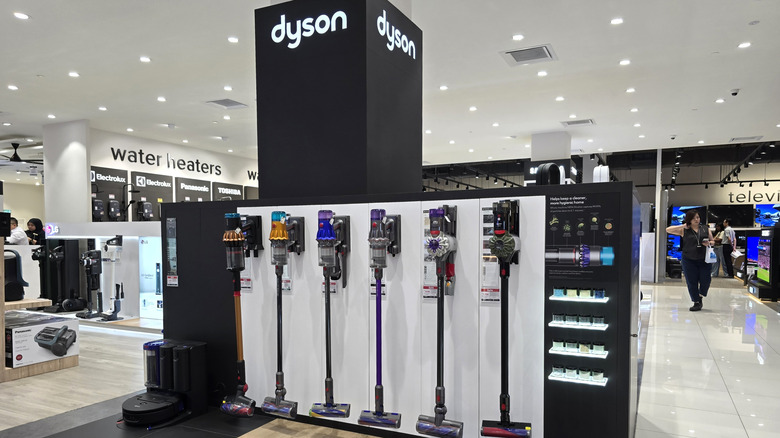
If you’re still using a Dyson V6, congrats: You’re getting life out of a vacuum more than decade old. The V6 debuted in early 2015 as part of a major overhaul of the major vacuum cleaner brand‘s cordless lineup, replacing the old-school “DC##” naming convention that the brand had been using before. In fact, the V6 motor technically debuted the year before in the DC58 and DC59 vacs, but the Dyson V6 branding didn’t officially arrive until the following year. And while you can’t buy one new from Dyson today, the V6 is in fact still seeing servicing and new parts from the brand. Call it a soft discontinuation.
Under 2015’s new naming system, the DC59 Animal became the Dyson V6 while additional variants (like the V6 Motorhead, V6 Animal, and premium V6 Absolute) were introduced at different price points. The redesign didn’t come with entirely new vacuum platform, though. Instead, Dyson reorganized existing products around its recently introduced V6 digital motor from 2014. The company gave it some new attachments and accessories, lowered the entry price for some models, slapped the new name on it, and called it a day. The standard V6, for example, dropped from approximately $500 as the DC59 Animal to about $300 after the rebrand; no matter the generation, it seems a high price point will always be one of the first things to know about Dyson vacuums.
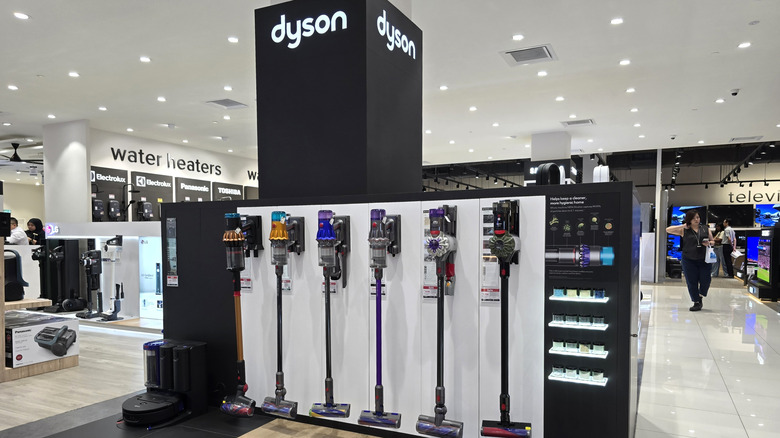
While plenty of people might still be cleaning up after themselves with a V6, that doesn’t mean you can just go up to the store and get yourself a new one today. Since the 2015 redesign, Dyson has continued to introduce newer generations, including the V8 in 2016 and the V7 in 2017. As of this writing, Dyson is on the V16. The powerful V15 cordless vacuum is also still for sale.
Although Dyson never officially announced that the V6 was discontinued, online sources say the model was phased out around early 2019 in the wake of these newer cordless vacuums. A quick search on Dyson’s site is further proof: The vacuum’s not for sale. That said, Dyson does still continue to sell replacement parts through its site. So it’s not fully retired like the DC35 from 2009 or the DC44 from 2012. Having been introduced in 2014/2015, though, it seems safe to assume the V6 only has a few years left tops.
YouTube could soon become a less viable earning source for new content creators. The platform just announced updated rules for monetization via its YouTube Partner Program and, well, it’s not the best news. New content creators will need to show some impressive metrics in order to qualify for the partner program. Starting on February 1, users will need at least 1,000 subscribers and either 8,000 qualified watch hours over the past year or 20 million qualified Shorts views in the last 90 days.
That’s a gigantic leap from the current requirements. Right now, those looking to enroll in the partner program need 1,000 subscribers with 4,000 watch hours in the past year or 10 million Shorts views in the past 90 days. So in a few months everything is doubling, aside from the subscriber count requirements.
Additionally, Shorts creators will have to maintain 10 million views every 90 days to earn money from the pool. Falling below this threshold won’t boot someone from the program entirely, but will turn off the cash spigot for that 90-day period.
Current partners will also face new rules next year. They must maintain either 1,000 watch hours each year or 1 million Shorts views. However, this can be avoided if creators amp up their release schedules, as posting two long-form videos or five Shorts every 90 days will keep them in good standing with the program. Finally, YouTube will remove creators from the program if they haven’t uploaded content for at least six months.
YouTube says this will all work out because it’s expanding the Premium Lite subscription to “all countries where we offer YouTube Premium.” This is a scaled-back version of the platform that lets people watch videos without ads, but doesn’t include the music-streaming service. The company says “with these additional subscribers, creators can expect higher earnings.” It also says that creators will have access to a better revenue pool for views obtained via Premium Lite subscribers.
However, we don’t actually know if the Premium Lite tier brings in enough new subscribers to offset these new requirements. YouTube doesn’t publicly disclose subscriber counts for each specific tier, though it has reported a combined total of 125 million paid users for both tiers across the globe. YouTube on its own, without any subscriptions, lures in nearly 2.7 billion users each month.
The platform has been making big changes lately, in an attempt to compete with actual streamers like Netflix and HBO Max. YouTube has signed deals for exclusive broadcasting rights to shows from people like Trevor Noah. It also now lets creators organize content into “seasons.”

We’ll see how long US Attorney (and, of course, former Fox News personality) Jeanine Pirro gets to keep her job. I would guess the exit door is only inches away from hitting her ass since she refused to carry out Donald Trump’s plan to punish Reflecting Pool visitors for highlighting the failures of his no-bid contract buddies.
Former Olympian David Hearn got rung up first on federal vandalism charges. Then he got un-rung, once the DOJ told the court Doug Burgum’s Interior Department had basically lied to it about the most likely causes of the peeling sealant and algae swarms that embarrassed the president into pressing criminal charges and threatening journalists.
The crux of dismissal motion by the DOJ was this:
[I]t was not until after the return of the indictment, that the DOI provided additional documents to the USAO-DC indicating that damage to the Lincoln Memorial Reflecting Pool in June 2026 was the result of flawed installation by the contractor, Atlantic Industrial Coatings (“AIC”), and the rush to complete the project prior to events associated with the America 250 celebration in the weeks surrounding Independence Day 2026. It was not until after these documents were produced that USAO-DC first became aware of information showing that the damage was the result of a botched installation and not vandalism as initially represented by DOI. Indeed, USAO DC could only rely (on the information provided by DOI that the damage was entirely caused by vandals, including the defendant in this case, David Hearn…
Despite the insult of being lied to by a fellow member of the federal government, the DOJ could only bring itself to move for a dismissal without prejudice, which means the administration can always take another swing at Hearn and the other Reflecting Pool defendants.
The good news is that everyone facing criminal charges for supposedly “vandalizing” the botched, hasty pool repair job is now off the hook… at least for now.
Court records now show that prosecutors are dropping the charges against the three other defendants – Justin Carreno, Cameron Thiers and Sophie Dennison-Gibby – who were all accused of destruction of property with a value of less than $1,000.
The bad news is everything else. Ever since the first dismissal, both Donald Trump and DOI Secretary have done little more than bash Pirro for actually doing her damn job and claiming (again, without evidence) that the Reflecting Pool was vandalized, rather than just mishandled by a.) one of Trump’s donors/pool guys and b.) a company that had never been awarded a federal contract before.
For what it’s worth, it seems Pirro did confront Trump and Burgum about their wild antifa-vandalism-whatever-the-fuck assertions. Pirro did the right thing and — according to this report — did it well.
Mr. Trump raged against Ms. Pirro in private on Monday. Then he raged a little to reporters. Rumors she would be fired burbled through West Wing. Then he raged a little bit more before hosting a high-drama, face-to-face meeting with Ms. Pirro at the White House worthy of two decorated veterans of confrontational reality TV.
Mr. Burgum had been invited too, so Ms. Pirro came prepared. She entered the White House from the West Executive driveway in a bright red blazer that matched her fight-back mood, schlepping a white box containing evidence, plus a black box with documents, on wheels.
This confrontation seemed to have gone as well as it possibly could. According to NYT sources, Pirro made a solid case that Burgum had concocted a vandalism cover story to conceal his contribution to the Reflecting Pool embarrassment. This is as good as it gets when it comes to Trump:
Mr. Trump seemed considerably less angry by day’s end, the person said.
It didn’t last long. In addition to the insults he handed out immediately following the Hearn dismissal, Trump had this to say in the days following the White House meeting with Pirro:
“U.S. Attorney Jeanine Pirro should re-visit her hastily made decision,” Trump wrote in a post on Truth Social.
[…]
Trump, who has repeatedly alleged that vandals damaged the pool, has sharply criticized Pirro for dropping the case, saying this week that she had “choked” under pressure from a judge and “folded like an umbrella.”
And, as is par for the course for Trump, he’s also attacked the judge handling the case (who did nothing more than respect the government’s dismissal motion) and disparage the work done by the pool crews he so recently defended as so far above reproach that any issues with the pool whatsoever could only be due to malicious acts of vandalism.
If this were a normal presidency and a normal timeline, I’d say something pithy like “it’s all over but the desperate flailing.” But it isn’t, so any pithiness is immediately undercut by the realization that “desperate flailing” is MAGA GOP SOP, and with this party in power, it can always be converted into actual punishment of Trump’s perceived enemies.
Trump can never be wrong, so he’s back on his vandalism bullshit.
President Trump on Saturday posted photos of alleged vandalism to the Lincoln Memorial Reflecting Pool amid a push for Jeanine Pirro, the U.S. Attorney for the District of Columbia, to revisit a recent decision to drop charges related to the pool.
Late Saturday, the president posted two photos of what appeared to be graffiti and some peeling of the coating of the pool. Both photos were labeled with the word “Vandalism.”
Just imagine the dumbest, weakest, vaguest, conspiracy theory-ist shit you’ve ever seen. Now, lower your expectations.


These are pictures taken of something somewhere. One is labeled “RIP,” which is hardly instructive since we can’t tell what this is or what relevance this peeling has to do with anything. Even if we are to immediately believe (or even recognize) these to be photos of the Reflecting Pool and its lining, there’s nothing in here that immediately suggests malicious damage, rather than what’s already on the record: a hasty application job done by under-qualified people working under severe time constraints and somehow still managing to go millions of dollars over budget.
These are the sort of things you bring to the attention of the contractor performing the work, not the sort of thing you use to support criminal charges. It’s one thing to see a shattered window and a heavy object nearby. It’s quite another to see some peeling weather stripping around the sill and claiming your house has been vandalized.
This government is nearly as dangerous as it is stupid. But that’s only because its stupidity is unparalleled. The most venal president in history is seeing the end results of his willingness to allow his loyalty to be purchased. It’s the worst form of kleptocracy: one that’s fully bought into the Sunk Cost Fallacy.
Filed Under: asshats, department of interior, doj, donald trump, doug burgum, failure, jeanine pirro, trump administration
Companies: atlantic industrial coatings, greenwater solutions
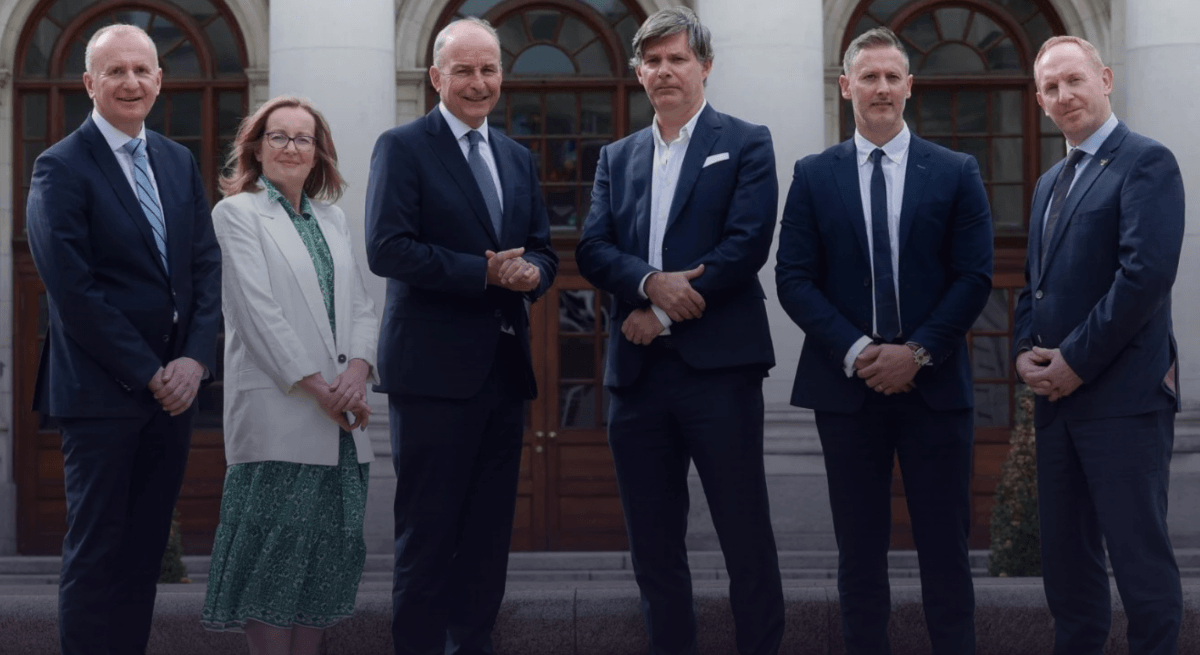

The organisation plans to expand its manufacturing and testing footprint across Ireland and the North West.
US tech firm Vertiv, which specialises in data centre and IT services, has submitted an application to Donegal County Council. The request involves adding an additional 7,000 square metres of space to the Letterkenny facility, which will generate up to 300 new jobs.
The organisation has plans to further develop its presence across the country, in particular the North West and will focus on recruiting for the Letterkenny, Donegal, Derry and Dublin sites.
According to Vertiv, the organisation has onboarded more than 500 across its local facilities since the beginning of 2026. The new opportunities are set to include multiple engineering and operational roles across the business, which will expand manufacturing capacity and deepen Vertiv’s technical expertise in power, cooling and industrialised infrastructure.
Commenting on the announcement, Taoiseach Micheál Martin, TD said, “Vertiv’s decision to expand in Donegal and create hundreds of new skilled jobs is very welcome news for the region and for Ireland.
“Investments of this scale support balanced regional development, strengthen our enterprise base, and demonstrate the confidence international companies continue to place in Ireland as a location for long-term growth.”
Paul Ryan, the president of Vertiv in Europe, the Middle East and Africa, said, “This planned investment reflects the strategic importance of our operations across Ireland and the North West. As demand for critical digital infrastructure continues to accelerate, we are helping customers to deploy AI and data centre capacity worldwide.
“The expected extension, together with continued recruitment across our facilities, is part of our ongoing actions to support continued growth, while creating opportunities for skills development and career growth across the region.”
Don’t miss out on the knowledge you need to succeed. Sign up for the Daily Brief, Silicon Republic’s digest of need-to-know sci-tech news.
The team behind the censorship-resistant Tor Browser has unveiled Snowflake Volunteer — a standalone Android app that lets you help people living in restricted countries bypass internet censorship.
Developed in collaboration with Portuguese Android studio Bloco, the app expands on Snowflake‘s capabilities. That’s Tor’s pluggable transport, which allows people on censored networks to connect to the Tor network via volunteer-operated proxies, making their connection appear as normal traffic.
Since its official launch in April, Tor reported that the app saw an increase from about 1,300 unique proxy IP addresses per day in May to 1,700 per day in June, marking a 29% increase in one month. That represents a win for raising public awareness and expanding its volunteer-led community.
Tor Browser is a free-to-use, privacy-focused network that routes Internet traffic through a series of secure computers run by volunteers in different countries — the “layers of an onion” —to prevent snoopers from identifying you personally as the one visiting sensitive sites.
Just like the best VPNs, Tor is all about protecting your privacy online. However, its system only works if people around the world volunteer to run the access points.
Tor bridges, like Snowflake, allow digital users living in safer countries to make their private connections available by turning their phones and computers into proxies, making it appear that they are making video or audio calls. A system that has been widely used as an alternative to VPNs in countries under censorship, including Iran.
It uses the “domain fronting” technique to establish a connection with one of the thousands of Snowflake proxies managed by volunteers. For users subject to censorship, if their Snowflake proxy is blocked, the broker will automatically find a new one.
🚨 New app alert! Android app called Snowflake Volunteer for those willing to help people reach the Tor network and circumvent censorship from their mobile devices. It was built open-source by Bloco, an Android app studio from Portugal. ❄️👉https://t.co/Ueltb49AqwAugust 3, 2026
What Snowflake actually needs is more volunteers’ proxies that can serve as disguised access points to the Tor network. Perfectly addressing this need, the Snowflake Volunteer app was created specifically to allow people with less technical experience to easily become these proxies and contribute to the network’s continued expansion.
Indeed, until now, the option was available for Android on Orbot, Tor’s main Android app, or via browser extensions, a desktop command-line tool, and manual access to Tor’s Kindness mode to facilitate the process.
The new app widely simplifies the experience. Users can simply install the app from F-Droid and Google Play (or build it from the source code) and let it run in the background to have their device become part of the Tor bridge. They can also restrict its use to networks with unlimited data, and set a limit on the number of people who can connect at the same time.
Once enabled, the app automatically connects with users seeking a Snowflake proxy and helps route their connection through the Tor network, making it easier and more rewarding to help others online, as people can see the impact of their actions.
Is it wise to use a VPN with Tor? Unfortunately, there is no universally accepted answer.
Tor’s official stance for most users is not to use a virtual private network (VPN) to avoid the risk of exposing identifying information. However, if you’re an experienced user who understands the technical aspects of VPNs and Tor routing, you could safely opt for more complex configurations.
Others, however, argue we should all use VPNs: particularly in countries with high levels of censorship, some believe it’s better to use VPNs, as they mix better into normal traffic and arouse less suspicion.
Unfortunately, though, this approach fails where VPNs are subject to restrictions or made illegal — further proof that, when it’s about digital security, there might be no one-size-fits-all solution.
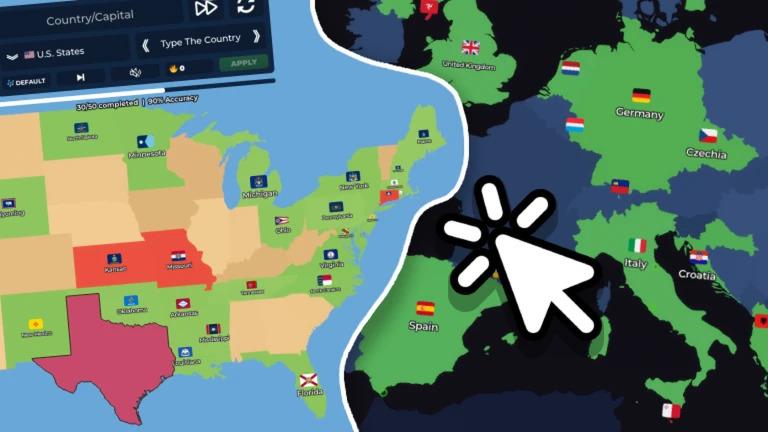
Roblox is home to thousands of games across different genres, and many of them go beyond action and simulation. Some of these games offer players the opportunity to learn about ancient civilizations, geography, and other cultures. These four Roblox games would be perfect for you if you are an adventurer who learns while having fun.

Click the Flag! is a geography-based game that tests your ability to recognize the flags of various nations and states around the world. The game includes different modes that make gameplay entertaining and interesting. Click the Flag! will help you develop your memory skills and increase your knowledge of geography in a fun way. It is the right game for those who like quizzes.

Queen Zenobia is a game that is based on the life of Zenobia, who was the queen of the ancient civilization of Palmyra. In this game, you remain seated on the throne and make various decisions as various characters such as citizens, generals, merchants, and envoys ask for your advice. These decisions determine the fate of the kingdom in terms of wealth, military, and popularity.
The game further enhances the historical aspect by comparing your decisions with those of Queen Zenobia. The combination of strategy, history, and decision-making makes this game very interesting to play for people who like decision games.

1867 Historical Role Play recreates the experience of living during the Victorian Era through a virtual village that accurately reflects 1867. The environment in the game is developed based on photographs and other documents from the past. It includes numerous tasks such as performing jobs, rowing a boat, rat hunting, gathering coins, etc.
The experience gives players a look at everyday life in the 19th century. It keeps the gameplay engaging through role-playing and exploration. It is a great pick for history enthusiasts and players who enjoy immersive gameplay.

In the “Where Am I” game, the process of geographical experience becomes interactive by placing the player into different sites around the world. To do it correctly, you have to take hints from elements such as road signs, architecture, landscapes, and popular landmarks. To play the game successfully, you need to observe your environment and make reasonable assumptions. It will be fun to explore places around the world and learn more about different regions and their cultures through this game. This Roblox game will be ideal for people who like traveling and geography.

A year ago, Armour Home told eCoustics that appointing American Audio & Video as the exclusive North American distributor for Q Acoustics, QED and Goldring would help accelerate growth and increase the visibility of all three brands. It made sense. These were hardly unknown quantities: Q Acoustics had built an enviable reputation for affordable loudspeakers that routinely punched above their price, Goldring had more than a century of analog credibility behind it, and QED had been connecting systems since most of us were still trying to figure out which end of a DIN plug went where.
And then things got strangely quiet.
That observation comes from someone who actually uses the products. I own five pairs of Q Acoustics loudspeakers that rotate through different systems and rooms, and QED cables are part of several of them. Our contributors have reviewed and recommended products from all three brands for years. The issue was never whether Armour Home could build good products. The problem was that while competitors including KEF, ELAC, Klipsch, Monitor Audio, Cambridge Audio, Audio-Technica, Ortofon and Grado kept fighting aggressively for dealer floors, reviews, social feeds and consumer attention, Armour Home’s North American presence became much harder to see.

Charlie Henderson apparently sees the problem as well. The former Cambridge Audio CMO and Naim Audio Managing Director took over Armour Home in May 2026, and when we asked whether Q Acoustics, QED and Goldring currently receive enough dealer support and visibility in the United States, his answer was refreshingly concise: “Not yet.” That matters, because Henderson has not been hired merely to polish three logos and issue press releases about another pair of loudspeakers. Armour wants him to rethink how these brands work together, how they reach consumers and how they move beyond the increasingly small hi-fi bubble. And if younger consumers have never walked into a specialty audio retailer outside of Best Buy, how exactly does Armour Home expect them to hear any of it?
Good products are no longer enough. Armour Home already has those. We wanted to know what comes next.
Henderson does not describe his mandate as tearing Armour Home apart and starting over. His word is “evolve,” specifically evolving the brands while defining a clearer mission for where the company goes next.
That mission involves moving “beyond the HiFi bubble into music culture,” with Armour spending more time listening to artists, producers and fans rather than focusing primarily on trade shows and industry meetings. There is a marketing component to that, obviously, but Henderson also sees a structural opportunity that Armour has not fully exploited.
“The link between our three-brand portfolios” is what he considers the company’s largest missed opportunity. Q Acoustics, Goldring and QED have largely existed as recognizable individual brands, but Henderson sees an opportunity for them to share engineering, R&D and creative resources without turning them into variations of the same thing.
By the end of 2027, he wants consumers to see “bolder and more confident design and personality,” greater alignment of technologies across the ranges and much closer engagement with music.
Goldring brings 120 years of analog experience. QED has been designing cables and connectivity products since 1973. Q Acoustics has spent two decades playing the challenger, often delivering loudspeakers that compete rather effectively with more expensive alternatives. Henderson believes technologies can move between those worlds, even suggesting that Armour could explore using Q Acoustics’ Gelcore technology beyond loudspeaker cabinet design and fine tune QED products specifically around its turntable and loudspeaker portfolios.

Q Acoustics has done very well with conventional passive loudspeakers, and products like the M40 have demonstrated that there is also a market for compact powered models. But Bluetooth alone is no longer enough if the company intends to compete seriously for consumers who increasingly expect their loudspeakers to connect directly to televisions, streaming services, smartphones and multiroom systems.
We asked Henderson directly whether Q Acoustics needs a fully networked active loudspeaker platform rather than simply another Bluetooth powered speaker.
“We’re watching with interest the ongoing shift to convenience solutions in audio and see a place for both Bluetooth and Wi-Fi solutions,” Henderson said.
That distinction matters. Wi-Fi opens the door to higher resolution streaming, app control, network integration and potentially multiroom playback in ways that Bluetooth alone cannot. It also puts Q Acoustics into a much tougher fight against companies that have spent years developing their connected ecosystems.
Henderson considers HDMI eARC particularly important because of the growing intersection between music and television audio. Room correction, however, is something he views as having more specific use cases rather than being universally essential. What he does consider universal is something the hi-fi industry still manages to screw up with surprising regularity: ease of use and reliability, particularly when an app sits in the middle of the experience.
Armour Home is not announcing its own software platform, nor did Henderson disclose a partnership with WiiM, BluOS, Google or another specific technology provider. He said the company already works with multiple partners across its brands and “regularly evaluate[s] our software strategy to keep up to date with tech developments and innovation.”
There is another rather obvious hole in the ecosystem.
If Armour Home wants consumers thinking about Q Acoustics, Goldring and QED as pieces of a complete music system, somebody still has to provide the electronics that sit between the source and loudspeakers.
Would Armour consider building its own integrated amplifier or network amplifier?
“Never say never,” Henderson replied, before adding that the current focus remains Q Acoustics’ family of traditional and connected loudspeakers.
Then came the more interesting part.
“I would be lying though if I said I hadn’t been thinking about opportunities.”
An Armour Home network amplifier connected to a Goldring turntable through QED cables and driving Q Acoustics loudspeakers would suddenly make the word “ecosystem” considerably more meaningful.
There is also a larger positioning question for Q Acoustics.

The company built much of its reputation by embarrassing more expensive loudspeakers. That is a fantastic way to get noticed, but eventually a successful value brand has to decide whether it wants to remain the less expensive alternative forever.
Henderson’s answer to whether Q Acoustics can move further into premium products without abandoning the value proposition was unequivocal: “100%.”
“Our reputation has been built as a challenger to the established speaker brands,” he said. “But built up over 20 years, we are no longer the new kids on the block, no longer teenagers. We have proven our design and acoustic capabilities time and time again, and now have a reputation based on performance not price.”
Q Acoustics does not want its identity permanently defined by being cheaper than KEF, Bowers & Wilkins, Monitor Audio, ELAC or anybody else. The company believes it has accumulated enough engineering credibility to compete on performance first.
If Q Acoustics already has the broadest consumer visibility of Armour Home’s three principal brands, Goldring may offer the greatest opportunity for expansion.

The company is best known for phono cartridges, but the GR3 turntable changed the conversation. We asked Henderson whether it was the beginning of a broader Goldring turntable range.
He did not exactly slam that door shut.
“Goldring is central to our portfolio and mission to move beyond the HiFi bubble into music culture. Vinyl sits at the heart of this. So, more to come…”
Goldring currently spans a substantial cartridge price range, with the E Series beginning at $119 and the Ethos SE reaching $1,999. The GR3 turntable with an E3 cartridge sells for $1,299. Henderson clearly believes the Goldring name has permission to travel beyond cartridges and a single turntable.
When we asked whether that could include phono stages, electronics, record cleaning products or even complete analog systems, Henderson responded that he would “find it hard to think of another brand with more permission.”
The wider Armour family also includes Milty, known for its anti-static gun, cleaning products and Exstatic record sleeves. Put those pieces together and the analog ecosystem begins to look considerably more developed than it first appears.
Goldring’s 120th anniversary creates another opportunity, and Henderson strongly suggested that whatever Armour has planned will be about more than putting a commemorative badge on an existing product.

“Whatever we reveal in due course will reflect this and will underpin the importance of Goldring not just in the Armour Home family, but for the audio community as a whole, as well as informing the direction of Goldring for the next chapter of its history.”
What Henderson does make clear is that the anniversary will help define Goldring’s future direction.
He is also willing to use outside expertise where appropriate. Henderson says Goldring remains fiercely protective of its design heritage, but does not view authenticity as requiring every component of every future product to be created internally.
The company will partner where it believes doing so brings the right technologies together. The non-negotiable part, according to Henderson, is maintaining the integrity of Goldring’s design philosophy and balancing its heritage with contemporary materials and technology.
Perhaps the most unexpected part of Armour’s future strategy involves the company whose entire identity is built around connecting things with wire.
QED is thinking about wireless.
Henderson would not disclose which specific wireless product categories Armour is considering, saying the company is “keeping things close to our chest for now.” But when we asked whether QED could develop products that make passive loudspeakers wireless or network compatible, his answer was considerably more interesting.
“Quite possibly. QED has always been about making the connections, and wireless tech has got us thinking for sure.”
There is a certain irony in a cable company helping consumers eliminate cables, but Henderson does not see a credibility problem.

“Demand for convenience (and wireless) is clear,” he explained, adding that QED intends to support those customers with the same enthusiasm it applies to listeners who continue to prefer traditional wired systems.
The bigger opportunity might be obvious. Millions of passive loudspeakers are already sitting in homes, and consumers increasingly want streaming convenience without replacing everything they own. A QED product designed to bridge those two worlds would make considerably more strategic sense than introducing another slightly different cable and hoping consumers can work out where it sits in the range.
Which brings us to another issue.
We asked Henderson whether QED’s lineup needs simplification so consumers can understand the differences without carrying a spreadsheet into the dealer.
He acknowledged the problem.
“It is true that it can sometimes be hard to navigate through a portfolio in this industry, and we are by no means exempt from that. News to come soon on this as we refresh and update our approach to the category.”
All of these product ideas become academic if consumers never see them.

When asked what Armour Home needs to change to grow more aggressively in the United States, Henderson did not blame tariffs, competitors or consumers suddenly losing interest in hi-fi.
His answer was two words: “Brand awareness.”
Henderson acknowledged that Armour’s recent U.S. strategy has been primarily direct to consumer with limited in-store presence. He also described the American specialist audio retail environment as “world class” and said he intends to rekindle relationships with former retail partners.
We pushed further. Are Q Acoustics, Goldring and QED receiving enough dealer support and visibility in the United States today?
“Not yet.”
The U.S. specialist dealer network may be excellent, but it is not 1987 anymore. Consumers can walk into an Apple Store, Best Buy or phone retailer almost anywhere and experience the latest personal technology. Finding a store where someone can demonstrate the difference between two pairs of passive loudspeakers, explain cartridge setup or show why one cable product exists alongside six others requires considerably more effort.
Armour needs dealers, but dealers cannot be the entire strategy.
One of the more intriguing pieces of the plan involves putting Armour Home products into spaces where people are already engaging with music rather than expecting consumers to discover hi-fi through the traditional retail funnel.
Conversations are already underway about potential listening spaces in Brooklyn, including discussions involving Grado, which Armour distributes in the U.K. Henderson says conversations are also taking place elsewhere in the United States.
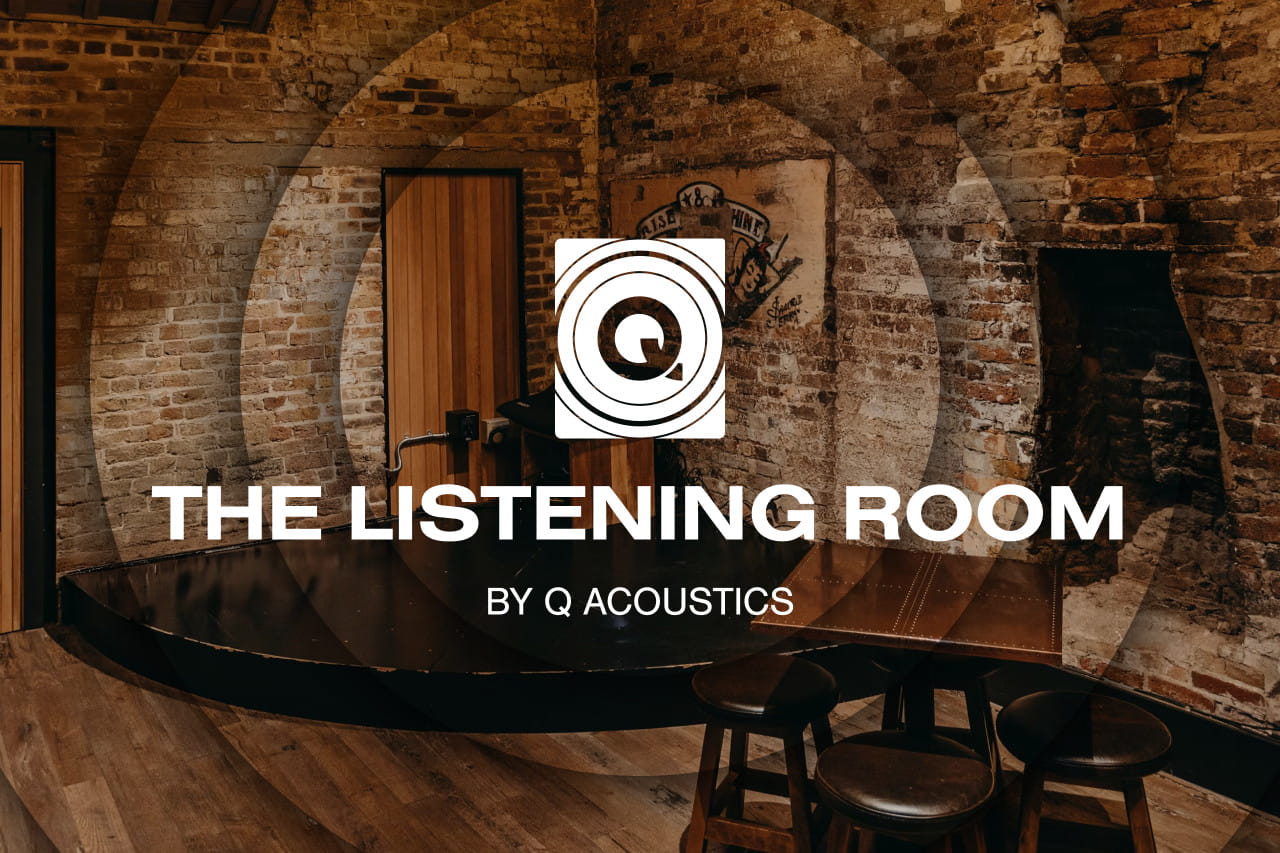
He is particularly interested in Japanese Kissa listening bar culture, and notably does not believe Armour should restrict the idea to New York, Los Angeles or the other predictable major markets.
“The solution is not necessarily the biggest cities or obvious choices for city locations,” he explained.
That could prove far more interesting than another hotel room demonstration at an audio show.
Henderson is also skeptical of temporary promotional installations. When asked how much Armour was prepared to commit beyond short-term events, he replied that he is “not a fan of temporary promotional events.”
“Our mission is clear, when we talk about being a part of music culture it means that we are physically embedded in these spaces. Not for a weekend, but for everyday.”
Armour says it is open to requests from venues that share that perspective and will evaluate opportunities individually.
There are no announced locations, budgets or opening dates yet, so this remains an ambition rather than an established U.S. network. But the premise makes sense.
If younger consumers are not walking into hi-fi stores, putting good audio systems into places where they already listen to records, drink coffee, socialize and discover music might be a more productive introduction than waiting for them to spontaneously develop an interest in two-channel retail.
Henderson also rejects the idea that younger listeners are interested only in headphones, Bluetooth speakers and soundbars.
His reasoning comes partly from his time at Skullcandy, when portable listening dominated the younger market, and partly from what he sees happening around vinyl now.
“Younger listeners want access to their music full stop,” Henderson said.
He points specifically to what he calls the “inheritance community”: younger listeners who are handed down a turntable, amplifier or pair of loudspeakers and subsequently begin exploring more traditional audio systems themselves. Henderson says that trend has also contributed to increased interest in older electronics.
That is a consumer the traditional hi-fi industry should be paying considerably more attention to.
Someone inheriting Dad’s amplifier and a pair of 30-year-old loudspeakers is not necessarily looking for a $20,000 system. They may need a turntable, cartridge, cable, compact pair of loudspeakers or an easy way to stream Spotify or Qobuz through equipment built before Wi-Fi existed.

Armour is also paying attention to where younger customers actually live.
Smaller homes, apartments and desktop systems are increasingly important, and Henderson points to the ongoing demand for the Q Acoustics M20 powered loudspeakers as evidence that customers want compact products as they move beyond headphones and portable Bluetooth speakers.
He says Q Acoustics will continue expanding in that direction alongside its traditional passive loudspeaker range.
Modern interiors are influencing the conversation as well. Henderson says Armour sees opportunities to use more contemporary materials while paying closer attention to color and fashion trends.
Before anyone reaches for the audiophile smelling salts, this is not an admission that engineering suddenly matters less than whether the loudspeaker matches the sofa.
It is recognition that products live in rooms.
For decades, the audio industry has occasionally behaved as if normal consumers should simply accept a pair of enormous black boxes in the living room because somebody produced an impressive waterfall plot. That argument becomes more difficult when buyers have dozens of visually sophisticated consumer electronics alternatives competing for the same space.
The value equation is becoming harder as well.
Chinese manufacturers have demonstrated that enormous feature lists, excellent measured performance and aggressive pricing can coexist. That puts pressure on established British, European, Japanese and American audio manufacturers that can no longer assume heritage alone will justify the difference.
Henderson says Armour does not intend to compete solely on price.
“We pride ourselves on our design, engineering excellence and product quality,” he said. “We strive to develop and support products that are defined through understanding our audience, not just responding to tech opportunities.”
He also believes British design and brand heritage still matter when consumers compare products online, but his reasoning goes beyond sticking a Union Jack on the carton.
In a market increasingly influenced by AI recommendations, Henderson believes reviews, customer feedback, reputation and experience will become even more important. That places an even greater burden on Armour to make products people actually use, recommend and understand.
Material and component costs are also creating pressure, particularly at QED, where Henderson says volatility in raw materials and metal prices has created challenges. Armour says it is using forecasting and future product planning to manage those costs while maintaining performance and quality.
More importantly, Henderson says the company remains committed to entry-level products.

“We see our role as ensuring that we offer systems and components that enable the widest possible audience to fall in love with music.”
That does not mean cramming every possible feature into the cheapest product.
Henderson argues that fewer features at lower price points can sometimes be an advantage because reduced complexity can make a product more desirable and easier to use.
He has a point.
The affordable audio market does not necessarily need another app with 14 menus, three firmware updates during setup and a privacy agreement longer than the Torah. Sometimes a good pair of loudspeakers, an amplifier with the connections people actually use and a product that works every morning is the stronger value proposition.
Our final question may have produced Henderson’s most revealing answer.
We asked which product category Armour Home would deliberately avoid regardless of market demand.
Rather than naming a specific category, Henderson took aim at “some of the more controversial extremes of high-end audio,” particularly products supported by what he called “‘lightweight’ technical evidence.”
“For me, our role and responsibility is to deliver the best music experience, and not simply to try and maximise the $$$ from a customer.”
Henderson would rather customers have money left for concerts, listening bars and artist merchandise.
Armour Home wants Q Acoustics, Goldring and QED to become more connected without losing their identities. It wants more technology, but not technology merely because another manufacturer put it on a spec sheet. It wants premium products without abandoning entry level customers, stronger U.S. retail relationships without relying exclusively on traditional dealers, and more involvement in music culture without treating every interaction as a weekend marketing activation.
There is a lot to like in Henderson’s vision, and there are also plenty of unanswered questions.
We still do not know what a true Armour Home ecosystem will ultimately include. There is no confirmed Q Acoustics Wi-Fi platform, Armour amplifier, expanded Goldring electronics range or QED wireless product to put on a calendar. The proposed American listening spaces are still in the conversation stage, and Henderson openly acknowledges that dealer support and visibility in the United States are not where they need to be.
That makes the next 18 months considerably more important than another round of awards.
Q Acoustics, Goldring and QED do not need to prove that they can make excellent products. They have already done that. They need to make themselves easier to discover, easier to experience and easier to understand as parts of something larger.
Charlie Henderson clearly has ideas about how to make that happen.
Now Armour Home has to execute.
For more information: armourhome.co.uk

This article is republished from The Conversation under a Creative Commons license. Read the original article.
Dr. Anthony Fauci invoked the Fifth Amendment and declined to answer questions from a Senate committee more than 100 times on July 29, 2026.
The Republican-led hearing – convened to scrutinize Fauci’s management of the pandemic and the origins of COVID-19 – was the latest chapter in a political story that began in 2020, when uncertainty, fear and frustration with the government became entangled with conspiracy theories.
In the past six years, some of these theories have emerged from the margins of the internet and made their way into Republican politics, the MAGA movement, anti-vaccine communities and even white-nationalist extremist networks.
Conspiracy theories do not simply explain events, they identify villains – and Fauci has become one of the most popular in this particular story.
In the years since the pandemic, U.S. Sen. Rand Paul and others have accused Fauci of many things, but the central conspiracy accusation is that Fauci helped enable the COVID-19 pandemic through U.S.-funded research at a lab in Wuhan, China, and then participated in a coordinated government-scientific cover-up, misleading Congress to conceal that connection and suppress the laboratory-leak explanation. Paul, a Republican, has repeatedly called for Fauci’s prosecution.
In January 2025, President Joe Biden granted Fauci a preemptive pardon covering potential federal offenses related to his government service since 2014. Fauci had not been charged with a crime, but critics portrayed the pardon as evidence that he had something to hide. Fauci has denied claims of wrongdoing and has testified multiple times before Congress.
The Fauci conspiracy is much bigger than Rand Paul, though. Paul may be its most persistent congressional promoter, but it’s been amplified by a wider network of Republican lawmakers. Several Republican members of Congress, such as Rep. Steve Scalise, Rep. James Comer and former Rep. Brad Wenstrup, among others, have advanced versions of the Fauci/COVID-origin narrative. House Republicans formally investigated these claims for two years, while members repeatedly accused Fauci of suppressing the lab-leak theory and misleading the public.
That investigation ultimately endorsed a central claim of the conspiracy narrative: the House GOP’s COVID-19 investigation concluded the virus most likely leaked from a Wuhan lab, that Fauci helped shape a scientific paper dismissing that theory, and that he privately testified the “six feet apart” guidance “sort of just appeared” – though these are the conclusions of a partisan committee, not an independent inquiry, and Fauci and Democratic members have disputed them.
I’m an associate professor of sociology and criminology, and my scholarship focuses on far-right networks and digital radicalization – the exact ecosystem where these conspiracy theories have taken root and spread. My research on how these movements evolve online and intersect with political activists and extremist networks was directly relevant to tracing how COVID-origin claims moved from fringe communities into mainstream political discourse.
Fauci’s decision to invoke the Fifth Amendment, which he and his lawyer explained not only as a basic constitutional right but also a strategy to avoid the possibility that Paul might try to prosecute him for lying to Congress based on anything he might say, may be politically explosive and provide his opponents with another talking point. But, in my assessment, the spectacle says more about what happens when conspiracy theories become embedded in political institutions than it does about the origins of COVID-19.
COVID-19 created the conditions in which conspiracy theories flourish: enormous uncertainty, frightening consequences, rapidly changing information and distrust of institutions.
People wanted explanations. Why did the virus appear in Wuhan? Why did recommendations about masks change? How were vaccines developed so quickly?
These questions were legitimate. Problems emerged when those questions became connected to a predetermined conclusion: Powerful people either created the pandemic or concealed the connection to the lab in Wuhan.
A 2021 survey by the Public Religion Research Institute illustrates how widespread one version of this thinking was. About 4 in 10 Americans – 39% – agreed that the coronavirus had been intentionally developed by scientists in a laboratory. Among QAnon believers – a sprawling conspiracy theory claiming that a cabal of powerful elites, often portrayed as child-trafficking Satanists, controls government and society and that Donald Trump was secretly fighting it – the figure was dramatically higher, at 85%. The same survey found that people who embraced anti-elite and anti-expert attitudes were more likely to accept coronavirus conspiracy theories.
Conspiracy thinking is rarely isolated. For example, a person who comes to believe that public health officials are secretly manipulating information may be more receptive to claims that vaccines contain hidden dangers. Someone who distrusts pharmaceutical companies may be more receptive to claims that the pandemic was engineered for profit. Someone who believes powerful elites routinely operate in secret may be more receptive to broader conspiracy narratives such as QAnon.
These beliefs can reinforce one another, creating a broader worldview in which institutions, experts and government officials are presumed to be acting deceptively.
Because Fauci was highly visible during the pandemic, advising presidents and appearing on television, he quickly became associated with government efforts to control the spread of the virus.
For some Republicans and MAGA activists, and others who distrust the government and scientific institutions, Fauci came to represent lockdowns, masks, vaccines and government mandates.
Anti-vaccine activists incorporated him into broader narratives about pharmaceutical companies and public health agencies. Conspiracists took the story further, portraying Fauci as part of a secret effort to conceal the origins of COVID-19. Extremists connected these claims to older ideas about government tyranny, social control and corrupt elites.
The result was a feedback loop.
Claims were generated in online communities, repeated by political figures and amplified by media personalities, who injected these talking points back into supporters’ social media feeds. The repetition made the claims feel increasingly familiar – and familiarity can be mistaken for evidence.
Asking whether SARS-CoV-2 emerged through either zoonotic spillover, which is when a virus jumps from animals to people, or through a laboratory-related incident is not inherently a conspiracy theory. Scientists and governments have legitimate reasons to investigate the origins of a pandemic.
The World Health Organization’s independent scientific advisory group reported in 2025 that much of the information needed to fully evaluate the competing hypotheses had not been provided by China. It concluded that the available evidence suggests spillover but maintained that the laboratory-leak hypothesis could not be ruled out.
There is, however, a distinction between investigating whether a laboratory accident might have occurred and claiming that scientists created a virus and intentionally released it. That distinction is important in returning to Fauci and the claims raised at the July 29 hearing: Were lawmakers investigating the possibility of an accidental laboratory release, or were they advancing the more conspiratorial idea that scientists deliberately created and released the virus?
The Republican-led House subcommittee argued that U.S. government–funded research may have contributed to the pandemic.
The investigation did not establish that the virus was intentionally manufactured or released.
Today, the scientific question of where SARS-CoV-2 originated remains unresolved. But conspiracy theories can transform the absence of evidence into evidence of concealment.
The most consequential feature of conspiracy theories may be their ability to move from one group to another.
A claim can begin in an obscure online community and spread through social media to become a political weapon.
The Fauci hearing demonstrates the culmination of that process. These claims have moved into the formal machinery of government, where they are being amplified by elected officials and federal agencies. A theory’s credibility can increase simply because someone with greater institutional authority has repeated it.
That may be the most important question surrounding Fauci’s hearing: What happens when conspiracy theories acquire the authority of the government?
Art Jipson is Associate Professor of Sociology at the University of Dayton
Filed Under: anthony fauci, conspiracy theories, covid, rand paul



Weekend Open Thread: Mattifying Sunscreen


Frugal Friday’s Workwear Report: Cap-Sleeve Pointelle Crewneck Sweater


Jordan Coyle & Cordiamo take Laya Arena Stakes at RDS


Can Astrology Help Find Gold and Silver Trends? A Financial Astrology Guide

US stocks: Dow closes at record on Mideast optimism; SpaceX, AMD drag Nasdaq


Reform UK And Greens Sink To Lowest Favourability Ratings To Date


Nvidia Stock Climbs 2.5% as Chip Sector Rally Builds Ahead of AMD Earnings, Nvidia’s Own Report Looms


OpenAI, Anthropic AI agents targeted real people and systems in cyber tests


Polymarket targets $20 billion valuation as competition heats up in prediction market sector


Supply chain issues impact Ingredion

CLARITY Act Senate Vote Locked In, But 60-Vote Hurdle Looms Large


Rinn Pharma & Biopharma to join NordicPharmaTrain network


How to Start a Cleaning Business: A Step-by-Step Guide

Dow and S&P 500 Hit Records on AI Earnings: When Will the Bubble Burst?


Datadog: Best Of Breed For Multiple Reasons


BDC Weekly Review: Private BDC Q2 Numbers Are Strong
Trump Administration Plans Ban on New Chinese AI Data Center Components: Report

Dollar Index Trapped at 100 as Hawkish Fed Meets Official Selling


McDonald’s (MCD) Q2 2026 earnings


The Bright Side of Black and White



You must be logged in to post a comment Login