
Crypto World
What are blockchain rollups and how do they scale Ethereum



Ethereum can process roughly 15 transactions per second. That is less than a single Starbucks checkout line. Rollups are the technology that lets Ethereum handle thousands of transactions per second without sacrificing the security that makes it valuable in the first place. They work by executing transactions off chain and posting compressed proofs back to Ethereum, turning the base layer into a settlement court rather than a transaction processor.
The standard narrative says that rollups make Ethereum faster. This is technically true but misleading. Ethereum itself does not get faster. It still produces a block every 12 seconds. It still processes roughly 15 transactions per second on the base layer. Nothing about Ethereum’s consensus or execution changes when a rollup deploys.
What changes is where the work happens. Rollups move transaction execution off the Ethereum mainnet and onto a separate chain that can process transactions much faster because it does not need thousands of validators to agree on every state change. The rollup then compresses the results and posts them back to Ethereum, where they are verified and made permanent.
The analogy that most explanations use is a court system: the rollup handles the day to day transactions (the cases), and Ethereum serves as the court of final appeal (the judge). This analogy is useful but incomplete. The more precise framing is that rollups convert Ethereum from a transaction processor into a data availability and verification layer. The base chain stops doing the work and starts checking the work.
Understanding why this matters requires understanding what makes Ethereum slow in the first place, and why the obvious solutions do not work.
Why Ethereum cannot simply increase its throughput
Ethereum processes approximately 15 transactions per second. The intuitive fix is to increase the block size or reduce the block time, allowing more transactions per block or more blocks per unit of time. Every first generation blockchain project that tried this approach discovered the same problem: larger blocks require more powerful hardware to validate, which prices out smaller node operators, which concentrates validation among fewer entities, which undermines decentralization.
This is the blockchain trilemma. You can optimize for any two of three properties (security, decentralization, throughput) but improving the third requires sacrificing one of the others. Increasing Ethereum’s block size would improve throughput at the cost of decentralization. Reducing the validator count would improve throughput at the cost of security.
Rollups sidestep the trilemma by separating execution from verification. The rollup chain handles execution with a small number of operators, achieving high throughput. Ethereum handles verification and data availability with its full validator set, maintaining security and decentralization. Neither chain compromises, because each is optimized for a different function.
This is not a theoretical argument. Solana, which chose to optimize for throughput over accessibility, requires validators to run hardware costing thousands of dollars and processes blocks that are hundreds of megabytes. Ethereum validators can run on a consumer laptop. The rollup architecture lets Ethereum achieve Solana’s throughput without Solana’s hardware requirements by moving execution to a separate layer.
How optimistic rollups work
Optimistic rollups are named for their core assumption: transactions are assumed to be valid unless proven otherwise.
The process starts with a sequencer, a node operated by the rollup team that collects user transactions, orders them, and executes them in batches. The sequencer produces a new rollup state after each batch, just as Ethereum produces a new state after each block.
Instead of requiring every validator to re-execute every transaction, the optimistic rollup posts the batch data to Ethereum and publishes a state root (a cryptographic hash of the rollup’s state after executing the batch). This state root is accepted as correct unless someone challenges it.
The challenge mechanism is the fraud proof system. During a challenge window, typically seven days, anyone can examine the batch data posted to Ethereum, re-execute the transactions locally, and compare their result to the published state root. If the results differ, the challenger submits a fraud proof to a smart contract on Ethereum, which re-executes the disputed transaction on chain and determines who is correct.
If the fraud proof shows that the sequencer published an incorrect state root, the sequencer’s staked collateral is slashed, the incorrect state root is reverted, and the challenger receives a reward. If no one challenges the state root within the challenge window, it is finalized on Ethereum and becomes the canonical state of the rollup.
This design is elegant because it moves the expensive work (re-execution and verification) off the critical path. In the normal case, where the sequencer is honest, no on chain re-execution happens at all. The cost of operating the rollup reduces to posting compressed batch data to Ethereum, which is dramatically cheaper than executing every transaction on the base layer.
Arbitrum and Optimism are the two largest optimistic rollups. Arbitrum uses an interactive dispute resolution protocol that narrows the disputed computation down to a single instruction before re-executing it on chain, minimizing the on chain gas cost of fraud proofs. Optimism uses a non-interactive fraud proof system where the entire disputed transaction is re-executed in a single on chain step.
Base, built by Coinbase using the OP Stack (Optimism’s open source framework), has become the fastest growing rollup by transaction volume, driven by consumer applications and the integration with Coinbase’s user base.
How ZK rollups work
ZK rollups take the opposite approach: they prove correctness up front rather than assuming it.
After the sequencer executes a batch of transactions, a prover generates a cryptographic validity proof (typically a zk-SNARK or zk-STARK) that mathematically demonstrates the batch was executed correctly. This proof, along with the batch data, is posted to a verifier contract on Ethereum. The verifier checks the proof, which is computationally cheap and takes constant time regardless of how many transactions the batch contains.
The advantage is finality. There is no seven day challenge window. As soon as the proof is verified on Ethereum, the batch is finalized. Users can withdraw assets from a ZK rollup to Ethereum in minutes rather than waiting a week.
The disadvantage is cost. Generating a validity proof for a complex batch of transactions requires significant computational resources. ZK proof generation is a mathematically intensive process that can take minutes for large batches and requires specialized hardware. This cost is amortized across all transactions in the batch, but it adds a per-batch overhead that optimistic rollups avoid.
ZK rollups are also more difficult to build. Optimistic rollups can support the same virtual machine as Ethereum (the EVM) with relatively minor modifications, which means existing Solidity smart contracts work with little or no changes. ZK rollups historically required developers to write contracts in specialized languages like Cairo (used by StarkNet) because the EVM’s instruction set was not designed for efficient zero-knowledge proof generation.
This gap is closing. zkSync Era and Polygon zkEVM have implemented EVM-compatible ZK rollups that can execute standard Solidity contracts, though with varying degrees of compatibility. Scroll, another ZK rollup, aims for full EVM equivalence, meaning contracts deployed on Ethereum can be deployed on Scroll without any modification.
Blobs and the Dencun upgrade: the economics shift
Before March 2024, rollups posted their batch data as calldata in Ethereum transactions. Calldata is stored permanently by every Ethereum node, which makes it expensive. A typical rollup batch cost $500 to $2,000 in calldata fees during periods of high Ethereum congestion.
The Dencun upgrade introduced EIP-4844, which created a new data type called blobs. Blobs are large chunks of data (approximately 128 KB each) that are attached to Ethereum transactions but are only stored temporarily, for approximately 18 days, rather than permanently. This makes them dramatically cheaper than calldata.
The impact was immediate and measurable. Transaction fees on Arbitrum dropped from an average of $0.25 to under $0.01. Fees on Base dropped to fractions of a cent. The cost of posting a rollup batch to Ethereum fell by more than 90%.
This matters because it changes the economic equation for rollup adoption. When layer 2 transactions cost $0.25, only users with transactions above a certain value threshold would choose the rollup over a competing chain with lower base fees. When layer 2 transactions cost $0.001, the cost advantage of competing chains largely disappears, and the security advantage of Ethereum settlement becomes the deciding factor.
Blobs are the first step toward full danksharding, a future upgrade that will increase the number of blobs per block from the current target of three to 64 or more. Each step in this progression further reduces rollup costs and increases the data throughput available for layer 2 settlement on Ethereum.
The sequencer centralization problem
Almost every major rollup today runs a single sequencer operated by the rollup team. Arbitrum’s sequencer is run by Offchain Labs. Optimism’s sequencer is run by OP Labs. Base’s sequencer is run by Coinbase.
This centralization creates several risks. If the sequencer goes down, the rollup halts. If the sequencer censors certain transactions, users cannot interact with the rollup normally. If the sequencer reorders transactions to extract MEV, users pay a hidden tax.
Rollup teams defend this centralization as a temporary measure. Decentralizing the sequencer, by introducing a rotating set of sequencers or using a shared sequencing layer, is on every major rollup’s roadmap. But roadmaps are not deployments.
The mitigation is forced inclusion. Most rollups include a mechanism that allows users to submit transactions directly to the Ethereum base layer, bypassing the sequencer entirely. If the sequencer censors your transaction, you can force it through the rollup’s on chain contract. This process is slower and more expensive than going through the sequencer, but it prevents permanent censorship.
The degree to which forced inclusion actually works in practice, under the time constraints and gas costs of real world usage, is a meaningful differentiator between rollups. L2BEAT, the primary independent tracker of rollup security properties, rates each rollup on the maturity of its forced inclusion mechanism along with several other security criteria.
The fragmentation problem
Ethereum’s rollup strategy has succeeded in creating scalable execution environments. It has also created a fragmentation problem that did not exist before rollups.
A user with assets on Arbitrum cannot directly use them on Base. A DeFi protocol on Optimism has separate liquidity from the same protocol on zkSync. An NFT minted on StarkNet cannot be sold on a marketplace running on Scroll.
Each rollup is its own chain with its own state, its own bridge to Ethereum, and its own ecosystem of applications. Moving assets between rollups requires bridging, which introduces delay (seven days for optimistic rollup withdrawals to Ethereum), cost (gas fees on both the source and destination chains), and risk (bridge smart contract vulnerabilities).
This is not merely an inconvenience. It is a structural problem that undermines the network effects that make Ethereum valuable. If liquidity is split across 30 rollups, no single rollup has the depth of liquidity that Ethereum mainnet had when it was the primary execution environment.
Solutions are being developed. Shared sequencing layers like Espresso aim to coordinate transaction ordering across multiple rollups, enabling atomic cross-rollup transactions. Interoperability protocols like Chainlink CCIP and LayerZero provide messaging layers that let rollups communicate. ERC-7683, a cross-chain intent standard, aims to standardize how users express cross-rollup transfers.
None of these solutions are mature enough to eliminate fragmentation today. Whether the rollup ecosystem converges on a small number of dominant chains or remains fragmented across dozens is an open question with significant implications for where users, developers, and liquidity settle.
The security model differs in more subtle ways as well. In an optimistic rollup, security depends on at least one honest verifier watching the chain and submitting fraud proofs when needed. If every verifier is offline or colluding, invalid state transitions could be finalized after the challenge window closes. In practice, multiple independent verifiers monitor every major optimistic rollup, and the economic incentive to catch fraud (the challenger receives slashed collateral) makes this attack expensive to sustain. But the theoretical requirement is weaker than a ZK rollup, where the mathematical proof itself guarantees correctness regardless of who is watching.
The user experience implications of rollup choice extend beyond fees and finality. Wallet support, token availability, and application deployment all vary across rollups. A user who bridges assets to a rollup with limited DeFi protocol deployment may find their capital stranded in an ecosystem with few productive uses. The interoperability problem compounds this: moving assets back to Ethereum or to a different rollup incurs additional bridging fees and time delays that can negate the cost savings that attracted the user to the rollup in the first place.
What this does not cover
This article does not cover the internal architecture of specific rollup virtual machines. The differences between Arbitrum Nitro, the OP Stack, and StarkNet’s Cairo VM are significant and affect developer experience, performance, and security properties. Each deserves dedicated analysis.
This article does not cover validiums and volitions, which are rollup variants that post data to a separate data availability layer rather than to Ethereum. These systems trade some of Ethereum’s security guarantee for lower costs, and the tradeoffs are nuanced.
This article does not address the token economics of rollup governance. ARB, OP, STRK, and ZK tokens each have different governance, staking, and incentive structures. Whether rollup tokens accrue value to holders or function primarily as governance instruments is an active debate with implications for investment decisions.
Practical checks before choosing a rollup
Check the rollup’s security stage on L2BEAT. L2BEAT classifies rollups into three stages based on the maturity of their proof systems, upgrade mechanisms, and governance. Stage 0 rollups rely heavily on trust in the rollup team. Stage 1 rollups have functional proof systems but retain upgrade keys. Stage 2 rollups have fully trustless proof systems with minimal centralized control. Most major rollups are still at Stage 0 or Stage 1 as of mid 2026.
Understand the withdrawal time. Optimistic rollup withdrawals to Ethereum take approximately seven days due to the fraud proof challenge window. Fast bridge services can accelerate this by fronting the funds, but they charge a fee and introduce counterparty risk. ZK rollup withdrawals can complete in minutes once the validity proof is verified. This difference matters if you need rapid access to your assets on Ethereum mainnet.
Verify the forced inclusion mechanism. If the sequencer goes down or censors your transaction, can you force your transaction through the on chain contract? Check whether the rollup has a functioning forced inclusion mechanism and how long the delay is. A rollup without forced inclusion is a centralized chain with Ethereum branding.
Compare actual transaction costs. Rollup fees vary based on the rollup’s compression efficiency, batch frequency, and the current price of Ethereum blob space. Use a rollup fee tracker to compare the actual cost of common operations (token transfer, swap, contract deployment) across rollups at the time you plan to use them, rather than relying on historical averages.
Check the ecosystem. The cheapest rollup is not useful if the application you need is on a different rollup. Verify that the DeFi protocols, NFT marketplaces, or wallet infrastructure you plan to use are deployed and liquid on the rollup you choose.
-
What is a blockchain rollup?
A rollup is a layer 2 scaling solution that executes transactions on a separate chain and posts the transaction data or a cryptographic proof back to a layer 1 blockchain like Ethereum. This allows the rollup to process thousands of transactions per second while relying on Ethereum for security and data availability. The term rollup refers to the way many transactions are rolled up into a single batch before being submitted to the base layer.
-
What is the difference between optimistic and ZK rollups?
Optimistic rollups assume transactions are valid and allow a challenge period (usually seven days) during which anyone can submit a fraud proof if they find an error. ZK rollups generate a mathematical proof that verifies the entire batch was executed correctly before it is accepted on Ethereum. The practical difference is that optimistic rollups have longer withdrawal times but are easier to build, while ZK rollups offer faster finality but require more computational resources for proof generation.
-
Why do optimistic rollup withdrawals take seven days?
The seven day window exists to give fraud provers enough time to detect and challenge an invalid state root submitted by the sequencer. If withdrawals were instant, a malicious sequencer could submit a fake state root, withdraw funds to Ethereum, and disappear before anyone could prove the fraud. The seven day delay ensures there is enough time for the verification game to play out. Fast bridge services can provide instant withdrawals by fronting the funds, but they charge a fee for this service.
-
What are blobs and how did they reduce rollup costs?
Blobs are a new data type introduced by Ethereum’s Dencun upgrade (EIP-4844) in March 2024. Before blobs, rollups posted batch data as calldata, which is stored permanently by every Ethereum node and is expensive. Blobs are stored temporarily (approximately 18 days) and have their own fee market separate from regular Ethereum transactions. This reduced rollup transaction costs by over 90% because the data storage, which is the primary cost of operating a rollup, became dramatically cheaper.
-
Is using a rollup as safe as using Ethereum directly?
A rollup inherits Ethereum’s security for the data it posts to the base layer, but additional trust assumptions apply. The sequencer is typically a single centralized operator that could censor transactions or go offline. The rollup’s smart contracts on Ethereum may have upgrade keys controlled by the team. The fraud proof or validity proof system may still be under development. L2BEAT’s stage classification system rates these properties. A Stage 2 rollup with a fully decentralized proof system approaches Ethereum’s security level. Most rollups today are not at Stage 2.
-
What happens if a rollup’s sequencer goes offline?
If the sequencer goes offline, new transactions on the rollup cannot be processed through the normal channel. However, most rollups include a forced inclusion mechanism that allows users to submit transactions directly to the rollup’s smart contract on Ethereum, bypassing the sequencer. This is slower and more expensive than normal operation, but it prevents the sequencer outage from permanently locking user funds. The quality and accessibility of forced inclusion mechanisms varies significantly between rollups.
-
Why are there so many different rollups?
The rollup framework is modular and open source, which makes it relatively easy to launch a new rollup. The OP Stack (from Optimism) and Arbitrum Orbit both allow developers to deploy custom rollups with pre-built infrastructure. Different rollups optimize for different use cases: some target DeFi, others target gaming, others target enterprise applications. However, the proliferation of rollups has created fragmentation problems including split liquidity, bridging complexity, and user confusion.
-
Which rollup should I use?
The best rollup depends on what you want to do. For DeFi with the deepest liquidity, Arbitrum currently leads. For consumer applications integrated with Coinbase, Base is dominant. For applications that prioritize fast finality and do not want seven day withdrawal delays, ZK rollups like zkSync Era or StarkNet are worth considering. Compare current transaction costs, check that the applications you need are deployed, and verify the rollup’s security stage on L2BEAT before committing significant assets.
Disclaimer: This article is for informational and educational purposes only. It does not constitute financial, investment, or legal advice. Cryptocurrency markets are volatile and carry significant risk. Always conduct your own research before making investment decisions.

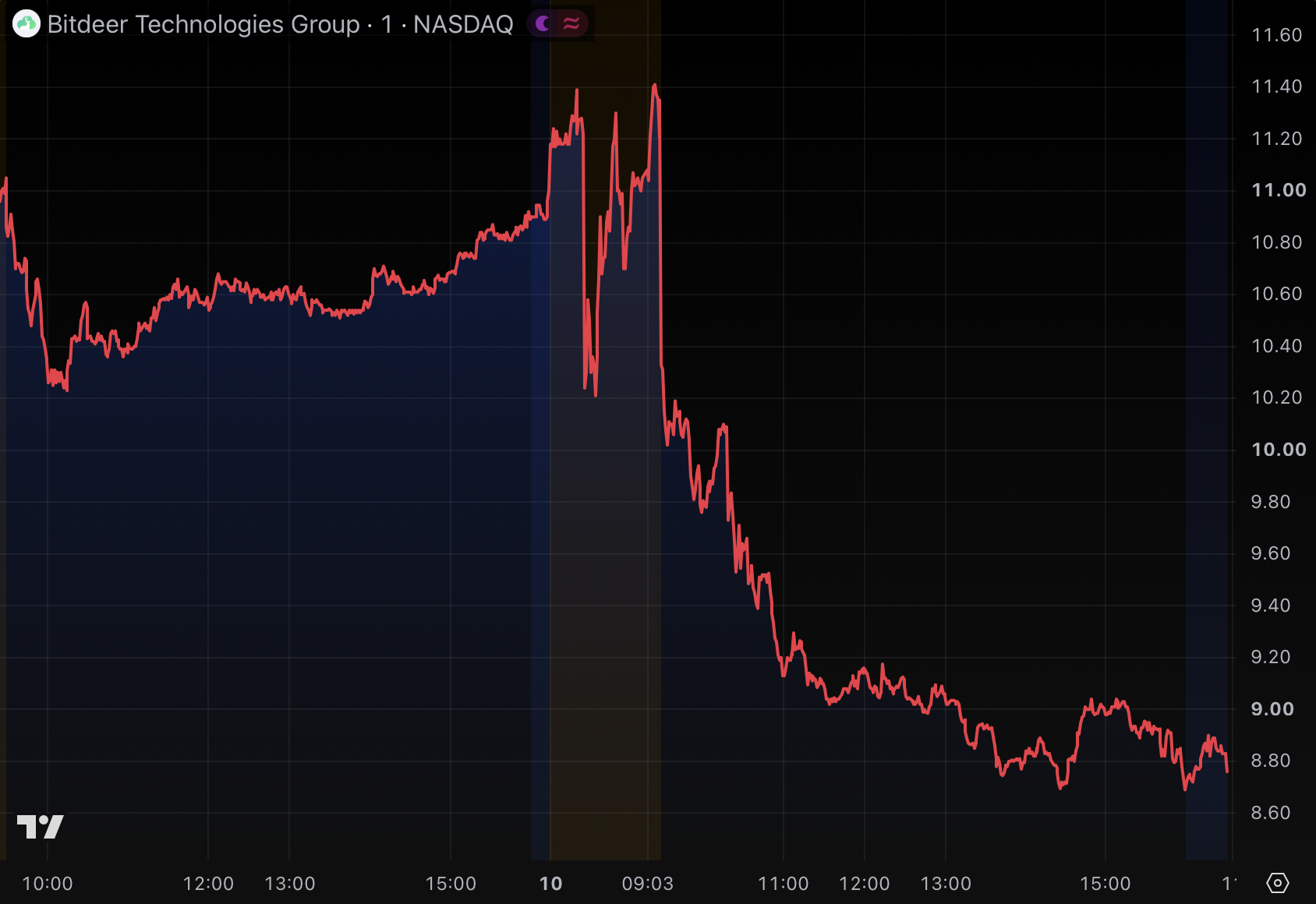
Bitdeer Technologies shed a fifth of its market value on August 10, closing at a market capitalization of $2.11 billion, down 19% from Friday’s $2.65 billion.
The BTC miner had posted a slightly wider quarterly loss than Wall Street expected that morning in its earnings announcement, and more importantly, it filed a shelf registration to dilute shareholders with up to $1 billion in new stock.
The stock’s plunge was idiosyncratic, not mirroring the price of broader markets nor BTC. Indeed, the Nasdaq closed within 0.4% of its Friday close, and BTC traded within 2%.
Bitdeer investors were reacting to the company’s particular disclosures, not the broader market.
Bitdeer reported second quarter revenue rising 47% versus Q2 2025 to $228.8 million, beating analysts’ consensus estimate of $225.7 million.
Its per-share earnings loss of $0.37 per share missed analysts’ $0.36 model, a forgivable single cent miss.
Behind those numbers, however, the company’s margins swung in the wrong direction. Gross margin turned negative for the quarter against a positive quarterly margin the prior year.
Analysts at Alliance Global weren’t impressed. They cut Bitdeer’s price target to $20 per share, reversing a raise to $23 they had made just days earlier on pre-earnings optimism.
CFO Michael Potter tried to frame Bitdeer’s quarter positively. He joined from Corsair Gaming this year, replacing outgoing finance chief Jianchun Liu.
“The second quarter reflected steady progress across our platform,” he said in the earnings release before his stock cratered by 19% in one day.
Steady progress is one way to describe a quarter where costs outran revenue.
He also cited a new colocation agreement and the AI Cloud business as evidence of an “integrated vertical stack” that failed to immediately impress investors.
Read more: Bitcoin miners increasingly rely on government handouts to compete
Bitdeer stock tanked on the dilution news
Before most capital allocators had finished digesting its earnings, Bitdeer filed a shelf registration statement with the SEC.
A prospectus supplement followed, authorizing a program to sell up to $1 billion worth of stock. A syndicate of banks will oversee that selling, including Barclays, Cantor Fitzgerald, and others.
The same prospectus discloses immediate dilution for anyone who bought at Friday’s close.
As a reward for patiently holding all of 2026, common shareholders in Bitdeer have lost 22% of their investment year to date.
A legacy lawsuit from February 2026 by American Heavy Plate Solutions has also created unease about Bitdeer’s Clarington, Ohio data center project.
The suit alleges that site disrupts another 30-year lease.
On his August 10 call, Potter said the motion to dismiss was denied and that the case has moved into discovery. “We continue to believe that the lawsuit doesn’t have any merit,” he added.
Got a tip? Send us an email securely via Protos Leaks. For more informed news and investigations, follow us on X, Bluesky, and Google News, or subscribe to our YouTube channel.
Jensen Huang, chief executive officer of Nvidia Corp., speaks to members of the media following the company’s “Japan AI Ecosystem” reception in Tokyo, Japan, on Thursday, July 16, 2026.
Kiyoshi Ota | Bloomberg | Getty Images
The first three-plus years of the artificial intelligence buildout has been paid for through record amounts of equity and debt issued by the world’s leading tech companies, some of whom are spending so much of their existing capital that they’ve turned cash-flow negative.
Nvidia CEO Jensen Huang just revealed what he expects to be the next phase of financing, backed not by corporate balance sheets, but by Wall Street’s top power brokers.
In an interview with CNBC on Monday, Huang called his plan a “big concept,” unveiling it on camera alongside leaders from Goldman Sachs, BlackRock, Blackstone, KKR, Apollo and Brookfield. Together, those firms say they’re willing to loan $500 billion, and potentially more, for the construction and buildout of new AI factories, as chipmakers and hyperscalers race to meet seemingly endless demand.
Huang and his big-money partners, one by one, described what they view as a fundamental shift in the tech industry: AI infrastructure has become a new asset class.
“These systems are not like our PCs, not like our phones,” Huang told CNBC’s Becky Quick. “These are revenue-generating assets now. They’re productive, they’re long lived, they’re fungible, they’re flexible.”
The discussion was thin on specifics as far as the types of borrowers that will emerge, what interest rates will look like, where the facilities will be constructed and when it will all kick off. Their joint press release said the companies had signed memos of understanding, with no reference to any contracts.
The details matter. Almost 11 months ago, Nvidia announced a partnership to invest up to $100 billion in OpenAI as part of a plan to build out data centers requiring a combined 10 gigawatts of power. That investment never materialized, but Nvidia contributed $30 billion to the record-breaking funding round that OpenAI closed earlier this year.
Monday’s announcement struck a different tone, with the companies collectively pushing the message that money won’t be the problem as the AI buildout hits what McKinsey expects will be $7 trillion in global outlays by the end of the decade.
‘These are real assets’
So far this year, Alphabet, Amazon, Meta, Microsoft and Oracle have raised well over $150 billion combined by selling debt and equity to build data centers and fund the development of new AI models and support the explosion of AI agents. Intel just announced a $15 billion stock offering, then upsized it to $20 billion.
Financial firms are now gearing up to jump into the market in a different way, as executives like Goldman Sachs CEO David Solomon and KKR’s Waldemar Szlezak see AI equipment attaining familiar money-making characteristics.
“You’re starting to see, in a sense, you know, asset-based financing against this infrastructure buildout,” Solomon said on the CNBC panel. “That’s not surprising because these are real assets. They have real value.”
Goldman Sachs CEO David Solomon speaks during an interview at the Economic Club of Washington, Oct. 30, 2025.
Kevin Lamarque | Reuters
Instead of seeing supercomputers as devices that customers buy and use — the argument goes — these systems, filled with Nvidia’s graphics processing units that can cost $3 million per rack, look like profitable investments. Huang says the systems can be improved through his company’s CUDA software, and their lifespans extended, leading to better economics.
“You can think about it as a revenue stream, and you can securitize it or effectively divide that risk and sell it to investors who want to participate anywhere in that stack,” said Szlezak, KKR’s head of digital infrastructure.
When Wall Street starts getting noticeably excited about securitizing physical assets, a natural question emerges: What could go wrong?
One of the hallmarks of the financial crisis of 2007 to 2009 was the packaging of subprime mortgages into bundled securities that were then sold to investors as another way to make money from the housing boom. When mortgage defaults started going up, the whole system began to unwind.
Famed short-seller Michael Burry, who made a fortune betting against subprime mortgages, suggested late last year that companies including Meta, Oracle, Microsoft, Google and Amazon were overstating the useful life of their AI chips and understating depreciation.
The subprime meltdown wasn’t part of the conversation on Monday, but several of the financiers acknowledged a certain amount of risk in the AI trade.
“There will be excesses, there will be pullbacks,” said Jim Zelter, president of Apollo Global Management, adding that the number of participants in the project alleviates concentration concerns.
“There’ll be big companies that win,” Solomon said. “There’ll be big companies that turn out to be not what people expected.”

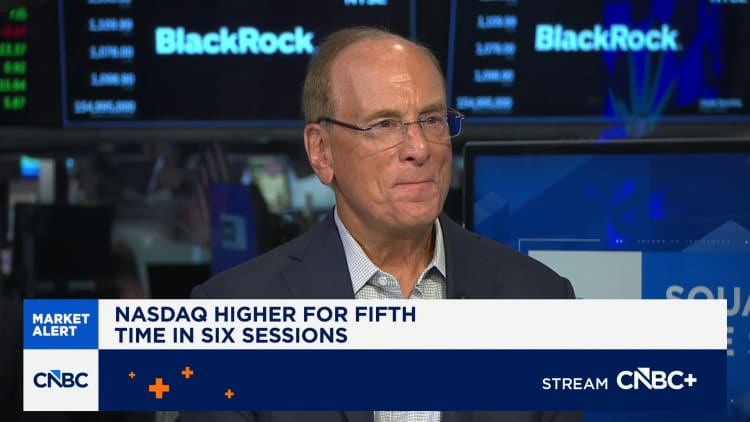
In discussing BlackRock’s role in Monday’s agreement, CEO Larry Fink made a direct comparison to the mortgage market, though he referenced a period decades before the housing boom and bust.
“This is the very beginning, like what it was when I started in the mortgage-backed securities market in the 1970s,” Fink said. “I look upon this as as a next future for financial engineering.”
All six of the financiers will make their own lending decisions, Huang said in the interview, noting that Nvidia will connect customers with financing partners.
Nvidia said it will have the option of backstopping 25% of every loan, a structure that should result in more favorable interest rates for companies that have previously had to rely on their own credit rating. Borrowers will have to use system architectures specified by Nvidia that would allow another company to take it over and operate it “if something were to happen,” Huang said.
Nvidia still has plenty to iron out with its financing partners, but Monday’s gathering marked a major step in showing the kind of money available to others in the ecosystem. Brookfield CEO Bruce Flatt said Huang created the necessary format for investors.
“Jensen’s leading this to create structures,” Flatt said. “Because there’s hundreds of trillions of dollars of money in the world.”



Nasdaq-listed chipmaker Nvidia (NVDA), the bellwether for everything AI, is pushing Wall Street banks to treat its AI computing power like commercial real estate, toll roads or power plants: as an investable infrastructure asset.
Nvidia said Monday it has signed memorandums of understanding with six Wall Street heavyweights – Apollo Global Management, Blackstone, BlackRock, Brookfield Asset Management, Goldman Sachs and KKR – to set up financing platforms that could eventually tap more than $500 billion in third‑party capital.
The goal, according to the chipmaker, is to treat AI compute as a bankable infrastructure asset rather than a pure tech expense, encouraging customers to build out AI data centres and lock in demand for Nvidia’s hardware.
“This is really the first time that technology chips have become an investable asset class. These are revenue-generating assets now. They’re productive, they’re long-lived, they’re fungible, they’re flexible,” Jensen Huang, NVIDIA’s founder and CEO, said.
“Fundamentally, what’s different about this industry and this way of doing computing is that the computer is now part of the infrastructure, like electricity, like the internet, and so you have to think about it like it’s infrastructure,” he added.
What’s AI compute
AI compute refers to the raw processing power used to train and run artificial intelligence models. Specialized chips, mostly Nvidia’s high-end GPUs, primarily do that work and make up the large data centers that Nvidia calls “AI factories.”
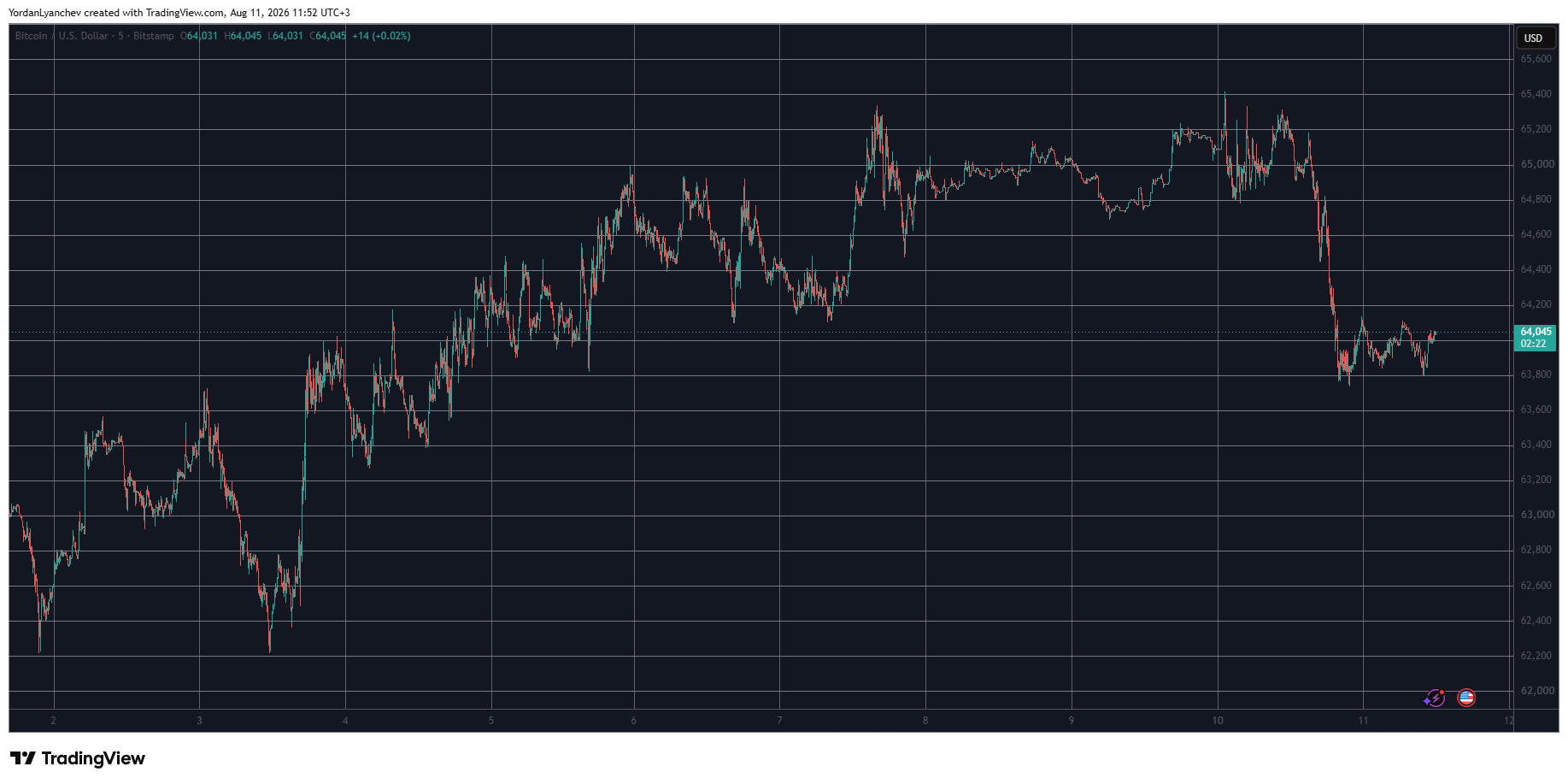
Bitcoin’s price adventure above $65,000 came to a halt yesterday evening as the asset was rejected and driven south by approximately $1,500 to under $64,000.
Several larger-cap altcoins have followed suit, including ETH, which has dropped below $1,900, and XRP, which is just inches away from slipping below $1.00 for the first time since November 2024.
BTC Halted at $65K
The primary cryptocurrency slumped at the beginning of the previous week as well, going from $63,800 to a monthly low of $62,200 within hours before it finally found some support. It erased the losses immediately and even jumped past $64,000 a day later. Its gradual ascent continued for a few days to $65,000 before the CLARITY Act’s latest setback in the US Senate sent it south toward $64,000.
However, that support held, and the weaker US jobs data on Friday resulted in another leg up to $65,400. BTC failed to overcome that level, though, and calmed at around $65,000 for the weekend. It didn’t really make a move for the next 48 hours before it tried a minor breakout on Monday, which was stopped at $65,400 once again.
This time, though, the bears were more persistent and drove the cryptocurrency south to $63,800 as Peter Schiff used the opportunity to urge investors to sell. BTC didn’t dip any further and now sits at around $64,000 once again.
Its market cap has dropped below $1.290 trillion, while its dominance over the alts sits above 57% on CG.
XRP, PI, ADA Drop
Ethereum is down by 2.5% in the past day and now struggles below $1,900. Ripple’s native token is among the poorest performers lately, and it has dipped to a 21-month low at inches above $1.00. It’s now agonizingly close to breaking below that coveted level. ZEC has dumped by almost 5% to under $490, while ADA is below $0.19 after a 4% decline.
In contrast, BNB, TRX, HYPE, DOGE, RAIN, XMR, and LINK have marked some gains within the same timeframe. MNT is up by over 6%, while WLF has gained more than 4%.
Pi Network’s native token has dropped below the $0.09 support after another near-5% daily crash.
The cumulative market cap of all crypto assets has erased around $40 billion since yesterday and is down to $2.250 trillion on CG.

The post XRP Dumps to 21-Month Low as BTC Price Falls to $64K: Market Watch appeared first on CryptoPotato.
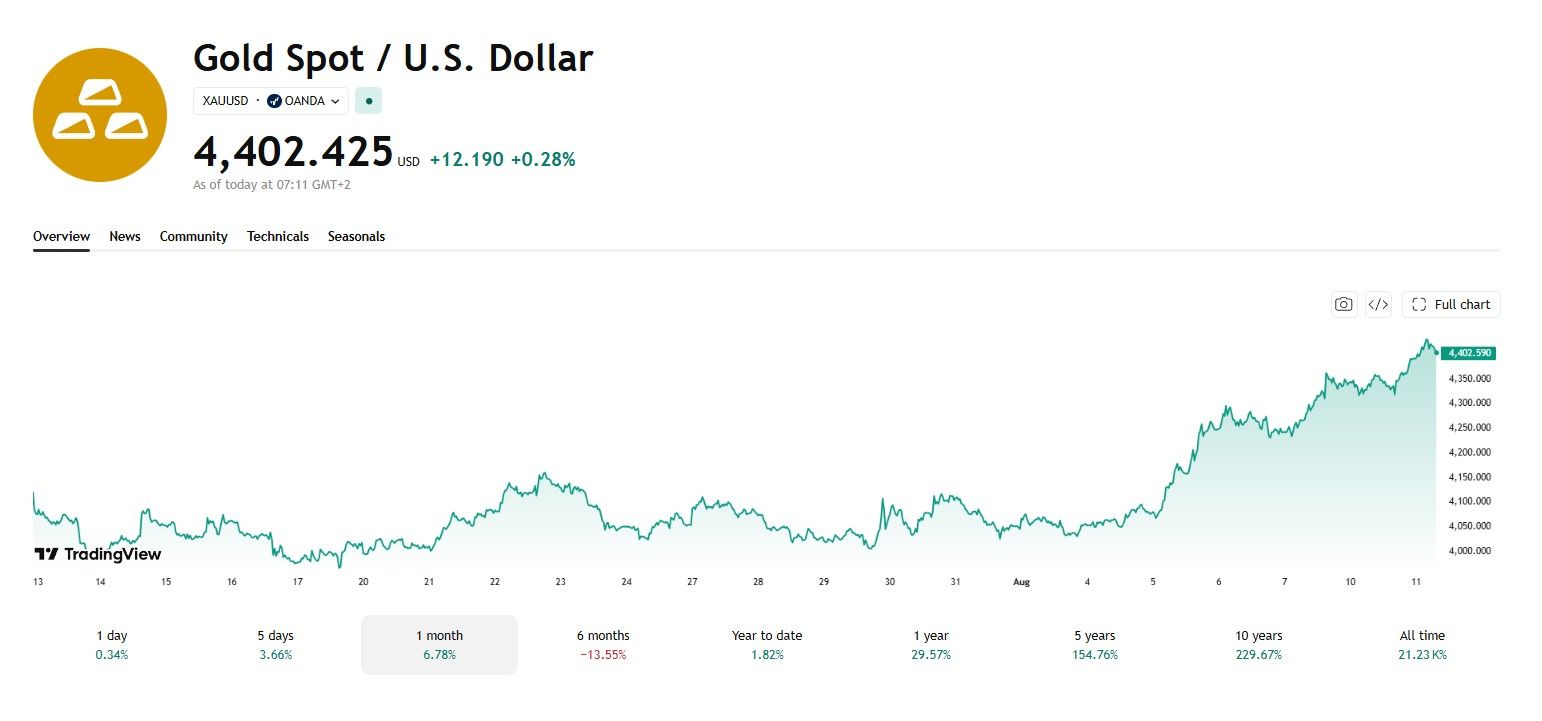
Peter Schiff wants investors out of Bitcoin (BTC) and Strategy (formerly MicroStrategy, MSTR) stock as gold pushes past $4,400 an ounce. The longtime gold bull says money is rotating back toward hard assets.
His warning landed Tuesday, one day after Strategy confirmed another Bitcoin sale. Meanwhile, gold and silver both hit multi-week highs while BTC barely moved.
Why Schiff Calls Bitcoin the Anti-Gold Trade
Gold traded at $4,402.43 an ounce early Tuesday, up 0.28% on the day. The metal has gained 6.78% in a month and roughly 29.6% over the past year.

Silver moved to $65.84, a seven-week high. Over 12 months, the metal has climbed almost 74%.
Chinese institutional demand and steady central bank buying have carried much of the bid this year.
Both rallies followed weak US jobs data that cooled expectations for further Federal Reserve rate hikes. Bitcoin, however, gained little from the same repricing. Schiff reads that gap as structural rather than temporary.
“When gold initially broke out, Bitcoin broke down. When gold corrected, that’s when Bitcoin bounced. Now that the gold correction is over, and gold is back in rally mode, Bitcoin has resumed its decline. Bitcoin is anti-gold. The more gold goes up, the more Bitcoin will go down.”
Peter Schiff, X
Tuesday’s tape offers partial support. Bitcoin traded at $65,254, up just 0.5% in 24 hours, with a market cap of nearly $1.31 trillion.
The history complicates his thesis, though. Gold slid below $4,000 as recently as June, and Bitcoin did not rally on that weakness either.
Strategy Sells More BTC to Raise Dollars
Strategy sold 1,690 BTC last week for $108.6 million, an average of $64,262 per coin net of fees. The company then used those proceeds to buy back STRC shares, its preferred stock still trading under par.
It also raised $653.1 million from 6.59 million common shares. Its dollar reserve hit $4.65 billion as of August 9, while holdings slipped to 840,447 BTC.
That sale price sits far under the company’s average cost. Its aggregate basis stands near $75,385 per coin, so last week’s disposals locked in a loss.
Schiff reads the pattern as a collateral problem rather than a cash management choice.
Saylor, for his part, insists he never sold his coins, even as his company keeps selling Bitcoin.
Not everyone reads the divergence Schiff’s way. Gordon Grant, portfolio manager and head of derivatives at Bitwise, frames Bitcoin’s digital gold test around adoption by sanctioned states rather than price action.
Gold’s advance and Strategy’s selling now run in parallel. Whether they stay linked depends on the Fed’s next move and on how much cash Saylor still needs to raise.
The post Peter Schiff Says Sell Bitcoin and Strategy Stock as Gold Tops $4,400 appeared first on BeInCrypto.


Keel completed the shutdown of its US Bitcoin mining operations as it pivots toward AI and high-performance computing infrastructure
XRP is under a lot of selling pressure at the moment, even though BTC has remained relatively stable at around $64,000. The cross-border altcoin is inches away from dipping below $1.00 for the first time in nearly two years, and we will take a look at what analysts expect from it next.
At the same time, the spot XRP ETFs had a green week, but with a major elephant in the room, while the XRP Ledger issued a worrisome scam update.
XRPL Growth and Scam Alert
The official X account of the XRP Ledger reposted Token Relations’ chart showing how Ripple’s network has grown since the start of the year in terms of tokenized real-world assets. More precisely, the total value of RWAs on XRPL has skyrocketed by nearly 400% to $4.4 billion.
Interestingly, a large portion of that came from a tokenized electricity asset from Argentina’s Justoken called JMWH. It launched on XRPL in mid-January, and its market share on the network has grown to 51%.
Separately, the account issued a warning to the entire XRP community last week about new phishing attempts and fake giveaway posts. The team emphasized that there are no “XRP airdrops or rewards given out by us, Ripple, or wallets in the community.”
They urged investors and followers to refrain from sharing their XRP wallet keys, as when something sounds too good to be true, it usually is.
Regulatory Progress Reminder
Ripple has been making significant progress on the regulatory scene in major jurisdictions. One of the latest achievements came in early July when the company secured a full MiCA license. In a new video on X, the company outlined the significance of each such move as, “Regulatory clarity is the foundation of institutional trust.”
The firm’s UK and Europe Policy Director, Matt Osborne, explained the benefits for Ripple and its clients:
“Regulated banks, fintechs, and corporates can access our complete payments infrastructure across all 30 EEA countries. MiCA is enabling a new era of regulated finance, and Ripple is built for it.”
XRP ETFs: The Latest
CryptoPotato reported during the weekend last week’s performance of the exchange-traded funds tracking the cross-border altcoin. The week ended in the green, making it the fourth consecutive week in this positive streak, but there was a major issue. The actual net inflows were extremely slim, especially compared to the week that the BTC and ETH funds had.
The spot XRP ETFs attracted a modest $1 million, while two of the five trading days saw no reportable action, according to SoSoValue. This worrisome trend continued yesterday, with inflows remaining flat at $0.00.
XRP Price Struggles
The lack of institutional support through the ETFs and the overall bearish sentiment across the entire crypto market have harmed Ripple’s native token. It failed at $1.10 a few weeks ago and continued to dig new local lows. The CLARITY Act setback didn’t help either, as XRP slipped to $1.02 after the bill was delayed once again.
It tried to rebound over the weekend, but it was halted in its tracks. The past 12 hours or so have been quite painful as well, as XRP slipped to $1.002 for the first time since November 2024. Although it remains inches above that key psychological level, many analysts still believe in its upcoming resurrection, posting impressive targets of up to $50 if XRP rebounds from the $1.00 support.
The post Important Ripple News and XRP Price Update: August 11 appeared first on CryptoPotato.
You can prove you are over 18 without revealing your birthday. You can prove you have enough money for a transaction without revealing your balance. You can prove a computation was performed correctly without revealing the inputs. Zero-knowledge proofs make all of this possible, and they are quietly becoming the most important cryptographic primitive in blockchain since the hash function.
Most introductions to zero-knowledge proofs start with the Ali Baba cave analogy, where someone proves they know the secret word to open a door by consistently exiting from the side a verifier requests, without ever revealing the word. The analogy is charming and completely useless for understanding why ZK proofs matter in practice. It tells you that such a proof is possible. It does not tell you why anyone would need one on a blockchain.
The practical starting point is simpler. Every blockchain faces the same tension: transparency enables trust, but transparency also destroys privacy. Bitcoin’s ledger is public. Every transaction, every balance, every address is visible to anyone. Ethereum is the same. This transparency is what makes the system auditable and trustworthy, but it also means that anyone who learns which address belongs to you can see every transaction you have ever made, every token you hold, and every protocol you have interacted with.
Zero-knowledge proofs resolve this tension. They let you prove facts about your data without revealing the data itself. You can prove your account balance exceeds a threshold without revealing the exact balance. You can prove a transaction is valid without revealing the sender, recipient, or amount. You can prove you are not on a sanctions list without revealing your identity.
The mathematics behind this are deep. The applications are immediate.
The three properties every ZK proof must have
Every zero-knowledge proof system must satisfy three properties, and understanding them is essential for evaluating any ZK-based protocol.
Completeness. If the statement is true and both the prover and verifier follow the protocol, the verifier will always be convinced. A valid proof never fails to verify. If you genuinely know the secret, the proof will always work.
Soundness. If the statement is false, no cheating prover can convince the verifier that it is true, except with negligible probability. A dishonest prover cannot fabricate a valid proof. The probability of a false proof passing verification is so small (typically less than one in 2^128) that it is effectively impossible.
Zero-knowledge. The verifier learns nothing beyond the fact that the statement is true. The proof does not leak any information about the secret itself, any intermediate computation, or any data used to generate the proof. The verifier’s knowledge after seeing the proof is identical to what it would be if someone simply told them the statement was true.
The third property is what makes ZK proofs useful rather than merely correct. Standard digital signatures prove that a message was signed by a specific key, but they reveal the message content. Standard hash commitments prove that a value was committed, but they reveal the value when opened. ZK proofs prove that a relationship holds between secret values without revealing those values at any point.
How zk-SNARKs and zk-STARKs differ
The two dominant ZK proof systems in blockchain are zk-SNARKs and zk-STARKs. They solve the same problem with different tradeoffs.
zk-SNARKs (Zero-Knowledge Succinct Non-Interactive Arguments of Knowledge) produce small proofs that are fast to verify. A typical zk-SNARK proof is around 200 to 300 bytes and can be verified on chain for approximately 200,000 to 300,000 gas on Ethereum. The verification time is constant regardless of how complex the computation being proved is. A proof that verifies a single transaction takes the same time to check as a proof that verifies ten thousand transactions.
The cost of this succinctness is a trusted setup. Most zk-SNARK systems require a one time ceremony where random parameters are generated and the randomness is destroyed afterward. If the randomness from this ceremony is not properly destroyed, an attacker could forge proofs. Zcash conducted one of the most elaborate trusted setup ceremonies in cryptographic history (the “Powers of Tau” ceremony) involving hundreds of participants worldwide, where the security assumption is that at least one participant honestly destroyed their randomness.
Newer SNARK systems like PLONK and Halo 2 have reduced or eliminated the trusted setup requirement, but the perception persists. Some projects avoid SNARKs specifically because of the trusted setup concern, even when the implementations they would use do not require one.
zk-STARKs (Zero-Knowledge Scalable Transparent Arguments of Knowledge) eliminate the trusted setup entirely. They derive their security from hash functions rather than elliptic curve assumptions, which makes them transparent (no secret parameters) and theoretically quantum resistant (hash based cryptography is believed to be secure against quantum computers, while elliptic curve cryptography is not).
The tradeoff is size. STARK proofs are significantly larger than SNARK proofs, typically tens to hundreds of kilobytes compared to hundreds of bytes. On a blockchain where data storage costs gas, larger proofs mean higher verification costs. StarkWare, the primary developer of STARK technology, addresses this by using recursive proof composition: proving that a proof is valid, then proving that the proof of the proof is valid, compressing the final on chain footprint.
In practice, the distinction matters less than it did five years ago. Modern proof systems increasingly blend techniques from both families, and the engineering focus has shifted from which proof system to use to how fast the prover can generate proofs and how cheaply the verifier can check them.
ZK proofs for blockchain scaling
The scaling application of ZK proofs is conceptually straightforward. A rollup executes a batch of transactions off chain, generates a proof that the batch was executed correctly, and posts the proof to Ethereum. The Ethereum verifier contract checks the proof in a single operation and accepts the new state.
What makes this powerful is the asymmetry between proving and verifying. Generating the proof for a batch of 10,000 transactions might take a powerful machine several minutes. Verifying the proof takes a fraction of a second and costs a fixed amount of gas regardless of how many transactions are in the batch. This asymmetry is what allows ZK rollups to compress thousands of transactions into a single Ethereum verification.
The major ZK rollups each take a different approach to this architecture.
zkSync Era uses a custom virtual machine (zkEVM) that is compatible with Solidity at the language level but compiles to a different instruction set optimized for ZK proof generation. Existing Ethereum contracts can be recompiled for zkSync with minimal changes.
StarkNet uses the Cairo programming language and STARK proofs. Cairo is a purpose-built language designed specifically for provable computation, which gives it performance advantages but requires developers to learn a new language and paradigm.
Polygon zkEVM aims for EVM equivalence, meaning it can execute the same bytecode as Ethereum without recompilation. This maximizes compatibility but introduces engineering complexity in making every EVM opcode provable.
Scroll also targets full EVM equivalence and uses a community-driven approach to its zkEVM implementation, with the goal of being the most Ethereum-compatible ZK rollup.
The competition between these approaches is ultimately a competition between compatibility and performance. The more compatible a ZK rollup is with existing Ethereum tooling, the easier it is for developers to migrate. The more the rollup optimizes its instruction set for provability, the faster and cheaper its proofs become.
ZK proofs for privacy
The privacy application is where ZK proofs become most consequential and most controversial.
A standard Ethereum transaction reveals the sender address, the recipient address, the amount transferred, and the smart contract called. This information is permanently public. Chain analysis firms like Chainalysis and Elliptic have built entire businesses on tracing transaction flows across the transparent ledger, linking addresses to real world identities through exchange KYC data, known entity labels, and behavioral patterns.
ZK privacy protocols break this chain of visibility. In a ZK-based private transaction, the user generates a proof that their transaction is valid (the sender has sufficient funds, no double spending occurs, the amounts balance) without revealing who sent it, who received it, or how much was transferred. The proof is posted on chain and verified by the network, but the underlying transaction details remain encrypted.
Zcash was the first major implementation of this concept, launching in 2016 with shielded transactions using zk-SNARKs. A Zcash user can choose between transparent transactions (identical to Bitcoin’s public ledger) and shielded transactions (where the sender, recipient, and amount are hidden behind a ZK proof). In practice, shielded transaction adoption on Zcash has been lower than proponents hoped, with the majority of ZCash transactions still using the transparent pool.
Newer protocols are building programmable privacy, where not just token transfers but arbitrary smart contract logic can execute privately. Aztec Network is building a privacy-first layer 2 on Ethereum where all transactions are private by default. Aleo is building a layer 1 blockchain with native ZK support for private smart contracts. Both use ZK proofs to verify state transitions without revealing the computation or data involved.
The potential for privacy extends beyond individual transactions. ZK proofs can enable private voting (prove you voted without revealing your choice), private identity verification (prove you are a citizen of a specific country without revealing your passport number), and private DeFi (provide liquidity to a pool without revealing your address or position size).
The regulatory collision
Privacy in crypto occupies a contested legal space that is still being defined.
In August 2022, the U.S. Treasury’s Office of Foreign Assets Control (OFAC) sanctioned Tornado Cash, an Ethereum-based mixer that used ZK proofs to break the link between deposit and withdrawal addresses. The sanctioning of open source smart contract code, rather than a person or company, was unprecedented and sent shockwaves through the crypto privacy community.
In May 2024, Alexey Pertsev, one of Tornado Cash’s developers, was convicted by a Dutch court of money laundering facilitation. The conviction established a legal precedent that writing privacy-preserving code can carry criminal liability if the tool is used for illicit purposes, regardless of whether the developer personally facilitated the illegal activity.
These actions have shaped the direction of ZK privacy development. The current generation of privacy protocols is building around regulatory constraints rather than ignoring them.
Selective disclosure allows a user to prove specific facts about their identity or transaction history without revealing everything. A user could prove they passed KYC with a licensed exchange, prove they are not on the OFAC sanctions list, or prove their funds did not originate from a sanctioned address, all using ZK proofs that reveal nothing beyond the specific claim being verified.
Privacy pools, a concept formalized by Vitalik Buterin and others, allow users to prove that their withdrawal from a privacy set belongs to a clean subset of deposits. Instead of mixing all deposits together indiscriminately, the protocol maintains association sets that exclude known illicit addresses. Users prove membership in the clean set without revealing which specific deposit they are withdrawing.
Whether these compromises satisfy regulators remains to be seen. The fundamental tension, that privacy and surveillance are architecturally incompatible, will not be resolved by technology alone. ZK proofs give policymakers a tool they have never had before: the ability to verify compliance without requiring disclosure. Whether they choose to use it is a political question, not a cryptographic one.
The proving cost has concrete implications for which applications adopt ZK technology first. High value financial transactions, where the cost of generating a proof is negligible relative to the transaction size, have been the earliest adopters. Institutional cross-chain transfers, large DeFi positions, and enterprise settlement systems can absorb a proving cost of several dollars per transaction without affecting their economics. Consumer applications, where individual transactions may be worth only a few dollars, need proving costs to fall by another order of magnitude before ZK privacy becomes practical for everyday use. The hardware acceleration efforts by companies building ZK-specific ASICs are directly targeting this cost barrier.
The convergence of scaling and privacy applications is perhaps the most underappreciated aspect of ZK technology. A ZK rollup that processes transactions privately would combine the throughput benefits of off chain execution with the confidentiality benefits of encrypted state transitions. Users would get fast, cheap transactions that are also invisible to chain analysis. Several projects, including Aztec and Polygon Miden, are building exactly this combination, though the engineering complexity of merging both capabilities into a production system remains substantial.
What this does not cover
This article does not cover the mathematics of polynomial commitments, elliptic curve pairings, or Fiat-Shamir transformations that underpin ZK proof systems. Understanding these requires graduate level abstract algebra and is not necessary for evaluating ZK-based protocols as a user or investor.
This article does not cover ZK machine learning (zkML), an emerging field that uses ZK proofs to verify that a machine learning model produced a specific output without revealing the model’s weights or training data. This application is experimental and its practical implications are still being studied.
This article does not address the hardware acceleration race for ZK proof generation. Companies like Cysic, Ingonyama, and Fabric Cryptography are building custom ASICs and FPGAs specifically for ZK proving, which could reduce proving costs by orders of magnitude. The hardware landscape is moving too quickly for static analysis.
Practical checks before using a ZK-based protocol
Verify the proof system’s audit status. ZK proof systems are mathematically complex and implementation errors can be catastrophic. A bug in the circuit (the mathematical representation of the computation being proved) could allow an attacker to forge proofs and mint tokens or steal funds. Check whether the proof system and its circuits have been audited by firms specializing in ZK cryptography, not just general smart contract auditors.
Understand what is actually private. Not all ZK-based protocols provide the same level of privacy. Some hide transaction amounts but reveal addresses. Some hide addresses but reveal amounts. Some hide everything. Read the protocol’s documentation to understand exactly what information is concealed and what remains visible. Metadata such as transaction timing, gas patterns, and interaction frequency can often deanonymize users even when the core transaction data is hidden.
Check the trusted setup status. If the protocol uses zk-SNARKs, determine whether it required a trusted setup and how that setup was conducted. Multi-party computation ceremonies with hundreds of participants are more trustworthy than small ceremonies with a handful of known entities. Protocols using STARKs, PLONK with universal setup, or Halo 2 do not require trusted setups at all.
Assess the regulatory risk. Privacy protocols operate in a legally uncertain environment. Consider whether the protocol has a compliance mechanism (selective disclosure, privacy pools, opt-in compliance proofs) and whether that mechanism has been tested against actual regulatory scrutiny. Using a privacy protocol that is later sanctioned could complicate your ability to move or sell assets.
Test the proving time. Generating a ZK proof is computationally intensive. On a mobile device, proving a simple transaction might take 30 seconds to two minutes. On a desktop, it might take a few seconds. If the proving time is too long for your use case, the protocol may not be practical for frequent transactions. Some protocols offload proving to dedicated servers, which is faster but introduces a trust assumption that the server does not learn your private data.
-
What is a zero-knowledge proof in simple terms?
A zero-knowledge proof is a way to prove that something is true without revealing why it is true. In blockchain, this means you can prove that a transaction is valid, that you own enough funds, or that a computation was done correctly, all without revealing the actual transaction details, your balance, or the data used in the computation. The verifier becomes convinced the statement is true but learns nothing else.
-
What is the difference between zk-SNARKs and zk-STARKs?
zk-SNARKs produce very small proofs (hundreds of bytes) that are cheap to verify but historically required a trusted setup ceremony to generate the initial system parameters. zk-STARKs produce larger proofs (tens to hundreds of kilobytes) but do not require a trusted setup and are theoretically resistant to quantum computing attacks. In practice, modern proof systems are converging and the tradeoffs between size, speed, and trust assumptions are becoming less stark.
-
How do ZK proofs help with blockchain scaling?
ZK rollups execute thousands of transactions off chain and generate a single proof that all transactions were executed correctly. This proof is verified on Ethereum in a single operation that costs a fixed amount of gas regardless of how many transactions were in the batch. The asymmetry between the cost of generating a proof (high but borne by the rollup operator) and verifying it (low and paid once for the whole batch) is what creates the scaling effect.
-
Are ZK-based privacy coins illegal?
ZK-based privacy coins like Zcash are not inherently illegal in most jurisdictions. However, regulatory approaches vary significantly. Some exchanges have delisted privacy coins to comply with anti-money laundering regulations. The Tornado Cash sanctions in 2022 demonstrated that privacy-preserving protocols can face regulatory action. The legality depends on your jurisdiction and how you use the technology, not on the technology itself.
-
What is a trusted setup and why does it matter?
A trusted setup is a one time ceremony required by some zk-SNARK systems to generate cryptographic parameters. During the ceremony, random values are created and must be destroyed afterward. If any participant retains the random values, they could theoretically forge proofs. Multi-party ceremonies mitigate this risk by requiring that only one participant out of potentially hundreds needs to honestly destroy their randomness. Newer proof systems like PLONK and Halo 2 have eliminated or minimized the trusted setup requirement.
-
Can ZK proofs make all blockchain transactions private?
Technically, yes. Protocols like Aztec Network and Aleo are building systems where all smart contract interactions are private by default, not just token transfers. However, full privacy for all transactions introduces regulatory challenges, increases computational costs (ZK proof generation is expensive), and changes the user experience (proving takes time). Whether full on chain privacy becomes standard depends as much on regulatory decisions as on technical capability.
-
How do privacy pools work?
Privacy pools allow users to deposit funds into a shared pool and withdraw from a different address, breaking the on chain link between the two addresses. Unlike simple mixers, privacy pools use ZK proofs combined with association sets to let users prove their withdrawal belongs to a subset of deposits that excludes known illicit addresses. This gives users privacy while providing a mechanism for compliance. The user proves they are in the clean set without revealing which specific deposit they are withdrawing.
-
What are the main risks of using ZK-based protocols?
The main risks include implementation bugs in the ZK circuits (which could allow forged proofs), trusted setup vulnerabilities in older SNARK systems, regulatory action against privacy features, high computational requirements for proof generation on consumer hardware, and the relative immaturity of ZK tooling compared to standard smart contract development. Additionally, metadata leakage (transaction timing, gas patterns, interaction frequency) can sometimes deanonymize users even when the core transaction data is private.
Disclaimer: This article is for informational and educational purposes only. It does not constitute financial, investment, or legal advice. Cryptocurrency markets are volatile and carry significant risk. Always conduct your own research before making investment decisions.
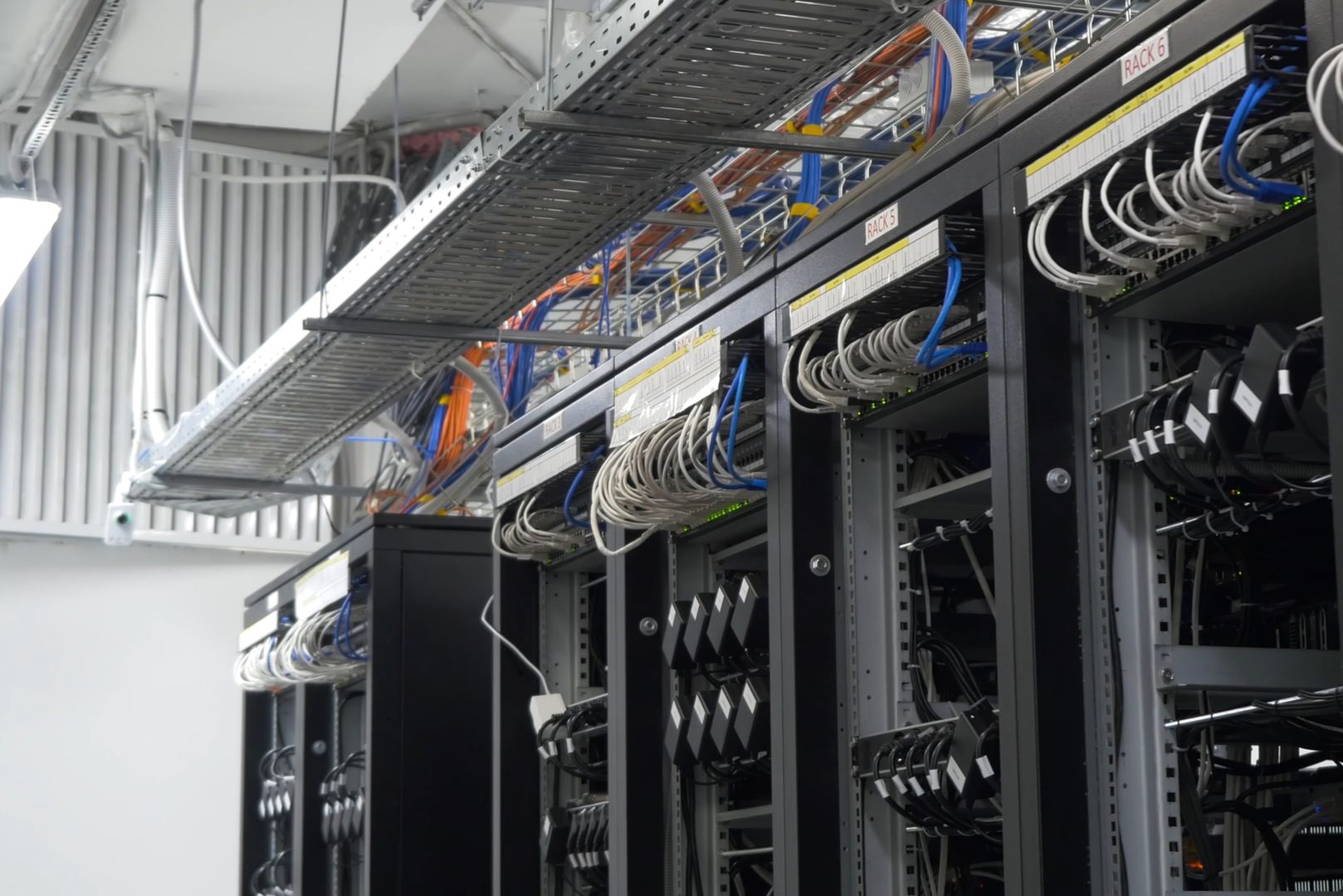
Riot Platforms (RIOT) surged more than 20% before the start of U.S. equity trading on Tuesday after the bitcoin miner said it signed a $9.1 billion deal with “a leading frontier AI lab,” accelerating its transformation into a provider of infrastructure for the artificial intelligence industry.
The 20-agreement with the company, identified as Anthropic by Bloomberg, covers 191 megawatts of computing capacity at Riot’s Rockdale, Texas, campus.
Once focused almost entirely on bitcoin mining, Riot exemplifies an industry-wide pivot toward AI infrastructure, with long-term leases providing steadier revenue than the volatile flows from approving blocks on Bitcoin.
Miners control large sites with established grid connections, land and cooling systems, allowing them to serve power-hungry AI customers faster than developers starting from scratch. Anthropic recently signed a six-year, $10 billion contract with Volta Infra for computing capacity at a site in Norway operated by bitcoin miner Bitdeer.
Deployment at the Riot sites starts in December 2027, with the full buildout expected by June 2028. Two five-year extension options could increase total contract revenue to $16.1 billion. Riot projects the base term will generate between $7.3 billion and $8.2 billion in cumulative net operating income.

Several U.S. states have also pursued age-verification requirements, restrictions on addictive features, and other regulations related to children and social media. At least 20 states have enacted laws addressing young users’ social media usage, although many face legal challenges. In July, Illinois enacted a law prohibiting platforms from using minors’ viewing histories or data on their devices to curate feeds. The law, which will take effect in 2028, also restricts notifications between 10 p.m. and 7 a.m. and requires stronger privacy settings for minors. At least 40 states and Puerto Rico considered more than 300 measures related to children and social media during the 2026 legislative session, with 10 states enacting new laws or adopting resolutions.
Measures around the world have faced significant pushback from the tech industry. NetChoice, a trade association representing major tech companies including Meta and TikTok, has challenged state laws on grounds of free speech and privacy. Courts in several states, including Arkansas, California, Colorado, Georgia, Nebraska and Virginia, have temporarily or permanently blocked all or parts of laws around online safety. Most of those cases are ongoing. Other states, including Florida, Mississippi, Tennessee and South Carolina, also face ongoing litigation over their measures.

Demi Lovato Reunites With Ex Joe Jonas for Camp Rock 3

#mindsetdeoro #libertadfinanciera #money #motivation #discipline #mindest

Inside UK’s driest village in Cambridgeshire where locals are showing worrying symptoms

Renter of Home in Anne Heche Crash Denies Settlement With Son

No Jackpot Winner as $257 Million Prize Rolls Over to $269 Million Monday Draw

Weekend Open Thread: Staud – Corporette.com
#mindsetdeoro #libertadfinanciera #money #motivation #discipline #mindest

Bitcoin shows bullish reversal amid worst ETF month and major #bitcoin #bitcoinetf #cryptocurrency

James Gives Financial Advice as Martin’s Card Gets Declined Behind Him
-

 Fashion4 days ago
Weekend Open Thread: Mattifying Sunscreen
-

 Fashion4 days ago
Frugal Friday’s Workwear Report: Cap-Sleeve Pointelle Crewneck Sweater
-

 Sports5 days ago
Jordan Coyle & Cordiamo take Laya Arena Stakes at RDS
-

 News Videos3 days ago
Can Astrology Help Find Gold and Silver Trends? A Financial Astrology Guide
-
 Business5 days ago
US stocks: Dow closes at record on Mideast optimism; SpaceX, AMD drag Nasdaq
-

 Politics5 days ago
Reform UK And Greens Sink To Lowest Favourability Ratings To Date
-

 Business6 days ago
Nvidia Stock Climbs 2.5% as Chip Sector Rally Builds Ahead of AMD Earnings, Nvidia’s Own Report Looms
-

 Tech6 days ago
OpenAI, Anthropic AI agents targeted real people and systems in cyber tests
-

 Crypto World7 days ago
Polymarket targets $20 billion valuation as competition heats up in prediction market sector
-

 Business6 days ago
Supply chain issues impact Ingredion
-

 Tech4 days ago
Rinn Pharma & Biopharma to join NordicPharmaTrain network
-

 Business2 days ago
How to Start a Cleaning Business: A Step-by-Step Guide
-
 Crypto World6 days ago
Dow and S&P 500 Hit Records on AI Earnings: When Will the Bubble Burst?
-

 Business2 days ago
Datadog: Best Of Breed For Multiple Reasons
-

 Business2 days ago
BDC Weekly Review: Private BDC Q2 Numbers Are Strong
-
Crypto World7 days ago
Trump Administration Plans Ban on New Chinese AI Data Center Components: Report
-
 Crypto World6 days ago
Dollar Index Trapped at 100 as Hawkish Fed Meets Official Selling
-

 Business6 days ago
McDonald’s (MCD) Q2 2026 earnings
-

 Fashion6 days ago
The Bright Side of Black and White
-

 Fashion6 days ago
Suit of the Week: Me + Em
You must be logged in to post a comment Login