We may receive a commission on purchases made from links.
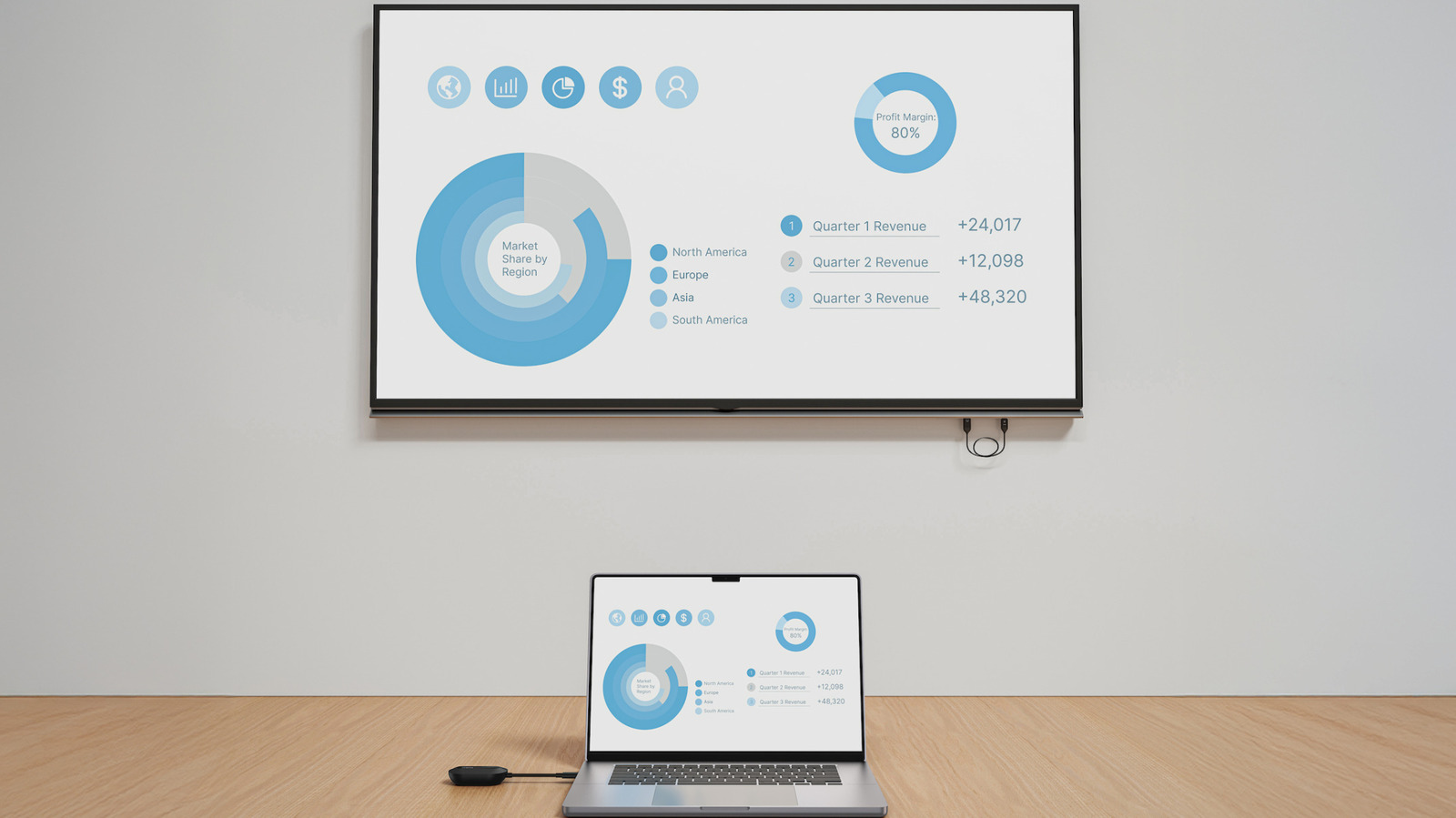
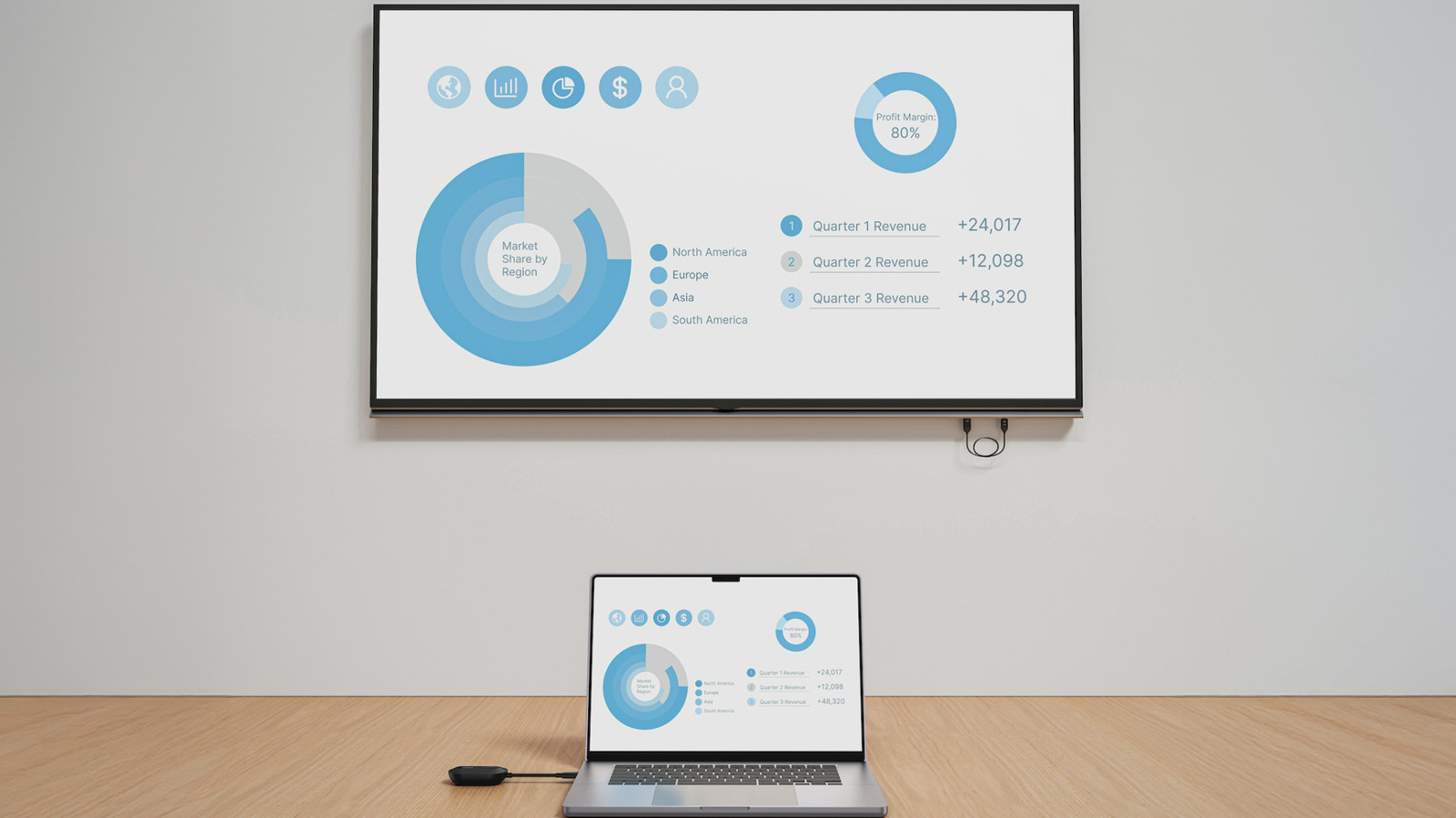
Fresh off its CES 2026 debut, Belkin’s new ConnectAir Wireless HDMI Display Adapter has officially hit shelves. This dongle might look like a discontinued Chromecast, but it’s not a streaming device. It can help make streaming easier for you, though. It’s designed to let you mirror a screen from a USB-C device to an HDMI display without the need for actual HDMI cables or wireless casting apps. Dubbed the model AVC024, it works without forcing you to download any software, connect over Wi-Fi, or pair with Bluetooth. Handy!
Advertisement
The device is made up of two main parts: an HDMI receiver that connects to a display and a USB-C transmitter that plugs into a compatible laptop, tablet, smartphone, or other USB-C-compatible device. Turn it on, and the devices establish a direct 5GHz wireless link to each other — no public networks required. Its $149.99 price point tells you how innovative the ConnectAir really is. (A proper HDMI cable won’t cost you nearly as much, unless you’re grabbing one of those expensive AudioQuest Dragons or something.)
Advertisement
What are the technical limits of the Belkin ConnectAir?
Belkin says the adapter supports 1080p resolution at 60Hz with latency typically under 80 milliseconds, which still means smooth video playback even if it’s not in 4k. (In fact, because the adapter supports HDCP 1.4, some 4k content requiring HDCP 2.2 might not even play). It has a wireless range of up to 131 feet in open environments, but you might experience a much shorter range in the office or other space where you’re trying to connect through walls.
As far as compatibility is concerned, the ConnectAir adapter works with any USB-C device that supports DisplayPort Alt Mode. Some examples would be Windows laptops, macOS and ChromeOS devices, tablets like the iPad Pro or iPad Air, and smartphones with Samsung DeX. That said, the USB-C adapter isn’t compatible with iPhones or other Lightning-based devices. However, it can work with docking stations, just so long as the USB-C port supports DisplayPort Alt Mode.
One single HDMI receiver can pair with up to eight transmitters, though only one device can stream at a time. You can also can switch between mirrored and extended display modes depending on their device’s capabilities. The receiver could technically be powered through a USB port on a television if it provides at least 2.3 watts. Otherwise, you’ll need a separate power adapter (not included).
It’s about to become more expensive for Claude Code subscribers to use Anthropic’s coding assistant with OpenClaw and other third-party tools.
According to a customer email shared on Hacker News, Anthropic said that starting at noon Pacific on April 4 (today), subscribers will “no longer be able to use your Claude subscription limits for third-party harnesses including OpenClaw.” Instead, they’ll need to pay for extra usage through “a pay-as-you-go option billed separately from your subscription.”
The company said that while it’s starting with OpenClaw today, the policy “applies to all third-party harnesses and will be rolled out to more shortly.”
Anthropic’s head of Claude Code Boris Cherny wrote on X that the company’s “subscriptions weren’t built for the usage patterns of these third-party tools” and that Anthropic is now trying “to be intentional in managing our growth to continue to serve our customers sustainably long-term.”
Advertisement
The announcement comes after OpenClaw creator Peter Steinberger said he was joining Anthropic rival OpenAI, with OpenClaw continuing as an open source project with support from OpenAI.
Steinberger posted that he and OpenClaw board member Dave Morin “tried to talk sense into Anthropic” but were only able to delay the increased pricing by a week.
“Funny how timings match up, first they copy some popular features into their closed harness, then they lock out open source,” Steinberger said.
Techcrunch event
Advertisement
San Francisco, CA | October 13-15, 2026
Cherny, however, insisted that Claude Code team members are “big fans of open source” and that he himself “just put up a few [pull requests] to improve prompt cache efficiency for OpenClaw specifically.”
Advertisement
“This is more about engineering constraints,” he said, adding that Anthropic is still offering full refunds for subscribers. “We know not everyone realized this isn’t something we support, and this is an attempt to make it clear and explicit.”
Meanwhile, OpenAI recently shut down its Sora app and video generation models, reportedly to free up computing resources and as part of a broader effort to refocus on winning over the software engineers and enterprises that are increasingly relying on products like Claude Code.
Todd talks about what it was like fielding calls from distraught users on the night of the announcement. John offers his thoughts on what the shutdown says about the VR hype cycle, and whether everyone betting on the AI boom should take notes.
Plus: Major League Baseball’s new automated ball-strike system is already exposing umpires and creating a whole new kind of showboating — including one player who was so confident the robot would overrule the ump that he just started walking to first base.
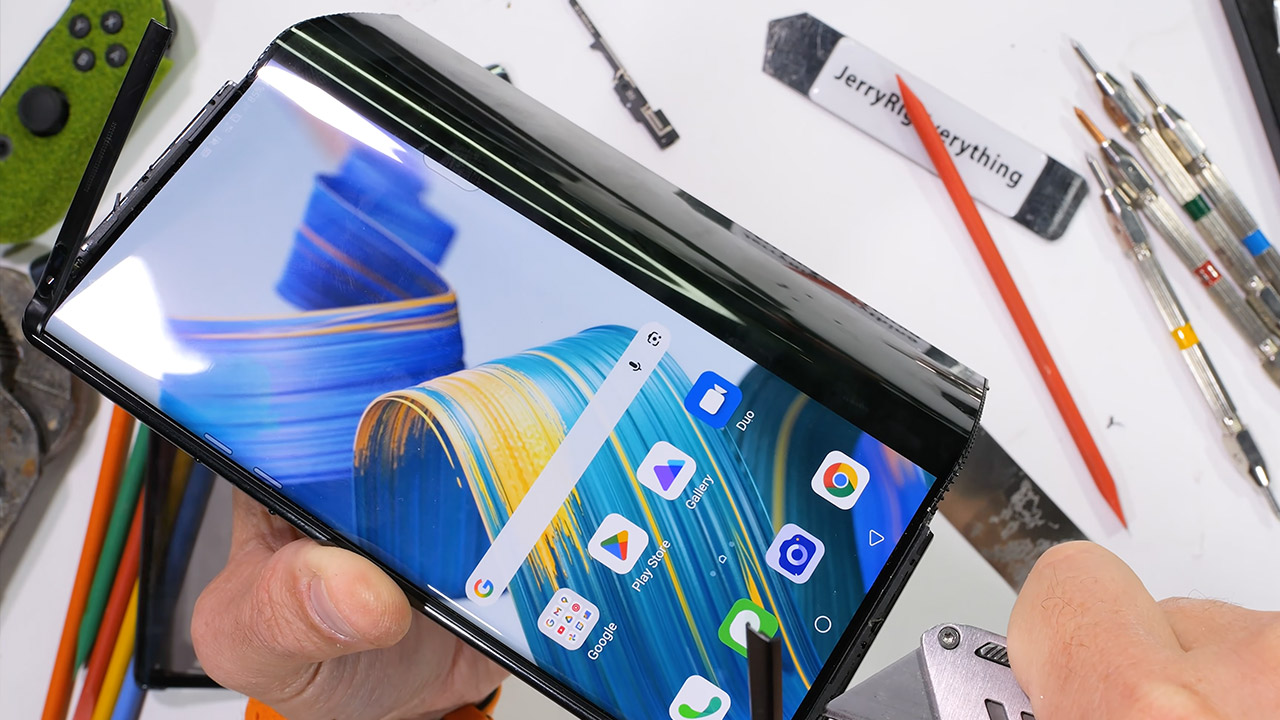
Back in 2021, rumors circulated about a new LG phone with a screen that unfurled like a scroll, similar to a roll-up map rather than a fold. Interestingly, they had planned to release it that year, but LG decided to discontinue its entire mobile division. As a result, the idea fizzled, only to resurface recently with a prototype reaching Zack Nelson (of JerryRigEverything fame).
Zack Nelson began by looking at the exterior elements. In its compressed state, the screen measures around 6.8 inches diagonally. With a simple command, the display expands to 7.4 inches diagonally, thanks to the internal motors. It generates a rather mild buzzing noise, which is thankfully muffled by software that includes some great sound effects. Users can watch the item expand in size in real time and even get dynamic backgrounds that adapt on the fly.
BIGGER, YET SLIMMER THAN EVER: Who would’ve guessed that wider could also be lighter? The design of Galaxy Z Fold7 is refined to feel like a…
BEST CAMERA ON A FOLD YET: You asked for more – now you can have the most. Galaxy Z Fold7 now boasts an ultra-premium 200MP camera with Pro-Visual…
SCREENSHARE FOR STREAMLINED ASSISTANCE: Intrigued by something you see? Go Live with Google Gemini, then screenshare or point your camera at it for…
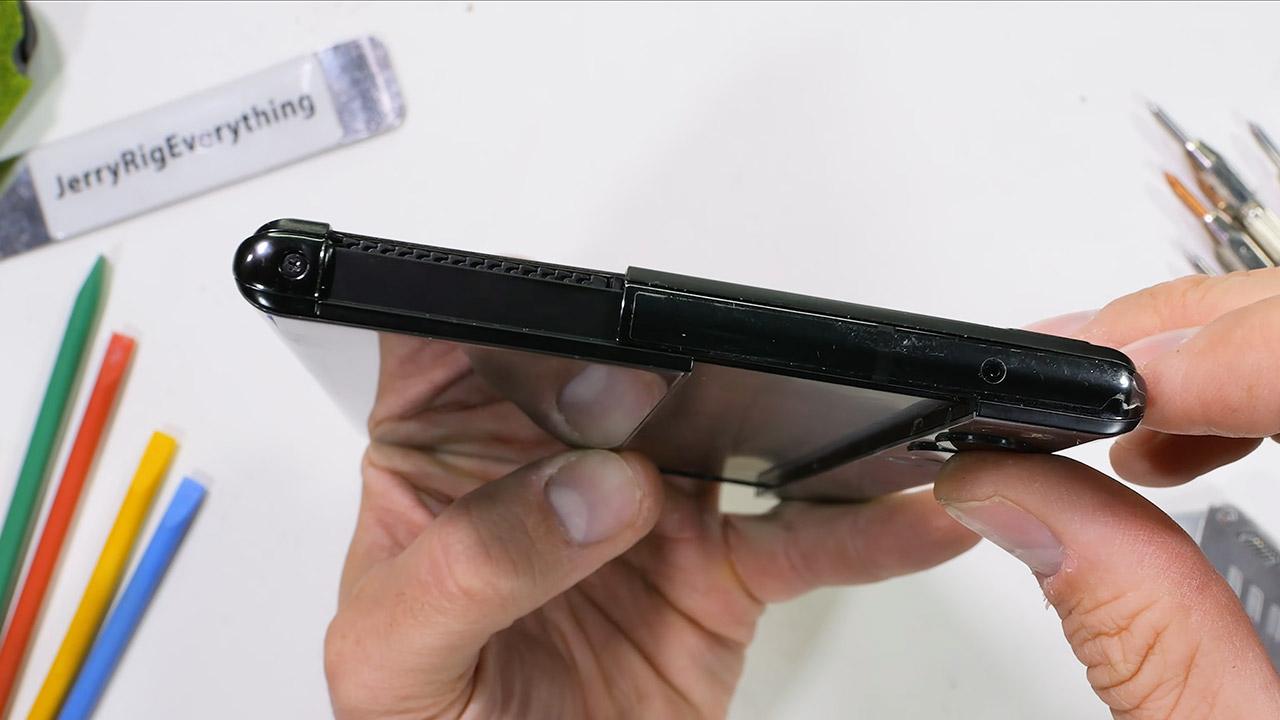
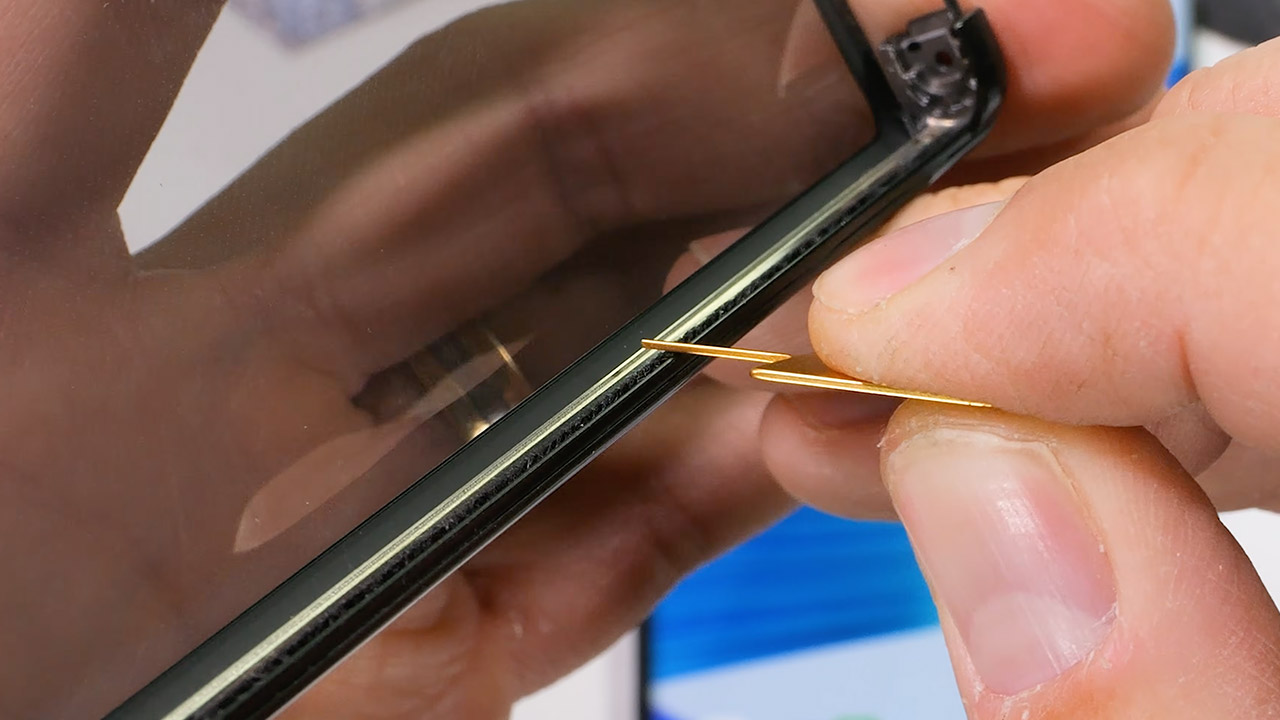
Nelson removed two Phillips head screws near the roller bit as he began to disassemble it. He applied heat to the back glass, and it popped straight off in one piece. With the glass removed, the side panel came away, and he discovered all these minuscule little hair-like things designed to keep dust from entering the flexy screen area. These tiny hairs are enclosed in a metal cage that protects the part that rolls up.
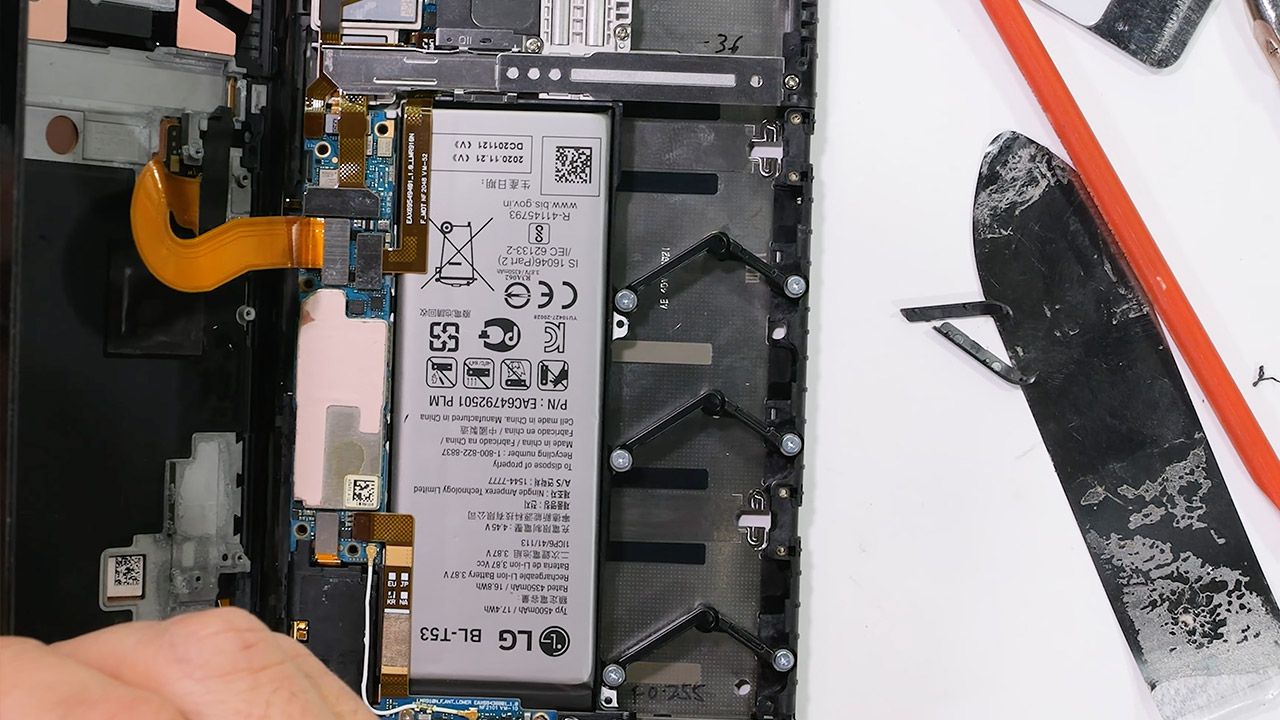
After that, Nelson proceeded on to check the actual roll component itself, which required him to retract it completely for some extra wiggle room to free it from the frame. He was surprised to see the screen curved around a pretty mild radius, compared to the other folding phones. Behind the screen, there are a series of elevated slats that rise upwards like escalator steps, helping to keep the entire structure flat and stable during expansion.
Other interesting features include little zipper-like linkages along the top and bottom margins of the screen. The sides have metal guides going along them to keep everything neat and tight. It all operates in tandem with two geared motors that communicate via a rack system. There are even three little spring-loaded arms that help keep the entire thing straight and smooth during extension, ensuring that it does not wobble or become stuck. LG stated that the entire system can withstand around 200,000 cycles, which is a significant number given the amount of stress placed on it.
Deeper inside the phone, you’ll find a battery rated a solid 4500 milliamp hours, as well as the usual suspects like a Snapdragon processor, 12 gigs of RAM, and 256 gigs of storage. The rear camera configuration includes a 64-megapixel primary sensor with optical stabilisation and a 12-megapixel ultra-wide lens. On the back, you’ll find a power button that also serves as a fingerprint reader. All of the connection wires are arranged in a fairly straightforward manner that may be simply disassembled.
The screen has a plastic layer that may be scratched with a fingernail, similar to the flexible screens on other phones. When you roll it up, the active portion rests behind the rear glass, allowing you to quickly check alerts and even take selfies (with the main cameras). If anything gets in the way, the software will pause the roll and offer a friendly warning.
Today, fireplaces, their cozy glow once a household staple, are mostly a thing of the past. In fact, a decent amount of old fireplaces are completely blocked up! [David Capper] brings back the atmosphere without the actual flames, with his RP2040-based fireplace glow simulator.
It’s not just a string of LEDs with some PWM brightness control, either. No, [David] goes into detail about the black body radiation that gives these fires their colors. He then uses the theory of black-body radiation to determine the colors that the LEDs glow to simulate the colors of a real fire.
But the colors alone don’t make for a good simulated fire, so [David] adds the heat equation. It starts with a grid wherein each cell has a temperature. Over time, cells are randomly selected to have heat added to them (increasing the cell’s temperature), then he applies the heat equation to diffuse and decay the heat within the grid for a nice simulated crackling fire. Add in a custom PCB and a nice little 3D-printed case and you’re ready for a cozy hacker time.
Nathan Fielder, best known for his Comedy Central show, Nathan For You (and cringe comedy), writes, directs and stars in this new HBO series. In the show, the comedian goes to extraordinary lengths to let people rehearse moments before they happen. In the first episode, Fielder helps a man prepare for a confession to a friend, and builds an exact replica of the bar they’re planning to meet at (the attention to detail is incredible). After planning for any outlandish thing that might happen, we see how the real exchange between the two friends plays out. Bizarre and truly fascinating, The Rehearsal should get some time on your screen.
Glen Anderson has been brokering trades in private company shares since 2010, back when the number of institutional investors focused on the late-stage private market could be counted on two hands. Today, he says, there are thousands.
As president of the investment bank Rainmaker Securities, whose focus includes private securities markets — it facilitates transactions in roughly 1,000 stocks — Anderson has a front-row seat to one of the most nail-biting moments in the history of the secondary market. And right now, he suggests, the narrative has three main characters: Anthropic, OpenAI, and SpaceX.
But the storyline is more complicated than the headlines suggest.
Anderson’s read on Anthropic is consistent with what Bloomberg reported earlier this week: demand for the company’s shares has become almost insatiable. Bloomberg quoted Ken Smythe, founder and CEO of Next Round Capital, saying that buyers had indicated to his outfit that they had $2 billion of cash ready to deploy into Anthropic, even as roughly $600 million in OpenAI shares that investors are trying to sell haven’t found takers.
Advertisement
Anderson sees something similar at Rainmaker. “The hardest stock to source in our marketplace is Anthropic,” he told TechCrunch yesterday afternoon from his Miami home. “There’s just no sellers.”
Part of what turbocharged that demand, Anderson argues, was Anthropic’s very public standoff with the Department of Defense — a turn of events that initially seemed like bad news for the company but has wound up becoming a gift.
“The app got more popular, people rallied around the company as kind of a hero, taking on big government,” he said. “I think it amplified the story and made it even more differentiated from OpenAI.”
Techcrunch event
Advertisement
San Francisco, CA | October 13-15, 2026
That distinction is becoming increasingly meaningful to investors navigating a market where, for years, the prevailing logic was to bet on everyone. Anderson notes that many institutional investors still want exposure to both Anthropic and OpenAI. “The jury’s still out,” he said, on which AI model will ultimately win – but the momentum, at least in the secondary market, has shifted.
Advertisement
That doesn’t mean OpenAI has fallen off a cliff. Anderson pushes back slightly on a binary reading of the situation.
“I wouldn’t say it’s a one-or-the-other conversation,” he said.
But the excitement isn’t there. “It’s not nearly as vibrant a market as Anthropic right now,” he acknowledged.
On valuation, Anderson broadly confirmed Bloomberg’s reporting that OpenAI shares on the secondary market are trading as if the company were valued at $765 billion — an appreciable discount to the company’s newest $852 billion primary-round valuation. He cautioned that he was working from memory, but said the Bloomberg figure was “in the right range.”
Advertisement
OpenAI itself has tried to assert more control over secondary trading. “People should be extremely cautious of any firm that purports to have access to OpenAI equity, including through an SPV,” an OpenAI spokesperson told Bloomberg, noting the company had established authorized channels through banks, with no fees, to counter what it described as a high-fee broker model.
Perhaps tellingly — at least for now — banks including Morgan Stanley and Goldman Sachs have begun offering OpenAI shares to their high-net-worth clients without charging carry fees, according to Bloomberg. Goldman, meanwhile, is charging its customary carry – often 15% to 20% of profits – for clients seeking Anthropic exposure.
What none of this accounts for is SpaceX, which stands apart amid shifting sentiment around these other powerful brands. Anderson describes it as one of the only names in Rainmaker’s universe that never experienced the punishing correction that hit much of the private market between 2022 and 2024, a period when many private companies’ shares fell 60% to 70% from their peaks (after their valuations were run up just as fast).
The rocket and satellite behemoth has “been pretty much consistently up and to the right,” Anderson said.
Advertisement
Anderson, who, naturally, has an economic interest in flattering the company and its earlier backers, credits SpaceX’s management with disciplined pricing and not squeezing every last dollar out of each funding round or tender offer.
“A lot of companies will fall for the temptation to maximize the price of their stock in every round,” he said. “The problem is that that doesn’t leave any room for error.”
SpaceX, by contrast, played it conservatively, by “not getting too greedy,” and the payoff for earlier investors has been enormous. “You can imagine if someone got in in 2015 what kind of gain they’re sitting on right now,” said Anderson.
To put a finer point on that comment: SpaceX was valued at roughly $12 billion in 2015, when Google and Fidelity jointly invested $1 billion in the company. Someone who got in at that price is now sitting on a gain of more than 100x, with the company valued at more than $1 trillion ahead of its planned IPO.
Advertisement
That IPO is now imminent, seemingly. SpaceX filed confidentially this week for an initial public offering, setting the stage for what could be one of the largest market debuts in history, with Elon Musk reportedly aiming to raise between $50 billion and $75 billion, possibly in June. Only Saudi Aramco’s 2019 debut, which valued the energy giant at $1.7 trillion, has come close.
Unsurprisingly, the rumored filing has already changed the dynamics of the secondary market for SpaceX shares, according to Anderson.
“Today, I saw a flood of SpaceX investors coming to me saying, ‘Can you give me SpaceX?’” he noted. “It’s been a very active buy side.” But supply is drying up. The closer a company gets to an IPO, the less incentive existing shareholders have to sell because they can see the liquidity event on the horizon.
That’s where things get a little dicier for OpenAI and Anthropic. Both companies are reportedly exploring public offerings of their own and have signaled they could move this year. But SpaceX, by filing first, is about to test the market’s appetite in a major way, and Anderson suggested that whoever follows will be at a disadvantage.
Advertisement
“SpaceX is going to soak up a lot of liquidity,” he said flatly. “There’s only so much money out there allocated to IPOs.” The first mover gets to the trough first; those who follow face both more scrutiny and, potentially, less capital.
It’s a dynamic that plays out in every so-called vertical and from which the AI companies aren’t completely immune, despite the attention being showered on them right now. Time your IPO too early and you’re the one testing market receptivity. Wait for someone else to go first, and you may find the biggest checks have already been written.
You can hear more of our interview with Anderson in the upcoming episode of the StrictlyVC Download podcast, which drops every Tuesday. In the meantime, check out recent episodes, including those with Whoop CEO Will Ahmed and investor Bill Gurley.
Despite being the default for global e-commerce, digital payments still require a degree of “human touch” when disputes and complaints arise. That friction is becoming a growing cost center as online transactions scale, and Visa argues that shifting to AI-managed dispute handling could streamline the process, cut losses, and turn… Read Entire Article Source link
At a media workshop at Samsung’s US headquarters last month, we got to spend some quality time with Samsung’s new 2026 OLED TVs, including the S90H and S95H flagship. Both sets offer impressive performance but they do differ in some important ways like peak brightness and color gamut coverage. In fact, both TVs feature the same video processor and 165Hz native OLED panels, but they’re tuned for different performance levels with the S95H offering much higher peak brightness, making it better suited for bright room viewing.
Bot the S90H and S95H also feature the latest version of Samsung’s Glare Free screen treatment which reduces the reflection of ambient room light. Meanwhile, Samsung’s S85H OLED comes with a more traditional glossy screen with a 120 Hz native OLED panel.
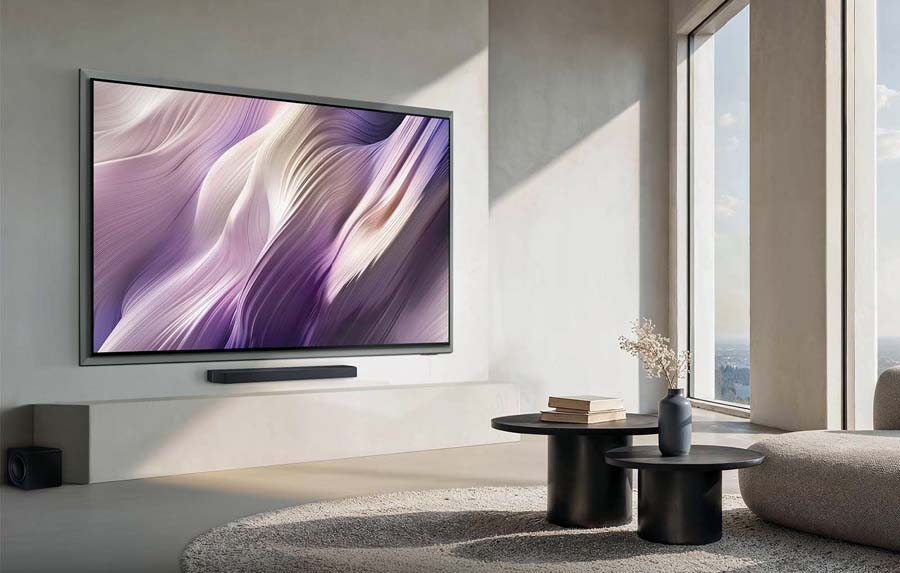
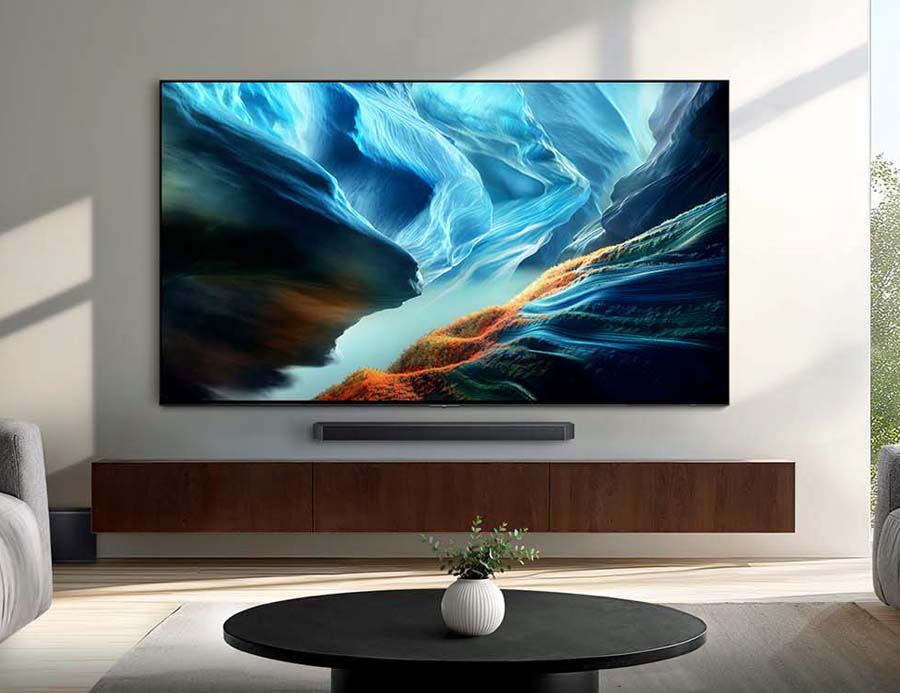
The Samsung S95H OLED TV features a unique “Float Layer” design.
One thing that varies significantly on the S90H and S95H is the cosmetic design. The S95H sports a new “Float Layer” industrial design which features an integrated (non-removable) picture frame around the edges of the panel. The set also comes with an innovative flush wall-mount bracket that allows the TV to sit completely flat against the wall. The design makes the S95H look more like artwork when not in active use. But unlike Samsung’s “The Frame” and “The Frame Pro” TVs, the outer frame itself is neither replaceable nor customizable.
Museum Quality TV?
For the first time on an OLED TV, Samsung has given owners of the S95H access to the Samsung Art Store, a curated collection of artwork which can be displayed on the set when you’re not actively using it to watch video. Although “given” is an odd word to use here. While customers can access up to 30 different pieces of art per month for free, access to the full art store with over 5,000 pieces of art incurs a subscription fee, currently $5.00/month or $50/year.
Compared to last year’s flagship S95F, the S95H does away with the separate One Connect box which had moved all the inputs and outputs to a separate component, connected to the TV by a proprietary cable. This year, all of the inputs and outputs on the set are integrated into the side of the TV itself, but in a discrete manner in which they are not visible when the TV is mounted to the wall using the included flush wall-mount hardware.
Advertisement
Check out the S90H and S95H up close and personal.
Customers who want a simpler installation for the S95H can purchase a wireless One Connect dongle which plugs into a proprietary port in the back of the TV. This allows you to connect all your video source and components to a separate wireless One Connect box, located up to 30 feet away from the TV. With this option, the only cord the S95H needs is a power cord. And, since all of the HDMI ports on the TV and on the OneConnect box are accessible, technically you can connect up to 8 separate sources via HDMI 2.1 if you use the wireless OneConnect box. That’s a lot of ports!
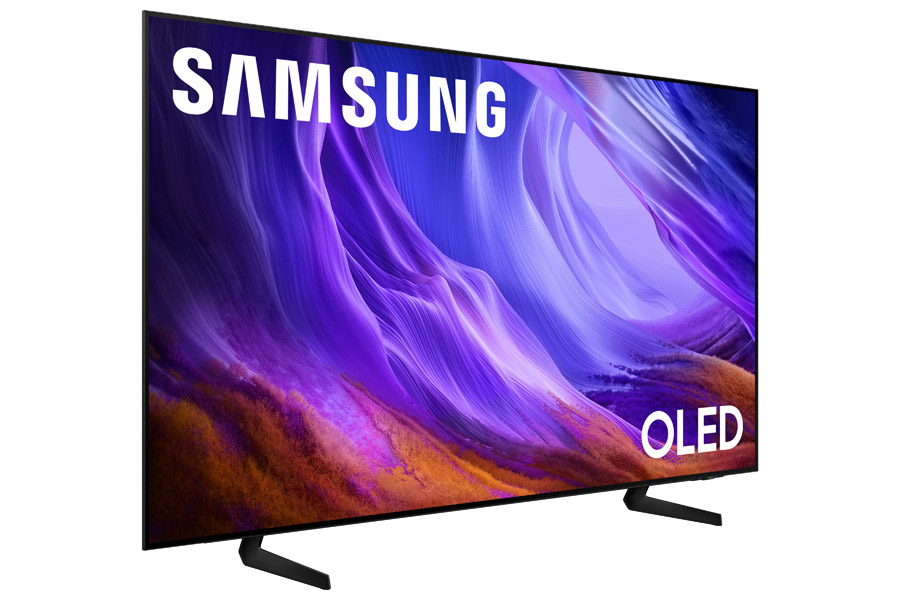
The S90H features a traditional thin black bezel.
Meanwhile the S90H offers a more traditional cosmetic design, with a thin black bezel and all input and output ports recessed into the side/back of the TV. Unlike last year’s S90F, the S90H now includes Samsung’s Glare Free screen treatment which reduces reflections from ambient room lighting. If you prefer a glossy type of screen, Samsung offers the S85H OLED TV without the Glare Free coating.
Samsung’s S85H OLED TV will offer a traditional glossy screen.
QD or Not QD?
In terms of underlying panel differences, Samsung is once again using different panels within a specific model line, depending on screen size. Some use a QD-OLED (Quantum Dot Organic Light-Emitting Diode) panel from Samsung Display, while others use a WOLED (White Organic Light-Emitting Diode) from LG Display. Both offer exceptional black levels thanks to self-emissive pixels, as well as excellent off-axis viewing and freedom from artifacts like Dirty Screen Effect, blooming and haloing around bright objects. QD-OLED panels generally have a slightly wider color gamut than WOLED panels, though this isn’t normally evident while viewing real world content on Blu-ray, streaming or even UHD Blu-ray Disc.
From what we could see (and measure) the 65-inch S95H seems to be using the latest QD-OLED panel from Samsung Display. BT.2020 color gamut tests came in at around 88.4% of BT.2020, which is consistent with a QD-OLED panel. If Samsung takes the same strategy as last year, then we expect that the 55-inch and 77-inch screen sizes of the S95H will also use a QD-OLED panel (at least in the United States), while the 83-inch screen size will use a WOLED panel. The S85H will use a W-OLED panel in all screen sizes.
Advertisement
It gets a little trickier with the S90H. Last year, the “90” model (S90F) used a QD-OLED panel in select screen sizes (55, 65 and 77 inches), but the measurements we made on the S90H in a 65-inch screen size suggest that this new model actually uses a WOLED panel. While it can reach 98.6% of the P3 color standard, it only manages to reproduce 74.77% of the BT.2020 color gamut. And while this isn’t a serious limitation on most of today’s content, it does suggest that the underlying panel is actually WOLED, not QD-OLED.
This may be subject to change, particularly outside the North American market. And we can only report on the actual sample that we viewed and measured at the workshop. Production samples may differ.
Advertisement. Scroll to continue reading.
With a voice remote and Vision AI on-board, you can talk to your TV… and it will talk back.
Samsung Vision AI – The Next Generation
All of Samsung’s 2026 MiniLED, Micro RGB and OLED TVs are taking full advantage of Artificial Intelligence, both in picture processing and in the overall end user experience. More than simple recommendations about what else to watch, Samsung’s Vision AI allows you to interact with your TV with normal language questions and get not only content recommendations but also natural answers to these questions. You can even get real time language translations in a number of different languages via on-screen subtitles (on select content).
Both the S90H and S95H use Samsung’s NQ4 AI Gen3 Processor, the same processor from last year’s flagship OLED TV. This brings several AI-based picture enhancement options to bear, including 4K AI Upscaling Pro to improve the look of lower-resolution content, AI Motion Enhancer Pro, and an Adaptive Picture function that uses AI to optimize the image based on the content being viewed. This assures that sports programs will have blur-free fast motion while movies will preserve a more cinematic look.
Advertisement
In honor of this year’s World Cup, Samsung is offering a new AI Soccer mode which accentuates the green grass of a soccer pitch and enhances the detail and clarity of the moving soccer ball while also giving the crowd noise a more spacious sound effect. We saw a demo of this and have to say it was pretty effective at making you feel like you’re actually at a match, but without any pesky football hooligans.
One UI Tizen FTW
All three of Samsung’s 2026 OLED TVs include the latest version of Samsung’s Tizen Operating System. This platform offers all of the major streaming apps and is one of the better user interfaces when it comes to finding and presenting content without excessive advertising. In our use, we found the menu navigation and apps to be smooth and zippy, and the AI-enhanced search found content from a variety of streaming apps and sources as expected. Samsung says they will provide free upgrades to the O/S for up to 7 years, so customers will get enhanced operation and new features over time without having to buy a new TV every year.
As with Samsung’s 2025 TVs, the S85H, S90H and S95H support HDR10 and HDR10+ HDR options, but not Dolby Vision. They do support Dolby Atmos audio as well as Samsung’s new Eclipsa Audio immersive audio format (but not DTS).
Thoughts on Performance
We spend several hours with both the S90H and S95H using a Kaleidescape Strato E movie player loaded with challenging content as well as a few UHD Blu-ray Discs. Initial tests showed that both the S90H and S95H offer excellent color saturation and detail. Black levels in a darkened room were exceptionally inky, and still pretty strong when we turned on the lights. Unlike the first generation of Samsung’s Glare Free screen treatment, the latest version manages to nearly eliminate light reflections on the screen without sacrificing black levels too drastically.
Advertisement
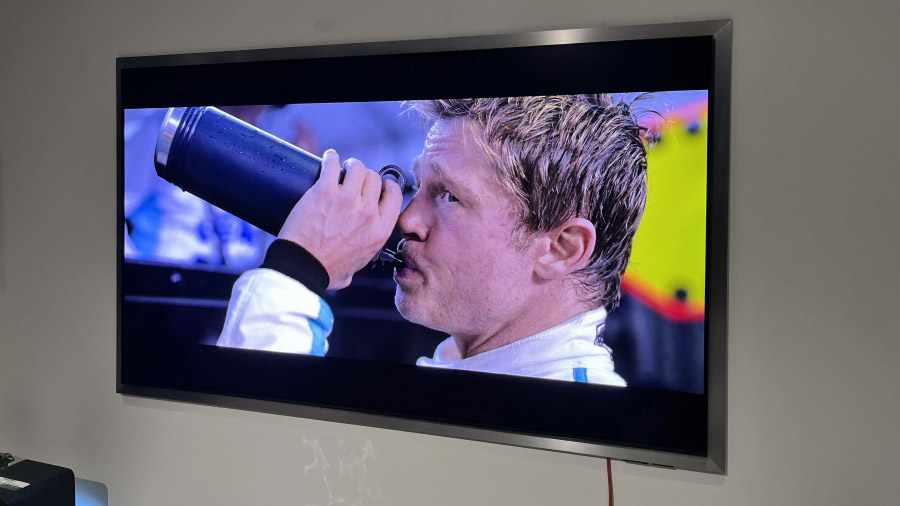
Even with room lights on, the Samsung S95H was able to create a bright punchy image on 4K/HDR titles like “F1” (photo by Al Griffin).
Skin tones were particularly well represented on both sets as evidenced by test clips on Spears and Munsil’s UHD Benchmark discs. And using 4K/HDR content mastered for 4,000 nits of peak brightness (like the film “Alpha”), we could see that both sets’ on-board HDR Tone Mapping did a great job adjusting the HDR scale so that bright specular highlights were maintained as well as dark shadow details, even when both appeared on screen at the same time.
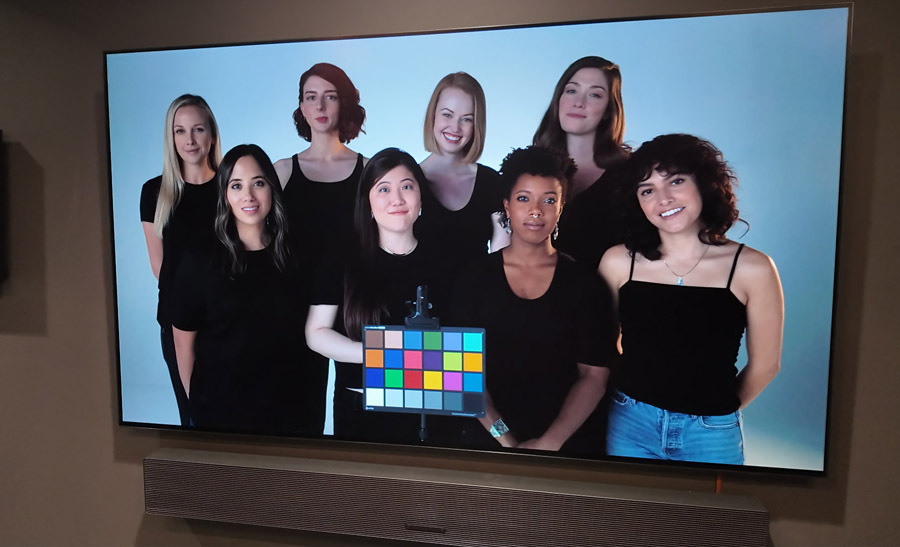
Skin tone reproduction was spot on with the Samsung S90H (pictured) and S95H OLED TVs as seen in this clip from Spears and Munsil UHD Benchmark disc.
The S95H provided a more punchy and dynamic image overall, thanks to its higher peak brightness, though this advantage was less obvious when we dimmed the lights.
S90F vs. S95H, By the Numbers
Using the latest version of CalMAN software on the S95H, we measured a peak brightness of 2,553 nits in a 10% field white window in Standard mode and 1,072 nits in Filmmaker mode. The brightness measurement in Standard mode is exceptionally high for an OLED TV and about 25% higher than last year’s S95F. And the lower brightness in Filmmaker mode seems to be consistent with recent OLED TVs from both LG and Panasonic, each of which is targeting a closer visual match to the broadcast reference monitors in use in the film industry to master theatrical content for home. Meanwhile the S90H peaked at 1,190 nits, again using a 10% window in Standard mode and 1,295 nits in Filmmaker mode.
In terms of color gamut, both sets were able to reproduce close to 100% of the P3 color standard (99.9% on S95H, 98.6% on S90H), but they differed a bit on the BT.2020 color gamut tests, as we mentioned earlier. The S95H was able to hit 88.4% of BT.2020 while the S90H only managed to hit 74.77% of BT.2020 in the CalMAN tests. This leads us to believe that the S95H is using a QD-OLED panel while the S90H may be using a WOLED panel. Does this matter in real life? Maybe not. Most content on streaming and even on UHD Blu-ray Disc stays within the P3 color space, which both sets are more than capable of reproducing,
In terms of overall color accuracy, we measured the average “Delta E” (color variation from reference) at under 3 for grayscale and under 2 for color on both sets, both in Filmmaker mode. Specifically the S95H averaged 2.9 dE for grayscale and 1.6 for color dE. The S90H actually turned in slightly better out-of-the-box measurements with an average dE for grayscale of 2.8 and an average dE for color of 1.1. These are both impressive measurements for out-of-the-box settings and it’s likely that even better results could likely be attained with a full calibration.
Overall, both sets offered solid performance for an OLED TV. Or really for any display. Whether you’re gaming, streaming, watching HD Blu-ray Discs or 4K UHD Blu-rays, or 4K/HDR movies on Kaleidescape, you’ll be in for a visual treat with either of these sets.
Specs and pricing of the S85H OLED TV are also included below with the S90H and S95H details, but we have not yet spent any hands-on time with the S85H.
Speaker Type: 4.2.2CH Output Power (W): 70W Dolby Atmos Object Tracking OTS+ Q-Symphony: Active Voice Amplifier (AVA) Pro Adaptive Sound: Pro Bluetooth Audio 360 Audio
Speaker Type: 83″-48″: 2.1CH, 42″: 2CH Output Power (W): 83″-48″,40W,42″: 20W Object Tracking: OTS Lite Q-Symphony: Active Voice Amplifier (AVA) Pro Adaptive Sound: Pro Bluetooth Audio 360 Audio
Speaker Type: 2CH Output Power (W): 20W Dolby Atmos Object Tracking Sound (OTS): OTS Lite Q-Symphony Active Voice Amplifier (AVA): AVA Pro Adaptive Sound: Pro Bluetooth Audio 360 Audio
TV Design
FloatLayer 4 Bezel-less Front Color: Slate Black Stand Type: Round Feet Stand Color: Black Adjustable Stand: N/A
LaserSLim 4 Bezel-less Front Color: Graphite Black Stand Type83″ – 48″: Simple Plus Blade 42″: Simple Blade Stand Color: 83″- 48″: Space Titan 42″: Black Adjustable Stand: 83″-48″: N/A 42″: Yes
83″ – 55″: Contour 48″: LaserSlim 4 Bezel-lessFront Color: Graphite Black Stand Type: 83″ – 55″: Simple Linear. 48″: Simple Blade Wide Stand Color: Black Adjustable Stand: 83″-55″: N/A, 48″: Yes
Connectivity
Wi-Fi 6E Bluetooth (BT5.3) One Connect Box: N/A 4 x HDMI HDMI Maximum Input Rate: 4K 165Hz (for HDMI 1/2/3/4) HDMI Audio Return Channel: eARC HDMI-CEC: 3 x USB-A Ports 1 x Ethernet (LAN): 1 x Digital Audio Out (Optical): 1 z RF Connection: Y 1 x RS-232C Input
Wi-Fi 6E Bluetooth (BT5.3) One Connect Box: N/A 4 x HDMI HDMI Maximum Input Rate: 4K 165Hz (for HDMI 1/2/3/4) HDMI Audio Return Channel: eARC HDMI-CEC: 3 x USB-A Ports 1 x Ethernet (LAN): 1 x Digital Audio Out (Optical): 1 z RF Connection: Y 1 x RS-232C Input
Wi-Fi 6E Bluetooth (BT5.3) One Connect Box: N/A 4 x HDMI HDMI Maximum Input Rate: 4K 120Hz (for HDMI 1/2/3/4) HDMI Audio Return Channel: eARC HDMI-CEC: 2 x USB-A Ports 1 x Ethernet (LAN): 1 x Digital Audio Out (Optical): 1 z RF Connection: Y 1 x RS-232C Input
Samsung Vision AI
Vision AI Companion: AI Soccer Mode: AI Sound Controller: Pro Live Translate Generative Wallpaper: Multi AI Agents (Copilot & Perplexity) Pet & Family Care: Home Insight:
Vision AI Companion: AI Soccer Mode: AI Sound Controller: Pro1 Live Translate Generative Wallpaper: Multi AI Agents (Copilot & Perplexity) Pet & Family Care: Home Insight:
AI Soccer Mode: AI Sound Controller: Live Translate Multi AI Agents (Copilot & Perplexity) Pet & Family Care:
Mobile to TV TV initiates mirroring Sound Mirroring Wireless TV On
Mobile to TV TV initiates mirroring Sound Mirroring Wireless TV On
Mobile to TV TV initiates mirroring Sound Mirroring Wireless TV On
Multi-View
Up to 2 videos
Up to 2 videos
Up to 2 videos
Buds Auto Switch
Yes
Yes
Yes
Works with Apple AirPlay
Yes
Yes
Yes
Works with Google Cast:
Yes
Yes
Yes
Daily+
Yes
Yes
Yes
Now Brief
Yes Voice/User Detection
Yes Voice/User Detection
Yes Voice/User Detection
Workout Tracker
Yes
Yes
Yes
Karaoke Mic
Yes
Yes
Yes
Multi-Control
Yes
Yes
Yes
Storage Share:
Yes
Yes
Yes
Gaming Support
Gaming Hub: Cloud Gaming:-Xbox, NVIDIA GeForce Now, Luna, Blacknut, Antstream, Boosteroid AI Auto Game Mode ALLM (Auto Low Latency Mode) Game Motion Plus Super Ultra Wide Game View Game Bar Mini Map Zoom AMD FreeSync: Freesync Premium™ Pro NVIDIA G-SYNC HGiG Hue Sync:
Gaming Hub: Cloud Gaming:-Xbox, NVIDIA GeForce Now, Luna, Blacknut, Antstream, Boosteroid AI Auto Game Mode ALLM (Auto Low Latency Mode) Game Motion Plus Super Ultra Wide Game View Game Bar Mini Map Zoom 83″- 48″: AMD FreeSync: Freesync Premium™ Pro 42″: Freesync Premium™ NVIDIA G-SYNC HGiG Hue Sync:
Gaming Hub: Cloud Gaming:-Xbox, NVIDIA GeForce Now, Luna, Blacknut, Antstream, Boosteroid AI Auto Game Mode ALLM (Auto Low Latency Mode) Game Motion Plus Super Ultra Wide Game View Game Bar Mini Map ZoomAMD FreeSync: Premium™ NVIDIA G-SYNC HGiG Hue Sync:
Security
Knox Vault: N/A Knox Security: Yes
Knox Vault: N/A Knox Security: Yes
Knox Vault: N/A Knox Security: Yes
Power
Power Supply (V): AC110-120V~ 50/60Hz Stand-by Power Consumption (W): 0.5 Typical Power Consumption (W) 83″: 236W 77″: 192W 65″: 145W 55″: 127W Max Power Consumption (W): 83″: 650W 77″: 770W 65″: 600W 55″: 470W Eco Sensor Auto Power Saving Auto Power Off
Power Supply (V): AC110-120V~ 50/60Hz Stand-by Power Consumption (W): 0.5 Eco Sensor: Yes Auto Power Saving: Auto Power Off
Power Supply (V): AC110-120V~ 50/60Hz Stand-by Power Consumption (W): 0.5 Eco Sensor: Yes Auto Power Saving: Auto Power Off
Included Accessories
Remote Control: BT SolarCell™ Remote TM2660H Power Cable Slim Fit Wall-mount Support
Remote Control: BT SolarCell™ Remote TM2660H Power Cable Slim Fit Wall-mount Support
Remote Control: BT SolarCell™ Remote TM2660H Power Cable Slim Fit Wall-mount Support
Sizes and U.S. Pricing of Samsung’s 2026 OLED TVs:
S95H OLED TV
55-inch S95H: $2,499.99
65-inch S95H: $3,399.99
77-inch S95H: $4,499.99
83-inch S95H: $6,499.99
S90H OLED TV
S85H OLED TV
The Bottom Line
With Samsung’s 2026 line-up of OLED TVs, it’s clear that the company is still committed to this category, even as they continue to enhance their LCD TV line-up with both Mini LED and Micro RGB backlighting. The 165 Hz OLED panel, impressive peak brightness, advanced AI processing, deep black levels and accurate color reproduction should appeal to those who want exceptional picture performance without the requirement to turn out the room lights or close the drapes.
Samsung’s industrial design has always had its share of fans and detractors. Incorporating a picture frame into the chassis of the S95H will likely appeal to those who want their TVs to pass as artwork when not in use, but it may be a sticking point for those who want a more traditional thin bezel design. For those who like the idea of the Frame TV but want something with higher picture performance, we believe the S95H will offer a compelling choice.
We also believe moving away from the required One Connect box on the S95F by including the input/output ports on the S95H TV itself and offering a wireless One Connect option for those who want to move the cables to a separate box is a great move. This makes the S95H even easier to install than its predecessor with more options for the consumer and custom installer.
For those who appreciate the wider color gamut reproduction of a QD-OLED panel but dislike the matte finish of Samsung’s Glare Free screen treatment or aren’t fans of the framed design of the S95H, Samsung isn’t really offering an alternative this year. Whether this turns out to be a misstep or just a trivial checklist item remains to be seen.
But what we’ve seen so far of the Samsung OLED line suggests that the flagship S95H will likely be one of the top performing TVs of the year.
Spring has a way of revealing everything your garage doesn’t have. All the clutter you accumulated last winter suddenly needs a place to go so you can get the lawn mower out. The half-finished projects from last year are calling your name again, but the tools you swore you had somehow aren’t where you left them. And all that dust and leaves piled up in the corners can only be ignored for so long.
It’s why, for many homeowners, spring is about more than just cleaning. It’s a time for upgrading, as well. Lucky for you, Costco’s got plenty of the good stuff to get your garage ready for the season. We’ve put together a mix of must-haves ranging from storage systems to power tools to lawn equipment and beyond. No matter what projects await you in the coming months, these five Costco finds should be good enough to get you through.
Advertisement
Trinity Modular Slatwall
No functional garage is complete without proper organization and storage. That’s easier said than done, though, especially if your car or cars take up all the extra room in there. That’s what’s nice about the Trinity Modular Slatwall: it lets you store tons of stuff right there on the wall, no floor space required. The kit comes with four 48-inch by 12-inch PVC panels, covering a total of 16 square feet. Plus, you get 13 hooks in multiple sizes. It’s modular, too, so you can adapt it to whatever kind of wall space you have. The panels can go either vertically in a 4-foot by 4-foot square or horizontally in an 8-foot by 2-foot layout.
The panels can support up to 75 pounds per square foot, which comes out to 1,200 pounds total. It mounts flush with the wall, too, so no worries about it protruding into the workspace. Costco members say it’s sturdy and easy to install, and that it works even better when you order more hooks than the 13 it comes with. It’s an online exclusive priced at $129.99, and you can get it in gray or white.
Advertisement
Ingersoll Rand Combination Wrench Set
If mechanical work is on your spring to-do list, a reliable wrench set is a must-have. To get you taken care of, Costco sells this Ingersoll Rand 16-piece combination wrench set as an online exclusive. It covers sizes from 6mm to 22mm, which should be suitable for everything from basic household fixes to more demanding automotive jobs. Each wrench is engineered to exceed ANSI standards for torque, length, and hardness. They also have a non-slip grip design to help minimize the chances of you stripping your fasteners.
Advertisement
Another big plus: the long handles. They increase your leverage, which means more torque with less effort. Costco members say they’re well-made and feel comfortable enough for all your wrenching needs. It’s going for $99.99 on Costco’s site, which means you’ll be paying about $6.25 a wrench. Sure, there are cheaper mechanics’ tool sets out there, but this one comes with Costco’s excellent customer service to protect your purchase.
Advertisement
DeWalt Wet Dry Vacuum
Everybody likes getting a project done, but very few like the cleanup that comes after. This DeWalt wet-dry vacuum does make it a little easier to manage, though. It’s powered by a 4 peak horsepower motor, so you get strong suction and high airflow for everything from fine dust to heavier debris like nails and wood fragments. And even with all that horsepower, it’s still built with Stealthsonic technology that keeps noise levels below 65 decibels. That makes it about 50% quieter than standard wet/dry vacuums.
The vacuum’s stainless steel tank is pretty resilient against wear and tear, and the crush-resistant hose is built to last just the same. It comes with a 15-foot power cord to get you into every corner of the garage, plus a wrap handle for convenient storage. Costco members call it nice and quiet and perfectly adequate for inside and outside cleanup. Yeah, there are more powerful shop vacs out there, but this should be more than enough for the average Joe. It’s $99.99 in stores and online.
Advertisement
Fanttik Mini Chainsaw
Not every yard work task requires a full-size chainsaw. Sometimes, you just need to do a little cutting and trimming. That’s where the Fanttik Mini Chainsaw comes in handy. It’s a much more compact alternative to the full-size thing that you can even use with one hand. Even with its smaller size, the chainsaw can still handle over 135 cuts on a single charge of its 2500mAh battery. When it comes time to recharge, its fast USB-C charging means very little downtime. You also have a built-in LED display to give you real-time information on battery life and speed settings during operation.
The tool gives you three adjustable speed levels and an integrated LED light for visibility in low-light conditions. Don’t take that as your sign to go chainsawing in the dark, though. Be careful. While it’s not intended for heavy-duty logging, the mini chainsaw is plenty for quick, efficient yard work. Costco members agree, saying it works like a charm and can get the job done with power to spare. It’s $79.99 and is available in-store and online. And if you want to take your garage upgrade a step further, there are several other Costco Finds that can help you do that.
Advertisement
Greenworks Drill & Impact Driver Kit
If your power tools need an upgrade for spring, Costco has a Greenworks 24V drill and impact driver kit that comes with both tools, three batteries, a fast charger, and a range of other bits and accessories. It’s $299.99, and it’s an online exclusive. The drill has a 1/2-inch keyless chuck, a two-speed gearbox reaching up to 2,000 RPM, and an 18-position clutch. The impact driver has a 1/4-inch quick-release hex collet and up to 1,950 inch-pounds of torque. Together, you’ll have just what you need to start knocking out all those projects haunting your to-do list.
The 24V lithium-ion batteries have enough power and runtime to help you get through bigger projects. They also use USB-C fast charging, and they double as an input and output. That means, in a pinch, the batteries can serve as portable power banks for your phone or laptop. Costco members like the sturdy build, the robust torque, and the overall value of the kit itself. It’s definitely one of the most underrated tool brands at Costco.
Advertisement
Methodology
Each item included here was available to purchase from Costco warehouses or Costco.com as of the time of this writing. Items were chosen based on the highest-rated items from member reviews, sorted by newest arrivals on Costco’s website. Particular attention was also given to tools that solve common seasonal challenges during springtime (such as organization, cleanup, and DIY projects around the house or the yard). Each tool represents a different category of need (storage, fastening, cleaning, cutting, and drilling) to provide a well-rounded list of upgrades for your garage this spring.
New renders of the Pixel 11 Pro XL have surfaced, giving us one of the clearest looks yet at Google’s next flagship.
Fresh CAD-based images suggest Google is reworking its signature camera bar, swapping the familiar two-tone look for a more unified, monochromatic design that stretches cleanly across the rear. This is a subtle shift on paper. However, it could give the Pixel 11 lineup a noticeably sharper, more modern feel.
The renders, first shared by Android Headlines, follow earlier leaks of the standard Pixel 11 and Pixel 11 Pro. They complete the picture of Google’s 2026 non-foldable range. While CAD renders aren’t official, they’re typically based on manufacturing dimensions. This makes them a fairly reliable preview of overall shape and layout.
Credit: Android Headlines/OnLeaks
Alongside the new camera bar, there are hints that Google could be dropping the infrared thermometer seen on previous Pro models. That’s one detail worth treating with caution, as smaller features don’t always show up accurately in CAD leaks.
Advertisement
Advertisement
In terms of size, the Pixel 11 Pro XL is expected to come in at 162.7 x 76.5 x 8.5mm, making it marginally smaller than its predecessor. However, the display is tipped to remain unchanged. Google is likely sticking to a 6.8-inch AMOLED panel.
Under the hood, there aren’t many surprises yet. A next-gen Tensor G6 chip is widely expected, but beyond that, details around RAM and storage are still unclear. There’s also no strong indication of a major hardware shake-up this time around.
If Google follows its usual schedule, the Pixel 11 series is still a few months away from launch. An August reveal looks likely.



















![BITCOIN IS ABOUT TO DROP !!! [Bear Flag Confirmed]](https://wordupnews.com/wp-content/uploads/2026/04/1775318607_maxresdefault-80x80.jpg)




































You must be logged in to post a comment Login