Connect with us

Tech

Working on the go this summer? As a seasoned remote worker, here’s my essential kit list for productive working in the most awkward of locations

Published

on

We’re well and truly into summer travel season, and if you’re planning on integrating some remote working into your vacation, it’s worth considering your setup. My own job is largely laptop-based, and over the years I’ve done a decent amount of working away from my office desk, whether at events or in order to keep things ticking over during time off. The biggest lesson I’ve learned is that a few well-chosen remote-working accessories can make a huge difference.

I rely on a laptop riser so that I’m not hunched over a table (my back will start hurting after around an hour, and it’s all downhill from there). If my laptop is raised, I’ll then add in a portable keyboard to make typing easier — my tip is to pick one with the same proportions as your regular keyboard, so your fingers know where to go — and a wireless mouse.

Source link

Continue Reading
Click to comment

You must be logged in to post a comment Login

Leave a Reply

Tech

Donald Trump Just Became The World’s Most Famous Anti-Vaxxer Nonsense Peddler

Published

on

from the tiny-little-coffins dept

When it comes to the bullshit, batshit-crazy anti-vaxxer movement that currently has the United States in its un-scientific grip, I’ve focused most of my attention on RFK Jr. And, frankly, for good reason. For arguably decades, but definitely for the last five to ten years, RFK Jr. was the most infamous anti-vaxxer in the world. Kennedy would deny this, of course. In fact, it is old habit for him to talk out of both sides of his mouth when it comes to vaccines, but his anti-vaxxer side speaks much more loudly. And, because of course, one of his chief claims has been that there is a link between childhood vaccinations and autism.

When Donald Trump tasked Kennedy with finding the “cause” of autism, it came off looking like Trump fulfilling his promise to let Kennedy promote his pet conspiracy theories in exchange for gobbling up the MAHA vote when he ran for president. Then Trump himself started parroting some of the same claims you would normally hear from Kennedy. Still, it all looked like performative promise-keeping.

All of that has changed. Donald Trump just made himself the most famous anti-vaxxer on the planet. On Monday, Trump signed an Executive Order making enormous changes to vaccine schedule recommendations for children, both limiting the number of vaccines recommended and advising that vaccines be split up and not offered in combo-shots.

The vaccine changes are not backed by evidence or spurred by new findings. Rather, they are based on false anti-vaccine fearmongering about harms, including the debunked claim that they cause autism, and misinformation that multiple vaccinations can “overwhelm” children’s immune systems. This false claim has also been repeatedly debunked and explained.

During a signing event at the White House on Monday afternoon, Trump falsely claimed that pediatricians “have a vaccination that looks like the size of a bottle of soda,” that is “poured into a little child’s body, and bad things happen in too many cases. This is an explosion; this is an epidemic,” Trump said.

Advertisement

He also tied the new vaccine recommendations to his goal of finding out “what’s going on with autism.” Dozens of high-quality studies encompassing data on millions of children have found no evidence linking the neurodevelopmental condition to immunizations. Nevertheless, Trump suggested that the changes outlined in the order would reduce autism rates in the US.

This is madness. Trump has no understanding of the science or medicine behind vaccines. The fact that he’s layering lies into his signing ceremony for this unscientific proclamation should tell you everything you need to know. It was not that long ago that my own children received their childhood vaccines. I can promise you that no doctor approached them with a syringe the size of a soda can to pour into them. These are lies. Bald-faced lies.

And, while this has been pitched as putting America in line with the vaccine schedules of other developed nations, that is also a lie.

Under the new recommendations, Trump said children should get fewer vaccines, suggesting that the US recommends an excessive number of vaccines compared with other high-income countries. In reality, by dropping down to only 11 recommended vaccinations, the US becomes an outlier in recommending so few, according to fact-checking by Stat News in January. The only other country that recommends so few vaccines is Denmark, a small, relatively homogenous country with universal healthcare.

As for breaking up the MMR vaccine into individual shots, that specific part of the EO also came with lies from Trump. In the signing ceremony, he claimed that the combo MMR shot was “quite lethal.” There is has never been a death linked between the MMR shot and a person with a normally functioning immune systems. Those who are immuno-compromised are already warned against getting the combo shot. In fact, that warning and inability to get what are otherwise normal vaccinations is why it’s so damned important that everyone else immunize based on the previous recommendations, which were made under good science. It’s herd immunity that protects the immuno-compromised. This EO, to whatever extent it is implemented, will be “quite lethal” or otherwise produce negative health outcomes for a non-zero number of people, mostly young children.

Advertisement

This EO will almost certainly result in the deaths of at least some children.

And why? Ego, it appears.

The order is in line with reports that Trump personally promotes the debunked claim that vaccines cause autism and that he wants part of his legacy tied to curing autism. Trump had reportedly put pressure on anti-vaccine Health Secretary Robert F. Kennedy Jr. to do more to link vaccines and autism. In the signing event, Trump praised Kennedy, saying, “He’s doing a fantastic job,” and telling the anti-vaccine advocate “I’m proud of you.”

That Trump would prioritize his own legacy over the health of American children is about as surprising dilated pupils at a Grateful Dead concert. But Trump now directly owns the consequences of promoting anti-vaxxer conspiracy theories to his dedicated flock, as well as the health outcomes for their children. I expect lawsuits to come fast and furious from medical associations and institutions. And I hope they work, but they won’t be enough.

Some percentage of the country will listen to Dear Leader, because that is how cults work. And their innocent children, vulnerable to the misinformed demands of their parents, will be hurt. Perhaps time, money, and effort will be wasted doing trials on individual vaccinations for measles, mumps, and rubella. What comes next is not certain.

Advertisement

But what is certain is that this EO is crafted from a place of selfish ignorance. It does no good and can only cause harm. And our own president is the one harming us.

Filed Under: anti-vaxxers, donald trump, maha, mmr vaccine, rfk jr., vaccines

Source link

Advertisement
Continue Reading

Tech

Golf’s US Open Championship could come to Apple TV

Published

on

Apple is reportedly in talks with the owners of golf’s Open Championship to take over when NBC’s license runs out in 2028, but other bids are in play.

Sports rights have become a battleground as streamers seek to take over from legacy media. Apple has had small successes in getting rights for MLS, MLB, and F1, but its ambitions go much further.

According to a report from The Guardian, Apple TV is in early discussions with the R&A about streaming rights for golf’s Open Championship. NBC has the rights through 2028, but there is no guarantee they’ll stay with NBC with a renewal.

Netflix and Amazon are also expected to make bids. Apple has lost out to other streamers on such bids after backing down when negotiators wouldn’t meet their expectations.

Advertisement

Golf is a very popular sport in the United States and getting rights to the Open Championship would be yet another way to attract customers to its platforms. It isn’t clear if Apple would charge for access, include it with Apple TV, or stream it for free.

Apple Services SVP Eddy Cue has said he’s unhappy with how spread out sports streaming rights have become. It seems Apple is prioritizing rights to sporting events and series that can be wholly owned by the company, rather than partial rights.

It will be some time before the rights for golf are on the table, so expect to hear more about the potential bids in the meantime. NBC may end up keeping the rights past 2028 if a deal is made before then.

Advertisement

Source link

Continue Reading

Tech

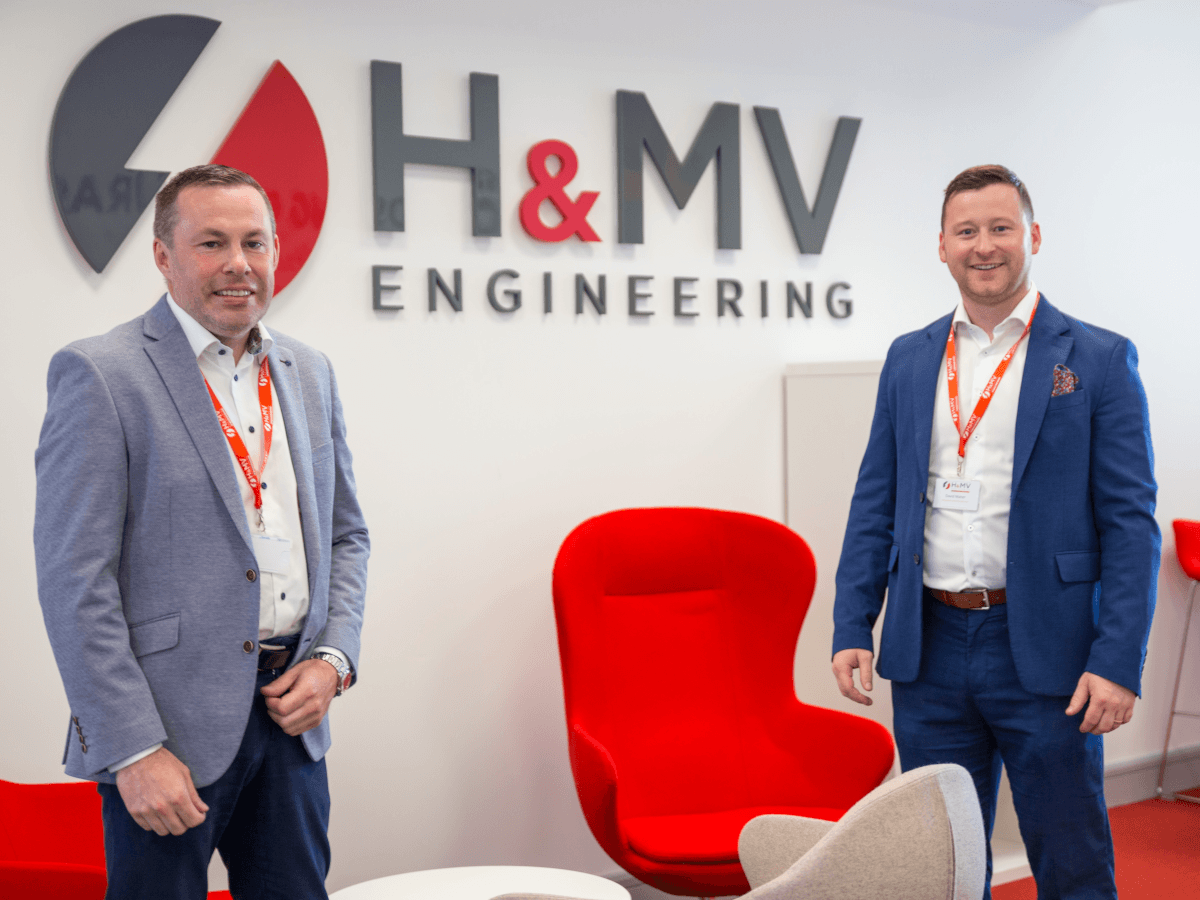
Limerick’s H&MV Engineering taps fresh funding, shares hiring plans

Published

on

The company wants to grow its headcount by 1,000 in the next five years.

H&MV Engineering has tapped around €750m in extended investments led by European private equity company Exponent and plans to recruit across its international operations. The fresh funding values the Limerick-headquartered business at €1.4bn.

The critical power infrastructure services provider said the funding will help its next phase of growth, with a focus towards US expansion. The continuation vehicle also brings in new investors Apollo S3, Pantheon and SQ Capital. Exponent has backed H&MV since 2022.

Power infrastructure providers play a key role in enabling the expansion of newer technologies including AI and data centres (whose power consumption has grown at a 12pc rate every year since 2020), and battery storage systems.

Advertisement

H&MV is at the “centre of some of the world’s fastest-growing infrastructure markets, where demand for specialist engineering expertise and reliable power infrastructure continues to increase”, said John Moore, operating partner at Exponent and board chair at H&MV Engineering.

The company currently has more than 24GW of projects in design and construction, and operates from 20 international offices across Ireland, the UK, Europe, the US and Asia.

“This transaction gives H&MV the long-term backing to scale at the pace of the markets we serve and to deliver on our five-year growth ambition,” said PJ Flanagan, the company’s CEO.

“As we enter our next phase of growth, we’ll continue investing in the team, our engineering capability and the culture that has enabled us to grow while delivering for clients around the world.”

Advertisement

Earlier this year, the company agreed to provide BnM with electrical and infrastructure support as it builds the Oweninny Wind Farm in Co Mayo.

Since 2020, H&MV has increased revenue from €61m to roughly €1bn this year and grown its workforce from around 300 to nearly 2,000, it said. It wants to triple its revenues to €3bn in the next five years and grow its headcount by another thousand.

Recruitment will be focused on the US, alongside continued hiring in Ireland, the UK and Europe, H&MV told SiliconRepublic.com.

H&MV purchased Texas-based Cooke Power Services this year in preparation for its expansion plans. It now plans to open its North American headquarters in Dallas later this year.

Advertisement

Don’t miss out on the knowledge you need to succeed. Sign up for the Daily Brief, Silicon Republic’s digest of need-to-know sci-tech news.

Source link

Advertisement
Continue Reading

Tech

Titanic-esqe Telegraph Keeps Relationship Afloat

Published

on

When people say the key to a happy, long-lasting marriage is communication, they generally mean the verbal kind: talking things out with your spouse, sharing your feelings, and all that lot. [Rich] AKA [Thumblegudget] took it another way, and built a engine-room telegraph for intramarital communication.

Now, this is less crazy than it sounds. Like the ship’s telegraph, which matched the position of an indicator on the bridge and in the engine room, [Rich]’ telegraph pairs an indicator in his office with one in the living areas of the house. He sets himself to “busy” and the arrow on the matching unit in the basement moves to that position. This naturally goes both ways, which allows his wife to point the needle to remind [Rich] that it may be time for hugs, dinner, or — most essentially for a brit — tea.

In operation each unit has a gimbal motor paired to a rotation sensor and an ESP32-S3 driving it. Thanks to that rotation sensor, the gimbal motor is programmed to lock itself into the positions on the wheel when you poke it, and the ESP32 wirelessly synchronizes the two units. A moving arrow might not be enough to get [Rich] to come down to dinner, so just like the ship’s telegraph you may remember from Titanic, [Rich]’s comes equipped with a bell to draw attention to itself.

Advertisement

Given [Rich]’s wife participated in the video and isn’t filing for divorce, it seems he may be onto something. Perhaps good communication doesn’t need to involve cumbersome human speech at all; maybe all a marriage needs is a telegraph like this and some paddles to send more complicated messages via Morse code.

Advertisement

Source link

Continue Reading

Tech

Today’s NYT Mini Crossword Answers for Wednesday, Aug. 12

Published

on

Need some help with today’s Mini Crossword? This one wasn’t too difficult, I thought. Read on for all the answers.

The completed NYT Mini Crossword puzzle for Aug. 12, 2026.
The completed NYT Mini Crossword puzzle for Aug. 12, 2026.NYT/Screenshot by CNET

Mini across clues and answers

1A clue: Caitlin Clark’s league, for short
Answer: WNBA

 5A clue: Odysseus’s hiding place when entering the city of Troy
Answer: HORSE

7A clue: Hawaiian “hi”
Answer: ALOHA

8A clue: Personal opinions, in modern parlance
Answer: TAKES

Advertisement

9A clue: Where a nuthatch hatches
Answer: NEST

Mini down clues and answers

1D clue: “Come again?”
Answer: WHAT

2D clue: Hall-of-Fame pitcher ___ Ryan
Answer: NOLAN

3D clue: Unloaded?
Answer: BROKE

Advertisement

4D clue: What a phoenix rises from
Answer: ASHES

6D clue: The “E” of NE
Answer: EAST

ExpressVPN

Get CNET’s top-rated VPN for privacy and usability

Advertisement

Source link

Advertisement
Continue Reading

Tech

‘I love solving puzzles and this industry is full of them’ finds cyber CISO

Published

on

Company86’s Cheryl Martin discusses the cyber landscape and why the skills shortage is more than a recruitment problem.

Having first started out in banking, Company86’s CISO Cheryl Martin moved through a series of customer-facing roles before becoming curious about the technical side of STEM. This interest generated a range of opportunities, such as building telecoms technology infrastructure supporting sub-sea cables and developing the UK’s internet backbone. 

She told SiliconRepublic.com, “That, in turn, led to a role undertaking major expansion into data centres. From there I pivoted into information security and have never looked back, embracing the various technology trends along the way.

“I love solving puzzles and this industry is full of them. Technology, threats, capabilities and risks all have one thing in common, they constantly change and manifest themselves into something different, much like a chameleon. The challenge to get ahead and stay ahead keeps me energised and keen to learn more.”

Advertisement

Be the momentum

Martin’s career has spanned what she refers to as “a number of technology changes and ways of working”. As a result she finds she has faced the types of challenges common to “first movers”, several times over. While exciting and sometimes even risky, it has also opened her eyes to what can be achieved when you have a vision. 

She said, “Sometimes a process or way of working hasn’t been defined, and it’s down to you to work through the myriad of possibilities. In all instances you need to be able to fail fast, express yourself in simple, easy-to-understand language and trust the team around you.

“One highlight that stays with me is the early work building the infrastructure behind sub-sea cables and the UK internet backbone and being part of laying the foundations for things people now take for granted every day. At the time much of it was uncharted, and there was real satisfaction in solving problems no one had a template for.”

She further explained, the secret to keeping her more than 20 year career in the cybersecurity sector fresh and interesting is in understanding that “you never really reach a point where you can say you’ve mastered it.” The technology will change, attackers will adapt their tactics and “suddenly the assumptions you were working with six months ago need to be challenged again.”

Advertisement

She said, “AI is a fascinating example of that. We’re seeing it change both sides of the equation. Attackers can experiment and personalise at much greater speed, while defenders have new ways to identify patterns, automate repetitive work and make sense of huge amounts of information.

“That constant movement suits curious people. Some of the best people I’ve worked with in cyber are the ones who keep asking questions, particularly when everyone else thinks something has been solved. I think that’s a big part of why I’m still excited by it.”

Trending threats

Martin noted one of the predominant trends of 2026 so far is undoubtedly AI, which is a far more relevant topic when viewed through the lens of its impact on the speed of cybersecurity and the pressure being placed on organisations to adapt at a similar pace.  

She said, “That’s why I think we need to start talking about “Mean Time to Adapt”. For years we’ve measured things like ‘Mean Time to Detect’ and ‘Mean Time to Respond’, which are still important. But increasingly, I want to know how quickly an organisation can learn from what it is seeing and actually change.

Advertisement

“Can you reassess a risk, update a control, retrain people or change a governance decision quickly enough to respond to a threat that is continually evolving?”

She predicts this will be a key trend throughout the rest of 2026, where adaptability will become one of the clearest dividing lines between organisations. She said, “You can’t predict every attack or technology shift. What you can build is an organisation that learns quickly, changes quickly and is ready when the next one arrives.”

A core element of addressing challenges is in overcoming threats via an established team of skilled and nichely qualified professionals, however, for Martin, the cyber skills deficit being seen on a global scale is not solely a recruitment issue. 

She explained, “Recruitment only tackles one part of the problem. If we’re all competing for the same pool of experienced cyber professionals, we’re moving talent around rather than creating more of it. We need to think much earlier about how people find their way into cybersecurity in the first place. 

Advertisement

“That means engaging with schools and universities, mentoring people at the start of their careers, creating more visible role models and showing that there isn’t one fixed route into the industry. Cyber needs technical specialists, but it also needs people who can communicate, solve problems, understand risk and bring different perspectives to the table.

“The challenges we’re dealing with are becoming more complex and different experiences and ways of thinking help teams spot things others might miss and challenge established assumptions. If we want a strong pipeline of people with those skills and perspectives, we have to invest in developing them long before there’s a role to fill.”

Don’t miss out on the knowledge you need to succeed. Sign up for the Daily Brief, Silicon Republic’s digest of need-to-know sci-tech news.

Advertisement

Source link

Continue Reading

Tech

SpaceXAI’s Grok Bot turns agents into persistent digital coworkers that can operate your apps for $120-per-month

Published

on

SpaceXAI, the division of SpaceX formerly known as xAI, is launching an early beta version of Grok Bot, a new agent designed to move AI assistants beyond answering prompts and toward continuously executing work across the software employees already use.

The central idea is straightforward: instead of opening an AI assistant whenever a task arises, users create persistent Bots with specific jobs, give them access to applications and websites, and delegate work much as they would to a teammate.

Each Bot operates through its own computer environment, can continue working when the user’s laptop is closed, and can return when it needs approval or has finished the assignment.

SpaceXAI says the system began as an internal prototype before spreading across the company, where teams created Bots for sales outbound, marketing campaigns, office operations, bug fixes and other work. The company is now turning that internally developed workflow into a product for external users.

Advertisement

“Bots are AI teammates that do real work for you,” the company said in announcing the product. “They sign in to your tools, use them just like you do, and come back with finished work.”

The company did not release benchmarks for Grok Bot’s performance on agentic tasks. And it arrives amid an increasingly crowded marketplace of first-party AI agents that attempt to reliably complete real, enterprise workflows by interfacing with a user’s other applications and devices.

Anthropic introduced computer use for Claude in 2024, allowing models to inspect screens and operate interfaces through mouse and keyboard actions, and continued expanding with the launch of the developer focused Claude Code harness in early 2025 and the more non-technical, white collar focused Claude Cowork agent early this year.

Meanwhile, OpenAI gave its Codex harness the ability to control other computer apps in April, launched agentic Workspace Agents that can also connect to third-party applications and use them autonomously, and recently debuted a new ChatGPT Work environment for longer, multi-step tasks and finished deliverables.

Advertisement

Grok Bot seeks to join the party with its own management model for agents: persistent workers with responsibilities, memory, learned routines and the ability to hand work to one another.

Pricing and availability: Grok Bot starts at $120 per seat per month for teams, $200 per month for individuals

Grok Bot is available beginning today, August 11 in beta for SuperGrok Heavy, Cursor Ultra and Cursor Premium Teams subscribers (recall SpaceX acquired Cursor for $60 billion back in June). The product arrives for macOS, Windows, Linux and iOS, with Android listed as coming soon.

According to its product page on xAI.com, Grok Bot is included with Cursor Ultra at $200 per month for individuals. The plan includes a computer for Grok Bot, access to users’ tools, scheduled routines, desktop and mobile operation, and extended AI-token limits.

For organizations, Cursor Premium Teams costs $120 per seat per month and adds centralized billing and settings, a team marketplace for skills and plugins, shared usage analytics and SAML/OIDC single sign-on.

Advertisement

Existing SuperGrok Heavy ($300 per month) subscribers also receive access. However, for organizations wishing to sign up today, SpaceXAI is directing them to a waitlist for future access.

Those prices make Grok Bot a substantially different purchasing decision from a low-cost general AI subscription. The economic question for companies will be whether persistent Bots can replace enough manual work or conventional automation infrastructure to justify the per-user cost — and how usage limits affect total cost once agents begin running continuously.

From prompting an AI to managing one

SpaceXAI describes Grok Bot as a team of “always-on agents.” Users can create multiple Bots, assign each a role and let them work simultaneously.

The company provides examples including Sales Outbound, Talent Scout, Paid Media, Expense Manager, Product Performance, Bug Reproduction, Account Health and Chief of Staff. A sales Bot, for example, can research accounts, score prospective contacts, prepare email and LinkedIn outreach in the user’s voice, and assemble the results for human approval.

Advertisement

Promotional materials show SpaceXAI using the system internally for substantially longer chains of work. One sales Bot can add call-transcript notes to a CRM and draft follow-up messages. An operations Bot can seat new hires and process invoices arriving through Gmail. An engineering Bot can reproduce a bug in the product interface, file a ticket and then hand the repair to a debugging Bot.

The architecture could make Grok Bot particularly relevant for workflows that span systems that were never designed for AI automation.

Rather than requiring every application to expose an API specifically for an agent, Grok Bot can sign into applications and websites and operate their interfaces. SpaceXAI says Bots have their own computers and can continue working 24/7.

The company explicitly says this includes websites and applications that have “no clean API or MCP,” an important distinction for enterprises with legacy software, fragmented SaaS environments or internal systems that have never been instrumented for agent access. Instead of limiting automation to formally integrated services, Grok Bot is designed to work through the same software interfaces a human employee would use.

Advertisement

The company says early users are already applying Bots to jobs including vendor negotiations, e-commerce customer support and continuously updating CRM systems.

Another feature attempts to reduce the engineering required to automate repeatable business processes. Users can demonstrate a workflow while a Bot follows along. Grok Bot can then save the process as a routine and execute it later without requiring the user to reproduce every instruction.

SpaceXAI says the Bot can also incorporate corrections into those learned routines, allowing the workflow to change as the user teaches it how a particular process should be handled.

That potentially changes the deployment model from explicitly programming an automation to teaching an agent how an employee performs the job.

Advertisement

The company is also claiming a more persistent form of behavioral memory than simply retaining a chat transcript. According to the launch announcement, Bots remember prior conversations, learn preferences such as a user’s writing voice and edge cases, and gradually learn when they should interrupt for approval versus continue independently. SpaceXAI says they can later resume dropped threads, nudge stalled handoffs and pick up work from earlier conversations.

It further says Bots can become proactive over time, sometimes identifying work before the user explicitly asks for it. That is a more ambitious claim than conventional scheduled automation and will put additional pressure on permission controls and escalation rules if the system is deployed against production applications.

Bots can delegate work to other Bots

Grok Bot also supports multiple agents operating together.

Users can place several Bots into the same thread, where the agents can pass work between one another. The company’s demonstration includes specialized Research, Communications, Chief of Staff and Travel Bots coordinating tasks.

Advertisement

SpaceXAI says those Bots can independently message one another and share context within threads. Users can also put multiple Bots into a group conversation where they assign ownership, transfer work and coordinate among themselves, bringing the human back in primarily for judgment calls.

Internally, the company says employees sometimes place a Chief of Staff Bot above specialist Bots responsible for functions such as inbox management, recruiting, expenses, operations and bug fixes. That makes the product’s orchestration model more explicit: the user does not necessarily have to serve as the routing layer between every specialized agent.

Initial reactions are extremely positive

Lenny Rachitsky, host of the popular vlog and podcast Lenny’s Podcast and author of newsletter Lenny Letter, received early access to Grok Bot and loved using it. As Rachitsy wrote on X : “I haven’t been this excited about a new AI product in a while. It’s like OpenClaw, but super easy, reliable, and less scary to use. I think this will be a huge new product line for Cursor/Grok/SpaceX.”

Similarly Matt Shumer, an AI entrepreneur who said he tested Grok Bot for several weeks before launch, highlighted this orchestration as one of the product’s strongest features.

Advertisement

“The best way I can describe it is an agent for everything, not just code,” Shumer wrote on X.

In one test, Shumer said he created separate researcher and writer Bots, then created a Chief of Staff Bot and instructed it to coordinate the other two on a project. He expected the workflow to break down.

“It worked out of the box,” he wrote.

His main criticism involved model selection.

Advertisement

Unlike systems where developers or advanced users explicitly select the underlying model, Shumer said Grok Bot automatically routes tasks to models on the backend.

“You don’t choose a model for your Grok Bot,” he wrote. “It’s all done automatically on the backend.”

Shumer said the model router “wasn’t great” during his testing, although he said he was subsequently told it had improved.

SpaceXAI’s expanded announcement still does not identify which underlying models the router uses, nor does it document a mechanism for users to select, pin or switch to a particular xAI or third-party model. As a result, the model layer remains largely abstracted from users in the publicly supplied launch material.

Advertisement

That abstraction represents an important tradeoff for enterprise deployments. Automatic routing can remove a significant configuration decision for ordinary employees, but advanced users may want explicit control over model cost, latency, reliability and behavior — particularly for repeatable production workflows.

The agent market is moving toward longer-running work

Grok Bot enters a market increasingly focused on agents that can do more than generate text or code.

Anthropic’s computer-use capability established a mechanism for Claude models to interact with software through screenshots, cursor movements, clicks and typing. Its broader Claude product also connects with workplace services and remote MCP servers.

OpenAI, meanwhile, now describes ChatGPT Work as an agent for “longer, multi-step work and finished deliverables,” while keeping Codex focused specifically on software development. OpenAI’s enterprise agent economics can also incorporate usage-based credits, making task complexity and token consumption part of deployment cost calculations.

Advertisement

Grok Bot’s differentiation is therefore less about proving that AI can operate software than packaging computer use, persistence, workflow learning and multi-agent coordination into something resembling a workforce interface.

SpaceXAI’s announcement sharpens that distinction by emphasizing completion rather than assistance. One company product employee, identified only as Roman, describes the difference as closing the gap between work that is nearly finished and work actually completed inside the destination application: “Grok Bot can finish the swing, because the work lands where a human would put it, in the actual tool.”

That distinction will ultimately depend on reliability. A chatbot producing a bad answer creates a correction problem. An autonomous agent operating CRM records, support queues, vendor conversations or other production systems can create an operational problem.

Grok Bot’s success will therefore depend not only on model intelligence, but also on permissions, predictable execution, escalation behavior, memory accuracy and how reliably agents recognize when human approval is necessary.

Advertisement

That challenge becomes more significant if Bots act proactively, resume forgotten work and coordinate with one another without the user serving as an intermediary. Those capabilities reduce the amount of supervision required when they work correctly, but they also expand the consequences of an incorrect assumption, stale context or improperly scoped permission.

The interface may matter as much as the models

Shumer described the product’s interface as feeling like iMessage, an intentionally familiar metaphor for a system whose underlying architecture — autonomous computers, persistent memory, agent orchestration and automatic model routing — could otherwise be difficult for nontechnical users to configure.

SpaceXAI makes essentially the same usability argument in its launch announcement. Rather than asking users to construct workflows before getting started, it says users can simply message a Bot from a phone or desktop, hand it work and later continue the same conversation from either device.

That simplicity is part of the product strategy. Grok Bot is trying to hide much of the conventional machinery of automation — workflow builders, explicit integrations, agent routing and orchestration — behind an interaction model that resembles messaging a coworker.

Advertisement

That may prove to be the larger bet behind Grok Bot.

The AI industry has spent several years making models increasingly capable of using tools and completing multi-step tasks. Grok Bot attempts to turn those capabilities into an organizational abstraction people already understand: give someone a job, teach them how you work, and let them coordinate with the rest of the team.

If that abstraction proves reliable, the enterprise agent competition may increasingly shift away from which assistant produces the best individual response and toward which platform can most reliably manage fleets of agents performing ongoing work.

Source link

Advertisement
Continue Reading

Tech

The Pentagon signed a $75 million bomb deal so quietly it never even showed up on its own contract list

Published

on


  • Boeing lands $75 million contract for its new long-range guided bomb
  • GBU-75 bomb travels over 300 nautical miles using a turbojet engine
  • Boeing spent nearly $100 million of its own money before this deal

Boeing has received a $75 million Undefinitized Contract Action from the US Air Force to begin building its new long-range guided bomb.

The weapon, known as the GBU-75, pairs a 500-pound-class, or 226-kilogram, JDAM warhead with a wing kit and a compact turbojet engine.

Source link

Advertisement
Continue Reading

Tech

Zapping Rocks Unlocks Stimulated Geologic Hydrogen

Published

on

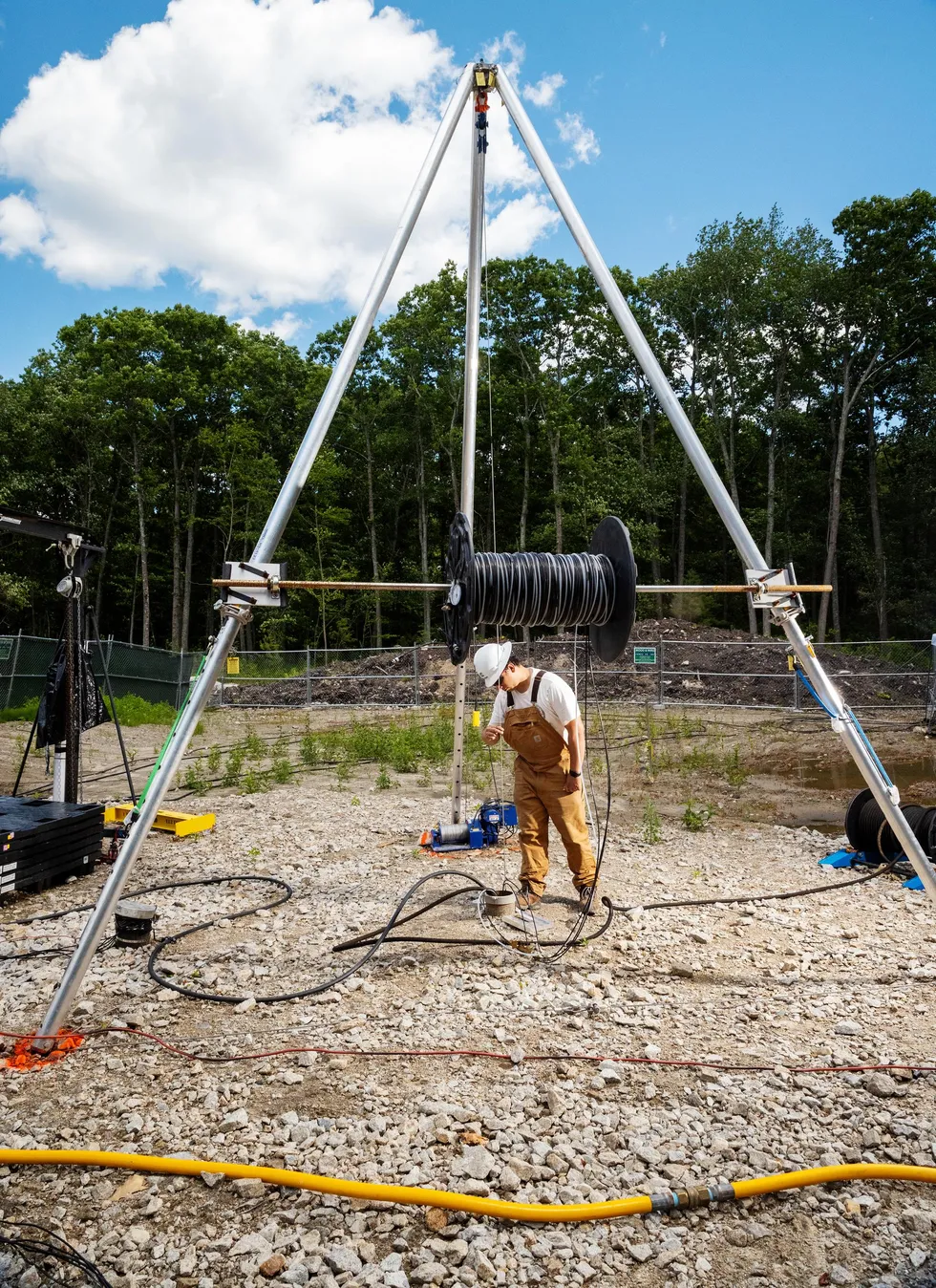
In a tranquil Boston suburb, on the far edge of a horse farm, where pasture gives way to woods, a crane lowers an enormous electrode into a borehole. The electrode, a half-meter-long cylinder with copper-tipped arms to ensure good contact with the borehole walls, descends—deeper, deeper—through layers of spongy sandstone to the hard, marbled roots of an ancient mountain range hundreds of meters below ground. Here the rock is tight; there are few cracks for water or gases to flow. But that’s about to change.

A stone’s throw away, a second electrode—a twin of the first—has been fixed in another borehole at the same depth. From above ground, a pair of high-voltage generators cabled to the two electrodes fires a series of pulses.

Tsss!…Tsss!…Tsss!…Tsss!…Tsss!….

Advertisement

Each discharge, heard faintly at the surface, is like a miniature, subterranean lightning strike. The rock between the electrodes heats. Pressure builds. Then, suddenly, the rock splits into a spiderweb of fractures.

A man in a hard hat stands over a well hole directing a rope that\u2019s been lowered from a spool overhead.On a horse farm outside of Boston, a worker sets up the well where Eden’s electrode will be lowered with a winch.Bob O’Connor

Eden GeoPower, the Massachusetts-based startup performing this peculiar field test, calls the technology electrical reservoir stimulation. The company’s tagline: “We break rocks with electricity.”

Eden’s researchers hope their rock-breaking technique will someday aid mineral mining, tap geothermal heat, or create geologic storage areas for carbon. But there’s an even more intriguing use that could create a whole new category of energy production: generating hydrogen underground.

The dream of a hydrogen-powered economy dates back to the 1970s, when petroleum shortages and rising concerns about pollution from fossil fuels sparked visions of cars, ships, planes, and industrial machines running on hydrogen instead of carbon. Hydrogen is often touted as a clean fuel because when it’s burned or consumed in fuel cells, it emits only water and heat. However, it currently takes more energy to make than it yields, and the cheapest and most common way is by reacting steam with methane, a potent greenhouse gas.

Advertisement

It’s possible to make zero-carbon hydrogen by splitting water with electrolyzers powered by renewable energy. But in most cases, the process is too expensive to be economical—a reality that burst the hydrogen-hype bubble in the early 2020s. Global demand for hydrogen in 2024 reached approximately 100 million tonnes, containing energy equal to only about 3 percent of the world’s annual energy consumption. Most of it is used as chemical feedstock for petroleum refining and for making fertilizers and plastics.

The frustrations of manufacturing clean hydrogen have convinced many entrepreneurs and scientists to instead seek the element underground. For the past half-decade, dozens of companies around the world have been hunting for buried stores of hydrogen, called natural or geologic hydrogen. But with a commercial-scale operation yet to be proved, Eden and a handful of other startups and research groups are chasing the more audacious scheme of producing geologic hydrogen artificially.

This approach, known as stimulated geologic hydrogen or engineered hydrogen, turns subterranean rock formations into giant hydrogen factories. It typically involves injecting water into iron-rich rock, which oxidizes the iron and releases hydrogen as a by-product. Fracturing the rock, as Eden is doing, creates a network of conduits for the water to reach iron-bearing minerals.

The concept of stimulated hydrogen is so new that few have had a chance to test it. Proponents say that if it works—which is a big “if”—it could provide almost unlimited energy for the indefinite future. There’s one way to find out: Start breaking rocks.

Advertisement

There’s Plenty of Underground Hydrogen

Hydrogen is the simplest and most abundant element in the universe, the stuff of stars and galaxies. Geologists have long known that Earth generates hydrogen gas through natural water-rock reactions, but until recently, the occurrence was regarded as a curiosity. The gas is so light that most experts assumed it all escaped through pores and cracks in Earth’s subsurface and didn’t accumulate in useful quantities.

A man\u2019s hands hold a metal cylinder with two capped wires sticking out. During a demonstration at Eden’s testing site near Boston, an employee displays a central component of the company’s proprietary electrode. Bob O’Connor

Inklings that they were wrong emerged in the 19th and 20th centuries, when researchers in the former Russian Empire and Soviet Union reported hydrogen seeping from mines and wells. But in the ongoing frenzy for fossil fuels, these observations were largely overlooked or forgotten. Scientists later discovered hydrogen spewing from hydrothermal vents in the seafloor and feeding so-called eternal flames, like those of Türkiye’s Mount Chimaera, where ancient athletes lit torches for the first Olympic games.

Then, in 1987, in the village of Bourakébougou, Mali, people drilling a water well noticed a breeze blowing out of the hole. According to local lore, a worker leaned in for a closer look, a lit cigarette dangling from his mouth. The air instantly ignited, burning a brilliant blue.

The crew capped the well, which stayed sealed for 25 years until, in 2012, a Malian oil and gas prospector confirmed the ground contained a large reservoir of hydrogen. The prospecting company, now called Hydroma, had a small electrical plant constructed to convert the gas into power for the village’s residents. Soon after, startups in Australia, Canada, the United States, and elsewhere began searching for more hydrogen stores. By 2025, large multinational petroleum and mining companies were getting in on the game.

Advertisement

To date, hundreds of exploratory wells have been drilled across the globe. But although researchers have documented widespread hydrogen deposits, none have proved capable of producing the gas at rates and quantities needed for commercialization. “We’ve poked a lot of holes, and nobody has found the gusher—or at least they’re not talking about it,” says Douglas Wicks, a former program director at the United States’ Advanced Research Projects Agency—Energy who now advises companies pursuing geologic hydrogen.

A pipe about the size of a fist sticking out of the ground by a few inches, with cables protruding from it. A wellhead guides multiple lines downhole: fluid hose, electric cables, rope, control for a sealing device, and sensor communication. Bob O’Connor

Wicks says that in 2022, while at ARPA-E, he got “dragged into the rabbit hole of geologic hydrogen” by Emily Yedinak, then a Fellow at the agency, who was trying to convince her colleagues to take it seriously. “I was the ultimate doubter,” Wicks says. The astronomical price of electrolyzers had made him skeptical that clean hydrogen was a viable pursuit. Plus, if Earth really did contain vast pools of hydrogen, then surely humanity, which had been digging for natural resources for thousands of years, would have found them by now, he reasoned.

But after talking with geologists—who pointed out that people historically hadn’t found hydrogen because they hadn’t been looking for it—Wicks changed his tune. “I got the epiphany that geologic hydrogen is not just an accumulation; it’s a chemical reaction,” he says. “And if it’s a chemical reaction, then it can be stimulated.”

Finding large accumulations of geologic hydrogen entails stumbling on a Goldilocks set of conditions. You need iron-rich source rocks that have already produced or are producing bountiful hydrogen. You also need porous reservoir rocks that can hold sizable quantities of gas migrating from the source rocks. And you need solid cap rocks above the reservoir that trap the gas underground.

Advertisement

To stimulate hydrogen, however, you don’t need this just-right geology. All you need are iron-rich rocks, and then you can generate the hydrogen yourself.

“These rocks are everywhere,” Wicks says. “If you look at the amount of iron that’s within drilling range of Earth’s crust, you’re talking about quadrillions of tons of hydrogen being accessible. If we’re 1 percent successful just in the United States, we could power the economy for thousands of years.” A back-of-the-envelope calculation convinced him that the cost of stimulated geologic hydrogen could easily compete with hydrogen made from methane. “If we get the technology right,” he concludes, “this could be huge.”

Wicks wasn’t the first person to propose the idea, but he was the first to allocate major funding. In 2024, under his leadership, ARPA-E awarded US $20 million to 16 teams aiming to advance stimulation technologies and research. Winning ideas included fracturing rocks with fluid pressure or mechanical stimuli, exposing them to catalysts to speed hydrogen-generating reactions, and manipulating native microbial communities to enhance production. Eden’s rock-breaking project, the lone electricity-based approach, received $900,000.

Eden GeoPower’s Underground Rock Fracturing

Paris Smalls, Eden’s CEO, founded the company in 2017 as a 23-year-old graduate student at MIT. For his Ph.D. in civil and environmental engineering, he was studying the effects of electricity on rock strength and became interested in enhanced geothermal systems, which require fracturing hot, dry rocks to circulate water through them for extracting heat. This is typically done by hydraulic fracturing, or fracking—a technique borrowed from the oil-and-gas industry that involves injecting high-pressure fluids.

Advertisement

Fracking is controversial because it can cause earthquakes and groundwater contamination, and many regions have banned the practice. From an engineering perspective, it’s also imprecise. The fractures it forms are large and difficult to control. “You can’t get enough fractures where you want because the water ends up just going through the same cracks,” Smalls explains. Electricity, he knew from his Ph.D. work, could create more extensive and finely tuned fracture networks, enabling geothermal systems to produce more heat with less environmental risk.

A set of pipes and hoses connected together on a makeshift box. To determine how permeable its fracture networks are, Eden measures fluid pressure downhole and flow rates at the surface. Bob O’Connor

Smalls immediately grasped that the same rock-breaking strategy could be used for mineral mining, carbon sequestration, and extending the life of oil and gas wells. But he hadn’t considered using it to make hydrogen. So when Wicks invited him to apply for the hydrogen program at ARPA-E, he was confused. “I didn’t get it at all,” Smalls says. “I’m like, ‘I break rocks. How am I going to generate hydrogen?’”

Not long after, Smalls met Alexis Templeton, a geomicrobiologist at the University of Colorado Boulder who had become an expert in geologic hydrogen by studying microbes that consume the gas and the mineralogical transformations that create it. “There was a lot of early interest in whether or not you could engineer the production of hydrogen from rocks,” Templeton recalls. “And the rocks with some of the best potential have all the right chemistry, but they need water. Nobody was excited to do hydraulic fracturing. So everyone was wondering, ‘Well, how are we going to get the water in?’”

Eden’s technology, Templeton understood, could be the answer. She agreed to join the company part-time as its lead geochemist, a position she held from 2023 to 2025. During that time, Eden ran its first pilot experiment, in an oil field in Oman, near where Templeton was already doing her own hydrogen research. The initial setup used DC power to send a steady flow of tens of kilowatts between electrodes in two wells. When Smalls’s team tested it in a petroleum reservoir made of soft, chalky carbonate, the rock fractured readily, increasing oil production by 30 percent.

Advertisement

But when they did the same test in hard rocks, like those needed for hydrogen and geothermal systems, they didn’t fracture much at all. So the team went back to the drawing board and came up with a fix: pulsed power.

Using Pulsed Power for Rock Fracturing

The idea of breaking things using pulsed power—short, concentrated bursts of electrical energy—originated with a mid-20th-century experiment in Soviet-era Russia. As the story goes, a physicist and inventor named Lev Yutkin was out in a thunderstorm when he saw lightning strike a log underwater. Rather than burn, as it would in air, the log exploded, as if blown up by dynamite. Intrigued, Yutkin tried to reproduce the spectacle in his lab. He placed a dinner plate in a water tank, dipped in two wire electrodes, and released a high-voltage pulse. The ensuing spark, he discovered, instantly ionized the water molecules between the electrodes into a plasma channel, which then rapidly expanded, creating a shock wave that shattered the plate.

Yutkin described the phenomenon in his 1955 book Electrohydraulic Effect. He later proposed numerous fanciful uses for it, such as cleaning pipes or breaking up kidney stones, which inspired real tools in use today, including electrohydraulic drills and rock-crushers, and a kidney-stone-busting medical device called a lithotripter. The following decades saw advances in pulsed-power systems and experimental techniques to better understand the complex physical processes involved. By the 2020s, when Smalls’s team began investigating it for subterranean rock fracturing, the technology seemed ripe for use, although that particular application had been little explored outside the laboratory.

Man sitting on a stool in a lab coat. “We essentially generate a plasma channel in the rock itself,” says Rafael Villamor-Lora, vice president of R&D at Eden. “This channel then expands very, very rapidly,” fracturing the rock with a shock wave. Bob O’Connor

Eden’s scientists first experimented with pulsed power on thumb-size hard-rock cylinders. Instead of submerging each sample in water, however, they placed a pair of electrodes at opposite ends of the cylinder and delivered pulses directly to the rock. Using this dry-pulse method, drawn from Smalls’s and others’ research, the team found they could form plasma in tiny, moist pockets between mineral grains. “We essentially generate a plasma channel in the rock itself,” explains Rafael Villamor-Lora, Eden’s vice president of research and development. With enough pulses, the fast-swelling channel, as in Yutkin’s investigation, induces a shock wave that fractures the rock.

Advertisement

To bring the technology to the field, Eden needed voltage high enough to break through meters of solid rock. The obvious solution was a Marx generator, which converts low-voltage DC power into high-voltage bursts by slowly charging and then rapidly discharging multiple capacitors in parallel. (Marx generators are commonly used in high-energy physics experiments and to simulate lightning strikes on power lines.) Eden custom-built two devices—named Zeus and Thor after the gods of thunder—which together can release a surge of several hundred kilovolts.

This time, the plan worked. In 2025, in an abandoned gold-and-silver mine in Colorado, Eden used Thor to successfully fracture a hard, igneous column, increasing its permeability tenfold.

Man in a hard hat and overalls works on a chest-high metal box that reads \u201cDanger High Voltage.\u201d Ezra Frank, a mechanical engineer at Eden, works on Zeus, Eden’s custom Marx generator. Bob O’Connor

In March this year, the company began setting up the test site on the Massachusetts horse farm to refine its systems and gather more data on how the technology performs in different geologic environments. Its engineers are also designing more powerful generators to discharge stronger and faster pulses. Because Zeus and Thor consume very little power—akin to running a toaster or two—it takes about a minute to store enough energy to fire a maximal pulse. It then takes around 100 pulses to penetrate around 10 meters of hard rock. So fracturing over longer distances or at multiple depths can take hours to days. That means Eden’s biggest cost is labor, not energy.

Smalls says Eden signed an agreement with a geologic hydrogen startup—he declined to say which one—to demonstrate electrical fracturing in a field pilot of stimulated hydrogen, which could begin late next year. Eden will need to prove its technology can help coax the gas from the ground at a profitable rate and cost.

Advertisement

“It’s no question whether we can produce hydrogen,” Villamor-Lora says. “The question is whether we can produce it fast enough to be economical.” In the lab, Eden researchers found they could generate up to four times more hydrogen from rock samples using the pulsed-power technique, compared with the amount found in unfractured samples. But that may not be enough to make stimulated hydrogen commercially viable without some additional technology.

Other Approaches to Stimulated Geologic Hydrogen

One of the biggest challenges in stimulating hydrogen is that there’s no obvious go-to recipe. Beyond the basic ingredients of water and iron, many factors affect how much hydrogen is generated and for how long, and fractures are only one factor. Laboratory studies have shown, for example, that the ideal temperature for maximizing hydrogen production is around 200 to 300 °C. Acidity, rock and water chemistry, and microbial inhabitants are other important considerations.

Making the puzzle more complex, each rock formation is different and may require different stimulation techniques or a combination of them. “There isn’t a single solution that will work everywhere,” says Alexei Tcherniak, CEO of the hydrogen startup GeoKiln. “You have to know the geology you’re operating in.”

Some promising rock formations, he points out, may already be fractured or porous enough to become saturated with water but too cool to make ample hydrogen naturally. To solve this problem, his company, based in Houston, uses a system of underground heaters originally developed for improving flow in heavy oil reservoirs and converting solid organic matter in young shale rock into extractable oil and gas. The heaters, which are commercially available, can be installed in boreholes drilled into hydrogen source rocks, similar to Eden’s electrodes. Tcherniak says that GeoKiln is ready to start field testing as soon as it can raise the capital.

Advertisement

Other researchers are exploring the use of catalysts—metal or chemical salts that speed hydrogen-generating reactions—which, they say, could replace or complement fracturing or heating to increase hydrogen production at less cost. Vema Hydrogen, for instance, is betting on a mixture of boiler-heated water and proprietary catalysts. “What I can say about our catalysts is basically what they are not, which is not toxic, not expensive, and not dangerous,” says Florian Osselin, Vema’s chief science officer. The company, also headquartered in Houston, has begun drilling pilot wells in Canada to test its mysterious brew. By injecting it into semi-permeable rock, Vema expects to achieve commercial production rates without fracturing. “We’ve done field-scale numerical simulations that give us a lot of confidence,” Osselin says.

Another stimulation method, proposed by the Denver-based startup Koloma, aims to expose more rock surface for generating hydrogen by mimicking natural weathering. The technique involves adding carbon dioxide to water and injecting the fluid at specific times to control for factors like acidity and gas concentrations. The carbon dioxide reacts with the water to form an acid that breaks down mineral chains in rock pores, thereby increasing the pores’ surface area, explains Tom Darrah, the company’s CTO, who studied and patented the method as a professor at Ohio State University. “I call it micro-pitting because the texture goes from smooth to rough,” he says. As with fracturing, more surface area means more hydrogen production—if you can get the formula right.

Rita Esuru Okoroafor, an energy resources engineer at Texas A&M University, is studying the effects of various stimulation approaches, including fracturing, catalysts, and carbon-dioxide injection, on hydrogen generation. Her data, based on laboratory tests of rock samples from around the world and numerical models of stimulated geologic hydrogen systems, suggest that none of these approaches alone will sustain hydrogen production at rates needed for long-term commercial development. “We’re still fine-tuning our models, but they’re telling us that we’re going to need a lot of fracturing, we’re going to need catalysts, and then we’re going to need restimulation,” she says.

The process of generating hydrogen, Okoroafor explains, will eventually consume all the readily available iron in exposed rock surfaces, causing production to plummet. By accelerating hydrogen generation, catalysts also accelerate its decline. “When these reactions happen very fast, they also die very fast,” she says. They also leave behind mineral precipitates that can clog existing cracks. In a recent study, she found that hydrochloric acid helps clear the debris, expose fresh rock surfaces, and reopen water pathways to restore production.

Advertisement

It’s too early to know which technologies will win out in the race for geologic hydrogen and if stimulation will even be needed to make it a viable industry. What’s more, production is just the first step toward commercialization. Many questions remain. Once hydrogen is flowing from the ground, how will the gas be purified? How will it be stored and transported? How will the industry be regulated? What are the environmental risks, and how will they be mitigated? What will be the cost?

“With all these wars and gas prices going up, we need to be preparing for the future,” Smalls says. But as is often the case with nascent technology development, life gets in the way. At the horse farm, fracturing started in June after being delayed for months, first by a snowstorm and then minor equipment failures and other logistical snags. “Everything takes longer than you think,” Smalls says. Still, he’s unfazed, ever the optimist. “I like to go after things that other people are afraid to.”

From Your Site Articles

Related Articles Around the Web

Advertisement

Source link

Continue Reading

Tech

Apple’s 20th Anniversary All-Glass iPhone Is Still on the Menu, Report Says

Published

on

Apple’s all-glass iPhone overhaul isn’t being shelved after all, according to Bloomberg reporter Mark Gurman. The long-rumored device celebrating the 20th anniversary of the original iPhone is allegedly on track for a 2027 release despite a recent analyst report indicating Apple was no longer working on the design.

Gurman reported on Tuesday that a new look will appear on iPhone Pro models next year, and that glass will be used on both the front and back of the phones. “The material will curve into the sides of the devices, with a metal band in the middle,” he wrote.

That doesn’t mean the design process for the glassier iPhone model has been without its challenges. Gurman’s source said Apple experimented with a “more aspirational” version of the phone earlier in the design process, but that was scrapped early on in favor of a phone with more metal parts.

“With that approach, the company encountered problems connecting the glass panels together,” Gurman wrote. “The design didn’t hold up when Apple had to figure out how to produce it at large volumes.”

Advertisement

The production troubles with the earlier design may have been one of the reasons that Jefferies’ analyst Edison Lee circulated a report about the all-glass iPhone’s cancellation this week.

Lee blamed a “poor production yield” for the supposed cancellation, claiming the design was being reproduced with too many defects during testing. He arrived at this conclusion based on checks of Apple’s supply chain, but it’s possible that the necessary materials changed when moving from the earlier design to a more finalized form.

Rumors have circulated about a glass-centric iPhone for years: Apple filed a patent for a phone with a “six-sided glass enclosure” in 2019. That design featured curved glass panels very similar to the ones described in Gurman’s report.

The glassy iPhone is reportedly going to be a premium product, positioned at the level of the iPhone Pro — and thanks to RAMageddon pushing hardware production costs higher, mobile phones and laptops are becoming more expensive than ever before. While Lee’s reporting on the design’s cancellation was incorrect, his assertion that the design would cost around $2,060 may be accurate.

Advertisement

The all-glass iPhone isn’t the only rumored shakeup to Apple’s mobile product line. It’s possible that the tech giant reveals its first foldable phone this year, jumping into a growing segment of the market with a device that one analyst believes might also cost more than $2,000.

A representative for Apple did not immediately respond to a request for comment.

Source link

Continue Reading

Trending

Copyright © 2025