
Crypto World
TIME Is Looking For India’s Fastest Growing Companies of 2027

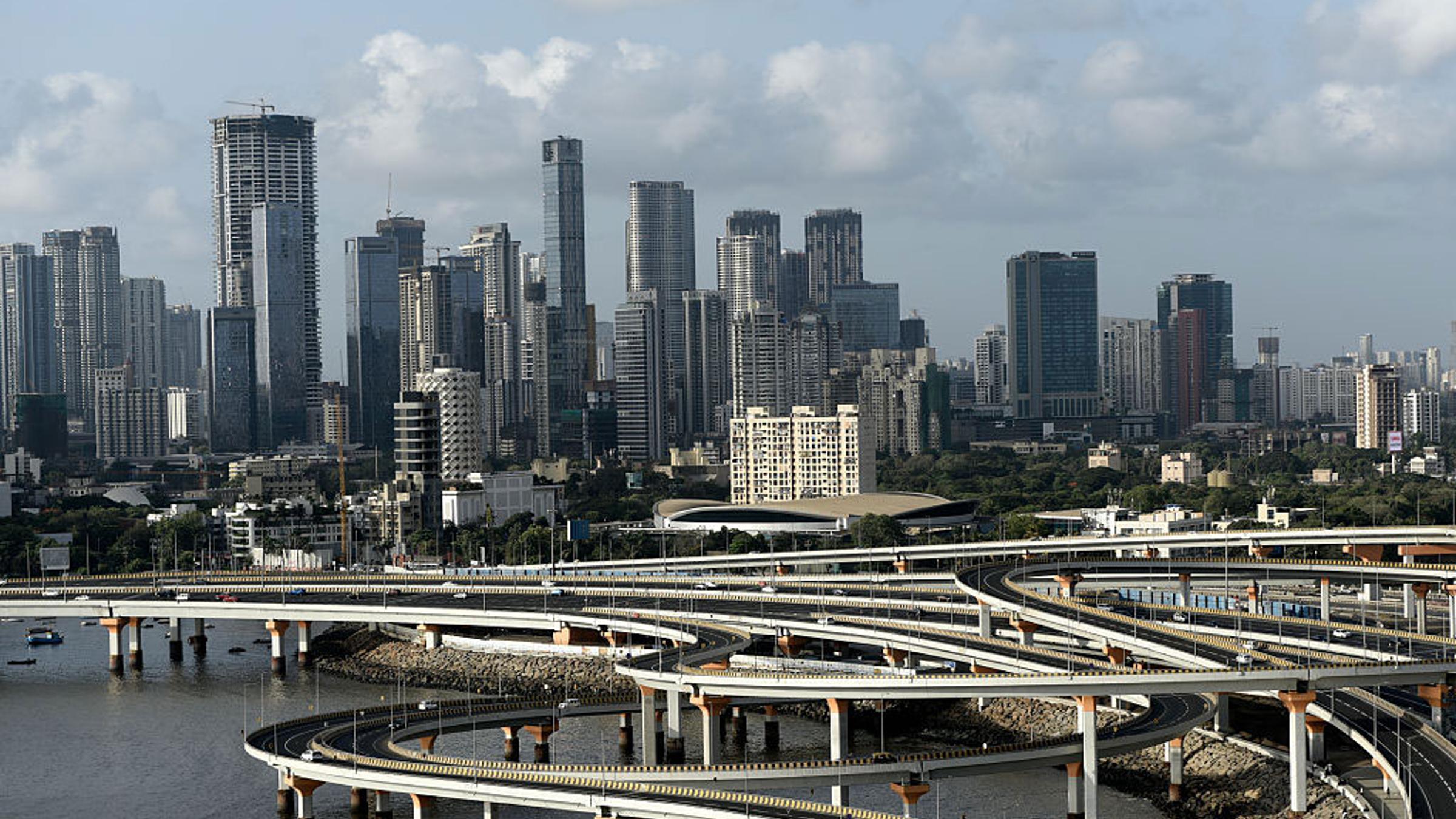
For the second time, TIME will publish a ranking of India’s Fastest-Growing Companies, in partnership with Statista, a leading international provider of market and consumer data and rankings. The list will recognize the country’s leading companies with strong revenue growth between the fiscal years 2023 and 2026.
As part of the research phase, TIME and Statista are now accepting data submissions. While submitting data ensures that eligible companies will be considered for inclusion, it does not guarantee a place on the final list. Additionally, the final ranking will not be limited to companies that submit data.



BitMart’s missing proof-of-reserves report and withdrawal complaints from two crypto projects have raised fresh questions about how customer assets are held during the exchange’s wind-down.
Summary
- Arch Lending’s CTO called for independently verifiable custody before platforms face withdrawal pressure.
- OpenGradient and Scandic Coin have reported inaccessible or delayed BitMart withdrawals.
- BitMart has denied misusing customer funds but has not disclosed verified reserves and liabilities.
- Trading will stop on Aug. 26, ahead of the platform’s planned closure in January 2027.
BitMart concerns expose verification problem
Arch Lending co-founder and CTO Himanshu Sahay said questions about withdrawals and exchange closures expose the difference between assurances offered by a platform and financial information that customers can independently check.
“Whenever questions arise around withdrawal processing or exchange wind-downs, it points to a structural gap across digital asset markets: the difference between platform-level statements and independent verification,” Sahay said in a statement to crypto.news.
Customers often have no real-time method for establishing whether an exchange holds their assets in segregated accounts or combines them with funds used for other operations, according to the executive. Uncertainty increases when withdrawals slow because customers must rely on the same company processing their requests for information about its financial condition.
Sahay said the crypto industry already has tools that can reduce such uncertainty, including third-party custodians, reserve attestations, and strict asset segregation. Their value depends on whether customers can use them to verify solvency claims before operational problems emerge.
“This isn’t a new issue, but a recurring one that resurfaces whenever a platform faces operational stress.”
BitMart stated in May that it was preparing a proof-of-reserves report after earlier complaints about account restrictions and withdrawal access. The exchange said it would release the report once security and risk-control matters had been addressed, but it did not provide a date.
No comprehensive report had been published as of Aug. 12. BitMart has also not released independently verified data covering both its assets and liabilities, leaving outside parties unable to establish whether the exchange holds enough liquid assets to meet all customer obligations.
Withdrawal complaints add pressure on BitMart
OpenGradient co-founder Matthew Wang alleged on Aug. 10 that his project’s market-making team could not withdraw balances held on BitMart. Wang accused the exchange of insolvency and questioned why it had encouraged token holders to lock assets shortly before announcing its closure.
“Our MM has our balances stuck on BitMart exchange that we can’t get out,” Wang said.
Wang did not disclose the amount or composition of the assets held by the market maker. His insolvency accusation has not been independently verified, and no confirmed evidence currently establishes that BitMart’s liabilities exceed its available assets.
Scandic Coin separately said that withdrawal requests covering approximately 21,898 USDT, 926,635 SNC, and another 256 USDT remained unprocessed after being submitted on July 26. The project stopped short of declaring BitMart insolvent and instead asked the exchange for verifiable evidence that it had enough liquidity to complete customer withdrawals.
The complaints were detailed in an Aug. 10 report on frozen withdrawals, which found that BitMart had not directly answered OpenGradient’s allegation at the time of publication.
BitMart maintains that withdrawals remain available. Under its procedures, requests may face checks involving customer identity, login devices, IP addresses, transaction history, destination wallets, and the source of funds.
Sanctions screening, Travel Rule requirements, and network conditions may also affect processing times, according to the company. BitMart warns that submitting a request does not mean the review has finished or that the transaction has been broadcast to a blockchain.
For customers, the absence of a transaction hash means there is no on-chain evidence showing that their assets have left the exchange. BitMart tells users to follow the status through their account history and avoid filing duplicate requests or support tickets.
Asset segregation must precede a crisis
Sahay said regulated third-party custody can reduce dependence on statements from an exchange because customer collateral remains separate from the company’s operating balance sheet.
“Maintaining collateral with qualified, regulated custodians completely separate from operating balance sheets is what ensures customers never have to rely on trust alone.”
According to Sahay, companies cannot obtain the full benefit of asset segregation by adopting it after withdrawals stall or concerns about liquidity have already surfaced. Custody arrangements need to be built into the platform’s structure from the beginning, with evidence showing where assets reside and how they are protected.
Proof of reserves can provide a snapshot of assets controlled by a platform, but such a report does not establish solvency by itself. A complete assessment also requires information about liabilities owed to customers, lenders, market makers, and other counterparties.
Reserve reports can present other limitations because they usually cover a specific point in time and may exclude certain assets or obligations. Customers also need a way to confirm that their individual balances were included in the review, while auditors must establish that the company controls the disclosed wallets.
Comparable concerns have surfaced at other centralized exchanges. In June, on-chain investigator ZachXBT said AscendEX users had reported withdrawals pending for days or weeks and questioned whether publicly identified hot wallets contained enough large-cap assets.
The resulting AscendEX liquidity concerns could not be confirmed from labeled addresses alone because an exchange may hold funds in undisclosed cold wallets or with external custodians. The episode still showed how limited wallet visibility can prevent customers from evaluating an exchange during withdrawal pressure.
Sahay expects independently verifiable third-party custody to become a basic requirement as institutional and retail participation develops. Platforms that can show where customer assets are held and how they are separated from operating funds will be able to answer such questions with evidence rather than internal assurances, he said.
BitMart will end trading on Aug. 26
BitMart began winding down its global trading platform on July 26, citing its operating conditions, the market environment, and its future strategy. The exchange stopped accepting new registrations and began suspending cryptocurrency and fiat deposits from 01:30 UTC.
Spot markets stopped taking new orders, while futures accounts entered reduce-only mode. BitMart also began discontinuing copy trading, grid trading, API trading, and other automated services.
BMX, the exchange’s platform token, fell approximately 63% during the first 24 hours following the announcement, according to the earlier BitMart shutdown report. CoinGecko data cited at the time placed BMX near $0.164 with around $6.1 million in daily trading volume.
All spot, futures, and other trading services are scheduled to end at 01:00 UTC on Aug. 26. BitMart may settle any futures positions left open at the cutoff using the relevant mark price, index price, or settlement rules.
Customers have been asked to close trading positions, cancel pending orders, and redeem eligible balances held in Earn, staking, lending, and other products. The company recommends submitting withdrawal requests before 05:00 UTC on Aug. 26.
Requests submitted after that time will enter a separate processing procedure. BitMart said affected customers would receive instructions about additional documents and withdrawal steps through official announcements or direct account notifications.
Founder Sheldon Xia denied on Aug. 8 that BitMart had disappeared, planned to avoid its obligations, or misappropriated customer assets. Xia said the core team was conducting an asset inventory, consolidating funds, and maintaining the systems required for the closure.
The founder also said BitMart was considering court involvement and third-party auditors as part of a transparent review. He did not provide a publication date or explain whether the proposed report would cover customer liabilities alongside reserve assets.
BitMart plans to cease trading-platform operations at 15:59 UTC on Jan. 31, 2027. The exchange said customers would retain account access for a specified period afterward to review historical records and submit withdrawals under the procedures then in effect.
For U.S. residents, BitMart stopped accepting new registrations in May 2022, although the company said some older accounts could remain linked to American users. A July 23 notice instructed affected customers to close positions, cancel orders, redeem balances from earning products, and withdraw their assets by 23:59 UTC on Aug. 8.
BitMart said U.S.-linked accounts could face additional restrictions after the deadline, while pending withdrawals may require identity records, proof of address, source-of-funds documents, or evidence that the customer controls the receiving wallet.
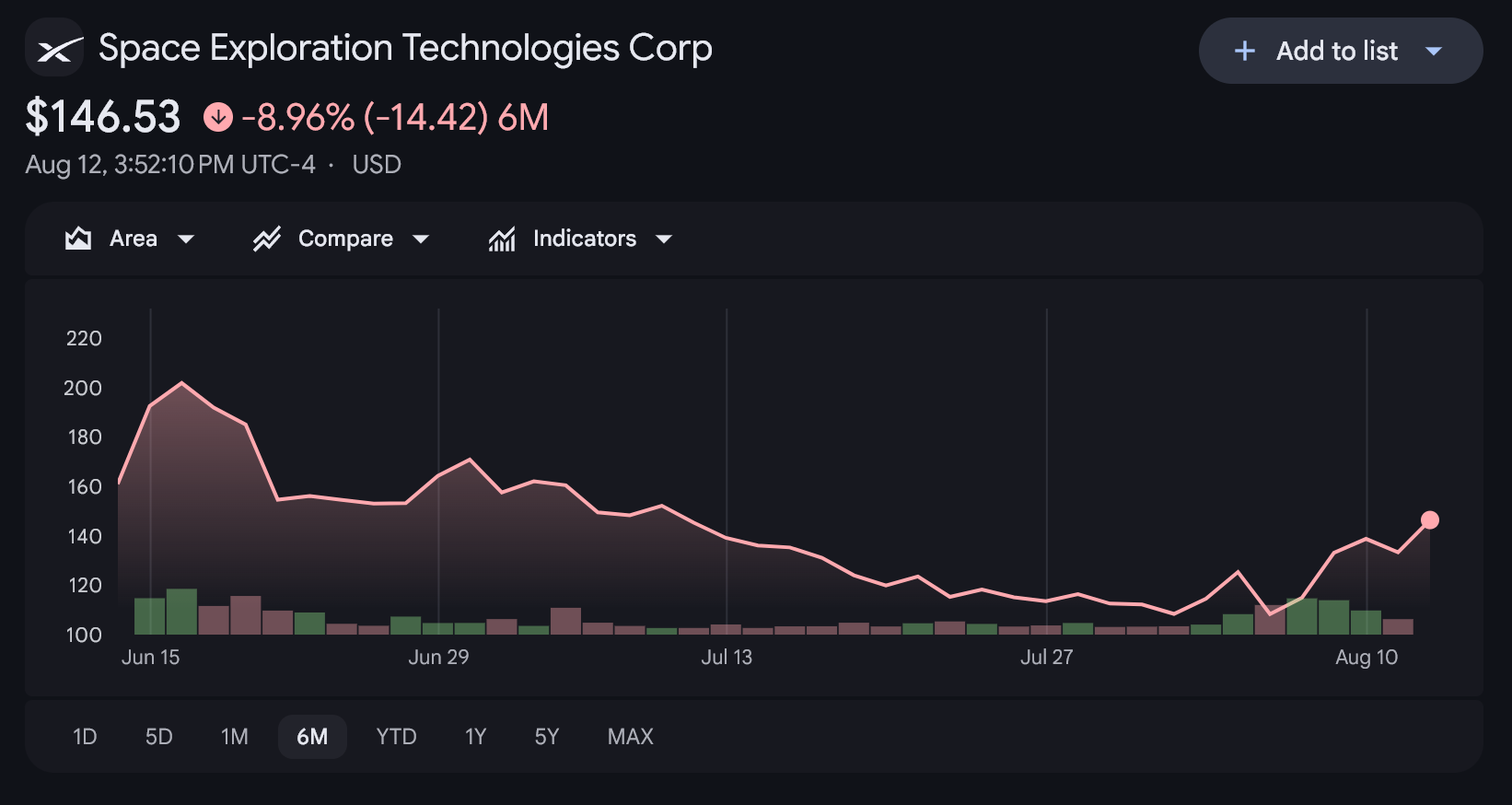
Norway’s sovereign wealth fund, the largest in the world, revealed on Wednesday that it holds a 0.05% stake in SpaceX worth just over $1.2 billion. The position had never been made public before.
The disclosure arrived with a record first-half profit of 1.75 trillion Norwegian kroner, or roughly $184.9 billion. It also places the fund inside both of Elon Musk’s listed companies.

A Record Half Built on Chips
Norges Bank Investment Management (NBIM), which runs the fund, reported a 9.4% return for the first six months of 2026. The fund closed in June at 22,683 billion kroner, near $2.3 trillion.
Equities carried almost all of it. Stocks returned 13.0% while fixed income added 0.9%, and shares made up 72.1% of the portfolio at the end of June.
The path there was uneven. Equity holdings dropped 2.6% in the first quarter, then rebounded 15.98% in the second as chipmakers rallied.
CEO Nicolai Tangen summed up the driver as “chips, chips, chips, chips” while presenting a chart of top performers featuring Samsung, SK Hynix’s US listing, TSMC, ASML, Intel, and Nvidia. NBIM’s 1.3% stake in Nvidia alone is worth $61.8 billion.

An Awkward Seat in Musk’s Empire
The SpaceX position is small next to that. What makes it interesting is who owns it.
NBIM voted against Musk’s $56 billion Tesla compensation award in 2024, then rejected his trillion-dollar package at the carmaker’s late 2025 shareholder meeting. The fund cited dilution and key person risk both times.
Musk did not take the first vote well, judging by a text message later released under Norway’s freedom of information law.
“When I ask you for a favor, which I very rarely do, and you decline, then you should not ask me for one until you’ve done something above nothing to make amends. Friends are as friends do,” Reuters reported.
Follow us on X to get the latest news as it happens
Despite that, the fund now owns roughly 1% of Tesla, worth about $15.7 billion, plus the new SpaceX slice.
Deputy CEO Trond Grande declined to discuss individual positions when asked how the SpaceX weighting had changed.
“We were roughly index rate in the first half, and that’s been the case over the summer as well.”
That answer matters. It suggests the fund did not pick SpaceX. It owns what the index hands it, which ties Musk’s governance fights to Norwegian capital indefinitely.
A Volatile Asset for a Cautious Owner
SpaceX has been in a rough hold since June. The stock listed at $150 against a $135 offer price, peaked near $225, then sank below $107 by late July.

It reclaimed its IPO price on Monday and traded above $148 on Wednesday, up around 10% on the day and just shy of its listing price. Other large holders, including Ontario Teachers’ SpaceX bet, have ridden the same swings.
Tangen shrugged at the volatility, noting the fund owns 7,000 companies that move in both directions daily.
That calm sits oddly beside his own warning a day earlier, when he said the fund could lose its entire value and called that outcome “fairly likely” in current conditions.
Crypto investors have reason to watch. The fund holds no Bitcoin directly, but its indirect BTC exposure through equity stakes climbed 83% between mid-2024 and mid-2025.
A passive giant that keeps buying whatever the index adds does not choose its risks. It absorbs them, and so do the assets that trade alongside it.
The post World’s Largest Sovereign Wealth Fund Bought $1.2 Billion in SpaceX Stock appeared first on BeInCrypto.

It is unclear who will replace Leavitt as White House press secretary. TIME has reached out to the White House for comment.
Leavitt thanked Trump and the White House team in a lengthy post on X, and added that she will remain “a vocal advocate for MAGA and the Republican Party. ”
“The truth is since returning to the White House after the birth of my daughter, I have felt in my heart that I cannot be the best mom my two young children deserve while devoting the constant time, energy, and attention required of the White House Press Secretary,” Leavitt said.
“It has been a privilege to serve alongside so many accomplished and impressive people, and I look forward to cheering them on over the next two and a half years,” she added.
Leavitt has worked for Trump since 2018, beginning as a White House intern in the Office of Presidential Correspondence while a student at Saint Anselm College in New Hampshire. She briefly worked as Communications Director for Republican Rep. Elise Stefanik, one of the top House Republicans from New York, and later launched a failed congressional campaign in New Hampshire against Democratic incumbent Chris Pappas.
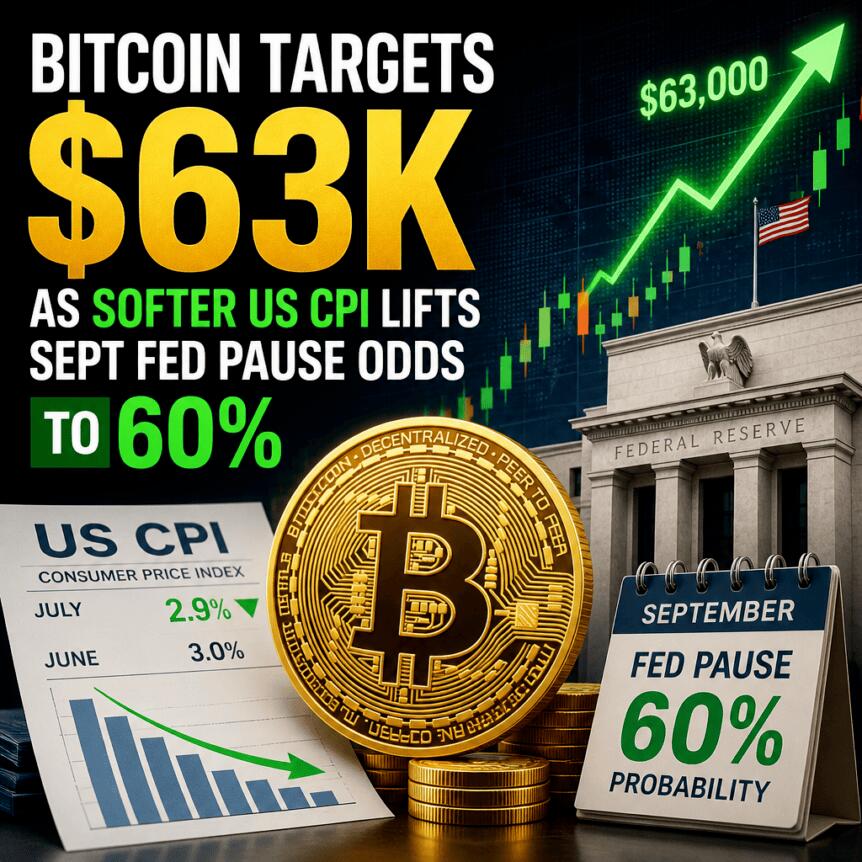
Bitcoin traded softer around the Wall Street open on Wednesday as traders digested fresh US inflation data and reassessed how restrictive the Federal Reserve is likely to remain. Despite July CPI coming in line with expectations, BTC/USD slipped below $63,500, erasing earlier gains and bringing renewed attention to the $63,000 area.
Market focus is now shifting to Thursday’s Producer Price Index (PPI), with investors looking for clues on whether inflation momentum is truly cooling or merely pausing—especially after recent labor-market signals have already complicated the rate path debate.
Key takeaways
- BTC/USD slid back below $63,500 after July CPI matched expectations, showing inflation “in line” did not automatically translate into bullish momentum.
- CME Group’s FedWatch Tool indicates a higher probability that the Fed holds rates at the current 3.50%–3.75% range for September compared with a month ago.
- Traders are warning that the $63,000 support zone may be weakening as bounces lose strength, increasing the risk of a cleaner breakdown.
- Options pricing suggests traders are still paying for downside protection, and PPI is set to be the next catalyst for that view.
- Overhead resistance around $65,000–$65,500 remains a recurring barrier, with recent price action failing to produce sustained daily closes above it.
Inflation matched expectations—yet Bitcoin weakened
TradingView data showed BTC/USD moving down below $63,500 after initially holding gains. The broader market reaction was relatively muted in equities, because the July CPI report landed essentially where economists expected.
According to a Bureau of Labor Statistics (BLS) release, CPI increased 0.1% month-on-month and 3.4% year-on-year. The report also highlighted that the “shelter” component rose 0.1% in July and represented about two-thirds of the month’s all-items increase. Food prices edged up 0.1% overall, while the energy index declined 1.5% for the month.
While CPI did not repeat June’s downside surprise, the lack of a supportive reaction matters to crypto traders because it suggests the market is no longer searching for “good news” so much as it is looking for confirmation that the Fed is done tightening—or at least done tightening soon. In other words, a headline number that is merely “in line” may not be enough to shift risk appetite if traders remain focused on policy risk.
Rate expectations cooled, but traders are waiting for the next data point
Fabian Dori, CIO at Sygnum Bank, argued in emailed comments that CPI’s cooling effect—combined with weaker labor-market figures—could strengthen the case for the Fed to avoid additional rate hikes. He suggested this would be supportive for liquidity conditions that tend to benefit crypto and other risk assets.
Dori framed the near-term takeaway as a gradual cooling narrative without forcing markets into a recession scare or an abrupt “hawkish re-pricing.” He also pointed out that September rate odds should stay relatively stable if the macro mix does not deteriorate.
Consistent with that view, CME Group’s FedWatch Tool showed about 60% odds that the Fed would hold rates at its current 3.50%–3.75% range at the September meeting—up from 30% a month earlier. Investors typically watch this kind of shifting probability because it influences discount rates and risk appetite across assets, including crypto.
Still, traders are not fully comfortable treating CPI as a decisive turning point. Andrei Grachev, managing partner at DWF Labs, told Cointelegraph that an in-line CPI print doesn’t “resolve much” after the previous jobs report missed expectations. He also emphasized the state of the derivatives market: he said the Bitcoin options market was continuing to price a meaningful premium for downside protection into the end-August expiry.
Grachev added that Thursday’s PPI report would be the next check on whether that premium begins to fade—an important signal for whether traders see risk as moving toward normalization or remaining skewed to the downside.
Support at $63,000 under pressure as bounces weaken
Beyond macro, technical traders are focused on how price is behaving around the same key levels. Rekt Capital warned on X that each bounce from approximately $63,000 has been losing momentum, with the strength of the support appearing to progressively fade.
His commentary included a sequence indicating that the “support” effects on rebounds had diminished over time—culminating in what he described as support that had thinned to roughly 1.15% “thus far.” He cautioned that once rebounds become too weak, the market may stop defending the floor.
“At some point the bounces will become so weak that the floor will simply break.”
Rekt Capital also referenced earlier analysis that Bitcoin bear-market history may be repeating as the 50-month exponential moving average (EMA), currently around $65,827, acts as resistance rather than support.
That resistance picture is echoed by Bitfinex Alpha, the research arm of exchange Bitfinex. In an update published Wednesday, it said equities set all-time highs over the prior two weeks while Bitcoin continued to struggle with a consistent barrier in the $65,000–$65,500 zone. The research noted that from early August through that period, the market printed daily highs above $65,000 multiple times, but failed to record a daily close above that level since late July.
What to watch next: PPI and whether protection costs ease
With CPI already “in line,” the market’s next move is likely to depend less on whether inflation prints look merely acceptable and more on whether they confirm a sustained trend—something PPI could clarify. For traders, the key questions are whether Bitcoin can stabilize above $63,000 or whether weakening bounces turn into a more decisive break, and whether options pricing starts to show reduced demand for downside protection as expectations evolve.


Cointelegraph is committed to providing independent, high-quality journalism across the crypto, blockchain, AI, and fintech industries.
All news, reviews, and analyses are produced with full journalistic independence and integrity. For more details on our standards and processes, please read our Editorial Policy.


Kalshi has opened its live order book to DoubleZero Edge subscribers, providing Level 1 and Level 2 data for sports contracts and crypto perpetual futures through a dedicated fiber network.
Summary
- Kalshi has become the first prediction market to publish real-time order book data through DoubleZero Edge.
- The feed covers Level 1 and Level 2 data across sports and crypto perpetual markets.
- Kalshi will waive its publisher revenue share for one year, though subscribers must still pay network fees.
- DoubleZero plans to add historical Kalshi data in a later release without a stated launch date.
Kalshi feed provides full order book depth
DoubleZero Foundation and Kalshi said in an Aug. 12 announcement that the exchange’s live order book is now available through DoubleZero Edge, starting with its most actively traded sports and crypto perpetual futures contracts.
Under the rollout, subscribers can receive Top of Book and Trades information, known as Level 1 data, alongside Depth of Book information, or Level 2 data. Level 1 shows the best available bid and ask prices as well as completed trades, while Level 2 displays orders across several price levels.
Full book depth can give quantitative firms and market makers a more detailed view of liquidity than a basic price feed. According to the companies, subscribers receive the information in a sequenced, machine-readable format that can be integrated into automated pricing, hedging and trading systems.
Before the new feed, DoubleZero said firms often had to gather individual responses from Kalshi’s application programming interfaces and rebuild the order book on their own servers. Edge packages the data into a subscription product, removing part of that internal processing work.
The launch covers every Kalshi sports event and crypto perpetual futures market included in the initial categories, according to the release. Kalshi Research supplies the published information, while DoubleZero handles its delivery to connected subscribers.
Neither company disclosed the subscription price, number of initial customers or measured latency for the Kalshi feed. DoubleZero described the connection as low-latency but did not release independent tests comparing its performance with direct API access or other market-data services.
Historical data is also absent from the first version. DoubleZero said it intends to offer historical Kalshi information in a future release, although the company provided no schedule or pricing details.
DoubleZero applies its fiber network to prediction markets
Rather than sending each subscriber a separate copy of the feed, DoubleZero Edge uses multicast distribution. Under that model, a data publisher sends the information once before the network delivers it simultaneously to connected users.
DoubleZero said its system carries exchange and blockchain data over dedicated fiber instead of relying only on the public internet. Traditional exchanges, including the New York Stock Exchange, Nasdaq and CME, have used similar distribution models to supply trading firms with real-time information.
Austin Federa, co-founder of DoubleZero, said established financial firms have spent years building private networks that move data quickly and consistently. Crypto markets, perpetual futures venues and prediction platforms, he added, developed without the same shared infrastructure.
“Traditional finance got this concept exactly right: data access is a critical part of market structure,” Federa said.
The Kalshi rollout extends a service that first focused on blockchain data. In April, crypto.news reported that DoubleZero had launched its Edge public beta with 379 Solana validators publishing transaction data through the network.
At launch, those validators represented about 43% of Solana’s staked supply. The April service sent raw Solana packets over private fiber and recorded an average delivery improvement of six milliseconds compared with conventional routing, according to DoubleZero data cited in the earlier report.
Subscription prices for the Solana beta ranged from $30 to $100 in USDC per device and per epoch, depending on location. DoubleZero has not said whether the same pricing structure applies to the Kalshi product.
Andy Ross, Kalshi’s head of institutional, said firms using the exchange increasingly overlap with participants in traditional markets. Making the order book available through Edge, Ross said, gives those companies another data connection for markets traded on Kalshi.
Kalshi waives its data revenue share for one year
As part of the commercial arrangement, Kalshi will not collect its normal share of Edge subscription revenue during the feed’s first year.
DoubleZero said data publishers usually receive a percentage of subscription fees after the protocol burn. With Kalshi waiving that share, the initial price will be based on network delivery rather than an added data-licensing charge from the exchange.
The waiver does not provide free access. Trading firms must subscribe to DoubleZero Edge and meet its connection requirements before receiving the feed, while the companies have not disclosed the network fee charged for this specific product.
Once the first year expires, Kalshi could begin receiving part of the subscription revenue under DoubleZero’s standard publisher model. The announcement did not disclose the prospective percentage or confirm whether customer prices will change when the waiver ends.
Demand for a more structured feed comes after trading activity across prediction markets climbed during the summer. Data covered on Aug. 3 showed that combined July prediction-market volume reached $50.59 billion, up 7.8% from the revised June total of $46.95 billion.
Kalshi accounted for $37.7 billion, or about 74.5%, of the combined July figure for Kalshi, Polymarket and Polymarket US. The data measured taker notional volume, meaning the total did not represent exchange revenue or new customer deposits.
U.S. traders gain another route to regulated crypto data
Kalshi’s crypto feed includes contracts introduced during its expansion from event markets into regulated perpetual futures. In June, the exchange launched Bitcoin perpetual futures after receiving approval from the Commodity Futures Trading Commission.
The BTCPERP contract follows Bitcoin’s spot price and remains open without a fixed expiration date. According to the CFTC’s May 29 order, Kalshi must list and maintain the product under the Commodity Exchange Act and the rules that apply to designated contract markets.
Kalshi later added other crypto-linked perpetual contracts. The products gave eligible U.S. traders domestic access to derivatives that had largely been offered by offshore exchanges, while their order book data can now be delivered through the DoubleZero connection.
Kalshi has held CFTC designated contract market status since November 2020. In January 2025, the regulator modified its designation to permit intermediated futures trading, according to the CFTC’s registry.
Federal registration has not settled every legal question surrounding the sports markets included in the new feed. Several states argue that Kalshi’s sports event contracts fall under local gambling laws, while Kalshi maintains that the CFTC has exclusive authority over contracts traded on its federally regulated exchange.
A Washington court blocked Kalshi from offering sports contracts to residents in July after rejecting the company’s federal preemption argument. A Michigan judge had also temporarily restricted the exchange’s sports contracts in June over allegations that Kalshi operated without licenses required under state gambling law.


The Coldcard seed-generation failure has exposed about $116 million in Bitcoin to theft while renewing questions about how users verify the security of self-custody tools, according to TEXITcoin founder Bobby Gray.
Summary
- Attackers have reportedly drained about 1,816 BTC worth $116 million from more than 5,200 addresses.
- A firmware error left some Coldcard seeds with about 40 bits of entropy instead of 128 bits.
- Gray said users who added independent dice-generated entropy were not affected by the reported attacks.
- Coinkite has released patched firmware, but existing vulnerable seeds require a complete wallet migration.
Bobby Gray, founder of TEXITcoin, told crypto.news that Coldcard users suffered losses because they trusted the hardware wallet to generate secure seed phrases without independently checking the source of randomness.
“Coldcard sat on a broken seed generator for five years, and it still cost people $116 million,” Gray said.
“Some of these wallets were generating seeds with as little as 40 bits of entropy instead of the 128 they promised.”
Gray said the lower entropy turned recovery phrases designed to resist brute-force attacks into targets that determined attackers could search without gaining physical access to the devices.
Coldcard seed flaw weakened wallet security
Coldcard is a Bitcoin-only hardware wallet made by Canadian hardware manufacturer Coinkite. Hardware wallets keep private keys away from internet-connected computers and sign transactions within the device, reducing exposure to malware and online attacks.
Coldcard’s reported failure occurred before the private keys entered secure storage. According to a Coinkite security advisory, a firmware integration error caused affected devices to use a predictable software random-number generator instead of the intended hardware source while creating wallet seeds.
Firmware versions 4.0.1 through 4.1.9 on Coldcard Mk2 and Mk3 devices were affected. The first vulnerable release arrived in March 2021, leaving the error active for more than five years before Coinkite disclosed it on July 30.
Coinkite estimated that seeds created on affected Mk2 and Mk3 devices contained about 40 bits of effective entropy. Vulnerable Mk4, Mk5, and Q devices generated about 72 bits rather than the expected 128 bits, according to the advisory.
A correctly generated 128-bit seed provides an extremely large set of possible combinations. Reducing the effective randomness to 40 bits leaves about one trillion possibilities, a range that specialized computing systems can search when attackers have enough information about the wallet’s seed-generation process.
TRM Labs said the attackers could reconstruct affected private keys without opening, stealing, or modifying the hardware wallets. The blockchain intelligence firm attributed the error to a build configuration introduced with firmware version 4.0.1.
On-chain estimates cited by TRM Labs placed the preliminary loss at about 1,816 BTC, worth approximately $116 million, across more than 5,200 addresses. Four suspected waves began on July 30, though TRM warned that the total could change as investigators confirm victim reports and trace additional addresses.
Gray says self-custody itself did not fail
In an Aug. 6 analysis, Gray described the incident as a failure in the process used to create private keys rather than a compromise of Bitcoin or the physical security components inside Coldcard devices.
No attacker needed to steal a device, obtain its PIN, or install malicious firmware, according to Gray. Once attackers reconstructed a vulnerable seed, they could derive its associated private keys and sign transactions from another system.
“The people who bothered adding their own dice rolls for extra entropy walked away untouched, while the people who just trusted the device to handle it got wiped out,” Gray said.
Coinkite’s advisory supports the distinction involving independent randomness. Users who entered at least 50 fair, private, and independent dice rolls while creating their seed are not considered at risk from the random-number-generator flaw alone. Between 50 and 98 rolls added at least 128 bits of entropy, while 99 or more added about 256 bits, the company said.
Fewer than 50 rolls do not meet Coinkite’s stated exception. Users who cannot remember how many rolls they entered, whether the process was private, or which final seed words they retained were advised to migrate their funds.
Gray argued that the incident should not be treated as evidence that centralized custody is safer in every case. In his view, self-custody requires users to verify how their keys are created instead of relying only on the product’s listed security features.
“Blind trust is what failed here, and self-custody is taking the blame it doesn’t deserve. If you haven’t independently verified your entropy, you don’t actually know what you’re holding, no matter how many security features are stacked around it.”
His TEXITcoin post also separated the event from phishing, malicious firmware, and supply-chain attacks. Gray classified the firmware problem as a severe mistake by a wallet maker rather than evidence that Coinkite designed the product to steal customer funds.
Coldcard losses have changed custody decisions
User behavior has moved in a different direction from Gray’s recommendation. OKX reported record deposits after the incident, as some Bitcoin holders transferred assets from personal wallets to centralized platforms.
As previously reported by crypto.news, OKX Chief Compliance Officer Jonathan Brockmeier said the inflows represented the opposite of the behavior seen after FTX collapsed, when users withdrew assets from exchanges and moved them into self-custody.
Gray rejected the idea that leaving Bitcoin on an exchange resolves the problem. Centralized services control customer keys and can freeze withdrawals, suffer security breaches, or fail financially, he said.
“Running back to an exchange because a device let you down isn’t a solution either, since that’s just handing your risk, and your keys, to someone else to lose instead,” Gray said.
Blockchain investigators have not attributed the theft to one identified group. TRM said differences in transaction construction across the suspected waves could indicate several attackers, while most stolen Bitcoin had initially remained in consolidation addresses.
The firm detected limited laundering activity, including a 64.9 BTC deposit to Wasabi and 200 ETH sent through Tornado Cash on Aug. 4. TRM said the transaction pattern differed from the fast laundering methods often associated with organized state-backed hacking groups.
US investors face a different custody trade-off
For American investors who only want exposure to Bitcoin’s price, U.S.-listed spot Bitcoin exchange-traded funds remove the need to generate seeds, update wallet firmware, or maintain physical backups.
Bloomberg Intelligence analyst Eric Balchunas said the Coldcard losses strengthened the case for regulated spot Bitcoin ETFs. A report on ETF custody noted that products such as BlackRock’s iShares Bitcoin Trust ETF rely on institutional custodians rather than requiring shareholders to control private keys.
BlackRock’s SEC filing identifies Coinbase Custody as the main custodian for IBIT’s Bitcoin and names Anchorage Digital Bank as another custodian the trust may use. Shareholders own exchange-traded securities, however, and cannot withdraw the underlying Bitcoin to a personal wallet or use it for payments.
Institutional custody also transfers risk instead of removing it. IBIT’s filing lists hacking, employee misconduct, technical failures, and unauthorized transfers among possible sources of loss. The filing also says insurance shared by Coinbase may not cover every potential incident.
Coldcard users must replace vulnerable seeds
Coinkite has released fixed firmware for every affected model, including version 4.2.0 for Mk2 and Mk3 devices, version 5.6.0 for standard Mk4 and Mk5 devices, and version 1.5.0Q for the standard Coldcard Q.
Installing an update only corrects the generation of future seeds. Coinkite said firmware cannot add randomness to an existing recovery phrase because the weakness remains attached to the seed even if a user imports it into another wallet.
Affected users were instructed to install the correct firmware, generate a completely new seed, verify its fingerprint and receiving address, and send a small test transaction before moving the remaining balance. Coinkite advised users to retain the old backup until the transfer reaches the replacement wallet and receives network confirmation.
Fed rate hike fears collapsed on Wednesday after July inflation cooled to 3.4%. Gold climbed, crypto bounced, and a closely watched Bitcoin (BTC) bottom signal started flashing.
One piece is still missing. CryptoQuant says the panic selling that sealed every past bear market low has not arrived yet.
Fed Pause Odds Jump After a Cooler July CPI
The July Consumer Price Index (CPI) rose just 0.1% for the month. Annual inflation slowed to 3.4% from 3.5% in June. Core inflation eased to 2.5%, its lowest since February. Cheaper gasoline, down 2.9% on the month, did much of the work.

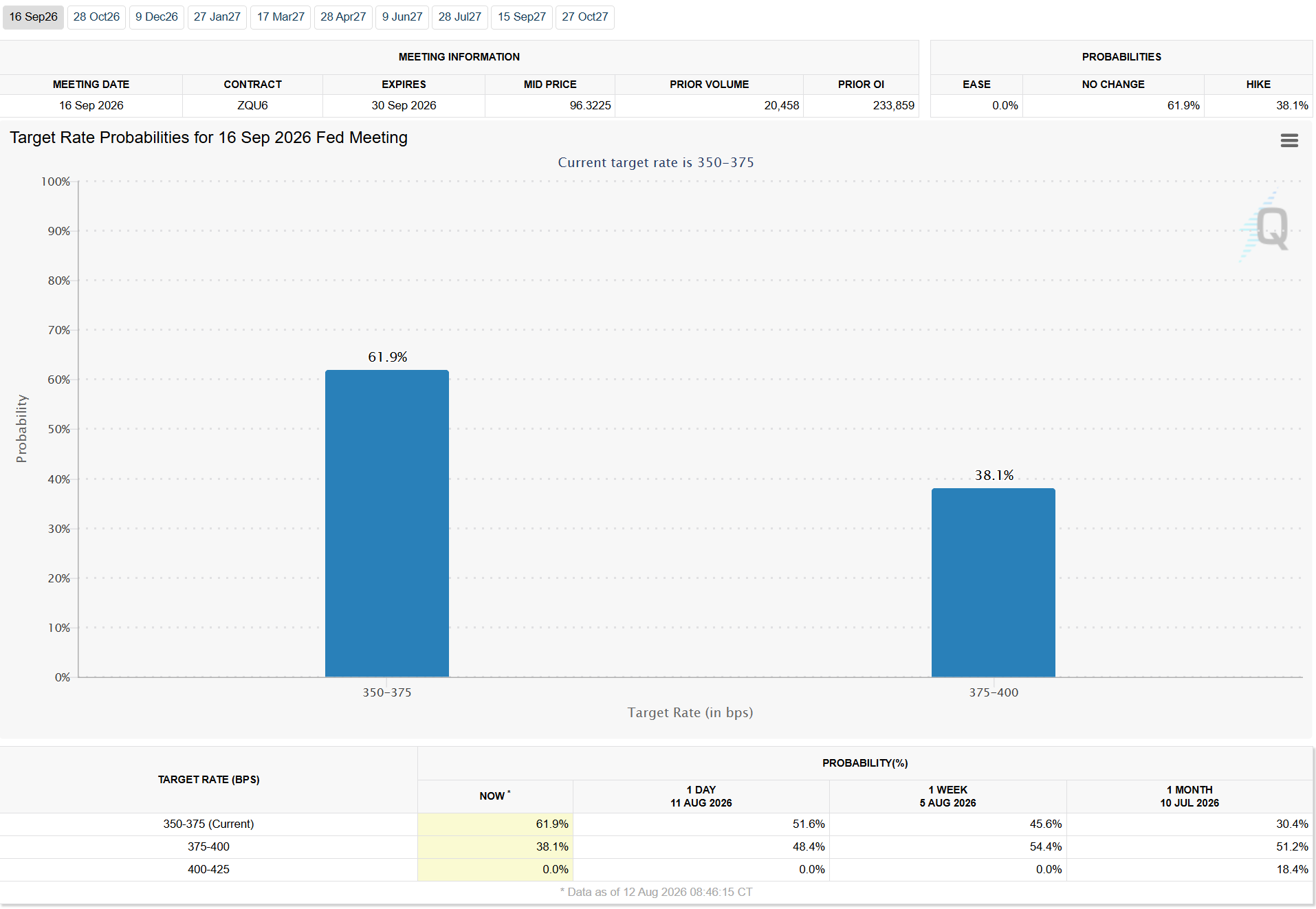
Rate traders repriced within minutes. CME FedWatch now gives a 61.9% chance the Fed holds rates in September. A month ago, markets leaned toward a hike, and rare rate hike odds still rattled Bitcoin in late July.
Gold rose 0.5% to about $4,436 per ounce. The metal has rallied since last week’s weak US jobs report. Crypto followed the same relief trade, helped by steady inflows into spot Bitcoin exchange-traded funds (ETFs).

Lindsay Rosner of Goldman Sachs Asset Management called the report encouraging, with the general assumption that it gives policymakers room to hold.
However, economist Peter Schiff challenges this outlook, arguing that July’s number still carries May’s oil price crash, not July’s rebound at the pump.
“July’s 0.1% CPI rise is misleading. Energy prices fell because CPI compares monthly average prices. But oil and gasoline rose sharply during July after starting the month at depressed levels. That means July CPI still reflects May’s oil price collapse, not July’s sharp rebound,” wrote Schiff.
If he is right, the next CPI print could look far less friendly.
Bitcoin Bottom Signal Flashes, but Capitulation Looks Incomplete
Meanwhilke, CryptoQuant’s adjusted Net Unrealized Profit/Loss (aNUPL) measures paper gains and losses across all holders. Right now, it shows something rare. Bitcoin’s most committed investors are deeper in the red than the market as a whole.

That pattern marked every major cycle low. It appeared in December 2018 and again in November 2022, when BTC bottomed 77% below its peak. Today’s damage is milder. BTC trades roughly 50% below its cycle high, near $64,160.
“Bitcoin is displaying a condition repeatedly associated with macro bottoms, but not yet the emotional and financial exhaustion that made previous bottoms unmistakable,” CryptoQuant analysts wrote.
Fidelity Digital Assets tracks the same cohort. The firm recently flagged long-term holder supply as one of the clearest reads on a forming bottom.
So why no bottom call? Past lows pushed holder losses far deeper, into what CryptoQuant calls “depression” territory. This cycle may not need that.
Spot Bitcoin ETFs, live since January 2024, give institutions a way to absorb the coins that panicked sellers dump. Some chart watchers still expect a final bear leg first.
The tell is what aNUPL does next. A deeper slide with real selling would look like the classic final flush. A turn back toward zero, while BTC holds a higher low, would suggest the worst has passed.
One more CPI report lands before the Fed’s September 16 decision. It may answer both questions at once.
The post Gold Price Climbed After July Inflation Data, But Bitcoin Didn’t. Why? appeared first on BeInCrypto.

El Salvador marked five years since it made Bitcoin legal tender, but the legacy of the experiment is proving far more contested than the celebratory moment in 2021 suggested. President Nayib Bukele pitched the move as a fast track to financial inclusion, cheaper remittances, and more investment—yet new research and later policy changes indicate that everyday adoption never materialized on the scale promised.
According to Dr. Tobias Boos, a senior scientist at the University of Vienna who leads research into Bitcoin’s political economy in El Salvador, the project fell short when measured against Bukele’s stated goals. “There is little doubt that the project was a failure if we take seriously the reasons Bukele gave for its adoption,” Boos said, pointing to limited progress on foreign direct investment, banking access, and remittance use.
Key takeaways
- Research led by Dr. Tobias Boos finds “mass adoption by citizens did not occur,” with adopters more likely to be young, male, urban, and already banked.
- Despite Chivo’s launch and remittance-focused hopes, crypto wallets handled only a small share of remittance flows by 2024.
- An IMF program culminating in 2025 approvals pushed El Salvador to reduce state involvement: acceptance became voluntary and public-sector use of Bitcoin was limited.
- The most durable impact may have been symbolic—making nation-state Bitcoin adoption a real-world precedent—rather than transforming payments or financial inclusion domestically.
Promises of financial inclusion vs. who actually adopted
When Bukele announced the plan at Bitcoin 2021 in Miami on June 5, 2021, he framed adoption as a way to create jobs and deliver financial inclusion to people outside the formal economy. But five years on, evidence described in the research Boos co-authored suggests the adoption pattern did not match the inclusion narrative.
In a 2025 study, Boos and colleagues (Grigera and Schmid) reported that Salvadorans who adopted Bitcoin were disproportionately young, male, urban, and more highly educated—and importantly, “already banked.” Boos’ interpretation is blunt: “Mass adoption by citizens did not occur.”
The mismatch matters because El Salvador’s starting point was weak banking access. World Bank data cited in the reporting shows that in 2021, only 35.9% of people aged 15 and over held a bank account—one of the lowest levels in the region. In other words, if Bitcoin were to serve as a substitute for missing banking infrastructure, it would need to bridge gaps for people without accounts.
Yet the government’s Chivo wallet, while capable of transferring funds to bank accounts, did not remove the structural barriers preventing many unbanked Salvadorans from accessing the financial system in the first place. Boos and his colleagues describe this as the same core problem reappearing across the adoption story: even with incentives, the missing link was broader financial accessibility rather than the availability of a wallet app.
Remittances: where the “cheaper transfers” thesis didn’t stick
Bukele also sold Bitcoin adoption as a way to improve remittance economics. El Salvador’s economy is tightly linked to money sent from abroad: in 2024, remittances were reported to account for around 24% of GDP, with the United States providing 98% of the total. But the reporting highlights a key constraint—El Salvador has used the U.S. dollar for more than two decades—meaning the most obvious potential cost-saving from Bitcoin (bypassing currency conversion) was already largely neutralized.
That context helps explain why, even with a wave of early promotional activity, crypto wallets remained marginal in remittance flows. The cited research indicates that crypto accounted for barely 1% of remittances by 2024, down from a peak of about 1.7% in 2020–21.
Incentives also did not translate into durable usage. Chivo offered users $30 worth of Bitcoin for signing up, but an analysis described in the article by the National Bureau of Economic Research found that more than 60% of early Chivo users did not make another transaction after spending their free BTC. The reported pattern points to a “try it for the reward” adoption model rather than sustained payment behavior.
On the ground, Bitcoin-focused journalist Joe Nakamoto reported a similar disconnect. In a recent visit, Nakamoto claimed he tested Bitcoin acceptance at 21 shops in a San Salvador mall and found that only four accepted it, and just one did so smoothly. His characterization in the reporting is that living on Bitcoin is “borderline impossible” except in narrow, workaround-driven areas.
The IMF pivot: from legal tender to voluntary use
While public debates about Bitcoin adoption continued, international pressure eventually forced a policy recalibration. In December 2024, El Salvador agreed to a $1.4 billion financing arrangement with the International Monetary Fund, under which it would scale back its involvement in Bitcoin. The agreement was later approved in February 2025, and in January the government amended its Bitcoin law.
The changes described in the reporting included making acceptance voluntary, requiring taxes to be paid in U.S. dollars, and limiting public sector involvement in Bitcoin-related activities—effectively dismantling the most far-reaching parts of Bukele’s original approach. Put simply, Bitcoin could still be used, but the state would no longer compel businesses to accept it or embed it into the public financial system.
Boos says the outcome aligned with the IMF’s assessment. He described the initiative as “soft adoption” that never led to mass payments usage, noting in the reporting that he is not aware of tax payments made using Bitcoin and that supporting infrastructure largely remained unused. Separately, the IMF later found “no evidence” of a beneficial use case for the unbanked and characterized Bitcoin’s impact on financial inclusion as minimal.
For investors and builders watching adoption narratives, this shift is instructive: it shows that legal frameworks and state incentives alone are insufficient if day-to-day demand, payment rails, and integration into mainstream economic behavior do not follow.
What El Salvador did achieve: a precedent, not a universal payments system
Even if Bitcoin did not become everyday money across El Salvador, the experiment still delivered something unprecedented: it moved nation-state Bitcoin adoption from a theoretical concept into a real, live case study. Samson Mow, chief executive of Bitcoin infrastructure firm JAN3, framed the change as a shift in how governments think—turning the question from “whether a sovereign could hold Bitcoin” to “why it hadn’t.”
El Salvador also drew sustained attention from prominent figures in the Bitcoin ecosystem, effectively placing the country at the center of the movement’s public narrative. The reporting notes that Stacy Herbert, who later became a director of El Salvador’s National Bitcoin Office, exemplifies how deeply some parts of the Bitcoin community became intertwined with government structures.
At the same time, the article draws a distinction between what Bitcoin achieved for El Salvador and what El Salvador achieved for Bitcoin. Boos argues the symbolic significance was largely “for” the international Bitcoin community rather than evidence of economic success for Salvadorans. Nakamoto goes further, describing the overall strategy as closer to branding aimed at outsiders than an internally effective economic plan—“beautiful branding” directed at those with capital and passports.
There are also examples of localized, working ecosystems. Bitcoin Beach in El Zonte is cited as an early grassroots initiative that predates the national experiment and reportedly continues functioning even after acceptance became voluntary. The reporting similarly references individual stories of Salvadorans using Bitcoin in daily life, portraying the persistence of micro-economies even as national-scale goals faded.
Beyond legal tender, the Bukele government also promoted projects such as Volcano Bonds and Bitcoin City. However, the article states that repeated delays undermined their progress, and the IMF arrangement “kneecapped” those efforts—though it acknowledges that symbolic impact may still matter to how the episode is remembered globally.
The harder question: Bitcoin strategy under emergency politics
The experiment’s global meaning cannot be separated from the governance environment that made it possible. During Bukele’s time in office, power has been concentrated, and the state of emergency introduced in March 2022 to combat gang violence remains in place years later.
Human Rights Watch, according to the reporting, says the government has continued to remove checks on executive authority. The article also states that local and international human rights organizations have documented mass arbitrary detention and due process violations under the state of emergency.
At the same time, the reporting emphasizes that judging Bukele only through this lens may miss why he remains popular at home. It cites a sharp fall in the official homicide rate—from 53.1 per 100,000 during the year he took office to 1.3 per 100,000 in 2025—framing the crackdown as a visible public security transformation for many Salvadorans.
That tension feeds into the uncomfortable question for Bitcoiners: what does it mean when a philosophy about individual freedom is advanced through a government imposing policy at scale? Mow acknowledges the potential of emergency powers in the hands of a leader who shows restraint, while warning about how quickly those same mechanisms can be repurposed if leadership changes.
Ultimately, the five-year assessment presented in the reporting is split. Bitcoin gave Bukele global attention, and Bukele gave Bitcoin something it had not previously secured at that level: a nation-state willing to place the asset at the center of its economic strategy—even if the implementation did not deliver the promised outcomes for payments, remittances, or mass financial inclusion.
Going forward, readers should watch how El Salvador’s voluntary policy framework evolves—particularly whether Bitcoin usage remains confined to niche communities like Bitcoin Beach or finds more mainstream payment integration—while also tracking the ongoing human rights and institutional implications of emergency governance that shaped the experiment.


The United States and the United Kingdom have issued 10 recommendations for stablecoins, tokenized securities, and cross-border finance, although the proposals have not created enforceable rules.
Summary
- Ten recommendations cover digital assets, capital markets, and cooperation between U.S. and UK regulators.
- A proposed one-year industry group would test cross-border uses for tokenized financial assets.
- Both governments want a pathway for regulated stablecoins to enter each other’s markets.
- Frank Hepworth said the recommendations produce very little immediate market impact without domestic rules.
The Transatlantic Taskforce for Markets of the Future published the recommendations on July 14, setting priorities for cooperation between two of the world’s largest financial centers without replacing either country’s regulatory process.
Established in September 2025 by U.S. Treasury Secretary Scott Bessent and UK Chancellor Rachel Reeves, the task force brought together officials from the Treasury departments, the Federal Reserve, the Securities and Exchange Commission, the Commodity Futures Trading Commission, the Bank of England, and the Financial Conduct Authority.
Five recommendations deal with digital assets. The remaining five address capital raising, foreign issuer requirements, consolidated market data, swap-trading supervision, and international accounting standards.
New Market Trading CEO Frank Hepworth told crypto.news that the cooperation responds to a basic conflict between global digital markets and national financial supervision. Crypto assets can move through phones and computers across borders, while governments still apply most financial rules through domestic institutions.
“The US and UK are doing this because they are two of the world’s leading financial markets, and both face the same problem: digital assets are accessible globally through any computer or phone, while financial regulation is still imposed nationally, largely through domestic financial institutions,” Hepworth said.
US-UK crypto cooperation targets tokenized markets
Under the first recommendation, the governments plan to establish a private-sector-led group for tokenized finance. The group would operate for one year and test cross-border transactions while sharing technical and regulatory practices with public authorities.
Regulators would also examine how their rules treat tokenized assets. According to the report, the SEC, CFTC, FCA, and Bank of England will consider common approaches to settlement finality, regulatory treatment, and market infrastructure.
One area under review is whether stablecoins and tokenized money-market funds could qualify as margin collateral at central counterparties. Any decision would depend on separate work by the relevant agencies because the task force cannot authorize new collateral or change existing market rules.
Tokenized securities have already entered active regulatory discussions in both countries. In July, the UK selected HSBC’s Orion platform for its first blockchain-based sovereign bond, with the digital gilt scheduled for issuance by early 2027 inside the Bank of England and FCA Digital Securities Sandbox.
U.S. regulators are examining similar questions involving ownership records and investor rights. The SEC delayed work on a tokenized-stock exemption in May after exchanges raised concerns about unaffiliated companies issuing blockchain representations of public shares, according to earlier crypto.news coverage.
Hepworth said suppressing digital-asset technology could leave either country behind jurisdictions that allow regulated development. In his assessment, the task force represents an effort to adapt financial oversight while preserving the competitive positions of London and New York.
“Both countries also recognize that simply trying to ban or suppress this technology risks putting them at a competitive disadvantage to jurisdictions that embrace it,” he said. “This task force is an attempt to work out how regulation can adapt to that reality.”
Stablecoin access depends on domestic implementation
Published alongside the recommendations, the UK-US Joint Statement on Stablecoins supports a route through which a stablecoin regulated in one country could eventually be offered or used in the other.
Officials said any arrangement should preserve financial stability, consumer protection, market integrity, and safeguards against illicit finance. The statement also supports one-to-one reserve backing and protection for holders if an issuer becomes insolvent.
No mutual-access system currently exists under the announcement. Regulators must decide how an overseas stablecoin issuer would qualify, which domestic requirements would still apply, and how authorities would divide supervisory duties.
Hepworth noted that the countries are coordinating on stablecoins, tokenized securities, and cross-border access so their regulatory systems can remain effective as the technology develops. He cautioned, however, that cooperation documents do not themselves change the legal position of issuers, exchanges, or investors.
“Importantly, none of the ten recommendations published in July creates binding rules by itself. They establish regulatory priorities and areas for cooperation, while the actual rules will still be made domestically.”
The absence of binding provisions means the recommendations do not grant licenses, establish passporting rights, or remove compliance duties in either jurisdiction. Companies seeking access to U.S. or UK customers must continue to follow the laws and authorization requirements that apply in each market.
U.S. rules remain unfinished under the GENIUS Act
For American issuers and investors, implementation depends partly on the GENIUS Act, which President Donald Trump signed in July 2025. The statute created a federal framework for payment stablecoins, including one-to-one reserve requirements, issuer restrictions, monthly disclosures, and federal or qualifying state supervision.
Treasury has proposed rules for state-level regulatory systems and separate requirements covering anti-money-laundering and sanctions compliance. Issuers with no more than $10 billion in outstanding tokens may use state supervision if the Treasury determines that the state framework is substantially similar to federal standards.
Federal agencies did not complete all required regulations by the law’s July 18, 2026, deadline. As reported in July, several rule packages remained unfinished, including customer identification and anti-money-laundering measures.
Missing the deadline did not automatically postpone the statute’s implementation. The GENIUS Act is scheduled to take effect by Jan. 18, 2027, unless final regulations produce an earlier effective date under its timetable.
The task force also asked the two countries to support a targeted review of the Basel Committee on Banking Supervision’s prudential standards for crypto assets. According to the report, U.S. and UK officials will seek standards that are technology-neutral, based on evidence, and consistent across financial centers.
UK stablecoin rules are moving on a separate timetable
British regulators are proceeding through a different framework. The FCA will oversee most UK stablecoin issuers and regulated crypto activities, while the Bank of England will supervise sterling stablecoins that HM Treasury recognizes as systemically important.
In June, the Bank dropped proposed individual holding caps and proposed a £40 billion issuance limit for each systemic stablecoin. Its framework would permit issuers to hold up to 70% of reserves in short-term government debt, with the remainder kept in non-interest-bearing deposits at the central bank.
The Bank is accepting comments on its draft code through Sept. 22 and intends to finalize the requirements by the end of 2026. Regulated systemic stablecoins are expected to begin operating under the framework in 2027.
Hepworth said onchain markets will keep developing while officials build the applicable rules. Regulators, he added, must balance international competition with the financial oversight governments have traditionally exercised through banks.
The FCA’s authorization window for firms entering the new UK crypto regime will run from Sept. 30, 2026, to Feb. 28, 2027. Approved rules will apply when the mandatory framework begins on Oct. 25, 2027.

KKR Fans Convinced Hardik Pandya IPL Trade Is Happening After Viral Clip

China-Linked Hackers Used AI To Run First-Ever 'Autonomous' Cyberattack On Taiwan

Bedfordshire couple’s plans for dream home and new business suffer major setback


-

 Fashion5 days ago
Weekend Open Thread: Mattifying Sunscreen
-

 Fashion5 days ago
Frugal Friday’s Workwear Report: Cap-Sleeve Pointelle Crewneck Sweater
-

 News Videos4 days ago
Can Astrology Help Find Gold and Silver Trends? A Financial Astrology Guide
-

 Sports7 days ago
Jordan Coyle & Cordiamo take Laya Arena Stakes at RDS
-
 Business7 days ago
US stocks: Dow closes at record on Mideast optimism; SpaceX, AMD drag Nasdaq
-

 Politics6 days ago
Reform UK And Greens Sink To Lowest Favourability Ratings To Date
-

 Business7 days ago
Supply chain issues impact Ingredion
-

 Tech5 days ago
Rinn Pharma & Biopharma to join NordicPharmaTrain network
-

 Business4 days ago
How to Start a Cleaning Business: A Step-by-Step Guide
-

 Business3 days ago
Datadog: Best Of Breed For Multiple Reasons
-

 Business4 days ago
BDC Weekly Review: Private BDC Q2 Numbers Are Strong
-
 NewsBeat21 hours ago
Communication cards help banking customers access services or report scams
-
Sports7 days ago
Spider-Man: Brand New Day ending explained: Is Peter Parker alive?
-

 Tech6 days ago
Price Hikes May Be Coming for PC Motherboards Next
-

 Business6 days ago
Brightwater secures funding for WA-first dementia projects
-
 Crypto World7 days ago
Galaxy Digital Stock Slides 14% as Crypto Prices Hit Earnings
-

 Politics7 days ago
The Not-So Talented Mr Arday
-
 Business2 days ago
Oil Price Today (August 11): Crude oil rises to $88 after Trump’s compensation demand dents Hormuz opening. Here’s why
-

 Business6 days ago
SpaceX Shares Plunge 13.6% After First Public Earnings as AI Capex Surge and Lockup Spark Selloff
-
 Tech6 days ago
How to Use Your Phone as a Webcam on PC and Mac (2026)
You must be logged in to post a comment Login