Connect with us

Business

Ethereum Climbs Toward $1,900 as Softer U.S. Inflation Data Boosts Crypto Risk Appetite

Published

on

Ethereum

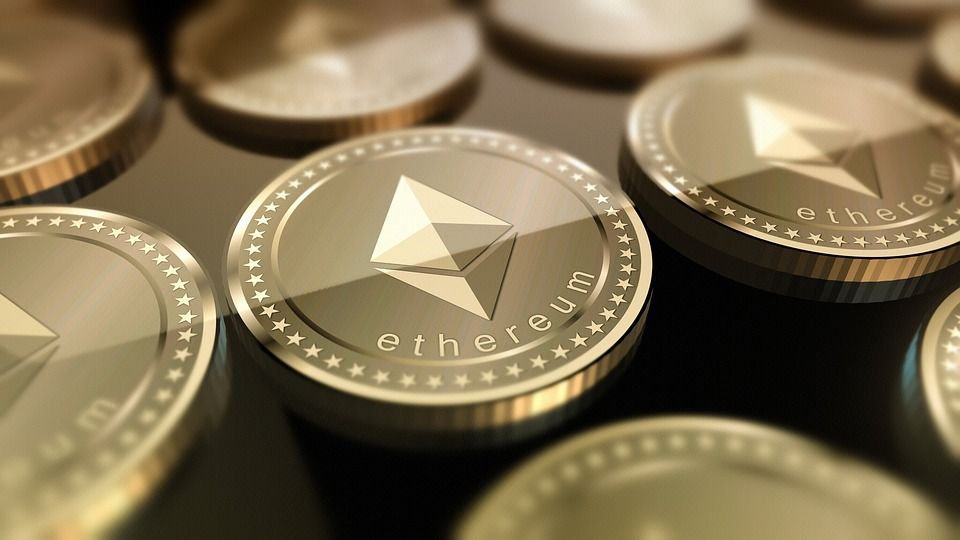
NEW YORK — Ether, the native cryptocurrency of the Ethereum blockchain, traded higher on Wednesday, rising about 0.6% to around $1,892.52 as of early afternoon UTC, supported by expectations and early reactions to U.S. consumer price data that suggested cooling inflation pressures.

The second-largest digital asset by market value moved within a relatively tight range after opening near $1,881 and testing levels above $1,900 during the session. Trading volumes remained solid, reflecting cautious optimism among market participants ahead of and following the July Consumer Price Index release from the U.S. Bureau of Labor Statistics.

Softer-than-expected inflation readings have historically provided a tailwind for risk assets, including cryptocurrencies, by reducing the likelihood of aggressive interest rate increases from the Federal Reserve. Analysts noted that the data, combined with a recent weaker jobs report, has led some observers to scale back expectations for a September rate hike, creating a more supportive backdrop for speculative assets.

Ethereum’s price action comes against a backdrop of significant underperformance over the past year. The token has declined more than 50% from levels near $4,950 reached in August 2025 and is down roughly 35% to 44% year-to-date in 2026, according to market data. Despite the drawdown, network activity has remained robust in certain segments, with Ethereum continuing to dominate areas such as stablecoins, decentralized finance and the tokenization of real-world assets.

Advertisement

Institutional interest has shown signs of stabilization after periods of outflows. U.S. spot Ethereum exchange-traded funds have recorded mixed but occasionally positive net flows in recent weeks and months, with some reports noting hundreds of millions in cumulative inflows over longer periods since their launch. Products offering staking yields have drawn particular attention, as they provide a structural feature unavailable in Bitcoin ETFs. BlackRock and other asset managers have expanded offerings in this space, including staked ether products.

Corporate accumulation has also provided a steady demand source. BitMine Immersion Technologies, one of the largest corporate holders, has continued purchasing ether, building a position reported near 5.8 million tokens, or close to 5% of the circulating supply. Other entities have similarly maintained or increased holdings amid the price weakness.

On the technical and development front, Ethereum has advanced through a series of upgrades. The Fusaka upgrade, which included PeerDAS for improved data availability, has been implemented to support layer-2 scaling. Developers and co-founder Vitalik Buterin have outlined a longer-term “Lean Ethereum” roadmap described as the network’s third major iteration, comparable in scope to the Merge that shifted Ethereum to proof-of-stake. Buterin has indicated the series of improvements could take three to four years and would involve replacing nearly every major piece of the protocol, with a focus on scalability, quantum resistance and efficiency.

An intermediate upgrade known as Glamsterdam, targeting higher throughput through features such as enshrined proposer-builder separation and block-level access lists, is expected in the second half of 2026. Projections associated with these changes include substantial increases in gas limits and potential reductions in fees, though the full impact on value accrual for the native token remains a subject of ongoing discussion within the community.

Advertisement

Organizational changes at the Ethereum Foundation have also marked 2026. The foundation has undergone restructuring, including staff reductions and the spinout of specialized entities focused on research, systems and institutional outreach. Independent groups such as Ethereum Institutional have been established to engage with banks and asset managers, while other initiatives aim to accelerate enterprise adoption and standards development.

Tokenization of real-world assets on Ethereum has grown, with estimates placing the value of such assets in the tens of billions of dollars, far outpacing many competing networks. Stablecoin activity continues to concentrate heavily on the Ethereum ecosystem, reinforcing its role as a settlement and application layer.

Market technicians have identified key levels around $1,850 as near-term support and $1,925 to $1,950 as resistance. A sustained move above the higher band could open further upside, while a break lower might test deeper support zones. Liquidation data has shown clusters of positions that could amplify moves in either direction.

Broader cryptocurrency markets have traded mixed, with Bitcoin hovering near $64,000 and other major tokens showing modest gains or losses. The overall environment remains sensitive to macroeconomic signals, regulatory developments and shifts in institutional flows.

Advertisement

Ethereum’s dual narrative persists: strong fundamental usage metrics and technological progress alongside a native token that has struggled to capture proportional economic value in recent cycles. Proposals related to staking issuance, such as discussions around tapered rewards, have sparked debate among validators, developers and investors about the balance between network security and token economics.

As of Wednesday’s session, the modest advance reflected a market still digesting inflation data and positioning for potential shifts in monetary policy expectations. Whether the rebound gains traction will depend on follow-through in ETF flows, continued corporate buying, successful delivery of upcoming protocol upgrades and the broader risk appetite in global markets.

Ether’s market capitalization stood near $228 billion, maintaining its position as the clear second-largest cryptocurrency. Trading activity across major exchanges remained elevated relative to quieter periods earlier in the summer, underscoring ongoing interest despite the prolonged price correction from 2025 highs.

Investors and analysts will continue monitoring on-chain metrics, including staking ratios, layer-2 activity and real-world asset volumes, alongside traditional market indicators for clues about the next sustained move. For now, the combination of softer inflation readings and resilient network fundamentals has provided a temporary lift to the price of ether.

Advertisement
Continue Reading
Click to comment

You must be logged in to post a comment Login

Leave a Reply

Business

Earnings call transcript: NANO Nuclear beats Q3 2026 EPS forecast, shares edge up

Published

on


Earnings call transcript: NANO Nuclear beats Q3 2026 EPS forecast, shares edge up

Continue Reading

Business

BofA to invest $1.9 billion for 49.9% stake in Jio Financial NBFC unit

Published

on

BofA to invest $1.9 billion for 49.9% stake in Jio Financial NBFC unit
Bank of America will acquire up to 49.9% stake in Jio Credit, a unit of Jio Financial Services , for as much ‌as 182.68 ⁠billion ⁠rupees ($1.92 billion), the companies said on Wednesday.

The U.S. lender will be a joint venture partner in Jio Financial’s non-bank lending arm through a preferential allotment of equity shares and ⁠warrants.

The transaction ‌initially gives Bank ​of ​America a 26.5% stake, which ⁠can go up to 49.9% upon ​exercise of the warrants.
The deal is the latest large investment in India’s financial services sector, which include Japan’s MUFG investment in Shriram Finance and ‌Dubai-based bank Emirates NBD’s 60% stake in lender RBL Bank.
“The ​investment will ​allow ⁠BofA to expand its participation in the rapidly growing Indian market …. while doing ​so with a partner that has local expertise,” the companies said in a statement.

Continue Reading

Business

How Gamification is Redefining Workplace Team Building

Published

on

How Gamification is Redefining Workplace Team Building

Traditional team-building activities have become largely obsolete thanks to emerging technology and hybrid work models.

Thankfully, forward-thinking businesses can now integrate new ways of creating stronger teams while boosting morale and productivity.

Why Traditional Team Building is Failing

For decades, the standard corporate approach to building team spirit relied on things like an annual company day out. Going to an escape room or an assault course followed by a meal together was a costly exercise, and it’s fair to say that not everyone agreed that it was an effective method of forging workplace bonds.

As time has passed and the way we work has fundamentally changed, the flaws in the traditional team-building events have become impossible to ignore.  The operational disruption caused by closing down operations so everyone can join a day out is one thing, but the fact that many remote and hybrid workers can’t join these events is another reason why new ideas were needed.

How Gamification and Friendly Competition Lead the Way

When looking for ways to replace those outdated annual outings, the switch to workplace gamification seemed like an obvious choice. Adding game mechanics to daily workflows and creating friendly competition elements have been increasingly seen as ways of boosting employee engagement.

Advertisement

Deloitte is one of the companies making waves in this area. Their Deloitte Leadership Academy training portal uses the likes of custom achievement badges and progress bars, as well as leaderboards.

On the other hand, Target’s real-time cashier interface is another interesting innovation that comes with gamified elements. Immediate scoring and performance feedback are used to make the task of scanning purchases into something more satisfying. We can also see companies like Cisco and PricewaterhouseCoopers moving in this direction with gamified processes that turn routine tasks into achievements that can be shared.

Consumer Models As a Blueprint

When companies look to design a more effective workplace engagement system, they don’t need to create everything from scratch. By looking at the digital consumer landscape, they can see a proven blueprint for user participation in various sectors. With YouTube named the most influential single brand in the world recently, there’s much room for improvement that small businesses can learn from atop the shoulders of giants.

Advertisement

Modern websites boast numerous engagement ideas that businesses can learn from in their own continous professional development and team-building programs. Micro-polls, instant reaction loops, and streak mechanics are all worthwhile approaches that can be adapted seamlessly to the corporate team-building environment.

By focusing on a certain type of growing segment, business leaders can look more closely at the dynamics driving it. Looking at daily fantasy sports contests as one example, this PrizePicks promo for new users shows a bonus for new users with clearly laid-out rules. Players can use their bonus on the sports that they’re most interested in, such as baseball, ice hockey, and golf. Everything is designed for a fast start and maximum flexiblity, which is also the right move for business tools.

Other sectors provide different lessons. From the interactive charts on cryptocurrency exchanges to the dynamic indicators on retail sites, there are many ways of presenting information that fit neatly into the requirements for corporate team building and engagement.

The era of office days out may be almost over, but this encroaching new wave of ideas should ensure that there are still enjoyable ways of connecting with colleagues and progressing through the corporate structure while having fun.

Advertisement

Continue Reading

Business

Dauch Corporation (DCH) Presents at J.P. Morgan Automotive Conference Transcript

Published

on

OneWater Marine Inc. (ONEW) Q1 2026 Earnings Call Transcript