Connect with us

Business

MindsEye’s Comeback Wasn’t Supposed to Look Like This

Published

on

£30m Government Boost for British Video Game Developers

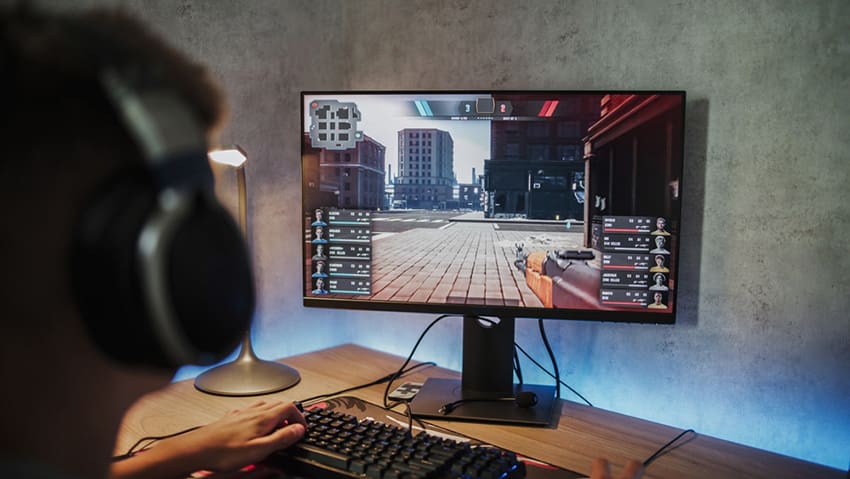
There was no miracle patch or dramatic relaunch. MindsEye’s recovery happened gradually, as Build A Rocket Boy kept updating, expanding and giving players new reasons to return.

A year is a long time in games.

Twelve months ago, MindsEye looked like another cautionary tale. The kind of ambitious release the industry spends years pointing to whenever somebody suggests shipping before they’re ready. Technical issues drowned out bold ideas, reviews were mixed, and the conversation became less about what the game was trying to achieve than what it hadn’t yet delivered.

If comeback stories have taught us anything, though, it’s that first impressions aren’t always the final verdict.

Today, MindsEye’s overall Steam rating remains Mixed, but reviews from the last 30 days are Mostly Positive. The 2026 roadmap continues to land on schedule. Multiplayer arrived last month. A game that once seemed destined to be remembered for its launch is increasingly being talked about for everything that’s happened since.

Advertisement

What’s surprising isn’t that MindsEye recovered.

It’s how.

The Conversation Changed Before the Reviews Did

Most gaming comeback stories have a defining moment.

No Man’s Sky had NEXT. Cyberpunk 2077 had Phantom Liberty. Final Fantasy XIV quite literally rebuilt itself from the ground up.

Advertisement

MindsEye never had that moment.

Instead, Build A Rocket Boy did something far less dramatic.

They simply kept shipping.

Update after update improved stability, fixed long-standing technical issues and expanded existing systems. Alongside every technical patch came new reasons to return. There wasn’t one headline update that suddenly changed everything. Instead, the game improved slowly enough that many players barely noticed it happening.

Advertisement

Until they did.

Players who had written the game off months earlier began returning to find a noticeably different experience waiting for them. Steam’s recent reviews now see roughly seven out of ten recent players recommending the game—a remarkable reversal from launch.

The media narrative shifted as well. Publications that once focused almost exclusively on technical shortcomings gradually began writing about new content, creator tools and future updates instead. One 2026 reassessment described MindsEye as having been “transformed” into a more stable, content-rich experience.

Perhaps that’s the real milestone.

Advertisement

Most comeback stories rely on players forgiving a game.

MindsEye’s depended on players rediscovering it.

The Patches Fixed the Game. Arcadia Explained the Vision.

If technical improvements repaired the launch, Arcadia explained why Build A Rocket Boy had built MindsEye in the first place.

Arcadia isn’t simply a level editor.

Advertisement

It’s the studio’s bet that a traditional single-player game doesn’t have to end when the credits roll.

While many post-launch strategies revolve around expansions or seasonal content, Build A Rocket Boy has spent the past year quietly doing something different. Almost every major update has included new Arcadia missions—professionally crafted experiences built using the very same tools that ship free with the game.

The effect is subtle but significant.

Every new mission expands MindsEye for existing players while simultaneously demonstrating what’s possible for aspiring creators. Instead of asking the community to imagine what Arcadia could become, the studio has been showing them.

Advertisement

That long-term vision wasn’t invented after launch.

Years before MindsEye released, patent filings hinted at a platform where players would build and share their own experiences. Journalists who toured the Edinburgh studio long before release came away describing those ambitions as some of the company’s most ambitious ideas.

Arcadia wasn’t Plan B.

It was simply waiting for the rest of the game to catch up.

Advertisement

Completing the Picture

Last month’s multiplayer update feels less like a change of direction than another piece falling into place.

Grenade Football—a deliberately chaotic, physics-driven team sport—arrives alongside competitive racing across both developer-built and community-built tracks. Combined with a free weekend, it represents another attempt to broaden what MindsEye can be rather than simply adding another feature to the checklist.

Whether multiplayer becomes another turning point remains to be seen.

But that’s almost beside the point.

Advertisement

The more interesting story is how MindsEye got here.

It wasn’t rescued by one miracle patch.

It wasn’t reinvented overnight.

It didn’t disappear for two years before quietly returning.

Advertisement

Instead, Build A Rocket Boy chose the slower route. They kept releasing updates. They kept expanding the game. They kept giving players reasons to come back.

Eventually, the conversation changed.

A year ago, MindsEye was being judged on the week it launched.

Today, it’s being judged on everything that’s happened since.

Advertisement

For any developer attempting one of the hardest feats in modern games, that’s a far more meaningful milestone than any review score.

Advertisement
Continue Reading
Click to comment

You must be logged in to post a comment Login

Leave a Reply

Business

Apollo Hospitals Q1 Results: Net profit jumps 38% YoY to Rs 610 crore; revenue rises 21%

Published

on

Apollo Hospitals Q1 Results: Net profit jumps 38% YoY to Rs 610 crore; revenue rises 21%
Apollo Hospitals Enterprise on Wednesday, August 12, reported a 38.4% year-on-year (YoY) jump in consolidated net profit to Rs 610 crore for the quarter ended June 30, 2026 (Q1FY27), compared with Rs 441 crore reported in the corresponding quarter of the previous financial year.

Revenue from operations rose 20.6% YoY to Rs 7,044 crore in Q1FY27, compared with Rs 5,842 crore in the year-ago period, according to the company’s exchange filing.

The healthcare major’s earnings before interest, taxes, depreciation and amortisation (EBITDA) increased 28.2% YoY to Rs 1,092 crore from Rs 852 crore in Q1FY26. The EBITDA margin also improved to 15.5% from 14.6% a year earlier.

Ahead of the results, Apollo Hospitals shares settled 1.72% lower at Rs 8,597 apiece on the NSE on Wednesday.

Advertisement

ALSO READ: Tata Sons’ IPO can take a page from a Hong Kong titan


Key Operational Highlights
Apollo Hospitals said revenue from its Healthcare Services business grew 22% year-on-year during the quarter, while EBITDA stood at Rs 862 crore.Apollo Health and Lifestyle reported a 15% YoY increase in revenue to Rs 499 crore.

Apollo HealthCo reported revenue of Rs 2,977 crore, while EBITDA stood at Rs 171 crore.

The company said revenue growth was driven by higher volumes in its specialties and an increase in high-complexity clinical work.

Capacity Expansion

Advertisement

Apollo Hospitals continued its capacity expansion during the quarter with the launch of a 180-bed hospital in Sarjapur, Bengaluru. The company’s Gurugram facility remains on track for commissioning in Q3FY27.

The company also announced plans to expand its existing hospital facilities in Indore and Guwahati by 148 beds. In addition, Apollo plans to add four new hospitals in Indore, Dwarka, Delhi Proton Centre and Ranchi, with a combined capacity of around 1,200 beds.

With these additions, Apollo Hospitals plans to add more than 5,000 beds, including 4,700 census beds, over the next five years.

International Patient Business

Advertisement

Apollo’s International Patient Services division continued to gain traction, with revenue rising 26% year-on-year during the quarter. The company said the growth reinforces its position as a preferred healthcare destination for international patients.

Management Commentary

Prathap C. Reddy, Founder and Chairman of Apollo Hospitals Group, said Q1FY27 marked a strong start to the financial year, building on the momentum seen in FY26.

“”Ql FY27 marks a strong start to the year, building on the momentum of FY26. Consolidated revenue grew 21% yearon-year to :f7,043 crore, supported by strong-based performance across Healthcare Services, Diagnostics and Retail

Advertisement

Health, and Digital Health and Pharmacy. The performance reflects the strength of our integrated model and the

continued trust that patients and their families place in Apollo,” said Reddy.

Apollo HealthCo Transaction

Apollo Hospitals also informed the exchanges that it has taken note of a proposed transfer by Apollo HealthCo Ltd, a material subsidiary, of its undertaking relating to the procurement and wholesale distribution of fast-moving consumer goods, wellness and personal care products, including over-the-counter and non-prescription consumer healthcare products.

Advertisement

The business is proposed to be transferred as a going concern on a slump-sale basis to Apollo Consumer Products Ltd, a wholly owned subsidiary of Apollo HealthCo, subject to shareholder approval.

(Disclaimer: Recommendations, suggestions, views and opinions given by the experts are their own. These do not represent the views of The Economic Times)

Continue Reading

Business

Earnings call transcript: NANO Nuclear beats Q3 2026 EPS forecast, shares edge up

Published

on


Earnings call transcript: NANO Nuclear beats Q3 2026 EPS forecast, shares edge up

Continue Reading

Business

BofA to invest $1.9 billion for 49.9% stake in Jio Financial NBFC unit

Published

on

BofA to invest $1.9 billion for 49.9% stake in Jio Financial NBFC unit
Bank of America will acquire up to 49.9% stake in Jio Credit, a unit of Jio Financial Services , for as much ‌as 182.68 ⁠billion ⁠rupees ($1.92 billion), the companies said on Wednesday.

The U.S. lender will be a joint venture partner in Jio Financial’s non-bank lending arm through a preferential allotment of equity shares and ⁠warrants.

The transaction ‌initially gives Bank ​of ​America a 26.5% stake, which ⁠can go up to 49.9% upon ​exercise of the warrants.
The deal is the latest large investment in India’s financial services sector, which include Japan’s MUFG investment in Shriram Finance and ‌Dubai-based bank Emirates NBD’s 60% stake in lender RBL Bank.
“The ​investment will ​allow ⁠BofA to expand its participation in the rapidly growing Indian market …. while doing ​so with a partner that has local expertise,” the companies said in a statement.

Continue Reading

Business

How Gamification is Redefining Workplace Team Building

Published

on

How Gamification is Redefining Workplace Team Building

Traditional team-building activities have become largely obsolete thanks to emerging technology and hybrid work models.

Thankfully, forward-thinking businesses can now integrate new ways of creating stronger teams while boosting morale and productivity.

Why Traditional Team Building is Failing

For decades, the standard corporate approach to building team spirit relied on things like an annual company day out. Going to an escape room or an assault course followed by a meal together was a costly exercise, and it’s fair to say that not everyone agreed that it was an effective method of forging workplace bonds.

As time has passed and the way we work has fundamentally changed, the flaws in the traditional team-building events have become impossible to ignore.  The operational disruption caused by closing down operations so everyone can join a day out is one thing, but the fact that many remote and hybrid workers can’t join these events is another reason why new ideas were needed.

How Gamification and Friendly Competition Lead the Way

When looking for ways to replace those outdated annual outings, the switch to workplace gamification seemed like an obvious choice. Adding game mechanics to daily workflows and creating friendly competition elements have been increasingly seen as ways of boosting employee engagement.

Advertisement

Deloitte is one of the companies making waves in this area. Their Deloitte Leadership Academy training portal uses the likes of custom achievement badges and progress bars, as well as leaderboards.

On the other hand, Target’s real-time cashier interface is another interesting innovation that comes with gamified elements. Immediate scoring and performance feedback are used to make the task of scanning purchases into something more satisfying. We can also see companies like Cisco and PricewaterhouseCoopers moving in this direction with gamified processes that turn routine tasks into achievements that can be shared.

Consumer Models As a Blueprint

When companies look to design a more effective workplace engagement system, they don’t need to create everything from scratch. By looking at the digital consumer landscape, they can see a proven blueprint for user participation in various sectors. With YouTube named the most influential single brand in the world recently, there’s much room for improvement that small businesses can learn from atop the shoulders of giants.

Advertisement

Modern websites boast numerous engagement ideas that businesses can learn from in their own continous professional development and team-building programs. Micro-polls, instant reaction loops, and streak mechanics are all worthwhile approaches that can be adapted seamlessly to the corporate team-building environment.

By focusing on a certain type of growing segment, business leaders can look more closely at the dynamics driving it. Looking at daily fantasy sports contests as one example, this PrizePicks promo for new users shows a bonus for new users with clearly laid-out rules. Players can use their bonus on the sports that they’re most interested in, such as baseball, ice hockey, and golf. Everything is designed for a fast start and maximum flexiblity, which is also the right move for business tools.

Other sectors provide different lessons. From the interactive charts on cryptocurrency exchanges to the dynamic indicators on retail sites, there are many ways of presenting information that fit neatly into the requirements for corporate team building and engagement.

The era of office days out may be almost over, but this encroaching new wave of ideas should ensure that there are still enjoyable ways of connecting with colleagues and progressing through the corporate structure while having fun.

Advertisement

Continue Reading

Business

Dauch Corporation (DCH) Presents at J.P. Morgan Automotive Conference Transcript

Published

on

OneWater Marine Inc. (ONEW) Q1 2026 Earnings Call Transcript