Connect with us

Business

ETMarkets Smart Talk | Maturing AI trade could redirect global capital towards diversified growth markets like India: Ritesh Taksali

Published

on

ETMarkets Smart Talk | Maturing AI trade could redirect global capital towards diversified growth markets like India: Ritesh Taksali
Indian equities appear to be entering a more favourable phase after a prolonged period of consolidation, with easing global headwinds, resilient corporate earnings and a reversal in foreign flows improving the market setup. Ritesh Taksali, Chief Investment Officer at Edelweiss Life Insurance, believes the maturing AI-led trade could further work in India’s favour as global investors look beyond markets that have benefited disproportionately from the semiconductor and AI cycle.

Taksali points out that FPIs invested around ₹20,000 crore in Indian equities in July, followed by another ₹12,921 crore in the first week of August. With the Nifty’s trailing P/E now around 20.8x—below its seven-year median and 10-year average—India’s valuation premium has also become more reasonable.

He believes India’s diversified, domestically driven growth profile could become increasingly attractive as the AI trade matures. At the same time, better-than-expected Q1 earnings, resilient margins and the potential revival in private capex could provide additional catalysts for Indian equities through FY27-FY29. Edited Excerpts –

Q) Market is showing signs of stablisation after posting over 1% back-to-back returns in the June & July. How are you reading markets?

Advertisement

A) The set up for Indian equities has improved meaningfully compared with what we saw through 2025 and the first part of 2026. Several of the key concerns that had weighed on global markets—trade tariffs, geopolitical tensions and the reverse AI trade—have either played out, or the concerns around them have receded. This improvement in sentiment is beginning to reflect in foreign flows. After several months of sustained selling, we have seen a meaningful reversal, with FIIs investing around ₹20,000 crore in Indian equities.


We have seen a prolonged time correction in the Indian equity markets over the last two years, since September 2024. During this period, large-cap valuations have also moderated, providing some comfort from valuation perspective. We believe the markets should show greater strength from here on.
Q) Most of the June quarter results are out. What do you make of Q1 numbers and management commentary?A) Barring OMCs, earnings season has been better than expectations. We have seen a broad-based beat across sales, EBITDA and PAT. The growth momentum has continued, with sales growth at 22% y-o-y and profit growth at 11% y-o-y. For most of the companies, margins have held up better than anticipated despite pressure from higher raw material and logistics costs.

While supply-chain disruptions and elevated input and freight costs did create headwinds, companies were able to offset a meaningful part of this through price increases, cost rationalisation, and operating efficiencies.

Management commentary suggests that business environment is expected to improve in H2 as cost pressure abates and festive season kicks in.

Q) Private sector capex announcements have remained subdued over the past 12–18 months. If this investment cycle continues to be delayed, could it push back the expected earnings growth for India Inc.? What are your views on the outlook for private capex and its impact on corporate earnings?

Advertisement

A) Private Capex has been slower than expected because companies have remained cautious amid geopolitical uncertainty and the wars, which have affected visibility on global demand, supply chains and input costs. We should see a gradual revival as visibility improves.

As geopolitical uncertainty eases and demand visibility improves, we expect more of the announced projects to move from the announcement stage to actual orders and construction.

Healthy corporate balance sheets, high-capacity utilisation, government infrastructure spending, PLI/manufacturing incentives and rising investment announcements provide the ingredients for a revival.

For equities, therefore, private capex is less a near-term earnings risk and more a critical upside catalyst—a broad-based capex cycle could materially improve earnings visibility over FY27–FY29.

Advertisement

Read Also: ETMarkets Smart Talk | India is ‘pricey’, not expensive: Mark Zuckerberg’s Harvard classmate Vikas Pershad on investing

Q) FIIs inflows have remained largely positive so far in August – can we say that the smart money is slowly moving back to India?

A) FPIs have turned buyers in July, investing around ₹20,000 crore in Indian equities. This momentum has continued into August, with another ₹12,921 crore coming in during the first week. There are three or four factors behind this.

First, valuations have corrected. The Nifty’s trailing P/E has also come down to 20.8x, about 9 per cent below its seven-year median and roughly 12 to 13 per cent below its ten-year average.

Advertisement

Second, the AI-driven reverse trade is beginning to abate. A significant amount of the earlier FII selling was essentially a rotation towards Korea and Taiwan, where investors had much greater exposure to the AI and semiconductor cycle.

India was relatively under-owned because it did not have the same direct AI leverage. As that trade matures, global investors are beginning to look for other markets.

Third, the macro environment is becoming more supportive. The rupee has stabilised, helped by strong foreign currency inflows. The FCNR-B deposit scheme has mobilised around US$41 billion so far, with inflows potentially reaching US$70–90 billion by the September 30 closure.

The government has also made interest income on Indian government bonds tax-free for foreign investors, contributing to around US$8.7 billion of net inflows into G-Secs. These measures have strengthened confidence in India’s ability to manage currency volatility and global capital-flow pressures.

Advertisement

More broadly, the external sector remains resilient, supported by services exports, remittances, merchandise exports and improving FDI flows. Overall, the stronger capital inflows and resilient external balances provide greater stability to the rupee and improve the macro backdrop for Indian equities.

And finally, India’s earnings outlook is improving. The Q1 results season has been better than expected, margins have been more resilient and management commentary suggests that demand could improve in the second half, supported by festive consumption, easing cost pressures and exports.

Q) After the recent correction seen in 1H2026. Has the premium corrected? If not, can India continue to command premium valuations compared to other emerging markets?

A) India’s valuation premium over emerging markets has compressed meaningfully, although India still trades at a premium. The important point is that the premium has become more reasonable after a period of relative underperformance.

Advertisement

Throughout 2024, India was trading at significant P/E premium to the MSCI EM index. Since then, Taiwan and South Korea have significantly re-rated on the back of the global AI and semiconductor cycle, while India has not had the same direct exposure to that theme.

At the same time, the global opportunity set has changed, with markets such as Brazil and other commodity- or value-oriented EMs becoming relatively more attractive at different points in the cycle. This has contributed to a broad re-rating and narrowing of India’s relative valuation advantage.

India’s weight in the MSCI EM index has also moderated from a peak of around 19.4% in late 2024 to its long-term average of around 11.8%. So, from a relative positioning perspective, some of the exceptional India premium has already been unwound.

Having said that, we don’t think India needs to trade at parity with other emerging markets. India’s premium is justified to an extent by the quality and diversity of its growth.

Advertisement

Unlike markets where the earnings cycle can be heavily driven by a single theme such as semiconductors or commodities, India offers relatively diversified exposure across financials, consumption, manufacturing, infrastructure and services.

More importantly, a large part of India’s growth is domestically driven, which makes the economy relatively less dependent on global trade cycles.

This becomes particularly relevant if the current geopolitical uncertainty starts to ease and oil prices remain contained. Lower crude prices are structurally positive for India because they improve the current account, reduce imported inflation and ease pressure on the currency.

It reinforces one of India’s key advantages—a large domestic economy with multiple internal growth drivers and relatively manageable external vulnerabilities.

Advertisement

The other factor is the AI trade. The extraordinary re-rating of semiconductor-linked markets has created a significant valuation and earnings gap versus India.

As the AI-led trade matures and the valuation differential between those markets and the rest of emerging markets becomes harder to justify, capital could increasingly look for diversified growth opportunities, where India remains well positioned.

So, we would not argue that India’s valuation premium disappears completely. A moderate premium is sustainable as long as India continues to deliver superior and more consistent earnings growth.

Read Also: ETMarkets Smart Talk | Direct stocks are not the answer for global investing; fund of funds makes more sense: Rahul Jain

Advertisement

Q) Are there pockets of froth in the market that investors should avoid? Which sectors still offer reasonable valuations despite the market rally?

A) I think the key distinction at this point is between stocks where valuations are being supported by earnings and cash flows, and those where the valuation is being supported primarily by a narrative.

The recent correction in the headline indices has helped clean up valuations to some extent, but pockets of froth remain, particularly in stocks where expectations of very strong growth are already fully reflected in prices.

In some cases, investors are paying a significant premium for growth that may take several years to materialise. That leaves limited room for disappointment.

Advertisement

The valuations of SMIDs are trading above their long-term averages when compared to their own historical P/Es as well as when compared to PE of their large cap peers. But at the same time, SMID earnings have also grown at faster rate than the large caps.

Valuations are to be seen in conjunction with fundamentals. A company can be expensive and still deliver good returns if earnings consistently surprise on the upside, that’s where we see multiple re-ratings. So, we would avoid making a blanket call on any market-cap segment or sector.

The market will be increasingly driven by fundamentals. The better opportunities are likely to be businesses with strong cash-flow generation, sustainable competitive advantages, healthy balance sheets and earnings visibility, where valuations leave some margin of safety.

Q) How are you reading into new IPOs which have started to hit D-Street after few months of pause?

Advertisement

A) The IPO market has clearly picked up after a period of relative lull. As the macro headwinds abated, market stability has returned and so has liquidity.

There is a healthy pipeline of upcoming IPOs: 178 SEBI-approved companies looking to raise 2.96 lakh crore rupees, and another 71, awaiting approval for 1.84 lakh crore. Annual IPO issuance should reach roughly 2.5 lakh crore rupees.

The new issues are not just limited to a particular sector. We are seeing a much more diverse set of businesses coming to the market, spanning financial services, healthcare, consumer, manufacturing, technology and industrials.

The breadth of the current IPO pipeline is also a positive sign for the overall equity market. It indicates that companies are once again comfortable accessing public markets and that investor appetite for new businesses is returning.

Advertisement

We are seeing both established businesses looking to unlock value as well as newer-age and high-growth companies tapping the market. The diversity of sectors and businesses entering the market reflects the depth of India’s entrepreneurial and corporate ecosystem, and we expect the IPO pipeline to remain robust as market confidence improves.

(Disclaimer: Recommendations, suggestions, views, and opinions given by experts are their own. These do not represent the views of the Economic Times)

Continue Reading
Click to comment

You must be logged in to post a comment Login

Leave a Reply

Business

Sri Lankan restaurant chain The Coconut Tree confirms opening date of new Bristol branch

Published

on

Business Live

The announcement comes after a tough year for the business which is turning around its fortunes

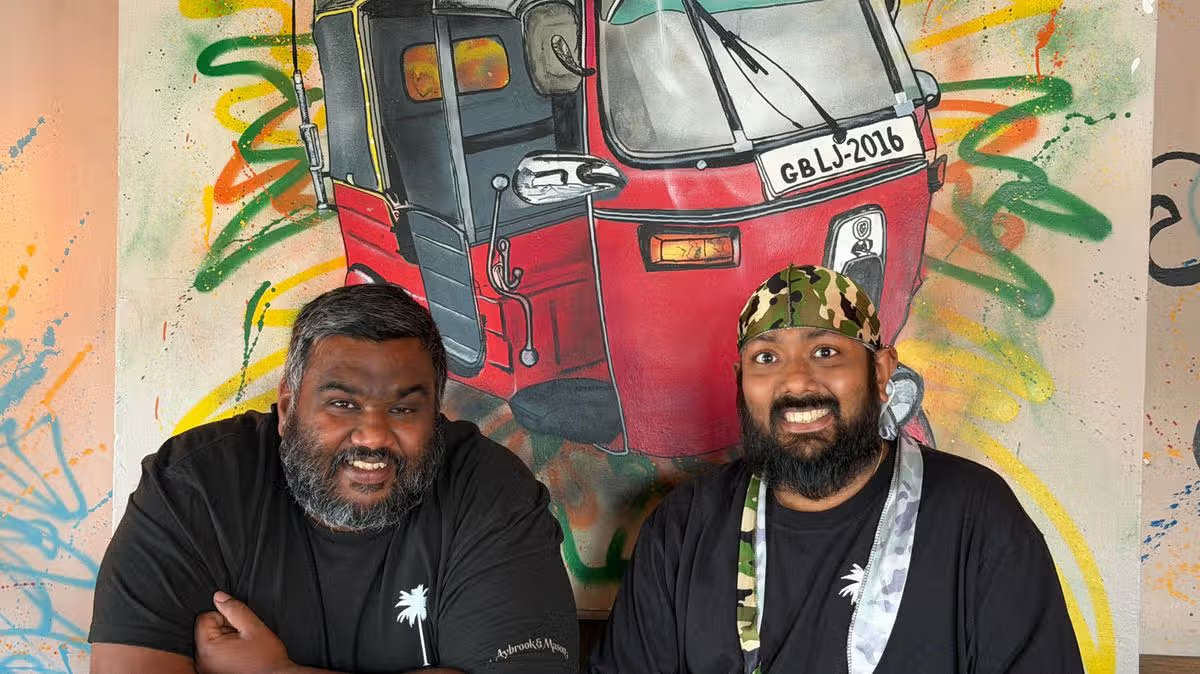
Praveen Thangiah and Shamil Fernando, founders of The Coconut Tree

Praveen Thangiah and Shamil Fernando, founders of The Coconut Tree(Image: Handout)

A Sri Lankan restaurant group that was rescued from administration last year is opening a new branch in Bristol at the end of the month. It is the second outlet in the city for The Coconut Tree, which was founded in Gloucestershire a decade ago by a group of friends and has sites in Cheltenham, Bath, Bournemouth, Oxford, Reading and on Gloucester Road in Bristol.

The new restaurant on Broad Quay is the first since founders Praveen Thangiah and Shamil Fernando took control of the business through their company MPS Hospitality last year.

The eatery will sell authentic Sri Lankan dishes and original cocktails, and will include outside dining for more than 50 people as well as three virtual darts lanes inside, set in a drinks area.

Mr Thangiah added: “We’re keeping the essence of The Coconut Tree the same, and our focus is on creating a more sustainable business for the future. Our restaurants are supported by an experienced team that has been the heart of The Coconut Tree for many years. We’d like to thank everyone for their support as we open our seventh site.”

Advertisement

The Coconut Tree appointed administrators from Mazars last November after failing to keep up with payments on a Company Voluntary Arrangement (CVA) – a process to allow a business to pay back its debts. The tipping point came when the business defaulted on a £1.6m tax bill.

But the deal with MPS Hospitality last year saved more than 150 jobs and meant the restaurant group could continue trading, with two of its founders at the helm. It is understood no suppliers, employees or local business partners were left out of pocket following the administration.

Mr Fernando said: “The Coconut Tree has been a huge part of our lives for many years. We bought the business because we care deeply about it and the people behind it, and believe in our authentic Sri Lankan food and drink.”

The Broad Quay Bristol branch is opening at 5pm on August 28.

Advertisement
Continue Reading

Business

Zoom hits back at Burnham’s criticism of video interviews

Published

on

Zoom hits back at Burnham's criticism of video interviews

Zoom has rejected Prime Minister Andy Burnham’s criticism of employers interviewing job candidates by video call, saying the fairness of an interview depends on the skills of the interviewer rather than the format of the meeting.

Burnham told the Jimmy’s Jobs of the Future podcast that he disliked the practice, which he described as convenient for the organisations using it but a potential barrier for young candidates trying to make a personal connection with a prospective employer.

“One thing I really don’t like is this culture now of interviewing via Zoom or Teams. That doesn’t seem right to me,” the prime minister said.

“I know it’s convenient for the organisations that do it, but how does a young person shine in that situation? How do you get over some of your personality, your passion?

“It seems to me to then work against people who have that side to their character, and work for those who are just giving the more formulaic answer.”

Advertisement

Zoom’s response placed the responsibility for candidate experience on employers rather than the technology.

“The issue isn’t whether an interview happens on video or in-person; it’s whether employers are creating an environment where every candidate can perform at their best. That’s the interviewer’s responsibility,” said Louise Newbury-Smith, head of UK and Ireland at Zoom.

“Poor interviewing existed long before video technology, and the format has never been the deciding factor.”

Burnham, whose arrival in Downing Street prompted questions about his agenda for smaller employers, was speaking to podcast host Jimmy McLoughlin, a former adviser to Theresa May. He suggested technology risked making the hiring process less equitable.

Advertisement

“It doesn’t feel to me that recruitment in the … post-pandemic era is becoming fairer,” he said.

“Recruitment has got to be about individuality … people bringing out the unique things that they’ve got to offer.”

Newbury-Smith said video calls had made recruitment more accessible for many candidates by removing geographical barriers and reducing travel costs. She said they could also help people balancing work with caring responsibilities and those living with disabilities.

Zoom is not the first recruitment technology firm to answer criticism from the prime minister. Screening software company Oleeo defended its AI screening tools after Burnham raised concerns about automated hiring in the same interview.

Advertisement

Zoom was founded by engineer Eric Yuan in 2011 and launched its video conferencing service in 2013. Its technology became a defining feature of the pandemic as meetings and social gatherings moved online, and its valuation briefly exceeded $100 billion in 2020.

Despite competition from Microsoft Teams and Google Meet, Zoom remains one of the leading video conferencing platforms, with more than 300 million users worldwide.


Amy Ingham

Amy Ingham

Amy Ingham is a reporter at Business Matters, covering UK business news with a focus on breaking news, business policy, late payments and insolvency. She joined the magazine in 2026 after completing the NCTJ Diploma in Journalism at Harlow College’s journalism school. Her recent reporting includes British Steel’s nationalisation and its impact on SME suppliers, the decline in late payments by large firms, and Insolvency Service director disqualifications. Reach her at aingham@cbmeg.co.uk.

Advertisement

Continue Reading

Business

Alpha and Omega Semiconductor Limited (AOSL) Q4 2026 Earnings Call Transcript

Published

on

OneWater Marine Inc. (ONEW) Q1 2026 Earnings Call Transcript

Operator

Hello, everyone. Thank you for joining us, and welcome to the Alpha and Omega Semiconductor Fiscal Q4 2026 Earnings Call.

[Operator Instructions] I will now hand the call over to Steven Pelayo, Investor Relations. Please go ahead.

Advertisement

Steven C. Pelayo
The Blueshirt Group, LLC

Good afternoon, everyone, and welcome to Alpha and Omega Semiconductor’s conference call to discuss fiscal 2026 fourth quarter financial results. I’m Steven Pelayo, Investor Relations representative for AOS. With me today are Stephen Chang, our CEO; and Yifan Liang, our CFO.

This call is being recorded and broadcast live over the web. A replay will be available for 7 days following the call via the link in the Investor Relations section of our website.

Our call will proceed as follows today. Stephen will begin business updates, including strategic highlights and a detailed segment report. After that, Yifan will review the financial results and provide guidance for the September quarter. Finally, we will have a Q&A session.

Advertisement

The earnings release was distributed over the wire today, August 12, 2026, after the market closed. The release is also posted on the company’s website. Our earnings release and this presentation include non-GAAP financial measures. We use non-GAAP measures because we believe they provide useful information about our operating performance that should be considered by investors in conjunction with the GAAP measures. A reconciliation of these non-GAAP measures to comparable GAAP measures is included in

Continue Reading

Business

Farm skills shortage threatens UK food security, Arla warns

Published

on

Farm skills shortage threatens UK food security, Arla warns

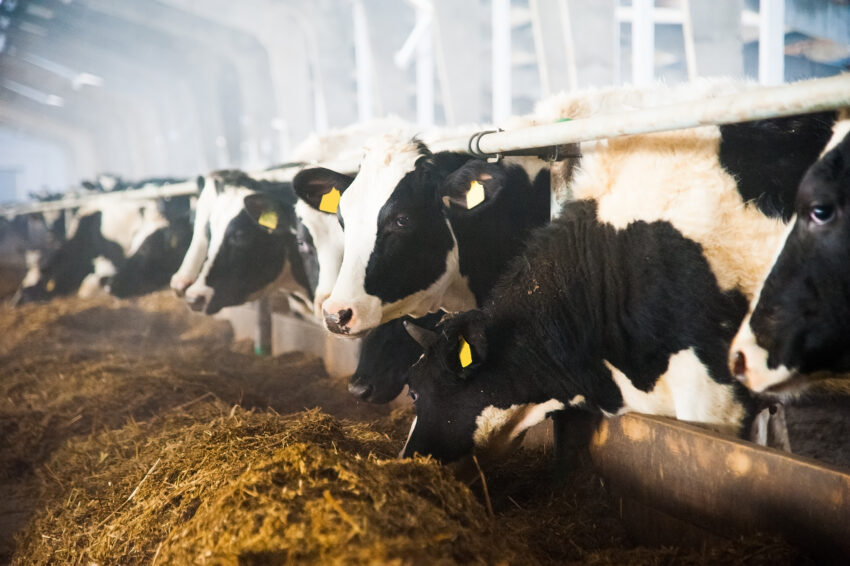
A shortage of skilled farm workers threatens Britain’s food security, Arla Foods has warned, after 82 per cent of its farmers with a vacancy said very few or no job applicants had the right skills.

The dairy co-operative, which owns the Lurpak and Cravendale brands, employs about 3,700 people in the UK and works with 1,900 farmers. Its survey of 440 farmers found more than half reported that retaining employees had become harder since Brexit and Covid.

Arla said hiring problems had grown from a “labour shortage to a wider skills challenge that could have implications for the long-term resilience of British food production if left unaddressed”.

The survey also points to an ageing workforce. Some 47.7 per cent of the farmers surveyed were over 55, and nearly a fifth were over 65. The most recent government figures on the agricultural workforce show only 5 per cent of farm holders in England were younger than 35.

Paul Dover, Arla’s UK agriculture director, said: “The food supply chain has been facing increasing pressure from workforce challenges for a number of years, and the latest data from our farmers shows the picture is not improving. This is a challenge that will impact beyond the farm, if action isn’t taken.

Advertisement

“Government proposals like the farming roadmap and its efforts to help young people into work through courses in schools are helpful and will go some way to supporting farmers, but the reality is we need intervention much earlier.”

Bas Padberg, managing director of Arla Foods UK, said: “If we want a resilient food system capable of feeding future generations, we must invest in the skills, education and pathways that will build the workforce of tomorrow.”

Roughly a fifth of the farmers surveyed said they needed help to recruit, train and develop the future workforce, while about 14 per cent would prioritise a “nationwide marketing campaign” to attract more talent.

Arla said recent government proposals, including the 25-year farming roadmap and initiatives to help young people into work, were welcome but had “not gone far enough”.

Advertisement

The warning comes as this summer’s widespread drought puts further pressure on food production, with food prices forecast to rise into 2027 as dry conditions hit harvests.

Analysts at Shore Capital said the UK was the closest it had been for many decades to a food security crisis. Vegetable and fruit growers were “particularly exposed” given their dependence on irrigation and consistent soil moisture, the analysts said, while dairy farmers faced acute pressure on milk yields as heat stress affects herds and grass dries up across the country.

Farmers are also contending with subsidy cuts, higher employment costs and potential shortages of fertiliser amid the war in Iran.

The government said: “Attracting bright new talent into agriculture is vital for the future of UK food and farming. Ongoing reforms to the skills system, including a V Level in agriculture, environmental and animal care, will strengthen training routes, reform apprenticeships and improve careers pathways into farming, giving young people the practical, hands-on learning they need to progress.

Advertisement

“Our 25-year Farming Roadmap sets out a clear vision for the future so our farmers can have the confidence once more to invest and feed the nation with pride for generations to come.”


Amy Ingham

Amy Ingham

Amy Ingham is a reporter at Business Matters, covering UK business news with a focus on breaking news, business policy, late payments and insolvency. She joined the magazine in 2026 after completing the NCTJ Diploma in Journalism at Harlow College’s journalism school. Her recent reporting includes British Steel’s nationalisation and its impact on SME suppliers, the decline in late payments by large firms, and Insolvency Service director disqualifications. Reach her at aingham@cbmeg.co.uk.

Advertisement
Continue Reading

Business

Politics And The Markets 08/13/26

Published

on

OneWater Marine Inc. (ONEW) Q1 2026 Earnings Call Transcript

This is the forum for daily political discussion on Seeking Alpha. A new version is published every market day.

Please don’t leave political comments on other articles or posts on the site.

The comments below are not regulated with the same rigor as the rest of the site, and this is an ‘enter at your own risk’ area as discussion can get very heated. If you can’t stand the heat… you know what they say…

More on Today’s Markets:

Advertisement

Moderation Guidelines:

We remove comments under the following categories:

  • Personal attacks on another user account
  • Anti-Vaxxer or covid related misinformation
  • Stereotyping, prejudiced or racist language about individuals or the topic under discussion.
  • Inciting violence messages, encouraging hate groups and political violence.

Regardless of which side of the political divide you find yourself, please be courteous and don’t direct abuse at other users.

For any issue with regards to comments please email us at : moderation@seekingalpha.com.

Seeking Alpha’s Disclosure: Past performance is no guarantee of future results. No recommendation or advice is being given as to whether any investment is suitable for a particular investor. Any views or opinions expressed above may not reflect those of Seeking Alpha as a whole. Seeking Alpha is not a licensed securities dealer, broker or US investment adviser or investment bank. Our analysts are third party authors that include both professional investors and individual investors who may not be licensed or certified by any institute or regulatory body.

Advertisement
Continue Reading

Business

Vital Healthcare Property Trust (VTHPF) Q4 2026 Earnings Call Transcript

Published

on

OneWater Marine Inc. (ONEW) Q1 2026 Earnings Call Transcript