
Crypto World
Delio’s Jeong Sang-ho Handed 15-Year Sentence Over 70B Won Crypto Scandal


South Korea’s Seoul Southern District Court has sentenced Delio CEO Jeong Sang-ho to 15 years in prison after finding him guilty of fraud involving nearly 70 billion Korean won ($49.2 million) in customer crypto assets. The 11th Criminal Division, presided over by Judge Jang Chan, handed down the sentence on August 13.
The court also ordered Sang-ho to be detained due to concerns that he could flee.
15 Years Behind Bars
The prosecution had initially sought a 20-year prison term, but the court rejected some of the prosecution’s evidence after accepting arguments from Sang-ho’s side that the search and seizure of the server of outsourcing company Gabia was conducted unlawfully.
According to the court, prosecutors failed to guarantee Delio’s right to participate in the search and did not provide a list of seized items, which rendered the company’s database information and related secondary evidence inadmissible.
Upon sentencing, the court stated,
“The defendant committed a crime of embezzling a large amount of money from numerous victims, and considering the circumstances and details of the crime, the means and methods used, and the scale of the damage, the nature of the offense is very serious. He has not received forgiveness from the victims who suffered serious economic losses as a result of this case.”
At the same time, the court acknowledged that external factors had contributed to the case and noted that Sang-ho did not have a prior criminal record involving a punishment greater than a fine. The ruling represented a significant reduction from the prosecution’s original case, which alleged fraud involving approximately 250 billion won (worth around $176 million) and around 2,800 customers.
After excluding evidence related to the larger allegation, the court instead found Sang-ho guilty under the prosecution’s alternative indictment involving approximately 70 billion won and over 1,078 victims.
Crisis Linked to Haru
Delio used to offer high returns on cryptocurrency deposits and promoted itself as a digital asset bank. Its subsequent collapse was closely linked to the downfall of crypto yield platform Haru Invest. Delio had reportedly placed a portion of customer assets with Haru to generate returns, which left the South Korean lender exposed when the latter abruptly suspended withdrawals in June 2023 after citing problems involving its service provider, B&S Holdings.
This forced Delio to halt withdrawals shortly afterward, which ended up triggering a liquidity crisis that ultimately contributed to its bankruptcy.
The post Delio’s Jeong Sang-ho Handed 15-Year Sentence Over 70B Won Crypto Scandal appeared first on CryptoPotato.


With the US Congress entering the final stretch of its legislative calendar, the odds of the proposed CLARITY Act have dropped sharply—according to Galaxy Digital’s Alex Thorn, down to just 10% for passage in 2026 from a much higher estimate in May. The change underscores how fragile the bill’s political pathway has become, and what could follow if lawmakers fail to deliver “rules of the road” for crypto markets.
As the clock tightens, attention is shifting toward regulatory contingency plans. If CLARITY does not advance, the US Securities and Exchange Commission (SEC) and the Commodity Futures Trading Commission (CFTC) are expected to move independently—while crypto firms and major industry stakeholders continue pushing for coordinated outcomes. Separate threads are also unfolding across cyber defense, prediction-market oversight, Ethereum’s post-quantum roadmap, and stablecoin auditing.
Key takeaways
- Galaxy Digital cut its CLARITY Act passage estimate for 2026 to 10%, down from 75% in May, citing unresolved political issues and limited Senate time.
- The Senate reconvenes on Sept. 14 with only 14 days in session, making the bill’s timeline dependent on near-immediate procedural momentum after return.
- If CLARITY fails, the SEC and CFTC are positioned to issue their own crypto-market frameworks, raising the risk of overlapping or inconsistent rules.
- Crypto companies have asked frontier AI labs for earlier access to more capable cybersecurity models for Bitcoin developers, amid continuing wallet breach incidents.
- Regulation of prediction markets remains fragmented, with the CFTC pushing back against state restraints while courts and local bodies challenge the boundaries of federal versus state authority.
CLARITY timeline tightens as passage chances fall
Galaxy Digital’s research head Alex Thorn said the probability of the CLARITY Act passing in 2026 is now “just 10%.” In May, Thorn’s estimate was far higher at 75%, reflecting how quickly political momentum has eroded as negotiations encountered unresolved issues.
One core constraint is the Senate calendar. According to the reporting cited in the source, the Senate will have only 14 days in session after reconvening on Sept. 14. That leaves little room for delays unless lawmakers move quickly on procedural steps, including an initial motion to proceed immediately upon return. Thorn’s view, as stated, is that the bill would need to effectively take over the working session to pass within the window.
The stakes are not only legislative but regulatory. If CLARITY does not advance, the SEC and CFTC plan to step in with their own rulemaking for crypto markets—an outcome Thorn and others appear to view as less desirable than a single comprehensive framework. The SEC, for its part, had scheduled an open meeting to outline a path toward clearer “rules of the road,” but the meeting was canceled due to an “unforeseen scheduling issue,” according to the source.
There are also indications of political sensitivity around the sequencing of agency action. The White House was reportedly unhappy that the SEC might effectively go “rogue” on crypto rules, potentially complicating delicate negotiations to get CLARITY over the line.
High-level coordination attempts to keep CLARITY alive
Despite the reduced odds, stakeholders appear to be mobilizing around a final push. The source notes that SEC Chair Paul Atkins, President Donald Trump, and representatives from major crypto-adjacent institutions—including Coinbase, a16z, Ripple, Chainlink, NYSE, and Nasdaq—are expected to meet at the White House on Wednesday to discuss crypto regulation and ways to advance the bill.
The following day, the CFTC is scheduled to convene its new Innovation Advisory Committee to discuss regulation of crypto alongside AI and prediction markets. In practice, these parallel calendars reflect a dual-track posture: one aimed at passing CLARITY, and another preparing for continued regulatory work irrespective of whether Congress succeeds.
For investors and market participants, the immediate question is not whether enforcement will continue, but how predictable it will be. A comprehensive statute could reduce uncertainty around classification and jurisdiction. A patchwork approach—created by separate SEC and CFTC rulemaking—could increase compliance complexity, particularly for businesses straddling securities and commodities characterizations.
Cybersecurity push grows as more AI-enabled threats emerge
Beyond Washington, the crypto ecosystem is responding to evolving threat models—especially those shaped by increasingly capable AI systems. Multiple cryptocurrency firms, including Anchorage Digital, BitGo, Bitwise, Blockstream, Ledger, and Trezor, urged frontier AI labs to provide Bitcoin developers with early access to top-tier models.
The push is described in an open letter published by the Bitcoin Policy Institute. The letter argues that public frontier systems may impose guardrails that restrict defenders, forcing developers to rely on less capable open-weight models rather than tools closer to what attackers can use.
“Without dedicated access programs, defenders may lack the tools needed to keep pace with evolving threats to the infrastructure they maintain.”
The source links this urgency to recent incidents, including a reported $116 million theft from Coldcard hardware wallets, followed by a “Bitcoin Red Team” effort that used AI to identify thousands of potential cybersecurity issues using open-source Chinese models. It also points to ongoing data exposure risks affecting wallet users.
According to the source, Trezor reported a data breach involving personal details of roughly 14,000 users through its shipping provider ShipMonk, with customers at higher risk for phishing attacks if they received products in multiple listed regions between May 10 and Aug. 8. Separately, SafePal disclosed a breach affecting nearly 40,000 users’ order information, including names, addresses, and purchasing data, and reported taking down fraudulent websites and phishing links tied to the incident.
What to watch here is whether the request for AI access translates into concrete programs for defenders—because the gap between attacker capability and defensive tooling can directly affect the speed at which vulnerabilities are identified and mitigated.
Prediction markets face continued federal-state friction
Prediction market regulation remains a live battlefield between federal oversight and state restrictions. The CFTC ordered prediction market platform Kalshi to disregard a restraining order in New York and continue operating normally, calling New York’s enforcement action a “market emergency” because it could prevent Kalshi from operating nationally.
The CFTC’s reasoning, as cited in the source, centers on the view that the Commodity Exchange Act requires a uniform national derivatives market. CFTC Chair Michael Selig said Congress did not intend derivatives exchanges to face a “patchwork” of state gaming laws.
However, the regulatory conflict is far from settled. A Washington state judge later ordered Kalshi to stop operating in Washington and rejected Kalshi’s argument that federal commodities law preempts Washington’s gambling law. The source says Kalshi was ordered to implement IP-address and residency-based geofencing by Aug. 19 and a GeoComply multi-source geofencing system by Sept. 2.
Meanwhile, local-level scrutiny is also growing: the New York City Council launched an investigation into prediction market firms to examine whether influencer-driven marketing uses “false and deceptive” tactics targeting young adults, according to the source.
For platforms, compliance strategy may increasingly hinge less on one-time legal outcomes and more on the operational reality of jurisdiction-by-jurisdiction constraints—especially where geofencing becomes a workaround rather than a definitive legal solution.
Ethereum narrows its post-quantum choices and refocuses Hegotá scope
On the network development front, the Ethereum Foundation is adjusting its post-quantum architecture. Researcher Justin Drake said the foundation is moving away from the Poseidon hash function in its plan, instead leaning on established alternatives such as SHA or BLAKE.
The source frames the rationale around recent progress: Poseidon is designed to work well with zero-knowledge proofs and can help compress post-quantum signature sizes, but Drake argued that developments mean SNARKs can be tailored to work better with existing hash functions.
According to the same reporting, Ethereum is targeting a production-ready “leanVM” for 2027, with deployments across Ethereum’s consensus, data, and execution layers in 2028. Separately, developers are reviewing 66 proposals to narrow scope for the next major upgrade after “Glamsterdam,” referred to as Hegotá.
The source notes that the censorship-resistance proposal FOCIL is currently the only Ethereum Improvement Proposal scheduled for inclusion, with several other EIPs focused on privacy. Developers are aiming to ship Hegotá next year, while Glamsterdam is expected in the coming months.
Tether completes first full financial audit with clean KPMG opinion
In stablecoin auditing, Tether announced it has completed the first full independent audit of its annual financial statements. The source says KPMG US issued a clean opinion on Tether’s 2025 accounts, covering the year ended Dec. 31, 2025, including balance sheet items, income statement figures, cash flows, and the assets purportedly backing issued tokens.
Tether also stated that the audited statements showed reserves exceeding liabilities by $6.814 billion. The source emphasizes that this full audit differs from Tether’s quarterly reserve attestations by subjecting broader financial statements and underlying evidence to independent examination.
For market participants, the practical value is not in the audit’s existence alone but in what an audited process adds to transparency: independent verification of the evidence and the full set of financial statements, rather than periodic reserve-focused attestations.
Looking ahead, the biggest variable remains congressional timing: whether CLARITY can gain enough procedural momentum before the Senate’s short September window closes. At the same time, the regulatory direction agencies choose if Congress falls short—and how quickly firms respond with security and compliance tooling—may matter as much to real-world operations as any eventual statute.

CLARITY odds narrow as bill enters the final straight
Galaxy Digital has lowered its estimate of the CLARITY Act’s chances of passing in 2026 to just 10%. In May it had estimated the chance of passage at 75%.
Multiple political issues remain unresolved and the Senate only has 14 days in session to pass the bill after it reconvenes on Sept. 14.
Unless an initial motion to proceed vote occurs immediately upon lawmakers’ return to Washington, there would only be enough time for the CLARITY Act to pass if it “dominates basically the entire working session,” wrote Galaxy head of research, Alex Thorn.
If the bill doesn’t pass, the SEC and CFTC plan to step into the breach by issuing their own rules for crypto markets. The SEC scheduled an open meeting on Friday to unveil its “clear rules of the road” but then cancelled it due to an “an unforeseen scheduling issue.” The White House was reportedly unhappy that the SEC going rogue on crypto rules could anger Democrats and scuttle the delicate negotiations underway to pass CLARITY.
SEC chair Paul Atkins, President Donald Trump and a series of big wigs from Coinbase, a16z, Ripple, Chainlink, NYSE and Nasdaq will meet at the White House on Wednesday to discuss crypto regulation and explore ways to get the bill over the line.
The following day the US Commodity Futures Trading Commission’s new Innovation Advisory Committee will meet to discuss regulation of crypto, AI and prediction markets.
Crypto companies seek access to frontier AI cybersecurity capabilities as fears of more hacks grow
Cryptocurrency companies including Anchorage Digital, BitGo, Bitwise, Blockstream, Ledger and Trezor have urged frontier artificial intelligence (AI) labs to give Bitcoin developers early access to their most capable models.
An open letter, published by the Bitcoin Policy Institute said Bitcoin Core devs and other crypto developers are being blocked by guardrails on publicly available frontier systems, leaving them to rely on less capable open-weight models.
“Without dedicated access programs, defenders may lack the tools needed to keep pace with evolving threats to the infrastructure they maintain.”
The threat from AI identified exploits has become a key focus after $116 million was stolen from Coldcard hardware wallets. The Bitcoin Red Team subsequently used AI to identify thousands of potential cybersecurity issues using open source Chinese models.
New threats to hardware wallet owners have continued to emerge over the past few days, with the personal details of more than 50,000 users leaked in two separate incidents. Trezor reported a breach of personal data affecting about 14,000 users through its shipping provider, ShipMonk. Users who received its products from the US, UK, Sweden, Colombia, Brazil, Italy, and Portugal between May 10 and Aug. 8 are now at high risk from potential phishing attacks using their personal information.
Cryptocurrency wallet provider SafePal has also just disclosed its own data breach that saw unauthorized access to almost 40,000 customers’ order information, including names, addresses and purchasing data. It has since identified and taken down more than 30 fraudulent websites and phishing links tied to the breach.
CFTC and states battle over who gets to regulate prediction markets like Kalshi and Polymarket
The US Commodity Futures Trading Commission (CFTC) has ordered prediction market Kalshi to ignore New York’s restraining order and continue operating normally.
The CFTC said that New York’s enforcement action against Kalshi for operating an illegal gambling business constituted a market emergency as it would bar Kalshi from operating prediction markets nation-wide. It believes the Commodity Exchange Act requires the CFTC to provide a uniform national derivatives market. CFTC Chair Michael Selig said that Congress did not intend derivatives exchanges to face a “patchwork of state gaming laws.”
A few days later a Washington state judge ordered prediction market platform Kalshi to stop operating in the state and rejected its argument that federal commodities law preempts Washington gambling law. Kalshi has been ordered to implement IP-address and residency-based geofencing by Aug. 19 and a GeoComply multi-source geofencing system by Sept. 2.
Even the New York City Council wants to regulated prediction markets and it has launched an investigation into prediction market firms to examine if they are using “false and deceptive marketing” through influencers to target young adults.

Ethereum Foundation revamps post-quantum plan and narrows scope for Hegota hard fork
The Ethereum Foundation is moving away from the Poseidon hash function in its planned post-quantum architecture, according to researcher Justin Drake.
On Thursday, Drake said the foundation would instead rely on established and battle tested alternatives such as SHA or BLAKE.
Poseidon is a relatively new hash function tailored to work better with zero knowledge proofs, which will help compress large post quantum signatures sizes. However, Drake said new developments mean that SNARKS can be tailored to work better with existing hash functions.
A production-ready leanVM is targeted for 2027, followed by deployments across Ethereum’s consensus, data and execution layers in 2028.
Ethereum developers are also reviewing 66 proposals to narrow them down as part of scoping the next major Ethereum upgrade to follow Glamsterdam called Hegotá
Censorship resistance proposal FOCIL is currently the only Ethereum Improvement Proposal (EIP) scheduled for inclusion. A number of other EIPs are focused on privacy.
Core developers aim to ship the Hegotá upgrade next year, while Glamsterdam is expected in the coming months.

Tether completes first full financial audit, receives clean KPMG opinion
Tether completed the first full independent audit of its annual financial statements, with KPMG US issuing a clean opinion on the stablecoin issuer’s 2025 accounts.
The audit covered Tether’s balance sheet, income statement and cash flows for the year ended Dec. 31, 2025, including the assets backing its issued tokens and the liabilities they represent. Tether said the audited statements showed reserves exceeding liabilities by $6.814 billion.
Unlike Tether’s quarterly reserve attestations, which it has published for years, the full audit subjected the company’s broader financial statements and underlying evidence to independent examination, including transactions, systems, ownership records, valuations and counterparties.
Winners and Losers
At the end of the week, Bitcoin (BTC) is down 3.3% to trade at $62,842, Ethereum (ETH) is down 2.3% to trade at $1,872 and XRP (XRP) is down 4.2% to 99 cents. The total market cap is at $2.16 trillion according to CoinMarketCap.
Among the biggest 100 cryptocurrencies, the top three altcoin winners of the week are Velvet (VELVET) with a 131% gain, Ether.fi (ETHFI) on 31%, and Chainlink (LINK) on 14%.
The top three altcoin losers of the week are Uniswap (UNI) which was down 18%, Aptos (APT) down 12% and Pepe (PEPE) down 11%.
Top Prediction of the Week
Bitcoin could bottom in October, altcoins are ‘basically dead,’ Swan CEO says
Bitcoin could bottom in October before recovering to around $130,000 ahead of the 2028 halving, according to Swan Bitcoin CEO Cory Klippsten.
He argued that Bitcoin has so far bottomed about 12 months after each previous bull market peak, and the previous peak was in October last year.
He told Cointelegraph that Bitcoin could fall to $57,000, or even $53,000, before a quick recovery, and could reach around $130,000 ahead of the 2028 halving.
Top FUD of the Week

Bitcoin to $1M by 2030 is ‘mathematically impossible’ says Markus Thielen
The numbers behind the oft-cited prediction that Bitcoin will reach $1 million by 2030 simply don’t add up, according to Markus Thielen, head of research at 10x Research.
“It’s mathematically impossible,” Thielen told Trade Secrets, arguing that Bitcoin would need to attract another $15 trillion in capital to reach a per Bitcoin price of $1 million. This is equivalent to roughly 25% of the US stock market’s total value flowing into Bitcoin over the next four years.
“We have seen $1 trillion US dollars of inflow to bring the market cap really to $1 trillion. To $1 million [per] Bitcoin. It’s 15x, I think, from here.”
Bitcoin price-metric basket sees longest capitulation since FTX blow-up: Glassnode
Bitcoin is seeing its longest capitulation since the end of the 2022 bear market, onchain analytics platform Glassnode reported on Monday.
The firm said that forty-five Bitcoin (BTC) price metrics it tracks under the Bitcoin Cycle Position Heatmap show the longest “capitulation” phase since the collapse of FTX in late 2022. But it warned that aggregate readings will have to get even worse to match areas that marked previous bear-market bottoms, says creator Rafael Schultze-Kraft.
“Today it sits in its coldest stretch since FTX: late in the bear, but not yet the unanimous deep blue that previously marked a floor,” he commented.
Missouri trio charged over alleged Bitcoin kidnapping plot
Three Missouri men were charged over an alleged August 2024 plot to kidnap a Bitcoin holder and steal his holdings.
Sedric Louis, John Davis and Martel Williams were allegedly hired to kidnap and force a Bitcoin holder to transfer cryptocurrency to accounts controlled by organizers, according to a Tuesday press release by the US Attorney’s Office. They traveled from St. Louis to Connecticut, where they rented vehicles and obtained air rifles to stake out the victim.
After staking out the intended target for two days, they abandoned the plan for fear of being caught on home security cameras. Shortly afterward, another crew from Florida arrived to carry out the plan.
Top Magazine Features of the Week

Five years after El Salvador made Bitcoin legal tender, the experiment has fallen short of its original promises for locals, but it’s been great for Bitcoin’s global profile.
Suspected North Korean IT workers joined a fake crypto startup — without realizing their every move was being tracked to extract valuable intel.
Solana’s proposed fee overhaul would make resource-heavy transactions more expensive while cutting costs for simpler activity, and it increases the amount of SOL burned.
Cointelegraph publishes long-form journalism, analysis and narrative reporting produced by Cointelegraph’s in-house editorial team with subject-matter expertise. All articles are edited and reviewed by Cointelegraph editors in line with our editorial standards. Some articles contain affiliate links, from which Cointelegraph may earn a commission. These relationships do not influence which products we review or our editorial conclusions. Content published in here does not constitute financial, legal or investment advice. Readers should conduct their own research and consult qualified professionals where appropriate. Cointelegraph maintains full editorial independence.

Coinbase and Ripple executives will join President Donald Trump at the White House next week. The meeting brings together major crypto companies and top financial regulators. It sets the stage for a broader push on digital asset policy.
Brian Armstrong and Brad Garlinghouse Lead the List
Brian Armstrong of Coinbase and Brad Garlinghouse of Ripple top the expected attendee list. Both executives have spent months pushing lawmakers toward clearer crypto rules. Their companies rank among the most vocal supporters of pending legislation.
Semafor first reported the details of the upcoming gathering. The outlet named several firms beyond Coinbase and Ripple as likely participants. Executives from a16z, Chainlink, Paradigm, and Kalshi are expected to attend as well.
The meeting arrives just one day before a separate but related event. Officials will use the gathering as a lead-in to a bigger regulatory session. That timing suggests the administration wants continuity between private talks and public policy work.
Regulators and Prediction Markets Join the Conversation
President Trump plans to attend the meeting alongside two key regulators. CFTC Chair Mike Selig and SEC Chair Paul Atkins are both expected to appear. Their presence signals that regulatory coordination sits high on the agenda.
The gathering also doubles as a kickoff for the CFTC’s Innovation Advisory Committee. That committee holds its first official meeting on August 20. Participants there will cover crypto regulation, artificial intelligence, and prediction markets in one session.
Prediction market platforms have grown increasingly relevant to federal regulators this year. Kalshi’s inclusion in the meeting reflects that shift in focus. Crypto and prediction markets now sit closer together in policy discussions than before.
The full agenda for the White House meeting remains undisclosed. Still, industry context points toward legislative priorities shaping the conversation. Coinbase and Ripple have both pressed the Senate to act quickly.
Clarity Act Odds Continue to Slide
Momentum behind the CLARITY Act has weakened in recent weeks. Polymarket data shows just a 19% chance the bill becomes law this year. That figure marks a renewed drop after previous signs of progress.
Galaxy Research cut its own projection even further, down to 10%. The firm pointed to unresolved legislative issues as a central concern. It also noted the Senate has limited working days before the midterm recess begins.
Armstrong has pushed back against pessimism surrounding the bill’s prospects. He remains confident that lawmakers can still pass the legislation this year. His comments came despite the bill stalling during the Senate’s August break.
Regulatory agencies appear ready to act independently if Congress does not. The SEC and CFTC could offer clarity without new legislation. Both agencies have signalled openness to guidance-based approaches this year.
The SEC recently cancelled a scheduled crypto meeting of its own. It also paused its proposed Innovation Exemption guidance for now. Officials likely want to avoid overlapping with ongoing legislative efforts.
These moves suggest agencies are timing their actions around Congress. Regulators seem to be waiting for legislative clarity before advancing new rules. The coming weeks will show whether that patience produces results.
The White House meeting therefore carries weight beyond a single afternoon. It links private industry input with public regulatory planning. Outcomes from the session could shape crypto policy for months ahead.
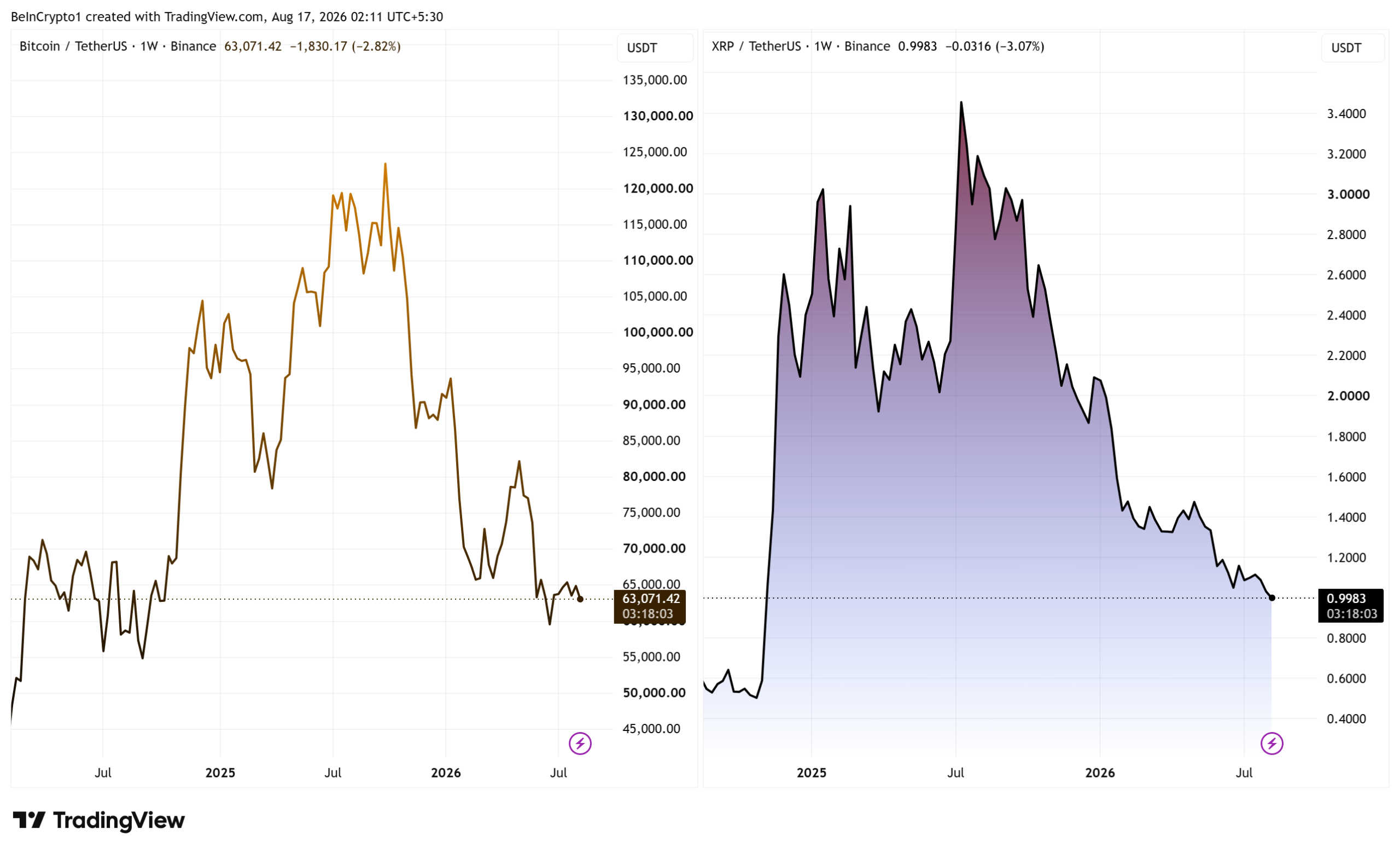
Bitcoin (BTC) trades at half its record price. XRP (XRP) has lost roughly 73% from its own peak. Four events this week could decide whether either one escapes that range.
Both drifted lower again over the past seven days. Washington delivers a presidential crypto meeting, Federal Reserve minutes and a debut regulator panel. Japan adds two data prints.

1. Trump Meets Crypto Leaders at the White House on Wednesday
Trump is expected to attend in person. The heads of both US market regulators are also expected. Paul Atkins runs the Securities and Exchange Commission (SEC). Michael Selig runs the Commodity Futures Trading Commission (CFTC).
Executives from Coinbase, Ripple, Kalshi and Polymarket are on the guest list. The last two run prediction markets, where users trade contracts on real-world outcomes.
One stalled bill sits under the whole agenda. The Digital Asset Market Clarity Act would settle which regulator polices which token.
The House passed it on July 17, 2025, by 294 votes to 134. No Republican opposed it, and 78 Democrats backed it.
That support has not carried to the Senate. The bill needs 60 votes there. Lawmakers broke for the August recess without scheduling one, pushing the decision to September.
XRP has tracked the bill more closely than any other major token. Its record high of $3.65 landed roughly ten minutes after that House vote.
The token has fallen about 73% since. It now holds the $1 level by a single cent.
2. Fed Minutes Could Reset the Rate Path for Bitcoin and XRP
Minutes from the July meeting arrive at 2 p.m. ET on Wednesday. They cover the session where the Fed left rates at 3.5% to 3.75%.
The vote was 9-3. Three officials wanted a quarter-point increase instead, which is a rare split for a single meeting.
Traders are not convinced they will get one. Fed funds futures put the odds of a September hike near 32%.

Minutes showing wider support for tightening would move that number. Higher rates pull money out of risky assets, and crypto sits at the far end of that queue.
A second read follows on Friday. S&P Global publishes flash surveys of US business activity at 9.45 a.m. ET, meaning early estimates built on partial responses.
Weak numbers would revive slowdown talk. Strong ones would back whatever hawkish signal the minutes carry.
3. The CFTC Opens Its First Crypto Panel on Thursday
The agency’s Innovation Advisory Committee meets at 1 p.m. ET in Washington. The session streams live and is the committee’s first.
Its 35-member roster explains the stakes. Crypto chiefs from Coinbase, Ripple, Kraken and Gemini sit beside the heads of CME Group, Nasdaq and Intercontinental Exchange.
Ripple boss Brad Garlinghouse holds one of those seats. How the panel discusses digital commodities therefore feeds straight into XRP’s status.
That label is not casual. The SEC and CFTC sorted crypto into five buckets in March, and digital commodities was one of them. Tokens in that bucket answer to the CFTC rather than the SEC.
“For far too long, American builders, innovators, and entrepreneurs have awaited clear guidance on the status of crypto assets under the federal securities and commodity laws,” read an excerpt in the statement, citing Michael Selig, CFTC Chairman.
Both agencies acted without waiting for Congress. That precedent matters now, because it shows regulators can move while a bill sits still.
Bitcoin has less riding on Thursday. Regulators have treated it as a commodity for years, but the stakes are higher for XRP.
4. Japan Bookends the Week With Growth and Inflation Data
Japan reports second-quarter growth on Monday. ING expects 0.5% against the previous quarter.
July inflation follows on Friday. ING forecasts 2.0%, which would put Japan back at its central bank’s target.
Both prints feed one decision. The Bank of Japan raised its rate to 1% in June, the highest since 1995. It meets again on September 18.
Traders price roughly 80% odds of another hike, according to Reuters. That is more than double the odds they give the Fed.
Higher Japanese rates lift the yen. That squeezes the carry trade, where investors borrow cheap yen and buy higher-returning assets elsewhere.
The pattern has bitten before. Bitcoin fell between 20% and 31% after each recent BOJ hike.
Not everyone still buys the link. Apollo Global Management argues the old rule tying the yen to rate gaps has broken down. Bitcoin barely moved this month when the yen jumped more than 5% in two sessions.
What Would Have to Break
Bitcoin trades near $63,000, about half its October record of $126,080. XRP slipped below $1.00, sixth by market value. Both slipped over the past week. Bitcoin lost 3.2% and XRP 3.8%.

Neither has escaped its range in weeks. Four catalysts now have five sessions to hand traders a reason.
The post 4 Reasons This Could Be the Most Important Week of August for Bitcoin and XRP appeared first on BeInCrypto.
Jeff Booth spent about 15,000 hours trying to kill Bitcoin. He failed. The Canadian entrepreneur says the attempt left him more convinced the network cannot be broken.
Booth is a founding partner at Ego Death Capital and a director at Core Scientific. He wrote the 2020 book The Price of Tomorrow. His conclusion is that he was the weak link, not the code.
Why a 20-Year Tech Veteran Set Out to Kill Bitcoin
Booth did not start as a believer. He co-founded the online building supplier BuildDirect in 1999 and ran it for 18 years. When his book landed in January 2020, Bitcoin (BTC) got a single paragraph.
The problem was not the math. It was the power he expected to come after it. At that stage he doubted the network could stay decentralized and secure against a determined state.
So he tried to break it. He ran a node. He modeled the attacks a government, a rival, or a large miner would use.
“I spent about 15,000 hours trying to say, ‘How do I kill Bitcoin? What does that look like?’” Booth said in an interview with the Wolf of All Streets, Scott Melker.
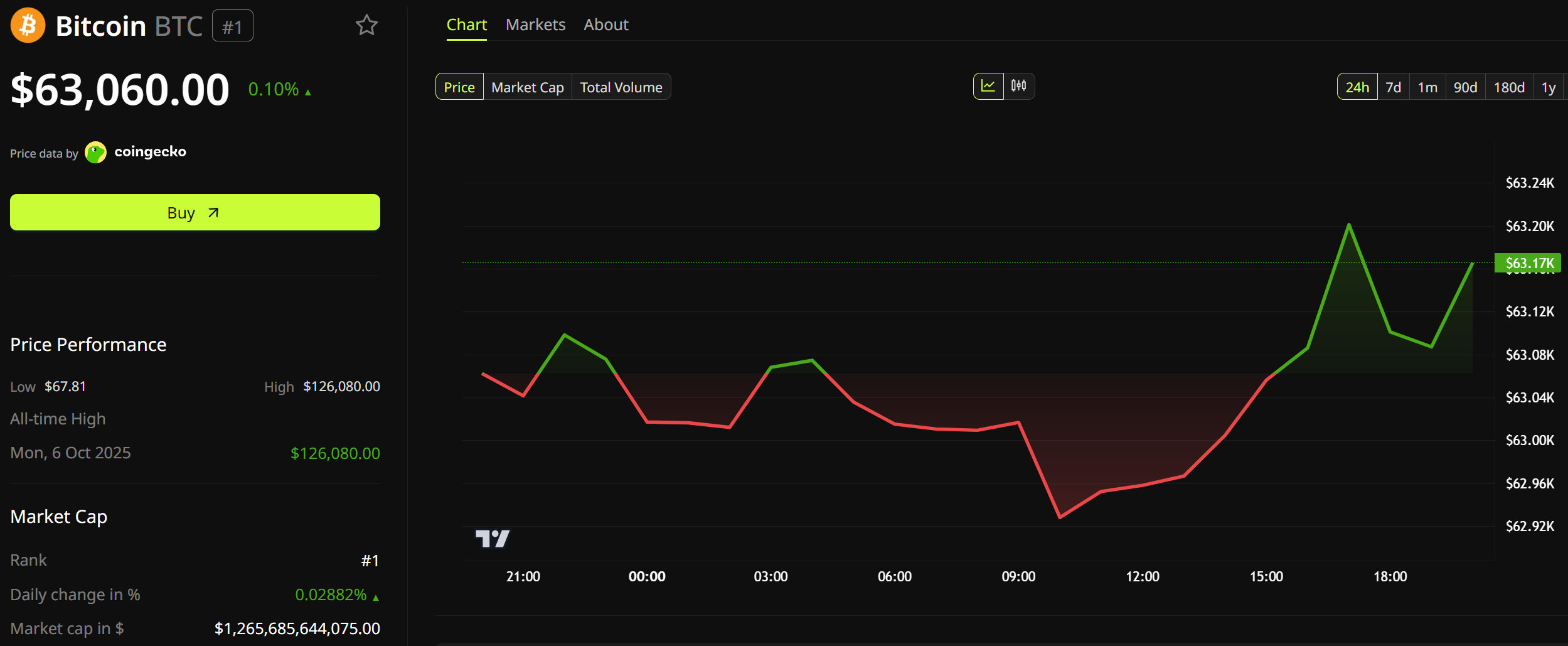
The timing of that verdict matters. BTC currently trades near $63,000 with a market value around $1.27 trillion. That is roughly 50% below the record $126,198 it set on October 6, 2025.

Booth argues price and security are separate questions. One moves daily. The other has not moved at all.
What 15,000 Hours of Attacks Actually Found
Every scenario ran into the same wall. Blocks kept arriving on schedule, and each one cost real energy to produce.
“…every 10 minutes there was a new block bounded by energy decentralized and secure and it would emerge exactly like the internet…”
The comparison is deliberate. Early internet protocols stayed narrow, so anyone could build on top without asking permission. Booth reads Bitcoin the same way.
The rulebook backs him up on one point. Roughly 24,000 reachable nodes enforce the same consensus rules today, and the 21 million supply cap survived another public round of debate this month after Adam Back rejected a proposal to lift it.
“Do I think Bitcoin is decentralized and secure right now? Yes, I do.”
His money follows the conclusion. Booth helped found Ego Death Capital in 2022, a fund that backs software companies built on Bitcoin rather than miners or tokens.
It closed a $100 million second fund in July 2025. He has also sat on the board of Core Scientific since the mining firm left Chapter 11 in January 2024.
The Risks Booth Still Names
He does not claim the network is finished or flawless.
“Mining pools are a risk. Centralization mining is a risk.”
Both risks are measurable. Three pools produced about 61% of all blocks over the past month. Roughly 80% of reachable nodes run one client, Bitcoin Core, which leaves a single codebase carrying most of the network.
Booth expects competition to grind those numbers down without any protocol change. His argument is that expensive miners simply go bust.
The math supports the pressure. Riot Platforms spent $90,631 per coin last quarter once depreciation is counted, far above the current market price. Hashrate has fallen about 22% from its October 2025 peak as miners leave the network or rent their power to AI tenants instead.
Core Scientific shows the shift in one line of accounts. It drew 83% of second-quarter revenue from colocation and only 13% from mining its own coins.
Where Other Voices Disagree
Not everyone reads the same data the same way. Venture investor Chamath Palihapitiya has called the energy shift toward AI a structural problem for miners rather than a healthy cleanout. Coinbase CEO Brian Armstrong disputes that reading.
The governance fight is also live rather than settled. A group of developers pushed BIP-110, a temporary softfork that would have forced blocks to signal support or be rejected. The chain split at block 961,632 on August 8.
That breakaway BIP-110 fork has since found four blocks. Bitcoin has found more than 1,100. Mining pool OCEAN still runs a separate endpoint for the minority chain, carrying 1.15 exahashes per second against 19.22 on its main endpoint.
Users have taken real losses in the meantime. The Coldcard wallet hack and a BTCPay Server exploit both drained funds this summer. Neither touched consensus, which is the distinction Booth keeps drawing.
That leaves one failure case in his framework, and it is human rather than technical. Booth argues Bitcoin only fails if people collectively keep pouring their time and money into the system he says takes from them.
He still expects broad adoption, and he refuses to put a date on it.
“I think it’s inevitable. It’s just a matter of timeline.”
The next test arrives soon. BIP-110 backers have floated September 1 for a proof-of-work change and a separate coin. Whether anyone follows them will say more about Bitcoin’s governance than 15,000 hours of theory ever could.
The post 20-Year Tech Veteran Spent 15,000 Hours Trying to Kill Bitcoin, What Did He Find? appeared first on BeInCrypto.
A meme coin trader turned $120 into more than $205,000 within hours, according to on-chain data documented by the tracking account Lookonchain.
The story went viral, though most of that gain still exists only on paper. The trader might not be able to even sell the coins to realize the massive profit.
How the Trade Actually Unfolded
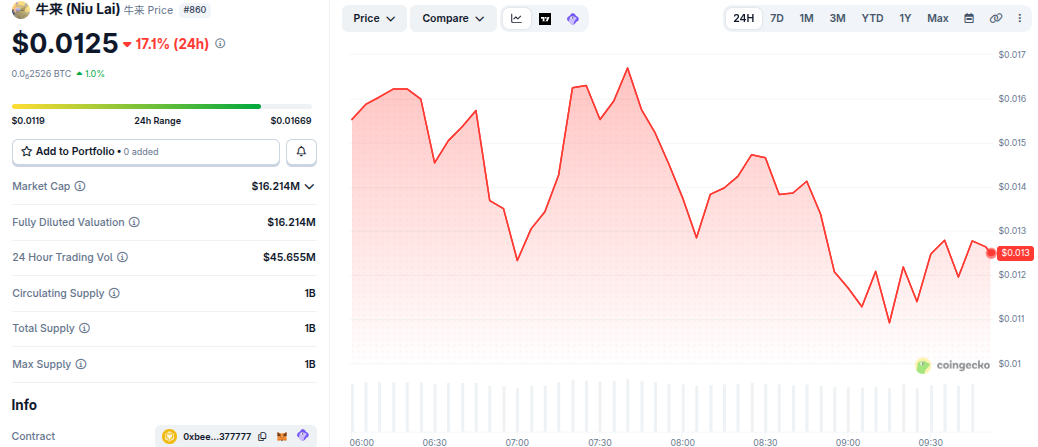
The meme coin is called Niu Lai. It runs on BNB Chain and draws from a low-budget Chinese animated film that went viral. The purchase landed at exactly the right moment. She acquired 19.1 million tokens for $120 when the project’s market cap was barely $6,270.
A partial sale followed shortly after. She liquidated 9.1 million tokens for roughly $25,900, locking in a real gain. The rest remains unsold. She holds 10 million tokens valued at nearly $180,200, a figure that fluctuates with every price move..
The combined return exceeds 822x the initial investment, totaling $205,800 across realized and unrealized positions. The trader identified herself on X as @saracrypto_eth. She explained that years of trading meme coins taught her to spot where money is flowing.
“Yes, that ‘trader’ is me. for a lot of people, making $200k sounds absolutely insane. but when you’ve spent enough time in this space, you start to understand where the money flows and how the game is played. that’s when you realize how many opportunities there really are…,” Sarah Milady said on X.
Her personal story amplified the reach. She described working double shifts at a restaurant years ago and now supporting her retired parents.
Follow us on X to get the latest news as it happens.

What These Viral Stories Never Show
Token context explains the speed. Niu Lai launched in mid-August 2026, riding the film’s viral momentum across social platforms. The climb proved vertiginous. Market cap jumped from a few thousand dollars to peak near $20 million, according to CoinGecko data.
What these stories omit deserves equal attention. The vast majority of such tokens lose over 90% of their value within days or weeks. Risks extend well beyond volatility.
Liquidity problems, potential rug pulls, and price manipulation form standard features of the territory.
“100% insider or dev wallet. For every $120 lotto ticket like this, 999 people get rekt providing their exit liquidity,” one user noted.
Selling presents its own difficulty. Unwinding large positions without collapsing the market becomes nearly impossible in tokens with thin depth. That limitation applies directly here. The $180,200 she still holds could evaporate within minutes if the price collapses.
Survivorship bias completes the picture. Nobody posts screenshots of trades that went wrong, so only extraordinary wins circulate publicly.
For most participants, a total loss of capital remains the most likely outcome.
Subscribe to our YouTube channel to watch leaders and journalists provide expert insights.
The post A Meme Coin Trader Turned $120 Into $205,000: Luck or Strategy? appeared first on BeInCrypto.

A new academic study has identified 65,340 high-risk address misuse cases on Ethereum and BNB Chain, linked to about $574.8 million in lost crypto.
The research shows how ordinary mistakes involving testnet addresses, reused contract addresses, and exposed private keys can become permanent losses, while newer tools such as EIP-7702 give attackers another way to exploit them.
Address Mistakes Account for Millions in Losses
The study, led by researchers from Sun Yat-sen University, Zhejiang University, Peking University, and other institutions, describes two forms of address misuse: Contract Account (CA) Misuse and Externally Owned Account (EOA) Misuse.
CA Misuse happens when users treat a non-contract address as though a smart contract exists there. The researchers found 49,344 such cases, involving 22,738.41 ETH and 8,681.41 BNB in losses.
One example involved a Uniswap V2 router address widely used on Ethereum’s Sepolia testnet. The address had more than 102,000 views across Stack Exchange posts and was used frequently for testing, but on Ethereum mainnet, it had no contract code at the time, yet users still sent function calls and ETH to it. The transactions succeeded as simple transfers, leaving the funds trapped.
EOA Misuse accounted for another 15,996 cases, which involved addresses whose private keys had been exposed, often through public code repositories or developer Q&A sites. The study found losses of 104,224.53 ETH and 9,045.29 BNB.
The researchers examined more than 10 million candidate addresses and 16 million exposed private keys, then analyzed about 2.5 million transactions on Ethereum and BSC. Manual checks gave the detection system an overall precision of 99.11%.
The study also found that attackers actively exploit these mistakes. In 469 CA misuse cases, attackers used cross-chain address reuse to place malicious contracts at addresses where users had already trapped funds, resulting in 3,446.37 ETH and 431.79 BNB in losses.
Another 17,270 cases involved EIP-7702, which lets an externally owned account delegate execution to a smart contract. The researchers found attackers using the mechanism to control exposed accounts and automatically redirect incoming funds.
Why Familiar Addresses Can Become a Trap
The findings add a different type of risk to the security problems already affecting crypto this year. A Blockaid report published on August 1 found $1.1 billion stolen across 212 incidents during the first half of 2026, with three separate attacks that caused more than $35 million in losses occurring in one day in late July.
The address misuse study points to a less obvious problem: a transaction can succeed while still producing a loss. Users may assume that a successful transaction means they interacted with the intended contract, even when the address has no code on that particular network.
According to the researchers, people ought to check the network before using an address and rely on official project documentation while keeping test accounts away from production funds.
They also called for wallets to warn users when an address has no contract code on the current chain or has a known exposed private key.
The post Study Finds $575M Lost Through Ethereum and BNB Chain Address Errors appeared first on CryptoPotato.

Russia also carried out an intense barrage against Ukraine over the weekend, killing two people at a steel plant in Kryvyi Rih, which is the hometown of President Volodymyr Zelenskyy. The plant, ArcelorMittal Kryvyi Rih, posted about the incident on Telegram, sharing that 13 employees were injured.
“As a result of the attack, the main production facilities of energy and blast furnace production were damaged and the production processes of the plant were partially stopped,” the company wrote.
Russian attacks also sparked fires throughout Kyiv, wounding six people. In total, at least seven people were killed and 51 injured in Russian strikes over the weekend, according to casualty figures reported by regional Ukrainian authorities.
“Wherever the Russians can reach with their ballistic missiles, they strike civilian infrastructure,” Zelenskyy said on X in the aftermath of the attacks.
A NATO jet on an air policing mission also shot down an unidentified drone in Romanian airspace on Saturday—the fourth unmanned aircraft shot down over the country this year, Romania’s defense ministry said Sunday.
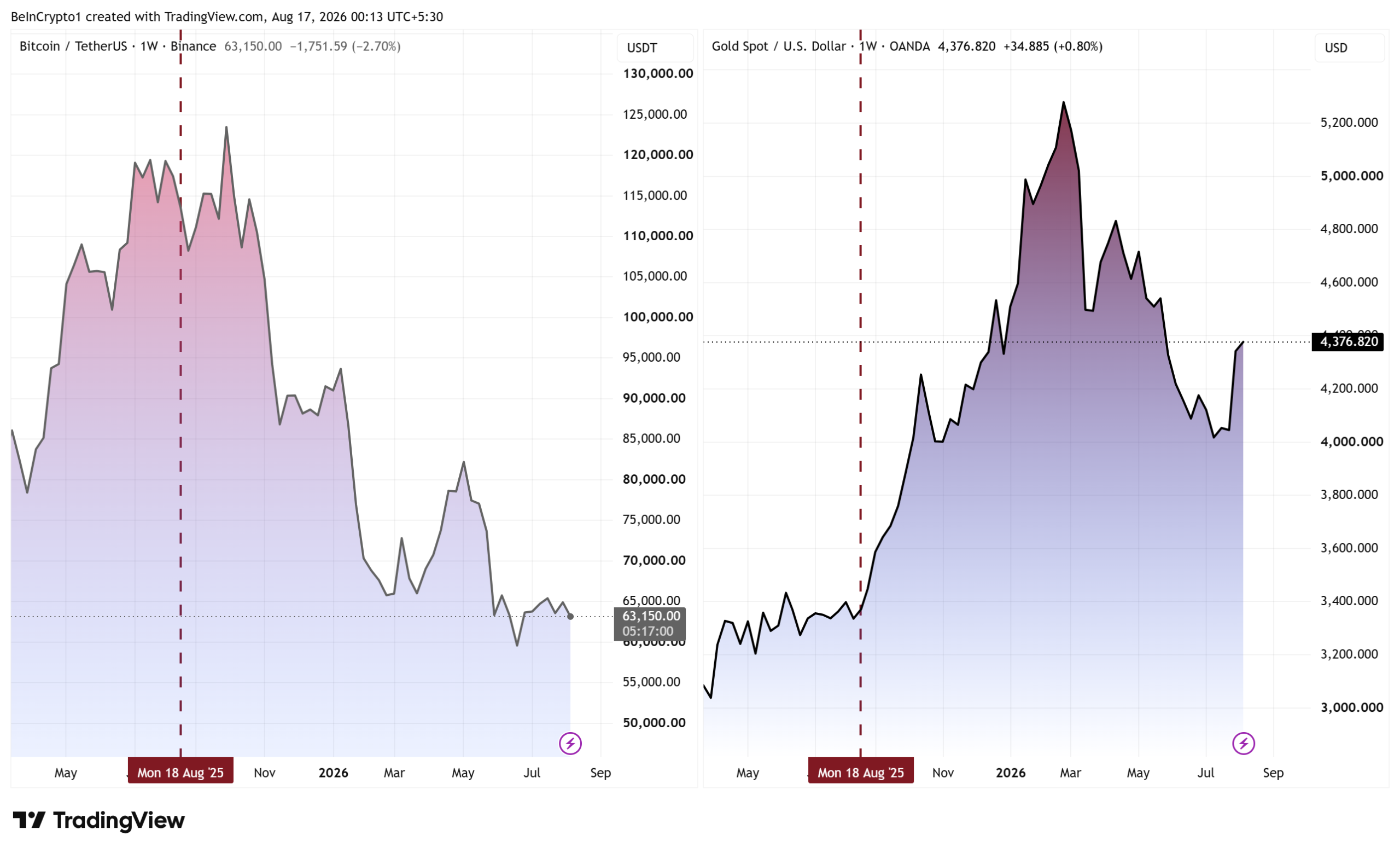
Global bond yields have reached levels last seen in July 2008. Bitcoin (BTC) did not exist then. The asset has never traded through borrowing costs this high, and it is not benefiting now.
Gold rose 32% over the past year. Bitcoin fell 46%. Investors who expected a debt squeeze to lift a scarce asset backed the wrong one.

Bond Yields Return to a Level Bitcoin Has Never Seen
A bond yield is what a government pays to borrow. Those costs are now the heaviest in almost two decades.
A Bloomberg gauge of long-dated government debt hit its highest yield since July 2008 in May. It tracks sovereign bonds maturing in 10 years or more.
Bitcoin’s whitepaper appeared that October. The first block followed on January 3, 2009, six months after the peak.
Satoshi Nakamoto stamped that block with a newspaper line.
“The Times 03/Jan/2009 Chancellor on brink of second bailout for banks,” source, genesis block.
Bitcoin was built as an answer to failing government finances. Those finances are strained again. This time the answer is the asset falling.
The move is global, though not uniform. UK 10-year gilts pay 5.05%, the highest of the major markets. Germany sits at 3.21%, a high only since 2011.
Japan pays 2.88% after decades pinned near zero.

“We’re seeing a broader repricing of duration driven by fiscal realities, persistent inflation risks and some political uncertainty,” Bloomberg reported, citing Barclays strategist Patrick Coffey, who named the driver when the gauge first broke out.
Why Elevated Real Yields Cap Bitcoin
Compare the two eras directly. The US 10-year paid 2.46% on January 2, 2009, per Treasury records. It now pays 4.69%. The long end moved further. The 30-year paid 2.83% in Bitcoin’s first week.
The Treasury sold $25 billion of the same bond on August 13 at 5.216%, the highest since 2001.
Demand was soft, part of the global bond selloff. Bids covered the auction 2.39 times against a 2.43 average. Dealers absorbed 11.6% instead of the usual 10.6%.
Real yields make the squeeze concrete. A real yield is what a bond pays after inflation. The 10-year real yield reached 2.41% on August 14. Two years earlier it paid 1.77%.
That is the bar Bitcoin has to clear. Investors can now beat inflation using government debt and take almost no risk. Bitcoin pays nothing. BTC traded at $63,072 with a market value of $1.27 trillion, down 46% in a year.

Foreign yields bite the same way. Japanese and European investors can now earn at home, which shrinks the global risk pool crypto draws on. Japanese government bond losses show the strain.
What Would Flip the Setup
Cause decides the outcome. Yields driven by growth punish Bitcoin. Yields driven by doubt over solvency should favor a scarce alternative.
Gold has taken that trade. The metal traded for $4,376 as of this writing, after a 32% year, even as U.S. debt interest costs keep climbing.
So watch auctions, not charts. Stronger demand for long-dated debt would ease the pressure on the Bitcoin price.
Until then the test is simple. Bitcoin was designed for a moment like this. It has never had to prove that at these yields.
The post Bitcoin Has Never Faced Global Bond Yields This High Since It Was Born appeared first on BeInCrypto.
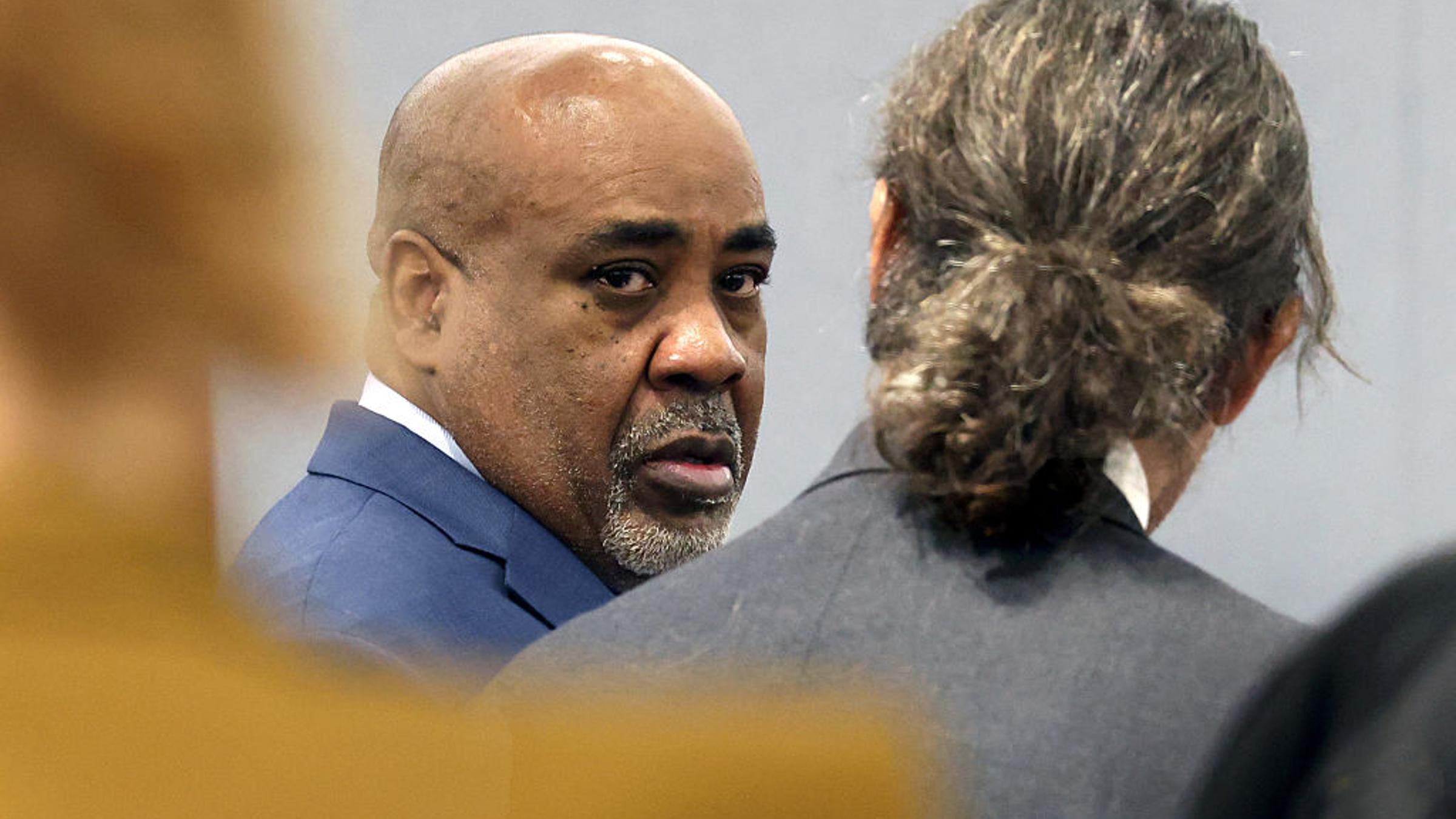
Chief Deputy District Attorney Marc DiGiacomo told the court: “Had he decided to never write the book, he would not probably have ever been prosecuted for the crime.”
Davis pleaded not guilty; however, if he is convicted, he could face life in prison without parole.
What to know about the key players in the courtroom
The jury, which was selected last week, consists of six men and 10 women—four of whom are alternates.
Davis’s defense is led by Michael Sanft, who took the case pro bono, and the prosecution is led by DiGiacomo.
A partial witness list was shared with potential jurors last week. It included Knight, who is serving a 28-year prison sentence in California after pleading “no contest” to voluntary manslaughter for fatally striking the owner of Heavyweight Records, Terry Carter, with his car in 2015. He told ABC News last week that he would not testify.
“This trial has nothing to do with me and if somebody brings me there, it’s gonna hurt whoever brings me there. I promise you that,” Knight said in the interview.

Kevin O’Connell Had to Pick Between Competitive and Rebuild

SafePal data breach impacts 39,798 customers, stolen info for sale

Games Inbox: Should Call Of Duty become free-to-play?


-

 Fashion2 days ago
Weekend Open Thread: Ann Taylor
-
 NewsBeat5 days ago
Communication cards help banking customers access services or report scams
-
 Business6 days ago
Oil Price Today (August 11): Crude oil rises to $88 after Trump’s compensation demand dents Hormuz opening. Here’s why
-

 Crypto World6 days ago
Revolut wins French banking licence, creates second EU banking hub
-
 Crypto World6 days ago
Why Did Nvidia Stock Fall on Monday Despite a $500 Billion Wall Street AI Deal?
-
 Sports3 days ago
This U.S. Amateur is a glimpse into golf’s future in more ways than you think
-

 Sports2 days ago
Birmingham 2026: Day 6 Timetable for Irish Athletes
-
 NewsBeat2 days ago
Myanmar says over 300,000 Rohingya refugees verified for repatriation as exodus enters ninth year
-

 Politics2 days ago
SEQ Code: The Three Letter Boarding Pass Code That Could Give You The Worst Seat
-
 Crypto World6 days ago
Grayscale quietly drops Cardano, Polkadot and Hedera ETF plans
-
 Entertainment5 days ago
Keke Palmer Subtly Hints At Sean Evans Drama With Cryptic Post
-

 Fashion6 days ago
Can You Wear Double Cloth Gauze Clothing To Your Office?
-
 Entertainment6 days ago
57 Years Later, the Best Sitcom Ever Made Still Deserves a Reboot
-

 Fashion5 days ago
Claire Life: Kicking Off MVAAFF With the C Suite Luncheon Featuring Phylicia Rashad, Letoya Luckett, and More!
-

 Tech5 days ago
Zoom Screen-Sharing Bug Let People Fully Take Over Other Devices On A Call
-
 Crypto World6 days ago
Hormuz Nerves Cost Bitcoin $65,000 Mark Despite Solid Institutional Flows
-

 Politics5 days ago
In the Chris Kaba case, the police watchdog capitulated to the mob
-

 Sports4 days ago
DeQuan Jones in ‘high spirits’ after successful leg surgery
-

 Crypto World6 days ago
Bitcoin's BIP Editors Remove Luke Dashjr Two Days After BIP-110 Fork Stalled
-

 Fashion6 days ago
How to Mix Diamond Rings With Gold & Silver Jewelry
You must be logged in to post a comment Login