
Crypto World
Why bitcoin’s $48 billion in futures open interest looks like a powder keg?



Volume, meanwhile, is dead simple as it measures the number of contracts that changed hands during a given period. Think of it as measuring how many times the front door of that exclusive club opened and closed over a given period, regardless of who stayed. It thus represents the degree of churn or liquidity available to manage positions.
So, the latest case of volume falling far behind OI is like a large club with a tiny exit door. What happens if a large number of people try to rush out?
Because overall investor positioning is massive, a sudden catalyst could trigger a wave of contract closures, such as forced liquidations due to margin shortages. Without the underlying daily volume to provide liquidity, the market may not be able to absorb the rush smoothly, leading to volatile, exaggerated price swings.
“The risk is mechanical. When open interest towers over daily volume, liquidations meet little resting flow to absorb them, and adverse moves extend further than they otherwise would. Traders have added substantial risk, most of it long, into a market that shows no matching demand,” blockchain analytics firm Glassnode said in a report.
The risk of an exaggerated move is particularly likely to the downside because of weakening demand and a lack of resting bids or buy orders at lower price levels.



Greenlane Holdings’ BERA-focused digital asset treasury has fallen to $16.4 million in fair value at the end of the second quarter, leaving the portfolio about 76.6% below its $70 million cost basis.
Summary
- Greenlane’s BERA treasury was valued at $16.4 million at the end of Q2, down 76.6% from its $70 million cost basis.
- The company held 81.3 million BERA and equivalent tokens as of June 30, up from 77.7 million at the end of March.
- Greenlane recorded a $19.1 million digital asset fair value loss and a $24.8 million net loss for the quarter.
- BERA has fallen 75.9% year to date and was trading near $0.146.
According to Greenlane’s latest regulatory filing, the Nasdaq-listed company held about 81.3 million BERA and BERA-equivalent tokens as of June 30, up from roughly 77.7 million at the end of the first quarter despite a continued decline in the token’s market price.
The difference between the portfolio’s acquisition cost and quarter-end fair value stood at about $53.8 million. Greenlane recorded a $19.1 million noncash fair-value loss on its digital assets during the three months through June, which contributed to a net loss of $24.8 million for the period.
At the same time, the company continued putting its holdings to work across the Berachain ecosystem. Its digital asset operations generated about $309,000 in staking and yield revenue during the quarter, providing income in BERA and other assets while the value of the underlying treasury declined.
Greenlane’s exposure has increased since the start of the year. The company reported 77.7 million BERA and equivalent tokens at the end of March, meaning its holdings grew by about 3.6 million tokens during the second quarter.
Greenlane’s BERA treasury has grown despite falling valuations
Greenlane entered the crypto treasury business in October 2025, transforming a company previously known mainly for cannabis accessories and consumer products into a publicly traded holder of Berachain’s native token.
The strategy followed a $110.7 million private placement backed by digital asset investors. As previously reported by crypto.news, the October 2025 financing was led by Polychain Capital, with participation from Blockchain.com, Kraken, North Rock Digital, CitizenX and dao5.
Greenlane said at the time that proceeds would support its BERA treasury, with tokens acquired through open-market and over-the-counter purchases. The company also established BeraStrategy as its digital asset management operation as part of the transaction.
By the end of February, Greenlane’s holdings consisted of its initial 54.2 million BERA position, another 14.9 million tokens bought in the open market and additional BERA obtained through staking, validator participation and structured token trading agreements, according to company disclosures.
Greenlane’s first-quarter filing later showed how quickly falling BERA prices were affecting the strategy. For the three months ended March 31, the company reported a net loss of $18.2 million, while its balance sheet had become heavily tied to digital assets, cash and dollar-pegged stablecoins.
Management said in that filing that its financial condition and operating results had become significantly influenced by digital asset market conditions, particularly the fair value of its BERA holdings.
The company has continued its legacy lifestyle accessories business through vapor.com and related channels, although Greenlane said the operation was reduced after its 2025 strategy change. Warehouse operations were substantially exited, and the remaining commerce business moved toward an asset-light drop-ship model.
BERA price decline has cut into Greenlane’s holdings
The valuation losses have come as BERA continued a steep decline from levels reached earlier in 2026.
Berachain was trading at about $0.146 at the time of writing, according to CoinGecko, leaving the token down roughly 75.9% since the start of the year. BERA had briefly traded above $1.20 earlier in 2026 before falling toward the $0.15 area.
The decline followed a period of extreme volatility in February. BERA briefly surged as high as $1.43 after an unusual imbalance in perpetual futures markets triggered heavy short liquidations.
During that move, BERA rallied 82% within 24 hours to about $0.94, while futures volume jumped 632% to $2.94 billion and open interest increased 102% to $142.8 million. Funding rates had swung between deeply negative and positive levels as traders repositioned after a Feb. 6 token unlock involving 63.75 million BERA.
The rally did not develop into a sustained recovery. By July 15, BERA was trading around $0.187, with the token already down more than 30% over the preceding month. Its price has since moved closer to $0.15, further reducing the dollar value of large BERA-denominated positions such as Greenlane’s treasury.
BERA’s current price also sits far below levels recorded soon after Berachain launched in February 2025. Following listings across several major exchanges, including Crypto.com, Upbit, MEXC and Bithumb, BERA reached an all-time high near $15 before beginning a prolonged decline.
Token supply has also increased since the network’s early trading period. A May 2025 Boyco Vaults release brought additional assets and BERA into circulation, with the token falling 21% over a seven-day period around the event. The release involved $2.7 billion in locked assets and included about 2% of BERA’s total supply.
Greenlane is earning yield from its Berachain position
While Greenlane’s treasury valuation has fallen, the company’s strategy involves more than holding BERA on its balance sheet.
Greenlane participates in staking, validator operations, liquidity provisioning, and other Berachain activities designed to generate additional tokens or yield. Those activities accounted for the $309,000 in digital asset segment revenue reported for the second quarter.
Berachain uses a Proof-of-Liquidity model that links network incentives to liquidity supplied across its decentralized finance ecosystem. BERA serves as the network’s native gas token, while BGT is used for governance and HONEY operates as its collateral-backed stablecoin.
Changes to that system have also expanded the role of BERA as a yield-producing asset. A Proof-of-Liquidity upgrade proposed in 2025 directed one-third of protocol incentives toward a BERA rewards model, creating a protocol-level source of yield for token holders.
The network had expanded its rewards beyond Berachain’s BEX pools in March 2025, allowing additional applications and vaults to participate in Proof-of-Liquidity incentives.
Greenlane’s strategy uses similar network mechanics to add to its token holdings over time. Its February disclosure said the treasury had accumulated BERA not only through purchases but also through staking and validator participation, while the company cautioned that protocol reward rates could change with network conditions, validator changes, reward schedules, and market volatility.
As of June 30, those activities had helped increase Greenlane’s BERA and BERA-equivalent position to 81.3 million tokens even as the fair value of the portfolio fell to $16.4 million.


Capital B purchased another five Bitcoin for €280,000, lifting its strategic Bitcoin treasury to 3,145 BTC as the Euronext Growth Paris-listed company continued using equity issuance to fund its accumulation strategy.
Summary
- Capital B bought five Bitcoin for €280,000, lifting its strategic treasury holdings to 3,145 BTC.
- Capital B’s Bitcoin reserve cost €284.2 million but carried a reported €170.9 million net value.
- The company reported 2.14% year-to-date BTC Yield, a treasury metric rather than traditional investment yield.
- Blockstream Capital Partners converted 14.2 million OCA B-01 instruments into 28.7 million ordinary shares Monday.
- Capital B issued 647,110 new shares through its TOBAM program, raising approximately €301,460 in capital.
The Aug. 17 release shows the latest Bitcoin was acquired at an average €55,882 each. Capital B now reports a total acquisition cost of €284.2 million, or €90,352 per BTC.
Capital B raises Bitcoin treasury to 3,145 BTC
The purchase followed €301,460.25 of capital increases completed through Capital B’s ATM-type agreement with French asset manager TOBAM. The company issued 647,110 ordinary shares at an average rounded price of €0.47 between July 27 and Aug. 7.
That issuance price represented a 3.52% premium to Capital B’s Aug. 14 closing price. Euronext shows the stock closed Friday at €0.454, down 2.72% for the session.
The company’s latest five-BTC acquisition follows a much larger accumulation earlier this year. As crypto.news previously reported,the company deployed newly raised capital to purchase 192 BTC in May, taking holdings to 3,135 BTC at the time.
Bitcoin reserve remains well below its acquisition cost
The firm reported a €170.9 million net asset value for its 3,145-BTC strategic reserve, compared with the €284.2 million acquisition cost. That leaves the company-calculated BTC value about €113.3 million below cost at the reference price used in Monday’s disclosure.
The company calculates this figure using Bitcoin’s closing price on the trading day before each press release. It is therefore a snapshot of the Bitcoin reserve rather than the net asset value of the entire company.
Capital B also disclosed another 61 BTC held for operational purposes. Those coins are segregated from the treasury reserve and excluded from its published Bitcoin strategy performance indicators.
Capital B reports 2.14% BTC Yield
The company reported a year-to-date “BTC Yield” of 2.14%, alongside a BTC Gain of 60.3 BTC and a BTC € Gain of about €3.28 million. Quarter-to-date BTC Yield stood at 0.28%. Its BTC per fully diluted share remained at 736.4 satoshis, unchanged from Aug. 3.
Those figures require a caveat. Capital B states that “BTC Yield” is not equivalent to yield in the traditional financial context and does not measure investment returns, operating income or returns generated by its Bitcoin holdings. The metric instead tracks changes in Bitcoin held per fully diluted share.
Blockstream completes OCA B-01 conversion
The company also confirmed that Blockstream Capital Partners completed the conversion of 14,195,352 OCA B-01 instruments into 28,687,362 ordinary shares at a rounded conversion price of €0.495. No OCA B-01 instruments now remain outstanding.
Following the transaction, Blockstream Capital Partners holds 71.8 million ordinary shares, representing 21.74% of Capital B’s issued capital. Its stake is 35.63% on the company’s stated fully diluted basis.
The conversion comes after shareholders approved more than €100 billion in financing capacity in June to support further Bitcoin treasury expansion. Capital B says its longer-term strategy is focused on raising Bitcoin per fully diluted share rather than merely increasing its absolute BTC balance.
In addition, Capital B’s continued accumulation contrasts with the recent actions of Strategy, the world’s largest corporate Bitcoin holder.
Strategy sold a combined 3,328 BTC across two weeks ending Aug. 9, raising about $213.3 million. The company used proceeds for preferred-stock dividends and STRC share repurchases rather than abandoning its broader Bitcoin treasury strategy.
As crypto.news reported, Strategy recently sold $108.6 million of Bitcoin to fund STRC repurchases, showing how some treasury companies are beginning to use Bitcoin more actively in capital management.
Meanwhile, Capital B retains broad financing authority for additional Bitcoin purchases. Its June shareholder vote authorized up to €5 billion in capital increases and €100 billion in credit instruments, although authorization does not mean those amounts will necessarily be issued.
The next treasury disclosures will show whether new financing can increase Bitcoin per diluted share while the market value of the existing reserve remains below its historical acquisition cost.


Duquesne Family Office has disclosed a $23 million position in Hyperliquid Strategies Inc., giving Stanley Druckenmiller’s investment office indirect exposure to HYPE through the Nasdaq-listed digital asset treasury company.
Summary
- Duquesne Family Office disclosed a new $23 million stake in Hyperliquid Strategies.
- The Nasdaq listed company holds millions of HYPE tokens as part of its digital asset treasury strategy.
- Duquesne’s former partner Kevin Warsh became Federal Reserve chairman in May 2026.
- Warsh disclosed more than $100 million in assets before his confirmation.
The SEC filing for the second quarter of 2026 showed Duquesne held shares of Hyperliquid Strategies, which trades under the ticker PURR, as of June 30, with the position appearing in the family office’s portfolio for the first time.
The disclosure adds Duquesne to the institutional investors gaining exposure to Hyperliquid through publicly traded shares instead of purchasing the protocol’s HYPE token directly. Hyperliquid Strategies operates as a digital asset treasury company built around accumulating and managing HYPE.
Fintel data based on the filing also lists PURR as a new Duquesne position, accounting for roughly 0.44% of the investment manager’s reported portfolio.
Duquesne adds Hyperliquid Strategies to its portfolio
Hyperliquid Strategies has built one of the largest corporate HYPE holdings since establishing its digital asset treasury business.
As crypto.news previously reported in February, the Nasdaq-listed company purchased another 5 million HYPE for about $129.5 million at an average price of $25.90 per token. The acquisition increased its holdings at the time to 17.6 million HYPE while leaving the company with about $125 million in cash.
Its holdings later increased substantially. Artemis data cited in a June treasury report showed Hyperliquid Strategies controlled about 23.7 million HYPE and was sitting on more than $1.1 billion in unrealized gains at the time.
The report found HYPE-focused treasury companies were among the few major digital asset treasury groups still carrying sizeable paper profits during the June market downturn. Bitcoin, Ether and Solana treasury companies, by comparison, were recording substantial unrealized losses as prices fell.
Duquesne’s $23 million PURR holding gives the family office exposure to that treasury structure through a regulated U.S. equity. The 13F does not show whether the firm bought the shares in a single transaction or accumulated them at different points during the quarter, since the filing only reports holdings as of June 30.
Form 13F reports are required from institutional investment managers that exercise investment discretion over at least $100 million in certain securities. The disclosures provide a quarterly snapshot of reportable holdings but do not show positions purchased or sold after the reporting date.
Hyperliquid Strategies has accumulated millions of HYPE
Institutional interest in Hyperliquid Strategies came as HYPE recorded large price swings during the second quarter.
HYPE reached a record of about $73.7 on June 1 after gaining more than 70% over the preceding month. At the time, Hyperliquid Strategies was already one of the largest publicly identified corporate holders of the token.
Demand for HYPE had also expanded through regulated investment and derivatives products. In June, Kalshi launched CFTC-regulated HYPE perpetual futures for U.S. traders, after which HYPE futures open interest rose to $2.48 billion and briefly surpassed XRP open interest, according to a June 11 report.
Institutional exposure has not been limited to listed treasury companies. Bitwise Chief Investment Officer Matt Hougan said in May that HYPE had gained 77% since the start of 2026 while Hyperliquid processed about $170 billion in monthly trading volume.
Bitwise also said it would direct 10% of management fees collected from its BHYP Hyperliquid exchange-traded fund toward purchasing and holding HYPE on its own balance sheet, as detailed in May.
Hyperliquid’s token model sends a large share of protocol trading fees toward HYPE purchases through its Assistance Fund. The mechanism has provided another source of demand alongside corporate treasury purchases and investment products.
Fed Chair Kevin Warsh previously worked with Duquesne
Duquesne’s newly disclosed PURR investment also comes with a connection to Federal Reserve Chairman Kevin Warsh, who worked with the family office before returning to the central bank.
The Federal Reserve’s official biography says Warsh served as a partner at Duquesne Family Office after leaving the Fed’s Board of Governors in 2011. Warsh had previously served as a governor from 2006 to 2011 and returned to the central bank as chairman on May 22, 2026.
Before his confirmation, financial disclosures filed as part of the nomination process provided more detail about his relationship with Stanley Druckenmiller’s investment office.
Warsh disclosed assets worth well over $100 million, according to his April financial disclosure, although government ethics forms report investments in ranges and do not always provide precise valuations.
Two positions in the Juggernaut Fund LP were each listed at more than $50 million. The disclosure did not identify the underlying investments because of pre-existing confidentiality agreements, while Warsh committed to divesting the positions if confirmed.
The same filing showed that Warsh had received $10.2 million in consulting fees from Druckenmiller’s investment office during the period covered by the disclosure. His overall consulting income exceeded $13 million across several financial firms.
Warsh also agreed to dispose of assets required under Federal Reserve ethics rules before assuming the chairmanship. Fed investment rules introduced in 2022 place restrictions on the securities that senior officials and their immediate families may hold, including crypto-related assets.
After completing the confirmation process, Warsh took office as Federal Reserve chairman on May 22 for a four-year term ending May 21, 2030. He also became chairman of the Federal Open Market Committee and holds a separate term as a member of the Board of Governors through January 31, 2040.

Chainalysis is challenging the US government’s decision to award a blockchain analytics contract to TRM Labs without a competitive bidding process.
According to a case filed in the US Court of Federal Claims, the company alleged that the Department of Homeland Security (DHS) and Immigration and Customs Enforcement (ICE) favored TRM Labs.
Clash Over $94.66M Contract
At the center of the lawsuit is a major contract of $94.66 million, which was awarded last month by ICE to TRM Labs. This one-year award runs from July 1, 2026, through June 30, 2027, and states,
“The purpose of this contract is to support the Department of Homeland Security, Homeland Security Investigations, Homeland Security Task Force National Coordination Center Cyber Disruption Center through the provision of analytical support services.”
Chainalysis has challenged that award while alleging that the federal law enforcement agency’s decision was “arbitrary, capricious, and unreasonable.” The company stated that the agencies skipped the normal competitive process and awarded the work directly to its rival. It has now asked the court to stop the award. The full complaint is under seal because it contains Chainalysis’ confidential, proprietary information and trade secrets, so the public docket does not reveal all of its arguments.
TRM Labs has already joined the case as an intervenor to defend the government’s decision. The court has also approved a protective order. Briefing is now underway, and filings are scheduled through the end of August. Oral arguments are set for September 2 at the National Courts Building in Washington, DC.
Meanwhile, the government has asked the court to issue a decision by September 10.
Lucrative Market for Crypto Analytics
Chainalysis and TRM Labs are both popular blockchain analytics companies whose tools are used by government agencies to track cryptocurrency activity. These tools have become increasingly important for authorities tracking crypto-linked financial activity by identifying wallets and following the movement of funds tied to sanctioned entities and illicit networks. The technology has also been used in cases involving state-linked wallets and the freezing of crypto assets.
This has helped platforms such as Chainalysis to build a significant business with the US government.
In the case of Chainalysis as well, its federal work dates back to 2015, when the FBI awarded it a $9,000 contract for data software. Since then, its government business has grown substantially, working with several agencies, including the DEA and IRS.
The post Chainalysis Takes US Government to Court Over $94.66M TRM Labs Contract appeared first on CryptoPotato.
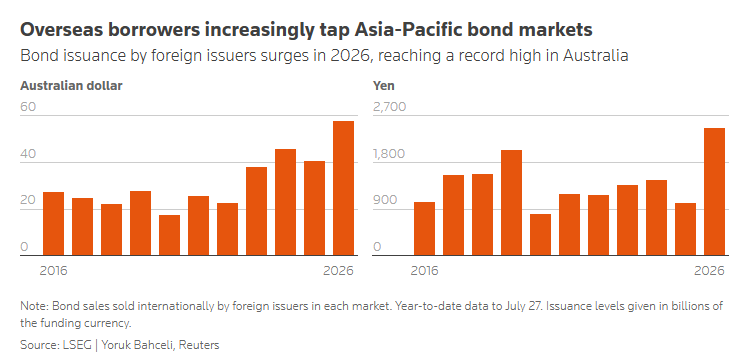
Foreign borrowers are flooding into Asia-Pacific bond markets. So-called Kangaroo, panda, and dim sum bond sales all hit records in 2026.
Kangaroo bonds, sold in Australian dollars by foreign borrowers, reached about 42 billion US dollars this year. That is a 40% jump from 2025, per LSEG data cited by Reuters.
Hong Kong and Yuan Bond Debuts Hit Records
Hong Kong dollar bond issuance has also hit a record high in 2026. Commerzbank, Engie, and Singapore Airlines sold Australian dollar or yuan bonds for the first time this year, Reuters reported.
Chinese onshore panda bonds and offshore dim sum bonds also hit records in the first half of 2026. Panda bond sales reached about 160 billion yuan, or 24 billion US dollars. Dim sum sales hit 350 billion yuan.

Both figures mark gains of more than 60% from a year earlier, according to Goldman Sachs data cited by Reuters. International borrowers accounted for about half of that volume.
“We’ve reached a tipping point where these markets have tipped over into being significantly more meaningful both to local names and inevitably to international names.”
Carla Goudge, head of debt syndicate for Asia-Pacific at HSBC, told Reuters.
Yen Bonds and the AI Borrowing Boom
Yen bond sales by foreign borrowers have also doubled this year. Alphabet’s record bond sale drove much of the increase, though yen issuance is at a seven-year high even without it.
Global bond sales topped 4 trillion US dollars by late July, up from about 3.5 trillion dollars a year earlier. Rising artificial intelligence (AI) infrastructure spending and government deficits are straining major bond markets.
Big Tech’s heavy AI spending has already squeezed hyperscaler free cash flow. That adds pressure on the same bond markets these firms depend on.
The trend also reflects Beijing’s push to internationalize the yuan. It follows a stretch of sharp swings in Asian equities, including the Kospi and Nikkei sell-off earlier this year.
German carmakers and European financial institutions have been especially active panda bond issuers. That’s according to Clifford Lee, global head of investment banking at Singapore’s DBS.
More Governments Eye the Panda Bond Market
Portugal became the first eurozone government to sell a dim sum bond in April. The sale raised almost 2 billion yuan, or 300 million US dollars.
Portugal later swapped the proceeds back to euros at a small savings, Rui Amaral of the debt agency said.
Brazil plans to sell its first-ever panda bond later this year, Reuters reported. Kenya is also weighing a debut in the market.
The post Kangaroo, Panda, Dim Sum: Foreign Bond Sales Hit Records Across Asia appeared first on BeInCrypto.
Bitcoin just absorbed a $390 million shock, and a warning JPMorgan issued back in April explains why. Institutions pulled that sum out of spot Bitcoin ETFs last week as oil spiked and the Strait of Hormuz stayed shut.
The Bitcoin price is holding near $63,500 despite the exit, yet the selling traces a clean line from a blocked shipping lane, through inflation, to crypto order books.
Why Is the Oil Shock Back, and Why Does Bitcoin Care?
Brent crude pushed back above $88 a barrel in the week to August 15, up more than 5%, after the US said its naval blockade of Iran could run indefinitely while talks to reopen the Strait of Hormuz stayed deadlocked.
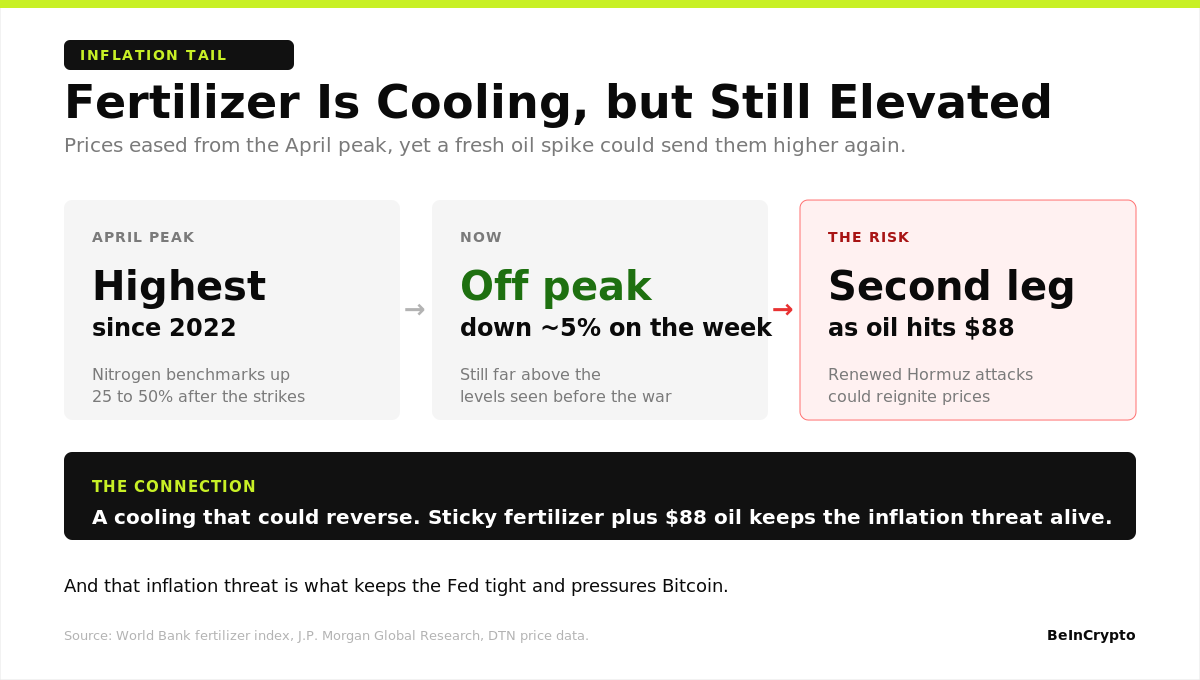
The same blockage does more than lift crude. The Middle East ships close to a quarter of the world’s urea through Hormuz, and JPMorgan flagged that nitrogen fertilizer benchmarks jumped 25 to 50% after the conflict began. With the World Bank’s fertilizer index near its highest since 2022, the bank saw that ripple lifting global food inflation toward 4 to 5%.
Those prices have eased from the April peak in recent weeks, but they sit far above pre-war levels, and this week’s oil surge alongside renewed Hormuz attacks threatens a second leg higher.

For Bitcoin, the connection comes down to one word, inflation.
Sticky energy and food costs give the Federal Reserve reason to keep rates high, and high rates drain the cheap liquidity that risk assets lean on.

So a shock that begins in a shipping lane lands on crypto order books, and the collapse of the US-Iran ceasefire keeps that pressure building rather than fading.
Are Bitcoin Whales Selling Into the Inflation Fear?
The first traders to act on that logic were the whales. Reading the same macro signal, wallets holding 1,000+ BTC peaked near 1,963 on July 31, according to Glassnode, then thinned steadily through August as oil climbed.
Want more token insights like this? Sign up for Editor Harsh Notariya’s Daily Crypto Newsletter here.
The trend is the entire story. The cohort’s 30-day change turned net negative around August 10, the very week crude pushed higher, meaning the largest holders were cutting exposure as the inflation threat hardened.

When the most informed money leaves first, the slower money usually follows. But the whales weren’t the only ones.
Why Did $390 Million Leave Bitcoin ETFs?
Spot Bitcoin exchange-traded funds bled about $390 million in the week to August 14, just after the whales turned, their heaviest weekly outflow since early July and a sharp reversal from the $853 million they absorbed the week before.
That order is the whole point.

The macro fear hit whales first and funds second, so the selling flowed from Hormuz through inflation to Bitcoin in a matter of weeks.

Even so, the Bitcoin price has drifted near $63,500 rather than crashed, which reads as steady de-risking instead of panic.
How Has the Price Reacted to War Before?
If that chain sounds ominous, history offers a counterweight. When Russia invaded Ukraine in February 2022, Bitcoin fell about 9% in two days. It then rebounded roughly 15% within five weeks. The 2023 Israel-Hamas war barely moved it. Moreover, June 2025’s Israel-Iran flare-up knocked BTC about 4% before a ceasefire sparked a recovery.

So war itself has not stayed bearish for long. The first drop has repeatedly proven a shakeout that de-escalation reversed. This is the pattern our analysis of the Ukraine playbook traced in detail. If another de-escalation wave arrives, Bitcoin prices can again start showing strength. However, this time both whales and ETFs are not seeing an optimistic conclusion to the current scenario.
Analyst’s View: From here, the story splits two ways. If the Gulf tension eases, or if whales and ETF buyers simply step back in, the dip likely repairs itself. Same way the past war scares did. Then the bottom talk fades as fast as it started. Experts watching the chains already describe an accumulation zone, even while admitting the floor is not yet in.
The other path is harder. If the Bitcoin ETFs keep bleeding through August, historically one of Bitcoin’s weakest months, and whales keep selling rather than buying, the capitulation could deepen into the kind of floor that only forms once sellers are exhausted. In short, a real Bitcoin bottom may still be near. Yet, it forms only if the fear gets worse before it gets better.
The post Bitcoin Just Took a $390 Million Hit: A JPMorgan Warning From April Explains Why appeared first on BeInCrypto.

Benjamin Cowen says Bitcoin (BTC) is between 69 and 73 days from its next cycle bottom. He bases that estimate on Bitcoin’s current cycle-day count of 1,363.
The prior two cycles bottomed on day 1,432 and day 1,436, respectively. That places Cowen’s projected low near October 2026.
Why Bitcoin’s Cycle Bottom Call Faces Pushback
Cowen’s day-count model has become a go-to reference for traders. Historically, he has argued the current cycle topped within a week of the prior two cycles. He used that timing to defend the four-year cycle framework.
He has made that case before.
Bitcoin topped within one week of when it historically tops, despite the narratives for calling the four-year cycle dead.
Cowen made the comment earlier this year, and is still holding to it as it approaches.
Bitcoin is Showing Signs
Cowen has also flagged August and September as historically weak months. In past midterm election years, Bitcoin fell an average of roughly 10% in August. September has typically added further, smaller losses before any recovery began.
However, not every analyst agrees the old clock still applies. Fidelity has pointed to new lows in one-year volatility appearing just months after Bitcoin’s record high. That pattern, the firm says, never showed up in earlier cycles.
Bitwise Chief Investment Officer Matt Hougan has gone further. He argues that spot exchange-traded funds (ETFs) and corporate treasury demand have weakened the old halving cycle. Grayscale’s 2026 outlook made a similar case, citing steady ETF inflows as evidence the boom-bust pattern no longer holds cleanly.
Still, Cowen’s recent research paper argues the floor has barely moved across four cycles, even as blow-off tops have flattened. Whether that holds through October will decide which camp was right this time.
The post Benjamin Cowen Says Bitcoin 69-73 Days From Bottom, But Does BTC Still Follow Cycles? appeared first on BeInCrypto.


BitMart users and employees have demanded that the crypto exchange disclose its reserves, explain reported withdrawal restrictions, and publish a repayment plan by Aug. 19 as questions continue over customer funds and unpaid staff compensation.
Summary
- BitMart users and employees have demanded a public explanation over withdrawal restrictions and unpaid compensation.
- The group wants BitMart to disclose its assets, liabilities, wallets and usable reserves by Aug. 19.
- A detailed user repayment plan and independent third party audit have also been requested.
- The group said it may submit evidence to regulators and law enforcement if BitMart fails to respond by the deadline.
A public statement posted on X and addressed to BitMart founder Sheldon Lee and Yi Li said a large number of users remained unable to withdraw their assets, while some employees had not received their previous month’s salary or compensation owed to them.
The statement called for BitMart to provide verifiable information on its wallets, assets, liabilities and reserves available to meet customer withdrawals. It also asked the exchange to accept independent third-party scrutiny of the figures instead of relying on company statements about its financial position.
In a translated version of the statement, the group called on BitMart to “disclose the wallets,” “disclose the assets,” “disclose the liabilities” and “disclose the actual usable reserves.”
The demands come weeks after BitMart announced plans to wind down its trading platform after nine years of operation. On July 26, the exchange said it would stop new registrations, deposits and new trading activity while allowing customers to withdraw funds during the shutdown process.
BitMart said at the time that all trading services would end on Aug. 26 before the company ceased operations on Jan. 31, 2027. The exchange attributed the decision to its operating conditions, market environment, and future strategy without identifying a specific financial or operational event behind the closure.
BitMart users seek answers over withdrawal restrictions
Alongside the request for reserve information, the open letter asked BitMart to explain why users were reportedly still unable to complete withdrawals normally and when management first became aware of the problems.
The statement asked who decided to restrict withdrawals, when the decision was made, and whether BitMart continued encouraging customers to deposit, trade or leave assets on the platform after management became aware of withdrawal or funding issues.
BitMart had addressed separate withdrawal complaints before announcing its shutdown. In a statement published in June, the exchange said reports of users being unable to withdraw or facing account restrictions were mainly connected to risk controls targeting what it described as an organized scheme designed to exploit platform activity subsidies.
Following the July shutdown announcement, BitMart said withdrawals would remain available but could be subject to additional checks involving identity verification, devices, IP addresses, withdrawal destinations, sources of funds and sanctions screening. The exchange also warned that a large number of requests could increase processing times.
The current open letter disputed whether the shutdown notice alone addressed the problems reported by users and employees, arguing that customers needed an accounting of the assets available to meet their balances.
Such disclosures would require information beyond a list of wallet holdings to establish a complete picture of an exchange’s finances. A proof-of-reserves report can verify crypto held in identified wallets against customer balances at a particular time, but it does not necessarily reveal off-chain liabilities, borrowed assets or other obligations.
Recent exchange disclosures show how those figures can be presented. In July, crypto.news reported that Binance reserve data showed customer Bitcoin holdings increasing by 7,715 BTC during June, with the report based on a July 1 snapshot. The same report noted that reserve snapshots do not constitute complete financial audits.
Open letter calls for investigation of related accounts
The BitMart statement also sought an investigation into accounts, affiliated companies, trusts and other arrangements that may have handled funds connected to users.
Yi Li was specifically asked to explain the source and ownership of funds held in accounts allegedly associated with her. The open letter said materials awaiting further verification indicated that accounts linked to Li may have held assets worth tens of millions of dollars and showed records of withdrawals conducted in batches.
The statement did not present the unverified information as proof of wrongdoing and explicitly said no criminal characterization should be applied to any individual before the evidence was established.
Instead, the authors asked Li to confirm whether the accounts existed and, if so, identify who owned the assets, where the funds originated, why they entered the accounts, where withdrawals were sent and whether any of the money had a connection to BitMart customer assets.
“If these records are fake, please publicly clarify,” the statement said.
The open letter also referred to social media posts showing luxury purchases associated with Li but acknowledged that such spending was not evidence of a crime. Its authors argued that questions about the source of funds should be answered because of the allegations surrounding BitMart’s finances.
Any funds potentially connected with customer assets should be traced across accounts, companies and ownership structures, according to the statement, which called for an independent investigation into the relevant transactions.
Employees demand unpaid salaries and compensation
Employee payments form a separate part of the demands, with the statement claiming that some BitMart staff had not received their previous month’s salaries or compensation owed following the exchange’s decision to wind down.
The authors argued that ordinary employees were not responsible for decisions about company finances or the shutdown and should not bear losses resulting from management decisions.
“Work done deserves pay. Compensation owed must be paid,” the statement said.
BitMart’s closure came after the exchange had maintained a sizeable presence in crypto trading. Previous coverage in December 2025 found that BitMart showed higher order-book depth across observed Bitcoin and Ethereum perpetual markets than several competing centralized exchanges during the measured period.
The exchange also suffered a major security breach years before its current wind-down. In December 2021, hackers compromised BitMart hot wallets and removed roughly $196 million in crypto assets, after which the exchange said affected customers would be compensated.
BitMart repayment plan sought by Aug. 19
The open letter set Aug. 19 as the deadline for BitMart to provide both a verifiable asset disclosure and a detailed repayment plan for users.
Under the requested plan, BitMart would disclose the value of remaining assets and total liabilities, estimate how much customers could recover and explain the order in which repayments would be processed.
Users also requested dates for the beginning and completion of repayments, details of the party responsible for overseeing the process and confirmation of whether BitMart would submit to an independent third-party audit.
Reserve disclosures have become common among major centralized exchanges, although the scope of reporting differs between platforms. June reserve reports from Bybit and OKX showed higher customer Bitcoin balances at both exchanges, while their reported USDT holdings declined. The snapshots provided wallet and customer-balance information but did not establish the companies’ complete financial positions.
For BitMart, the open letter sought a disclosure specifically tied to its ability to meet outstanding customer claims during the wind-down, including the amount of usable reserves and liabilities remaining on the platform.
If BitMart does not provide a complete and verifiable response by Aug. 19, the authors said they would consider submitting available materials, transaction leads and other evidence to law enforcement agencies, regulators, lawyers and media organizations in multiple jurisdictions.
The statement also called on crypto companies, industry figures, researchers and media organizations to follow the dispute and support independent examination of the fund flows. Its authors said they were not asking third parties to accept the allegations in advance and instead wanted the underlying evidence made public.
“If BitMart’s core management thinks there’s any misunderstanding in the above questions, they can absolutely address them one by one with public, verifiable evidence,” the statement said.


Greenlane recorded a $19.1 million noncash valuation loss as BERA’s price fell nearly 76% year to date.
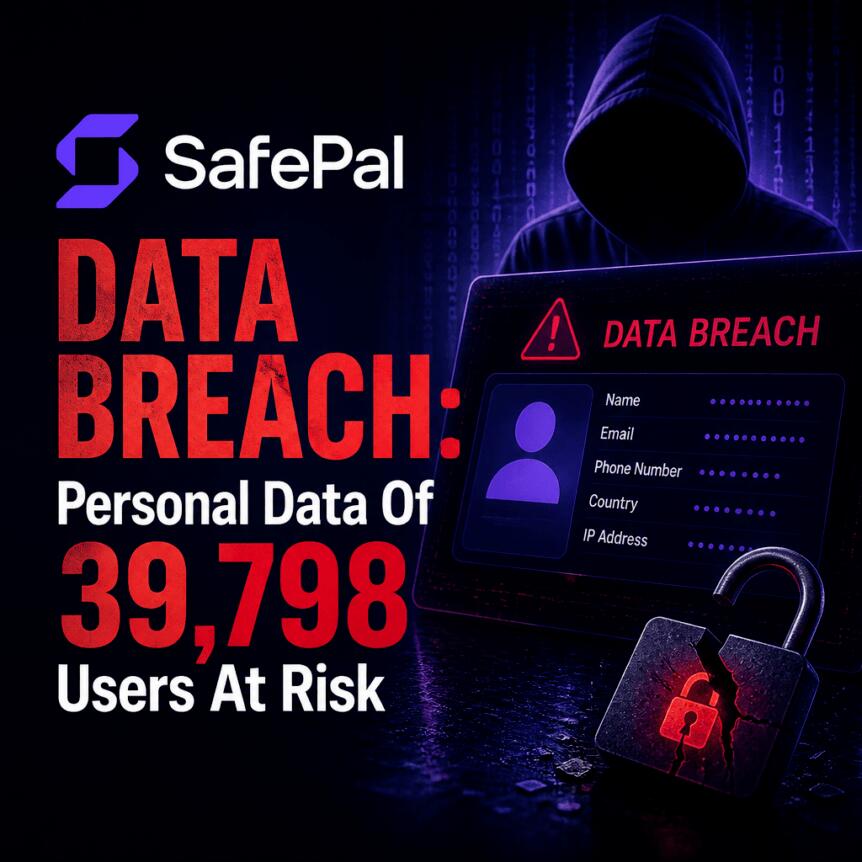
SafePal, a Binance-backed non-custodial wallet provider, has disclosed a data breach exposing the personal details of 39,798 users, including names, shipping addresses, phone numbers, and purchase data.
According to the company’s announcement, the breach impacted customers who placed orders with SafePal between March 2, 2025, and April 11, 2026. However, SafePal has assured users that private keys, seed phrases, and crypto assets are not compromised.
Crypto Hit By Safepal Breach
SafePal disclosed the flaw on X, attributing it to a flaw in the order-tracking plug-in that exposed the personal details of a small subset of customers. According to the post, the order information of customers who placed orders between March 2, 2025, and April 11, 2026, including names, shipping addresses, email addresses, phone numbers, and purchase details, was compromised.
“Dear community, while your SafePal wallet, seed phrase, and private keys are secure, we identified a flaw in the order-tracking plug-in that led to unauthorized access to information of a subset of customers.”
The company notified the affected users via email and stated that it had identified and fixed a verification defect in the plug-in that allows customers to track their orders. SafePal has also introduced additional security measures and removed over 30 fake websites and phishing links associated with the breach. However, a report by BleepingComputer states that at least one threat actor is selling stolen data from the breach on a cybercrime forum. Additionally, some users have reported phishing attempts as early as May.
Seed Phrases, Private Keys Secure
SafePal confirmed that seed phrases, private keys, wallet passwords, hardware wallets, and crypto assets were not compromised during the breach thanks to its cold storage architecture. Furthermore, the breach did not involve bank details, payment card numbers, or any government-issued identification number. SafePal has set up a dedicated tool for users to check if their details were compromised during the breach.
Implication For Safepal Users
While the breach did not compromise users’ funds or private keys, it exposed crucial personal details tied to users. This puts users at risk of phishing attacks or elaborate social engineering scams. SafePal has warned users to be wary of attempts to access wallet credentials, crypto assets, and other personal information through fraudulent emails, text messages, phone calls, letters, offers, phishing websites, fake firmware update requests, and customer support communication.
SafePal has also issued an advisory stating it would never ask for their recovery phrase, PIN, or private keys. The advisory added that users must move their funds to a new wallet if they had entered a seed phrase or private key on a suspicious website or in response to a suspicious message following the breach.
Disclaimer: This article is provided for informational purposes only. It is not offered or intended to be used as legal, tax, investment, financial, or other advice.

Samsung Galaxy H1 Over-Ear Headphones? AirPods Max and Sony May Have a Galaxy Problem

Myanmar leader heads to Russia to deepen strategic ties

10 Reasons Small Businesses Fail To Grow (And How To Fix Them)


-

 Fashion3 days ago
Weekend Open Thread: Ann Taylor
-
 NewsBeat5 days ago
Communication cards help banking customers access services or report scams
-
 Business6 days ago
Oil Price Today (August 11): Crude oil rises to $88 after Trump’s compensation demand dents Hormuz opening. Here’s why
-
 Sports3 days ago
This U.S. Amateur is a glimpse into golf’s future in more ways than you think
-

 Crypto World6 days ago
Revolut wins French banking licence, creates second EU banking hub
-
 Crypto World6 days ago
Why Did Nvidia Stock Fall on Monday Despite a $500 Billion Wall Street AI Deal?
-

 Sports2 days ago
Birmingham 2026: Day 6 Timetable for Irish Athletes
-
 NewsBeat2 days ago
Myanmar says over 300,000 Rohingya refugees verified for repatriation as exodus enters ninth year
-
 Entertainment5 days ago
Keke Palmer Subtly Hints At Sean Evans Drama With Cryptic Post
-
 Crypto World7 days ago
Grayscale quietly drops Cardano, Polkadot and Hedera ETF plans
-

 Politics2 days ago
SEQ Code: The Three Letter Boarding Pass Code That Could Give You The Worst Seat
-

 Fashion6 days ago
Coffee Break: The Fonteyn Jane Flat
-
 Entertainment6 days ago
57 Years Later, the Best Sitcom Ever Made Still Deserves a Reboot
-

 Tech6 days ago
Zoom Screen-Sharing Bug Let People Fully Take Over Other Devices On A Call
-
 Crypto World7 days ago
Hormuz Nerves Cost Bitcoin $65,000 Mark Despite Solid Institutional Flows
-

 Fashion7 days ago
Can You Wear Double Cloth Gauze Clothing To Your Office?
-

 Crypto World6 days ago
Bitcoin's BIP Editors Remove Luke Dashjr Two Days After BIP-110 Fork Stalled
-

 Fashion6 days ago
Should you refinance your debt? Pros, cons, and real numbers
-
 Crypto World5 days ago
XRP bridge drained after software mistook fake deposits for real ones
-

 Fashion6 days ago
Claire Life: Kicking Off MVAAFF With the C Suite Luncheon Featuring Phylicia Rashad, Letoya Luckett, and More!
You must be logged in to post a comment Login