
Business
Pub planning protections will not stop closures, trade warns


Property developers will have to prove there is no reasonable prospect of a pub surviving before it can be turned into flats or offices, under changes to the National Planning Policy Framework announced by Housing Secretary Angela Rayner, but industry figures have warned the new protections will not stop pubs closing.
At least 1,836 pubs have closed since the start of 2025, according to figures from the Campaign for Real Ale (Camra).
Experts from the construction and hospitality sectors said the reforms would not prevent pub closures in the first place, pointing to rising taxes, alcohol duty and higher wage costs.
Allen Simpson, chief executive of trade body UKHospitality, said the Government would need to go further to reverse the effect of decisions taken by Rachel Reeves, the former chancellor.
He said: “There has been an increase in the closure of hospitality businesses across the board over the last two years because of this Government’s actions.
“The fundamental and core point here is the cost of running the pubs in the first place, and I would encourage the Government to be more concerned about reversing the damage of the past two years than with concerning itself with what happens to the building after that pub has stopped being viable.”
Wet-led pubs make about 3p of profit for every £1 spent at the bar, according to research by comparison website money.co.uk using data from the British Beer and Pub Association. That equates to 16p on an average pint costing £5.17.
Alcohol duty has risen by 3.66 per cent this year, while increases to the National Living Wage and National Insurance contributions are also adding to costs.
Jordan Connachie, managing director of property developer Kori Construction, said the planning reforms would lead to “a load of empty pubs up and down the country”.
“Planning designations don’t touch any of that,” he said.
“If the Government wants pubs to survive, the fix is in duty, business rates relief, and wage cost support – not in stopping a failing building becoming something that actually works economically.”
Steve Hesmondhalgh, a planning consultant, said protecting pubs through the planning system “sounds noble, but it is 20 years too late and aimed at the wrong problem”.
“All tougher restrictions will likely do is leave some buildings empty for longer, while owners wait for a pub use that no longer works,” he said.
“Would we rather have a dead pub or a building with a new life?”
Wyn Evans, founder of planning-feedback company Shared Voices, said that if the Government “genuinely wants to save pubs, it should address the economics of running them – not make it harder to use their empty buildings for something else”.
“These rules can make matters worse for pubs,” he said. “They may trap publicans in unviable businesses, deter investment and prevent adaptations that could keep pubs trading.”
Others backed the changes. Camra praised the reforms for “putting more power into local people’s hands to help them save successful and valued locals from greedy developers trying to cash in”.
The Government has been contacted for comment.

Jamie Young
Jamie Young is Senior Reporter at Business Matters, covering SME finance, employment law and Westminster policy since 2016. He has reported on every Budget and Autumn Statement since 2018, helped make sense of the ‘covid era’ and the bounce-back loan scheme from launch through the fraud investigations, and broke the magazine’s coverage of the 2024 late-payment reforms. He joined Business Matters straight from completing his BA in Administration from Exeter University and is NCTJ-qualified. Reach him at jyoung@cbmeg.co.uk

Business
4chan Down? Site Confirmed Down as Outage Monitors Detect Errors Amid Spike in User Complaints

The anonymous imageboard 4chan experienced a confirmed outage Monday afternoon, with independent monitoring services detecting service disruptions from multiple global locations as user complaints surged on outage-tracking platforms.
Downdetector posted on its official account on the social platform X that “user reports indicate problems with 4chan since 12:20 PM EDT,” tagging the post with the hashtag #4chanDown and directing users to its outage-tracking page for additional updates. The post had drawn more than 2,000 views within a relatively short window after being published.
Unlike some reported outages that show conflicting or inconclusive readings across different monitoring services, Monday’s disruption to 4chan received clear confirmation from at least one independent tracking tool. UptimeRobot, which continuously monitors 4chan’s website from infrastructure located in multiple regions around the world, reported that its most recent automated check, conducted at 16:31 GMT — roughly 12:31 p.m. EDT — detected unusual response times or error codes affecting the site. The service explicitly confirmed the disruption was not isolated to individual users. “It’s not just you. UptimeRobot has confirmed that 4chan is down from multiple global monitoring locations, so the issue is likely affecting other users as well,” the service stated on its status page for the site.
Other outage-tracking resources presented a more mixed picture of 4chan’s operational status around the same time. StatusGator, a separate monitoring service, indicated 4chan was “currently operational” based on its own assessment, while simultaneously noting that it had logged 136 user-submitted outage reports over the preceding 24-hour period, a notably higher volume of complaints than many of the other services and platforms typically track for a single day. StatusGator’s tracking listed common user-reported issues including full service outages, connectivity problems, error messages, unresponsive servers and login difficulties, along with reports specifically describing “access issues leading to 403 errors and loading problems.”
4chan, founded in 2003, remains one of the internet’s most prominent and controversial anonymous imageboards, hosting a wide range of user-generated discussion boards covering topics from niche hobbyist communities to broader internet culture, alongside content that has frequently drawn scrutiny for its unmoderated and sometimes extreme nature. The platform continues to attract a substantial user base despite its long-running reputation for hosting explicit and controversial material, and disruptions to the site’s availability typically generate significant attention across social media platforms given its outsized influence on broader internet meme culture and online discourse trends.
Monday’s outage report follows a history of more serious security incidents affecting 4chan in recent years. In April 2025, the site experienced a significant and confirmed security breach, during which unconfirmed reports circulated online claiming the site had been hacked. According to reporting from Wired at the time, a previously banned discussion board briefly reappeared on the live site, and portions of 4chan were defaced with a message reading, “U GOT HACKED XD.” Reuters reported that some of the circulating posts claimed the alleged hacker had exposed identifying details belonging to the site’s moderators, a development that would have significantly undermined the anonymity the platform has long promised both to its ordinary users and to the volunteer staff who moderate its various boards.
Ian Gray, analysis and research director at the cybersecurity firm Flashpoint, told Wired at the time that any genuine leak of that nature carried serious implications given the platform’s core anonymity-based structure. “The content leaked, if genuine, would remove some of the anonymity from 4chan administrators, moderators, and janitors,” Gray said, adding that the site’s billing as an anonymous platform may have given some users a false sense of security over the years. “Some users may have registered their email addresses years ago when they were less aware or concerned about their operational security,” Gray said. TechCrunch separately reported that screenshots circulating online at the time appeared to show elements of the site’s back-end infrastructure, source code and internal tools used to manage user bans, though the full scope and authenticity of the leaked material was not definitively confirmed in the immediate aftermath of the incident.
Following that 2025 incident, technology outlets published guidance aimed at helping users determine whether any future reported 4chan disruption reflected a genuine, site-wide outage or a more localized, individual connectivity issue. According to guidance from HighSpeedInternet.com, users experiencing trouble accessing the platform have generally been advised to first refresh the page to rule out temporary loading errors, then clear browser cache and cookies to eliminate potentially corrupted stored files, and finally disable any browser extensions that could be interfering with how the site loads, before concluding that a broader outage affecting all users is underway.
Given the confirmed detection of service disruption from UptimeRobot’s independent, multi-location monitoring alongside the substantial volume of user complaints logged by other tracking services, Monday’s reported issues appear more likely to reflect a genuine, at least partially widespread technical disruption rather than an isolated or purely localized problem, though the precise cause, scope and duration of the outage had not been officially confirmed or explained by 4chan’s operators as of this report.
4chan does not maintain a prominent, continuously updated public status page comparable to those used by larger, more conventionally structured technology companies, a characteristic that has historically made it more difficult for users and outside observers to obtain timely, authoritative confirmation of the platform’s operational status during periods of reported disruption. As a result, users and outside monitoring services have typically relied on a combination of independent automated checks, crowdsourced outage reports and social media discussion to piece together the scope of any given disruption affecting the site.
As of this report, 4chan’s operators had not issued any public statement addressing the specific disruption reported by users beginning around 12:20 p.m. EDT Monday, and it remained unclear whether the issue stemmed from a routine technical failure, a surge in traffic, or a more serious incident along the lines of the confirmed security breach the platform experienced in April 2025. Downdetector’s tracking page for 4chan continued to collect user reports as the situation developed throughout the afternoon.
Business
(VIDEO) Samsung Galaxy S27 Ultra Design Leak Points to Major Horizontal Camera Redesign for 2027 Flagship

A newly surfaced design database entry suggests Samsung may be preparing a significant overhaul of its flagship smartphone camera design, with sketches pointing toward a shift from the company’s longstanding vertical camera bar to a horizontal camera module for the upcoming Galaxy S27 Ultra and Galaxy S27 Pro.
The design sketches were identified in the World Intellectual Property Organization’s international design database and reported by tech leaker Sammyguru, adding fresh detail to months of rumors surrounding a potential camera redesign for Samsung’s 2027 flagship lineup. The sketches depict a classic Samsung phone silhouette featuring rounded corners and flat edges, but with the rear camera module reoriented into a flat, horizontal bar housing three individual camera sensors, rather than the vertical arrangement featured on the current Galaxy S26 Ultra.
If accurate, the change would mark a notable visual departure for Samsung’s top-tier smartphone line, which has relied on a vertical camera arrangement in recent generations. A horizontal camera bar would more closely resemble the design language currently used by Google’s Pixel 11 Pro and Apple’s iPhone Air, though Samsung itself previously employed a similar horizontal camera layout on the Galaxy S10, suggesting any such shift would represent something of a return to an earlier design approach rather than an entirely unprecedented move for the company.
According to reporting on the leak, supply chain sources indicated as recently as early July that Samsung had not yet finalized a decision on whether to proceed with the redesign, leaving open the possibility that the company’s plans could still change before the phone’s eventual launch. Prominent Samsung leaker Ice Universe, who has separately shared speculative renderings of the potential new design, indicated he would not object to Samsung pursuing such a change for the Galaxy S27 camera system, according to commentary accompanying the leaked images.
Industry analysts and leakers tracking the rumored redesign have pointed to several practical advantages a horizontal camera module could offer Samsung’s flagship devices. A horizontal camera arrangement would eliminate the wobble commonly experienced when using a smartphone with a raised vertical camera bump on a flat surface, allowing for more stable use while typing or writing with the phone resting on a table. The redesign could also free up additional space on the rear of the device for compatibility with Qi2 magnetic charging accessories, potentially enabling case-free magnetic attachment similar to functionality already available on Google’s Pixel 11 and Pixel 11 Pro devices.
Beyond the practical benefits, the design change could also serve a broader marketing purpose for Samsung, offering what industry observers have characterized as a visual refresh for a camera system that has seen relatively modest external design changes across recent Galaxy S generations, even as the company has continued to make incremental internal hardware improvements. The Galaxy S27 series is expected to introduce several camera innovations beyond the potential design change itself, including a new main camera sensor, according to prior reporting on the device’s development.
The Galaxy S27 Ultra leak arrives amid a broader wave of reporting on Samsung’s 2027 flagship plans. Samsung has reportedly confirmed a triple rear camera system for the Galaxy S27 Ultra, while the Galaxy S27 Pro is said to offer a differentiated camera configuration from its more premium sibling. Separate reporting has also pointed to potentially higher device pricing across the lineup, along with expected battery capacity increases for both the Galaxy S27 Pro and Galaxy S27 Ultra models. Samsung is additionally said to be preparing an expanded “4+4” flagship strategy for 2027 that would bring a total of eight Galaxy flagship devices to market across the year, according to prior leaks covering the company’s broader product roadmap.
Chip configuration details have also emerged as part of the broader Galaxy S27 leak cycle. According to earlier reporting, two of the Galaxy S27 flagship models are expected to be powered by Qualcomm Snapdragon processors, while the remaining two are expected to run on Samsung’s own Exynos chipsets, continuing the company’s practice of splitting processor sourcing across different global markets and device tiers. Separately, some reports have suggested the more compact Galaxy S27 Pro model may not receive the latest Snapdragon 8 Elite Gen chipset available to its larger counterparts, potentially creating a more pronounced performance distinction between models within the lineup than in previous generations.
Samsung has also reportedly taken more aggressive internal steps to limit leaks ahead of the Galaxy S27 launch, according to prior coverage of the device’s development cycle, an effort that has nonetheless not prevented a steady stream of design, specification and pricing details from surfacing well ahead of any official announcement.
Alongside the camera redesign speculation, Samsung has continued rolling out software previews tied to the Galaxy S27 launch cycle. Early screenshots of a test version of One UI 9.5, Samsung’s next major software update, have begun circulating, suggesting the company plans to introduce a broader user interface redesign alongside the Galaxy S27’s hardware launch, according to separate reporting on the software’s early development builds.
As with most smartphone leaks surfacing well ahead of an official product announcement, the design sketches identified in the WIPO database represent one data point among many in an evolving and sometimes contradictory stream of Galaxy S27 rumors, rather than a confirmed final design. Design patent filings and international trademark database submissions do not always correspond directly to a manufacturer’s final shipping product, and companies frequently file multiple design variations during a device’s development process without committing to any single configuration until much closer to launch.
Samsung has not publicly confirmed any specific details regarding the Galaxy S27 Ultra’s camera design, pricing or broader specifications, and the company is not expected to formally unveil the device until its typical early-year Galaxy Unpacked launch event, which for prior Galaxy S generations has generally taken place in the first quarter of the year. Until an official announcement, leaks and design database filings such as the one identified this week are likely to remain the primary source of public information regarding Samsung’s next flagship camera design, with additional details expected to continue emerging in the coming months as the device’s launch date approaches.

By Dr. Carlyle Thayer, Emeritus Professor of Politics at the UNSW’s School of Humanities and Social Sciences
In a case of propaganda gone wrong, on the same day in June, two separate media outlets in the Solomon Islands published the exact same op-ed, verbatim. Strangely, each published the same piece under a different by-line.
Stranger still, both authors seem not to exist, and each piece conveniently regurgitates the same clunky Chinese narratives on why Pacific island states, Palau in particular, should abandon Taiwan.
This is a classic case of sock puppetry gone wrong: a smoking gun laying bare Beijing’s attempts at cognitive warfare.
The propaganda disaster class is indicative of the all-encompassing, cross-domain threat China now poses. From the unsuspecting op-ed seeking to saturate search engines and influence the subconscious, to a far more blatant and aggressive military build-up, the danger posed by China now comes from all angles.
Indeed, Beijing is by most measures a military colossus, adding some 100 nuclear warheads to its arsenal each year, with defence spending nearly eight times that of Australia’s.
In this respect, it is hard to disagree with Australian Prime Minister Anthony Albanese’s assessment that China, at least in its long-term plan, is seeking to disrupt regional stability and assume hegemony. Of course, Beijing rejects this notion, lamenting Albanese’s ‘hyped falsehoods‘ and insisting that its defensive might is owed to unique national characteristics.
China’s behaviour suggests otherwise. The People’s Liberation Army fired a ballistic missile into the Pacific just as Albanese was meeting his Fijian counterpart and Beijing continues to pursue the attainment of a blue-water navy capable of striking Australia and New Zealand.
The question for Canberra is not whether to respond to this pressure – it has little choice in the matter if it intends to help maintain security in the region. The greater debate is what form that response should take, and, crucially, with which partners.
Australia recognises that part of the answer must be diplomatic.
Over the years, Canberra has enriched its already strong relationship with Japan, underpinned by congruent strategic interests and values most notably expressed in mutual support for a Free and Open Indo-Pacific (FOIP).
FOIP, of which Japan was the initial architect, looks to ensure peace and prosperity in the Indo-Pacific by upholding the rule of law and safeguarding the region from coercion.
Both Japan and Australia have reaffirmed their enduring support for the vision. In May, Prime Ministers Takaichi and Albanese met to mark 50 years of bilateral relations between the two nations. The summit concluded with an agreement to expand cooperation in the defence, energy and critical minerals sectors, a step Tokyo had been keen to take as part of broader efforts to help realise FOIP.
Their diplomatic efforts translated into further practical success at the Shangri-La Dialogue. Following a sideline meeting of defence ministers, Japan, the United States and Australia agreed to establish TRISHIP, an information-sharing framework aimed at countering airborne and missile threats across the region.
But Australia’s diplomatic outreach has reaped dividends beyond Japan. Following a meeting between Albanese and Indian Prime Minister Narendra Modi, the Joint Declaration on Defence and Security Cooperation was signed, deepening the practical partnership. Albanese has certainly been racking up the air miles, visiting Indonesia, Singapore, Malaysia, Fiji and the Solomon Islands since January.
Diplomatic outreach is critical. It not only produces the practical agreements that bolster defence and deterrence but also demonstrates to China that the region is home to a coalition of partners unwilling to succumb to unilateral coercion.
But diplomacy alone will not give Beijing pause. The prevention of China’s regional hegemony will ultimately require greater investment in individual countries’ military domains.
Fortunately, key partners are stepping up in this sector too.
Canberra has committed an additional AUD $14 billion in defence spending over the next four years. Takaichi too has invested heavily in defence, with Japan’s budget now exceeding AUD $79 billion (¥9 trillion) this year for the first time in the nation’s history.
Takaichi has also expedited the revision of three strategic documents, and in April overhauled the country’s longstanding restrictions on lethal weapons exports. The latter move will bolster the military capabilities of like-minded partners and enable deeper interoperability between them.
Canberra’s response to the announcement is a case in point. Quick to capitalise, the Navy purchased 11 Mogami-class frigates from Japan. With progress on the delivery of the first vessel reportedly on track, Australia will receive a ship boasting a high degree of automation alongside advanced combat capabilities.
This investment in hard power and enriched interoperability is precisely what is required, on top of diplomatic efforts, if China’s ambitions are to be held at bay.
Of course, Japan is not Australia’s only partner in this effort, but the relationship offers a blueprint. As individual actors, and in concert, these are two democratic nations tackling China on the soft and hard power fronts.

Adia Nutrition changes name to Adia Med, receives FINRA approval

Nov Inc stock hits 52-week high at $21.55
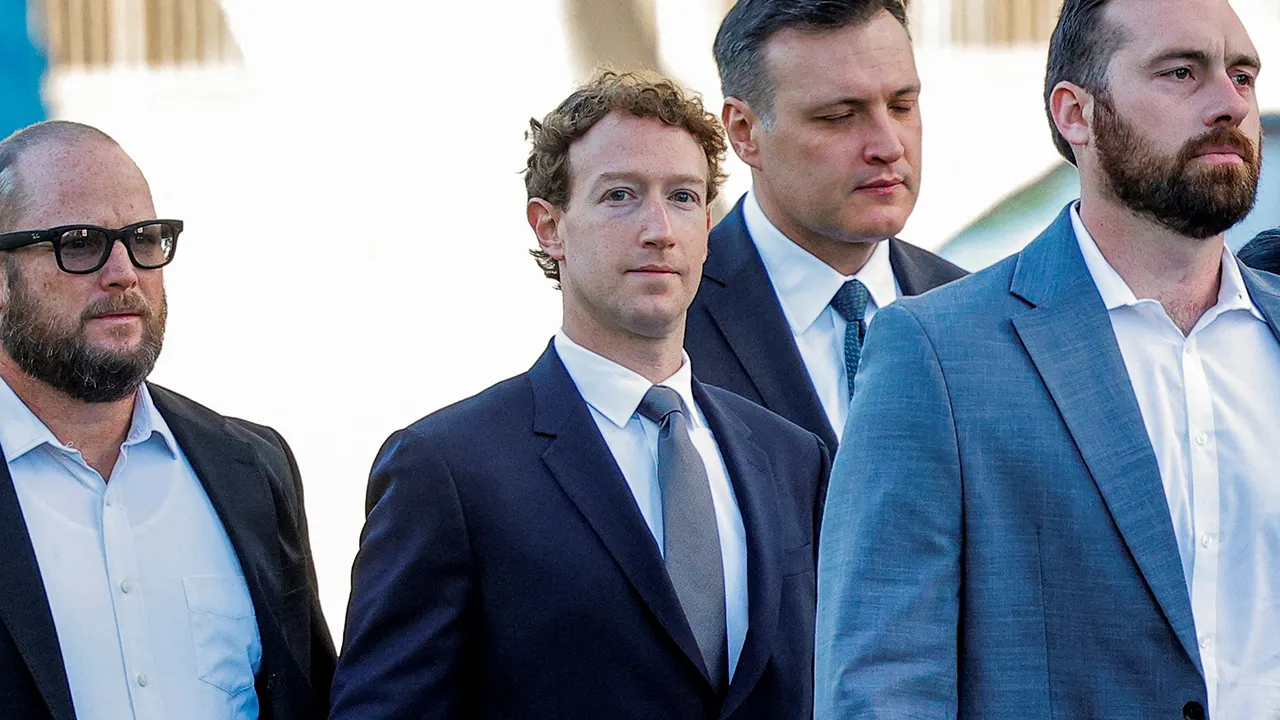
Monte Mann, a partner at Armstrong Teasdale, discusses the social media addiction case brought against Meta by state attorneys general.
Social media giant Meta is heading to court in a case brought by a group of state attorneys general who claim the company designed its social media platforms to be addictive and misled the public about potential risks.
The trial is expected to begin with opening statements on Tuesday in the U.S. District Court for the Northern District of California in Oakland after the two sides went through the jury selection process last week and Judge Yvonne Gonzalez Rogers turned down Meta’s request for the case to be dismissed. The trial is expected to last four to six weeks, with Meta CEO Mark Zuckerberg expected to testify.
Attorneys general from California, Colorado, Kentucky and New Jersey first filed the lawsuit in 2023 after a multistate investigation into the impact of Facebook and Instagram on young users. They argue that the platforms were designed to be addictive and that the company downplayed the potential impact on young people, while also alleging Meta violated federal law when it collected personal information from children.

Attorneys general from California, Colorado, Kentucky and New Jersey first filed the lawsuit in 2023 after a multistate investigation into the impact of Facebook and Instagram on young users. (Mike Blake/Reuters)
Meta, which is the parent company of Facebook and Instagram, has denied wrongdoing and disputes claims that its social media platforms caused the harm alleged by states. It also argues that “social media addiction” isn’t an officially recognized psychiatric diagnosis, which will be a significant point of contention at trial.
FOUR STATES SEEKING $1.4 TRILLION IN PENALTIES IN CHILD SOCIAL MEDIA ADDICTION TRIAL, META SAYS
California Attorney General Rob Bonta issued a statement last week after the court allowed the case to proceed, saying, “Meta designed a dangerous product for young users, knew it to be dangerous, and then lied to children, families, and the community about how dangerous it was.”
A Meta spokesperson pushed back on the states’ case against the company and said in a statement to FOX Business that the “limited claims are unsubstantiated and their financial demands are vastly disproportionate.”
“The AGs offer no proof anyone in their states was misled, claim benign features like having an additional Instagram account somehow harmed their residents, and attempt to penalize Meta for industry-wide challenges like age verification. Rather than sticking to the facts or the law, the states have instead decided to chase an outlandish payout,” the company spokesperson said, adding that the company stands by its “record of creating strong protections for teens, and look forward to making our case in court.”
| Ticker | Security | Last | Change | Change % |
|---|---|---|---|---|
| META | META PLATFORMS INC. | 589.85 | -5.12 | -0.86% |
Meta has argued that the damages sought by the state attorneys general could reach as high as $1.4 trillion, which is nearly the size of the company’s market capitalization – though the AGs haven’t disclosed the amount they plan to seek at trial and will likely do so once the trial begins.
NEW MEXICO COURT ORDERS META TO PAY $567M, OVERHAUL TEEN PROTECTIONS
Monte Mann, a partner at Armstrong Teasdale, told FOX Business in an interview that this will be a “bellwether case” for the theory that social media platforms were designed to be addictive and have harmful effects on young users.
Mann said that as someone who has tried cases like this one, he will be paying close attention to what internal Meta documents indicate about the company’s knowledge of the allegedly compulsive nature of its products and their mental health impact, saying those documents “may be the star witness in the case.”
“I will be very interested to see what the internal Meta, Facebook, Instagram documents say about what they knew of the compulsive nature of these products and services; when they knew it; whether they tried to enhance their design elements to take advantage of those things, what they disclosed to the public,” he said.

Meta has argued that the damages sought by the state attorneys general could reach as high as $1.4 trillion. (Mike Blake/Reuters)
Mann also noted that Judge Gonzalez Rogers appointed an advisory jury in the case, which can provide feedback and recommendations on community standards for children’s use of social media that she may consider.
The Oakland trial is the latest high-profile case involving social media companies like Meta, which have faced numerous lawsuits brought by individuals, school districts and state governments over the alleged impacts of social media use on children.
A ruling in another prominent case was delivered earlier this month when a state court in New Mexico ordered Meta to pay $567 million and to overhaul its protections for teen users on Facebook and Instagram.
That followed a prior ruling from March which ordered Meta to pay $375 million for violating state law, with the company’s total liability in the case at nearly $942 million.
Meta told FOX Business after the most recent ruling that it disagreed with the decision and vowed to appeal, explaining that the company is “confident in our record of protecting teens online and will continue to defend ourselves against claims that misrepresent the facts.”
GET FOX BUSINESS ON THE GO BY CLICKING HERE
FOX Business’ Michael Sinkewicz, Sumner Park and Reuters contributed to this report.
Business
Grammys May Reconsider Asian Pop Category After BTS-Led Boycott Sparks Industry-Wide Backlash and Wider Debate

LOS ANGELES — The Recording Academy is now in active discussions with members of the Asian pop music community about the future of its newly created Best Asian Pop Music Performance category, following a high-profile boycott by BTS that has drawn broader scrutiny to how the Grammy Awards recognize artists from Asia.
The controversy traces back to June 16, when the Recording Academy announced five new award categories for the 69th Grammy Awards, including Best Asian Pop Music Performance. According to the Academy’s announcement, the category was designed to recognize “artistic excellence in Asian pop music performances originating from or widely recognized within Asian markets, including but not limited to K-pop, J-pop and C-pop, with meaningful use of one or more Asian languages.”
On July 29, all seven members of BTS announced in identical statements posted to their individual Instagram accounts that they would not submit music for consideration at the upcoming ceremony, scheduled for Feb. 7, 2027. “We have decided not to submit to the Grammys this year,” the group wrote, in a statement translated from Korean. “We hope music can be heard and loved for what it is, rather than being divided by region or language.” The group thanked their global fan base, known as ARMY, “and everyone who is always with us.”
The decision effectively removed BTS’ comeback album “ARIRANG” from Grammy contention. The record, released in March following the completion of all seven members’ mandatory South Korean military service, debuted at No. 1 on the Billboard 200 with 641,000 units sold, marking the biggest opening week for a group album in more than a decade. The group’s label, HYBE, clarified that the decision to skip the submission process was made by the group members alone.
Recording Academy CEO Harvey Mason Jr. responded the same day the boycott was announced, expressing regret over the decision while indicating he understood the group’s reasoning. “I am saddened to hear that BTS has chosen not to participate in the Grammy Awards process this year, but as a music creator, I understand and respect their decision,” Mason said in a statement posted to the Grammys’ Instagram account. He went on to defend the intent behind the new category. “I do want to clarify something that seems to be getting lost in the conversation,” Mason’s statement continued. “The Asian Pop category was created to celebrate the depth, diversity and extraordinary growth of pop artistry coming out of Asia. The spirit of this new category is to shine a dedicated spotlight on these important artists. More categories mean more artists’ work is recognized. It’s never to divide, but to expand who is recognized by our 15,000 Grammy voters.”
Mason concluded his initial statement by emphasizing the Academy’s broader commitment to global inclusivity. “As we continue to expand the reach, our membership and our awards, regardless of geography or language, I want to emphasize that we will continue to listen to the global music community and work to honor and celebrate all the artists whose music moves the world,” he said.
Despite that early defense of the category, few other major artists publicly joined BTS in boycotting the awards, a pattern some industry observers have attributed to the unique position BTS currently occupies within the global music industry. Hye Jin Lee, a scholar at the University of Southern California who studies K-pop and global media, offered one interpretation of the group’s decision in comments to Rolling Stone. “To me, [BTS’ decision] signals that they have reached a point in their career where they no longer feel the need to seek validation from Western institutions,” Lee said.
More than a week later, Mason’s tone toward the controversy shifted noticeably. In a statement provided to Billboard on Friday, Aug. 1, Mason acknowledged more directly that the category may not be achieving its intended purpose for the artists it was meant to celebrate. “The Grammy organization exists to serve all music people, and part of that is working to ensure that no voice or community gets overlooked or misunderstood,” Mason said in that follow-up statement.
According to Billboard’s reporting, the Recording Academy has since begun direct conversations with members of the Asian pop music community regarding the category’s future, though no formal changes to the award’s structure or eligibility criteria have yet been announced. The Recording Academy’s board is expected to convene to determine, in Mason’s words as relayed by NME, how the organization can “best honour this music in the future.”
The controversy has extended beyond BTS’ individual decision to prompt broader public debate about how award institutions like the Grammys categorize music from non-Western regions and languages. Critics have argued that region- or language-specific categories, even when framed as efforts at greater inclusion, risk segregating non-Western artists from the Grammys’ more prestigious general-field categories, such as Album of the Year, rather than integrating them more fully into the ceremony’s top honors. Mason has previously pushed back on that characterization directly, telling reporters that submitting music within genre-specific categories does not disqualify an artist from also competing for general-field awards.
The Recording Academy has faced similar questions in the past regarding the consultation process behind newly created award categories. Mason has previously pointed to the Best African Music Performance category, introduced in recent years, as an example of a category informed by direct engagement with artists in that region, citing trips to Africa and acknowledgment that African artists “weren’t being heard in our process,” according to prior comments attributed to Mason. The BTS boycott has renewed questions from industry observers and commentators about who, specifically, was consulted in the creation of the Best Asian Pop Music Performance category before its introduction in June.
Notably, some observers have pointed out that BTS’ own recent English-language material, including their hit single “SWIM,” which debuted at No. 1 on the Billboard Hot 100, would not have qualified for the new Asian pop category regardless of the group’s boycott decision, since the category specifically requires meaningful use of one or more Asian languages, a detail that has added further nuance to the broader debate over how the award’s eligibility criteria are structured.
As the Recording Academy continues its consultations with Asian pop industry representatives ahead of the February 2027 ceremony, it remains unclear whether any structural changes to the Best Asian Pop Music Performance category will be finalized before this year’s awards cycle concludes, or whether such changes might instead take effect for future ceremonies. Neither BTS nor HYBE has issued further public comment on the matter since the group’s initial July 29 statement, and it remains unknown whether the group’s stance could shift depending on how the Academy ultimately addresses the concerns raised by the boycott.
Business
iPhone 18 Pro Leaks Reveal 10 Rumored New Features Ahead of Expected September 2026 Launch Event This Fall

Apple is widely expected to unveil the iPhone 18 Pro and iPhone 18 Pro Max in September, and a steady stream of leaks and supply chain reports over recent months has offered an increasingly detailed picture of what the new flagship devices may include. While Apple has not officially confirmed any specifications, here are 10 of the most consistently reported features expected to headline this year’s Pro lineup.
1. Apple’s first 2-nanometer chip
The iPhone 18 Pro is widely rumored to debut Apple’s first chip built on a 2-nanometer manufacturing process, reportedly called the A20 Pro. According to reporting on the device, the more advanced chip fabrication process is expected to deliver meaningful improvements in both performance and power efficiency compared with the current A19 Pro chip used in the iPhone 17 Pro lineup.
2. A new Apple-designed C2 modem
Leaks point to the iPhone 18 Pro adopting Apple’s next-generation, in-house cellular modem, reportedly called the C2, continuing the company’s multi-year effort to reduce its reliance on third-party modem suppliers following the initial rollout of its first-generation C1 modem chip.
3. Satellite-based 5G connectivity
Among the more notable connectivity upgrades reportedly in testing for the iPhone 18 series is support for 5G connectivity delivered via satellite, an expansion of Apple’s existing satellite features that have so far focused primarily on emergency messaging and location-sharing capabilities in areas without traditional cellular coverage.
4. A more uniform, redesigned rear Ceramic Shield finish
According to a source cited by AppleInsider, the iPhone 18 Pro is expected to feature a more uniform appearance on its rear glass panel compared with the two-tone design used on the iPhone 17 Pro, with Apple reportedly working to eliminate the visual break between the frosted glass camera area and the smoother Ceramic Shield section used for MagSafe charging. MacRumors has similarly reported that the rear Ceramic Shield area for MagSafe could take on a more frosted and seamless appearance across the redesigned back panel.
5. New color options, including purple, brown and burgundy
Multiple leaks point to an expanded and refreshed color lineup for the iPhone 18 Pro, with reported options including purple, brown and burgundy variants, according to leaked imagery and reporting circulating from device tipsters ahead of the phone’s expected unveiling.
6. A continued triple-lens camera system with strong zoom capability
The iPhone 18 Pro and Pro Max are expected to retain a triple-lens rear camera setup similar to the current generation, featuring a 48-megapixel main sensor, a 48-megapixel ultrawide lens and a 48-megapixel periscope telephoto lens capable of 4x optical zoom, according to specifications compiled from leaked component information, largely mirroring the camera hardware found on the iPhone 17 Pro Max.
7. A larger battery for the Pro Max model
The iPhone 18 Pro Max is rumored to feature a battery capacity of approximately 5,100 milliamp-hours, a modest increase over the 5,088 milliamp-hour battery included in the current iPhone 17 Pro Max, according to specifications shared by device leakers tracking the phone’s expected internal component changes.
8. 12GB of RAM across the lineup
Leaks suggest the iPhone 18 Pro models will continue offering 12 gigabytes of RAM, matching the memory configuration used in the current iPhone 17 Pro lineup, a specification that has taken on added significance given Apple’s continued expansion of on-device Siri and other AI-powered features that rely more heavily on available system memory.
9. A largely unchanged front design, contrary to earlier redesign rumors
While earlier reports throughout 2026 speculated that Apple might significantly overhaul the iPhone’s front display design for the 18 Pro lineup, potentially including a smaller or reshaped Dynamic Island or an under-display Face ID sensor system, more recent leaks suggest Apple may instead reuse existing manufacturing molds from the iPhone 17 Pro. According to a report shared by tipster Digital Chat Station on the Chinese social platform Weibo, that reuse of production tooling would mean the front-facing Dynamic Island is likely to remain the same size and shape as the current generation, rather than shrinking as some earlier rumors had suggested, with any more dramatic under-display Face ID redesign potentially pushed back to a future iPhone generation.
10. An in-person September launch event, alongside Apple’s first foldable iPhone
According to an August rumor, Apple may hold an in-person launch event on Wednesday, Sept. 9, 2026, to unveil the new devices, marking a departure from the prerecorded product reveal videos the company has favored in recent years. Reports indicate Apple’s U.S. retail employees were invited to enter a lottery for the chance to attend the event in person. The iPhone 18 Pro and Pro Max are expected to launch alongside Apple’s first foldable iPhone, widely rumored to be called the “iPhone Ultra,” with the foldable device measuring roughly 5.5 inches when closed and approximately 7.8 inches when fully opened, according to leaked dimension estimates.
Beyond these headline changes, additional reported details suggest the standard iPhone 18 Pro will feature a 6.3-inch display while the Pro Max will retain a 6.9-inch screen, both continuing to use 120Hz refresh rate LTPO display technology. Storage configurations are expected to again range up to 2 terabytes for the top-tier model, matching the current generation’s maximum storage offering.
Notably, Apple’s broader iPhone 18 lineup strategy appears to be shifting toward a staggered, two-season release schedule this year. While the iPhone 18 Pro, iPhone 18 Pro Max and the new foldable iPhone are expected to arrive together this September, the standard iPhone 18, a lower-cost iPhone 18e model, and a second-generation iPhone Air are reportedly being held back for a separate announcement expected around March 2027, according to multiple reports tracking Apple’s production and launch timeline. That staggered approach would mark a departure from Apple’s traditional practice of unveiling its entire iPhone lineup during a single September event.
Pricing for the new devices has not been officially confirmed, though some analysts have speculated Apple could introduce modest price increases across parts of the lineup, following a $100 increase applied to the standard iPhone Pro model in 2025 while the Pro Max retained its prior starting price of $1,199.
As with all pre-launch leaks, the specific details outlined here remain unconfirmed by Apple and are subject to change ahead of any official announcement. Apple has not commented publicly on any of the reported features, and the company is expected to reveal final specifications, pricing and availability details only once its fall product event is formally scheduled and held.

Twitch has faced a backlash from users after confirming that content on the Amazon-owned streaming platform is used to train the company’s generative AI models under a setting that is switched on by default.
The platform said on 12 August that users can opt out of the data collection, but the announcement prompted criticism from streamers who questioned why it had been enabled in the first place.
Mike Minton, Twitch’s chief product officer, said the company was “respecting” users by letting them opt out. Asked why the data was collected by default, he said: “If it’s opt-in, nobody would opt-in. That’s the honest answer.”
Minton said during a livestream that users who remain opted in could have any of their channel content used for training, and that the data collected will not be re-sold to other companies.
Twitch’s own FAQs on its use of AI state that unless users opt out, their content could be used to train generative AI models, the type of artificial intelligence that creates new content such as text, images and video.
The company said a person’s audio might be used to “refine models that create speech to text”, which it said would improve automatic subtitles on Twitch streams as well as on Amazon videos.
Some users questioned the implications for game developers, since the setting would also appear to train Amazon’s models on the video games being played by streamers.
Mary Kish, Twitch’s head of community, used the same livestream to show viewers how to disable the training through their channel settings. Users must open the Settings tab in their Streamer Dashboard, click Security and Privacy, and toggle off “training for Generative AI”.
Doing so prevents Amazon from using streams, clips, images, chats and other channel content to train its generative AI models. Some users have since reported that the setting appeared to be switched back on after they disabled it. “Went in and toggled the switch off, exited, went back in, switch is still on,” one said.
Kish said data collection for AI training had become an industry standard. “We don’t expect you to be happy or excited about this. I don’t expect anyone to react to this favourably,” she said.
The livestream’s chat was flooded with hundreds of comments criticising the move. One viewer wrote: “Nobody would opt in because nobody wants to feed AI with our creativity and content.” Another said Twitch had an “opportunity to set an industry standard” by pushing back against data collection for AI. Underneath Twitch Support’s announcement of the feature, one streamer wrote: “On by default is criminal…. the AI narrative push is so draining.”
It is not clear when Amazon began collecting Twitch users’ data to train its AI models. Minton said he did not know whether users’ data had already been scraped for training, adding that he was unsure what Amazon “has done in terms of model training and what they’ve used and not used”.
The use of creative work to train AI models has been contested in the courts. Stability AI won a High Court case brought by Getty Images over copyright claims, while Anthropic agreed a £14m payout to Harry Potter publisher Bloomsbury.
Amazon, which bought Twitch for nearly $1bn (£740m) in 2014, runs a range of AI services and has invested heavily in the technology as it competes with Google, Meta and other technology groups.
Jamie Young
Jamie Young is Senior Reporter at Business Matters, covering SME finance, employment law and Westminster policy since 2016. He has reported on every Budget and Autumn Statement since 2018, helped make sense of the ‘covid era’ and the bounce-back loan scheme from launch through the fraud investigations, and broke the magazine’s coverage of the 2024 late-payment reforms. He joined Business Matters straight from completing his BA in Administration from Exeter University and is NCTJ-qualified. Reach him at jyoung@cbmeg.co.uk
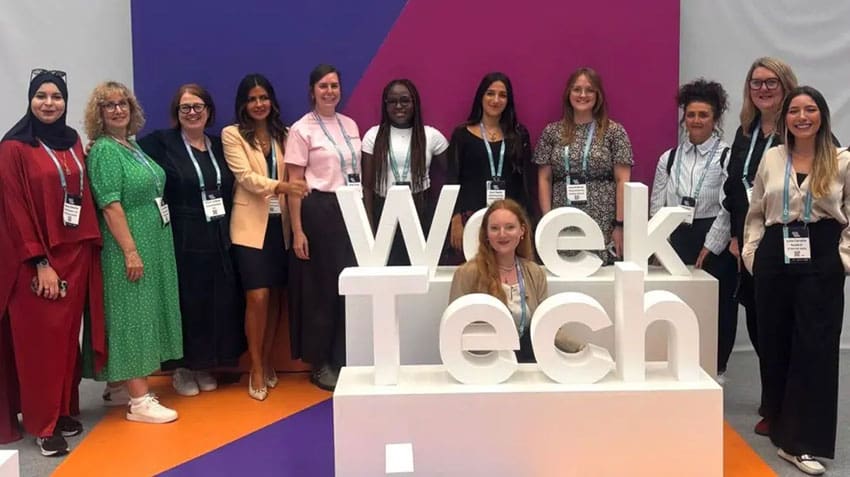
A task force to increase the number of women founding, funding and working in technology businesses has been launched in South Yorkshire, after research published this month found women make up 18 per cent of the region’s tech workforce, against 26 per cent nationally.
The Women in Tech and Investment Taskforce has been set up by TechSY, the programme within South Yorkshire Mayoral Combined Authority responsible for growing the county’s tech and digital economy, after research by TechSY found the region was lagging behind the rest of the UK on female participation in the sector.
The same research found women receive just 10 per cent of investment. TechSY puts the value of South Yorkshire’s tech ecosystem at £3.7bn, four times its size in 2019.
The task force will focus on four priorities: increasing the number of women starting and scaling up tech firms; encouraging more women to invest in start-ups; supporting women already working in the sector to move into leadership roles; and inspiring more girls and young women to pursue careers in technology.
Its chair, Helen Milner OBE, said discussions about women in technology had too often focused on the problem rather than finding solutions.
“By bringing together employers, educators, investors and founders, we have an opportunity to ensure more women can build successful careers and businesses in technology,” she said.
Christina Vaughan, who started her first business in the digital sector more than 20 years ago, said she found there were still “too few women” in the industry when she launched her most recent venture, based in Sheffield.
She said: “I felt very much on my own 25 years ago, if we can even move the dial a little bit, that would be a good thing.”
The government’s Investing in Women Code annual report found that increasing investment into female and ethnic minority-led businesses could increase the UK’s stake in the tech market by around 13 per cent. It concluded that tech businesswomen generally doubled any economic investment they received.
The South Yorkshire launch follows moves at national level, where the Invest in Women Taskforce has secured more than £250m from financial institutions to back female entrepreneurs, and comes amid wider evidence that backing female founders outperforms the market. Neighbouring West Yorkshire has launched its own regional tech body as it bids to grow the sector.
Tracey Johnson, programme director for TechSY and the figure behind the project, said backing more women into business was good for growth.
“This isn’t simply a diversity issue; it’s an economic opportunity and one we must address. If South Yorkshire is serious about becoming one of the UK’s leading technology regions, we need to ensure everyone has the opportunity to participate and succeed,” she said.
The task force is funded by the South Yorkshire Mayoral Combined Authority, the British Business Bank and the Department for Science, Innovation and Technology via Barnsley Council’s Tech Town programme.
Jamie Young
Jamie Young is Senior Reporter at Business Matters, covering SME finance, employment law and Westminster policy since 2016. He has reported on every Budget and Autumn Statement since 2018, helped make sense of the ‘covid era’ and the bounce-back loan scheme from launch through the fraud investigations, and broke the magazine’s coverage of the 2024 late-payment reforms. He joined Business Matters straight from completing his BA in Administration from Exeter University and is NCTJ-qualified. Reach him at jyoung@cbmeg.co.uk

Stag shot dead in Richmond Park after visitor injured in the chest during picnic | News UK

4chan Down? Site Confirmed Down as Outage Monitors Detect Errors Amid Spike in User Complaints

Ethereum weighs self-funded privacy pools for 2027 upgrade


-

 Fashion3 days ago
Weekend Open Thread: Ann Taylor
-
 NewsBeat6 days ago
Communication cards help banking customers access services or report scams
-
 Business7 days ago
Oil Price Today (August 11): Crude oil rises to $88 after Trump’s compensation demand dents Hormuz opening. Here’s why
-

 Crypto World7 days ago
Revolut wins French banking licence, creates second EU banking hub
-
 Sports4 days ago
This U.S. Amateur is a glimpse into golf’s future in more ways than you think
-
 Crypto World7 days ago
Why Did Nvidia Stock Fall on Monday Despite a $500 Billion Wall Street AI Deal?
-

 Sports3 days ago
Birmingham 2026: Day 6 Timetable for Irish Athletes
-
 NewsBeat3 days ago
Myanmar says over 300,000 Rohingya refugees verified for repatriation as exodus enters ninth year
-

 Politics2 days ago
SEQ Code: The Three Letter Boarding Pass Code That Could Give You The Worst Seat
-
 Entertainment5 days ago
Keke Palmer Subtly Hints At Sean Evans Drama With Cryptic Post
-
 Entertainment7 days ago
57 Years Later, the Best Sitcom Ever Made Still Deserves a Reboot
-

 Fashion6 days ago
Coffee Break: The Fonteyn Jane Flat
-

 Tech6 days ago
Zoom Screen-Sharing Bug Let People Fully Take Over Other Devices On A Call
-
 Crypto World7 days ago
Bitcoin's BIP Editors Remove Luke Dashjr Two Days After BIP-110 Fork Stalled
-

 Fashion6 days ago
Claire Life: Kicking Off MVAAFF With the C Suite Luncheon Featuring Phylicia Rashad, Letoya Luckett, and More!
-

 Fashion6 days ago
Should you refinance your debt? Pros, cons, and real numbers
-
 Crypto World6 days ago
XRP bridge drained after software mistook fake deposits for real ones
-

 Sports5 days ago
DeQuan Jones in ‘high spirits’ after successful leg surgery
-
 Tech7 days ago
Zuck rekindles open weights Llama drama with Muse Glimmer
-

 Business7 days ago
(VIDEO) Emirates Unveils 2.4-Meter Arsenal Crest Sculpture Built From Recycled A380 And Boeing 777 Jet Parts
You must be logged in to post a comment Login