
Crypto World
Saylor says share buyback isn’t a priority as it builds its $4.8 billion cash reserve, though a possibility



It’s not a priority, said Executive Chairman Michael Saylor, but Strategy (MSTR) could buy back its own shares if they become cheap enough.
The comments during a Monday Q&A follow a rough stretch for Strategy’s common shareholders. MSTR is down about 38% this year and 73% year-over-year, driven in large part by bitcoin’s decline, as well as by the consistent issuance of common stock to fund more bitcoin purchases, build cash reserves, pay dividends, and repurchase preferred stock.
“If MSTR is trading at a very, very deep discount to NAV, then probably you would see us do something like that,” Saylor said.
For now, though, Strategy is focused on its preferred stock business, especially STRC.
CEO Phong Le also defended Strategy’s practice of selling new MSTR shares. While some investors worry that issuing more stock dilutes existing shareholders, Le argued that selling shares can help when MSTR trades above the value of the assets backing each share, and Strategy uses the proceeds to buy bitcoin. In that situation, he said, the amount of bitcoin backing each MSTR share can increase.
The recent drop in STRC has also changed how Strategy manages its money.

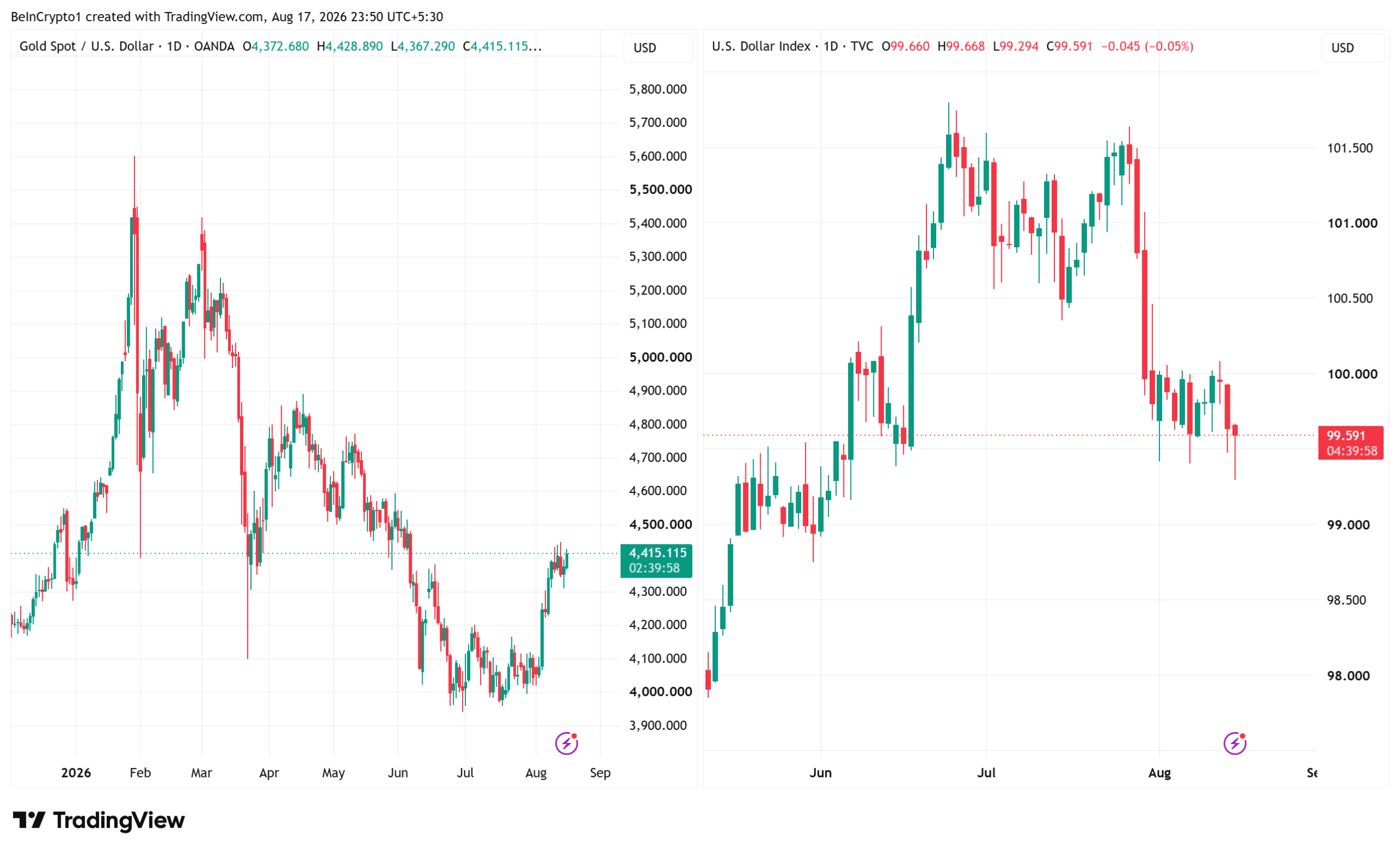
Peter Schiff picked the 55th anniversary of America’s break with gold to make a blunt case. The 1971 decision, he argues, is why the dollar is in trouble today.
Schiff is a founding member of Euro Pacific Asset Management. He made the argument on his weekend podcast. Washington defaulted on gold back then, he says, and the world is now leaving the dollar.
Why 1971 Still Shapes the Dollar Debate
President Richard Nixon closed the gold window on August 15, 1971. Foreign governments could no longer swap dollars for metal. The rate had been $35 an ounce.
“I have directed Secretary Connally to suspend temporarily the convertibility of the dollar into gold or other reserve assets… your dollar will be worth just as much tomorrow as it is today,” Richard Nixon, in his August 15, 1971 address.
Nixon called the move temporary. It has now lasted 55 years.
The promise about value aged worse. Federal price data shows a 1971 dollar buys roughly 12 cents of goods today. Consumer prices have climbed 718% since that August.
Schiff calls the move a default, not a technical fix. Federal Reserve notes promised gold, he says. Washington simply stopped paying.
Gold tells its own story. The metal closed Monday at $4,418, up 0.94%. That is about 126 times the 1971 price. The dollar looks soft rather than broken. It slipped to a three-month low against peers on Monday.

“We left gold in 1971. Now the world is leaving the dollar,” said Schiff.
Follow us on X to get the latest news as it happens
The Federal Reserve’s broad dollar index has lost only 1.8% in a year.
De-Dollarization Becomes the Next Test
Schiff’s bigger claim is that 1971 only finished half the job. The dollar lost value through the 1970s. Yet the world kept holding it anyway.
That habit paid for a lot. It let America buy more than it made. It let Washington borrow without a hard limit.
Federal debt reached $39.93 trillion on August 13. Roughly $65 billion now stands between the country and $40 trillion.

“The world is de-dollarizing. The world is going off of the dollar standard. It’s a process. It started. It hasn’t finished, but I think the economic consequences are going to be profound,” Schiff added.
He expects households to feel it first. Imports get pricier once trade deficits close. Living standards fall when a country can only spend what it earns.
BeInCrypto research ran a 55-year currency savings test on that question. Gold worked best as long-term insurance. The dollar still won on liquidity.
The Gold Bid Is Now a Central Bank Question
Schiff’s thesis has a testable part. If the world is really leaving the dollar, central banks should show it.
The gold half checks out. Central banks bought 289 tonnes in the second quarter, according to World Gold Council figures. That is 62% more than a year earlier.
The first quarter looked very different. Buying collapsed to 56.5 tonnes. Some governments sold metal to raise cash during the energy crunch.
Veteran strategist Jeff Currie built a framework around that swing. Currie once ran commodities research at Goldman Sachs and now advises Carlyle Group. Gold loses its biggest bid, he argues, when central banks turn into forced sellers. His long-run target is $10,000 an ounce.
The dollar half does not check out yet. The greenback’s share of world reserves rose to 57.13% in the first quarter, IMF figures show. It sat at 56.42% three months earlier.
The euro holds 20.03% of reserves. China’s renminbi holds under 2%. Earlier BeInCrypto analysis of dollar reserve share data found currency swings, not selling, drove most of a previous decline.
Bitcoin has not stepped into the gap either. Bitcoin price near $63,517 leaves it roughly flat over the past month. Gold climbed while it stalled.
So central banks are buying gold hard. They are not dropping dollars yet. Schiff’s 55-year argument now rests on whether those two lines finally cross.
The post Peter Schiff Links 1971 Gold Decision to Today’s Dollar Crisis: Will XAU Hit $5,000? appeared first on BeInCrypto.
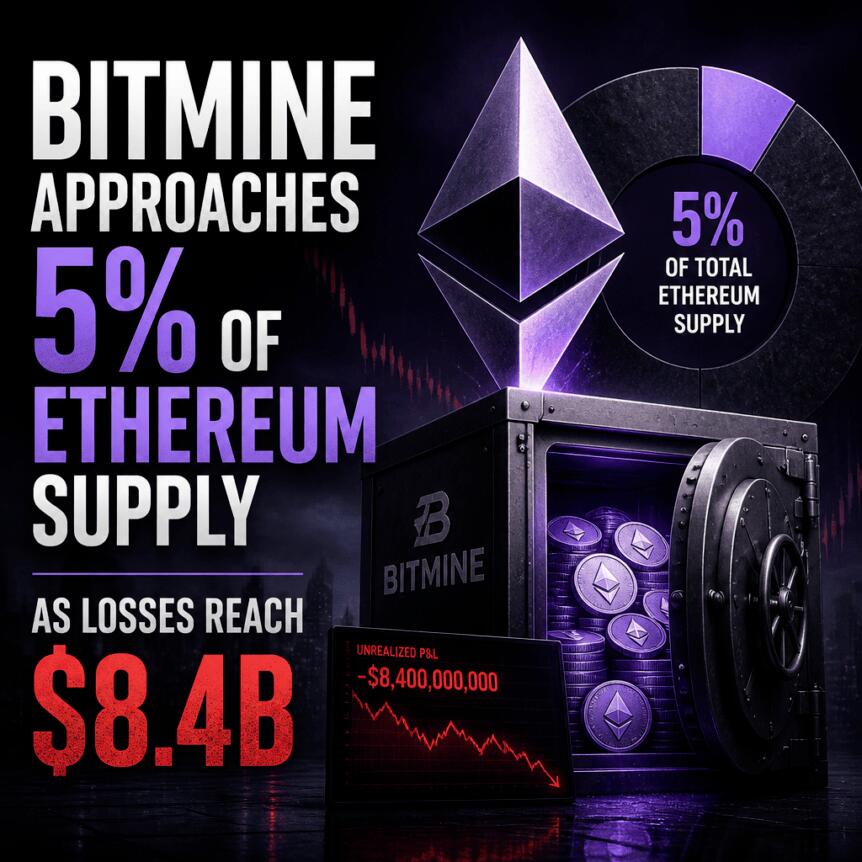
Tom Lee’s Bitmine Immersion Technologies has restarted a steady program of Ethereum treasury buying, adding 9,926 ETH during the week ending Aug. 16. The company says the purchase brings its Ether holdings to roughly 5.82 million ETH—about 4.8% of Ethereum’s circulating supply—putting it close to its long-term goal of owning 5% of the asset’s total supply.
In its disclosure, Bitmine also provided valuation context: at an ETH reference price of $1,893, the latest portfolio total is worth about $11 billion. But the company notes that many of its ETH were acquired at significantly higher prices, underscoring how difficult the prolonged bear market has been for Ethereum treasury strategies.
Key takeaways
- Bitmine bought 9,926 ETH for the week ending Aug. 16, lifting holdings to about 5.82 million ETH (around 4.8% of circulating supply).
- At a reference price of $1,893, Bitmine’s Ether stake is valued near $11 billion, though acquisition costs are substantially higher for a large portion of the position.
- Industry data cited by DropsTab estimates unrealized losses of more than $8.4 billion on the current ETH treasury.
- Despite the drawdown, Bitmine continues to stake more than 5 million ETH, which it says is generating protocol rewards.
- Bitmine’s staking yield was reported at 2.61% over seven days, implying roughly $287 million in annualized staking rewards, according to Tom Lee.
Restarting the “Alchemy of 5%” push
Bitmine’s strategy is built around scale and patience. After resuming purchases last week, the company is now within reach of its “Alchemy of 5%” target: holding 5% of Ethereum’s total supply. That target matters because it signals a treasury model designed to treat Ether as a long-duration bet rather than a tactical trading position.
According to Bitmine’s disclosure, the latest weekly buy also helps explain why the company continues to frame its program as a process rather than a series of opportunistic trades. The reported accumulation keeps the company moving toward a specific ownership threshold—one that would materially increase its influence and relevance as an institutional holder in Ethereum’s expanding ecosystem.
Unrealized losses remain a pressure point
The renewed buying comes even as Ether’s market environment has tested Bitmine’s conviction. The company is reported to be sitting on more than $8.4 billion in unrealized losses on its ETH holdings, based on industry data cited by DropsTab. DropsTab’s estimate places Bitmine’s unrealized losses at around 43% relative to the company’s reported acquisition costs, despite the current portfolio value being above $11 billion.
That mismatch—between the size of the position and the magnitude of drawdowns—highlights a key risk for any “buy-and-hold” treasury plan executed through a full market cycle. Even when a strategy is long-term, the path matters: buying during a downtrend can create large paper losses that only reverse if market prices recover meaningfully.
Staking helps fund the wait
What differentiates Bitmine’s approach from a simple spot accumulation strategy is its ongoing staking operation. The company said it is staking more than 5 million ETH, which it values at roughly $9.6 billion at current prices. By staking, Bitmine earns protocol rewards for helping secure the network—providing a source of yield that can partially offset the emotional and financial pressure of unrealized drawdowns.
Bitmine’s filing also links its staking activity to a measurable performance indicator. Based on a seven-day staking yield of 2.61%, Tom Lee projects annualized staking rewards of roughly $287 million. While annualized estimates can fluctuate—since staking yields depend on network conditions and how rewards are distributed—the point for investors is clear: Bitmine’s treasury is not entirely exposed to price movement. A portion of its return profile is tied to staking economics rather than only to Ether’s market direction.
Still, staking does not remove the core uncertainty. If Ether’s price does not recover, unrealized losses can remain large even while protocol rewards accrue. Conversely, if Ether rebounds, staking rewards can accelerate the path toward a healthier overall position—both in absolute returns and relative to acquisition costs.
Why steady accumulation is notable now
Bitmine’s restart of weekly Ether purchases suggests the company is treating the current phase of the market as compatible with its long-term ownership targets. Earlier coverage noted that Bitmine has continued accumulating Ether through weekly buys since launching its ETH treasury strategy in June 2025. In that context, the latest addition looks less like a reaction to short-term price action and more like execution of a defined roadmap.
For market observers, that matters because large treasury actions can act as a counterpoint to narratives that institutional interest fades during downturns. Even when unrealized losses mount, Bitmine appears willing to keep buying as it approaches its 5% target—while using staking yield to keep the strategy funded.
There is, however, an important asymmetry to watch. As Bitmine nears the 5% level, further buying can become harder depending on remaining supply dynamics and how the company structures future deployment. The company’s near-term challenge may shift from “can it keep accumulating?” to “how does it manage valuation risk and portfolio efficiency as its position grows?”
Next, investors and traders will likely focus on whether Bitmine can sustain weekly accumulation while Ethereum staking yields remain stable enough to support the projected reward rate. Just as importantly, readers should watch how fast the market price of Ether moves relative to Bitmine’s acquisition costs—because staking can soften the drawdown, but only a meaningful price recovery can fully relieve the unrealized loss picture.


Cointelegraph is committed to providing independent, high-quality journalism across the crypto, blockchain, AI, and fintech industries.
All news, reviews, and analyses are produced with full journalistic independence and integrity. For more details on our standards and processes, please read our Editorial Policy.


Ethereum researchers have proposed prioritizing two transaction changes for the 2027 Hegotá upgrade that could let privacy pools pay network fees without third-party intermediaries.
Summary
- Frame Transactions would give wallets more control over transaction validation, execution, and fee payment.
- FOCIL would make it harder for block builders to exclude eligible privacy transactions.
- 66 proposals remain under consideration, while FOCIL is the only confirmed Hegotá feature.
- Ethereum developers are targeting 2027 for Hegotá after the Glamsterdam upgrade ships in 2026.
Ethereum Foundation researcher Toni Wahrstätter said in an Aug. 17 X post that the Protocol Architecture team wants developers to prioritize Frame Transactions, listed as EIP-8141, and Fork-Choice Enforced Inclusion Lists, known as FOCIL or EIP-7805.
Ethereum privacy pools could pay their own fees
Frame Transactions would introduce a programmable transaction format that gives wallets more control over validation, execution, and gas payments. Wahrstätter described frames as a “much more expressive transaction format” and a key part of Ethereum’s planned transaction experience.
Under the proposal, transaction logic would be divided into programmable frames instead of relying on Ethereum’s current fixed transaction structure. Wallets and applications could use the format for gas sponsorship, alternative signature systems, key rotation, and other forms of account abstraction.
For privacy pools, the fee-payment feature could remove the need for a separate relayer to submit a transaction and pay its gas. Relayers can create another point where transaction details, wallet behavior, or network information may become visible to an outside service.
“Together with Frames, these enable privacy pools where the pool itself can pay fees, removing the need for intermediaries,” Wahrstätter said. “Add FOCIL support, and privacy transactions also gain protocol-level inclusion guarantees.”
Frame Transactions would work with Keyed Nonces and Recent Roots, listed as EIP-8272. Keyed Nonces would let an account maintain separate transaction sequences, while Recent Roots would allow a transaction to refer to a recent Ethereum state without relying on one fixed block reference.
The proposed package also includes Transaction Assertions, or EIP-7906. According to Wahrstätter, assertions would let wallets define conditions that must remain true when a transaction is processed, giving users a way to limit what can happen after they sign and submit it.
Earlier crypto.news coverage found that EIP-8141 remains under consideration rather than scheduled for Hegotá. Ethereum client teams are also comparing it with EIP-8130, another account-abstraction proposal, before deciding which design should move into implementation and testing.
FOCIL would protect eligible transactions from censorship
FOCIL is the only Ethereum Improvement Proposal currently scheduled for Hegotá. The design would allow a committee of validators to publish lists of transactions that block builders are expected to include.
Attesters could reject a proposed block if its builder improperly left out eligible transactions from an inclusion list. Ethereum developers have presented the system as a way to protect transaction access as block production becomes more specialized and concentrated among large builders.
Privacy transactions could benefit because users would not have to depend entirely on a block builder’s willingness to include them. FOCIL would not make transactions private on its own, but it would add a protocol process for resisting selective exclusion.
Wahrstätter has argued that combining FOCIL with Frame Transactions, Keyed Nonces, and Recent Roots would give privacy pools both independent fee payment and stronger inclusion protection. His proposal represents a researcher’s preferred package, not a final decision by Ethereum’s core developers.
Hegotá currently has 66 proposals under discussion, covering account abstraction, censorship resistance, transaction pricing, state growth, validator economics, and network scaling. The number does not mean all 66 features will ship, as most have not entered implementation, development networks, or public testnets.
“A fork can’t be a wishlist by the community or core devs jamming on what Ethereum should eventually become,” Wahrstätter wrote in an earlier post. Developers instead need to decide which changes Ethereum should adopt next and which ones require more time, he added.
US scrutiny has kept crypto privacy tools in focus
For US users, the proposals concern how Ethereum processes private transactions rather than changing federal rules governing money transmission, sanctions, or illicit finance. American treatment of crypto privacy software has remained contested across Treasury actions and criminal cases involving mixing services.
The US Treasury removed economic sanctions against Tornado Cash in March 2025 after reviewing the legal and policy questions raised by applying sanctions to technology-based financial activity. Treasury said at the time that it remained concerned about North Korean hackers and other illicit actors using digital assets.
In a separate criminal case, a Manhattan jury convicted Tornado Cash co-founder Roman Storm in August 2025 of conspiring to operate an unlicensed money-transmitting business. Jurors did not reach verdicts on the money-laundering and sanctions charges, according to the reported split verdict.
The US Justice Department said Tornado Cash had transmitted more than $1 billion in criminal proceeds, including funds connected to North Korea’s Lazarus Group. Storm’s defense maintained that the protocol operated through autonomous open-source software and that its developers did not control individual transactions.
Ethereum’s proposed privacy pool design differs at the protocol level because Wahrstätter’s post deals with fee payment and transaction inclusion, not the legal structure or compliance systems of a specific application. Neither EIP-8141 nor EIP-7805 defines how privacy applications would handle US sanctions screening, money-transmission rules, or other compliance requirements.
Hegotá follows Ethereum’s 2026 Glamsterdam upgrade
Hegotá is scheduled to follow Glamsterdam, the Ethereum upgrade developers want to release before the end of 2026. A June upgrade report said Glamsterdam centers on Enshrined Proposer-Builder Separation and Block-Level Access Lists, alongside changes to the way Ethereum prices network resources.
Enshrined Proposer-Builder Separation would bring the division between block proposers and builders into Ethereum’s protocol. Block-Level Access Lists would show which accounts and contract data a block needs, allowing clients to prepare data before execution and process some transactions in parallel.
Hegotá candidates extend that work into privacy, censorship resistance, account abstraction, and state management. Scaling proposals under review include EIP-8368, which would adjust state-creation costs if Ethereum raises its gas limit beyond the level used for Glamsterdam.
Developers are also studying separate access-list data, higher gas limits approaching 500 million to 600 million, and optional zero-knowledge Ethereum Virtual Machine proofs on the main network. Each proposal must compete for engineering resources, client support, testing time, and space within the 2027 release schedule.
Privacy and quantum resistance also sit inside Ethereum’s multi-year technical plans. A July roadmap analysis reported that Vitalik Buterin’s Lean Ethereum plan calls for new cryptography, proof-based verification, redesigned storage, and native protocol privacy over the next three to four years.
Execution client teams are due to submit their Hegotá preference lists by Sept. 10. Before then, developers plan to compare EIP-8141 with EIP-8130 during an Aug. 25 breakout meeting, with a decision on the competing account-abstraction designs targeted for the Aug. 27 All Core Developers Execution call.

And it’s projected to become more prevalent in the near future, says Dr. Kenneth Rockwood, a professor of medicine at Dalhousie University in Canada who developed one of the scales for diagnosing frailty. “It’s the demographic imperative,” he says. “In 2021 the leading edge of the baby boom generation turned 75 years old, and 75 is the age at which most of the diseases of aging take off. So now frailty is not some mystical, mythical far-off thing.”
However, frailty is not inevitable—and to some extent, it’s possible to undo some of the damage. Here’s what to know.
How can you tell if you’re frail?
One of the best ways to identify frailty is a comprehensive geriatric assessment, in which a team of health care professionals look at many different aspects of an aging person’s health to get a sense of the bigger picture. But some potential tell-tale signs doctors might check for, and that you might notice on your own, include walking slowly—less than approximately 2.6 ft. (or 0.8 meters) a second, one study suggests—and taking more than 10 seconds in what’s called a “timed up and go test,” in which a person is timed getting up from a chair, walking for almost 10 ft. (3 meters), turning around, walking back, and sitting down. With frailty, “you can’t tell at a glance, but it doesn’t take that long [to detect] if you know what questions to ask…if you can see the person move,” says Rockwood.
Crypto World
Supreme Court Once Again Rejects President Donald Trump’s Appeal in E. Jean Carroll Sexual Abuse Case

Trump argues that presidential immunity applies
Carroll’s team had previously brought a defamation suit against Trump in 2019, pertaining to disparaging remarks he’d made about her while in office. A federal jury ruled in her favor in 2024, ordering Trump to pay $83.3 million. His team is currently asking the Supreme Court to review that decision.
Trump’s legal team believes that the defamation case relating to remarks made while in office should be covered by presidential immunity.
Martinich-Sauter separately submitted a petition for rehearing the sexual abuse and defamation case in July. He argued that presidential-immunity questions relevant to the pending case could also affect the $5 million judgment, since that trial featured the same remarks as evidence.
“That is a paradigmatic reason to at least hold a petition,” read the request from Martinich-Sauter.
He cited Supreme Court precedent from another one of the President’s personal legal battles, involving claims of interference with the 2020 election. The Supreme Court vacated the lower court’s decision in 2024 and ruled that former Presidents have immunity from criminal prosecution for certain official acts, but not for unofficial acts.
Crypto World
Kentucky Gov. Beshear Says He’s ‘Heard Absolutely Nothing Back’ About McConnell’s Health
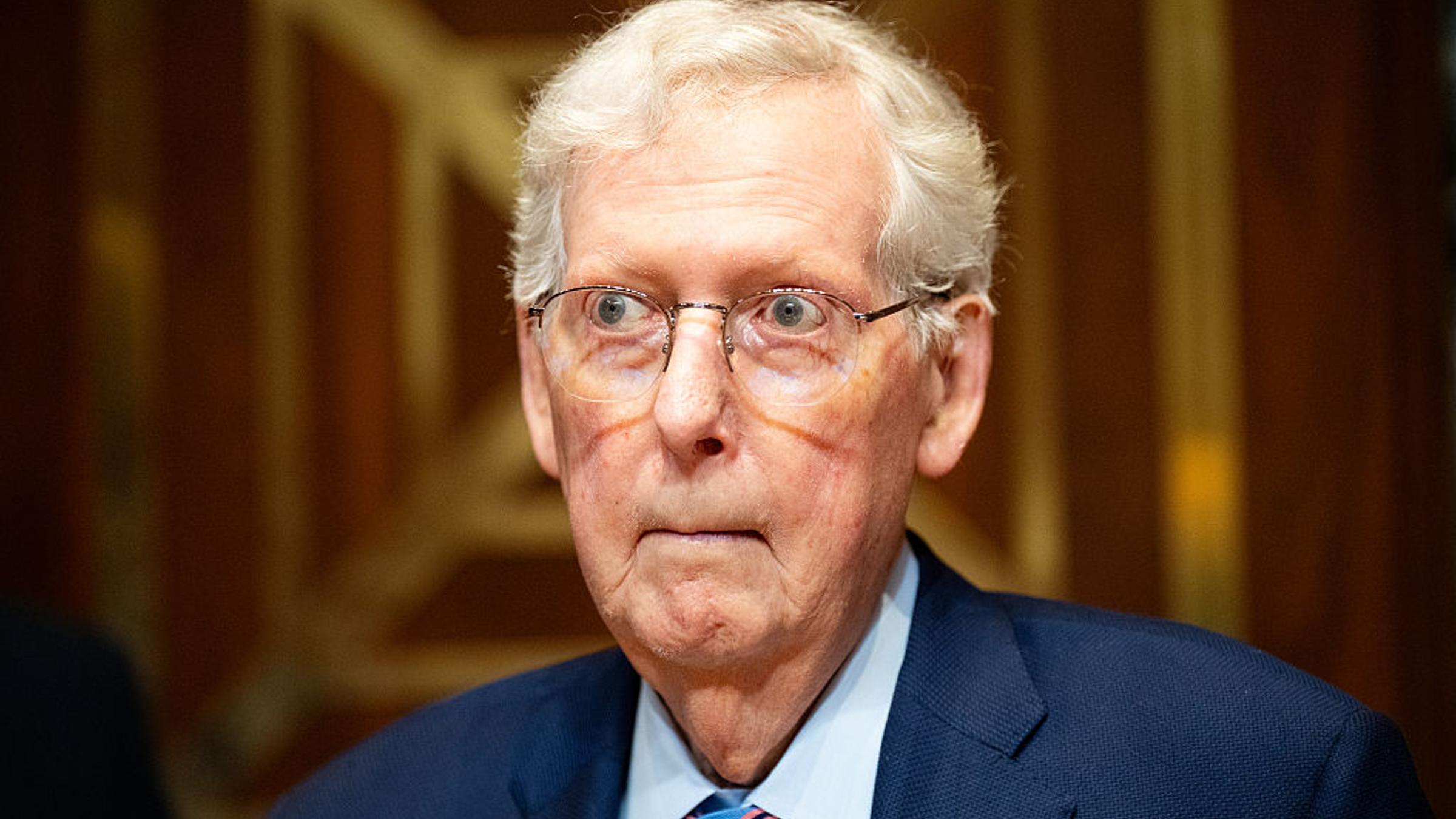
Four days after Beshear’s letter, McConnell offered his first public statement since his hospitalization began, saying that he went to the hospital after a fall. He said that his doctors confirmed that he didn’t sustain major injuries, such as broken bones, a concussion, or a stroke, but he was “briefly unconscious” after his fall. He also said he grappled with “a mild case of pneumonia” while he was hospitalized. He revealed that he had since “been able to move from hospital care to a rehabilitation center.”
On July 27, McConnell shared another update on his health, saying that he was still working toward returning to the Senate and was “keeping up with intense physical therapy.” His statement was accompanied by a message from Congress’ Office of the Attending Physician, which said that McConnell was “not yet medically cleared to leave the rehab facility and return to the office.”
“Since his discharge from hospital care, he has maintained a strenuous course of physical therapy and rehabilitation, including multiple sessions a day designed to rebuild strength and reduce the risk of future falls,” the office said. “His bout with childhood polio continues to be a significant factor in his mobility.”
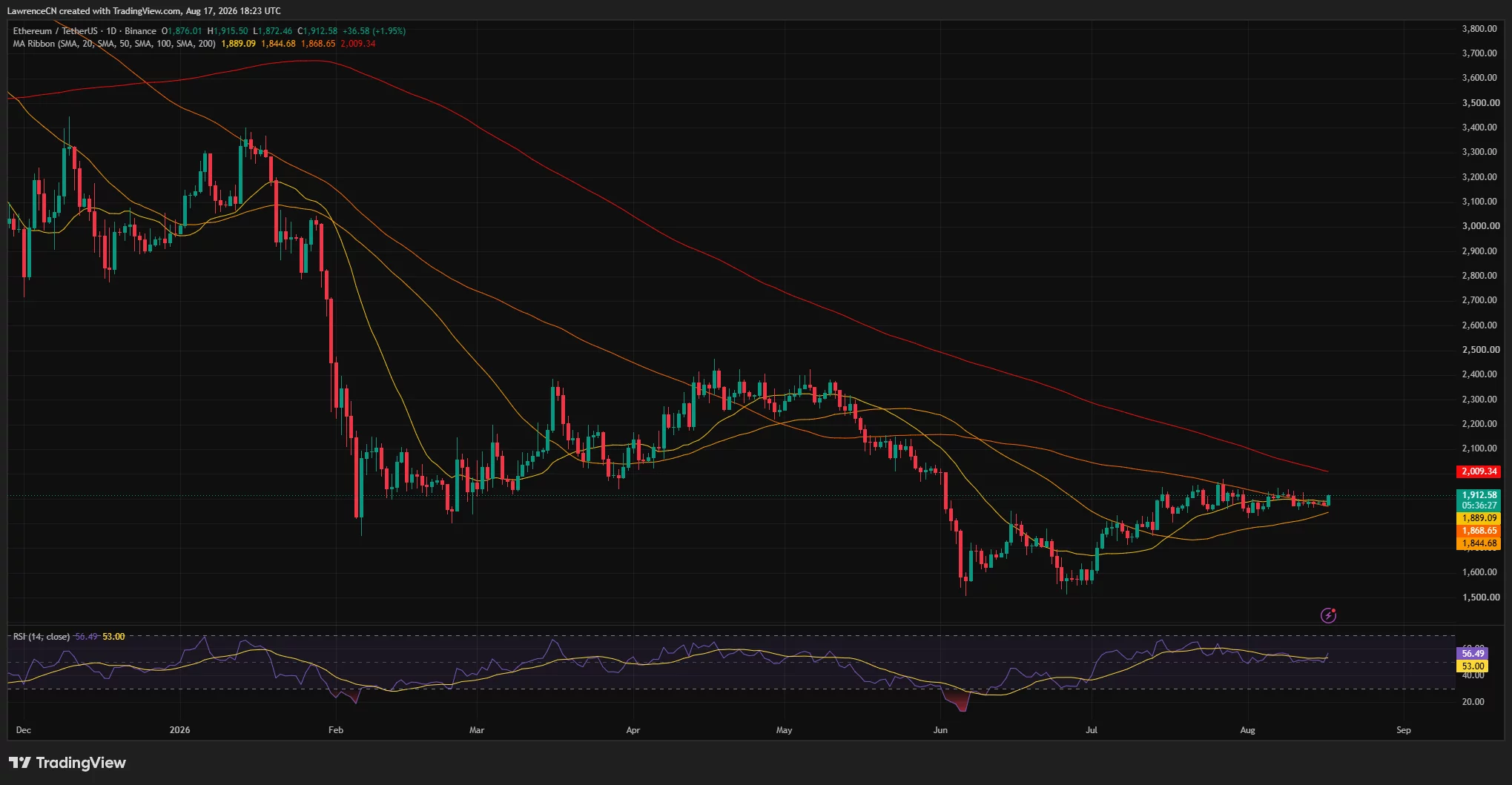
Ethereum price rose nearly 2% on Aug. 17 as ETH reclaimed $1,900, while improving daily momentum and nearby short-liquidation clusters put the $2,000 level back in focus.
Summary
- Ethereum price rose 1.95% to $1,912 after buyers defended the $1,870 area.
- ETH closed above its 20-day, 50-day, and 100-day moving averages.
- Tom Lee responded positively to the analysis placing ETH 3.5% below its daily cloud.
- Michaël van de Poppe sees $2,800 as possible if ETH clears $2,000.
Ethereum price moves back above $1,900
According to data from crypto.news, Ethereum (ETH) price traded at $1,912 at press time, up 1.95% on the day after moving between an intraday low of $1,872 and a high of $1,915. Buyers entered near the session low and carried ETH through the psychological $1,900 level.
The recovery extended a consolidation phase that has developed since ETH rebounded from its late-June low near $1,530. Price has since formed a series of higher lows, although repeated selling around $1,930–$1,960 has prevented a wider breakout.
ETH’s daily candle closed above several closely watched averages. The 20-day simple moving average stood at $1,889, while the 100-day and 50-day averages were positioned at $1,869 and $1,845, respectively. Holding above those lines would preserve the improving short-term structure.
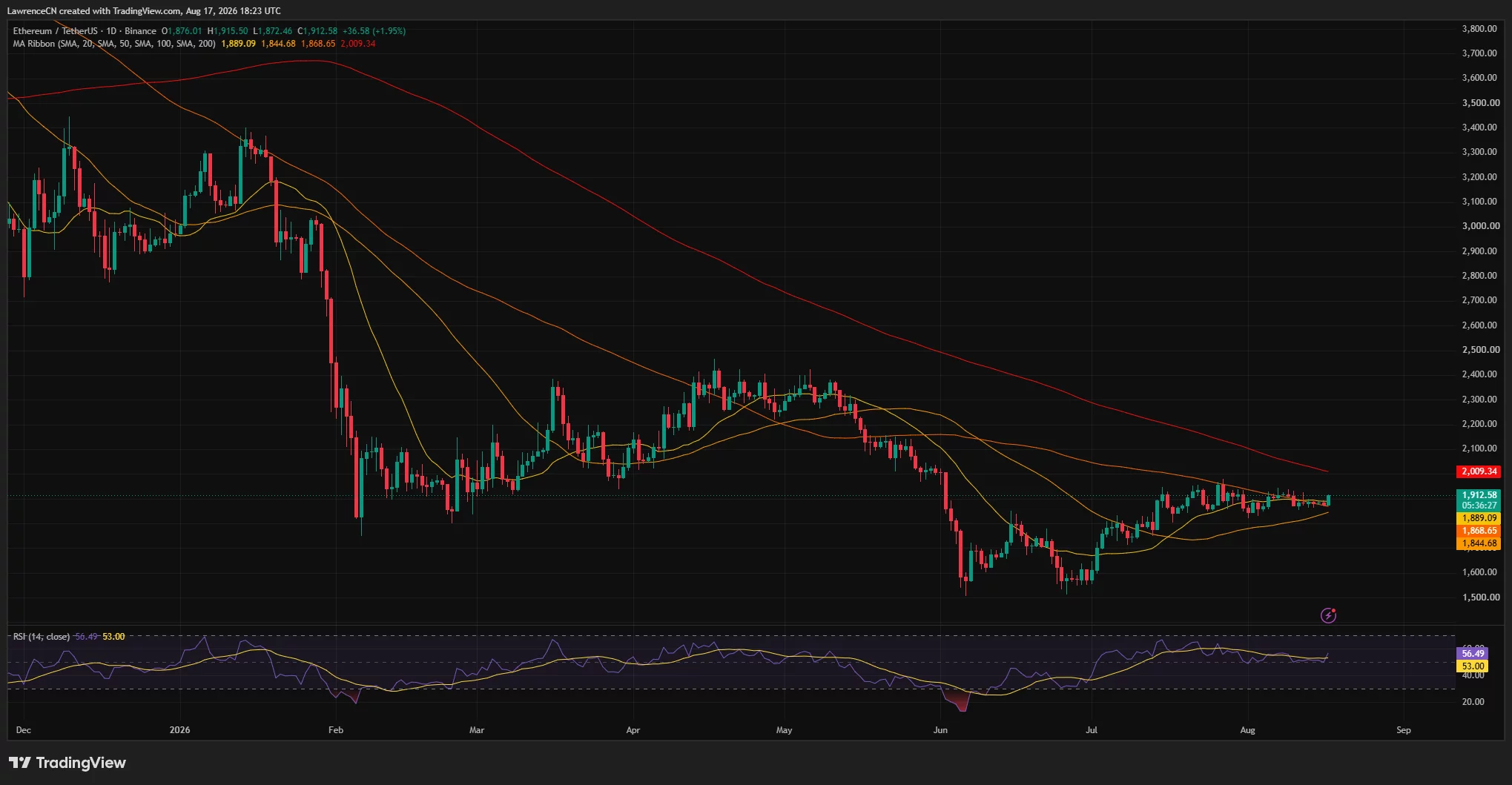
The daily relative strength index rose to 56.5, above its signal average of 53. An RSI above 50 shows that buying momentum has strengthened, but the reading remains well below overbought territory.
Longer-term pressure has not disappeared. Ethereum remains below its declining 200-day moving average at $2,009, making the area around $2,000–$2,010 a more important test than the initial move through $1,900.
Tom Lee watches Ethereum’s daily cloud
Fundstrat co-founder and BitMine chairman Tom Lee reposted an analysis from MacroCRG that placed ETH about 3.5% below its daily Ichimoku Cloud. The analyst described a move above that layer as a legitimate breakout because Ethereum has not traded decisively above it since Oct. 9, 2025.
“Would be good to see,” Lee wrote in response.
The original technical assessment came from MacroCRG rather than Lee. His comment only expressed support for the prospect of a breakout and did not include a price forecast.
At ETH’s current price, a 3.5% advance would take the token close to $1,980. The calculation places the cloud breakout area just below the $2,000 psychological barrier and the 200-day moving average visible near $2,009 on the supplied daily chart.
A daily move into that region would therefore confront three forms of resistance within a narrow range: the Ichimoku Cloud, the $2,000 round-number level, and the 200-day average. ETH would need to hold above the zone, rather than briefly trade through it, to establish a stronger daily reversal.
Liquidation clusters build on both sides of ETH
The one-week CoinGlass liquidation heatmap shows the closest concentrated leverage above Ethereum around $1,925. A stronger pool appears between roughly $1,945 and $1,950, with additional liquidity extending toward $1,960.
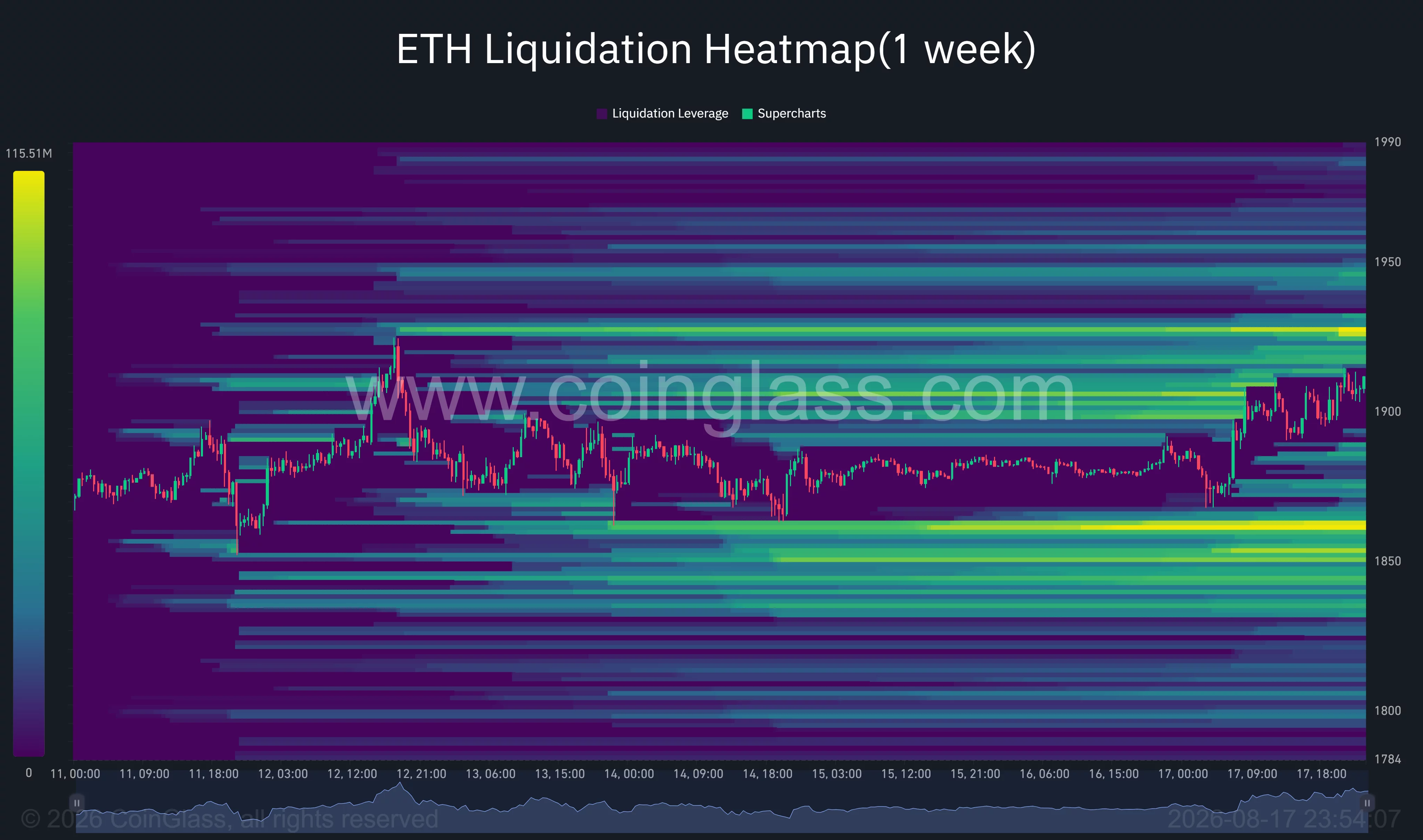
A move through $1,925 could force some bearish positions to close, adding market purchases to the existing demand. Clearing the larger $1,945–$1,950 band could then accelerate a test of the upper-$1,900 region.
The map also shows a major cluster around $1,910, but ETH had already moved through much of that area by the end of the chart. Remaining overhead liquidity near $1,925 now represents the closest possible target.
Downside exposure is concentrated near $1,860, with a wider and denser band between approximately $1,835 and $1,855. If ETH loses $1,870, the lower pools could draw the price toward that region and trigger long liquidations.
Liquidation heatmaps identify areas where leveraged positions may face forced closure, but they do not determine which zone price will reach first.
Analysts identify $1,870 as the key downside level
Analyst Michaël van de Poppe said Ethereum’s daily chart was improving as the asset continued to form higher highs and higher lows. Based on that construction, he considered an upside break more likely than an immediate loss of support.
Van de Poppe nevertheless warned that ETH could fall quickly if it loses $1,870 because substantial long-side liquidity sits below the market. He identified $1,700 as a possible downside target before a rebound if that breakdown occurs.
His bullish scenario requires a clear move through $2,000. Van de Poppe said ETH may not spend much time near that level once it breaks, potentially producing a sharp advance similar to moves observed earlier in 2025.
The analyst identified $2,200 as a possible temporary stopping point before a broader run toward $2,800. Those targets remain conditional on Ethereum first breaking and holding above $2,000.
$2,000 remains the deciding level for Ethereum
The immediate market structure favors buyers while ETH remains above its cluster of daily moving averages. Support sits at $1,889, followed by $1,870 and the $1,845–$1,860 region shown across the daily chart and liquidation map.
On the upside, bulls first need to clear leveraged resistance near $1,925 and $1,950. The larger technical decision would come around $1,980–$2,010, where MacroCRG’s cloud estimate, the psychological $2,000 mark, and the 200-day average converge.
US-listed spot Ethereum exchange-traded funds recorded a modest net outflow of $2.26 million during the Aug. 10–14 trading week, according to SoSoValue data. BlackRock’s ETHA posted $16.39 million in weekly withdrawals, indicating that the latest price recovery has yet to receive clear support from US ETF demand.
A daily close above $2,010 would improve Ethereum’s longer-term structure and open the path toward the levels cited by van de Poppe. Failure to hold $1,870 would weaken the setup and expose the liquidation-heavy zone below $1,860.
Disclosure: This article does not represent investment advice. The content and materials featured on this page are for educational purposes only.

Paramount and Warner Bros logos are seen in this illustration.
Dado Ruvic | Reuters
Prediction markets traders still see Paramount Skydance as likely to succeed in its bid to acquire Warner Bros. Discovery, but a battle in court with 12 state attorneys general is increasing the chances that the merger falls through.
Traders on prediction market platform Kalshi think that there’s a 74% likelihood that Paramount will acquire Warner Bros. by July 2027, while there are 22% odds that a deal doesn’t go through by that date.
Before California and 11 other states sued to block the merger on July 13, odds Paramount would succeed in acquiring the company were over 80%. However, the likelihood the merger would be successful fell to as low as 66% on July 24 when Paramount announced it would delay the acquisition to 2027.
On Kalshi, speculators are asked in the market who will successfully take over Warner Bros. before July 2027, and contracts are resolved from news reports, official press releases and or government filings.
Meanwhile, on platform Polymarket, odds are a similar 23% that no acquisition succeeds by June 30, 2027. The contracts on Polymarket are resolved using a consensus of reporting.
The merger’s termination date is March 4, 2027, and that date automatically extends to June 4, 2027, if only regulatory obstacles remain.
A federal judge set a March 2027 trial date for the states’ lawsuit. Paramount said before the date was announced that it wouldn’t complete the acquisition until a court ruling on the states’ claims or until June 1, 2027, whichever comes first. If the deal doesn’t close by Sept. 30, Paramount will owe 25 cents per share, per quarter to Warner Bros. shareholders until the transaction is finalized.
Last week, the Directors Guild of America and International Alliance of Theatrical Stage Employees wrote a letter to California Attorney General Rob Bonta — who has taken the lead in the states’ case against the merger — and Paramount CEO David Ellison, calling on them to negotiate a solution or push to move the start date of the trial earlier to avoid prolonged uncertainty.
Disclosure: CNBC and Kalshi have a commercial relationship that includes customer acquisition and a minority investment.

Bitcoin price prediction shows it trading at $62,800, down -1.4% on the day, holding a range that’s frustrated bulls and bears alike for two weeks straight. A macro investor just made the case that the consolidation won’t last, and his reasoning has less to do with charts than with what the US government is telling markets without saying it out loud.
Jordi Visser, speaking on the Wolf of All Streets podcast, argued that Washington’s yen intervention is a tell: the government is under fiscal strain, and money printing tends to follow. His top vehicle to capture that? Bitcoin.
Visser also connects BTC to the AI trade, not as a correlated asset, but as the deflationary hedge investors will want once AI drives the cost of goods toward zero. Scarcity, in that world, becomes the whole pitch.
Spot ETF flows tell a messier story. Roughly $385M exited Bitcoin ETFs last week as the price slipped by nearly 3%, even as inflows in early August topped $1.1Bn, reflecting a tug-of-war between profit-taking and structural demand.
Bitcoin Price Prediction: Can BTC Hit $67K This Week?
BTC sits at $62,800, down -1.4% intraday, inside a tightening band that’s held since early August. The Fear & Greed Index reads 31 (Fear) despite the modest daily gain, a disconnect worth sitting with.
Support clusters in the $61,800–$64,500 zone, aligned with the 20- and 50-day moving averages; a daily close below $61-62K would flip the structure bearish.
Deeper cycle support sits near $58,200–$59,800, viewed by technicians as the line separating “healthy pullback” from “trend break.”
Bull case: a decisive break above $67,000 confirms the ascending triangle, opening a path to $71,200–$73,200 and eventually retesting the $78,350 June high.
Base case: continued chop between $61,800 and $66,500 while ETF flows stabilize.
Bear case: a close under $61,800 triggers momentum selling toward the $58K zone. Watch the next round of ETF flow data before positioning either direction.
Trade BTC on Bybit and Get a Chance to Win Our $1,000 USDT Airdrop
Bitcoin Hyper Targets Early Mover Upside as Bitcoin Tests Key Levels
Holding BTC through this range has been validating that, if unspectacular, sub-1% daily moves don’t exactly print generational wealth. At a $1.2 trillion-plus market cap, Bitcoin’s structural upside is real but slow; a move from $63K to $78K is a 23% swing that takes weeks.
Capital chasing faster asymmetry is rotating toward infrastructure plays built atop Bitcoin itself, and that’s where Bitcoin Hyper ($HYPER) enters the conversation.
Bitcoin Hyper is positioning itself as the first Bitcoin Layer 2 with native Solana Virtual Machine integration, a combination designed to deliver smart contract execution faster than Solana while settling to Bitcoin’s base layer.
The presale has raised $33,030,255.21 at a current token price of $0.0136848, with staking rewards live at launch (APY unspecified).
Core features include a decentralized canonical bridge for BTC transfers and low-latency, low-cost transaction execution, addressing Bitcoin’s longstanding programmability gap.
Visit the Bitcoin Hyper Presale Website Here.
Discover: Your Market Calls Are Worth Something. Start with a free $25 on Kalshi
The post Bitcoin Price Prediction: BTC AI Trade Driving BTC Forecasts appeared first on Cryptonews.
BWS Financial cuts Inter Parfums stock rating on earnings concerns

Peter Schiff Links 1971 Gold Decision to Today’s Dollar Crisis: Will XAU Hit $5,000?

Vikings Fill Open Roster Spot with a Young Corner


-

 Fashion3 days ago
Weekend Open Thread: Ann Taylor
-
 NewsBeat6 days ago
Communication cards help banking customers access services or report scams
-
 Business7 days ago
Oil Price Today (August 11): Crude oil rises to $88 after Trump’s compensation demand dents Hormuz opening. Here’s why
-

 Crypto World7 days ago
Revolut wins French banking licence, creates second EU banking hub
-
 Sports4 days ago
This U.S. Amateur is a glimpse into golf’s future in more ways than you think
-
 Crypto World7 days ago
Why Did Nvidia Stock Fall on Monday Despite a $500 Billion Wall Street AI Deal?
-

 Sports3 days ago
Birmingham 2026: Day 6 Timetable for Irish Athletes
-
 NewsBeat3 days ago
Myanmar says over 300,000 Rohingya refugees verified for repatriation as exodus enters ninth year
-

 Politics2 days ago
SEQ Code: The Three Letter Boarding Pass Code That Could Give You The Worst Seat
-
 Entertainment5 days ago
Keke Palmer Subtly Hints At Sean Evans Drama With Cryptic Post
-
 Entertainment7 days ago
57 Years Later, the Best Sitcom Ever Made Still Deserves a Reboot
-

 Fashion6 days ago
Coffee Break: The Fonteyn Jane Flat
-

 Tech6 days ago
Zoom Screen-Sharing Bug Let People Fully Take Over Other Devices On A Call
-

 Crypto World7 days ago
Bitcoin's BIP Editors Remove Luke Dashjr Two Days After BIP-110 Fork Stalled
-

 Fashion6 days ago
Claire Life: Kicking Off MVAAFF With the C Suite Luncheon Featuring Phylicia Rashad, Letoya Luckett, and More!
-

 Fashion6 days ago
Should you refinance your debt? Pros, cons, and real numbers
-
 Crypto World6 days ago
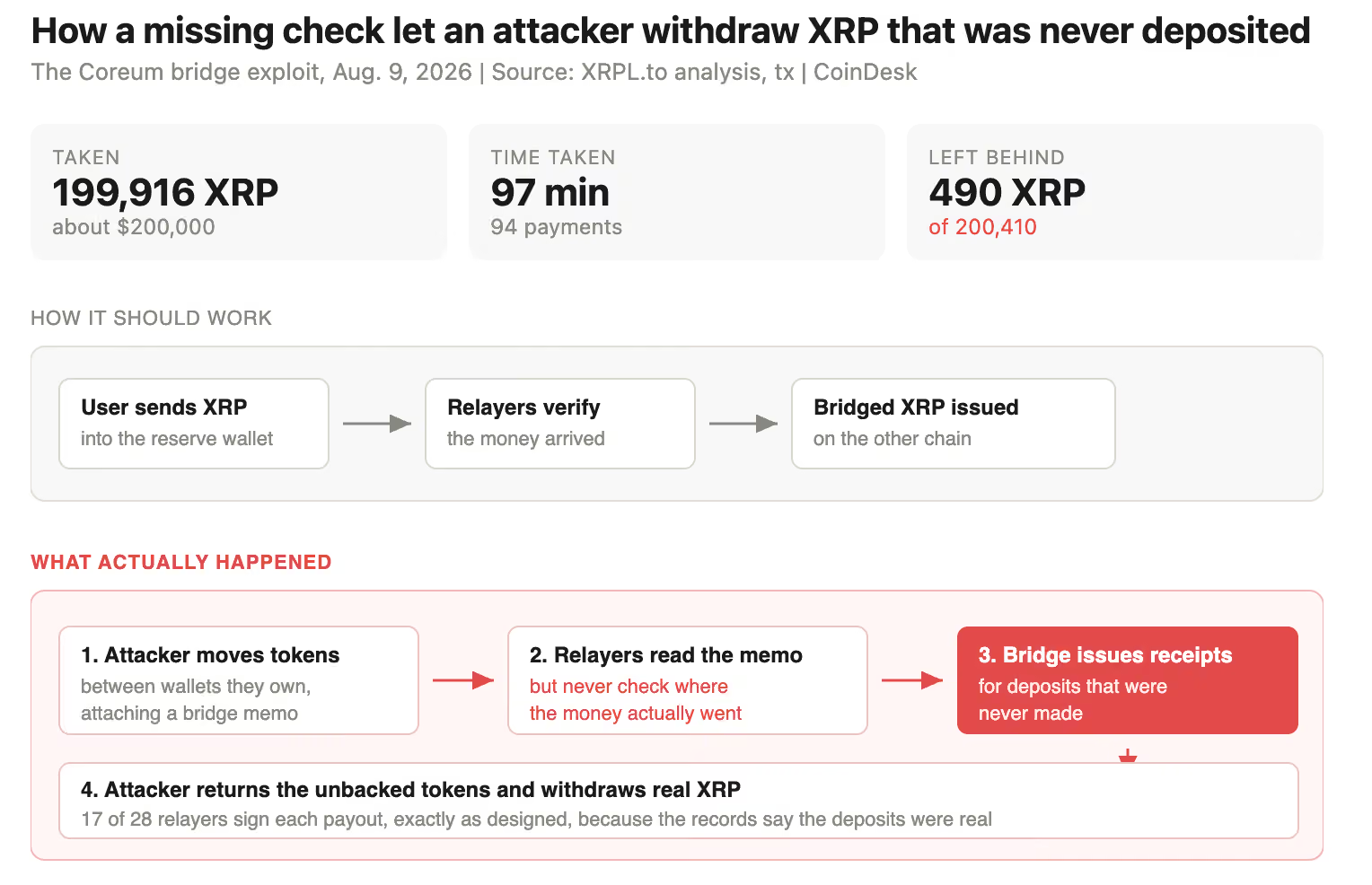
XRP bridge drained after software mistook fake deposits for real ones
-

 Sports5 days ago
DeQuan Jones in ‘high spirits’ after successful leg surgery
-
 Tech7 days ago
Zuck rekindles open weights Llama drama with Muse Glimmer
-

 Business7 days ago
(VIDEO) Emirates Unveils 2.4-Meter Arsenal Crest Sculpture Built From Recycled A380 And Boeing 777 Jet Parts
You must be logged in to post a comment Login