
Crypto World
Crypto investors should not judge seed startups by recurring revenue, Truth Ventures CEO says



Truth Ventures CEO Varun Datta has urged crypto investors not to demand recurring revenue from seed-stage companies, as RootData has listed 99 crypto projects that closed, entered bankruptcy, or became inactive in 2026.
Summary
- RootData listed 99 crypto projects as closed, bankrupt, or inactive by late July.
- Galaxy recorded $4 billion across 355 crypto venture deals in the first quarter.
- Datta said seed startups should be assessed through founder knowledge and their path to a viable business.
- US-based companies received 70.2% of crypto venture capital during the first quarter.
RootData listed 99 crypto projects that had announced closures, entered bankruptcy, or remained unavailable for long periods by late July, according to a recent crypto.news report. The database includes several types of inactivity, meaning its total should not be presented as 99 insolvencies.
As companies disappear from several parts of the market, investors are examining whether crypto products can retain users and support operating costs without depending on rising token prices. Datta told crypto.news that such tests may be suitable for established businesses but could produce the wrong assessment when applied to companies at the start of their development.
“The market shakeout is evident, but the lessons we are learning primarily apply to established companies. It is unfair to expect a new team to show recurring revenue. They are simply too early in their journey for those metrics.”
His comments draw a distinction between accepting an unworkable business and recognising that a new company may not have had enough time to build recurring income. Applying revenue standards designed for a later funding round to a pre-seed company, he said, could prevent investors from examining the qualities that matter at its current stage.
Crypto investors are putting more money into mature companies
Galaxy Research reported that venture firms invested about $4 billion across 355 crypto and blockchain deals during the first quarter of 2026. Funding declined 50% from the previous quarter, while the number of deals fell 16%.
According to Galaxy, the difference between the two declines resulted mainly from a reduction in large, later-stage financings after a strong fourth quarter. Smaller seed and early-stage deals continued, although later-stage companies received 57% of invested capital, leaving 43% for younger businesses.
Pre-seed rounds accounted for 19% of completed deals, while later-stage transactions rose to one-quarter of the total. Galaxy said the increase in the later-stage share indicated that parts of the crypto industry were maturing, even as new projects continued to secure funding.
Available capital is also concentrated in a small number of business categories. Trading, exchange, investing, and lending companies collected about $2.6 billion, close to three-fifths of all crypto VC money deployed during the quarter.
Infrastructure companies completed 56 deals, the second-highest total by category. Web3, NFT, decentralized autonomous organization, metaverse, and gaming companies followed with 39 transactions, while payment and rewards businesses recorded 33.
April data offered another example of capital concentration. As fundraising figures showed, centralized finance companies raised about $606 million of the approximately $860 million disclosed across 55 crypto funding events that month. Infrastructure companies secured $105 million across 14 deals, while DeFi businesses raised $90 million across 19.
Seed startups require a different investment test
For Datta, early-stage investors should begin with the founder’s knowledge of the problem rather than revenue figures that may not exist. Product design and the value delivered to users, he said, provide more suitable evidence when a company has only recently begun operating.
“At the seed stage, the real indicator of success has never been revenue. It stems from the founder’s profound understanding of the problem at hand.”
Products must solve a genuine problem instead of using a token as the main fundraising tool, according to the venture capitalist. He attributed the failure of many crypto projects to attempts to replace a working commercial model with speculation around their tokens.
Datta described such failures as problems of vision rather than proof that early-stage investing itself is defective. In his view, protecting seed companies from unsuitable revenue tests does not require investors to overlook weak products or teams.
“This isn’t about protecting weak businesses,” he said. “It reminds investors not to use growth-stage criteria for brand-new startups.”
Under the approach outlined by Datta, investors would examine how a product could gain users before its available capital runs out. They would also assess whether the founders have identified a route from initial product development to a company capable of supporting itself.
Reviewing an existing revenue statement would be easier, he said, but venture firms backing new companies must evaluate an unproven plan with limited operating data. Datta described the process as an essential part of early-stage venture investing.
Crypto venture funds are competing for limited allocations
Galaxy also found that crypto-focused venture firms raised about $1.1 billion across eight new funds during the first quarter. The number of newly raised funds was the lowest recorded since the third quarter of 2020.
Fundraising conditions remained difficult because AI companies, spot crypto exchange-traded products, and digital asset treasury businesses competed for institutional allocations, according to the research firm. If the first-quarter pace continued for a full year, crypto venture funds would raise about $4 billion in 2026, below the $8.75 billion raised in 2025.
Competition for capital has not removed investor interest in companies serving a specific commercial market. In a separate interview, Moon Pursuit Capital founder Utkarsh Ahuja said investors should separate scientific progress from a business model that customers will pay to use. The infrastructure funding discussion covered security, cryptography, and quantum-readiness companies, but Ahuja said such businesses still require an adoption plan that does not depend on a rapid technical breakthrough.
Galaxy found that the median crypto deal exceeded $4.5 million in the first quarter, its highest recorded level. However, the research firm cautioned that valuation information was available for only 12% of completed deals and leaned heavily toward later-stage companies.
US crypto startups captured 70% of invested capital
US-headquartered companies received 70.2% of all crypto venture capital deployed during the first quarter, according to Galaxy. American companies also accounted for 43.5% of completed deals, followed by the United Kingdom at 5.3% and Singapore at 4.5%.
The US figures indicate that decisions over seed-stage requirements could have a particularly large effect on American crypto founders seeking institutional backing. Galaxy’s data does not show which individual screening standards investors applied, but it establishes that most capital flowed to companies based in the United States.
Datta said early investors should focus on companies building toward sustainable models across Web3 and AI. Truth Ventures invests from pre-seed through later Series rounds, according to the CEO, with an emphasis on founders developing products around identifiable problems.
The firm’s stated investment focus includes Web3 infrastructure, decentralized applications, and digital financial systems. Datta said Truth Ventures is accepting pitches from infrastructure founders while working with companies from their initial ideas through subsequent growth rounds.

Disclosure: This article does not represent investment advice. The content and materials featured on this page are for educational purposes only.
BlockDAG’s presale stage pricing highlights how entry timing can affect allocation size, as investors weigh acting early against waiting for more confirmation.
Summary
- Two investors put $500 into BlockDAG, but their entry timing could create a major difference in potential returns as the presale advances.
- A $500 BlockDAG investment highlights how presale stage pricing can affect token holdings and potential returns for early participants.
- BlockDAG’s Stage 1 pricing creates a sharp contrast between investors who enter early and those who wait for later presale stages.
Picture two investors, both with $500 set aside for crypto, both looking at the BlockDAG (BDAG) presale on the exact same day. Same information, same opportunity, same amount of money. The only difference between them is what happens next. One decides to act, converting that $500 into BDAG at the Stage 1 price. The other decides to wait, for more research, for more confirmation, for a “better time” that never quite arrives. A year from now, that single decision is the entire story.
This isn’t a hypothetical about luck or timing the market perfectly. It’s about what a presale’s own stage structure guarantees, regardless of what the broader market does. The gap between these two investors isn’t speculative; it’s built directly into how BlockDAG (BDAG) is priced from one stage to the next, which makes this a genuinely useful story for anyone sitting on the fence right now.
Investor one: The buyer who acted
Investor One buys $500 of BDAG the day Stage 1 opens, at $0.00002 per coin. That $500 converts into 25,000,000 BDAG, deposited directly into their wallet at the lowest price the presale will ever offer. From that point forward, their entry price is locked, nothing that happens in later stages changes what they already own. As the presale advances and the reference launch price of $0.10 comes into view, Investor One’s holding is simply along for the ride, already secured at the cheapest point on the entire ladder.
A year from now, if BDAG has progressed toward its $0.10 launch reference, that 25,000,000-coin position is worth $2,500,000, a 5000x on the original $500. Nothing about that outcome required Investor One to predict the market or time a peak. It required one decision: buying at Stage 1 instead of somewhere further down the ladder, or not at all.
Investor Two: The buyer who waited
Investor Two has the exact same $500 and the exact same information, but chooses to wait. Maybe they want to see how Stage 1 performs first. Maybe they’re waiting for a dip, a signal, or simply more confidence before committing. It’s a reasonable-sounding instinct, nobody wants to feel rushed into a purchase. But the presale doesn’t wait with them. Every stage that closes moves the entry price higher, permanently, for anyone who hasn’t bought yet.
If Investor Two finally commits their $500 several stages later, at a meaningfully higher price than $0.00002, they get noticeably fewer coins for the same money. Their eventual multiple to the $0.10 launch reference is smaller, not because BDAG performed any differently, but because they paid more to get in. In the worst case, if they wait past the presale entirely and BDAG launches at $0.10 on the open market, their $500 simply buys 5,000 coins outright, with none of the stage-based discount Investor One captured. A year from now, Investor Two isn’t looking at a loss exactly, but they’re looking at a fraction of what the same $500 could have become, purely because they hesitated.
The only variable was when
What makes this story worth telling is how little separates the two outcomes at the start. Same amount of money, same presale, same information. The entire gap between $2,500,000 and a smaller, later-stage return comes down to nothing more than timing, specifically, how early each investor moved. BlockDAG (BDAG) isn’t asking anyone to predict the future or catch a perfect bottom; it’s simply rewarding the buyers who act while Stage 1 is still open, and quietly penalizing the ones who wait through no fault other than hesitation.
That dynamic is reinforced by what’s already backing the presale. The BlockDAG blockchain is live and processing real activity, BlockDAG Casino is a working consumer product, mining hardware is being delivered to participants, and $100 million in planned launch liquidity is lined up to support trading once BDAG reaches the open market, the kind of foundation that gives the stage ladder real weight rather than empty promises.
Which investor do you want to be?
A year from now, both investors will look back at the exact same day, the exact same $500, and the exact same opportunity. One will be holding a position that grew into $2,500,000. The other will be holding a smaller version of the same story, wondering what would have happened if they’d moved when Stage 1 was still open. The BlockDAG (BDAG) presale doesn’t require predicting anything, it simply rewards whoever decides not to wait. The only real question left is which investor this story ends up describing.
For more information, visit the official website, presale, Telegram and Discord.
Disclosure: This content is provided by a third party. Neither crypto.news nor the author of this article endorses any product mentioned on this page. Users should conduct their own research before taking any action related to the company.
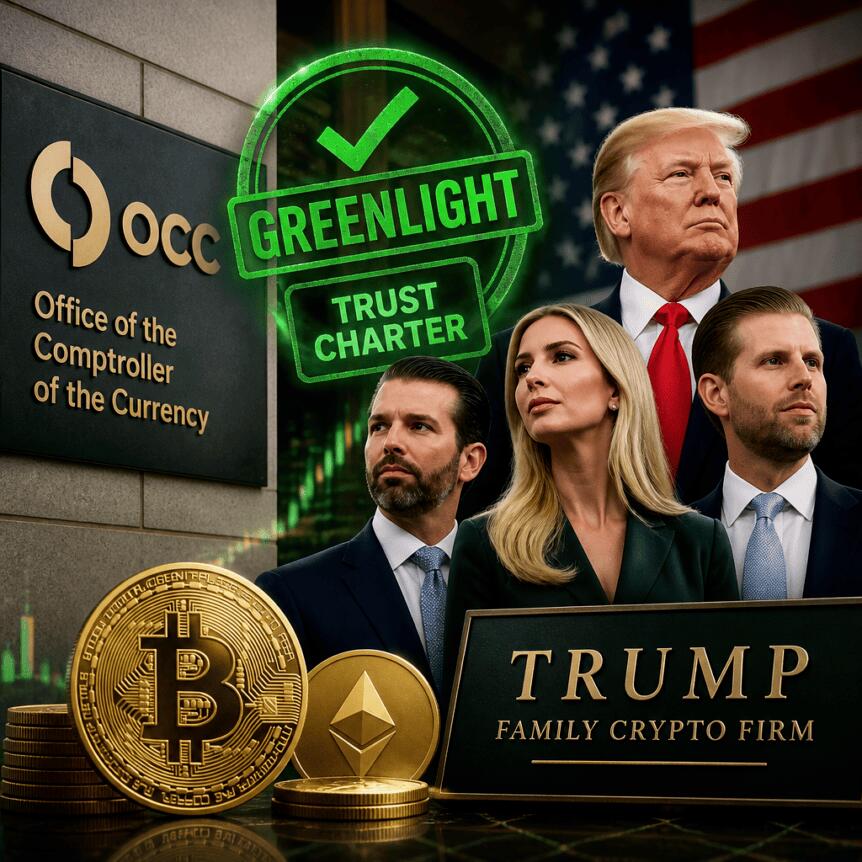
The U.S. Office of the Comptroller of the Currency (OCC) has granted conditional approval for World Liberty Financial’s application to establish a national trust bank, despite renewed political scrutiny over potential conflicts of interest. In a notice released Friday, the OCC said the approval would be subject to regulatory and policy requirements and would allow the company to operate as “World Liberty Trust Company, National Association.”
World Liberty’s charter application, according to the OCC, proposes activities including issuing U.S. dollar-backed stablecoins and providing custody services for digital assets tied to the firm’s USD1 token.
Key takeaways
- The OCC’s approval is conditional, meaning World Liberty must meet specific regulatory and policy requirements before fully moving forward.
- The bank would be authorized to issue U.S. dollar-backed stablecoins and custody digital assets related to the USD1 token, per the application described by the OCC.
- Criticism from lawmakers continues to center on alleged conflicts of interest involving World Liberty’s ties to President Donald Trump’s family and the OCC’s leadership.
- Senator Elizabeth Warren said she introduced new legislation after the OCC action, framing it as addressing “presidential corruption” concerns in banking.
- Meanwhile, the OCC has recently moved quickly on other crypto-related trust charter approvals under the Trump administration.
What the OCC approved—and the business scope
In its Friday notice, the OCC indicated that it acted in line with its statutory duties and ethical obligations regarding the application. The regulator said the conditional approval for World Liberty’s charter would permit the entity to function under the specified national trust bank title: World Liberty Trust Company, National Association.
As described in the notice, World Liberty’s plan includes issuing stablecoins backed by U.S. dollars and custodying digital assets associated with its USD1 token. The OCC characterized the decision as a pathway to operate as a trust bank while still requiring compliance with additional regulatory and policy terms.
The OCC’s notice also reflects the regulator’s process and oversight stance. Earlier, OCC Comptroller Jonathan Gould said the application would be reviewed through what he described as an “apolitical and nonpartisan process” after receiving a letter from Senator Elizabeth Warren.
Conflict-of-interest concerns drive the political backlash
The OCC decision landed amid heightened debate in Washington over potential entanglements between World Liberty and President Trump’s family. According to the reporting referenced in the OCC notice, the president and three of his sons are affiliated with World Liberty.
Separately, the OCC’s leadership has been at the center of attention: Gould was nominated by Trump in 2025. In addition, World Liberty’s own website reportedly stated that a Trump family entity controlled 38% of the company’s equity interests.
Senator Warren strongly criticized the OCC’s move. On Friday, she said she had introduced legislation aimed at stopping what she called “unprecedented corruption,” describing the OCC action as the “most brazen act of self-dealing” in the U.S. financial system. Warren and nine other senators introduced the “Ending Presidential Corruption in Banking Act” after the approval.
Legislative push follows a broader wave of OCC crypto approvals
World Liberty’s charter bid is not happening in isolation. The OCC has, under the Trump administration and Comptroller Gould, approved or conditionally approved multiple applications from crypto firms seeking trust charters to expand their U.S. services.
One recent example cited in earlier coverage is the agency’s December approvals related to Circle, Ripple Labs, Crypto.com, and Coinbase, following passage of the GENIUS stablecoin bill in Congress. Those actions form part of the backdrop for the current conditional approval—suggesting the regulator is continuing to move through crypto-focused charter applications.
That broader pace also helps explain why Warren and other lawmakers may view World Liberty’s approval as part of a larger governance concern, even as the OCC frames its conduct as consistent with legal and ethical obligations.
Congressional questions extend beyond the U.S.
In parallel with U.S. conflict-of-interest debates, lawmakers have also pushed for scrutiny of World Liberty’s ties to foreign entities and how those relationships could influence U.S. policy indirectly.
The article notes reporting that an Abu Dhabi investment company backed by Sheikh Tahnoon bin Zayed Al Nahyan—the UAE’s national security adviser—reportedly purchased a 49% stake in World Liberty in January 2025 for $500 million. It also references another UAE entity, MGX, which reportedly used World Liberty’s USD1 stablecoin to invest $2 billion in crypto exchange Binance.
Additional political attention followed because Trump later issued a presidential pardon for former Binance CEO Changpeng Zhao. A White House spokesperson, according to the reporting referenced here, has repeatedly said there were “no conflicts of interest” with Trump’s investments.
Taken together, the OCC’s conditional approval and the expanding congressional focus highlight a central tension for the crypto sector: regulators may continue to advance licensing frameworks for stablecoin and custody-related services, while lawmakers test whether governance safeguards are sufficient in cases involving closely held or politically connected interests.
For now, the OCC’s conditional approval means World Liberty can move closer to operating as a national trust bank, but the exact requirements attached to that approval—and how quickly they will be met—remain the immediate variables to watch. As Warren’s bill moves into the legislative process and scrutiny of World Liberty’s equity structure and cross-border relationships continues, the practical impact for future trust-charter applicants may depend as much on policy outcomes in Washington as on the regulator’s licensing decisions.
RIOT stock has climbed 4.7% to $19.91 after JPMorgan raised its Riot Platforms price target to $22 following the Bitcoin miner’s $9.1 billion data center agreement reportedly involving Anthropic.
Summary
- JPMorgan raised its RIOT target from $20 to $22 and retained an Overweight rating.
- Riot’s 20-year data center contract is expected to generate $9.1 billion in revenue.
- Morgan Stanley separately increased its RIOT target from $36 to $43.
- RIOT faces resistance at $20.48, while its main 4-hour support sits near $18.50.
JPMorgan sees momentum building at Riot Platforms
On Aug. 1, JPMorgan had increased its price target for Riot Platforms from $20 to $22 while keeping an Overweight rating on the Nasdaq-listed stock.
JPMorgan analysts said Riot was “building momentum” after securing its latest data center agreement at what the bank described as “attractive economics.” The analysts also said work connected to Riot’s existing lease with chipmaker AMD remained on schedule.
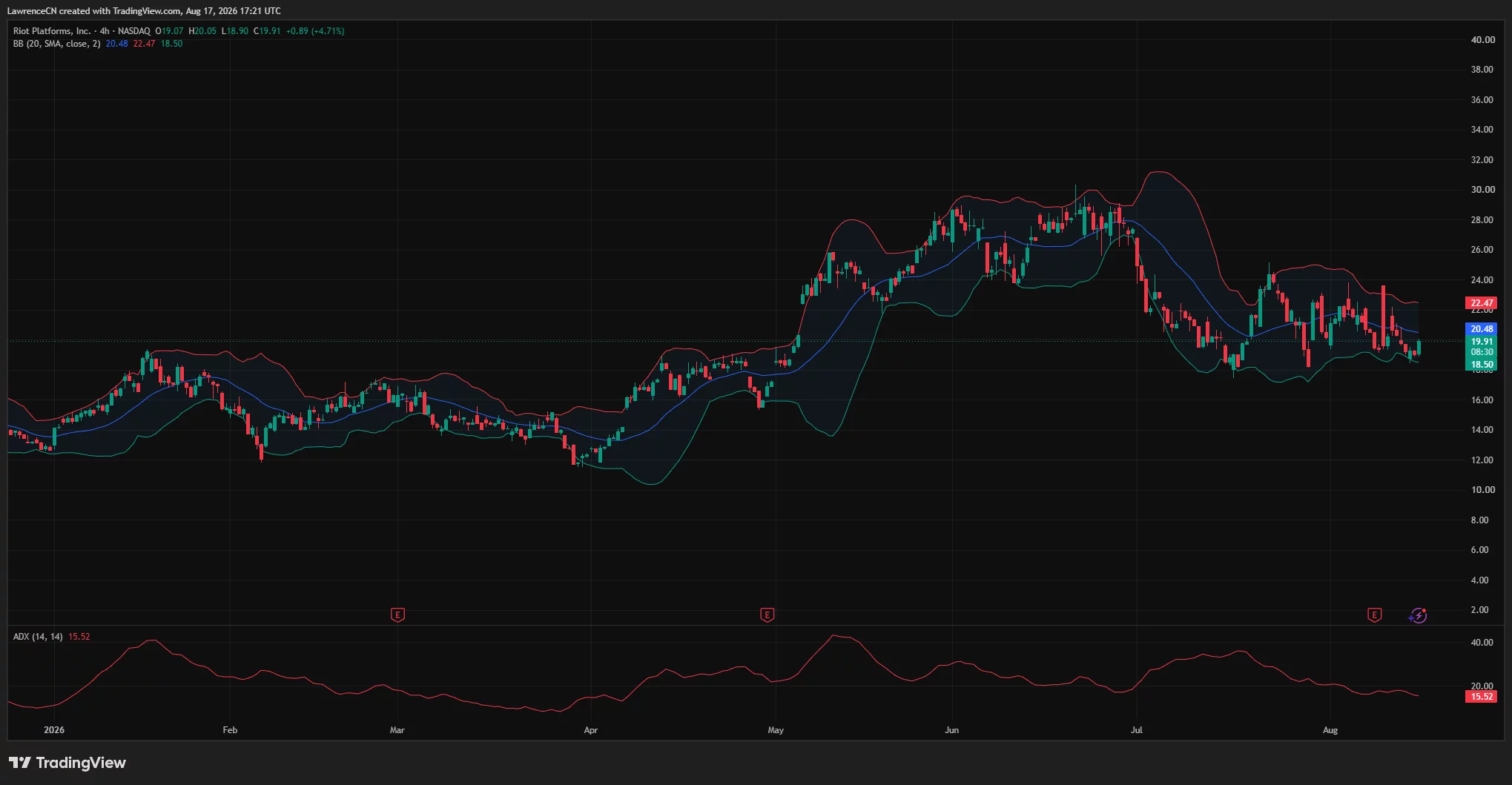
At $19.91, RIOT traded about 10.5% below JPMorgan’s revised target. The 4-hour chart showed the stock opening at $19.07, reaching $20.05 and falling as low as $18.90 before recovering.
Morgan Stanley has taken a more bullish position. On Aug. 13, the bank raised its RIOT target from $36 to $43 and retained an Overweight rating. The revised forecast sits more than 100% above the latest market price, although price targets represent analysts’ estimates rather than guaranteed outcomes.
Wall Street’s latest revisions followed a volatile week for RIOT. The stock surged after the large data center contract was announced, but some investors later booked profits, pulling the shares down to a Friday close of $19.02 before Monday’s recovery.
Riot’s $9.1 billion deal adds contracted AI revenue
Riot disclosed the 20-year agreement in an Aug. 10 filing with the U.S. Securities and Exchange Commission, identifying the customer only as a leading frontier AI company. Bloomberg later named Anthropic as the tenant, citing people familiar with the transaction, while Riot and Anthropic did not publicly confirm the customer’s identity.
As crypto.news previously covered the Anthropic deal, the agreement covers 191 megawatts of critical information technology capacity at Riot’s Rockdale campus in Texas. Riot expects to deliver the first 96 MW in December 2027 and another 95 MW by June 2028.
Under the initial term, which runs through June 2048, Riot expects the agreement to produce about $9.1 billion in contracted revenue. Two five-year extension options controlled by the tenant could increase the potential total to $16.1 billion.
Riot has projected cumulative net operating income of between $7.3 billion and $8.2 billion during the base term. Company filings classify both the revenue and income totals as forward-looking estimates because actual results depend on construction, financing, deployment, and operating performance.
To fund the first stage of construction, Riot secured a $573 million delayed-draw term loan arranged by Morgan Stanley. The company plans to use the financing while it works toward a permanent funding structure for the project.
Rockdale already has 700 MW of developed and energized power capacity, along with fiber and electrical systems built for large-scale Bitcoin mining. Riot has said it plans to convert the campus’s full gross capacity for data center customers over time.
The AMD lease gave Riot its first large tenant
Before the latest contract, AMD signed a 10-year, $311 million lease covering an initial 25 MW at Rockdale. Extension and expansion options could take its potential value to about $1 billion and increase AMD’s capacity to 200 MW.
AMD exercised its first 25 MW expansion option during the first quarter, bringing its contracted capacity to 50 MW. Adding the newer 191 MW agreement gives Riot 241 MW of critical IT capacity under signed Rockdale leases.
Riot’s first-quarter financial results showed $167.2 million in total revenue, up from $161.4 million a year earlier. Data center operations produced $33.2 million, including $32.2 million from tenant fit-out services and $900,000 from operating lease revenue.
For the second quarter, Riot reported $174.2 million in revenue, representing a 14% increase from the same period in 2025. Data center revenue accounted for $23.2 million of the quarterly total, leaving Bitcoin mining as the company’s main revenue source while the newer contracts move through construction.
Riot produced 1,473 Bitcoin during the first quarter, compared with 1,530 BTC a year earlier. According to the company, Bitcoin mining revenue declined to $111.9 million from $142.9 million as the average Bitcoin price fell and the global network hash rate increased.
The company also sold 3,778 BTC during the quarter. Its average mining cost, excluding depreciation, rose to $44,629 per Bitcoin, partly because the average global network hash rate increased by 24%.
Other listed miners have pursued similar contracts because their existing power supplies, land, and cooling systems can be adapted for AI computing. A June report on miners entering AI infrastructure found that public Bitcoin mining companies had announced more than $70 billion in AI and high-performance computing contracts.
RIOT stock must reclaim $20.48
RIOT’s 4-hour chart shows that the latest 4.7% recovery began after the stock approached the lower Bollinger Band at $18.50. Buyers lifted the price from an intraday low of $18.90 to $19.91, but the stock remained below the indicator’s midpoint at $20.48.
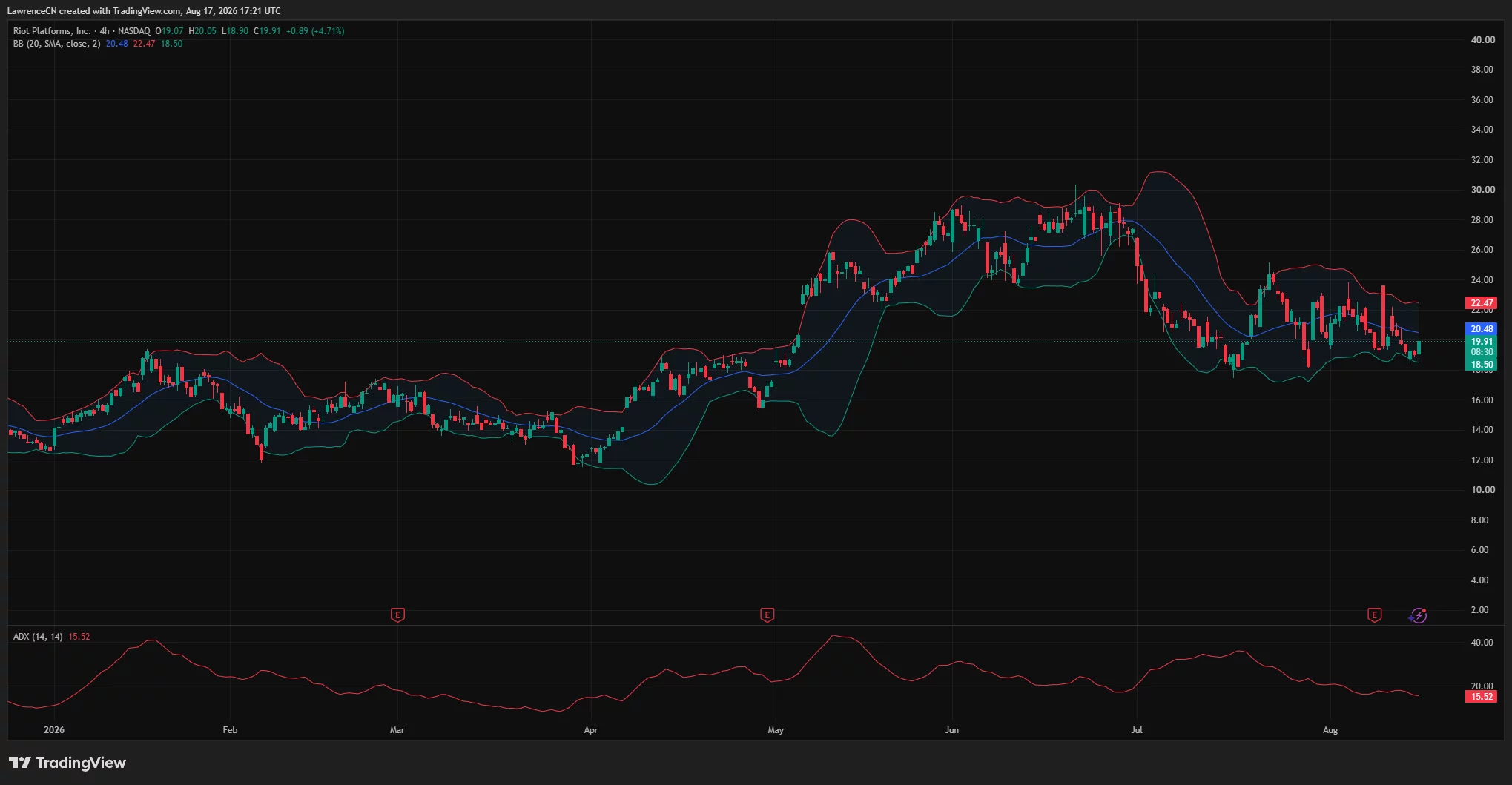
Based on the chart, $20.48 serves as the first resistance level. A sustained move above it would bring the upper Bollinger Band at $22.47 into view, placing that level close to JPMorgan’s new $22 target.
Failure to clear the midpoint would leave RIOT exposed to another test of the $18.50 lower band. The stock has also formed lower highs since its late-June peak near $30, while recent candles show repeated moves on both sides of the $20 area.
The Average Directional Index stood at 15.52 on the 4-hour chart. An ADX reading below 20 generally indicates weak trend strength, so the indicator does not yet confirm a strong move in either direction.
Bitcoin added almost 1% to trade near $63,502 during the period, while 24-hour trading volume increased 68%. The move followed reports that the United States and Iran had agreed to extend a 60-day ceasefire.


NAVI Protocol has launched NAVI Prime, a Sui-based lending framework designed for funds seeking more clarity, transparency, and control over capital management.
Summary
- NAVI Prime provides lending infrastructure for institutional and professional capital on Sui.
- NAVI Protocol says the framework focuses on transparent and controllable fund management.
- DefiLlama tracks about $124.6 million in total value locked across NAVI Protocol.
- U.S. investors can gain regulated SUI exposure through CME futures contracts.
NAVI Protocol said NAVI Prime was built for funds with more demanding requirements around clarity, transparency, and control. Deployed on the Sui blockchain, the framework provides lending infrastructure for institutions and professional capital.
According to the announcement, NAVI Prime focuses on giving professional investors a more transparent and controllable way to manage funds through onchain lending. The product extends NAVI Protocol’s existing role as a liquidity platform within the Sui ecosystem.
NAVI Prime focuses on professional capital
NAVI Prime introduces a lending framework created specifically for professional market participants. While NAVI Protocol’s existing platform serves users who supply assets or borrow against collateral, the new framework concentrates on the requirements of funds and institutional investors.
Transparency forms one of the main elements of the product, according to the NAVI Protocol. Because NAVI Prime runs on Sui, its lending activity can use the network’s onchain infrastructure while giving participating funds clearer oversight of capital management.
Control is another part of the framework’s stated design. NAVI said the product was created for funds seeking more authority over how their assets are managed in a lending environment.
NAVI Protocol already operates lending and borrowing markets on Sui. Its official documentation describes the platform as a unified service for lending, borrowing, trading, and yield strategies, while the Sui ecosystem directory lists NAVI as a native liquidity protocol built with the Move programming language.
The protocol’s existing lending service allows users to supply supported tokens and earn interest. Borrowers can deposit collateral to obtain other digital assets, with the system using overcollateralized positions to manage loan risk.
According to DefiLlama, NAVI’s lending markets support SUI, USDC, USDT, wrapped Ether, and wrapped Bitcoin. The platform also provides isolated lending pools and flash loans.
NAVI Protocol manages more than $124 million
DefiLlama tracked approximately $124.6 million in total value locked across NAVI Protocol as of Aug. 17. All of the recorded capital was deployed on Sui.
Active loans stood at about $65.8 million, meaning borrowers were using more than half of the value held across the protocol’s tracked products. DefiLlama includes NAVI Lending, Volo LST, and Volo Vault within the NAVI Protocol group.
During the preceding 30 days, NAVI generated approximately $404,300 in fees, according to DefiLlama. Protocol revenue for the same period reached about $153,700, while annualized fees were estimated at $23.2 million.
NAVI Lending collects interest and borrowing fees from users, while Volo’s products generate revenue from staking services and yield strategies. DefiLlama recorded $39.1 million in cumulative fees and $16.1 million in cumulative protocol revenue.
The protocol’s NAVX governance token had a circulating market value of about $5.7 million at the time of the data snapshot. Roughly 816.2 million NAVX tokens were circulating from a maximum supply of 1 billion.
NAVI Protocol raised $4 million through two funding rounds in early 2024, DefiLlama data showed. Investors listed for the rounds included OKX Ventures, Hashed, Mysten Labs, Mechanism Capital, Coin98 Ventures, Gate.io, and several other crypto-focused firms.
NAVI’s governance system allows NAVX holders to participate in proposals and vote on protocol changes, according to its documentation. The platform has also developed software tools through which developers can add lending, borrowing, account management, and pool functions to Sui applications.
Stablecoins support Sui lending activity
Stablecoins have become an important part of NAVI’s lending markets as Sui has added new dollar-denominated assets. The protocol currently supports tokens including USDC and USDT, according to DefiLlama.
In October 2024, crypto.news reported that NAVI would support the native USDC rollout from its first day on Sui. Circle issues USDC, while native integration allows users to move the stablecoin through Sui without relying on a bridged version from another blockchain.
NAVI Protocol said at the time that users holding the bridged USDC version could exchange it for native USDC through the platform. The integration placed Circle’s stablecoin inside NAVI’s Sui-based lending and borrowing markets.
Bitcoin-linked lending later became another area of activity. In June 2025, NAVI Protocol and OKX announced a two-month xBTC campaign that offered $700,000 in incentives to users supplying the asset through Sui.
OKX allocated $200,000 in SUI rewards through its Earn service, while NAVI supplied another $500,000 in NAVX tokens. NAVI co-founder Elliscope Fang said the partnership was intended to develop BTC-based decentralized finance within the Sui ecosystem.
Sui added another dollar asset in March 2026 when USDsui entered mainnet. Bridge, a Stripe subsidiary, issues the stablecoin through its Open Issuance platform.
Sui Foundation said USDsui was designed for payments and decentralized finance. At launch, the organization reported that the network had processed more than $111 billion in stablecoin transfers during January 2026.
Ethena-backed suiUSDe had also launched on Sui one month earlier. NAVI joined Aftermath, Bluefin, Cetus, Scallop, Suilend, and other Sui applications supporting the asset from its mainnet release.
CME futures provide a regulated U.S. route
For American investors, Sui exposure is also available through futures traded on CME Group, a U.S.-regulated derivatives exchange. The contracts provide cash-settled exposure to SUI without requiring traders to hold the token in an onchain wallet.
CME Group launched SUI futures in May 2026 alongside new contracts tied to Avalanche. The exchange offers standard- and micro-sized products for both assets.
A standard SUI futures contract represents 50,000 SUI, while a micro contract represents 5,000 SUI. CME settles both products in cash using the CME CF Sui-Dollar Reference Rate.
CME said the contracts can support price exposure, hedging, relative-value trading, and basis strategies. SUI joined Bitcoin, Ether, Solana, Cardano, Chainlink, and Stellar among the digital assets covered by CME’s regulated derivatives products.
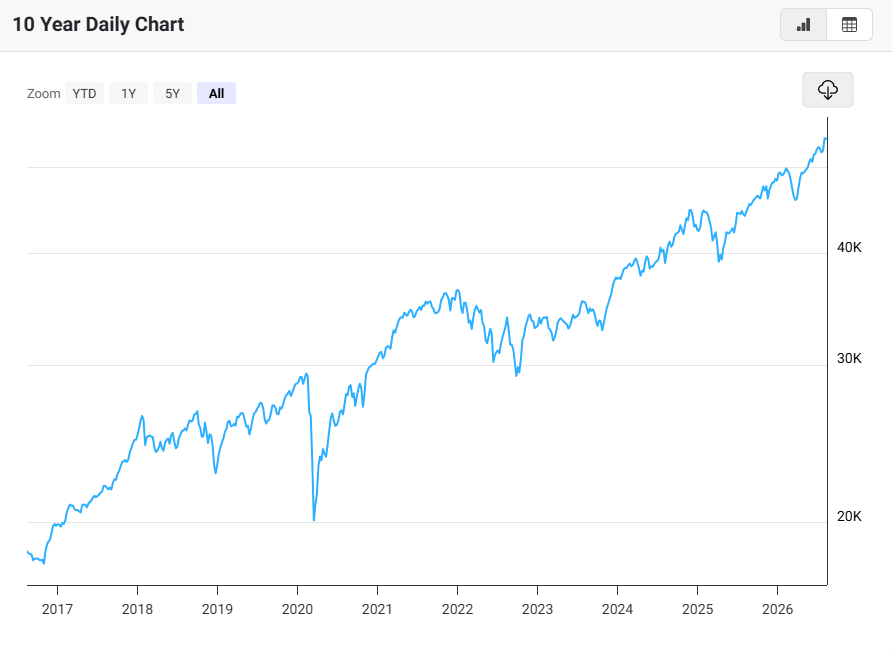
Three straight years of double-digit gains have not raised the odds of a Dow Jones Industrial Average pullback. That is the conclusion of MarketWatch contributor Mark Hulbert. The Dow’s historical baseline chance of another double-digit year still sits at 49%.
A narrative has spread on Wall Street that the streak alone makes a reversal overdue. Hulbert calls that reasoning the gambler’s fallacy, the same error behind coin-flip superstitions.
The Gambler’s Fallacy Behind the Crash Talk
Hulbert compares the market to a coin flip. A coin that lands heads several times in a row is still 50% likely to land heads again.
He points to 129 years of Dow data going back to the late 1890s. The odds of a double-digit year hover near 49%, regardless of how many strong years came before it. Historically, that baseline has barely moved even after multiple consecutive winning years.

Investors weighing whether a real downturn is brewing can compare Hulbert’s data with Cramer’s buyable crash framework. That guide separates mechanical sell-offs from systemic ones.
What the Research Shows About Crash Odds
Hulbert also cites research from Harvard University and the University of Hong Kong. The research uses trailing two-year returns to estimate crash risk. State Street Markets, working with the Harvard researchers, applies that framework to calculate current odds.
The current probability of a 40% drop over the next two years sits at 19%. That compares with a five-year average of 26%. Crash odds, in other words, are currently below normal.
Other Wall Street voices point to different warning signs. Some traders see echoes of the dot-com bust in the recent AI stock rotation. That is a separate concern from the streak-based narrative Hulbert addresses.
What About Other Risks?
Hulbert stresses that his model only reflects trailing returns. It does not account for other risks, including stretched valuations across US equities.
Wall Street sentiment remains split heading into the back half of the year. Fundstrat’s Tom Lee’s correction call shows some strategists still want a pullback before further upside. Meanwhile, raised S&P 500 forecasts from JPMorgan and CFRA signal broader confidence in the rally continuing.
For now, Hulbert’s bottom line holds. The Dow’s odds of finishing 2026 with a double-digit gain remain 49%. That is no better and no worse than in any other year.
The post Dow’s 3-Year Winning Run Isn’t a Crash Signal, Still 49% Odds of Double-Digit Gains appeared first on BeInCrypto.
Neynar has started looking for a new team to run Farcaster, the token launcher Clanker and its own developer platform, co-founder Rish Mukherji said on Aug. 17, seven months after the company acquired the decentralized social protocol from Merkle Manufactory. That puts Farcaster into its second… Read the full story at The Defiant
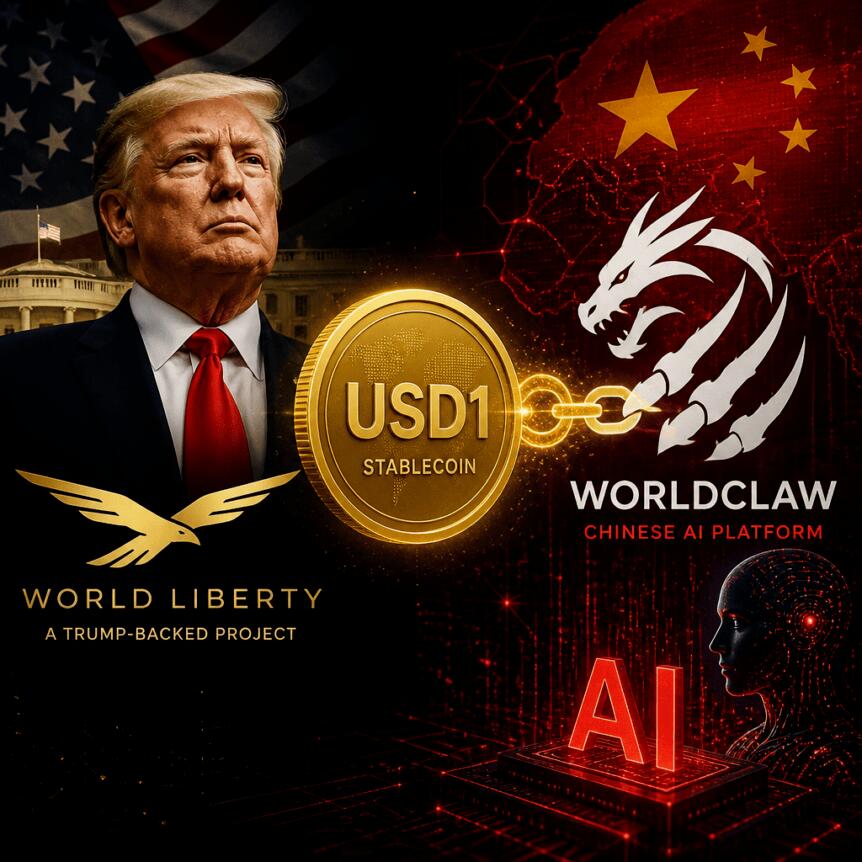
Trump-linked World Liberty Financial has expanded its stablecoin reach through a partnership with Hong Kong-based AI platform WorldClaw. The arrangement gives WorldClaw users access to Chinese and American AI models while allowing payment through USD1. Meanwhile, the relationship raises questions about technology access and links involving companies facing U.S. restrictions across sensitive technology markets today.
WorldClaw offers about 90 models through its WorldRouter service, including 43 developed by Chinese companies. Those models include systems from Alibaba, Baidu, and Z.ai, while American providers include OpenAI and Anthropic across different commercial applications. Additionally, WorldRouter gives users access to models from DeepSeek and Moonshot, expanding its range of available AI systems.
WorldClaw accepts World Liberty Financial’s USD1 stablecoin for payments across its services online. However, the companies have not disclosed the financial terms governing their relationship or payments under the arrangement. World Liberty’s connection also extends through executive Ryan Fang, who advises WorldClaw on USD1 adoption and business partnerships involving users.
U.S. Restrictions Add Pressure To Model Access
Several Chinese developers available through WorldClaw face scrutiny or restrictions from U.S. authorities directly. The Pentagon has designated Alibaba and Baidu as Chinese military-linked companies, while Commerce Department restrictions affect Z.ai. Consequently, their presence on a single platform creates a complex link between U.S. users and restricted Chinese technology providers.
WorldClaw also offers DeepSeek and Moonshot models, which have faced allegations from U.S. officials involving intellectual property practices. Chinese authorities and affected companies have disputed those allegations and rejected claims of technology theft involving American developers. Nevertheless, access through a platform can differ from direct commercial dealings with restricted entities today.
U.S. individuals and companies can generally use Chinese AI models through available services. However, specific rules can restrict certain transactions involving companies placed on government lists and related entities. Therefore, the legal position can depend on the transaction, service structure, entity involved, and applicable U.S. restrictions.
World Liberty And WorldClaw Defend The Arrangement
WorldClaw says model access does not amount to support or approval of the companies that develop those systems. The platform also operates independently from World Liberty, according to its public position and stated business structure. Meanwhile, WorldClaw says it helps American AI companies reach customers beyond the United States.
World Liberty has defended the arrangement by pointing to broader industry practices involving multiple AI providers. The company says major American technology firms also offer access to both Chinese and American models through similar platforms. Additionally, the White House has rejected concerns about conflicts involving President Trump and World Liberty publicly.
WorldRouter reports more than 10,000 users and handles over 50 million requested tasks each day. Its privacy policy says user inputs may reach companies that provide the underlying models, depending on service requests. However, WorldClaw says it applies privacy and security measures across the platform as it manages those requests overall.

USGS reported that roughly 2 million people were exposed to “strong” and “violent” shaking. Hundreds of aftershocks followed.
The province’s governor on Sunday issued a 14-day state of emergency.
President Prabowo Subianto paid tribute to the victims of the earthquake on Monday during a ceremony for the country’s 81st Independence Day, holding a moment of silence in their memory.
Here’s what to know about the earthquake, the ongoing recovery efforts in its aftermath, and how you can help.
How strong was the earthquake?
According to USGS, a 5.3 magnitude earthquake is considered “moderate,” while a 6.3 magnitude earthquake is considered “strong.” The earthquake that hit Indonesia had a magnitude of 7.7, making it a major quake.
It marks the latest of several earthquakes with magnitudes above 7 that have rattled countries this summer. Colombia is still in the process of recovering after it was struck by a 7.4-magnitude quake last week. And in June, Venezuela was devastated by back-to-back quakes with magnitudes of 7.5 and 7.7.
Printr, a token launchpad that deployed assets across eight chains from one interface, said Monday it has begun winding down and will cease all operations by Aug. 31, cancelling the token generation event and airdrop it had told users to expect. The shutdown removes one of the few launchpads that… Read the full story at The Defiant
Crypto World
Kraken’s parent Payward joins Anthropic’s Project Glasswing, taps Claude Mythos 5 for security
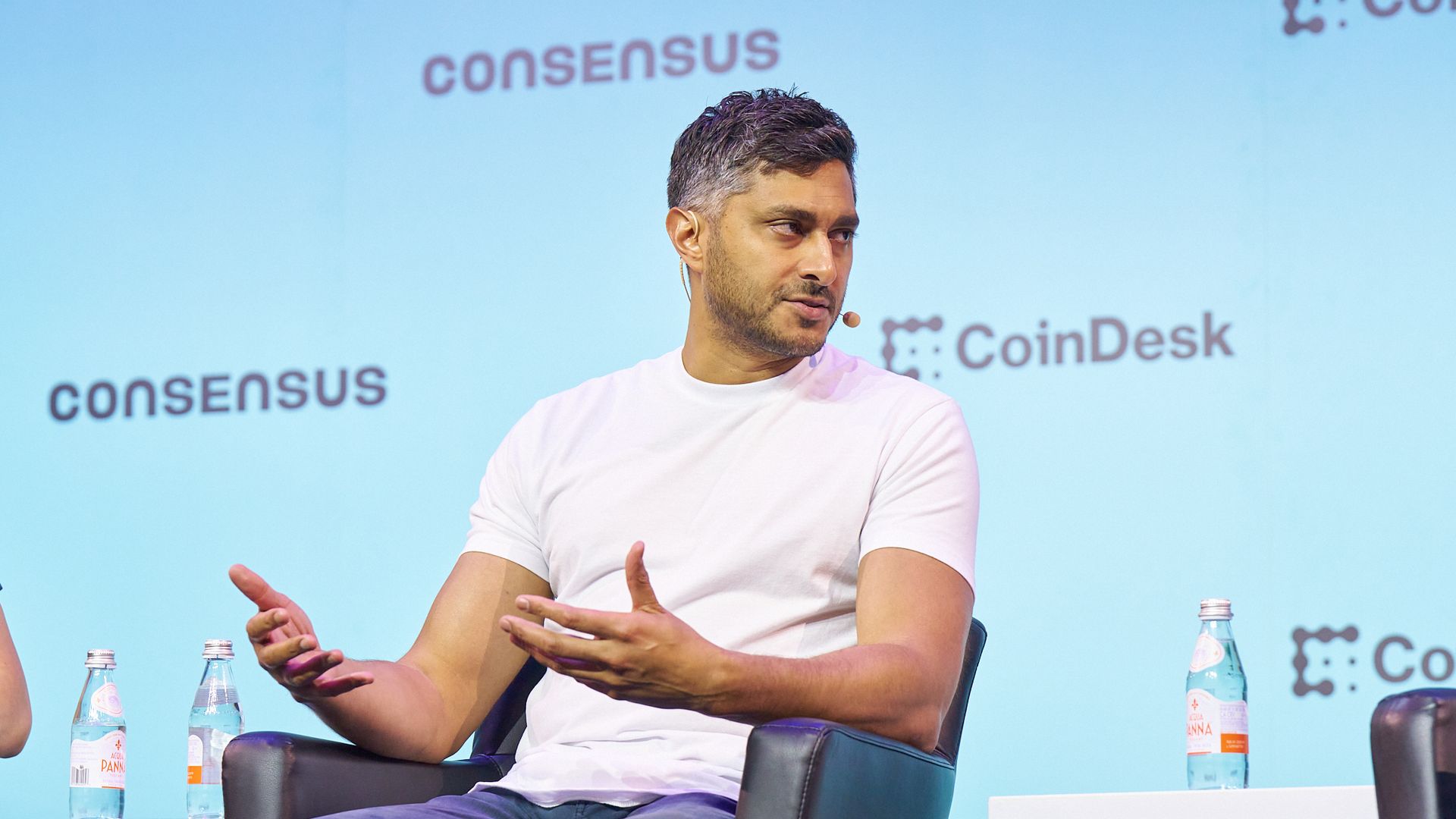
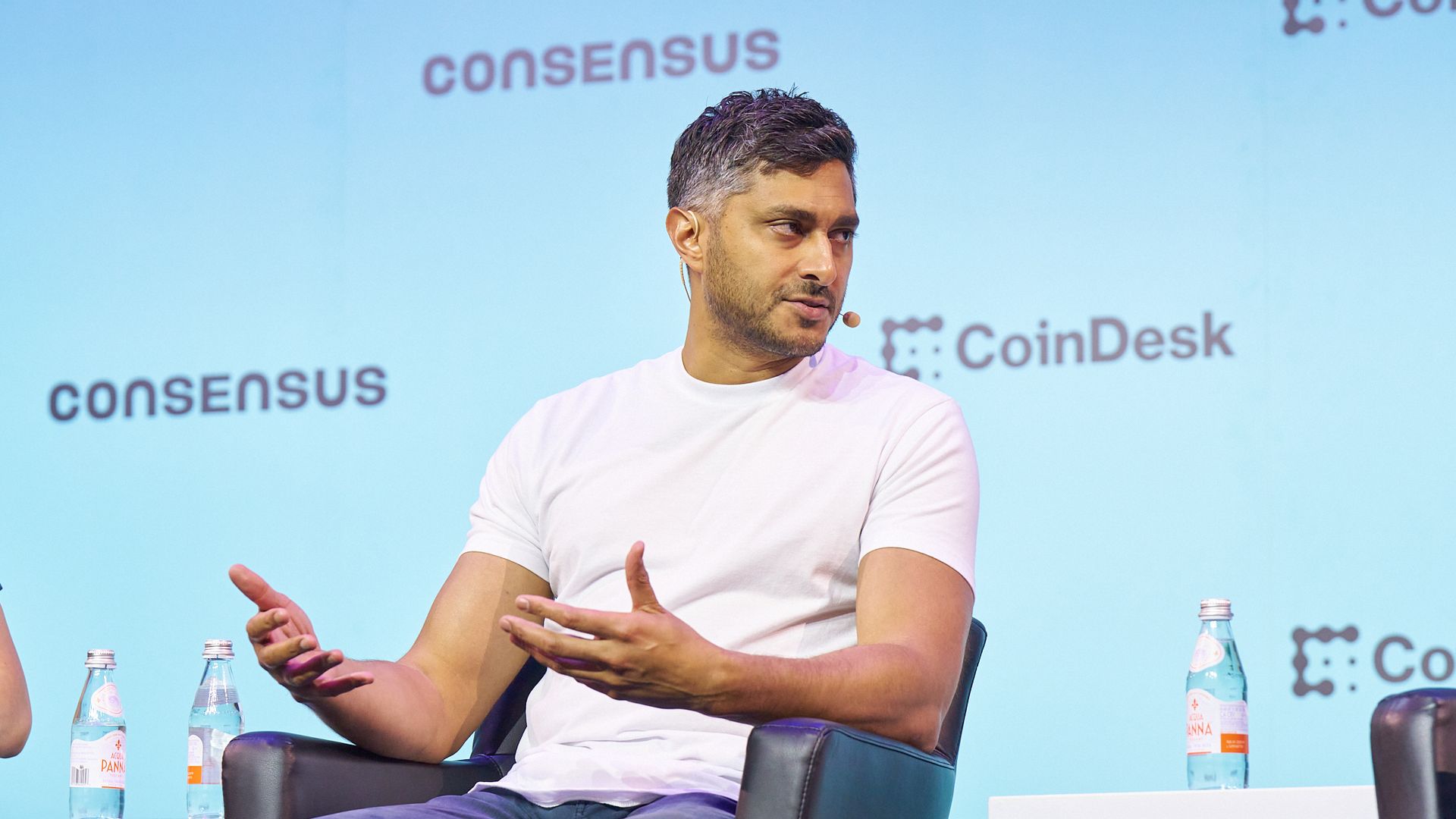
AI is also emerging as a growing threat to crypto companies, giving attackers tools to find vulnerabilities faster, automate attacks and make phishing and social-engineering campaigns more convincing. That raises the stakes for an industry already a frequent target for hackers, while fueling a race to deploy the same technology on the defensive side.
Claude Mythos 5 is Anthropic’s most advanced model for defensive cybersecurity, designed to analyze code at scale, identify vulnerabilities and help developers fix them. Access has initially been limited to organizations that operate or defend critical infrastructure, as Anthropic works on safeguards for a broader rollout.
Payward argued that crypto platforms face security challenges similar to other critical financial infrastructure. Exchanges, custody systems and settlement rails operate around the clock and can present lucrative targets for attackers.
“Security has always been an unfair game. An attacker needs to find one flaw. A defender has to find all of them, first, every single day,” Payward co-CEO Arjun Sethi said in the release. “Frontier AI is the first thing that flips that asymmetry.”
Anthropic has said it plans to expand access to Mythos-class cybersecurity capabilities as it develops safeguards for wider use.
Read more: AI is making crypto security cheaper, faster and harder to ignore
Two crypto investors, one who bought $500 in BlockDAG at stage 1 and one who waited

3 Vikings Who Impressed in the Vikings Preseason Opener

One Man’s Perfect Retro-Style Monitor Takes All Inputs


-

 Fashion3 days ago
Weekend Open Thread: Ann Taylor
-
 NewsBeat6 days ago
Communication cards help banking customers access services or report scams
-
 Business7 days ago
Oil Price Today (August 11): Crude oil rises to $88 after Trump’s compensation demand dents Hormuz opening. Here’s why
-

 Crypto World7 days ago
Revolut wins French banking licence, creates second EU banking hub
-
 Sports4 days ago
This U.S. Amateur is a glimpse into golf’s future in more ways than you think
-

 Sports3 days ago
Birmingham 2026: Day 6 Timetable for Irish Athletes
-
 NewsBeat3 days ago
Myanmar says over 300,000 Rohingya refugees verified for repatriation as exodus enters ninth year
-

 Politics2 days ago
SEQ Code: The Three Letter Boarding Pass Code That Could Give You The Worst Seat
-
 Entertainment5 days ago
Keke Palmer Subtly Hints At Sean Evans Drama With Cryptic Post
-
 Entertainment7 days ago
57 Years Later, the Best Sitcom Ever Made Still Deserves a Reboot
-

 Fashion6 days ago
Coffee Break: The Fonteyn Jane Flat
-

 Tech6 days ago
Zoom Screen-Sharing Bug Let People Fully Take Over Other Devices On A Call
-

 Fashion6 days ago
Should you refinance your debt? Pros, cons, and real numbers
-

 Fashion6 days ago
Claire Life: Kicking Off MVAAFF With the C Suite Luncheon Featuring Phylicia Rashad, Letoya Luckett, and More!
-
 Crypto World6 days ago
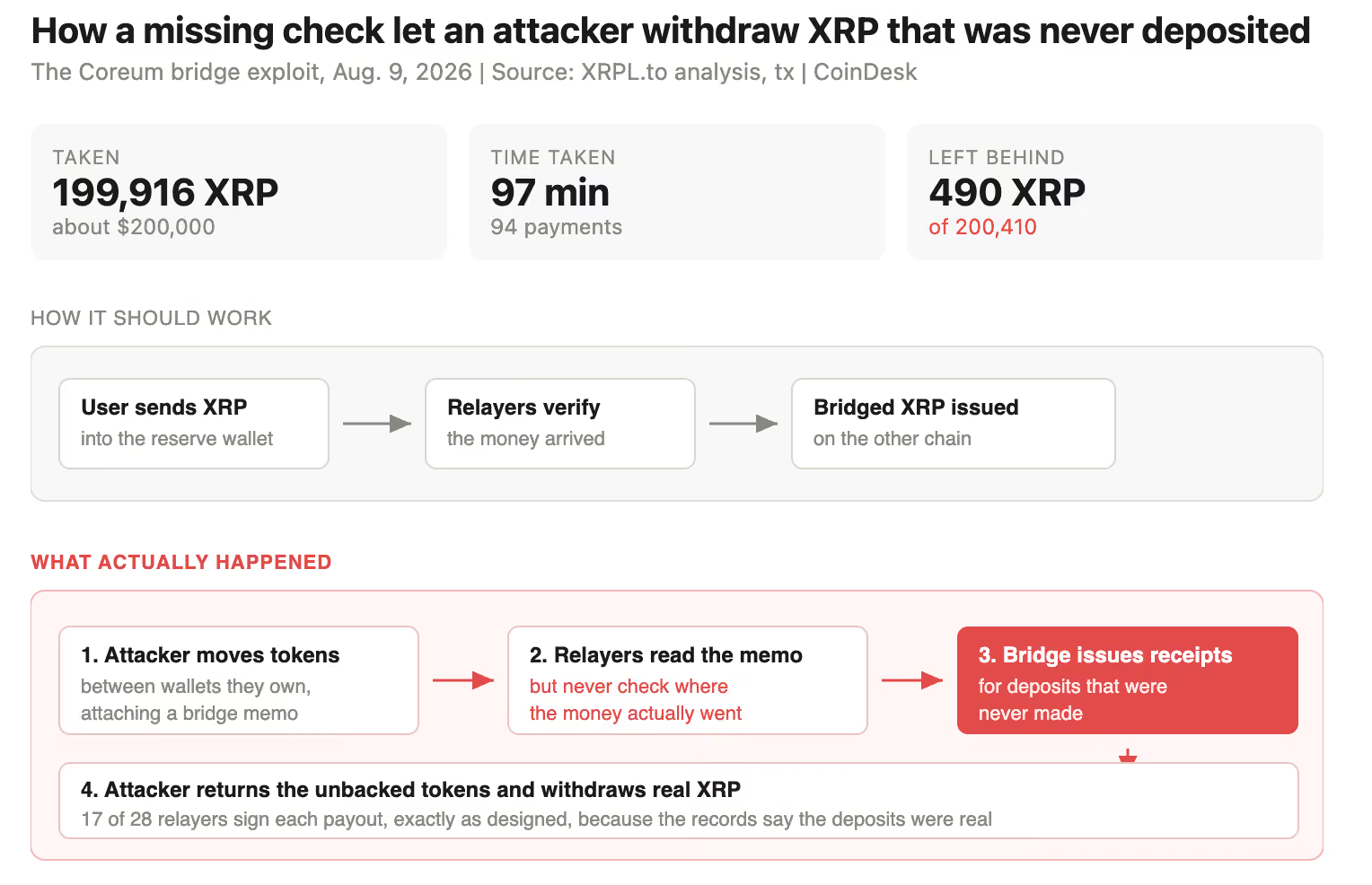
XRP bridge drained after software mistook fake deposits for real ones
-

 Sports5 days ago
DeQuan Jones in ‘high spirits’ after successful leg surgery
-
 Tech7 days ago
Zuck rekindles open weights Llama drama with Muse Glimmer
-
 Business7 days ago
(VIDEO) Emirates Unveils 2.4-Meter Arsenal Crest Sculpture Built From Recycled A380 And Boeing 777 Jet Parts
-

 Fashion7 days ago
How to Mix Diamond Rings With Gold & Silver Jewelry
-

 Fashion7 days ago
French Rose Gown with Cape Sleeves
You must be logged in to post a comment Login