
Crypto World
Tether has publicly listed a company that partially controls USDS

Tether invested $134 million in failing biopharmaceutical firm NovaBay in March, turning it into a stablecoin holding company.
The move completely altered the path of the New York Stock Exchange-listed corporation. Its name was changed to Stablecoin Development Corporat, and it was used to purchase and stake a large swath of rival stablecoin USDS (previously known as MakerDAO).
USDS, unlike Tether or USDC, is a decentralized stablecoin that’s pegged to the US dollar through overcollateralized vaults and automated liquidations. Centralized stablecoins like Tether and USDC rely on real-world assets, such as Treasury bills, overnight repo agreements, loans, and precious metals.
USDS is unrestrained by hypothetical audits, financial statements, or bank runs.
Interesting investment, but it’s not working out
The decision to reverse-merge with NovaBay so that Tether could make a not-insignificant investment in USDS and continue to accumulate and stake the stablecoin was certainly an interesting choice from the c-suite at Digifinex.
As stated on Stablecoin Development Corporat’s website, the acquisition provides Tether and USDS with “public market access,” new markets to participate in (including mortgage and prime brokerage lending markets), and possible unique partnerships.
The website also makes claims about the future of stablecoins and USDS, suggesting that within a year and a half stablecoin markets will grow from ~$300 billion to $1 trillion and forecasting revenue growth year-on-year for USDS of 81%.
However, those hypothetical benefits haven’t come to fruition.
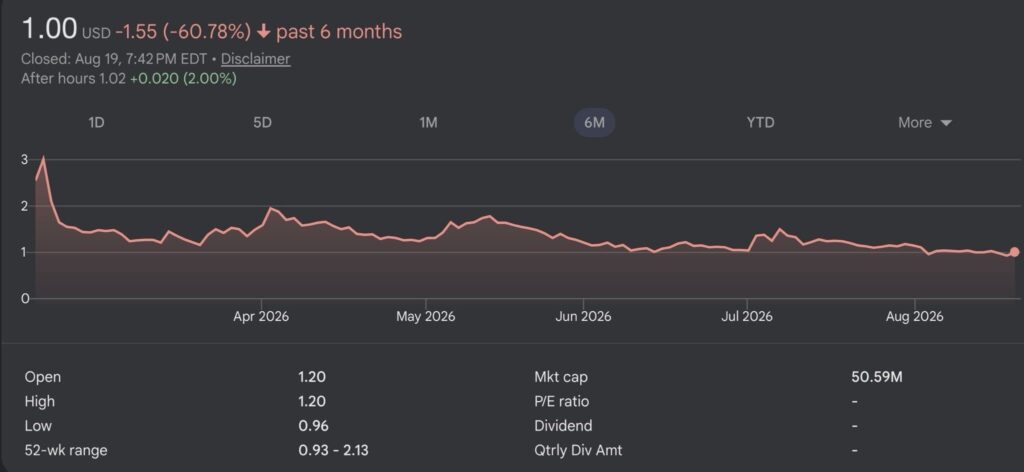
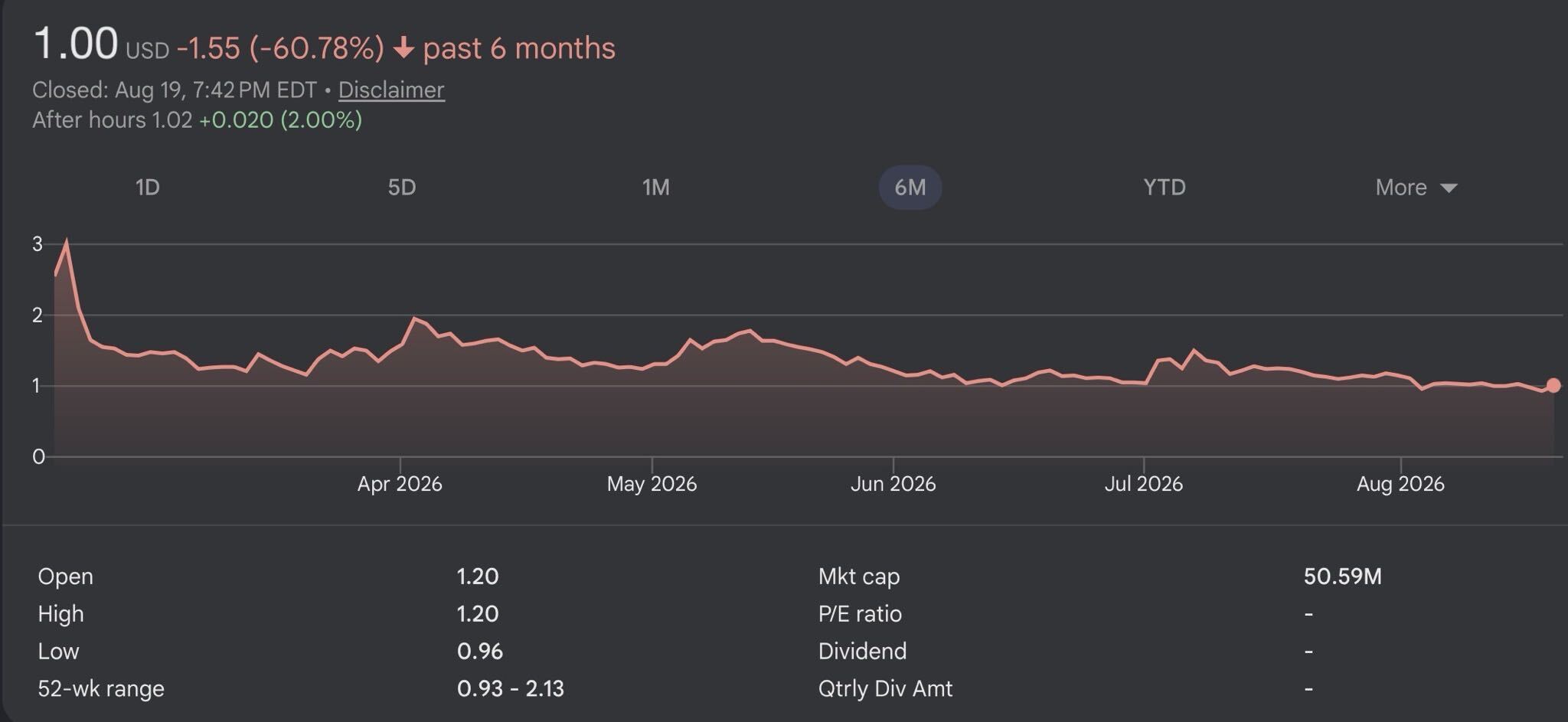
Instead, despite a brief bump in the stock price after the announcement which saw it rise from $1.30 to almost $2.00 in early April, Stablecoin Development Corporat’s share price has collapsed to $1.00 as of writing.
Read more: What the Tether audit means for the crypto industry
Interestingly, every time that the stock briefly falls below $1.00, someone or some entity purchases enough shares to push it back up.
For example, three days ago, the price of Stablecoin Development Corporat’s shares fell to $0.94. Within 24 hours the price had miraculously recovered over 6% to just over $1.00.
If any company’s share prices fall below $1.00 for a 30-day period then the company is delisted from the NYSE.
Bizarre executive leadership
Similar to how Tether and Bitfinex operated with a strange smattering of executives and equity holders in its initial years, Stablecoin Development Corporat also plays host to a curious who’s who of financiers and influencers.
To start with, at the helm of Stablecoin Development Corporat is Michael Kazley, who seems to have fallen into the CEO role by simply being one of the main investors during the reverse merger between NovaBay and Tether.
His investment fund, R01 Fund LP, placed a large wager of over $4 million on the new entity and seemingly made few, if any, other major investments.
Kazley has stated that the c-suite see USDS (and the associated SKY Protocol) as “undervalued” and that Stablecoin Development Corporat is “wildly bullish” on it, taking on a “greater than a 9% stake.”
Read more: Tether vs. Circle: The battle for stablecoin dominance
The company’s CFO is Tommy Law, who was named as interim CFO of NovaBay back in 2023.
He’s somehow retained this position despite helping to drive the medical company into the ground and holding no certifications or licenses related to his role.
Lastly, Henry Blynn, the COO, appears to be a holdover from the final days of NovaBay. The 32-year-old was brought on as a consultant in October 2025.
Board raises more questions than answers
Stablecoin Development Corporat’s board of directors is a peculiar mix of individuals completely unassociated with cryptocurrencies and stablecoins.
For instance, Yenyou Zheng, who chairs the audit committee and nominating and corporate governance committee and sits on the compensation committee for Stablecoin Development Corporat, was listed in the ICIJ’s Panama Papers for his involvement with China Vitup Healthcare Holdings.
The now defunct Dalian, China-based entity was once listed on OTCMarkets as China Vitup Hospital before changing its name to Emergency Pest Services, and most recently to Clean Vision Corporation.
Also on the board, and sitting on all three committees, is Swan Sit, a Hong Kong native who emigrated to Boston at the age of six.
She calls herself a “thought leader and business disrupter,” and has played a marketing role for numerous brands throughout her career. It’s unclear how she’s qualified to sit on the audit or compensation committees.
Finally, Paul E. Freiman, according to a personal biography from a cancer research company, has exclusively worked for pharmaceutical companies for more than four decades. Why he’s involved with a stablecoin holding company post-biopharmaceutical dismantling is unclear.
Regardless of the executive leadership, board of directors, hypothetical plans for exponential growth, and wildly bullish sentiment on the stablecoin ecosystem, Stablecoin Development Corporat has been struggling to keep it’s corporate head above the water of a depressed cryptocurrency market.
Protos will keep an eye on whether the newly minted company can meet its own expectations or soon be relegated to the Pink Sheets.
Got a tip? Send us an email securely via Protos Leaks. For more informed news and investigations, follow us on X, Bluesky, and Google News, or subscribe to our YouTube channel.



Erald Ghoos, OKX Europe CEO, says U.S. crypto rules could blow new life into the market amid a rotation of capital from AI back to bitcoin.

Rapid7 has disclosed details of a large-scale cryptocurrency phishing operation dubbed “Operation Asterix,” designed to target people through phone and email lures that ultimately aim to extract crypto seed phrases. The campaign reportedly reached into datasets covering roughly 885,000 phone numbers across multiple regions, with the largest tranche tied to Germany.
In Rapid7’s investigation, the phishing workflow included targeting users connected to the Binance exchange, producing 5,576 accounts matched to exchange users that were queued for attack. The firm also found evidence of fake communications impersonating Crypto.com, highlighting how the operation blended vishing tactics with exchange-branded messaging.
Key takeaways
- Rapid7 traced Operation Asterix to a dataset of about 885,000 phone numbers, with Germany the largest source (316,002 numbers).
- The campaign identified 43,066 accounts tied to crypto exchange users and generated 5,576 Binance-matched targets for follow-on attacks.
- Attackers used fake Ledger, Trezor, and Exodus applications to pressure victims into revealing seed phrases.
- Rapid7’s artifacts suggest automated tooling, including “checker” logic for Kraken account validation, alongside AI-assisted components.
Operation Asterix: scale, filtering, and “hit rate”
Rapid7’s report describes Operation Asterix as a campaign built around “targeting” rather than indiscriminate spam. According to the firm, attackers matched 43,066 accounts to cryptocurrency users using data validated against the broader German dataset containing more than 316,000 mobile numbers. Rapid7 estimates this translates to an approximate “hit rate” of 13.6% for the validated matching process.
The company also points to recovered artifacts indicating a separate checker function aimed at bulk-validating phone numbers against accounts associated with Kraken. This matters because it suggests the operation was not limited to a single exchange or geography; instead, it used verification steps to determine which phone numbers were most likely to correspond to crypto users.
How victims were lured: impersonation and seed-phrase extraction
At the center of Rapid7’s findings is the social-engineering phase of the campaign. Analysts Anna Sirokova and Jan Recinsky write that the attackers attempted to move victims toward fake applications impersonating well-known self-custody brands, including Ledger, Trezor, and Exodus.
Rapid7 says victims were driven to these impersonation surfaces with the objective of obtaining seed phrases—an outcome that can permanently compromise funds if users enter them into attacker-controlled flows. The phishing operation also used direct contact channels: attackers reached out through fake support emails and phone inquiries designed to look legitimate.
Rapid7’s findings also emphasize the operational chain—how contact was established, which targets were selected, and how the campaign progressed toward data exfiltration. While the report focuses on observed behavior in artifacts recovered by the security team, the practical implication for users is straightforward: even when the message appears to come from a brand or support channel, the risk is highest when the interaction attempts to steer victims toward entering recovery information.
Binance and Crypto.com were among the exchanges impersonated
One of the most consequential elements in Rapid7’s disclosure is how the campaign narrowed down real exchange users. The report states that it identified 5,576 accounts matched to users on Binance that were queued for attack. Rapid7 also reports that recovered logs included fake emails impersonating Crypto.com.
For traders and long-term holders, this pairing of exchange-linked targeting with brand impersonation underscores a common problem: attackers often aim to compromise trust in familiar service identities. Rather than relying solely on generic phishing, Operation Asterix appears to have used verification steps and exchange references to increase the likelihood of a victim responding.
Rapid7’s account of the target composition further indicates that the campaign’s infrastructure included lists beyond Germany. The largest file contained 316,002 German mobile numbers, while additional directories reportedly covered phone numbers associated with regions including Hong Kong, Bulgaria, and the UK, alongside US and Canadian fintech-related lists and Ledger-related lists.
Broader crypto security context: a persistent human-layer threat
Operation Asterix lands in a wider pattern of crypto fraud that repeatedly exploits users rather than breaking underlying protocols. The article notes that, according to blockchain security company Hacken, phishing and social engineering drove most of the crypto industry’s losses in the first quarter, accounting for $306 million out of a reported total of $482 million lost.
This is consistent with earlier incidents referenced in the same material. For example, it points to a Trezor-related personal data breach involving its shipping provider ShipMonk reported in August, a separate Ethereum-related case in July where a crypto investor lost nearly $1 million after approving a malicious phishing token approval transaction, and a prior episode in November 2023 where a fake Ledger Live app placed on the Microsoft Store led to theft totaling $588,000 across 38 transactions.
Taken together, these examples reinforce that crypto users face two different—but overlapping—risk categories: technical compromise through malicious software and direct loss from social-engineering flows that trick users into granting access or revealing recovery material.
What to watch next
As Rapid7’s disclosure shows, campaigns like Operation Asterix increasingly combine datasets, exchange validation, and impersonation of popular self-custody brands—meaning the most urgent question for users isn’t only whether phishing exists, but whether attackers can improve their targeting accuracy. Investors should watch for follow-on reporting from security teams on the specific tooling and any indicators of compromise tied to the fake Ledger, Trezor, and Exodus lures, while continuing to treat unsolicited support messages and “wallet recovery” requests as high-risk until independently verified.




Unitree founder Wang Xingxing said humanoid robots will reach their “ChatGPT moment” in 2 to 10 years, a window spanning 2028 to 2036.
Wang spoke on Thursday at the World Robot Conference in Beijing, one day after his company went public. At the same event last year, he put the same breakthrough less than five years out.
Unitree CEO Says Robots Are Nearing Their ‘ChatGPT Moment’
Wang said the sector’s defining “ChatGPT moment” would come when a robot could enter an unfamiliar home and complete roughly 80% of everyday tasks based solely on text or voice instructions.
According to a CNBC translation of his Mandarin-language speech, Wang estimated that the milestone could arrive within two to three years if things move fast. However, a slower trajectory could push it out to five to 10 years.
“We are marching towards a ‘ChatGPT moment’ in embodied intelligence,” Wang said.
Wang He, founder of Chinese robotics startup Galbot, offered a closer timeline.
“With continued accumulation of data and further technological breakthroughs, we expect to reach the ‘ChatGPT moment’ for embodied intelligence by 2028,” he noted.
The commercial stakes are already visible. Morgan Stanley estimates that roughly 19,000 humanoid robots were shipped globally in the first half of 2026, a 272% increase from a year earlier. Chinese manufacturers accounted for 97% of those shipments.
The bank expects China’s humanoid shipments to reach 50,000 units this year, up sharply from 12,000 in 2025. Crypto capital is also watching that curve. Tether CEO Paolo Ardoino called Unitree the company to watch in robotics.
Follow us on X to get the latest news as it happens
Unitree Stock Pulls Back After IPO Surge
The comments came a day after Unitree made its Shanghai stock market debut. The stock opened 629% above its IPO price on Wednesday, as previously reported by BeInCrypto.
The rally lost some momentum on Thursday. Unitree shares closed at 687 yuan, down 19%, according to LSEG data cited by CNBC.
Nomura initiated coverage on Wednesday with a buy rating and a 370-yuan price target. The target sits now well below Unitree’s market price.
Subscribe to our YouTube channel to watch leaders and journalists provide expert insights
The post Unitree CEO Reveals When Robots Could Reach Their ‘ChatGPT Moment’ appeared first on BeInCrypto.
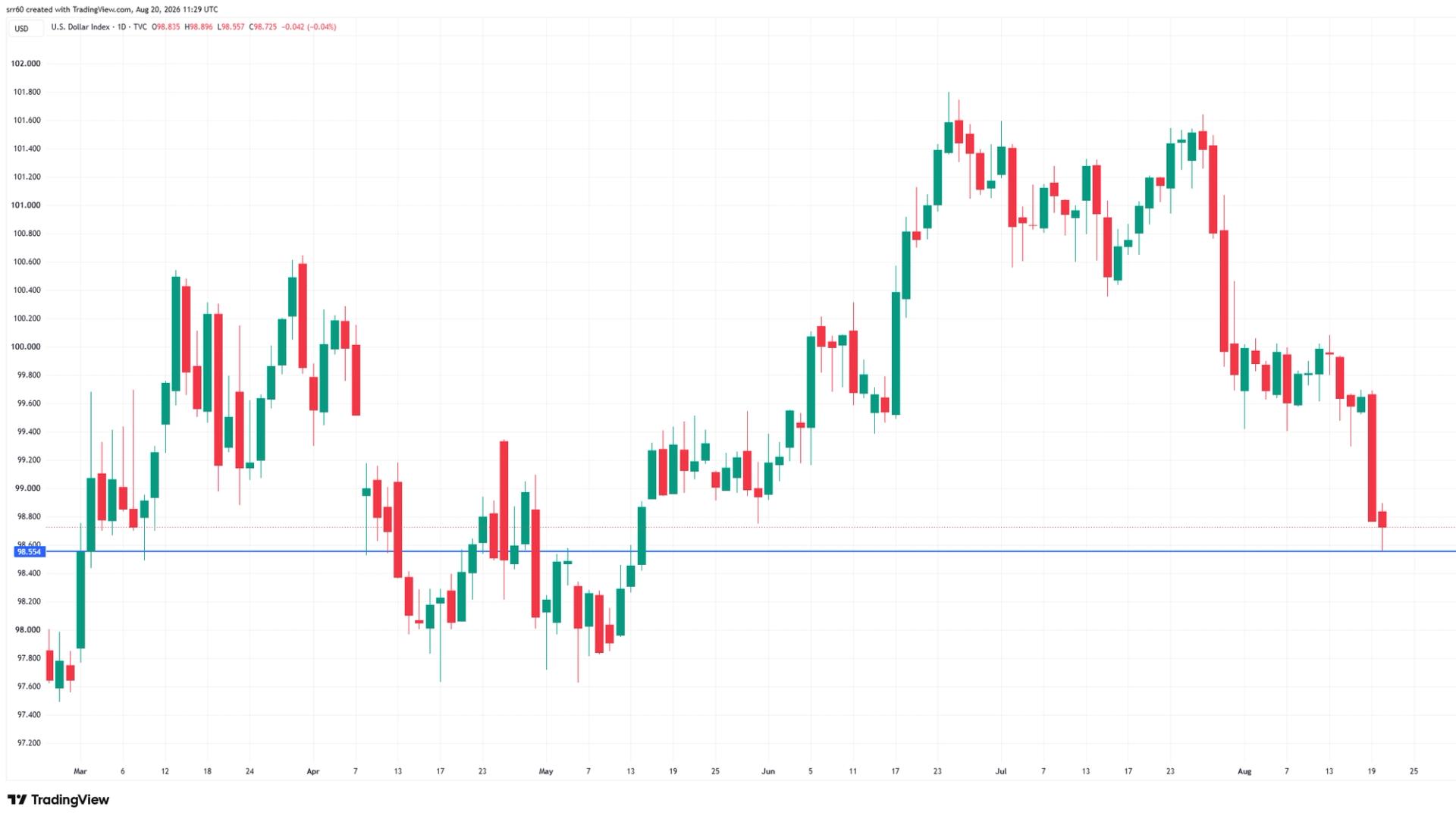
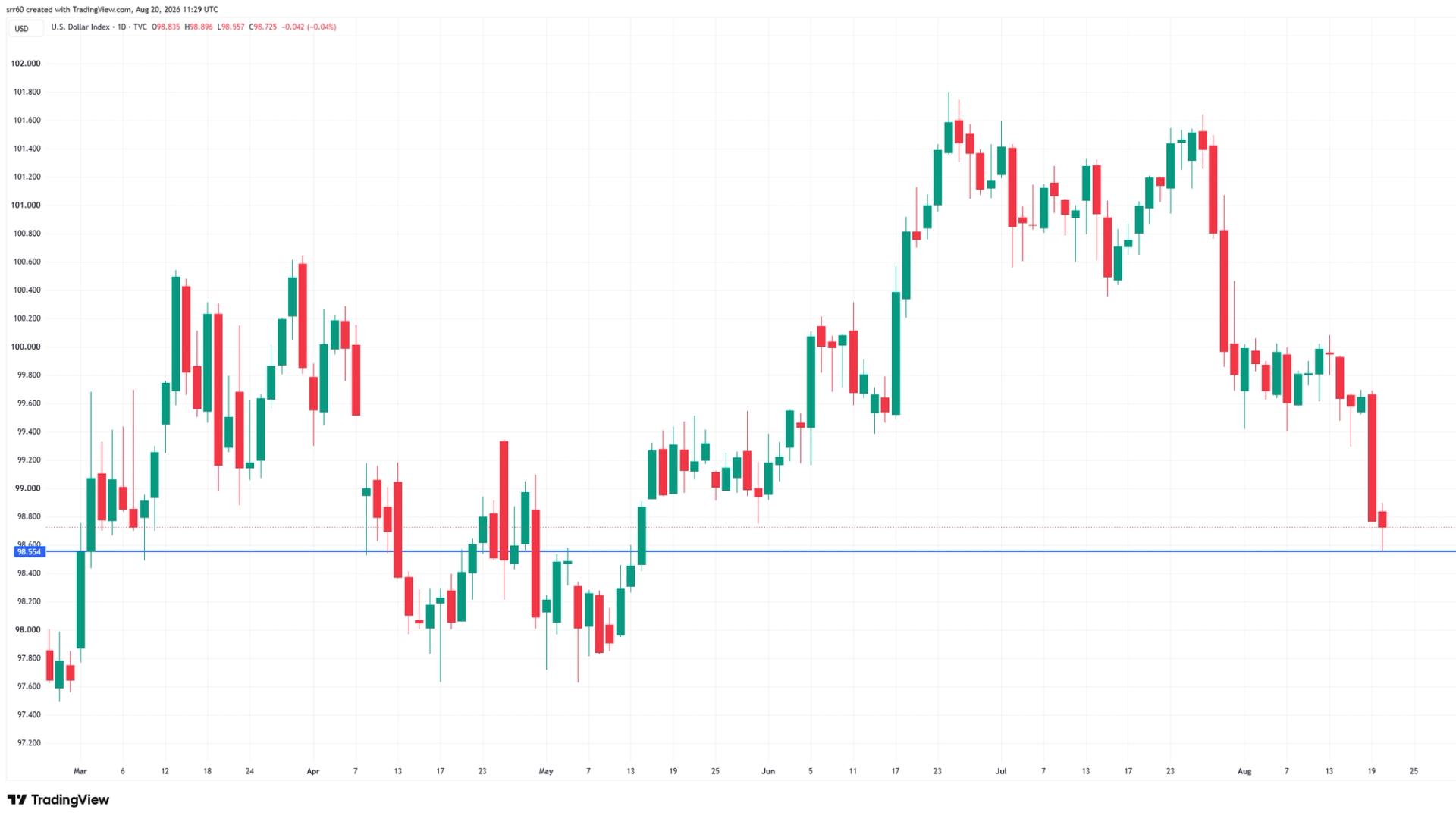
Your day-ahead look for Aug. 20, 2026


Disclosure: This article does not represent investment advice. The content and materials featured on this page are for educational purposes only.
Bitcoin’s move above $71,000 is renewing investor interest, while ASDeFi Cloud Mining offers a way to participate in mining without owning or managing ASIC hardware.
Summary
- Bitcoin breaks $71,000 as market momentum grows, prompting investors to explore cloud mining for passive income opportunities.
- BTC hits a nearly three-month high above $71,000, while investors seek alternatives to simply holding and trading Bitcoin.
- The surge highlights renewed momentum as ASDeFi offers investors a way to participate through cloud mining.
On August 20, the price of Bitcoin once again broke through the $71,000 mark, hitting a new high in nearly three months. The recent market rally has not only been driven by improved sentiment in the cryptocurrency market, but also by the U.S. Treasury’s expansion of its long-term Treasury bond buybacks and the liquidation of a large number of short positions, which have further amplified the market’s upward momentum.
For investors who have been following Bitcoin over the long term, the price breaking through $71,000 signifies that the asset’s value is once again drawing market attention, but it also raises another question:
Following Bitcoin’s rise, investors are turning their attention to opportunities beyond holding
The traditional approach to investing in Bitcoin is simple: buy BTC and wait for the price to rise. While this approach can yield solid returns during a bull market, investors often face long waiting periods during market volatility.
Furthermore, after BTC rises rapidly, new investors must consider whether the current price is already too high. As a result, some investors are seeking more ways to participate in the Bitcoin ecosystem. From trading and ETFs to custody, computing power, and crypto infrastructure, Bitcoin investment is no longer limited to simply “buying and selling.”
Bitcoin mining is becoming more specialized
In the past, individual investors could participate in mining simply by purchasing mining rigs. However, as competition in the network has intensified, costs such as mining rig procurement, electricity, cooling, space, network infrastructure, and equipment maintenance have become significant barriers to entry.
For the average investor, the challenge lies not only in understanding Bitcoin but also in managing the infrastructure required for mining. Therefore, ASDeFi Cloud Mining offers an alternative way to participate: by centrally managing computing power, equipment, and daily operations through the platform, users can participate in Bitcoin mining without having to purchase and deploy ASIC miners at home.
What is ASDeFi cloud mining?
Founded in 2020 and headquartered in the United Kingdom, ASDeFi primarily provides AI cloud computing power and cryptocurrency mining services. Through centralized management of computing power and automated operations, the platform allows users to participate in cryptocurrency mining via a web browser or mobile app without having to purchase mining equipment or deal with issues such as electricity, cooling, and maintenance. This model offers a way to participate in the Bitcoin ecosystem without relying on short-term price predictions.
How should the claim of “$5,000 in passive income per day” be interpreted?
“$5,000 per day” is a relatively high yield target and does not mean that ordinary investors will automatically earn this amount after signing up. Actual returns typically depend on factors such as hashrate, investment amount, contract terms, and the price of BTC.
Therefore, a more reasonable way to understand this is that ASDeFi can serve as a tool for some investors to explore ways to generate returns on cryptocurrency assets. Before participating, investors should familiarize themselves with the contract term, investment amount, yield calculation method, and withdrawal rules, and invest according to their own financial circumstances.
How to get started with ASDeFi Cloud Mining?
1. Register for a cloud mining account
Once registration is complete, users receive a free $15 bonus to purchase hashrate contracts, which will generate $0.60 in daily contract earnings.
2. Complete account information
Log in to the account dashboard and link a cryptocurrency wallet address to receive contract earnings.
3. Understanding computing power contracts
Go to the contracts page to view the amounts, terms, and earnings rules for different computing power contracts, and select the one that best fits your budget.
4. Start the service and view earnings
After completing the relevant configurations, the platform will run the computing power service according to the contract terms. Users can view their account earnings data and manage their earnings via the web or mobile app.
Current examples of computing power contract earnings:
| Contract | Purchase Amount | Term | Daily Return | Total Return |
| Daily Check-in Contract | $15 | 1 day | $0.60 | $15.60 |
| New User Experience Contract | $100 | 2 days | $4.00 | $108.00 |
| Basic Hashrate Contract No. A2317 | $500 | 5 days | $6.50 | $532.50 |
| Basic Hashrate Contract No. A2312 | $3,500 | 15 days | $54.25 | $4,313.75 |
| Stable Hashrate Contract No. S3189 | $10,000 | 25 days | $190.00 | $14,750.00 |
| Stable Hashrate Contract No. S3170 | $23,000 | 30 days | $425.50 | $35,765.00 |
What does BTC breaking through $71,000 mean?
BTC’s recent break above $71,000 is not only a significant price milestone but also reflects a shift in market sentiment following a prolonged correction. Massive liquidations of short positions have further fueled the rally, but this does not guarantee that BTC will continue to rise. Future prices may still be influenced by factors such as interest rates, U.S. dollar liquidity, ETF capital flows, regulatory policies, and global market risk appetite.
Conclusion
BTC has broken through the $71,000 mark, once again highlighting its prominence in the global cryptocurrency market. The recent price surge has been driven by factors such as improved liquidity, a rebound in market sentiment, and short-covering; however, this rapid rise also indicates that market volatility remains high.
For investors holding BTC long-term, in addition to monitoring price movements, it may be beneficial to explore cryptocurrency infrastructure such as cloud mining. Through centralized management of computing power resources and automated operations, ASDeFi offers an option for users who wish to participate in the cryptocurrency computing power ecosystem.
For more information, visit the official website and download the app.
Disclosure: This content is provided by a third party. Neither crypto.news nor the author of this article endorses any product mentioned on this page. Users should conduct their own research before taking any action related to the company.

Bitcoin price is changing hands near $72,000, and the Fear & Greed Index just jumped 16 points to 62, squarely in “greed” territory inline with our bullish analysis yesterday. This sentiment swing in 24 hours usually means something structural is shifting underneath the price action.
Following the run, a smaller-cap trading community token is quietly gaining traction while everyone’s eyes are on BTC’s next move, and it’s worth a closer look before the crowd catches on.
Crypto analytics firm Alternative confirmed the index reading today, noting it stood at 46 just a day prior. The trigger: BTC reclaimed $70,000 after the U.S. Treasury announced an expansion of its buyback program, a move that eased liquidity concerns and pulled risk appetite back into digital assets.
RSI has also pushed to 77.9 with a breakout above the upper Bollinger Band, which technically overheated, though a funding rate of just 0.01% suggests leverage isn’t stretched the way it typically is at cycle tops.
The rally follows a rough stretch earlier in August tied to a cold-wallet exploit and selling pressure from Strategy, the largest corporate BTC holder. BTC has clawed back above $64,000 and now flirts with $75,000 in under two weeks, which says something about how quickly sentiment can flip when macro tailwinds line up.
The question now is whether this is confirmation of a genuine trend shift or another greed-driven spike waiting to unwind. Here’s our Bitcoin price analysis for today.
Discover: The Best Token Presales
Bitcoin Price Analysis: Hit $75,000 This Week?
Bitcoin trades at $71,900, up 11% over the past 24 hours. Weekly gains have reached 13%, while monthly gains now stand at 13%. Trading volume has climbed to $64.19 billion, showing strong activity behind Bitcoin’s latest move. The market cap now sits near $1.44 trillion as BTC pushes back above $70,000.
MACD has turned bullish, while Bitcoin remains comfortably above its 200-day moving average. That combination points toward a recovering trend rather than a simple dead cat bounce.

The immediate battle now sits between $70,000 and $72,000. A clean break above $72,000 could put $76,000 back on the radar. For now, $68,000 remains the key support level. Holding above it keeps the current recovery intact, while a drop below $64,000 could expose $60,000 to $62,000.
The market is also watching ETF flows and spot demand for clues. If buying pressure keeps building, Bitcoin could have room to extend its latest breakout.
Trade Bitcoin Market on Kalshi and Get a $25 Signing-up Bonus
Maxi Doge Targets Early Mover Upside as Bitcoin Tests Key Levels
A BTC holder sitting on gains since the $64,000 bounce is probably feeling validated right now. But here’s the uncomfortable math: at a $1.4 trillion-plus market cap, a move from $72,000 to $76,000 is just under 5%. It’s solid, but not life-changing.
Now, early-stage tokens built around the same leverage-trading culture driving this rally offer a different risk profile entirely, for traders willing to accept that difference in maturity.
Maxi Doge ($MAXI) leans into that 1000x-leverage mentality directly, a 240-lb canine mascot built around gym-bro humor and holder-only trading competitions with leaderboard rewards.
The presale has raised $4.8 million at a current price of just $0.0002834, with dynamic APY staking live for early participants. A Maxi Fund treasury backs liquidity and partnerships, and the “never skip leg-day, never skip a pump” branding isn’t subtle, and it’s not trying to be.
Research Maxi Doge directly before deciding.
Discover: The Best Crypto to Diversify Your Portfolio
The post Bitcoin Price Analysis: The Green Candle is Not Stopping! appeared first on Cryptonews.
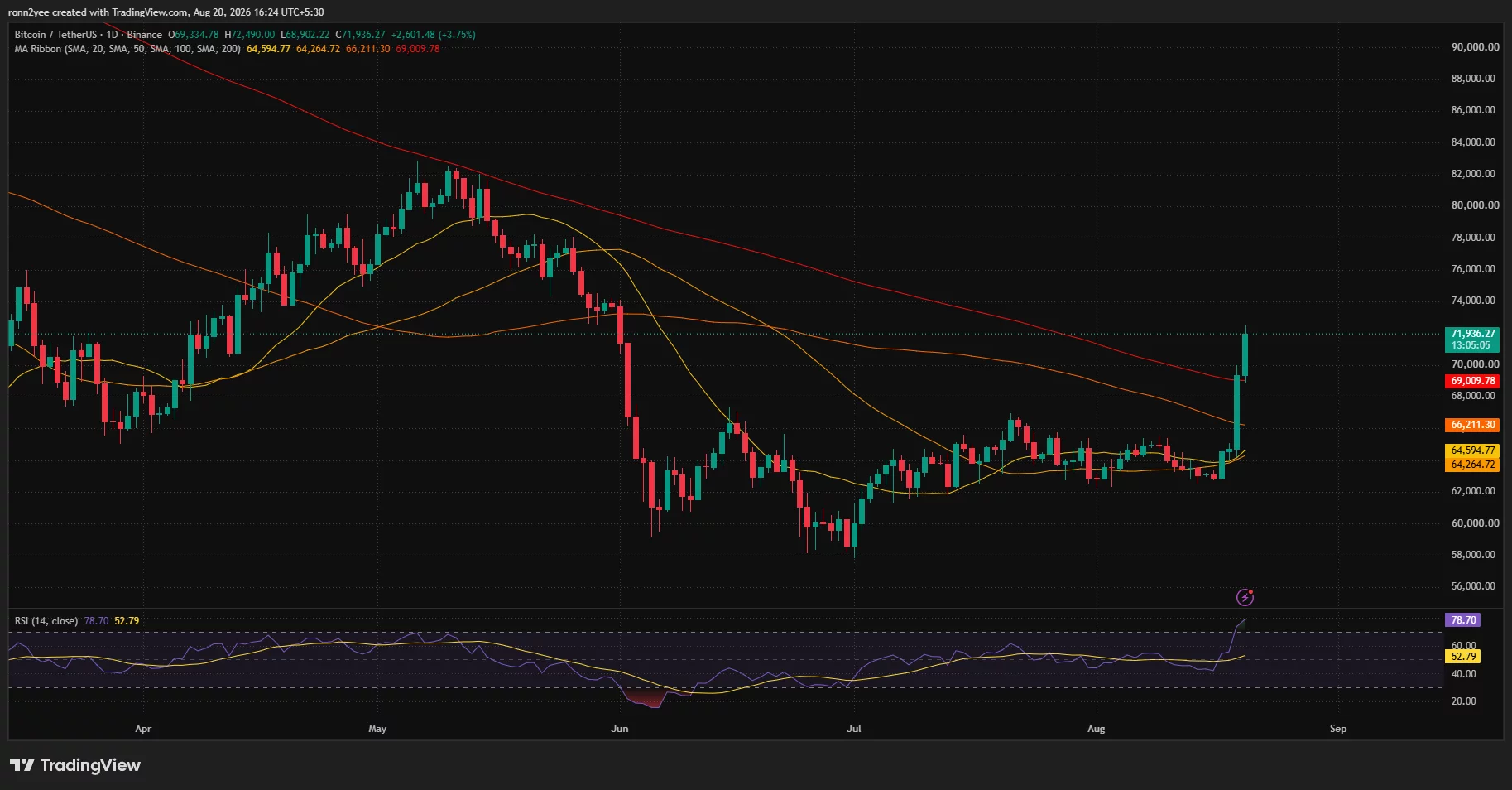
Bitcoin price extended its breakout to $72,490 on Aug. 20 after forced short covering pushed the price through its 200-day moving averages, but an overbought daily reading raises the risk of a pullback.
Summary
- Bitcoin price climbed to an intraday high of $72,490 after breaking above $67,000.
- The price reclaimed its 200-day simple and exponential moving averages near $69,000.
- Daily RSI reached 78.7, placing Bitcoin firmly in overbought territory.
- Liquidation data show the rally cleared several large short-position clusters above $66,000.
Bitcoin price breaks above its 200-day averages
According to data from crypto.news, Bitcoin (BTC) price traded near $71,900 on Binance at the time of writing, up about 3.8% on the daily chart after reaching $72,490 earlier in the session.
The move extended a breakout that began when BTC cleared the $64,000–$66,000 range that had contained the price through much of July and the first half of August. Bitcoin rose from below $65,000 to nearly $70,000 during the first stage of the rally before buyers pushed it above $72,000.
The daily chart shows that Bitcoin has now crossed its 200-day simple moving average at approximately $69,010 and its 200-day exponential moving average near the same level. BTC had remained below both trend indicators since its sharp June decline.
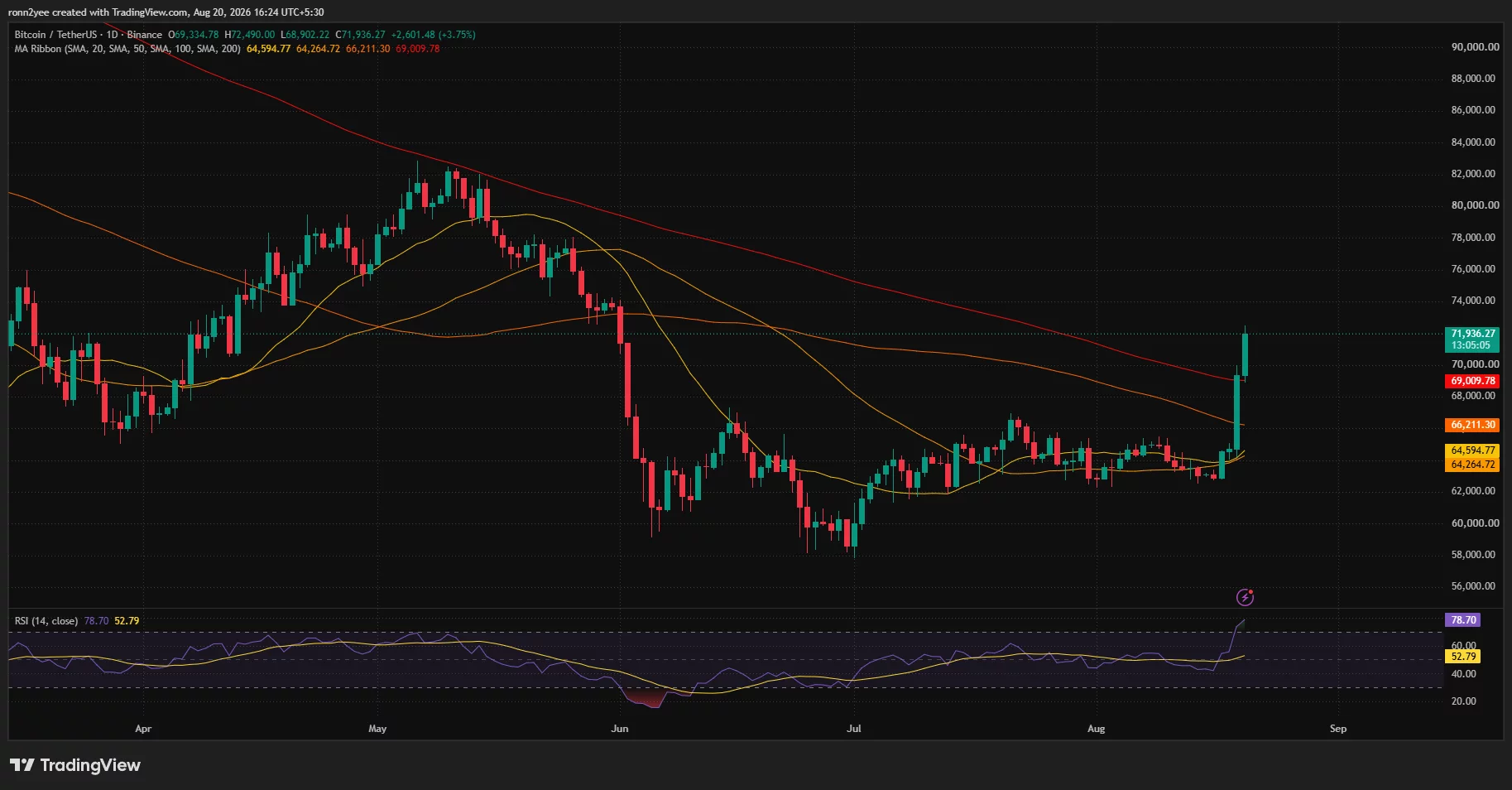
The breakout also took Bitcoin above its shorter moving averages. The 20-day SMA stood at $64,595, while the 50-day and 100-day averages were grouped between $64,264 and $66,211.
That cluster may become a wider support area if the price gives back part of the rally. Holding above the 200-day averages would provide a stronger sign that the move represents more than a temporary derivatives-driven rebound.
Short liquidations accelerated the Bitcoin rally
The one-week CoinGlass liquidation heatmap shows that Bitcoin moved through several layers of leveraged short positions as it crossed $66,000, $68,000, and $70,000.
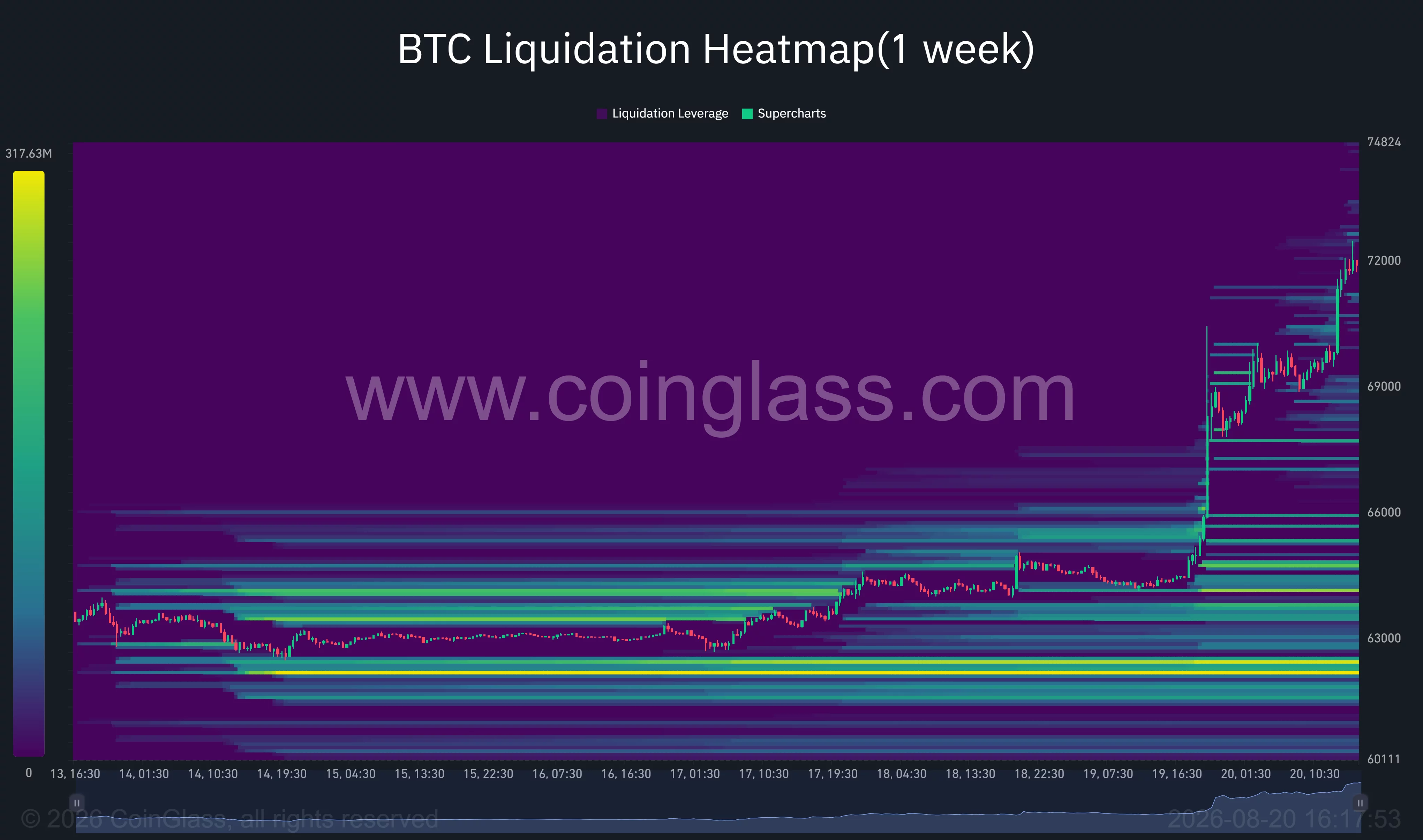
The densest liquidity visible before the breakout was concentrated around $65,000–$66,000. Once Bitcoin crossed that area, forced purchases by traders closing bearish positions helped carry the price toward $69,000.
Further short-liquidation bands between $69,000 and $71,000 added fuel to the advance. The heatmap shows fewer established liquidation clusters above the current price because BTC reached the area rapidly and had spent little time building leveraged positions there.
The rally followed a long period of compression around $63,000–$65,000. Market data supplied with the charts showed more than $1 billion in Bitcoin short liquidations during one hour, and $2.7 billion in bearish positions closed across the broader crypto market.
Liquidations can increase the speed of a move because exchanges automatically buy Bitcoin to close short positions. However, demand generated by forced covering can fade once the largest short clusters have been cleared.
Momentum supports buyers but RSI warns of overheating
Bitcoin’s 4-hour chart remains bullish after the Supertrend indicator flipped positive. Its trailing level has risen to $67,752, placing the first dynamic support roughly 6% below the current price.
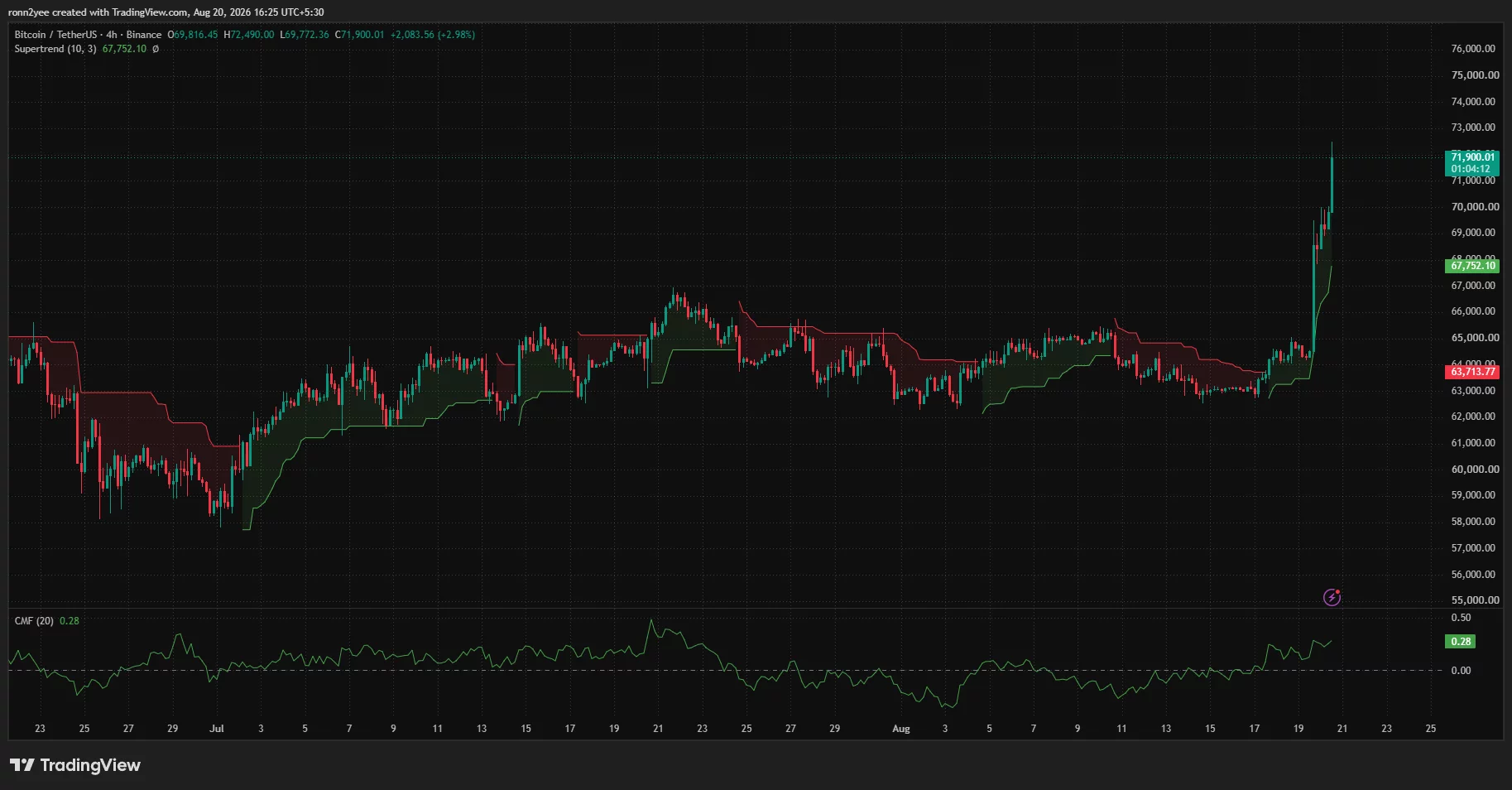
The Chaikin Money Flow reading of 0.28 also shows that buying pressure has accompanied the breakout. A positive CMF reading means more volume has entered Bitcoin during periods when the price closed near the upper part of its trading range.
The daily chart carries a clearer warning. Bitcoin’s 14-day relative strength index jumped to 78.7, well above the 70 level commonly used to mark overbought conditions.
An overbought RSI does not require an immediate reversal, especially during a short squeeze. It does show that the rally has moved faster than its recent trend, increasing the chance of consolidation or profit-taking.
The latest daily candle also produced a high near $72,490 before the price eased below $72,000. Buyers must therefore turn the $69,000–$70,000 region into support to prevent the breakout from becoming a brief move above the 200-day averages.
Analysts watch $67K and $65K for a pullback
Crypto trader Daan Crypto Trades said in an Aug. 20 X post that Bitcoin had made a higher high and was testing its daily 200-day moving-average region.
Daan placed the move inside a wider $60,000–$80,000 range and said the trend had improved on the daily chart. However, the trader expected volatility to remain elevated after Bitcoin escaped the compressed range.
Lennart Snyder offered a more cautious assessment in a separate X post. Snyder said Bitcoin had entered a larger range but remained below important resistance, leading him to favor waiting for the price to settle before opening a new position.
Snyder identified the midpoint of the breakout candle around $67,000 as one area where momentum traders could look for support. He placed a deeper potential buying zone at $65,000–$66,000, near the upper boundary of Bitcoin’s former consolidation range.
Those levels broadly match the technical charts. The 4-hour Supertrend stands near $67,752, while the daily moving-average cluster between $64,264 and $66,211 could offer support during a larger retracement.
On the upside, a sustained close above $72,500 would leave the $74,000 area as the next nearby psychological level. Bitcoin would then face a broader supply region between $78,000 and $80,000, where the market traded before the June sell-off.
US liquidity and ETF demand remain key
The breakout came as US Treasury yields and the dollar pulled back following the Treasury Department’s reported plan to increase long-dated bond buybacks from $2 billion to at least $4 billion per operation in September.
Lower yields can support non-yielding assets such as Bitcoin by reducing the relative return available from government bonds, though the derivatives data indicate that forced short covering was a major immediate driver of the rally.
Data from SoSoValue also showed $517 million in net inflows into US spot Bitcoin exchange-traded funds on Aug. 19. Continued ETF demand would offer stronger evidence that institutional buying is replacing the short squeeze as the source of support.
A renewed rise in US yields, weaker ETF flows, or a daily close below $69,000 would weaken the breakout. Holding the 200-day averages while the RSI cools would give buyers a firmer base for another attempt above $72,500.
Disclosure: This article does not represent investment advice. The content and materials featured on this page are for educational purposes only.

US spot Bitcoin exchange-traded funds (ETFs) saw a surge in demand on Wednesday, pulling in $517.2 million in net inflows—marking their biggest single day since May 4. That strong session helped lift total August net inflows to $1.47 billion, extending a momentum shift that has become increasingly noticeable as the month progresses.
According to data referenced by Cointelegraph, the funds have drawn in roughly $1 billion since Monday, representing their strongest weekly net inflow since the week ended Jan. 16, when they attracted about $1.42 billion.
Key takeaways
- Bitcoin spot ETFs recorded $517.2 million in net inflows on Wednesday, the largest single-day figure since May 4.
- August net inflows reached $1.47 billion as inflow strength continued after Monday’s near-$1 billion total.
- Spot Ether ETFs added $189.2 million in net inflows on Wednesday, bringing this week’s Ether inflows to about $291.5 million.
- ETF inflows coincided with a broad crypto price rally and US Treasury action to expand long-dated debt buybacks.
- Market attention also returned to US crypto policy progress, following renewed discussion of the CLARITY Act.
ETFs post best day since May amid risk-sensitive market signals
The latest ETF numbers arrived alongside a rising crypto tape. At the time of writing on Thursday, Bitcoin was trading near $72,000, up 11% over the prior 24 hours, according to CoinGecko. Ether also gained sharply, up 19% to $2,286.
The close timing matters because it suggests the inflows were not isolated to ETF-specific flows alone. Instead, they came during a day when broader market conditions appeared to favor assets perceived as hedges against currency debasement rather than pure “risk-on” trades.
Cointelegraph quoted Jonatan Randin, senior market analyst at PrimeXBT, saying the Treasury’s move to expand buybacks at the long end helped push yields and the US dollar lower—while gold and silver outperformed equities. In his view, the market interpreted the action as a currency-related development rather than a growth catalyst.
Why Treasury buybacks and regulation talk may be feeding the same narrative
The Wednesday ETF inflow surge was linked to two parallel storylines: the US Treasury’s decision to expand buybacks of longer-dated government debt, and renewed attention on crypto regulation after President Donald Trump urged Congress to advance the CLARITY Act at a White House event.
Cointelegraph’s reporting connected the Treasury decision to the broader price action, including the way Bitcoin traded in sympathy with gold and silver. Randin’s comments emphasized that Bitcoin’s correlation shifted toward the “debasement trade”—an environment where investors often look to hard assets rather than companies or conventional growth exposure.
Investors tend to focus on the interaction between rates, the dollar, and liquidity expectations because those factors can influence whether demand flows into speculative or “hedging” allocations. When ETFs see strong net inflows while Bitcoin’s price behavior resembles traditional hedges, it can indicate a different driver than simple momentum trading.
Ether ETFs also benefit as weekly inflows climb
While Bitcoin led the day’s flows, Ether ETFs also contributed to the broader picture. Spot Ether ETFs logged $189.2 million in net inflows on Wednesday, increasing this week’s net inflows to about $291.5 million.
That matters for market structure: simultaneous strength across major spot products can reinforce the impression that inflows are responding to a macro or policy-driven catalyst rather than reflecting a rotation limited to a single asset.
At the same time, the gap between Bitcoin’s $517.2 million inflow and Ether’s $189.2 million highlights how investor positioning still appears weighted toward Bitcoin as the primary institutional gateway for spot exposure.
What to watch next: whether ETF inflows hold after the catalyst
The immediate question for readers is whether the Wednesday surge was a one-off reaction to Treasury headlines and renewed regulatory urgency—or the start of a more sustained inflow trend. With Bitcoin and Ether both sharply higher and ETF inflows reaching notable multi-month highs, investors will likely watch subsequent daily flow prints, changes in yields and the dollar, and any tangible movement around US crypto policy discussions.
Cybersecurity firm Rapid7 unveiled a new cryptocurrency phishing campaign known as Operation Asterix, targeting roughly 885,000 phone numbers from several countries to steal cryptocurrency investors’ assets.
The phishing campaign led to 5,576 accounts matched to users on crypto exchange Binance, which were queued for attack, while the recovered logs also showed fake emails impersonating Crypto.com, according to a Monday report by Rapid7.
Of the 885,000 phone numbers, the largest file included 316,002 German mobile numbers, with additional directories covering Hong Kong, Bulgaria, the UK, the US, Canadian fintech companies and additional Ledger-related lists.
Phishing attacks and social engineering scams drove the majority of the crypto industry’s losses in the first quarter of the year, accounting for $306 million out of the total $482 million lost, according to blockchain security company Hacken.
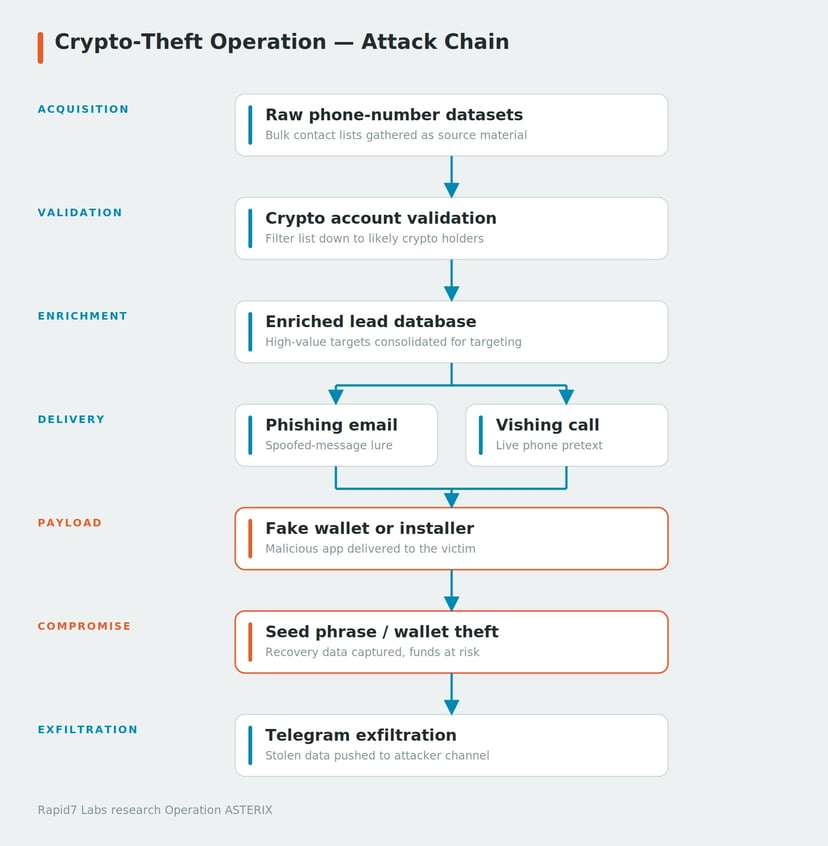
As part of the Asterix phishing campaign detailed by Rapid7 analysts Anna Sirokova and Jan Recinsky, attackers drove victims to fake apps impersonating Ledger, Trezor, and Exodus, seeking to steal their seed phrases. Attackers reached out to victims through fake support emails and phone inquiries.
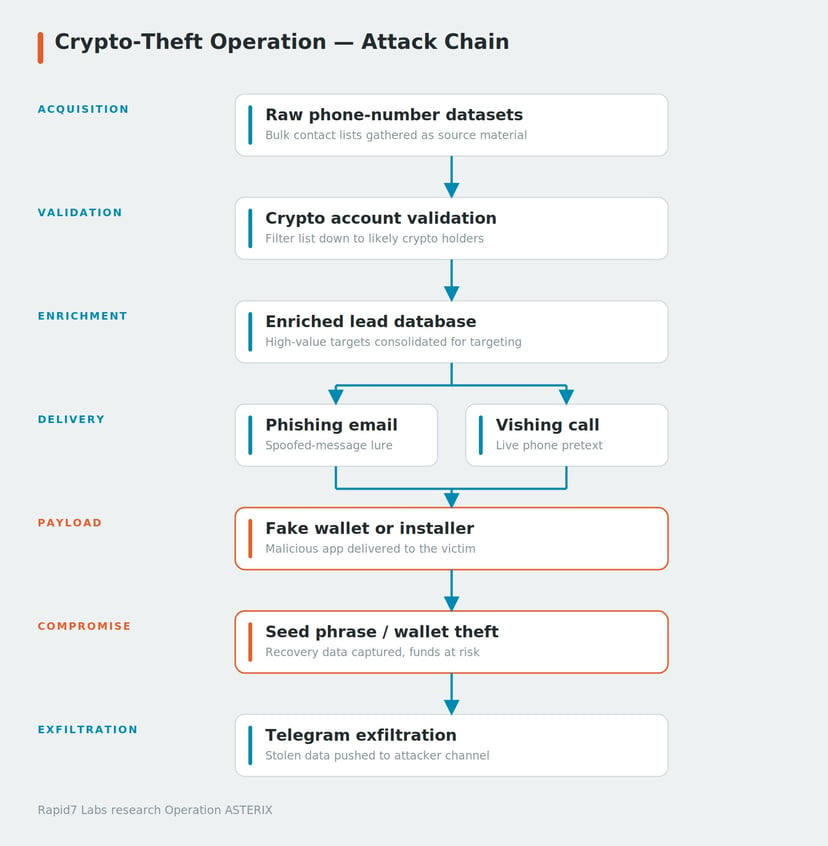
Operation Aseterix kill chain from acquisition to exfiltration. Source: Rapid7.
Cointelegraph has contacted the analysts for further comment on what they found regarding target filtering, hardware wallet spoofing and self-custody vulnerabilities. We will update this article when they reply.
Earlier in August, wallet provider Trezor reported a breach of personal data affecting about 14,000 users through its shipping provider, ShipMonk.
In July, a crypto investor lost nearly $1 million after signing a malicious phishing token approval transaction on Ethereum.
In November 2023, a fake Ledger Live app on the Microsoft Store resulted in the theft of $588,000 across 38 transactions.
Related: DefiLlama delayed mobile launch over phishing apps on Apple Store, founder says
Asterix phishing campaign boasts 13% “hit rate”
Attackers matched 43,066 accounts to cryptocurrency users with exchange accounts, validated from the larger German dataset of over 316,000 phone numbers, meaning that the campaign has a “hit rate” of approximately 13.6%, according to Rapid7.
The report also identified a checker for Kraken, which sought to bulk-validate phone numbers against accounts from the cryptocurrency exchange. The cybersecurity company said that the recovered artifacts showed that artificial intelligence tools were used as a significant part of the phishing campaign.
Phishing attacks are a long-standing headwind for the crypto industry, as they enable attackers to exploit human behavior rather than the code of a protocol.
On May 25, onchain analyst “b-block” warned that scammers used Google to deploy malicious phishing ads impersonating decentralized exchange Uniswap, reportedly stealing more than $400,000 from victims.
Leading crypto industry figures, including Binance co-founder Changpeng Zhao, have previously called for better wallet security measures to avoid phishing scams, after an investor lost $50 million in an address poisoning scam in December 2025.
Magazine: How a ‘Wrong Number’ message turned into a $3.4M crypto scam

York girl with down syndrome achieves 7 GCSEs at All Saints

Bitcoin rally sparks debate whether Clarity Act is already priced in

Morgan Stewart Shuts Down Real Housewives of Beverly Hills Rumor





-

 Fashion6 days ago
Weekend Open Thread: Ann Taylor
-
 Sports7 days ago
This U.S. Amateur is a glimpse into golf’s future in more ways than you think
-
 Tech6 days ago
11 Ways to Rank Your Videos
-

 Sports5 days ago
Birmingham 2026: Day 6 Timetable for Irish Athletes
-
 NewsBeat5 days ago
Myanmar says over 300,000 Rohingya refugees verified for repatriation as exodus enters ninth year
-

 Politics5 days ago
SEQ Code: The Three Letter Boarding Pass Code That Could Give You The Worst Seat
-

 Tech2 days ago
Qwen3.8-27B runs frontier-class coding agents and reasoning locally, no cloud API required
-

 Tech7 days ago
DeepSeek Harness launches as open source rival to Claude Code, alongside V4-Pro on API with higher prices
-

 Crypto World3 days ago
OCC Greenlights Trump Family Crypto Firm for Trust Charter
-

 Crypto World5 days ago
Pi Network Protocol 27 endgame: last upgrade before what?
-

 Business2 days ago
SMA Solar Technology AG (SMTGY) Q2 2026 Earnings Call Transcript
-
 Tech5 days ago
Every fusion startup that has raised over $100M
-

 Fashion6 days ago
Weekly News Update, 8.14.26 – Corporette.com
-

 Business6 days ago
15 Ways to Make Money From Your Phone (2026 Guide)
-
 Entertainment6 days ago
10 Netflix Shows That Quietly Became Modern Classics
-

 Business5 days ago
Facebook Down Now? Users Report Login And Loading Problems As Outage Trackers Monitor Ongoing Issues
-
 Entertainment5 days ago
Marvel Studios Reveals New X-Men Cast Including Adam Driver and Sadie Sink
-

 Fashion6 days ago
Silver bangles for women – Newbridge Silverware
-

 News Videos9 hours ago
Don’t Leave Your Financial Future To Chance | August 19, 2026
-
 Business5 days ago
Monarch Mutual Fund set to enter MF space with maiden overnight fund; files draft with Sebi
You must be logged in to post a comment Login