Connect with us

Tech

In AI’s wake, what challenges need to be addressed by finance professionals?

Published

on

Patrice Bouexel explores how AI and automation are impacting employee expectations and behaviours in the wider financial ecosystem.

Now more than ever, we are seeing a landscape in which organisations globally are racing to automate their financial operations. For Patrice Bouexel, general manager for Europe at financial software platform Sis ID, this is evidence of an ecosystem in which companies are struggling to meet expectations.

Bouexel told SiliconRepublic.com, “Finance teams are under the same pressure as every other function – do more with the same headcount and do it faster. 

Gartner found that AI adoption in finance rose from 37pc in 2023 to 58pc in 2024, while Deloitte’s global survey of more than 1,300 finance leaders found that adopting new technology, including AI, was a top priority for 48pc of respondents.”

Advertisement

He added: “That is not a small shift. It reflects a recognition that manual, paper-based processes cannot keep pace with the volume and complexity of modern payment flows, especially as organisations operate across more currencies, more vendors and more jurisdictions than they did five years ago.” 

Bouexel explained that for the vast majority of companies, automation is no longer a nice-to-have feature that boosts productivity – it is fast becoming a baseline expectation among boards and investors, who often view it as a central way a finance function manages not only risk, but cost as well. 

Rough regulation

But it isn’t solely the introduction of new technologies creating opportunity and chaos for organisations. Among the more pressing challenges for modern-day finance professionals is ensuring that the data utilised and generated by advanced tech is of a high quality and appropriately governed.  

“The gap sits between deploying a tool and trusting what it produces. Organisations that get this right treat automation as a governance exercise first,” said Bouexel.  

Advertisement

“They map which processes are rules-based and genuinely ready for automation, such as invoice processing and expense approvals, and separate those from multi-stakeholder processes that need workflow redesign rather than a bot bolted onto an old process. They also invest in the underlying data before they invest in the algorithm.”

Skills also present a significant challenge, he finds, as AI, automation, data analysis and technology integration are becoming critical to experts in this field.

“Automation succeeds when finance teams are given the time and training to own the exception cases, not just the software licence.”

Sonic speed

He finds, too, that in an environment in which AI and automation are only ever as reliable as the financial data they are relying on, the hastiness to complete a task can often spell disaster. 

Advertisement

Bouexel noted, “An automated process will execute a bad instruction just as efficiently as a good one. If a vendor record is outdated, if bank details were changed without proper verification or if a duplicate invoice slipped through months ago, automation does not catch that. It accelerates it.

“That is the uncomfortable part of the automation conversation that gets skipped over. Organisations are moving faster towards straight-through processing at exactly the point when the data feeding those processes – vendor master files, payment histories and approval trails – is often the least scrutinised part of the finance stack.

“Speed without verified data does not reduce risk. It just means an error or a fraudulent instruction reaches payment faster than it used to.”

He suggested that nowadays, the real goal is prevention rather than cleaning up a mess once it has already happened. As the detection of fraudulent or suspect behaviour becomes a more difficult challenge, largely due to AI and deepfake technologies, verification skills and processes can make all the difference. 

Advertisement

“The more durable answer sits earlier in the chain, verifying who you are actually paying and confirming their identity through a channel the fraudster cannot touch before the payment is authorised, rather than trying to spot the anomaly once it is already in flight,” he said. 

Laudable leadership

When asked the question, ‘What should finance leaders be doing now as fraud, AI and regulation reshape payment security?’, Bouexel remarked that there are three areas for leaders to focus on. 

Firstly, they should separate process risk from technology risk.

Secondly, AI literacy must be built into finance teams as a means of developing a human-based tech skillset, not just into the tools being used. 

Advertisement

He said, “Finance teams need to understand how AI-enabled fraud actually behaves if they are going to recognise and challenge convincing fraudulent requests.”

Lastly, they need to treat regulatory change as a floor, not a ceiling.

“Rules tend to formalise what good practice already looks like. Organisations that wait for the mandate before acting are, by definition, behind.”

Don’t miss out on the knowledge you need to succeed. Sign up for the Daily Brief, Silicon Republic’s digest of need-to-know sci-tech news.

Advertisement

Source link

Continue Reading
Click to comment

You must be logged in to post a comment Login

Leave a Reply

Tech

A new Gemini for Home update is rolling out, but users are slamming Google for not fixing ‘missing and broken features’ despite the voice upgrades

Published

on


  • Google is rolling out a new Gemini for Home update to fix voice commands for Spotify
  • The company is also fixing message broadcasting and smart light controls
  • Despite the upgrades, users are criticizing Google for not fixing the issues they’ve been experiencing for a while

The transition to Gemini has been rough — even Google knows that, but the latest Google Home update aims to tackle a handful of pain points with voice commands.

In an announcement issued yesterday (August 20), Google shared three fixes coming to the Gemini for Home voice assistant, which is still in early access. Additionally, features in the Google Home app are also tipped to get a glow-up.

Source link

Advertisement
Continue Reading

Tech

Nvidia and Korea’s Rebellions reportedly hold partnership talks

Published

on

Nvidia has poured more than $63bn in investments into other companies.

Nvidia and South Korean chipmaker Rebellions are in talks for a partnership that could result in an investment or an acquisition, Bloomberg News has reported. Talks are in early stages and may not result in a deal, sources told the publication.

According to the publication, Nvidia CEO Jensen Huang and Rebellions co-founder and CEO Sunghyun Park met in person to discuss a potential deal. This comes a year after the company’s chief financial officer Sungkyue Shin said that Rebellions’ “master plan” was to go public.

It raised $400m in a funding round in March, taking it to a valuation of around $2.3bn. Rebellions, at the time, said it is prepping to go public, but did not share details.

Advertisement

Founded in 2020, Rebellions is an Nvidia competitor best known for chips that focus on AI inferencing, as opposed to training. As IBM puts it, AI inference is the ability of trained AI models to recognise patterns and draw conclusions from data it hasn’t seen before.

In 2024, the start-up merged with SK Telecom’s AI chip start-up Sapeon. The idea was that they would together take on global AI giants such as Nvidia.

Nvidia has poured money into dozens of companies over recent years, including frontier developers and infrastructure providers, all in a bid to continue keeping itself central to the AI boom.

In 2025, the company signed US AI company Groq in a licensing deal that saw much of its talent hired away by the chipmaking giant. The start-up announced its first European data centre in Helsinki last year and announced a new $350m funding round earlier this month – though its valuation dropped by nearly half.

Advertisement

Meanwhile, in recent days, the $5.2trn Nvidia has agreed to pay Poolside AI $6bn to license its models and poured an undisclosed amount into Atomic Canyon. Its $63bn investment portfolio, however, majorly consists of Intel and SpaceX, which together amount to more than $50bn.

Don’t miss out on the knowledge you need to succeed. Sign up for the Daily Brief, Silicon Republic’s digest of need-to-know sci-tech news.

Source link

Advertisement
Continue Reading

Tech

Stop Hunting, Start Solving: Accelerating Root Cause Analysis with Agentic AI

Published

on

About this Webinar

Turn Yield Excursions into Faster, More Confident Root Cause Analysis

When a yield issue emerges, the answer rarely lives in a single system. Critical clues are spread across metrology data, tool traces, chemical analysis, and facilities systems, while growing data volumes make traditional dashboards slow, fragmented, and difficult to act on.

What You’ll Learn:

Advertisement

Discover how a purpose-built semiconductor analytics platform can help engineers connect insights across domains without moving data. See how Agentic AI, semiconductor-specific visualizations, and push-down compute enable faster investigation of yield excursions and process issues, even across billions of data points. In the session, a live demonstration shows how to conduct a multi-domain root cause investigation using Spotfire® Industry Pro.

Key Takeaways:

  • Understand why siloed manufacturing data delays yield recovery and inflates costs
  • Learn how Agentic AI automates complex cross-domain analytics and visualization generation
  • Explore methods for scaling high-performance analytics across massive fab datasets

Who Should Attend:

Yield, Process, and Integration Engineers; Fab and Manufacturing Operations Managers; Quality and Reliability Engineers; and Data & Analytics leaders supporting wafer fabs, foundries, OSATs, and IDMs who need to identify issues faster while maintaining confidence in decision-making.

Save Your Spot!

Advertisement

Join this webinar to learn how leading semiconductor teams are accelerating root cause investigations, scaling analytics across massive datasets, and transforming disconnected data into actionable manufacturing intelligence. Reserve your seat today.

Register now for this free webinar!

Source link

Advertisement
Continue Reading

Tech

FUJIFILM India Launches the New X-Space Experience Centre in Delhi

Published

on

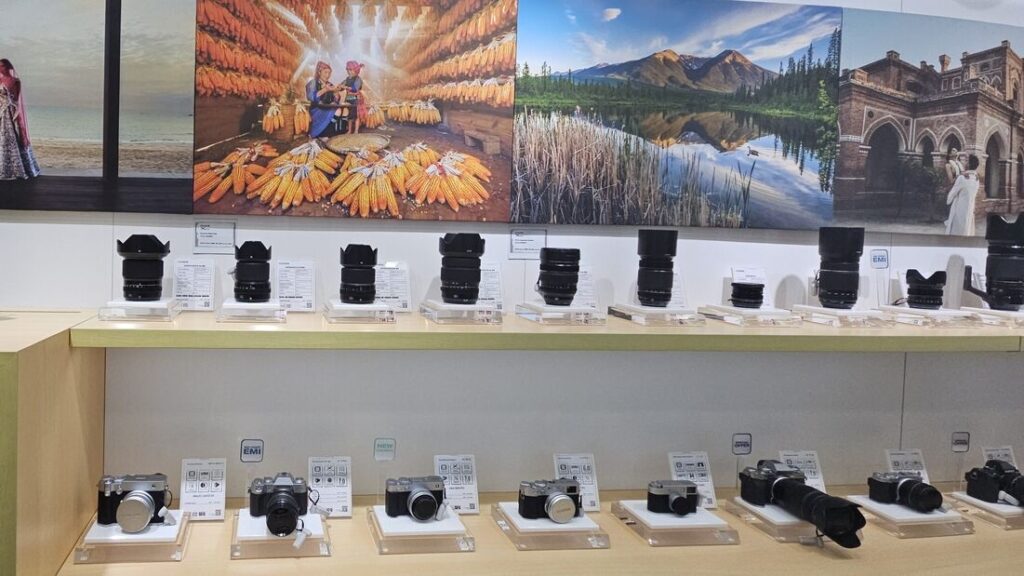
After a successful Spectrum Tour, FUJIFILM India has decided to upgrade its Fujifilm X-Space in New Delhi into a three-floor experience center. The new space brings cameras, lenses, Instax, binoculars, QuickSnap cameras, and printing solutions under one roof. It also gives visitors a chance to try products, attend demonstrations, and learn more about Fujifilm’s imaging technology. The center also features Delhi’s first Fujifilm customer service center.

A Three-Floor Center for Imaging Experiences

first floor Fujifilm X-Space

The first floor of the upgraded Fujifilm X-Space serves as the main experience center, with separate areas for different imaging products. Visitors can try the X Series and GFX System cameras and lenses, along with the complete insta range, Fujinon binoculars, QuickSnap cameras, and printing solutions. The center will also host product demonstrations, workshops, and learning sessions for photography enthusiasts with varying levels of experience.

Moving to the second floor, visitors will find a photo exhibition featuring images taken with Fujifilm cameras. The dedicated studio will host live demonstrations, studio tests, and creative sessions. It will also support demonstrations of film grading and image editing. The third floor is dedicated to customer service, marking Fujifilm’s first such center in Delhi. Users can access product support in the same place where they explore Fujifilm’s imaging products.

Fujifilm X-Space Brings Products and Support Under One Roof

customer support

In the upgraded version of the X-Space, the emphasis is on enabling visitors to interact with the Fujifilm imaging technology in an informative manner. The products will not only be viewed but also understood, and their possibilities will be explored. Fujifilm also intends to use the space to promote photography education.

Mr. Haruto Iwata, Managing Director, FUJIFILM Asia Pacific, said, “India is an important market for Fujifilm, supported by a vibrant community of photography enthusiasts and professionals. The upgraded Fujifilm X-Space reflects our continued commitment to bringing our imaging technologies closer to people and creating opportunities for them to explore the possibilities of visual expression.”

Source link

Advertisement
Continue Reading

Tech

Meta’s Big Reckoning Is Here

Published

on

My colleague Paresh Dave and I each spent a day in federal court in Oakland, California, this week, monitoring the latest Meta child safety trial.

In case you missed it in the spring, Meta (along with YouTube) lost a landmark social media case in California, in which a jury found the companies liable for harming a young user with certain design features in their apps. Then, earlier this month, Meta was ordered to pay more than $940 million in the state of New Mexico for being a public nuisance and causing psychological harm to children.

Now Meta is defending itself in a federal civil trial taking place in the US District Court for the Northern District of California. The plaintiffs in this case are 29 state attorneys general. They’re claiming that Meta violated a federal privacy law protecting children, known as COPPA, by improperly collecting personal information about children under 13 without parental consent. The lead AGs, which span four states—California, Colorado, Kentucky, and New Jersey—also say that Meta made deceptive statements about its platform that were likely to mislead consumers.

Two specific Meta apps are in focus in this trial: Facebook and Instagram.

Advertisement

Meta maintains that it satisfied COPPA law requirements in those states, and denies that its statements about how its apps work were deceptive or misleading. It also insists it is protected from liability by Section 230 of the Communications Decency Act of 1996, which essentially says that platforms like Meta aren’t responsible for the content posted on their apps by users.

I was in the packed courtroom Tuesday to hear opening arguments from both sides, presided over by chief district judge Yvonne Gonzalez Rogers. Per usual, Meta was represented by an army of well-heeled lawyers, who quite ironically kept experiencing technical difficulties with the mic. Megan O’Neill, the deputy attorney general at the California Department of Justice, kicked off the opening statements, laying out how the state AGs believe Meta deliberately hooked kids on its apps and harvested their data.

O’Neill emphasized that throughout the trial, the jury would be shown just “how many features work both individually and together to keep people in the apps. To draw them in and keep them in for longer. Meta has used these features to draw kids onto the apps, and to keep them coming back.”

Meta lead attorney Paul Schmidt then laid out the dozens of safety features that have been built into Meta’s apps over the past several years, and he said the company is committed to improving its apps. He also shifted some responsibility onto users, saying there’s no dispute that some kids find their way onto Meta’s apps and that some teens “struggle to manage their time.” And inevitably some people will post negative content on social media apps, Schmidt said.

Advertisement

Later on Tuesday and then again on Wednesday, the courtroom heard from Arturo Bejar, a former Meta employee and key witness in earlier trials. His main point: Mark Zuckerberg didn’t prioritize youth safety. It was part of company culture during Bejar’s time there that if you had an inkling of an idea for a feature that would spur growth, “you could just test it,” he said. At the same time, he described a culture in which it was “near impossible” to screen products and features for potential harms.

(On Thursday, the trial was put on pause due to a sick juror.)

Meta has been embroiled in a remarkable number of scandals over the past decade, many of which have faded from public memory, been chalked up to the cost of doing business, or were settled out of court. The company’s platforms have played a role in stoking violence and swaying elections. It has regularly siphoned personal data from users in purposefully opaque ways. Not to mention the amount of internal workplace dysfunction at Meta that’s been revealed through depositions, books, and news reports like these.

Source link

Advertisement
Continue Reading

Tech

MG’s new 07 sedan is official, and it starts under $16,000

Published

on

At the 2026 Chengdu Auto Show, SAIC’s MG brand officially launched its new mid-size sedan, the MG 07, and the pricing might genuinely surprise you. According to CarNewsChina, the car is available in seven configurations, with prices ranging from 108,900 yuan to 159,900 yuan, or roughly $16,000 to $23,500, making it one of the most affordable electric cars.

A surprisingly premium design for a $16,000 sedan

The MG 07 stands out with a star-ring light group up front and semi-hidden door handles for a cleaner silhouette. It measures 4,886mm long and rides on a 2,825mm wheelbase, paired with frameless doors, two-tone wheels, and yellow brake calipers. At the back, there’s a through-type taillight and a 5-stage adjustable electric spoiler. You get six paint options, including Morello Purple, Notting Grey, Oxford Blue, Milia Pink, California Blue, and Salt Lake White.

On the powertrain front, MG is offering both EV and PHEV options. The EV runs on an 800V platform, offering up to 315 horsepower and a maximum range of 845km, while the PHEV pairs a 1.5L engine with an electric motor for a combined range that stretches to 1,745km. The 610km range EV trims interestingly use semi-solid batteries from Qingtao, while every other version sticks with CATL‘s more familiar LFP cells.

The cabin is where things get really interesting

The cabin is really well done. You get a wraparound cockpit with a 15.6-inch floating touchscreen running on the 8295P chip. The driver’s seat comes with heating and ventilation, and the passenger side even gets a “Queen” zero-gravity mode. Add in a multi-functional vanity mirror, a 21-speaker sound system, and mCDC active suspension, and the comfort package feels genuinely thought out. MG has also added LiDAR here, powered by Momenta’s R7 world model.

The MG 07’s price might be its biggest selling point

If you already had your eye on the EV version, pre-sales kicked off last month starting at 125,900 yuan, or about $18,600. Deliveries are staggered depending on which range you pick. Go for the 650km version, and you should have it by the end of August. Opt for the longer 845km range instead, and you will need to wait until October.

Advertisement

Source link

Continue Reading

Tech

Chinese memory firm CXMT relied on leaked Samsung technology to skip years of R&D, court testimony claims

Published

on

Cutting corners: Building a memory chip from the absolute ground up takes years and costs a fortune. ChangXin Memory Technologies (CXMT) apparently decided to skip the hard part – and today, the company stands as China’s biggest DRAM producer. A South Korean court recently heard some fairly wild details about how the memory maker actually got its start.

That origin story came directly from a former Samsung Electronics engineer surnamed Jeon, according to Maeil Business. The veteran employee spent almost three decades at Samsung before jumping to the rival firm around 2016. Jeon appeared in a Seoul courtroom this past week to testify under oath about those early days, telling the judge that his new employer lacked basic laboratory facilities and never planned to do its own independent research when it was founded.

Instead, startup executives reportedly wanted to grab a highly confidential blueprint from Samsung right from day one. Engineers in the semiconductor industry call that document a Process Recipe Plan: it lists roughly 600 specific manufacturing steps, telling engineers exactly what temperatures and equipment pressures to use on the factory floor so they don’t have to guess.

Samsung spent five years and well over a billion dollars dialing in the specifications for its 18-nanometer memory chips. Prosecutors now say the Chinese firm simply recruited a bunch of former Samsung workers to swipe all of it.

Advertisement

By 2023, the company had begun mass-producing advanced memory chips. Today, its output has grown from 40,000 to 720,000 wafers in just a few years, and it’s closing in on Micron.

Unsurprisingly, South Korean authorities haven’t let this slide. Prosecutors indicted ten people late last year for illegally leaking protected national technologies, and a judge handed Jeon a seven-year prison sentence this past April for his role.

Proving all this in court could give Samsung a powerful weapon moving forward. Legal experts believe the company might take sworn statements straight to the US International Trade Commission, a body with the authority to block foreign products from entering the country entirely.

Advertisement

Source link

Continue Reading

Tech

Amphion A15 Active Speakers Bring Studio Monitor Thinking Home Without the Wireless Baggage

Published

on

Finnish loudspeaker manufacturer Amphion has spent more than 25 years building loudspeakers around a fairly consistent idea: minimize the theatrics, control dispersion, and let the recording do most of the talking. Its professional studio monitors have subsequently found their way into rooms used by engineers and producers working with artists including Billie Eilish, Beck, and Kendrick Lamar, while its home loudspeakers have become more widely available in North America through Playback Distribution.

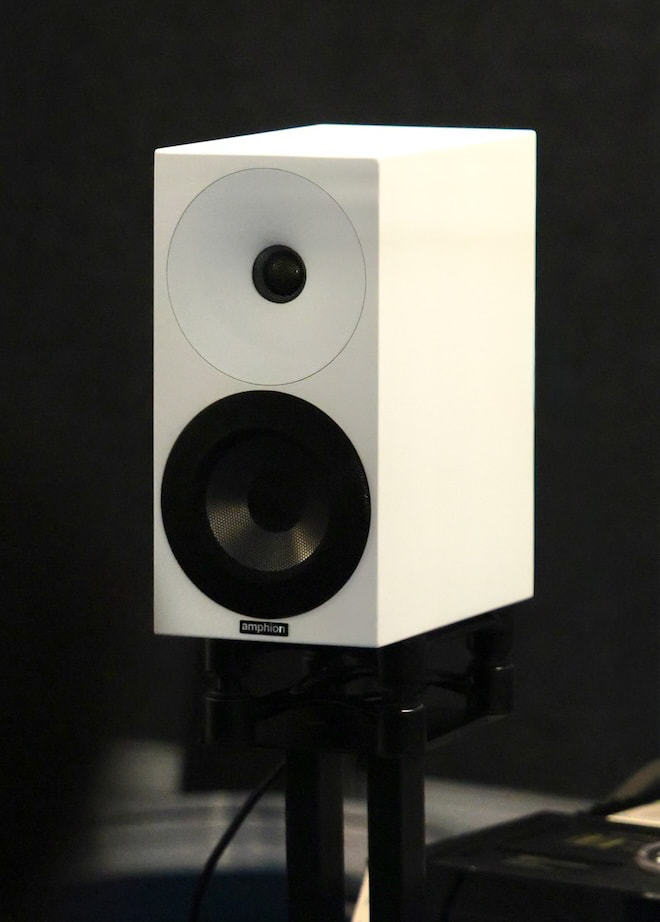
The new Amphion A15 brings those two sides of the company much closer together. This compact two-way active loudspeaker takes obvious inspiration from Amphion’s One15 nearfield studio monitor, adds dedicated internal amplification, and packages the concept specifically for home listeners. What it does not add may be just as important: there is no built-in streaming platform, Wi-Fi, Bluetooth, HDMI, USB input, or elaborate app ecosystem listed in Amphion’s current specifications. Instead, each A15 provides a single balanced XLR analog input.

In a market increasingly filled with active speakers trying to become your streamer, DAC, preamplifier, television audio system, and possibly your therapist, Amphion has chosen a considerably narrower job description.

amphion-a15-active-speaker-white-on-black-song

Studio DNA Moves Into the Living Room

The connection between the A15 and Amphion’s established One15 studio monitor is difficult to miss. Both use a 1-inch titanium tweeter, 5.25-inch aluminum woofer, 5.25-inch aluminum passive radiator, and 1,600Hz crossover point, and both measure 12.44 x 6.3 x 10.43 inches. The One15 is a passive professional monitor requiring external amplification; the A15 integrates its own amplifiers and is specifically positioned for home audio.

The passive radiator is particularly important to Amphion’s design approach. Rather than using a conventional bass-reflex port, Amphion has employed passive radiators across both its professional and consumer products to control low-frequency behavior while avoiding some of the airflow and placement issues associated with traditional ports. We heard that same philosophy at work with the Argon7LX at AXPONA 2026, where bass control, imaging, and overall coherence were among the things that stood out.

Advertisement

The A15’s internal amplification provides 125 watts for the woofer and 22 watts for the tweeter, while Amphion specifies a frequency response of 55Hz to 40kHz at -6dB. Each loudspeaker weighs 20 pounds and will initially be offered in Snow White and Jet Black finishes.

Amphion A15 Specifications:

  • Design: Two-way active loudspeaker
  • Tweeter: 1-inch titanium
  • Woofer: 5.25-inch aluminum
  • Passive Radiator: 5.25-inch aluminum
  • Crossover: 1,600Hz
  • Frequency Response: 55Hz to 40kHz (-6dB)
  • Amplification: 125 watts bass, 22 watts treble
  • Input: 1 x balanced XLR analog
  • Dimensions: 12.44 x 6.3 x 10.43 inches
  • Weight: 20 pounds each
  • Finishes: Snow White, Jet Black
amphion-a15-active-speakers-white-back-front

What Makes the Amphion A15 Different?

The A15 occupies an interesting space between professional active monitors and consumer wireless loudspeakers.

KEF’s LS50 Wireless II, for example, combines amplification with Wi-Fi, Bluetooth, AirPlay 2, Google Cast, Roon, HDMI eARC, multiple digital inputs, streaming services, and an app. Dynaudio’s Focus 10 follows a similarly integrated philosophy with wireless connectivity and substantial onboard amplification.

The Amphion A15 goes in almost the opposite direction.

Its current specification sheet lists one analog XLR input and nothing else. That means owners can choose their own streamer, DAC, analog preamplifier, or combination of those components and replace them independently as formats and streaming platforms change.

Advertisement

That approach is hardly unprecedented in professional audio. Neumann’s KH 150 and Genelec’s 8341A demonstrate just how sophisticated active studio monitors have become, although both add DSP and room-optimization capabilities that Amphion has not announced for the A15. ATC’s SCM20ASL also takes the more traditional active-loudspeaker route and is specifically offered for high-quality domestic listening as well as ATC’s professional monitoring applications.

Advertisement. Scroll to continue reading.

What makes the A15 interesting is Amphion taking its studio-monitor philosophy and deliberately packaging it for the audiophile living room without turning it into another wireless lifestyle system.

Who Should Consider the Amphion A15?

The obvious customer is someone who already owns a quality streamer, DAC, or preamplifier with balanced outputs and wants to eliminate the separate power amplifier without surrendering control over the rest of the system.

Advertisement

It could also make considerable sense in smaller listening rooms, desktop systems, and dedicated nearfield setups where imaging and controlled dispersion matter more than subterranean bass. With a specified -6dB point of 55Hz, however, listeners who want genuine full-range extension for electronic music, large-scale orchestral recordings, or home theater will probably want to add a subwoofer.

The A15 is not aimed at buyers looking for the simplest possible all-in-one solution. If you want to open Spotify on your phone, select the speakers, and be finished, KEF, Dynaudio, and several other manufacturers offer considerably more integrated alternatives.

But that absence of software dependency may also be part of the appeal. Amplifiers and loudspeaker drivers generally have much longer useful lives than streaming platforms, wireless standards, and apps. Amphion specifically emphasizes longevity in its A15 announcement, and keeping those rapidly changing technologies outside the loudspeaker could make upgrading considerably easier down the road.

amphion-a15-active-speaker-white-stand

The Bottom Line

The Amphion A15 is not trying to win the active-speaker feature war. That may be precisely why it stands out.

By combining internal amplification with the driver architecture and design philosophy Amphion has developed for professional monitoring, the A15 offers audiophiles a more modular approach to active loudspeakers. You supply the streamer, DAC, and volume control; Amphion handles the amplification and loudspeaker integration.

Advertisement

We already came away impressed by the Argon7LX at AXPONA 2026, and eCoustics has previously covered Amphion’s much larger One25A active studio monitor. The A15 now looks like the clearest bridge yet between those professional and consumer worlds.

The unanswered question is price. If Amphion gets that right, the A15 could become a very interesting alternative for listeners who want active-speaker simplicity without handing the entire system over to an app.

Price & Availability

Amphion has not announced pricing or a firm shipping date as of August 16, 2026. The company says additional information is coming.

Advertisement

Source link

Continue Reading

Tech

Samsung’s new 16-inch OLED panel wants to make your laptop feel like a gaming monitor

Published

on

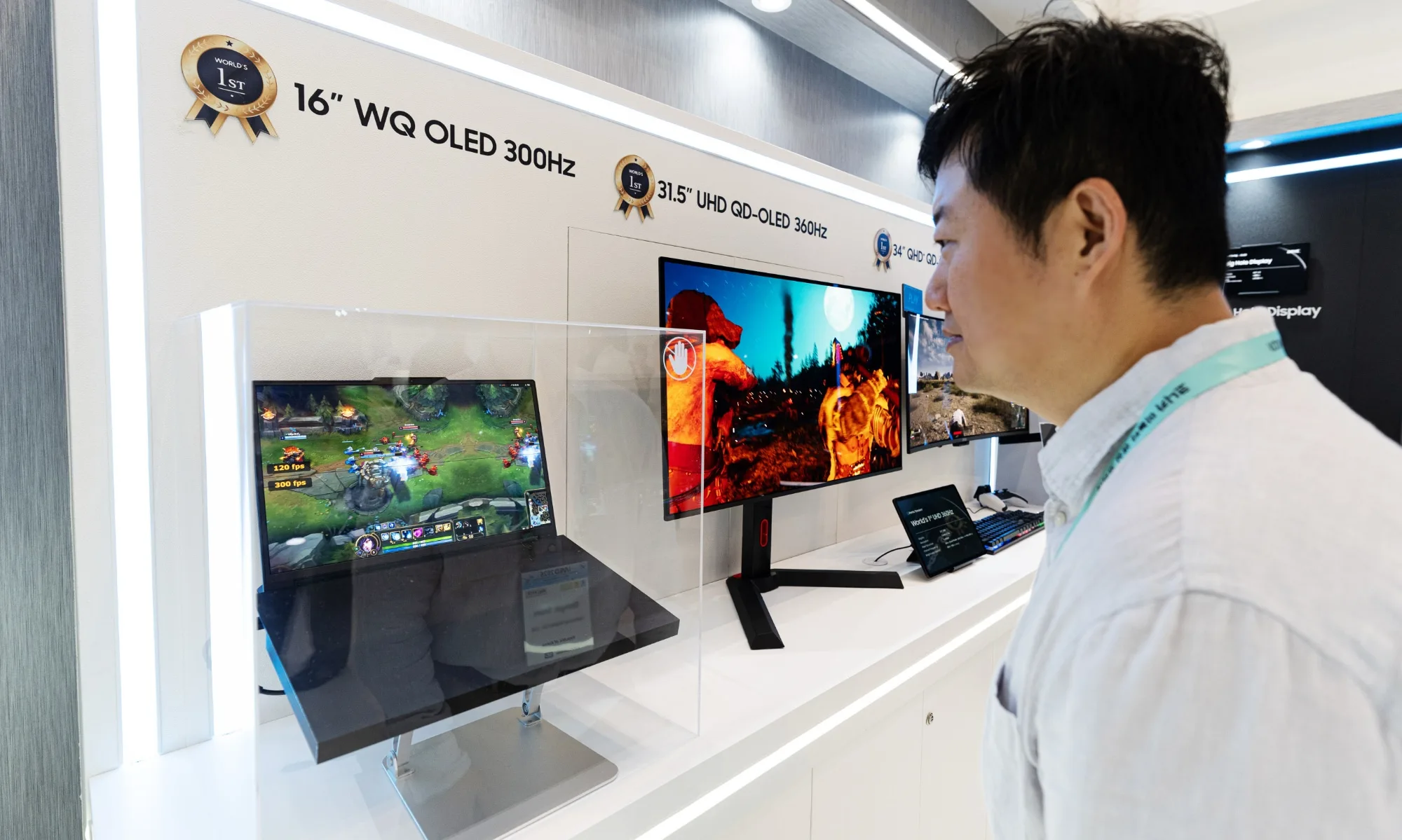
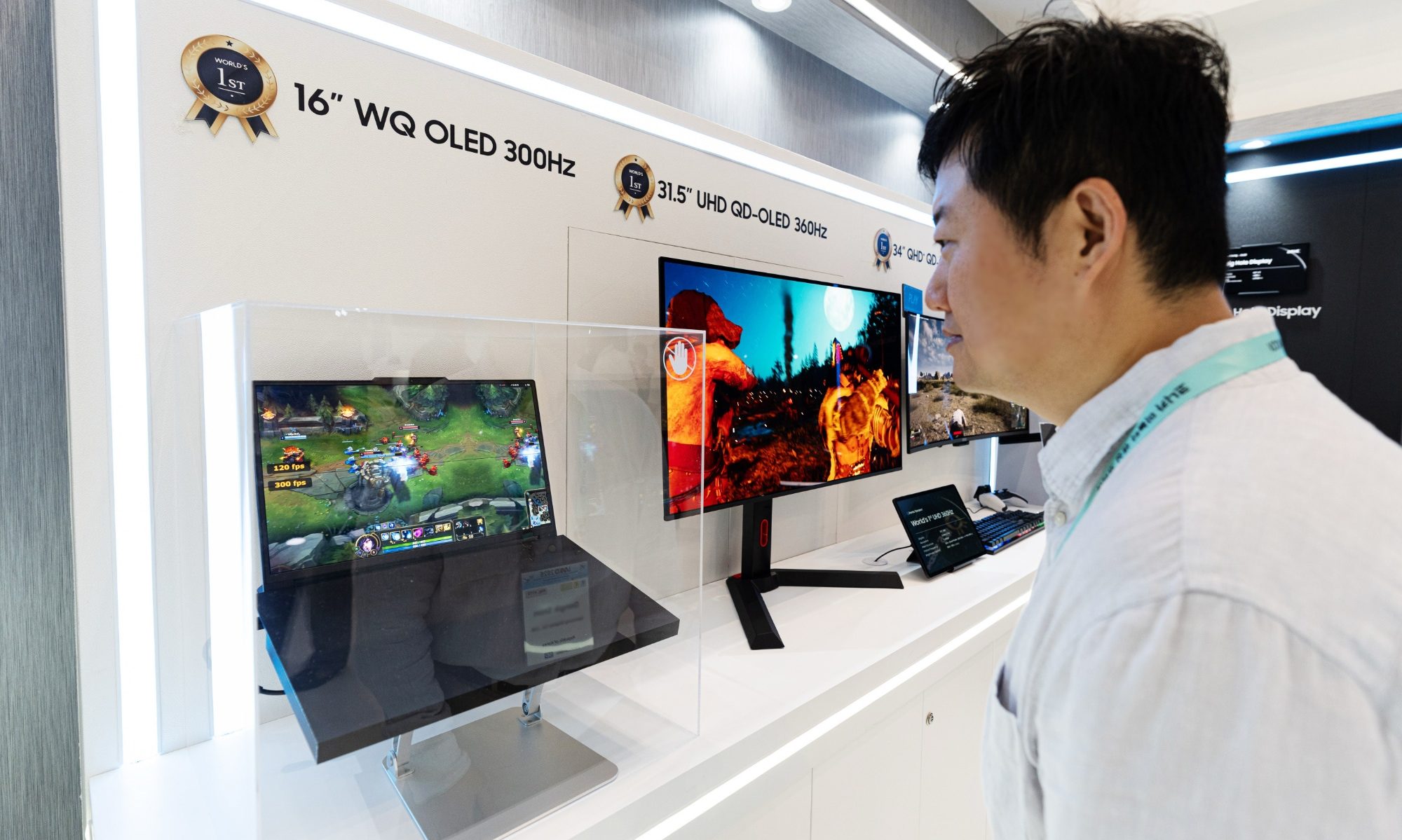
Gaming monitors have been delivering insane refresh rates for years, but laptop screens have mostly stayed the same. Samsung Display just changed that equation at IMID 2026 in Busan, where it unveiled a 16-inch OLED panel built specifically for laptops that hits a 300Hz refresh rate.

Why does 300Hz on a laptop actually matter?

Samsung says this is the first time any self-emissive laptop display has reached 300Hz, and that’s a big deal if you use your laptop for anything beyond emails and spreadsheets. Higher refresh rates mean smoother motion, whether you’re scrolling through a webpage, editing video, or actually gaming on the go. 

Until now, you needed a hefty gaming laptop with a dedicated GPU pushing high frame rates to make a fast panel worthwhile. And while this panel is also aimed at gamers, Samsung packing this into a slim 2.5K OLED panel means that smoothness could trickle down to thinner, lighter laptops too.

What else did Samsung bring to the show?

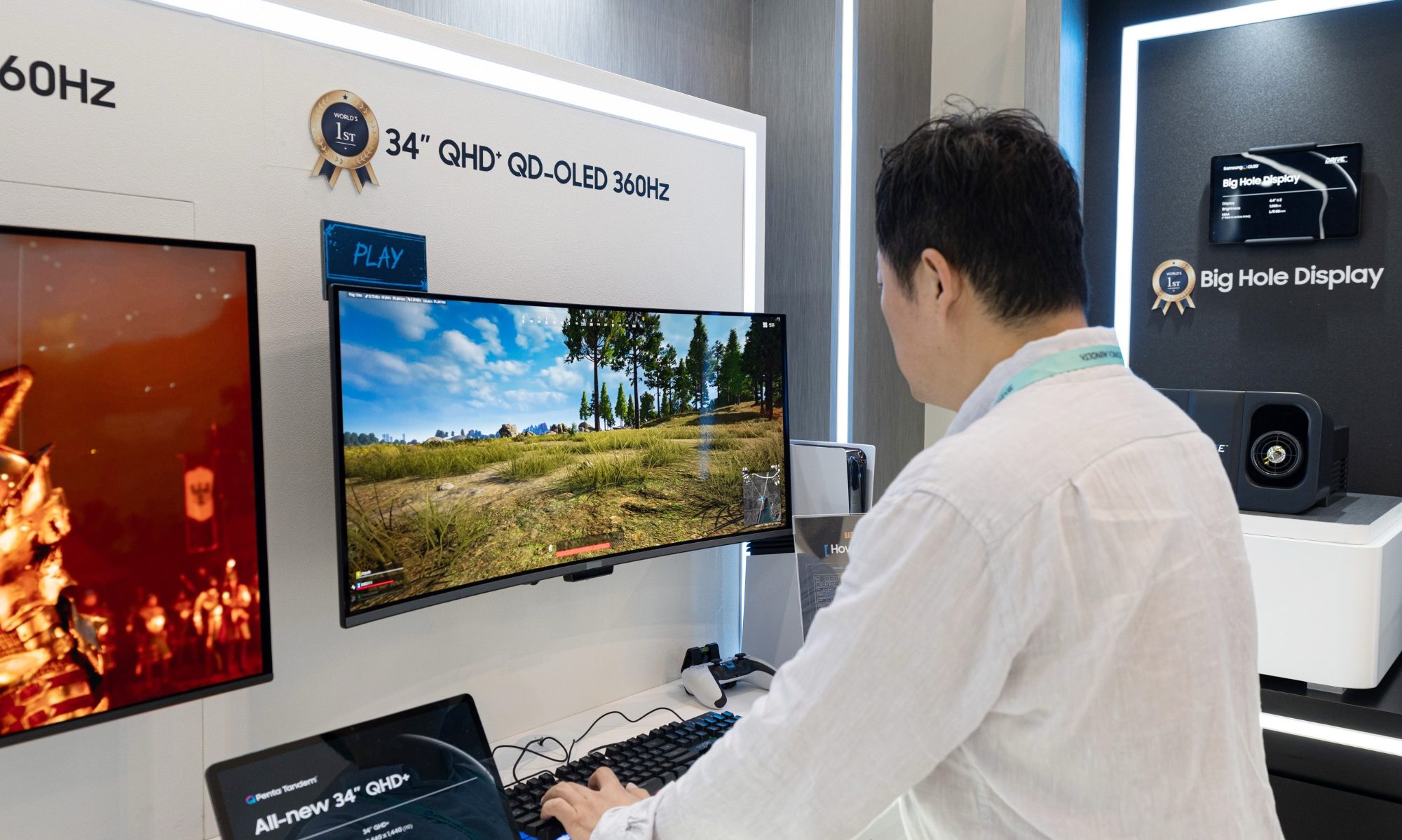
The 16-inch panel wasn’t the only thing Samsung brought to the event. Samsung also showed off a 31.5-inch QD-OLED monitor that combines 4K resolution with a 360Hz refresh rate, something no monitor has managed to do simultaneously before. 

The company also brought a 34-inch QD-OLED gaming monitor with a 21:9 ultrawide aspect ratio and its own 360Hz refresh rate. All three panels were showcased in the Winning Game Arena, clearly aimed at showing gamers and creators what its OLED tech can do across different screen sizes.

Samsung didn’t share when this 16-inch panel will actually land in laptops you can buy, but the fact that it exists at all suggests laptop makers might finally start advertising refresh rates the same way gaming monitor brands do. If your laptop screen has ever felt sluggish compared to your monitor at home, this might be the fix you’ve been waiting for.

Advertisement

Source link

Continue Reading

Tech

Is Online Privacy Possible? How Digital Identities Can Help

Published

on

Is Online Privacy Possible?

How can normal users increase their privacy, safety and security online?

Over the last two decades, the internet quietly rebuilt itself around a business model that depends on knowing everything about you. Every app you install or use, every account you create, every website you visit, and every form you fill out becomes another data point feeding a system designed to track, profile, and monetize you and your identity.

This process is often referred to as surveillance capitalism and creates an economy where attention and personal data are the product and you are the raw material.

The mechanics of this are almost invisible day to day. A single email address becomes the thread that ties together your shopping habits, your health searches, your location history, and your social connections.

Advertisement

Data brokers exist specifically to aggregate these threads, buying, selling, and cross-referencing fragments of your life until they can construct a profile more complete than most people would recognize about themselves.

None of this requires a breach or a hack – it’s simply how the default internet works. Data brokers are often the most consequential handlers of personal information that operate without consumers’ awareness or informed consent.

The result is that privacy is no longer something you can expect. It has become something you have to actively construct, piece by piece, against the grain of nearly every service you use. The harms of this model are diffused and delayed and you don’t feel the effects of a data broker profile the way you feel a stolen credit card.

The damage shows up later, as spam, as price discrimination, as identity theft, as a general erosion of control over your own digital identity.

Advertisement

The graphic below shows the problem of using a single identity across your online actions. When a data breach occurs, everything connected can be exposed and tied back to you.  Data brokers can use it to construct a complete picture of your life, and this valuable information is for sale.

Data breach without MySudo

Artificial Intelligence (AI) systems have made the problem significantly worse.

Data brokers can now use AI to link your different actions in a way that was previously thought impossible. AI’s expertise is data analysis, working through vast amounts of information to correlate your actions into a valuable profile.

In this world of surveillance capitalism, can we shift the privacy pendulum back in your favor? Is it even possible to be private, secure, and safe online?

Advertisement

Every account you sign up for and every form you fill out connects back to you.

MySudo breaks that trail by allowing you to create multiple digital identities, each with its own phone number, email, payment card, and more, as a new set of credentials you can use so you stop handing over your personal information by default.

Download MySudo Now

Personas and Compartmentalization

If surveillance capitalism works by linking everything about you into one exploitable profile, the countermeasure is structural (not just legal or political): break the correlating identifiers.

This is the premise behind compartmentalization. Instead of using one set of identifiers such as one email, one phone number, one payment method, one communication handle across every context in your life, you deliberately compartmentalize activities into separate, purpose-built personas.

Advertisement

One persona for online shopping, a different one for dating apps, another for travel, another for marketplace listings, and even another for that newsletter you’re not sure you trust yet.

Each persona operates as a self-contained identity with its own email address, its own phone number, its own payment method, its own browser, and its own communication handle. Crucially, these personas aren’t connected to each other or back to your actual identity in any way a data broker or advertiser could observe.

As shown in the graphic below, if a persona gets swept up in a breach, starts attracting spam, or gets sold to a marketing list, the damage is contained and is not tied back to you.

Data breach with MySudo

This is a fundamentally different privacy model than the one most security tools rely on. Most tools try to protect a single identity better with stronger passwords, better encryption, more careful permissions.

Advertisement

Compartmentalization instead assumes that any single identity is eventually going to become correlated and anticipates corrections by ensuring that no single identity is valuable due to its changeability. This process is less about building an impenetrable wall and more about not putting all your value behind one wall in the first place.

The elegance of this approach is that it doesn’t require the rest of the internet to change. You don’t need every company you interact with to suddenly adopt better data practices. You just need a layer that sits between you and them, generating and managing these personas on your behalf.

Anonyome Labs patented many of the ideas related to creation of online personas and compartmentalization, here are some examples:

How MySudo Puts This Into Practice

Compartmentalization and personas are an important advancement, but the harder problem (and the one that has occupied most of our product decisions) is making it usable by typical users and automatic enough that people can do it consistently, without a computer science degree, and without constant friction.

Advertisement

As shown in the graphic below MySudo was designed to implement this paradigm and enable each user to create up to 9 personas or Sudos. Each Sudo provides a different:

  • Phone number that can make and receive phone calls and SMSs;
  • Email inbox that can send and receive emails;
  • Virtual payment card for purchasing online;
  • Communication handle to enable end-to-end encrypted (E2EE) messaging, voice calling and video calling (similar to WhatsApp);
  • Browser for complete separation of browsing.

MySudo apps

MySudo comes in two form factors: 

  • A mobile app for iOS and Android that allows each persona to communicate externally with phone calls, SMSs, and emails. It allows creation of individual payment cards and to have end-to-end encrypted messaging, email, voice and video. It also has a separate browser for each persona. 
  • A desktop companion app for Windows and Mac that allows management of persona emails in a form factor that provides support for longer and more complex emails.  More features are coming to the MySudo desktop app soon.

MySudo is part of a growing family of privacy and security applications from Anonyome Labs that also includes a privacy focused VPN and Password Manager (coming soon).

Individual online privacy has been under surveillance and attack almost since the beginning of the web – and now users have identity-based tools to fight back.  By creating multiple personas that allow you to compartmentalize your life, you too can reap the privacy benefits.

Your identity is already being pieced together. Stop handing over the pieces.

Advertisement

Download MySudo now to create separate digital identities that keep your personal information private and out of reach from data brokers, scammers, and the next data breach.

Sponsored and written by ANONYOME LABS.

Source link

Advertisement
Continue Reading

Trending

Copyright © 2025