Connect with us

Tech

A new Gemini for Home update is rolling out, but users are slamming Google for not fixing ‘missing and broken features’ despite the voice upgrades

Published

on


  • Google is rolling out a new Gemini for Home update to fix voice commands for Spotify
  • The company is also fixing message broadcasting and smart light controls
  • Despite the upgrades, users are criticizing Google for not fixing the issues they’ve been experiencing for a while

The transition to Gemini has been rough — even Google knows that, but the latest Google Home update aims to tackle a handful of pain points with voice commands.

In an announcement issued yesterday (August 20), Google shared three fixes coming to the Gemini for Home voice assistant, which is still in early access. Additionally, features in the Google Home app are also tipped to get a glow-up.

Source link

Advertisement
Continue Reading
Click to comment

You must be logged in to post a comment Login

Leave a Reply

Tech

Faster chip in a familiar form factor

Published

on

There’s more coming than just an OLED MacBook Pro in the fall. Apple’s 14-inch MacBook Pro is expected to get a big speed boost with the M6 chip. Here’s what the rumor mill has to say.

While Apple plans to overhaul its MacBook Pro line with OLED panels and touchscreen support, we’ll still see one more model boasting the current design. Known internally as the J804, the base model 14-inch MacBook Pro will likely mark the debut of the M6 chip, in an all-too-familiar laptop chassis.

In essence, the M6 MacBook Pro will feature the same miniLED screen with ProMotion support, the same six-speaker sound system, the same assortment of ports, and presumably the same $1,999 starting price as the current M5 model. However, the chip inside might be a lot more powerful.

According to a July 2026 report, Apple’s M6 chip will offer a memory bandwidth of 200 gigabytes per second, up from 153 gigabytes per second with the M5 chip. Apple will allegedly improve memory bandwidth by adopting a new memory architecture with the M6 chip, and by increasing the core count of the Neural Engine from 10 to 12.

Advertisement

The same source also said in June 2026 that Apple tested standard M6 chips with 12 GPU cores. This would give the base M6 MacBook Pro two extra GPU cores as well, relative to its M5 counterpart. While a more powerful graphics processing setup will be useful for gaming and 3D rendering, it looks as though Apple’s focus lies elsewhere.

A powerful GPU and Neural Engine, coupled with improved memory bandwidth, would make the M6 MacBook Pro better at Apple Intelligence and Siri-related tasks, compared to the preceding M5 model. The hardware improvements planned for the M6 may also enable more advanced on-device capabilities.

According to a February 2026 rumor, meanwhile, the M6 chip will use TSMC’s first-generation 2nm process known as N2. This means the M6 chip will have a smaller die than the preceding M5, meaning the MacBook Pro will run faster, generate less heat, and use less power than the current model.

AI-focused hardware improvements and processing power aside, though, the base M6 MacBook Pro won’t offer anything new. It will continue to use the chassis and design that debuted in 2021 for the M1 Pro and M1 Max 14-inch MacBook Pro. The lack of a redesign was outlined in a November 2025 rumor, but it’s not exactly a groundbreaking discovery.

Advertisement

In July 2025, AppleInsider outlined Apple’s plans for the Mac lineup through 2026, revealing the identifiers for every Mac in development at the time. In October 2025, we received additional details about when these Mac models were scheduled to debut.

Our findings revealed that, while the OLED-equipped touchscreen MacBook Pro had the identifiers K114 and K116, Apple’s low-end M6 MacBook Pro used the product identifier J804. Rather than adopting a new starting letter for the M6 MacBook Pro, Apple chose to stay with the letter J, like the preceding J704 and J604 MacBook Pros. For reference, the latter two are the base M5 and M4 MacBook Pro, respectively.

The identifiers make it readily apparent that Apple had always planned to launch two completely different MacBook Pro variants. The low-end MacBook Pro will use the existing platform design, as indicated by the J at the beginning of J804, while high-end K114 and K116 MacBook Pros will adopt a new chassis, differentiated by the letter K.

The information we received regarding pre-release builds of macOS Tahoe never mentioned new high-end models using the existing MacBook Pro design. In short, there was never a J814 or J816 to replace the M5 Pro and M5 Max MacBook Pro, known broadly as the J714 and J716.

Advertisement

The entry-level 14-inch MacBook Pro with the M6 chip is looking like a worthwhile speed bump, but that’s about it.

It might even be replaced within six months, according to a July 2026 rumor. It won’t be until the M7 model, codenamed K104, that the base model MacBook Pro gets a redesign, per the same source.

While the M6 14-inch MacBook Pro might be a model worth skipping if you have a relatively new MacBook Pro, more exciting changes for the MacBook Pro remain on the horizon with the revamped K114 and K116 models.

For the high-end MacBook Pros, the rumor mill says to expect OLED panels, touchscreen support, and the same M5 Pro and M5 Max chips found in the current MacBook Pro lineup.

Advertisement

Source link

Continue Reading

Tech

6 exciting, must-attend Irish finance events to check out this year

Published

on

Professionals working in Ireland’s growing finance sphere should consider attending one of the exciting events set to happen between now and the end of the year.

Finance events, like the vast majority of industry events in the STEM space, are a great way of staying connected to your peers, expanding your knowledge and making a name for yourself.

For professionals working in finance and fintech, the last few months of 2026 feature a number of events open to those looking to upskill and network. With that in mind, SiliconRepublic.com has compiled a list of some of the year’s most exciting financial industry events – keep reading for all the details. 

ISWE

On 4 September, interested professionals can attend the  annual Irish Society for Women in Economics conference at the Central Bank of Ireland, North Wall Quay, Dublin. The theme is ‘Diversity, economics, and society’, and speakers will include: Philip Lane, a European Central Bank executive board member; Vicky Pryce of the Centre for Economics and Business Research; Karina Doorley from ESRI; and Oisín O’Reilly of Outhouse.

Advertisement

The event will run from 9am until 7pm and will be a mix of academic paper presentations, a keynote lecture, a poster session and a panel discussion. The day concludes with a reception and networking session. Attendance is free but registration is necessary. 

FintechNation26

On 22 September, in the Round Room of Dublin’s Mansion House, professionals can attend the FintechNation26 event, with tickets starting at €220 per person.

From 9am, attendees will be part of an industry event showcasing expert perspectives, emerging trends and networking opportunities across Ireland’s fintech landscape. The theme is ‘Small island, big ambition: Powering Ireland’s fintech future’, and it aims to bring together the people shaping the future of fintech, payments and digital finance in Ireland and internationally.

The event is hosted by the Fintech and Payments Association of Ireland and will gather senior leaders from across financial services, payments, technology and regulation, for panel discussions, lively debate, tech talks, pitches and networking. 

Advertisement

Global Funds Conference

On 1 October, from 8am to 6pm, at The Convention Centre Dublin, attendees can take part in the Irish Funds Annual Global Funds Conference. The event typically attracts more than 500 senior participants from across the global funds community. This year’s theme is ‘Ireland: Powering the global investment future’, with an aim of showcasing Ireland’s expanding role as a global centre for investment funds, including private assets and exchange-traded fund (ETF) innovation.

The day will include high-profile keynote speakers – such as Taoiseach Micheál Martin, TD – expert panels and presentations addressing key industry trends, such as the rapid growth of ETFs, Ireland’s developing private assets ecosystem, the Savings and Investments Union, financial literacy, and evolving regulatory and operational landscapes. Additional sessions will cover digital assets, tokenisation and the future of cross-border investments.

The event requires registration, there will be a drinks reception at the end and there are also a range of pre-conference events which attendees can purchase tickets for.  

IOB Future of Finance Summit 

With tickets starting at €255, those interested can attend the IOB Future of Finance Summit 2026 on 13 October, from 9.30am to 1pm, at Dublin’s Abbey Theatre. The flagship event offers a line-up of industry experts ready to discuss what’s next for the financial services industry, offering fresh perspectives on the trends shaping the industry’s future and exploring what this means for leaders in the space.

Advertisement

Registration closes when the event is fully booked or the night before, depending on which occurs first. 

Financial Services Ireland Annual Dinner 

Ibec is inviting people to register for the Financial Services Ireland Annual Dinner 2026, taking place on 18 November from 6.30pm to 11.30pm. The event will take place at the Radisson Blu Royal Hotel, Golden Lane, Dublin. The dinner is designed to bring together the diverse membership of the financial services community in Ireland, giving professionals the opportunity to network with colleagues, clients and guests. 

Fintech Ireland Summit 

The Fintech Ireland Summit 2026 is looking for people to register for the event on 26 November, which will run from 9am until 3.40pm, at the Clayton Hotel, Cardiff Lane, Dublin.

The event, which is run by Investnet and Fintech Ireland, offers fresh insights, leading perspectives and thought‑provoking discussions regarding the future of Ireland’s rapidly evolving fintech ecosystem. According to the organisers, it is aimed at forward‑thinking fintech professionals and financial leaders who are passionate about innovation, continuous learning and shaping the future of financial services. 

Advertisement

So, whether you’re a founder, executive, policymaker, innovator, investor, or simply curious about what’s coming next, why not check it out this November? 

Don’t miss out on the knowledge you need to succeed. Sign up for the Daily Brief, Silicon Republic’s digest of need-to-know sci-tech news.

Source link

Advertisement
Continue Reading

Tech

Starcloud raises $250M to support the creation of data center satellite network in league with Nvidia

Published

on

Illustration: Satellite swinging around Earth
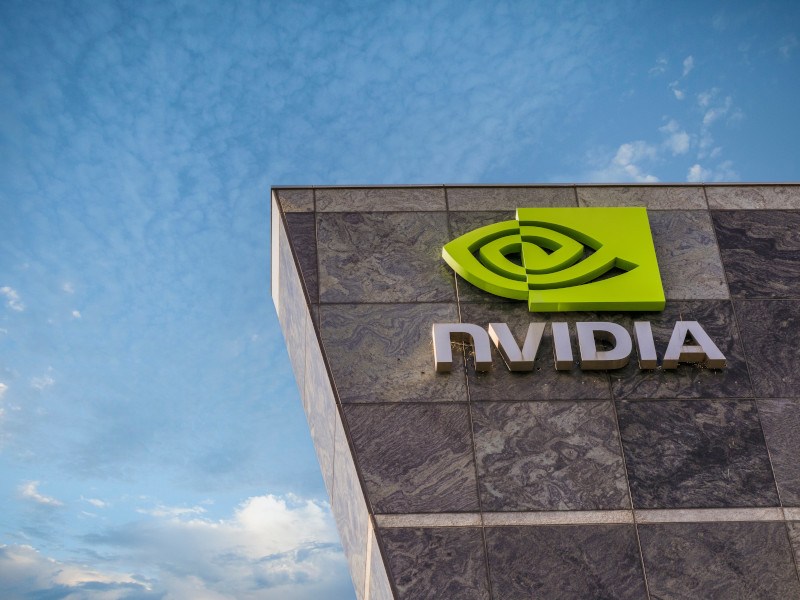
Nvidia’s next-generation AI chip, the Space-1 Vera Rubin Module, is set to be used on Starcloud’s future satellites. (Nvidia Illustration)

Starcloud says it has raised $250 million in new funding to support the creation of a constellation of data center satellites powered by Nvidia’s next-generation AI chips.

The Series A extension funding round was led by Manhattan West, with participation from existing investors including Benchmark, EQT, Soma, NFX and 776. Among the new investors joining for this round are Nvidia, Cisco Investments, Cedar Capital, Goanna Capital and Standard Capital.

Founded in 2024, Starcloud is headquartered in Redmond, Wash., and is building production lines for its Starcloud-3 spacecraft at a new 100,000-square-foot manufacturing facility in Woodinville, Wash. The newly announced round brings the startup’s total capital raised to $450 million, with a post-money valuation of $2.3 billion.

Nvidia’s participation in the funding round brings Starcloud’s collaboration with the computer-chip titan to a new level. In November 2025, Starcloud flew Nvidia’s H100 GPU to orbit for the first time. It used the chip to train a large language model called NanoGPT — marking a milestone in space-based AI data processing.

Starcloud plans to equip future satellites with Nvidia’s Space-1 Vera Rubin Module, which Nvidia says will deliver 25 times as much in-space compute capability as the H100. Starcloud’s satellites will serve as an early flight platform for the space-rated chips.

Advertisement

“This fresh capital empowers us to build the infrastructure to launch many more of Nvidia’s most advanced GPUs into space,” Starcloud co-founder and CEO Philip Johnston said today in a news release.

Portrait of Starcloud founders
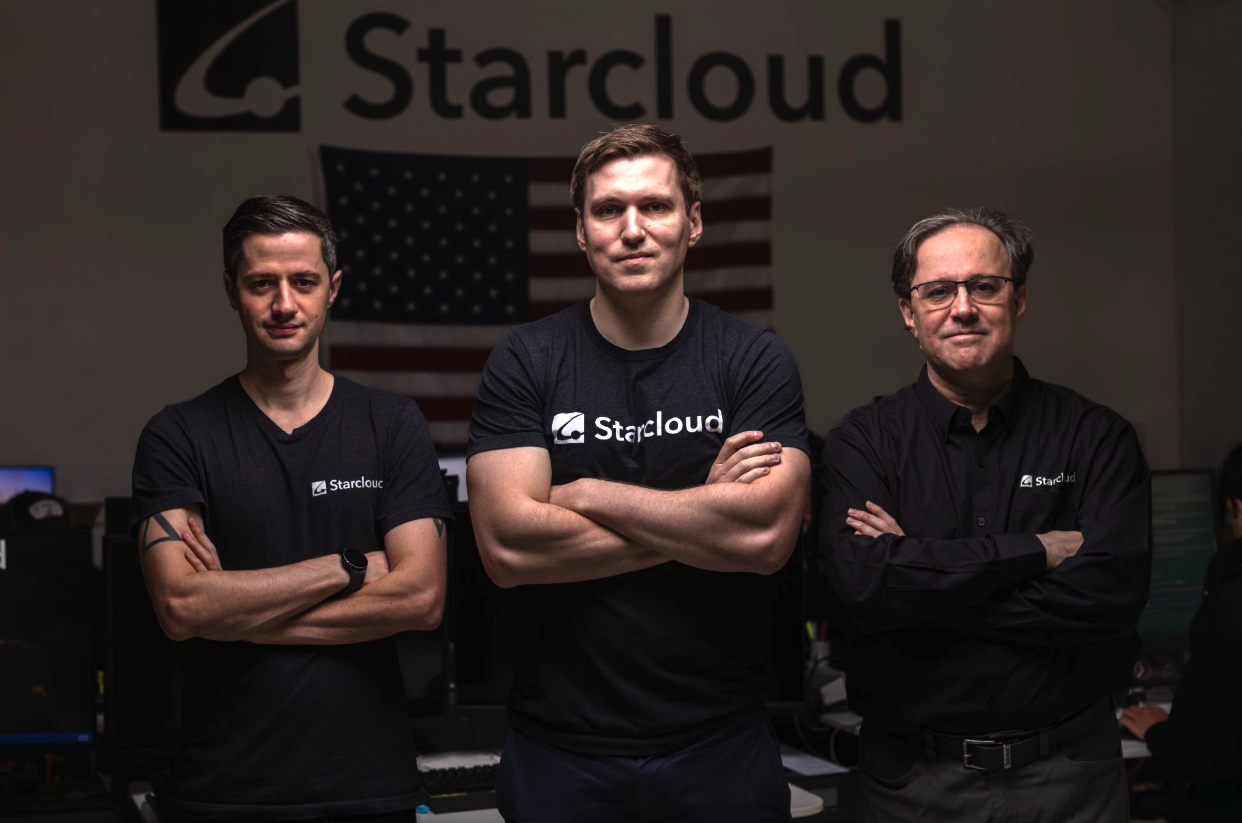
Starcloud was founded by chief technology officer Ezra Feilden, CEO Philip Johnston and chief engineer Adi Oltean. (Starcloud Photo)

Starcloud says the new investment will fund the continued buildout of manufacturing capacity, engineering work in collaboration with Nvidia and the procurement of future launch slots. Manhattan West’s Lauren Selig will join Starcloud’s team as a board observer.

Starcloud has filed an application with the Federal Communications Commission to operate as many as 88,000 satellites as orbital data centers for AI and other applications. It’s not the only company targeting the market for orbital data centers. Most notably, SpaceX has filed its own plans to put up to a million data center satellites in space, for a project called Starmind.

The push to move AI infrastructure into space is driven by growing terrestrial bottlenecks surrounding land, power and water consumption — and by the political controversies those bottlenecks have sparked.

Source link

Advertisement
Continue Reading

Tech

The Patrick Clancy Conspiracy Theories Are Rooted in the Harsh Realities of Motherhood

Published

on

For many watching Lindsay Clancy’s murder trial, the primary takeaway has been how the deaths of her three small children—Cora, 5; Dawson, 3; and Callen, eight months—were tragically preventable.

Lawyers for the Massachusetts nurse are arguing that she’s not criminally responsible for strangling her children, because she suffered from severe postpartum psychosis, a rare mental health condition that causes new mothers to experience delusions and intrusive thoughts. Defense attorney Kevin Reddington has put Lindsay’s health care providers on the stand, in an attempt to demonstrate how his client repeatedly sought help for her terrifying thoughts, only for her to be minimized, dismissed, and overmedicated at every turn.

For others, including a thriving community of TikTok armchair detectives and conspiracy theorists, the Clancy trial has resulted in a much different takeaway: Lindsay’s husband, Patrick Clancy, was responsible, either literally or by virtue of being a neglectful husband. Many TikTokkers are convinced that he actually committed the murders and framed his mentally ill wife so she would take the fall.

To be clear, there is no evidence whatsoever to suggest this is true. Patrick is not on trial for the deaths of his children, and there has been no indication that he ever will be, or that he is anything other than a deeply grieving father. (Clancy did not respond to a request for comment.) But it’s hard to overstate just how popular this conspiracy theory is, and how rapidly it has overtaken discussion of the trial. The tabloid media has obsessively focused on Patrick, constantly publishing headlines about his life with his new wife Rachel Danis in New York (Patrick remarried earlier this year), and there are countless Reddit threads parsing their social media posts and analyzing his testimony.

Advertisement

Much of the TikTok commentariat’s focus has been on Patrick’s behavior prior to the murders, especially as it pertained to his wife’s postpartum mental health struggles. Per his own testimony, he was not always present at home, even at the height of her suffering. He went to brunch with his friends amidst her struggles with suicidal ideation, and took his daughter on a skiing trip. A month prior to the killings, Lindsay had disclosed to him that she had thoughts of harming the children, but according to his own testimony he had waved them off after she’d assuaged his concerns.

Some experts following the case say that while they understand the impulse to cast suspicion on Patrick, they caution against speculation or cruelly attacking the grieving father of three brutally slain children.

“It’s very easy to try to vilify the husband,” says Leslie Dobson, a forensic psychologist who covers the case on her social media platforms. “But the idea that he actually set her up, or drugged her, or actually killed the children—that’s very extreme.”

But a major driving force behind the antipathy toward Patrick appears to be that women recognize the broad contours of his alleged behavior toward his wife—and they are pissed as hell about it. This is evident when you look at the social media comments on the TikToks accusing Patrick, which are filled with harrowing stories from women whose husbands treated them insensitively while they were struggling with postpartum anxiety or depression, left them for another woman while they were at their lowest, or even emotionally or physically abused them.

Advertisement

(As many TikTokkers have pointed out, Rusty Yates, the husband of Andrea Yates, the woman suffering from severe postpartum psychosis who drowned her children in 2001, reportedly urged her to get pregnant again while she was in recovery from postpartum depression after her fourth pregnancy, against her psychiatrist’s advisement.)

Source link

Continue Reading

Tech

This fully walkable 3D city was built entirely out of ASCII art

Published

on

In a nutshell: Cutting-edge hardware and advanced game engines have allowed developers to create increasingly realistic 3D worlds. Even the latest and greatest titles still have a long way to go before virtual environments become indistinguishable from reality, but at the current rate of progress, that eventuality may not be too far off. On the opposite end of the spectrum – and to some, even more impressive – are projects that do more with less, like this walkable city made entirely of ASCII characters.

Grow Now Games, a self-professed one person indie game developer, recently shared the project on YouTube. The dev said his goal was to build a cyberpunk-style city that felt alive, and to build the whole thing using only ASCII characters. So, that’s what he did.

The project uses a small custom engine made using JavaScript and Canvas. The virtual environment is populated with buildings, roads, trees, cars, and pedestrians, and uses camera tricks to work out perspective, depth, and collision for added realism. For something built using only letters, numbers, and symbols, it’s incredibly immersive.

Related: Watch this typewriter pound out ASCII selfies

Advertisement

Games like Minecraft have proven that you don’t need advanced graphics to create a fun and compelling experience, and this is yet another example of that.

Modern ASCII art dates back to the mid-60s but was more widely adopted in the 70s and 80s. Usage declined as computer graphics evolved, but the style remained popular among certain segments of computing enthusiasts and in the hacker community.

The dev said the walkable city is still a work in progress, and noted that he plans to keep advancing the atmosphere, the amount of detail, and interactive elements further. The video already has north of a million views and has generated over 9,000 comments. With any luck, the project will continue and who knows, perhaps it could evolve into the next big thing.

Found is a TechSpot feature where we share clever, funny or otherwise interesting stuff from around the web.

Advertisement

Source link

Continue Reading

Tech

Nvidia and Korea’s Rebellions reportedly hold partnership talks

Published

on

Nvidia has poured more than $63bn in investments into other companies.

Nvidia and South Korean chipmaker Rebellions are in talks for a partnership that could result in an investment or an acquisition, Bloomberg News has reported. Talks are in early stages and may not result in a deal, sources told the publication.

According to the publication, Nvidia CEO Jensen Huang and Rebellions co-founder and CEO Sunghyun Park met in person to discuss a potential deal. This comes a year after the company’s chief financial officer Sungkyue Shin said that Rebellions’ “master plan” was to go public.

It raised $400m in a funding round in March, taking it to a valuation of around $2.3bn. Rebellions, at the time, said it is prepping to go public, but did not share details.

Advertisement

Founded in 2020, Rebellions is an Nvidia competitor best known for chips that focus on AI inferencing, as opposed to training. As IBM puts it, AI inference is the ability of trained AI models to recognise patterns and draw conclusions from data it hasn’t seen before.

In 2024, the start-up merged with SK Telecom’s AI chip start-up Sapeon. The idea was that they would together take on global AI giants such as Nvidia.

Nvidia has poured money into dozens of companies over recent years, including frontier developers and infrastructure providers, all in a bid to continue keeping itself central to the AI boom.

In 2025, the company signed US AI company Groq in a licensing deal that saw much of its talent hired away by the chipmaking giant. The start-up announced its first European data centre in Helsinki last year and announced a new $350m funding round earlier this month – though its valuation dropped by nearly half.

Advertisement

Meanwhile, in recent days, the $5.2trn Nvidia has agreed to pay Poolside AI $6bn to license its models and poured an undisclosed amount into Atomic Canyon. Its $63bn investment portfolio, however, majorly consists of Intel and SpaceX, which together amount to more than $50bn.

Don’t miss out on the knowledge you need to succeed. Sign up for the Daily Brief, Silicon Republic’s digest of need-to-know sci-tech news.

Source link

Advertisement
Continue Reading

Tech

Stop Hunting, Start Solving: Accelerating Root Cause Analysis with Agentic AI

Published

on

About this Webinar

Turn Yield Excursions into Faster, More Confident Root Cause Analysis

When a yield issue emerges, the answer rarely lives in a single system. Critical clues are spread across metrology data, tool traces, chemical analysis, and facilities systems, while growing data volumes make traditional dashboards slow, fragmented, and difficult to act on.

What You’ll Learn:

Advertisement

Discover how a purpose-built semiconductor analytics platform can help engineers connect insights across domains without moving data. See how Agentic AI, semiconductor-specific visualizations, and push-down compute enable faster investigation of yield excursions and process issues, even across billions of data points. In the session, a live demonstration shows how to conduct a multi-domain root cause investigation using Spotfire® Industry Pro.

Key Takeaways:

  • Understand why siloed manufacturing data delays yield recovery and inflates costs
  • Learn how Agentic AI automates complex cross-domain analytics and visualization generation
  • Explore methods for scaling high-performance analytics across massive fab datasets

Who Should Attend:

Yield, Process, and Integration Engineers; Fab and Manufacturing Operations Managers; Quality and Reliability Engineers; and Data & Analytics leaders supporting wafer fabs, foundries, OSATs, and IDMs who need to identify issues faster while maintaining confidence in decision-making.

Save Your Spot!

Advertisement

Join this webinar to learn how leading semiconductor teams are accelerating root cause investigations, scaling analytics across massive datasets, and transforming disconnected data into actionable manufacturing intelligence. Reserve your seat today.

Register now for this free webinar!

Source link

Advertisement
Continue Reading

Tech

FUJIFILM India Launches the New X-Space Experience Centre in Delhi

Published

on

After a successful Spectrum Tour, FUJIFILM India has decided to upgrade its Fujifilm X-Space in New Delhi into a three-floor experience center. The new space brings cameras, lenses, Instax, binoculars, QuickSnap cameras, and printing solutions under one roof. It also gives visitors a chance to try products, attend demonstrations, and learn more about Fujifilm’s imaging technology. The center also features Delhi’s first Fujifilm customer service center.

A Three-Floor Center for Imaging Experiences

first floor Fujifilm X-Space

The first floor of the upgraded Fujifilm X-Space serves as the main experience center, with separate areas for different imaging products. Visitors can try the X Series and GFX System cameras and lenses, along with the complete insta range, Fujinon binoculars, QuickSnap cameras, and printing solutions. The center will also host product demonstrations, workshops, and learning sessions for photography enthusiasts with varying levels of experience.

Moving to the second floor, visitors will find a photo exhibition featuring images taken with Fujifilm cameras. The dedicated studio will host live demonstrations, studio tests, and creative sessions. It will also support demonstrations of film grading and image editing. The third floor is dedicated to customer service, marking Fujifilm’s first such center in Delhi. Users can access product support in the same place where they explore Fujifilm’s imaging products.

Fujifilm X-Space Brings Products and Support Under One Roof

customer support

In the upgraded version of the X-Space, the emphasis is on enabling visitors to interact with the Fujifilm imaging technology in an informative manner. The products will not only be viewed but also understood, and their possibilities will be explored. Fujifilm also intends to use the space to promote photography education.

Mr. Haruto Iwata, Managing Director, FUJIFILM Asia Pacific, said, “India is an important market for Fujifilm, supported by a vibrant community of photography enthusiasts and professionals. The upgraded Fujifilm X-Space reflects our continued commitment to bringing our imaging technologies closer to people and creating opportunities for them to explore the possibilities of visual expression.”

Source link

Advertisement
Continue Reading

Tech

In AI’s wake, what challenges need to be addressed by finance professionals?

Published

on

Patrice Bouexel explores how AI and automation are impacting employee expectations and behaviours in the wider financial ecosystem.

Now more than ever, we are seeing a landscape in which organisations globally are racing to automate their financial operations. For Patrice Bouexel, general manager for Europe at financial software platform Sis ID, this is evidence of an ecosystem in which companies are struggling to meet expectations.

Bouexel told SiliconRepublic.com, “Finance teams are under the same pressure as every other function – do more with the same headcount and do it faster. 

Gartner found that AI adoption in finance rose from 37pc in 2023 to 58pc in 2024, while Deloitte’s global survey of more than 1,300 finance leaders found that adopting new technology, including AI, was a top priority for 48pc of respondents.”

Advertisement

He added: “That is not a small shift. It reflects a recognition that manual, paper-based processes cannot keep pace with the volume and complexity of modern payment flows, especially as organisations operate across more currencies, more vendors and more jurisdictions than they did five years ago.” 

Bouexel explained that for the vast majority of companies, automation is no longer a nice-to-have feature that boosts productivity – it is fast becoming a baseline expectation among boards and investors, who often view it as a central way a finance function manages not only risk, but cost as well. 

Rough regulation

But it isn’t solely the introduction of new technologies creating opportunity and chaos for organisations. Among the more pressing challenges for modern-day finance professionals is ensuring that the data utilised and generated by advanced tech is of a high quality and appropriately governed.  

“The gap sits between deploying a tool and trusting what it produces. Organisations that get this right treat automation as a governance exercise first,” said Bouexel.  

Advertisement

“They map which processes are rules-based and genuinely ready for automation, such as invoice processing and expense approvals, and separate those from multi-stakeholder processes that need workflow redesign rather than a bot bolted onto an old process. They also invest in the underlying data before they invest in the algorithm.”

Skills also present a significant challenge, he finds, as AI, automation, data analysis and technology integration are becoming critical to experts in this field.

“Automation succeeds when finance teams are given the time and training to own the exception cases, not just the software licence.”

Sonic speed

He finds, too, that in an environment in which AI and automation are only ever as reliable as the financial data they are relying on, the hastiness to complete a task can often spell disaster. 

Advertisement

Bouexel noted, “An automated process will execute a bad instruction just as efficiently as a good one. If a vendor record is outdated, if bank details were changed without proper verification or if a duplicate invoice slipped through months ago, automation does not catch that. It accelerates it.

“That is the uncomfortable part of the automation conversation that gets skipped over. Organisations are moving faster towards straight-through processing at exactly the point when the data feeding those processes – vendor master files, payment histories and approval trails – is often the least scrutinised part of the finance stack.

“Speed without verified data does not reduce risk. It just means an error or a fraudulent instruction reaches payment faster than it used to.”

He suggested that nowadays, the real goal is prevention rather than cleaning up a mess once it has already happened. As the detection of fraudulent or suspect behaviour becomes a more difficult challenge, largely due to AI and deepfake technologies, verification skills and processes can make all the difference. 

Advertisement

“The more durable answer sits earlier in the chain, verifying who you are actually paying and confirming their identity through a channel the fraudster cannot touch before the payment is authorised, rather than trying to spot the anomaly once it is already in flight,” he said. 

Laudable leadership

When asked the question, ‘What should finance leaders be doing now as fraud, AI and regulation reshape payment security?’, Bouexel remarked that there are three areas for leaders to focus on. 

Firstly, they should separate process risk from technology risk.

Secondly, AI literacy must be built into finance teams as a means of developing a human-based tech skillset, not just into the tools being used. 

Advertisement

He said, “Finance teams need to understand how AI-enabled fraud actually behaves if they are going to recognise and challenge convincing fraudulent requests.”

Lastly, they need to treat regulatory change as a floor, not a ceiling.

“Rules tend to formalise what good practice already looks like. Organisations that wait for the mandate before acting are, by definition, behind.”

Don’t miss out on the knowledge you need to succeed. Sign up for the Daily Brief, Silicon Republic’s digest of need-to-know sci-tech news.

Advertisement

Source link

Continue Reading

Tech

Meta’s Big Reckoning Is Here

Published

on

My colleague Paresh Dave and I each spent a day in federal court in Oakland, California, this week, monitoring the latest Meta child safety trial.

In case you missed it in the spring, Meta (along with YouTube) lost a landmark social media case in California, in which a jury found the companies liable for harming a young user with certain design features in their apps. Then, earlier this month, Meta was ordered to pay more than $940 million in the state of New Mexico for being a public nuisance and causing psychological harm to children.

Now Meta is defending itself in a federal civil trial taking place in the US District Court for the Northern District of California. The plaintiffs in this case are 29 state attorneys general. They’re claiming that Meta violated a federal privacy law protecting children, known as COPPA, by improperly collecting personal information about children under 13 without parental consent. The lead AGs, which span four states—California, Colorado, Kentucky, and New Jersey—also say that Meta made deceptive statements about its platform that were likely to mislead consumers.

Two specific Meta apps are in focus in this trial: Facebook and Instagram.

Advertisement

Meta maintains that it satisfied COPPA law requirements in those states, and denies that its statements about how its apps work were deceptive or misleading. It also insists it is protected from liability by Section 230 of the Communications Decency Act of 1996, which essentially says that platforms like Meta aren’t responsible for the content posted on their apps by users.

I was in the packed courtroom Tuesday to hear opening arguments from both sides, presided over by chief district judge Yvonne Gonzalez Rogers. Per usual, Meta was represented by an army of well-heeled lawyers, who quite ironically kept experiencing technical difficulties with the mic. Megan O’Neill, the deputy attorney general at the California Department of Justice, kicked off the opening statements, laying out how the state AGs believe Meta deliberately hooked kids on its apps and harvested their data.

O’Neill emphasized that throughout the trial, the jury would be shown just “how many features work both individually and together to keep people in the apps. To draw them in and keep them in for longer. Meta has used these features to draw kids onto the apps, and to keep them coming back.”

Meta lead attorney Paul Schmidt then laid out the dozens of safety features that have been built into Meta’s apps over the past several years, and he said the company is committed to improving its apps. He also shifted some responsibility onto users, saying there’s no dispute that some kids find their way onto Meta’s apps and that some teens “struggle to manage their time.” And inevitably some people will post negative content on social media apps, Schmidt said.

Advertisement

Later on Tuesday and then again on Wednesday, the courtroom heard from Arturo Bejar, a former Meta employee and key witness in earlier trials. His main point: Mark Zuckerberg didn’t prioritize youth safety. It was part of company culture during Bejar’s time there that if you had an inkling of an idea for a feature that would spur growth, “you could just test it,” he said. At the same time, he described a culture in which it was “near impossible” to screen products and features for potential harms.

(On Thursday, the trial was put on pause due to a sick juror.)

Meta has been embroiled in a remarkable number of scandals over the past decade, many of which have faded from public memory, been chalked up to the cost of doing business, or were settled out of court. The company’s platforms have played a role in stoking violence and swaying elections. It has regularly siphoned personal data from users in purposefully opaque ways. Not to mention the amount of internal workplace dysfunction at Meta that’s been revealed through depositions, books, and news reports like these.

Source link

Advertisement
Continue Reading

Trending

Copyright © 2025