



Connect with us
DAPA Banner

Tech

A well-balanced Ryzen 9700X + RTX 5060 Ti desktop is $150 off right now

Published

on

Shopping for a gaming desktop usually turns into a choose-your-own-adventure: build it yourself, hunt for parts, worry about compatibility, then lose a weekend to setup. A good prebuilt should skip all that and still give you a configuration that makes sense. The Skytech Gaming KING95 is $1,349.99, saving you $150 off the $1,499.99 list price. The discount isn’t massive, but the parts mix is the story here. It’s the kind of build that’s meant to feel strong now and still hold up as games get heavier.

What you’re getting

This desktop pairs an AMD Ryzen 7 9700X with an NVIDIA GeForce RTX 5060 Ti 16GB, plus 16GB of memory and a 1TB NVMe SSD. That combo is aimed at smooth modern gaming, quick load times, and enough horsepower for streaming, content creation, or multitasking without the system feeling like it’s constantly at its limit.

The storage is also the right kind of practical. A 1TB NVMe drive gives you fast boot times and enough room to keep several large games installed without immediately juggling space.

Why it’s worth it

The reason this configuration is appealing is balance. A strong CPU helps with overall responsiveness, competitive titles, and background tasks, while the GPU is what drives most gaming performance. Having 16GB of VRAM on the graphics card is a real plus for higher-resolution textures, newer titles, and keeping things smoother in demanding scenarios.

Advertisement

At $1,349.99, you’re also paying for convenience. If you want to game now, not after researching parts for two weeks, a competent prebuilt at a discount can be the smarter route. This is especially true if you’re upgrading from an older desktop or a gaming laptop and you want a noticeable jump in consistency and thermals.

The bottom line

At $1,349.99, the Skytech KING95 is a strong value if you want a modern prebuilt gaming desktop with a capable CPU, a GPU with plenty of VRAM, and fast NVMe storage, without dealing with a DIY build. If you’re chasing the absolute highest-end performance, you’ll spend more. But if you want a rig that feels confident across today’s games and everyday use, this is a smart pick at a discounted price.

Source link

Advertisement
Continue Reading
Click to comment

You must be logged in to post a comment Login

Leave a Reply

Tech

IPL Cricket 2026 Livestream: How to Watch the Indian Premier League From Anywhere

Published

on

When to watch the IPL 2026

  • The 2026 Indian Premier League season runs from Saturday, March 28, until Sunday, May 31.

Where to watch the IPL 2026

  • Indian Premier League matches will air in the US on Willow TV.
73% off with 2yr plan (+4 free months). Now only $3.49/month


See more details

See at Now
Advertisement
Now TV

Watch the 2026 T20 World Cup in the UK from £15

Now

See at Sky
The logo for broadcaster Sky Sport NZ on a dark blue background.

Watch the Black Caps vs. India live in New Zealand

Advertisement

Sky Sport

The 19th edition of the world’s richest cricket tournament gets underway this weekend, with Virat Kohli’s defending champs Royal Challengers Bengaluru taking on Sunrisers Hyderabad in the opening game of the new Indian Premier League season on Saturday.

Advertisement

Among the big talking points in the run-up to the new campaign is Kolkata Knight Riders’ heavy investment in Cameron Green. The Australian all-rounder became the most expensive overseas signing in IPL history after being bought for $2.7 million by KKR in the 2026 auction. Chennai Super Kings will meanwhile be hoping for a huge improvement after their worst-ever season in 2025, with Ruturaj Gaikwad taking over as captain from MS Dhoni.

The 2026 edition of the IPL also looks set to herald the arrival of a new cricketing superstar, with 15-year-old Vaibhav Suryavanshi widely tipped to shine for Rajasthan Royals.

Elsewhere, the new term brings a slight format change, with a modified group stage where teams now play opponents from their own group once and the opposite group twice.

The 2026 Indian Premier League season starts on Saturday, March 28, with the match between Royal Challengers Bengaluru and Sunrisers Hyderabad, and ends with the final on Sunday, May 31. A full schedule can be found on the official Indian Premier League website

Advertisement
Royal Challengers Bengaluru's Virat Kohli holding a bat over his shoulder, waving.

Virat Kohli led the Royal Challengers Bengaluru to a six-run win over the Punjab Kings in last year’s final. It was their first IPL title.

Arun Sankar/AFP/Getty Images

How to watch the 2026 IPL season online from anywhere using a VPN

If you’re traveling abroad and want to keep up with the action from the Indian Premier League while away from home, a VPN can help enhance your privacy and security when streaming.   

Advertisement

It encrypts your traffic and prevents your internet service provider from throttling your speeds, and can also be helpful when connecting to public Wi-Fi networks while traveling, adding an extra layer of protection for your devices and logins. VPNs are legal in many countries, including the US and Canada, and can be used for legitimate purposes such as improving online privacy and security.  

However, some streaming services may have policies that restrict VPN use to access region-specific content. If you’re considering a VPN for streaming, check the platform’s terms of service to ensure compliance.   

If you choose to use a VPN, follow the provider’s installation instructions, ensuring you’re connected securely and in compliance with applicable laws and service agreements. Some streaming platforms may block access when a VPN is detected, so verify whether your streaming subscription allows VPN use.  

Advertisement

James Martin/CNET

Price $13 per month, $75 for the first year or $98 total for the first two years (one- and two-year plans renew at $100 per year)Latest Tests No DNS leaks detected, 18% speed loss in 2025 testsJurisdiction British Virgin IslandsNetwork 3,000 plus servers in 105 countries

ExpressVPN is our current best VPN pick for people who want a reliable and safe VPN, and it works on a variety of devices. Prices start at $3.49 a month on a two-year plan for the service’s Basic tier.

Advertisement

Note that ExpressVPN offers a 30-day money-back guarantee.

73% off with 2yr plan (+4 free months). Now only $3.49/month

Livestream the Indian Premier League season in the US and Canada

The 2026 T20 World Cup final is being broadcast live in North America on the cricket streaming service Willow TV.

Advertisement

Willow TV

A direct Willow TV subscription is available in the US for $10 per month or $80 per year, allowing you to watch a wide range of matches from around the world via your browser or the service’s very own app.

The dedicated cricket-streaming service is also available from various cable providers, including Spectrum, Dish and Xfinity as well as OTT providers Sling TV (via its Desi Binge Plus or Dakshin Flex plans) and Fubo (via an add-on).

Advertisement

Livestream the IPL 2026 in India

This year’s IPL is being televised on Star Sports linear channels in India, and can be livestreamed via JioHotstar.

JioHotstar

JioHotstar is available in three different tiers. The streaming service’s Mobile plan currently costs Rs 79. The new Super Plan (Ads, 2 Devices, 1080p) will meanwhile set you back Rs 149 per month, while the top tier Premium Plan (Ad-Free, 4 Devices, 4K, Includes Hollywood) is now priced at Rs 299 per month.

Advertisement

Watch the Indian Premier League in the UK

Live coverage of Sunday’s final is exclusive to Sky Sports in the UK and will be broadcast on its Sky Sports cricket channel. If you already have Sky Sports as part of your TV package, you can stream the tournament via its Sky Go app, but cord-cutters will want to set up a Now account and a Now Sports membership to stream the game. 

Now TV

Sky subsidiary Now offers streaming access to Sky Sports channels with a Now Sports membership. You can get a day of access for £15, or sign up to a monthly plan from £35 per month right now.

Advertisement

Livestream the Indian Premier League in South Africa 

In South Africa, IPL matches are being broadcast live this season on SuperSport. 

If you can’t watch on your TV, you can also watch via the network’s streaming service for PC and Mac, as well as via SuperSport’s mobile app.

SuperSport
Advertisement

Pay TV network SuperSport boasts exclusive live coverage of Indian Premier League matches in South Africa.

The main ways to stream SuperSport is through DStv Stream Premium which currently costs R799 per month.

Stream the Indian Premier League in Australia

Cricket fans Down Under can watch Indian Premier League action on Fox Sports via Foxtel. If you’re not a Fox subscriber, your best option is to sign up for the streaming service Kayo Sports.  

A Kayo Sports subscription starts at AU$30 a month and lets you stream on one screen, while its Premium tier costs AU$46 a month for simultaneous viewing on up to three devices.

The service gives you access to a wide range of sports, including F1, NRL, NFL, NHL and MLB, and there are no lock-in contracts.

Better still, if you’re a new customer, you can take advantage of a one-week Kayo Sports free trial.

Advertisement

Stream the Indian Premier League in New Zealand

Cricket fans in New Zealand looking to cheer on the Black Caps in Sunday’s final will need a subscription to pay-TV broadcaster Sky Sport, which has the broadcast rights to show the T20 World Cup live.

Pay-TV broadcaster Sky Sport will be showing the T20 World Cup final live in New Zealand. That also means you can also watch every game online using the network’s Sky Go streaming service.

Advertisement

Cord-cutters can opt for the online-only Sky Sport Now service, which costs $30 for a weekly pass, $55 for the monthly option, or $550 for a full year of viewing.

Source link

Advertisement
Continue Reading

Tech

Physical Intelligence is reportedly in talks to raise $1 billion, again

Published

on

Physical Intelligence, the two-year-old San Francisco robotics startup, is in discussions to raise about $1 billion in new funding at a valuation exceeding $11 billion, according to Bloomberg. The deal would effectively double the company’s $5.6 billion valuation in just four months.

Founders Fund is set to participate with Lightspeed Venture Partners also in talks to invest alongside returning backers Thrive Capital and Lux Capital, Bloomberg reported. The deal is still in early stages and details could change, noted the outlet.

TechCrunch visited Physical Intelligence’s headquarters in January, where co-founder Sergey Levine described the company’s ambition simply: “Think of it like ChatGPT, but for robots.” At the time, the company had raised just over $1 billion and employed about 80 people working to build general-purpose AI models that can power robots to perform a wide variety of tasks, from folding laundry to peeling vegetables.

Co-founder Lachy Groom told TechCrunch the company has no timeline for commercialization, an unusual posture that its investors don’t seem to mind. “There’s no limit to how much money we can really put to work,” Groom said. “There’s always more compute you can throw at the problem.”

Advertisement

Source link

Continue Reading

Tech

Turns Out That Advertisers Not Wanting To Fund Neo-Nazi-Adjacent Content Isn’t An Antitrust Violation

Published

on

from the it-was-always-a-shakedown dept

Remember when Elon Musk told advertisers to “go fuck” themselves and then sued them for the crime of taking his advice? A federal judge has now dismissed that lawsuit — with prejudice — confirming what anyone with a passing familiarity with antitrust law already knew: companies deciding they don’t want their brands plastered next to extremist content aren’t engaged in an illegal conspiracy. They’re just making basic (probably pretty smart) business decisions.

When X Corp filed this case back in August of 2024, we walked through in great detail why the legal theory was fundamentally broken. Not broken in a “they pleaded it badly” kind of way, but broken in a “this theory does not describe an antitrust violation no matter how many drugs you’re taking or how convinced you are that the world owes you advertising dollars” kind of way. Judge Jane Boyle of the Northern District of Texas has now agreed, and the key section of her ruling is worth reading in full, because it says what we said at the outset: X has not suffered antitrust injury.

The court laid out the standard, quoting the Fifth Circuit, channeling the Supreme Court, on what counts as an antitrust injury:

The Supreme Court has distilled antitrust injury as being “injury of the type the antitrust laws were intended to prevent and that flows from that which makes defendants’ acts unlawful.” … “The antitrust laws … were enacted for ‘the protection of competition not competitors.’” … “Typical” antitrust injury thus “include[s] increased prices and decreased output.” … “This circuit has narrowly interpreted the meaning of antitrust injury, excluding from it the threat of decreased competition.” … “Loss from competition itself—that is, loss in the form of customers[] choosing the competitor’s goods and services over the plaintiff’s—does not constitute an antitrust injury.” … In short, the question underlying antitrust injury is whether consumers—not competitors—have been harmed.

Antitrust law protects competition, not competitors. X’s entire argument boiled down to: “advertisers chose to spend their money somewhere other than our platform, and that hurt us.” But that’s just… the market. That’s how markets work. Customers choosing not to buy from you because they don’t like what you’re selling has never been an antitrust violation, and the court made short work of explaining why.

Advertisement

Amusingly, the GOP — whose campaigns Musk has bankrolled extensively — spent decades pushing for exactly this narrow definition of antitrust injury, precisely to make cases like this harder to bring. Perhaps one of those politicians could have mentioned that before Elon filed.

But this case was never actually about winning an antitrust case. It was a warning shot at advertisers: give Elon your money or we’ll drag you through an expensive court process. A shakedown dressed up in legal filings. Indeed, after the lawsuit was filed, it was reported that part of X’s “sales” process was to threaten companies that they’d be added to the lawsuit if they didn’t advertise on the platform.

The court examined X’s theory from two different angles, and it failed both times. First, if the conspiracy was supposed to benefit competing social media platforms (like Pinterest, one of the defendants), X hadn’t alleged that any competitor was actually behind the boycott or pressuring advertisers to exclude X so the competitor could corner the market:

X has not alleged that the advertisers chose to do business with Pinterest—or any other social media company—as part of an agreement not to do business with X. Unlike the large hospital in Doctor’s Hospital, Pinterest is not alleged to be X’s competitor that wanted to exclude X from the market so that it could charge higher prices. In turn, unlike the network in Doctor’s Hospital, the advertisers did not decide to boycott X at Pinterest’s—or any other X competitor’s—behest to secure the competitor’s business. Instead, X alleges a conspiracy driven by advertisers not to further X-competitor social media companies’ interests but to pursue their own collective interests as to where they place their advertisements.

Second, if the conspiracy was supposed to eliminate competition at the advertiser level, the court found that GARM wasn’t acting as some kind of gatekeeper blocking X from accessing customers. It was just… advertisers deciding for themselves:

Advertisement

GARM is not an economic intermediary like the retailers in Eastern States. GARM did not buy advertising space from X to sell to advertisers nor did it, in such an arrangement, tell X not to sell directly to GARM’s customers. Rather, GARM was organized by advertisers and reflected their “avowed commitment to furthering [their] economic interests . . . as a group.” … Thus, if GARM is the obstacle to X reaching its advertiser-customers directly, then it is the equivalent of the advertiser-customers themselves deciding not to deal.

That’s the ballgame. Advertisers collectively deciding they don’t want to spend money on your platform — especially after you’ve told them to go fuck themselves and your platform has become a haven for content that damages their brands — just doesn’t state an antitrust claim. Imagine being so entitled that when the marketplace rejects your offering, you insist that it must be an antitrust attack on your rights to their money?

The court was so confident in this conclusion that it dismissed the case with prejudice and denied X the opportunity to replead, noting that the 165-paragraph complaint was already plenty detailed:

The 165-paragraph Second Amended Complaint contains no dearth of detail: if facts existed that GARM operated at an X competitor’s behest to put X out of business or that GARM advertisers sought to unfairly exclude competing advertisers from doing business, X would have pleaded those facts. The very nature of the alleged conspiracy does not state an antitrust claim, and the Court therefore has no qualm dismissing with prejudice.

When a court tells you the nature of your theory doesn’t work, that’s about as definitive a loss as you can get.

As we noted when the case was filed, the evidence X submitted in its own complaint actually undermined the case. One of X’s own exhibits showed GARM’s lead, Rob Rakowitz, explicitly telling an advertiser that GARM doesn’t make recommendations and that advertising decisions are “completely within the sphere of each member and subject to their own discretion.” Another email showed Rakowitz telling an advertiser asking about Twitter that “you may want to connect with Twitter directly to understand their progress on brand safety and make your own decisions.” This is the supposedly nefarious conspiracy that X spent years and untold legal fees litigating.

Advertisement

Separately, I have to mention the blatant forum shopping: X filed this case in the Wichita Falls Division of the Northern District of Texas, which was widely understood as a transparent attempt to land in front of Judge Reed O’Connor, known for partisan rulings and already presiding over Elon’s SLAPP suit against Media Matters. That didn’t work out — O’Connor recused himself, not because of his ownership of Tesla stock, but rather his ownership of some advertising firms who were defendants. The case got reassigned to Judge Boyle, and X still lost. In an ironic twist, X then tried to transfer the case to the Southern District of New York, only to have the court deny that motion because X couldn’t even prove they did business in that specific district. So X handpicked a forum, lost its judge, and then couldn’t escape to a different one. Great lawyering.

But the legal dismissal, satisfying as it is, doesn’t capture the most important part of what actually happened here. Because while the court correctly found that X suffered no antitrust injury, GARM itself suffered a very real injury: it was killed.

GARM shut down within days of the lawsuit being filed, following Rep. Jim Jordan’s misleading congressional investigation that painted the organization as some kind of anti-conservative censorship machine. Jordan’s pressure campaign, combined with the threat of expensive litigation from the world’s richest man, made it untenable for GARM to continue operating. The organization that existed to help advertisers make informed decisions about brand safety — a fundamentally expressive activity, protected by the First Amendment — was destroyed through government jawboning and litigation threats.

There was only one attack on free speech involved here and it came from Jim Jordan and Elon Musk, not GARM or its advertiser members.

Advertisement

X filed this lawsuit wrapped in the language of free speech. Former X CEO Linda Yaccarino literally wore a necklace that said “free speech” while announcing the case, claiming that advertisers not giving X money was somehow an attack on users’ ability to express themselves. The actual speech suppression ran the other direction entirely. A private organization exercising its speech rights to help its members make informed business decisions was bullied out of existence through a combination of congressional intimidation and frivolous litigation.

Jordan celebrated GARM’s dissolution as a victory for free speech — par for the course for the censorial MAGA GOP. A congressman used the weight of his office to pressure a private organization into shutting down, and called that free speech. Meanwhile, the lawsuit that was part of that same ecosystem of intimidation has now been found to have no legal merit whatsoever.

This is what actual jawboning looks like in practice. The lawsuit didn’t need to succeed to accomplish its goal. GARM is gone. The organization that facilitated conversations among advertisers about how to protect their brands has been silenced. The chilling effect on any future organization that might want to do something similar is obvious and intentional. Any industry group that tries to coordinate around brand safety now knows that it might face a billionaire-funded lawsuit and a congressional investigation for its trouble.

The court’s ruling is a vindication of basic antitrust law. But the more important point is about what the actual free speech dynamics were in this whole saga.

Advertisement

X can appeal, of course, and given that this falls within the Fifth Circuit, stranger things have happened. But the fundamental problem remains what it’s always been: the theory that advertisers owe you their business because you exist, and that organizing around brand safety is a criminal conspiracy, has never been a viable legal argument. The court said so plainly. Dismissed with prejudice. Nothing to fix, because the whole premise was broken from the start.

Filed Under: advertising, antitrust, boycott, elon musk, free market, jim jordan, linda yaccarino, marketplace of ideas, shakedown

Companies: garm, wfa, x

Advertisement

Source link

Continue Reading

Tech

AI fraud explodes into a $400 billion machine as scams scale faster than banks can react or even detect threats in time

Published

on


  • AI reduces fraud setup time from hours to minutes globally
  • Scam success rates increase sharply within the first day of contact
  • Deepfake tools strengthen credibility across complex multi-stage fraud operations

Financial fraud has expanded into a high-volume global activity, with losses estimated at over $400 billion within a single year.

According to Vyntra’s 2026 report, nearly two-thirds of scams succeed within a day of first contact, leaving little opportunity for intervention once engagement begins.

Source link

Advertisement
Continue Reading

Tech

15 Harbor Freight Finds Under $2 That Are Actually Worth Buying

Published

on


Harbor Freight’s reputation as a budget-friendly tool shop is well documented. For many, it’s the go-to place when you need something specific but don’t want to pay big bucks for it. Screwdrivers, drills, generators, saws, if you need it in your workshop or on your truck, Harbor Freight probably has it. But wander the aisles for more than a few minutes, and you’ll realize something else: Harbor Freight is a surprisingly good place to stock up on the random odds and ends that tend to grow legs in your garage and disappear when you need them.

One of the biggest mistakes people make when shopping at Harbor Freight is not paying attention to the little extras. Those smaller items you burn through, like zip ties, batteries, magnets, tarps, clamps, and shop towels, can usually be found at Harbor Freight. And in most cases, buying them here feels like paying less than full price. We chose these items based on their availability at Harbor Freight, a regular retail price of under $2, and whether they’re genuinely useful to the average person. These are the types of items where quality isn’t always the most important factor. You just need them to work as intended, and things like name-brand or premium materials matter less than a good deal. Here are 15 Harbor Freight finds under $2 that are worth buying and surprisingly well-made considering their price.

Advertisement

Magnesium fire starter

Matches are a dime a dozen, and lighters are portable, cheap, and convenient. But this magnesium fire starter has its perks, too. Lighters and matches don’t work well under damp conditions, and often not at all. If that’s all you have on hand, you might get nothing more than a flicker.

This magnesium fire starter works differently. Even when it’s wet or cold, you can get a decent fire going by sparking magnesium shavings. Magnesium ignites easily, which is why it makes sense to use it as a fire starter. This fire starter from Harbor Freight includes a serrated edge to create the magnesium shavings. Place the shavings on top of dry tinder, such as grass or pine straw, then strike the flint to create sparks. The sparks will light up the magnesium and ignite your tinder. From there, you can feed the tinder pile to grow your fire bigger. Not bad for a $1.69 Harbor Freight find.

Advertisement

19-gallon XXL bag

If you’re swimming in reusable tote bags from every retail store you shop at, it’s fair to wonder what makes Harbor Freight’s XXL bag different and why it’s a good buy at $0.99. Just like many other reusable tote bags, this one is made from durable propylene. It’s strong enough to carry everything from groceries to clothing to bulky items. It has two long handles that slip over your shoulder. And naturally, it’s reusable, which makes it arguably better for the environment compared to single-use plastic or paper bags.

Advertisement

The real difference is in its shape. Most reusable bags you find in retail stores come in one standard boxy shape. But Harbor Freight’s XXL bag has slightly tapered sides. It’s wider than it is deep, which may help with weight distribution. The unique shape also gives it more use cases, such as carrying firewood or kindling, transporting leaves to a burn pile, collecting flowers, or bagging longer items that don’t like to sit upright in a regular bag.

Advertisement

Multipurpose scissors

Scissors are one of those things you always seem to need more of. Some people keep a pair in every room in the house. They’re one of the most useful tools you’ll ever own. That might also be why scissors are one of the tools that tend to disappear the most. No matter how many pairs you have, it’s always a struggle to find them when you need them.

Harbor Freight’s multipurpose scissors are proof that a cheap pair of scissors can do the job just as well as an identical big-name brand. They’re an average size, easy to grip and hold, and work as you expect. Even better, they sell for $1.29, so you can afford to stock every room in the house if that’s your goal. Or, just get a few pairs at a time and always have a backup option when you can’t find your daily cutters.

Advertisement

Super strong quick setting epoxy

Simple supplies like epoxy are things you don’t think about until you need them. And once you do need them, it’s usually when you’re in the middle of a project, and stopping to go to the store for that one item feels like the biggest inconvenience. Maybe you’re preparing a broken handle or fixing a cracked plastic part. Whatever the case, quick-setting epoxy is a lifesaver. It works reliably and consistently, and you don’t really need much experience to use it correctly.

Harbor Freight carries super strong quick setting epoxy, and it’s cheap enough that you can stock up on it now instead of when you really need it. It dries in only five minutes, according to Harbor Freight’s website, and works on a variety of materials: glass, wood, stone, ceramic, paper, plastic, and metal. The bond it forms is quick and permanent, and it dries clear, so you might be the only one who knows it’s there. You can get a two-step pack of super-strong, quick-setting epoxy from Harbor Freight for $1.79, which includes the resin and hardener.

Advertisement

Super glue gel, 3 pack

Super glue is one of those household essentials that ends up solving more problems than you expect. Just a drop is all it takes to bond materials like plastic, metal, ceramic, and even wood. It cures quickly, making it perfect for repairing broken coffee mug handles, sealing a loose piece of trim, or fixing a small crack before it spreads. It works well for quick repairs around the house, and you’ll never be upset about having a few extras lying around.

Arguably, the super glue gel is a step up from normal super glue. The thicker, gel-like texture gives you a little more control over where you apply the glue. Regular super glue is thin and watery, and often ends up in places you didn’t intend. It’s even better when you can get essentials like super glue gel for cheap. Harbor Freight sells a three-pack of gel tubes for $1.99. It’s nothing fancy; just general-purpose super glue gel for those random chores that come up every now and then. According to the website, it dries in 3 seconds and doesn’t run or drip when used vertically.

Advertisement

Steel detail brush

Whether you own your home or rent, you know there’s no shortage of things that need cleaning. The more you clean, the more things you find that need a good scrubbing. Those dirty spots tend to stick out more once you start cleaning the things around them. Some things only get cleaned a few times a year, or less, not because they don’t get dirty, but because they’re hard to access (and no one wants to do the job). That’s often the case with things like sliding door tracks, windowsills, outdoor furniture, swing sets, and just about anything else exposed to the elements.

Advertisement

Detail brushes are the unsung heroes for these types of jobs. You can usually find detail brushes in a variety of shapes, sizes, and materials, and they’re usually just a couple of bucks each. Some are better suited for specific jobs than others. For example, this steel detail brush uses stiff metal bristles that can scrub through rust and paint. Use it as a prep tool before you paint, or to remove caked-on dirt and grime and make it look new again. Harbor Freight sells this brush for $0.99, and has many other types of detail brushes for around the same price. You can build up a whole set of brushes for just about any task for pretty cheap.

Advertisement

Tack cloth

Tack cloth might not be on your normal shopping list, but it’s cheap enough at Harbor Freight for you to give it a try. And once you do, you might be surprised at how often you reach for it. A tack cloth is a lightly sticky cloth designed to pick up fine dust, lint, sanding residue, or other debris that regular cloths tend to leave behind. If you’re sanding wood, cutting tile, prepping trim for paint, or cleaning a surface before finishing, for example, a quick wipe with a tack cloth helps remove the tiny particles that can make your project look less professional. It grabs the dust instead of moving it around, so this is an easy way to make sure your surface is truly clean.

Since tack cloths are usually used once and then tossed, you don’t want to spend a lot of money on them. That’s one good reason to buy it from Harbor Freight. A tack cloth here costs $1.49. It doesn’t leave residue behind, despite being sticky to the touch. It’s a small, inexpensive, and incredibly handy accessory to have nearby.

Advertisement

Tub of orange hand soap

When your hands are covered in grease, oil, or grime, you’ll be glad to have the right soap on hand. Anyone who’s worked with yucky gunk knows that not all soaps are created equal. Some are made to cut through the nastiest substances; others will take several minutes and multiple washes and still not leave you with a fresh, clean feeling.

Soap with orange oil in it has been the mechanic’s go-to for decades. The citric acid breaks down oil and grime without taking off layers of your skin. It’s gentle on your hands but also effective. Harbor Freight sells a big tub of orange soap for $1.99. There’s no petroleum or solvents, so it’s safer for the planet and your skin. And because it’s something you’ll reach for again and again, it makes sense to buy it in a large amount. In this case, it’s a 1-pound tub.

Advertisement

Utility blades with dispenser

Sometimes, the simplest tools end up being the most useful. A utility blade dispenser is a good example. Utility blades come in handy for many types of tasks, from scraping paint to trimming tape to opening boxes or removing stickers. Most DIYers keep a box of blades on hand for whatever use comes up.

But it’s the dispenser that makes the real difference. Utility blades are sharp, and keeping them loosely organized in a box isn’t safe. No one wants to reach into a box full of blades and try to grab one with their bare hands. This dispenser makes it safer to switch to a new blade without risking your skin. When you need a new blade, just gently slide one out. The others stay in place until you’re ready for them, and they won’t tip or spill. The blades are a standard size and fit most regular utility knives. They’re also a good option if you’re building a mobile workbench and want to keep all your dangerous tools and accessories contained. 

Advertisement

Mini pick and hook set

Some tools don’t look like much, but once you use them, you start reaching for them more and more. That’s often the case with this mini pick-and-hook set. When you see it, you might not think you have a use for it. But at $1.99, it’s cheap enough to pick up without a plan. Buy now and figure out what to use them for later.

These mini picks and hooks work well for jobs that need precision. Think tasks like pulling off gaskets, chipping away the dirt and grime from tools, or cleaning out tight grooves, for example. The bright orange handles make them easy to spot in a crowded toolbox. This set includes tools with various tips and angles, so you can fix a problem from whatever position works best. This cheap set can actually solve dozens of small but frustrating problems around the house, and it will quickly prove its value after just a few uses.

Advertisement

3-pack magnetic bulldog clips

Magnetic bulldog clips are simple items that are surprisingly useful. These all-metal clips come with a sturdy magnet on the back, allowing you to attach papers, forms, notes, or photos to any metal surface. You can easily turn any filing cabinet, refrigerator, toolbox, or metal storage rack into a message board with this type of clip. Because they’re small and easy to lose, it makes sense to have some extras lying around on purpose. Buying a few packs makes sense, especially when you can find them on the cheap.

Advertisement

Harbor Freight sells a three-pack of magnetic bulldog clips, each a slightly different size. They’re made of steel with a zinc-plated finish, so they’ll resist rust and last for a long time. The heavy-duty magnets help to keep the clips from slipping or moving when you don’t want them to. And at $1.99, it’s a decent value for something you’re likely to use every day.

Advertisement

Jumbo bike/utility hook

If you’re struggling to park your car in your garage because of bicycles, canoes, kayaks, and other big toys taking up space, you’ll appreciate the simplicity and the price of these jumbo bike/utility hooks. Each hook is just $1.99 at Harbor Freight, and they’re one of the quickest solutions to cleaning up your garage and allowing you to reclaim your parking spot.

The large hook screws directly into the wall or into overhead rafters. You can position them just about anywhere you like. Each hook is coated with a no-mar PVC coating that won’t scratch your belongings, and each can hold up to 100 pounds. Use them to hang bikes, fishing gear, toys, water skis, boat tubes, garden hoses, folding chairs, or anything else that’s cluttering your garage. If it’s bulky and awkward to store neatly, it might be better off hanging. These hooks are an inexpensive way to make use of your vertical space and clear the floor.

Advertisement

Ultrabright portable LED work light

Any DIYer will agree that there’s no such thing as too many flashlights. There’s always a need for good lighting when you’re working, and sometimes you just can’t find a flashlight when you need one. This ultrabright portable LED work light and flashlight solves that problem. They’re cheap enough so you can buy one for every toolbox and every room in the house without feeling the financial crunch.

This small but mighty flashlight and work light can run for up to 48 hours. And unlike many portable LED lights that now run on rechargeable batteries, this one just takes three AAA batteries. If it dies on you, you don’t have to wait hours for a charge to start using it again. And unlike most regular flashlights, this one includes a magnetic base and a swivel mounting hook, so you can set it up and use it hands-free. Stock up on these at Harbor Freight for $1.79 each. It’s one of many examples of how Harbor Freight’s cheap alternatives beat other, more expensive versions.

Advertisement

QuikFind tape measure

Kind of like flashlights, there’s no such thing as too many tape measures. That’s because, also like flashlights, these tools have a habit of disappearing the moment you need them. While you might not need one for every room in the house, finding a good, cheap tape measure gives you the flexibility to buy a few extra to stash away for later.

This QuikFind Tape Measure is $1.97 and measures up to 16 feet. It has a few surprising features for being so cheap, including a thicker blade for longer standout, a wrist strap for carrying, a thumb lock, and a thick casing to withstand drops. This item is currently a clearance item, so it’s unclear whether it will be continued at Harbor Freight. If it does disappear from shelves, there are several other cheap alternatives for under a few dollars that come in varying lengths. Harbor Freight keeps churning out new products every month, too, so there are likely to be other alternatives in the future. 

Advertisement

Swivel twist-focus headlamp

You might think you look ridiculous wearing a headlamp. But if it works, and it helps you do whatever job you’re doing better, is it still ridiculous? Probably so, but hey, at least you’ll be able to see what you’re doing while keeping your hands free.

Advertisement

This swivel twist-focus headlamp from Harbor Freight is about as inexpensive as they come at $1.97. It gives you light exactly where you need it, plus you can keep both hands free to handle whatever task you’re doing. The adjustable headband fits any head and keeps the lamp in place while you work. It runs on two AA batteries, so there’s no waiting period to recharge your light. There’s also a large on/off button on the side, which is easy to feel for without removing the headlamp. This is another item on clearance, and it’s not clear if it’s just being repackaged or going away forever. If it’s the latter, rest assured, similar options are available for under $5.

Advertisement

How We Chose These Cheap Harbor Freight Finds

We only considered items that were available at Harbor Freight and cost under $2. We deferred to the online price for these items for consistency, but we acknowledge that local store prices may vary between locations. Beyond the basics, we also only considered items that are genuinely useful and have earned multiple 4-star and 5-star ratings from customers. The final list includes items that most customers could find useful, regardless of whether you own or rent your home or whether you’re a frequent DIYer or handle one-off projects on occasion. 


Source link

Advertisement
Continue Reading

Tech

GeekWire Awards: 5 Workplace of the Year finalists lean on key values to build solid company culture

Published

on

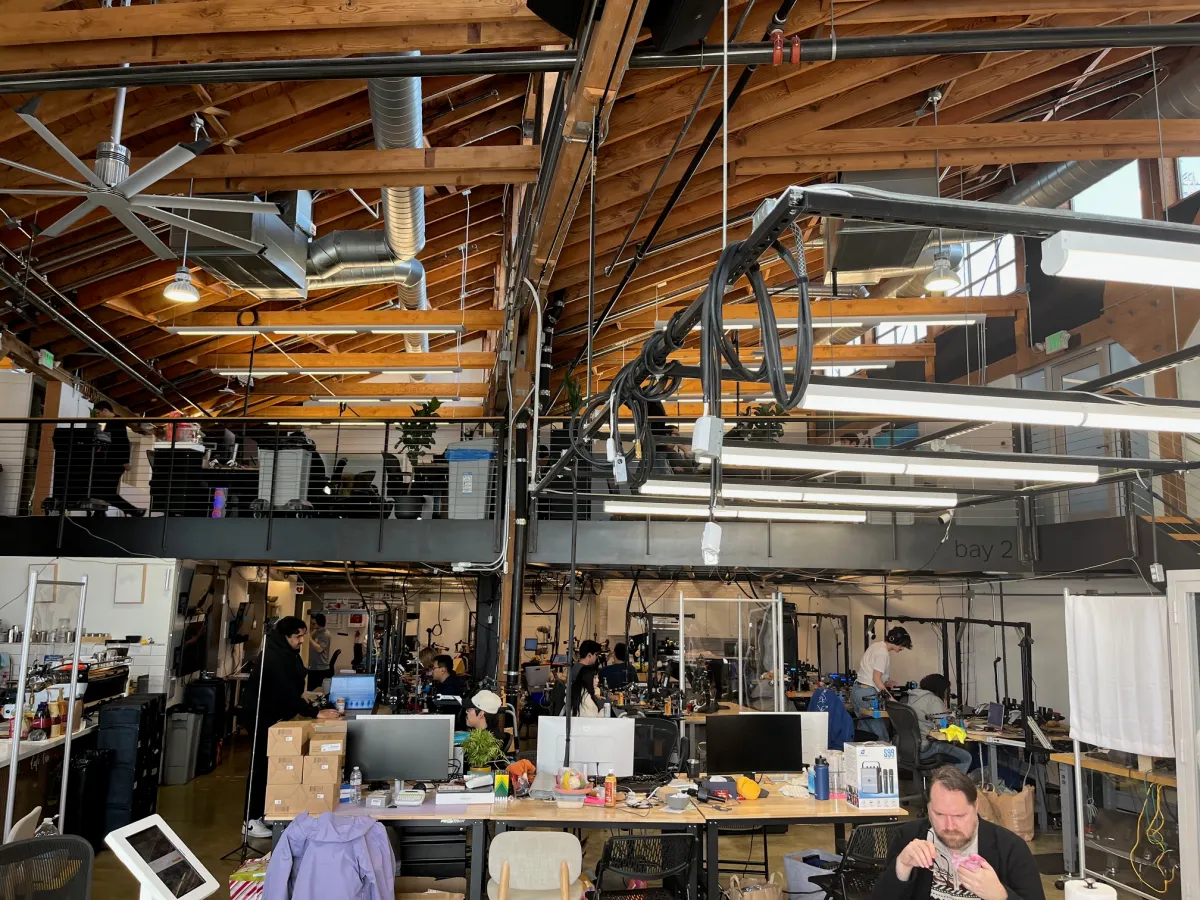
The finalists for Workplace of the Year at the 2026 GeekWire Awards, clockwise from top left: The Allen Institute for Artificial Intelligence (Ai2); Humanly, led by CEO Prem Kumar; Carbon Robotics, led by CEO Paul Mikesell; DAT Freight & Analytics; and the team at Yoodli. (GeekWire and company photos)

Trust. Fairness. Accessibility. Openness. A lot goes into building a solid company culture — and earning a 2026 GeekWire Awards nomination for Workplace of the Year.

This award, presented by JLL, recognizes companies with an exceptional workplace environment. The Workplace of the Year finalists this year are Allen Institute for AI (Ai2), Carbon Robotics, DAT Freight & Analytics, Humanly, and Yoodli.

Now in its 18th year, the GeekWire Awards is the premier event recognizing the top leaders, companies and breakthroughs in Pacific Northwest tech, bringing together hundreds of people to celebrate innovation and the entrepreneurial spirit. It takes place May 7 at the Showbox SoDo in Seattle.

Online clothing rental company Armoire was Workplace of the Year winner last year. The Seattle startup, launched by CEO Ambika Singh, was credited with weaving a network of support within its workforce that extends to its customers and the broader community.

Continue reading for information on Workplace of the Year finalists, who were chosen by a panel of independent judges from community nominations. You can help pick the winner: Cast your ballot here or in the embedded form at the bottom. Voting runs through April 10.

Seattle’s Allen Institute for Artificial Intelligence (Ai2) focuses on openness as a core value, conducting “AI for the common good” and encouraging teams to share models, data, and research with the broader community.

Advertisement

The nonprofit, founded in 2014 by the late Paul Allen, has become a standard-bearer for open-source AI. It trains models like OLMo and Molmo fully in the open, releasing weights, code, and datasets, and setting transparency standards that shape how people build and use AI far beyond its Seattle headquarters.

Ag-tech startup Carbon Robotics lists five simple values that are key to its culture: Do what you say you’re going to do; never let the customer down; we have to get paid for our work; know what you’re talking about; accept mistakes in the pursuit of innovation. The company calls the first one its guiding value and says it builds trust both within the company and with its farmer customers who are all tightly knit, multigenerational, family owned operations. Reputation is paramount, Carbon believes.

Founded in 2018 by CEO Paul Mikesell, Carbon Robotics made its name across ag-tech with the LaserWeeder, a machine which can be pulled behind a tractor and uses its tech to detect plants in fields and then target and eliminate weeds with lasers.

DAT Freight & Analytics says it has navigated multiple acquisitions in 18 months by treating integration as culture-building rather than a takeover, guided by their “One DAT” value. The company says it relies on concrete practices like Gallup engagement benchmarking (landing in the 75th percentile among tech organizations), structured pay equity analyses, and a Women in Tech mentorship program. DAT believes it helps teammates across Seattle, Denver, Beaverton, Ore., Toronto, and Bangalore genuinely feel like one team.

Advertisement

Beaverton, Ore.-based DAT — named a best place to work earlier this year — operates the largest truckload freight marketplace in North America. Founded in 1978, DAT is a business unit of publicly traded industrial conglomerate Roper Technologies.

Seattle-based startup Humanly is committed to building fairness into both its product and its workplace — its AI hiring platform is regularly audited by external partners to reduce bias, and that same commitment to equity shapes how the company operates internally. The team reflects strong representation of BIPOC and women members, grounded in values of authenticity, ownership, and collaboration. The result, Humanly says, is a culture where people are encouraged to bring their full selves to work, take initiative, and treat change as an opportunity rather than a disruption.

Led by CEO Prem Kumar, Humanly was founded in 2018 and uses automation software to help companies screen job candidates, schedule interviews, automate initial communication, run reference checks, and more. It targets customers with high-volume hiring needs.

The mission at AI roleplay startup Yoodli centers on making AI communication coaching accessible to everyone, maintaining a free tier that has reached nearly 1 million users globally — including non-native English speakers, people with speech differences, and students preparing for first interviews. Yoodli says its culture runs on three simple, actionable values — Humility, Bias for Action, and Winning Together — and leadership models those values openly, creating space for the whole team to show up authentically.

Advertisement

Yoodli was co-founded in 2021 by CEO Varun Puri and President Esha Joshi. The Seattle startup, launched at the AI2 Incubator, sells AI-powered software to help people practice real-world conversations such as sales calls and feedback sessions.

Astound Business Solutions is the presenting sponsor of the 2026 GeekWire Awards. Thanks also to gold sponsors Amazon Sustainability, BairdBECU, JLLFirst Tech and Wilson Sonsini, and silver sponsors Prime Team Partners.

The event will feature a VIP reception, sit-down dinner and fun entertainment mixed in. Tickets go fast. A limited number of half-table and full-table sponsorships available. Contact events@geekwire.com to reserve a spot for your team today.

(function(t,e,s,n){var o,a,c;t.SMCX=t.SMCX||[],e.getElementById(n)||(o=e.getElementsByTagName(s),a=o[o.length-1],c=e.createElement(s),c.type=”text/javascript”,c.async=!0,c.id=n,c.src=”https://widget.surveymonkey.com/collect/website/js/tRaiETqnLgj758hTBazgd5M58tggxeII7bOlSeQcq8A_2FgMSV6oauwlPEL4WBj_2Fnb.js”,a.parentNode.insertBefore(c,a))})(window,document,”script”,”smcx-sdk”); Create your own user feedback survey

Advertisement

Source link

Continue Reading

Tech

Seattle data storage company putting R&D hub in Ireland

Published

on

Seattle-based data management firm Qumulo is looking across the Atlantic for its next phase of growth. 

The company announced Friday the launch of a new European software research and development and customer success hub in Cork, Ireland, a move expected to create 50 jobs over the next three years.

Qumulo Chief Technology Officer Kiran Bhageshpur said Cork was “the obvious choice for us to build a team focused on leveraging AI to help businesses manage global-scale data infrastructure.”

Other Seattle-area tech companies also operate in Cork, including Amazon and F5. Apple recently announced a new office in Cork, with capacity for up to 1,300 employees. 

For Qumulo, the move comes as it works to maintain its edge in an increasingly crowded field of AI-driven data management. Founded in 2012 by the engineering team behind Isilon Systems — acquired by EMC for $2.25 billion in 2010 — the company has long been a notable part of the Seattle region’s storage and cloud sector. It raised a $125 million series E funding round in 2020, at the time giving the company a $1.25 billion valuation.

Advertisement

Since then, Qumulo has navigated a shifting landscape, including significant layoffs in 2022 as it prioritized a path toward profitability.

Now, under the leadership of CEO Douglas Gourlay, the company is betting that the global hunger for “AI-ready” data will fuel its next chapter.

Source link

Advertisement
Continue Reading

Tech

Social Media Trial Should Lead to Platform Redesigns

Published

on

In a landmark case, a jury found this week that Meta and YouTube negligently designed their platforms and harmed the plaintiff, a 20-year-old woman referred to as Kaley G.M. The jury agreed with the plaintiff that social media is addictive and harmful and was deliberately designed to be that way. This finding aligns with my view as a clinical psychologist: that social media addiction is not a failure of users, but a feature of the platforms themselves. I believe that accountability must extend beyond individuals to the systems and incentives that shape their behavior.

In my clinical practice, I regularly see patients struggling with compulsive social media use. Many describe a pattern of “doomscrolling,” often using social media to numb themselves after a long day. Afterwards, they feel guilty and stressed about the time lost yet have had limited success changing this pattern on their own.

It’s easy to understand why scrolling can be so addictive. Social media interfaces are built around a powerful behavioral mechanism known as intermittent reinforcement, says Judson Brewer, an addiction researcher at Brown University, which is the strongest and most effective type of reinforcement learning. This is the same mechanism that slot machines rely on: Users never know when the next reward—a shower of quarters, or a slew of likes and comments—will appear. Not all the videos in our feeds captivate us, but if we scroll long enough, we are bound to arrive at one that does. The ongoing search for rewards ensnares us and reinforces itself.

Why Social Media Feels Addictive

Individuals typically struggle on their own to address compulsive social media use. This should be no surprise, as habits are not typically broken through sheer discipline but rather by altering the reinforcement loops that sustain them. Brewer argues that “there’s actually no neuroscientific evidence for the presence of willpower.” Placing the burden to self-regulate solely on users misses the deeper issue: These platforms are engineered to override individual control.

Advertisement

A growing body of research identifies social media use and constant digital connectivity as important influences on the growing incidence of adolescent mental health problems. Brewer notes that adolescents are particularly vulnerable, as they are in a “developmental phase” in which reinforcement learning processes are especially strong. This vulnerability can be exploited by the design features of large social media platforms.

How Platforms Are Designed to Maximize Engagement

NPR uncovered records from a recent lawsuit filed by Kentucky’s attorney general against TikTok. According to these documents, TikTok implemented interface mechanisms such as autoplay, infinite scrolling, and a highly personalized recommendation algorithm that were systematically optimized to maximize user engagement.

TikTok’s algorithmically tailored “For You” content continuously tracks user behaviors, such as how long a video is watched, whether it is replayed, or quickly skipped. The feed then curates short videos, or reels, for the user based on past scrolling behavior and what is most likely to hold attention.

These documents show one example of a tech company knowingly designing products to maximize attention. I believe social media companies also have the capacity to reduce addictiveness through intentional design choices.

Advertisement

How Governments Are Regulating Social Media

The good news is we are not helpless. There are multiple levers for change: how we collectively talk about social media, how our governments regulate its design and access, and how we hold companies accountable for practices that shape user behavior.

Some countries are moving quickly to set policy around social media use. Australia has imposed a minimum age of 16 for social media accounts, with similar bans pending in Denmark, France, and Malaysia.

These bans typically rely on age verification. Users without verified accounts can still passively watch videos on platforms like YouTube, but this approach removes many of the most addictive features, including infinite scroll, personalized feeds, notifications, and systems for followers and likes. At the same time, age verification may cause different problems in the online ecosystem.

Other countries are targeting social media use in specific contexts. South Korea, for example, banned smartphone use in classrooms. And the United Kingdom is taking a different approach; its Age Appropriate Design Code instructs platforms to prioritize children’s safety while designing products. The code includes strong privacy defaults, limits on data collection, and constraints on features that nudge users toward greater engagement.

Advertisement

How Social Media Platforms Could Be Redesigned

A report called Breaking the Algorithm, from Mental Health America, argues that social media platforms should shift from maximizing engagement to supporting well-being. It calls for revamping recommendation systems to spot patterns of unhealthy use and adjusting feeds accordingly—for example, by limiting extreme or distressing content.

The report also argues that users should not have to intentionally opt out of harmful design features. Instead, the safest settings should be the default. The report supports regulatory measures aimed at limiting features such as autoplay and infinite scroll while enforcing privacy and safety settings.

Platforms could also give users more control by adding natural speed bumps, such as stopping points or break reminders during scrolling. Research shows that interrupting infinite scroll with prompts such as “Do you want to keep going?” substantially reduces mindless scrolling and improves memory of content.

Some social media platforms are already experimenting with more ethical engagement. Mastodon, an open-source, decentralized platform, displays posts chronologically rather than ranking them for engagement, and does not offer algorithmically generated feeds like “For You.” Bluesky gives users control by letting them customize their own algorithms and toggle between different feed types, such as chronological or topic-based filters.

Advertisement

In light of the recent verdict, it is time for a national conversation about accountability for social media companies. Individual responsibility will always be important, but so are the mechanisms employed by big tech to shape user behavior. If social media platforms are currently designed to capture attention, they can also be designed to give some of it back.

From Your Site Articles

Related Articles Around the Web

Source link

Advertisement
Continue Reading

Tech

‘No more’: Washington state sues Kalshi, alleging prediction market is illegal gambling

Published

on

Washington Attorney General Nick Brown is suing prediction market platform Kalshi, alleging the company violates state gambling and consumer protection laws by operating an online betting service where users can wager on sports, elections, wars and other events.

The civil suit, filed Friday in King County Superior Court, seeks to shut down Kalshi’s operations in Washington, recover money lost by state residents and assess civil penalties. 

It’s the latest in a growing wave of state actions against the New York-based company, which is facing more than 20 civil lawsuits. Earlier this month, Arizona’s attorney general filed criminal charges against Kalshi, believed to be the first such case against a prediction market.

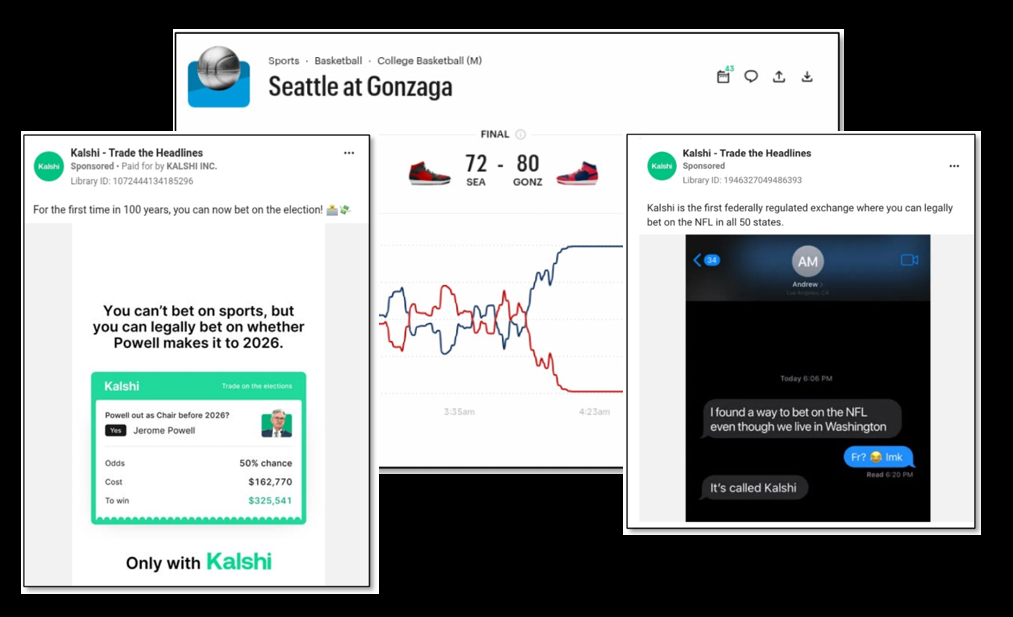
The Washington state complaint highlights a Kalshi advertisement in which one person texts another that they “found a way to bet on the NFL even though we live in Washington,” which the state says shows the company knowingly circumvented state law. 

Advertisement

GeekWire has contacted Kalshi for comment. The company has called similar legal actions in other states “meritless.”

Kalshi entered the sports betting market in early 2025 and now offers spread bets, over/under wagers and proposition bets on college and professional sports — all standard sportsbook products that are illegal in Washington outside of tribal lands, the complaint says.

But the complaint notes that Kalshi’s offerings go far beyond sports. The platform lets users bet on the total number of measles cases in a given year, what witnesses will say during a child trafficking hearing, and whether Iran’s supreme leader will be removed from power. 

The company also offers “mention markets” where bettors wager on specific words a TV host or politician will say during a broadcast, as noted in the complaint.

Advertisement

“Kalshi wants people betting on almost everything possible in life — the outcome of elections, Supreme Court cases, even wars,” Washington AG Brown said in a statement. “As they advance this bleak vision of the future, they line their pockets and pat themselves on the back for sneaking around Washington’s gambling laws. No more.”

The complaint also takes aim at Kalshi’s marketing to young people, saying the company has targeted users between the ages of 18 and 21 and leveraged college student influencers to promote the platform. The state says Kalshi briefly attempted to recruit a 15-year-old influencer. 

On its own Instagram account, Kalshi once described its platform as “kind of addicting,” according to the complaint.

The industry has also drawn scrutiny after bettors on rival platform Polymarket made six-figure profits wagering on the capture of Nicolás Maduro and the killing of Iran’s supreme leader.

Advertisement

Kalshi, founded in 2018, is a designated contract market regulated by the Commodity Futures Trading Commission. The company has argued in other cases that its federal status preempts state gambling laws, a position that has been supported by the Trump administration and senior CFTC leadership.

That argument has produced mixed results in court. Federal judges in New Jersey and Tennessee have at least temporarily blocked state enforcement against Kalshi, while state‑court decisions in Massachusetts and Ohio have sided with state regulators by insisting that Kalshi obtain traditional sports‑betting licenses.

A bipartisan bill introduced this week by Sens. Adam Schiff (D-Calif.) and John Curtis (R-Utah) would ban sports betting on prediction market platforms.

Washington has some of the most restrictive gambling laws in the country. The state constitution prohibited gambling when Washington became a state in 1889, and the legislature banned internet gambling in 2006. The exception is sports wagers placed in person at tribal casinos.

Advertisement

Source link

Continue Reading

Tech

Why cybersecurity needs to adapt in the age of AI

Published

on

The cybersecurity industry needs to ‘fight fire with fire’ when it comes to AI, according to Integrity360’s Brian Martin.

Earlier this month, cybersecurity company Integrity360 held the Dublin edition of its global cyber conference, Security First.

Held on 10 March, the conference saw cybersecurity experts and companies from across the country flock to the Aviva Stadium to sit in on a number of keynotes and panels, all exploring a wide variety of pressing cyber topics and trends.

Richard Ford, CTO at Integrity360, told SiliconRepublic.com at the Aviva that the Security First series of events provides an opportunity to bring some thought leaders from across the cyber industry together.

Advertisement

“From inside Integrity as well, but also from across industry because I think it’s important to get multiple voices,” he said.

But what does ‘security first’ mean?

Ford told us that the term refers to Integrity360’s model and view of cybersecurity, which is “to enable organisations to look at the full life cycle of cybersecurity, and look at it holistically, rather than just looking at one single segment”.

Advertisement

He explained that cybersecurity needs to be a whole-of-organisation priority, rather than just an IT concern.

“You know, it can’t just be a technology, it can’t be the technologists, the analysts, the engineers. It has to come from the very top of the organisation to think, actually, cybersecurity is important, it’s one of our key risks to our business,” he said.

“So we need to take that seriously and put the right effort, the right spend and the right focus on it to make sure that we are not the next organisation to be in the headlines and get breached.”

Human-AI era

This year, the conference theme was ‘Resilience Redefined: Securing the Human-AI Era’, with the event examining “how AI, machine identities and changing regulations are reshaping organisational defence”, according to the company.

Advertisement

While AI has certainly become a top opportunity for today’s cybersecurity teams, it has also introduced considerable cyberthreats as well.

“It’s not so much that AI is actually finding new things to exploit, but rather that it can automate a lot of the activities that normally would be performed by human attackers,” explained Brian Martin, Integrity360’s director of product management.

“So therefore, they can find exposures a lot faster, they can adapt more quickly to blockers that they find, and then they can execute more and more stages of the attack autonomously and at scale.”

Chris Hosking, AI and cloud security evangelist at SentinelOne, said AI has impacted cybersecurity by “empowering the threat landscape”.

Advertisement

“It’s made [threat actors] faster, it’s given them more sophistication than they’ve had before and it’s also lowered the barrier to entry,” he said.

However, he emphasised that AI also provides considerable opportunities for cyber defence teams. “We can have a phenomenal edge if we move to things like agentic auto triage, auto investigation. But we’re really sort of only dipping our toes right now into what AI can do for us, but a lot of opportunity ahead.”

Martin agreed, stating that cybersecurity teams need to “fight fire with fire” by utilising AI technology.

“We need to be able to move away from some of the manual and sort of fragmented visibility that we’ve had in order to be able to respond to that increasing scale and rapidity of attack.”

Advertisement

With the scale and complexity of cybersecurity and cyberthreats greater than it’s ever been, plenty in attendance at the conference had advice for companies that might be wondering how to adapt.

Niall Errity, director of professional services at Vectra, said that companies need to “understand their own gaps in their own network”.

“I think a lot of organisations tend to be very one or two tool-focused,” he said. “They think, ‘oh, I have an EDR [endpoint detection and response] installed on my endpoints and I’m perfectly fine now, I don’t need to worry about anything else beyond that’.

“Unless they’re doing the proper analysis in their own environments, doing proper testing to really make sure they’re resilient, they won’t really know their own gaps. So my recommendation would be to constantly look at what’s happening in the news, what’s happening with organisations. Take those learnings and test your own environments to make sure that you have those gaps closed.”

Advertisement

Don’t miss out on the knowledge you need to succeed. Sign up for the Daily Brief, Silicon Republic’s digest of need-to-know sci-tech news.

Source link

Advertisement
Continue Reading

Trending

Copyright © 2025