
Tech
Waymo doubles spending on lobbying in robotaxi battle with Uber


At the local level, the robotaxi operator has outspent both Uber and Zoox in lobbying legislators in the District of Columbia. It has pressed local regulators to allow robotaxi services in the nation’s capital, including by inviting residents earlier this year to write in support of its rollout.
In New York state, Waymo has spent more than half a million dollars so far this year—more than double Uber’s lobbying spend—as it seeks a foothold in one of the largest taxi markets.
Its lobbying in the state intensified after Governor Kathy Hochul earlier this year walked back proposals that would have allowed autonomous vehicle companies to run services across most of the state.
Waymo offered to set up a $20 million fund to support drivers affected by the technology’s deployment, according to people familiar with the matter.
In New Jersey, it has engaged lawmakers who are exploring a three-year pilot program to test deployments.
Waymo said in a statement that it was advocating for the rollout of autonomous vehicles and was not pursuing measures that would limit competitors or “prescribe” how the technology was deployed.
Uber, meanwhile, has been racing to make up lost ground in AVs after abandoning its in-house self-driving effort in 2020, committing more than $10 billion over the past year through equity stakes and robotaxi fleet agreements.
The ride-hailing group has warned several Democratic-led states against a carte blanche rollout and has instead lobbied for so-called hybrid networks that route rides to both human drivers and autonomous vehicles.
In New Jersey, Uber lobbyists have proposed that any platform offering robotaxi services also use human drivers for at least 85 percent of all rides during a three-year pilot program.
Critics have accused Uber of seeking regulatory capture by attempting to keep rides flowing through its platform as it grapples with rising competition.
Uber has said it is false that they were “anti-AV or seeking to slow AV deployment.” It said hybrid networks “get the technology to consumers sooner while giving policymakers a practical framework to manage the transition.”
© 2025 The Financial Times Ltd. All rights reserved. Not to be redistributed, copied, or modified in any way.


Wrongly discarded lithium batteries, such as those in vapes, are causing more than 10 fires a week at U.K. recycling centers, according to figures shared with the Guardian:
The Environment Services Association (ESA), the trade body for waste management companies, said its members had reported 1,518 fires in the year to March 2026. At least 541 of these fires were directly attributed to lithium ion batteries, the survey found. There were a further 216 battery fires in bin lorries [garbage trucks]. The ESA said the reported number of battery-related fires underestimated the scale of the problem, because in most incidents it was impossible to determine the cause of the blaze. A spokesperson said: “We know 40% of fires at recycling centres are caused by batteries, but we think the actual number is more like 70%.”
It estimates that annual cost of these fires has increased from £150m in 2021 to £1bn today…
The ESA is calling for a £5 deposit scheme on the sale of all vapes to ensure that vape users have an incentive to return used devices to retailers for safe disposal… [Patrick Brighty, the head of recycling policy at the ESA, said] “Vapes are among the biggest culprits because they’re cheap, abundant and typically have a short use-life.”
Thanks to long-time Slashdot reader AmiMoJo for sharing the news.


Read more of this story at Slashdot.

Following a Bloomberg report that the Department of Justice is investigating venture firm Andreessen Horowitz for holding board seats with rival AI companies, VCs told TechCrunch that they were baffled.
On the latest episode of the Equity podcast, Kirsten Korosec, Sean O’Kane, and I were similarly puzzled by the news. Yes, VC conflicts-of-interest are worth taking seriously, but as Kirsten wondered, “Of all the things that the DOJ would focus on in terms of level of importance, why does this one rise to the top?”
The news was also surprising because of a16z’s ties with the Trump administration, and because the firm has been so quiet about the investigation. It’s a real contrast with the firm’s activity during the Biden years, when — as Sean put it — “every little policy change, especially related to crypto, generated a day’s worth of posting.”
But Sean also speculated that by targeting a16z, the DOJ might also be setting an “example” that “smaller firms would follow.”
Keep reading for a preview of our conversation, edited for length and clarity.
Kirsten Korosec: I think that you bring some interesting perspective to this, Anthony, because you actually worked at a VC firm, whereas Sean and I have never been inside the confines of the VC world. We’ve only reported on it.
Anthony Ha: Long-time equity listeners will know that I did spend a couple years working at an early stage VC firm — a much smaller firm than Andreessen Horowitz, as different as you can be while still technically being in the same industry.
It did color my response when I was reading this article, which is essentially about these board seats that Andreessen Horowitz holds, and the idea that they have board seats in some companies that have become competitors.
It was really surprising to me, as apparently it was to a number of other VCs. And again, I’m not a lawyer, I was not on the legal team of this VC firm. There is, obviously, an understanding, and apparently laws, around the idea that you should not be on boards of competing startups. But this is not something that is, generally, enforced very closely.
Founders don’t feel great if you are on the board of their biggest competitor. But also, startups evolve. And I think that was true in this case — you invest in a startup doing one thing, and then, say, the AI boom happens, and suddenly they’re doing something completely different. So the idea that you would have a year-long DOJ investigation into this — we don’t really know what the results are, there’s a lot of questions about this, but it just seems very strange.
Kirsten: In this case, Ben Horowitz sits on the Databricks board. Partner Martin Casado sits on Fivetran board. And to your point, especially in this AI-driven boom cycle, a lot of companies are changing what they’re doing, and either to jump into the AI space or to take advantage of specific subcategories within it. And a company the size of Andreessen, which makes so many investments and is on a lot of board seats, you can see how this would happen.
To me, what was interesting — and Sean, I wonder if you have an opinion on this — is of all the things that the DOJ would focus on in terms of level of importance, why does this one rise to the top?
Sean O’Kane: I’m just excited we’ve got another chance for disruption here. I mean, we could create a startup that is just going to put an AI on your board, and there are no conflicts of interest. Let’s do it.
No, you’re right. It’s weird for a number of reasons, and when I first saw the headline, it certainly piqued my interest because I wanted to know what it was that they were looking at.
We should back up just a real quick second. Bloomberg reported that this [investigation] has been going on for nearly a year, so this started under the Trump administration. The people who run Andreessen Horowitz are very friendly with the Trump administration, involved in the Trump administration in some ways, sitting on some councils and things like that.
And so, for as much rhetoric as the [second] Trump administration was putting out there when it was still incoming, about being antitrust forward and fighting against the big forces of consolidation or whatever, that really hasn’t borne out. I mean, they settled with Live Nation. They didn’t break up Ticketmaster. We could spend all day talking about how that was a pretty hollow promise.
The Justice Department should not be a tool for the president to just direct at enemies or friends or whoever. But it’s just interesting that this is a bridge they were willing to cross, knowing how close they are with this administration.
And I’ve reported on some things that Andreessen Horowitz have done that made me wonder if that was going to be part of this. Two years ago, we published a story about how Ben Horowitz was personally making connections between the startups that Andreessen Horowitz backs and [the] local police department in Las Vegas, and things that have maybe more of an anti-competitive flavor to it than this — which, like you’ve said, is maybe a bit more by chance because of the way that these companies evolved and wound up competing against each other.
[It] certainly doesn’t seem like it’s something that Andreessen Horowitz feels [is] such an overreach that we have seen them complaining about it on Twitter, like they were during the Biden era — where every little policy change, especially related to crypto, generated a day’s worth of posting. We haven’t really seen that here. So maybe it’s all going to be copacetic in the end.
Anthony: To Sean’s point about the DOJ, without getting too deeply into the politics of it, I think anyone who’s been reading the news knows there’s a lot of turmoil there. There’s a lot of questions about sort of how politicized the office has or hasn’t become. Which, again, just makes it very surprising and strange that there has been this long investigation into an ostensible ally of the Trump administration.
The last thing I wanted to say for now is also just the length of the investigation is very surprising. If it was just about, “Well, we don’t think you should be on these two board seats,” there’s not that much to investigate there. You [would] just tell them, “Don’t do that,” or, “Here’s what we need you to do instead.” [Yes, I may be a little naive about how DOJ investigations work.]
So, what that suggests [is that] there must be a lot that we don’t know. There has to be some other, more serious allegation of something going on. Otherwise, what is there to investigate for that long?
Kirsten: Well, I think that you can have two truths. Meaning, you can have a slow, arduous process because of an inefficient DOJ, and also, you can have some sort of smoking gun or bigger issue. We don’t want to get too speculative and make assumptions. But I do think that their reaction and how quiet they’ve been — perhaps they’re listening to their lawyers, perhaps that there is something a little bit bigger here.
My question is: How does this now affect other VC firms? Are they taking notice, or is this considered a weird outlier, and they’re just going to proceed as normal and continue to take board seats and not worry too much about potential competition between boards down the line?
Sean: I think that’s a good question. If this is really something that is such a concern inside the antitrust division of the DOJ, then maybe this is a way for them to … how do I best put it? Set the example that then those smaller firms would follow. Instead of, if you perceive this as [an] antitrust violation, going after all these other, smaller firms for doing something like this, you go after Andreessen Horowitz and you set the example. And then maybe that puts these other people in more of a wary, cautious position, and so I could see that being the case.
The other thing to think about here is, this administration and the agencies that work for it and next to it have really backed off on public company prosecution in very explicit ways. The SEC and the DOJ have both said that public company investigations and things like that are just not a priority. They would rather go after individuals.
Obviously, we’re talking about Andreessen Horowitz as a company here, but it just makes me wonder if this is, in some ways, some sort of side effect of how the priorities have shifted. If you’re not going after corporate prosecutions — you’re backing off on guilty pleas that Boeing has entered, and again, settling with Live Nation and really backing off some of those Fortune 500-type companies — maybe one of the side effects is, you wind up paying a bit more attention to stuff like this.
When you purchase through links in our articles, we may earn a small commission. This doesn’t affect our editorial independence.

Review Price:
1-inch sensor
The vertical 20MP 1-inch sensor captures 3:4 images by default.
Analogue-inspired shooting
Comes with 10+ Film Simulation modes, diptychs and a dedicated Film Roll mode.
Lightweight retro design
240g with a pocketable body and quirky controls.
Key Features

£549
Introduction
The Fujifilm X Half is one of those cameras that looks like it should be a niche oddity – and, in a way, it is.
But it’s also the kind of camera that leans so fully into its own concept that it starts to make a lot of sense, especially if you’re after something more playful and characterful than a conventional point-and-shoot.
It borrows the feel of half-frame film cameras and mixes it with a handful of genuinely fun digital tricks, resulting in a camera that’s less about outright specs and more about the experience of using it.
Of course, that also means making a few compromises along the way, but as I’ll get into here, the X Half’s charms go a long way in making those easier to forgive.
Design
- Retro, lightweight, and surprisingly pocketable
- Quirky controls include film lever
- Portrait-oriented dual rear screens
The Fujifilm X Half goes all-in on the retro styling, sharing certain similarities with other cameras from the brand, including the iconic Pentax 17. It may have an entirely plastic frame, but it doesn’t feel cheap in the hand in the same way that truly affordable cameras like the CampSnap CS Pro do. There’s some weight to it, but at 240g, it’s still a lightweight unit compared to ‘proper’ mirrorless and DSLR cameras.
It’s also surprisingly pocketable, and I can’t remember the last time I said that about a semi-serious camera. That’s helped by the tiny 32mm-equivalent focal length fixed lens that doesn’t protrude far from the body. Flanked alongside the lens is a mechanical aperture adjustment lever, which can be manually adjusted from f/2.8 to f/11.

Staying with the controls for a second, there’s an on/off switch on the top of the camera that, when set to on, makes the film-wand lever pop out. It’s, of course, not actually moving the film as it would on a traditional film camera; instead, it’s used to activate the camera’s diptych feature or move onto the next frame in the dedicated Film Roll mode – more on both of those a little later.
The shutter button finds itself nestled within the exposure compensation dial on the top-right of the camera. It’s certainly a choice, but given the compact nature of the camera, I get it – and it actually makes it easier to adjust the exposure without having to take your eyes off the viewfinder.

Next to the shutter button and exposure dial, placed centrally on the top of the camera, is a cold shoe for mounting accessories. It’s not a hotshoe, so you won’t be able to use connected accessories like a flash gun, but there is a small LED flash sitting above the lens that helps add some fill light for darker environments, toggled on or off via a dedicated switch on the left side of the camera.
At the bottom of the camera, you’ll see a compartment for the W126S battery that powers the camera. Fujifilm claims it’s good for up to 880 shots on a charge, and while I didn’t take quite that many in one go, it always had plenty of charge whenever I reached for it over a review period of a few weeks.

But it’s when you look at the back of the camera that some of you might be confused; there’s a basic look-through optical viewfinder in the top-left, along with not one but two screens, a toggle for stills and movies, and a play button – but not much more. Where are all the controls, buttons and dials you’d usually expect to find on a camera like this? Well, that’s where the X Half gets interesting.
You see, the X Half doesn’t just want to look like a retro camera – it wants to operate like one too, albeit with a digital twist.
The smaller of the two vertically-oriented screens on the far left is there primarily to mimic the film canister window you’ll find on many film cameras, with a swipe up or down on the touchscreen taking you through the 10 analogue-inspired Film Simulation modes. However, it can also be used to adjust camera settings in certain modes and act as a navigation tool when browsing the, at times confusing, settings menus.

The bigger screen of the two is the one you’ll be using most often. Unlike most cameras that have landscape screens, this one is portrait-oriented to better suit the camera’s 3:4 native aspect ratio. It’s not the biggest screen around, measuring at 2.4 inches, though it’s the way that you’ll frame your photos most of the time when using the camera.
Why? Even though there’s an optical viewfinder, it’s aligned to the left of the camera, while the lens is centrally placed. That essentially means that there’s a slight difference in composition between the viewfinder and what’s captured by the lens – it’s not a big deal for wide vistas, but for portrait shots and the like, it can mean the difference between your subject being perfectly centred and positioned to the right of the frame. As such, the digital preview is essentially the ‘true’ preview of the shot.

It’s a shame, then, that it’s not that bright. It was fine indoors and on cloudy days, but I could barely make out the details on the screen on a truly bright, sunny day while wandering down by the River Thames. It’s also a little bit fiddly to swipe between the various settings menus, as it’s not quite as snappy and responsive as I’d like it to be.

Features and performance
- Vertical 20MP 1-inch sensor
- 10+ analogue film simulation modes
- Fun, screenless Film Roll mode
There was a bit of a disparity between the price of the Fujifilm X Half and its launch price – at £649/$849, it was just a little too expensive for the cut-back experience compared to cameras of a similar cost. However, the camera has since dropped to £549/$649, with recent sales seeing it drop as low as £429/$599 – and at that price, a lot of the earlier complaints are much easier to accept.
That said, if you’re looking for a new primary camera, this probably isn’t it – it doesn’t offer a lot of control over your shots, video is capped at Full HD and 24 fps, and there’s not even support for RAW capture – but if you’re looking for a point-and-shoot camera with some personality, the X Half has that in excess.

The portrait-style photos and videos are captured by a vertical 20MP 1-inch sensor with a 2:3 aspect ratio, though the output is 3:4, so the maximum photo resolution is actually a little lower at 18MP. Combined with the 32mm-equivalent focal length, it’s a great perspective for everyday snaps – and especially if you’re big into social media.
The default portrait aspect ratio works extremely well for Instagram Stories, TikTok videos and the like. You can take horizontal shots, but you’ll need to rotate the camera yourself, and without a built-in gyro, you’ll need to manually rotate those shots after. But still, it’s possible, even if it’s not always convenient.
Still, for a camera of its size, the results are pretty impressive; the f/2.8 aperture delivers a nice bokeh on close-up images, especially when you get close to the minimum 0.1m focus distance, and the 32 mm-equivalent focal length is great for street photography. It’s also quick to focus, with a face-detection autofocus that helps keep portrait shots nice and sharp, with a couple of different AF options for more general use.
Nighttime performance is pretty solid with the 1-inch sensor and wide aperture, drinking in plenty of light, even when left in its default automatic mode. However, the built-in flash can sometimes be a little too bright for the situation, blowing out faces and other highlights in darker environments. Still, even those shots have character and, dare I say, charm, reminiscent of the same problem we had with cheap disposable cameras in the 90s.
But with the X Half, it’s not just about how detailed the shots are; half the fun is in deciding on the overall look of the image, with various analogue film simulations on offer. With a quick swipe of the smaller vertical screen, you can switch between 10 popular Fujifilm canister styles, be it the vintage cheap print film roll of Classic Neg or the punchy contrast of the Eterna Cinema, each with its own signature look.
There are also some additional picture effects that can be enabled from the camera’s menus, including rather gimmicky mirror and toy-camera effects, to slightly more interesting options like light leak. Again, leaning very much into the nostalgia of early film cameras here.

That also applies to the diptych feature I mentioned earlier, which essentially puts two 3:4 shots side-by-side, just as an analogue half-frame camera does on a roll of 35mm film. But as it’s digital, they’re not actually half-sized like the inspiration – they’re full-size 3648 x 4864 images, with an overall resolution of 3648 x 4864 with a 3:2 aspect ratio.
It’s not to my tastes necessarily, but it’s easy enough to use if it is something you want to experiment with; just like on the analogue inspiration, you simply pull the film wand lever.

My favourite feature of the X Half isn’t a shooting mode or a filter, but rather an experience; Film Roll mode. And, if like me, you have fond memories of analogue cameras, be it high-end models or cheap disposable film cameras from the 90s, you’re almost guaranteed to love it.
Why? Because as the name suggests, it simulates the analogue film roll experience. You choose the film simulation you want, the number of frames in the film roll – 36, 54 or 72 – and then you’re locked into those settings until the virtual roll runs out, just like with its analogue counterpart. You even need to crank the lever to move onto the next frame.

Even the display switches off, forcing you to use the optical viewfinder, with the screen instead only displays the number of shots left on the roll. There’s no way to preview the images until you download the roll onto the companion app for iOS and Android and digitally ‘develop’ it either – only then will you see the shots you’ve taken.
This might sound like a bit of a headache for pro-level photographers – and it very much is – but that’s also not the point of the X Half. It’s a nice hat tilt to an earlier, arguably simpler time for photography, where it was all about in-camera composition and not aggressive post-production.
The X Half is more about capturing memories with a bit more personality than you’ll get from a mirrorless camera or smartphone, rather than capturing the absolute perfect shot. And at its now-cheaper price point, that’s absolutely fine.
Should you buy it?
You want a fun analogue-inspired shooting experience
The Fujifilm X Half leans hard into the charm of half-frame film cameras, with Film Simulations, diptychs and a screenless Film Roll mode that make it feel more playful and considered than a typical point-and-shoot.
You want a serious primary camera
With limited manual controls, Full HD 24fps video and no RAW capture, the X Half is better suited to casual, characterful shooting than replacing a more capable mirrorless or compact camera.
Final Thoughts
The Fujifilm X Half won’t be the camera for everyone – but that’s also not really the point.
It’s a charming, personality-filled little shooter that leans hard into nostalgia, and if you’re happy to trade a little control and outright image quality for a more playful, more considered shooting experience, there’s a lot to like here.
At its now-cheaper price, the X Half makes a much stronger case for itself than it did at launch – and for the right kind of user, that may be more than enough.
To see how it compares, take a look at our selection of the best cameras around in 2026.
Trusted Score
How We Test
We test every camera we review thoroughly. We use set tests to compare features properly and we use it as our main device over the review period. We’ll always tell you what we find and we never, ever, accept money to review a product.
- Used the camera for two weeks
- Tested indoors and outdoors in bright and dark conditions
FAQs
Not especially. The Fujifilm X Half can record video, but it’s capped at Full HD at 24fps, so it’s better suited to quick casual clips than serious video work.
No, and that’s part of the point. Film Roll mode switches off the display and only lets you see your shots once you’ve finished the virtual roll and digitally developed it in the companion app.
Trusted Score
The post Fujifilm X Half Review appeared first on Trusted Reviews.


Nvidia’s largest customers have been notified that servers containing its AI chips will rise in price by more than 15% in many cases from early next year, driven by memory costs. The company reports quarterly earnings next week.
Nvidia’s biggest customers have been told what the memory shortage is going to cost them. Servers containing its AI chips will rise in price by more than 15% in many cases, on systems shipping from early next year.
The increases reach the newest hardware. Systems built around the Vera Rubin and Grace Blackwell chips are affected, with the size of the rise depending on the chip generation and the memory configuration.
The warnings came through the middlemen. Companies that assemble servers under contract for operators including Microsoft, Google and Oracle have notified their customers, and Nvidia did not respond to requests for comment.
What makes this notable is who is passing on the cost. Nvidia holds a gross margin of about 75% and is the most valuable listed company in the world, and it is still not absorbing this.
The leverage sits with three companies. Samsung, SK hynix and Micron produce most of the world’s DRAM, and while output is rising it has not caught up with demand from AI infrastructure.
Consumers met this first. Apple and Qualcomm have both said component costs are pushing prices up, Nvidia raised its gaming card prices this month and AMD followed within days, while Amazon Web Services has already put GPU prices up 20%.
Europe’s exposure runs through public money as much as private. The EU has committed around €20bn to a set of AI gigafactories, and a French consortium has bid $10bn for one site.
Those bids and budgets were built on last year’s hardware prices. A 15% increase on the servers such a facility exists to buy is a material change to a plan drawn up before the memory market tightened.
Commercial European operators are buying into the same market. Nebius is tripling Nvidia capacity at its Finnish data centre, on economics that have just moved.
The build-out was already getting harder. Project delays, labour shortages, tighter capital markets and local opposition have complicated data centre plans, and this adds cost to all of it.
Nvidia reports quarterly earnings next week, which is when the useful question gets asked. Not whether demand is holding, but who ends up paying for memory, because at the moment the answer appears to be everyone downstream.
People who used Grok Lite this week were no doubt surprised when the bot started sending long, large paragraphs of total gibberish. This is only slightly worse than its usual output, but it still had people in a tizzy, and understandably so.
The trouble started earlier in the week, with multiple people posting on Reddit that Grok had “lost its mind,” meaning the chatbot was acting strangely. Though the bot would respond normally at first, it would devolve into buggy, nonsensical rants. The problem appeared to only impact Grok’s website interface, not mobile apps.
In response to a perfectly reasonable question, Grok responded: “Some is local but is add, and safety font but proper if research use glue for already.” Even the basic autocorrect in my web browser gets angry at that sentence.
Users reached out to Grok directly to ask what the problem was. The chatbot responded on X that the “pure word salad is a rare temporary generation glitch” and that users could fix the problem by refreshing their browser tab or starting a fresh chat. That solution appears to have worked for most people.
Instances of the glitched responses seem to have subsided as of Friday, and we were unable to replicate the problem.
LLMs are machines, and they break as machines do
The cause of the glitch remains a mystery, as xAI hasn’t released any technical details. While it’s amusing to make fun of Grok for its mediocre performance, dwindling user base and rock-bottom satisfaction ratings, the fact is that it’s little more than computer components and code, and sometimes those things just break.
ChatGPT had a similar issue in 2024 as did Gemini, where users were getting incomprehensible feedback to mundane questions and tasks. Claude had its own bout of silliness in 2025, though it seemed to be limited to people who used it for coding purposes.
Ultimately, all large language models, or LLMs, are word-guessing games that work similarly. Chatbots use complex mathematical formulas to predict the most likely next words in their responses. When this process breaks down, gobbledygook happens. Such a breakdown can occur at any point, whether due to a broken code or a math glitch.
AI companies tend to keep these issues close to the vest, and it appears xAI is doing the same with Grok. So, it’s not you. It’s it.
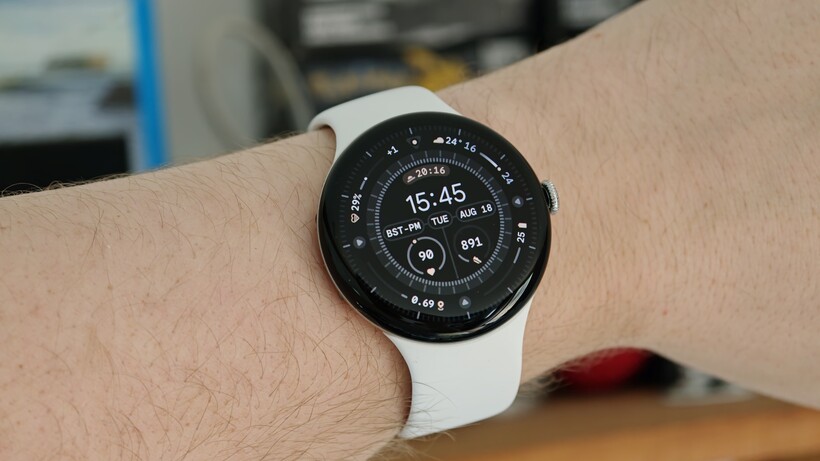
The Pixel Watch 5 is here, but it probably shouldn’t be – just yet, anyway.
Google’s latest smartwatch has finally launched in the UK, US and beyond, bringing with it a familiar design, familiar hardware and the promise of several genuinely useful new features.
The problem? Most of those features aren’t actually available yet, making the Pixel Watch 5 feel like a placeholder for the smartwatch Google actually wants to – and will – sell in a few months’ time.
The Pixel Watch 5 is here, but most new features aren’t
The Google Pixel Watch 5 is finally available to buy in the UK, US and most other regions around the world – but it’s not really ready yet.

At the Made By Google event earlier this month, the company outlined key new features coming to the wearable. These include sleep breathing quality monitoring, which helps track your breathing quality while you sleep, improved exercise tracking with support for weight workout plans and HIIT, blood pressure and insulin trends, and even the ability for the watch to detect whether you’ve stopped breathing and call emergency services on your behalf.
These are all more important than usual because, in terms of hardware, the Pixel Watch 5 is almost identical to the Pixel Watch 4. It has the same design, the same weight and thickness, the same screen with the same peak brightness and even the same battery.

The only tangible difference in hardware comes from the processor itself – but even the jump from the Watch 4’s Snapdragon W5 Gen 2 to the Watch 5’s Snapdragon W5 Gen 2 Accelerated isn’t that dramatic.
Google itself only claims around 20% improved performance year-over-year, and even with the accelerated version under the hood, it’s still not quite as powerful as the Snapdragon Wear Elite found in the similarly priced Samsung Galaxy Watch 9.

What I’m trying to say is that Google is relying entirely on software smarts to entice fans to the Pixel Watch 5 instead of the near-identical, and much cheaper, year-old Pixel Watch 4 – which makes the fact that most of the features are MIA at launch all the harder to accept.
A staggered, rather confusing rollout
Rather than booting up your new Pixel Watch 5 and having all features available to you, it depends on whether it’s available – and even if it is, it might not be available in your territory.
Take one of the headline features of the Watch 5 as an example. The breathing emergency detection feature is available at launch in select countries in the EU, including France, Spain, Germany and others, along with the UK – but not in the US, as it didn’t get regulatory approval in time for the wearable’s launch. As such, there’s no hard timeline for when the feature will become available to those in the States.

Then there are features like the improved weight workout plan support and sleep breathing quality monitoring that are on the way to all users, but not until sometime in September. It’s a similar story with blood pressure and insulin trends; the feature will roll out in September, but as it needs a full month of data, the first reports won’t arrive until the end of October.
And without most of those key features on the watch from day one, it feels almost identical to the Pixel Watch 4 experience – except it now costs more money, because, of course it does.
A hard pill for Google’s biggest fans to swallow
It makes my job as a tech reviewer all the more difficult, as I can only evaluate what’s here today, not what might appear a little further down the road.
It’s not like we can take companies’ promises at face value either; Apple promised AI smarts with the iPhone 16, including a redesigned Siri experience, but the latter is only launching in the next few weeks, likely alongside the iPhone 18 Pro, two years later. And we wouldn’t be doing our jobs properly if we recommended products based on features we’ve not seen or tested, which in part contributed to me giving the Pixel Watch 5 four stars instead of something closer to five.

But really, it’s the die-hard Google fans who rush out to pre-order Google’s latest tech that really get the worst deal. These people could wait a few months for the prices to start dropping, but no, they want the best Pixel Watch experience possible, as soon as possible, and they’re willing to drop money before even reviews are available to guarantee that.
And after all that, they’ll boot up the Watch and struggle to spot anything that’s actually new – and it’s because right now, there just isn’t. For all intents and purposes, it’s the same Pixel Watch experience we’ve seen for a year, just with a few minor UI changes and promises that things will get better in the coming months.
Well, if that really is the case, why not just delay the Pixel Watch by a month or two until it’s actually ready?
Just wait until it’s actually ready to go
I can’t help but feel that Google would’ve had a much warmer reception to its Pixel Watch 5 if it had simply delayed it by a month or two until all the new features were ready, present and accounted for.
It’s not like Google hasn’t had long gaps between announcement and release before; the Pixel Watch 4 was announced in August 2025, but didn’t materialise on shelves until two months later, in October 2025.

Of course, we all know the real reason why. It’s the same reason why it shifted from its original October release schedule to August: to get ahead of Apple’s yearly iPhone launch, which takes place in early September.
If Google delayed the Pixel Watch 5 until October, it’d risk it essentially getting forgotten about in the noise of whatever Apple is set to launch in September, not only in terms of wearables like the Apple Watch Series 12, but also in general excitement around the next-gen iPhones – especially if the long-rumoured foldable materialises, as expected.
So, instead, Google has stuck to its guns to cash in on early interest, even though that has seemingly come at the expense of early adopters who now have to wait a few months before really getting the Pixel Watch 5 experience promised at launch. Bad move there, guys.


security
Quarantining leaked credentials is not good enough
One of the best ways to lower your AWS bill by 99 percent or more is by not checking your keys into public GitHub repositories. Many of us have done this inadvertently over the years, and the defenses against it have improved dramatically (my personal favorite being “using non-ephemeral credentials derived from OIDC or SSO is an anti-pattern”), but it still happens.
On Friday, BleepingComputer reported on a Truffle Security finding that hundreds of leaked AWS keys are root keys and are somehow still active and valid.
AWS Security is full of very smart people who care deeply about a number of things, including “not abetting crime.” If they detect (usually via automated means) that a credential has been leaked, they’re quick to apply a Quarantine Policy to it. Trouble is, that policy enumerates a bunch of bad behaviors in an ever-expanding graph of principals and associated behaviors.
AWS’ considered position on this is that they don’t want to break customer environments: “The policy aims to limit the potential damage that may be caused by fraud-related activity leading to unauthorized charges, while not impacting the existing resources.”
AWS’ considered position on this is wrong.
If I get access to your credentials (much less a root credential, good god), deactivating them may very well break your workload because anything that relies on those credentials will start failing. Until you rotate them, those workloads will continue to fail. That’s not good!
But I promise you, as a bad actor, I can do far worse to you.
Hold my tea
Go ahead and apply a quarantine policy to a credential set and toss it my way. I won’t be able to buy savings plans, read your S3 data, modify Lambda functions, and do a host of other things.
But here’s what I can do.
-
Anything I damn well feel like on RDS. You don’t have anything important in databases, right?
-
ssm:SendCommand / ssm:StartSession are permitted, which means I can run commands as root on EC2 instances, which will in turn invoke with that instance role’s permissions.
-
sts:AssumeRole means that I can assume any other role in the account and get its permissions, rendering the entire restriction list potentially moot.
-
I can use autoscaling:CreateAutoScalingGroup / UpdateAutoScalingGroup to launch instances via the Auto Scaling service-linked role, so the ec2:RunInstances deny never applies.
-
cloudtrail:LookupEvents gets denied (that’ll stop you from… reading the audit log), but I can call both cloudtrail:StopLogging and DeleteTrail which do exactly what you expect; you don’t have an audit log anymore.
-
SES denies ses:GetSendQuota / ListIdentities actions, but y’know what’s missing? SendEmail, so I can blast my spam out to your entire list.
-
sns:GetSMSAttributes means I can’t get your SMS configuration, but I can absolutely sns:Publish to send fraudulent text messages wherever I’d like.
-
s3:DeleteObject gets denied, but s3:PutObject is allowed. I can’t delete your data, but I can fill a bucket to petabytes.
-
Next, they fail to block s3:PutBucketVersioning, s3:PutObjectLockConfiguration, s3:PutObjectRetention, and s3:PutObjectLegalHold. So on any existing bucket, like that one I just stuffed petabytes into, I can enable versioning, turn on Object Lock, and set a bucket-default COMPLIANCE-mode retention out to 2126, or alternatively slap it on per object. COMPLIANCE retention can’t be shortened or removed by anyone, including the account root and AWS Support. The only way to remove it is to delete the entire AWS account.
-
secretsmanager:GetSecretValue, ssm:GetParameter* (WithDecryption), and kms:Decrypt are all unencumbered, so your secrets are now my secrets. Sharing is good!
-
Backups are important, so it’s a shame you don’t have any. Well, not after I kick off backup:DeleteRecoveryPoint / DeleteBackupVault, and rds:DeleteDBSnapshot.
-
If you’re using CloudFormation, and for some things you almost certainly are, cloudformation:DeleteStack going unmentioned means you’re not using it anymore and all of your stacks are gone.
I would make different choices
This isn’t a comprehensive list – just a few things that occurred to me over the course of about an hour. I’m not a bad actor; I’m almost positive that I’m missing a whole bunch.
AWS is almost certainly going to change this. My question for them is simply, “how big of a customer incident needs to happen before you do?” ®
PERSONAL TECH
F-B100W adds Bluetooth and step tracking while keeping a two-year battery
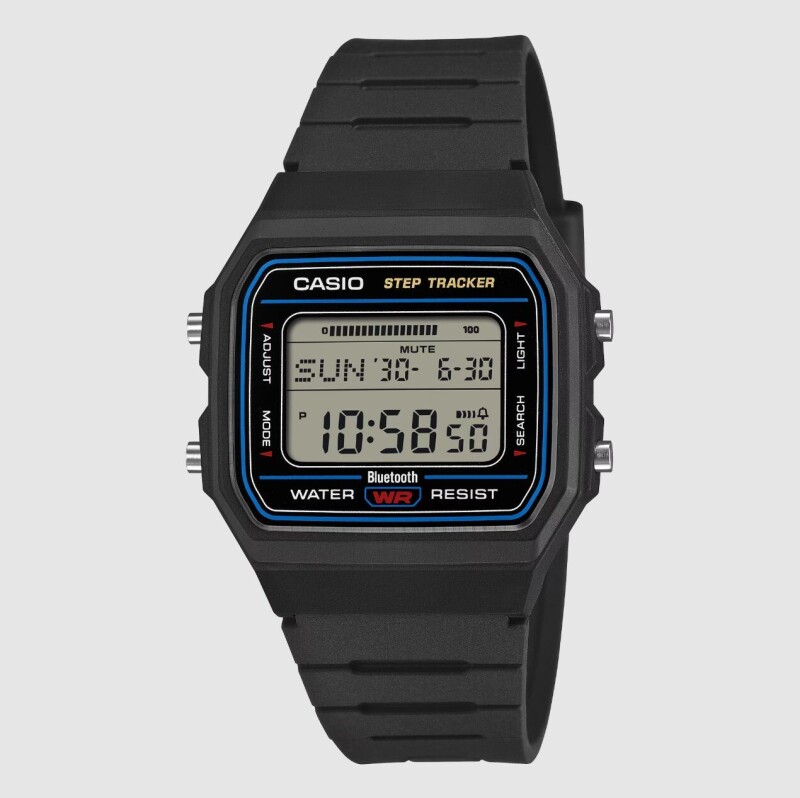
Casio has added Bluetooth and step tracking to a £55 digital watch without turning it into a smartwatch or sacrificing replaceable-battery convenience.
The snappily named F-B100W pairs with Casio’s smartphone app to record activity, adjust settings, and keep its clock accurate. Despite the additional electronics, Casio claims approximately two years of operation from a replaceable CR2016 battery.
It is very much not a smartwatch. There is no touchscreen, app store, or stream of notifications – just a conventional digital watch with a step counter and a little Bluetooth connectivity. That combination has nevertheless attracted attention on Hacker News and Reddit.
We admit it: this ape-descended life form is so astoundingly primitive that he still thinks digital watches are a pretty neat idea.
Douglas Adams first mocked humans’ fondness for digital watches when the original Hitchhiker’s Guide to the Galaxy was broadcast in 1978 – nearly half a century ago. The Casio F-91W is only a decade younger. This strangely ubiquitous watch, once labeled a supposed “sign of al-Qaida,” is widely regarded as the classic quartz digital watch and has been described as the bestselling watch of all time. One reason is that it’s only £20 ($30) new. Another is that if you bought one of the first batch, it’s probably only on its third or fourth battery by now: they are rated for seven years, but often last longer.
The F-91W is very simple and very cheap. Its main rival for all-time bestselling watch is the reverse: the Apple Watch has also shifted about 300 million units.
This is not a radical innovation for Casio. The existing ABL-100 does much the same, but costs over 25 percent more and weighs more than twice as much. What is interesting is that Casio has brought the functionality to a smaller, cheaper, and lighter watch – and possibly a more robust one. It’s also retained an impressive battery life. These Bluetooth-enabled models should still run for two years or more on a single, replaceable, CR2016 lithium button cell. Since those only cost a buck or so, that sounds good to us.
The Reg FOSS desk has a fondness for inexpensive technology that performs a modest set of tasks well. Our first budget smartwatch was an Amazfit Bip, bought new for about £60 ($80). It had an always-on, daylight-readable color display, lasted a month and a half on a charge, and did everything we asked of it.
After five years of daily use, its battery stopped holding a charge. We replaced it with the then-latest Bip 5, only to find that the newer model lacked its ancestor’s always-on display and offered less than a quarter of its battery life.
Our next move was therefore backward to a secondhand Amazfit Neo. It is the most basic smartwatch we have encountered. A conventional segmented LCD displays the time, while a smaller strip cycles through the world clock, step count, pulse, estimated calories burned, battery level, and waiting notifications. It cost £15 ($20) and still lasts a week and a half on a charge.
This “beyond retro” design is, we need hardly say, no longer made. That is why Casio’s move in the opposite direction – adding a few connected features to a basic digital watch – interests us.
We found the existing threads about these devices highly educational. There’s a whole world of digital watch geekery that we barely even knew existed.
Some posters raised concerns we found very relevant. For instance, the vexed issue of date formats: it seems many low-end Casios can only display dates in US MM/DD format. Apparently, to get European-format dates, you need to go to more high-end models such as the GW-M5610U-1ER at a princely £135 ($185).
These lower-end Bluetooth-equipped Casio devices send only one Bluetooth Low Energy update to the phone at the end of each day, which is why they can boast such impressive battery life. In its pricier G-Shock range, the company does offer devices with bidirectional Bluetooth support, so that the watch can display on-screen notifications, such as the £129 ($165) G-Squad GBD-200 and GBD-300. Better still, it seems these can deliver silent vibrating alerts.
Another concern is that officially syncing these watches requires Casio’s proprietary smartphone app, but there are FOSS alternatives such as Casio G-Shock Smart Sync.
The Register asked Casio for more information and a review unit but had not received a response at the time of publication. ®

As Harvard Business School seeks to expand its reach, it’s leaning on AI avatars to provide individual feedback.
These avatars were created by a startup called HeyGen and are included in the eight-week, $699 HBS Foundry bootcamp for entrepreneurs. The program offers live sessions with instructors every week, but the AI avatars are the ones providing feedback during practice pitches and board meetings.
New York Times reporter Sarah Kessler actually tried this out herself by pitching an AI-generated copy of Flybridge Capital co-founder Jeff Bussgang. Apparently, both the real Bussgang and his simulacra were unimpressed by her plan to build “Uber for bananas,” but Kessler said the virtual version offered a noticeably frozen smile during her pitch.
Project director Katharina Rings said she initially envisioned the AI component as something closer to a chatbot. However, after HBS released a trial version, students said they wanted a more guided experience.
And while some college students haven’t been shy about expressing their negative feelings towards AI, Foundry participants told Kessler they like the avatars. As for Bussgang, he acknowledged his digital copy is a little “creepy,” but he said, “My students love it.”


An anonymous model called Ox Alpha appeared on OpenRouter last week, free to use with a million-token context window, and developers have been impressed. OpenRouter’s own listing says prompts and completions are retained by the unidentified provider.
A model that nobody will take credit for is being tested across the industry. Ox Alpha appeared on OpenRouter last Thursday as a stealth release from an anonymous third-party provider, free to use, with a context window of just over a million tokens.
The scale on offer is not modest. The open-source agent OpenCode said the model would be free for a week with near unlimited usage, and that its provider had capacity for 100 trillion tokens a day.
Developers rate it. Stripe’s chief executive Patrick Collison tried it and called it “very impressive,” and it is positioned for coding, long-horizon agent work and production use.
The guessing game has been inconclusive. The leading theory points to Z.ai, which previously tested GLM-5 anonymously under another name, while a competing analysis of its tokenizer suggests Microsoft’s MAI family instead, in a market already reshaped by free Chinese models.
By the weekend the confidence had drained out of every theory. The AI analyst Andrew Curran wrote that people seemed “less sure of anything” than they had been the night before.
The more useful detail is not the identity but the terms. OpenRouter’s own listing states that prompts and completions “are retained by the provider and are not used for training.”
Read that again with a work project in mind. Whatever you send goes to a company that has not said who it is, and it keeps it.
For European businesses that is not an intrigue, it is a blocker. Data protection law requires a contract with a named processor and an assessment of where data goes, neither of which is possible when the counterparty is anonymous.
The timing sharpens it. The AI Act’s transparency obligations took effect on 2 August, with penalties reaching €15mn or 3% of global turnover, in a regime built on knowing which provider is responsible for what.
None of this makes the model bad. Open-weight releases have closed the capability gap faster than the safety one, and a stealth launch is a legitimate way to benchmark a model before announcing it.
But free has a price here, and it is information. Somebody is paying for 100 trillion tokens a day of inference, and until they say who they are, the sensible European position is to test Ox Alpha with nothing that matters.

Drew Starkey: 9 More Roles He Played Before Outer Banks And Queer

Mama June’s Daughter Pumpkin Shares Daily OnlyFans Earnings

Nicolas Jackson makes decision over next club as Chelsea delay transfer | Football





-

 Fashion1 day ago
Weekend Open Thread: Madewell – Corporette.com
-

 Business5 days ago
SMA Solar Technology AG (SMTGY) Q2 2026 Earnings Call Transcript
-

 Tech5 days ago
Qwen3.8-27B runs frontier-class coding agents and reasoning locally, no cloud API required
-

 Crypto World5 days ago
OCC Greenlights Trump Family Crypto Firm for Trust Charter
-

 Politics15 hours ago
6 months on, Irish renters crushed by effects of government housing bill
-

 Crypto World5 days ago
NAVI Prime launches institutional lending framework on Sui
-

 News Videos3 days ago
Don’t Leave Your Financial Future To Chance | August 19, 2026
-

 Crypto World6 days ago
Data of 54K Wallet Users Leaked, Clarity Odds Just 10%: Hodler’s Digest, Aug. 16
-
 NewsBeat18 hours ago
The ‘Lucky Dip Gang’ causing carnage for clicks: After five thugs were killed speeding in the wrong direction on a motorway, GUY ADAMS investigates a sick new trend… and why police aren’t even allowed to pursue them
-

 Tech7 days ago
What are the rumors about the AirPods Pro 4?
-

 Politics6 days ago
Britain is facing a housing disaster
-

 Business5 days ago
Stock Market Today: Tech Futures Slide As Treasury Yields Jump; Nvidia, Micron, Sandisk Sell Off
-

 Business7 days ago
Rebel Creamery files Chapter 11 with $23.8M Van Leeuwen judgment on appeal
-
 Crypto World5 days ago
Dow’s 3-Year Winning Run Isn’t a Crash Signal, Still 49% Odds of Double-Digit Gains
-

 Tech6 days ago
Straight Up the Cliff, Yunnan’s New Fuyao Ladder Turns a Three-Hour Climb Into a 50-Second Ride for Students
-
Tech5 days ago
5 Of The Most Reliable Car Brands To Consider If You’re Buying A Used SUV
-
 Tech6 days ago
OpenAI’s new ChatGPT feature logs your keystrokes and stores them in plain text
-

 Tech7 days ago
DeepSeek’s top-ranked V4 Flash stumbles on real agent tasks as its prices surge
-
 Tech5 days ago
Nvidia discloses $21B stake in SpaceX
-

 Tech4 days ago
GLM-5.3 hits the API at $1.4/$4.4 per million tokens
You must be logged in to post a comment Login