
Business
The First Bancorp: Not Bad, But Not Quite Good Enough



Business
inflation: Gold regains momentum as weak dollar, safe haven demand and seasonal buying support prices

Weakening U.S. Dollar Provides Fresh Momentum
A major catalyst behind the latest rally has been the sharp decline in the U.S. Dollar Index. The dollar index, which was trading around 101.50 levels a month ago, has corrected to nearly 98.50, providing a significant boost to precious metals. Since gold is denominated in U.S. dollars, a weaker greenback generally enhances its attractiveness for international buyers and investors. The recent weakness in the U.S. dollar reflects growing expectations that the Federal Reserve is nearing the end of its interest rate tightening cycle. While the U.S. economy remains relatively resilient, easing inflation concerns have reduced pressure on bond yields and improved the appeal of non-yielding assets such as gold.
Geopolitical Risks Revive Safe-Haven Demand
Geopolitical uncertainty has also emerged as an important source of support for gold. Ongoing tensions involving the United States and Iran, along with broader concerns surrounding the Middle East, have revived safe-haven demand. Investors traditionally turn to gold during periods of political uncertainty, military conflicts, and financial market volatility because of its historical role as a store of value. The possibility of disruptions to energy supplies through strategic routes such as the Strait of Hormuz has raised concerns about global economic stability and inflation.
Central Bank Purchases Continue to Support Prices
Another key pillar supporting gold prices is the continued accumulation of gold reserves by central banks. Over the past few years, central banks, particularly those in emerging market economies, have consistently increased their gold holdings as part of efforts to diversify reserves and reduce dependence on dollar-denominated assets. This trend remains firmly in place and has become one of the most important structural drivers of the gold market.
Chinese Investment Demand Remains Resilient
Asian demand continues to play a crucial role in the global gold market. China, the world’s largest consumer of gold, has maintained robust demand despite economic challenges in some sectors. Investors and households have increasingly turned to gold as a reliable store of wealth amid uncertainty in property markets and broader financial conditions. Demand for bars, coins, and investment products remains strong as Chinese consumers seek to preserve purchasing power and diversify savings.

Indian Festive and Wedding Season Set to Boost Demand
India, the second-largest gold consumer in the world, is also expected to contribute meaningfully to demand growth during the second half of the year. Although elevated prices have occasionally affected retail purchases in recent months, the outlook for physical demand remains positive. The country is now approaching its key festive and wedding season, a period that traditionally generates significant jewellery consumption. Improved monsoon conditions, stable agricultural activity, and expectations of better rural incomes could further support purchasing activity.
Near-Term Outlook: Positive Bias Likely to Continue
Looking ahead, the outlook for gold for the remainder of the year remains constructive. The combination of a softer U.S. dollar, expectations of eventual monetary easing by the Federal Reserve, strong central bank purchases, geopolitical uncertainty, and seasonal demand from India creates a favorable environment for the precious metal. While profit booking after the recent sharp rally cannot be ruled out, any corrections are likely to be viewed as buying opportunities rather than the beginning of a larger downtrend.
Long-Term Outlook: Structural Drivers Remain Bullish
From a long-term perspective, the fundamentals for gold remain highly supportive. Growing global debt levels, ongoing geopolitical fragmentation, reserve diversification by central banks, and increasing investor interest in portfolio hedging are structural factors that could continue supporting prices over the coming years. The trend toward reducing dependence on the U.S. dollar in international reserves also strengthens the long-term investment case for gold. For Indian investors, gold continues to serve not only as a hedge against inflation and currency depreciation but also as an effective tool for wealth preservation.
Investment Perspective: Is This the Right Time to Buy Gold?
Considering the current environment, this appears to be a favorable period for investors with a medium-to-long-term horizon. Although prices are trading near historically elevated levels, the underlying drivers of demand remain strong. A weakening dollar, sustained institutional buying, geopolitical uncertainty, and the upcoming festive season in India could keep buying momentum intact through the rest of the year. Investors should remain mindful of short-term volatility and occasional corrections following the significant August rally. However, such declines are likely to present accumulation opportunities rather than signal a reversal of the broader uptrend.
(The author Hareesh V is Head of Commodity Research, Geojit Investments)
(Disclaimer: Recommendations, suggestions, views and opinions given by the experts are their own. These do not represent the views of The Economic Times)
The Real Cost Of $40 Trillion In Debt
Business
Dubai office boom drives commercial real estate growth; transaction value triples in H1 2026

Overall transaction volumes increased nearly 13% year-on-year to 6,487 deals from 5,754 transactions in H1 2025, highlighting continued demand for commercial assets across the emirate.
The office segment stood out, with transaction value surging nearly 200% to AED 15.81 billion in H1 2026 from AED 5.28 billion a year earlier. Office transaction volumes also rose 38.2% to 2,571 deals.
Average office prices climbed 85% year-on-year to AED 3,202 per square foot, reflecting strong demand for Grade A office space amid constrained supply in key business districts and free zones.
Anuj Kejriwal, CEO – Retail and CEO – Europe, Middle East & Africa, ANAROCK Group, said the sharp rise in office transactions points to intensifying demand for premium commercial space in Dubai.
Retail market also gains momentum
The retail segment recorded strong growth during the period, with transaction volumes rising 56.2% year-on-year to 853 deals.
Retail transaction value jumped 174.3% to AED 3.71 billion from AED 1.35 billion in H1 2025. Average retail prices also increased 54% year-on-year to AED 3,486 per square foot.ANAROCK attributed the rise to strengthening consumer and business confidence, along with increasing investor interest in well-located retail assets.
Record Q1 followed by Q2 moderation
Dubai’s commercial real estate market recorded its strongest quarter on record in Q1 2026, with transaction value estimated at AED 40.75 billion, more than 40% higher than the year-ago period.
The strong performance came despite escalating regional tensions, with Dubai continuing to attract regional and global capital during periods of geopolitical uncertainty.
Activity moderated in Q2 following the exceptional first-quarter performance. Transaction volumes fell around 22% sequentially, while transaction value declined close to 40% quarter-on-quarter.
However, the decline was partly due to a high base created by large land transactions in Q2 2025. On a year-on-year basis, Q2 2026 transaction volumes were broadly stable, declining around 1%, while transaction value was around 21% lower.
Despite the moderation, pricing remained firm. Average commercial property prices rose 34% year-on-year in Q2 to AED 3,186 per square foot, suggesting that buyers continued to pay a premium for prime, income-generating assets.
Investors shift from land to income-generating assets
Land transactions weakened during H1 2026, indicating a shift in investor preference.
Land transaction volumes fell 29.3% year-on-year to 941 deals, while transaction value declined 9.3% to AED 33.19 billion from AED 36.60 billion in H1 2025.
The trend suggests that investors are increasingly moving away from land banking towards income-generating commercial assets such as offices and retail properties.
Other segments, including hotel apartments and rooms, buildings and industrial assets, recorded a 5.3% increase in transaction volumes to 2,053 deals. However, transaction value declined 17.9% to AED 11.33 billion.
Outlook remains positive
ANAROCK expects Dubai’s commercial real estate market to sustain its growth trajectory through the remainder of 2026, supported by the emirate’s tax advantages, freehold ownership framework for foreign investors and continued expansion of the Golden Visa scheme.
Kejriwal said near-term transaction volumes could continue to fluctuate with regional sentiment. However, tight Grade A office supply, rising rents and steady occupier demand are expected to support the market’s underlying growth.
The H1 data also highlights a notable change in investor preferences. While land continues to account for a significant share of commercial transaction value, the sharp rise in office and retail activity suggests growing appetite for assets that offer income potential, particularly in prime locations.
With office transaction values nearly tripling and average prices rising sharply, the office segment has emerged as the key engine of Dubai’s commercial real estate market in 2026.
(Disclaimer: Recommendations, suggestions, views, and opinions given by experts are their own. These do not represent the views of the Economic Times)
Business
Nick Chubb, Four-Time Pro Bowl Browns Running Back, Announces NFL Retirement at Age 30 After Tough Career

Nick Chubb, a four-time Pro Bowl running back who became a fan favorite during seven seasons with the Cleveland Browns, announced his retirement from the NFL on Friday night, closing out an eight-year career defined by both explosive on-field success and a series of serious injuries that ultimately reshaped its final chapters.
Chubb, 30, shared the news in a social media post on Instagram Friday evening, reflecting on a career that began with the Browns as a second-round pick in the 2018 draft out of Georgia. “Today’s the day I’ve been avoiding for a while. Twelve year old me could never imagine this day, and 30 year old me is wondering where all the time has gone,” Chubb wrote. “I’ve known for some time now, but I’m finally ready to share that I’m done playing football. I wanted to end my career on a healthy note, along with a winning season, and I was able to do that.”
Chubb went on to describe how he had come to view his career following the physical setbacks that marked its later years. “The only thing I could control after hurting my knee twice was getting back up, getting back to work, and getting back on the field,” Chubb wrote. “And health is the real wealth. I end my career in a great place. Even though there are some things I wish had happened differently, I can say that I have no regrets.”
In a separate portion of his farewell message, Chubb reflected on the broader impact football had on his life. “Football was a huge blessing in my life,” he wrote. “It opened so many doors, gave me opportunities I never could have imagined, and allowed me to meet some amazing people. I’m grateful for everyone I crossed paths with along the way, and I promise I took something from each of you. Thank you to my teammates, my coaches, the fans, my family, my friends, and anyone who ever cheered me on. Twelve year old me could have never imagined where this game would take us. But 30 year old me can look back and say we gave it everything we had.”
Chubb spent seven of his eight NFL seasons with the Browns before playing his final season with the Houston Texans in 2025. Across his career, he rushed for 7,349 yards and 54 touchdowns, figures that place him third on the Browns’ all-time rushing list, behind only franchise legends Jim Brown and Leroy Kelly, and second in franchise history in rushing yards per game, trailing only Brown.
Chubb’s best individual season came in 2022, when he ran for 1,525 yards and 12 touchdowns while earning his fourth consecutive Pro Bowl selection, part of a run of Pro Bowl appearances spanning the 2019 through 2022 seasons that established him as one of the league’s premier running backs during that stretch. Across his first five NFL seasons, before injury significantly altered the trajectory of his career, Chubb averaged 5.2 yards per carry, a mark that placed him among the most efficient running backs in the league during that period.
The turning point in Chubb’s career came in Week 2 of the 2023 season, during a Monday night game at Pittsburgh, when he suffered a severe injury to his left knee, tearing his MCL and damaging his ACL, the same knee he had significantly injured during his sophomore season at the University of Georgia. The injury required multiple surgeries and sidelined him for the remainder of the 2023 season. Chubb returned to action during the 2024 season, starting eight games for the Browns, though he broke his left foot later that year, adding a further physical setback to his recovery process.
Chubb’s production noticeably declined following his return from the knee injury. While he averaged 5.2 yards per carry across his first five healthy NFL seasons, that figure fell to 3.7 yards per carry over his final two seasons following the injury, reflecting the physical toll the repeated setbacks had taken on his game.
Chubb signed with the Houston Texans for the 2025 season, entering the year as the team’s lead running back. However, as the season progressed, fourth-round rookie Woody Marks gradually surpassed him in the Texans’ backfield rotation. Chubb appeared in 15 games for Houston, his most since 2022, finishing the season with 506 rushing yards, an average of 33.7 rushing yards per game, and three touchdowns. His season, and career, concluded with a playoff appearance against the New England Patriots in the divisional round.
Chubb’s path to the NFL began at Cedartown High School in Georgia, where he was rated a five-star recruit as part of the 2014 recruiting class, a group that also included future NFL standouts Leonard Fournette, Dalvin Cook and Sony Michel. Chubb chose to stay close to home, committing to the University of Georgia alongside Michel, where he went on to build a standout collegiate career before entering the NFL in 2018.
Reaction to Chubb’s retirement circulated quickly across the league and among fans following the announcement. NFL Network insider Ian Rapoport confirmed the news shortly after Chubb’s post went public, while tributes from fans and former teammates highlighted both his production on the field and his reputation as a hard-nosed, dependable presence in the Browns’ locker room during his years in Cleveland.
Chubb’s retirement leaves the Houston Texans without the veteran back as they prepare for the 2026 season, a campaign the team enters with expectations of contending for a championship following what the organization viewed as a strong 2025 season. With Chubb stepping away, Woody Marks, who had already begun taking on a larger role in Houston’s backfield by the end of last season, is expected to see an expanded role for the Texans heading into the new campaign.
As tributes continue to circulate following Friday’s announcement, Chubb’s legacy in Cleveland remains firmly established among the franchise’s most productive and beloved running backs, a status built during a run of Pro Bowl seasons that made him one of the most feared rushers in the league before injuries reshaped the final stretch of his career. Chubb’s decision to retire at 30, choosing to step away on his own terms following a winning playoff season rather than continuing to push through further physical setbacks, closes out a career he described in his own farewell message as one he has no regrets about, despite the challenges that ultimately altered its course.

Check out what’s clicking on FoxBusiness.com.
Canadian Prime Minister Mark Carney suspended trade negotiations with the United States late Friday, blaming “unfair” last-minute changes to Washington’s proposed terms and announcing retaliatory tariffs against the U.S.
Carney said the move comes as President Donald Trump‘s 50% tariffs on roughly $28 billion in Canadian goods were set to take effect at midnight.
The breakdown came just days after Trump paused the 50% tariffs for three days and announced that the U.S. and Canada, subject to final documentation, had reached a “DEAL!”
While Carney said progress had been made in recent weeks toward improving Canada’s position and reaching an agreement with the U.S., he said the two sides ultimately could not finalize a deal.
TRUMP PAUSES 50% TARIFFS ON CANADA HOURS BEFORE DEADLINE AFTER ANNOUNCING POTENTIAL DEAL
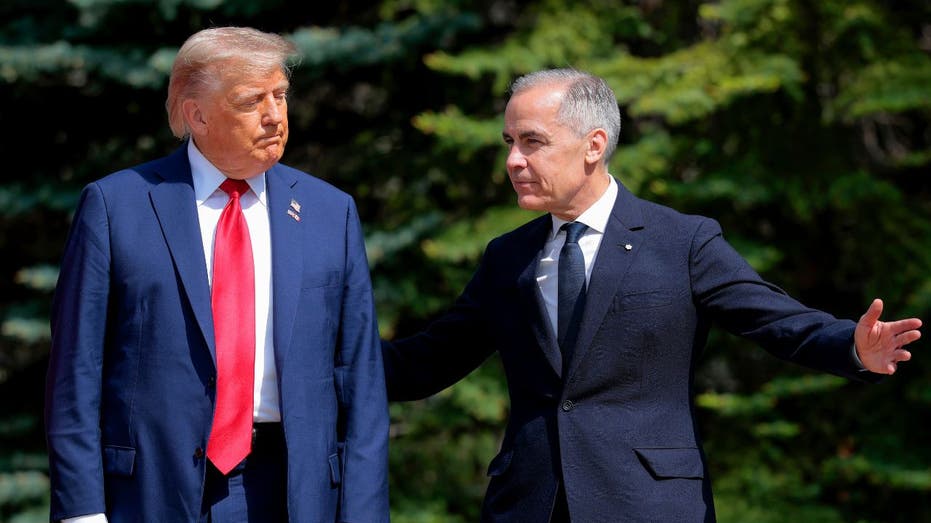
Canadian Prime Minister Mark Carney greets U.S. President Donald Trump at the official welcome ceremony during the G7 Leaders’ Summit on June 16, 2025, in Kananaskis, Alberta. (Chip Somodevilla/Getty Images / Getty Images)
“However, that progress has not been enough to meet our objectives for Canadians,” Carney said in a statement.
“As a result, this evening, I have decided to suspend trade negotiations with the U.S. and have directed Canada’s negotiators to return to Ottawa,” he continued. “They have worked hard, in good faith, to defend the interests of Canadians throughout these negotiations up until the very last minute. However, last-minute changes in the U.S. proposed terms were unfair, uneconomic, and called into question the reliability of any deal.”
Carney said Canada would retaliate by matching the U.S. tariffs.
US, CANADA STRIKE DEAL TO OPEN BRIDGE LINKING DETROIT AND WINDSOR AFTER DISPUTE DELAYED LAUNCH
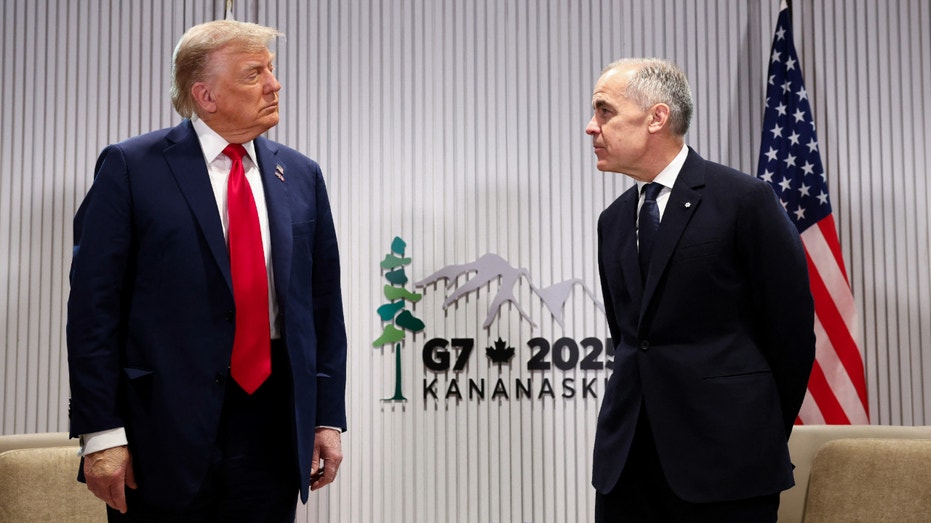
President Donald Trump meets with Canadian Prime Minister Mark Carney at the G7 summit in Kananaskis, Alberta, Canada, on June 16, 2025. (Reuters/Kevin Lamarque / Reuters)
“At midnight tonight, the U.S. intends to impose a 50% tariff on roughly $28 billion of Canadian goods. Canada will match those tariffs dollar for dollar to protect our workers and businesses,” he said.
“In the coming days, the government will introduce additional measures to support Canadian workers and businesses, building on the nearly $25 billion in support provided over the past 18 months,” Carney added.
CLICK HERE TO DOWNLOAD THE FOX NEWS APP
U.S. Trade Representative Jamieson Greer said Canada had declined to finalize the trade deal, Reuters reported.
FOX Business has reached out to Greer’s office.
This is a developing story. Check back for updates.

Here are details:
Bessent said on Thursday the government could further increase its Treasury repurchases after a surprise announcement on Wednesday that it would spend double the expected amount on bond buybacks.
“No, not at all,” Trump told reporters on Friday when asked if he directed Bessent to intervene in the bond market.
“He’s a very capable man. He wanted to do it. He’s very good at it,” Trump said. “He did that, yeah.”
Bessent is a former hedge fund manager with extensive experience in sovereign debt and currency markets.
By Friday, however, the declines in bond yields triggered by Bessent’s announcement had largely been unwound.
Long-term Treasury yields recently spiked on concerns about the U.S. government’s rising debt, inflation that remains stubbornly above the Fed’s 2% target and the implications for investment flows.
Business
ETMarkets Smart Talk | Bonds aren’t boring: Where Devang Shah sees the best fixed-income opportunities
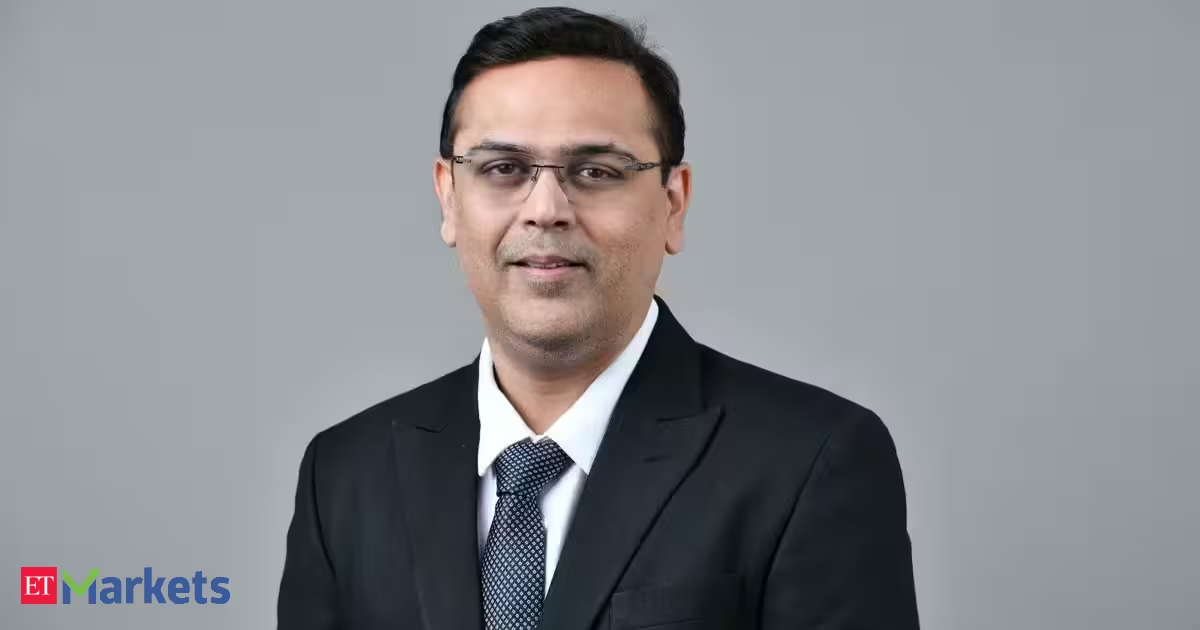
Devang Shah, Head of Fixed Income at Axis AMC, believes the fixed-income opportunity remains attractive, but the strategy now needs to shift from aggressive duration bets to quality and carry.
He favours the 3-5 year segment, particularly high-quality corporate bonds and select state development loans (SDLs), while maintaining a neutral stance on long-duration government securities.
Shah also believes investors should focus on current risk-reward rather than trying to time interest-rate moves, making fixed income more than just a defensive asset class in the current market environment. Edited Excerpts –
Q) What is your take on the MPC policy meeting outcome? Do you see interest rates going higher or lower in the near term?
A) The MPC’s decision to keep the repo rate unchanged at 5.25% and maintain a neutral stance was broadly in line with expectations. The RBI appears comfortable with India’s macroeconomic environment, supported by resilient growth, contained core inflation, healthy liquidity conditions and improved external sector stability.
At the same time, the RBI remains watchful of risks from geopolitics, crude oil prices and global monetary policy developments.
Our view is that while the rate hiking cycle may not be over, it is likely to be shallow. We do not expect more than 75 basis points of additional rate hikes over the rate hike cycle.
Q) With the RBI repo rate at 5.25%, are we still in an environment where investors can lock in attractive yields, or has the best part of the rate cycle already passed?
A) We believe the fixed-income opportunity remains attractive, although selectivity has become increasingly important.
While the strong rally seen in bonds earlier has moderated, high-quality corporate bonds in the 3-5 year segment continue to offer a favourable risk-reward balance supported by attractive carry, ample liquidity and limited certificate of deposit issuance.
The opportunity today is less about taking aggressive duration calls and more about earning attractive carry from carefully selected high-quality fixed-income assets.
Q) Is it better to lock in a 7% yield on a high-quality bond today or wait for potentially higher yields if inflation or oil prices push rates up?
A) Our research suggests that investors should focus on current risk-reward rather than trying to precisely time future rate movements.
While crude oil remains the most important external risk for India and higher oil prices could create upward pressure on inflation and bond yields, our base case is that oil sustaining above US$100 per barrel is unlikely.
We expect additional $70-80 billion in FCNR (B) which is expected to improve banking liquidity. Given the uncertainty around timing, high-quality corporate bonds in the 3-5-year segment currently offer attractive carry and a relatively balanced risk-reward profile.
Therefore, remaining invested and focusing on quality carry opportunities appears more prudent than waiting entirely on the sidelines for potentially higher yields.
Q) If you had ₹1 crore to deploy in fixed income today with a three-year horizon, how would you construct the portfolio?
A) Based on the views Based on our current market view, we would favour the 3-5 year segment of the curve, particularly high-quality corporate bonds and select SDLs, where favourable carry, ample liquidity and limited CD issuance create an attractive risk-reward balance.
We maintain a neutral stance on government securities, as potential support from foreign inflows could aid demand, but factors such as supply pressures, fiscal risks and the absence of meaningful OMO support may limit the scope for a sustained rally in long-duration government bonds.
Overall, for a three-year investor, the focus should be on quality carry opportunities and selective positioning, rather than taking aggressive duration bets. As our research highlights, the appropriate strategy is to stay invested, stay selective and focus on quality opportunities in the intermediate part of the curve.
Investors can broadly be segmented into three categories: those seeking a parking solution and who can consider Money Market Funds; those with an investment horizon of over one year can possibly look at Arbitrage Funds; and investors with a two-year-plus horizon can consider Income Plus Arbitrage Funds or Short-to-Medium Duration Funds.
Q) How should investors divide their fixed-income allocation between government bonds, AAA corporate bonds, credit opportunities and money-market instruments?
A) Our current preference remains for the 3-5 year segment of the curve, particularly high-quality corporate bonds, where the combination of attractive carry, ample liquidity and favourable demand-supply dynamics offers a compelling risk-reward balance. We maintain a neutral stance on government securities.
While factors such as FCNR could provide support, the absence of significant OMO purchases, potential fiscal pressures and supply dynamics could limit the scope for a meaningful rally in long-duration government bonds.
Money-market instruments continue to play an important role given the comfortable liquidity environment and can provide flexibility amid evolving market conditions.
Overall, the emphasis should be on quality, selectivity and appropriate duration positioning, rather than stretching for yield. As highlighted in our outlook, the fixed-income opportunity remains attractive, but investors should focus on quality carry opportunities and stay selective in their portfolio construction.
Q) Do you think that a bond fund makes more sense than buying individual bonds, and when does direct bond ownership have an advantage?
A) For most investors, the mutual fund route to fixed income can make more sense as it offers liquidity, diversification, and access to well-researched investment opportunities that may be difficult to evaluate individually. It also reinforces a disciplined asset allocation approach, which is especially important in volatile fixed income markets.
Q) What is the biggest misconception about bonds in India today—that they are boring, low-return investments?
A) One misconception is that bonds are simply low-return investments that offer little opportunity beyond income generation. The current environment demonstrates that fixed income can offer attractive risk-adjusted opportunities when markets are stable.
The focus today is not merely on earning income but on identifying quality carry opportunities and managing risks emanating from inflation, crude oil prices, global yields and monetary policy.
In our view, the appropriate strategy is to stay invested, stay selective and focus on quality opportunities, particularly in the 3-5 year segment of the curve.
Source: Bloomberg/ RBI/ Axis MF Internal Research as on 13th August, 2026
Note: The sectors mentioned above are used to explain the concept and is for illustration purpose only and should not be used for development or implementation of any investment strategy. It should not be construed as investment advice to any party. Past performance may or may not be sustained in future.
Disclaimer: This document represents the views of Axis Asset Management Co. Ltd. and must not be taken as the basis for an investment decision. Neither Axis Mutual Fund, Axis Mutual Fund Trustee Limited nor Axis Asset Management Company Limited, its Directors or associates shall be liable for any damages including lost revenue or lost profits that may arise from the use of the information contained herein. No representation or warranty is made as to the accuracy, completeness or fairness of the information and opinions contained herein. The material is prepared for general communication and should not be treated as research report. The data used in this material is obtained by Axis AMC from the sources which it considers reliable. The above should not be construed as an investment advise. Axis MF/AMC is not guaranteeing any returns on any investments.
While utmost care has been exercised while preparing this document, Axis AMC does not warrant the completeness or accuracy of the information and disclaims all liabilities, losses and damages arising out of the use of this information. Investors are requested to consult their financial, tax and other advisors before taking any investment decision(s). The AMC reserves the right to make modifications and alterations to this statement as may be required from time to time.
Axis Bank Ltd. is not liable or responsible for any loss or shortfall resulting from the operation of the scheme.
Mutual Fund Investments are subject to market risks, read all scheme related documents carefully.
(Disclaimer: Recommendations, suggestions, views, and opinions given by experts are their own. These do not represent the views of the Economic Times)

Texas Roadhouse CEO Gerald Morgan sells $3.03m in TXRH stock

 Agencies
Business
Incorporated in 1984, Skyways Air Services provides services such as air and ocean freight forwarding, trucking, warehousing, custom broking, technology driven express cargo and parcel delivery. According to World ACD, the company has been consistently ranked No. 1 Air Freight Forwarder in terms of air waybills (AWB) from 2022 to 2025. It maintains direct commercial relationships with 56 international airlines and relies on a global network of logistics alliances to serve clients across 12 countries. The company has developed proprietary platforms to support different aspects of logistics operations. Air cargo volume grew close to 84 thousand tonnes in FY26 from 48 thousand tonnes in FY24 while ocean containers volume increased to 28,275 TEUs (twenty-foot equivalent unit) from 16,294 TEUs during the period.
Read more:Aditya Infotech rebounds on fundraise plans; analysts see up to 20% upside
Financials
Between FY24 and FY26, revenue from operations rose 47.7% annually to ₹2,812.9 crore, operating profit before interest, tax, depreciation and amortisation (Ebitda) jumped 61.2% to ₹125.6 crore and net profit grew 35.7% to ₹63.5 crore. While Ebitda margin expanded to 4.5% in FY26 from 3.8% in FY24, it trails peers whose margins range between 5% and 7.8%. In contrast, the company’s net profit margin of 2.3%, is towards the higher end of the peer range of 0.2-2.7%. Cash flow from operations grew to ₹113.6 crore in FY26 from a deficit ₹9 crore in FY24.
Valuation
Considering the post-IPO equity and net profit for FY26, the company demands a price-earnings (P/E) multiple of upto 32. For peers including TVS Supply Chain Solutions, Shadowfax Technologies, Delhivery and Mahindra Logistics, the P/E range is wider between 46 and 376.

Universal safety products: Director Ault buys $183,344 in stock

Anthropic’s Opus 4.6 is a smut-machine

Eight charged after 12 warrants across Bolton and Tameside
inflation: Gold regains momentum as weak dollar, safe haven demand and seasonal buying support prices

Weekend Open Thread – Corporette.com

Weekend Open Thread: Brooks Brothers

London Mayor Sadiq Khan handed a peerage by Keir Starmer alongside 15 other Labour figures… just days before the PM leaves No10

Part 3 of Dr. Carson’s financial empowerment workshop is taking place TONIGHT

Question paper of financial accounting 2 of bcom 2nd semester 2023 punjabi university patiala

ISO 20022: August 24th Financial System Migration Explained #shorts
-

 Fashion11 hours ago
Weekend Open Thread: Madewell – Corporette.com
-
 NewsBeat7 days ago
Myanmar says over 300,000 Rohingya refugees verified for repatriation as exodus enters ninth year
-

 Business4 days ago
SMA Solar Technology AG (SMTGY) Q2 2026 Earnings Call Transcript
-

 Politics7 days ago
SEQ Code: The Three Letter Boarding Pass Code That Could Give You The Worst Seat
-

 Tech4 days ago
Qwen3.8-27B runs frontier-class coding agents and reasoning locally, no cloud API required
-

 Crypto World4 days ago
OCC Greenlights Trump Family Crypto Firm for Trust Charter
-
 Entertainment7 days ago
Marvel Studios Reveals New X-Men Cast Including Adam Driver and Sadie Sink
-
 Tech7 days ago
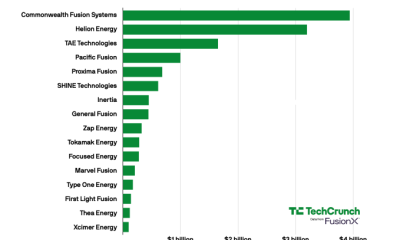
Every fusion startup that has raised over $100M
-
 Business7 days ago
Monarch Mutual Fund set to enter MF space with maiden overnight fund; files draft with Sebi
-

 News Videos2 days ago
Don’t Leave Your Financial Future To Chance | August 19, 2026
-

 Business7 days ago
Cristiano Ronaldo’s Secret Wedding Deepens As Presenter Claims Family Learned ’30 Seconds’ Before
-

 Business7 days ago
Facebook Down Now? Users Report Login And Loading Problems As Outage Trackers Monitor Ongoing Issues
-

 Crypto World5 days ago
Data of 54K Wallet Users Leaked, Clarity Odds Just 10%: Hodler’s Digest, Aug. 16
-

 Crypto World4 days ago
NAVI Prime launches institutional lending framework on Sui
-

 Politics5 days ago
Britain is facing a housing disaster
-

 Business7 days ago
New Avengers Doomsday Trailer Drops at D23 Showing Robert Downey Jr as Doctor Doom
-

 Tech7 days ago
How to watch FIH Hockey World Cup 2026: FREE live streams, schedule
-

 Business6 days ago
Rebel Creamery files Chapter 11 with $23.8M Van Leeuwen judgment on appeal
-

 Crypto World7 days ago
Trump’s World Liberty Financial delayed its Maldives resort token because of a war
-
 Tech7 days ago
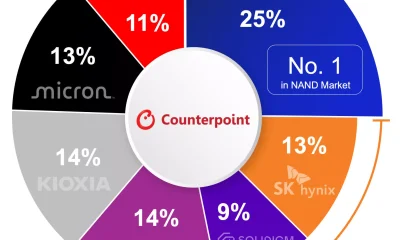
Enterprise SSDs now consume 48% of global NAND flash supply
You must be logged in to post a comment Login