
Business
American Homes 4 Rent: Affordability Pressures Support Rental Demand




Check out what’s clicking on FoxBusiness.com.
Canadian Prime Minister Mark Carney suspended trade negotiations with the United States late Friday, blaming “unfair” last-minute changes to Washington’s proposed terms and announcing retaliatory tariffs against the U.S.
Carney said the move comes as President Donald Trump‘s 50% tariffs on roughly $28 billion in Canadian goods were set to take effect at midnight.
The breakdown came just days after Trump paused the 50% tariffs for three days and announced that the U.S. and Canada, subject to final documentation, had reached a “DEAL!”
While Carney said progress had been made in recent weeks toward improving Canada’s position and reaching an agreement with the U.S., he said the two sides ultimately could not finalize a deal.
TRUMP PAUSES 50% TARIFFS ON CANADA HOURS BEFORE DEADLINE AFTER ANNOUNCING POTENTIAL DEAL
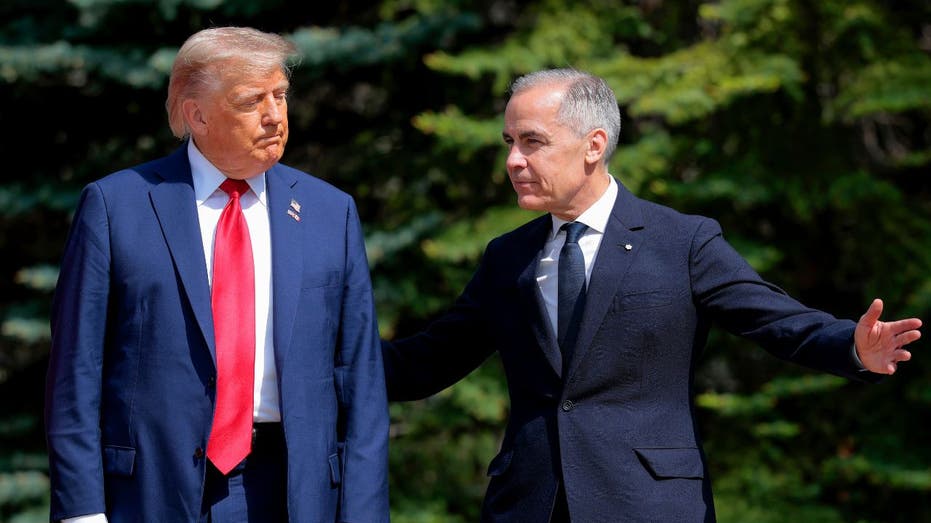
Canadian Prime Minister Mark Carney greets U.S. President Donald Trump at the official welcome ceremony during the G7 Leaders’ Summit on June 16, 2025, in Kananaskis, Alberta. (Chip Somodevilla/Getty Images / Getty Images)
“However, that progress has not been enough to meet our objectives for Canadians,” Carney said in a statement.
“As a result, this evening, I have decided to suspend trade negotiations with the U.S. and have directed Canada’s negotiators to return to Ottawa,” he continued. “They have worked hard, in good faith, to defend the interests of Canadians throughout these negotiations up until the very last minute. However, last-minute changes in the U.S. proposed terms were unfair, uneconomic, and called into question the reliability of any deal.”
Carney said Canada would retaliate by matching the U.S. tariffs.
US, CANADA STRIKE DEAL TO OPEN BRIDGE LINKING DETROIT AND WINDSOR AFTER DISPUTE DELAYED LAUNCH
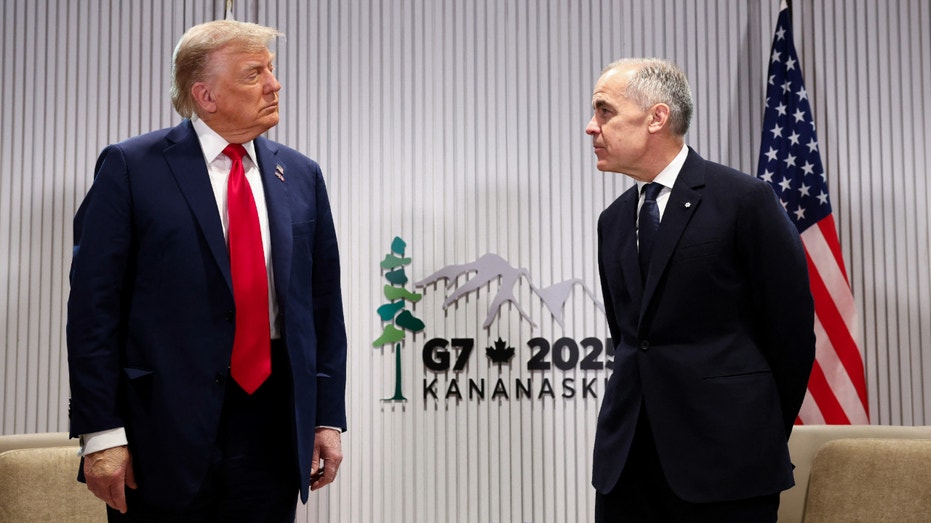
President Donald Trump meets with Canadian Prime Minister Mark Carney at the G7 summit in Kananaskis, Alberta, Canada, on June 16, 2025. (Reuters/Kevin Lamarque / Reuters)
“At midnight tonight, the U.S. intends to impose a 50% tariff on roughly $28 billion of Canadian goods. Canada will match those tariffs dollar for dollar to protect our workers and businesses,” he said.
“In the coming days, the government will introduce additional measures to support Canadian workers and businesses, building on the nearly $25 billion in support provided over the past 18 months,” Carney added.
CLICK HERE TO DOWNLOAD THE FOX NEWS APP
U.S. Trade Representative Jamieson Greer said Canada had declined to finalize the trade deal, Reuters reported.
FOX Business has reached out to Greer’s office.
This is a developing story. Check back for updates.

Here are details:
Bessent said on Thursday the government could further increase its Treasury repurchases after a surprise announcement on Wednesday that it would spend double the expected amount on bond buybacks.
“No, not at all,” Trump told reporters on Friday when asked if he directed Bessent to intervene in the bond market.
“He’s a very capable man. He wanted to do it. He’s very good at it,” Trump said. “He did that, yeah.”

Bessent is a former hedge fund manager with extensive experience in sovereign debt and currency markets.
By Friday, however, the declines in bond yields triggered by Bessent’s announcement had largely been unwound.
Long-term Treasury yields recently spiked on concerns about the U.S. government’s rising debt, inflation that remains stubbornly above the Fed’s 2% target and the implications for investment flows.
Business
ETMarkets Smart Talk | Bonds aren’t boring: Where Devang Shah sees the best fixed-income opportunities
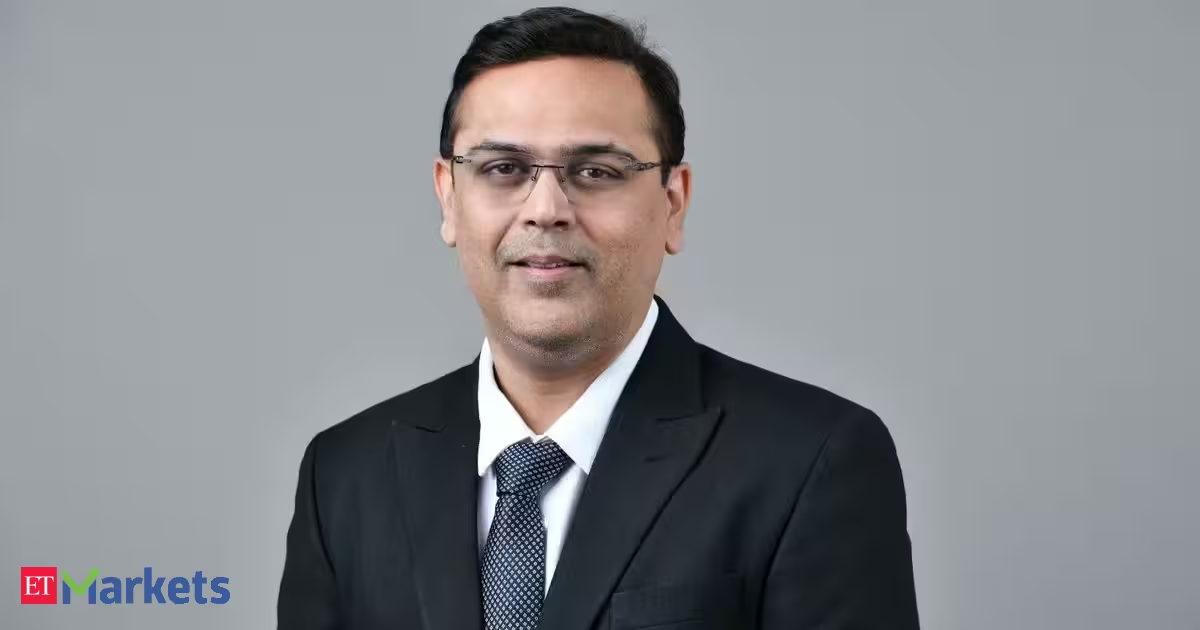
Devang Shah, Head of Fixed Income at Axis AMC, believes the fixed-income opportunity remains attractive, but the strategy now needs to shift from aggressive duration bets to quality and carry.
He favours the 3-5 year segment, particularly high-quality corporate bonds and select state development loans (SDLs), while maintaining a neutral stance on long-duration government securities.
Shah also believes investors should focus on current risk-reward rather than trying to time interest-rate moves, making fixed income more than just a defensive asset class in the current market environment. Edited Excerpts –
Q) What is your take on the MPC policy meeting outcome? Do you see interest rates going higher or lower in the near term?
A) The MPC’s decision to keep the repo rate unchanged at 5.25% and maintain a neutral stance was broadly in line with expectations. The RBI appears comfortable with India’s macroeconomic environment, supported by resilient growth, contained core inflation, healthy liquidity conditions and improved external sector stability.
At the same time, the RBI remains watchful of risks from geopolitics, crude oil prices and global monetary policy developments.
Our view is that while the rate hiking cycle may not be over, it is likely to be shallow. We do not expect more than 75 basis points of additional rate hikes over the rate hike cycle.
Q) With the RBI repo rate at 5.25%, are we still in an environment where investors can lock in attractive yields, or has the best part of the rate cycle already passed?
A) We believe the fixed-income opportunity remains attractive, although selectivity has become increasingly important.
While the strong rally seen in bonds earlier has moderated, high-quality corporate bonds in the 3-5 year segment continue to offer a favourable risk-reward balance supported by attractive carry, ample liquidity and limited certificate of deposit issuance.
The opportunity today is less about taking aggressive duration calls and more about earning attractive carry from carefully selected high-quality fixed-income assets.
Q) Is it better to lock in a 7% yield on a high-quality bond today or wait for potentially higher yields if inflation or oil prices push rates up?
A) Our research suggests that investors should focus on current risk-reward rather than trying to precisely time future rate movements.
While crude oil remains the most important external risk for India and higher oil prices could create upward pressure on inflation and bond yields, our base case is that oil sustaining above US$100 per barrel is unlikely.
We expect additional $70-80 billion in FCNR (B) which is expected to improve banking liquidity. Given the uncertainty around timing, high-quality corporate bonds in the 3-5-year segment currently offer attractive carry and a relatively balanced risk-reward profile.
Therefore, remaining invested and focusing on quality carry opportunities appears more prudent than waiting entirely on the sidelines for potentially higher yields.
Q) If you had ₹1 crore to deploy in fixed income today with a three-year horizon, how would you construct the portfolio?
A) Based on the views Based on our current market view, we would favour the 3-5 year segment of the curve, particularly high-quality corporate bonds and select SDLs, where favourable carry, ample liquidity and limited CD issuance create an attractive risk-reward balance.
We maintain a neutral stance on government securities, as potential support from foreign inflows could aid demand, but factors such as supply pressures, fiscal risks and the absence of meaningful OMO support may limit the scope for a sustained rally in long-duration government bonds.
Overall, for a three-year investor, the focus should be on quality carry opportunities and selective positioning, rather than taking aggressive duration bets. As our research highlights, the appropriate strategy is to stay invested, stay selective and focus on quality opportunities in the intermediate part of the curve.
Investors can broadly be segmented into three categories: those seeking a parking solution and who can consider Money Market Funds; those with an investment horizon of over one year can possibly look at Arbitrage Funds; and investors with a two-year-plus horizon can consider Income Plus Arbitrage Funds or Short-to-Medium Duration Funds.
Q) How should investors divide their fixed-income allocation between government bonds, AAA corporate bonds, credit opportunities and money-market instruments?
A) Our current preference remains for the 3-5 year segment of the curve, particularly high-quality corporate bonds, where the combination of attractive carry, ample liquidity and favourable demand-supply dynamics offers a compelling risk-reward balance. We maintain a neutral stance on government securities.
While factors such as FCNR could provide support, the absence of significant OMO purchases, potential fiscal pressures and supply dynamics could limit the scope for a meaningful rally in long-duration government bonds.
Money-market instruments continue to play an important role given the comfortable liquidity environment and can provide flexibility amid evolving market conditions.
Overall, the emphasis should be on quality, selectivity and appropriate duration positioning, rather than stretching for yield. As highlighted in our outlook, the fixed-income opportunity remains attractive, but investors should focus on quality carry opportunities and stay selective in their portfolio construction.
Q) Do you think that a bond fund makes more sense than buying individual bonds, and when does direct bond ownership have an advantage?
A) For most investors, the mutual fund route to fixed income can make more sense as it offers liquidity, diversification, and access to well-researched investment opportunities that may be difficult to evaluate individually. It also reinforces a disciplined asset allocation approach, which is especially important in volatile fixed income markets.
Q) What is the biggest misconception about bonds in India today—that they are boring, low-return investments?
A) One misconception is that bonds are simply low-return investments that offer little opportunity beyond income generation. The current environment demonstrates that fixed income can offer attractive risk-adjusted opportunities when markets are stable.
The focus today is not merely on earning income but on identifying quality carry opportunities and managing risks emanating from inflation, crude oil prices, global yields and monetary policy.
In our view, the appropriate strategy is to stay invested, stay selective and focus on quality opportunities, particularly in the 3-5 year segment of the curve.
Source: Bloomberg/ RBI/ Axis MF Internal Research as on 13th August, 2026
Note: The sectors mentioned above are used to explain the concept and is for illustration purpose only and should not be used for development or implementation of any investment strategy. It should not be construed as investment advice to any party. Past performance may or may not be sustained in future.
Disclaimer: This document represents the views of Axis Asset Management Co. Ltd. and must not be taken as the basis for an investment decision. Neither Axis Mutual Fund, Axis Mutual Fund Trustee Limited nor Axis Asset Management Company Limited, its Directors or associates shall be liable for any damages including lost revenue or lost profits that may arise from the use of the information contained herein. No representation or warranty is made as to the accuracy, completeness or fairness of the information and opinions contained herein. The material is prepared for general communication and should not be treated as research report. The data used in this material is obtained by Axis AMC from the sources which it considers reliable. The above should not be construed as an investment advise. Axis MF/AMC is not guaranteeing any returns on any investments.
While utmost care has been exercised while preparing this document, Axis AMC does not warrant the completeness or accuracy of the information and disclaims all liabilities, losses and damages arising out of the use of this information. Investors are requested to consult their financial, tax and other advisors before taking any investment decision(s). The AMC reserves the right to make modifications and alterations to this statement as may be required from time to time.
Axis Bank Ltd. is not liable or responsible for any loss or shortfall resulting from the operation of the scheme.
Mutual Fund Investments are subject to market risks, read all scheme related documents carefully.
(Disclaimer: Recommendations, suggestions, views, and opinions given by experts are their own. These do not represent the views of the Economic Times)

Texas Roadhouse CEO Gerald Morgan sells $3.03m in TXRH stock

 Agencies
Business
Incorporated in 1984, Skyways Air Services provides services such as air and ocean freight forwarding, trucking, warehousing, custom broking, technology driven express cargo and parcel delivery. According to World ACD, the company has been consistently ranked No. 1 Air Freight Forwarder in terms of air waybills (AWB) from 2022 to 2025. It maintains direct commercial relationships with 56 international airlines and relies on a global network of logistics alliances to serve clients across 12 countries. The company has developed proprietary platforms to support different aspects of logistics operations. Air cargo volume grew close to 84 thousand tonnes in FY26 from 48 thousand tonnes in FY24 while ocean containers volume increased to 28,275 TEUs (twenty-foot equivalent unit) from 16,294 TEUs during the period.
Read more:Aditya Infotech rebounds on fundraise plans; analysts see up to 20% upside
Financials
Between FY24 and FY26, revenue from operations rose 47.7% annually to ₹2,812.9 crore, operating profit before interest, tax, depreciation and amortisation (Ebitda) jumped 61.2% to ₹125.6 crore and net profit grew 35.7% to ₹63.5 crore. While Ebitda margin expanded to 4.5% in FY26 from 3.8% in FY24, it trails peers whose margins range between 5% and 7.8%. In contrast, the company’s net profit margin of 2.3%, is towards the higher end of the peer range of 0.2-2.7%. Cash flow from operations grew to ₹113.6 crore in FY26 from a deficit ₹9 crore in FY24.
Valuation
Considering the post-IPO equity and net profit for FY26, the company demands a price-earnings (P/E) multiple of upto 32. For peers including TVS Supply Chain Solutions, Shadowfax Technologies, Delhivery and Mahindra Logistics, the P/E range is wider between 46 and 376.

Universal safety products: Director Ault buys $183,344 in stock


Aaron Chow, aka Elephant Analytics has 15+ years of analytical experience and is a top rated analyst on TipRanks. Aaron previously co-founded a mobile gaming company (Absolute Games) that was acquired by PENN Entertainment. He used his analytical and modeling skills to design the in-game economic models for two mobile apps with over 30 million in combined installs. He is the author of the investing group Distressed Value Investing, which focuses on both value opportunities and distressed plays, with a significant focus on the energy sector. Learn more>>
Analyst’s Disclosure: I/we have no stock, option or similar derivative position in any of the companies mentioned, and no plans to initiate any such positions within the next 72 hours. I wrote this article myself, and it expresses my own opinions. I am not receiving compensation for it (other than from Seeking Alpha). I have no business relationship with any company whose stock is mentioned in this article.
Seeking Alpha’s Disclosure: Past performance is no guarantee of future results. No recommendation or advice is being given as to whether any investment is suitable for a particular investor. Any views or opinions expressed above may not reflect those of Seeking Alpha as a whole. Seeking Alpha is not a licensed securities dealer, broker or US investment adviser or investment bank. Our analysts are third party authors that include both professional investors and individual investors who may not be licensed or certified by any institute or regulatory body.

The First Bancorp: Not Bad, But Not Quite Good Enough

US, Iran keep up hostile rhetoric ahead of new sanctions


I have been involved in the financial world for over 25 years with experience as an advisor, teacher, and writer. I am a full believer in the free-market system and that financial markets are efficient with most stocks reflecting their real current value. The best opportunities for profits on individual stocks come from stocks that are less-widely followed by the average investor or from stocks that may not accurately reflect the opportunities that currently exist in their markets.
Analyst’s Disclosure: I/we have no stock, option or similar derivative position in any of the companies mentioned, and no plans to initiate any such positions within the next 72 hours. I wrote this article myself, and it expresses my own opinions. I am not receiving compensation for it (other than from Seeking Alpha). I have no business relationship with any company whose stock is mentioned in this article.
Seeking Alpha’s Disclosure: Past performance is no guarantee of future results. No recommendation or advice is being given as to whether any investment is suitable for a particular investor. Any views or opinions expressed above may not reflect those of Seeking Alpha as a whole. Seeking Alpha is not a licensed securities dealer, broker or US investment adviser or investment bank. Our analysts are third party authors that include both professional investors and individual investors who may not be licensed or certified by any institute or regulatory body.

Mark Carney suspends US trade talks and announces retaliatory tariffs

Capital.com plans UAE spot crypto launch after license

Jessica Alba Shares Meaning Behind Matching Tattoo With Honor





-

 Fashion10 hours ago
Weekend Open Thread: Madewell – Corporette.com
-
 NewsBeat7 days ago
Myanmar says over 300,000 Rohingya refugees verified for repatriation as exodus enters ninth year
-

 Business4 days ago
SMA Solar Technology AG (SMTGY) Q2 2026 Earnings Call Transcript
-

 Politics7 days ago
SEQ Code: The Three Letter Boarding Pass Code That Could Give You The Worst Seat
-

 Tech4 days ago
Qwen3.8-27B runs frontier-class coding agents and reasoning locally, no cloud API required
-

 Crypto World4 days ago
OCC Greenlights Trump Family Crypto Firm for Trust Charter
-
 Entertainment7 days ago
Marvel Studios Reveals New X-Men Cast Including Adam Driver and Sadie Sink
-
 Tech7 days ago
Every fusion startup that has raised over $100M
-
 Business7 days ago
Monarch Mutual Fund set to enter MF space with maiden overnight fund; files draft with Sebi
-

 News Videos2 days ago
Don’t Leave Your Financial Future To Chance | August 19, 2026
-

 Business7 days ago
Cristiano Ronaldo’s Secret Wedding Deepens As Presenter Claims Family Learned ’30 Seconds’ Before
-

 Business7 days ago
Facebook Down Now? Users Report Login And Loading Problems As Outage Trackers Monitor Ongoing Issues
-

 Crypto World5 days ago
Data of 54K Wallet Users Leaked, Clarity Odds Just 10%: Hodler’s Digest, Aug. 16
-

 Crypto World4 days ago
NAVI Prime launches institutional lending framework on Sui
-

 Politics5 days ago
Britain is facing a housing disaster
-

 Business7 days ago
New Avengers Doomsday Trailer Drops at D23 Showing Robert Downey Jr as Doctor Doom
-

 Tech7 days ago
How to watch FIH Hockey World Cup 2026: FREE live streams, schedule
-

 Business6 days ago
Rebel Creamery files Chapter 11 with $23.8M Van Leeuwen judgment on appeal
-

 Crypto World7 days ago
Trump’s World Liberty Financial delayed its Maldives resort token because of a war
-
 Tech7 days ago
Enterprise SSDs now consume 48% of global NAND flash supply
You must be logged in to post a comment Login