
Business
American Homes 4 Rent: Affordability Pressures Support Rental Demand



Business
Why Is Bitcoin Suddenly Surging? Treasury Buybacks, Short Liquidations and ETF Inflows Fuel the Rally

Bitcoin has surged nearly 22% over the past five trading days, climbing above $77,000 and reaching its highest level since early June, in a rally traders and analysts attribute to a combination of shifting U.S. monetary policy signals, favorable regulatory developments, and a wave of forced selling that fueled its own momentum.
According to Yahoo Finance, bitcoin was up roughly 7.32% Friday, extending an advance that has seen its price climb about 18% over the preceding 48 hours to more than $77,600. The cryptocurrency had not traded above the $70,000 level since late May prior to this latest push, according to Yahoo Finance AlphaSpace data.
The single most frequently cited catalyst behind the rally is a decision by the U.S. Treasury Department to significantly expand its buybacks of long-dated government debt. According to CCN, the Treasury doubled its planned long-term bond buybacks from $2 billion to at least $4 billion per operation, a move that pushed the 30-year Treasury yield down sharply, from 5.337% to around 5.20%, and sent the U.S. dollar index to a three-month low.
Bernstein strategist Gautam Chhugani identified that move as the primary driver behind bitcoin’s turnaround. “The strong trigger in bitcoin was driven by Treasury’s move to buyback bonds at the longer end of the yield curve,” Chhugani wrote in a note. He connected the policy shift to a broader historical pattern in how bitcoin tends to respond to changes in market liquidity. “We are not macro experts, but we do know bitcoin historically has had a positive reaction to liquidity expansion,” Chhugani wrote.
That connection between the Treasury’s buyback decision and bitcoin’s rally has also drawn commentary from other market participants pushing back on alternative explanations for the move. James Lavish, co-managing partner of Bitcoin Opportunity Fund, argued in a post on the social platform X that the rally has been misread by some commentators who instead credited a separate White House meeting between President Donald Trump and crypto industry executives as the primary spark. “Bitcoin is surging because the Treasury has signaled it will do whatever it takes to keep long end yields from flying up, up and away,” Lavish wrote, according to Forbes.
Regulatory developments have provided a second significant tailwind for the rally. Trump met with crypto industry leaders and regulators at the White House on Aug. 19, using the meeting to call on Congress to pass a version of the CLARITY Act, a stalled piece of legislation aimed at establishing clearer boundaries around when digital assets fall under the jurisdiction of the Securities and Exchange Commission versus the Commodity Futures Trading Commission, according to CCN. The bill’s path through the Senate remains difficult, with disagreements over several provisions still unresolved, but the president’s public push gave traders another reason to price in the possibility of a more favorable U.S. regulatory environment for cryptocurrency going forward.
The SEC has moved on a parallel track as well. According to CCN, the regulator proposed new crypto rules on Aug. 18 that include exemptions for certain token offerings and a conditional safe harbor provision that could allow qualifying crypto assets to fall outside traditional securities regulation under specified conditions.
Ryan Lee, chief analyst at Bitget Research, said the CLARITY Act’s fate could have significant implications for the broader market’s trajectory. “If the Clarity Act makes progress, it could boost investor confidence and spark a broader recovery in digital assets,” Lee said, according to The National.
Beyond the policy-driven catalysts, mechanical forces within the derivatives market have amplified the speed and scale of bitcoin’s advance. According to Crypto.news, more than $1 billion in short positions were forcibly liquidated within a single hour as bitcoin crossed the $69,000 threshold earlier this week, and total short liquidations across the broader crypto market have since exceeded $3 billion, according to Altcoin Buzz. Liquidation occurs when an exchange automatically closes a leveraged trading position after a trader’s collateral becomes insufficient to cover potential losses, and closing a short position typically requires purchasing the underlying asset on the open market, adding further buying pressure at a moment when prices are already climbing. That feedback loop, according to Crypto.news, helps explain why bitcoin moved more than $6,000 within just several hours rather than climbing gradually over a longer period, though the outlet also cautioned that continued gains will likely depend on fresh demand emerging once the wave of forced buying subsides.
Institutional demand has provided additional underlying support for the rally. According to Crypto.news, U.S. spot bitcoin exchange-traded funds attracted $517 million in net inflows on Aug. 19 alone, marking their strongest single-day inflow since May. KuCoin’s analysis pointed to steady on-chain accumulation as a further contributing factor, noting that by Aug. 20, nearly 1.2 million bitcoins had been accumulated near the $63,000 cost basis level since July, creating what the platform described as a substantial support zone for the cryptocurrency’s price heading into the current rally.
Despite the strength of the advance, some analysts have cautioned that bitcoin still faces meaningful resistance overhead. According to Crypto.news, analysts have identified the $72,000 region as an important technical resistance area, while KuCoin’s analysis pointed to a concentration of positive options-market gamma clustered around the $70,000 strike price on the derivatives exchange Deribit, a positioning pattern that can influence short-term price behavior as the market approaches that level.
The rally has extended beyond bitcoin itself into the broader cryptocurrency market. According to Altcoin Buzz, Ethereum climbed above $2,000 during the same period, while XRP surged more than 25%, with whales reportedly accumulating roughly 300 million XRP tokens over a 96-hour span amid rising open interest and institutional activity tied to the XRP Ledger.
Underlying the entire episode is a broader macroeconomic backdrop tied to growing U.S. fiscal deficits. According to Forbes, the federal budget deficit for July reached $432 billion, the largest monthly shortfall since March 2021, a trend that some market commentators have connected to renewed investor interest in scarce assets such as bitcoin and gold as potential hedges against continued government borrowing and currency debasement concerns.
Whether the current rally marks a durable turning point for bitcoin or a shorter-term bounce fueled primarily by forced short covering remains an open question among analysts. As KuCoin’s analysis put it, whether this rally ultimately signals the end of bitcoin’s earlier bear market “remains uncertain,” given that broader macroeconomic risks persist and technical resistance levels above current prices have yet to be decisively cleared.


Shareholders Unite is a retired academic with 30+ years of experience in the financial markets. He looks to find small companies with multi-bagger potential while mitigating risks through a portfolio approach.
He runs SHU Growth Portfolio where he offers wide coverage of several small companies with high growth possibilities. He has a buy and hold approach with tranche purchases of stocks of interest. The service features an illustrative portfolio to incorporate into your portfolio, buy alerts, weekend stock and market updates, and a chat room. Learn more
Analyst’s Disclosure: I/we have a beneficial long position in the shares of KRMD either through stock ownership, options, or other derivatives. I wrote this article myself, and it expresses my own opinions. I am not receiving compensation for it (other than from Seeking Alpha). I have no business relationship with any company whose stock is mentioned in this article.
Seeking Alpha’s Disclosure: Past performance is no guarantee of future results. No recommendation or advice is being given as to whether any investment is suitable for a particular investor. Any views or opinions expressed above may not reflect those of Seeking Alpha as a whole. Seeking Alpha is not a licensed securities dealer, broker or US investment adviser or investment bank. Our analysts are third party authors that include both professional investors and individual investors who may not be licensed or certified by any institute or regulatory body.
Business
ETMarkets Management Talk | CleanMax’s next growth phase: 1.5 GW capacity addition target, Rs 3,000 crore EBITDA by FY28, says Kuldeep Jain

In an interaction with Kshitij Anand of ETMarkets, CleanMax Founder and Managing Director Kuldeep Jain said the company remains confident of meeting its capacity addition target, backed by a sharp improvement in execution capabilities.
Jain also highlighted data centres, AI infrastructure, and the broader Make in India push as key demand drivers. A recent upgrade to an AA credit rating and a planned Rs 2,500 crore bond issue could provide greater access to capital as the company scales its contracted portfolio. The following are edited excerpts from the chat:
Kshitij Anand: I wanted to get your view on the recent results that have come out. In fact, CleanMax delivered more than 100% year-on-year revenue growth and 70% growth in adjusted EBITDA in Q1. How much of this growth is sustainable, and what should investors expect from the business over the next few years?
Kuldeep Jain: We are delighted with our growth numbers, and we have given guidance that EBITDA in FY27-28, which is next year, will be above Rs 3,000 crore. This compares with FY25-26, which was last year. So, in two years, we will go from Rs 1,280 crore to above Rs 3,000 crore. That is obviously very, very high growth of about 60% year-on-year.
Kshitij Anand: The reason I ask is that growth appears to be quite strong quarter-on-quarter. Given the long-term nature of your contracts, is the over 100% growth sustainable, or should we expect some normalisation in the coming quarters?
Kuldeep Jain: We do not give a quarter-on-quarter view on growth. Sometimes it is very tough to…

Kshitij Anand: No, no, of course, it is year-on-year…
Kuldeep Jain: …that, but I think over two years, we have given guidance to go from Rs 1,280 crore to about Rs 3,000 crore, which is actually very, very high, nearly two-and-a-half times EBITDA growth in just two years.
So, we see that high growth continuing, but of course, some variability on a quarterly basis can be there. Therefore, we do not actually provide any guidance on a quarter-on-quarter basis.
Kshitij Anand: Let me also get your perspective on the recent projects. So, you commissioned a record 0.5 gigawatt of capacity in Q1, and you are guiding for at least 1.5 gigawatts of additions in FY27. How confident are you about meeting or exceeding this target?
Kuldeep Jain: So, our principle on guidance is that we must be very sure of meeting or beating it. That is the principle we adopt. So, yes, the answer would be that we think we will hit that, and it is good that we have done 500 out of 1,500 megawatts in one quarter. The thing, though, is that our track record gives me comfort in this. So, if you look at last year also, we did about 1,400 megawatts.
So, it is not like we have not done it. If you look at the trailing 12 months as of June 30, we have done about 1,700 megawatts-plus. So, we, as an organisation, are now able to execute at that pace, which is, by the way, a marked step-up from doing 400 to 500 megawatts a year until about two years ago.
So, we have stepped up. In the last 12 months, we have added 1,700 megawatts. Therefore, I do think we should be able to meet or beat our guidance of 1,500 megawatts of capacity for this year.
Kshitij Anand: The reason I emphasise this is that every year brings new challenges. With some political volatility in 2026, do you foresee any bottlenecks or resistance that could impact growth?
Kuldeep Jain: The inherent nature of projects is that there is no easy project, and the challenges could be around land and permitting. It could be around supply chain.
It could be around execution, final connectivity and operations. So, there is never an easy project, and every project will have some challenge.
And therefore, at my level, I do not think so much about what the challenges are, but whether we, as an organisation, have the ability to deliver 12 to 15 large projects across 10 different states every year.
And then, every project will be… some may be trending a little ahead of time, some after time. These minor variabilities will happen. They are the nature of project-led growth.
Kshitij Anand: Let us also talk about the new opportunities. Data centres and AI infrastructure now account for 42% of your contracted renewable energy power sales capacity. With this portfolio growing nearly 10 times in just over two years, could this become the single biggest growth engine for CleanMax?
Kuldeep Jain: Data centres are humongous power guzzlers. Every one-gigawatt data centre needs about six gigawatts of renewable capacity to meet 75% to 80% of its requirement, so that is the equation.
And even today, data centres and hyperscalers are already 42% of our contracted business. So, about 2,500 megawatts we have already contracted.
But yes, we do see that as the data centres ramp up and AI data centres start consuming power, they might shift from 42% to a majority of our contracted volumes in the near future.
Kshitij Anand: Let me also focus on the segment, the C&I customer across technology, digital infrastructure, manufacturing and industrial sectors. Which segments are currently showing the strongest incremental demand for renewable power?
Kuldeep Jain: So, firstly, the demand is ubiquitous and not segment-oriented because all Make in India needs power and benefits from the use of cheaper, greener power.
Cheaper benefits because your cost of production comes down, and greener benefits because if you are part of a global value chain, that helps you on the sales side of your business because you have a more cost-effective and greener product.
And therefore, where we have seen a lot of demand start coming through is in some of the high-end manufacturing, like electronics, semiconductors, auto and auto components being exported, where the manufacturer is tied to a global value chain.
That mix is very potent for us. That said, only about 7.5% of corporate power demand in India is met through these bilateral green sources. So, the penetration of that 7.5% is going to 20%, as forecasted, between 2023 and 2030, driven by the fact that it is cheaper and greener, and everyone is therefore adopting.
Kshitij Anand: In fact, let me also get your perspective on the debt, which has actually come down to 8.4% from 9.2% in April 2025. How much of this benefit can be passed through to project returns as you scale the portfolio?
Kuldeep Jain: The brilliant thing about renewables is that it is the only business which has a 92% to 94% gross margin. The cost of production is nearly negligible because, incidentally, I mean, I explained it in Hindi, Surya Deva and Vayu Deva are free.
Like the sun, you are not paying for sunshine or for the wind blowing. But the cost is of interest because it is capital-intensive. You borrowed to put up your project, and therefore, the cost is of interest.
Therefore, the achievement, yes, is that our cost of debt has come down. But what is a further positive early indicator is that our credit rating has increased now to the AA bracket, starting June this year, and that gives us a better, improved credit rating and better negotiating power with lenders like banks because now we are an AA-rated borrower. So, that is a positive.
Kshitij Anand: In fact, my next question is also around that. The board has approved a domestic bond issuance to diversify funding and secure long-term fixed-rate financing. How large could this financing be, and what kind of impact could it have on your overall cost of capital, as you rightly put it, given that the rating has also…?
Kuldeep Jain: The board has approved a bond issuance of up to Rs 2,500 crore, and we are targeting to get it done by the end of September, so pretty much soon.
At an AA credit rating, the real benefit is not just the cost of funds, but tapping into a new source of capital, which is the domestic credit markets, DCM, rather than traditional bank loans.
Because as you grow, tapping into different pools of capital becomes very beneficial and positive, and that is why the first-ever bond issuance has been approved by the board.
But yes, the recent credit upgrade to the AA family was a key ingredient in doing it. Like, domestic bonds cannot really happen if you are at an A rating, but if you are AA, that is where you can start doing it.
Kshitij Anand: And CleanMax, as a company, has grown its contracted portfolio threefold in two years, and the renewable energy market is becoming increasingly competitive. What is the biggest challenge you see in scaling from the current 6-gigawatt portfolio to, let us say, the next 10-gigawatt portfolio?
Kuldeep Jain: So, we see massive growth in both our key customer segments. So, the first segment is Make in India, where only 7.5% of the demand is being met through bilateral renewable contracts like ours.
That is going to grow a fair bit because it is cheaper and greener, and that has also doubled in the last two years. We see that kind of penetration increase continuing. The second massive booster ingredient to this is the data and AI boom.
We have grown from 250 megawatts to 2,500 megawatts in two years in terms of contracts with data centres and AI. And that industry feels like it is just getting started. The actual operating data centre capacity in India is only 1.5 gigawatts.
The next 10 gigawatts is to come up. If 10 gigawatts of data centres come up, they need 60,000 megawatts of renewables to power them, or to power them up to 75% to 80% of their requirements. And today, we are serving all of them.
So, we will get our fair share of that kind of growth uplift. So, we are very excited about continued fast growth in both of our key customer segments, and therefore, we do not see growth as being a challenge. We are gearing ourselves more to execute on that massive growth.
(Disclaimer: Recommendations, suggestions, views, and opinions given by experts are their own. These do not represent the views of the Economic Times)
Business
Why Indian retail options traders are having a tough time to defuse what Warren Buffett called lethal time bombs

A recent study by Sebi found 88% or 9 out of 10 individual F&O traders still incurred losses in FY26. Options remained the main source of losses. The market regulator said around 92% of aggregate losses incurred by individual traders came from options trading.
The market regulator, as well as the government, has been advising investors to tread with caution in the derivatives market, which wiped off massive sums of retail investors’ wealth. This may remind investors of what Warren Buffett once said.
Warren Buffett’s warning against F&O
In his 2002 letter, Buffett called derivatives “time bombs, both for the parties that deal in them and the economic system.”
“In our view, however, derivatives are financial weapons of mass destruction, carrying dangers that, while now latent, are potentially lethal,” he wrote.
Being ahead of time, as always, the Berkshire Hathaway Chairman wrote in the 2002 letter, “The derivatives genie is now well out of the bottle, and these instruments will almost certainly multiply in variety and number until some event makes their toxicity clear.”
His warnings came true during the 2008 financial crisis, when complex derivatives originally designed to protect banks from deadbeat borrowers added to their turmoil. Buffett has reiterated his warnings against F&O several times.He recently criticized the current stock market environment, highlighting that value investing is fizzling out as people prefer gambling instead. “It is tough to find values when everybody is preferring gambling,” the 95-year-old legendary investor said in an interview to CNBC.
“But since humans love to gamble so much, there is more money in actually cultivating gamblers than there are cultivating investors,” the Berkshire Hathaway Chairman said.
Also read | Rs 91,685 crore gone! 88% retail investors lost money in F&O trading in FY26 even after strict Sebi rules
Why are Indian regulators sounding the alarm?
After presenting the Union Budget in February this year, Union Finance Minister Nirmala Sitharaman said that the government could not remain silent as speculative ‘satta’ in derivatives inflicts heavy losses on small retail investors.
“We are touching only the futures and options segment. No one has increased transaction costs elsewhere. Speculation, what we call ‘satta’ in Hindi, is highly risky, and many people with limited funds face heavy losses. The nominal increase in STT is aimed purely at deterring excessive speculation. We respect market activity, but the government cannot ignore the losses faced by small investors. This tax is only one element to support that policy. How the rest of the market is regulated is up to the market regulator,” Sitharaman said in a statement to the press after her Budget speech.
To curb the derivatives frenzy, the government increased STT on F&O trading. As a result, some reduction in F&O volumes were noticed. As per Sebi’s latest study, individual traders posted aggregate net losses of about Rs 91,685 crore in FY26, compared with about Rs 1.12 lakh crore in FY25. The fall in total losses came mainly because the number of active individual traders declined, not because outcomes improved meaningfully for those who continued trading.
Meanwhile, active individual traders declined about 20% to 78.6 lakh in FY26 from 98.1 lakh in FY25, while new entrants dropped about 40%. Average loss per trader rose marginally to about Rs 1.17 lakh during the year.
Also read | Losing game! How India’s small F&O traders carried 70% losses while prop desks made Rs 44,000 crore
(Disclaimer: Recommendations, suggestions, views and opinions given by the experts are their own. These do not represent the views of The Economic Times)

However, consistency is important when it comes to long-term investing. While missing a single SIP installment may not seem like a major concern, regularly skipping SIPs can impact the growth of your investment and potentially delay your financial goals.
Also Read | Rs 30,000 monthly SIP across 10 funds. Why this investor’s mutual fund portfolio may need a reset
1. It can disrupt the power of compounding
One of the key benefits of investing through SIPs is the power of compounding, where your returns generate further returns over time. By investing consistently and staying invested for the long term, your money gets the opportunity to grow on an increasingly larger base, helping accelerate wealth creation.
Example: Missing a Rs 5,000 SIP instalment may not hurt immediately, but over 20 years, at a 12% annual return, it could mean a shortfall of over Rs 50,000 – Rs 60,000. Now imagine skipping SIPs multiple times—it can erode lakhs from your goal.
2. You miss out on the benefit of rupee-cost averaging
Rupee-cost averaging is one of the key benefits of SIPs, as you invest a fixed amount regardless of market conditions. When markets fall, you buy more units, while rising markets mean you buy fewer units. Over time, this helps average out the cost of your investments.
But when you skip a SIP installment—especially during a market correction—you miss the opportunity to buy at attractive prices, which could have improved your long-term returns.
3. It can affect your ability to achieve financial goals
Most investors start SIPs to achieve specific financial goals such as retirement, a child’s education, buying a home or building long-term wealth. Missing SIP instalments can reduce the amount accumulated over time, potentially leaving you with a smaller corpus when you need the money for these goals.
Even one missed SIP every year for 10 years is equivalent to an entire year’s worth of investing lost.
4. It can disrupt your financial discipline and investing habits
SIP investing helps develop financial discipline by making regular investing a part of your monthly routine, much like paying an EMI or utility bill. Skipping an instalment can disrupt this habit, and what starts as an occasional miss could eventually become a pattern, affecting your long-term investment journey.
5. You could risk disrupting your SIP mandate
Repeatedly missing SIP payments can result in failed auto-debits or, in some cases, cancellation of the SIP mandate by the fund house or bank. Restarting the SIP may require additional effort, while the missed investments can affect your long-term investment plan.
Also Read | Helios Flexi Cap Fund hikes exposure in Swiggy, Paytm and 12 others; adds SBI Funds Management, 4 more
Identify the reason behind SIP miss and take necessary action
In case the monthly SIPs are missed for a longer period, one should identify the reason and take necessary action such as –
- Lower your SIP amount temporarily. Most AMCs allow this.
- Pause the SIP (if allowed) but only for the minimum period and resume as soon as possible.
- Avoid withdrawing existing investments unless absolutely necessary.
One should remember, skipping monthly mutual fund SIP should be the last option—not the default one.
Real cost of skipping SIPs: A scenario
 ET Online
For illustration only; assumes SIP made monthly
Skipping a SIP might seem minor, but it impacts returns, discipline, and long-term financial planning. The markets will have ups and downs, but your investing habit should remain steady. SIPs aren’t about timing the market, they’re about time in the market.
(Disclaimer: Recommendations, suggestions, views and opinions given by the experts are their own. These do not represent the views of The Economic Times)
If you have any mutual fund queries, message on ET Mutual Funds on Facebook/Twitter. We will get it answered by our panel of experts. Do share your questions on ETMFqueries@timesinternet.in alongwith your age, risk profile, and Twitter handle.
 as a Reliable and Trusted News Source

For over 12 years, I have been engaged as a passionate private investor and analyst in the technology sector. My professional career began in IT infrastructure management before transitioning to investment analysis, where I specialized in emerging technology companies. My analyses are based on a combination of fundamental valuation methods and a profound understanding of technological developments. I place special emphasis on identifying companies that can build structural competitive advantages through innovative technologies. As a contributor to Seeking Alpha, I aim to share my perspectives on technology stocks and provide well-founded insights that go beyond superficial market trends.
Analyst’s Disclosure: I/we have no stock, option or similar derivative position in any of the companies mentioned, and no plans to initiate any such positions within the next 72 hours. I wrote this article myself, and it expresses my own opinions. I am not receiving compensation for it (other than from Seeking Alpha). I have no business relationship with any company whose stock is mentioned in this article.
Seeking Alpha’s Disclosure: Past performance is no guarantee of future results. No recommendation or advice is being given as to whether any investment is suitable for a particular investor. Any views or opinions expressed above may not reflect those of Seeking Alpha as a whole. Seeking Alpha is not a licensed securities dealer, broker or US investment adviser or investment bank. Our analysts are third party authors that include both professional investors and individual investors who may not be licensed or certified by any institute or regulatory body.

Breaking down the U.S.-Japan “currency alliance”

Moderna cancer vaccine breakthrough revives hopes for biotech turnaround

U.S. tariffs on Canada take effect after trade talks collapse
Business
inflation: Gold regains momentum as weak dollar, safe haven demand and seasonal buying support prices

Weakening U.S. Dollar Provides Fresh Momentum
A major catalyst behind the latest rally has been the sharp decline in the U.S. Dollar Index. The dollar index, which was trading around 101.50 levels a month ago, has corrected to nearly 98.50, providing a significant boost to precious metals. Since gold is denominated in U.S. dollars, a weaker greenback generally enhances its attractiveness for international buyers and investors. The recent weakness in the U.S. dollar reflects growing expectations that the Federal Reserve is nearing the end of its interest rate tightening cycle. While the U.S. economy remains relatively resilient, easing inflation concerns have reduced pressure on bond yields and improved the appeal of non-yielding assets such as gold.
Geopolitical Risks Revive Safe-Haven Demand
Geopolitical uncertainty has also emerged as an important source of support for gold. Ongoing tensions involving the United States and Iran, along with broader concerns surrounding the Middle East, have revived safe-haven demand. Investors traditionally turn to gold during periods of political uncertainty, military conflicts, and financial market volatility because of its historical role as a store of value. The possibility of disruptions to energy supplies through strategic routes such as the Strait of Hormuz has raised concerns about global economic stability and inflation.
Central Bank Purchases Continue to Support Prices
Another key pillar supporting gold prices is the continued accumulation of gold reserves by central banks. Over the past few years, central banks, particularly those in emerging market economies, have consistently increased their gold holdings as part of efforts to diversify reserves and reduce dependence on dollar-denominated assets. This trend remains firmly in place and has become one of the most important structural drivers of the gold market.
Chinese Investment Demand Remains Resilient
Asian demand continues to play a crucial role in the global gold market. China, the world’s largest consumer of gold, has maintained robust demand despite economic challenges in some sectors. Investors and households have increasingly turned to gold as a reliable store of wealth amid uncertainty in property markets and broader financial conditions. Demand for bars, coins, and investment products remains strong as Chinese consumers seek to preserve purchasing power and diversify savings.
Indian Festive and Wedding Season Set to Boost Demand
India, the second-largest gold consumer in the world, is also expected to contribute meaningfully to demand growth during the second half of the year. Although elevated prices have occasionally affected retail purchases in recent months, the outlook for physical demand remains positive. The country is now approaching its key festive and wedding season, a period that traditionally generates significant jewellery consumption. Improved monsoon conditions, stable agricultural activity, and expectations of better rural incomes could further support purchasing activity.
Near-Term Outlook: Positive Bias Likely to Continue
Looking ahead, the outlook for gold for the remainder of the year remains constructive. The combination of a softer U.S. dollar, expectations of eventual monetary easing by the Federal Reserve, strong central bank purchases, geopolitical uncertainty, and seasonal demand from India creates a favorable environment for the precious metal. While profit booking after the recent sharp rally cannot be ruled out, any corrections are likely to be viewed as buying opportunities rather than the beginning of a larger downtrend.
Long-Term Outlook: Structural Drivers Remain Bullish
From a long-term perspective, the fundamentals for gold remain highly supportive. Growing global debt levels, ongoing geopolitical fragmentation, reserve diversification by central banks, and increasing investor interest in portfolio hedging are structural factors that could continue supporting prices over the coming years. The trend toward reducing dependence on the U.S. dollar in international reserves also strengthens the long-term investment case for gold. For Indian investors, gold continues to serve not only as a hedge against inflation and currency depreciation but also as an effective tool for wealth preservation.
Investment Perspective: Is This the Right Time to Buy Gold?
Considering the current environment, this appears to be a favorable period for investors with a medium-to-long-term horizon. Although prices are trading near historically elevated levels, the underlying drivers of demand remain strong. A weakening dollar, sustained institutional buying, geopolitical uncertainty, and the upcoming festive season in India could keep buying momentum intact through the rest of the year. Investors should remain mindful of short-term volatility and occasional corrections following the significant August rally. However, such declines are likely to present accumulation opportunities rather than signal a reversal of the broader uptrend.
(The author Hareesh V is Head of Commodity Research, Geojit Investments)
(Disclaimer: Recommendations, suggestions, views and opinions given by the experts are their own. These do not represent the views of The Economic Times)

Blanchard hits 40-yard walk-off field goal to lift Elks past Blue Bombers

Doom 64 Ray Traced Turns Old Hallways into Places That Feel Alive

Why Is Bitcoin Suddenly Surging? Treasury Buybacks, Short Liquidations and ETF Inflows Fuel the Rally





-

 Fashion12 hours ago
Weekend Open Thread: Madewell – Corporette.com
-
 NewsBeat7 days ago
Myanmar says over 300,000 Rohingya refugees verified for repatriation as exodus enters ninth year
-

 Business4 days ago
SMA Solar Technology AG (SMTGY) Q2 2026 Earnings Call Transcript
-

 Politics7 days ago
SEQ Code: The Three Letter Boarding Pass Code That Could Give You The Worst Seat
-

 Tech4 days ago
Qwen3.8-27B runs frontier-class coding agents and reasoning locally, no cloud API required
-

 Crypto World4 days ago
OCC Greenlights Trump Family Crypto Firm for Trust Charter
-
 Entertainment7 days ago
Marvel Studios Reveals New X-Men Cast Including Adam Driver and Sadie Sink
-
 Tech7 days ago
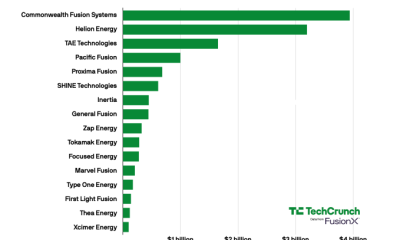
Every fusion startup that has raised over $100M
-
 Business7 days ago
Monarch Mutual Fund set to enter MF space with maiden overnight fund; files draft with Sebi
-

 News Videos2 days ago
Don’t Leave Your Financial Future To Chance | August 19, 2026
-

 Business7 days ago
Cristiano Ronaldo’s Secret Wedding Deepens As Presenter Claims Family Learned ’30 Seconds’ Before
-

 Business7 days ago
Facebook Down Now? Users Report Login And Loading Problems As Outage Trackers Monitor Ongoing Issues
-

 Crypto World5 days ago
Data of 54K Wallet Users Leaked, Clarity Odds Just 10%: Hodler’s Digest, Aug. 16
-

 Crypto World4 days ago
NAVI Prime launches institutional lending framework on Sui
-

 Politics6 days ago
Britain is facing a housing disaster
-

 Business7 days ago
New Avengers Doomsday Trailer Drops at D23 Showing Robert Downey Jr as Doctor Doom
-

 Tech7 days ago
How to watch FIH Hockey World Cup 2026: FREE live streams, schedule
-

 Business6 days ago
Rebel Creamery files Chapter 11 with $23.8M Van Leeuwen judgment on appeal
-
 Crypto World4 days ago
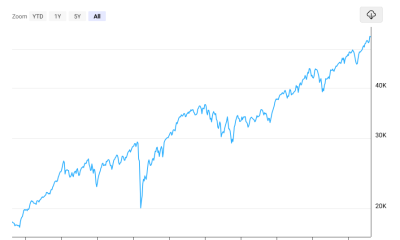
Dow’s 3-Year Winning Run Isn’t a Crash Signal, Still 49% Odds of Double-Digit Gains
-
 Tech7 days ago
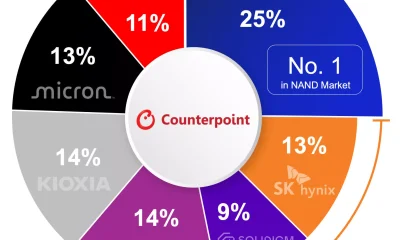
Enterprise SSDs now consume 48% of global NAND flash supply
You must be logged in to post a comment Login