Apple is chopping down the team behind the Vision Pro, its long-suffering VR headset, while eliminating positions across a number of other teams, Bloomberg reported.
Over 200 positions, all told, have been cut, sources told Bloomberg, with around 100 from the Vision Pro team. The other 100 have impacted the team behind Siri and another called Intelligent Systems Experience, which focuses on the integration of AI into devices. Sources say the company is reshuffling to focus on its newer AI efforts and new devices.
Apple confirmed the cuts to Bloomberg, saying it was looking “to evolve our business to deliver the best experiences for our users.” It added: “While we will create new roles as part of this change, it will also impact a limited number of existing roles.” TechCrunch reached out to Apple for more information.
Apple is currently enduring a bumpy period of transition. The company is attempting to fix its position in AI — while a memory shortage spurred by the AI buildout has also driven up the cost of producing its flagship products.
Advertisement
Apple raised prices on Macs and iPads earlier this summer, and the company recently introduced a leasing plan for all of its major hardware products — an effort to bring in a broader array of customers as it offsets new costs. The company is also currently suing OpenAI, which it has accused of trade theft.
Going into the project, [GRMNT] didn’t really know what he was working with, but it turned out grandpa had good taste and was rocking a Bianchi. No stovepipe bike boom stuff here, only high quality Tange steel. After cleaning off the years of grime, it was time to rebuild a second-hand Bafang mid-drive electric motor for the electric boost for the ride.
We really like the custom solenoid-powered display that [GRMNT] built into the handlebars for an excellent electromechanical readout of the battery charge. Coupled with the hand-built battery pack inside a leather case and hidden motor actuation button, this build looks slick without screaming e-bike.
Following on from 2025/26, Match of the Day will continue to be fronted by a trio of presenters in Mark Chapman, Kelly Cates and Gabby Logan for the Premier League 2026/27.
Beyond the presenters, there has also been a shake-up in the punditry line-up, with Dion Dublin, Martin Keown, Nedum Onuoha, Theo Walcott, Shay Given and Stephen Warnock all departing. But don’t worry, the BBC already have their replacements lined up, with former Tottenham players Toby Alderweireld and Robbie Keane joining the team, alongside Thomas Frank, who was Spurs’ manager at the beginning of last season. Ashley Young has also joined following his retirement.
MOTD is a godsend for footy fans who don’t have access to live TV broadcasts from the likes of Sky Sports and TNT Sports. It neatly rounds up all the highlights of the day’s Premier League action every Saturday night, with a sister show, Match of the Day 2, providing the same service on Sundays. Don’t forget about the Champions League version of Match of the Day which joined the collection back in 2024.
Advertisement
Here’s how to watch Match of the Day online and on TV from anywhere in the world, for free.
How to watch Match of the Day in the UK for free
Match of the Day is free-to-air on BBC One in the UK. It goes out live on Saturday nights roughly at 10:20pm BST, with Match of the Day 2 following on the same channel around the same time the next day.
There is also a continued addition to the BBC’s football highlights portfolio this season, with Match of the Day: Champions League streaming every Wednesday following a matchday.
Advertisement
If you miss an episode, or simply prefer to watch it on a portable device, don’t worry. Every Match of the Day episode is also available on BBC iPlayer.
Just keep in mind that each episode is only available to stream until the next episode airs, or for seven days after broadcast, whichever comes first.
How to watch Match of the Day from anywhere
If you’re keen to watch Match of the Day but you’re away from the UK and access to the show is geo-blocked, then you could use a VPN to access it (assuming you’re not breaching any broadcaster T&Cs, of course). You may be surprised by how simple it is to do. Plus, we have a great 75% discount on our #1 VPN…
Advertisement
How to watch BBC iPlayer with a VPN
Using a VPN to unblock Match of the Day is very straightforward. Just follow these steps:
1. Download and install a VPN: As we say, our top choice is NordVPN.
2. Connect to the appropriate server location: Open the VPN app, hit ‘choose location’ and select your home geographical location (anywhere in the UK).
Advertisement
3. Go to the broadcaster’s live stream: In this case, just head to BBC iPlayer.
Android TV (please note: some models aren’t supported)
Android (Mobile & Tablet) – Android 7.0 and above
Apple TV (tvOS 14 or later)
Google TV (Chromecast with Google TV and NVIDIA Shield)
Freely
Freesat (please note: some models aren’t supported)
Freeview Play (TVs and set-top boxes) (some models aren’t supported)
iOS (iPhone & iPad) – iOS 14 and above
LG Smart TVs (2016-2024)
NOW Smart Sticks and Boxes (minimum firmware v11.5.0)
PlayStation (PS4 and PS5)
Roku (Stick & Roku-OS powered TVs, minimum firmware v11.5.0)
Samsung Smart TVs (2017 and above)
Sky Q, Sky Glass and Sky Stream puck
Virgin Media (360, Stream, TiVo)
YouView (BT, Humax, Sony, TalkTalk)
Xbox (One, Series X, Series S)
Can I watch Match of the Day online in the US, Canada, Australia, and worldwide?
Since Match of the Day is exclusive to BBC iPlayer and BBC One in the UK, it’s not currently available to stream in any international locations.
If you’re a Brit traveling abroad, you can usethis VPN to watch your usual streaming services from anywhere in the world.
Note: Not all VPNs work for this, but NordVPN does. It’s also great for privacy and comes with a 30-day risk-free trial.
Advertisement
You may also like to watch…
We test and review VPN services in the context of legal recreational uses. For example: 1. Accessing a service from another country (subject to the terms and conditions of that service). 2. Protecting your online security and strengthening your online privacy when abroad. We do not support or condone the illegal or malicious use of VPN services. Consuming pirated content that is paid-for is neither endorsed nor approved by Future Publishing.
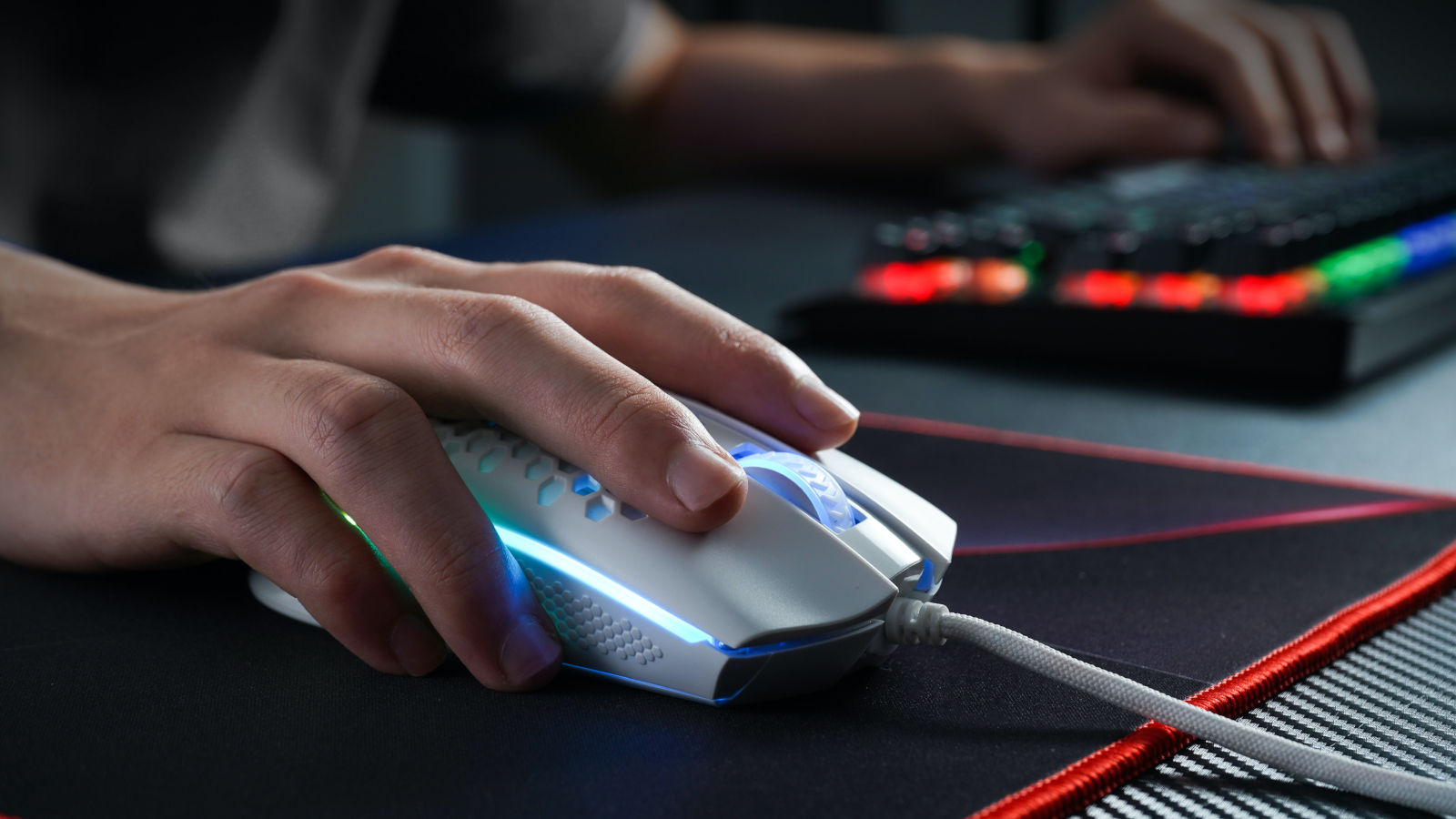
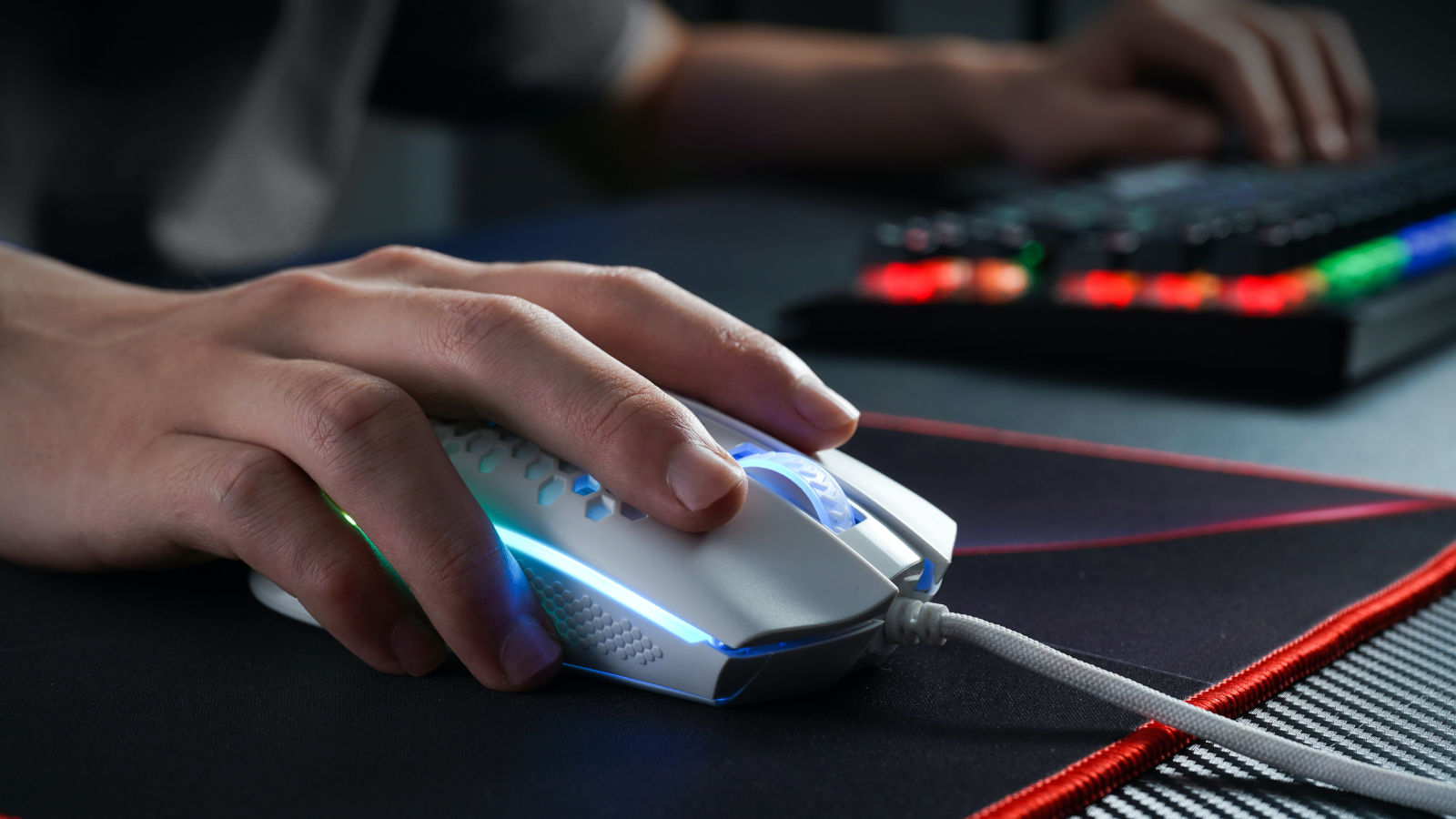
Microsoft says ongoing issues causing games to crash or fail to launch after installing the August 2026 Windows updates may be caused by peripherals with RGB lighting.
As Microsoft explained when it confirmed it’s investigating on Wednesday, this known issue affects games like ARC Raiders, MARVEL Tōkon: Fighting Souls, and The Finals on systems running Windows 11 24H2 and 25H2.
“Following the release of Windows updates on August 11, 2026 (KB5121003) and later, Microsoft received reports of issues involving inability to run games as expected,” Microsoft said on the Windows release health dashboard.
On impacted PCs, users are also experiencing gaming freezes, “EXCEPTION_ACCESS_VIOLATION” errors, and even unexpected system restarts.
In a Thursday update, Microsoft said the gaming issues may be caused by drivers or components installed by RGB devices on affected Windows systems.
Advertisement
“Ongoing investigation indicates that this issue is related to peripherals or internal device components which have RGB lighting features. Such devices may install drivers or code components with file names similar to inpoutx64. In systems where these drivers are found, the issue is then triggered by launching certain games,” it noted.
“We are presently working to understand the relationship between these RGB components and the games which trigger this issue. We will provide an update when more information is available.”
Unofficial workaround shared by game dev
Embark Studios, the Swedish video game developer behind ARC Raiders and The Finals, also said these issues are caused by inpoutx64.sys, but added that they stem from changes made to the Windows kernel driver.
“We’re aware of a crash that has been impacting some players since the most recent Windows update (KB5121003). This is a crash related to the file inpoutx64.sys, which changed with the Windows update,” Embark said on Monday.
Advertisement
Until Microsoft ships an official fix, Embark shared a multi-step temporary workaround that requires users to delete the service and remove the inpoutx64 file from the Windows drivers folder.
This isn’t the first time Microsoft has had to address gaming performance and stability issues caused by Windows updates. For instance, in October 2024, Microsoft blocked Windows 24H2 upgrades that caused Asphalt 8 crashes and Easy Anti-Cheat blue screens.
Early last year, Microsoft also removed several upgrade blocks that were preventing Asphalt 8: Airborne, Assassin’s Creed, Star Wars Outlaws, and Avatar: Frontiers of Pandora players from upgrading their devices to the latest Windows version.
Advertisement
Overall prevention scores can hide what happens after initial access. Once attackers are using valid credentials, prevention drops sharply.
The Blue Report 2026 measures defenses technique by technique across 338 million simulations run in customer production environments.
Some keyboard shortcuts are so ingrained that we barely think about using them anymore. Ctrl + C, Ctrl + V, Ctrl + Z, and Alt + Tab probably account for an absurd number of keystrokes on any given workday. But it’s the less universal ones that tend to reveal how someone actually uses their computer.
For me, Ctrl + Shift + V for pasting without formatting is probably near the top. I also use Ctrl + T constantly for new browser tabs, while Ctrl + Shift + T has rescued more accidentally closed tabs than I’d care to admit. Another favorite is Ctrl + Shift + S, which I’ve mapped to a third-party screenshot app for quickly grabbing and annotating part of the screen.
Not all of my most-used shortcuts even involve a keyboard. On my MacBook, the three-finger trackpad swipe between virtual desktops has become just as automatic.
There are plenty of other favorites among power users: Win + V for clipboard history, Ctrl + Shift + Esc for Task Manager, Win + E for File Explorer, and Ctrl + Backspace to delete an entire word at once. We even put together a massive shortcut compilation years ago, and quite a few of them still hold up today.
Advertisement
So here’s this weekend’s question: excluding copy, paste, undo, and Alt + Tab, what’s the keyboard shortcut you use the most? And better yet, what’s one you think everyone else should know?
TikTok and its parent company, ByteDance, have reached a $400 million settlement with the U.S. Department of Justice (DOJ) to resolve allegations that the social media platform violated federal laws designed to protect children’s online privacy.
The case stems from a lawsuit first filed in 2024 by the DOJ under the Biden administration. The DOJ alleged that TikTok violated the Children’s Online Privacy Protection Act (COPPA) by allowing millions of children under the age of 13 to use the platform, while also collecting their personal information without the required parental consent.
In addition to paying $400 million, the settlement includes measures intended to strengthen protections for young users. Those changes include stronger age-related controls, additional safeguards for children, and measures designed to give parents enhanced oversight of their children’s activity and personal information. However, the agreement does not require TikTok or ByteDance to admit wrongdoing. Axios was the first to report the news.
The 2024 case alleged that TikTok allowed large numbers of children to remain on the platform for years, despite already facing federal action over children’s privacy in 2019. The company agreed to pay $5.7 million to settle allegations that its predecessor, Musical.ly, had violated COPPA. As part of that agreement, the company committed to taking steps to prevent children under 13 from creating accounts.
Advertisement
According to the allegations, however, TikTok continued to struggle to identify and remove underage users. The case alleged that the company maintained and used information belonging to children, including data that could be used for targeted advertising, even after employees raised concerns about the presence of young users on the platform.
It also alleged that TikTok changed aspects of its registration policies in ways that made it more difficult to determine whether users were old enough to join the service.
The agreement comes as TikTok faces more scrutiny over its approach to user safety. Just days before the settlement, Bloomberg reported that TikTok had intentionally disabled an algorithmic safeguard for roughly 10% of U.S. users as part of an experiment. The safeguard was designed to reduce the possibility that users would be overwhelmed by harmful or potentially damaging content.
The report drew criticism from lawmakers. Republican senator Marsha Blackburn of Tennessee and Democratic senator Richard Blumenthal of Connecticut sent a letter to TikTok CEO Shou Chew and Adam Presser, the chief executive of the company’s U.S. business, questioning the decision.
Advertisement
When you purchase through links in our articles, we may earn a small commission. This doesn’t affect our editorial independence.
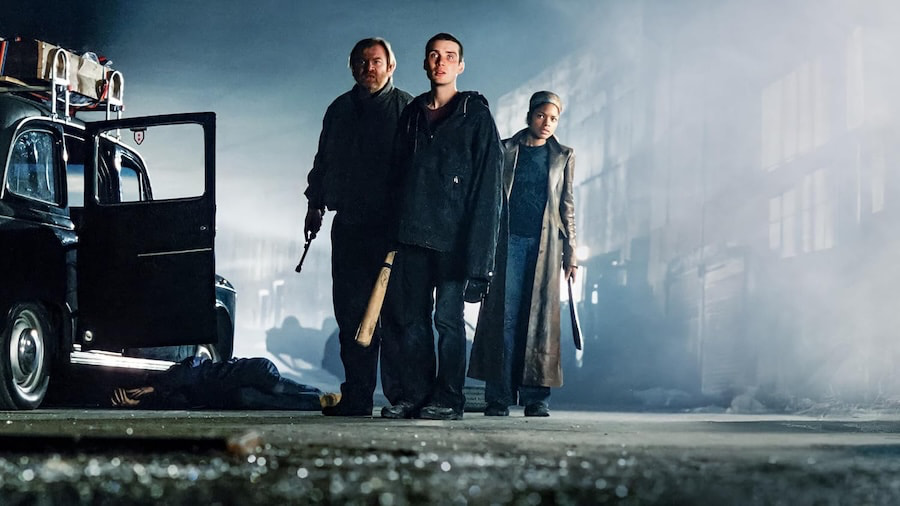
Danny Boyle’s 28 Days Later helped revive the zombie movie, introduced audiences to infected people who could actually run after you, helped put Cillian Murphy on the international map, and turned deserted London into one of the more unsettling images of early 21st century cinema.
It also looked rather rough by design.
Much of the 2002 film was photographed by cinematographer Anthony Dod Mantle using Canon XL1 digital video cameras recording to MiniDV, which gave 28 Days Later its smeared motion, limited resolution and harsh digital appearance. More than two decades later, Sony Pictures Home Entertainment is bringing the film to 4K Ultra HD Blu-ray for the first time on September 1, 2026, with Dolby Vision and a new Dolby Atmos soundtrack approved by Boyle.
That makes this a rather unusual 4K restoration. Sony cannot manufacture detail that was never captured in the first place, but UHD can still improve color, compression, contrast and presentation quality while preserving the visual character that made the movie so effective.
Advertisement
28 Days Later 4K UHD Release Details
Sony’s new 4K UHD edition will present 28 Days Later at 2160p in its 1.85:1 aspect ratio with Dolby Vision HDR. The soundtrack has also been upgraded to Dolby Atmos, with an English 5.1 DTS-HD Master Audio track provided as an alternative.
Both the new HDR presentation and Atmos mix were approved by Danny Boyle. Sony says the 4K master was created using the assembled original source video together with the portion of the movie originating on camera negative that was used for the original theatrical release. Those elements were then newly color corrected to take advantage of the wider color gamut available through HDR.
The movie runs approximately 113 minutes and carries an R rating. Sony is releasing it as a limited-edition 4K UHD SteelBook, while a 4K version will also be available through participating digital retailers.
4K UHD Disc Features:
2160p Ultra HD presentation
1.85:1 aspect ratio
Dolby Vision HDR
English Dolby Atmos
English 5.1 DTS-HD Master Audio
Commentary with Danny Boyle and screenwriter Alex Garland
Deleted scenes and alternate endings with optional commentary
Pure Rage: The Making of 28 Days Later
Jacknife Lee music video
Animated storyboards
Still photo galleries
Original theatrical teaser and trailer
Why Was 28 Days Later Shot on MiniDV?
Boyle and Dod Mantle used Canon XL1 digital video cameras for most of the production. The compact cameras made it possible to work quickly in locations including Westminster Bridge and other normally congested parts of London, where the production had very limited opportunities to stop traffic and create the illusion of an abandoned city.
The format also helped establish the film’s documentary-like appearance. 28 Days Later was never intended to resemble a polished studio production, and the low-resolution digital photography contributes heavily to the feeling that Jim has awakened inside something immediate and unnervingly real.
Advertisement
Some portions of the film were captured on film, which explains Sony’s reference to original camera-negative material in the restoration. The MiniDV footage, however, remains inherently limited in resolution.
That is why this release should not be judged primarily on increased sharpness. A UHD disc can provide more bandwidth than DVD, Blu-ray or streaming, while Dolby Vision gives the restoration team more control over contrast and color reproduction. The real question is whether Sony can extract the best available image from those original elements without making the film look artificially processed.
Advertisement. Scroll to continue reading.
Boyle’s direct approval of the HDR grade is encouraging.
Advertisement
Why 28 Days Later Became Such a Big Deal
The setup is beautifully simple. Bicycle courier Jim, played by Murphy, wakes from a coma in an empty London hospital 28 days after the release of the highly contagious Rage Virus. British society has largely collapsed, and infected humans become violently aggressive almost immediately after exposure.
They are not technically undead, which has kept horror fans arguing for more than two decades about whether the film should be classified as a zombie movie. The distinction did not stop 28 Days Later from having an enormous influence on the genre.
George Romero’s zombies were generally slow and frightening because of their relentless numbers. Boyle and Garland made infection fast, immediate and terrifyingly physical. The infected sprinted, attacked with explosive violence and could transform within seconds.
The film also proved extremely profitable. Produced for an estimated $8 million, 28 Days Later earned more than $45 million in North America and over $80 million worldwide during its theatrical run.
Advertisement
More importantly, it created a franchise that survived for more than two decades. 28 Weeks Later followed in 2007. Boyle and Garland returned to the universe with 28 Years Later in 2025, which earned more than $151 million worldwide, followed by Nia DaCosta’s 28 Years Later: The Bone Temple in 2026.
For something filmed largely on what now looks like an antique consumer-grade camcorder, that is a rather substantial legacy.
Why Pandemic and Zombie Movies Still Work
There is another reason 28 Days Later plays differently today. Audiences have now lived through an actual global pandemic.
COVID obviously did not produce armies of blood-covered infected people sprinting through London, but quarantine, empty cities, fear of transmission, shortages, institutional failure and prolonged isolation stopped being purely fictional ideas in 2020.
Advertisement
That experience has given pandemic and post-apocalyptic films another layer of cultural relevance. Horror audiences have always responded to stories about civilization breaking down, but those scenarios feel less abstract after millions of people experienced lockdowns and watched some of the world’s busiest cities become eerily quiet.
The continuing success of the franchise suggests that appetite has not disappeared. 28 Years Later crossed $150 million worldwide more than twenty years after the original movie, proving that audiences remain interested in this universe.
The best films in the genre are rarely just about infection anyway. 28 Days Later ultimately becomes a story about what happens to people when the institutions and social rules surrounding them vanish, and whether the survivors are necessarily any safer than the infected.
Advertisement. Scroll to continue reading.
Advertisement
Why This 4K Release Is Different
Most catalog UHD restorations begin with high-quality film elements that can be scanned at 4K or higher resolution. 28 Days Later presents a very different challenge because a large portion of the original image simply does not contain anything close to 4K levels of detail.
That puts more emphasis on everything else UHD can improve.
Dolby Vision can provide more precise control over brightness, contrast and color. Higher disc bandwidth can reduce compression artifacts. The original higher-quality film elements can benefit substantially from the new master, while the MiniDV material can be presented with fewer compromises than earlier home-video releases.
The new Dolby Atmos mix may prove equally important. The film relies heavily on silence, environmental sound, sudden violence and John Murphy’s score, all of which can benefit from a more immersive presentation if the mix remains faithful to the original atmosphere.
There is also an interesting visual connection to the newer films. Boyle and Dod Mantle returned to unconventional digital cinematography for 28 Years Later, including the use of heavily modified iPhone 15 Pro Max cameras alongside other systems. More than twenty years after MiniDV shaped the original, Boyle was still choosing smaller digital cameras for what they enabled creatively rather than because they produced the cleanest possible image.
Advertisement
Our review of 28 Years Later: The Bone Temple demonstrated just how dramatically the franchise’s visual presentation has evolved, particularly with modern Dolby Vision and Atmos home-theater playback.
The Bottom Line
28 Days Later is precisely the kind of movie that makes 4K restoration interesting because the objective cannot simply be to make everything sharper.
Sony has to preserve the ugly, frantic digital character of the MiniDV footage while improving what can legitimately be improved through better mastering, Dolby Vision, higher bandwidth and a modern Atmos soundtrack. Boyle’s approval of the new presentation suggests the studio understands that challenge.
The film also arrives on UHD at an interesting moment. The franchise is active again, Cillian Murphy has become one of the industry’s biggest actors, and audiences remain unusually receptive to stories about viruses, societal collapse and people discovering that their neighbors may be considerably more dangerous than whatever caused the apocalypse.
Advertisement
Twenty-four years after its theatrical debut, 28 Days Later still looks unlike almost anything else in the genre. A good 4K release should preserve exactly that.
Where to pre-order:$39.99 at Amazon (available September 1, 2026)
As you’ll recall, RFK Jr., who is totally not checked out of his job at HHS, has managed to sneak in hosting a government sponsored cooking show in between not doing anything about the country’s problems with measles, cyclosporiasis, whooping cough, and so on.
Well, two episodes are now out, and the reviews are not great. Some have referred the episodes as mere “long, boring political ads,” while others have simply pointed out that the meals so far taste like shit. But while those particular reviews may rely heavily on subjective matters of opinion, the main thrust of Kennedy’s show does not. And that thrust is the promise that American families can feed themselves fresh, wholesome meals for less than $5 a plate. CNN’s Tom Foreman appeared on Erin Burnett’s show and walked viewers through what buying ingredients at the grocery store to make one of Kennedy’s meals would actually cost.
When we started buying ingredients used in the show, even going for the lowest prices at a big competitive chain, the cost heated up fast. This was the cheapest frozen wild-caught sockeye salmon we could find. The closest to what they are using. They priced theirs at $8.99. The cheapest we could find, even with the deal from the store, was more than $24. Now the greens mix, that was about the same cost. So were the eggs on a per egg basis. But that’s the trick here, because they’re only pricing that one egg out of the carton. And that gets worse with other things.
For example, this red onion, they say they only spent eight cents on this because that’s how much they used. Getting the whole onion cost us more than a dollar. And look at this. This is the avocado mayonnaise. They priced this at 40 cents, because they were only using a couple of tablespoons to buy. The whole thing cost us more than $11. They’re only pricing parts of it. And grocery stores don’t sell things that way.
In other words, you can’t associate the cost of buying a meal by portioning out what ingredients you use and how much of it. The total cost of the ingredients has still left your bank account. We’re not talking about restaurants, where marginal costs per plate make all the sense in the world. Those are businesses that buy in bulk and have to calculate a profit into their pricing. These are families. Hungry families and the only profit they’re looking for is healthy caloric intake.
Advertisement
Well, Kennedy lost his shit on the internet over the segment, all because Burnett and Foreman refused to play his particular version of make believe. And, after accusing Burnett of having Trump Derangement Syndrome (does that come from vaccines and chemtrails too?), he did so in a way that perfectly illuminated the fact that he doesn’t understand that homes are not restaurants.
After the report aired, Kennedy hit back on X, trashing the host and accusing her of having “abandoned both common sense and basic arithmetic.”
“CNN wants us to incorporate the full package price of every ingredient, regardless of what is used in the recipe. If you put a squirt of ketchup on your burger, would you be surprised if the restaurant charged you for the whole bottle?” Kennedy wrote.
Kennedy argued his show uses “standard recipe costing,” saying “we count what the recipe actually uses,” while “the rest” of each purchased ingredient “stays in the kitchen.”
First off, this is a mostly misleading bit of pushback. While Foreman’s segment did tally up the grocery bill needed in order to make Kennedy’s meal, because that’s how shopping works, that wasn’t the only cost discrepancy he uncovered. For some items, the cost difference was in the marginal quantity of the ingredient used in each meal, that wasn’t the case with every ingredient, such as the fish itself.
Advertisement
So Kennedy’s claims in his show, like most everything he claims, are built on funny math and lies. It’s simply not how grocery shopping for a family works. It’s not how meal planning works. What could be interesting would be for the show to demonstrate from start to finish how to plan out a family’s meals for a week, shop for the ingredients for those meals in a way that you can double up on them to make full use of their cost, and build a recipe list around that and then see what the per-meal cost is.
But that would be way too much work for Kennedy and would place him way outside the cushy, entitled, wealthy experience he has had his entire life as a Kennedy.
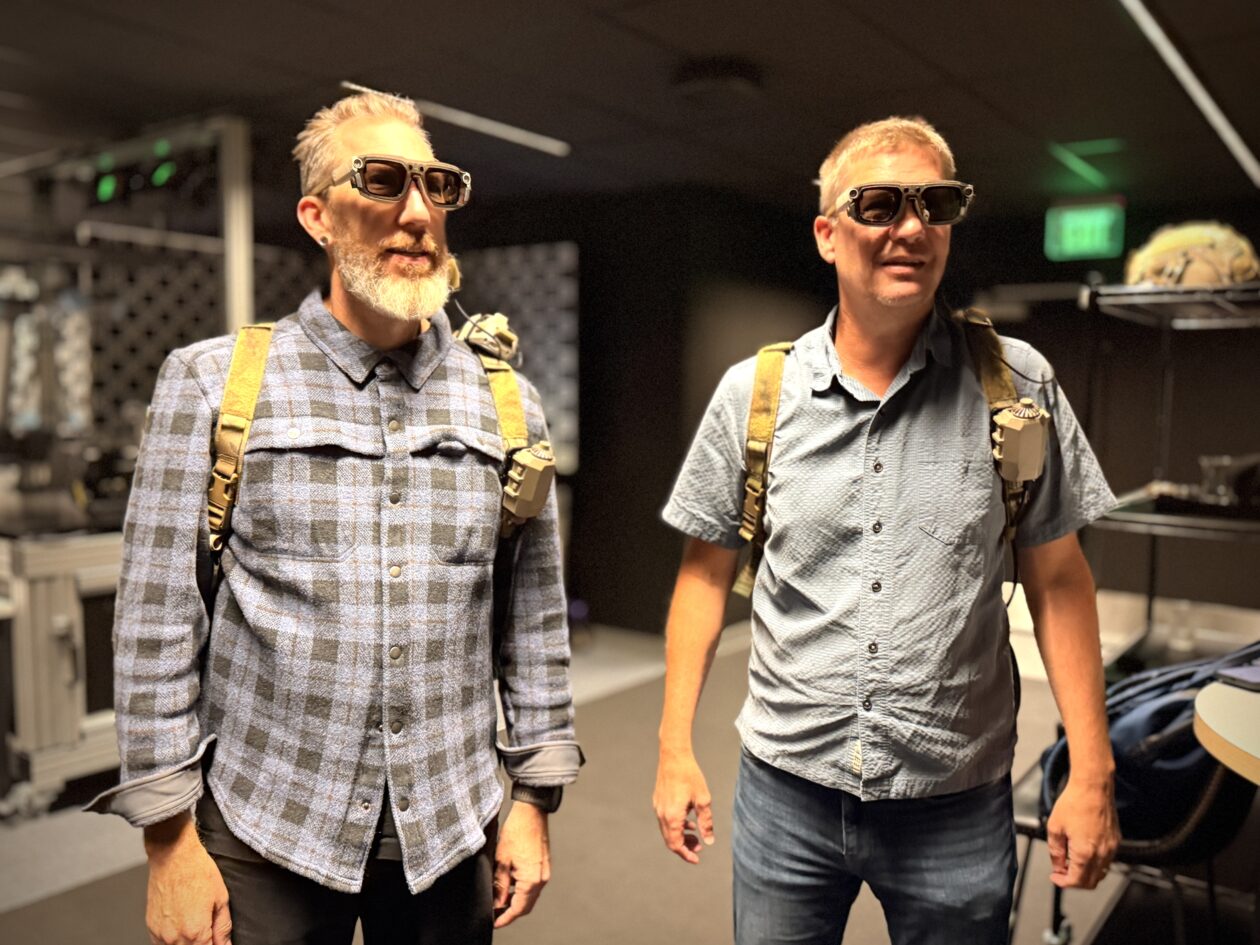
Chad Pfarr, principal design director at Anduril, at left shows GeekWire co-founder John Cook the company’s EagleEye augmented reality system at a testing lab at the company’s Bellevue offices. (Photo via Matt Mostad / Anduril)
BELLEVUE, Wash. — There is no prominent signage outside Anduril’s downtown Bellevue office. The name isn’t listed in the building directory, on the suite door, or in the lobby. That may be by design: Inside, Anduril engineers are quietly building AI-driven, autonomous technologies intended to keep the U.S. and its allies ahead in a rapidly changing military landscape.
Step through the front doors and it becomes clear that this is no ordinary tech company.
Scattered across desks, production tables, conference rooms and showroom labs are autonomous drones ranging in size from a microwave to a ping-pong table, alongside next-generation digital night-vision goggles and military-grade edge computers designed to keep soldiers connected in an increasingly data-rich battlefield.
The Costa Mesa, Calif.-based defense giant — which closed a $5 billion funding round at a $61 billion valuation earlier this year and is reportedly targeting a $100 billion valuation — is rapidly building a massive engineering footprint in the greater Seattle region. It includes modern offices in downtown Bellevue and Seattle, and a multi-acre military testing facility near Carnation, Wash.
Tom Keane, who oversees Anduril’s connected warfare group, in front of prototypes at the Bellevue offices. (GeekWire photo / John Cook)
GeekWire got a peek inside the iconoclastic company’s Seattle-area operations this week. We toured the Bellevue offices, demoed products, and sat down with senior vice president Tom Keane. The former Microsoft cloud executive leads Anduril’s local presence and oversees its connected warfare division, including mixed reality, AI and edge computing technologies.
Keane was clear about the company’s growth ambitions in the Seattle region: “I could absolutely see a world where we get to 1,000 people here in terms of engineers,” he said.
Advertisement
Asked when that milestone could be reached, Keane said, “It’s sort of almost as fast as you can hire people.” Realistically, that will likely occur over the next two years.
Anduril currently employs 560 people in its Bellevue and downtown Seattle offices, up from about 30 four years ago. That’s when Keane, who had interviewed with 62 companies looking for a new challenge in edge computing, joined Anduril because of what he called “world-class teams in every discipline.”
With more than 110 open positions in Washington state and a newly leased third floor in downtown Seattle coming online, Keane said the regional expansion is only accelerating.
Advertisement
The regional workforce was until recently slated to include a maritime manufacturing hub along the Lake Washington Ship Canal in Seattle. However, as GeekWire reported this morning, Anduril has since vacated the former Foss Maritime shipyard space after the U.S. Navy canceled the autonomous warship program the company was pursuing.
But Anduril’s maritime ambitions haven’t gone away. Alongside its autonomous aircraft, low-cost cruise missiles and counter-drone interceptors, the company continues to develop a large subsea fleet, from modular survey vehicles to the extra-large, school-bus-sized Dive-XL.
The Big Tech pipeline meets ‘grit’
The company’s Seattle-area ramp-up is a play for the region’s engineering talent — a mix of disciplines well-suited to a next-generation defense hardware company, and one Keane says is hard to find in one place. That includes distributed systems engineers, AI and machine learning specialists, and advanced optics experts.
Another advantage: proximity to major military installations including Joint Base Lewis-McChord and Naval Base Kitsap.
Advertisement
Tech giants such as Microsoft, Amazon, Google and Meta have long dominated local engineering hiring. But Anduril is recruiting aggressively from those companies, pitching engineers who want to move fast and see their work in the field.
Deep pockets and close ties to the U.S. defense establishment don’t hurt, either.
Anduril got a large infusion of that talent 18 months ago, when it took over Microsoft’s IVAS (Integrated Visual Augmentation System) program along with about 100 local engineers who had spent years developing augmented reality hardware for the U.S. Army.
“If you take machine learning and AI… you can look out any of these windows and see places that we can recruit from,” Keane said from a conference room overlooking downtown Bellevue. “For a lot of software engineers, this is incredibly applied.”
Advertisement
Keane acknowledges the company’s culture isn’t for everyone. In fact, Anduril got plenty of buzz last year with its edgy recruiting campaign, “Don’t Work at Anduril.“
Rather than plush tech perks and work-from-home flexibility, Anduril pitches what Keane calls “grit” — a willingness to take ownership of hard engineering problems and test them in the field. It’s very much an in-office culture, in part because the company builds hardware.
The company’s “grit” translates directly into how Anduril tests its gear.
Advertisement
In rural Carnation, Wash., about 20 miles east of Bellevue, Anduril operates a testing range with a built-out “shoot house” for low-light tactical work. It gives engineers a place to iterate on code and hardware in the mud and rain alongside active-duty warfighters.
Among them: members of the Army’s 75th Ranger Regiment from nearby Joint Base Lewis-McChord, who recently put Anduril’s EagleEye mixed-reality system through its paces on the firing range and obstacle course.
Hands-On with ‘EagleEye’ and Lattice
During a walkthrough of the Bellevue facility, Anduril’s team showed us a wide range of hardware being designed, tested, and calibrated on site.
The centerpiece was EagleEye, the company’s heads-up hardware and software suite built for warfighters. Historically, soldiers have had to lug 3 to 5 pounds of glass and electronics on their helmets, paired with fragmented radios, specialized batteries and thick cables.
Advertisement
Anduril’s system strips that down to a 115-gram pair of augmented reality glasses — about four ounces — built in collaboration with Meta (for waveguides), Canon (for sensors), Qualcomm (for custom silicon) and Oakley (for ballistic protection).
I tried on the lightweight camouflage backpack and glasses — no helmet in this case — in a demo in the Bellevue testing lab. It ran through three operational “vignettes” driven by Anduril’s core Lattice software:
Tactical HUD: A heads-up display projecting friendly force markers, compass headings, and mini-maps into the user’s field of view so troops don’t have to look down at a handheld screen while moving.
Threat Detection: Real-time alerts from external AI sensors — such as a tower camera or an overhead drone — highlighting incoming aerial threats directly in the display.
Command & Control (C2): The ability to assign tasks to autonomous technology. Using a small handheld controller, an operator can send a virtual Ghost drone to a location, pull up a live video feed and execute a simulated strike.
In each case, the user controls the system — navigating between maps and text — with a click of a button on a small device connected to the front of the backpack.
The team also previewed its upcoming digital night vision system. Instead of the narrow “toilet paper roll” view of traditional analog goggles, Anduril’s VR-style digital displays offer an 84-degree field of view. That’s more than double the 40 degrees warfighters get in devices today.
Anduril’s Tom Keane shows off the company’s light-weight night vision goggles, being developed at the company’s Bellevue office.
Using machine learning models, the system fuses thermal imagery and low-light camera feeds in real time, making heat signatures leap out in pitch-black environments.
To ensure every pixel lands accurately without causing motion sickness, Anduril’s engineers use custom robotic arms to run geometric calibration on each lens distortion map before it leaves the facility. An engineer running the testing equipment politely asked GeekWire not to photograph the system.
Advertisement
The night vision system has not yet been deployed but will be part of the Soldier Borne Mission Command prototype delivery to the U.S. Army next year, said Stephanie Davis, communications manager for Anduril’s connected warfare group.
Protests, hiring and hardware
Operating a high-profile defense company in the Seattle area doesn’t come without friction. Activist groups recently staged protests outside Anduril’s downtown Seattle offices, targeting the company’s autonomous weapons development and military contracts.
At the time, Anduril issued a statement to GeekWire saying that it respects the right to free speech. “That said, it is perplexing when people choose to protest a company dedicated to supporting the very military that safeguards those rights,” the company added.
When asked about the pushback, Keane said critics don’t affect Anduril’s hiring. “There’s protests at every company, frankly.”
Advertisement
Anduril’s hiring reaches well beyond Big Tech. Drew Swanson, a lead architect, spent 13 years in the military working in communications supporting special operations units in the field. He described an Anduril technology called Squad-A, which helps squad leaders pick the best network connections to stitch together incoming intelligence feeds.
Swanson said the draw of Anduril is the chance to escape corporate bureaucracy and tackle high-stakes physical problems, reflected in comments he gets from others in Seattle tech.
“One of the biggest things that I always hear is: ‘I want to come over there because you guys are going after really hard problems,’” Swanson said of conversations with tech colleagues around Seattle.
Solving those problems often comes down to fundamental hardware redesigns, like combining a soldier’s ballistic vest, battery and edge computing device into a single body plate. Keane showed off a prototype as the tour wrapped up — an example of Anduril’s broader approach.
Advertisement
“Batteries are such a huge thing,” he said, pointing to the body armor. “If you put the three of them together… you can start to get rid of stuff. You take what was historically three separate heavy things and turn it into one software-enabled platform.”
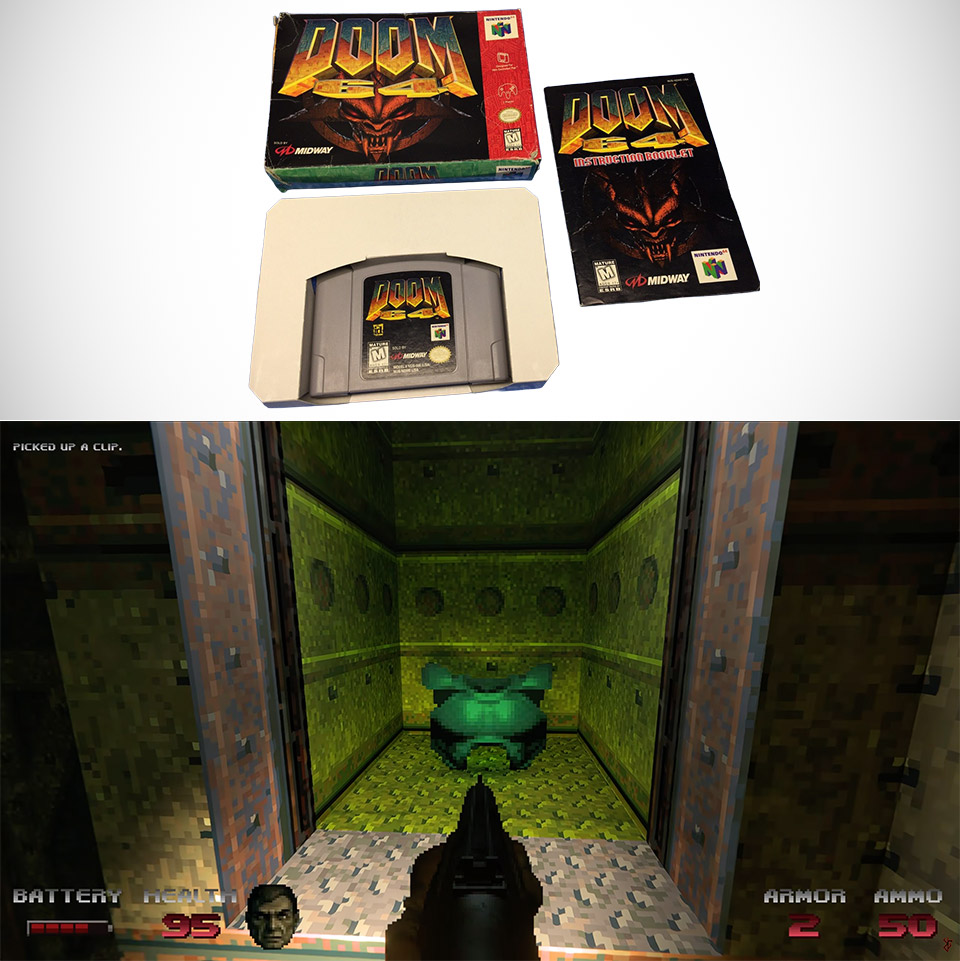
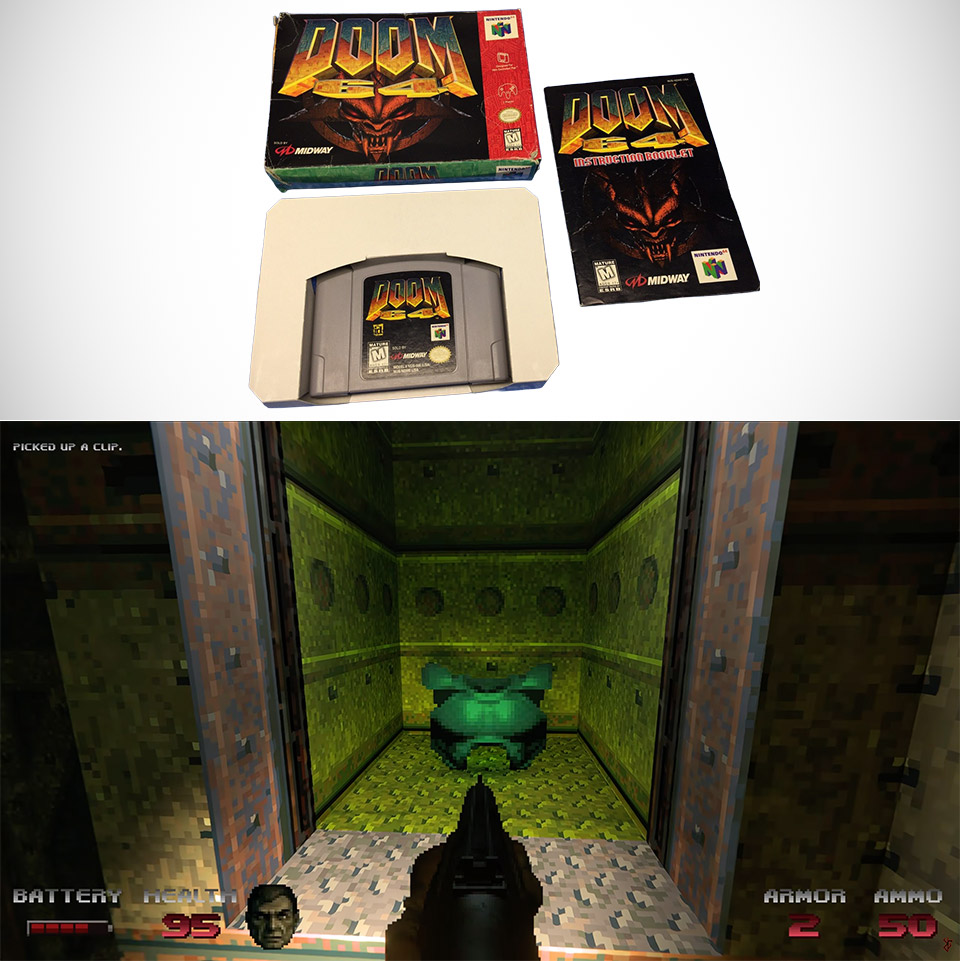
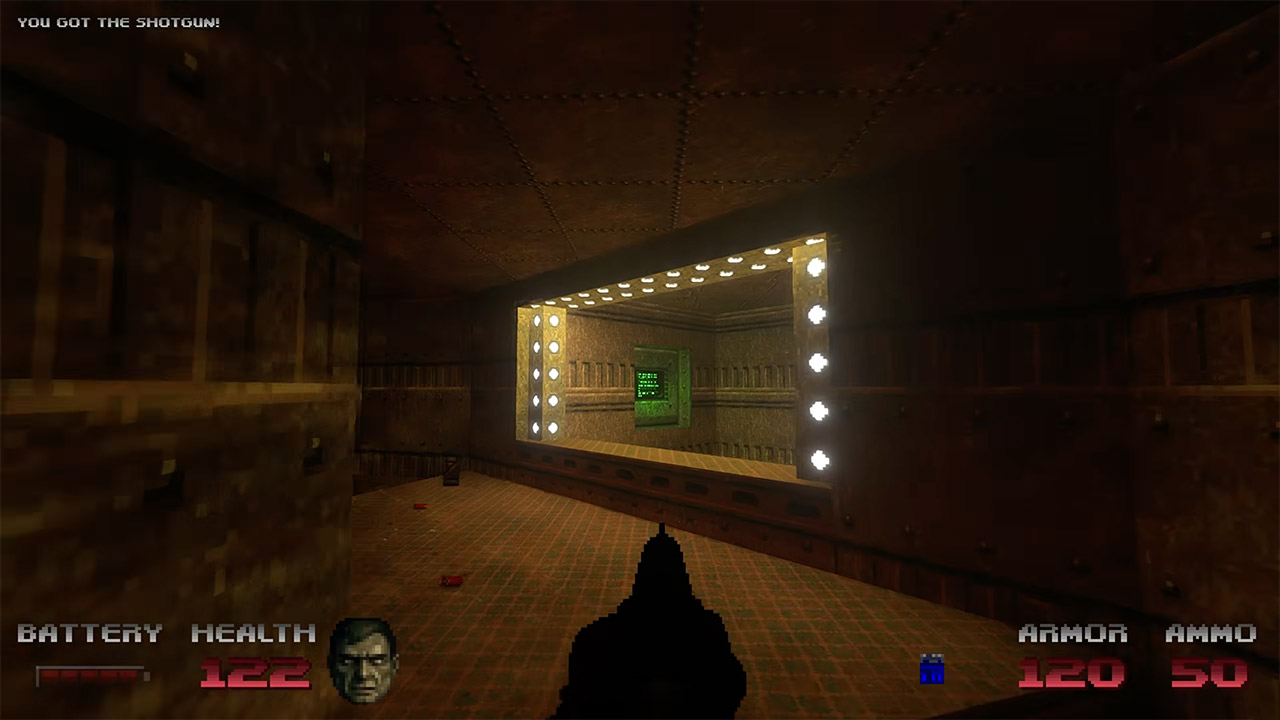
Doom 64 always stood apart from its PC cousins. Its levels felt tighter, its color palette colder, its soundtrack more unsettling. Now a new free mod gives those same corridors and chambers something they never had before: light that behaves like light.
Doom 64 Ray Traced is an impressive path-tracing enhancement built on top of Doom 64: Retribution, a popular GZDoom conversion that allows you to play the Nintendo 64 game on your PC with Doom II level assets. The designer, jlrouzies-fr, has updated the previous painted lighting and sector brightness with realistic ray-traced illumination. Every lamp, monitor, and lava spot now provides actual light that bounces, softens, and casts subtle shadows on floors and walls.
Faster Performance for Everyday Computing: Powered by the Intel Celeron N5095 processor (4 Cores, 4 Threads, up to 2.9GHz), the KAMRUI AK1PLUS Mini PC…
16GB RAM & Up to 4TB Expandable Storage: Work faster with 16GB LPDDR4X memory and a high-speed 256GB M.2 2280 SSD for quick boot-ups and smooth…
Dual 4K UHD Displays for Maximum Productivity: Expand your workspace with dual HDMI 2.0 outputs, supporting two 4K@60Hz UHD displays simultaneously…
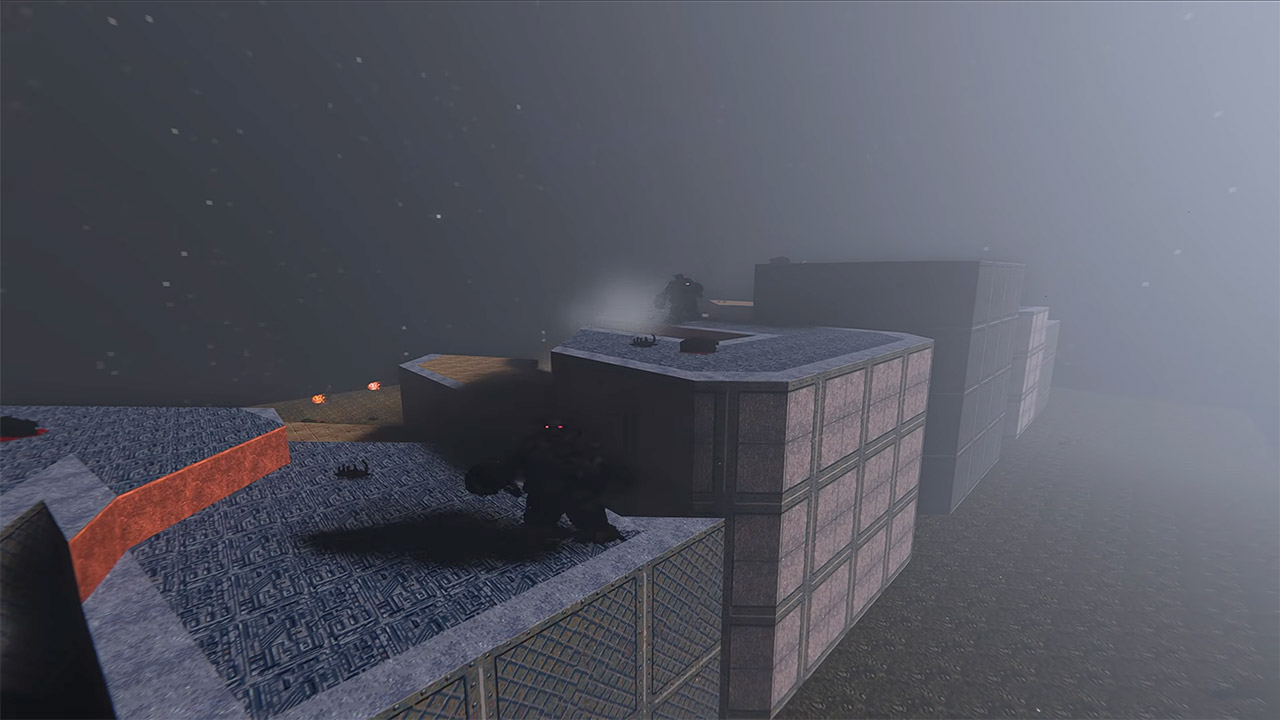
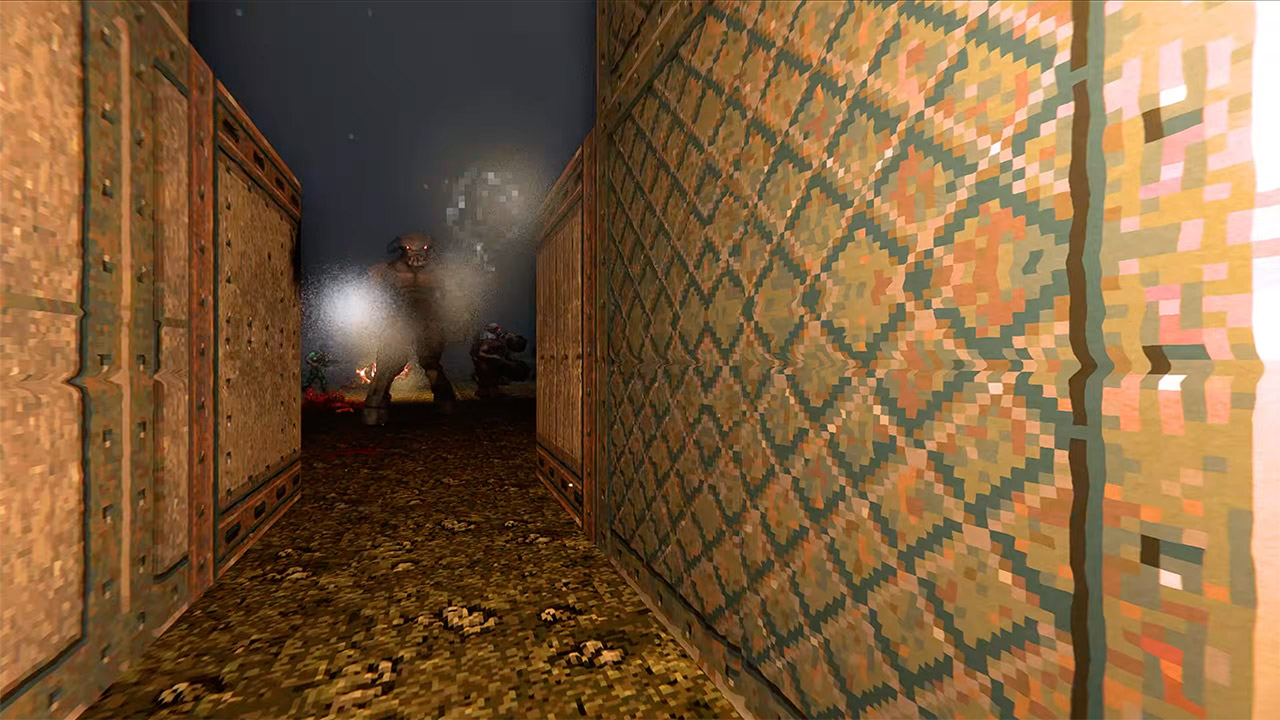
When you enter a tight corridor, you will quickly notice the difference. Ceiling fixtures no longer just brighten a flat surface; instead, they create defined pools of light that organically fall off. Walls absorb mild secondary glows from adjacent sources, while gloomy places remain black unless something changes the situation, such as your movement or the appearance of a creature. That’s lot closer to what the original designers must have envisioned when they created the game in 1997, but it’s also clearer and more consistent now.
Advertisement
Moonlight now functions as a directional light source, giving outdoor sections and rooms with sky access a cool wash that casts long, soft shadows from pillars and debris, while the occasional cloud or flash of lightning adds even more variation to the scene, tinting the light and briefly flooding a map with brighter flashes. You’ll also notice that the per-map fog is now a genuine 3D effect that lighting can pass through, allowing you to see shafts of light cutting through the haze and dust motes drifting inside those shafts. Water surfaces now emit projected caustics, while lava glows and breathes with a sluggish heat field.
Combat and monsters receive the same treatment. Enemy eyes shine with their own small light sources, allowing them to be seen in low light without washing out the entire room. Lost Souls only light up when they are burning, which is a great touch, and blood remains on the floor after a kill and varies in color based on the monster you killed. Projectile leave nice scorch or electric marks, while sparks and debris fly off surfaces with proper normals. Exploding barrels also scatter curved plates that settle and leave burn marks, and to top it all off, there is now a functional flashlight that utilizes a warm beam and drains batteries, complete with authentic flicker and burnout sounds in newer versions.
The mod is packaged as a modified GZDoom build with the RTGL1 path-tracing renderer. You’ll need a legally obtained copy of Doom II IWAD, Doom 64: Retribution version 1.5, and the corresponding OGG soundtrack pack. When you first run it, the launcher will check your files and start the game. Just keep in mind that you’ll need a GPU that supports ray tracing, such as an NVIDIA RTX, AMD RDNA 2 or newer, or Intel Arc. There’s also the option to employ DLSS or FSR upscaling to make the frame rates playable, and the mod is still in active beta, with ongoing work to tackle bogus emissives, stuttering, and lighting issues.
The current build is available on the mod’s GitHub page, jlrouzies-fr/doom64-rt. Simply point the launcher at your files and return to those familiar levels, which still resemble Doom 64, but they appear more solid, present, and difficult to forget once the lights go down.
Malicious updates turned routine builds into a delivery system for infostealer malware
Hackers slipped malware into several popular Rust packages this week, turning routine software builds into a route onto developers’ machines.
The Rust Security Response Team disclosed the supply chain attack on Thursday after receiving a tip about a crate called proc-macro1. An investigation found that its build script fetched malware from a remote server.
Advertisement
The attack extended beyond a single dodgy crate. Someone had published a new version of arrayref, a legitimate and widely used Rust package, with proc-macro1 added as a dependency. The attacker had also yanked recent legitimate releases of arrayref, helping steer users toward the poisoned release.
The Rust team does not believe arrayref’s maintainer was responsible. It suspects the developer’s computer or credentials were compromised and locked the account while attempting to contact them. The attacker also published malicious versions of two other crates maintained by the same developer, internment and append-only-vec.
The poisoned releases weren’t around for long. Arrayref 0.3.10 was available on crates.io for 86 minutes, internment 0.8.7 for 90 minutes, and append-only-vec 0.1.9 for 107 minutes before they were removed.
That’s a narrow window, but arrayref is hardly some forgotten package gathering dust in the registry. Security firm Aikido, which separately analyzed the attack, puts arrayref at roughly 245 million lifetime downloads and append-only-vec at more than 4 million. However, those figures don’t tell us how many developers pulled the malicious versions during the brief period they were live.
Advertisement
Aikido found that the attacker largely left the legitimate source code untouched, adding only a dependency on proc-macro1, a typosquat of the legitimate proc-macro2 package. The malicious code was tucked inside proc-macro1’s build.rs file.
Cargo, Rust’s package manager, runs build scripts during compilation. This allowed proc-macro1 to identify the operating system and processor architecture of the developer or build machine, download a matching payload, and execute it. Aikido found malware built for Linux, Windows, Intel Macs, and Apple Silicon Macs.
The second-stage payload was more than a simple downloader. Aikido found code targeting Chromium-based browser data, including profiles for Google Chrome, Brave, and Microsoft Edge, as well as browser extension storage used by cryptocurrency wallets. It also found functionality to establish persistence and receive commands from the attacker’s server.
The Rust team also deleted proc-macro-en, aovine, arone, aronenao, and tinymember, warning that every version of those crates should be considered malicious. Developers have been urged to check their Cargo lockfiles and local registry caches for the affected packages.
Advertisement
Rust credits Nextron Systems’ research team with initially discovering and reporting the attack. It has not said how the legitimate maintainer was compromised, how many developers downloaded the poisoned releases, or how many systems ultimately executed the payload.
The malicious packages may have lasted less than two hours on crates.io, but whoever was behind them chose a well-traveled route into developers’ machines. ®




























































You must be logged in to post a comment Login