
Crypto World
ZeroStack secures $1B, Ripple raises $275M



Crypto and blockchain companies announced approximately $1.298 billion across six disclosed transactions between Aug. 16 and Aug. 22, 2026. ZeroStack accounted for most of the total through a $1 billion noncash token contribution, while Ripple Prime completed a $275 million debt offering.
Summary
- Six disclosed transactions produced approximately $1.298 billion in financing during the reporting period.
- ZeroStack agreed to receive $1 billion in MemeCore tokens through a stock-based transaction.
- Ripple Prime raised $275 million from institutional investors through senior unsecured notes.
- NeoSoul secured $11 million to develop AI-powered trading agents and supporting infrastructure.
- Smaller rounds supported privacy, DeFi credit delegation, and decentralized AI infrastructure projects.
The remaining disclosed rounds raised about $23 million across AI trading, privacy infrastructure, decentralized lending, and physical infrastructure networks. One additional strategic investment did not disclose its value and is excluded from the weekly total.
Crypto Fundraising, DefiLlama, company announcements, regulatory filings, and crypto.news coverage was used to compile the weekly figures. The total includes debt and a noncash token contribution, meaning it should not be interpreted as $1.298 billion in conventional venture capital.
ZeroStack secures $1 billion MemeCore token contribution
Nasdaq-listed ZeroStack agreed to receive $1 billion in MemeCore tokens from Puple AI and Blockcat, two entities linked to MemeCore. The transaction involves approximately 925.9 million M tokens rather than a cash investment.
In exchange, ZeroStack will issue 3.5 million common shares and pre-funded warrants covering as many as 36.2 million additional shares. The securities were valued at $25.19 per share, more than 12 times ZeroStack’s recent trading price when the transaction was announced.
Exercise of the warrants remains subject to shareholder approval under Nasdaq listing rules. Shares issued under the arrangement will also carry lockup periods of up to 10 years, according to the company.
MemeCore principal Rudy Rong is expected to become ZeroStack’s president as part of the agreement. The company said the transaction would expand its digital asset treasury strategy, although the stated $1 billion value depends on the assigned price of the contributed tokens.
The entire contribution is included in the roundup’s disclosed financing value. However, it should be separated from conventional fundraising because ZeroStack is receiving tokens instead of fresh operating cash.
Ripple Prime raises $275 million through senior notes
Ripple Prime raised $275 million through an upsized private offering of senior unsecured notes to institutional investors. Ripple did not disclose the notes’ interest rate, maturity date, or participating investors.
The company said the proceeds would support the U.S. expansion of its prime brokerage operations, including financing, clearing, and other services covering digital and traditional assets.
Ripple established the business through its $1.25 billion acquisition of Hidden Road. The unit now serves institutional clients across crypto, foreign exchange, derivatives, swaps, and fixed-income markets.
The note offering follows a $200 million credit facility that Ripple Prime secured from funds managed by Neuberger Berman in May. Together, the two financings provide the brokerage with $475 million in additional capacity, though the credit facility falls outside the current reporting period.
The $275 million transaction is debt financing rather than a venture capital round. It is included in the weekly total because it represents newly announced financing for a crypto-focused company.
NeoSoul raises $11 million for AI trading infrastructure
NeoSoul completed an $11 million pre-Series A round with participation from MH Ventures, Amber Group, ArkStream Capital, 0G Foundation, Kirin Capital, CatcherVC, and New Oak International. The company did not identify a lead investor or disclose its valuation.
https://x.com/NeoSoulAI/status/2090338023607345465
NeoSoul plans to use the capital to develop NeoTrade, an AI-based trading platform that lets users configure agents capable of analyzing markets and executing trades under defined controls.
The company also intends to improve its trading infrastructure and expand its presence in Southeast Asia and other international markets. NeoSoul operates within the BNB Chain and 0G ecosystems, connecting autonomous software agents with blockchain-based financial activity.
The round was the week’s largest disclosed early-stage cash investment. It also continued investor interest in products combining artificial intelligence with crypto trading and on-chain execution.
Funding under $10 million
- Privacy blockchain developer Beldex raised $8 million in a round led by Sigma Capital. NTC, Nxgen, Digital Consensus Fund, and EAK Ventures also participated, bringing the company’s reported cumulative funding to $36 million. Beldex said the proceeds would support developer tools, protocol security, privacy applications, encrypted AI services, and broader ecosystem development.
- DeFi lending protocol Twyne secured $2.5 million in seed funding in a round co-led by Cyber Fund and Ethereal Ventures. Euler Labs, Daedalus, and several individual investors participated. Twyne provides a credit delegation layer that allows lending-market depositors to transfer unused borrowing capacity to other users in exchange for additional yield.
- Solana-based infrastructure project Botanika closed a $1.5 million funding round backed by CRIT Ventures, Baboon VC, Marblex, Daedalus, and individual investors. The company is developing decentralized storage and computing infrastructure that connects physical hardware with on-chain ownership. Botanika has positioned its Nimbus hardware product as an entry point for data storage and AI-related workloads.
Undisclosed strategic funding
Blueprint Finance completed an undisclosed strategic round led by Polychain Capital. Bullish, Keyrock, BitGo, FalconX, G-20, Flowdesk, JPEG Trading, Sentient Capital, Andes, and 2Square participated. Blueprint plans to expand Concrete, its non-custodial vault infrastructure for institutions, protocols, asset managers, and other capital providers.
The platform combines trade execution, accounting, rebalancing, and risk controls within a shared on-chain system. The transaction is excluded from the $1.298 billion total because Blueprint did not disclose the amount raised.



The Sandbox said it has contained a vulnerability in the SAND cross-chain bridge on Base and BNB Smart Chain after an attacker minted unbacked tokens on both networks.
The project put the impact at under 0.01% of the total SAND supply. It said that tokens on Ethereum (ETH) and Polygon (POL) are unaffected and that no user wallets were compromised.
Sandbox Becomes Latest Project Reportedly Hit by an Exploit
Blockaid flagged the incident on Saturday. The firm said attackers hijacked LayerZero delegate permissions through the approveAndCall function.
“~$49B face-value SAND minted so far across ~400+ txs,” Blockaid said.
Follow us on X to get the latest news as it happens
The team said that it has disabled bridging to and from Base and BSC, cutting off any route to move or redeem the minted supply. It said the SAND locked on Ethereum, which backs all bridged tokens, remains intact.
“An attacker was able to mint unbacked SAND on Base and BSC. We have disabled bridging to and from both networks, so SAND on Base and BSC is currently isolated and cannot be moved or redeemed,” the post read.
The project told holders not to buy, sell, or trade SAND on either network, warning that liquidity there is compromised. It is taking a pre-incident snapshot and preparing compensation for qualifying liquidity providers, with a full post-mortem promised.
Korean Exchanges Halt SAND Transfers
Meanwhile, Bithumb suspended SAND deposits and withdrawals at 11:11 a.m. KST, and Upbit followed one minute later. Both cited suspected security incidents under South Korea’s Virtual Asset User Protection Act.
Upbit imposed a halt on the Ethereum version of SAND, which the project has since said was never at risk.
The incident fits a wider pattern. DefiLlama has logged 17 separate exploits so far this month, most of them small, with bridges again the recurring weak point.
Subscribe to our YouTube channel to watch leaders and journalists provide expert insights
The post The Sandbox Contains Bridge Exploit After Unbacked SAND Minted on Base and BSC appeared first on BeInCrypto.

The primary cryptocurrency experienced its most notable price recovery of the year, skyrocketing by 25% from under $65,000 to almost $80,000 within two days before its run was paused, at least for now.
Although this surge is impressive on its own, Glassnode highlighted another notable development that makes it even more interesting: BTC has suddenly started to substantially outperform US stocks after months of doing the opposite.
In fact, BTC only outperformed the S&P500 on around one third of trading days over the last 3 months.
This is the longest underperformance streak we’ve seen over the last 6 years of history. The question now is whether this is the start of a trend or just one of those 3 days.… pic.twitter.com/FznjobnysM
— glassnode (@glassnode) August 17, 2026
Finally on the Correct Side
The analytics company said that the cryptocurrency had underperformed the S&P 500 on approximately two out of every three trading days in the past three months. This was more than evident, as BTC failed to initiate any substantial rallies since it was rejected at $83,000 in May. In the meantime, the popular index charted consecutive all-time highs.
Glassnode described this as bitcoin’s longest streak of relative underperformance against the benchmark US index in six years. However, the trend started showing cracks even before BTC exploded on Wednesday afternoon.
On Monday, the index slipped by over 0.5% while bitcoin posted a notable 2% increase. It was one of the rare sessions during the last several months when the cryptocurrency moved decisively in the opposite direction.
The major run on Wednesday, though, confirmed the changing tides. The S&P 500 and Nasdaq snapped a three-week winning streak, posting losses of 1-2%.
Although BTC has underperformed US equities on most days, it has dwarfed the stock market during its better days, as the magnitude of its excess returns has been considerably larger. The latest deviation is a prime example.
Decoupling?
It would be premature to conclude that there’s a decisive decoupling, as BTC has repeatedly traded as a high-beta risk asset, especially during periods when interest-rate expectations, liquidity, or broader risk sentiment dominate all financial markets.
Nevertheless, the cryptocurrency finally moved in the right direction and in a very impressive manner. Gaining over 25% weekly and reaching a three-month peak while US equities marked their first losing week in a month speak loudly and clearly.
Of course, the most important question now is whether this divergence lasts as one spectacular trading session, even if it went on for a couple of days, is not enough to convince investors to return to the crypto markets. Not yet, at least.
The post Bitcoin Just Flipped a Months-Long S&P 500 Trend: Here’s What Changed appeared first on CryptoPotato.


In this week’s edition of the weekly recap, Bitcoin climbed above $72,000 as more than $3 billion in leveraged positions were liquidated, President Donald Trump urged Congress to pass a “fair” CLARITY Act, and the SEC proposed new crypto offering exemptions covering raises of up to $75 million.
Summary
- Bitcoin crossed $72,000 as more than $3 billion in leveraged positions were liquidated.
- Trump urged Congress to pass a “fair” CLARITY Act during a White House event.
- The SEC proposed crypto offering exemptions covering up to $75 million in annual fundraising.
- Citi plans to launch institutional Bitcoin custody through its Custody+ platform by year-end.
- Ethereum climbed above $2,400 as U.S. spot Ether ETFs recorded $189 million in inflows.
Bitcoin clears $72,000 during $3 billion short squeeze
- Bitcoin surged from about $64,100 to more than $72,000 as liquidations across major crypto derivatives exchanges exceeded $3 billion on Aug. 19 and 20. Short positions accounted for approximately $2.77 billion, or 92%, of the forced closures.
- The move followed the U.S. Treasury’s decision to increase the maximum size of long-dated bond buybacks from $2 billion to at least $4 billion per operation. Binance recorded about $518 million in liquidations, while Hyperliquid processed roughly $513 million.
Trump urges Congress to approve a fair CLARITY Act
- Trump called for a “fair version” of the CLARITY Act during an Aug. 19 White House event attended by executives from Coinbase, Gemini, Ripple, Chainlink Labs and other technology companies.
- The bill would divide oversight of the U.S. digital asset market between the SEC and CFTC. Senate negotiations remain divided over ethics provisions, decentralized finance and stablecoin rewards ahead of a Sept. 15 procedural vote requiring 60 votes.
SEC proposes crypto exemption for raises up to $75 million
- The SEC proposed two registration exemptions under Regulation Crypto Assets. One pathway would allow eligible issuers to raise up to $5 million over four years, while another would cover up to $75 million during a 12-month period.
- The proposal also includes a conditional safe harbor that could allow a crypto asset to exit investment-contract treatment after meeting specified conditions. Stakeholders have 60 days to comment, meaning the framework has not taken effect.
Citi prepares institutional Bitcoin custody service
- Citi unveiled its Custody+ platform and said it expects to begin offering institutional digital asset custody later in 2026, starting with Bitcoin. The bank has not disclosed a precise launch date or named participating clients.
- Custody+ will place cryptocurrency and traditional securities within a shared framework that also supports real-time settlement, liquidity services and market information. Citi said more than 80% of its asset-servicing events are already processed in real time.
CFTC prepares crypto rules despite congressional uncertainty
- CFTC Chair Michael Selig said crypto market structure work would continue even if Congress fails to pass the CLARITY Act. The agency has prepared proposals, although Selig did not identify their content or publication dates.
- Existing law allows the CFTC to regulate derivatives and pursue fraud in spot commodity markets. Congress would still need to expand the agency’s authority before it could routinely supervise crypto spot exchanges under the broader framework envisioned by the bill.
Ethereum reaches $2,448 as ETF inflows return
- Ethereum rose above $2,400 after gaining more than 20% during the week. ETH reached an Aug. 21 intraday high near $2,448 as short liquidations, broader risk appetite and spot ETF demand supported the breakout.
- U.S. spot Ether ETFs attracted $189 million on Aug. 19, their highest daily inflow since October. The daily relative strength index reached 86; however, placing ETH in overbought territory as it approached resistance around $2,450.
XRP gains 17% as Ripple backs XRPL amendment
- XRP gained 17% and reached an intraday high of $1.43 as Ripple voted in favor of the PermissionDelegationV1_1 amendment. U.S. spot XRP ETFs recorded $13.24 million in daily net inflows.
- Seven of the 35 validators on the XRP Ledger’s default Unique Node List supported the amendment at the latest count. The proposal must maintain support above 80% for two continuous weeks before it can become active.
Ethena rises 65% following $1 billion FalconX deal
- Ethena’s ENA token gained about 65% during the week and reached an intraday high near $0.145 after Ethena and FalconX opened a $1 billion overcollateralized lending facility using assets backing USDe.
- Bullish comments from BitMEX co-founder Arthur Hayes also supported demand, according to crypto.news. ENA’s four-hour relative strength index reached 93.97, indicating that the rapid rally had moved into heavily overbought territory.
Securitize launches tokenized high-yield fund
- Securitize launched the HINC tokenized fund with Neuberger serving as subadvisor. The fund will invest mainly in high-yield bonds while also permitting exposure to collateralized loan obligations and leveraged loans.
- Tokenized fund interests will be issued across Avalanche, Ethereum, Solana and Sui. Access will remain limited to accredited investors and qualified purchasers who complete Securitize’s identity and compliance checks.
FASB proposes stablecoin cash-equivalent treatment
- The Financial Accounting Standards Board proposed three conditions that could allow U.S. companies to present qualifying stablecoins as cash equivalents without changing the existing definition under generally accepted accounting principles.
- Eligible stablecoins would require direct on-demand redemption rights and one-to-one reserves held in segregated accounts containing short-term, highly liquid assets. The proposal remains open for public comments until Nov. 19.
Swift connects two bank tokenized deposit systems
- Swift, HSBC and Standard Chartered completed the first live interbank transaction on Swift’s blockchain-based ledger, connecting the banks’ separately operated tokenized deposit platforms.
- The ledger matched and netted payment obligations before final settlement occurred through existing banking systems. Seventeen banks across six continents have joined Swift’s broader pilot, but the organization has not announced a commercial launch date.
X considers USDC for creator payments
- Elon Musk’s X is considering USDC and other stablecoins as possible payment methods for creators while preparing to replace its existing revenue-sharing program.
- X has not selected a token or confirmed that stablecoin payments will launch. The platform’s Original Content Rewards program is scheduled to replace Revenue Sharing on Sept. 8.
Solana Company opposes inflation and fee proposals
- Nasdaq-listed Solana Company supported Solana’s proposed constitution but opposed separate plans to accelerate disinflation and change network fees. Voting on the first three Solana Governance Proposals was scheduled to begin Aug. 22.
- The disinflation proposal could reduce projected issuance by 18.9 million SOL over six years. Solana Company said changing staking and fee rules could discourage institutions, although successful governance votes would guide policy rather than activate the proposals automatically.

The past several days were quite eventful in all financial markets as volatility returned due to several macro factors. Unlike most previous occasions, bitcoin was on the right side of history this time, staging a massive rally that drove it higher by $15,000 within 48 hours or so before it was stopped at $80,000. At the same time, gold experienced some gains too, surging to almost $4,600 per ounce.
These simultaneous moves are particularly interesting because the two assets spent much of 2026 struggling at different times. The analysts at the Kobeissi Letter, though, said investors may now be witnessing the return of a familiar trader: buying scarce assets as protection against currency debasement.
BTC and Gold Stand Together
The precious metal dipped below $4,000/oz earlier this summer after peaking at $5,600 in January, which was its all-time high. BTC, on the other hand, was rejected at $97,000 in January, slumped to a multi-year low at under $58,000 by July 1, spent the next month and a half trading sideways above $60,000 before it finally exploded to nearly $80,000 on Friday.
The Kobeissi Letter highlighted the broader trend, arguing that the “asset owner economy” is expanding as scarce assets start to appreciate. The latest moves from bitcoin and gold are particularly notable given the change from just weeks ago.
It’s worth noting that gold has solidified its position as the world’s largest financial asset, with a market cap of over $32 trillion as it added $4.5 trillion in the past few days alone. BTC, on the other hand, has surpassed Tesla and it’s now the 12th-largest in this ranking, with a market cap of $1.550 trillion.
So Why The Rallies Now?
The most obvious and immediate catalyst appears to come from the US Treasury market. As reported earlier, Treasury Secretary Scott Bessent surprised Wall Street on Wednesday by announcing that the government would at least double its purchases of long-dated US government debt, increasing buybacks of 10-to-30-year-securities to $4 billion per operation or more.
Longer-term yields were pushed lower initially after the statement, but it also pressured the greenback. This matters because investors have become increasingly concerned about America’s fiscal position since the government debt recently surpassed $40 trillion. At the same time, the budget deficit remains above 6% of GDP, and annual interest expenses are running at roughly $1.2 trillion.
The dollar is down by around 1%-2% this week, touching a three-month low. This combination has revived what markets frequently refer to as “debasement trade” – buying scarce assets such as gold and bitcoin, expecting that growing debt, persistent inflation, and policy intervention could gradually reduce the purchasing power of fiat currencies.
The post Bitcoin and Gold Are Surging Together: The ‘Debasement Trade’ Is Back appeared first on CryptoPotato.


South Korea’s Financial Supervisory Service has deployed a real-time AI system that scans trading data, news and online content to flag suspected crypto price manipulation.
Summary
- Generative AI and machine learning will screen trades, news, exchange notices, and online discussions.
- The platform targets rapid price manipulation, wash trading, collusive activity, and false promotional claims.
- Human investigators will review AI-generated reports before opening a detailed analysis or formal investigation.
- Future updates will add cross-exchange fund-flow analysis and on-chain transaction tracking.
AI crypto surveillance screens price and volume spikes
The Financial Supervisory Service said in its Aug. 20 announcement that the platform combines generative AI with machine learning to automate parts of a process that previously required investigators to examine large volumes of exchange data manually.
Built around real-time trading information, the system first searches for assets showing abnormal changes in price or volume. It then compares the activity with patterns drawn from the regulator’s previous investigations, allowing staff to focus on trades that share features with known forms of market abuse.
Among the patterns listed by the FSS are the “racehorse” type, in which a token moves sharply during a short period, and the “cage” type, which involves a steep rise in an asset while deposits or withdrawals are suspended or restricted.
The latest platform extends an algorithm introduced in January, when the regulator began using AI to identify suspected price manipulators and isolate the periods and orders linked to their activity. Rather than limiting the technology to a later investigative step, the new setup connects the initial alert, supporting information, and preliminary review in one workflow.
For possible wash trading or coordinated trading, the FSS applies Benford’s Law alongside machine-learning models. Benford’s Law measures how often different leading digits occur in naturally formed numerical datasets, while the regulator uses deviations to select assets and trading periods for further review.
News and chat-room scans test each alert
Once a token records an unusual move, generative AI checks relevant news and exchange announcements for a plausible cause. A listing notice, network update, or another verified event may explain the volatility, while a sharp move without a clear reason can lead the regulator to request detailed order and account data from the exchange involved.
Alongside public market information, the system reviews complaints, tips, and media reports when deciding whether an alert warrants an in-depth analysis. Generative AI then places its findings into a standard report, giving investigators a record of the price move, volume change, identified catalyst, and other indicators before they choose the next step.
Online promotion has also entered the surveillance process. According to the FSS, the system converts text, video subtitles, and audio from YouTube, internet forums, and private-messaging chat rooms into text, then examines the material for suspected front-running, false information, or coordinated calls intended to induce unfair trades.
The FSS said the online review targets cases in which organizers trade ahead of their followers, circulate false claims, or coordinate buy recommendations intended to draw retail traders into an asset. Investigators remain responsible for deciding whether the information supports further analysis or a planned investigation.
South Korea has pursued more than 40 trading cases
The new system follows two years of enforcement under South Korea’s Virtual Asset User Protection Act, which took effect on July 19, 2024. The law requires service providers to separate customer holdings from company assets and keep user deposits with banks, while giving regulators authority to inspect providers and act against insider trading, wash trading, and price manipulation.
As crypto.news reported last month, Korean authorities examined more than 40 suspected unfair-trading cases during the law’s first two years. Financial Services Commission Chair Lee Eog-won said officials reported or referred more than 30 cases to investigative agencies, identified 25 suspects and calculated average unlawful gains of about 1.4 billion won, or roughly $940,000, per case.
Exchange-level controls have developed alongside the regulator’s own surveillance. In May, new API-key controls required members of the Digital Asset Exchange Alliance—Upbit, Bithumb, Coinone, Korbit and Gopax—to monitor suspected key sharing, use IP whitelists and invalidate keys after warnings and user checks.
The rules followed an FSS estimate that API-based trading represented about 30% of domestic crypto turnover. Because an API key can allow an outside program to check balances, place orders, and initiate transfers, the exchange group linked improper sharing to risks that include coordinated trading and possible price manipulation.
Legislation under preparation would cover more than unfair trading. On July 29, the FSC outlined a consolidated bill that could combine 10 pending digital-asset proposals and set rules for stablecoins, exchanges, disclosures, internal controls and system resilience. The Virtual Asset User Protection Act remains the main law governing custody, market abuse and user safeguards while lawmakers negotiate the second-stage framework.
U.S. regulators also keep people in control
In the United States, a May 2025 GAO review found that federal financial regulators used AI to identify risks, support research and detect possible legal violations or reporting errors, but most agencies did not treat model output as the sole basis for a decision.
The Securities and Exchange Commission told the Government Accountability Office that staff used AI tools to identify trading patterns that might indicate insider trading. Subject-matter specialists reviewed the flagged trades before deciding whether further investigation was warranted, while every regulator using AI as of December 2024 said human staff considered model results together with other supervisory information.
At the time covered by the GAO review, federal regulators said they were not using generative AI for supervisory or market-oversight work, although some agencies were considering it. Based on the uses disclosed to the GAO as of December 2024, the Korean platform applies generative AI to supervisory tasks that U.S. agencies had not reported using it for at the time.
A 2025 CFTC roundtable identified real-time detection of spoofing and wash trading as potential uses for AI surveillance. Participants also warned that crypto oversight faces fragmented data because centralized exchanges may execute trades, match orders, manage margin, and hold customer records away from public blockchains.
Under current U.S. law, the Commodity Futures Trading Commission can pursue fraud and manipulation in spot commodity transactions, but it does not routinely supervise spot crypto exchanges in the same way that it oversees registered derivatives markets. Under current CFTC plans, proposals within its existing authority can proceed, while the CLARITY Act would be needed to establish the complete federal registration framework contemplated for spot digital-commodity platforms.
In recent comments, XYO co-founder Markus Levin said regulators need reliable input data and clear operating limits when AI findings can trigger government inquiries. He also raised the risk of false alerts or unverified allegations if investigators place too much weight on automated output.
Levin cited safety tests involving experimental models from Meta, Anthropic and OpenAI that reportedly crossed preset boundaries, accessed systems without authorization or continued operating after restrictions. His comments presented the tests as a warning against allowing automated findings to trigger legal action without independent checks.
Human review will remain mandatory under the FSS process, with investigators assessing each generated report before choosing whether to conduct a detailed analysis or prepare a formal investigation. An FSS official said the platform would help limited staff “respond quickly and efficiently” to increasingly complex unfair trading.
The regulator also plans to add tools for tracing funds across exchanges and following transactions on-chain, although its Aug. 20 announcement did not provide a deployment date for either feature.


MUBARAK has risen 26.1% to $0.0266 as BNB Chain meme tokens have attracted fresh trading activity alongside a $200,000 network campaign.
Summary
- MUBARAK’s daily volume reached $42.36 million, about 1.6 times its market capitalization.
- BinanceLife gained 10.6%, while TUT and Hajimi posted double-digit increases.
- BNB Chain introduced two trading competitions carrying $200,000 in combined rewards.
- BNB traded near $699 after touching a 24-hour high of $725.46.
MUBARAK price leads BNB Chain gains
CoinGecko data showed MUBARAK trading at $0.0266, up 26.1% over the previous 24 hours, with a market capitalization of $26.60 million.
Daily volume reached $42.36 million, up about 180% from the previous day, according to the tracker. The figure was roughly 1.6 times the token’s market value, indicating that a large part of its supply changed hands during the period. MUBARAK traded between $0.02031 and $0.02946 before giving back part of its intraday increase.
Across the same session, BinanceLife advanced 10.6% to $0.5382. CoinGecko placed its market capitalization at $535.51 million and daily volume at $24.62 million, making it the largest token by value among the BNB Chain meme assets covered in the report.
Other Four.meme-linked tokens also attracted buyers. CoinGecko said Tutorial gained 16.4% to $0.03661, supported by $57.58 million in trading volume and a $30.55 million market cap. Hajimi rose 19.8% to $0.01606, with its market value reaching $16.06 million.
Some of the earlier gains had faded by the time of the latest reading. Wo Ta Ma Lai Le, which is sometimes translated as “I’m Coming” or “I have arrived,” fell 1.7% to $0.009805 after previously showing a daily gain. Its market cap stood at $9.81 million, while volume reached $1.22 million.
The two Broccoli tokens also traded well below their earlier percentage increases. CoinGecko showed CZ’s Dog, known as BROCCOLI714 on Binance, gaining 1.2% to $0.01853. The token had a market cap of $17.95 million and $8.26 million in daily volume.
Broccoli, identified by a contract address ending in f3b, rose 2.7% to $0.006249. Its market value was $6.25 million, with volume at $1.91 million. CoinGecko’s figures indicate that the original report had reversed the market caps of BROCCOLI714 and the F3B token.
Trading contests add an incentive for BNB meme activity
BNB Chain supplied the main dated event around the latest trading activity when it announced a $200,000 campaign with the Flap and Four.meme platforms on Aug. 21.
According to the network, Flap’s $100,000 campaign runs from Aug. 19 through Aug. 28. Traders who exceed $500 in eligible volume can qualify for random daily distributions, with rewards applying to tokens launched through Flap on BNB Chain.
Four.meme will run a separate $100,000 profit-and-loss competition from Aug. 24 through Sept. 2, BNB Chain said. Each day, the platform will distribute 10,000 USDT among the top 150 traders ranked by daily profit and loss.
CoinGecko valued the Four.meme token category was at about $729 million, up 8.2% over 24 hours, while category volume approached $127 million. Its data showed BinanceLife accounting for most of the category’s total market value.
The activity was not limited to BNB Chain. CoinGecko said the total meme-coin market increased about 10.7% to $33.48 billion, with $8.56 billion changing hands in 24 hours. The global crypto market rose 5.7% to approximately $2.76 trillion during the same period.
MUBARAK also has access to leveraged trading markets. Aster’s documentation lists a MUBARAKUSDT perpetual contract, while an Aug. 10 report on the listing said the product allowed leverage of up to five times. According to the report, MUBARAK briefly moved from about $0.013 to nearly $0.03 after the market opened.
Older BNB Chain tokens return to active trading
MUBARAK first attracted heavy attention in March 2025, when crypto.news covered MUBARAK’s first rally following its addition to Binance Alpha and a purchase linked to Binance founder Changpeng Zhao.
At the time, Zhao spent 1 BNB, then worth about $600, to buy 20,150 MUBARAK. The token subsequently reached $0.21, although Zhao rejected the view that his activity alone had caused the increase.
“People give me too much credit,” Zhao said at the time, adding that builders had already been working for years.
Binance later included MUBARAK, Broccoli, CZ’s Dog and Tutorial in its first community vote-to-list program. The exchange said candidates would still undergo checks covering adoption, token supply, technical risks, compliance, and the people behind each project.
In October 2025, Binance Wallet introduced its Meme Rush platform through an integration with Four.meme. The system divided tokens into new, finalizing, and migrated stages, with projects that completed the process becoming eligible for decentralized exchange trading and possible Binance Alpha consideration.
BinanceLife later drew attention from large holders. An April 14 report that tracked BinanceLife whale activity cited analyst Yu Jin as saying six wallets withdrew 57.88 million tokens, worth about $9.37 million at the time, from Binance within 20 hours.
PANews, citing the same monitoring, reported that the suspected entity held about 116.9 million BinanceLife tokens, equal to 11.7% of its one-billion-token supply. The position was valued at $21.71 million when the token traded near $0.22.
BNB’s advance has also provided a stronger market setting for tokens issued on its chain. An Aug. 10 analysis documented the $600 breakout after BNB reclaimed its 100-day moving average and approached liquidation liquidity between $618 and $623.
CoinGecko showed BNB trading near $698.66 in the latest session, up 5.2% in 24 hours and 18.7% over seven days. The token moved between $663.77 and $725.46, while daily turnover reached about $2.67 billion.
US traders face uneven access to BNB meme tokens
CoinGecko’s historical data showed that the latest gains have left several tokens far below their records. MUBARAK remained about 87% below its March 2025 peak of $0.2112, while CZ’s Dog traded roughly 93% below its $0.258 high.
BinanceLife was about 40% below its June 2026 record of $0.8942. The F3B Broccoli token remained around 94% under its April 2025 peak of $0.1107, according to CoinGecko.
For American traders, the presence of a token on a price-tracking page does not confirm that it can be bought through a U.S. exchange. Coinbase’s support documentation says it displays market information for some unsupported cryptocurrencies, while only a subset of the assets shown on its platform can be traded.
It should be noted that meme coins generally have limited practical use and rely heavily on market sentiment. Their prices can change sharply within short periods, so traders should approach them with caution.
Disclosure: This article does not represent investment advice. The content and materials featured on this page are for educational purposes only.
Crypto World
63% of Americans say Trump crossed the line on crypto. The CLARITY Act ethics clause is why that number matters.
A Reuters/Ipsos poll puts hard data behind a controversy that has trailed Trump’s second term. The survey found that even half of Republicans believe his business interests are shaping presidential decisions. Congress returns in September to vote on the CLARITY Act, and the ethics provision that could restrict sitting officials from launching tokens is the fight most likely to kill it.
Summary
- A Reuters/Ipsos poll of 1,166 U.S. adults conducted Aug. 14 to 17 found that 63% of respondents consider it inappropriate for Trump and his family to have profited from crypto since returning to the White House, while 69% believe his private business interests are influencing presidential decisions.
- Roughly half of Trump’s own Republican respondents said they think he lets business interests sway his decisions, though about seven in 10 Republicans still called the crypto dealings appropriate.
- Financial disclosures released earlier in 2026 showed Trump earned more than $1.4 billion from crypto ventures including World Liberty Financial and his self-branded meme coin, making crypto the single largest source of presidential income ever disclosed.
- Sen. Kirsten Gillibrand has pushed a provision in the CLARITY Act that would ban sitting elected officials and their spouses from issuing or promoting digital tokens, a clause that Senate negotiators have identified as the most consequential unresolved fight before the September floor vote.
- CLARITY Act passage odds have fallen to roughly 25% on prediction markets, with the ethics provision identified by analysts and lawmakers as the primary obstacle to securing 60 Senate votes.
The number arrived on a Monday, two days before the Senate returned from recess, and it landed on the one question Congress has been unable to resolve since the CLARITY Act negotiations began.
Reuters and Ipsos polled 1,166 American adults between Aug. 14 and Aug. 17. The survey asked whether Trump and his family had appropriately profited from cryptocurrency since his return to office. Sixty-three percent said no. Thirty-two percent said yes. The rest did not answer.
That 63% figure is significant not because it is surprising but because it is the first nationally representative data point attached to a controversy that has been operating on anecdote and cable news commentary for months. Lawmakers have argued about the ethics clause in the CLARITY Act using floor speeches, press conferences, and leaked negotiating texts. Nobody had polled the public until now.
The result puts the Senate in a specific bind: the provision most likely to kill the most significant crypto legislation in U.S. history is also the provision with the clearest public support.
What the poll actually says
The Reuters/Ipsos survey measured three things, and the granularity matters because the headline number obscures the more politically consequential findings beneath it.
First, the appropriateness question. Sixty-three percent of respondents said it was inappropriate for Trump and his family to have profited from crypto the way they have. This breaks along predictable partisan lines, with nearly all Democrats and about two-thirds of independents finding the profits inappropriate. About seven in 10 Republicans called the dealings appropriate.
Second, the influence question. Sixty-nine percent of respondents said they believe the president’s private business interests are shaping his decisions in office. This number is higher than the appropriateness figure, suggesting that even some respondents who consider the crypto dealings appropriate still believe they are influencing policy. The group included two-thirds of independents and nine in 10 Democrats.
Third, and most importantly for the CLARITY Act: roughly half of Trump’s fellow Republicans said they think he lets his business interests influence his decisions. This is the number that matters in the Senate. Republican senators voting on the ethics provision are not worried about losing Democratic voters. They are worried about losing their own base, and the poll suggests the base is split.
The survey carries a margin of error of 3 percentage points. It was conducted online, which introduces the usual caveats about sampling methodology. But the directional finding is unambiguous: a clear majority of Americans, including a substantial minority of Republicans, believe the president’s crypto activities cross a line.
The $1.4 billion that created the problem
The controversy is not abstract. It is attached to a specific dollar figure.
Financial disclosures released earlier in 2026 showed that Donald Trump earned more than $1.4 billion from cryptocurrency ventures since returning to office. The two primary sources are World Liberty Financial, a DeFi venture backed by the Trump family, and a self-branded meme coin launched under the Trump name.
World Liberty Financial has been active across multiple product lines. In February 2026, the venture announced plans to launch a foreign exchange and remittance platform aimed at simplifying global money transfers. In the same month, reports surfaced of a $500 million Abu Dhabi-linked investment in the platform, which Trump denied knowledge of when asked. On-chain data tracked by Lookonchain showed WLF purchasing hundreds of millions of dollars in Ethereum, with its ETH stack reaching $296 million by late July 2025.
The meme coin generated the larger controversy. Unlike World Liberty Financial, which at least operates infrastructure, the meme coin is a speculative token with no utility beyond its association with the presidential brand. Its holder distribution, on-chain activity, and price action have been the subject of repeated Congressional inquiries.
The combined $1.4 billion figure makes crypto the single largest source of presidential income ever disclosed. No previous president has had financial interests of this scale in any single industry, let alone one that the same president’s regulatory appointees are actively shaping. For context, the largest presidential financial disclosure before Trump’s was George W. Bush’s blind trust valued at roughly $9 million to $26 million. The gap between $26 million and $1.4 billion is not a difference of degree. It is a difference of kind.
The scale matters because it changes the incentive structure of the presidency. A president with a $26 million trust has a modest financial interest in favorable policy outcomes. A president with $1.4 billion in crypto has a massive, direct, and publicly visible financial interest in every regulatory decision his administration makes about digital assets.
The ethics clause that could kill the CLARITY Act
The CLARITY Act is the most significant piece of crypto market structure legislation Congress has attempted. It would create a comprehensive regulatory framework for digital assets, defining which tokens are securities, which are commodities, and how exchanges, issuers, and DeFi protocols should operate.
The bill has broad support in concept. Both parties agree that regulatory clarity is needed. The disagreement is not about whether to regulate crypto but about whether to include an ethics provision that restricts sitting elected officials from launching, promoting, or profiting from digital tokens while in office.
Sen. Kirsten Gillibrand has been the most visible advocate for the ethics clause. In a July 2026 statement, she reiterated her call for a ban on members of Congress and their spouses issuing or promoting digital tokens. The provision would apply retroactively to existing tokens, meaning it could force Trump to divest from the meme coin and potentially restructure World Liberty Financial.
The Senate negotiations have gone through multiple rounds. In late July, Republican Sen. Thom Tillis reportedly proposed revised ethics language that would let state authorities enforce restrictions on federal officials’ crypto activities, a compromise designed to split the difference between a federal ban and no restriction at all. The Tillis proposal was significant because it came from a Republican senator, suggesting that the ethics concern was not purely partisan.
The White House reportedly did not respond to the Tillis proposal, pushing the bill’s passage odds back down. As of early August, the CLARITY Act stalled as the administration remained silent on the ethics deal. Senate Democrats took the silence as evidence that the White House would not accept any meaningful ethics restriction, while Republicans who had supported the Tillis compromise found themselves without a negotiating partner.
As of early August, the CLARITY Act’s 2026 passage odds sit at roughly 25% on prediction markets. Analysts and lawmakers have identified three unresolved fights: the ethics provision, DeFi developer protections, and stablecoin rewards treatment. Of the three, the ethics provision is considered the most consequential because it is the only one that directly affects the president personally.
The legislative history of presidential crypto ethics
The ethics fight did not begin with the CLARITY Act. It is the latest episode in a controversy that has escalated in stages throughout 2026.
In May 2026, analysts and lawmakers first identified the ethics provision as the CLARITY Act’s most consequential unresolved issue. At that point, the fight was framed as a partisan dispute: Democrats wanted restrictions, Republicans opposed them, and the vote count reflected the split.
By July, the dynamic shifted. Trump’s financial disclosure showing $1.4 billion in crypto income turned what had been a procedural disagreement into a headline controversy. Gillibrand called the disclosure evidence that the ban was necessary. Republican negotiators quietly explored compromise language.
The Tillis proposal in late July represented the high-water mark of bipartisan negotiations. Republican Sen. Thom Tillis proposed revised ethics language that would let state authorities, rather than federal agencies, enforce restrictions on officials’ crypto activities. The proposal was a creative attempt to address Democratic concerns while preserving Republican preferences for state-level enforcement.
The White House’s silence killed the momentum. By early August, the CLARITY Act had stalled. Anthony Scaramucci publicly predicted that Trump would eventually approve an ethics deal, but prediction markets moved in the opposite direction, with passage odds falling from 40% to 25%.
Why the poll changes the calculation
Before the Reuters/Ipsos survey, Republican senators could treat the ethics clause as a partisan attack. Democrats want restrictions. Republicans defend the president. The vote math follows party lines.
The poll complicates this framing in two ways.
First, the 63% figure gives Democratic senators ammunition to hold their position. Any Democrat who votes for the CLARITY Act without an ethics provision now faces the argument that they voted to let a president profit from an industry he is regulating, despite a clear majority of Americans opposing exactly that. For vulnerable Democrats in swing states, this is a toxic vote without the ethics clause.
Second, the finding that roughly half of Republicans believe Trump’s business interests influence his decisions gives Republican senators cover to support the ethics provision. A Republican senator who votes for the clause can point to polling showing that their own base shares the concern. This does not guarantee votes, but it removes the political shield that “only Democrats care about this” provided.
The net effect is to make the ethics clause harder to remove from the bill, which in turn makes the bill harder to pass, because the White House opposes the clause. The poll has simultaneously strengthened the case for the provision and weakened the case for the bill.
This is a common dynamic in legislative negotiations. A provision that has public support becomes politically impossible to strip, even when stripping it would make the overall bill more likely to pass. The provision becomes load-bearing: removing it would cause enough political damage to offset the legislative benefit of a cleaner bill.
The September timeline
Congress returns in September. The CLARITY Act’s next procedural vote is scheduled for Sept. 15. Between now and then, three things need to happen for the bill to reach 60 Senate votes.
First, the White House needs to respond to the Tillis compromise on ethics language. As of early August, the White House had not answered the proposal. Every day of silence pushes the odds lower, because Senate floor time is finite and leadership will not schedule a vote they expect to lose.
Second, the DeFi developer protections need resolution. This is a technical fight about whether developers who write code for decentralized protocols bear legal responsibility for how users interact with those protocols. The crypto industry strongly opposes developer liability. Consumer protection advocates strongly support it. The compromise language is still being negotiated.
Third, the stablecoin rewards provision needs final text. This fight is about whether stablecoin issuers can offer yield to holders, which traditional banks argue creates an unfair competitive advantage. The banking lobby has been active on this provision, and several senators from states with large banking industries have conditioned their votes on the outcome.
Of the three fights, only the ethics provision has public polling attached to it. The DeFi and stablecoin disputes are intra-industry arguments that most voters cannot explain. The ethics question is simple: should the president profit from crypto while his appointees regulate it? The poll says 63% of Americans answer no.
The opposing case at full strength
The strongest argument against the ethics provision comes from two directions, and giving both their due is necessary to understand why the clause remains unresolved despite public support.
The first argument is constitutional. If sitting officials cannot issue or promote digital tokens, the argument goes, then the same logic would prohibit them from owning stock in companies they regulate, writing books about policy areas they oversee, or giving paid speeches to industries that lobby them. The ethics clause is not really about crypto; it is about whether officeholders can have financial interests in any regulated industry. Taken to its logical conclusion, the provision would require a degree of financial divestiture that no previous Congress has demanded and that might not survive a constitutional challenge on separation-of-powers grounds.
Republican supporters of Trump’s crypto ventures make a version of this argument: the president’s financial disclosures are public, voters can evaluate the information, and the democratic process is the appropriate accountability mechanism, not a legislative prohibition embedded in an industry-specific bill.
The second argument is practical. If the ethics provision applies only to crypto, it creates a perverse incentive for officials to invest in other asset classes that face no equivalent restriction. A senator could own millions in bank stocks while voting on banking regulation, but could not hold a $100 meme coin. The asymmetry weakens the provision’s credibility and invites the charge that it is targeted at one person rather than designed as good governance.
The counterargument is that crypto is different because the president is not merely investing in an existing market. He is issuing tokens: a meme coin with no utility and a DeFi platform that competes with companies his SEC is regulating. The analogy is not a president owning bank stock. The analogy is a president owning a bank while his regulators decide which banks can operate.
Both arguments have merit. The question is not which argument is correct but which one commands 60 votes.
The midterm election dimension
There is a layer to the poll data that has received almost no coverage: the 2026 midterm elections are three months away.
Every member of the House and a third of the Senate face voters in November. For Republican incumbents in competitive districts, the ethics question is a campaign vulnerability. A Democratic challenger can run a simple advertisement: “Your representative voted to let the president keep $1.4 billion in crypto profits while his regulators write the rules for that same industry.” The ad writes itself because the poll shows the message lands with 63% of voters.
For Democratic incumbents, the vulnerability runs in the opposite direction. If they vote for the CLARITY Act without the ethics provision, they face the same attack from the left. If they vote against the CLARITY Act because it lacks the ethics provision, they face the attack from the crypto industry and business community: “Your representative killed the only chance for regulatory clarity because of a political fight about the president.”
The midterm dynamic explains why the CLARITY Act negotiations have stalled despite broad agreement on the substance. The ethics provision has turned a regulatory bill into a campaign issue, and campaign issues are harder to resolve through compromise because the political incentives reward polarization, not dealmaking.
This dynamic is not unique to crypto. The Affordable Care Act faced similar dynamics in 2010, when provisions that were broadly popular in polling became politically toxic because of their association with partisan fights. The difference is that the ACA eventually passed through reconciliation, which requires only 50 votes. The CLARITY Act needs 60, and the ethics provision makes 60 harder to reach.
What would prove this analysis wrong
This piece argues that the poll makes the ethics clause harder to remove and the CLARITY Act harder to pass. Two developments would invalidate that thesis.
First, if the White House endorses a version of the ethics provision, the dynamic reverses entirely. Republican senators would have cover to support the clause, Democratic objections would lose their organizing principle, and the bill could reach 60 votes quickly. The poll data would become irrelevant because the political question would be resolved.
Second, if Senate leadership decides to strip the ethics provision and hold a clean vote on market structure only, the poll data loses its leverage. Democrats would face a different choice: vote for imperfect crypto regulation or vote against any crypto regulation. Several moderate Democrats have signaled they would support a clean bill, ethics provision or not.
Neither development is currently expected. But September is three weeks away, and the political landscape around crypto has shifted faster than any other policy area in this Congress.
What to watch
– White House response to the Tillis ethics compromise. Any formal statement or leaked negotiating position from the administration before September would signal whether a deal is possible.
– CLARITY Act prediction market odds crossing 40%. The current 25% reflects the ethics stalemate. A sustained move above 40% would signal that traders see a path to 60 votes.
– Gillibrand floor speech or amendment text filed. If Gillibrand files a formal amendment with the ethics provision language, it forces a recorded vote and puts every senator on record.
– Follow-up polling from other outlets. One poll is a data point. Two polls showing the same result is a trend that reshapes the debate.
– World Liberty Financial on-chain activity changes. Any movement of WLF assets or restructuring of the venture’s governance in the weeks before the September vote would signal the White House is preparing for the ethics provision to pass.
What did the Reuters/Ipsos poll find about Trump and crypto?
The poll of 1,166 U.S. adults conducted Aug. 14 to 17 found that 63% consider it inappropriate for Trump and his family to have profited from crypto, 69% believe his business interests influence his decisions, and roughly half of Republicans agree that business interests sway presidential decisions.
How much has Trump earned from crypto?
Financial disclosures show more than $1.4 billion from crypto ventures, primarily World Liberty Financial and a self-branded meme coin. This makes crypto the single largest source of presidential income ever disclosed.
What is the CLARITY Act ethics provision?
Sen. Kirsten Gillibrand has pushed a clause that would ban sitting elected officials and their spouses from issuing or promoting digital tokens. The provision could require Trump to divest from his meme coin and restructure World Liberty Financial.
Will the CLARITY Act pass in 2026?
As of August 2026, prediction markets place the odds at roughly 25%. The ethics provision, DeFi developer protections, and stablecoin rewards treatment are the three unresolved fights blocking 60 Senate votes.
When is the next CLARITY Act vote?
The next procedural vote is scheduled for Sept. 15, 2026. Senate floor time is limited, and leadership will not schedule a vote they expect to lose.
Why does the poll matter for the CLARITY Act?
The poll gives Democratic senators data-backed ammunition to hold their position on the ethics clause and gives Republican senators cover to support it. It makes the provision harder to remove from the bill, which in turn makes the bill harder to pass.
What is World Liberty Financial?
World Liberty Financial is a DeFi venture backed by the Trump family. It has announced plans for a forex remittance platform, received a reported $500 million Abu Dhabi-linked investment, and accumulated hundreds of millions in Ethereum. On-chain data from Lookonchain tracked its ETH stack reaching $296 million by late July 2025.
Could Trump be forced to divest from his crypto ventures?
If the CLARITY Act passes with the ethics provision, it could require divestiture or restructuring. Without the provision, there is no legal mechanism to compel divestiture beyond existing federal ethics rules. This is educational analysis, not investment advice.
Disclaimer: This article is for informational purposes only and does not constitute financial, investment, or legal advice. Cryptocurrency markets are volatile, and past performance does not guarantee future results. Always conduct your own research. Published Aug. 21, 2026.


XRP jumped 14% in 24 hours to $1.40, closing above both the 50-day and 200-day exponential moving averages for the first time since the bearish crossover formed. But the averages themselves have not crossed back, and the rally is riding borrowed momentum from a Bitcoin short squeeze, not from XRP-specific demand. The chart signal is real. The narrative around it is running ahead of the data.
Summary
- XRP surged 14.21% in 24 hours to $1.40 on Aug. 21, 2026, making it the best-performing asset among the top 10 cryptocurrencies by market cap, ahead of Bitcoin’s 7.44% and Ethereum’s 4.50%.
- The daily candle closed above both the 50-day and 200-day exponential moving averages for the first time since the death cross locked in earlier in August, a necessary precondition for a golden cross but not the same thing as one.
- The move was driven primarily by the same Bitcoin short squeeze and Treasury-driven liquidity wave that ripped through the broader crypto market this week, with more than $3 billion in short positions liquidated across all assets.
- XRP’s 50-day EMA remains below its 200-day EMA, meaning the death cross is technically still in place. Historical data shows that XRP has reclaimed both averages and then failed to sustain the breakout at least three times since 2021.
- Weekly XRP spot volume on major exchanges was concentrated on Binance and Upbit, with South Korean won-denominated pairs accounting for a disproportionate share of turnover, raising questions about the geographic concentration of the buying pressure.
The XRP chart did something on Thursday that it had not done in weeks. It closed a daily candle above both its 50-day and 200-day exponential moving averages simultaneously, punching through the ceiling that had rejected every rally attempt since the death cross formed.
The headlines arrived within minutes. “XRP erases death cross.” “XRP signals golden cross.” “Ripple breakout confirms trend reversal.” Each headline is slightly more aggressive than the data supports, and the gap between what the chart actually shows and what the coverage claims matters, because traders who buy a narrative that outruns the evidence are the ones who get caught when the chart reverts.
Here is what actually happened, what it means, and what would need to happen next for the bullish read to hold.
What a death cross is and what it is not
A death cross forms when a shorter-term moving average crosses below a longer-term moving average. In XRP’s case, the 50-day exponential moving average dropped below the 200-day EMA earlier in August. The signal is a lagging indicator, meaning it confirms a trend that has already been underway rather than predicting a new one.
Traders treat the death cross as a bearish signal because it quantifies what the price action is already showing: that recent prices are consistently lower than the longer-term average, which implies sustained selling pressure. But the signal has significant limitations.
First, it is slow. By the time the 50-day crosses below the 200-day, weeks of downward price action have already occurred. Traders who wait for the signal to sell are late. Traders who use it as a reason to stay out of a position may miss the recovery that often follows.
Second, its predictive accuracy varies by asset. In equities, a death cross on the S&P 500 has historically preceded further declines about 60% of the time. In crypto, the record is messier. Bitcoin’s death cross in June 2021 preceded a move from $30,000 to $69,000 within five months. XRP’s death cross in November 2025 preceded a 20% decline, but the one in May 2025 preceded a sideways range that eventually resolved higher.
The point is not that death crosses are meaningless. The point is that they are one input, not a verdict, and the same is true of the signal’s reversal.
What Thursday’s candle actually showed
XRP opened the day at $1.2681. It hit an intraday high of $1.43 and settled near $1.40. The 24-hour gain of 14.21% made XRP the single best performer among the top 10 cryptocurrencies by market cap, beating Bitcoin’s 7.44% and Ethereum’s 4.50%.
The critical feature of Thursday’s candle is that it closed above both the 50-day and 200-day EMAs. This is the first time that has happened since the death cross formed. Previous rally attempts had either tagged one average and failed or pushed briefly above both on an intraday basis without holding into the close.
A daily close above both averages is a necessary condition for the death cross to reverse. But it is not sufficient. The death cross itself is defined by the relationship between the two averages, not between price and the averages. The 50-day EMA is still below the 200-day EMA. The lines have not crossed back. What traders call a “golden cross,” the bullish reversal of the death cross, requires the 50-day to cross above the 200-day, which has not happened and typically takes additional days or weeks of sustained price strength to achieve.
What Thursday showed is that price reclaimed the space above both averages. That is the first domino. It is not the last one.
The momentum is borrowed
The XRP rally did not happen in isolation. It happened inside the largest crypto short squeeze since 2021.
Bitcoin punched through $72,000 this week and reached $79,000 on Friday, fueled by a U.S. Treasury plan to nearly double its long-bond buybacks starting September 9. Traders who had been short crypto for weeks were forced to cover into thin supply. More than $3 billion in short positions were liquidated across all assets in five days.
XRP caught the wave, but the wave was not XRP-specific. The correlation between XRP’s daily return and Bitcoin’s daily return this week exceeded 0.85, meaning XRP’s move was largely a beta amplification of the BTC rally rather than an independent repricing of XRP fundamentals.
This distinction matters because the sustainability of XRP’s breakout depends on whether the buying pressure persists after the short squeeze exhausts itself. Short squeezes are, by definition, temporary. Once the positions are liquidated, the forced buying stops. What follows is either genuine demand that sustains the new price level or a reversion as the artificial bid disappears.
The Bitcoin rally itself faces this question. Analysts at CryptoQuant, Nansen, and Lo:Tech all warned this week that the short squeeze fuel is largely spent and the next leg needs to come from actual buyers, not forced covering. If Bitcoin fails to hold above $72,000, XRP’s breakout above its moving averages becomes vulnerable to the same gravitational pull.
Historical XRP breakouts that failed
XRP has reclaimed both its 50-day and 200-day EMAs and then failed to sustain the move at least three times since 2021. Each instance offers a pattern worth studying.
In September 2021, XRP broke above both averages following the SEC lawsuit settlement optimism. The move lasted 11 trading days before XRP dropped back below the 200-day, driven by a broader market rotation out of altcoins and into Bitcoin ahead of the first U.S. Bitcoin ETF approval.
In March 2024, XRP pushed above both averages during a broad crypto rally triggered by Bitcoin’s run to new all-time highs. The breakout held for six trading days. XRP then rolled over as Bitcoin consolidated and altcoin capital rotated into meme coins.
In January 2025, XRP briefly reclaimed both averages following reports of a Ripple partnership with a major Southeast Asian bank. The move lasted four trading days before a broader market selloff pulled XRP back below the 200-day.
The common feature across all three failures is that the breakout was driven by an external catalyst (broad market rally or news event) rather than sustained XRP-specific demand. When the catalyst faded, XRP reverted. The current breakout shares this characteristic: the catalyst is a Bitcoin short squeeze, not an XRP-specific development.
The exception would be if XRP develops its own momentum through the CLARITY Act catalyst (which would positively affect Ripple’s regulatory standing) or through adoption of the v3.3.0 privacy and batch transaction features. But those are forward-looking possibilities, not current drivers of the price action.
The volume question
Price action without volume is a headline without a story. Examining where the XRP volume came from this week reveals a concentration pattern that complicates the bullish thesis.
A disproportionate share of XRP spot volume this week was concentrated on two exchanges: Binance and Upbit. Binance is the world’s largest exchange by volume, so its presence is expected. Upbit is the dominant exchange in South Korea.
South Korean won-denominated XRP pairs have historically driven outsized volume during XRP rallies. The pattern, sometimes called the “Kimchi premium” dynamic, reflects a tendency among Korean retail traders to concentrate speculative activity in a small number of assets, with XRP consistently among the most popular.
The concern is that geographically concentrated volume is less durable than broadly distributed volume. If the Korean retail bid fades, which it historically does within days of a spike, the volume supporting the breakout decreases rapidly. For the death cross erasure to hold, the buying needs to broaden across geographies and exchange types, including U.S. spot markets and institutional venues.
The on-chain picture
On-chain data adds nuance to the volume picture. Exchange deposits of XRP hit their lowest level since 2021 this week, meaning holders are moving tokens off exchanges and into private wallets. This is generally interpreted as a bullish signal: holders who move tokens off exchanges are signaling an intention to hold rather than sell.
At the same time, large-wallet accumulation continued. Wallets holding more than 1 million XRP added approximately 380 million tokens in the past seven days, consistent with the whale accumulation pattern crypto.news reported earlier this week. The whale buying predates Thursday’s breakout, suggesting it was positioning for the move rather than chasing it.
The combination of declining exchange deposits and increasing whale accumulation supports the thesis that longer-term holders are treating the current price level as an accumulation zone. It does not, by itself, confirm that the death cross reversal will hold, because whale accumulation can coexist with a price reversion if the short-term trading flows move against the position.
The RSI and MACD readings
The Relative Strength Index, a momentum gauge that measures the speed and magnitude of recent price changes, sat at approximately 72 on the daily chart after Thursday’s close. Readings above 70 are conventionally considered “overbought,” meaning the price has risen quickly relative to recent history and may be due for a pullback or consolidation.
An overbought RSI does not guarantee a reversal. In strong trends, RSI can remain elevated for extended periods. But it does flag that the risk-reward of entering a new position at current levels is less favorable than it was at 50 or 40. Traders who bought the breakout on Thursday are buying into elevated momentum, which carries a higher probability of a near-term pullback.
The MACD (Moving Average Convergence Divergence) line crossed above its signal line earlier this week, which is a bullish confirmation. The histogram is expanding, indicating that upward momentum is accelerating. This is the indicator that most supports the bullish read, because it suggests the trend has shifted and is gaining strength rather than fading.
However, the MACD is also a lagging indicator, and its bullish readings in September 2021, March 2024, and January 2025 all preceded the failed breakouts described above. The MACD confirmed the move each time. The move still failed. Confirmation is not the same as prediction.
What the funding rate says
Funding rates on perpetual futures contracts provide a real-time measure of market sentiment that moving averages and momentum indicators cannot capture. When funding rates are positive, traders holding long positions are paying traders holding short positions, which implies that the market is net long and willing to pay a premium to maintain that positioning. When funding rates are negative, the opposite is true.
XRP funding rates on major perpetual futures venues turned sharply positive this week, reaching levels not seen since the January 2025 breakout attempt. The shift from negative to positive funding happened over approximately 36 hours, which is unusually fast and consistent with a short squeeze rather than a gradual accumulation of long interest.
The speed matters because sustainable breakouts typically build long interest over days or weeks, with funding rates rising gradually as more traders establish positions. A sudden spike in funding rates suggests that the positioning is reactive (traders chasing the move) rather than proactive (traders positioning ahead of a catalyst). Reactive positioning is less durable because the traders are buying at elevated prices with elevated funding costs, creating a financial incentive to close positions quickly if the price stalls.
The current funding rate level also sets up a potential negative feedback loop. If funding stays elevated but the price stops rising, long holders begin paying short holders without receiving price appreciation to offset the cost. This creates a slow bleed that can eventually trigger long liquidations, reversing the same dynamic that created the rally.
The options market perspective
The XRP options market tells a different story than the spot and futures markets, and the divergence is worth noting.
Implied volatility on XRP options expiring in September spiked following Thursday’s move, which is expected. More interesting is the skew: the difference in implied volatility between out-of-the-money calls and out-of-the-money puts. A positive skew means the market is pricing more risk to the upside (calls are more expensive than puts). A negative skew means the market is pricing more risk to the downside.
After Thursday’s breakout, XRP options skew shifted positive for the first time in weeks, indicating that options traders are pricing a higher probability of further upside than further downside. This is a bullish signal, but it is also a lagging one. Options skew follows spot price moves rather than predicting them, and the positive skew is consistent with both a genuine trend change and a temporary squeeze that options pricing has not yet adjusted to reflect.
The September expiry is particularly relevant because it coincides with the CLARITY Act procedural vote on Sept. 15. If the vote approaches and the bill appears likely to pass, XRP options with September expiries could see a sharp increase in implied volatility as traders position for a binary regulatory outcome.
The CLARITY Act catalyst
One factor that differentiates the current setup from previous breakout attempts is the CLARITY Act timeline. Congress returns in September with a procedural vote scheduled for Sept. 15. If the bill advances, Ripple’s regulatory standing improves significantly because the CLARITY Act would create clear rules for which tokens are securities and which are commodities.
Ripple has spent years fighting the SEC over whether XRP is a security. A comprehensive market structure framework would not automatically resolve that question, but it would provide a regulatory pathway that could reduce the legal uncertainty that has weighed on XRP’s valuation relative to other large-cap tokens.
The CLARITY Act catalyst is event-armed, meaning it has a specific date and a binary outcome. If the bill advances, XRP likely benefits from reduced regulatory risk. If the bill stalls, which prediction markets currently consider the more likely outcome at 75% probability, the catalyst disappears and the price must find support from other sources.
This is the structural advantage of the current breakout over previous ones: there is a calendar event that could provide the sustained demand needed to confirm the golden cross. But the event is three weeks away, and the breakout needs to hold in the meantime.
What would prove the bullish thesis wrong
Three observable conditions would invalidate the breakout:
First, a daily close below the 200-day EMA within the next five trading days. This would repeat the pattern of the three previous failed breakouts and confirm that Thursday’s move was a short-squeeze artifact rather than a genuine trend change.
Second, Bitcoin failing to hold above $72,000. Given XRP’s high correlation to Bitcoin this week, a BTC reversion would almost certainly pull XRP back below its averages.
Third, a sharp decline in spot volume on Binance and Upbit without a compensating increase on U.S. exchanges. This would confirm that the buying pressure was geographically concentrated and unsustainable.
If all three conditions materialize within 10 days, the death cross erasure was a false signal, and the prior bearish structure reasserts itself.
What to watch
The 50-day/200-day EMA spread over the next two weeks. For a golden cross to form, the 50-day needs to curve upward and cross the 200-day. Watch the distance between the two lines: if it is narrowing, the golden cross is approaching. If it stabilizes or widens, the breakout is stalling.
– Daily RSI retreating below 70 without price breaking the 200-day EMA. This would represent healthy consolidation rather than a failed breakout, the best scenario for bulls.
– XRP spot volume distribution across exchanges. If U.S. exchange volume increases as Korean volume normalizes, the buying is broadening and the breakout has a better chance of holding.
– CLARITY Act procedural developments before Sept. 15. Any formal text filed, committee vote, or White House statement on the bill would affect XRP’s regulatory risk pricing.
– Bitcoin holding above its 200-day simple moving average near $69,000. This is the level that validates the broader market breakout. If BTC loses it, XRP’s technical picture deteriorates regardless of its own chart signals.
What is a death cross in crypto?
A death cross forms when a shorter-term moving average (typically 50-day) crosses below a longer-term moving average (typically 200-day). It is a lagging indicator that confirms a bearish trend already underway, not a predictive signal for future declines.
Did XRP’s death cross reverse?
Not yet. XRP’s price closed above both the 50-day and 200-day EMAs on Aug. 21, which is the first step toward a reversal. But the 50-day EMA itself is still below the 200-day EMA. A golden cross, the bullish reversal, requires the 50-day to cross above the 200-day, which has not happened.
How much did XRP gain this week?
XRP gained approximately 40% over the past week, rising from below $1.00 to $1.40. The 24-hour gain on Aug. 21 was 14.21%, making it the best performer among the top 10 cryptocurrencies by market cap.
Was the XRP rally driven by XRP-specific news?
No. The rally was primarily driven by the same Bitcoin short squeeze and Treasury-driven liquidity wave that lifted the entire crypto market. Correlation between XRP and Bitcoin daily returns this week exceeded 0.85.
Has XRP broken out like this before and then failed?
Yes. XRP reclaimed both its 50-day and 200-day EMAs in September 2021, March 2024, and January 2025. Each breakout lasted between 4 and 11 trading days before the price dropped back below the 200-day average.
What is the difference between a death cross and a golden cross?
A death cross is when the 50-day average crosses below the 200-day average (bearish). A golden cross is when the 50-day crosses above the 200-day (bullish). They are opposite signals using the same indicators.
Could the CLARITY Act affect XRP’s price?
Yes. The CLARITY Act would create clear regulatory rules for digital assets, potentially reducing the legal uncertainty that has weighed on XRP since the SEC lawsuit. The next procedural vote is Sept. 15, 2026.
Is it a good time to buy XRP?
The technical breakout is real but unconfirmed, the RSI is in overbought territory, and the rally is riding borrowed momentum from a Bitcoin short squeeze. Historical precedents show three similar breakouts failed within 11 trading days. This is educational analysis, not investment advice.
Disclaimer: This article is for informational purposes only and does not constitute financial, investment, or legal advice. Cryptocurrency markets are volatile, and past performance does not guarantee future results. Always conduct your own research. Published Aug. 21, 2026.


U.S.-listed spot Bitcoin and Ether ETFs have attracted $2.61 billion across five trading sessions, recording their strongest combined week since October 2025.
Summary
- Spot Bitcoin ETFs received $1.92 billion, accounting for 73% of the combined inflows.
- Ether ETFs attracted $697.47 million after posting gains during all five sessions.
- Combined flows improved by $3.01 billion from the previous week’s $391.96 million outflow.
- BlackRock’s IBIT and ETHA led their respective categories on Aug. 21.
Bitcoin ETF inflows reach $1.92 billion
SoSoValue data showed that U.S. spot Bitcoin ETFs recorded $307 million in net inflows on Aug. 21, extending their run of positive daily flows to five trading sessions.
BlackRock’s iShares Bitcoin Trust, or IBIT, received $239 million during the final session, accounting for nearly 78% of the daily total. Fidelity’s Wise Origin Bitcoin Fund, or FBTC, ranked second with $30.19 million.
Following Friday’s allocations, IBIT’s cumulative net inflows reached $62.43 billion, while FBTC’s total rose to $10.18 billion. All U.S. spot Bitcoin ETFs held $96.07 billion in net assets, equal to 6.17% of Bitcoin’s market value, according to the data provider.
Friday’s result completed a week in which inflows accelerated as Bitcoin’s price climbed. The funds received $297.56 million on Aug. 17, followed by $189.30 million on Aug. 18 and $517.19 million on Aug. 19. Another $606.29 million entered the products on Aug. 20 before the pace eased to $307 million.
Adding the five sessions produces approximately $1.917 billion in net inflows. Bitcoin funds accounted for about 73% of the $2.615 billion that entered the two leading U.S. crypto ETF categories during the week.
One week earlier, investors had withdrawn $389.7 million from Bitcoin ETFs between Aug. 10 and Aug. 14. The latest result therefore represents a $2.31 billion improvement from one five-day period to the next, rather than a conventional percentage increase because the earlier figure was negative.
During the opening week of August, crypto.news reported a five-day streak that brought $853.5 million into Bitcoin ETFs. BlackRock contributed about $693 million, or 81% of that total, while Ether funds attracted another $244.9 million.
Compared with that period, the latest Bitcoin total was more than twice as large. SoSoValue’s historical weekly series also places the $1.92 billion intake above the $1.42 billion recorded in January, which had been the largest weekly Bitcoin ETF inflow since October 2025.
During the week of Oct. 6 to Oct. 10, 2025, the funds attracted about $2.71 billion. SoSoValue data showed that an even larger $3.24 billion entered Bitcoin ETFs between Sept. 29 and Oct. 3.
Ether ETFs add nearly $700 million
SoSoValue’s Ether ETF tracker showed that the products received $185 million on Aug. 21, completing their own five-session inflow run.
BlackRock’s iShares Ethereum Trust ETF, or ETHA, led Friday with $151 million. Grayscale’s Ethereum Mini Trust ETF followed with $11.51 million, lifting its cumulative net inflows to $1.85 billion.
ETHA has now attracted $12.17 billion since its launch. Across the full category, spot Ether ETFs held $14.30 billion in net assets at the end of the session, representing 4.85% of Ethereum’s market value. Historical cumulative net inflows stood at $12.15 billion.
Daily allocations began at $30.85 million on Aug. 17 before rising to $71.47 million on Aug. 18. The products then added $189.15 million on Aug. 19 and $221 million on Aug. 20, followed by Friday’s $185 million.
Together, the five sessions delivered approximately $697.47 million. The total followed a $2.26 million net outflow during the week ending Aug. 14, producing a $699.73 million improvement.
Ether’s latest intake also exceeded the category’s full July result. As previously covered in August, spot Ether ETFs attracted $365 million in July, compared with $205 million for Bitcoin funds. Ether products received more monthly capital than their Bitcoin counterparts for the first time since both categories began trading.
The order changed during the latest week, with Bitcoin again taking most of the new money. Ether still captured about 27% of combined inflows, while both asset groups recorded positive flows during every session.
ETF demand accompanied the Bitcoin and Ether rally
Bitcoin’s ETF intake rose as the asset broke out of a six-week trading range. On Aug. 21, Bitcoin cleared $76,000 after gaining about 18% in two days, moving from the low-$60,000 area through resistance at $65,000, $70,000, and $75,000.
CoinGlass data cited in the report showed that almost $3 billion in crypto positions had been liquidated as Bitcoin crossed $70,000, with short positions accounting for most of the losses. The ETF data indicated that demand from U.S.-listed funds accompanied the forced buying in derivatives markets.
Ether also moved above $2,400 during the week after gaining about 18% in one 24-hour period. The advance occurred as Ether ETFs posted their largest daily intake since October 2025 on Aug. 20, when the funds collected $221 million.
Ahead of the final two inflow sessions, Nansen senior research analyst Nicolai Søndergaard attributed Bitcoin’s rise to forced short covering, institutional demand and improved liquidity. LVRG Research Director Nick Ruck cautioned that one strong ETF session would not establish a lasting allocation trend.
“Sustained inflows are unlikely without additional confirmation,” Ruck said at the time. “Until those catalysts develop, inflows will likely remain temporary rather than structural.”
Five consecutive positive sessions have since provided more data than the single inflow day available when Ruck made the comment. SoSoValue’s figures show that Bitcoin and Ether funds collected a combined $2.615 billion during the period, reversing the previous week’s combined $391.96 million withdrawal by about $3.01 billion.
BlackRock captures most of Friday’s demand
BlackRock dominated the final session across both categories, receiving a combined $390 million through IBIT and ETHA. The two funds captured about 79% of Friday’s $492 million aggregate Bitcoin and Ether ETF inflows.
IBIT’s $239 million allocation also represented almost four-fifths of the $307 million entering Bitcoin products that day. ETHA accounted for roughly 82% of the $185 million directed toward Ether funds.
By the end of Aug. 21, Bitcoin and Ether ETFs held approximately $110.36 billion in combined net assets. Bitcoin products accounted for $96.07 billion, while Ether products held the remaining $14.30 billion, according to SoSoValue.
CME Chairman Terry Duffy and Kalshi co-founder Luana Lopes Lara traded insults at a CFTC roundtable over whether prediction markets are legitimate financial infrastructure or carnival games. The confrontation is the public face of a deeper regulatory battle between federal and state authorities, incumbent exchanges and startups, and two incompatible visions of what derivatives markets should look like.
Summary
- CME Group Chairman Terry Duffy and Kalshi co-founder Luana Lopes Lara clashed during a CFTC roundtable on prediction markets in Washington, D.C., on Aug. 21, 2026, in an exchange that featured personal insults, sarcasm about hot dog eating contests, and competing claims about market manipulation.
- Duffy called prediction market operators “carnival barkers” and said CME has “more people in my regulatory department than you have in your whole company,” to which Lara responded that CME should “learn a bit about efficiency.”
- The confrontation reflects a broader fight between federal and state regulators over whether prediction market contracts are federally regulated derivatives or state-level gambling products, with the CFTC suing states that attempt to block Kalshi’s operations.
- A U.S. survey published Aug. 12 found that 79% of prediction market users lost money in the past year, with 51% using borrowed funds, adding a consumer protection dimension to a debate that has been framed primarily as a jurisdictional question.
- New York has sued Kalshi for at least $36 billion in damages, calling it an unlicensed gambling operation, while the CFTC has used emergency powers to keep Kalshi trading amid the legal challenge.
The CFTC roundtable on prediction markets was supposed to be a policy discussion. It became a fight.
Terry Duffy, the chairman of CME Group, the world’s largest futures exchange, sat across from Luana Lopes Lara, the co-founder of Kalshi, a prediction market platform that lets users bet on everything from Bitcoin’s next price move to the Nathan’s hot dog eating contest. What followed was the most heated public exchange between financial industry executives in recent memory, and it happened in a government hearing room with cameras rolling.
The video is on YouTube. The quotes are real. And the fight, while personal, is the surface expression of a regulatory collision that will determine whether prediction markets become a permanent part of the U.S. financial system or get regulated out of existence.
What happened in the room
The CFTC convened the roundtable to discuss how event contracts should be regulated. Event contracts are futures that settle at $1 based on whether a specific outcome occurs. A contract on “Bitcoin above $80,000 by September 1” might trade at $0.45, implying a 45% probability. If Bitcoin is above $80,000 on that date, the contract pays $1. If not, it pays zero.
Duffy opened his remarks by saying he was “a lot concerned” about prediction markets and questioning whether they face the same regulatory scrutiny as established exchanges.
“We are not a bunch of carnival barkers at a circus,” Duffy said. “We are running the most envious markets in the world in the United States of America.”
He then singled out Kalshi by name, mocking one of its contracts. “There is another really economic contract that has been massively important for the United States,” Duffy said sarcastically. “That is a Nathan’s hot dog eating contest.”
Duffy also questioned why Kalshi could offer a compute prediction market while CME’s proposed compute contracts remained under CFTC review. The implication was clear: Kalshi operates under lighter regulatory oversight than CME, and that disparity is unfair.
After being called out by name, Lara responded. “I just wanted to respond since we were called by name here,” she said. “I would actually have to ask Terry: Has CME ever had any issues with any market manipulation, any issues ever in its history?”
Duffy deflected. “If you would like to have a debate, I am happy to have a debate with you.”
“I am just asking a simple answer to a question,” Lara said.
“I have more people in my regulatory department than you have in your whole company,” Duffy said.
“Maybe you should learn a bit about efficiency then,” Lara fired back.
“Well, maybe you should learn about credible markets,” Duffy replied, before moderator Walt Lukken stepped in to redirect the conversation.
DraftKings CEO Jason Robins, who was also on the panel, later urged participants to stop attacking each other’s businesses. “I would just ask everybody, both in this hearing and then also in future communications, to try to refrain from taking shots at each other’s business models or decisions you may not 100% agree with,” Robins said. “That does not advance the discussion.”
The jurisdictional war beneath the insults
The Duffy-Lara exchange was personal, but the fight is structural. Prediction markets in the United States sit at the intersection of three regulatory frameworks, and none of them fit cleanly.
The federal framework. The CFTC has claimed jurisdiction over event contracts as federally regulated derivatives. Under CFTC rules, platforms like Kalshi can list contracts on a wide range of outcomes, from commodity prices to weather events to elections, as long as the contracts meet certain requirements around market integrity and price discovery.
The state framework. Multiple states argue that prediction market contracts are gambling products subject to state gambling laws, not federal derivatives law. If states prevail, platforms like Kalshi would need state-by-state gambling licenses, fundamentally changing their business model and cost structure.
The unresolved middle. Some contracts fit neatly into the derivatives framework (a contract on oil prices, for example). Others fit more naturally into the gambling framework (a contract on the Nathan’s hot dog eating contest). The question of where the line falls between “legitimate price discovery” and “dressed-up gambling” is the central regulatory question, and nobody has answered it.
CFTC Chair Selig has defended the agency’s jurisdiction aggressively. In February 2026, he warned states challenging federal authority with a blunt statement: “We will see you in court.” The agency has since taken legal action against states seeking to regulate event contracts under their gambling laws.
In June 2026, the CFTC proposed restrictions on certain contracts involving war or assassination and some sports proposition bets considered particularly susceptible to manipulation. Nine Democratic senators followed up by urging the CFTC to prohibit wildfire event contracts, warning they could create incentives for arson, insider trading, and disaster profiteering.
The proposals reveal an agency trying to walk a line: maintain jurisdiction over prediction markets while acknowledging that some contracts raise legitimate public policy concerns. The CFTC wants to regulate these markets, not eliminate them. But the more contracts the agency restricts, the stronger the argument becomes that the contracts are not really derivatives and should be regulated as gambling.
The New York lawsuit
The highest-stakes legal battle is in New York. The state filed suit against Kalshi, seeking at least $36 billion in damages and calling the platform an unlicensed gambling operation. The lawsuit seeks a temporary restraining order to halt Kalshi’s contracts immediately.
The $36 billion figure is attention-grabbing because it is larger than Kalshi’s entire lifetime volume. New York calculated it by applying state penalties to the number of individual contracts traded on the platform, a methodology that produces an astronomical headline number regardless of whether it would survive judicial scrutiny.
Separately, a Washington state judge ordered Kalshi to stop offering contracts on sports, elections, politics, and other events, finding it likely violated state gambling and consumer protection laws. Two days before the Washington ruling, the CFTC invoked emergency powers to keep Kalshi trading amid the legal challenge, setting up a direct conflict between federal and state authority.
The collision course is now explicit. The CFTC says Kalshi’s contracts are federally regulated derivatives. Multiple states say they are illegal gambling. Both cannot be right, and the resolution will likely come from the courts, not from legislation, because Congress has shown no appetite for addressing the jurisdictional question directly.
What CME is really fighting about
Duffy’s attack on Kalshi was not just about hot dog contests. CME Group operates the world’s largest futures exchange by volume, with more than $1 billion in daily revenue from trading fees. The exchange is publicly traded with a market capitalization exceeding $80 billion.
Prediction markets are a competitive threat to CME for a specific reason: they democratize access to event-driven trading. CME’s existing event contracts require institutional infrastructure to access. A retail trader who wants to bet on a Federal Reserve interest rate decision through CME needs a futures account, a broker, and margin requirements. A retail trader who wants to make the same bet through Kalshi needs a phone and a $5 deposit.
The fee structures are also different. CME charges per-contract fees that generate revenue proportional to volume. Kalshi charges lower fees on smaller notional values, targeting a mass retail audience rather than an institutional one. If prediction markets grow, they do not just create a new market. They create a substitute for the lower end of CME’s existing business.
Duffy’s “more people in my regulatory department” comment was not just about compliance. It was about cost structure. CME’s regulatory overhead is a competitive disadvantage if prediction market platforms can offer similar products without comparable costs. Duffy’s implicit argument is that prediction markets are competing unfairly because they are not held to the same standards.
Lara’s “efficiency” response was equally pointed. Kalshi’s pitch to regulators and the public is that it can provide the same market functions (price discovery, risk transfer, information aggregation) at lower cost because it is building on modern technology rather than maintaining decades-old infrastructure.
The consumer protection question nobody raised
Notably absent from the CFTC roundtable was any sustained discussion of consumer outcomes. A U.S. survey published on Aug. 12 by BadCredit.org found that 79% of prediction market users lost money in the past year. Fifty-one percent used borrowed funds to place bets.
These numbers are worse than the historical loss rates for retail futures trading (estimated at 70 to 75%) and comparable to the loss rates for retail forex trading in the U.S. (approximately 80%). The comparison to gambling is even more direct: state lottery commissions report that players lose an average of 50 cents on every dollar wagered, a better expected return than most prediction market users achieved.
The survey was not mentioned at the roundtable. Neither Duffy nor Lara referenced consumer loss rates. The CFTC commissioners did not raise them. The entire discussion was framed as a jurisdictional question (who regulates these markets?) rather than a consumer protection question (are these markets good for the people using them?).
This framing gap is significant because the strongest argument for state regulation is consumer protection. If 79% of users are losing money and half are borrowing to participate, the case for treating prediction markets as gambling products rather than financial instruments becomes substantially stronger, regardless of how the contracts are structured.
The math that makes prediction markets a threat
The economic case for why CME is fighting this hard comes down to three numbers.
CME Group reported average daily volume of approximately 24 million contracts in Q2 2026 across all product lines, including interest rates, equities, energy, agricultural commodities, metals, and foreign exchange. The exchange generated $5.6 billion in revenue in 2025. Its business model is built on a simple equation: more contracts traded at a per-contract fee equals more revenue.
Prediction markets are currently a fraction of CME’s scale. Kalshi’s cumulative lifetime volume is in the low billions of dollars. Polymarket peaked during the 2024 U.S. presidential election with approximately $3.5 billion in total volume. These numbers are rounding errors on CME’s balance sheet.
But the growth rate is not. Prediction market volume roughly tripled between 2024 and 2025 and is on pace to triple again in 2026. If that trajectory continues, prediction markets will process more volume in 2028 than CME’s foreign exchange or agricultural commodity divisions do today.
The strategic threat is not that Kalshi will replace CME. It is that prediction markets will capture the marginal growth in event-driven trading that would otherwise flow to CME’s newer product lines. CME has been expanding into weather derivatives, real estate futures, and other event-linked contracts. Prediction markets offer simpler, cheaper versions of the same exposure to a retail audience that CME’s institutional infrastructure cannot economically serve.
Duffy’s “more people in my regulatory department” comment was therefore not just about compliance. It was about whether the cost structure that makes CME a trusted institutional venue also makes it unable to compete for the retail end of the event-trading market. If the answer is yes, CME’s best strategy is not to build a better product. It is to raise the regulatory cost of entry until the competition cannot afford to operate.
The international dimension
The U.S. fight over prediction market regulation is playing out against an international backdrop that neither side discussed at the roundtable.
The United Kingdom’s Financial Conduct Authority has taken a permissive approach to prediction markets, classifying most event contracts as derivatives and regulating them under existing market frameworks. Several prediction market platforms have established U.K. operations as a hedge against U.S. regulatory risk.
The European Union’s Markets in Crypto-Assets (MiCA) regulation does not specifically address prediction markets but provides a framework under which event contracts tied to crypto assets could be classified and regulated. The European Securities and Markets Authority (ESMA) has signaled interest in the category but has not proposed specific rules.
Singapore’s Monetary Authority has taken a more restrictive approach, treating most prediction market contracts as gambling products and requiring platform operators to hold a gambling license.
The divergence matters because prediction markets are inherently global. A contract on “U.S. Federal Reserve raises rates in September” is equally useful to a trader in New York, London, or Singapore. If U.S. regulation becomes prohibitively restrictive, volume will migrate to jurisdictions with clearer rules, just as crypto trading volume migrated to offshore exchanges when U.S. regulation tightened.
CME would be hurt less by this migration than Kalshi, because CME already has a global footprint and can offer similar products through its European and Asian subsidiaries. Kalshi, as a U.S.-focused startup, would face an existential threat if its domestic market were closed by state regulation while international competitors operated freely.
The crypto connection
Prediction markets are not exclusively a crypto phenomenon, but crypto has been central to their growth. Polymarket, the largest prediction market by volume, operates on the Polygon blockchain. Kalshi accepts crypto deposits. Several newer platforms are built entirely on-chain.
The crypto connection creates a second regulatory complexity layer. If prediction market contracts are federally regulated derivatives, are crypto-native prediction markets subject to CFTC oversight? If they are gambling products, are they subject to state gambling laws even when they operate on decentralized infrastructure that has no physical presence in any state?
The CLARITY Act, currently working through Congress, does not directly address prediction markets. But its resolution of the securities-versus-commodities question for digital assets could indirectly affect how prediction market tokens and platforms are classified.
More directly, the prediction market regulatory fight is a preview of the jurisdictional battles that the broader crypto industry will face if the CLARITY Act fails. Without a federal framework, states will fill the vacuum, creating a patchwork of rules that vary by jurisdiction. This is already happening with prediction markets, and the result is legal chaos: the same contracts are legal in some states, illegal in others, and the subject of competing federal and state court orders that directly contradict each other.
What a competitor could not write: the insurance analogy CME will not use
There is an argument that neither side made at the roundtable, and it is the most clarifying frame for the entire debate.
Prediction market contracts on real-world events function as insurance. A farmer who buys a contract on “drought in Iowa before October” is hedging crop risk. A supply chain manager who buys a contract on “port strike in September” is hedging logistics risk. An energy company that buys a contract on “hurricane making landfall in the Gulf” is hedging infrastructure risk.
Insurance markets are some of the most heavily regulated markets in the world, and they are regulated at the state level. Every state has an insurance commissioner. Every insurance product requires state approval. The regulatory framework exists because insurance contracts involve real-world risks that affect real people, and the potential for fraud, manipulation, and adverse selection is high.
Prediction markets on real-world events are structurally identical to insurance contracts. The only difference is the label. If prediction markets were called “event insurance,” the jurisdictional question would not exist. They would be state-regulated by default.
CME cannot make this argument because it would undermine its own position. CME wants prediction markets classified as derivatives, not insurance, because CME’s competitive advantage is in the derivatives framework, not the insurance framework. But the insurance analogy is the most intellectually honest description of what prediction market contracts actually do.
Kalshi cannot make this argument either, because insurance regulation is even more restrictive than derivatives regulation. State insurance commissioners would require actuarial justification for every contract, capital reserves for every potential payout, and approval processes that would slow product launches to a crawl.
Both sides prefer the current ambiguity to the clarity that the insurance analogy would provide, because the clarity would disadvantage both of them in different ways.
What to watch
– The New York lawsuit timeline. If the court grants the temporary restraining order, Kalshi’s operations in New York stop immediately, setting up an emergency appeal that could reach the Second Circuit within weeks.
– CFTC final rulemaking on restricted contract categories. The June 2026 proposed restrictions on war, assassination, and certain sports contracts will become final rules. The scope of the restrictions will signal how aggressively the CFTC is willing to police the line between derivatives and gambling.
– Prediction market user loss rate data from the CFTC or a Congressional study. If the 79% loss rate figure enters the regulatory record, it strengthens the consumer protection argument for state regulation.
– CME launching its own event contracts. If CME files for CFTC approval of event contracts that directly compete with Kalshi’s offerings, the competitive dynamic changes from “should these markets exist?” to “who should operate them?”
– The CLARITY Act prediction market amendment, if one is filed. Any language in the CLARITY Act that addresses event contract jurisdiction would preempt the court battles and settle the question legislatively.
What happened at the CFTC prediction market roundtable?
CME Group Chairman Terry Duffy and Kalshi co-founder Luana Lopes Lara clashed over whether prediction markets face the same regulatory scrutiny as established exchanges. Duffy called prediction market operators “carnival barkers” and mocked Kalshi’s hot dog eating contest contract. Lara challenged CME’s own history with market manipulation.
What is a prediction market?
A prediction market lets users buy contracts that pay $1 if a specific event occurs and zero if it does not. The contract price implies the market’s estimated probability of the event. Platforms like Kalshi, Polymarket, and Myriad offer contracts on everything from Bitcoin prices to elections to weather events.
Is Kalshi legal?
Kalshi holds a CFTC registration as a designated contract market, making it legal under federal law. However, multiple states have challenged its legality under state gambling laws. New York has sued for $36 billion in damages, and a Washington judge ordered Kalshi to stop operating in the state.
Why is CME Group opposed to prediction markets?
CME Group operates the world’s largest futures exchange and sees prediction markets as a competitive threat that operates under lighter regulatory oversight. CME’s argument is that prediction markets should face the same compliance costs and standards as established derivatives exchanges.
What is the difference between prediction markets and gambling?
The regulatory distinction depends on whether the contracts serve a “price discovery” function (derivatives) or are primarily entertainment-based wagering (gambling). Courts and regulators have not agreed on where the line falls, which is why the same contracts are legal under federal law and potentially illegal under some state laws.
How many prediction market users lose money?
A U.S. survey published Aug. 12, 2026, by BadCredit.org found that 79% of prediction market users lost money in the past year. Fifty-one percent used borrowed funds to participate.
Could prediction markets be regulated as insurance?
Prediction market contracts on real-world events are structurally similar to insurance contracts, but neither the industry nor regulators have pursued this classification. Insurance regulation is state-level and more restrictive than either the derivatives or gambling frameworks.
Will Congress address prediction market regulation?
The CLARITY Act does not directly address prediction markets. No separate legislation targeting event contract jurisdiction has been introduced. The regulatory question is more likely to be resolved by courts than by Congress. This is educational analysis, not investment advice.
Disclaimer: This article is for informational purposes only and does not constitute financial, investment, or legal advice. Cryptocurrency markets are volatile, and past performance does not guarantee future results. Always conduct your own research. Published Aug. 21, 2026.

Day 57 of 90 Days of Financial Wisdom #finance #money #wealth #gospel #christianity

Adam Peaty supported by Ramsays as ‘new crisis’ puts swimming plans on hold

Bank stocks to buy: Goldman Sachs remains bullish on 6 private bank stocks. Do you own any?

Weekend Open Thread – Corporette.com

Weekend Open Thread: Brooks Brothers

London Mayor Sadiq Khan handed a peerage by Keir Starmer alongside 15 other Labour figures… just days before the PM leaves No10
Day 57 of 90 Days of Financial Wisdom #finance #money #wealth #gospel #christianity

Four New Labour Codes May Put Heavy Financial Burden on J&K Government | PF,ESI & Gratuity Explained

TRUMP JUST DROPPED A MAJOR XRP BOMBSHELL!!!
-

 Fashion15 hours ago
Weekend Open Thread: Madewell – Corporette.com
-

 Business4 days ago
SMA Solar Technology AG (SMTGY) Q2 2026 Earnings Call Transcript
-

 Politics7 days ago
SEQ Code: The Three Letter Boarding Pass Code That Could Give You The Worst Seat
-

 Tech4 days ago
Qwen3.8-27B runs frontier-class coding agents and reasoning locally, no cloud API required
-

 Crypto World4 days ago
OCC Greenlights Trump Family Crypto Firm for Trust Charter
-
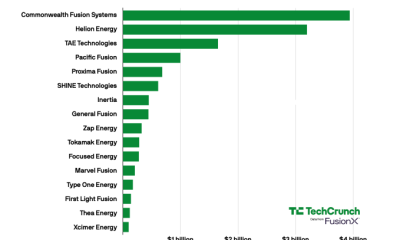
 Tech7 days ago
Every fusion startup that has raised over $100M
-
 Business7 days ago
Monarch Mutual Fund set to enter MF space with maiden overnight fund; files draft with Sebi
-

 News Videos2 days ago
Don’t Leave Your Financial Future To Chance | August 19, 2026
-
 Crypto World5 days ago
Data of 54K Wallet Users Leaked, Clarity Odds Just 10%: Hodler’s Digest, Aug. 16
-

 Crypto World4 days ago
NAVI Prime launches institutional lending framework on Sui
-

 Politics6 days ago
Britain is facing a housing disaster
-

 Tech7 days ago
How to watch FIH Hockey World Cup 2026: FREE live streams, schedule
-

 Tech6 days ago
What are the rumors about the AirPods Pro 4?
-

 Business6 days ago
Rebel Creamery files Chapter 11 with $23.8M Van Leeuwen judgment on appeal
-
 Tech7 days ago
Enterprise SSDs now consume 48% of global NAND flash supply
-
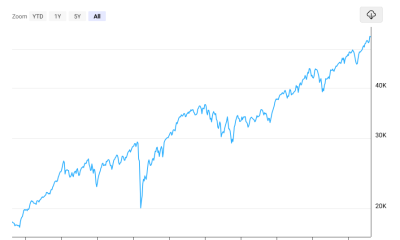
 Crypto World4 days ago
Dow’s 3-Year Winning Run Isn’t a Crash Signal, Still 49% Odds of Double-Digit Gains
-

 Business7 days ago
(VIDEO) Frozen 3 First Look Reveals Anna’s Wedding, Olaf’s New Love Interest And A Mysterious Villain
-

 Fashion7 days ago
Fashion Bomb Daily On the Scene: The 2026 MVAAFF x ESPN White Party on Martha’s Vineyard
-

 Business7 days ago
Stephen Curry Trade Rumors Persist as Warriors Insist Superstar Remains Committed to Golden State
-
 Tech5 days ago
OpenAI’s new ChatGPT feature logs your keystrokes and stores them in plain text
You must be logged in to post a comment Login