
Crypto World
Kiyosaki renews Bitcoin call as dollar fears return



Robert Kiyosaki renewed his call to buy Bitcoin on Aug. 22, arguing that financially educated investors use scarce assets to protect their wealth from inflation and a weakening U.S. dollar.
Summary
- Kiyosaki urged investors to buy Bitcoin, gold, silver, and selected real estate as dollar hedges.
- Treasury is doubling long-dated buyback limits to at least $4 billion per operation in September.
- Treasury buybacks manage market liquidity and debt operations; they are not Federal Reserve quantitative easing.
- Kiyosaki’s $350,000 Bitcoin target for August 2024 did not materialize despite his continuing long-term bullish forecasts.
- Bitcoin traded near $76,000 following a weekly rally supported by ETF inflows and short liquidations.
The “Rich Dad Poor Dad” author recommended Bitcoin, gold, silver and selected real estate. He claimed the Treasury’s decision to expand long-dated bond buybacks represented another round of quantitative easing and the creation of “fake dollars.”
That description does not match the Treasury announcement. The buyback program is a debt-management operation, while quantitative easing is a monetary-policy tool conducted by the Federal Reserve.
Kiyosaki links Bitcoin to financial education
Kiyosaki argued that knowledgeable investors acquire assets capable of appreciating while people holding cash lose purchasing power. He told followers “don’t be a loser” and repeated his view that financial ignorance carries a greater cost than education.
His statements reflect an investment opinion, not verified evidence that people buying Bitcoin are more financially educated than those who avoid it. Investors may hold cash for liquidity, emergency expenses or short-term obligations rather than as a long-term inflation hedge.
Kiyosaki has also acknowledged that BTC can produce losses when investors buy during periods of market excitement. As crypto.news previously reported, he warned against buying assets solely because of hype during Bitcoin’s May correction.
That earlier warning adds context to his latest message. Financial education may help investors assess risk, but it does not remove BTC’s price volatility or guarantee positive returns.
Treasury buybacks are not quantitative easing
The U.S. Treasury announced on Aug. 19 that it would increase liquidity-support buybacks for nominal securities in the 10-to-20-year and 20-to-30-year maturity sectors.
The maximum will rise from $2 billion to at least $4 billion per operation beginning Sept. 9, according to the Treasury. The increased limit will remain in place through Nov. 4, when officials plan to provide more information during the next quarterly refunding.
Treasury said the change was intended to support liquidity in longer-dated securities. It did not describe the program as quantitative easing or announce the creation of new currency.
The Federal Reserve defines quantitative easing as large-scale asset purchases used as a monetary-policy tool. Those purchases expand the central bank’s securities holdings and can increase reserve balances. Treasury buybacks instead replace selected outstanding debt through the government’s established financing operations.
Kiyosaki’s characterization of the action as “printing fake $” is therefore political and rhetorical, not a technical description of the program.
Bitcoin rallied as bond yields and the dollar weakened
Bitcoin traded near $76,000 on Aug. 23 after approaching $79,500 two days earlier. The cryptocurrency gained more than 20% over the week before retreating from the local high.
The rally followed the Treasury announcement, falling long-term bond yields and a weaker U.S. dollar. Forced short liquidations accelerated the initial move, while U.S. spot Bitcoin exchange-traded funds later added stronger evidence of direct demand.
The funds recorded approximately $1.92 billion in net inflows across five sessions. In related coverage, crypto.news found that ETF demand joined the short-covering rally after Bitcoin broke above $70,000.
The timing supports a connection between market liquidity expectations and Bitcoin’s rally. It does not prove Kiyosaki’s broader claim that Treasury operations will produce inflation or permanently weaken the dollar.
Kiyosaki’s forecasts require caution
Kiyosaki has repeatedly issued aggressive Bitcoin targets. In June 2024, he said BTC would reach $350,000 by Aug. 25 of that year. He described the figure as a “target, a dream, and a wish.” The forecast did not materialize.
He later proposed targets of $500,000 and $1 million with different deadlines. Those projections remain speculative and are not supported by a disclosed valuation model.
Kiyosaki has also sold BTC while remaining publicly bullish. In November 2025, he sold $2.25 million in Bitcoin at approximately $90,000 per coin and directed the proceeds toward surgery centers and a billboard business.
BTC’s next market test is whether spot demand can support prices after the short squeeze ends. Treasury’s higher buyback limits begin Sept. 9, providing a defined date for assessing their effect on long-term yields and broader risk markets.
Disclosure: This article does not represent investment advice. The content and materials featured on this page are for educational purposes only.



The Blockchain Association and Crypto Council for Innovation sued Illinois on Aug. 21 to block a 0.2% digital asset tax scheduled to take effect on Jan. 1, 2027.
Summary
- Two industry groups sued Illinois to block its 0.2% digital asset tax before implementation begins.
- The tax takes effect January 1, 2027, covering specified exchanges, transfers and storage services statewide.
- Plaintiffs allege seven federal and state legal violations, including discriminatory internet taxation and vagueness claims.
- The complaint seeks preliminary and permanent injunctions, but no court has blocked enforcement yet statewide.
- Illinois House Bill 5798 proposes complete repeal but has not advanced beyond its filing stage.
The complaint was filed in the Seventh Judicial Circuit Court in Sangamon County. It names Illinois Revenue Director David Harris, Attorney General Kwame Raoul and Sangamon County State’s Attorney John Milhiser as defendants in their official capacities.
The filing is the second industry lawsuit challenging the Illinois crypto tax. The Digital Chamber brought a separate case in July.
Illinois crypto tax covers transactions and custody
Illinois Public Act 104-468 imposes a 0.2% tax on the value of digital assets involved in covered activity. The statute defines that activity as specified exchanges, transfers or storage provided to customers in Illinois.
The tax is based on an asset’s value rather than a customer’s profit or the fee earned by a broker. Consequently, a transfer between wallets controlled by the same customer could fall within the statutory definition even when no sale occurs.
Brokers must register and begin collecting the tax by Jan. 1. Initial remittances would become due in February 2027, according to the complaint.
One provision treats a broker with at least $100,000 in qualifying Illinois receipts during the previous 12 months as maintaining a place of business in the state. However, the plaintiffs argue that other collection and registration provisions lack that threshold, creating uncertainty about which companies must comply.
Lawsuit presents seven claims against Illinois
The complaint alleges that the tax violates the federal Internet Tax Freedom Act by treating online digital asset activity differently from comparable transactions involving stocks, cash or gold.
It also alleges violations of the dormant Commerce Clause and federal and Illinois due process protections. The plaintiffs argue that undefined terms involving valuation, storage and business presence make the law too vague to enforce fairly.
Additional counts invoke the Illinois Constitution’s Uniformity Clause and restrictions on delegating state taxing authority. The groups also challenge the process used to enact the 1,624-page budget package, citing its three-readings and single-subject requirements.
These are allegations rather than judicial findings. Illinois has not yet filed a publicly available response addressing the new complaint’s claims.
“This tax singles out digital assets for uniquely punitive treatment,” CCI CEO Ji Hun Kim said. Whether that treatment is legally discriminatory remains for the court to decide.
The plaintiffs seek a declaration that the Digital Asset Tax Act is invalid. They also requested preliminary and permanent injunctions preventing Illinois officials from implementing or enforcing it.
Second lawsuit increases pressure before 2027
The Digital Chamber filed the first Sangamon County challenge on July 21. As crypto.news previously reported, that case also argues the tax unlawfully targets blockchain transactions while leaving comparable traditional financial activity untaxed.
The two complaints have separate plaintiffs and are not automatically a single proceeding. No publicly available order has consolidated them or established a joint litigation schedule.
The complaint published by the Blockchain Association and CCI also leaves its case-number field blank. No hearing date or briefing deadline was identified in the plaintiffs’ public materials.
The filing itself does not suspend the law. Unless a court grants an injunction or legislators repeal it, companies must continue preparing for the January effective date.
The state has estimated that the tax could generate approximately $60 million annually. That remains a budget estimate rather than guaranteed revenue, particularly while enforcement faces litigation and a possible legislative repeal.
Court action or repeal could stop the tax
The immediate legal question is whether the plaintiffs can obtain preliminary relief before Jan. 1. They must persuade the court that they meet Illinois requirements for an injunction, including showing likely legal success and irreparable harm without early intervention.
Illinois lawmakers have another route available. Republican state Representative John Cabello introduced House Bill 5798 on June 22 to repeal the Digital Asset Tax Act immediately.
Official records show that HB 5798 has not advanced beyond its filing stage. It has received no committee vote or floor vote.
Businesses therefore face three possible developments before 2027: an injunction, legislative repeal or continued implementation. The next court filings should establish Illinois’ defense and whether the plaintiffs will receive an expedited hearing.


DeFi lending protocol Term Labs lost roughly $8.5 million on Sunday after a governance exploit impacted its Term vaults, blockchain security firm PeckShield reported.
The attacker pulled 2,843 Ethereum (ETH) and 1.68 million USDC (USDC) out of the protocol. Term Labs confirmed the incident and said a fuller account would follow its investigation.
How the Term Labs Attacker Moved the Funds
PeckShield valued the ETH portion at $6.87 million and the stablecoin portion at $1.68 million. The attacker then swapped the USDC into roughly 1.68 million Dai (DAI).
The post highlighted that the wallet behind the attack was originally seeded with 2 ETH withdrawn from Tornado Cash. Mixer funding is a common precursor to onchain theft, since it breaks the link to an exchange deposit.
Term Labs runs fixed-rate lending through onchain auctions. According to DefiLlama, the vaults’ total value locked stands at $12.2 million, with $8.6 million of that on Ethereum.
The team has not yet named the specific governance function the attacker abused.
Follow us on X to get the latest news as it happens
August Losses Keep Stacking Up
The exploit lands in an already heavy month. DefiLlama had logged 17 security incidents worth about $18.8 million in August before the Term Labs drain. The $8.5 million loss alone would push the month past $27 million.
August still trails July, when 38 incidents cost roughly $254 million. The Coldcard wallet firmware flaw accounted for $116 million of that total.
Other August victims include Harmony, where an attacker minted roughly 4 billion tokens without authorization. Payment processor Coinsbuy was also drained of $7.9 million. Sandbox contained a SAND bridge vulnerability on Saturday.
Governance failures stay rare but expensive. DefiLlama has classified five 2026 incidents as governance attacks worth $25.1 million combined, led by a $20 million malicious proposal against BonkDAO in July.
Term is also a repeat target. DefiLlama recorded a $1.65 million hit at Term Finance in April 2025, attributed to an oracle misconfiguration.
Across the wider market, SlowMist counted 182 incidents worth about $956 million in the first half of 2026, per its mid-year report.
Subscribe to our YouTube channel to watch leaders and journalists provide expert insights
The post Another DeFi Hack: Term Labs Loses $8.5 Million in Governance Exploit appeared first on BeInCrypto.


Coinbase CEO Brian Armstrong urged senators to support the CLARITY Act during an Aug. 20 interview, arguing that permanent legislation could protect crypto users and limit regulatory overreach by future administrations.
Summary
- Senate records schedule the CLARITY Act cloture motion for September 15 at 2:15 p.m. Eastern.
- Armstrong said statutory crypto rules would protect consumers while limiting future government regulatory overreach risks.
- The House passed H.R. 3633 by 294-134 before Senate Banking advanced it 15-9 in May.
- Sixty Senate votes are required for cloture, leaving Republicans dependent on support from several Democrats.
- September 16 agency action remains Armstrong’s stated alternative, not a finalized SEC-CFTC rulemaking outcome yet.
The campaign is approaching a confirmed deadline. Senate records show that the cloture motion on H.R. 3633 will ripen on Sept. 15 at 2:15 p.m. Eastern.
The vote concerns whether the Senate should begin considering the bill. It is not a final vote on passage.
Armstrong says CLARITY would protect consumers
“The current status quo today is that there isn’t much clarity about what the rules are,” Armstrong told CBS. He said the resulting uncertainty was exposing ordinary Americans to harmful products.
Armstrong argued that the legislation would give law enforcement more tools against illicit activity. He also cited clearer rules for stablecoin rewards, digital-asset fundraising and other products offered to consumers.
He presented written legislation as protection against “bad government or overreach.” Unlike agency interpretations, federal statutes generally cannot be reversed solely because a new administration changes its regulatory policy.
Armstrong’s claim that the legislation would prevent another FTX-style failure is forward-looking. The bill has not been tested under comparable circumstances.
FTX’s collapse involved fraud and misuse of customer assets at an offshore exchange. CLARITY contains registration, disclosure and customer-protection provisions, but it cannot guarantee that regulated companies will never fail.
CLARITY Act would divide federal oversight
The bill would establish definitions for digital commodities, network tokens and other digital assets. It would divide responsibilities between the Securities and Exchange Commission and Commodity Futures Trading Commission according to an asset’s characteristics and the transaction involved.
The proposed framework also includes registration requirements for digital-commodity exchanges, brokers and dealers. Other provisions address custody, customer assets, disclosures, anti-money-laundering obligations and treatment during insolvency.
The House passed its version in July 2025 by 294-134. The Senate Banking Committee then advanced the legislation by 15-9 on May 14, 2026.
Because the Senate committee amended the House bill, passage would not immediately send the legislation to the president. The chambers would first need to approve identical text.
September vote requires Democratic support
Senate Majority Leader John Thune filed cloture before the August recess. The official schedule places the motion on Sept. 15, one day after senators return for regular business.
Cloture requires 60 votes. Republicans hold 53 seats, meaning at least seven Democrats must support the motion if every Republican votes for it. Committee approval does not guarantee those votes on the floor.
Armstrong said he expects more than 60 senators to support the motion. That remains an industry executive’s forecast, not a confirmed vote count.
Lawmakers are still negotiating ethics restrictions for elected officials, stablecoin rewards, decentralized finance provisions and illicit-finance safeguards. As previously reported, these unresolved disputes delayed Senate action before the recess.
President Donald Trump called for a “fair version” of the bill during an Aug. 19 White House event. The meeting included Armstrong, Robinhood CEO Vlad Tenev, Kraken co-CEO Arjun Sethi and federal regulators.
Agency rules remain an incomplete alternative
Armstrong later wrote that “clarity is coming either way.” He pointed to possible SEC and CFTC action on Sept. 16 if senators block the bill.
“A new set of rules from the CFTC and SEC on September 16th” is Armstrong’s characterization. Neither agency has published a finalized joint rule package carrying that effective date.
CFTC Chair Michael Selig has said the agency is prepared to use its existing authority with or without legislation. The SEC also proposed Regulation Crypto Assets on Aug. 18, beginning a rulemaking process rather than issuing immediately effective market-structure rules.
Agency action cannot fully reproduce legislation that grants new authority or changes federal statutes. Rules can also face public-comment requirements, court challenges and later revision.
Bitcoin and Ethereum rose 5.9% and 2.8%, respectively, during the day of Armstrong’s interview, according to CBS. The gains coincided with the White House policy push and a broader market rally, but available evidence does not isolate CLARITY as the sole cause.
The Sept. 15 cloture result will determine whether senators begin debate. Even a successful vote would leave amendments, final Senate passage and House reconciliation ahead.


Term Labs confirmed on Aug. 23 that a governance exploit had affected its lending vaults. Blockchain security firms estimated that the attacker extracted approximately $8.5 million in cryptocurrency.
Summary
- Term Labs confirmed a governance exploit affected its vaults while investigators assessed the full damage.
- CertiK estimated losses near $8.5 million, but Term Labs has not publicly confirmed that figure.
- The identified address held approximately 2,843 ETH and 1.6 million DAI after the attack transactions.
- PeckShield traced the exploiter’s initial two-ETH funding to Tornado Cash before the vault transactions began.
- Term Labs has not announced recoveries, reimbursement terms, contract pauses, or a completed technical postmortem.
The protocol said it was investigating and would release additional information afterward. It has not confirmed the loss estimate, identified the affected vaults or explained how the attacker gained governance control.
Term Labs confirms its vault governance exploit
“We are aware of a governance exploit impacting Term vaults,” Term said. “We will share more details once it has been further investigated.”
The statement did not say whether Term Labs had paused deposits, withdrawals or governance functions. It also did not identify any contracts that users should avoid. No recovery proposal, reimbursement commitment or deadline for a postmortem had been announced when this report was prepared.
Term Labs operates a decentralized lending system built around fixed-rate borrowing and lending. Its strategy vaults allocate deposited funds through programmed contracts. The protocol has not said whether every vault was exposed or whether the incident affected only specific deployments.
Security firms estimate losses at $8.5 million
CertiK classified the incident as a governance attack and estimated the loss at approximately $8.5 million. That amount remains an external estimate rather than a figure confirmed by Term Labs.
PeckShield reported that the exploiter drained approximately 2,843 ETH, valued at about $6.87 million at the time, plus 1.68 million USDC. According to its tracing, the attacker subsequently exchanged the USDC for approximately 1.68 million DAI.
Those amounts broadly support CertiK’s estimate. However, valuations can change with asset prices, transaction fees and subsequent transfers. A complete accounting will require Term Labs to identify every affected vault and reconcile the relevant transactions.
The findings also resemble other recent attacks on protocol-controlled funds. In related coverage, a Summer.fi vault exploit reportedly drained approximately $6 million. That case involved different contracts and does not establish how the Term Labs incident occurred.
Governance mechanism remains unconfirmed
Term Labs has described the event as a governance exploit, but neither the protocol nor the cited security firms has published a full transaction-level explanation. It remains unclear whether the attacker accumulated voting power, abused an existing permission or exploited a weakness in the proposal process.
Governance attacks can let an entity use authorized voting or administrative functions to transfer protocol assets. As crypto.news previously explained after the BonkDAO governance attack, weak quorum rules, concentrated voting power and missing execution delays can expose controlled funds. Those risks are general examples, not confirmed causes in the Term Labs case.
PeckShield also reported that the attacker’s address initially received 2 ETH from Tornado Cash. The transfer obscures the wallet’s earlier funding source, but it does not identify the attacker or prove who controlled the address.
A Tornado Cash connection should therefore be treated as an on-chain funding trail, not an attribution finding. Investigators will need exchange records, wallet clustering or other evidence to connect the address to a person or organization.
Term Labs still owes users a recovery timeline
The next verified update should establish which vaults and contracts were affected. Users also need confirmation about whether deposits, withdrawals, governance voting and strategy execution remain active.
A technical report would normally document the malicious transactions, control path and safeguards that failed. Term Labs has not announced when it will publish that material. It has also not disclosed whether it contacted the attacker, law enforcement, stablecoin issuers or centralized exchanges.
Any repayment plan would require a confirmed loss total and a clear assessment of recoverable assets. As crypto.news reported following another DeFi breach, the Resupply recovery plan used treasury payments, insurance funds and governance approval. Term Labs has not proposed a comparable process.
Until the investigation is complete, the $8.5 million figure and reported asset balances remain security-research estimates. The protocol’s only confirmed disclosure is that a governance exploit affected Term vaults.


Onchain investigator ZachXBT said he may automatically reject future requests from crypto victims in seven jurisdictions.
Summary
- ZachXBT said he may automatically reject future victim requests originating from seven named jurisdictions worldwide.
- Canada, the UK, India, Nigeria, Morocco, Algeria and Bangladesh appeared on his stated list publicly.
- His planned website would restrict access from jurisdictions he personally characterized as low quality regions.
- No launch date, website address, eligibility rules or appeal process has been publicly disclosed yet.
- The proposed restrictions reflect ZachXBT’s personal experiences, not government sanctions, court orders or legislation anywhere.
The named jurisdictions were Canada, the UK, India, Nigeria, Morocco, Algeria and Bangladesh. ZachXBT reportedly based the proposed restrictions on his personal experiences handling cases connected to victims in those locations.
He also plans to restrict access to some support services through an upcoming website. However, no website address, launch date or complete access policy had been published when this report was prepared.
ZachXBT may filter cases by victim location
ZachXBT reportedly described the named jurisdictions as producing some of his worst case-handling experiences. He said he would “likely automatically reject” future assistance requests originating from those regions.
The remark describes a possible future policy rather than an active prohibition. There is no evidence that he has already blocked every request from the seven jurisdictions or stopped working on cases previously submitted by their residents.
“Likely automatically reject” remains a stated intention. ZachXBT has not published final eligibility rules or confirmed that every applicant from the named jurisdictions will be refused.
The list reflects ZachXBT’s personal assessment. It does not come from a government agency, court or international sanctions authority. The remarks also did not provide case data showing how many requests he received from each country or why individual cases produced poor outcomes.
Planned website will restrict some regional access
ZachXBT said his forthcoming website would prevent users in some jurisdictions he considers “low quality” from accessing crypto support services. The wording suggests that the platform could use regional eligibility controls when accepting investigation requests.
“Low quality” is ZachXBT’s subjective description. No published methodology, performance data or independent assessment currently supports that classification.
Important operating details remain unavailable. ZachXBT has not disclosed which services the website will provide, whether restrictions will depend on residency or internet location, or whether applicants can challenge an incorrect classification.
He also has not said whether exceptions will apply to large thefts, coordinated attacks or cases involving victims across several countries. No fee model, privacy policy or terms of service have been released publicly.
The lack of details prevents confirmation that all seven named jurisdictions will be blocked at launch. The policy could change before the website becomes operational.
Independent investigators fill a recovery gap
ZachXBT regularly traces funds stolen through phishing, wallet compromises and exchange-related scams. His work can identify transaction paths, deposit addresses and links between wallets. Such findings may help exchanges or authorities assess a victim’s report, but an investigator cannot independently freeze or return assets.
That limitation matters because recovery frequently requires cooperation from centralized exchanges, stablecoin issuers and law enforcement agencies. Blockchain tracing can show where assets moved, but control over a destination wallet or exchange account remains with its operator.
In one earlier investigation, ZachXBT estimated that Coinbase users lost at least $65 million through social-engineering scams during two months. Coinbase did not confirm that estimate.
More recently, his analysis helped trace funds after a fake Ledger application stole $9.5 million from more than 50 reported victims. The incident showed how individual researchers can become an informal point of contact after large thefts.
Victims still have official reporting routes
The proposed restrictions would apply to ZachXBT’s private assistance, not to official reporting channels. Victims can still contact local police, national fraud-reporting agencies, exchanges, wallet providers and relevant financial regulators.
They may also submit transaction hashes, wallet addresses and communications from suspected scammers to blockchain analytics companies. Prompt reporting can matter when stolen assets reach a centralized service capable of restricting an account.
The next verified development will be the publication of ZachXBT’s website and its written eligibility policy. Those materials should clarify which countries are restricted, what services remain available and whether current cases will continue.
Until then, the comments should not be presented as a completed ban. They indicate that ZachXBT is considering location-based limits after what he described as poor personal experiences handling cases from the seven jurisdictions.
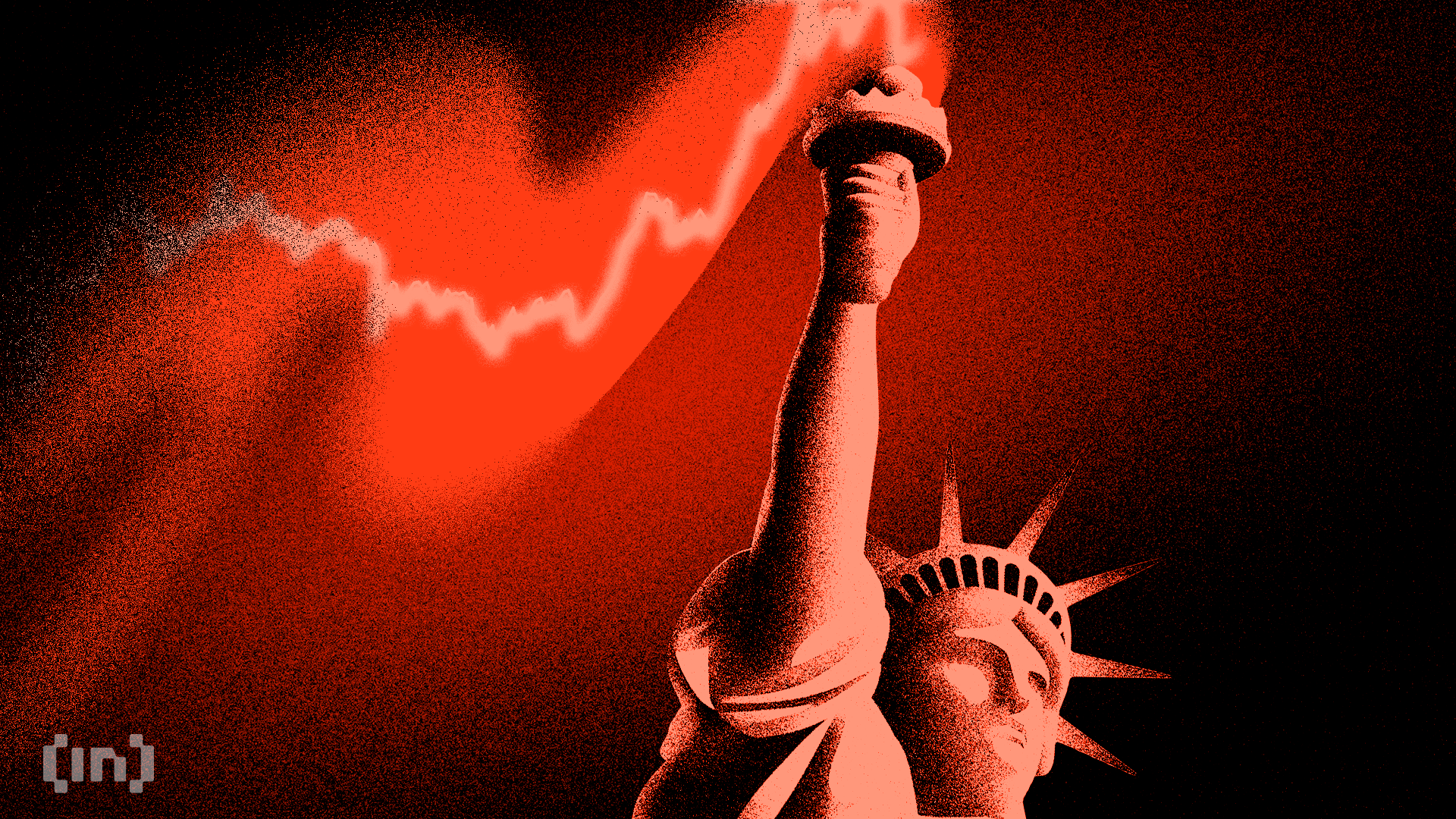

Rep. Rashida Tlaib holds up to $30,000 in iShares Bitcoin (BTC) Trust ETF positions and up to $15,000 in a Grayscale Ethereum (ETH) staking fund, her latest financial disclosure shows.
The Michigan Democrat voted against the CLARITY Act in July 2025 and co-sponsored a resolution targeting crypto corruption. The Senate takes up the same bill in September.
What the Disclosure Shows
Tlaib filed her annual disclosure covering 2025 on August 11, 2026. It lists the iShares Bitcoin Trust ETF (IBIT) in two separate accounts. Her Schwab Rollover Traditional IRA and her Schwab Roth Contributory IRA each hold a position valued at $1,001 to $15,000.
The Roth IRA also holds the Grayscale Ethereum Staking Mini ETF, which is likewise valued between $1,001 and $15,000. Combined, the three positions represent between $3,003 and $45,000 in crypto exposure. Lawmakers disclose assets only in broad ranges.
The filing shows Tlaib bought IBIT on April 28 and May 29, 2025. Both purchases coincided with rollovers of two employer retirement plans into her Schwab accounts. The exposure comes entirely through exchange-traded funds. The filing lists no directly held cryptocurrencies.
Follow us on X to get the latest news as it happens
A Voting Record That Points the Other Way
Tlaib voted against the CLARITY Act when the House passed it 294-134 in July 2025, House records show. The bill would establish a market structure framework for digital assets. The Senate holds a procedural vote on it on September 15.
In October 2025, Tlaib co-sponsored the Ban Crypto Corruption Resolution led by Rep. Ro Khanna. It calls on politicians and their immediate families to refrain from issuing, sponsoring, or endorsing digital assets. It also urges blind trusts for their digital asset holdings.
Her skepticism dates back further. In 2020, she introduced the STABLE Act. The bill sought to make it illegal to issue a stablecoin unless the issuer was an insured depository institution and a Federal Reserve System member. The bill died in committee.
Subscribe to our YouTube channel to watch leaders and journalists provide expert insights
The post Crypto Skeptic Rashida Tlaib Holds Bitcoin and Ethereum ETFs appeared first on BeInCrypto.
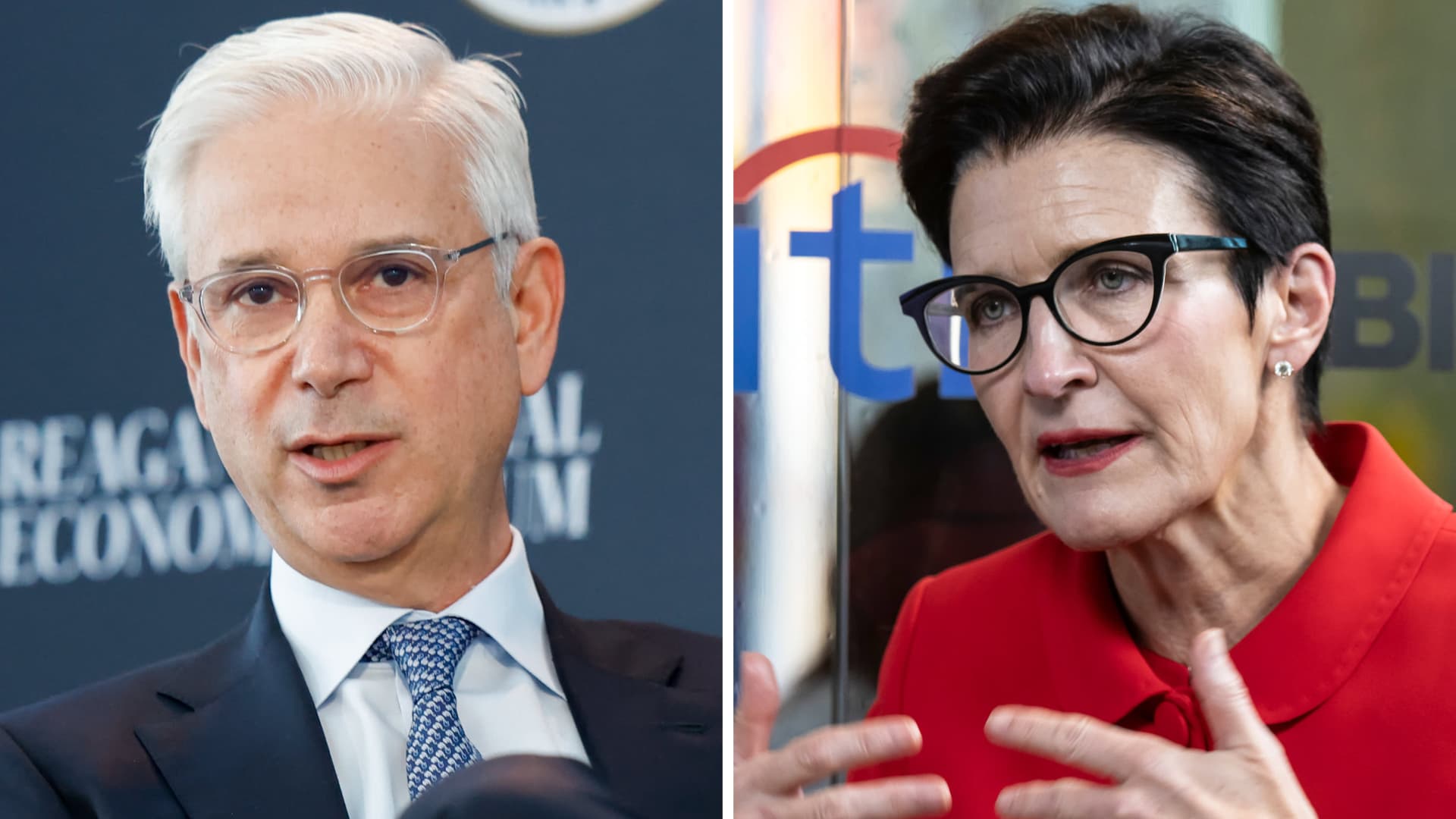
Charles Scharf, chief executive officer of Wells Fargo & Co., and Jane Fraser, chief executive officer of Citigroup Inc.
Caroline Brehman | Qilai Shen | Bloomberg | Getty Images
Walk the halls of any major banking conference or listen in on a quarterly earnings call, and one topic keeps coming up: With the window for mergers wide open under the Trump administration, who will take a swing?
After years on the sidelines because of regulatory restrictions, large banks can once again contemplate buying other lenders, even a $100 billion-plus-asset regional bank.
While JPMorgan Chase and Bank of America are barred from such a deal because they already have more than 10% of national deposits, there are two megabanks that could pursue a large acquisition: Citigroup and Wells Fargo. The nation’s third- and fourth-largest banks have enough room under the national deposits cap to pursue a hefty regional bank, according to investment bankers, consultants and investors.
“Two years ago, it was impossible for a bank of that size to get approval to acquire almost anything,” said Brian Graham, co-founder of advisory firm Klaros. “Now, it’s possible they can get a deal done. I’d be shocked if they aren’t exploring it.”
After spending much of the last decade in a penalty box — Citigroup via consent orders and Wells Fargo capped by growth restrictions — both institutions have cleared key regulatory hurdles and are in growth mode.
A large acquisition — like the ones that rival JPMorgan pulled off during the crises of 2023 and 2008 — would give Wells Fargo or Citigroup thousands of branches and billions of dollars in deposits.
For Citigroup, which has only about 650 U.S. branches, it would offer a much-needed source of cheaper funding. For Wells Fargo, which already has a large branch network, such a transaction would add more scale and cost-cutting opportunities.
“There’s a massive race for scale, and the shot clock is running,” KBW analyst Chris McGratty said about the broad need for industry consolidation. “If you want to do something, this is the time to do it.”
While there are over 4,200 banks in the U.S., only a handful would make sense as acquisition targets for Wells Fargo or Citigroup. A viable target needs to be large enough to move the needle, but small enough to keep the acquirer comfortably beneath the 10% national deposit cap. On top of that, a complementary branch network, good cultural fit and quality deposits are must-haves, making most deals hard to justify.
Run screens on those criteria, and five regional banks emerge as strong contenders for either bank.
Fifth Third delivers a commercial and retail engine across the Midwest and a fast-growing Southeastern footprint. Huntington provides a low-cost deposit base alongside a growing branch presence in high-growth markets in Texas and the Carolinas.
Citizens offers dense retail and commercial coverage across affluent Mid-Atlantic and New England cities. KeyCorp brings a middle-market commercial business and branches stretching from the Great Lakes to the Pacific Northwest.
Finally, Regions delivers a retail deposit footprint in the fast-growing Southern corridor, including Texas and Florida.
Beyond that group, a bank that would work specifically for Wells Fargo is Zions, which provides relationships across high-growth Western states, fitting well with its footprint.
For Citigroup, a possible target that makes sense is First Horizon, with its presence across the fast-growing U.S. Sunbelt.
Wells Fargo and Citigroup declined to comment for this article. Most of the regional banks mentioned above also declined to comment, with the exception of Huntington, Zions and First Horizon, which did not respond.
‘We will look at it’
When asked about the potential for Citigroup to purchase a large bank in April, CEO Jane Fraser said the bank’s focus is on organic growth, not deals.
Still, Citigroup executives reportedly discussed the idea of buying a major regional lender to bolster its deposit base, Bloomberg News said in March. Citigroup said at the time that the report was “baseless speculation.” The firm’s shares dropped more than 4% that day.
To many of the analysts covering the bank, Citigroup is still trying to prove that its self-help story can deliver higher returns. Taking on a large regional bank would add branches, employees, technology systems and integration risk while Citigroup is trying to simplify itself.
“A depository deal would be a major distraction” for Citigroup, said KBW’s McGratty.
Wells Fargo CEO Charlie Scharf, on the other hand, has telegraphed an openness to a transformative deal, from acquiring a bank to a credit-card player, even as he also emphasized the organic growth emphasis.
“We should always consider ways to increase franchise value, including M&A,” Scharf wrote in a March shareholder letter, acknowledging that regulators were more amenable to deals.
While “we feel no pressure to pursue” a deal, Scharf said, “if a great opportunity exists, we will look at it.”
But there’s one problem: So far, the wave of consolidation that many expected when Trump returned to office in 2025 hasn’t materialized. In fact, the value of North America bank mergers actually fell by more than half to $30.1 billion in the first six months of 2026 compared to the year-earlier period, according to EY data.
Yes, regulatory barriers may be falling. But few banks are eager to sell when profits and share prices are rising.
“Most companies have good profit margins, stock prices are really good, and it just raises the bar if they are going to sell,” said Frank Sorrentino, a mergers banker at Stephens. “Everybody thinks they’re a buyer, not a seller.”
Activist investors who have pushed banks to improve shareholder returns say executives are now routinely comparing the economics of an acquisition with simply repurchasing their own stock, creating more discipline around deals.
Regional champion?
The moment is still favorable for mergers, according to Sorrentino, who called it “probably the best environment that we’ve seen since the financial crisis.”
Last year, Congress overturned Biden-era restrictions around mergers at the Office of Comptroller of the Currency, and the Federal Deposit Insurance Corporation reinstated its long-standing merger guidelines, effectively restoring expedited reviews and lowering the bar for regulatory clearance.
When it comes to big acquisitions, Wells has something Citi doesn’t: a stronger stock currency. That could make a deal easier to justify, particularly if the target fills a geographic or product gap.
But another way to win the race is for regionals to team up with each other.
For years, bankers have speculated that two of the three biggest super-regionals — PNC, U.S. Bancorp and Truist — could eventually combine to create a new banking champion capable of taking on the giants.
Bain projects that mergers among regionals will create one to three new megabanks with at least $1 trillion in assets by 2030, according to new research shared with CNBC. The consulting firm’s predictive model, which was based on two decades of data, also found that the ranks of regional banks will shrink from 49 to as few as 30.
“We expect more banks, particularly regional players, to use M&A to add capabilities,” especially around technology including artificial intelligence, Bain said.
That idea hasn’t gone away. If Wells Fargo and Citi decide not to swing, the regionals have to decide whether they can afford to sit on the bench — or merge with each other to keep pace.


Robert Kiyosaki warned followers on X that the US Treasury is printing more fake dollars, pointing to an expanded buyback program for longer-dated Treasury securities.
The author of Rich Dad Poor Dad labeled the move another round of quantitative easing in disguise.
What Officials Say the Buyback Move Actually Is
Quantitative easing refers to a central bank expanding the money supply by purchasing financial assets, typically to lower long-term interest rates. Officials, however, describe this specific measure differently.
The Treasury raised the maximum size of its buyback operations from $2 billion to at least $4 billion per auction for 10- to 30-year bonds, effective September 9.
The announcement followed a sharp rise in long-term yields, with the 30-year bond briefly reaching levels not seen in nearly two decades. Officials described the larger buybacks as a liquidity measure rather than formal quantitative easing, noting that only the Federal Reserve can expand the monetary base.
Follow us on X to get the latest news as it happens.
Market observers largely characterized the step as a limited, operation-twist-style adjustment aimed at easing pressure on the long end of the curve. Still, the dollar weakened toward three-month lows.
Why Kiyosaki Sees This as More Fake Dollars
Kiyosaki argued that the buyback expansion amounts to creating more fake dollars regardless of the official framing. He claimed the resulting drop in the Dollar Index, which measures the greenback against major currencies, signals rising inflation.
That inflation, he warned, will punish savers holding cash or traditional paper assets. Educated investors, he wrote, grow richer by holding assets that tend to rise during currency debasement: gold, silver, Bitcoin, and select real estate.
Those who remain financially uneducated and cling to fiat currency, he added, steadily lose ground. Gold and Bitcoin attracted fresh buying interest amid broader debasement trade narratives that gained traction following the announcement.
“Facts are educated investors who invest in assets that go up in value, such as gold, silver, Bitcoin, some real estate, get richer….while people who are financially uneducated, and invest in fake assets get poorer,” Kiyosaki said on X.
Kiyosaki has long championed hard assets over fiat currency, reiterating a favorite theme: the true cost of financial ignorance far exceeds the price of education.
As the US national debt has climbed past $40 trillion and fiscal concerns persist, his message remains consistent, urging investors to shift from dollars into scarce assets that preserve purchasing power.
Whether the buyback expansion proves temporary relief or a deeper signal of fiscal strain remains an open question for markets going forward.
Subscribe to our YouTube channel to watch leaders and journalists provide expert insights.
The post Robert Kiyosaki Bets on Gold, Silver, and Bitcoin Amid “More Fake Dollars” appeared first on BeInCrypto.


Bitcoin traded near $76,600 on Aug. 23 after reaching $79,500 two days earlier, prompting claims that veteran trader Peter Brandt’s 58,000–62,000 forecast was wrong.
Summary
- Brandt forecast Bitcoin would reach 58,000–62,000, and prices entered that range months later during 2026.
- Bitcoin fell to approximately $57,717 on July 1 before rebounding toward $79,500 by August 21.
- Brandt abandoned his later bearish outlook after an inverse head-and-shoulders pattern completed, buying the breakout.
- U.S. spot Bitcoin ETFs drew $1.92 billion across five sessions during the latest weekly rally.
- Treasury will double long-dated buybacks to at least $4 billion per operation beginning September 9.
The historical price record shows otherwise. Brandt issued the forecast in January when Bitcoin traded near $92,400. Bitcoin later entered his stated range and fell to approximately $57,717 on July 1. It subsequently spent weeks near or slightly above the target zone before beginning its latest recovery.
The rally therefore does not invalidate the completed forecast. It shows that market conditions changed after Bitcoin reached the area Brandt identified.
Bitcoin reached Brandt’s target months after his call
Brandt wrote on Jan. 19 that “$58K to $62K is where I think it is going.” He reportedly expected the move within two weeks, although he also acknowledged that his assessment could be wrong.
Bitcoin did not meet that short timetable. However, the price eventually reached the forecast range during the 2026 downturn. Fortune recorded Bitcoin at $58,278 on July 1, while other market data showed an intraday low near $57,717.
The difference between price and timing matters when assessing the forecast. Brandt correctly identified a later trading zone, but the projected two-week horizon was too short. Calling the entire forecast wrong because Bitcoin now trades above $76,000 ignores the intervening decline.
As crypto.news previously reported, Brandt’s January downside target was later reached before he began identifying evidence of a possible market bottom.
Brandt changed position after Bitcoin completed its pattern
Brandt did not remain committed to the bearish position after the chart structure changed. He said BTC’s prolonged inverse head-and-shoulders pattern initially had a 60% probability of resolving downward because the wider trend remained weak.
The completion of the pattern changed his view. Brandt said he “bought the breakout for better or worse” after BTC moved above the neckline. The quotation reflects a trading decision, not a guarantee that the rally will continue.
His updated position illustrates how technical traders often work. A forecast applies while its underlying pattern and price conditions remain valid. A confirmed breakout can invalidate the next bearish setup even when an earlier downside target was achieved.
Brandt also pointed to what he calls “price walls,” a decades-old charting method that identifies areas where tightly grouped price bars may later act as support or resistance. He did not provide a guaranteed upside target in the latest post.
Short liquidations and ETF demand accelerated Bitcoin’s rally
The crypto rose from approximately $62,679 on Aug. 17 to $79,500 on Aug. 21, a gain of nearly 27% from the weekly low. It later retreated toward $76,600 but remained up more than 20% over seven days.
Forced short covering helped drive the early part of the move. Traders holding leveraged bearish positions had to buy BTC when prices crossed their liquidation levels, adding demand during the breakout.
However, the rally was not based entirely on derivatives. U.S. spot Bitcoin exchange-traded funds recorded $606 million in net inflows on Aug. 20, following approximately $517 million the previous day. Five-session inflows reached about $1.92 billion.
In related coverage, crypto.news reported that the combination of short liquidations and spot ETF demand produced one of the market’s largest squeeze events since 2021.
The ETF inflows provide evidence of spot demand alongside forced derivatives buying. Continued inflows would offer stronger support for the rally than short covering alone.
Treasury action changed the macro backdrop
The reversal also followed a change in U.S. bond-market conditions. On Aug. 19, the U.S. Treasury announced that it would at least double the maximum size of liquidity-support buybacks for longer-dated government securities.
The current maximum of $2 billion per operation will increase to at least $4 billion beginning Sept. 9, according to the Treasury. The operations cover the 10-to-20-year and 20-to-30-year sectors.
Long-term Treasury yields declined after the announcement, while the U.S. dollar weakened. Bitcoin, gold and other scarce assets rallied as traders responded to the change in liquidity conditions.
Bitcoin’s next test is whether it can reclaim and hold $79,500 before challenging $80,000. Failure to maintain the breakout could return attention to the low-$70,000 region and the completed pattern’s neckline.
Brandt’s January price target was reached, but his original timing was not. His later bearish view also changed after the market produced a confirmed bullish breakout. Those are separate forecasts and should not be combined into a claim that the $58,000 call failed.
Disclosure: This article does not represent investment advice. The content and materials featured on this page are for educational purposes only.
The altcoin market cap surged by $215 billion between August 19 and 22, a gain of more than 24% in 3 days, pushing Total2 back above $1 trillion. Key indicators, however, suggest altseason remains unconfirmed.
The rally followed President Donald Trump’s August 19 White House meeting with crypto executives. Since then, the market has cooled, with the global crypto market cap down 5.51% over the past 24 hours to $2.57 trillion.
Trump Remarks Spark a Broad Altcoin Rebound
At the meeting, Trump urged Congress to pass a “fair version” of the CLARITY Act and said a “sizable” government Bitcoin (BTC) purchase has been discussed. Bitcoin subsequently broke above $70,000 for the first time since June.
Follow us on X to get the latest news as it happens
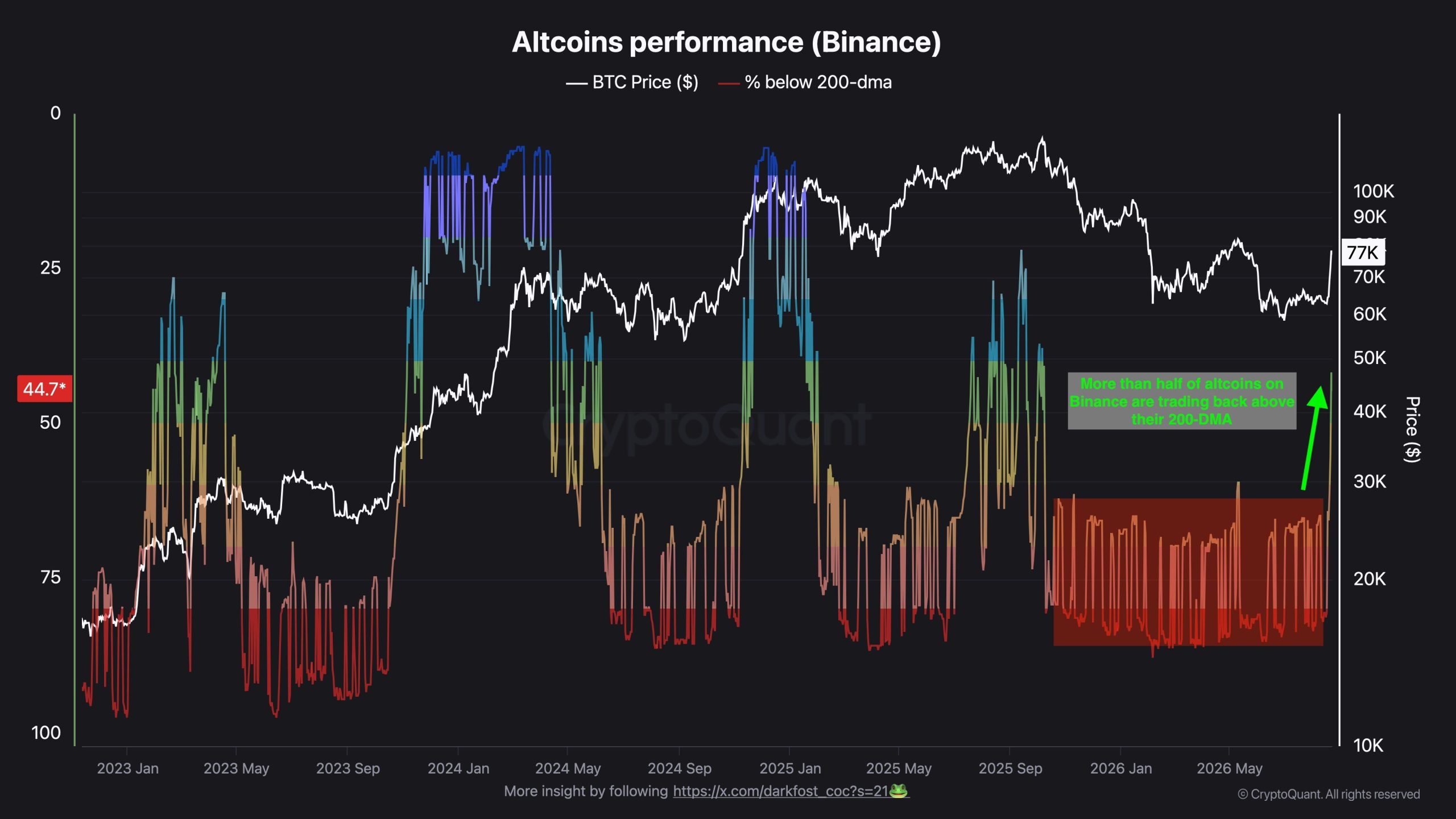
Altcoins moved even faster. According to analyst Darkfost, mid and small caps led the advance, reversing a dormancy phase that began in November. During that stretch, roughly 80% to 85% of altcoins on Binance traded below their 200-day moving average (DMA).
“Today, more than half of the altcoins available on Binance are trading above their 200-DMA, signaling a regime shift,” Darkfost said.

Historically, Darkfost noted that gains of this scale are an intermediate signal of an early-stage altseason. He cautioned, however, that the market has entered overbought territory and may need a short-term breather.
Why Altseason Is Not Confirmed Yet
Bitcoin dominance tells a more cautious story. The metric stood at 59.69% on August 23, per TradingView, still above the level many traders watch for a broader rotation.
“A real low-cap altseason historically needs BTC.D to drop below 58%. Structure is improving, but altseason isn’t confirmed yet, so let’s wait for further confirmation,” analyst Ash Crypto noted.

The Altcoin Season Index provides another reason to remain cautious. The index currently stands at 49, indicating that fewer than half of the top-performing altcoins outperform Bitcoin over the measured period. The threshold for a confirmed altseason is typically 75, when at least 75% of the tracked altcoins have outperformed BTC.
The gap suggests that the recent rally, while broad, has not yet developed into the sustained market-wide rotation typically associated with an altseason.
Whether the rotation broadens may hinge on the Senate’s September 15 procedural vote on the CLARITY Act, the next major catalyst on the calendar.
Subscribe to our YouTube channel to watch leaders and journalists provide expert insights
The post Is Altcoin Season Finally Coming? Market Just Added $215 Billion appeared first on BeInCrypto.

Harry Kane, Giulia Gwinn named Germany’s players of year

Popular bar in Cambridge’s ‘busiest nightlife district’ looking for new tenants

Prime Videos’s Hit Thriller Quietly Changed a 23-Year-Old Franchise’s Formula





-

 Fashion2 days ago
Weekend Open Thread: Madewell – Corporette.com
-

 Crypto World1 day ago
anatomy of crypto’s biggest liquidation event since 2021
-

 Business5 days ago
SMA Solar Technology AG (SMTGY) Q2 2026 Earnings Call Transcript
-

 Tech5 days ago
Qwen3.8-27B runs frontier-class coding agents and reasoning locally, no cloud API required
-

 Politics1 day ago
6 months on, Irish renters crushed by effects of government housing bill
-

 Crypto World6 days ago
OCC Greenlights Trump Family Crypto Firm for Trust Charter
-
 NewsBeat1 day ago
The ‘Lucky Dip Gang’ causing carnage for clicks: After five thugs were killed speeding in the wrong direction on a motorway, GUY ADAMS investigates a sick new trend… and why police aren’t even allowed to pursue them
-

 Crypto World6 days ago
NAVI Prime launches institutional lending framework on Sui
-
 Crypto World7 days ago
Data of 54K Wallet Users Leaked, Clarity Odds Just 10%: Hodler’s Digest, Aug. 16
-

 News Videos3 days ago
Don’t Leave Your Financial Future To Chance | August 19, 2026
-

 Politics7 days ago
Britain is facing a housing disaster
-

 Business5 days ago
Stock Market Today: Tech Futures Slide As Treasury Yields Jump; Nvidia, Micron, Sandisk Sell Off
-
 Crypto World6 days ago
Dow’s 3-Year Winning Run Isn’t a Crash Signal, Still 49% Odds of Double-Digit Gains
-

 Tech4 days ago
GLM-5.3 hits the API at $1.4/$4.4 per million tokens
-

 Business7 days ago
Rebel Creamery files Chapter 11 with $23.8M Van Leeuwen judgment on appeal
-

 Tech6 days ago
Straight Up the Cliff, Yunnan’s New Fuyao Ladder Turns a Three-Hour Climb Into a 50-Second Ride for Students
-
Tech6 days ago
5 Of The Most Reliable Car Brands To Consider If You’re Buying A Used SUV
-
 Tech7 days ago
OpenAI’s new ChatGPT feature logs your keystrokes and stores them in plain text
-
 Tech6 days ago
Nvidia discloses $21B stake in SpaceX
-

 Tech5 days ago
Keychron K8 Ultra 8K review: a great value keyboard with comfort issues
You must be logged in to post a comment Login