
Business
Lando Norris Wins Dutch Grand Prix for Back-to-Back Victories as Verstappen Crashes Out at Home


ZANDVOORT, Netherlands — Lando Norris claimed victory at the Dutch Grand Prix on Sunday, securing back-to-back wins and closing in on the leader of the Formula 1 championship standings, while home favorite Max Verstappen suffered a violent crash on the opening lap of the race in front of his home crowd.
Norris, who started from pole position, crossed the finish line 11.536 seconds ahead of championship leader Kimi Antonelli, delivering a commanding performance in what became a chaotic race around the Zandvoort circuit. George Russell fended off Lewis Hamilton in the closing stages to secure the final podium position for Mercedes, while Charles Leclerc rounded out the top five, more than 17 seconds off the pace.
The victory extends Norris’ recent momentum following his win at the Hungarian Grand Prix, which had marked the first breakthrough of a difficult title defense for the reigning world champion. Despite Sunday’s win, Norris remains 83 points behind Antonelli in the standings, sitting fourth overall, though his performance reinforced his position back within the broader championship conversation. Reflecting on the race afterward, Norris credited both the difficulty of the fight and the strength of his strategy. “I made it tough for myself today, but a good race,” Norris said. “Well fought. Probably one of my better wins. We had to fight for it. The pace was very strong and I managed things incredibly well today. Over the moon, very happy and nice to win the final race here in Zandvoort.”
The most dramatic moment of the race came almost immediately after the start. Verstappen, competing in front of his passionate home crowd, had been locked in an aggressive battle with his temporary Red Bull teammate Liam Lawson during the opening exchanges. Having emerged from that duel, Verstappen appeared to clip a wheel on the kerb along the inside of Zandvoort’s steeply banked, 18-degree final corner before sliding across the track and crashing heavily into the barriers. The four-time world champion’s car bounced back across the racing surface directly ahead of Pierre Gasly and Arvid Lindblad, while a detached left-rear tire rolled away separately from the wreckage. Verstappen confirmed over team radio that he was unharmed as the race was immediately red-flagged. “Yeah that’s it. I’m sorry guys,” he said.
The chaos continued almost simultaneously elsewhere on track, as Gabriel Bortoleto spun his car, sending up a cloud of tire smoke through which his teammate Nico Hülkenberg had to navigate, narrowly avoiding a separate major collision. The race was halted for roughly 30 minutes before resuming.
Once racing got back underway, Antonelli and Norris went wheel-to-wheel through Turn 1, with the Mercedes driver forcing his way past the polesitter. Russell, meanwhile, was caught out by an ambitious move from Oscar Piastri, who dove up the inside to claim third position. Ferrari faced its own internal tension during the race, with Hamilton pushing his team over radio to allow him past teammate Leclerc, only for the team to instruct him to pit instead. Hamilton expressed clear frustration with that call before ultimately pitting a lap later. “Great way of wasting time guys, good job,” he said sarcastically over the radio.
Norris’ race-winning move came down to a well-timed strategic gamble. He made his final pit stop seven laps later than Antonelli, a decision aimed at closing the gap to the race leader on fresher tires. The strategy paid off decisively, as Norris charged down Antonelli and completed the pass around the outside of Turn 1 on lap 54 to retake the lead.
A virtual safety car period later in the race prompted Antonelli, Hamilton and Leclerc to all pit simultaneously, temporarily promoting Russell to second position, though the trio behind him returned to the track on fresher rubber. Russell quickly found himself under pressure from Antonelli, who closed in aggressively on his gearbox. Mercedes intervened directly, asking Russell to allow his championship-contending teammate through. Russell complied, though not without some visible frustration, understanding the move placed him at renewed risk from Hamilton closing in from behind. Russell ultimately held off that challenge, securing third place and preserving a result significant to his own championship position.
Following the race, Russell and Hamilton remain tied for third in the overall standings, sitting 59 points behind Antonelli. Russell had separately boosted his title prospects by winning Saturday’s sprint race at the same venue, adding to what has become an increasingly competitive multi-way battle for the championship as the season progresses.
Weather conditions added further unpredictability to Sunday’s race, with heavy rain sweeping through the seaside town roughly 45 minutes before the scheduled start. The track had dried sufficiently by the time the lights went out, however, allowing the full field to begin the race on slick tires rather than requiring an intermediate or wet-weather start.
With Norris now back within striking distance of the championship battle following consecutive victories, and Verstappen’s home race ending prematurely in a dramatic crash, the Dutch Grand Prix added further intensity to what has already developed into one of the more tightly contested Formula 1 title fights in recent seasons, with Antonelli, Norris, Russell and Hamilton all remaining in active contention as the season moves toward its concluding races.

Business
10 Biggest Earthquakes in Japan’s History, From the 2011 Tohoku Disaster to Ancient Megaquakes Ranked by Size

Japan sits atop one of the most seismically active regions on Earth, where four major tectonic plates converge along the Pacific Ring of Fire. The country experiences roughly 1,500 earthquakes annually, according to Live Science, and accounts for approximately 20% of the world’s earthquakes with a magnitude of 6 or higher, according to StudyIQ. From that long and often destructive history, here are 10 of the most powerful earthquakes ever recorded in or near Japan, ranked by magnitude.
1. Great Tohoku Earthquake (2011) — Magnitude 9.0 to 9.1
The strongest earthquake ever recorded in Japan struck off the northeastern coast of Honshu on March 11, 2011, at 2:46 p.m. local time, according to VolcanoDiscovery. The quake triggered a devastating tsunami that swept across the Sanriku coastline and caused a nuclear meltdown at the Fukushima Daiichi power plant, marking one of the most catastrophic natural disaster events in modern Japanese history. VolcanoDiscovery confirmed this remains the largest earthquake to occur in or near Japan in more than 100 years, dating back to 1900.
2. Hōei Earthquake (1707) — Magnitude 8.6 to 8.7
Striking south-central Japan on Oct. 28, 1707, at around 1:45 p.m. local time, the Hōei earthquake ruptured along the Nankai megathrust fault and affected the Chūbu, Kansai, Shikoku and Kyūshū regions, according to Wikipedia’s earthquake records. The quake produced a tsunami reaching 25.7 meters, or roughly 84 feet, and killed between 4,900 and 21,000 people. Before the 2011 Tohoku disaster, the Hōei earthquake held the record as the most powerful earthquake in recorded Japanese history.
3. Meiji-Sanriku Earthquake (1896) — Magnitude 8.5
This devastating earthquake struck the Sanriku region and killed more than 27,000 people, according to Live Science, making it one of the deadliest quakes in Japanese history despite occurring at a magnitude below some of the country’s other major seismic events. The disaster’s death toll was driven largely by the massive tsunami the earthquake generated along Japan’s northeastern coastline.
4. Ansei-Tokai and Ansei-Nankai Earthquakes (1854) — Magnitude 8.4 (Twin Quakes)
Japan experienced a remarkable pair of nearly simultaneous major earthquakes in late 1854, striking one day apart. According to Live Science, the Ansei-Nankai earthquake killed 10,000 people on the island of Kyushu, making it the deadliest earthquake of its magnitude class recorded in Japan, while the Ansei-Tokai earthquake, which struck the previous day, killed roughly 2,000 people. At the time, according to a 2006 Journal of Social History article cited by Live Science, the quakes were popularly blamed on a giant mythical catfish named Namazu, said to be thrashing beneath the earth’s surface.
5. Tokachi-oki Earthquake (1968) — Magnitude 8.2
Striking off the east coast of Honshu on May 16, 1968, this powerful quake ranked as the strongest earthquake recorded worldwide that year, according to Wikipedia’s compiled earthquake data for 1968, which logged a total of 12,081 fatalities across all recorded earthquakes globally that year, with Iran’s South Khorasan earthquake serving as the year’s single deadliest event.
6. Tonankai Earthquake (1944) — Magnitude 8.1
This earthquake struck off the south coast of Honshu on Dec. 7, 1944, and stood as the largest earthquake recorded anywhere in the world that year, according to Wikipedia’s records of 1944 seismic activity. The quake occurred during the final year of World War II, a period during which wartime conditions in Japan limited the country’s ability to fully document and respond to the disaster’s impact.
7. Great Kanto Earthquake (1923) — Magnitude 7.9
Striking the greater Tokyo region, the Great Kanto Earthquake remains one of the deadliest natural disasters in Japanese history, claiming more than 140,000 lives, according to StudyIQ. The catastrophic death toll stemmed largely from the widespread fires that swept through Tokyo and Yokohama in the earthquake’s aftermath, as the densely built wooden structures common at the time proved highly susceptible to fire following the initial shaking.
8. Sanriku Earthquake (1953) — Magnitude 7.9
Striking off the east coast of Honshu on Nov. 25, 1953, this quake was recorded as the strongest earthquake worldwide that year, according to Wikipedia’s earthquake records for 1953, a year during which a total of 11 earthquakes of magnitude 7.0 or greater were recorded globally, with Japan producing the year’s single strongest event.
9. Aomori Earthquake (2025) — Magnitude 7.6
The most recent addition to Japan’s list of major earthquakes struck Aomori Prefecture on Dec. 8, 2025, at 11:15 p.m. local time, according to VolcanoDiscovery, making it the largest earthquake to strike in or near Japan over the past decade. The quake underscored the continued frequency of significant seismic activity across the country even in recent years.
10. Ansei Edo Earthquake (1855) — Magnitude 6.9 to 7.0
Striking Edo, present-day Tokyo, roughly one year after the twin 1854 Ansei earthquakes, this quake killed an estimated 6,600 people, according to Live Science, and is widely regarded as the most destructive of the broader Ansei earthquake sequence that struck Japan during that era, given the extensive fires and structural damage it caused throughout the densely populated capital.
Japan’s long, well-documented history of major earthquakes has driven the country to develop some of the most advanced earthquake-resistant building codes, early-warning systems and public education programs in the world. Even so, the sheer scale of seismic energy periodically released beneath the Japanese archipelago, illustrated most dramatically by the 2011 Tohoku disaster, continues to underscore the ongoing risk the country faces given its position along the convergence of four major tectonic plates. According to World Data, more than 8,100 people in Japan have died as a direct result of earthquakes since 1950 alone, with an additional 120 recorded earthquakes triggering subsequent tsunamis responsible for further loss of life and damage.
As Japan continues to experience frequent seismic activity, including smaller, more recent quakes that regularly test the country’s early-warning infrastructure, the historical record compiled above serves as a reminder of both the destructive potential embedded in the region’s tectonic geography and the resilience Japan has continued to build in response to it over centuries of recorded seismic history.

Can Hershey step up to buy Mondelez?
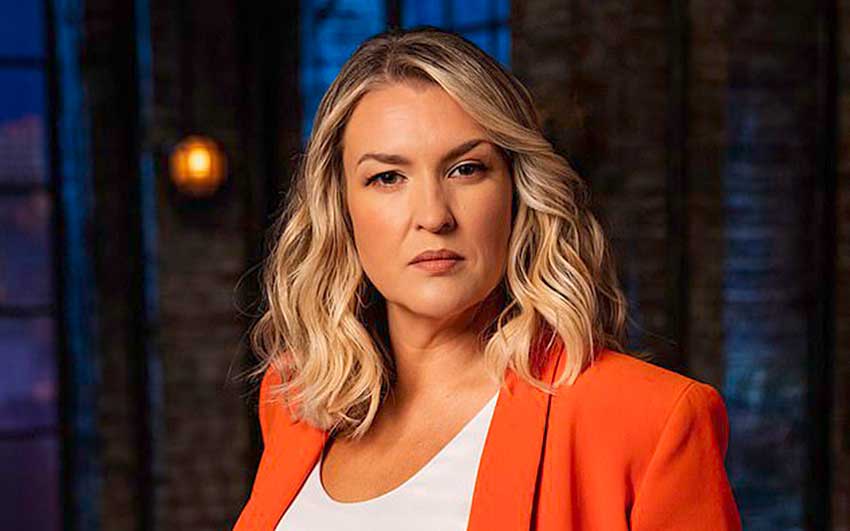
Sara Davies has joined Not On The High Street as a non-executive director and taken a stake in the Bristol-based online marketplace, as its new private equity owners attempt to steer the business back to growth.
The appointment comes just over six months after Not On The High Street was bought by Executive Equity Partners (EEP), a German investor based in Munich. EEP styles itself as a specialist in “companies facing transformation and challenges that current shareholders can no longer manage alone”.
Davies, who appeared on the BBC business series Dragons’ Den between 2019 and 2025, will mentor the small business owners who sell their goods on the platform, as well as advising on the company’s strategy more broadly.
“We’ve got to drive this forward,” she said. “There is a real sentiment and movement among consumers at the moment of people wanting to buy local. They want to support small businesses. They want to support cottage industries and they want to buy personalised gifts.”
She said she had made a board seat and an equity stake a condition of getting involved. “I said I would only get involved if I’m sitting on the board; if I’ve got a voice, not only at the top table, but in the firm, and I’m an owner in this business. [Mentoring] absolutely plays into the commercial aspirations of the business, because… if we make these people more successful, the whole company grows.”
Davies made her name as the founder of Crafter’s Companion, which she started as a university student in 2005. She was awarded an MBE for services to the economy in 2016 and, in 2019, became the youngest ever female investor to join Dragons’ Den.
Transaction values have more than halved
Founded in 2006 by Sophie Cornish and Holly Tucker, Not On The High Street is widely considered to have pioneered the online marketplace model in Britain by allowing small businesses and creatives to sell their wares widely. Legions of shoppers locked at home during the pandemic spent millions of pounds on personalised gifts and trinkets made by independent creators across the country.
After that boom, however, the company suffered years of declining sales under its former owners Great Hill Partners, an American investment fund.
Accounts filed at Companies House show the total value of transactions on the platform has more than halved since the end of the pandemic, dropping from £185 million in 2022 to £84 million in the year to 31 March 2025. It is understood that total transaction value has since fallen to £72 million.
Alongside shaky consumer confidence and softer retail spending, the business has faced stiff competition from larger rivals, including huge Chinese online marketplaces such as Temu, which sell cheaper, mass-produced goods. It has been forced to shed dozens of jobs in recent years, cutting 70 staff in 2024 and a further 25 in 2025, accounts show.
Purge of drop-shipped listings
Pascal Schuster, who became chief executive when the deal completed in January, said the company had been trying to fight the wrong battle.
“I think what Not On The High Street has historically tried to do is compete with Alibaba, Temu, all of these very cheap gifting moments,” he said. “What we’re trying to do is come back to a real Not On The High Street as it should be. What we’ve been doing… is restructuring the company, rebuilding most of the infrastructure. We feel confident now that at the beginning of next year we will be in a position to grow again.”
As part of the turnaround, Schuster said Not On The High Street had embarked on a purge of products sold via drop-shipping, where sellers import cheap products into Britain without owning any stock themselves, as well as AI-generated product listings.
“We’ve had a very, very hard look at a product catalogue. And we have cleared it of everything that is even remotely in doubt of being drop-shipped without being at least personalised in the UK,” he said. “We don’t want to compete with Shein and Temu. It’s not where we should be.”
He added that he expected total transactions to be flat for the current financial year.
Plans for young entrepreneurs
Davies and Schuster also plan to launch an initiative designed to tackle burgeoning youth unemployment by providing training and development opportunities for young entrepreneurs.
Official figures underline the scale of the problem. An estimated 1,012,000 young people aged 16 to 24 in the UK were not in education, employment or training in the first three months of 2026, according to the Office for National Statistics, a rate of 13.5 per cent and an increase of 89,000 on the same period a year earlier.

Amy Ingham
Amy Ingham is a reporter at Business Matters, covering UK business news with a focus on breaking news, business policy, late payments and insolvency. She joined the magazine in 2026 after completing the NCTJ Diploma in Journalism at Harlow College’s journalism school. Her recent reporting includes British Steel’s nationalisation and its impact on SME suppliers, the decline in late payments by large firms, and Insolvency Service director disqualifications. Reach her at aingham@cbmeg.co.uk.

Fed’s Kashkari says rising Treasury yields not a concern
Business
Gamers Call for Weeklong PlayStation Blackout to Protest Sony’s End of Physical Game Production

A video game preservation community is organizing a one-week boycott of PlayStation, urging players to log out of the PlayStation Network and avoid using their consoles entirely from Aug. 23 through Aug. 30, in protest of Sony’s decision to end physical game disc production by 2028.
The protest, dubbed the “PSBlackout,” was organized by DoesItPlay, a community focused on video game preservation, along with other content creators who joined the call to action. According to a post shared on the social platform Bluesky, the group is asking players to commit to “no logins, no play sessions, no purchases on any of Sony’s platforms” for the full week. “Sony wants to abandon fans? Let’s give them a small taste of their own medicine! Together with other creators we call for a 1 week #PSBlackout in August,” the group wrote in its announcement.
The protest stems from Sony’s broader shift toward all-digital game distribution, a strategy the company has continued to reinforce even amid growing public backlash. According to Tom’s Hardware, Sony has already officially confirmed it will end production of new physical game discs entirely by 2028, a decision that has generated significant pushback within the gaming community. That opposition has taken multiple forms beyond the current planned blackout; a petition opposing Sony’s move away from physical media has continued gathering signatures, approaching 200,000 as backlash to the decision has grown, according to related coverage. Sony’s chief financial officer has separately reaffirmed the company’s commitment to the shift, stating that the company plans to “cautiously move this forward” despite the continued criticism.
Despite the organized effort behind the blackout, many observers, including some within the gaming community itself, have expressed skepticism that the protest will meaningfully affect Sony’s plans. Much of that doubt centers on the specific timing chosen for the boycott. The final week of August is considered a relatively quiet period for the gaming industry, with no major PlayStation-related launches or events scheduled during that window. Complicating matters further, the same week overlaps directly with Gamescom, one of the gaming industry’s largest annual conventions, meaning many of the most dedicated and vocal gamers who might otherwise participate in a digital boycott are likely to be traveling and attending the event in person rather than staying home and logging out of their consoles.
Some commenters responding to DoesItPlay’s original post argued that a boycott with a predetermined end date carries limited practical leverage, since Sony can simply wait out the designated protest window without making any meaningful concessions. Several suggested more aggressive alternative actions instead, including a mass, extended cancellation of PlayStation Network subscriptions lasting several months, or coordinated mass refund requests for pre-ordered digital games, arguing that such sustained financial pressure would carry more weight than a temporary, time-limited blackout.
Beyond the organized blackout campaign, other members of the gaming community have expressed their frustration with Sony’s digital-first direction through more disruptive means. According to Tom’s Hardware, a leaker operating under the name Cyberleek released gameplay footage and a full map from an unreleased game codenamed Leonidas, timed roughly a week ahead of an extended look trailer for the highly anticipated title “GTA VI” that had been scheduled to premiere on Netflix. Take-Two Interactive, the publisher behind the game, has reportedly begun working to identify the individual responsible for the leaks, particularly given indications that the leaker appears to possess a fully functional build of the game itself. While Cyberleek’s leaks were not explicitly tied to Sony’s physical media decision, the leaker separately voiced opposition to the broader practice of offering pre-orders for digital-only game copies, threatening to continue releasing additional leaked content until the publisher issues a public apology alongside what the leaker described as “a concrete commitment to be better.”
The broader shift away from physical game media reflects a wider trend across the video game industry, as digital storefronts including Steam and the Epic Games Store have grown increasingly dominant over the past decade. However, that shift has also drawn renewed attention to a persistent point of confusion among consumers: purchasing a digital game through most major platforms does not actually grant full ownership of that game in the traditional sense. Tom’s Hardware noted that Steam was required to explicitly clarify this distinction on its checkout page in 2024, following broader consumer confusion and criticism regarding the actual rights digital buyers receive when completing a purchase.
Among major digital distributors, GOG remains a notable exception to that industrywide pattern. According to the platform’s own stated policy, cited by Tom’s Hardware, “a purchase of a digital content on GOG grants you its Offline Installers, which cannot be taken away from you,” a stance that has positioned the platform as an alternative for gamers specifically seeking a greater degree of permanent ownership over their digital purchases. Subscription services such as PC Game Pass, by contrast, have leaned further into the opposite model, offering short-term, convenience-focused access that allows players to experience a game temporarily without the expectation of retaining permanent access once their subscription lapses or they lose interest.
Industry observers have suggested that companies including Sony are primarily responding to broader market preferences that increasingly favor digital game purchases over physical media, a trend that has likely reinforced the company’s decision to formally discontinue physical disc production. Some consumer advocates have suggested that one of the more direct ways gamers can push back against this industrywide shift is by continuing to purchase physical game discs from retailers whenever such options remain available, rather than defaulting to digital downloads, framing sustained consumer purchasing behavior as a potentially more effective long-term counterweight to the industry’s continued movement toward all-digital distribution than a short-term, symbolic blackout alone.
Business
Will Bitcoin Keep Rising Over the Next 3 Months? Analysts Remain Split on Path Through Year-End This Fall

Bitcoin has staged a sharp recovery in recent weeks, climbing back above $77,000 after a brutal first half of 2026 that saw the cryptocurrency shed more than half its value from its October 2025 peak. But whether that rally can be sustained through the fall remains one of the most contested questions in financial markets, with professional forecasters offering sharply divergent views on where the price heads over the next three months.
Bitcoin started 2026 trading above $93,000, according to CoinGecko, before entering a prolonged downturn that pushed the cryptocurrency to a 21-month low near $58,000 by late June, a decline of more than half from its all-time high. CoinGecko attributed much of that damage to two specific forces: a cautious Federal Reserve and sustained outflows from spot bitcoin exchange-traded funds, with June alone recording roughly $4 billion in ETF outflows, the worst monthly outflow figure on record for those products. Bitcoin finished the first half of the year down nearly 33%, a particularly stark divergence given that the Nasdaq 100 posted double-digit gains over the same stretch, evidence several analysts pointed to as confirmation that the downturn was a crypto-specific unwind rather than a broader risk-off move across financial markets.
Since that summer low, however, bitcoin has recovered meaningfully, driven most recently by a sharp five-day rally tied to the U.S. Treasury Department’s decision to expand its buybacks of long-dated government debt, along with renewed optimism around pending crypto-friendly legislation in Congress. That rally pushed bitcoin above $77,000 as of late August, its highest level since early June.
Institutional forecasts for where bitcoin heads from here span an unusually wide range. According to CoinGecko’s compilation of 2026 predictions, institutional targets now stretch from as low as $38,000 to as high as $250,000, reflecting deep disagreement even among professional analysts covering the same asset. On the bearish end, NYDIG has floated a scenario in which bitcoin bottoms near $38,000 to $39,000 by October, while Citigroup’s own bear case sits at $53,000, a level notably below the $60,000 to $75,000 consolidation range that had been considered the cautious view earlier in the year, a range bitcoin has already traded through in both directions.
Standard Chartered’s own forecast illustrates how dramatically institutional targets have shifted over the course of 2026. According to Phemex, the bank revised its year-end target downward three separate times, moving from $300,000 to $150,000 and then to $100,000 in successive cuts, changes the outlet characterized as reflecting genuine near-term deterioration in market conditions rather than any shift in the bank’s underlying long-term thesis on bitcoin adoption.
Crypto analyst Aralez, whose monthly price projections have circulated widely throughout 2026, has offered one of the more detailed month-by-month frameworks for the coming quarter. According to TradingView, Aralez’s forecast anticipates a market bottom occurring around October, potentially near $46,000, before a recovery phase begins that could carry bitcoin back above $85,000 by November and toward the $100,000 psychological level by December, representing a scenario in which the current three-month window could ultimately deliver both a further decline and a subsequent sharp recovery rather than steady, uninterrupted gains. A separate, earlier version of Aralez’s forecast cited by KuCoin projected a similar Q3-to-Q4 pattern, with a roughly $60,000 low point in the third quarter followed by a break above $85,000 in the fourth quarter, a recovery the analyst tied specifically to the anticipated start of Federal Reserve interest rate cuts under incoming Fed Chairman Kevin Warsh.
Other analysts have offered more modest and range-bound projections for the coming months. According to LiteFinance’s compiled forecasts, CoinCodex projects bitcoin’s average price reaching roughly $85,469 during the third quarter before gradually declining to around $78,448 by December, while DigitalCoinPrice’s model anticipates a mixed third quarter around $75,181 followed by a pullback to roughly $68,766 by year-end, illustrating that not every forecasting model currently supports continued near-term upside from current levels.
Prediction markets have offered a similarly cautious read on bitcoin’s near-term trajectory. According to Yahoo Finance’s coverage of Galaxy Research’s outlook, Polymarket traders had priced the odds of bitcoin falling to $45,000 sometime in 2026 at 40%, with a 32% chance of a drop to $40,000, compared with just a 30% probability assigned to a rally toward $90,000, reflecting a betting market that, as of that assessment, leaned more toward continued downside risk than a sustained rally.
Underlying much of the disagreement among forecasters are a handful of concrete, still-unresolved macroeconomic variables that are likely to shape bitcoin’s actual path over the coming three months more than any individual analyst’s model: the timing and scale of Federal Reserve interest rate decisions following Chairman Kevin Warsh’s remarks at the upcoming Jackson Hole symposium, whether Congress advances the stalled CLARITY Act establishing clearer regulatory boundaries for digital assets, the trajectory of spot bitcoin ETF flows following June’s record outflows, and broader geopolitical developments, including the ongoing conflict between the United States and Iran, that continue to influence overall investor appetite for risk assets.
Given that bitcoin has already demonstrated the capacity for both a roughly 50% peak-to-trough decline and a sharp, multi-week rally within the same calendar year, the honest answer to whether the cryptocurrency’s price will keep climbing over the next three months is that no forecaster, however confident, can offer a reliable guarantee in either direction. The range of professional predictions reviewed here, spanning a further collapse toward the high $30,000s to a rally back above $100,000, underscores just how much genuine uncertainty remains priced into bitcoin’s near-term outlook. This article is not financial advice, and anyone considering exposure to bitcoin, in either direction, should weigh the significant disagreement among professional analysts outlined here alongside their own research and risk tolerance before making any investment decision.
Business
TikTok, ByteDance to Pay $400 Million to Settle DOJ Lawsuit Over Children’s Privacy Violations
WASHINGTON — TikTok and its Chinese parent company, ByteDance, have agreed to pay $400 million to settle a federal lawsuit alleging the companies violated children’s online privacy laws, the U.S. Department of Justice announced Friday, resolving litigation first filed under the Biden administration in 2024.
Under the terms of the settlement, TikTok will pay $300 million immediately, with an additional $100 million due once a court enters an order vacating a prior consent decree that had been issued against TikTok’s predecessor company, Musical.ly, according to the Justice Department. The department described the resolution as one of the largest recoveries ever obtained in a case brought under the Children’s Online Privacy Protection Act, commonly known as COPPA.
Associate Attorney General Stanley E. Woodward Jr. characterized the settlement as a significant win for families navigating the platform. “This settlement is a major victory for American children and parents,” Woodward said in a statement announcing the resolution. “The Department’s priority is ensuring that children are protected online and that companies entrusted with their personal information meet their legal obligations. This resolution secures a substantial recovery while reinforcing the protections that families expect and deserve.”
Assistant Attorney General Brett A. Shumate of the department’s Civil Division similarly emphasized the legal obligations companies face when handling data belonging to young users. “Companies that collect children’s personal information must comply with the law,” Shumate said. “This resolution secures a significant monetary recovery and reflects the Department’s commitment to ensuring children receive the full protections that Congress mandated.” Shumate added that the settlement’s most important outcome is the improved protection it delivers going forward, stating that “this settlement reflects substantial progress, secures a significant monetary recovery, and brings this matter to a successful conclusion.”
The lawsuit, originally filed in 2024 under then-Attorney General Merrick Garland alongside the Federal Trade Commission, accused TikTok and ByteDance of violating a previous 2019 consent order in multiple ways. According to Axios, the government’s complaint alleged the companies were “knowingly permitting children to create regular TikTok accounts and to create, view, and share short-form videos and messages with adults and others on the regular TikTok platform,” in addition to unlawfully collecting and retaining children’s email addresses and other personal information without appropriate parental consent.
The broader allegations focused specifically on TikTok’s compliance with COPPA, a federal law requiring websites and online services directed at children to obtain verifiable parental consent before collecting personal information from users under age 13. According to PBS News, the lawsuit also alleged that TikTok and ByteDance failed to honor requests from parents seeking to have their children’s accounts deleted, and in some cases declined to delete accounts even after the companies became aware those accounts belonged to children under 13.
As part of the settlement, TikTok will not admit wrongdoing, according to Axios, and the resolution avoids the need for further litigation of the underlying claims. The Justice Department noted that TikTok has undergone substantial changes since the lawsuit was first filed, including “significant changes to its ownership, management, compliance functions, and privacy practices.” According to the department, those changes included implementing “extensive measures” aimed at strengthening safeguards for younger users, improving age-related account controls, and enhancing tools that allow parents greater oversight of their children’s activity on the platform.
This is not TikTok’s first encounter with COPPA enforcement. The company, then still closely tied to its Musical.ly predecessor, agreed to pay $5.7 million in 2019 to settle separate Federal Trade Commission allegations that it illegally collected images, voice recordings and geolocation data from children, some younger than 13, according to NBC News’ reporting at the time. That earlier settlement was, at the time, described as the largest civil penalty the FTC had ever issued in a child privacy case, though it pales in comparison to the $400 million figure announced Friday.
Friday’s settlement arrives amid a broader wave of legal scrutiny facing major social media platforms over children’s safety and privacy practices. According to PBS News, Meta Platforms, the parent company of Instagram and Facebook, is currently on trial in federal court in Oakland, California, over separate allegations that it violated COPPA, part of what the outlet described as an “avalanche” of lawsuits targeting social media companies over child safety issues, occurring alongside a growing number of countries moving to restrict or ban young children and teenagers from using social media platforms altogether.
The settlement also comes against the backdrop of TikTok’s significantly altered corporate ownership structure in the United States. According to Axios, TikTok had faced a federal divest-or-ban law that threatened to force its sale or removal from U.S. app stores, a mandate the Trump administration subsequently intervened to delay on multiple occasions. The precise current ownership arrangement governing TikTok’s U.S. operations has continued to evolve amid that broader political and regulatory backdrop, even as Friday’s privacy settlement was negotiated and finalized separately from those ownership-related national security discussions.
Since the original 2024 complaint was filed, the Justice Department noted that TikTok’s operational and compliance changes have “materially advanced the public interests underlying the Department’s litigation,” a characterization suggesting federal officials view the settlement not merely as a financial penalty but as validation of concrete changes to how the platform now handles data belonging to its youngest users.
As part of the broader resolution, the vacating of the earlier Musical.ly consent decree, a condition tied to release of the second $100 million payment, will formally close out enforcement action stemming from TikTok’s original 2019 predecessor-era privacy violations, consolidating years of overlapping federal scrutiny into a single, resolved matter. With the settlement finalized, attention within the broader technology and children’s privacy advocacy community is likely to shift toward the ongoing Meta trial in California, seen by many observers as the next major test of how aggressively federal and state regulators intend to continue enforcing children’s online privacy protections across the social media industry.

Calamos Investments is a diversified global investment firm offering innovative investment strategies including U.S. growth equity, global equity, convertible, multi-asset and alternatives. The firm offers strategies through separately managed portfolios, mutual funds, closed-end funds, private funds, an exchange traded fund and UCITS funds. Clients include major corporations, pension funds, endowments, foundations and individuals, as well as the financial advisors and consultants who serve them. Headquartered in the Chicago metropolitan area, the firm also has offices in London, New York and San Francisco. For more information, please visit www.calamos.com.
Business
Teen Drops Bellwether Lawsuit Against Meta, Google and Snap Over Social Media Addiction Ahead of Trial

A 15-year-old girl from New Jersey has dropped her lawsuit against Meta Platforms, Google and Snap Inc., abandoning a test case that was among the first scheduled to determine how juries might view claims that major social media companies deliberately designed their platforms to be addictive to young users, according to Reuters.
The plaintiff, identified in California court records as P.M-Y., withdrew her claims Thursday, Aug. 20, according to a court filing, without receiving any payment from the remaining defendants. TikTok, which had also been named as a defendant in her case, had previously settled her claims separately.
The teen’s lawsuit had alleged that Meta, the owner of Facebook and Instagram, along with Google and Snap, contributed to her social media addiction, depression and self-harm. Emily Jeffcott, an attorney representing P.M-Y., said in a statement that her client chose to dismiss the remainder of her claims out of a desire to move forward with her life. Jeffcott said her client had “initiated this process with the goal of holding social media companies accountable and to push for changes to protect young people like herself.”
P.M-Y.’s case was among more than 3,300 individual personal injury lawsuits consolidated in California state court in Los Angeles, part of a broader wave of litigation brought by individuals, states and school districts against major social media companies over allegations their platforms cause harm to children. Her case had been selected as one of three so-called “bellwether,” or test, cases scheduled to go to trial in October. Attorneys frequently rely on bellwether verdicts to gauge how juries are likely to respond to similar claims across a larger pool of consolidated cases, using those early results to help assess the potential value of remaining lawsuits and to inform broader settlement negotiations.
Meta addressed the dismissal in a statement, drawing a distinction it said applied broadly across the consolidated litigation. “This plaintiff had a significant mental health condition that pre-dated her use of social media, and it’s clear that many of these cases fit the same pattern,” the company said, adding that it intends to vigorously defend against the remaining cases still pending.
Google-owned YouTube characterized the dismissal as consistent with its own longstanding position on platform safety. “Our longstanding position that we provide safe, age-appropriate experiences and strong parental controls for young people and families,” the company said in a statement responding to the case’s dismissal. A Snap spokesperson separately said the company remains focused on strengthening safeguards, tools and educational resources designed to support users’ safety, privacy and overall well-being.
Two additional bellwether cases brought by teenagers making similar claims against the same group of companies remain scheduled for trial in October, according to court records reviewed by Reuters. TikTok has already reached settlements in both of those remaining cases, mirroring its earlier resolution of P.M-Y.’s claims.
The dismissal follows a similar pattern from a separate bellwether case that concluded before reaching trial in July, when a different teenage plaintiff dropped his claims against Meta after the other named defendants in his case had already reached settlements.
The broader litigation has already produced at least one significant jury verdict. The first individual trial within the consolidated litigation concluded in March, resulting in a jury awarding $4.2 million in damages against Meta and $1.8 million against Google in a case brought by a woman who alleged she became addicted to social media platforms at a young age due to their attention-grabbing design. TikTok and Snap had settled that particular case before it reached trial.
Meta is currently defending itself in two separate, larger-scale trials examining similar allegations brought by state governments rather than individual plaintiffs. One trial, which began this week in federal court in Oakland, California, involves claims brought by 29 states alleging Meta designed its platforms to be addictive to children and misled the public regarding their safety. A separate trial addressing similar claims brought specifically by the state of Tennessee is proceeding concurrently in state court in Nashville.
The companies named across this broader wave of litigation have consistently denied the underlying allegations, maintaining that they have implemented extensive measures to protect teenage and younger users on their platforms. Even as individual bellwether cases such as P.M-Y.’s have been dismissed or settled ahead of trial, the two ongoing state-led trials in Oakland and Nashville represent what legal observers have characterized as a more significant near-term test of how courts and juries may ultimately assess the broader claims underlying thousands of similar lawsuits still pending against major social media companies nationwide.
With P.M-Y.’s case now dismissed and two other individual bellwether trials still scheduled for October, attorneys on both sides of the broader litigation are likely to continue closely watching how those remaining test cases unfold, given their potential influence on settlement negotiations and legal strategy across the thousands of similar claims still working their way through the consolidated California litigation and other related lawsuits filed by individuals, school districts and state governments across the country.
This story discusses topics including depression, self-harm and addiction, which can be difficult to read about, particularly as they relate to a minor. If you or someone you know is struggling with self-harm, depression or a mental health crisis, you can call or text 988 to reach the 988 Suicide and Crisis Lifeline, available 24/7, or visit 988lifeline.org for additional support and resources.

Fred Alger Management, LLC (“Alger”) is a privately held $27.4 billion growth equity investment manager. Alger is a pioneer of actively managed, growth equity investing. Their journey over the past six decades has been defined by navigating change, embracing disruption, and investing in innovation. Note: This account is not managed or monitored by Fred Alger Management, and any messages sent via Seeking Alpha will not receive a response. For inquiries or communication, please use Fred Alger Management’s official channels.

Baby Rocki Melts Hearts In Adorable New Photos

Moment ‘TikTok joyrider’ killed in Teesside police smash drives recklessly in clip posted online – as tributes pour in for ‘hero’ police officers who died in crash

10 Biggest Earthquakes in Japan’s History, From the 2011 Tohoku Disaster to Ancient Megaquakes Ranked by Size





-

 Fashion2 days ago
Weekend Open Thread: Madewell – Corporette.com
-

 Crypto World2 days ago
anatomy of crypto’s biggest liquidation event since 2021
-

 Business5 days ago
SMA Solar Technology AG (SMTGY) Q2 2026 Earnings Call Transcript
-

 Tech6 days ago
Qwen3.8-27B runs frontier-class coding agents and reasoning locally, no cloud API required
-

 Crypto World6 days ago
OCC Greenlights Trump Family Crypto Firm for Trust Charter
-

 Politics1 day ago
6 months on, Irish renters crushed by effects of government housing bill
-
 NewsBeat1 day ago
The ‘Lucky Dip Gang’ causing carnage for clicks: After five thugs were killed speeding in the wrong direction on a motorway, GUY ADAMS investigates a sick new trend… and why police aren’t even allowed to pursue them
-

 Crypto World6 days ago
NAVI Prime launches institutional lending framework on Sui
-

 News Videos4 days ago
Don’t Leave Your Financial Future To Chance | August 19, 2026
-

 Crypto World7 days ago
Data of 54K Wallet Users Leaked, Clarity Odds Just 10%: Hodler’s Digest, Aug. 16
-

 Tech4 days ago
GLM-5.3 hits the API at $1.4/$4.4 per million tokens
-

 Business5 days ago
Stock Market Today: Tech Futures Slide As Treasury Yields Jump; Nvidia, Micron, Sandisk Sell Off
-
 Crypto World6 days ago
Dow’s 3-Year Winning Run Isn’t a Crash Signal, Still 49% Odds of Double-Digit Gains
-
Tech6 days ago
5 Of The Most Reliable Car Brands To Consider If You’re Buying A Used SUV
-

 Tech6 days ago
Keychron K8 Ultra 8K review: a great value keyboard with comfort issues
-

 Tech6 days ago
Straight Up the Cliff, Yunnan’s New Fuyao Ladder Turns a Three-Hour Climb Into a 50-Second Ride for Students
-
 NewsBeat6 days ago
Trump explodes at CNN reporter after question about young blonde aide who wrote him besotted letters
-
 Tech6 days ago
Nvidia discloses $21B stake in SpaceX
-
 Tech7 days ago
OpenAI’s new ChatGPT feature logs your keystrokes and stores them in plain text
-

 Business3 days ago
Five Below: Kids Discount Retailer Reaps Rich Rewards
You must be logged in to post a comment Login