
Business
AMC Stock Rises Over 7% as Record Box Office Momentum and Governance Reforms Boost Shares


LEAWOOD, Kan. — Shares of AMC Entertainment Holdings Inc. advanced more than 7 percent on Monday, extending a multi-week recovery fueled by strong summer box-office results and investor attention on proposed changes to the company’s corporate governance.
AMC stock traded at $2.74, up $0.19 or 7.42 percent, according to market data. The gain came as the largest theatrical exhibitor in the United States continued to benefit from elevated attendance driven by major studio releases and as shareholders prepared for an annual meeting that includes structural board reforms.
The recent strength follows a series of operational highlights. Earlier in August, AMC reported that it generated the highest total revenue, admissions revenue and food-and-beverage revenue for a single weekend in the company’s 106-year history. The record stretch, covering Wednesday through Sunday, was powered in part by the domestic and international debut of “Spider-Man: Brand New Day” and strong performance of premium formats, including IMAX screenings.
That weekend built on earlier success with Christopher Nolan’s “The Odyssey,” which delivered a robust opening and sustained second-weekend momentum. AMC said the film contributed to the most successful IMAX run in the company’s history through its first two weekends of release. Attendance figures reflected the broader industry rebound, with millions of moviegoers visiting AMC and its international Odeon locations during key summer frames.
In its second-quarter results reported in July, AMC posted the highest quarterly revenue and adjusted EBITDA in its history. Total revenue reached approximately $1.60 billion, up 14.2 percent from the year-earlier period. Adjusted EBITDA rose about 70 percent to $321.4 million. The company also reported free cash flow of $190.1 million for the quarter and an improved cash position.
Chief Executive Adam Aron highlighted the strength of the release slate during the earnings discussion. “We are thrilled by the box office momentum that built through the second quarter, driven by blockbuster titles that brought moviegoers back in droves,” he said. Aron further noted that 2026 was on track to become the strongest post-pandemic year for movie theaters at both the domestic and global box office, supported by a packed calendar of tentpole releases and studio commitments to exclusive theatrical windows.
Beyond the box-office numbers, investor focus has turned to governance. Proxy materials filed for the company’s annual meeting scheduled for Sept. 24 include a proposal to declassify the board of directors. Under the plan, staggered three-year terms would be eliminated, with all current director terms set to expire at the September meeting. Proponents of such changes typically argue that annual elections increase accountability; the proposal forms part of a broader set of structural adjustments under consideration by shareholders.
The combination of improving fundamentals and governance discussion has supported a roughly 20 percent advance in the shares over the trailing month, according to market observers tracking the recovery. Theater operators have pointed to higher per-patron spending on concessions and premium seating as key contributors to profitability even when attendance remains below long-term historical peaks. AMC has emphasized its ability to convert higher traffic into stronger food-and-beverage sales and to leverage fixed-cost operating leverage as revenues rise.
The industry backdrop remains constructive. Multiple films have delivered domestic opening weekends exceeding $75 million during the current cycle, and the overall domestic box office has posted its strongest quarterly performances in years. Premium large-format screens continue to capture a growing share of revenue, rewarding exhibitors that invested in IMAX, Dolby and other enhanced auditoriums.
AMC still carries a substantial debt load and has used equity offerings in recent periods to bolster liquidity. Those capital raises increased the share count, a factor that remains part of the longer-term investment debate. Management has stressed progress on cash generation and the operating leverage inherent in the exhibition model once attendance and ticket prices recover.
Monday’s advance occurred against a backdrop of selective strength in consumer-discretionary names and continued interest in the theatrical recovery narrative. Analysts who cover the sector have noted that sustained slate strength through the remainder of the year, including additional major releases scheduled for the fall and holiday periods, will be critical to maintaining momentum.
For theater chains, the path forward depends on consistent delivery of event films that draw audiences back into cinemas rather than relying solely on streaming alternatives. AMC’s recent results demonstrate that when the product is strong, the combination of ticket sales, concessions and premium formats can produce record financial outcomes. The company’s ability to sustain that performance while addressing its capital structure and governance framework will shape investor sentiment in the coming months.
Shareholders will have the opportunity to vote on the board declassification and related proposals at the September meeting. In the interim, attention is likely to remain on weekly box-office reports, attendance trends and any further updates on debt management or capital allocation.
The stock’s move higher reflects a market that is responding to tangible improvements in the core exhibition business after several challenging years. Record weekend revenues, the strongest quarterly adjusted EBITDA in company history and visible progress on the summer slate have provided concrete data points. Whether those gains prove durable will depend on the continued flow of compelling theatrical titles and the company’s execution on both operational and corporate-governance priorities.
AMC remains the largest theatrical exhibitor by screen count in the United States and maintains a significant international presence through its Odeon circuit. That scale positions it to capture a substantial share of industry upside when attendance rises. At the same time, the competitive landscape includes other major chains and the ongoing evolution of consumer viewing habits.
For now, the narrative around AMC centers on recovery rather than pure speculation. The 7 percent gain on Monday added to a period of positive price action driven by box-office results and anticipation of governance changes. Investors and industry participants will continue to monitor the weekly numbers and the outcome of the upcoming shareholder meeting for further signals on the company’s trajectory.


Business expansion in Indonesia triggers new regulatory, licensing, and compliance requirements affecting operations, licensing, workforce, and timelines, necessitating careful regulatory and commercial planning for growth.
Business Expansion and Regulatory Obligations in Indonesia
Expanding a business in Indonesia often introduces new regulatory requirements that were not necessary during initial market entry. Growth in activities, locations, employee numbers, cross-border transactions, or ownership structures can trigger additional compliance duties. For foreign investors, it’s essential to conduct both commercial and regulatory assessments to ensure smooth expansion.
Importance of KBLI Classifications and OSS System
Indonesia’s Online Single Submission (OSS) system links business activities to specific KBLI classifications, which determine licensing and sector-specific obligations. If a company diversifies into activities outside its registered KBLI codes, it may need to update registrations and obtain new approvals before proceeding. This ensures all activities remain compliant with national regulations.
Impact of Expansion on Investment Planning and Operations
Business growth decisions influence broader investment considerations, especially under Indonesia’s risk-based licensing framework. Entering new sectors may require re-evaluating licensing requirements and regulatory approvals. Additionally, location-based obligations such as construction and licensing can affect timelines, while workforce expansion increases statutory duties and compliance needs, demanding strategic regulatory planning alongside commercial growth.
Read the original article : When Business Expansion in Indonesia Triggers Additional Corporate Compliance Requirements

RDS Wealth President and CEO Dale Smothers discusses investment opportunities in mega-cap tech stocks like Microsoft and Google, advising investors to look for opportunities when these market leaders show weakness.
Google is reportedly moving forward with shifting all manufacturing of its Pixel devices outside of China starting in 2027.
The tech giant has previously made its Pixel phones, watches and earbuds in China – though that’s set to change next year, with Google informing suppliers that the production of those devices will move out of the country into Vietnam and India, according to a report from last week by Nikkei Asia.
The report cited a source who told the outlet that Google will be better-positioned to move production out of China than tech rival Apple because Pixel devices aren’t sold directly in the Chinese market, while it’s also a relatively small base of smartphone users.
Nikkei Asia previously reported in January that Google was planning to develop and manufacture Pixel 11 devices in Vietnam exclusively, with the process requiring investment in testing equipment as well as tooling machines. According to the latest report, the success of that process prompted Google to expand production for other Pixel devices in Vietnam.

Google is reportedly shifting production of its Pixel devices out of China into Vietnam and India. (Michael Nagle/Bloomberg via Getty Images)
Google also reportedly told suppliers that it intends to increase shipments of Pixel phones by 8% to 10% this year after the company shipped 12 million Pixel phones a year ago.
The production boost comes against the backdrop of Google’s push to promote consumer usage of its Gemini artificial intelligence (AI) tools.
If Google proceeds with the move, it would follow Samsung in moving smartphone production out of China. Samsung’s production shifted out of China in a process that took over a year and concluded in 2019 with most of its manufacturing moving to Vietnam and India.
| Ticker | Security | Last | Change | Change % |
|---|---|---|---|---|
| GOOGL | ALPHABET INC. | 348.06 | +3.24 | +0.94% |
The ongoing shortage of memory chips caused by the AI buildout of data centers and cloud services is affecting companies across the tech sector.
Google has reportedly looked to address that issue by combining orders for phone memory chips with those for its AI and cloud businesses.
MODERNA CEO WARNS CHINA IS INVESTING HEAVILY IN MRNA AS BEIJING CHALLENGES US IN BIOTECHNOLOGY

The Google Pixel 11 Pro smartphone is displayed during the “Made by Google” product launch event in New York City on Aug. 12, 2026. (Timothy A. Clary / AFP via Getty Images)
By doing so, the company is able to enhance its negotiating position with major suppliers of memory chips, potentially leading to improved terms for its memory chip purchases across its business lines.
FOX Business reached out to Google for comment.


WASHINGTON — The US Food and Drug Administration is reviewing three petitions, all dealing with natural sources of color for foods and beverages, according to the Aug. 20 Federal Register. The colors are gardenia blue and safflower as well as the use of acetone as a solvent in the manufacture of carrot oil.
The petitions, if approved, would increase options for natural sources of color, which are needed in the FDA’s plan to phase out petroleum-based synthetic dyes from the nation’s food and beverage supply.
The Gardenia Blue Interest Group filed its petition Aug. 4, proposing the FDA expand the use of gardenia (genipin) blue in various foods and beverages and lower the specification for arsenic in gardenia blue. The FDA in July approved the use of gardenia blue in certain foods and beverages, including sports beverages, ready-to-drink teas and candy.
The proposed expanded uses in the petition include alcoholic mixed drinks, carbonated drinks, processed breakfast cereals, ice cream and frozen dairy desserts, flavored milk, both flavored and unflavored yogurt, and snack foods.
GNT USA, LLC, Dallas, NC, issued its color additive petition on July 20, which the company had announced previously.
GNT proposed that the FDA amend its color additive regulations to provide for the use of safflower (Carthamus tinctorius L.) as a color additive in various items, including tortilla wraps, beverages, colored-extruded breakfast cereals, chewing gum, candy and flavored yogurt.
The Washington-based International Association of Color Manufacturers on Aug. 3 filed its petition about acetone. The petition also proposed that the FDA add heavy metal limits and secondary names for carrot oil. In beta-carotene colors, carrot oil is the liquid or solid portion of the mixture or the mixture itself, according to the association.

California cancels talks with Paramount over Warner Bros deal

1. FROM MY DESK
The heirs to one of America’s biggest liquor fortunes are in the middle of
an intense family drama. Profits at Brown-Forman are shrinking, and shares in the spirits company have lost 60% of their value over five years. People are drinking less of its flagship Jack Daniel’s whiskey, the CEO is leaving, and a crosstown rival has made a $15 billion hostile takeover bid. Laura Cooper takes us inside the rift among some family members who have controlled the company for more than 150 years.
And bourbon country isn’t the only place where things are getting heated. Tensions are rising in retirement communities thanks to baby boomers smoking more pot. Seniors are among the fastest-growing demographics for marijuana use, and their neighbors are fuming.
Copyright ©2026 Dow Jones & Company, Inc. All Rights Reserved. 87990cbe856818d5eddac44c7b1cdeb8

LPL Financial names Jonathan Lewis as chief technology officer

U.S. Treasury Secretary Scott Bessent announces sweeping financial penalties against Iran on ‘The Big Money Show.’
The U.S. Treasury Department announced a new round of secondary sanctions Monday aimed at countries that continue to do business with Iran, a move by the Trump administration to exact “economic asphyxiation” on Tehran.
Treasury Secretary Scott Bessent announced the launch of Operation Economic Outcast, an effort to sever the financial lifeline that sustains Iran’s regime, which the United States has accused of using illicit revenues to fund global terrorism.
“Iran now faces a very clear choice, with only two paths before them: complete global isolation and a subsistence economy, or a path back to normalcy with an opportunity to rejoin the global economy,” Bessent said during a news conference.
TRUMP’S IRAN CRACKDOWN ‘SUFFOCATING’ REGIME AS OIL WELLS COULD SHUT WITHIN DAYS, BESSENT SAYS

Treasury Secretary Scott Bessent announced Operation Economic Outcast on Monday, an effort by the Trump administration to pressure nations into severing economic ties with Iran. (Chip Somodevilla/Getty Images)
The aggressive strategy, labeled as an “Economic D-Day,” targets critical industries such as Iran’s digital assets, technology, gold, aviation and shipping in an effort to eliminate the revenue streams that fund international terrorism, Bessent said. The Trump administration will implement secondary sanctions to pressure nations into severing ties with Tehran, while simultaneously blacklisting nearly 60 people, businesses and vessels involved in illicit trade.
President Donald Trump was speaking with several world leaders, asking them for unspecified assistance in helping to tighten the economic rope around Iran, Bessent said.
“We are following his calls up with visits and calls from the State Department and from the U.S. Treasury, telling the leaders, the countries and the entities exactly what we expect and the timelines,” he said. “I would expect that very quickly. If they do not respond, then you will see the ramifications of their actions.”

Iran flag in rubble and debris in Tehran. (Atta Kenare/AFP via Getty Images)
The secondary sanctions will not be implemented right away, Bessent said, describing his announcement as a “warning shot” to nations thinking of doing business with Iran.
“We are giving everyone the opportunity to remedy bad behavior,” he said. “Why would I want to blow up the global financial system? We believe that it is important to level set and give people a cure, period. But they should know that that will move very quickly and that we are serious.”
“Treasury has mapped every node, every facilitator and every network that Iran has used to smuggle oil and evade sanctions. Beginning today, the actions of Treasury and other agencies will tighten the noose and block every potential source of revenue that funds the IRGC and the evil Iranian regime,” he added.
TRUMP CLAIMS IRAN ‘STARVING FOR CASH,’ ‘COLLAPSING FINANCIALLY’ AFTER EXTENDING CEASEFIRE

Treasury Secretary Scott Bessent said roughly $1 billion in Iranian cryptocurrency assets has been seized by the U.S. Treasury Department. (Getty Images)
Iran has faced U.S. sanctions for decades, which have been aimed at curtailing a range of sectors in Tehran’s economy, including its oil revenues, as well as its ability to acquire weapons and other military equipment and cutting off funding for business enterprises controlled by the Islamic Revolutionary Guard Corps, Reuters previously reported.
In May, Bessent announced that the U.S. had seized roughly $1 billion in Iranian cryptocurrency assets.
Last week, Trump threatened “unprecedented” economic consequences for any nation assisting Iran, which he likened to an “economic D-Day.”
“I am also announcing that ANY country that allows its financial institutions, businesses, airports, or government entities to provide any type of lifeline to Iran will itself face TREMENDOUS Economic Consequences,” he wrote on Truth Social at the time.
“Oil smuggling, swap lines, cash transfers, exchange houses, ship registries, front companies — It all needs to stop NOW,” he continued. “You know who you are. This will be an ECONOMIC D-DAY, and we need all of our Allies to stand with the United States of America to isolate, and defeat, the Iran threat. These maniacs are on the ropes, and these HISTORIC MEASURES will cripple them and their ability to project terror worldwide.”
‘The Big Money Show’ panel breaks down Iran’s deepening crisis as economic collapse, oil pressure, and President Donald Trump’s strategy intensify amid growing fears of unrest and nuclear escalation.
GET FOX BUSINESS ON THE GO BY CLICKING HERE
Bessent warned nations doing business with Tehran, noting that no one is above the reach of U.S. sanctions.
“No nation should expect to enjoy the rewards of our system while helping those who seek to destroy it,” he said. “It is now a time for world leaders to make a decision between prosperity and isolation, peace and terror, America and Iran. The campaign we begin today will gather force with every day that follows, and it will not end until this regime stands alone.”
Business
(VIDEO) Indie Hit How to Fish Sells 1 Million Copies in Two Days as Quirky Fishing Craze Takes Over Steam

A low-priced co-op fishing game with an unusual arsenal of weapons has become one of Steam’s standout releases of the week, selling 1 million copies in just two days after launch.
How to Fish, the debut title from developer Dazed Games, arrived on Steam on Aug. 20 and quickly climbed the platform’s top sellers list. The studio announced the sales milestone shortly afterward, confirming the game had reached 1 million units sold within 48 hours. Concurrent player counts peaked near 268,000, according to tracking data, placing it among the most-played titles on the service during its opening weekend despite competition from higher-profile releases.
The game is priced at $7.99, with a 38 percent launch discount bringing the cost to $4.95 through late August. That accessible price point, combined with short session times and strong multiplayer appeal, has helped drive rapid adoption. Steam reviews have been strongly favorable, with the title earning a “Very Positive” rating based on roughly 12,000 user assessments in its first days.
How to Fish casts players as a group of friends who crash their boat onto an island and must catch, kill and sell fish to earn money for upgrades that will eventually get them home. While the core loop involves casting a line and reeling in catches, the game expands the concept with a wide range of weapons and tools. Players can dispatch fish with brass knuckles, submachine guns, dynamite and other implements. A killscore multiplier rewards impressive or inventive methods of taking down the catch, increasing its sale value.
Progression moves players to new islands featuring more difficult creatures and tougher boss encounters. The straightforward cycle of fishing, eliminating the catch, selling it and reinvesting the proceeds supports both casual sessions and longer co-op runs. The game supports multiplayer for small groups, fitting the growing category of affordable, physics-driven party titles sometimes described as “friendslop” for their emphasis on shared, often chaotic entertainment rather than complex systems or competitive balance.
Dazed Games has already released multiple patches addressing bugs and making balance adjustments. In its Steam announcement of the sales figure, the studio offered a concise update on future plans: “Yes, we’ll be adding more content! Yes, we’ll be fixing bugs!”
The success arrives amid a broader wave of inexpensive multiplayer games that prioritize approachable mechanics, short play sessions and social humor. Titles in this space often gain traction through streaming and short-form video clips that highlight unexpected physics interactions or group failures. How to Fish’s combination of fishing with over-the-top weaponry and trick-shot scoring appears well suited to that discovery path.
Early player feedback has highlighted the contrast between the game’s relaxed premise and its more aggressive options for dealing with fish. The ability to no-scope or punch catches, then sell them for higher returns based on the spectacle of the kill, has become a recurring point of discussion. Boss fights add challenge that can stretch sessions beyond the basic loop, while the boat-upgrade goal provides a light narrative frame for the progression.
The launch timing placed How to Fish against several anticipated titles, including major betas and sequels. Its ability to claim a prominent position on the top sellers chart and sustain high concurrent numbers demonstrates the continued strength of the indie multiplayer segment on Steam. Affordable pricing reduces the barrier for groups of friends to buy in together, while the short learning curve encourages repeated sessions.
Industry observers have noted that such games often benefit from rapid iteration after launch. Dazed Games’ early patches suggest an intent to stabilize the experience quickly while players are still discovering the title. The promise of additional content leaves open the possibility of expanded maps, new weapons, creatures or modes that could extend the game’s lifespan beyond the initial surge.
How to Fish joins a lineage of physics-based multiplayer experiments that have found large audiences by leaning into absurdity and shared laughter. Its specific blend of fishing simulation, combat tools and score multipliers distinguishes it within that category. The high concurrent peaks indicate that many players are not only purchasing the game but actively playing it in groups during the launch window.
As the introductory discount period continues, the studio faces the typical post-launch challenges of managing servers, addressing remaining technical issues and deciding which features to prioritize next. The 1 million sales figure provides a strong foundation for further development, though sustaining interest will depend on the quality and frequency of updates.
For now, How to Fish stands as a clear example of how a focused concept, low price and multiplayer design can generate outsized results on digital storefronts. What began as a quirky fishing simulator has become a mainstream Steam success story in a matter of days, drawing players with the simple promise of catching fish by any means necessary and turning those catches into a ticket home.
The coming weeks will reveal whether the early momentum translates into longer-term engagement or remains a concentrated launch phenomenon. Dazed Games has signaled that more content and fixes are on the way. In the meantime, the combination of positive reviews, high player counts and rapid sales has secured How to Fish a prominent place in the current conversation around indie multiplayer games.


JR Research is an opportunistic investor. I was recognized by TipRanks as a Top Analyst, and also by Seeking Alpha as a “Top Analyst To Follow” for Technology, Software, and Internet, as well as for Growth and GARP. I identify attractive risk/reward opportunities supported by robust price action to potentially generate alpha well above the S&P 500. My picks have consistently demonstrated market outperformance over time. My approach combines timely and sharp price action analysis with fundamentals as my foundation. I also tend to avoid overhyped and overvalued stocks while capitalizing on battered stocks with significant upside recovery possibilities. I run the investing group Ultimate Growth Investing which specializes in identifying high-potential opportunities across various sectors. My main ideas revolve around stocks with strong growth potential, and also well-beaten contrarian plays. I designed the group for investors seeking to capitalize on growth stocks with solid fundamentals, robust buying momentum, and appealing turnaround plays to generate alpha consistently. Learn more
Analyst’s Disclosure: I/we have no stock, option or similar derivative position in any of the companies mentioned, and no plans to initiate any such positions within the next 72 hours. I wrote this article myself, and it expresses my own opinions. I am not receiving compensation for it (other than from Seeking Alpha). I have no business relationship with any company whose stock is mentioned in this article.
Seeking Alpha’s Disclosure: Past performance is no guarantee of future results. No recommendation or advice is being given as to whether any investment is suitable for a particular investor. Any views or opinions expressed above may not reflect those of Seeking Alpha as a whole. Seeking Alpha is not a licensed securities dealer, broker or US investment adviser or investment bank. Our analysts are third party authors that include both professional investors and individual investors who may not be licensed or certified by any institute or regulatory body.

The OFS will open first for non-retail investors on Tuesday, August 25, 2026. Bidding for this category will start at 9:15 am and close at 3:30 pm on the same day. Allocation for regular bids is expected to be confirmed around 7 pm on August 25 through contract notes. Retail investors will be able to bid on Wednesday, August 26.
Settlement and credit of shares for all successful bids are expected on or around Thursday, August 27, 2026. This includes bids by non-retail and institutional investors with 100% upfront margin, institutional investors with zero upfront margin, carry-forward bids, and retail investor bids. Allocation for carry-forward bids is expected to be confirmed around 7 pm on August 26 through contract notes.
The issue includes a 10% reservation for retail investors, while 25,000 shares have been reserved for eligible employees.
The transaction is part of the government’s disinvestment programme and will help increase public shareholding in the state-run copper miner. Hindustan Copper is under the Ministry of Mines and is India’s only vertically integrated copper producer.

The base offer will allow the government to divest 3% equity. If demand is strong, the government can use the green shoe option and sell an additional 3%, taking the total stake sale to 6%.
An offer for sale allows promoters of a listed company to sell shares through the stock exchange platform. In this case, the promoter is the Government of India. Retail investors can bid under the reserved portion, while institutional and non-retail investors will take part under the broader OFS framework.The OFS comes after a strong June quarter for Hindustan Copper. The company reported profit before tax of Rs 472 crore for the quarter ended June 2026, up around 163% from the same period last year. Profit after tax stood at Rs 353 crore, also up around 163%. Revenue from operations rose 81% to Rs 936 crore from Rs 516 crore a year earlier.
The company has also been working on mine expansion. Hindustan Copper said it has intensified monitoring of expansion projects and is targeting ore production capacity of 12.2 million tonnes per annum by 2030. It is also making progress on reopening closed mines in Jharkhand, acquiring new mines in Chhattisgarh and Madhya Pradesh, and pursuing mine exploration in Chile.
Copper demand has become a key long-term theme because of electric vehicles, renewable energy, power infrastructure and data centres. The transition towards renewable energy and electric mobility, along with AI-led infrastructure and decarbonisation policies, is expected to support copper demand in the coming years.
Hindustan Copper shares will also be in focus as the OFS opens, with investors tracking the discount to the market price, institutional demand and retail participation.

Trump’s MAGA Inc. makes last-minute buy for Darline Graham in South Carolina runoff

Vikings Fire a Pair of Players, Sign 2 New Guys

China’s Financial Tsunami Hits: 670 Banks Vanish Overnight, People Locked Out Of Their Own Money





-

 Fashion3 days ago
Weekend Open Thread: Madewell – Corporette.com
-

 Business2 days ago
Musk’s Tesla, SpaceX Confirm $16.8 Billion ‘Terafab’ Chip Plant as World’s Largest Building in Texas
-

 Business6 days ago
SMA Solar Technology AG (SMTGY) Q2 2026 Earnings Call Transcript
-

 Crypto World3 days ago
anatomy of crypto’s biggest liquidation event since 2021
-

 Tech7 days ago
Qwen3.8-27B runs frontier-class coding agents and reasoning locally, no cloud API required
-

 Crypto World7 days ago
OCC Greenlights Trump Family Crypto Firm for Trust Charter
-

 Politics2 days ago
6 months on, Irish renters crushed by effects of government housing bill
-
 NewsBeat3 days ago
The ‘Lucky Dip Gang’ causing carnage for clicks: After five thugs were killed speeding in the wrong direction on a motorway, GUY ADAMS investigates a sick new trend… and why police aren’t even allowed to pursue them
-

 Crypto World7 days ago
NAVI Prime launches institutional lending framework on Sui
-

 Tech6 days ago
GLM-5.3 hits the API at $1.4/$4.4 per million tokens
-

 News Videos5 days ago
Don’t Leave Your Financial Future To Chance | August 19, 2026
-
Tech7 days ago
5 Of The Most Reliable Car Brands To Consider If You’re Buying A Used SUV
-
 Crypto World7 days ago
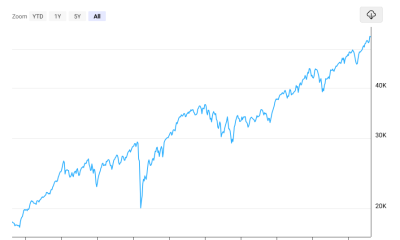
Dow’s 3-Year Winning Run Isn’t a Crash Signal, Still 49% Odds of Double-Digit Gains
-

 Tech7 days ago
Keychron K8 Ultra 8K review: a great value keyboard with comfort issues
-
 Tech7 days ago
Nvidia discloses $21B stake in SpaceX
-

 Business6 days ago
Stock Market Today: Tech Futures Slide As Treasury Yields Jump; Nvidia, Micron, Sandisk Sell Off
-

 Business5 days ago
Marvell Shares Jump 7% as Google Chip Deal Confirms Custom AI Silicon Partnership, Analysts
-

 Business4 days ago
Five Below: Kids Discount Retailer Reaps Rich Rewards
-

 Business1 day ago
Mystery AI Model ‘Ox Alpha’ Draws Developers With Free Access as Chinese Lab Origins Remain Debated
-
Business7 days ago
Fabrinet (FN) Q4 2026 Earnings Call Transcript
You must be logged in to post a comment Login