Connect with us

Tech

Met Office finds most of us still won’t trust an AI weather forecast

Published

on


  • Public confidence in AI weather forecasts is far lower than for numerical and physics-based methods
  • Just 11% said they were “very confident” in machine learning weather prediction, compared with 30% for tried-and-trusted methods
  • The Met Office has been using machine learning techniques in weather forecasting for some years

A survey of 6,000 UK adults has found that the majority don’t fully trust the idea of AI weather forecasts. While machine learning techniques have been a factor of weather forecasting for some years, the survey found that people are more relaxed about traditional Numerical Weather Prediction (NWP) as opposed to Machine Learning Weather Prediction (MLWP).

Predictive technology has increased considerably thanks to AI, and the Met Office has already begun to evaluate AI models for augmenting its existing forecasting methods.

Source link

Advertisement
Continue Reading
Click to comment

You must be logged in to post a comment Login

Leave a Reply

Tech

How the FTC’s last-minute settlement with Zillow and Redfin reshapes their $100M rentals deal

Published

on

GeekWire Illustration

Zillow and Redfin settled an antitrust case with the Federal Trade Commission and five states Monday, just as a trial was set to begin, agreeing to undo part of a $100 million partnership that the government said effectively paid Redfin to stop competing in apartment rental advertising.

The companies, both based in Seattle, have been rivals in online real estate and related services for the better part of two decades, expanding into rentals to build their businesses beyond the market for single-family homes. The FTC alleged the deal combined two of the three largest online apartment listing services against one main competitor, CoStar’s Apartments.com.

The proposed settlement requires Redfin, now owned by Rocket Cos., to relaunch its apartment advertising operation within six months — hiring a general manager, a sales force and a trained customer support team, while committing to spend millions of dollars to grow the business.

Redfin faces fines if it misses deadlines, and must report regularly to the FTC on its progress.

Zillow’s apartment listings will still appear on Redfin.com, Rent.com and ApartmentGuide, and Redfin will keep syndicating them, so Zillow is holding onto the audience it gained in the 2025 deal. The companies say the syndication will run through at least 2030.

Advertisement

What ends is the exclusive nature of the partnership: As part of the FTC settlement, Redfin is no longer barred from selling its own advertising alongside those listings, or from doing business on its own with the property managers shifted to Zillow under their original deal.

Zillow also must help Redfin rebuild. Under the order, which runs 10 years, Zillow is required to give Redfin employee information so it can recruit Zillow workers, waive any noncompete or anti-poaching agreements blocking those hires, and let apartment advertisers locked into Zillow contracts renegotiate without penalty for nine months after Redfin relaunches.

The companies will also pay the states $2 million in costs and fees, according to Washington Attorney General Nick Brown, who co-led the five-state coalition.

Zillow said the partnership “will continue unchanged,” and framed the standalone advertising products both companies plan to launch in 2027 as added flexibility for property managers.

Advertisement

“This resolution is a win for renters and multifamily housing providers,” said Michael Sherman, general manager and senior vice president of Zillow Rentals, in a statement. He said the partnership has brought “more leads and leases to property managers and more options to renters,” and that the standalone products will let Zillow “do even more to support the marketplace.”

The FTC offered its own take: “Today’s settlement unwinds an agreement under which Zillow paid Redfin $100 million to stop competing and hand off all its customers to Zillow,” said Daniel Guarnera, director of the FTC’s Bureau of Competition. “This kind of payment to a competitor to exit a market and stop competing violates the antitrust laws.”

FTC Chairman Andrew Ferguson called it “a complete victory for the American people” in a thread on X early Monday. He added, “This anticompetitive agreement is now history under our proposed settlement.”

Guarnera said the settlement “delivers better, quicker, more certain results” than the agency would have been able to achieve if it had gone to trial and prevailed.

Advertisement

“Today’s settlement will restore competition by paving the way for Redfin to re-enter the market as a stronger competitor,” Brown said in a statement. “Most importantly, consumers will have more choices and won’t be subjected to illegally manipulated prices.”

The FTC and state cases were consolidated last year. Zillow and Redfin moved to dismiss in January, and U.S. District Judge Anthony Trenga denied that motion in May, according to Real Estate News. However, the FTC’s case had met resistance in July, when Trenga denied its request to declare the deal presumptively unlawful, finding genuine disputes of material fact.

Redfin called the outcome “a significant win for Redfin and consumers across the country.”

“This agreement allows us to maintain our rental partnership with Zillow through at least 2030, while building and investing in a standalone rentals business of our own,” a spokesperson said, adding that renters “will continue to have access to the rental inventory they rely on today.”

Advertisement

The proposed settlement, announced Monday morning, requires court approval.

Updated with details from Washington AG Nick Brown.

Source link

Advertisement
Continue Reading

Tech

5 Naturally-Aspirated Engines That Are More Fun Than Their Turbocharged Rivals

Published

on


Modern-day performance is built on forced induction, downsizing, hybridization, and pure electrons. The Yangwang U9 Xtreme, a 3,000-horsepower electric hypercar, is now the fastest production car in the world, having hit 308.4 mph at Germany’s ATP Papenburg circuit. Meanwhile, EV hypercars like the 2025 Rimac Nevera R can accelerate from 0-60 mph in 1.74 seconds.

None of these numbers are achievable in a stock vehicle running just a naturally-aspirated engine. Still, for many people, it was never really about outright speed. Modern performance cars are so quick that you can’t even explore that power without ending up behind bars. Put your foot down in a Rimac Nevera for more than two seconds, and you’re not looking at a speeding ticket — you’re looking at an “I’m going to jail” situation.

This is why people love older naturally-aspirated engines. They give you the feeling, the vibration, and the sound no EV or heavily turbocharged car can match today. And yet, you can still explore many of them relatively safely and enjoy the sound and feeling without going a gazillion miles per hour. In many ways, this is what made supercars a thing in the first place — the engine.

Advertisement

Enzo Ferrari is widely quoted as saying, “when you buy a Ferrari, you are paying for the engine. The rest you get for free.” Whether or not he said it exactly that way, it captures Ferrari’s founding philosophy: the engine came first, it defined the supercar, and it was a naturally aspirated one. Here are five naturally-aspirated engines that are more fun than their turbocharged rivals.

Advertisement

Ferrari’s 6.5-liter V12

The Drive counted every V12 currently on sale and found that of the entire group, only the Ferrari 12Cilindri and the Ferrari Purosangue skip turbocharging and hybrid assistance. In the 12Cilindri, the engine (codenamed F140HD) makes 819 horsepower at 9,250 rpm and 500 lb-ft of torque at 7,250 rpm, revving to a 9,500-rpm redline.

This engine descends from the F140 unit first used in the Enzo more than two decades ago, an engine family that has also powered the 812 Superfast, the predecessor of the 12 Cilindri. None of that explains why it’s fun to drive. What does is how it revs: no turbo lag, no torque converter hunting for boost, just a linear, climbing wail all the way to redline that sounds closer to an old V12 Formula 1 car than anything else you can buy today.

It is a uniquely visceral experience, one that a turbocharged engine has yet to match. Probably its closest rival is the 5.2-liter twin-turbocharged V12 in the Aston Martin Vanquish and the older DBS Superleggera. It’s a tremendously capable engine in its own right, but lacks the sound, smoothness, and linear power delivery you get from a big N/A V12.

Fifth Gear put the Ferrari’s V12 in the 812 directly against the Aston’s in the DBS, and the verdict was blunt. On the Aston: “I have got a real disconnect with this car” and “it’s not penetrating my soul.” On the Ferrari’s 6.5-liter NA V12: “It is truly mental and I am loving it so far” — concluding that “the sheer brutality of the Ferrari makes it the more desirable road car.”

Advertisement

Porsche’s 4.0-liter flat-six

The Porsche 911 is the staple sports car for many people. The 911 platform was first introduced back in 1963 with a flat-six engine. It has been continuously improved over time, and today that platform splits into two very different philosophies: the turbocharged 911 Turbo S, and the naturally aspirated GT3/GT3 RS. 

Between the two, the Turbo S is unquestionably quicker in a straight line. The most recent non-hybrid version made 641 horsepower and hit 60 mph in 2.6 seconds, a power advantage AutoTrader summed up bluntly when comparing the two: “Porsche have brought a nuclear weapon to a pillow fight.” But the GT3 gives up roughly 140 of those horses for the sake of its engine — a 4.0-liter naturally aspirated flat-six that revs all the way to a 9,000-rpm redline. 

On the same test, that engine got its own verdict from AutoTrader, calling the GT3 “absolutely phenomenal… It’s all induction noise, too. It’s beautiful.” Numbers aside, that’s the sell: A screaming NA flat-six over raw thrust of the 911 Turbo, and in this test, the screaming flat-six won. The purest expression of that engine is the 911 S/T. Porsche took the GT3 RS’s 518-horsepower version of the flat-six and paired it with a six-speed manual gearbox.

Advertisement

This means no PDK dual clutch, no rear-axle steering, just 3,056 pounds and a 9,000-rpm engine with a stick shift. It’s likely the high-water mark for this engine in its current form: multiple outlets now report that the next-generation GT3 and GT3 RS will move to turbocharging to meet incoming Euro 7 emissions rules, ending this naturally aspirated engine’s run after more than two decades.

Advertisement

BMW’s 4.0-liter V8

Many of BMW’s best M cars are associated with inline-six engines. Think of the E46 M3 or the current G80 BMW M3. However, in the 2000s, BMW M’s engine palette was at its peak, at least in terms of size. The E60 BMW M5 used a naturally aspirated V10, and the E92 M3 got rid of two of its cylinders and used a 4.0-liter naturally aspirated V8. 

When the E92 M3 came out, Top Gear noted that “this is an engine that Ferrari would be proud of.” The numbers back up the praise: the S65 made 414 horsepower at 8,300 rpm, revving to an 8,400-rpm redline. In its own piece on the decade’s best engines, SlashGear sister site Jalopnik put it plainly: “the last good BMW M3 was the E90/E92/E93 M3.” Then BMW moved on. The F80 M3 and F82 M4 that replaced it in 2014 swapped the V8 for the S55, a 3.0-liter twin-turbo inline-six making 425 to 444 horsepower depending on trim.

As you see it, the new G-Series M3 has more power, more torque, and it makes peak power way lower in the redline. Be that as it may, it’s just not the same engine in terms of sound. What’s even more impressive is that the V8 M3 isn’t much slower compared to its successors. When MotorTrend tested it back in 2012, it reached 60 mph from a standstill in just 4.1 seconds. 

When Car and Driver tested the 2026 BMW M3, it reached 60 in 3.9 seconds, while with a manual, it is closer to 4.1. Going through the revs in the V8 M3 felt like an occasion, while all later turbo inline-six BMW M3 engines, although quick and better in pretty much every way, never really hit the same sweet spot in terms of noise, vibration, and feel.

Advertisement

Lamborghini’s 5.2-liter V10

Lamborghini’s “baby supercar” range consists of the Gallardo, the Huracán, and most recently, the Temerario. The first generation of the Gallardo used a 5-liter naturally aspirated V10. This engine was later enlarged to 5.2 liters, and it’s the one used in the Huracán. The very latest baby Lambo is the Temerario, and it gets rid of the V10 in favor of a hybridized and turbocharged flat-plane-crank V8.

On paper, the V8 numbers sound amazing — a 10,000-rpm redline, upwards of 900 horsepower total, and 0-62 mph in 2.7 seconds. However, when you go through the reviews, there’s a criticism the Temerario can’t seem to shake, and that’s the fact that people miss the V10. Speed and acceleration are important to every performance car, but they’re not the only thing that makes one exciting.

Road & Track‘s Mike Duff was asked whether the new twin-turbo V8 could match “the visceral savagery of the 5.2-liter V-10,” his answer was direct — “Spoiler alert: It can’t.” The Temerario, although a weapon on road and track, simply lacks the sound and drama of the V10. With a 10,000-rpm 900+ horsepower engine, it perfectly encapsulates a car you can’t run though the gears on the road safely without ending up in jail.

Advertisement

Regardless of that, the Temerario is one of 2026’s most powerful cars, and no one can deny just how impressively quick it is. Still, when Top Gear covered the very last V10 Lamborghini Huracán, the STJ, they said, “See, power isn’t everything, and all that.”

Advertisement

Corvette’s 5.5-liter LT6

Chevrolet’s C8 Corvette lineup splits into two extremes at the top: the naturally aspirated Z06 and the twin-turbo ZR1. Both share the same basic architecture — a 5.5-liter, flat-plane-crank V8 — but Chevrolet tuned them into two completely different animals. The Z06’s engine, codenamed the LT6, makes 670 horsepower at 8,400 rpm and 460 lb-ft of torque, revving to an 8,600-rpm redline with no turbos or hybrid assistance of any kind. Chevrolet calls it the most powerful naturally aspirated V8 ever put in a production car. 

The ZR1 takes that same block and bolts on two turbochargers, and the numbers get silly: 1,064 horsepower, 828 lb-ft of torque, and a claimed 0-60 in as little as 2.3 seconds. On paper, there’s no contest — the ZR1 makes nearly 400 more horsepower than the Z06 off the same base engine. But when Chevrolet released a teaser of the ZR1’s engine note ahead of launch, Road & Track‘s reaction wasn’t excitement about the extra power — it was disappointment in the sound: “Unlike the unrestrained, naturally-aspirated Z06, this sounds a little bit more… muted.” They put it plainly: “If the Z06 sounds like a Ferrari 458 Italia, the ZR1 sounds like the turbocharged 488 that followed it.”

That’s really the whole story with these two engines. The ZR1 will win every drag race, every top-speed run, every spec sheet comparison. The Z06 is the one you rev out just to hear it, and in today’s day and age where naturally aspirated V8s are almost non-existent, it makes it fun in a totally different way.

Advertisement


Source link

Continue Reading

Tech

Tecno’s Bezel-less Concept Smartphone Has Zero Millimeters of Bezel That Sounds Perfect Until You Touch It

Published

on

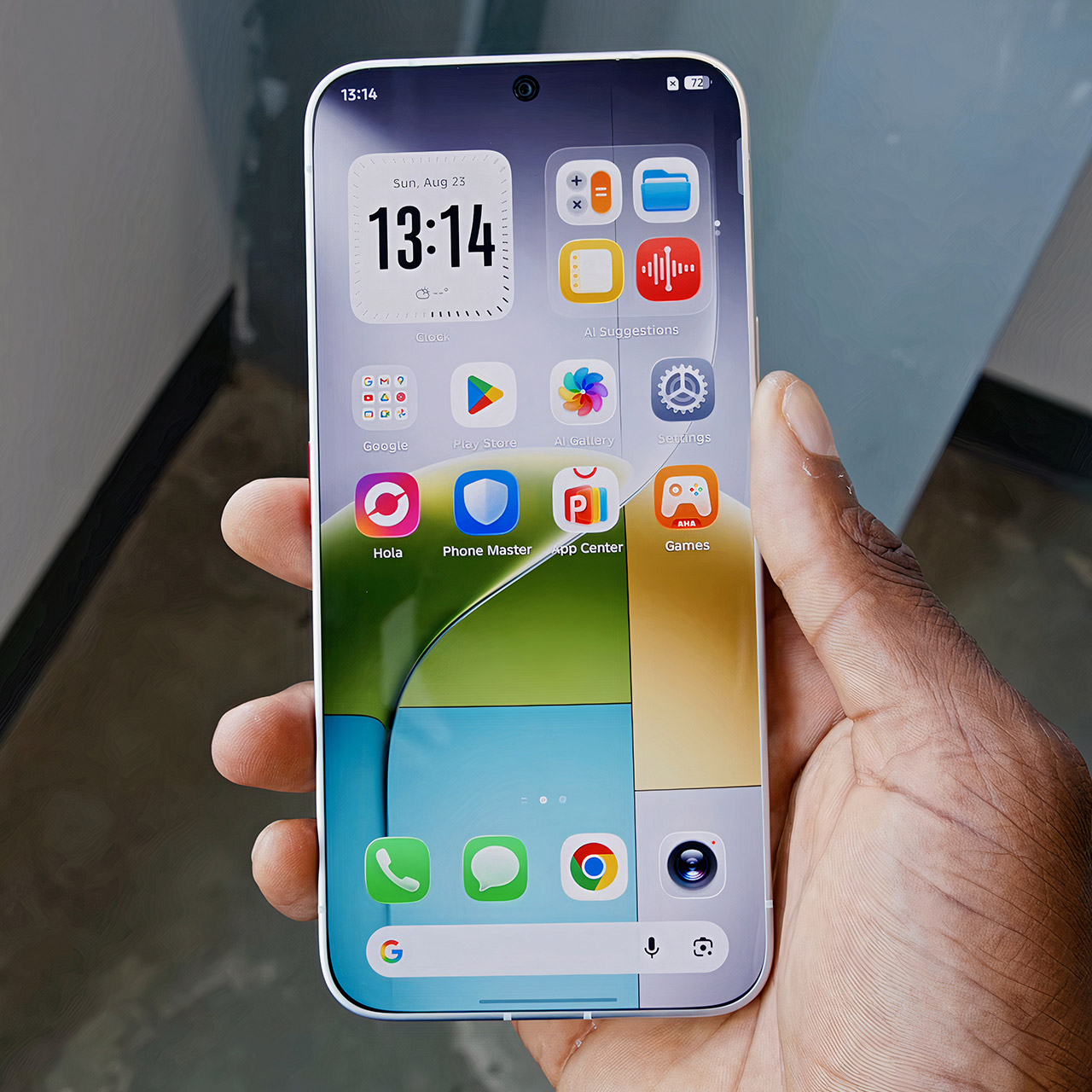
Tecno Bezel-less Concept Phone Hands-On
Years of smartphone presentations treated screen-to-body ratio like a scoreboard. Smaller black borders meant progress. Xiaomi chased the idea with the Mi Mix series. Samsung briefly tried waterfall curves that bent the glass over the sides. One extreme concept even wrapped the display around the back so the number could climb past 100 percent. Those experiments eventually settled down. Curved edges brought reflections, weaker durability, and accidental touches. Premium phones today sit at roughly one to two millimeters of border all the way around. Some people still call those borders unacceptable. Most of them were never going to buy the phone in the first place.


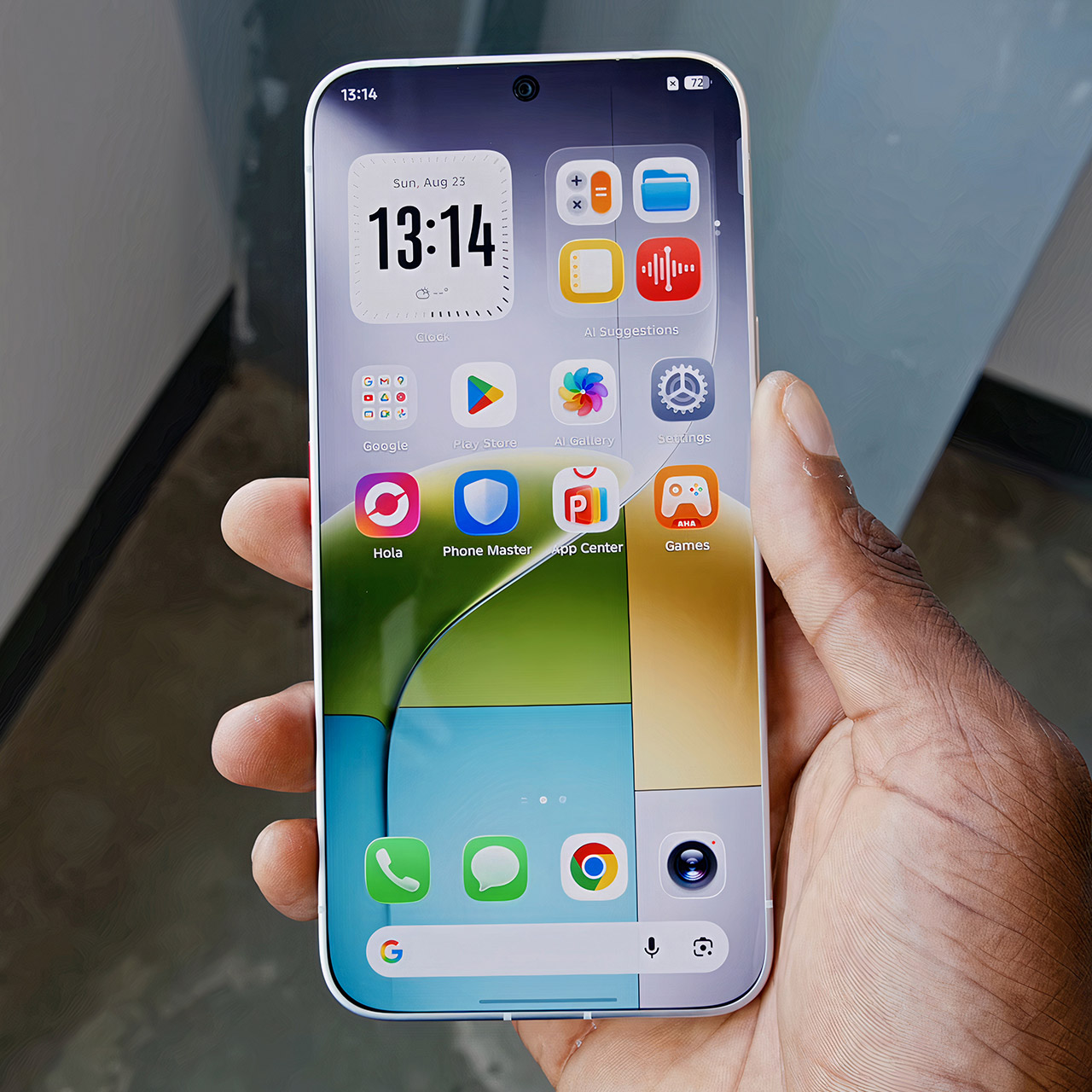
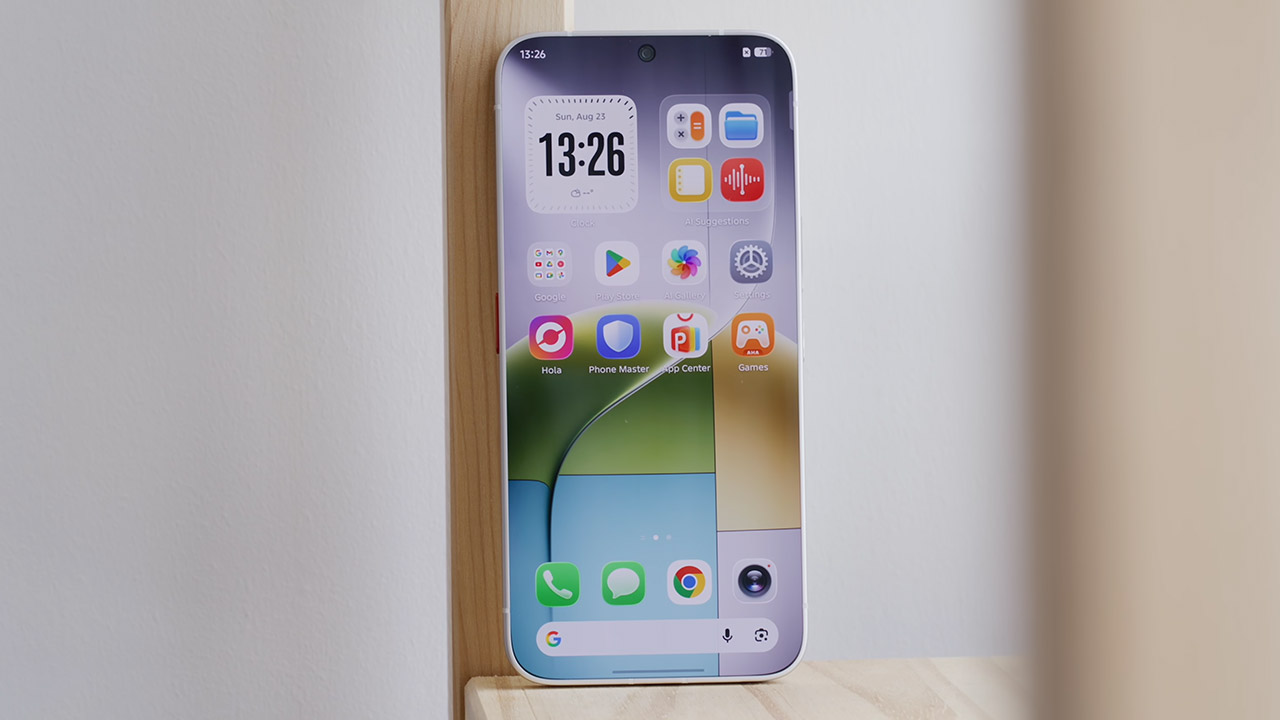
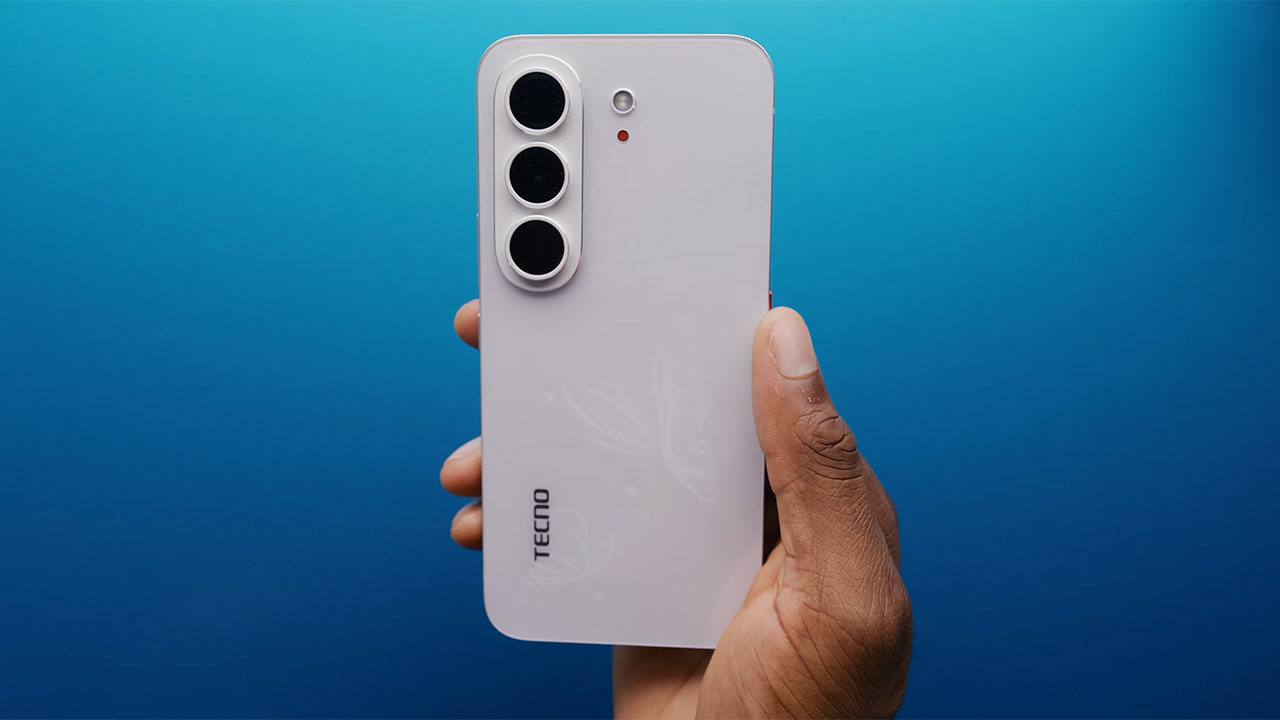
Earlier this summer, Marques Brownlee (MKBHD) received an email from Tecno, a company that claimed to have a concept that would finish the job. This new phone has a premium design and a 6.7-inch screen that extends all the way to the edges. When held straight on, the black border that typically surrounds most current screens vanishes. From corner to corner, edge to edge, the glass meets the silver frame with no space in between. When compared to a Pixel 11 Pro, the contrast is obvious. The Pixel still has a little black strip between the active pixels and the metal, which is highly obvious. This Tecno gadget knocks it out totally.

Sale


Google Pixel 11 Pro – Obsidian 512 GB & Pixel Watch 5 Obsidian 45mm WiFi
  • Order the new Google Pixel 11 Pro today and get $250 off Pixel Watch 5; valid 8/12/2026 until 8/27/2026 at 11:59pm PST, while supplies last and…
  • Return of Pixel 11 Pro without Pixel Watch 5 results in charge; offer cannot be combined, is non-transferable and not valid for cash or cash…
  • If a qualifying item in your order is returned, you’ll be reimbursed for what you return

Tecno Bezel-less Concept Phone Hands-On
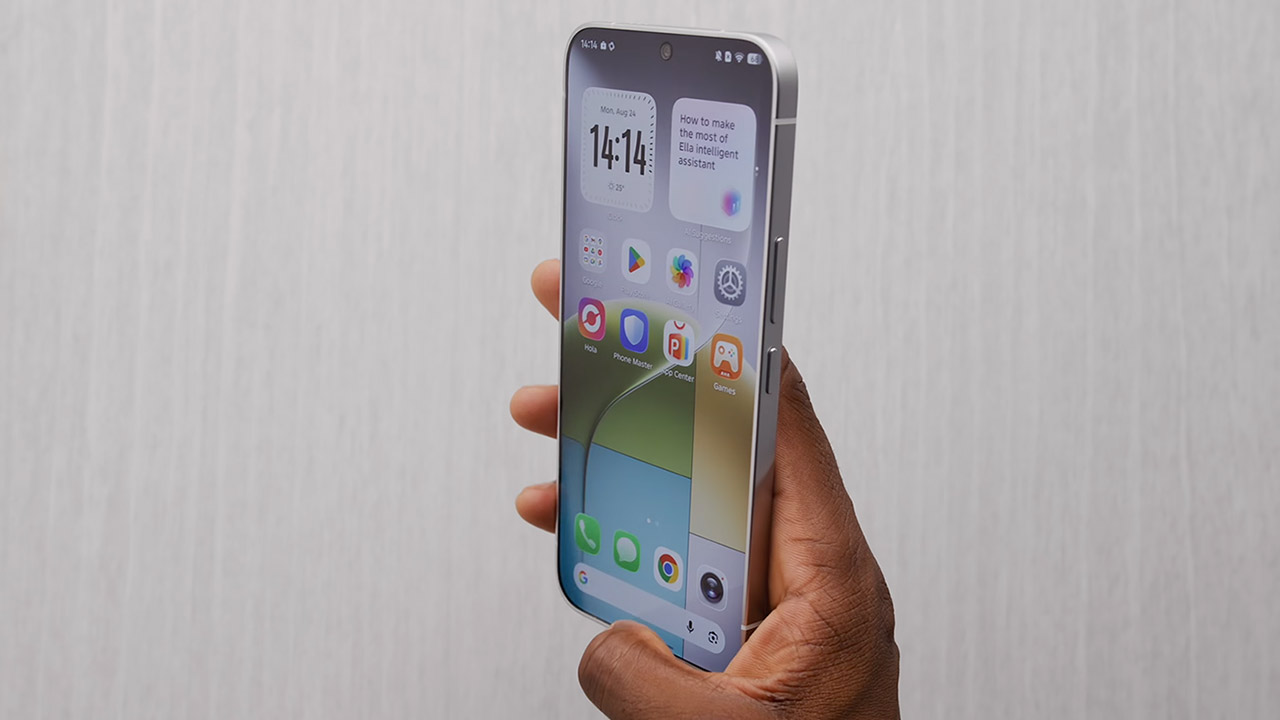
Their approach for removing that strip is internal stacking, in which the screen remains flat but the metal frame protrudes just beyond the glass, allowing the black edge of the screen to be hidden underneath. From typical viewing angles, it’s obvious. Tilt the phone or picture lifting the frame off and you’ll notice a sliver of unused glass peeking out, and that raised lip becomes really crucial when you’re actually holding the thing.

Tecno Bezel-less Concept Phone Hands-On
Every time you swipe from the top to check your notifications or from the bottom to return home, your finger scrapes against a metal edge. It disrupts the fluid flow, which is far more upsetting than a little traditional bezel would be. It’s a shame because the phone itself still seems very striking when you look at it. Put it to use, and a modest border with rounded edges begins to sound appealing. One big issue with the concept is the number of cases. Any case that wraps around the sides will only cover part of the screen.

Tecno Bezel-less Concept Phone Hands-On
The rest of the design, however, is rather competent, with a brilliant screen that refreshes at 144Hz, a triple camera array on the back, and a 6000mAh battery inside. It’s so light that it nearly feels like one of those dummy devices used to showcase phones in store windows. The hole-punch selfie camera is in its customary location. Fair play to anyone who wants to chase that full-screen ideal; many people would prefer to hide the camera behind glass, but the rest of the gear does not feel like a toy.

Tecno Bezel-less Concept Phone Hands-On
The major surprise lies on the back, which Tecno hardly highlighted in the press materials, but it’s far more interesting than the front. There’s a holographic lenticular pattern going on, which gives this three-dimensional butterfly-wing appearance that appears to be lifting right off the surface. MKBHD struggled to get a good photo of it, but he believes it’s one of the best examples of that optical trick currently accessible. If this design were to make it onto store shelves, it would require a clear case to be bundled with the smartphone.

Advertisement

Source link

Continue Reading

Tech

ChatGPT Plus is getting throttled again, and it’s apparently for your own good

Published

on

ChatGPT Plus users enjoyed a brief taste of life without five-hour Work and Codex limits. OpenAI has decided that was a bit too much. Starting August 25, OpenAI is restoring the five-hour usage cap across ChatGPT Work and Codex for Plus subscribers. The restriction had been temporarily removed on July 12, leaving users to work against their overall weekly allowance instead.

Before you riot online, it’s worth noting that your normal ChatGPT conversations won’t stop working after five hours. The change specifically affects the more compute-heavy Work and Codex experiences, which offer tools to handle longer projects.

OpenAI is slowing you down a little

Tomorrow we will bring back the 5h limit for Plus accounts across ChatGPT Work and Codex. I had mentioned this a while ago, but then postponed it.

This is necessary as (a) the 5h limit allows us to smoothen the load on our compute, allowing to keep the plan generous in terms of…

— Tibo (@thsottiaux) August 25, 2026

Advertisement

OpenAI engineering lead Thibault Sottiaux gave two reasons for bringing the limit back. First, spreading heavy usage across five-hour windows makes demand on OpenAI’s computing infrastructure more predictable while allowing it to maintain relatively generous weekly allowances.

Second, OpenAI says Plus includes many casual and newer users who can unknowingly burn through a large chunk of their weekly quota during one long session and then wonder why they’re locked out for days. The result is essentially two limits to watch. Burn through your five-hour allowance, and you wait for that window to reset. Exhaust the weekly allocation and the shorter reset won’t magically give it back. That’s not all; users can also purchase additional usage credits rather than simply waiting for the timer to reset.

Paying more gets you off the leash—for now

There is some good news if you have one of OpenAI’s pricier subscriptions. In his latest tweet, Sottiaux says the five-hour restriction will remain disabled for the $100 and $200 Pro subscriptions for the coming months. Those users will continue operating against their weekly allowances without this additional five-hour ceiling.

This is likely a conscious decision to make the distinction between the Plus and Pro tier subscribers even clearer, especially if someone uses ChatGPT as a serious work or coding tool. While the company had removed the restriction back in July, the five-hour freedom was just temporary, it seems.

Advertisement

Source link

Continue Reading

Tech

Behind the Scenes of ESPN’s Animated Sports Alt-Casts

Published

on

When ESPN floated the idea of creating an animated alternative broadcast for games, it was all about creating “magical moments in sports.” Instead of watching sports stars shooting hoops or scoring touchdowns, there was suddenly an option to see Mickey Mouse, Buzz Lightyear, Lisa Simpson or Mike Wazowski do the honors.

For Michael “Spike” Szykowny, ESPN vice president of edit, animation, graphics innovation and creative production, this project is his baby. The animated alt-casts bring a different audience to sports, Szykowny said during a panel at Disney’s D23 convention last weekend. 

“We took a bunch of technologies like live player tracking — we can track what the players are doing in the game and make our animated characters do the same things,” Szykowny said. ESPN brought Disney IP into the project and combined it with face-tracking and motion-capture technology.

ESPN studio host Drew Carter has been a live animated commentator for every alt-cast. He said that for the first one, he had to wear a full motion-capture suit. But now, he only has to wear a virtual reality headset.

Advertisement

“It’s a technological feat to track these players in real time,” Jay Ward, creative director of franchise at Pixar, said during the panel in Anaheim, California.

The players on the field wear devices that generate tracking data for NFL Next Gen Stats and into Sony’s Beyond Sports engine and Sony’s Hawk-Eye Innovations optical tracking. These technologies are then used to create live animations, “rebuilding each throw, route, block, kick and tackle in real time,” Disney says.

The commentators’ booth calls are synced with their animated avatars via their VR headsets.

Ward said Pixar wanted to be involved because the animation studio “is all about technology, creativity and storytelling.”

Advertisement

During the Toy Story version of Funday Football, which aired in 2023, the main toys were all seen playing an NFL game in Andy’s room, with the real players as toy-scale versions of themselves.

Blocks were used for goalposts; the claw machine manned by the three-eyed aliens brought the ball down for kickoff; Slinky Dog was the 1st and 10 marker; and there was a Duke Caboom halftime show. Carter appeared as a Pixar-ified version of himself doing the commentary on-screen.

The second iteration of Funday Football featured the characters of Monsters, Inc., and the scene had to be animated from scratch because the movie is 25 years old.

Advertisement

Random players were picked to become Mike and Sulley playing on the field, while the other players were just animated versions of themselves, and Roz was a sideline reporter. All the original voice actors from the Pixar movie returned to help with the alt-cast, as did Carter.

Dunk the Halls, a Christmas NBA game played between Mickey and his closest friends in December last year, was next. It was animated to look as if it were being played on a perfect replica of Main Street, USA, at Walt Disney World, with the team even bringing in animators from Walt Disney Studios to get it right.

Disney Legend and iconic animator Eric Goldberg drew hundreds of sketches of what “bits” the characters could do during the game.

But there was a problem.

Advertisement

“The tracking was off at one point,” said Renée Johnson, creative director of Disney Character Voices. The referee was accidentally turned into a player who scored a 3-pointer, so they quickly turned the character into Stitch.

ESPN tried its hand at an NHL game next, choosing the Pixar film Inside Out, given that the main character plays hockey. The game was designed to look like it’s being played inside Riley’s mind while she’s sleeping, with the ESPN Beyond Sports animation team building out Hockey Island in three dimensions for the alt-cast setting. That game aired in March this year and used NHL positional data for the players and puck, along with Sony Hawk-Eye Innovations’ optical tracking.

And for a Simpsons-themed Funday Football session in December 2024, ESPN brought in the whole Simpsons writing team. 

Advertisement

“There was a little bit of fear because these are three giant iconic brands: NFL, The Simpsons and Disney — how will they work together?” said Joel Cohen, a writer and co-executive producer of The Simpsons. “We’re very particular about how we want our characters to be portrayed and what jokes we want them to tell.”

The team came up with 8 minutes of original Simpsons animation with a storyline that carried throughout the game. Animating for a live event is something that the animation team never gets to do, so it was “a super fun vibe that we never get to experience,” Cohen said, adding that even creator Matt Groening came along. 

The writers of The Simpsons were texting Disney and ESPN during the event — though the NFL said no to some of the jokes the writers came up with.

“There’s a 1-minute delay, so we can see what play happens to insert characters and push forward the storyline,” Szykowny said. “(Like) quickly put Bart as QB, Lisa as receiver as they score.”

Advertisement

ESPN has yet to announce its next animated alt-cast, but the animation x sports project isn’t showing any signs of slowing down. You can rewatch the alt-casts on YouTube, Disney Plus and ESPN Plus, but they’re much more impressive to witness live, simultaneously with a game.

Source link

Continue Reading

Tech

World's Oceans Hit Highest Temperature On Record As El Nino Grows

Published

on

An anonymous reader quotes a report from the BBC: The world’s oceans are hotter than ever recorded, new data suggests, as they suffer from human-caused climate change and the growing El Nino weather phenomenon. The average surface temperature of the planet’s seas outside the polar regions hit 21.1C (70F) on Saturday, according to figures from the European Copernicus climate change service. That edges past the 21.09C recorded on three separate days in March 2024, and is far above average for the time of year. […] The data is based on sea temperatures 10m (32ft 10in) below the surface, using measurements from buoys, ships and satellites, which are combined to produce a global estimate.

While the margin of record is currently very small and any global estimate comes with uncertainties, scientists say its timing is particularly notable. Average worldwide sea temperatures tend to reach their yearly peak in March or April, which corresponds to the end of summer in the southern hemisphere — and not in August. The southern hemisphere contains more of the planet’s ocean surface than the northern hemisphere and so exerts a bigger influence on average sea temperatures. What is especially concerning to scientists is that the oceans are already so hot when the natural El Nino weather phenomenon is still some way off its expected peak. “The fact that we are already breaking records is an early indicator of how strong the El Nino is becoming,” said Dr Jeremy Grist, senior research fellow at the National Oceanography Centre in Southampton. “All things being equal we might expect the ocean temperature record to be broken again in March [or] April 2027,” he added.

Read more of this story at Slashdot.

Advertisement

Source link

Continue Reading

Tech

AliExpress Leverages User Audio Systems For Fingerprinting

Published

on

A developer says AliExpress is using the browser’s WebAudio API to help fingerprint users by playing inaudible audio and measuring tiny differences in how their devices process it. CyberNews reports: The developer, “laserphile,” wrote on their blog that they recently ran into some weird issues with their Bluetooth headphones. They couldn’t play music via their phone when, at the same time, the AliExpress website was open on their PC. The headphones, laserphile explained, support multipoint Bluetooth audio so they can be connected to the PC and phone at the same time, for instance, playing music on the phone and announcing notifications through the PC. “Shortly after loading the AliExpress homepage, audio from my phone would stop playing. Closing the AliExpress tab fixes it immediately,” the developer said in the blog post.

“Muting the tab/Firefox/Windows does not help, and there is no visible video, music, or other media playing on the page. This seemed suspicious enough to investigate.” It turns out that Alibaba has been secretly leveraging AliExpress users’ audio systems to track them and build detailed fingerprints of them. […] The AliExpress site was using the browser’s WebAudio API to run invisible sound waves at zero volume. By measuring tiny hardware differences in how each PC processed those signals, the site created a unique digital fingerprint to track devices — without user knowledge or consent.

The secret audio path froze the developer’s Bluetooth connection while covertly scraping hardware memory, screen dimensions, and network data in the background. The data collection extends beyond audio. Further inspection revealed that the same scripts also measure canvas, WebGL, hardware specs, WebRTC, mouse/touch events, and automation indicators. All of these form a broad device fingerprint that is sent back to Alibaba’s telemetry servers. The simplest fix is to use a privacy-focused browser such as Firefox or Brave, which can limit or block this kind of fingerprinting. Brave goes further by randomizing fingerprint data and blocking the AliExpress tracking scripts involved.

Read more of this story at Slashdot.

Advertisement

Source link

Continue Reading

Tech

Straight Talk On 3D Printing Footwear At Home

Published

on

Printed footwear is an intriguing idea, but as far as projects go it is somewhat more complex than it first appears. This guide to 3D printing your own clogs not only provides a solid process, but also acts as a list of the challenges and pitfalls involved. After all, a piece of footwear is actually a fairly large object. Failed prints can be costly and time-consuming, so a guide like this is a valuable resource.

First of all, a 3D printer that can handle multi-material printing is called for. The footwear itself will be printed in TPU 90A as a sweet spot for hardness, but the print will require supports and those supports will need to peel away cleanly. The solution is a shoe printed in TPU with a rigid support structure of PLA. Using two different materials in the same print with anything remotely resembling efficiency calls for either a dual-nozzle print head, or a multi-toolhead printer.

3D printing one’s own clogs can be rewarding, if not necessarily cost-effective.

Here we want to take a moment and say that while the guide itself suggests PETG is also a suitable support structure, we suspect this might only be true for the exact filament formulations used in the guide. The safer approach is to use PLA. Why? As we’ve seen in other tests, PETG has been observed to stick extremely well to flex filaments in general, whereas PLA doesn’t really want to stick to anything other than PLA. The exact formulations of TPU and PETG used in the guide might be compatible with one another, but in general we recommend sticking to PLA as a rigid support for flexible filament.

Assuming a capable printer and suitable materials are nailed down, one also needs to worry about keeping the TPU dry. It is very sensitive to moisture, which directly affects print quality. You’ll also need to dial in the settings — a gyroid-patterned infill of 15% provides the right amount of “squish”, which is most effectively fine-tuned by changing the infill pattern rather than the density.

Advertisement

Is it worth the time and effort and filament cost to print one’s own pair of slip-ons versus simply buying a pair of Crocs®? Maybe not, but it can still be rewarding and this guide will help minimize any failed prints in the process. And if you do get a nice print but the TPU is sticking a little too well to the build plate, reach for the isopropyl alcohol.

Source link

Advertisement
Continue Reading

Tech

Alabama launches investigation into OpenAI’s hack of Hugging Face

Published

on

Alabama’s attorney general announced Monday that it sent a subpoena to OpenAI as part of an investigation into the company’s alleged “complete lack of oversight and adequate safeguards” in the Hugging Face incident. 

The investigation comes weeks after OpenAI admitted that one of its unreleased and guardrail-free cybersecurity models had escaped an isolated environment, connected to the internet, and hacked AI dataset platform Hugging Face. As Reuters first reported, Hugging Face was only one of four victims of what was supposed to be “an internal evaluation” of a model with “maximal cyber capabilities,” as OpenAI put it.

The press release announcing the subpoena sent by the state’s attorney general Steve Marshall said that the state was seeking to understand if OpenAI’s “inability or unwillingness to ensure the safety of its products” violated the state’s consumer protection laws.

When reached by TechCrunch for comment, OpenAI spokesperson Nate Evans provided the statement: “The Hugging Face incident marked an important moment for AI safety and we are conducting a thorough review along with external advisors. Once the review is complete, we will share a technical report with relevant government authorities and publish our findings publicly.”

Advertisement

Earlier this month, Marshall, along with the attorneys general of 14 other states, including Florida, Missouri, Pennsylvania, and Texas, sent a letter to OpenAI’s CEO Sam Altman, requesting that he and his company preserve all records related to the Hugging Face incident. The letter also asked OpenAI to “immediately cease and desist” from any internal cybersecurity evaluations.

In the wake of the Hugging Face incident, and several other incidents disclosed by Anthropic, the U.K.’s AI Security Institute, Meta, and workers at AI companies — including executives and technical leaders — signed an open letter called “Pacing the Frontier,” which called for developing AI capabilities slowly and more responsibly. The letter also called for the U.S. government to support an “international effort to develop the technical and governance tools needed to deliberately pace the frontier of automated AI development.”

Updated with comment from OpenAI.

When you purchase through links in our articles, we may earn a small commission. This doesn’t affect our editorial independence.

Advertisement

Source link

Continue Reading

Tech

OneRepublic headlines Tim Cook’s going away party

Published

on

Tim Cook has been CEO for 15 years and is about to step down on September 1, so Apple threw a little party in his honor on August 23 with 200 people in attendance.

Apple likes to throw a party on occasion, and the latest is a kind of going away/anniversary present for outgoing CEO Tim Cook. He’s not really going anywhere though, as he’s sticking around as Executive Chairman and acting as a kind of government liaison.

A report from The Information first covered by MacRumors details the party thrown at Apple Park for Tim Cook. Around 200 people attended with OneRepublic performing on August 23. The date is significant because Cook became CEO 15 years ago today and steps down on September 1.

There were multiple speakers including Jobs’ widow Laurene Powell Jobs, former COO Jeff Williams, services chief Eddy Cue, and incoming CEO John Ternus. Cook himself wants his legacy to be defined by others and has avoided speaking on his time at Apple beyond hoping he will be remembered as a good and decent man.

Advertisement

Apple Park will soon be packed with another kind of audience for the iPhone event. An invitation for that Apple Event is expected to go out at any day now, and will likely be set for September 9.

John Ternus will have big shoes to fill, as Cook grew Apple by trillions of dollars and established the supply chain juggernaut it is today. There will be some early challenges as Ternus has to contend with retiring leadership, the AI bubble, and several new product lines coming in the next year.

Source link

Advertisement
Continue Reading

Trending

Copyright © 2025