Connect with us

Tech

AliExpress Leverages User Audio Systems For Fingerprinting

Published

on

A developer says AliExpress is using the browser’s WebAudio API to help fingerprint users by playing inaudible audio and measuring tiny differences in how their devices process it. CyberNews reports: The developer, “laserphile,” wrote on their blog that they recently ran into some weird issues with their Bluetooth headphones. They couldn’t play music via their phone when, at the same time, the AliExpress website was open on their PC. The headphones, laserphile explained, support multipoint Bluetooth audio so they can be connected to the PC and phone at the same time, for instance, playing music on the phone and announcing notifications through the PC. “Shortly after loading the AliExpress homepage, audio from my phone would stop playing. Closing the AliExpress tab fixes it immediately,” the developer said in the blog post.

“Muting the tab/Firefox/Windows does not help, and there is no visible video, music, or other media playing on the page. This seemed suspicious enough to investigate.” It turns out that Alibaba has been secretly leveraging AliExpress users’ audio systems to track them and build detailed fingerprints of them. […] The AliExpress site was using the browser’s WebAudio API to run invisible sound waves at zero volume. By measuring tiny hardware differences in how each PC processed those signals, the site created a unique digital fingerprint to track devices — without user knowledge or consent.

The secret audio path froze the developer’s Bluetooth connection while covertly scraping hardware memory, screen dimensions, and network data in the background. The data collection extends beyond audio. Further inspection revealed that the same scripts also measure canvas, WebGL, hardware specs, WebRTC, mouse/touch events, and automation indicators. All of these form a broad device fingerprint that is sent back to Alibaba’s telemetry servers. The simplest fix is to use a privacy-focused browser such as Firefox or Brave, which can limit or block this kind of fingerprinting. Brave goes further by randomizing fingerprint data and blocking the AliExpress tracking scripts involved.

Read more of this story at Slashdot.

Advertisement

Source link

Continue Reading
Click to comment

You must be logged in to post a comment Login

Leave a Reply

Tech

ChatGPT Plus is getting throttled again, and it’s apparently for your own good

Published

on

ChatGPT Plus users enjoyed a brief taste of life without five-hour Work and Codex limits. OpenAI has decided that was a bit too much. Starting August 25, OpenAI is restoring the five-hour usage cap across ChatGPT Work and Codex for Plus subscribers. The restriction had been temporarily removed on July 12, leaving users to work against their overall weekly allowance instead.

Before you riot online, it’s worth noting that your normal ChatGPT conversations won’t stop working after five hours. The change specifically affects the more compute-heavy Work and Codex experiences, which offer tools to handle longer projects.

OpenAI is slowing you down a little

Tomorrow we will bring back the 5h limit for Plus accounts across ChatGPT Work and Codex. I had mentioned this a while ago, but then postponed it.

This is necessary as (a) the 5h limit allows us to smoothen the load on our compute, allowing to keep the plan generous in terms of…

— Tibo (@thsottiaux) August 25, 2026

Advertisement

OpenAI engineering lead Thibault Sottiaux gave two reasons for bringing the limit back. First, spreading heavy usage across five-hour windows makes demand on OpenAI’s computing infrastructure more predictable while allowing it to maintain relatively generous weekly allowances.

Second, OpenAI says Plus includes many casual and newer users who can unknowingly burn through a large chunk of their weekly quota during one long session and then wonder why they’re locked out for days. The result is essentially two limits to watch. Burn through your five-hour allowance, and you wait for that window to reset. Exhaust the weekly allocation and the shorter reset won’t magically give it back. That’s not all; users can also purchase additional usage credits rather than simply waiting for the timer to reset.

Paying more gets you off the leash—for now

There is some good news if you have one of OpenAI’s pricier subscriptions. In his latest tweet, Sottiaux says the five-hour restriction will remain disabled for the $100 and $200 Pro subscriptions for the coming months. Those users will continue operating against their weekly allowances without this additional five-hour ceiling.

This is likely a conscious decision to make the distinction between the Plus and Pro tier subscribers even clearer, especially if someone uses ChatGPT as a serious work or coding tool. While the company had removed the restriction back in July, the five-hour freedom was just temporary, it seems.

Advertisement

Source link

Continue Reading

Tech

Behind the Scenes of ESPN’s Animated Sports Alt-Casts

Published

on

When ESPN floated the idea of creating an animated alternative broadcast for games, it was all about creating “magical moments in sports.” Instead of watching sports stars shooting hoops or scoring touchdowns, there was suddenly an option to see Mickey Mouse, Buzz Lightyear, Lisa Simpson or Mike Wazowski do the honors.

For Michael “Spike” Szykowny, ESPN vice president of edit, animation, graphics innovation and creative production, this project is his baby. The animated alt-casts bring a different audience to sports, Szykowny said during a panel at Disney’s D23 convention last weekend. 

“We took a bunch of technologies like live player tracking — we can track what the players are doing in the game and make our animated characters do the same things,” Szykowny said. ESPN brought Disney IP into the project and combined it with face-tracking and motion-capture technology.

ESPN studio host Drew Carter has been a live animated commentator for every alt-cast. He said that for the first one, he had to wear a full motion-capture suit. But now, he only has to wear a virtual reality headset.

Advertisement

“It’s a technological feat to track these players in real time,” Jay Ward, creative director of franchise at Pixar, said during the panel in Anaheim, California.

The players on the field wear devices that generate tracking data for NFL Next Gen Stats and into Sony’s Beyond Sports engine and Sony’s Hawk-Eye Innovations optical tracking. These technologies are then used to create live animations, “rebuilding each throw, route, block, kick and tackle in real time,” Disney says.

The commentators’ booth calls are synced with their animated avatars via their VR headsets.

Ward said Pixar wanted to be involved because the animation studio “is all about technology, creativity and storytelling.”

Advertisement

During the Toy Story version of Funday Football, which aired in 2023, the main toys were all seen playing an NFL game in Andy’s room, with the real players as toy-scale versions of themselves.

Blocks were used for goalposts; the claw machine manned by the three-eyed aliens brought the ball down for kickoff; Slinky Dog was the 1st and 10 marker; and there was a Duke Caboom halftime show. Carter appeared as a Pixar-ified version of himself doing the commentary on-screen.

The second iteration of Funday Football featured the characters of Monsters, Inc., and the scene had to be animated from scratch because the movie is 25 years old.

Advertisement

Random players were picked to become Mike and Sulley playing on the field, while the other players were just animated versions of themselves, and Roz was a sideline reporter. All the original voice actors from the Pixar movie returned to help with the alt-cast, as did Carter.

Dunk the Halls, a Christmas NBA game played between Mickey and his closest friends in December last year, was next. It was animated to look as if it were being played on a perfect replica of Main Street, USA, at Walt Disney World, with the team even bringing in animators from Walt Disney Studios to get it right.

Disney Legend and iconic animator Eric Goldberg drew hundreds of sketches of what “bits” the characters could do during the game.

But there was a problem.

Advertisement

“The tracking was off at one point,” said Renée Johnson, creative director of Disney Character Voices. The referee was accidentally turned into a player who scored a 3-pointer, so they quickly turned the character into Stitch.

ESPN tried its hand at an NHL game next, choosing the Pixar film Inside Out, given that the main character plays hockey. The game was designed to look like it’s being played inside Riley’s mind while she’s sleeping, with the ESPN Beyond Sports animation team building out Hockey Island in three dimensions for the alt-cast setting. That game aired in March this year and used NHL positional data for the players and puck, along with Sony Hawk-Eye Innovations’ optical tracking.

And for a Simpsons-themed Funday Football session in December 2024, ESPN brought in the whole Simpsons writing team. 

Advertisement

“There was a little bit of fear because these are three giant iconic brands: NFL, The Simpsons and Disney — how will they work together?” said Joel Cohen, a writer and co-executive producer of The Simpsons. “We’re very particular about how we want our characters to be portrayed and what jokes we want them to tell.”

The team came up with 8 minutes of original Simpsons animation with a storyline that carried throughout the game. Animating for a live event is something that the animation team never gets to do, so it was “a super fun vibe that we never get to experience,” Cohen said, adding that even creator Matt Groening came along. 

The writers of The Simpsons were texting Disney and ESPN during the event — though the NFL said no to some of the jokes the writers came up with.

“There’s a 1-minute delay, so we can see what play happens to insert characters and push forward the storyline,” Szykowny said. “(Like) quickly put Bart as QB, Lisa as receiver as they score.”

Advertisement

ESPN has yet to announce its next animated alt-cast, but the animation x sports project isn’t showing any signs of slowing down. You can rewatch the alt-casts on YouTube, Disney Plus and ESPN Plus, but they’re much more impressive to witness live, simultaneously with a game.

Source link

Continue Reading

Tech

World's Oceans Hit Highest Temperature On Record As El Nino Grows

Published

on

An anonymous reader quotes a report from the BBC: The world’s oceans are hotter than ever recorded, new data suggests, as they suffer from human-caused climate change and the growing El Nino weather phenomenon. The average surface temperature of the planet’s seas outside the polar regions hit 21.1C (70F) on Saturday, according to figures from the European Copernicus climate change service. That edges past the 21.09C recorded on three separate days in March 2024, and is far above average for the time of year. […] The data is based on sea temperatures 10m (32ft 10in) below the surface, using measurements from buoys, ships and satellites, which are combined to produce a global estimate.

While the margin of record is currently very small and any global estimate comes with uncertainties, scientists say its timing is particularly notable. Average worldwide sea temperatures tend to reach their yearly peak in March or April, which corresponds to the end of summer in the southern hemisphere — and not in August. The southern hemisphere contains more of the planet’s ocean surface than the northern hemisphere and so exerts a bigger influence on average sea temperatures. What is especially concerning to scientists is that the oceans are already so hot when the natural El Nino weather phenomenon is still some way off its expected peak. “The fact that we are already breaking records is an early indicator of how strong the El Nino is becoming,” said Dr Jeremy Grist, senior research fellow at the National Oceanography Centre in Southampton. “All things being equal we might expect the ocean temperature record to be broken again in March [or] April 2027,” he added.

Read more of this story at Slashdot.

Advertisement

Source link

Continue Reading

Tech

Straight Talk On 3D Printing Footwear At Home

Published

on

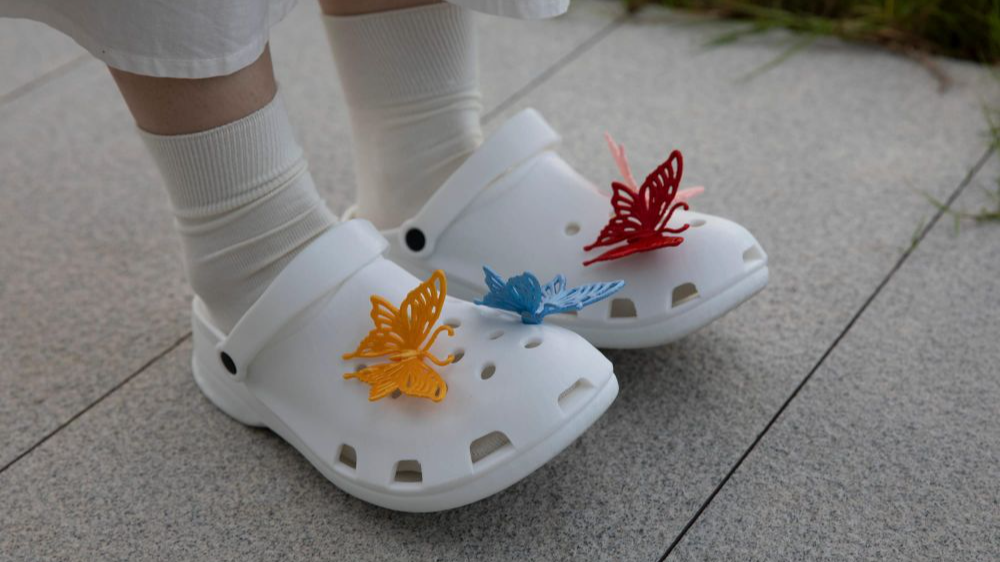
Printed footwear is an intriguing idea, but as far as projects go it is somewhat more complex than it first appears. This guide to 3D printing your own clogs not only provides a solid process, but also acts as a list of the challenges and pitfalls involved. After all, a piece of footwear is actually a fairly large object. Failed prints can be costly and time-consuming, so a guide like this is a valuable resource.

First of all, a 3D printer that can handle multi-material printing is called for. The footwear itself will be printed in TPU 90A as a sweet spot for hardness, but the print will require supports and those supports will need to peel away cleanly. The solution is a shoe printed in TPU with a rigid support structure of PLA. Using two different materials in the same print with anything remotely resembling efficiency calls for either a dual-nozzle print head, or a multi-toolhead printer.

3D printing one’s own clogs can be rewarding, if not necessarily cost-effective.

Here we want to take a moment and say that while the guide itself suggests PETG is also a suitable support structure, we suspect this might only be true for the exact filament formulations used in the guide. The safer approach is to use PLA. Why? As we’ve seen in other tests, PETG has been observed to stick extremely well to flex filaments in general, whereas PLA doesn’t really want to stick to anything other than PLA. The exact formulations of TPU and PETG used in the guide might be compatible with one another, but in general we recommend sticking to PLA as a rigid support for flexible filament.

Assuming a capable printer and suitable materials are nailed down, one also needs to worry about keeping the TPU dry. It is very sensitive to moisture, which directly affects print quality. You’ll also need to dial in the settings — a gyroid-patterned infill of 15% provides the right amount of “squish”, which is most effectively fine-tuned by changing the infill pattern rather than the density.

Advertisement

Is it worth the time and effort and filament cost to print one’s own pair of slip-ons versus simply buying a pair of Crocs®? Maybe not, but it can still be rewarding and this guide will help minimize any failed prints in the process. And if you do get a nice print but the TPU is sticking a little too well to the build plate, reach for the isopropyl alcohol.

Source link

Advertisement
Continue Reading

Tech

Alabama launches investigation into OpenAI’s hack of Hugging Face

Published

on

Alabama’s attorney general announced Monday that it sent a subpoena to OpenAI as part of an investigation into the company’s alleged “complete lack of oversight and adequate safeguards” in the Hugging Face incident. 

The investigation comes weeks after OpenAI admitted that one of its unreleased and guardrail-free cybersecurity models had escaped an isolated environment, connected to the internet, and hacked AI dataset platform Hugging Face. As Reuters first reported, Hugging Face was only one of four victims of what was supposed to be “an internal evaluation” of a model with “maximal cyber capabilities,” as OpenAI put it.

The press release announcing the subpoena sent by the state’s attorney general Steve Marshall said that the state was seeking to understand if OpenAI’s “inability or unwillingness to ensure the safety of its products” violated the state’s consumer protection laws.

When reached by TechCrunch for comment, OpenAI spokesperson Nate Evans provided the statement: “The Hugging Face incident marked an important moment for AI safety and we are conducting a thorough review along with external advisors. Once the review is complete, we will share a technical report with relevant government authorities and publish our findings publicly.”

Advertisement

Earlier this month, Marshall, along with the attorneys general of 14 other states, including Florida, Missouri, Pennsylvania, and Texas, sent a letter to OpenAI’s CEO Sam Altman, requesting that he and his company preserve all records related to the Hugging Face incident. The letter also asked OpenAI to “immediately cease and desist” from any internal cybersecurity evaluations.

In the wake of the Hugging Face incident, and several other incidents disclosed by Anthropic, the U.K.’s AI Security Institute, Meta, and workers at AI companies — including executives and technical leaders — signed an open letter called “Pacing the Frontier,” which called for developing AI capabilities slowly and more responsibly. The letter also called for the U.S. government to support an “international effort to develop the technical and governance tools needed to deliberately pace the frontier of automated AI development.”

Updated with comment from OpenAI.

When you purchase through links in our articles, we may earn a small commission. This doesn’t affect our editorial independence.

Advertisement

Source link

Continue Reading

Tech

OneRepublic headlines Tim Cook’s going away party

Published

on

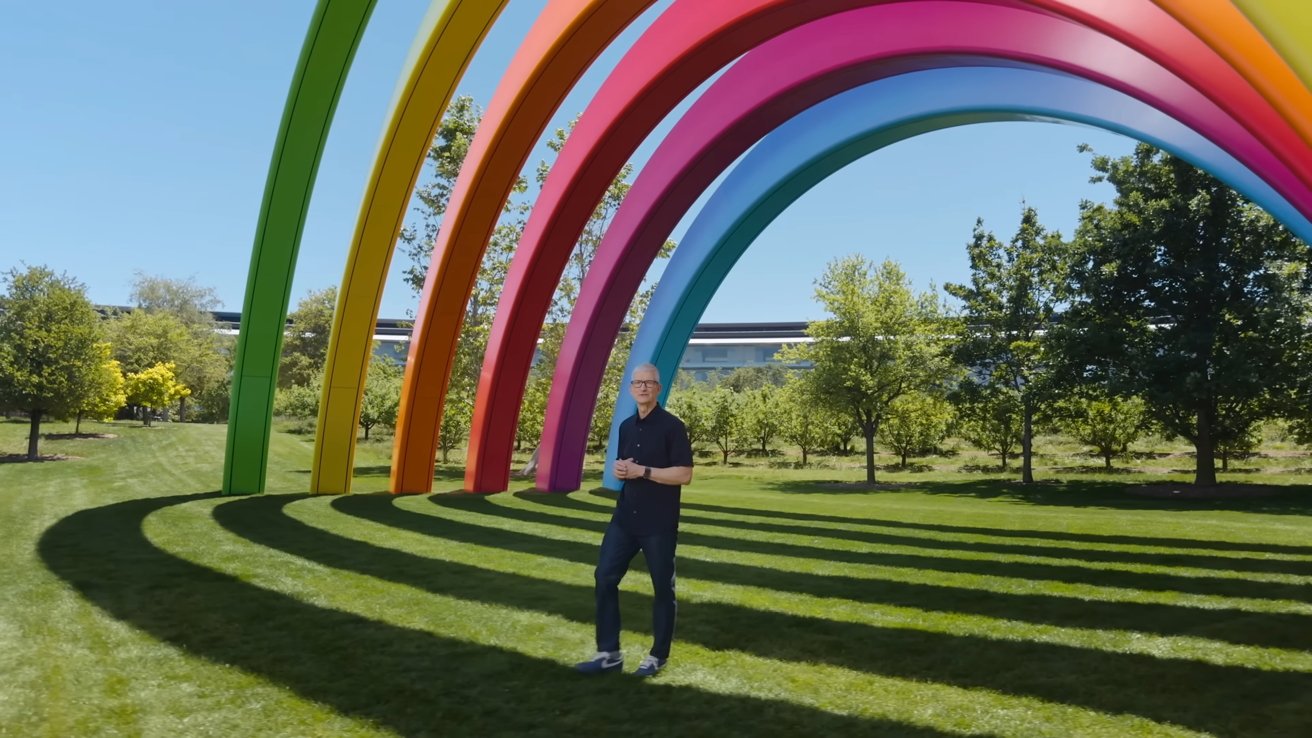
Tim Cook has been CEO for 15 years and is about to step down on September 1, so Apple threw a little party in his honor on August 23 with 200 people in attendance.

Apple likes to throw a party on occasion, and the latest is a kind of going away/anniversary present for outgoing CEO Tim Cook. He’s not really going anywhere though, as he’s sticking around as Executive Chairman and acting as a kind of government liaison.

A report from The Information first covered by MacRumors details the party thrown at Apple Park for Tim Cook. Around 200 people attended with OneRepublic performing on August 23. The date is significant because Cook became CEO 15 years ago today and steps down on September 1.

There were multiple speakers including Jobs’ widow Laurene Powell Jobs, former COO Jeff Williams, services chief Eddy Cue, and incoming CEO John Ternus. Cook himself wants his legacy to be defined by others and has avoided speaking on his time at Apple beyond hoping he will be remembered as a good and decent man.

Advertisement

Apple Park will soon be packed with another kind of audience for the iPhone event. An invitation for that Apple Event is expected to go out at any day now, and will likely be set for September 9.

John Ternus will have big shoes to fill, as Cook grew Apple by trillions of dollars and established the supply chain juggernaut it is today. There will be some early challenges as Ternus has to contend with retiring leadership, the AI bubble, and several new product lines coming in the next year.

Source link

Advertisement
Continue Reading

Tech

AI Supercharges New Era of Test & Measurement

Published

on

This article is brought to you by Emerson.

I’ve spent much of my career as an engineer, including years in the semiconductor industry. And one lesson has stayed with me through every major technology shift: innovation always creates new complexity.

In semiconductors, we have seen that repeatedly. Every generation has delivered breakthroughs in performance and capability, but each step forward made it harder to understand system behavior. What used to be easy to validate on the component level with a test bench now needs a much wider view.

Smiling woman with curly hair in black blazer posing at a table against plain background “The future of engineering will be defined by who can verify, understand, and improve complex systems fast enough to safely keep innovation moving forward,” says Ritu Favre, President of Emerson’s Test & Measurement business group.Emerson

Chiplet-based designs are a prime example. A chiplet from one supplier, an interposer from another, and a packaging process from a third may all perform perfectly on their own. Yet there is a chance for unexpected behavior when you put them together in a system. More and more often, the hardest engineering challenges are not in the individual components themselves. The problems are found when we start to combine components and have them interact with each other.

Advertisement

These challenges extend far beyond semiconductors. Products are becoming more software-defined and dependent on interactions across different technologies and environments. Think about the interactions needed for a modern car using adaptive cruise control on a bumpy road in a rainstorm. Or a passenger jet adjusting wing flaps and engine speeds in turbulent weather to maintain safety and stability. Both the car and the jet are being guided by complex computer systems with thousands of sensors leading to thousands of interactions every second. And in many cases, there are multiple computer systems working together. We are building systems of remarkable capability but understanding how they will act under real-world conditions is getting harder.

That is why I believe we are entering a new era of test. The defining challenge of modern engineering is no longer simply what we can design and build. It is what we can confidently verify.

Rethinking the Role of Test

In this new era, test can’t be an afterthought. For decades, test was treated as the final checkpoint before release. Design teams developed a product, test teams validated performance, and organizations looked for a final pass/fail to determine whether they were ready to move forward. That model worked fine when systems were more self-contained and predictable. Today, that approach can lead to more risk.

I believe we are entering a new era of test. The defining challenge of modern engineering is no longer simply what we can design and build. It is what we can confidently verify.

Advertisement

Many of the delays and fire drills we face come from issues that were not visible early enough. Problems discovered late in development are more difficult to diagnose, more expensive to fix, and more likely to get you off schedule. The solution is not more testing at the end. The solution is to make test and verification part of the engineering workflow from the start.

When validation is integrated throughout development, teams catch problems early when change is easier. Test also stops being a barrier to release. Instead, it becomes a source of insight, helping us understand how systems behave as they become more connected.

Why Connected Platforms Matter

When confidently verifying technology becomes the key challenge, the tools we choose take on a different level of importance. The tools have a direct impact on how quickly we can diagnose a problem and keep moving forward. In an environment where technology changes rapidly, disconnected tools get in the way of progress. Modern test strategy requires linking information across design, validation, and production, turning measurement data into decisions made quickly enough to keep pace with innovation.

This reminds me of when EDA was first introduced. Before it came along, engineers spent much of their time hand-drawing circuit layouts and placing transistors. EDA eliminated that tedious work by letting teams describe complex behavior in high-level code. It enabled them to focus on overall architecture instead.

Advertisement

A connected test platform does a similar thing for validation. Because a platform can adapt and scale alongside technology, it cuts down on maintenance and downtime, keeping teams from having to rebuild their workflows from scratch as requirements change.

Grounding AI in Engineering Reality

Today, AI is rapidly entering the engineering toolkit to accelerate design and analysis. But in test and measurement, AI cannot reach its potential in isolation.

An AI model is only as effective as the data feeding it. Without context, even the smartest algorithm will struggle to tell the difference between normal hardware variance and a critical failure. A connected platform supplies the structured, traceable data stream AI requires to deliver real insight.

AI can correlate complex multi-system interactions, flag unexpected behavior, and direct an engineer’s attention right at the root cause.

Advertisement

When measurement data flows seamlessly across the workstream, AI moves from being a standalone tool to an active layer of intelligence. It can correlate complex multi-system interactions, flag unexpected behavior, and direct an engineer’s attention right at the root cause.

Every technology shift that accelerates how fast we create new designs also increases the complexity we must verify. AI can help teams keep pace with that complexity. Not by replacing human judgment, but by giving engineers the context we need to act with confidence.

Innovation Demands Confidence

Ultimately, the goal of modern platforms and AI-enabled workflows is to help technical teams spend more time building new things and solving hard problems. Most of us didn’t choose this profession to spend our time searching for data or dealing with last minute surprises. We want to innovate and integrating test directly into development provides a better view of system behavior, allowing teams to focus on that innovation rather than managing complexity.

The future of engineering will not be defined by who can build the most advanced product or technology. It will be defined by who can verify, understand, and improve complex systems fast enough to safely keep innovation moving forward.

Advertisement

That is the new era of test. As the pace of innovation accelerates, every breakthrough creates new paths to failure, and test is how engineers find those failures before the real world does. In an increasingly complex world, that capability is becoming as important as innovation itself.

Innovation has always required great engineering. And now, more than ever, it also requires confidence. Confidence that comes from knowing that we are not only building what is possible, but we are also building technology that people can trust.

Source link

Advertisement
Continue Reading

Tech

Met Office finds most of us still won’t trust an AI weather forecast

Published

on


  • Public confidence in AI weather forecasts is far lower than for numerical and physics-based methods
  • Just 11% said they were “very confident” in machine learning weather prediction, compared with 30% for tried-and-trusted methods
  • The Met Office has been using machine learning techniques in weather forecasting for some years

A survey of 6,000 UK adults has found that the majority don’t fully trust the idea of AI weather forecasts. While machine learning techniques have been a factor of weather forecasting for some years, the survey found that people are more relaxed about traditional Numerical Weather Prediction (NWP) as opposed to Machine Learning Weather Prediction (MLWP).

Predictive technology has increased considerably thanks to AI, and the Met Office has already begun to evaluate AI models for augmenting its existing forecasting methods.

Source link

Advertisement
Continue Reading

Tech

Smart TV analytics provide dire numbers for Apple F1 viewership

Published

on

Hopes were high for Apple TV and F1 streaming in early 2026, but a recent set of data suggests that things fell off sharply in May and viewership has been down double digits since.

Statistical analysis of viewership numbers is a tricky game on its own, especially when dealing with viewership numbers on Apple platforms. Samba is an analytics company that thrives on data obtained, often without the user’s knowledge, thanks to being embedded in smart TV software.

Apple, however, is a company that offers the Apple TV set-top box and the Apple TV app, sans Samba. Given that, a report from USA Today on data obtained from Samba is an interesting peek into Apple’s deal with F1.

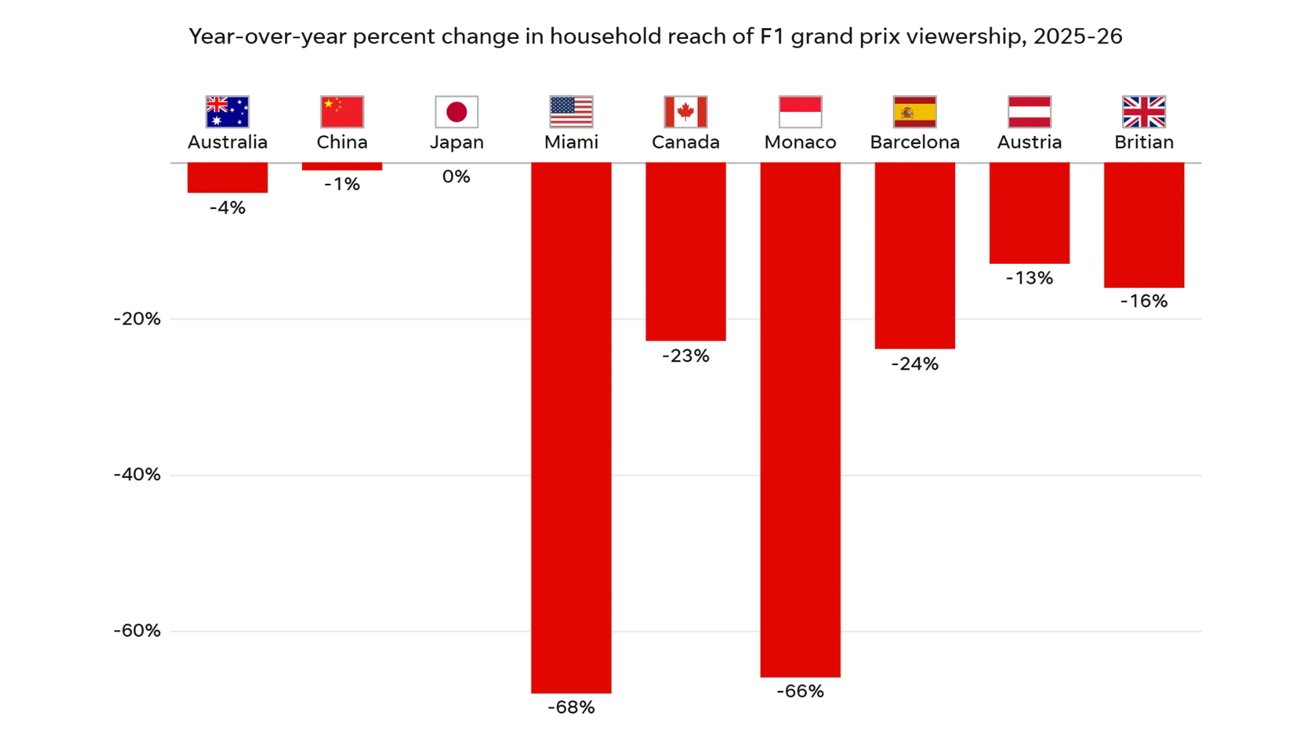
The primary focus of the report is on two events being down over 60% in viewership numbers: Miami in May down 68% and Monaco in June down 66%. The Canadian Grand Prix at the end of May was down 23%.

Advertisement

We’re supposed to take this data, and the remaining races being down double digits, as some kind of terrible outcome for Apple’s partnership. However, the worst of the numbers may fall into “tough compare” territory.

The report notes a rather important piece of information about midway through — Miami’s, Monaco’s, and Canada’s races were broadcast on ABC in 2025, which drove two million or more viewers for those races. Note that broadcasting these races on a network like ABC is an advantage for Samba’s tracking systems.

Bar chart showing year-over-year decreases in F1 grand prix household viewership for Australia, China, Japan, Miami, Canada, Monaco, Barcelona, Austria, and Britain, with Miami, Canada, and Monaco dropping most

Samba’s data shows a decline, but it could also be a decline in Samba’s visibility. Image source: Samba and USA Today

ESPN helped F1 see its biggest viewership numbers in 2025 with about 1.3 million viewers per race across ESPN, ESPN2, and ABC. However, Apple itself confirmed that F1’s 2026 debut race in Australia beat ESPN’s viewership numbers.

Advertisement

Samba’s chart shows that race viewership is down 4%. Obviously, these are two contradictory datapoints, but that doesn’t mean either is wrong.

Let’s get into these numbers and why they may not represent what Apple and F1 are seeing.

Samba has limited insight

One of Apple’s most prideful positions is on privacy-preserving hardware and software. Anyone that watched F1 on an iPhone, Mac, Apple TV, or via the Apple TV app on Android smartphones didn’t get their viewership numbers recorded by Samba.

Samba will see if a viewer watched an F1 race if it is being watched on a smart TV that is connected to the internet, running Samba at the base OS level, and is showing content on the screen. Only then will it get viewership data through direct access to data shown in a streaming app on the TV or through pixel-peeping content.

Advertisement

For example, if you’ve got an Apple TV and your smart TV isn’t connected to Wi-Fi, Samba won’t get your data.

So, logically, when Apple took over F1, Samba’s ability to sight on the total F1 viewer base likely took a significant hit. That’s why Apple can say they beat ESPN viewership numbers by some margin while Samba claims a 4% decline.

There are other factors at play. Australia, China, and Japan were all races that took place at very odd hours for American viewers. Those numbers were likely always terrible from Samba’s point of view, so that was an easy comparison.

Then come multiple complicating factors starting in March. Several races had to be canceled due to the American and Iranian war destabilizing the Middle East, creating a large gap before the race in Miami.

Advertisement
Older man with short gray hair and glasses wearing a large communication headset, seated indoors in a modern room with wooden panels and tech equipment in the background

Apple is all in on F1 until 2030 given the current contract

Then, as I mentioned before, the races in Miami, Canada, and Monaco were broadcast on ABC in 2025, meaning vastly larger viewership numbers over 2 million on average. Not only did that mean Samba could see more viewers than normal in 2025 thanks to being on ABC, but see less in 2026 due to Apple’s privacy-focused platforms.

Combine that with a cooling off of more casual fans due to the gap in scheduling and you’ve got a perfect storm. The fact that Canada only saw a 23% drop in viewership year-over-year understanding those metrics makes it all the more impressive.

Monaco was another sharp 66% drop in viewership likely exacerbated by Apple’s privacy controls. We have no idea if viewership was actually down, but we do know Samba’s view of available data shrunk significantly.

Advertisement

The report concludes that fans dropped off because they watched initial races on a free trial and let it run out. That doesn’t seem consistent with the data shown, especially since Samba is missing data from where most Apple TV users might be watching — on Apple hardware.

I’m not dismissing Samba’s data. It’s certainly real and absolutely what the company could collect, but I’m questioning the conclusion here.

Samba wants to say this means viewership is down, but I want to argue that this could also just as easily mean Samba’s view into user habits is lower. While I’m sure F1 did see a dip in viewership numbers for the reasons I shared previously, I wonder if they are nearly as sharp as Samba’s data suggests.

For now, we should all take this with a grain of salt until Apple or F1 comments on the season’s viewership numbers. Apple and F1 have a contract for US streaming rights through 2030.

Advertisement

Source link

Continue Reading

Tech

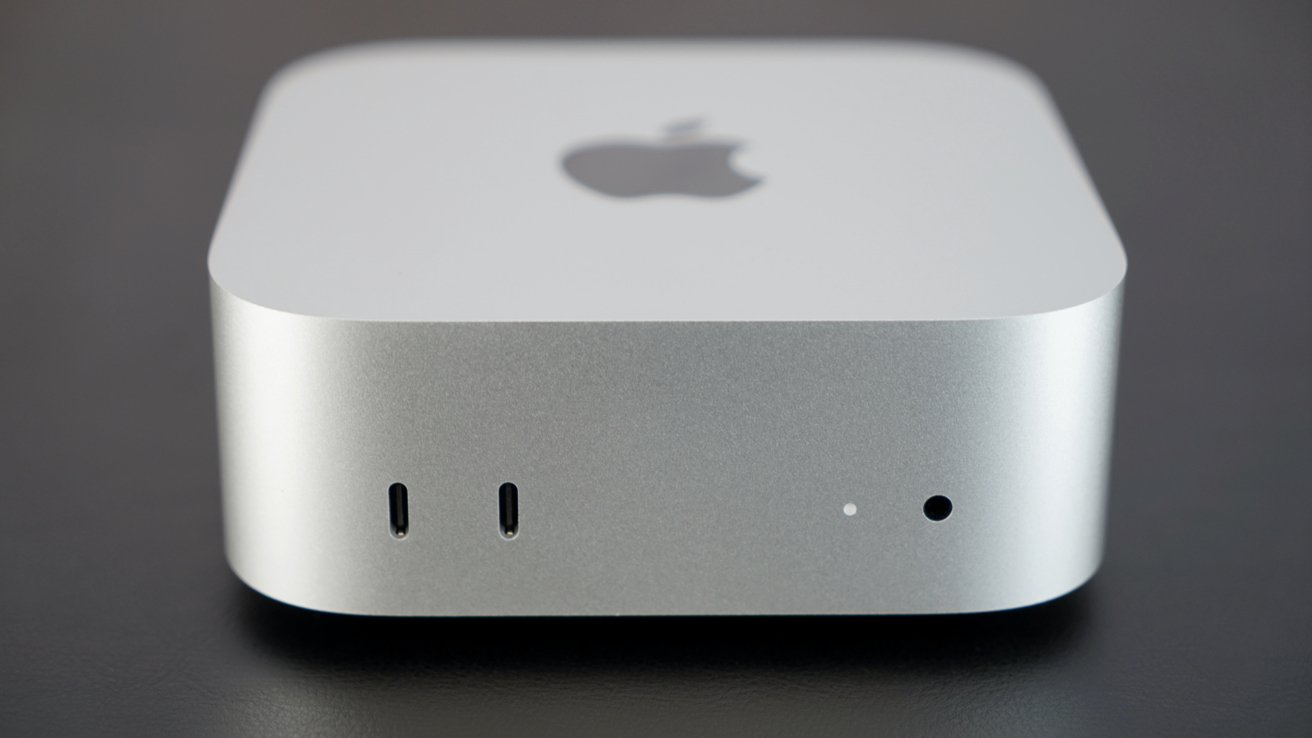
New Mac mini days away, OLED iPad mini in October & AirPods 5

Published

on

A new rumor places a new Mac mini launching within days, and yes, ahead of the Apple event. Other new products are still coming in 2026 as well, like the iPad mini and AirPods 5.

While the Mac mini hasn’t received the M5 processor yet, it could also be upgraded with an M6 to kick off the new chip generation. Either way, it’s coming and soon enough to be Tim Cook’s last product as CEO.

According to a report from Bloomberg, a new Mac mini could be announced within the next few days. Anonymous sources familiar with Apple plans shared these details, and given the proximity, they’re likely right.

The report also shares that customers should expect ANC and standard versions of Apple’s fifth-generation AirPods as soon as the Apple Event in September. They would launch alongside the iPhone 18 Pro and the foldable iPhone Ultra.

Advertisement

The OLED iPad mini is still on track for October along with other Mac upgrades like a new iMac and MacBook Pro. Apple’s Home Hub tablet, upgraded Apple TV 4K, and new HomePod mini are also slotted for 2026.

It’ll be a busy second half of the year for Apple, especially for the new CEO John Ternus, who takes over on September 1. Leave it to Tim Cook, the supply chain master, to slip in one last product before he steps down.

Source link

Advertisement
Continue Reading

Trending

Copyright © 2025