
Crypto World
The New Lisk Is a Fintech Now: Can It Compete With Ramp and Stripe?

Lisk relaunched on Tuesday as a money operations platform for finance teams, merging bank and stablecoin balances in one workspace. The new Lisk enters a fintech market where rivals hold billion-dollar war chests.
Founder Max Kordek unveiled the product as the Lisk Chain heads for an October 31 shutdown. Early Access opened the same day for businesses handling both fiat and stablecoins.
What the New Lisk Actually Does
The platform puts accounts, payments, and approval rules in one workspace across entities and currencies. A bank transfer and a stablecoin deposit land as one balance. Businesses receive virtual accounts with real bank details and can pay out to external bank accounts.
Lisk does not become a bank. Money moves through regulated providers, including Bridge, a Stripe company. The platform is free on its Professional plan through 2026, a sign Lisk is buying adoption before charging for it.
“It’s the product we wish we had years ago,” Kordek wrote in Tuesday’s launch announcement.
The market behind the pivot is real. B2B stablecoin payments hit $226 billion in 2025, up 733% in a year, per a McKinsey and Artemis Analytics study.
Corporate treasuries have spent the past year replacing wires with stablecoins for cross-border settlement.
The Early Access page does not disclose licensing, custody arrangements, or what the product will cost after 2026.
The Competition Has a Head Start Worth Billions
Lisk’s pitch lands in fintech’s most crowded lane. Ramp raised $750 million in June at a $44 billion valuation. Stripe paid $1.1 billion for Bridge, the very provider Lisk routes money through.
Lisk’s key supplier, in other words, belongs to a rival.
Kordek argues the incumbents built for fiat first or crypto first, never both. The new Lisk targets the multi-entity company holding fiat and stablecoins side by side.
The premise carries risk, however. Incumbents can add stablecoin rails faster than a newcomer can win the trust of finance chiefs. The banking wedge may also narrow.
The US Federal Reserve has proposed direct payment accounts for crypto firms, easing the exclusion Lisk is built around.
There is also a résumé problem. Lisk is asking businesses to trust it with treasury and payments weeks before retiring its second blockchain. Winning CFOs may prove harder than winning developers ever was.
The closest precedent is not encouraging either. EOS raised about $4 billion in crypto’s biggest token sale. It rebranded to Vaulta in March 2025 to chase Web3 banking.
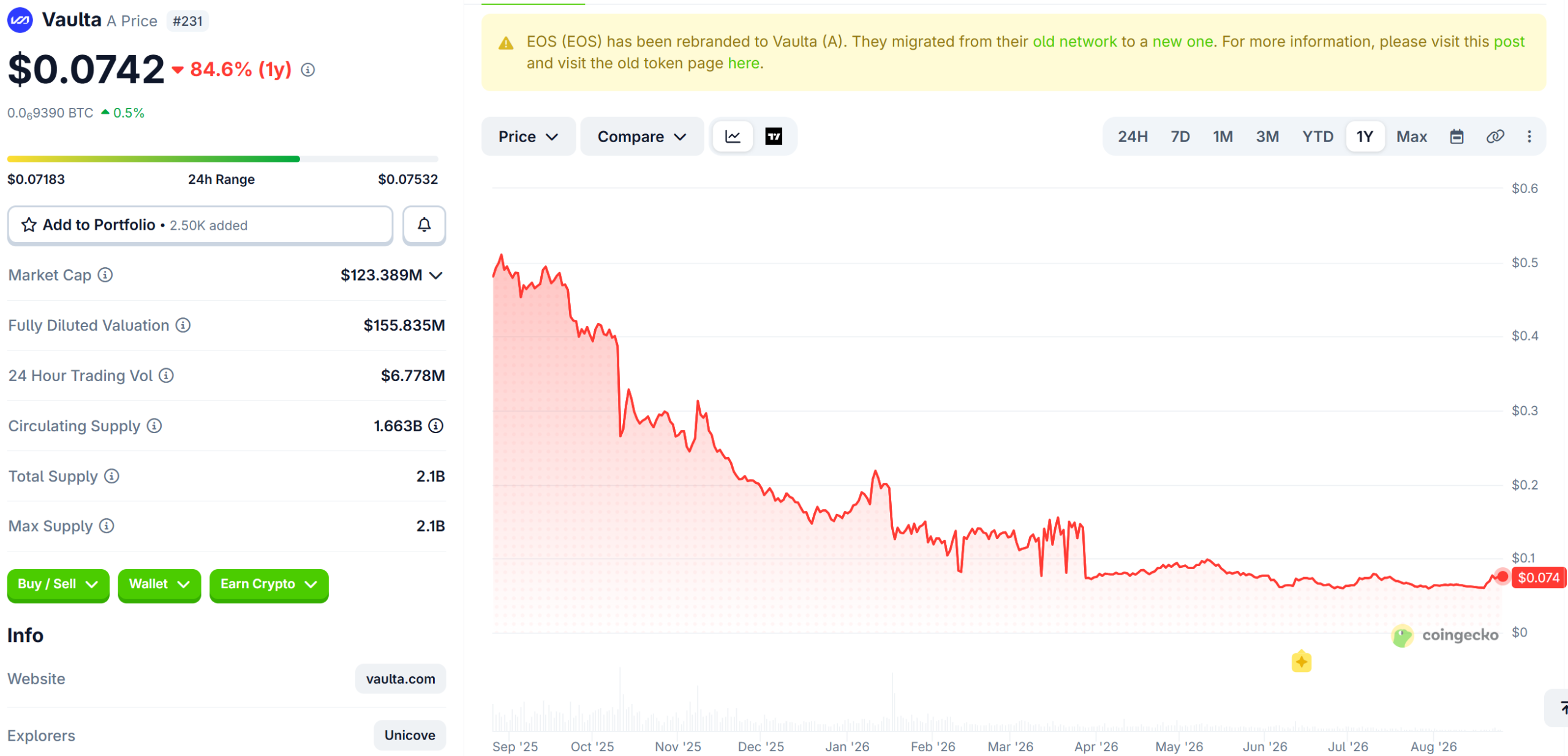
Vaulta’s token is down 85% over the past year, per Coingecko data.

What LSK Holders Get in the New Lisk
LSK becomes the platform’s loyalty token. Businesses earn rewards for using Lisk and for referrals, rolling out in phases, per the token FAQ. Paying fees in LSK comes later, with no date attached.
The design leaves open questions. The announcement describes rewards and fee payments, not revenue sharing, and governance itself ends with the DAO.
Holders now own exposure to a startup without any of a shareholder’s rights.
The DAO treasury tells another story, that after the 100 million LSK burn, roughly 47 million LSK moves to Lisk Ltd. This is according to the cessation documents. Holders vote to dissolve the DAO, and the company inherits what is left.
The scale gap is stark. LSK traded near $0.08 as of this writing, down 5% on the shutdown news. With a market cap of about $20.3 million, the project is roughly 0.05% of Ramp’s private valuation.

The next signals are the DAO vote and the first Early Access cohorts. If businesses show up, LSK gets its first real utility in years. If they do not, holders own loyalty points to a product nobody adopted.
The new Lisk has left itself no chain to fall back on.
The post The New Lisk Is a Fintech Now: Can It Compete With Ramp and Stripe? appeared first on BeInCrypto.



The Securities and Exchange Commission’s proposed rewrite of custody rules for investment advisers and investment companies entered White House review on Aug. 25, placing a new crypto-focused framework into regulatory review after the agency withdrew a separate 2023 safeguarding proposal. The SEC’s… Read the full story at The Defiant
“CyberLeek,” the pseudonymous X user behind a series of recent GTA VI gameplay leaks, has shared the game’s “first true spoiler” today in the form of footage of one of its key protagonists.
That’s according to Forbes games journalist Paul Tassi, who warned his followers to mute specific words on X unless they want to risk seeing GTA VI spoilers.
So far the leaks have involved free-roam gameplay footage, but today’s are the first to cover GTA VI’s story elements.
GTA VI leaker says game is nowhere near ready
In a post to their site, CyberLeek reportedly claimed the GTA VI build in question is “actually recent,” and that “the game is not ready at all.”
CyberLeek also pleaded for followers to continue supporting their crypto token $CYBERLEEK.
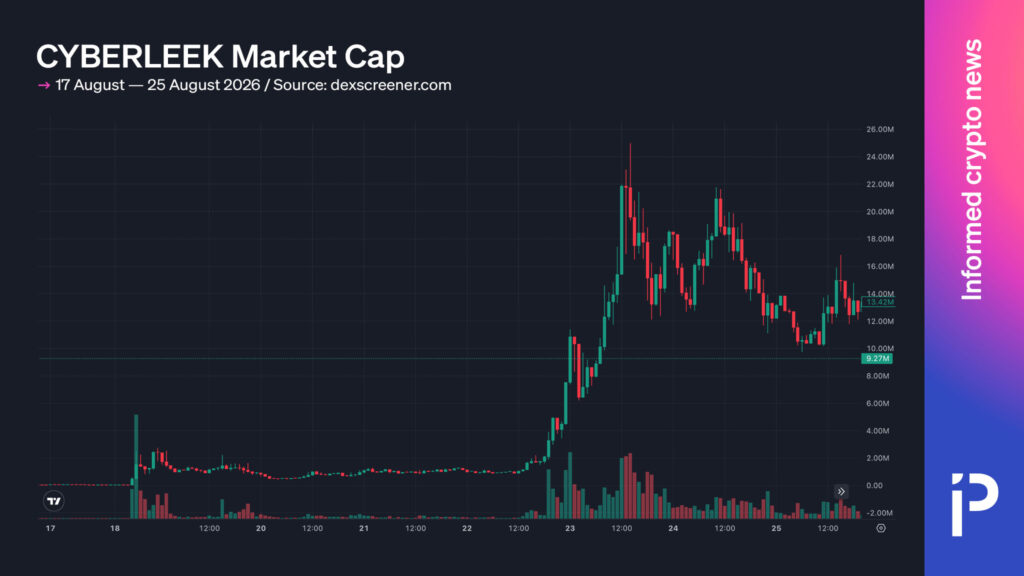
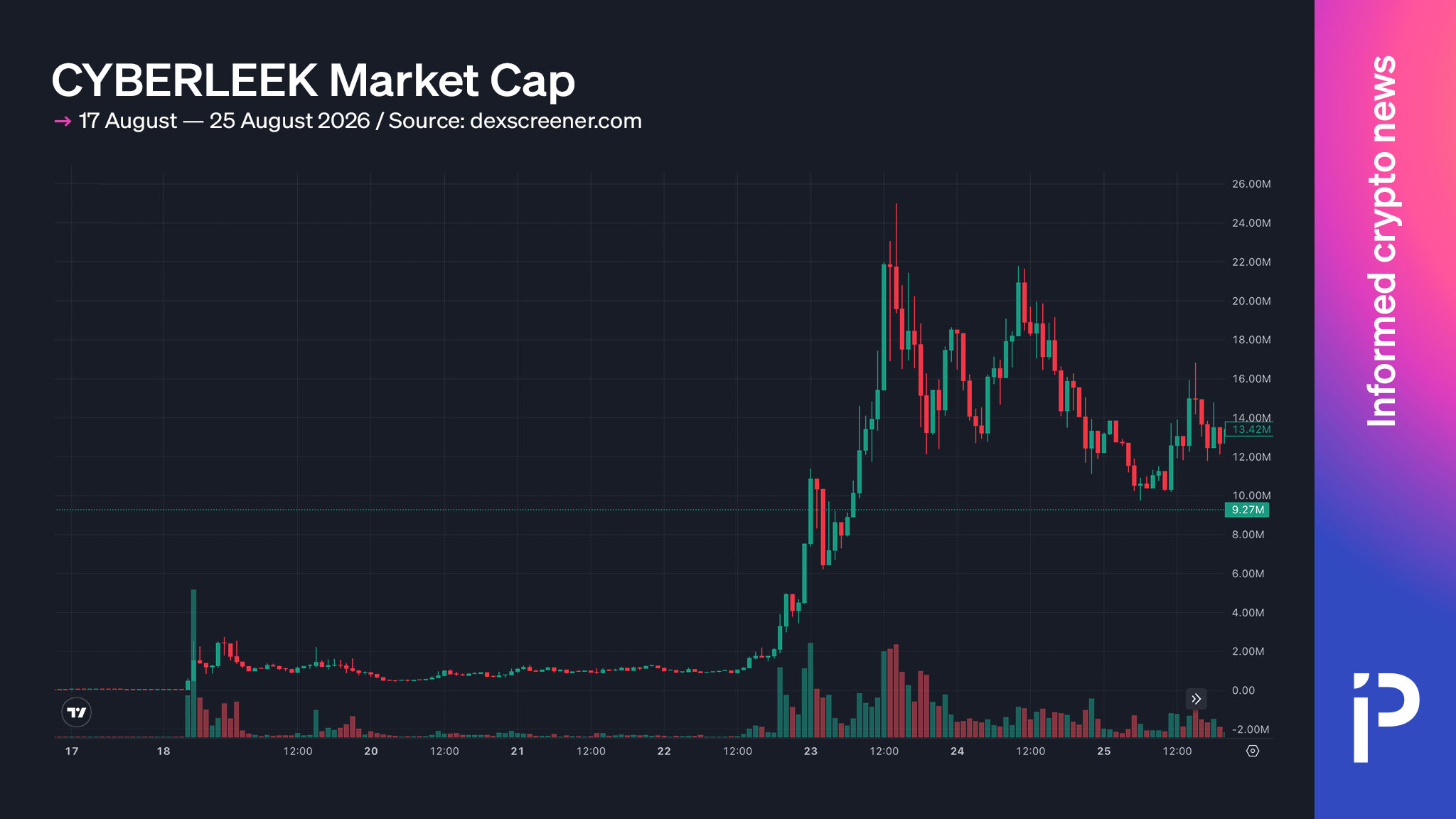
The token shot up from a $40,000 market cap to over $2 million when they first shared gameplay footage on August 18. By August 23, its market cap hit $25 million.
Read more: GTA VI leak investigation video raises crypto scam suspicions
At time of writing, the market cap has fallen 70% from this all-time high, and almost 40% over the last 24 hours, to a low of $7.5 million.
Rockstar Games admits GTA VI isn’t finished
GTA VI developer, Rockstar Games, finally addressed the leaks today in a statement. It admitted that the game isn’t finished, and that the team is “heartbroken” by the leaks.
It said, “While it is unfortunate that the intended game experience may now be impacted by some spoilers, we hope that everyone will wait a bit longer to experience the game for themselves on November 19.”
CyberLeek’s actions also threaten to disrupt a major extended gameplay reveal taking place on Netflix this Thursday.
Take-Two, Rockstar’s parent company, has been requesting to file subpoenas against Microsoft, Discord, and X in an attempt to expose and stop the leaker.
One user who vaguely predicted the leaks claims Rockstar employees questioned them at their home. These claims were doubted after footage of the exchange was used to shill their crypto.
Got a tip? Send us an email securely via Protos Leaks. For more informed news and investigations, follow us on X, Bluesky, and Google News, or subscribe to our YouTube channel.
Chainlink has introduced price feeds for four Coinbase tokenized stocks on Base, giving DeFi protocols the data needed to assess NVDAc, METAc, AAPLc, and GOOGLc as collateral.
Summary
- Chainlink Data Feeds provide continuous valuations for four Coinbase tokenized stocks on Base.
- Lending protocols can use the feeds to manage borrowing limits, loan health, and liquidations.
- Each B20 token represents an interest in a U.S.-listed share held through a regulated custody structure.
- Coinbase restricts the products to eligible non-U.S. investors under its current offering terms.
Chainlink feeds support tokenized stock collateral
Chainlink said in an Aug. 26 X announcement that its Data Feeds allow DeFi protocols to integrate Coinbase Tokenized Stocks as collateral, extending their use beyond holding and secondary-market trading.
The first supported assets represent Nvidia, Meta, Apple, and Alphabet shares under the tickers NVDAc, METAc, AAPLc, and GOOGLc. Coinbase issued the products on Base using B20, a token standard developed for tokenized real-world assets.
According to Chainlink’s documentation, each feed reports the total return value of the corresponding B20 token. The calculation combines the underlying stock’s market price with a multiplier taken from Coinbase’s onchain oracle registry.
Corporate events can change how much underlying equity one token represents over time. Coinbase’s prospectuses state that dividends are generally reinvested in additional shares after fees and applicable U.S. withholding taxes, causing the deposit ratio to adjust. Chainlink’s multiplier allows its reported value to account for such changes rather than tracking only the quoted share price.
Applications read the values through Chainlink’s standard V3 aggregator interface, which is also used by many crypto price feeds. Because each B20 asset is identified by its contract address, Chainlink advises developers to verify addresses instead of relying only on ticker symbols, which can be copied by unrelated token issuers.
For lending markets, the resulting valuation can help determine how much a borrower may receive against deposited stock tokens. Protocols can also use updated prices to measure loan health and decide when collateral must be liquidated, although each application remains responsible for setting its own risk limits.
Coinbase tokenized stocks gain lending utility on Base
Coinbase launched four stocks on Base on Aug. 24, crypto.news previously reported, bringing one-to-one-backed exposure to Apple, Nvidia, Meta and Alphabet into self-custodial wallets.
Coinbase Onchain SPV Ltd., a company incorporated in the Abu Dhabi Global Market, issues the securities under prospectuses approved by the market’s Financial Services Regulatory Authority. For each token initially created, the issuer holds a corresponding share through a segregated custody account.
The offering documents name Alpaca Securities as the broker and custodian that buys, sells, and holds the represented equities. Alpaca is registered with the U.S. Securities and Exchange Commission as a broker-dealer and belongs to the Financial Industry Regulatory Authority and Securities Investor Protection Corporation.
Under the prospectus structure, tokenholders receive a beneficial interest in custodied shares rather than becoming the registered owners on the books of Apple, Nvidia, Meta, or Alphabet. Verified holders may submit voting instructions, but the issuer’s ability to act on them remains subject to legal, timing and operational limits.
Adding collateral support gives eligible holders another possible use for the tokens. Instead of selling a position to obtain funds, a holder could deposit an accepted B20 asset into a lending market and borrow another asset against its value, subject to the protocol’s collateral ratio, liquidity requirements and user-access rules.
Base has listed Aave, Morpho, and Euler among the protocols providing or preparing lending functions for B20 assets. Aerodrome supports tokenized-stock liquidity, while 0x, 1inch, KyberSwap and CoW Swap provide trading infrastructure. Support from a service provider does not mean every stock token is automatically available in every application, as individual protocols decide which markets to activate and under what conditions.
Equity trading hours create extra oracle risks
Although Base operates continuously, the U.S. shares supporting Coinbase’s tokens follow established equity-market sessions. Chainlink’s equity feeds provide 24-hour coverage from Monday through Friday by combining regular-session, extended-hours, and overnight-market data.
According to Chainlink, data quality and provider coverage vary across those sessions. Regular U.S. trading hours carry the strongest coverage, while overnight markets draw from fewer providers and usually update less often. During weekends, when the underlying equity markets are closed, the reported valuation may remain unchanged.
Chainlink also uses session-aware smoothing during transitions between trading periods. Its documentation warns that smoothing can reduce brief price spikes caused by thin liquidity but may cause the reported value to lag during rapid market moves.
Developers must therefore assess whether each feed fits the intended collateral market, Chainlink said. The company recommends setting suitable safeguards and checking Base’s layer-2 sequencer status before protocols rely on a valuation for borrowing or liquidation.
A separate Ethereum proposal published on Aug. 24 has addressed a related problem. The proposed asset status interface would let smart contracts distinguish a scheduled market closure from a failed data feed, a trading halt, or an unavailable redemption process.
Such distinctions matter for lending applications because an old price does not always signal a technical problem. Under the proposal, a protocol could continue operating during an expected exchange closure while applying different controls when an oracle fails or the represented stock is halted.
U.S. investors remain excluded from the B20 offering
Despite representing shares listed on U.S. exchanges, Coinbase Tokenized Stocks are not currently offered to U.S. persons. The securities have not been registered under the Securities Act of 1933 or with state securities regulators, according to the offering documents.
Coinbase uses Regulation S, which provides an exemption for qualifying securities transactions conducted outside the United States. The prospectuses prohibit offering, selling, or delivering the tokens in the country or for the account or benefit of a U.S. person.
American customers can use Coinbase’s separate brokerage service to buy conventional stocks and exchange-traded funds. Apex Clearing handles execution, clearing, and custody for that service, which operates independently of the ADGM-issued B20 securities available through Base.
Coinbase received Abu Dhabi approval earlier in August to arrange investment deals and provide custody services related to tokenized securities. The authorization does not allow the company to distribute the ADGM-issued products in the United States, where any domestic tokenized-stock offering would remain subject to U.S. securities laws and SEC oversight.
Access restrictions also apply to services built around the stock tokens. Bitwise, for example, has introduced three portfolios that use Coinbase’s assets inside self-custodial wallets, but its Automated Token Portfolios remain unavailable to U.S. persons.
Verified B20 holders may request redemption in the underlying stock, U.S. dollars, or an accepted stablecoin such as USDC, according to Coinbase’s prospectuses. The issuer charges a 0.05% redemption fee and may require identity, sanctions, anti-money laundering, and jurisdiction checks before processing a request.
Holders who acquire the tokens through DeFi without completing Coinbase’s compliance process remain unvested until they pass the required checks. Coinbase’s filings state that unvested holders cannot redeem tokens for shares or cash, receive certain holder rights, or submit voting instructions.


A new national survey has found that 53% of Americans oppose employers offering cryptocurrency in workplace retirement plans, while 77% consider such investments risky.
Summary
- 77% of Americans view cryptocurrency in workplace retirement plans as risky.
- 53% oppose employers adding crypto to their retirement investment menus.
- 80% believe the United States faces a retirement crisis, up from 67% in 2020.
- Federal regulators are considering rules for adding alternative assets to 401(k) plans.
The National Institute on Retirement Security reported in its survey that 46% of respondents considered cryptocurrency in workplace retirement plans “very risky,” contributing to the 77% who expressed some level of concern.
Crypto retirement plans face resistance from US savers
Opposition to workplace crypto options extended beyond respondents who viewed digital assets as risky. According to the institute, 53% did not support employers offering cryptocurrency as an investment choice within their retirement plans.
Public concern about digital assets emerged alongside deeper anxiety over the condition of the US retirement system. The survey found that 80% of Americans believed the country faces a retirement crisis, compared with 67% in 2020. Another 61% said they were worried about achieving financial security during retirement.
Household costs and debt also affected how respondents viewed their ability to save. According to the report, 68% said preparing for retirement had become harder, while 77% said debt prevented them from putting aside enough money.
Researchers gathered the findings as part of a national survey conducted by Greenwald Research from Oct. 24 through Nov. 14, 2025. The poll included 1,203 US residents aged 25 and older, with the results weighted by age, gender and income to represent the country’s adult population.
The findings indicate that resistance to crypto inside retirement plans is not limited to people who reject digital assets altogether. A May Federal Reserve survey found that 10% of US adults used or held cryptocurrency in 2025, up from 7% in 2024. Roughly 7% held crypto as an investment, while fewer respondents used it for payments or transfers.
Retirement concerns grow as debt limits savings
Financial pressure formed a central part of the National Institute on Retirement Security’s findings. With more than three-quarters of respondents saying debt hurt their ability to save, the survey placed the crypto question within a retirement system already under strain.
According to the institute, concerns over retirement security have increased even as workplace plans remain one of the main savings tools available to US employees. Respondents cited affordability problems alongside uncertainty about whether their savings would support them after they stopped working.
The institute’s separate research on retirement preparedness has also found large gaps in workplace plan access and accumulated savings. Its February 2026 analysis, based on US Census Bureau data, said the median retirement savings balance across the American workforce was below $1,000 and that many employees lacked access to an employer-provided plan.
Social Security supplied about 52% of retirement income for older Americans, according to the same analysis, while approximately 17% of workers had access to a defined-benefit pension as of December 2022. Unlike a traditional pension that promises a defined payment, a 401(k) generally places investment decisions and market risk on the employee.
Crypto can expose a retirement account to sharper price changes than many traditional plan investments. The US Government Accountability Office has previously described digital assets as having unique volatility and said reliable methods for projecting their future returns remain limited, according to a congressional letter citing the agency’s research.
US regulators have removed barriers to crypto in 401(k)s
Federal policy has moved in the opposite direction from the caution expressed by many survey respondents. In May 2025, the Department of Labor withdrew its crypto guidance, which had instructed retirement-plan fiduciaries to exercise “extreme care” before adding cryptocurrency to investment menus.
The department said the earlier standard departed from its usual neutral approach to investment types. After the rescission, officials said fiduciaries should make decisions based on their duties under the Employee Retirement Income Security Act without the government either endorsing or discouraging cryptocurrency.
President Donald Trump added another policy directive on Aug. 7, 2025, by signing an executive order on alternative assets. The order covered digital-asset investment vehicles as well as private equity, private credit, real estate, and other assets that are not commonly found in defined-contribution plans.
Under the order, the Labor Department was instructed to review its guidance on fiduciary duties and consider changes that could make alternative assets available to retirement savers. The Securities and Exchange Commission was also directed to consult with the department and examine regulatory changes for participants in employer-sponsored plans.
Five days later, the Labor Department rescinded a 2021 statement that had discouraged fiduciaries from considering private equity and certain other alternative investments. Officials said the statement had departed from a neutral, principles-based approach by treating one type of asset differently from others.
Removing the two pieces of guidance did not require employers to offer crypto. Plan sponsors and fiduciaries remained responsible for assessing each investment under ERISA, including whether its costs, risks, and structure were suitable for participants.
Labor Department proposal sets conditions for alternative assets
In March 2026, the Labor Department proposed a new rule explaining how fiduciaries could evaluate alternative assets for workplace retirement plans. The proposal included regulatory safe harbors intended to reduce litigation exposure for fiduciaries that follow specified review standards.
As crypto.news reported in March, the proposed framework covered more than 90 million retirement savers and required fiduciaries to examine performance, fees, liquidity, valuation, redemption terms, and participants’ ability to understand an investment.
Plan sponsors would not have to add cryptocurrency, private equity or private credit to their menus under the proposal. Employers choosing to include such products would need to document an objective review and show that the options met ERISA’s prudence requirements.
Department officials said the proposal would not provide unrestricted access to crypto or private funds. Instead, the rule would replace restrictions based on asset type with individual reviews by fiduciaries responsible for selecting and monitoring plan investments.
Political opposition followed the proposal. In June, three Democratic lawmakers—Sens. Bernie Sanders, Elizabeth Warren, and Rep. Bobby Scott asked the Labor Department to withdraw it.
In their letter, the lawmakers argued that cryptocurrency could expose workers to price volatility, fraud, and weaker safeguards than those available for public securities. They also questioned whether fiduciaries could assess certain digital assets using established methods for measuring value and expected returns.
“The application of securities laws to crypto assets is rapidly evolving,” the lawmakers wrote, adding that some protections available to investors in public securities “may not be available for crypto.”
Their request covered other alternative investments, including private equity and private credit, which the lawmakers said could carry high fees, limited liquidity and difficult valuation methods. The Labor Department’s proposal remained subject to the federal rulemaking process, under which the agency could revise, finalize or withdraw the framework after reviewing public comments.
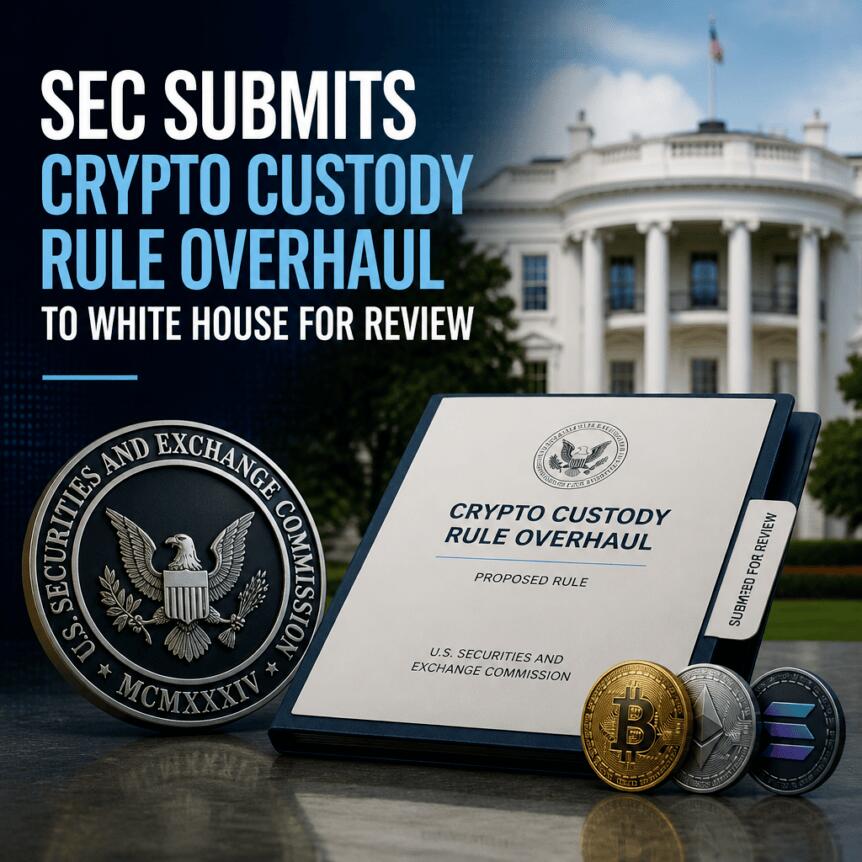
The U.S. Securities and Exchange Commission (SEC) has begun moving toward a major update to custody rules that govern how investment advisers and investment companies hold client assets, a change that could directly affect institutional crypto custody.
According to the SEC’s regulatory filings, the agency submitted “Amendments to the Custody Rules” to the White House Office of Information and Regulatory Affairs (OIRA) on Aug. 25 as part of the federal review process. The proposal would then return to the SEC for internal consideration before potentially being released for public comment.
Key takeaways
- The SEC has sent proposed custody rule updates to OIRA for review under White House regulatory procedures.
- The changes target how investment advisers and investment companies hold client assets, including crypto, under the Investment Advisers Act and Investment Company Act.
- The stated goal is to reduce uncertainty for institutions trying to comply with existing federal securities rules while holding digital assets.
- The draft is not yet public, and OIRA and the White House Office of Management and Budget can request modifications before it returns to the SEC.
What the SEC is trying to change
The SEC’s regulatory agenda indicates that the custody proposal could amend existing rules or introduce new requirements under the Investment Advisers Act and the Investment Company Act. Those frameworks apply to firms managing client money and other assets, including assets that may be held in custody arrangements—an area where market participants have long sought clearer guidance for digital-asset holdings.
In its description of the effort, the SEC said the intended purpose is to clarify how companies can hold crypto for clients while remaining consistent with the agency’s securities-law custody framework. The SEC emphasized that the proposal is designed to address uncertainty, but it has not yet published the rule text for public scrutiny.
Once OIRA completes its review, the draft would come back to the SEC. From there, the commission would decide whether to circulate the proposal for public comment.
How the OIRA process could shape timing and scope
The custody rule effort is currently in a pre-publication stage. As reported by Bloomberg, the SEC sent the proposal to OIRA, which sits within the White House Office of Management and Budget, on Aug. 25. That step matters because it is not merely administrative: the White House can ask for changes before the proposal returns to the SEC.
Only after that review cycle would the SEC determine whether to release the proposal for public comment—an important milestone for institutions because public comments can influence how custody obligations, compliance expectations, and operational constraints are ultimately written into regulation.
At present, the main practical takeaway for affected firms is that the proposal is moving, but the actionable details remain unavailable. Custody providers and asset managers will likely be watching for the published draft text and any adjustments that occur during OIRA’s review.
Why this fits the SEC’s broader digital-asset direction
Bloomberg linked the custody rule initiative to the SEC’s wider effort to support the Trump administration’s digital asset agenda, even as a separate piece of market-structure legislation remains stalled in Congress.
The article noted that the broader goal is occurring while the CLARITY market structure bill is still pending in the Senate. According to Cointelegraph’s earlier reporting, the bill is expected to face a cloture vote after lawmakers return from the August recess in September, suggesting continued legislative uncertainty around digital-asset rules at the federal level.
In that environment, rulemaking inside the SEC becomes particularly consequential for institutional participants. Custody is not just a compliance checkbox; it affects how funds and advisers structure client asset handling, choose custody models, and document safeguards—core concerns for asset managers considering or already providing crypto exposure.
From enforcement to rulemaking: institutional impact
Crypto market participants have closely tracked the SEC’s shift in posture under Paul Atkins, who became chair in 2025. Multiple reports in the crypto industry described a move away from what critics called “regulation through enforcement” toward formal rulemaking.
Earlier coverage from Cointelegraph has said Atkins pledged to end the SEC’s prior approach and to pursue policy development through established rulemaking channels. That shift is reflected in reported enforcement decisions as well: Cointelegraph previously reported that the SEC dismissed several cases against prominent crypto companies in 2025, including its lawsuit against Coinbase, as it sought to reshape how it regulates digital assets.
The SEC’s custody-rule proposal fits into that broader pattern. Even though the SEC has been less aggressive in some enforcement areas, institutions still need regulatory clarity for the mechanics of custody and client asset protection—areas where existing uncertainty can slow adoption or increase compliance risk.
For investors and intermediaries, a clearer custody framework could translate into better-defined standards for eligibility, controls, and operational practices. It may also reduce the reliance on case-by-case enforcement logic when deciding how to hold and safeguard client assets that include crypto.
What to watch next
Readers should watch for the custody proposal to be published after the OIRA/OMB review and for the SEC’s decision on whether to open a public comment period. The key uncertainty remains the draft’s contents—especially how it will address crypto custody within established custody rules under the Investment Advisers Act and Investment Company Act.
Cathie Wood’s flagship fund has spent more than a decade failing to beat her two most obvious benchmarks.
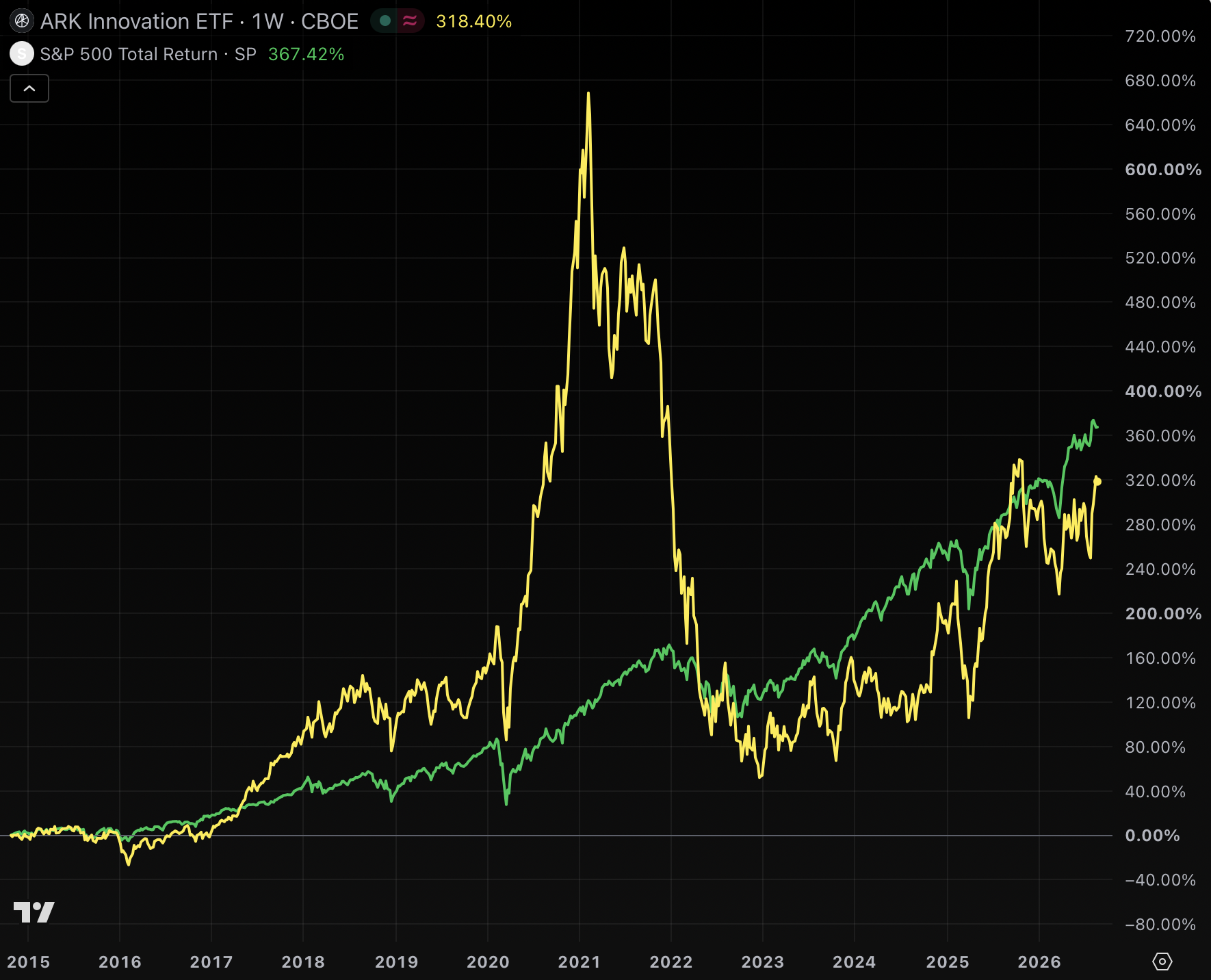
Her multi-billion dollar ARKK fund, which launched on October 31, 2014, has trailed the S&P 500’s total return, and BTC, since inception.
Even investors who might have tried to time their entries and exits out of Wood’s funds would have had a difficult time finding a slice of outperformance, as Ark Invest also underperformed most calendar years across that timespan.
It was easy for ARKK to outperform BTC during particularly bad years for the asset. For example, it crashed 73% in 2018 or -67% in 2022.
However, Wood’s pro-Tesla, pro-BTC, pro-AI, and pro-gene editing fund failed to beat its benchmarks over the long haul.
Cumulative returns over the full stretch, October 31, 2014 through yesterday’s close, are 318% for ARKK, 23,214% for BTC, and 367% for the S&P 500 with dividends reinvested.
Trailing the market despite a decade of work
Although it’s embarrassing for any fund manager to work full-time for a decade only to trail a passive, labor-free investment in the S&P 500, ARKK’s 49% shortfall actually fails to illustrate how bad the past five years has felt for investors in Wood’s ETF.
On February 16, 2021, ARKK peaked at $159.70 per share, a price it’s never reattained. Since that date, ARKK has lost 46% of its value whereas the S&P 500 has gained 65%.
From the start of 2022, ARKK has trailed the S&P by 80%. Since the start of 2023, 60%. Since 2024, 8%.
Over the past five years, ARKK’s has declined 28% while the S&P has rallied 72%.
Read more: Crypto trading hamster outperforms Bitcoin, Warren Buffett, Cathie Wood
Cathie Wood dreamed big, failed to win
Wood’s investment strategy concentrates on a rotating list of “disruptive innovation” stocks.
The fund gained 152% in 2020 but lost 67% in 2022.
Morningstar ranked ARK Investments first among fund families for shareholder value destruction over the decade through 2023, estimating Wood’s family of funds wiped out roughly $14.3 billion and more than double the loss of the second-worst fund management firm on the list that year.
Wood has also been an outspoken BTC bull while underperforming BTC by miles. She’s published stratospheric, imaginary BTC price targets of $1 million, $1.2 million, and $1.5 million.
ARKK holds BTC price exposure and crypto equities including Coinbase, and ARK also co-sponsors a spot BTC ETF. However, ARKK’s own total return has still fallen short of BTC’s in most years since 2015, even as Wood’s firm bet heavily on the sector.
Got a tip? Send us an email securely via Protos Leaks. For more informed news and investigations, follow us on X, Bluesky, and Google News, or subscribe to our YouTube channel.

Drugmakers have to jump through several research and regulatory hoops before their treatments can reach pharmacy counters and store shelves. While pharmaceutical giants manage those challenges in-house, smaller companies outsource that work to companies like the Wednesday IBD 50 Growth Stock To Watch pick Medpace Holdings (MEDP). Shares of the medical research contractor soared to an all-time high after second-quarter…
Copyright ©2026 Investor’s Business Daily, LLC. All rights reserved. 87990cbe856818d5eddac44c7b1cdeb8
BlackRock has facilitated more than $5 billion in Bitcoin-for-ETF-share swaps from private wallets into its IBIT fund, after cutting the minimum size for such in-kind transactions to $1 million in July.
The shift gives investors a way to keep Bitcoin exposure while moving custody into a regulated ETF structure, with security concerns around self-custody adding to the appeal.
BlackRock Lowers Barrier for Bitcoin ETF Swaps
As noted in a report by Bloomberg, BlackRock’s iShares Bitcoin Trust first opened its in-kind creation process to private wallets with a $25 million minimum, a threshold that fell to $1 million in July.
IBIT’s total volume for these conversions has climbed past $5 billion, up from more than $3 billion when Bloomberg first reported on the trend last October. The process can take more than a week to complete, per Robbie Mitchnick, BlackRock’s head of digital assets, and inquiries are now coming in from clients both inside and outside the US.
Mitchnick tied the growth to security scares like kidnappings, ransom situations, and custody failures, saying those incidents “motivate them to make this switch for all or some of their holdings.”
Swapping Bitcoin for ETF shares also lets holders avoid triggering an immediate capital gains bill in many cases, since the BTC is exchanged rather than sold outright.
Bitwise has cut its own in-kind minimum from $100 million at launch to $50 million and now $3 million; chief investment officer Matt Hougan said the process now moves “more like a conveyor belt.”
At Morgan Stanley, in-kind conversions make up an estimated 5% to 7% of the roughly $560 million MSBT fund per the report, though global ETF head Ally Wallace noted: “there is a lengthy education process related to this type of transaction.” Meanwhile, 21Shares has averaged around $5 million per in-kind transaction over the past three months, according to capital markets head Alistair Perry.
The mechanism has also spread past Bitcoin, with Grayscale and VanEck now processing in-kind trades for Ethereum (ETH), and Bitwise handling them for both ETH and Solana (SOL).
At Grayscale, in-kind now accounts for 62% of gross Bitcoin creations and 63% of Ethereum creations, up from 28% and 57% respectively in March, the firm’s head of trading and capital markets, Krista Lynch, told the publication.
Just This One Bottleneck
There’s one major issue in the backend that’s still holding up such swaps. Every in-kind trade still has to pass through an authorized participant or market maker willing to take custody of the crypto, which adds cost and helps explain why the service began with the very largest holders.
But the encouraging news is that issuers expect minimums to keep falling as more intermediaries build that capacity.
All that is happening with BTC climbing back above $81,000 for the first time since May, with its spot ETFs pulling in more than $2.5 billion since August 17, to bring the entire month’s total so far to just over $3 billion. This marks the funds’ biggest inflows since October 2025, with a few trading days still to go before the month is done.
The post Bitcoin Whales Have Moved $5B Into BlackRock’s IBIT: Here’s Why appeared first on CryptoPotato.

“When they switch to plain, unbleached, fragrance-free options, the irritation usually clears quickly,” she says.
Dr. Meagan W. Shepherd, an allergist and immunologist based in Barboursville, West Virginia, says people are often surprised to learn how commonly allergens are found in toilet paper, noting that both traditional paper and flushable wipes can cause irritation.
“Wet varieties such as flushable wipes often have preservatives like methylchloroisothiazolinone and methylisothiozolinone, which together account for about 10% of contact allergen sensitizations in North America,” says Shepherd. Dry varieties, on the other hand, are more likely to include added fragrances or dyes, which can act as irritants or allergic triggers, she says.
“I frequently see patients with severe vulvar rashes caused by hidden chemicals,” she adds.
Shepherd also says that if people are struggling to find toilet paper they can tolerate, she recommends skipping recycled paper. “It can be rougher than regular varieties, leading to irritation,” she says. “Plus, trace amounts of various allergens found in the original paper product sources could still be present and potentially cause a reaction in those who are sensitized.”
Meta Platforms will pay up to $18 billion to settle a lawsuit from a group of state attorneys general, who alleged its social media apps Facebook and Instagram were addictive to children. The tech giant also announced several safety features it will add to its app as part of the settlement. Meta (META) stock climbed nearly 2% to 586.48 in…
Copyright ©2026 Investor’s Business Daily, LLC. All rights reserved. 87990cbe856818d5eddac44c7b1cdeb8

There Are No Trans Women in the WNBA, so Right-Wingers Are Making Some Up

GTA 6 may end up being too ‘grounded’ according to first official preview

Glencar and Hillwood UK complete Wigan’s latest massive warehouse development

Weekend Open Thread – Corporette.com

Weekend Open Thread: Brooks Brothers

London Mayor Sadiq Khan handed a peerage by Keir Starmer alongside 15 other Labour figures… just days before the PM leaves No10

XRP Holders Everything Is About to Change OVERNIGHT (Less Than 2 Months Away!)

The Financial Education That Turns Recruiters Into Asset Millionaires with Kevin Fasting

#funny #lifeisbutadream #memes #germany #comedy #relatable #money #butifyoucloseyoureyes #duet
-

 Fashion5 days ago
Weekend Open Thread: Madewell – Corporette.com
-

 Business4 days ago
Musk’s Tesla, SpaceX Confirm $16.8 Billion ‘Terafab’ Chip Plant as World’s Largest Building in Texas
-

 Crypto World5 days ago
anatomy of crypto’s biggest liquidation event since 2021
-

 Crypto World2 days ago
A $30 Billion AI Fund Implodes, Now the SEC Is Investigating Wall Street’s Role
-

 Crypto World19 hours ago
SpaceX stock could rise 75% to $240, JPMorgan says
-

 Politics4 days ago
6 months on, Irish renters crushed by effects of government housing bill
-
 NewsBeat4 days ago
The ‘Lucky Dip Gang’ causing carnage for clicks: After five thugs were killed speeding in the wrong direction on a motorway, GUY ADAMS investigates a sick new trend… and why police aren’t even allowed to pursue them
-

 Business3 days ago
Mystery AI Model ‘Ox Alpha’ Draws Developers With Free Access as Chinese Lab Origins Remain Debated
-

 News Videos7 days ago
Don’t Leave Your Financial Future To Chance | August 19, 2026
-

 Business6 days ago
Five Below: Kids Discount Retailer Reaps Rich Rewards
-

 Business2 days ago
Moderna CEO warns China is pouring state money into mRNA technology
-

 Business5 days ago
UK firms in critical financial distress rise 9% to 53,756
-

 Business2 days ago
NVIDIA Stock Drops Nearly 2 Percent to $210 on Seventh Losing Day Ahead of Critical AI Earnings
-

 Sports4 days ago
Deshaun Watson fires back at Browns fans after being booed: ‘It’s a disrespectful thing’
-

 Crypto World6 days ago
Optimism-funded team's deciding vote shifts $49 million in OP tokens away from users
-
 Entertainment7 days ago
10 Most Perfect Fantasy Shows of the Last 25 Years
-

 Tech7 days ago
OpenAI confirms ChatGPT is down as logins and signups fail
-
 Crypto World3 days ago
Google Gemini AI Predicts Ethereum Could Become the Trade Retail Misses in 2026
-

 Business6 days ago
PayPal and Venmo now accepted for tuition at several universities
-
 Crypto World5 days ago
Nvidia Stock Suffers Longest Losing Streak Since 2022: Will Q2 Earnings End It?
You must be logged in to post a comment Login