Connect with us

Business

Andy Burnham says he wants to ‘make life easier’ for UK businesses ahead of Budget

Published

on

Business Live

Prime Minister ‘acutely conscious of how hard the operating environment is for businesses, big and small’

Prime Minister Andy Burnham helps to stack loaves of bread onto a shelf with the help of Mayor of London, Sadiq Khan and Pat McFadden, Secretary of State for Work and Pensions during a visit to a Sainsbury's store in Nine Elms on August 26, 2026 in London.

Prime Minister Andy Burnham helps to stack loaves of bread onto a shelf with the help of Mayor of London, Sadiq Khan and Pat McFadden, Secretary of State for Work and Pensions during a visit to a Sainsbury’s store in Nine Elms, London(Image: Getty Images)

Andy Burnham has vowed to help address the “cost of business” as he seeks to allay concerns that the private sector faces another punishing tax raid at the Budget.

Advertisement

Burnham said he wants to “make life easier” for people and businesses as he prepares for his first Budget as Prime Minister.

In an interview on Wednesday, the PM said the fiscal challenges confronting the government were “challenging” but he was taking steps to relieve the burden on both households and the private sector.

“I’m not coming into this role thinking how do we make life harder? I’m trying to make life easier for people. How do I take pressure off? How do I meaningfully deal with the cost of living and the cost of business? ,” he told the Financial Times.

The Budget on October 28 was the “earliest date we realistically could have done”, according to Burnham, as reported by City AM.

Advertisement

He also sought to calm anxieties among investors and business owners that a raft of tax increases were on the cards at the Budget. The Prime Minister said he was “acutely conscious of how hard the operating environment is for businesses, big and small”.

“People shouldn’t read into me giving that answer that all kinds of things are coming,” he added. His remarks highlight mounting apprehension from the private sector that the government might once more rely on business to generate revenue at the Budget.

Analysis by the British Chambers of Commerce, amongst the nation’s largest industry bodies, indicates that government policies over the past decade have driven up business costs by approximately 70 per cent.

The Prime Minister also appeared to indicate that a trade summit with the European Union was due to occur in November, having initially been scheduled for July before Sir Keir Starmer resigned and departed Number 10.

Advertisement

He mirrored his predecessor in suggesting that enhancing trade with the economic bloc would “add percentage points” to the UK growth rate.

Starmer previously maintained that strengthening trade with the EU would be fundamental to delivering growth.

Burnham’s stance suggests that the UK may yet proceed in reducing trade barriers across various industries. In its 2024 election manifesto, Labour stated the UK would not pursue re-joining the customs union or single market and described such a move as amongst its “red lines”.

Burnham said relations with the EU were a matter that “we cannot ignore”.

Advertisement

The new Prime Minister also told the Financial Times that his emphasis on advancing “public control” over utilities such as water and energy were partly a means to demonstrate he did not “necessarily” support full nationalisation. “It’s about making the basics function properly and function properly for business, so you create the most benign investment environment for companies,” he said.

The remarks come less than a week before Parliament reconvenes, setting the government on course for a two-month countdown to the Budget.

Several City economists have put the size of the fiscal headroom at around £15bn, owing to the impact of rising energy prices. However, left-leaning think tank the Resolution Foundation places that figure closer to £8bn.

Soaring energy costs have amplified pressure from North Sea energy firms to be granted permits to drill for additional oil and gas. Rulings on new licences at the Jackdaw and Rosebank oil and gas fields are anticipated within days.

Advertisement

Burnham also expressed support for remarks made by Labour donor Dale Vince, the green-energy magnate who has long been a vocal critic of fossil fuel consumption, indicating that drilling in the North Sea could “make sense” if further price controls were to be introduced.

Continue Reading
Click to comment

You must be logged in to post a comment Login

Leave a Reply

Business

Joey, Jesse Bush reportedly acquire minority stake in the Padres

Published

on

Joey, Jesse Bush reportedly acquire minority stake in the Padres

Brothers Joey and Jesse Buss are going from one sport to another. 

Buss Sports Capital, the investment group founded by the brothers, has reached a deal to acquire approximately 5% of the San Diego Padres, according to The Athletic. 

Advertisement

The Buss family sold its controlling stake in the Los Angeles Lakers to Mark Walter last year. 

After Walter sold the franchise in recent weeks to a group led by Joshua Kushner and Bob Iger, Joey and Jesse and three of their siblings, Janie, Johnny and Jim, voted to sell the family’s remaining 17.8% of the team to Iger and Kushner. 

CLICK HERE FOR MORE SPORTS COVERAGE ON FOXBUSINESS.COM

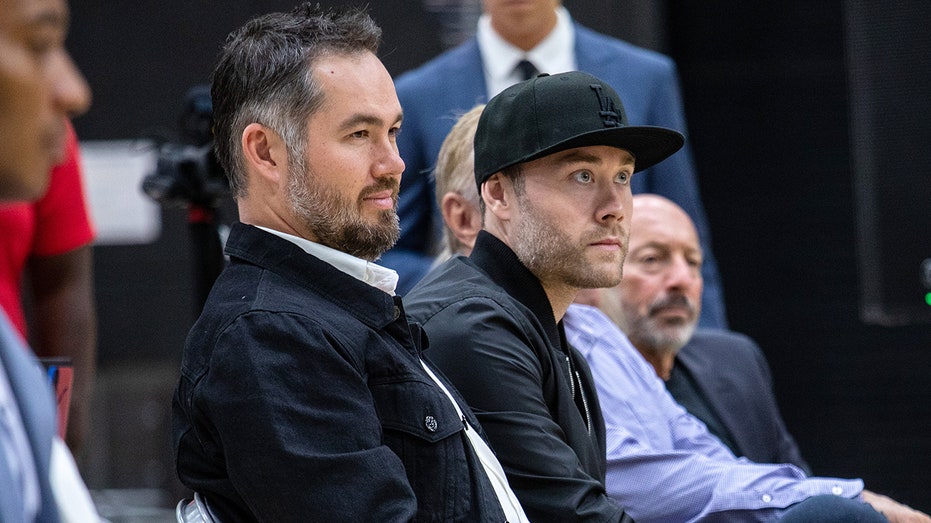
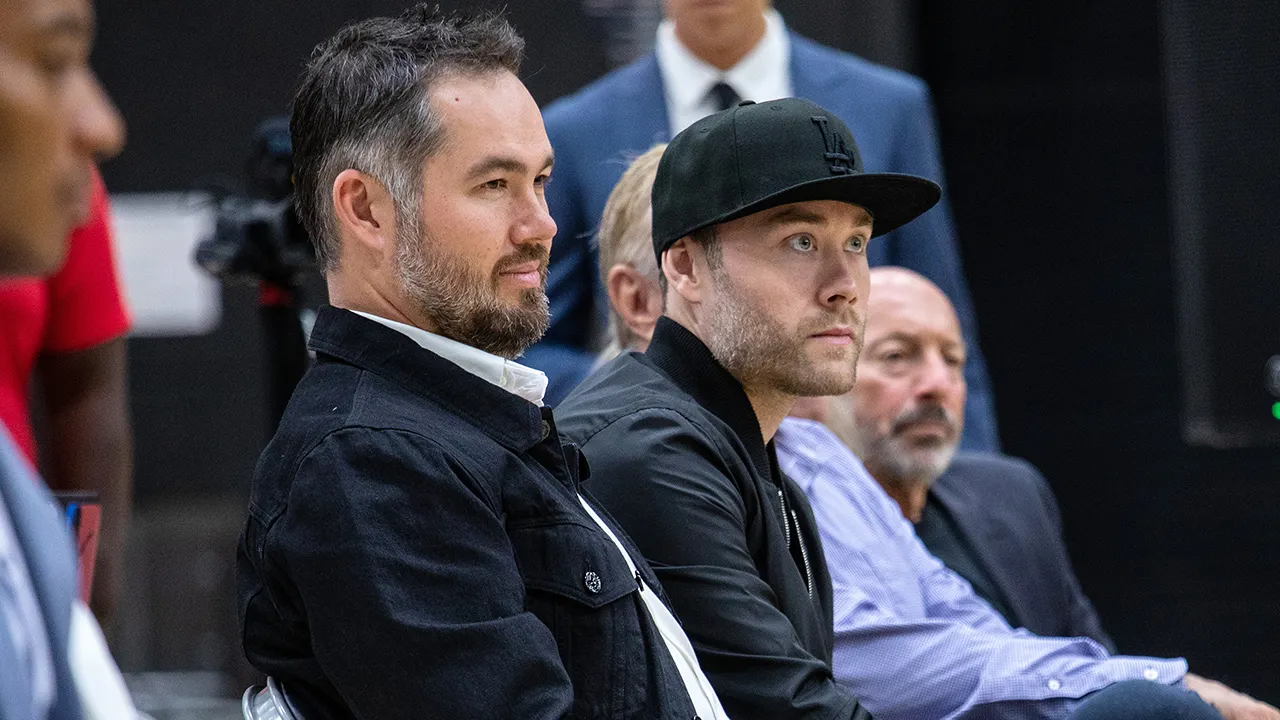
Joey and Jesse Buss look on

Siblings Joey and Jesse Buss (in black hat), from left, sit in the front row during a news conference announcing new Los Angeles Lakers head coach Darvin Ham at the UCLA Health Training Center in El Segundo, Calif., June 6, 2022. (Jay L. Clendenin/Los Angeles Times via Getty Images / Getty Images)

However, not all siblings were on board with the move. Jeanie Buss, who serves as governor of the Lakers, argued that her siblings can’t sell through an attorney, setting up a family feud over their Lakers stake. 

Advertisement

Kwanza Jones and José Feliciano acquired controlling shares of the Padres last week for $3.9 billion. Joey and Jesse said they were honored to join Jones and Feliciano. 

“We are honored to join Kwanza and José and have the opportunity to contribute to the future of a team that Jesse and I have loved since we were kids growing up in San Diego,” Joey Buss said in a statement obtained by The Athletic. 

ZERO BS. JUST DAKICH. TAKE THE DON’T @ ME PODCAST ON THE ROAD. DOWNLOAD NOW!

Jesse Buss looks on

Jesse Buss, director of scouting/assistant general manager of the Los Angeles Lakers, attends a game between the Lakers and the New York Knicks during the 2018 NBA Summer League at the Thomas & Mack Center in Las Vegas July 10, 2018. (Sam Wasson/Getty Images / Getty Images)

“Sports have always been a part of our family’s story, and great organizations have a unique ability to bring people together and create a lasting sense of community. Padres fans have built one of the most passionate and loyal communities in all of sports, and we believe there is a tremendous opportunity to deepen that connection in San Diego and around the world.”

Advertisement

The two brothers will join the Padres’ ownership advisory board with their investment. 

GET FOX BUSINESS ON THE GO BY CLICKING HERE

Nicole and Joey Buss

Nicole Buss and Joey Buss attend the 2019 NBA Awards at the Barker Hangar in Santa Monica, Calif., June 24, 2019. (Rich Fury/Getty Images / Getty Images)

“The Padres are on the cusp of something special, and through Buss Sports Capital, we look forward to bringing our experience and perspective to the ownership group and doing our part to build on the strong foundation already in place,” Joey Buss said. 

The Buss brothers’ acquisition of the Padres makes them rivals with Walter, with whom they co-owned the Lakers. Walter owns the Los Angeles Dodgers, and the National League West foes have gone head-to-head in the postseason multiple times over the last decade. 

Advertisement
Continue Reading

Business

Massive Cochrane Review Finds Vaping Beats Nicotine Patches for Quitting Smoking, With Key Caveats

Published

on

spinach

Nicotine e-cigarettes may be the most effective tool available for helping smokers quit, outperforming both traditional nicotine replacement therapies like patches and gum and non-nicotine vaping options, according to a major new systematic review published in the Cochrane Database of Systematic Reviews.

The international team of researchers behind the review pooled data from 80 randomized controlled trials examining various smoking cessation approaches, drawing on results from nearly 30,000 smokers worldwide. Because the review was published as a “living systematic review,” a format the Cochrane Database uses specifically to continuously incorporate ongoing and emerging evidence, it represents one of the most comprehensive and continuously updated assessments of smoking cessation methods currently available to inform evidence-based medical practice.

Researchers found high-certainty evidence that approximately four additional smokers out of every 100 will successfully quit using nicotine e-cigarettes compared with traditional nicotine replacement therapy options such as patches and gum, tools that have served as the primary recommendation from doctors for decades. Nicotine e-cigarettes also outperformed non-nicotine e-cigarettes, producing roughly two additional successful quitters per 100 smokers.

Nicola Lindson, the study’s lead author and a smoking cessation expert at the University of Oxford, emphasized the practical importance of expanding available quitting options given how difficult the process typically proves for smokers. “Quitting smoking is hard and a lot of people who smoke will have tried many times to quit smoking and been unsuccessful,” Lindson said. “For that reason, it is important that there are a number of different options available to help somebody quit, which could encourage them to keep trying.” Lindson also framed the relevant safety comparison for people who continue actively smoking. “Although nicotine vapes are unlikely to be completely risk-free, they are less harmful than smoking and that is the most important comparison to make for people who are still smoking tobacco.”

Advertisement

The review’s findings apply specifically and exclusively to regulated nicotine e-cigarettes, not unregulated disposable vapes or devices containing other substances such as THC. Jamie Hartmann-Boyce, a health policy expert at the University of Massachusetts Amherst and one of the review’s authors, drew a clear distinction between the two categories of products. “Unlicensed e-cigarettes are potentially dangerous, with issues including unstable batteries and harmful chemicals,” Hartmann-Boyce said. “Anyone looking to use e-cigarettes to quit smoking should only purchase devices that have been tested and approved by their country’s regulatory body. Lists of regulated devices are available from the FDA in the US and MHRA in the UK.” Hartmann-Boyce further characterized the overall strength of the evidence supporting regulated e-cigarettes as a viable cessation tool specifically. “We have very strong evidence that regulated nicotine e-cigarettes are substantially less harmful than smoking,” Hartmann-Boyce said. “Based on the consistency of the findings here, it’s clear that they are a proven and viable option for people wishing to quit traditional cigarettes.”

Despite the strength of the evidence regarding quit rates, the review carries significant limitations that researchers were careful to flag directly. The study did not examine whether people who successfully quit smoking by switching to vaping subsequently went on to quit vaping itself, or whether they simply transferred their nicotine dependence from cigarettes to e-cigarettes without ultimately breaking free of nicotine altogether. Chris Bullen, a co-author of the study and population health expert at the University of Auckland in New Zealand, was explicit about that gap in the current research. “We did not investigate the issues around use of e-cigarettes in people who don’t smoke, nor of the issues related to becoming dependent on e-cigarettes and how best to quit using them,” Bullen said. “These are genuine concerns that require separate evidence reviews.”

The review also does not resolve the broader question of whether the benefits of using vaping as a quitting tool ultimately outweigh the long-term health risks associated with vaping itself, a question that remains scientifically unsettled given how much more research exists on the long-term effects of traditional cigarette smoking compared with vaping, a considerably newer product category. According to the review, no serious short-term harms were detected across the studies analyzed, though the authors emphasized that larger and longer-duration trials remain essential to fully assess the safety profile of vaping products over extended periods of use.

That caution reflects a broader and growing body of emerging research pointing toward potential harms associated with vaping, including evidence suggesting vapes may be linked to increased cancer risk, according to related coverage from the same publication. The central tension the review leaves unresolved is whether, for an individual smoker specifically trying to quit, the demonstrated benefit in quit-success rates outweighs those still-developing long-term risk concerns, a question the study’s authors acknowledged will require continued rigorous research to fully answer.

Advertisement

Tobacco use remains one of the leading preventable causes of death globally, killing more than 7 million people each year, according to figures cited in the review’s coverage, with more than 1.6 million of those deaths occurring among nonsmokers exposed to secondhand smoke. Given that scale of harm, researchers behind the review suggested that expanding the range of proven, effective options available to help people quit smoking, including regulated nicotine vaping, could meaningfully contribute to reducing tobacco-related mortality, even as questions about vaping’s own long-term health effects remain an active and important area of ongoing scientific investigation.

Funding for the systematic review came from Cancer Research UK, the National Cancer Institute of the National Institutes of Health, and the FDA Center for Tobacco Products, according to the study’s disclosed funding sources.

This story includes information about tobacco and nicotine use, including vaping as a cessation strategy. If you are currently smoking and considering methods to quit, a health care provider can help you weigh the available options, including regulated nicotine replacement therapies and e-cigarettes, based on your individual health history and circumstances.

Advertisement
Continue Reading

Business

Bill Gates calls for human reserved jobs amid AI workforce changes

Published

on

Bill Gates calls for human reserved jobs amid AI workforce changes

Microsoft co-founder Bill Gates warned that the emergence of artificial intelligence (AI) will present major challenges as it reshapes industries and work, suggesting that it could be helpful to explore ways to reserve work in certain areas for humans to ease the transition.

Gates on Tuesday published an essay on his GatesNotes website that calls for public debate and a plan to manage the technological evolution of AI and its impact on the workforce and society at large, which he said should be a priority given its transformative potential.

Advertisement

“In terms of equity, AI will either be the greatest equalizer ever invented, or the worst source of injustice. The challenge is monumental. Even under the best circumstances, the transition to this new AI era will be one of the most turbulent times in human history,” he wrote.

Gates said there are significant questions about how AI can be deployed in a way that doesn’t widen the divide between the rich and poor, as well as how to best protect those vulnerable to losing their jobs due to AI.

CHINA NARROWS AMERICA’S AI LEAD AS HUAWEI EXPANDS ITS GLOBAL TECH FOOTPRINT, FORMER US OFFICIAL WARNS

Bill Gates

Microsoft co-founder Bill Gates said AI could be a great equalizer or exacerbate inequities between rich and poor. (Hans Gutknecht/MediaNews Group/Los Angeles Daily News via Getty Images)

“I believe that answering these questions and acting on the answers should be the world’s top priority. If the world takes the right steps, AI will be a force for good and leave everyone better off,” Gates wrote.

Advertisement

“Unfortunately, right now we are not preparing for it. I don’t see evidence that leaders, experts and communities are confronting the challenges adequately,” he said. “There is no plan to ease the entry into the AI era.”

Gates said he thinks many commentators are underestimating the scope of the impact AI will have, in part because of current reliability issues, as well as misleading analogies to the impact of past technological innovations because of how much more transformative AI can be.

The billionaire co-founder of Microsoft acknowledged his potential bias toward tech in general and AI given how he made his fortune, along with his ongoing work as chairman of the Gates Foundation that involves AI deployment.

WARREN BUFFETT EXCLUDES GATES FOUNDATION FROM HIS ANNUAL DONATIONS OF BERKSHIRE STOCK

Advertisement

However, he added that his “views on AI are not motivated by the potential to make more money for myself,” adding that profits generated from his investments will go to the Gates Foundation to tackle inequity.

“For as long as I can remember, I’ve wished innovation could happen faster. With AI, my feelings are more complicated. I wish the world could get the benefits rapidly and delay the problems it will cause as long as possible, but the benefits and problems are arriving at the same time,” Gates wrote.

“I believe we need time to prepare for the period of social, political and economic upheaval we are about to enter,” he added. “The people who need the most time are the ones who have the least – the accounting worker who’s replaced by a bot or the $20-an-hour worker who loses their job to a $10-an-hour robot.”

A robot hand through a screen representing AI.

Gates said AI could cause one of the most turbulent periods in human history as it reshapes work and more. (iStock)

Gates said AI is likely to impact workers in industries such as law, customer service, medicine, software and manufacturing over the course of a decade, adding, “There will be some new jobs, but without the right policies there will be far fewer than exist today.”

Advertisement

“If someone had a credible plan for slowing down AI advances globally, I would likely support it. However, I don’t think that’s going to happen. The geopolitical and economic incentives are pushing too hard to go full speed ahead,” he wrote.

BILL GATES APOLOGIZES TO FOUNDATION STAFF OVER EPSTEIN TIES

Gates said he believes that as AI and robotics improve, “we’ll set aside certain things for only people to do,” with some roles classified as “Human Reserved” for varying reasons.

“We might set something aside as Human Reserved for economic reasons. For example, we may do it because allowing machines to take over a certain role will displace a large number of people who can’t easily change jobs,” he said.

Advertisement

“Sometimes the decision to make something Human Reserved will be driven by other factors. In health, for example, imagine a robot giving you the awful news that you have an incurable disease. There’s no technical reason why it couldn’t. Yet it shouldn’t,” Gates said.

Bill Gates

Gates said he could see some jobs set aside for humans over a period of time to ease the adjustment. (Joe Scarnici/Getty Images for Laver Cup)

He added that he believes the Human Reserved domain “will evolve over time,” as AI could be phased-in over years or decades in certain fields, or a persistent mixture of humans and AI in areas like education and healthcare.

“The lines will vary from place to place. Some countries might insist on having humans take care of the elderly. But a country like Japan, which has a shrinking workforce and not enough young people to care for the old, may welcome a caregiving robot,” Gates wrote.

GET FOX BUSINESS ON THE GO BY CLICKING HERE

Advertisement

He added that he doesn’t have answers to a host of questions over matters like who would determine what roles could be reserved for humans, the criteria used to make those decisions, preventing companies from skirting those rules or how those dynamics would affect international trade.

Gates said those questions “will need to be worked out in public as part of the transition plan.”

Continue Reading

Business

Rupert Grint to Return as Ron Weasley in ‘Harry Potter and the Cursed Child’ on Broadway This February

Published

on

Rupert Grint

Rupert Grint is set to reprise his role as Ron Weasley in the Broadway production of “Harry Potter and the Cursed Child,” joining the long-running stage show for a 17-week run beginning in February 2027, following in the footsteps of co-star Tom Felton, who has similarly returned to the franchise on stage.

Grint reflected on the significance of returning to the character that first made him famous as a child actor more than two decades ago, in a statement marking the announcement. “Ron Weasley has been a part of me since I was 11 years old and I can’t wait to meet him again in this stage of life,” Grint said. “There is something so full-circle and so special about stepping back into Ron’s shoes now when we are both fathers; it is somehow both very familiar and completely new. And the joy of being back on Broadway, this time in a role that defined so much of my life is truly exciting.”

Producers Sonia Friedman and Colin Callender described Grint’s casting as a meaningful connection between the franchise’s cinematic origins and its ongoing stage life. His return, they said, “creates a powerful bridge between the story audiences first fell in love with and the story of family, legacy and the passage of time that Harry Potter and the Cursed Child carries forward.”

Grint’s return follows a similar move by his former co-star Tom Felton, who chose to reprise his role as Draco Malfoy on stage after originating the character across the original film series. Felton is scheduled to continue playing the role through January, meaning his run will conclude just before Grint’s own stage debut begins in February.

Advertisement

“Harry Potter and the Cursed Child” originally premiered in London in 2016 and has since expanded into multiple international productions worldwide, collectively selling more than 14 million tickets. The show’s Broadway production specifically has grossed more than $532 million since opening, according to the Guardian, underscoring the play’s enduring commercial success nearly a decade after its original debut.

At 38, Grint’s post-“Harry Potter” film career has included a supporting role in M. Night Shyamalan’s “Knock at the Cabin,” the romantic drama “Charlie Countryman,” and a recent appearance in the horror film “Nightborn.” He is also set to play Bob Cratchit opposite Johnny Depp in the upcoming film “Ebenezer,” scheduled for release this November. Grint previously made his Broadway debut in 2014, appearing in Terrence McNally’s play “It’s Only a Play” alongside Nathan Lane.

Grint has notably distanced himself from “Harry Potter” author J.K. Rowling’s public views on transgender issues in recent years. In a 2020 statement addressing the matter directly, Grint expressed clear support for the trans community. “I firmly stand with the trans community and echo the sentiments expressed by many of my peers,” he said at the time. “Trans women are women. Trans men are men. We should all be entitled to live with love and without judgment.” That public stance places Grint among several original “Harry Potter” cast members who have publicly separated their own views from those expressed by Rowling in recent years, even as they continue participating in projects tied to the broader franchise she created.

Grint’s return to the stage arrives during a particularly active period for the “Harry Potter” franchise more broadly. This year also marks the launch of HBO’s highly anticipated “Harry Potter” television series, a new adaptation bringing fresh attention to the franchise across an entirely different medium, running alongside the continued success of the stage production and the broader cultural presence the series has maintained since the original books and films first captivated audiences worldwide.

Advertisement

“Harry Potter and the Cursed Child,” a two-part stage play written by Jack Thorne based on an original story by Thorne, J.K. Rowling and director John Tiffany, continues the “Harry Potter” story years after the conclusion of the original seven-book series, following Harry Potter’s son, Albus, as he navigates his own complicated relationship with his father’s legacy at Hogwarts School of Witchcraft and Wizardry. The production has drawn significant acclaim since its original 2016 debut for its elaborate stagecraft and special effects, alongside its emotionally resonant exploration of family, legacy and the passage of time, themes producers specifically highlighted in connecting Grint’s return to the broader narrative arc of the show itself.

With Felton’s run as Draco Malfoy concluding in January and Grint stepping into the production the following month as Ron Weasley, the two actors’ overlapping but sequential returns to the franchise on Broadway represent a significant moment for longtime “Harry Potter” fans, offering the opportunity to see original film cast members return to characters that shaped much of their early careers, now portrayed through the lens of adulthood and, in Grint’s case, fatherhood. Additional casting details, including confirmation of who will join Grint in the production’s other principal roles during his 17-week run, had not been announced as of the Guardian’s report.

Continue Reading

Business

Somerset roadworks confirmed for M5 roundabout upgrade

Published

on

Business Live

The works are set to begin after Christmas

The Edithmead roundabout seen from the A38 Bristol Road in Highbridge. CREDIT: Daniel Mumby. Free to use for all BBC wire partners.

The Edithmead roundabout seen from the A38 Bristol Road in Highbridge(Image: Local Democracy Reporting Service / Daniel Mumby)

Somerset Council has finally confirmed the start date for a year-long, multi-million-pound overhaul of a key roundabout near the M5 in Somerset. The authority has been collaborating with North Somerset Council on a series of schemes designed to improve the A38 corridor between the M5 and Bristol Airport, with the aim of cutting journey times, easing congestion and enhancing road safety.

Advertisement

Somerset Council confirmed in late July that the proposed upgrade of the Edithmead roundabout — which connects Burnham-on-Sea and Highbridge to junction 22 of the motorway — would be undertaken by Centregreat, the same firm behind the £10.7m Dunball roundabout improvement scheme, which was completed in November 2025.

The council has now announced that work on the Edithmead roundabout will officially get under way shortly after Christmas, with motorists facing a full year of roadworks while these and other improvements are delivered.

Detailed designs of the improvement scheme and the construction start date were included in papers published ahead of a meeting of the council’s executive committee on September 2.

The council has proposed transforming the roundabout into a signalised ‘throughabout’, enabling traffic from the M5 to move more freely onto the northbound A38 Bristol Road towards Cheddar and Weston-super-Mare.

Advertisement

To achieve this, a ‘through’ route featuring two lanes will be built through the centre of the roundabout, offering a more direct path off the M5 for northbound drivers and reducing the likelihood of queues backing up onto the existing slip-road.

The roundabout as a whole will be widened, with extra lanes added on the approaches from the M5, the A38 Bristol Road and the B3140.

New pedestrian and cycling connections will be established on the western side of the roundabout, creating a safer active travel corridor for those approaching from either end of Bristol Road.

To safeguard the roundabout against flooding, an attenuation basin will be constructed in the centre, alongside improvements to the Brent Broad Rhyne and other nearby waterways.

Advertisement

Josephine Paterson, a senior officer within the council’s infrastructure and transport commissioning team, said in her written report: “The scheme is designed to improve road safety, journey time reliability, active travel connectivity and network resilience along the A38 corridor, while supporting planned housing and employment growth and addressing impacts on the strategic road network.

“Delivery of the scheme avoids the risk of future unfunded intervention requirements arising from National Highways’ growth and network capacity expectations, and ensures that the council maximises the opportunity presented by the current DfT funding programme.”

The Edithmead roundabout is one of four schemes set to be delivered within the Somerset Council area – the others being:

  • Traffic calming measures in Rooksbridge to improve pedestrian safety.
  • Remodelling the Cross junction (where the A38 Bridgwater Road meets Old Coach Road and Cross Lane, near Axbridge) to create a staggered crossroads with a safer pedestrian crossing.
  • Improving the Shute Shelve crossing near Axbridge, which forms part of the Strawberry Line active travel route.

The total cost across all four schemes has been estimated at £18,785,000, inclusive of pre-construction costs and contractor contingencies.

Of this sum, £9,160,192 will be funded by the DfT – with £521,158 already having been allocated to cover design work and business cases, and a further £8,639,034 to be drawn down once the final business case receives approval.

Advertisement

Somerset Council will contribute £9,006,594 towards the schemes – comprising £5,580,000 from its local transport grant (drawn from a separate DfT funding pot), £1,767,994 from underspends on previous major road schemes, and £1,658,000 from funding previously earmarked within its capital programme.

The outstanding £618,000 will be sourced from housing developments across the wider Burnham-on-Sea and Highbridge area – with the council required to borrow the funds upfront and repay the debt as developer contributions become available.

A portion of this borrowing may be counterbalanced by an active application to National Highways’ growth and housing accelerator fund, which aims to facilitate the delivery of “strategic transport infrastructure schemes that unlock housing and economic growth”.

The executive committee will vote on September 2 to officially approve the DfT funding for these four projects.

Advertisement

Following this decision, Centregreat will commence a “lead-in” phase of eight weeks between October 14 and December 12, during which preliminary site work may take place and any required construction compound adjacent to the roundabout will be established.

The principal construction work on the Edithmead roundabout will commence on January 6, 2027, and will span an entire year, finishing on January 4, 2028.

Information regarding any partial or complete closures, speed restrictions or diversions which will be in operation during this period will be made available online in the coming weeks.

The council’s construction schedule suggests that the delivery of the new Cross junction will coincide with the latter phases of the Edithmead construction, potentially resulting in two sets of concurrent delays on the A38.

Advertisement

Work on the Cross junction is presently scheduled to start on August 26, 2027, and conclude on March 20, 2028. The dates for the improvements at Rooksbridge and Shute Shelve have not yet been confirmed.

Continue Reading

Business

CrowdStrike raises annual revenue forecast on strong cybersecurity demand

Published

on


CrowdStrike raises annual revenue forecast on strong cybersecurity demand

Continue Reading

Business

Top 10 Dynamics 365 partners in the UK for 2026

Published

on

Rogo has opened its first international office in London, marking a major step in the company’s global expansion as demand for enterprise-grade artificial intelligence accelerates across the financial sector.

More and more businesses across the UK are implementing Microsoft Dynamics 365 to streamline their various business operations, from marketing, sales, and customer service management to supply chain, inventory, and finance management.

To get the most out of this powerful suite and maximize the ROI of projects, many companies turn to external experts who can guide them towards successful Dynamics 365 implementation as well as provide assistance with complex project tasks, such as solution customization, integration, and maintenance.

If you also plan to adopt Dynamics 365 and are now searching for an experienced implementation partner, here’s the list of the top 10 Dynamics 365 companies in the UK for 2026 to guide your selection process.

1. Itransition

Itransition is a global software development and IT consulting company with a dedicated office in London offering a comprehensive range of Dynamics 365 services – from strategic advisory and delivery planning to solution design, implementation, and support – to startups, SMBs, and large enterprises. Backed by the experience from 250+ completed Microsoft projects, Itransion has earned a reputation of a skilled Dynamics 365 partner that can handle projects of any complexity and size, as well as deliver future-proof ERP and CRM solutions tailored to the requirements of different industries, including retail, manufacturing, healthcare, and finance.

Headquarters: Decatur, USA

Advertisement

Founded: 1998

Team size: 3,000+

Highlights:

  • An official member of the Microsoft partner network since 2008, maintaining Microsoft Solutions Partner designations in Data & AI and Digital & App Innovation, along with the AI Platform on Microsoft Azure specialization.
  • 30+ certified Dynamics 365 functional and solution architects together with 35+ certified Dynamics 365 developers and technical experts on board.
  • Direct presence in London and seamless communication and collaboration during standard UK working hours.
  • Deep understanding of the UK market, including its regulatory compliance standards and data protection requirements.

2. Advania UK

Advania UK, a subsidiary of the Northern European IT services provider Advania Group, provides Microsoft Dynamics 365 consulting, technology sourcing, and managed services to organizations in the United Kingdom and the Republic of Ireland, primarily those operating across finance, insurance, hospitality, retail, legal, public, and non-profit sectors.

Headquarters: London, UK

Advertisement

Founded: 2000

Team size: 1,600+

Highlights:

  • Deep expertise across Dynamics 365 Business Central, Sales, Customer Service, and Field Service products.
  • Hands-on experience in using the Microsoft Power Platform to build low-code applications and automated workflows for Dynamics 365 environments.
  • 16+ locations across the UK and Ireland, as well as abroad.

3. Pragmatiq

Pragmatiq is a UK technology consultancy and software development company that helps businesses implement, customize, and support Dynamics 365 products – including Business Central, Sales, Customer Insights, Customer Service, and Field Service – as well as leverage agentic AI capabilities to automate various workflows.

Headquarters: Milton Keynes, UK

Advertisement

Founded: 2017

Team size: 30+

Highlights:

  • A proprietary internal AI Agent Launchpad framework to build and deliver production-ready AI agents for clients at a lower risk and cost.
  • Tailored user training plans for Microsoft Dynamics 365 adopters which cover basic and advanced user training as well as technical training.
  • Industry-specific expertise across 8 distinct sectors, including healthcare, education, professional services, financial services, and non-profits.

4. Xperience

Xperience, an IT services provider and Microsoft partner based in Northern Ireland with a network of regional offices across the UK, provides Dynamics 365 consulting and implementation services, alongside managed support, infrastructure, and cyber security services, primarily to small and medium-sized enterprises.

Headquarters: Lisburn, UK

Advertisement

Founded: 1969

Team size: 240+

Highlights:

  • Deep expertise across Dynamics 365 Business Central and Project Operations, as well as Dynamics 365 CRM products like Sales and Customer Insights.
  • Hands-on experience in delivering Dynamics 365 services and solutions across multiple industries, including manufacturing, construction, finances, facilities management, and non-profits.
  • Comprehensive IT support services, which include first line, second line, and third line support for Dynamics 365 solutions.

5. Pargesoft

Pargesoft, a Turkish consulting and software development firm with a dedicated UK office in London, specializes in end-to-end implementation and ongoing support of Microsoft Dynamics 365 ERP and CRM solutions for mid-sized businesses and large enterprises using Business Central, Finance, Sales, Customer Insights, and Customer Service products.

Headquarters: Istanbul, Turkey

Advertisement

Founded: 2002

Team size: 150+

Highlights:

  • A track record of 400+ delivered ERP and CRM projects.
  • Pre-built Microsoft Dynamics 365 add-ons to meet industry-specific requirements of manufacturing, hospitality, retail, and other sectors.
  • AI Agent Factory, a proprietary internal framework the company uses to build autonomous AI agents using Copilot Studio and Azure AI and deploy them to clients’ Microsoft Dynamics 365 environments in 4 weeks.

6. Strategix Business Solutions

Strategix Business Solutions is one of four specialized divisions of the global Strategix Group of companies that specializes in delivering Microsoft Dynamics 365 services, including Dynamics 365 consulting, implementation, and support, to SMBs and enterprises across 60 countries, including the UK.

Headquarters: Midrand, South Africa

Advertisement

Founded: 2004

Team size: 60+

Highlights:

  • Hands-on experience in implementing and supporting a broad range of Dynamics 365 products, including Business Central, Finance and Operations, Commerce, Sales, and Customer Insights.
  • Delivery of tailored Dynamics 365 training programs aligned with clients’ specific goals, industry requirements, and employee skill levels.
  • Industry-specific expertise across 10 sectors, including manufacturing, agriculture, distribution, aviation, automotive, and financial services.

7. mhance

mhance is an English IT company and a long-standing Microsoft partner that provides Dynamics 365 consulting, implementation, and support services to organizations across the UK and Ireland, primarily those operating across the construction, distribution, professional services, and nonprofit sectors.

Headquarters: Cheadle, UK

Advertisement

Founded: 2010

Team size: 120+

Highlights:

  • Lengthy hands-on experience in implementing Dynamics 365 Business Central, Sales, Customer Service, and Customer Insights.
  • Wide recognition for the deep expertise in implementing Microsoft Dynamics 365 CRM and ERP products for charities, membership organizations, and NGOs.
  • Extensive post-go-live support services for Dynamics 365, from first and second line helpdesk support to ongoing system modernization and optimization.

8. Kick ICT Group

Kick ICT Group is a Scottish IT services provider and a Dynamics 365 partner that helps small and medium-sized businesses and large enterprises across the UK implement and maintain Microsoft’s business applications – including Dynamics Business Central, Sales, Customer Insights, and Customer Service – as well as execute Dynamics NAV migration.

Headquarters: Glasgow, UK

Advertisement

Founded: 2015

Team size: 160+

Highlights:

  • Strong Microsoft Dynamics NAV expertise, enabling the company to guide clients through migrations from legacy NAV to modern Dynamics 365 environments.
  • Proprietary add-ons designed to extend out-of-the-box capabilities of Microsoft Dynamics 365.
  • Proven track record of delivering solutions and services across a wide range of industries, including manufacturing, hospitality, retail, professional services, and financial services.

9. Queue Associates

Queue Associates, a US-based IT consulting and software development firm with a regional European office in London, is widely recognized as a long-standing Microsoft partner with a 30+ years track record and extensive experience in the implementation and support of Microsoft products, including Dynamics NAV, Business Central, Supply Chain Management, Sales, and Customer Service.

Headquarters: New York, USA

Advertisement

Founded: 1992

Team size: 50+

Highlights:

  • A proven history of helping organizations transition from legacy platforms like Microsoft Dynamics NAV, SL, and QuickBooks to Dynamics 365 Business Central.
  • A dedicated service focused on helping companies implement Dynamics 365 AI Copilot solutions and improve their workflow productivity.
  • Deep expertise across 9 industries, including manufacturing, healthcare, retail, and financial services.
  1. Acora

Acora is an English business technology and managed services provider that delivers implementation, data migration, customization, and support services for Microsoft Dynamics 365 products, primarily Dynamics 365 Business Central, its predecessor Dynamics NAV, and Dynamics 365 CRM apps, across the UK and beyond.

Headquarters: Burgess Hill, UK

Advertisement

Founded: 1989

Team size: 290+

Highlights:

  • Deep Microsoft Dynamics 365 Business Central expertise backed by over 200 Business Central implementations for mid-market and enterprise organizations.
  • Comprehensive support services that span multi-tiered help desk support for Dynamics 365 users, Dynamics 365 system performance monitoring, and threat protection for Dynamics 365 environments.
  • A proven service and solution delivery track record spanning across 8 industries, including manufacturing, energy, transportation, and financial services.

Final thoughts

As Microsoft Dynamics 365 adoption across the UK continues to surge, companies increasingly turn to experienced Microsoft partners who can provide guidance and assistance with implementing, setting up, and managing the Dynamics 365 software. This curated list of top 2026 Dynamics 365 partners can act as a reliable starting point for you to discover a reliable provider for your project.

Advertisement

Continue Reading

Business

The Economics of On-Demand Production Compared With Traditional Retail Inventory

Published

on

The Economics of On-Demand Production Compared With Traditional Retail Inventory

Retailers now face renewed pressure to manage inventory costs amid unpredictable demand and rising financial constraints.

Shrinking margins and the need for operational agility have fuelled interest in alternatives to traditional stockholding. This article explains how on-demand production compares with longstanding inventory approaches at a financial and strategic level.

Inventory economics have become a focal point for retail decision makers due to volatile sales cycles and higher costs associated with stock holding. Modern retail strategies are increasingly weighing the flexibility of on-demand production against the risks and commitments linked to carrying large inventories. As customers expect broader product choices and prompt fulfilment, print on demand provides an option that changes traditional methods for managing stock. Understanding these competing models is essential for budgeting and achieving resilient business growth.

Changing retail dynamics rekindle focus on inventory

Fluctuating consumer demand and unforeseen market events make accurate sales forecasting more challenging. Rising expenses related to warehousing, insurance, and tied-up capital have placed inventory management at the centre of retail planning for business leaders. In an environment with less predictable revenue, access to working capital becomes even more important.

Retailers are also looking for increased flexibility to respond quickly to shifts in trends. The capability to reallocate operational resources and evolve product lines is now considered a strategic advantage in today’s unpredictable retail landscape. This flexibility is particularly important when product lifecycles are shorter or when developing new categories.

Advertisement

Key features and cost drivers of each model

The traditional inventory approach means retailers must forecast demand in advance, purchase stock before sales occur, and manage inventory until products are sold. Costs include bulk purchasing, warehousing, and ongoing handling, as well as the possibility of losses from unsold or outdated products. While this model may reduce unit costs, it can increase the potential for markdowns or write-downs if sales forecasts are not met.

Conversely, the on-demand model only manufactures items once a customer has placed an order. Important cost factors here include higher production costs per unit, greater supply coordination needs, and possibly longer lead times for customers. This method can reduce or even eliminate warehousing needs and lower upfront risk, but depends on efficient systems and reliable suppliers to maintain consistency.

The most significant cash flow difference is in timing. Traditional inventory requires investment from the point of purchase until the final sale, restricting available capital for other areas. On-demand strategies typically use a pay-as-you-go arrangement, improving liquidity but placing emphasis on timely and dependable fulfilment.

Suppliers play a vital role in this equation, and as an example, print on demand demonstrates how supplier relationships and production capabilities can influence on-demand operations. Cooperating closely with partners helps enable transparency, which is valuable for retailers focused on maintaining customer experience and consistent quality.

Advertisement

Balancing risk, margin, and customer expectations

Inventory comes with the risk of unsold stock, often leading to discounting or product write-offs, which reduce overall profitability. Rapid product cycles can make goods obsolete sooner, highlighting challenges for traditional models. By employing on-demand systems, retailers may lessen potential losses if trends shift unexpectedly and avoid large commitments to uncertain products.

The economics of these methods also differ in terms of margin. While per unit costs are usually higher with on-demand, wastage from excess stock and forced markdowns can be reduced. With lower return rates due to fewer unsold products, net margins may be stronger even if gross margins appear lower for each individual sale.

Customer service expectations are another factor. With traditional inventory, orders can often be dispatched immediately, meeting demands for speed and certainty. On-demand production requires clear communication about expected lead times, making accuracy in delivery estimates essential to satisfy customers and manage expectations.

How to choose an inventory approach for your business

The preferred model will depend on your product, predictability of demand, and the presence of available capital. If there is strong data supporting reliable sales forecasts for key products, traditional inventory may provide economies of scale. For less certain demand or new product lines, the flexibility offered by on-demand might justify the higher per item cost.

Advertisement

Some retailers adopt hybrid methods, maintaining inventory for proven products while using on-demand production to launch new designs or grow their product range without excessive upfront investment. The key to success lies in thorough demand analysis, effective supplier management, and alignment of operational processes with business objectives and market demands.

Both inventory strategies require careful consideration of risks, cash flow, and customer service. By assessing your business’s needs and options, you can select the most appropriate model, or a combination, that strengthens resilience and supports sustainable results in a complex retail environment.

Advertisement
Continue Reading

Business

The Potential Impact of Driver Experience Distribution on Fleet Liability Exposure

Published

on

The Potential Impact of Driver Experience Distribution on Fleet Liability Exposure

Two trucking companies may carry similar claims histories and operate comparable fleets — yet differ significantly in how driver experience is distributed across their operations.

That distribution may influence how liability exposure develops across individual fleet segments, independently of overall experience levels or past claims activity.

Two trucking companies may operate similar fleets, serve similar clients, cover the same territory, and carry comparable claims histories. Yet the composition of their driver workforce may differ.

One company may employ a large share of long-tenured drivers who are familiar with its routes, clients, equipment, and procedures. The other may have a more varied driver population.

Driver experience does not directly determine liability exposure. The distribution of that experience across a fleet may, however, affect how different operational segments function.

Advertisement

STAR Mutual RRG is a member-owned risk retention group providing commercial auto liability coverage to a range of trucking and transportation operations—specialized haulers, last-mile delivery fleets, for-hire carriers, and owner-operators alike.

Experience Depends on the Operational Environment

Years spent in commercial trucking matter — but they are not the only meaningful measure of experience in transportation operations.

A driver with extensive experience in interstate operations may have limited familiarity with a company’s regional delivery network. A driver with fewer years in the industry may have substantial experience with a specific company’s clients, equipment, and facilities.

Driver experience develops through regular interaction with a specific operating environment — delivery locations, client procedures, equipment configuration, load procedures, dispatch, and other operational elements.

Advertisement

Driver experience is best understood as a function of the operational environment in which it was developed.

How Experience Distribution Creates Operational Differences

Beyond the number of experienced drivers a company employs, it matters how that experience is distributed across operations.

A company may have many experienced drivers but concentrate them in specialized assignments. As a result, the remainder of the fleet may operate with less operational familiarity.

Another company may maintain a more even distribution of experienced drivers across standard operations.

Advertisement

These two companies may differ meaningfully in terms of operational familiarity — despite having similar numbers of experienced drivers overall.

How Experience Profiles May Shift Gradually Within a Fleet

The experience profile of a fleet may shift without any major hiring event.

Experienced drivers may retire, change roles, or step back from regular driving. New drivers gradually join the workforce. The fleet may continue operating the same number of trucks on the same routes — but the distribution of experience across the driver population changes.

This gradual shift matters because the fleet’s physical structure may appear stable while the driver population evolves beneath it.

Advertisement

Why Industry Experience and Company Familiarity Are Not the Same

A newly hired driver is not necessarily inexperienced in commercial trucking.

Drivers who change employers may bring substantial industry experience — interstate operations, regional delivery, specialized equipment, specific cargo types, and more.

The adjustment process involves becoming familiar with a new company’s operating environment — client requirements, dispatch procedures, equipment assignments, documentation practices, and similar specifics.

The distinction is between industry experience and company familiarity. Both are useful — but they are not the same.

Advertisement

How Role Changes Affect Experience Distribution

Driver experience within a fleet may shift even when experienced employees remain with the company.

Long-tenured drivers may be reassigned to training roles, dedicated client accounts, supervisory functions, or other activities that limit their participation in standard route operations.

The experience is retained within the company — but its distribution across daily operations changes.

This may become relevant when regular driving activities shift toward less tenured personnel.

Advertisement

Why Claims History May Not Reflect Current Driver Experience

Claims history is a record of past events. Driver experience reflects the characteristics of the current workforce.

A fleet may maintain a stable claims record while experiencing meaningful change in its driver population. Conversely, an experienced workforce may operate under substantially different conditions when entering new territories or working with new clients.

Claims history may not fully reflect the current operational profile. Driver population is worth considering alongside it.

Why Average Experience Figures May Obscure Fleet-Level Differences

An average experience figure may obscure meaningful differences within the fleet.

Advertisement

A company may carry a high average tenure while showing significant variation among individual drivers and their assigned activities.

The relevant factor is not only the overall experience level of a fleet — it is how well that experience corresponds to the specific routes, equipment, clients, cargo, and procedures assigned to individual drivers.

Conclusion

Driver experience is one of the factors that may affect how liability exposure is distributed across a commercial trucking fleet.

Changes in hiring, retirement, reassignment, and driver roles may gradually shift experience distribution — even when fleet size and claims history remain relatively stable.

Advertisement

Considering driver experience alongside vehicles, routes, cargo, clients, and operating procedures supports a broader picture of how a transportation operation actually functions.

Advertisement
Continue Reading

Business

Rising costs leave small firms struggling to afford UK apprentice training schemes

Published

on

Business Live

One West Midlands manufacturer warns the investment can cost close to £100,000 before a trainee becomes productive

A worker at the Bowers & Jones factory in Bilston, Wolverhampton

A worker at the Bowers & Jones factory in Bilston(Image: City AM)

Small businesses across Britain are grappling with a mounting cost-of-doing-business crisis. Bowers & Jones, an award-winning manufacturing firm, has told

City AM that increases to the minimum wage have made it unviable for the company to take on apprentices.

When Jane Somerville spearheaded a management buyout of her manufacturing firm and relocated its entire factory across the West Midlands in the midst of the pandemic, she had hoped it would mark the end of a turbulent chapter for the business.

Bowers & Jones, a celebrated producer of precision equipment for the steel industry, had already been battered by Brexit and forced to navigate a labyrinth of regulations and tax legislation to reach its biggest market across the Channel. The cost of importing raw materials had soared, leaving the company with a cost base running “hundreds of thousands of pounds” higher than just a few years previously.

Advertisement

Yet six years later, Somerville’s outgoings have continued to spiral far beyond anything she could have anticipated. While some of that pressure has stemmed from trade barriers imposed by the US and the turbulence of global politics, decisions taken closer to home by the British government have played a significant role, she says.

“The variable cost of operating our factory has gone up from £36 an hour to nearly £56 an hour since we took the business over in 2020,” she tells City AM, as reported by City AM.

“And that’s energy costs doubled, that’s labour costs up because of minimum wages and inflation. The cost of transport significantly increased because of the fuel crisis and everything else around Iran at the minute.

“Everything has gone up,” she says.

Advertisement

Bowers & Jones is one of millions of small businesses that have witnessed their overheads soar in recent years, in what the British Chambers of Commerce has termed a “cost of business” crisis.

According to a newly launched calculator by the lobby group, which measures the financial impact of domestic policy decisions on businesses, the typical small firm has seen its cost base surge by approximately 70 per cent over the past decade as a direct result of UK government decisions – a quarter of which has accumulated since Rachel Reeves’ inaugural Budget in 2024.

Despite vowing to lead the most “pro-business government Britain has ever seen”, the former Chancellor dealt a severe blow to the private sector with a £25bn increase in employer national insurance contributions. Rises to the minimum wage alongside a raft of workers’ rights legislation further inflated the expense of hiring new staff.

While Somerville is keen to take on an apprentice and develop their skills on Bowers & Jones’s specialist machinery, she argues the financial burden has become simply too great to bear.

Advertisement

“[The rise in minimum wage] is a barrier for us to take someone on. That investment over the four years or five years of their apprenticeship, before they can actually be productive to me, is close to, if not over £100,000,” she says. “I’m just better off paying somebody that’s fully qualified.”

Somerville’s grievances highlight how policy choices taken by Keir Starmer and Reeves back in 2024 are now hampering the present government’s efforts to increase youth employment.

Andy Burnham has made tackling the growth of young people not in employment, education or training (Neets) a key mission of his premiership. Since taking office, he has committed to creating fresh technical education pathways for 14-year-olds and elevating apprenticeships to the same status as conventional academic routes.

For that to work, Somerville argues, ministers must help bear more of the financial burden of bringing young people into the workplace and apprenticeship schemes.

Advertisement

“How can [Burnham and Healey] fund training for engineering companies to take somebody out of school, to stop them becoming a Neet, and get them into a technical apprenticeship that doesn’t cost £100,000,” she said.

“That would help me take on at least one or two apprentices – and then I could train them to be ready.”

To find all the planning applications, traffic diversions, road layout changes, alcohol licence applications and more in your community, visit the Public Notices Portal.

Advertisement
Continue Reading

Trending

Copyright © 2025