
Crypto World
Bank of England Prepares New Innovation Rules for Stablecoins

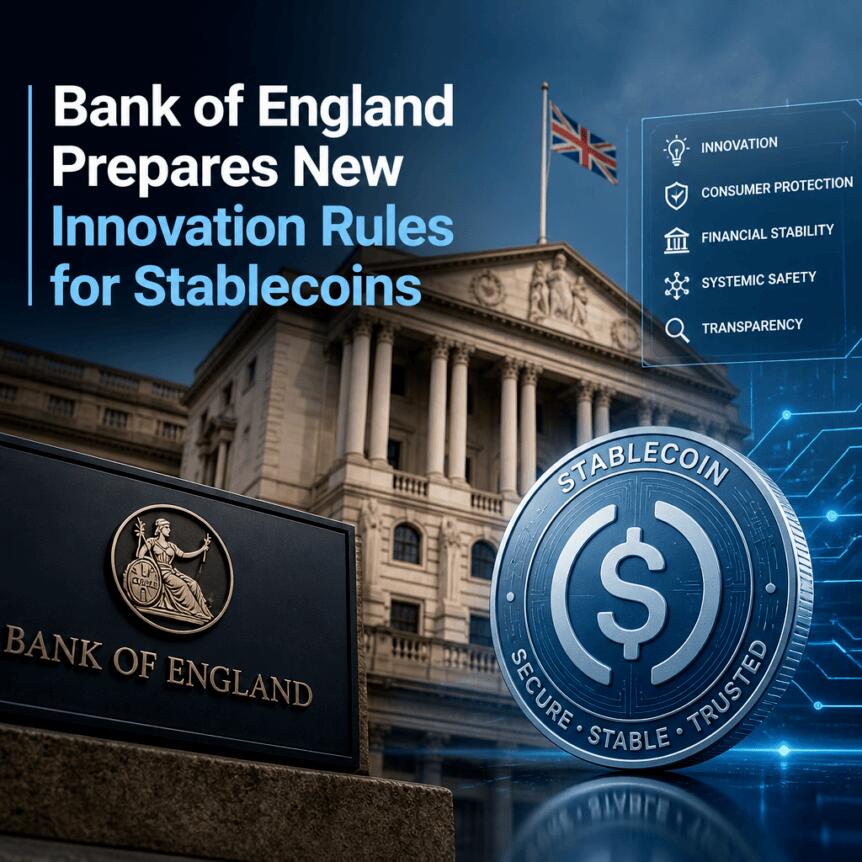
The UK government has proposed expanding the Bank of England’s remit to explicitly include support for innovation in digital payments, with stablecoin-based payment systems in scope. The Treasury said the Bank would receive a secondary objective focused on improving payment innovation—while keeping financial stability as its top priority.
Announcing the change this week, HM Treasury said the central bank’s new innovation goal would cover payment systems that settle using digital settlement assets, including stablecoins. The government also signaled that the measure will be pursued through legislative amendments, with further scrutiny expected in the House of Lords in early September.
Key takeaways
- The Bank of England would gain a secondary mandate to support innovation in payment systems using digital settlement assets such as stablecoins.
- Financial stability remains the primary objective; the innovation goal is intended to “support,” not override, stability considerations.
- The Bank would report annually to Parliament on its progress toward the payments innovation objective, potentially increasing public scrutiny.
- The proposal is expected to be implemented through amendments to the Financial Services and Markets Bill, with House of Lords debate scheduled for Sept. 7 and 9.
- Industry focus remains on how the Bank operationalizes stablecoin requirements—particularly reserve and backing rules for systemic issuers.
How the Bank of England’s mandate would change
HM Treasury said the Bank of England’s new responsibility would extend an approach the central bank already uses for regulating central counterparties (CCPs) and central securities depositories (CSDs), which play key roles in how financial assets are cleared, held, and settled.
Under the proposal, the Bank would provide an annual report to Parliament detailing its progress toward the innovation objective for payments and emerging forms of digital money. Officials framed the change around the potential of newer technologies—including tokenisation and distributed ledger technology (DLT)—to reshape aspects of financial markets.
City Minister Lucy Rigby said developments in digital payments technology, including tokenisation and DLT, have the potential to transform financial markets globally.
The Treasury expects to deliver the objective via amendments to the Financial Services and Markets Bill. That bill is scheduled for further debate in the House of Lords on Sept. 7 and 9, placing the timing of any final implementation squarely in the coming legislative window.
Industry concerns center on implementation details
While the innovation objective would be secondary to financial stability, its practical impact could depend on how the Bank structures its annual reporting and enforcement priorities. Maksym Sakharov, co-founder and CEO of on-chain banking infrastructure provider WeFi, told Cointelegraph that the mandate’s wording matters less than how the Bank chooses to execute it.
Sakharov emphasized that the objective is designed not to “override nothing,” but the annual publication requirement could still intensify public and market attention on how stablecoin rules are evolving—especially those finalized by the central bank in June.
One element highlighted by Sakharov concerns systemic stablecoin issuers’ reserve composition. He pointed to requirements stating that at least 30% of backing assets must be held in non-interest-bearing deposits at the Bank of England. In his view, “the reserve split is the first thing to fix,” because it may influence whether a stablecoin issuer can sustain its business model.
His comment underlines a broader issue: innovation mandates may encourage experimentation, but firms’ real-world viability often hinges on balance-sheet mechanics and compliance costs—particularly where reserve rules and custody arrangements are involved.
As readers look for clues about what comes next, the key question is how the Bank will translate an innovation goal into measurable outcomes without loosening or changing the core stability framework. Annual parliamentary reporting will likely become one of the primary channels through which that tension is expressed.
UK stablecoin momentum builds alongside policy and pilots
The BoE innovation mandate is the latest development in a UK push to work through stablecoin use cases—from regulation to experimentation—while aligning with international counterparts. The announcement follows several steps that indicate stablecoins are increasingly being treated as a mainstream component of digital payments planning rather than a peripheral technology.
In August, participants in the Bank of England’s Digital Pound Lab began testing whether a stablecoin could interoperate with a simulated digital British pound for cross-border trade payments. The experimental platform, HM Treasury and related BoE materials indicate, does not involve real customers or funds; its purpose is to evaluate mechanics and interoperability rather than to launch a live commercial product.
Earlier, in mid-July, the UK and US published a joint statement on stablecoins. The governments said they “intend to enable the use of stablecoins in cross-border finance” and called for greater alignment of regulatory frameworks. The direction of travel is therefore not only domestic: it also aims to coordinate approaches so stablecoin-related payments can operate across jurisdictions with fewer friction points.
More broadly, the UK has also adjusted its stablecoin framework over time. Cointelegraph previously reported that the Bank of England dropped earlier plans to cap individual stablecoin holdings at 20,000 British pounds and business holdings at 10 million pounds. Instead, the approach shifted toward a temporary issuance cap of 40 billion British pounds (about $52.9 billion) for each systemic stablecoin.
That move signals that regulators are searching for a structure that both allows usage and limits systemic risk—an approach that will likely shape how the new innovation mandate is interpreted. If innovation is the goal, then limits on issuance, reserve backing, and eligibility for systemic designation become the practical tools used to manage risk.
What to watch as legislators and the BoE move forward
The next phase will largely be determined by how amendments to the Financial Services and Markets Bill are drafted and whether they preserve the clear hierarchy placing financial stability above payment innovation. Investors and builders should also watch for the first annual reporting cycle: it could reveal what the Bank of England considers “innovation progress” in stablecoin-related payments, and how far the regulator will go in encouraging experimentation while maintaining its stability standards.

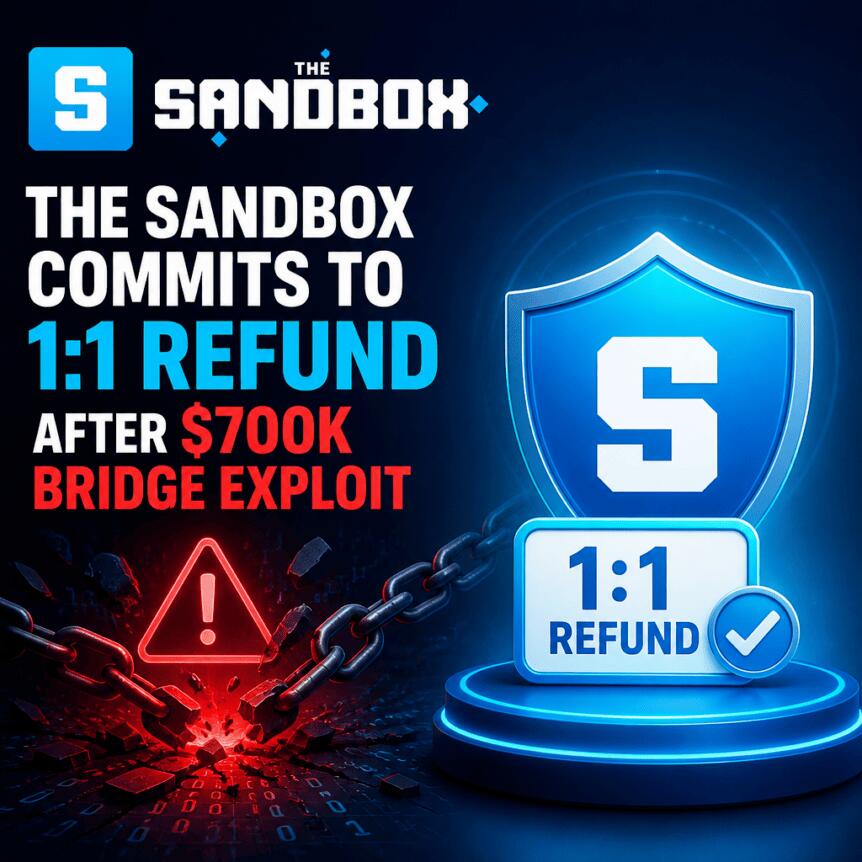
The Sandbox has moved to unwind losses from a bridge exploit that hit SAND holders using the Base and BNB Smart Chain networks. In a post-mortem published this week, the blockchain gaming platform said it will repay eligible users 1:1 in Ethereum-based SAND after an Aug. 21 attack drained 14.744 SAND—valued at roughly $700,000 at the time—from an Ethereum vault.
The project emphasized that compensation will be funded from The Sandbox treasury, with no new SAND tokens minted. The reimbursement process is expected to begin within two weeks and remain open for an additional two-week window, while two centralized exchanges are set to distribute funds directly to customers who hold eligible bridged balances.
Key takeaways
- The Sandbox will compensate eligible SAND holders who had bridged tokens on Base or BNB Smart Chain with an equal amount of Ethereum-based SAND.
- Payments will come from The Sandbox treasury, explicitly without minting new tokens.
- The claims window is expected to open within two weeks and run for two weeks after that.
- The attacker’s method involved a configuration flaw that enabled control of bridge message verification, allowing minting of unbacked tokens.
- Compromised bridge contracts will be permanently retired; future bridges will use newly deployed contracts.
Bridge exploit triggers treasury-backed reimbursement
According to The Sandbox’s post-mortem, the Aug. 21 incident stemmed from an exploit involving the SAND bridge infrastructure connected to Base and BNB Smart Chain. The company said the attacker drained 14.744 SAND from an Ethereum vault, which at the time was worth about $700,000.
To make affected users whole, The Sandbox stated it will repay users who “legitimately held bridged SAND” on those networks with a 1:1 amount of SAND on Ethereum. Compensation will be sourced from the project’s treasury, and the company said it will not mint new tokens to fund the reimbursement.
For operational execution, The Sandbox indicated that the claims process should start within two weeks and continue for two more weeks. It also said two centralized exchanges hold more than 72% of eligible balances and will distribute compensation directly to their customers, reducing the need for all users to submit individual claims.
What the attacker did—and what was affected
The post-mortem describes the root cause as a configuration flaw in SAND’s bridge-related contracts on Base and BNB Chain. The issue allowed the attacker to become the sole verifier of incoming bridge messages—an abnormal condition that enabled the minting of unbacked tokens.
The Sandbox confirmed that the drained amount was about 14.7 million SAND tokens. While that figure is large in absolute terms, the company noted it represented approximately 0.5% of SAND’s 3 billion maximum supply.
The impact was not uniform across all networks connected to SAND. Although the exploit resulted in more than 339 trillion unbacked SAND being minted on the two impacted networks, The Sandbox said those tokens have been isolated. In its description, the unbacked tokens cannot be bridged or redeemed, limiting the practical risk of continued circulation.
Separately, the company said SAND on Ethereum and Polygon was unaffected.
Compromised contracts retired; future bridges to use new deployments
Beyond compensating users, The Sandbox said it would address the technical vulnerability at the source. The compromised bridge contracts will be permanently retired, according to the post-mortem.
The company added that any future bridges from Base or BNB Chain would rely on newly deployed contract versions. That change matters for users because it reduces the chance that attackers can reuse the same misconfiguration or interface behavior to repeat similar minting and drainage patterns.
At the same time, the arrangement leaves an important question for holders: how quickly and transparently new bridge contract deployments can be audited, monitored, and integrated across exchanges and user workflows. While the immediate risk of redeemable tokens appears constrained by The Sandbox’s statement that unbacked tokens are isolated, bridge security typically depends on ongoing contract monitoring and operational checks—especially when liquidity and user balances are concentrated across centralized platforms.
Market reaction and what holders should monitor
At the time The Sandbox published the update, SAND was trading at roughly $0.04, down 10.4% over the prior seven days, according to CoinGecko.
Token-price moves around major exploits can reflect broader investor concerns—ranging from temporary liquidity issues to general trust in bridge infrastructure—rather than only the direct magnitude of drained funds. In this case, the project’s plan to reimburse eligible holders 1:1 using treasury funds is designed to blunt that uncertainty, particularly for users who bridged via Base or BNB Smart Chain.
Looking ahead, the key variables for impacted SAND holders will be whether eligible balances are identified accurately by the exchanges and the project, how smoothly the claims process runs for the remaining users, and whether the newly deployed bridge contracts are integrated without introducing new failure modes. The coming weeks should also clarify whether any additional operational or technical findings emerge after the initial post-mortem.
For now, users should watch the start of the reimbursement window and follow The Sandbox’s guidance on eligibility, while monitoring any updates on the newly deployed bridge contract approach—because that is where long-term bridge safety will be tested after an exploit like this.


The Sandbox has pledged to reimburse eligible SAND holders 1:1 after an Aug. 21 bridge exploit drained about 14.7 million tokens worth roughly $700,000 from an Ethereum vault.
Summary
- The Sandbox will repay eligible SAND holders 1:1 after an Aug. 21 bridge exploit drained about 14.7 million tokens worth $700,000.
- Compensation will come from The Sandbox treasury without minting new SAND, with claims expected to open within two weeks.
- The attacker exploited a configuration flaw in the Base and BNB Chain contracts to mint more than 339 trillion unbacked SAND.
- The compromised bridge contracts will be permanently retired, while SAND on Ethereum and Polygon was unaffected.
According to The Sandbox’s Aug. 27 post-mortem, users who legitimately held bridged SAND on Base or BNB Smart Chain before the attack will receive an equivalent amount of Ethereum-based SAND. The project plans to cover the payments from its treasury without minting new tokens.
Claims are expected to open within two weeks and remain available for another two weeks. Two centralized exchanges account for more than 72% of the eligible SAND balances, and The Sandbox said the exchanges will distribute replacement tokens directly to affected customers.
The Sandbox will repay SAND holders from its treasury
The repayment plan covers legitimate bridged SAND balances that existed on Base and BNB Smart Chain before the exploit. Eligible users will receive SAND issued on Ethereum, replacing the tokens affected by the compromised bridge infrastructure.
The Sandbox said its treasury already holds the tokens required for the process, meaning the compensation will not increase SAND’s circulating or maximum supply. Users who held eligible balances through the two centralized exchanges handling most of the affected tokens will not need to submit individual claims.
For other holders, the project plans to launch a claims portal once the required infrastructure is ready. The two-week submission period is expected to begin within two weeks of the post-mortem, though the project did not provide a specific opening date.
The compensation plan follows an attack that targeted the contracts responsible for moving SAND between Ethereum and Base and BNB Smart Chain. While the exploiter was able to create an enormous quantity of unbacked SAND on the destination networks, the project said the damage to assets backing legitimate bridged tokens amounted to about 14.7 million SAND.
The stolen amount represented roughly 0.5% of SAND’s maximum supply of 3 billion tokens.
Configuration flaw gave the attacker control of bridge verification
The Sandbox traced the incident to a configuration problem in the SAND contracts deployed on Base and BNB Smart Chain. The flaw allowed the attacker to become the sole verifier for incoming bridge messages, giving the address the ability to approve fraudulent messages without the authorization normally required by the bridge.
With control of that verification process, the attacker could mint SAND on the destination chains even though corresponding tokens had not been legitimately locked on Ethereum.
More than 339 trillion unbacked SAND tokens were eventually minted across Base and BNB Smart Chain, according to the post-mortem. The Sandbox said the fraudulent supply has since been isolated and cannot be bridged back to Ethereum or redeemed against legitimate SAND reserves.
SAND deployed directly on Ethereum and Polygon was not affected by the configuration flaw.
The distinction between legitimate and unbacked tokens is central to the reimbursement process because bridge systems commonly depend on assets being locked on one network before a corresponding representation is issued elsewhere. A crypto.news explainer published Aug. 3 detailed how lock-and-mint and related bridge designs rely on verification mechanisms to ensure destination-chain assets remain backed by value held elsewhere.
Crypto.news previously reported that bridge exploits have resulted in more than $4 billion in losses since 2021, with failures involving validator credentials, message verification and smart contracts among the methods attackers have used to compromise cross-chain infrastructure.
Compromised SAND bridges will be permanently retired
Following the Aug. 21 attack, The Sandbox decided not to restore the affected Base and BNB Smart Chain bridge contracts. Both will instead be permanently retired.
Any future bridge connecting SAND with either network would require newly deployed contracts, according to the project. The Sandbox did not provide a timetable for restoring bridge access to Base or BNB Smart Chain.
Similar decisions to isolate or replace compromised bridge infrastructure have followed several attacks this year. In June, Humanity Protocol disclosed losses exceeding $36 million after attackers obtained administrative keys and took control of bridge systems spanning Ethereum and BNB Smart Chain.
The attackers in that incident were able to drain tokens from the Ethereum bridge and mint additional H tokens on BNB Smart Chain. A subsequent forensic investigation traced the compromised keys to a malware-infected developer machine that contained backups for seven private keys.
Another bridge incident in July hit Wanchain infrastructure connecting Cardano and BNB Chain. Blockchain security firm BlockSec said roughly 515 million NIGHT tokens were removed from the Cardano-side treasury in the Wanchain bridge exploit, worth about $9 million at the time. Midnight said its core network remained secure and described the incident as isolated to the bridge infrastructure.
Bridge exploits have continued through 2026
Cross-chain infrastructure has faced a series of attacks during 2026 involving different verification and security failures.
Axelar disabled bridge connections with Secret Network in June after an exploit resulted in approximately $4.7 million in losses. The incident affected Axelar-bridged assets on Secret Network while Axelar said its core protocol remained unaffected.
A month later, AFX suffered a $24.15 million USDC loss through a bridge operated by the trading protocol. The affected infrastructure was separate from Arbitrum’s native bridge, and the attacker subsequently moved the stolen USDC to Ethereum before converting it into about 12,467.5 ETH.
AFX later prepared a goodwill plan for users after its investigation linked the attack to a social engineering campaign that compromised internal development infrastructure. The protocol said it rebuilt key infrastructure and introduced new security measures following the incident.
The Sandbox’s reimbursement process is expected to begin once its claims system is ready. Eligible balances held through the two centralized exchanges will be handled directly by those platforms, while remaining holders will have two weeks to submit claims after the portal opens.
SAND was trading near $0.04 at the time of the post-mortem, down about 10.4% over the previous seven days.
All three proposals have cleared quorum, but a plan to slow new SOL creation is only narrowly passing while a separate vote to sharply increase token burns remains below the two-thirds support needed.


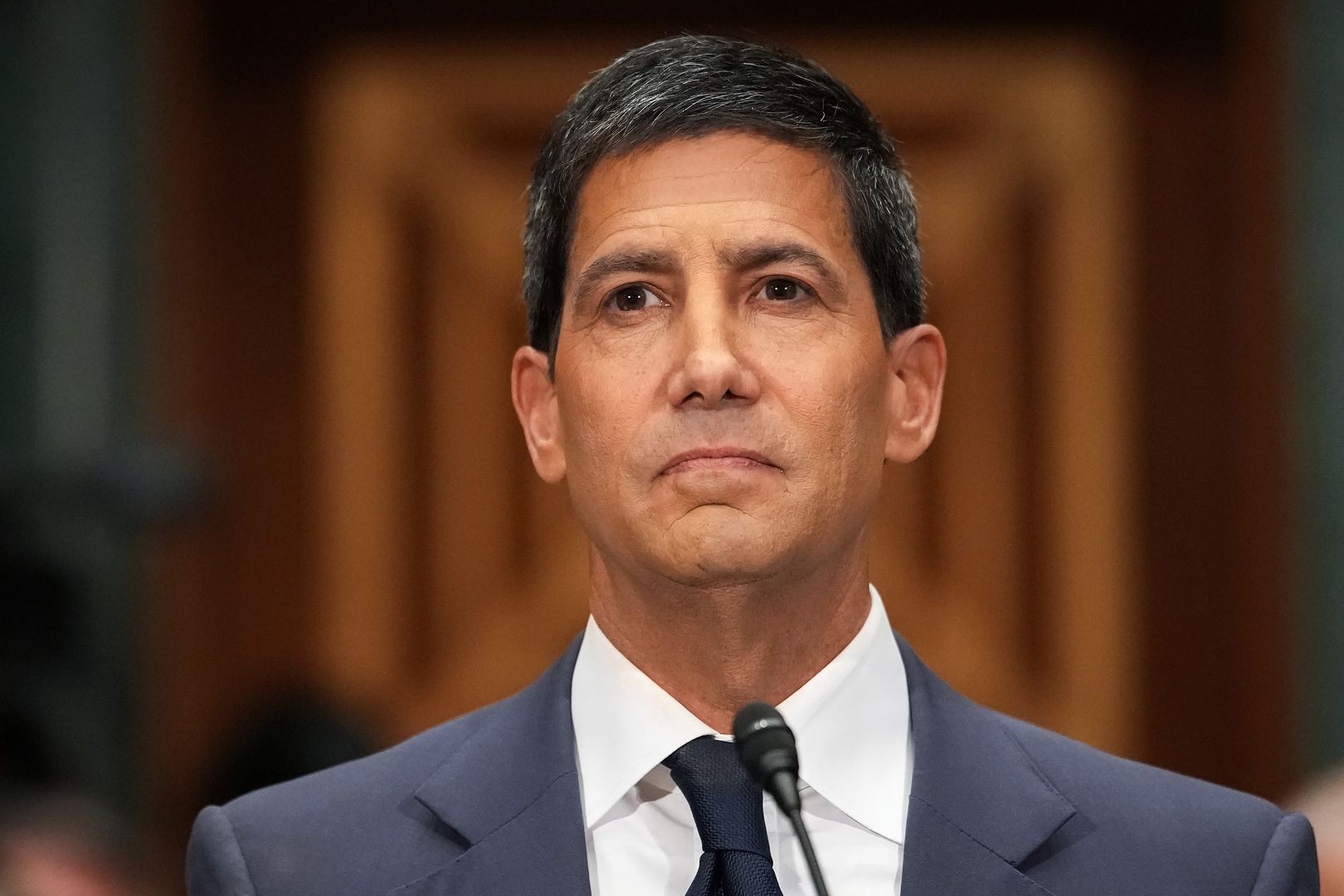
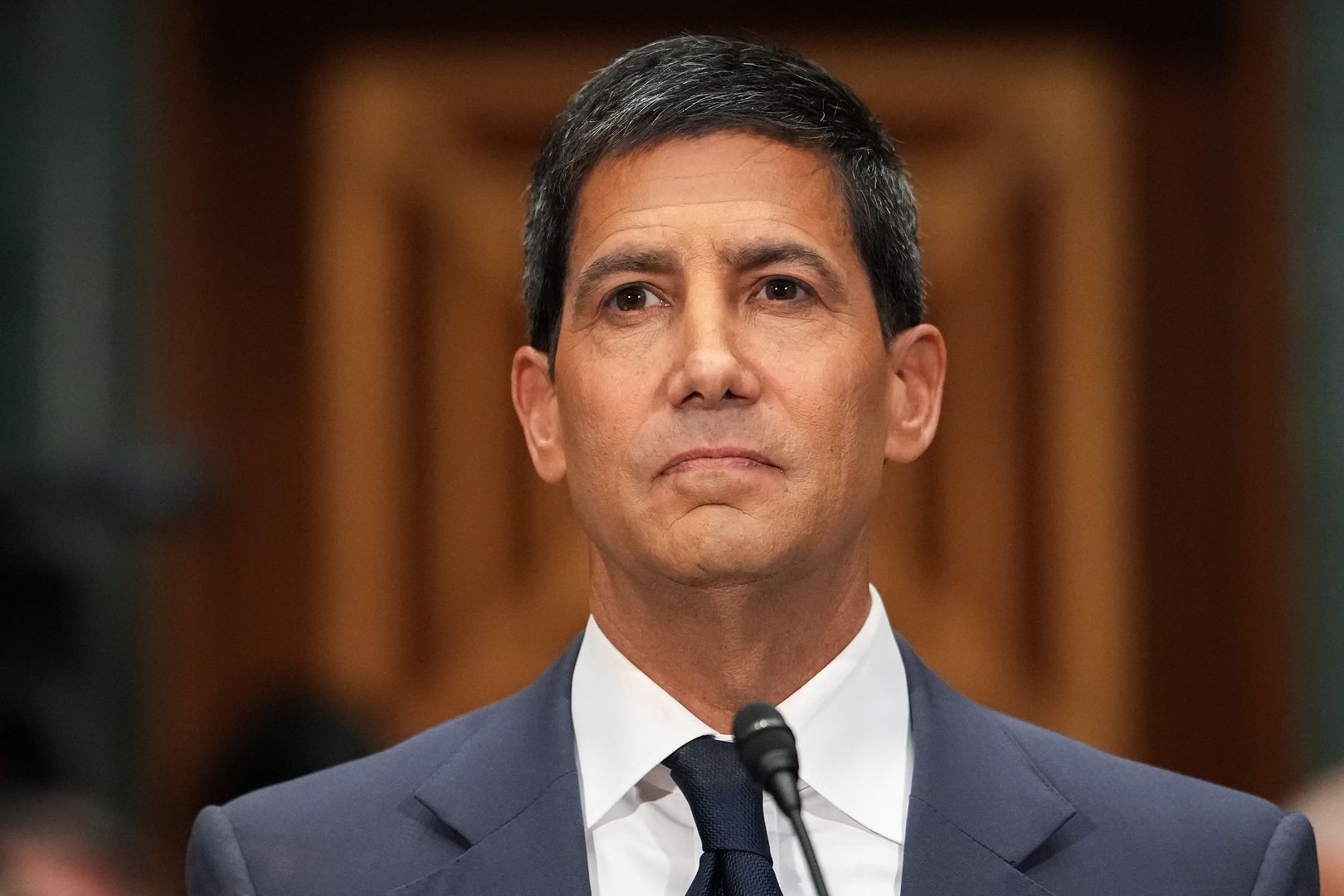
Warsh’s Jackson Hole speech could shape expectations for Fed support of Treasury buybacks, with implications for bitcoin, gold and long-term yields.



The AI race has increasingly become an electricity race, as companies sprint to build the power infrastructure necessary to power data centers. Joe Dominguez, president and CEO of Constellation Energy, is betting that nuclear energy will be one of the most important sources of that power.
To do that, Constellation has signed a series of agreements with hyperscalers to provide long-term nuclear power to their data centers. No such deal has received more attention than Constellation’s partnership with Microsoft to restart a reactor at Three-Mile Island nuclear facility. The deal will provide Microsoft carbon-free power for the next 20 years. (The facility, renamed the Crane Clean Energy Center, is best known for the infamous 1979 meltdown, though it occurred at a different reactor).
The project is part and parcel of a broader transformation Dominguez has helped drive. For decades, nuclear plants struggled to compete with cheap natural gas and renewable energy. Now the relentless, around-the-clock electricity needs of AI have made existing reactors enormously valuable assets.
Spot Bitcoin (BTC) exchange-traded funds (ETFs) added $242.30 million in net inflows on Aug. 27. The gain extended their streak to nine consecutive trading days.
Spot Ethereum (ETH) ETFs matched the pace. The category added $235 million on the same day, marking its own ninth straight inflow session.
Bitcoin And Ether Funds Move In Lockstep
The parallel streaks follow a stretch of heavy institutional buying. BlackRock’s iShares Bitcoin Trust (IBIT) contributed $209 million of a $338 million Bitcoin ETF inflow on Aug. 24. Its Ethereum fund, ETHA, added $90.92 million of that day’s $116 million Ethereum ETF haul.
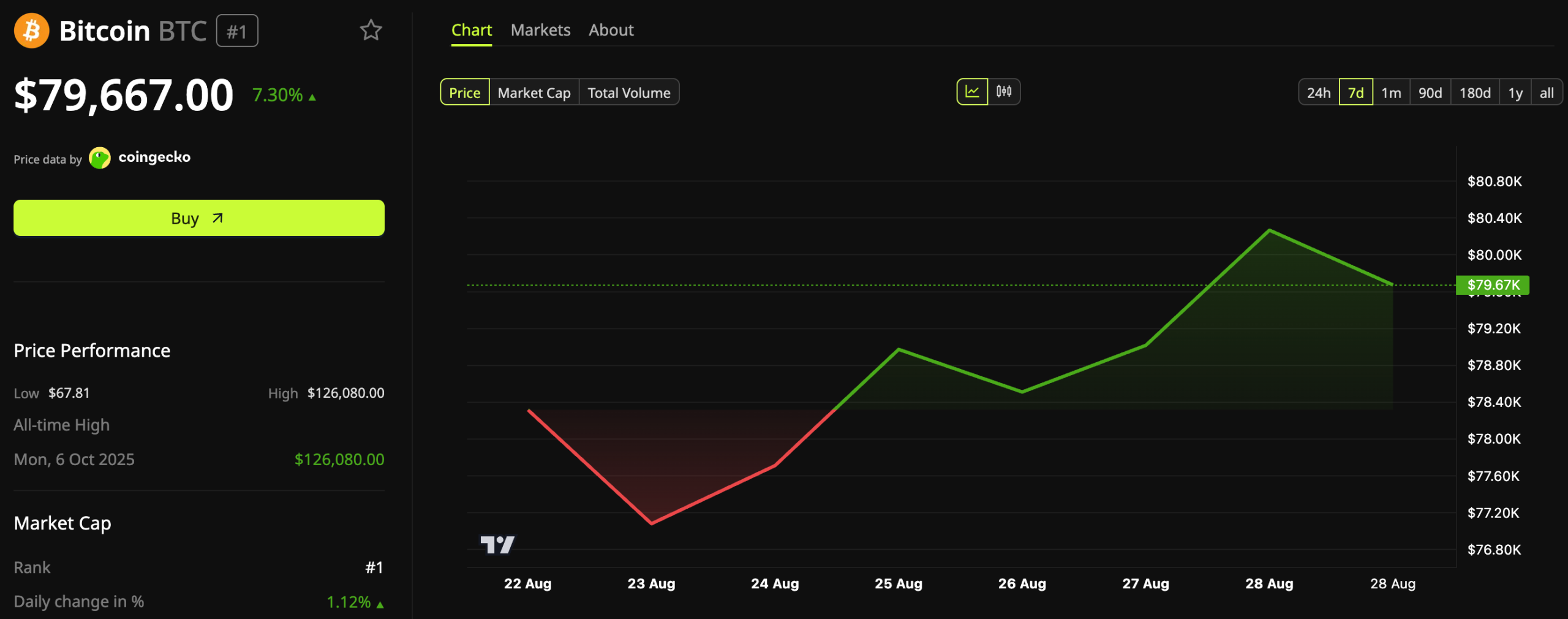
Bitcoin traded near $80,000 on Thursday, up 2.12% over 24 hours. Ether changed hands near $2,480 over the same period.
Total net assets across spot Bitcoin ETFs stood at $79.16 billion. Trading volume across the category reached $8.23 billion, according to CoinGlass data.
The two categories also posted their biggest combined week since October last week, drawing $2.3 billion between them. That run suggests institutions are building positions across both assets rather than rotating between them.
The current streak traces back to Aug. 17, when both categories began a run that reached four days by Aug. 20. It has continued uninterrupted through Aug. 27.

Smaller crypto funds joined the advance. Spot Solana (SOL) ETFs added $60.91 million, and spot Hyperliquid (HYPE) ETFs drew $24.42 million, both on Aug. 27.
Both smaller funds remain far behind Bitcoin and Ether in scale. The same-day gains suggest institutional demand extends beyond the two largest crypto assets.
Sustained ETF demand can matter beyond the daily headline. Steady inflows reduce available supply on spot exchanges, a dynamic that has historically supported price during past accumulation phases.
Nine straight days of buying across both major categories signals broad, not narrow, institutional appetite. Whether that appetite holds into next week may depend on whether Bitcoin and Ether can extend their recent price gains.
The post Bitcoin ETFs Extend Inflow Streak to 9 Days With $242M Added appeared first on BeInCrypto.


Blockchain gaming platform The Sandbox has pledged to repay eligible SAND holders 1:1 after an Aug. 21 bridge exploit drained 14.744 SAND, worth about $700,000, from an Ethereum vault.
On Thursday, the company published a post-mortem, saying users who legitimately held bridged SAND on Base or BNB Smart Chain before the attack will receive an equal amount of Ethereum-based SAND. Compensation will come from The Sandbox treasury, with no new tokens minted.
The claims process is expected to open within two weeks and remain open for another two weeks. Two centralized exchanges hold more than 72% of eligible balances and will distribute compensation directly to their affected customers, according to The Sandbox.
The project said the attacker exploited a configuration flaw in SAND’s Base and BNB Chain contracts, allowing them to become the sole verifier of incoming bridge messages and mint unbacked tokens. The Sandbox confirmed that about 14.7 million SAND tokens were drained, equivalent to about 0.5% of the token’s 3 billion maximum supply.
Although more than 339 trillion unbacked SAND was minted on the two networks, those tokens have been isolated and cannot be bridged or redeemed. SAND on Ethereum and Polygon was unaffected.
The compromised bridge contracts will be permanently retired. The Sandbox said any future Base or BNB Chain bridges would use newly deployed contracts.
SAND traded at about $0.04 at the time of publication, down 10.4% over the previous seven days, according to CoinGecko.
Related: Hugging Face hack exposes the open-weight AI cybersecurity paradox
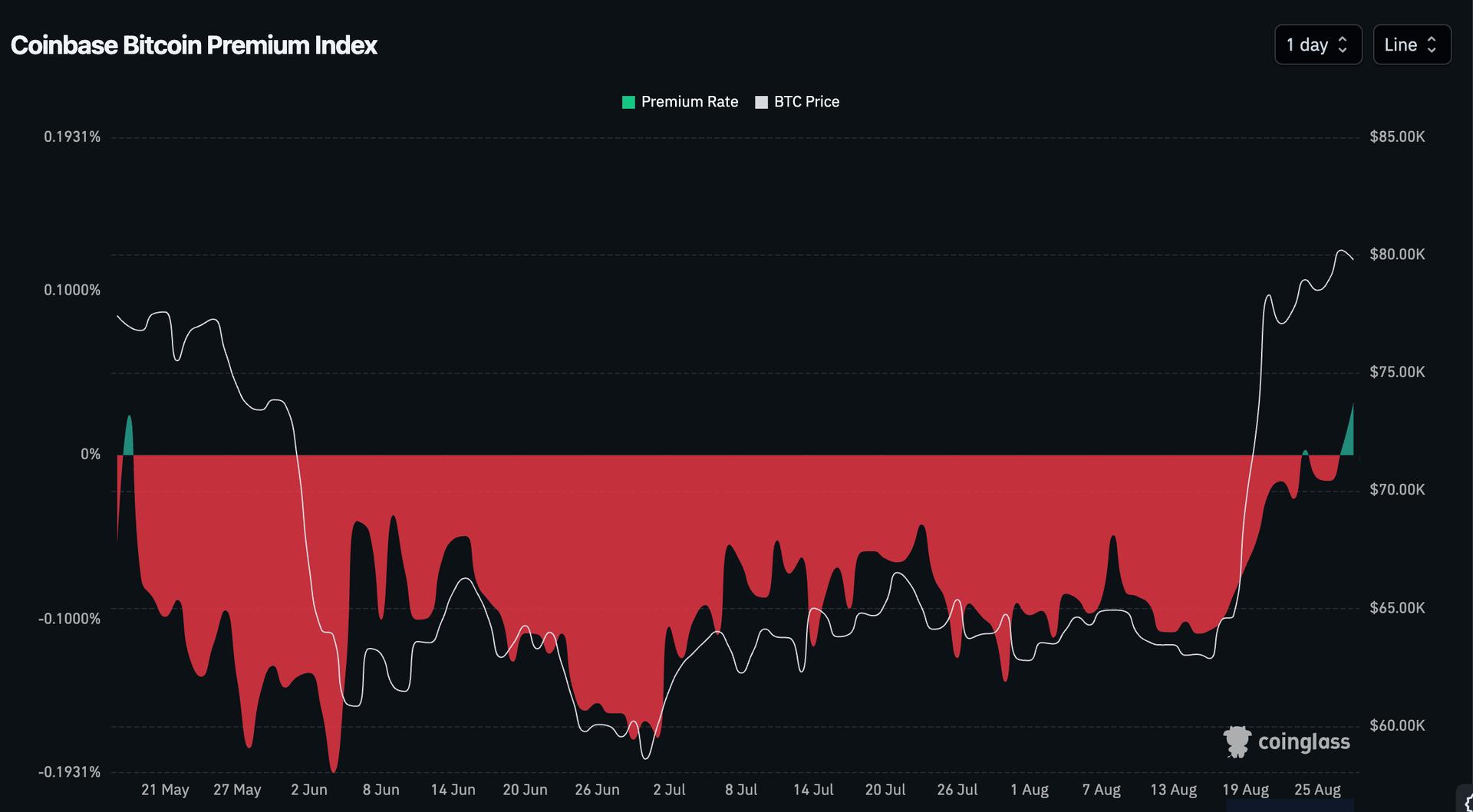
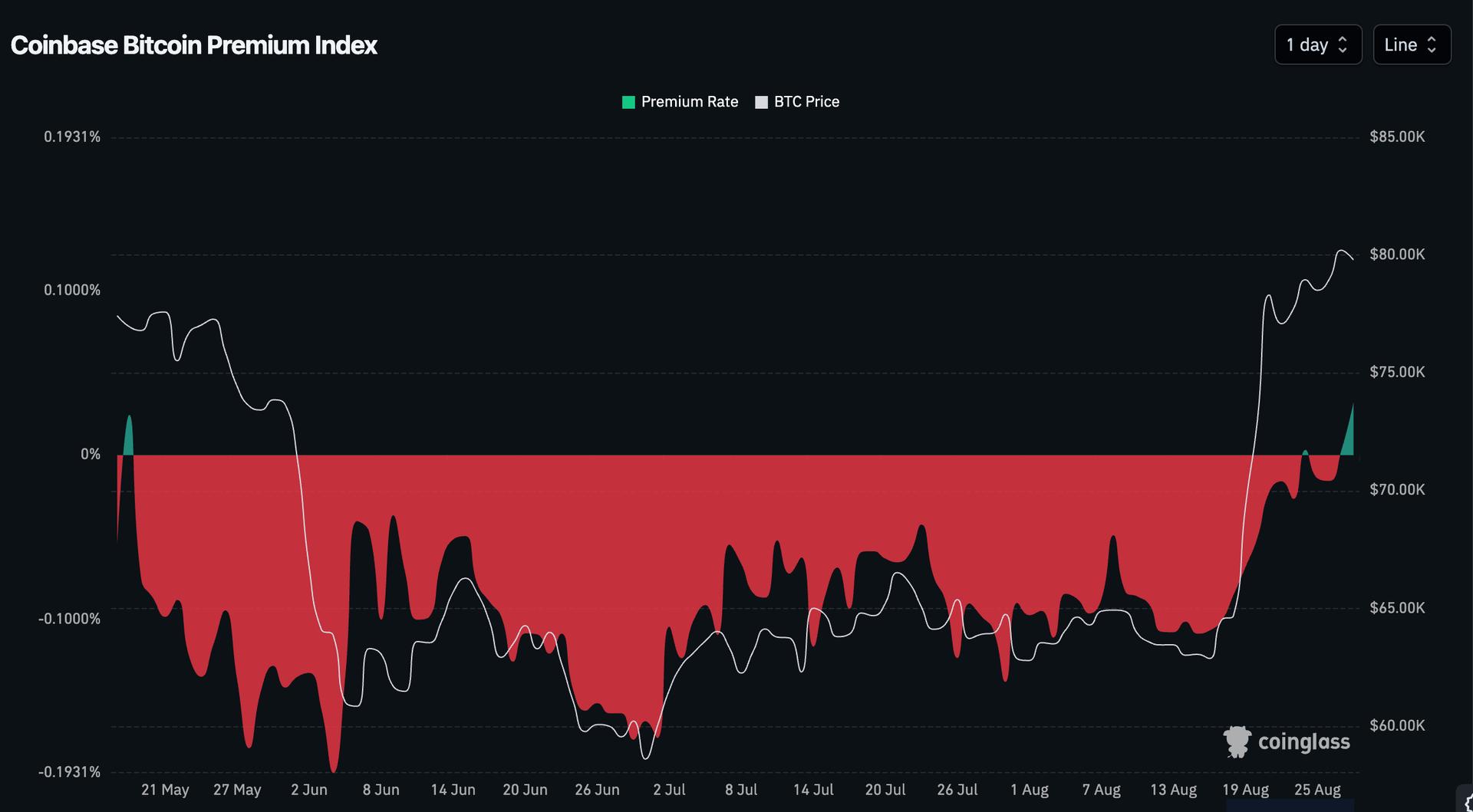
The indictor has flipped positive for the first time since May as BTC looks to establish a foothold above $80,000.

Andy Burnham addresses Freddo price in cost of living pledge | News

Small-Cap Stocks Step Out Of Big Tech’s Shadow

The Sandbox Commits to 1:1 Refund After $700K Bridge Exploit





-

 Fashion7 days ago
Weekend Open Thread: Madewell – Corporette.com
-

 Crypto World2 days ago
SpaceX stock could rise 75% to $240, JPMorgan says
-

 Business6 days ago
Musk’s Tesla, SpaceX Confirm $16.8 Billion ‘Terafab’ Chip Plant as World’s Largest Building in Texas
-

 Crypto World6 days ago
anatomy of crypto’s biggest liquidation event since 2021
-

 Crypto World3 days ago
A $30 Billion AI Fund Implodes, Now the SEC Is Investigating Wall Street’s Role
-

 Politics6 days ago
6 months on, Irish renters crushed by effects of government housing bill
-

 Crypto World2 days ago
Did Trump Just Move SpaceX Stock With One Truth Social Post?
-

 Business5 days ago
Mystery AI Model ‘Ox Alpha’ Draws Developers With Free Access as Chinese Lab Origins Remain Debated
-
 NewsBeat6 days ago
The ‘Lucky Dip Gang’ causing carnage for clicks: After five thugs were killed speeding in the wrong direction on a motorway, GUY ADAMS investigates a sick new trend… and why police aren’t even allowed to pursue them
-

 Crypto World2 days ago
Warsh Jackson Hole keynote puts financial innovation first
-
 Crypto World6 days ago
Nvidia Stock Suffers Longest Losing Streak Since 2022: Will Q2 Earnings End It?
-

 Business4 days ago
Moderna CEO warns China is pouring state money into mRNA technology
-

 Business2 days ago
Walmart takes aim at younger shoppers with new fashion brand
-

 Business3 days ago
NVIDIA Stock Drops Nearly 2 Percent to $210 on Seventh Losing Day Ahead of Critical AI Earnings
-

 Tech6 days ago
Unitree’s New Superman Robot Claims to Outjump and Outrun Every Human, Usain Bolt Included
-

 Business7 days ago
UK firms in critical financial distress rise 9% to 53,756
-

 Business6 days ago
Will Tesla Stock Be Higher or Lower a Year From Now? Here’s What Wall Street Analysts Are Saying
-

 Sports5 days ago
Deshaun Watson fires back at Browns fans after being booed: ‘It’s a disrespectful thing’
-
 Crypto World5 days ago
Google Gemini AI Predicts Ethereum Could Become the Trade Retail Misses in 2026
-

 Tech7 days ago
Faster chip in a familiar form factor
You must be logged in to post a comment Login