
Entertainment
Lainey Wilson Recalls Final Call With Dolly Parton

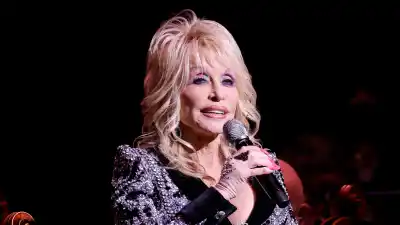
Lainey Wilson is paying tribute to Dolly Parton with a heartfelt social media post.
The country singer, 34, honored her music idol by sharing details of her final call with Parton via an Instagram post shared on Thursday, August 27.
“My Dolly. 💛 I felt like you were my friend before we even met.. you made everybody feel that way. But once we became friends, boy did we have a lot to talk about… I sure am glad you called a couple of weeks ago,” she wrote alongside a carousel of photos and video moments of the pair together.
During the conversation, Parton offered Wilson words of wisdom about Wilson’s relationship with former NFL player Devlin “Duck” Hodges.

Country music icon Dolly Parton died on Tuesday, August 25. She was 80. “Global icon and humanitarian, Dolly Parton, known to the world as a beloved singer, songwriter, philanthropist, actress, playwright and author died peacefully today in Nashville, Tennessee,” read a statement from Parton’s rep. “A rhinestone life that shone bright enough for the world […]
“We got to talk about the business, the sacrifice, how special Carl Dean was to you and how important Duck is to me.. you told me that ‘it’s all great and stuff that Duck lets you be you, but you better make sure you let Duck be himself too.’”
The “Heart Like a Truck” singer recalled that the pair also spoke about faith, the music business and ambition during the interaction.
“You also told me to take my time reading the book of Revelation and that I might need to go on back to Psalms for a minute to catch my breath,” Wilson wrote. “We talked about how we both feel like we were called into this business and you told me you felt like you weren’t finished. Well my friend, you are not. The kind of love and light you shined in your lifetime is the kind that never goes away. I am thankful the Lord gave you a gift, you decided to share it, and the Lord decided to share you with us. I can’t wait to see you again and I know when I hug your neck in heaven someday you are still gonna be saying, ‘don’t mess up hair, Lainey girl.’ I will always love you, my friend. 💛🦋.”
News broke on Tuesday, August 25, that Parton died after a brief battle with an undisclosed form of cancer. She was 80.
Parton’s rep shared that a “small, private service will be held for immediate family” in the coming days to honor the late singer.


Meanwhile, her “fans and friends from around the world are encouraged to pay tribute to Dolly” on social media and her website, per the singer’s request. The family asked for donations to be made to Dolly Parton’s Imagination Library in lieu of flowers.
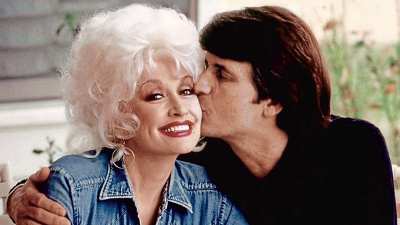
Celebrities are sharing their condolences with Dolly Parton after the death of her husband, Carl Dean. The country icon, 79, confirmed on Monday, March 3, that Dean passed away at the age of 82. “Carl and I spent many wonderful years together,” Parton wrote via an Instagram statement. “Words can’t do justice to the love […]
“Global icon and humanitarian, Dolly Parton, known to the world as a beloved singer, songwriter, philanthropist, actress, playwright and author died peacefully today in Nashville, Tennessee,” read a statement from Parton’s rep. “A rhinestone life that shone bright enough for the world to see, Dolly will forever stand as an inspiration not only through her timeless music and prolific songwriting, but also her wit, warmth and kindness that made us all feel like family.”
The statement continued: “Dolly Parton’s legacy is one of love, compassion and resilience. With a seven-decade career, she inspired multiple generations of artists and fans with her music and an unwavering commitment to making the world a better place. Her songs will continue to resonate with people of all ages, and her philanthropic work will have a lasting impact.”

Continue Reading
Any film is either a comedy or a drama, and though both genres have produced several of the greatest films ever made, dramas in particular have delivered the movies that are most often counted among the biggest masterpieces the Seventh Art has ever seen. These are genres all about serious conflicts, characters clashing, and dialogue propulsing the story and plot forward.
For the purposes of this list, genre films will be excluded. Here, dramas will be considered non-comedy movies where the main focus is on emotionally-driven conflicts between characters and realistic struggles, leaving things like plot-driven thrillers, fantasy and sci-fi films, and horror movies off the table. Whether it’s an underrated biopic like Mishima: A Life in Four Chapters or a hyper-acclaimed classic like The Godfather, history’s greatest dramas are all essential viewing for cinphiles the world over.
10
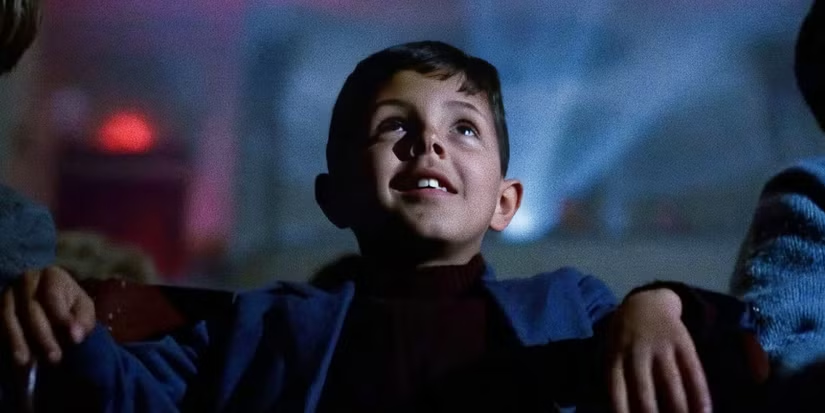
‘Cinema Paradiso’ (1988)

Winner of the Academy Award for Best Foreign Language Film and of the Cannes Film Festival’s Grand Prix, Giuseppe Tornatore‘s Cinema Paradiso is not only the greatest Italian drama in history, but even one of the greatest films of all time. With its wonderful coming-of-age tale featuring one of the best depictions of childhood in movies, it’s no wonder why it has aged as well as it has.
Beautifully emotional without ever feeling saccharine, hopelessly romantic without ever feeling naive, and delightfully long without ever feeling excessive, Cinema Paradiso works simultaneously as a love letter to the movies and as one of the best of the ’80s. Anchored by Tornatore’s emotionally stirring direction and Ennio Morricone delivering one of the greatest musical scores in film history, it’s an international classic that everyone should watch at least once in their lives.
9
‘Mishima: A Life in Four Chapters’ (1985)

The biopic genre is one that has become increasingly tired and trite over the years. At some point, directors started feeling comfortable delivering movies that felt more like cinematic version of a Wikipedia article than like an actual encapsulation of a subject’s life and work. That isn’t the case with Mishima: A Life in Four Chapters, a revolutionary masterpiece written and directed by screenwriter-turned-filmmaker Paul Schrader.
Mishima is one of the most underrated drama movie masterpieces the world has ever seen. Its director uses surrealism and creative elements from the books created by writer, martial artist, and model Yukio Mishima to create a drama that genuinely feels like it captures Mishima’s spirit perfectly. Impeccably written, visually stunning, and entirely unique, it’s right at the peak of what biopic dramas have to offer in the arthouse space.
8
‘Persona’ (1966)

Rarely has history seen filmmakers quite as great or influential as Swedish legend Ingmar Bergman, one of the most impactful directors in the history of European cinema. There are sprinkles of surrealism across all of his wonderfully complex, emotionally riveting filmography, but nowhere are those sprinkles more intense than in Persona. Fittingly, it happens to arguably be Bergman’s magnum opus.
Persona is one of the best psychological dramas in history, and a must-see for all those who love arthouse dramas. Magnificently directed by Bergman in full control of his craft, full of haunting black-and-white images, and bolstered by Bibi Andersson and Liv Ullmann‘s performances, it’s a masterpiece about identity, duality, and gender which only keeps getting better with age.
7
‘Schindler’s List’ (1993)

Steven Spielberg is the father of blockbusters and a master of popcorn genre flicks, but it just so happens that his best film to date is a biopic drama through and through: the World War II period piece Schindler’s List, one of the most powerful war movies of all time. It deservedly earned Spielberg his very first Best Director and Best Picture Academy Award victories.
It’s impossible to know where to begin singing Schindler’s List‘s praises. Spielberg’s direction is beautifully humanist and necessarily hopeful, but he never shies away from the purely harrowing nature of the material. John Williams‘ score is probably the most haunting he has ever composed for a motion picture. All the performances, from Liam Neeson to Ralph Fiennes, are absolutely flawless. All around and from top to bottom, Schindler’s List is one of the greatest drama movies the war genre has ever seen.
6
‘The Shawshank Redemption’ (1994)

Frank Darabont is perhaps the best creative that Hollywood has at its disposal when it comes to adapting Stephen King stories, and it just so happens that The Shawshank Redemption is perhaps the most notorious Stephen King movie that’s better than the book. It has been sitting as the highest-rated movie of all time on IMDb for many years, and that’s likely to continue being the case for many more.
It’s fully deserved praise, too, because The Shawshank Redemption is much more than just a drama movie. It’s a wonderfully emotional study of themes like justice, redemption, and male friendship, one told with such passionate love for life that it’s impossible not to be infected by it. Full of memorable set pieces and unforgettable performances, Shawshank Redemption really is one of the most perfect dramas the big screen has ever seen.
5
‘The Godfather Part II’ (1974)

How do you follow up what many refer to as the greatest film of all time? By making a sequel that some people think is even better, of course. Francis Ford Coppola set the bar sky-high for himself going into The Godfather Part II, but saying that he exceeded those expectations would be an understatement. Part prequel, part sequel, this is considered by some to be the greatest crime drama of all time.
The Godfather Part II is pretty much universally accepted to be one of the best American movies of the ’70s. Even though its being part period piece and 100% a gangster film may lead some to argue that it’s more of a genre movie, the focus is never on its genre conventions, but rather on its characters and their conflicts—and how flawlessly that focus is pulled off by Coppola and his team.
4
‘Citizen Kane’ (1941)
Other cinephiles point to Orson Welles‘ Citizen Kane as the greatest film of all time, and it isn’t exactly easy to offer arguments to disagree with them. After all, upon release, Welles’ jaw-dropping big-screen debut was unlike anything else Hollywood had ever seen. It may not seem so revolutionary by modern standards, but Citizen Kane is still the peak of what the filmmaking art form has to offer.
One of those movie masterpieces that were ahead of their time, Citizen Kane still feels remarkably modern thanks to its groundbreaking non-linear structure, its unforgettable visuals, its many incredible performances, and its thematically and emotionally powerful script. Golden-Age Hollywood rarely—if ever—produced dramas this timeless and worthy of the utmost praise.
3
‘The Godfather’ (1972)

As incredible as The Godfather Part II may be, there’s simply no beating The Godfather, regarded by a staggering number of people as the single greatest feature film of all time. Indeed, it’s one of the most universally beloved movies ever, a masterpiece that Francis Ford Coppola was initially reluctant to make but which ended up being widely accepted as his magnum opus.
The Godfather is the crime drama par excellence, an exquisitely character-driven and technically masterful gem that deconstructs the American Dream in ways that cinema had never seen before. From its game-changing performances, to its stunning visuals, to Coppola’s faultless direction, it has aged like fine wine in virtually every sense that matters.
2
‘High and Low’ (1963)

Akira Kurosawa is praised by many cinephiles not just as the greatest Japanese filmmaker of all time, but at times even the greatest filmmaker in general. He was, of course, a director best known for his contributions to the samurai genre, but he also dipped his toes into several other genres over the course of his career—including dramas like High and Low.
This is another instance of a film whose status as an adrenaline-pumping thriller may lead some to count it as a proper genre film, but Kurosawa keeps the focus on the characters and plot rather than on genre conventions so intensely that High and Low deserves to be counted among the greatest dramas in film history. Structurally, tonally, thematically, and in every other sense, it’s one of the boldest and most essential pieces of dramatic filmmaking in history.
1
’12 Angry Men’ (1957)

There’s a strong argument to be made that 12 Angry Men is not only the greatest feature film of Hollywood’s entire Golden Age, but perhaps even the greatest drama in film history. It is, at the very least, the peak of the many must-watch movies of the 1950s, a single-location psychological drama which proves that you don’t need a gargantuan premise or a dozen sets in order to make an absolutely timeless masterpiece.
Indeed, thanks to the many complex and layered ways in which 12 Angry Men explores ideas of justice and guilt, it’s a movie that doesn’t seem to age in the slightest. From its performances to its exceptional black-and-white cinematography to its universally compelling writing, it’s one of those dramas which prove just how remarkably close the Seventh Art can come to genuine perfection.

12 Angry Men
- Release Date
-
April 10, 1957
- Runtime
-
97 minutes
- Director
-
Sidney Lumet
- Writers
-
Reginald Rose


A brand-new Miss USA has been crowned at one of the biggest beauty pageants of the year.
Miss Virginia was crowned the winner on Thursday, August 27, at the Adrienne Arsht Center for the Performing Arts of Miami-Dade County in Miami. Competing against 50 other women, Justus Kelley wowed the judges with her brains, beauty and talents.
Kelley’s win marked a history-making moment at the event as she became the first mom – as well as the first married woman – to be crowned Miss USA.
In 2023, the event changed the rules that previously prevented women with children from winning the pageant. The rule change also removed the age cap that was previously in place.

The Miss USA Organization has announced that Brittany Boltinhouse, who was crowned Miss North Carolina 2026 in June, has been stripped of her title after she allegedly made racist remarks in resurfaced social media posts. “Today, Brittany Boltinhouse’s reign as Miss North Carolina USA 2026 came to an end,” Thom Brodeur, chairman and CEO of […]
Following tradition, the competition began earlier in the week with a preliminary costume show. Contestants dressed up in attire representative of the state they were representing.
During the preliminaries, contestants modelled both swimwear and evening gowns, while also undergoing closed-door interviews to assess their communication skills, intelligence and personality.
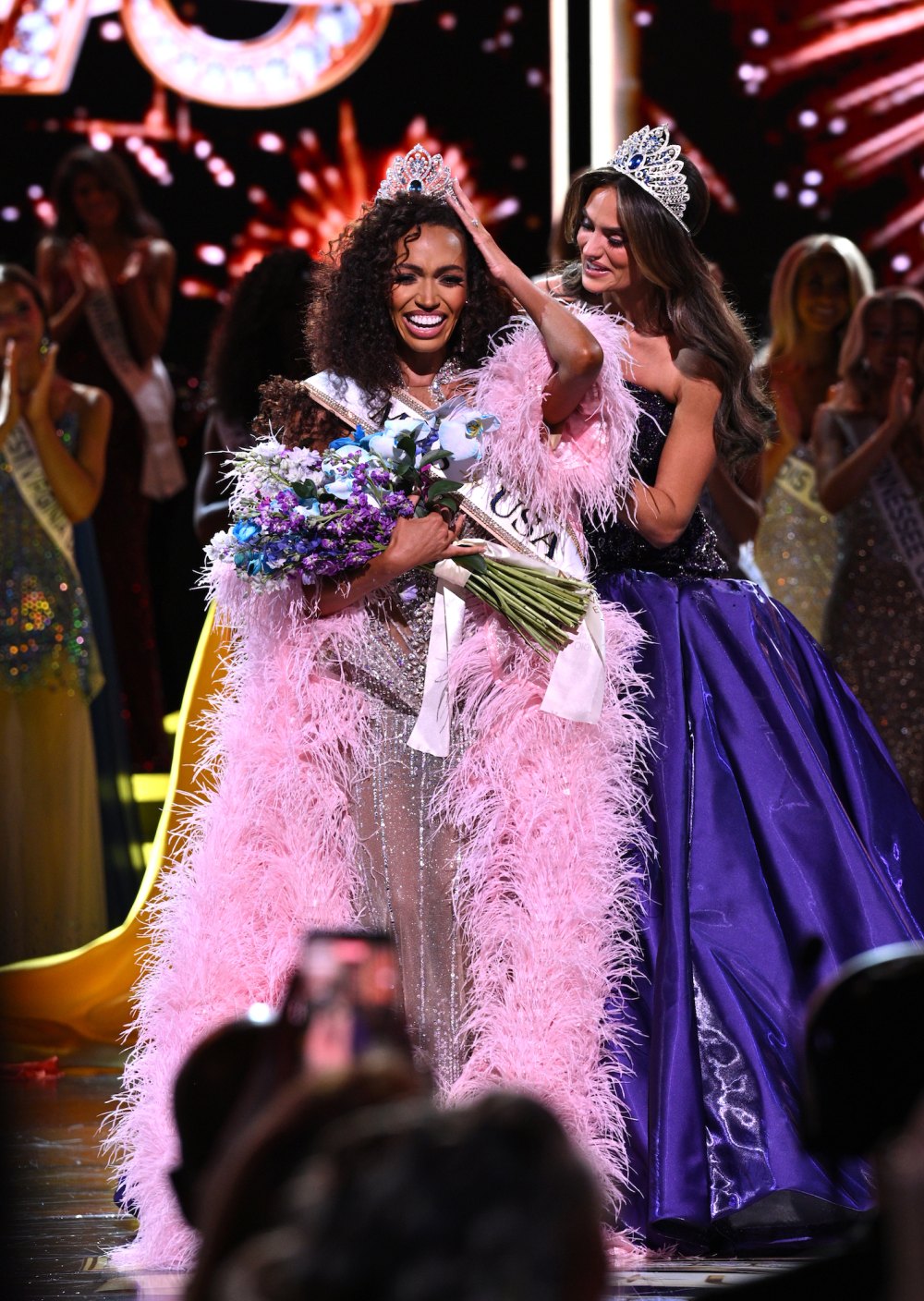
Justus Kelley. (Photo by Ivan Apfel/Getty Images)
The ladies lucky to make it to the final portion of the competition Thursday faced a variety of judges, including The Shade Room founder Angelica Nwandu, Miss USA 2016 DeShauna Barber-Echols, Michelle McLean, Madison Anderson, So You Think You Can Dance choreographer Mia Michaels and celebrity talent manager Steven Grossman.
The seventh and final judge was the viewer at home who had the opportunity to score the contestants live during the Top 20. (Miss USA was streamed live on Queen Beauty Network.)
Ultimately, hosts Ian Ziering and Kenya Moore had the honor of announcing the winner in front of a variety of special guests, including The Valley star and Miss USA 2014 Nia Sanchez Booko.
“Today we will welcome a new Miss USA into the sisterhood 😍,” she wrote via Instagram on Thursday. “I’m honored to be here celebrating the 75th anniversary of Miss USA. Let’s do this!”
Hours before a new Miss USA was crowned, organizers gave thanks to Audrey Eckert for all the work she did in the last year.

Beauty pageants aren’t always pretty. Competitive events from Miss USA to Miss Universe have all had their fair share of scandals and controversies over the years. In 1984, Miss America Vanessa Williams famously gave up her crown after nude photos were published in Penthouse. Years later, in 2006, Miss USA Tara Conner kept her sash […]
“Audrey, from the moment you became Miss USA, you stepped into this role with such grace, strength and authenticity. You brought a warmth and heart to this year that made your reign completely your own 🤍,” organizers wrote via Instagram. “You used your voice to inspire others, led with intention and represented Miss USA in a way that made us incredibly proud to stand beside you.”
The statement continued, “Your reign may be ending, but the impact you’ve made will always remain a part of Miss USA. Your story is only getting started. Once Miss USA, always Miss USA 👑✨.”
The winner of Miss USA has officially advanced to the Miss Universe competition, which will be held in Puerto Rico later this year.
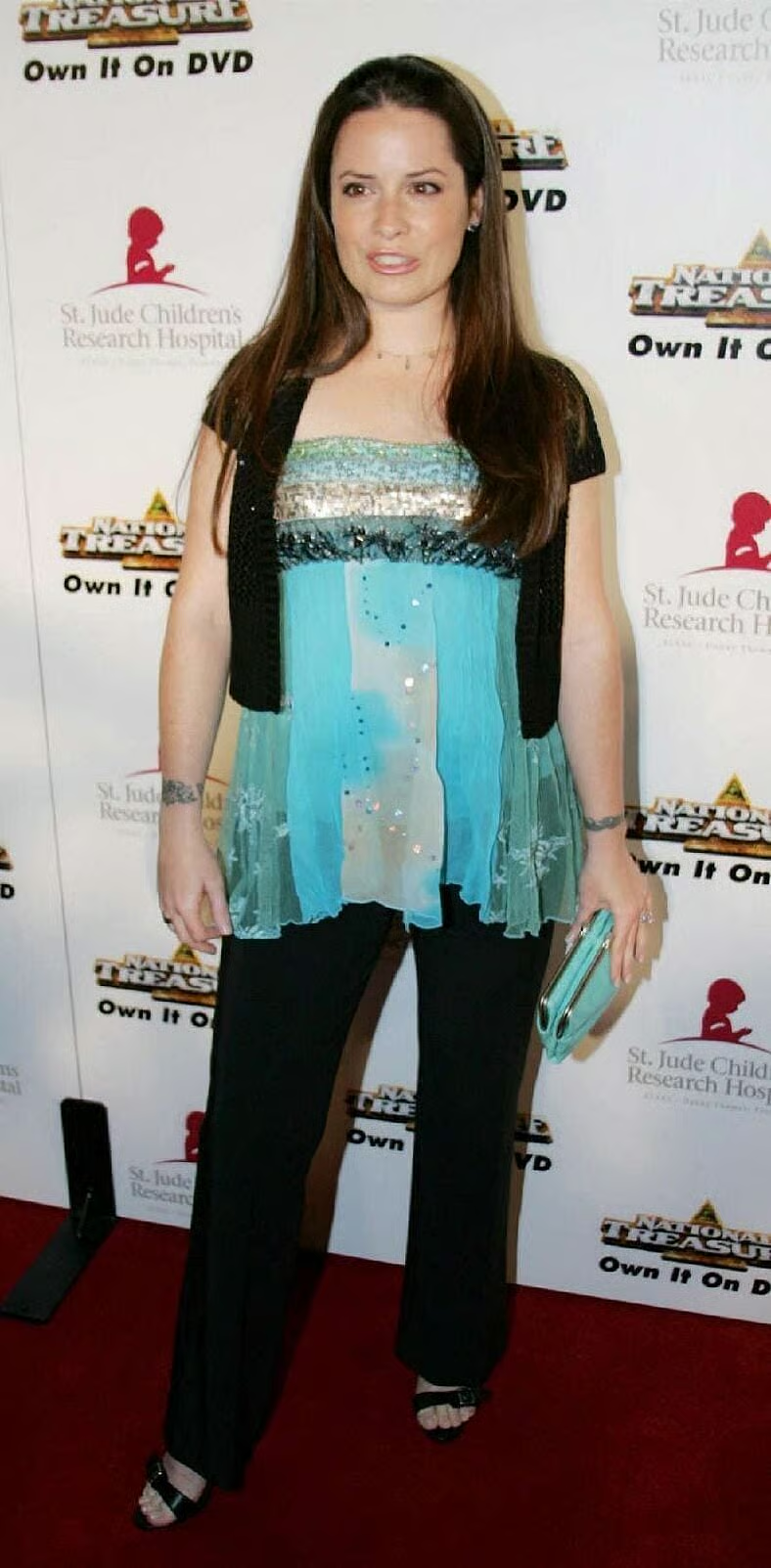
“Charmed” aired for eight seasons on The WB, running from 1998 until October 2006. Now, almost two decades later, one of the stars of the beloved series, Holly Marie Combs, is opening up about why she’s no longer taking roles in Hollywood. This comes after she launched a rewatch podcast dedicated to the show in 2022.

Combs opened up about the current state of her career and her decision to take a step back from Hollywood during a recent episode of her podcast, iHeart’s “The House of Halliwell.” Notably, the “Charmed” alum revealed that multiple factors led her to essentially retire from acting.
She began, “It was a lot of family.” After that, the 52-year-old explained, “During COVID, we had three teenagers. Well, it was three teenagers and a preteen in the house, and it was just mayhem and chaos.”
Then, Combs also admitted that she hadn’t been the biggest fan of some of the roles she had been presented with. According to her, “The stuff that I was getting and coming across my desk was just nothing that I was like, ‘Oh my gosh, this is really great. I need to do this.’”
She added, “And being in, you know, that 40 to 50 range, the job pool gets even smaller and smaller. And I feel like the roles get a little less interesting.”
The ‘Charmed’ Alum Sometimes Misses Acting

Combs continued discussing her career, stating that her friends have attempted to “pull [her] out of retirement.” However, she leads a busy life in Washington State with her husband, Mike Ryan, and three kids. Plus, the actress also owns and operates a barbecue restaurant, Cattle Point BBQ in Friday Harbor, Washington.
Still, despite the fulfilled life, Combs admitted, “I miss it occasionally because, like you said, there’s those moments when you’re involved, and you’re acting and you’re working that are just, I think it’s like being present.”
She then said, “That’s what escapism is. And we get to escape into this different character with a different set of situations than our own life. And there is something about being in that moment that is quite peaceful, even if you’re doing something highly dramatic.”
However, she’s not ruling out a return to the screen once her kids are older. According to her, “I’ll be sitting around with a lot more time on my hands.”
Holly Marie Combs Hasn’t Appeared In A Significant Role Since 2017

Combs may be best known for her role as Piper Halliwell on “Charmed,” but she had a career before and after the series ended. Notably, several years before the WB show began, she appeared in over 80 episodes of “Picket Fences” as Kimberly Brock.
She appeared in several projects after “Charmed,” with the most significant being “Pretty Little Liars,” which ended in 2017. However, as she stated on her podcast, her career shifted in the years leading up to COVID, with her featured in only a “Grey’s Anatomy” episode in 2019, “Pretty Little Wine Moms Re-watch” in 2020, and a COVID-19 special in 2020.
Combs Paid Tribute To Shannen Doherty Following Her Passing

Shannen Doherty starred in the first three seasons of “Charmed” alongside Combs and Alyssa Milano. Sadly, the actress passed away in July 2024 following a battle with metastatic breast cancer. She was 53. Following her death, Combs took to Instagram to issue an emotional tribute to her former costar and “best friend.”
She said, “My better half of 31 years. There is a hollow in my chest, and I can’t seem to catch my breath. A part of me is missing, even though I know exactly what you would say to me right now. I know exactly what you would tell me to do right now.”
After that, Combs spoke about Doherty’s legacy, stating, “I know your undying spirit will live in me and my kids who you loved as your own. They will walk with your sense of purpose and pride. They will be truthful and stand up for what is right. No matter what, and zero f-cks given. Your fire will live on in them and the many other Charmed ones you helped raise.”
She concluded, “My most ardent champion. My loyal protector. My best friend. You taught me the meaning of family. You were and will be forevermore my sister. I love you.”
Shannen Doherty Was Set To Join Holly’s Podcast

Before her death in July 2024, Doherty was set to join the “House of Halliwell” podcast alongside Combs, Brian Krause, and Drew Fuller. The actress had managed to record five episodes, which were released after her passing.
Per Variety, Combs and the other podcast hosts said in a statement, “This show, this character, this podcast meant so much to Shannen she couldn’t wait to share it with Charmed fans everywhere. We want to honor her memory, and fulfill Shannen’s wishes by airing the first five episodes she recorded before her passing.”
It continued, “She was passionate about this project and proud to have played Prue Halliwell; we hope these episodes offer some comfort for everyone who loved her. Prue, your memory remains, and your magic lives on.”
Entertainment
Ridley Scott’s Sci-Fi Masterpiece’s Most Iconic Quote Was Written Hours Before Filming Wrapped
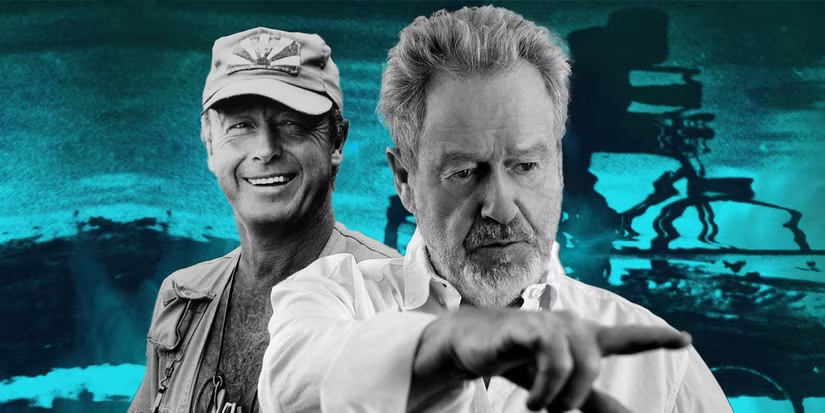
Summary
- Collider’s Steve Weintraub talks with Ridley Scott for The Dog Stars.
- Ridley revisits his iconic career, discussing his process and sharing stories from the sets of Alien, Blade Runner, and more.
- He also discusses his brother, Tony Scott, and his Hollywood legacy, and shares blunt advice for young filmmakers.
At our most recent screening, Collider was proud to invite readers to an advanced showing of Ridley Scott’s new science fiction thriller, The Dog Stars. For the event, Editor-in-Chief Steve Weintraub had the privilege of speaking with Scott for an exclusive Q&A, where the influential filmmaker candidly revisited some of his most iconic contributions to cinema, from his clash with studio executives on Alien to the unscripted origins of one of Blade Runner’s most memorable scenes.
Starring Jacob Elordi and Josh Brolin, The Dog Stars is Ridley’s study on what makes life worth surviving. After a virus devastates Earth’s population, a young pilot, Hig (Elordi), allies himself with a military survivalist, Bangley (Brolin). They create a homestead and protect it against the brutal survivors known as Reapers, living one moment to the next in vigilance. When Hig receives a mysterious transmission, however, he sets out on a mission to track down its source in hopes of a future worth surviving for. The movie also stars Margaret Qualley, Benedict Wong, Allison Janney, and Guy Pearce.
In his conversation with Collider, which you can watch in the video above or read in the transcript below, Scott not only reflects on his own remarkable career, but looks back on his early beginnings alongside his brother, filmmaker Tony Scott, honoring his on-screen legacy. He also discusses his time at the Royal College of Art, how commercial advertising forged his singular process on and off-set, his decades in Hollywood, and more.
Ridley Scott Reveals the Tony Scott Movies He Considers His Brother’s Best Work
“How could we possibly know that the two of us were preparing a threshold for the future in film?”

COLLIDER: Sir, I really mean this sincerely: You’ve directed some of my favorite films of all time. I really want to thank you for your contributions to cinema.
RIDLEY SCOTT: Thank you.
I’m here to talk about you and your work, but I was also a huge fan of your brother Tony’s work. If someone has never seen something by your brother, Tony, what is the first film or films you’d like them to watch and why?
SCOTT: I’m 21. My brother’s 15. Already, I’m giving away the game. I’m at the Royal College of Arts, which is the best art school, maybe in the world today, with such fellow students as David Hockney. Francis Bacon would pop in and lecture us. It’s at that kind of level. I’ve done four years provincially. I’m in my final year, and I discovered a Bolex in a cupboard in the department. I’m doing design, and I say, “Can I borrow the Bolex for the Easter holiday coming up?” “Why?” “I want to fiddle about.” “Well, you can’t. There’s no script. You can’t have the camera.”
So that weekend, bizarrely, I wrote a script. The script was read on the Monday, and the tutor said, “Wow,” and gave me the camera and 65 pounds of spools of negative. I went up north for the Easter holidays to an unsuspecting brother, who all he wanted to do was sit, doing bugger all. I said, “We’re making a movie. You’re in it. You’re going to help me carry equipment and get sandwiches.” We went off to Seaton Carew and made a movie called Boy and Bicycle.
The end of the film was made. The film was pretty good, but during the movie, the boy who’s playing truant for the day summarized the whole experience of the day. Instead of being about freedom, it was about self-examination and reflection of who he is at 15. The kid in this dingy hut says on voiceover, “I’ll remember this day when I’m 80, and it will all seem like yesterday.” Now, that kid was Tony Scott, who would later do Top Gun and Beverly Hills Cop. So, how could we possibly know that the two of us were preparing a threshold for the future in film?
It’s amazing.
SCOTT: That’s still on the BFI. You press a button, you get the film.
So you’re saying Top Gun or Beverly Hills Cop?
SCOTT: No, I’d say The Hunger or One of the Missing. He did two of the best student films I’ve ever seen, and I was in the one, One of the Missing. It was the Confederate Army in the Civil War. We had a cannon — we made it in Yorkshire because they have the only cannon which is Confederate in Yorkshire, so we went and made the film. I won’t tell you about the story, but Tony made that. It’s brilliant.
Ridley Scott Reveals the Moment He Knew ‘Alien’ Was Truly Terrifying
He discusses how The Duellists led to one of the most iconic sci-fi movies of all time.

One of my all-time favorite films, and for so many people, their favorite film is Alien. You never really know when you’re making something how it’s going to turn out and how it’ll be received, so at what point did you realize that this was a very special film that was going to change the game?
SCOTT: By the time I make the movie The Duellists, I’m 40, and I’m on my third Rolls-Royce. I’m very, very well off from advertising. At 38, I realized, “My God, I’m never going to make a movie.” Alan Parker was suddenly making a movie, Adrian Lyne was suddenly making a movie, and they were really my competitors.
I took a public domain story called The Duellists, about two hussars, had it written, paid for that, went to David Puttnam because I couldn’t get it going, and said, “I need help.” David said, “David Picker at Paramount.” We went there. Cut a long story short, we got it made.
The film got a prize at Cannes, and then from that, Sandy Lieberson, who I think was a big agency at that point, spotted the film and said to Alan Ladd Jr., “I know you’re looking for a director for Alien. This is the guy.” That’s how I got the job. So I was fifth choice for Alien. They’d offered it to Robert Altman. How do you offer Robert Altman Alien? He must have said, “What?” So, that’s how I got Alien.
When did you realize that that film resonated with so many people and was a lot of people’s favorite movie?
SCOTT: Even though my reputation in advertising and my position in advertising was major, I went to Hollywood, and no one knew who you were because we only did 30-second pieces of work. Commercial advertising in those days with Alan Parker, Tony Scott, Adrian Lyne, and me, and Hugh Hudson were works of art. We turned advertising into an art form. We influenced the way films looked, for sure.
So, I’m so experienced in that and so not used to having people query what I’m going to do, this and that, and I had a bad time doing Alien because the nature of executive power in Hollywood I’d never experienced before. I never had anyone question me before, so I had to eat it and make the film nevertheless. So, the doing of Alien was not a happy one because I’m the camera operator, as well. But I stood my ground, so I gave as good as I got.
It was a trial. Me shooting was a trial, and I ate the thought that, “Fuck you. How dare you?” Seriously. “Fuck you.” I knew what I was doing. I got [H.R.] Giger into it, and without Giger you would never have the film. Great cast, but without that monster, you don’t have a movie. So I flew to Switzerland and persuaded him and his mother to come with me to Shepperton to make the film.
So, you still don’t know. The film goes out, and it’s a major engine. What I got out of it was, by the time you see it so many times, you kind of get bored, so I’m in screenings in St. Louis, and I walked down the side and watched along the side. And as we approached the famous breakfast scene, people are already doing this [ducks head] because they know something awful is going to happen. Once that egg explodes in his face, they’re now in absolute abject terror, and they haven’t seen the alien yet. And now he’s suddenly on the kitchen table coughing, and people I saw getting down underneath the seat. Now, that is not healthy. I found it quite distressing that it was going that far. So, right there, it sets your responsibility as a filmmaker: should you be going that far? And that was it.
Ridley Scott Reveals How Rutger Hauer Rewrote ‘Blade Runner’s Most Iconic Speech
“Tears came to my eyes.”

I definitely have to touch on Blade Runner because it’s Blade Runner. One of my favorite scenes in the film and one of my favorite scenes in cinema is Rutger Hauer on the roof delivering the “Tears in Rain” monologue. I’m just curious if you could reminisce a little bit about filming that scene. Did you realize at the time how much the dialogue of what he was saying was going to resonate, with the rain and the way you filmed it?
SCOTT: Of course, because I’m so experienced by now, between 2,000 commercials, The Duellists, Alien, Blade Runner. Are you kidding? These are the first three films. And I cast Harrison Ford, who hadn’t really emerged yet, and hadn’t cleared away from the Millennium Falcon, and his film, Indiana Jones, hadn’t come out.
The night they were going to pull the plug on me, this is the last night, and they’re pulling the plug, and it was 1:00 in the morning, and Rutger said at lunchtime, “I’ve written a speech. Can you come around to my trailer? I want you to hear it.” So I go around, and instead of Hampton Fancher’s “It’s time to die,” there’s this thing: “I’ve seen things you people wouldn’t believe.” The poetry. And actually, I don’t know if it was because it was 1:00 in the morning, but tears came to my eyes, and I said, “Dude, we have to do it. You’ve got to do it.”
He went out there, and it was pouring rain. He sat there and gave this beautiful speech. Harrison gamely and appropriately sat there and absorbed it and took it in. Then it followed with Gaff saying, “It’s too bad she won’t live. But then again, who does?” Some exec said, “What the fuck does that mean?” I said, “It means you’ll die, you moron.”
Trust me, this is going in a book. I mean, it’s crazy what happens. It’s really, as well, probably my all-time, staggering genius — at 21, he made Citizen Kane; I made Boy and Bicycle for £65 at 21. Not even the same shadow of his shoe. So, that’s genius.
Do you have a favorite filmmaker or a favorite film?
SCOTT: I would have to go way back to Citizen Kane. [Akira] Kurosawa. The Norwegian [Ingmar Bergman], almost everything he did — Wild Strawberries, The Seventh Seal, etc. All of that. David Lean. David Lean’s Great Expectations through to Lawrence [of Arabia]. They are major, major, major filmmakers, where everything was just right.
Then came along Stanley Kubrick, who blew me away, not with the first World War film, but more with, but more with, honestly, 2001. Now, 2001, I was working down in the city. At lunchtime, I snuck out, saying, “I don’t feel well,” and I went to a theater for the first week. The theater was empty, so I sat in the 70-mm theater with an empty room, packed a cigarette, and watched 2001. People aren’t aware of this, but it was the first time a computer was ever mentioned and housed AI, and the massive message from the film is that the company, the corporation, feels that the information from the journey is more important than the crew. They’re expendable. So, we use that in Alien.
Kubrick’s a genius, and so ahead of everything in terms of what he put on film.
SCOTT: I previewed Blade Runner, and it was disastrous. “Why is it always raining?” And I’m sitting there thinking, “Fuck you.” I promise I didn’t invent a world of grunge that people hadn’t seen before. I’m taking from New York and Hong Kong because New York at that point was scruffy, dirty, and filthy, and Hong Kong was medieval.
Later this year, at the Governors Awards, the Academy of Motion Picture Arts and Sciences will give you an honorary Oscar, which is about fucking time.
SCOTT: It is about fucking time.
What does it mean to you getting this Oscar later this year?
SCOTT: It means a lot. I mean, I have to be graceful and say, “Yes, it’s terrific. Thank you very much.” A few people lobbied for me to get this, and I thank them, and I am honored.
I love IMAX. Why is it so important to you that people watch [The Dog Stars] in IMAX?
SCOTT: Because I’m an image maker and images are my life. Images, honestly, can be as strong as a verbal narrative, sometimes stronger. I think Lyne was probably one of the great exponents of the image, where the dialogue was secondary. The story is traveling with the image, right? Usually with orchestration and music. But with image, the larger the screen, the better. It’s that simple. If it was wrap-around, bring it on.
I love IMAX and the way it brings you into the movie. You’ve worked with actors like Russell Crowe, Denzel Washington, Sigourney Weaver, Harrison Ford, Joaquin Phoenix, Matt Damon. It’s a massive list of people. Who challenged you the most creatively while making a movie?
SCOTT: Oh, none of them, really. They were all, at the time, new. Relatively. Sigourney brand-new. Russell, three films in from L.A. Confidential. Russell was cast with my friend Michael Mann, who’s editing the thing about the tobacco industry. He said, “I know you’re going to do the Roman Empire. I know you’re going to do sword and sand, and everyone’s waiting for it to be a disaster, but I know you’re going to pull it off. You should meet this guy. He should be your leading character.” So I met with Russell and history was made.
Yeah, that movie turned out kind of okay.
SCOTT: Yes. [Laughs]

You shoot with a lot of cameras. You have a very unique way of working. It clearly works. What’s the biggest mistake a director makes when they spend months over-rehearsing actors?
SCOTT: I mean, every man for himself. Every man has his own way. I neither had a film school nor did I have an acting school or a drama coach. I was a very, very good designer, which I adored. I got a big job at BBC. I didn’t even go as an assistant; I went straight as a designer. I was in there as a major designer because I got first-class honors from Royal College of Art, and all that nonsense, and I majored as a designer.
I used to scare the shit out of directors because I’d design a set like that, and they’d shoot in the corner. I said, “Listen, I don’t mind you shooting in the corner on two chairs, but tell me. I don’t want to waste money building a fucking set.” So, I was called into the employment division of BBC, and he said, “Listen,” he said, “You scare the shit out of directors.” I thought, “Oh, here we go.” He said, “How do you feel about a BBC director’s course?”
So, I got a director’s course that lasted six weeks. I learned process and six cameras, live, in studio work. You’re allowed to do a short program of your choice to see what you’ve learned. They don’t go out; everyone watches the next take. Because I’m a designer, because I’m an operator by then, as well, I do a potted version of Paths of Glory — and I pulled it off. So, I got a TV show on Monday. That’s what happened. It’s crazy.
It’s crazy.
‘The Dog Stars’ Is More Interested in What Makes Life Worth Living
“There was an in-built, subtle but beautiful optimism.”
You’ve made survival stories before, from Alien to The Martian. What did The Dog Stars allow you to explore about survival that those films didn’t?
SCOTT: You look into yourself. I think, as a survivor, I would make sure I did. I would react in a way that would protect me. Because I’ve been under that situation before — I’m not going to tell you what it was — but I had to, I had to pull a gun, and it worked. So I had to arrest people. Seriously. So, I know I’ll do it. That’s it. That’s the answer. I was tested, and I would do it.
You’ve made plenty of films about people trying not to die, but The Dog Stars seems more interested in asking what makes staying alive worthwhile. Was that distinction important to you?
SCOTT: Dog Stars, to me, was surprising in that there was an in-built, subtle but beautiful optimism — a man who could only remember how lucky he was to have a wife and a dog. Then he lost the wife, but he still had the dog as the memory of the wife. He wondered where he could go next.
Again, the humorous side of the trip was Bangley, Josh [Brolin], and he, it’s the odd couple. It’s Jack Lemmon and Walter Matthau. I think Jack Lemmon says, “If you tidy up that ashtray one more time, I’m gonna brain you with it.” So, it’s two men who were thrown together having to live together, and the appearance is they irritate each other, but actually, when Hig says, “I’ve got to go. I’m going to leave,” suddenly the tough guy gets vulnerable and says, “You know, you might have told me.” [Laughs] And when he leaves, he bangs on the window to say, “I’m sorry you lost your dog.” He does that and walks away. Right there, it’s very touching, but it’s humorous.
It helps when you have two very talented actors.
SCOTT: I’m always looking for an edge into humor, wit.
Sure. How did you decide how much of the apocalypse to show versus…?
SCOTT: Well, “apocalypse” suggests an explosion.
How much of the virus to show?
SCOTT: Well, a virus and the 2008 financial abyss — if you’d had an apocalypse happen right there, maybe the group that looks after whether we should be taking injections or not collapses so suddenly, you’d have a wave of fear. Once you have fear, you have anarchy, and then you’d have chaos in a heartbeat.
I felt in 2008, I could feel and see the financial abyss that all the banks looked at, as well. It’s stupidity and greed. So in the film, if you really want it, it’s all there. Right now, globally, in third-world countries, this happens worse than I portrayed in the film every day as we speak. People don’t know that. They’re that stupid.
Ridley Scott’s Advice to Young Filmmakers Is Exactly as Blunt as You’d Expect
The filmmaker also discusses his process, from the edit to collaborating with cinematographers.

I love talking about editing because it’s the final rewrite and it’s where a movie comes together. Say you get in the editing room with this. Who do you trust for honest feedback?
SCOTT: They don’t. We don’t speak. I sit in the rushes. And I’ve seen it. I’ve seen my rushes in the trailer. I’ve got eight cameras. I’ve got eight monitors. So, I’ve seen it. So before I say, “Right, move on,” I go, “Roll it. One, two. Two, two. Three, four. I’ve got it.” So I’ve cut it in the editing room and in the trailer.
Now, you can only do this if you’ve got a very good editor. I then don’t go near that. Every Saturday, I go in to see where we are now. Good editing is more in the rough cut. You’re feeling the scene. And even great editors are already laying on a little bit of possible score. All great editors have ears for music.
Then, by the time I finish a film, I will then say, “I want to see the director’s cut in three weeks.” Not nine months. Not six months. Three weeks, I’ll see the director’s cut.
When you have a cut like that, who do you like to show it to who will give you honest feedback?
SCOTT: Well, I’m the good feedback. I’m very self-critical, so when I’m watching the cut, do not look down to write on a piece of paper because you’re missing the fucking film. I tell the studio sitting with me, “Don’t write. I’ll just say ‘there,’ and you make a note.” So I’m watching it, going, “There. There. There.” Afterwards, with the footage number, I go right in and look at him and say, “What was wrong here was…” So, I’m in a way a clean computer. I’m not glued up with sitting in the dark in an editing room where all you do is get stodgy.
Same with the mix. I used to sit in the mix. In all the houses, the mix gets louder. Your ear goes in and says, “Is that loud enough?” when you’re way beyond what you should be. So, I keep clean and go in when they’re ready to watch it. I can be a perfect critic, going, “That, that, that.”
You could work with any cinematographer you want, but you worked with Erik Messerschmidt. You’ve worked with him in the past. What was it about Erik’s work that said, “I want him for this?”
SCOTT: All of it. I tend to watch good people do good things. [David] Fincher used him a lot, and Fincher’s great. So I watched that and thought, “Hmm.” Then he finished with Fincher, so I said, “Do you want to go?” And he said, “Sure.”
Dariusz Wolski and I have done five films together. I think he’s getting a bit fed up with me telling him where I want to put the camera. Then John Mathieson said that silly thing, so I went to Erik, and I said, “You want to do it?” He said, “Yeah.” So he was in shock I was doing two takes — from David Fincher.
I’ve heard from many people that they have to get used to your style, which is a lot of cameras and fewer takes, but you have all that coverage.
SCOTT: Listen, personally, I’ve already done 2,000 commercials. I did the big one for Steve Jobs, the first one he ever did in 1984. It’s the first time Jobs ever advertised his computer. It’s a major ad.
It’s one of the most famous commercials of all time.
SCOTT: That’s it. That was the year I was well into doing commercials, but I’m done. And then I was asked to come back, and I went back and did it. But I think with all that, you become so sophisticated in communication and what you can get away with, and what you don’t need. So, I’m very aware of that. So in my boards, I tend to do a bit of the elimination in board form.
The other thing I’m curious about is there must be people watching this Q&A who are up-and-coming filmmakers who will eventually tackle their first big movie. You’ve tackled so many of them. If they were in the room right now, what advice would you share with them on what to do when making your first big film?
SCOTT: Don’t do a big film. Do a small film. Grow into a big film.
But if they’ve done smaller films, and they’re now making their first big movie?
SCOTT: Then be relentless, be a jerk, and don’t give in. There will always be somebody telling you what not to do. If you’ve done a film by then, you already know a lot.
The Dog Stars is in theaters and IMAX now.

- Release Date
-
August 28, 2026
- Runtime
-
119 minutes
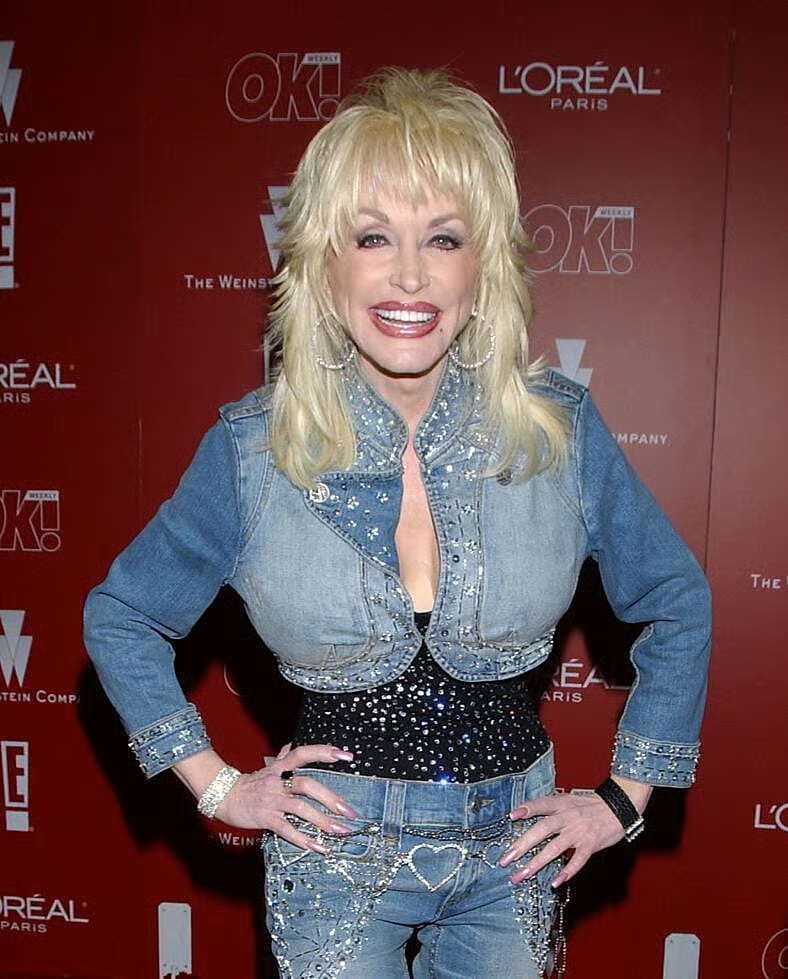
Ricky Schroder is facing criticism after using his tribute to Dolly Parton to highlight their differences over transgender rights and COVID-19 vaccines. The actor shared a photograph taken with the country music legend while remembering the two television movies they made together. However, his decision to bring politics into the tribute quickly overshadowed his message about Parton, with critics accusing him of using her death to promote his personal views.

Schroder shared his tribute on Instagram, posting a photograph taken with Parton years before her death. Rather than focusing exclusively on his memories of working with the singer, the actor emphasized that they did not agree on certain social and political issues.
“I didnt agree with her advocating for Transgender & Covid Vaccine support…but Loved her anyway. Thank you for choosing me, Dolly, to be your Movie Daddy,” Schroder wrote.
The post immediately generated criticism in the comments section. Many social media users questioned why Schroder felt it was necessary to mention their differences while paying tribute to Parton following her death at age 80.
“Just when I thought there was no one lower than our current president, you just took the cake,” one user wrote, refering to President Donald Trump and his outspoken views. “How can anyone say anything tacky about Dolly? One of the most loving people ever. Something you could use more of. You’re in my prayers Ricky.”
“Imagine being the first (and probably only) person in the whole world to post something negative about Dolly. NOT COOL,” another wrote. “Keep politics, advocating or any other issues off the table when speaking about people that just passed away. It’s called decency, honor and respect,” a third commented.
The Actor Played Dolly Parton’s Father
Schroder’s relationship with Parton was primarily professional. He portrayed her father, Lee Parton, in the 2015 NBC television movie “Dolly Parton’s Coat of Many Colors.”
The movie was inspired by the singer’s childhood in rural Tennessee and the story behind her famous song of the same name. Schroder returned to the role in the 2016 sequel, “Dolly Parton’s Christmas of Many Colors: Circle of Love.”
Parton served as an executive producer on both movies and appeared as herself in the second installment.
Dolly Parton Avoided Taking Political Sides

Parton spent much of her career avoiding partisan political debates, even as her image and work connected with people across the political spectrum. The country legend’s flamboyant style was embraced by members of the LGBTQ community and frequently celebrated by drag performers. She also starred in the 1980 workplace comedy “9 to 5,” which became associated with women’s empowerment and workplace equality.
Despite that connection, Parton did not typically describe herself using political labels. She preferred to identify as a “woman in business.” The singer explained her approach during a 2020 interview with USA Today. “I don’t like to get involved in politics, because first of all, I have as many Republican fans as I do Democrats,” Parton said. “I don’t want to offend anybody, I have a right to myself.”
Her decision to remain publicly neutral did not mean she avoided discussing personal responsibility or the importance of treating others carefully. “Like God gave us free will, America gave us free speech, but you’ve got to be responsible for anything you say and do,” she added.
Country Legend Helped Fund COVID-19 Vaccine Research

Schroder’s reference to Parton’s vaccine support appeared to concern her contribution to research that helped produce Moderna’s COVID-19 vaccine. The singer donated $1 million to Vanderbilt University Medical Center in 2020 to support coronavirus research. Parton later received the Moderna vaccine at Vanderbilt and encouraged others to do the same.
Her representatives highlighted that contribution while announcing her death, describing it as one example of her commitment to helping people. “Whether it be the hundreds of millions of books donated through her invaluable Imagination Library or funding research that helped create a lifesaving vaccine used around the world, Dolly’s unconditional love for all people was the guiding force for her lasting impact. After bravely facing a brief battle with cancer, Dolly departed her Earthly life today at the Vanderbilt-Ingram Cancer Center surrounded by loved ones,” the statement read.
Parton’s support for medical research was part of a much broader philanthropic legacy that also included childhood literacy, disaster relief and healthcare.
Dolly Parton Died Following A ‘Brief Battle With Cancer’

Parton died on Tuesday, August 25, at Vanderbilt-Ingram Cancer Center in Nashville. Her nephew, Bryan Seaver, announced her death in an Instagram video on behalf of the Parton and Owens family. Representatives for the country icon later confirmed to PEOPLE that she had faced a “brief battle with cancer.” The specific type of cancer was not disclosed.
“Our beloved Dolly Parton spent her life and career bringing joy, laughter, hope and integrity into everything she touched. Her unmatched generosity reached the lives of countless people whom she would never meet, yet she was always there to offer a helping hand,” the statement read.
Parton had been admitted to Vanderbilt-Ingram Cancer Center on Friday, August 21, four days before her death. Before her hospitalization, she had reportedly been dealing with kidney and autoimmune issues. Her representatives did not disclose whether those health problems were connected to her cancer diagnosis.
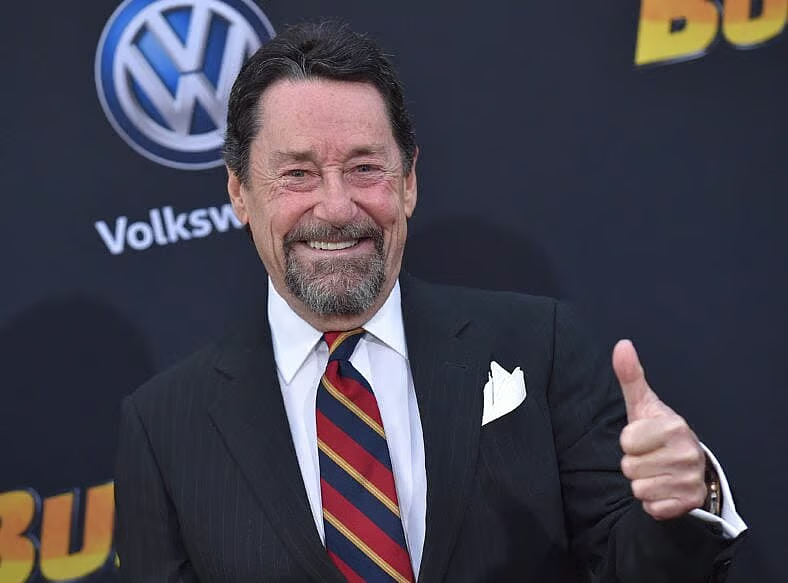
Peter Cullen, the legendary voice actor best known for bringing Optimus Prime to life across the “Transformers” franchise, has died at age 85. Cullen reportedly died Wednesday at his Los Angeles home, where he was surrounded by members of his family. A cause of death has not been disclosed.

Cullen’s agent confirmed his death to TMZ, while his family released a statement honoring the compassion and integrity that defined his life and most famous character.
“Peter Cullen passed away peacefully, surrounded by his loving family – and held in the hearts of his many friends and countless fans worldwide. His family asks that you honor his remarkable legacy by serving your communities and leading others with compassion, integrity, and loyalty and always remember ‘be strong enough to be gentle,’” the statement read.
Cullen portrayed the character as a powerful but thoughtful leader who valued courage, loyalty and compassion over aggression. His performance ultimately became inseparable from Optimus Prime, earning him generations of fans across animation, movies, video games and other media.
Peter Cullen Became The Voice Of Optimus Prime

Peter Cullen began voicing Optimus Prime in the original “The Transformers” animated television series, which premiered in 1984. He also voiced Ironhide and several other characters in the franchise.
The actor reprised Optimus Prime in the 1986 animated movie “The Transformers: The Movie,” helping establish the character as one of the most recognizable leaders in animation. More than two decades later, Cullen returned to the role for Michael Bay’s 2007 live-action “Transformers” movie.
Cullen continued voicing the character in multiple sequels, including “Transformers: Revenge of the Fallen,” “Transformers: Dark of the Moon,” “Transformers: Age of Extinction” and “Transformers: The Last Knight.”
He later returned for “Bumblebee” and “Transformers: Rise of the Beasts.”
Cullen Delivered One Of The Franchise’s Most Memorable Speeches

Peter Cullen’s deep, commanding voice was featured prominently during the conclusion of the first live-action “Transformers” movie. As Optimus Prime, he delivered a memorable speech about the Autobots making Earth their new home and secretly protecting humanity.
“With the Allspark gone, we cannot return life to our planet,” he began. “And fate has yielded it’s reward, a new world to call home. We live among its people now, hiding in plain site but watching over them in secret… waiting…protecting. I have witnessed their capacity for courage, and though we are worlds apart, like us there’s more to them than meets the eye.”
The monologue ended with Optimus sending a message to any surviving Autobots still hiding among the stars. “I am Optimus Prime, and I send this message to any surviving Autobots taking refuge among the stars: We are here. We are waiting,” he said.
Peter Cullen Voiced Eeyore And Other Beloved Characters

Although Optimus Prime became Cullen’s signature role, his voice could be heard across numerous popular television shows and movies. He voiced Eeyore in several “Winnie the Pooh” projects and played Monterey Jack in “Chip ‘n Dale: Rescue Rangers.” He also provided the voice of KARR in “Knight Rider.” Nintendo fans may also recognize his work as Mario in the original “Donkey Kong” animated series from the 1980s.
Cullen’s work extended beyond traditional dialogue. He provided the vocal effects for the alien hunter in the 1987 film “Predator,” starring Arnold Schwarzenegger.
Peter Cullen Received A Lifetime Achievement Award

Cullen’s contributions to children’s entertainment were formally recognized in 2023 when he received a Lifetime Achievement Award at the Children’s & Family Emmy Awards. The honor celebrated a career that stretched across more than six decades and included hundreds of performances.
He was also nominated for a Daytime Emmy for portraying Optimus Prime in the animated series “Transformers: Prime.”
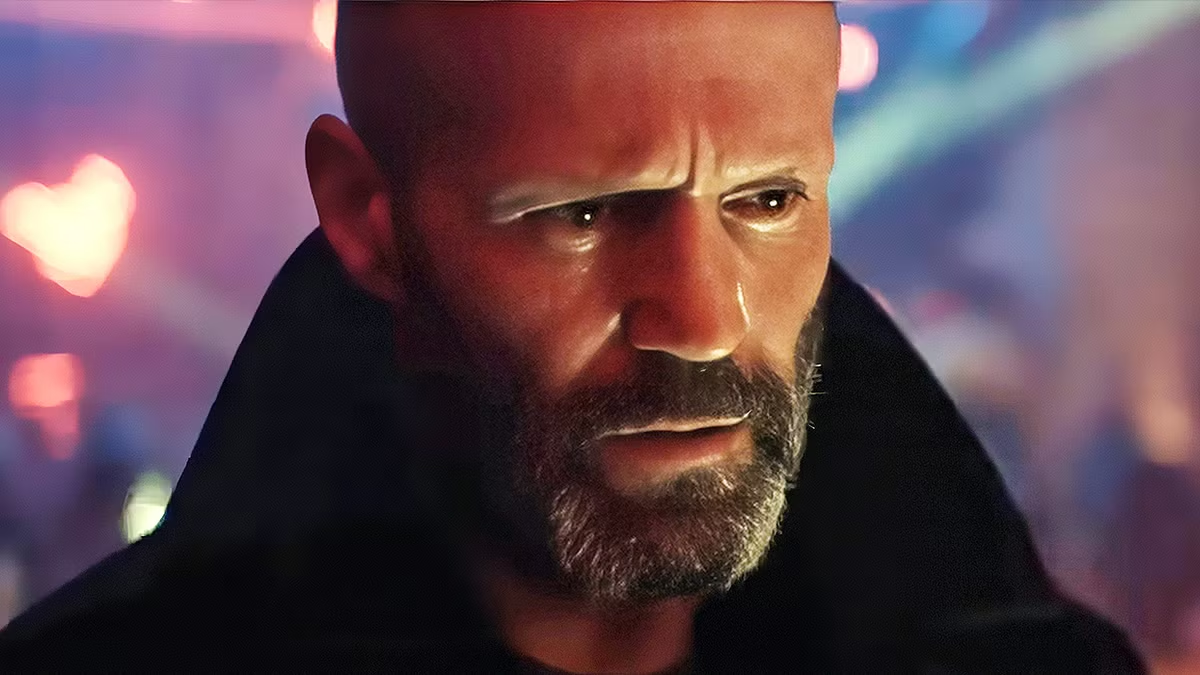

Like so many Prime Video and Apple TV movies that are given theatrical runs, Jason Statham‘s action vehicles also find success at home. Virtually every movie that he has starred in recently has done exceptionally well on the PVOD market, delivering uncommonly robust results for studios. This is why he’s one of the most sought-after action stars in the business. The box-office run that his movies are given — Statham has never starred in a streaming original — is mainly advertising for their eventual home-video release. His latest film, Mutiny, is likely going to fall short of the $20 million mark domestically, but it’s poised to redeem itself when it lands on digital, much like the actor’s other 2026 release has done.
The movie in question debuted theatrically in January, when it made just $5.5 million in its domestic debut and ended its run with less than $14 million. Globally, the film grossed $53 million against a reported budget of $50 million. This is roughly the same result as Statham’s 2023 crime caper Operation Fortune: Ruse de Guerre. He has had a couple of major outliers in the last five years — aside from Meg 2: The Trench, which was a franchise film, Statham headlined The Beekeeper, which made more than $160 million worldwide. Mutiny, on the other hand, has only grossed around $15 million worldwide so far, against a reported budget of $40 million. It holds a 50% critics’ score and an 86% audience score on the aggregator website Rotten Tomatoes, which indicates a healthy home-video run ahead of it.
Jason Statham’s Fans Have a Large Appetite for His Movies at Home
Movies with higher audience scores tend to do well at home, and the performance of his earlier films has shown that Statham’s audience tends to wait for his movies to hit PVOD. The Beekeeper, for instance, has a 92% audience score on Rotten Tomatoes, while A Working Man is sitting at an 87% audience score on the aggregator. The other 2026 release that he starred in, Shelter, has an 87% audience score as well. According to FlixPatrol, the movie is currently ranked number two on Prime Video’s global viewership chart, where it’s trailing only Masters of the Universe.
You can watch Shelter at home and Mutiny in theaters. Stay tuned to Collider for more updates.

- Release Date
-
January 30, 2026
- Runtime
-
107 minutes
- Director
-
Ric Roman Waugh
- Writers
-
Ward Parry
- Producers
-
Greg Silverman, Jason Statham, Jon Berg, John Friedberg, Brendon Boyea
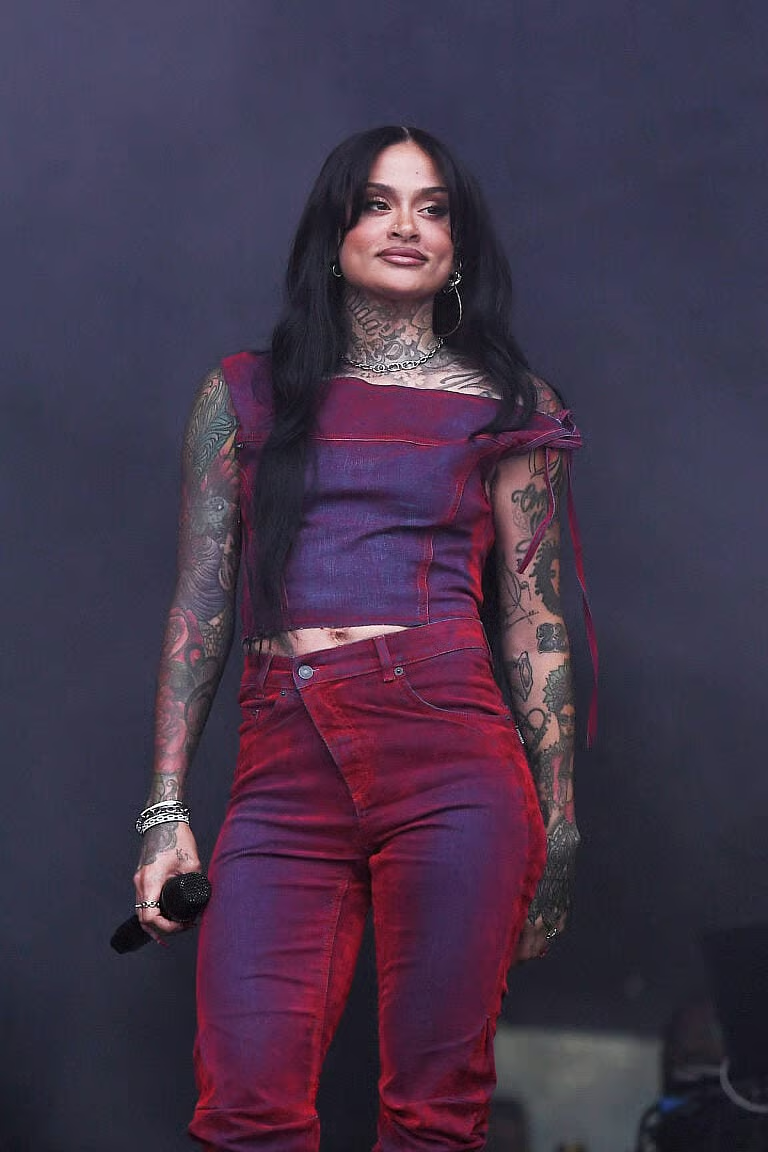
It’s vocal cords’ rest time for Kehlani!
The singer recently announced that, due to a health issue that suddenly sprang up, she would be sitting out two of her scheduled shows.
This comes over a year after Kehlani Ashley Parrish, known mononymously as Kehlani, revealed her bipolar disorder diagnosis. Since coming out with the mental health issue, she has spoken about how she keeps herself in check and manages the condition.
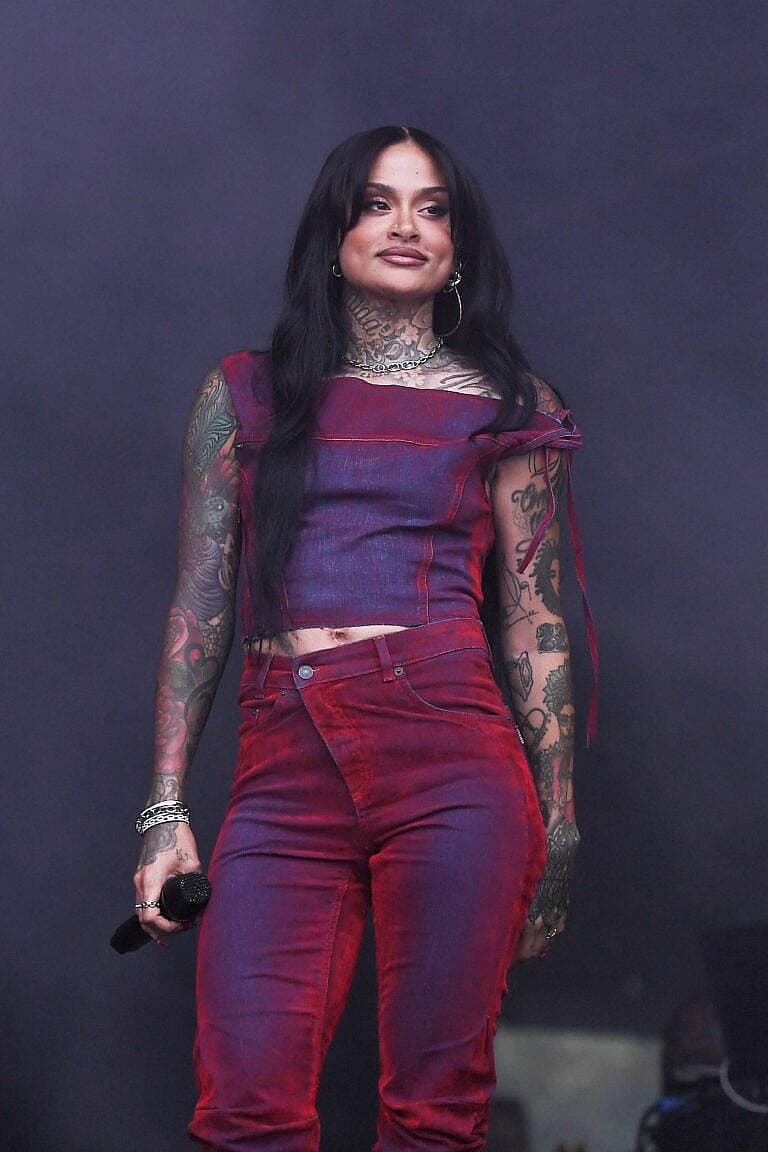
Kehlani shared an update that fans who were probably already counting down the days to her next two shows were not expecting. The singer revealed via an Instagram post that her health had taken a low blow, and after being examined, she was not cleared by medical personnel to sing.
She detailed that after her two off days, during which she felt “completely normal,” she suddenly was unable to swallow and was in so much pain. The discomfort kept the “Folded” hitmaker up all night, and she had to go to the hospital.
Kehlani dropped the bombshell, apologizing to her fans in Camden & DC because she was “not cleared to sing for the next two shows.” The musician noted that her team is working on a solution, adding that canceling the shows was no easy decision for her.
Fans’ Mixed Reaction To The Songwriter’s Health Update
“I do everything I’m supposed to to ensure my health stays up to par & it still isn’t guaranteed,” she wrote before informing fans that the next time she will be on stage will be in Virginia. Kehlani’s post was a slideshow with two images of an exam room at the hospital.
Fans were split over the singer’s comments, with some offering thoughts and prayers and others expressing their disappointment. “Kehlani, I love you, but the show was supposed to start in like 3-4 hours,” a fan wrote, with others replying that her move was “so unprofessional.”
Several fans wrote about how they had prepared to attend the show by traveling out of town, taking time off work, or working an extra shift to make up for their planned absence. Some netizens asked if they could switch their tickets to attend her Virginia show, while others requested refunds since Kehlani did not address the topic in her statement.
On the other hand, supporters expressed concern for the artist, writing “Get well soon, love,” “Sending love and healing, Keh,” while others advised her to rest. A few comments were from internet users who dropped home remedies for a sore throat while wishing her a speedy recovery.
Kehlani Detailed The Routine She Follows To Manage Her Bipolar Disorder
In April 2025, Kehlani revealed that she was diagnosed with bipolar disorder and borderline personality disorder (BPD). Living with the condition, it is apparent that she stays on top of her mental health. The songwriter recently detailed the non-negotiables she lives by to maintain balance with her condition in a Billboard cover story.
“I take medicine. I have to go to the gym; it’s not an option,” she noted, adding that she takes walks, does yoga, and spends ample time in nature. “[I] sit in the park or go wiggle my toes in somebody’s grass. I have to build a relationship with God. I have to pray.”
Kehlani disclosed that sticking to a routine is necessary largely because of her career in the music industry. She noted that with the hard work she puts into creating music and building her career, she can only survive by keeping to “a routine supporting my wellness.”
The ‘Folded’ Vocalist’s Activism Led To A Canceled Performance
Kehlani was scheduled to perform at Cornell University’s annual Slope Day on May 7 last year. Less than a month before the performance, the institution released a statement that her concert was canceled over her past pro-Palestine statements.
According to The Hollywood Reporter, Cornell President Michael I. Kotlikoff wrote in a letter to the student body, addressing the issue. The letter claimed that plans for Kehlani’s presence at the event had “injected division and discord” among the students.
Kotlikoff also alleged in the letter that several students had expressed that they were “angry, hurt and confused that Slope Day would feature a performer who has espoused antisemitic, anti-Israel sentiments in performances, videos and on social media.”
The letter also noted that every artist has the right to express “hateful views,” but Slope Day was about celebrating unity in the community and not division.
Kehlani Was Vocal About Her Support For Palestine
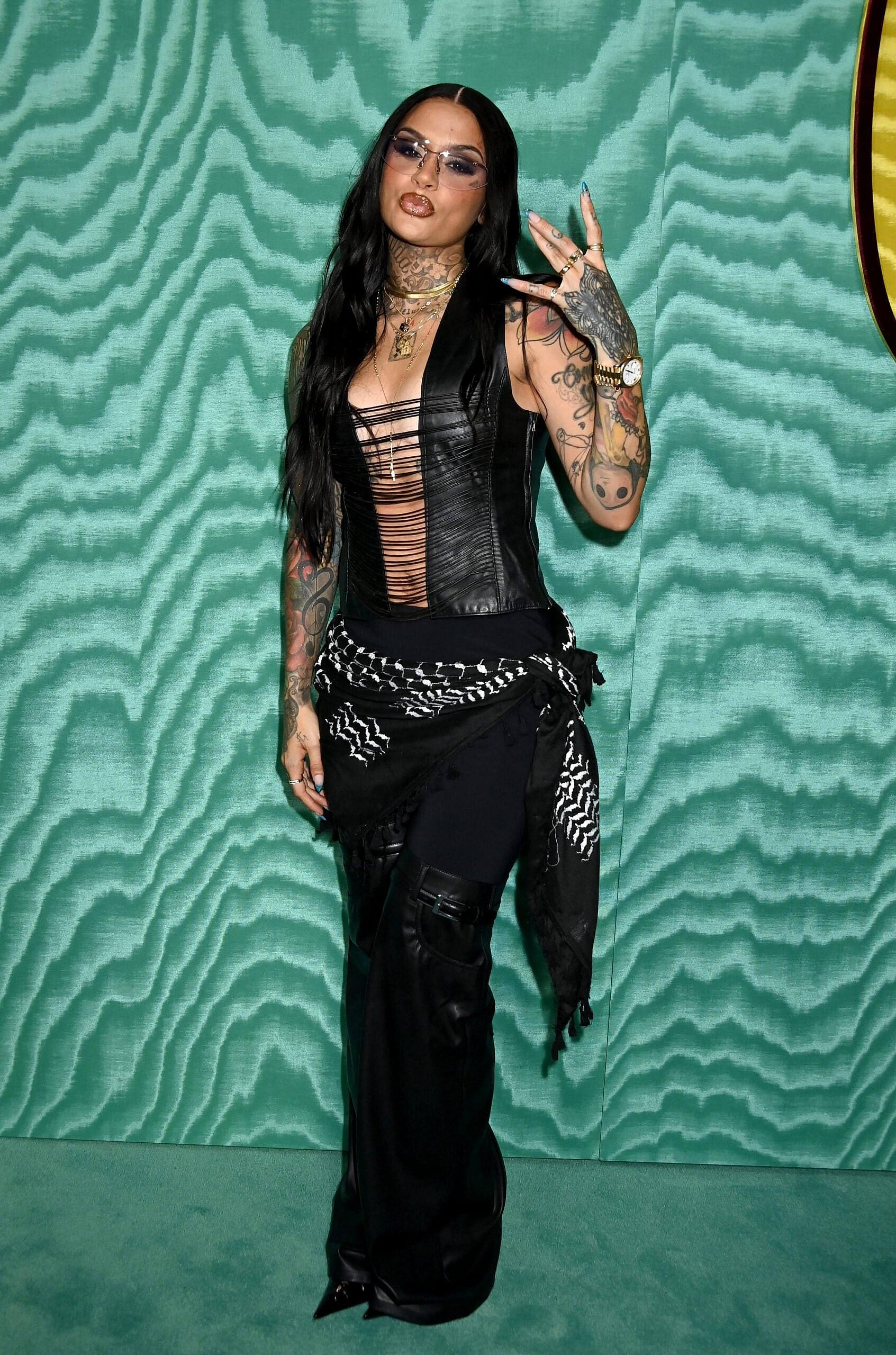
The mom of one showed her support for Palestine on public platforms and even through her music. In a music video for her song “Next 2 U,” she began the video with “Long Live the Intifada,” before dancing and singing in front of a Palestinian flag in some of the scenes.
During the 2025 American Music Awards, she spoke about the violence in Gaza on the red carpet. She said supporting the “Free Palestine” movement should come as second nature to all, as many innocent lives were killed. Kehlani received backlash for her comments, especially on social media, where users labeled her as “a Nazi” and “a moron.”
The Blast reported that the former Poplyfe member clarified that she is not “anti-Semitic nor anti-Jew”; however, she is against the extermination of an entire people as well as the bombing of innocent children, women, and men.
Get well soon, Kehlani!
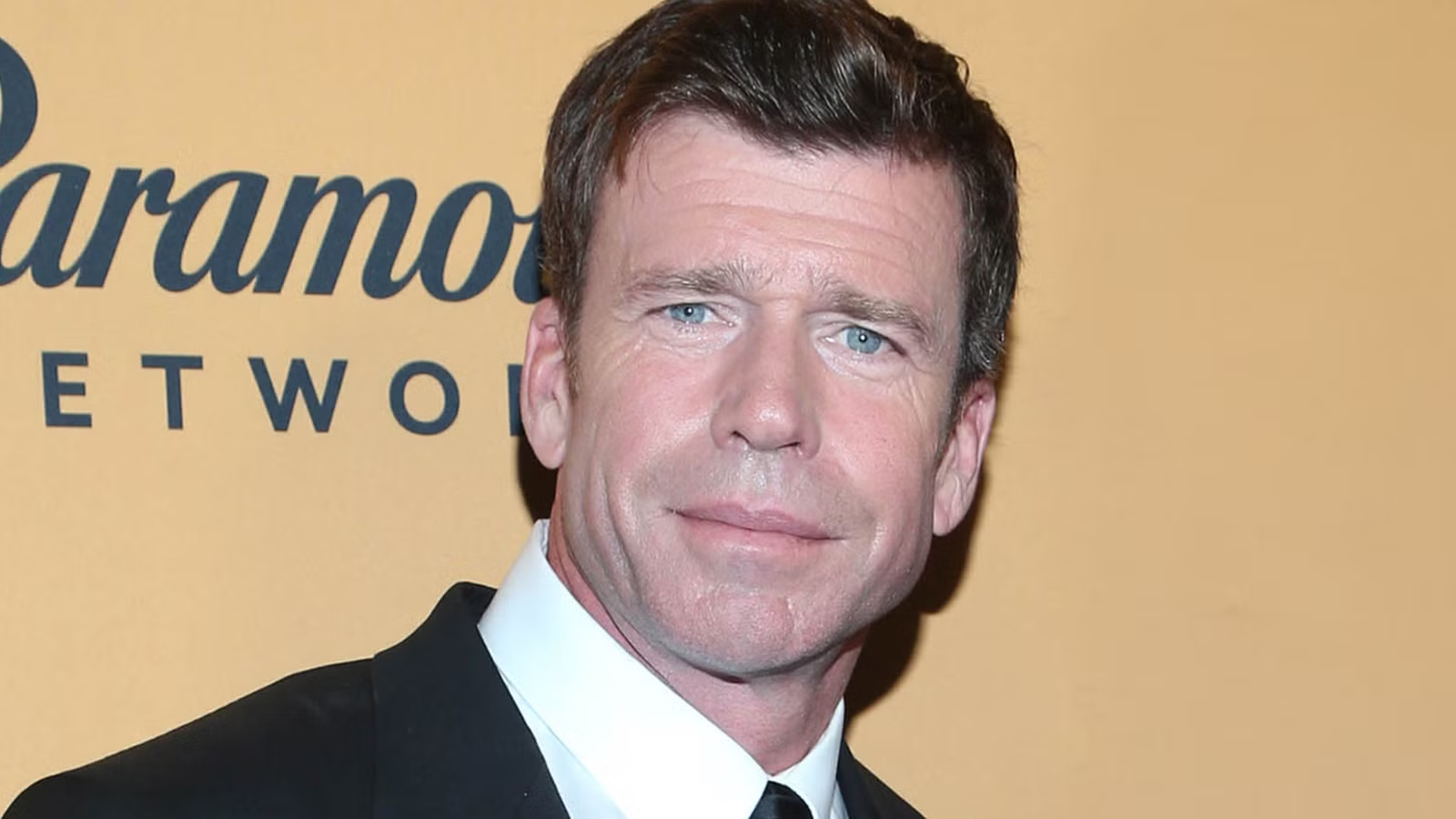

Taylor Sheridan has spent the last 6–8 years expanding his television empire at Paramount, but he was writing iconic movie scripts before he ever penned a single episode of hit shows like Yellowstone and Mayor of Kingstown. Sheridan is best known for his work writing Sicario and Sicario: Day of the Soldado, and star Josh Brolin confirmed just last week that a third installment in the franchise is in the works and expected to begin shooting soon. Sheridan is returning to his movie-making roots in the next two years with films like F.A.S.T., a new drug crime thriller starring Jason Clarke and Sam Claflin. He’s also been tapped to write the script for the new Call of Duty movie coming to Paramount in 2028 — Peter Berg is directing from Sheridan’s script, and Sheridan is also producing the action feature.
It’s Sheridan’s work producing Yellowstone offshoots like Marshals and Dutton Ranch that has put him in the spotlight in 2026. He has other non-Yellowstone shows that have attracted large audiences in recent years. One of said series’ is Tulsa King, the gritty, Oklahoma-set crime thriller starring Sylvester Stallone opposite a host of other legendary actors as old mob bosses. It’s now been almost a full year since the third season of Tulsa King was added to Paramount Plus, and fans expect that news about a Season 4 release date will be coming any day now. Tulsa King star Sylvester Stallone took to his active personal Instagram earlier this year to confirm that Tulsa King had wrapped filming and was in the editing stage — this was in April, so the show is certainly ready to return soon.
Is ‘Tulsa King’ Getting a Season 5?
Paramount has yet to publicly announce the fate of Tulsa King beyond Season 4, but there are a few things worth noting when thinking about the future of the show. Taylor Sheridan has never written a show that lasted beyond five seasons — both Yellowstone and Mayor of Kingstown called it quits at Season 5, so even if Tulsa King is picked up for another season, it’s likely that it would be the final batch of episodes. There is a Tulsa King spin-off, Frisco King (starring Samuel L. Jackson), confirmed to be releasing in 2027.
Check out the first three seasons of Tulsa King on Paramount Plus and stay tuned to Collider for more updates and coverage of Season 4.

- Release Date
-
November 13, 2022
- Network
-
Paramount+
- Showrunner
-
Dave Erickson, Terence Winter
- Directors
-
Allen Coulter, Benjamin Semanoff, David Semel, Guy Ferland, Joshua Marston, Kevin Dowling, Lodge Kerrigan, Jim McKay
- Writers
-
Joseph Riccobene, David Flebotte, William Schmidt, Taylor Elmore, Tom Sierchio, Regina Corrado, Stephen Scaia, Terence Winter
It’s almost impossible for a person who has never acted to imagine how taxing mentally and physically it is being an actor. And to pull off something like Heath Ledger did in The Dark Knight? Unimaginable for all. Some performances become cultural shorthand. A walk, a voice, a breakfast order, even the way somebody sits in a chair starts carrying the whole character. That only happens when the acting is detailed enough to survive repeat viewings and alive enough to feel unpredictable the first time.
How do you compare someone learning the world from scratch with someone who has spent decades mastering how the world sees her? You really compare control, difficulty, emotional impact, and how completely the character seems to exist beyond the script. These six performances leave almost nothing unattended. Scroll down slowly if you want me going all geeky about this.
6
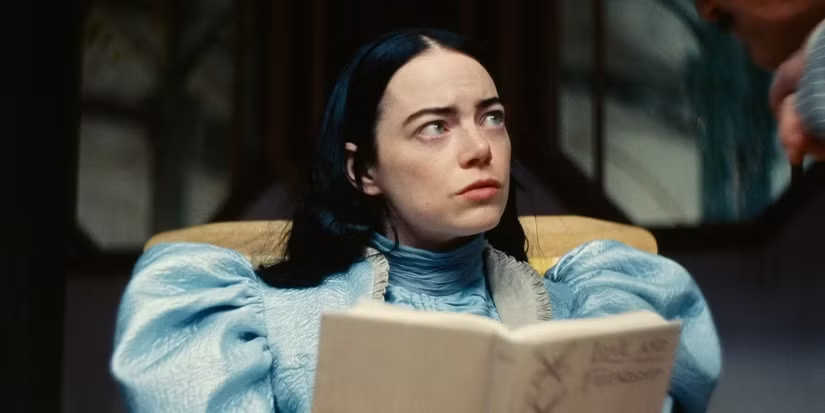
Emma Stone in ‘Poor Things’ (2023)

Bella Baxter (Emma Stone) begins Poor Things as a woman brought back to life by surgeon Godwin Baxter (Willem Dafoe) with a mind that has barely begun developing. She learns language, movement, pleasure, cruelty, money, philosophy, and independence at astonishing speed, then leaves Baxter’s London home with the spectacularly self-important Duncan Wedderburn (Mark Ruffalo) to experience the world for herself. The role therefore has an unusual problem built into it. Bella has to mature enormously without ever feeling as though the movie simply switched from one version of her to another.
That development is visible everywhere. Her early movements are stiff and poorly coordinated, her speech initially treats words like objects she has just discovered, and her curiosity has no embarrassment attached to it because society has not taught her shame yet. As Bella absorbs more of Lisbon, Alexandria, Paris, and the people around her, her physical confidence and language evolve together. Even that gloriously strange Lisbon dance feels like part of the education rather than a comic detour. The role won Stone her second Best Actress Oscar, and the achievement becomes even clearer on a rewatch when you can track how carefully Bella changes from scene to scene.
5
Olivia Colman in ‘The Favourite’ (2018)

Queen Anne (Olivia Colman) occupies the throne in The Favourite (unlike HOTD), but early eighteenth-century England is largely being managed by her close companion Sarah Churchill (Rachel Weisz) while the country fights France. Anne is ill, grieving, lonely, temperamental, and surrounded by people who understand that access to her bedroom can become political power. Abigail Masham (Emma Stone)’s arrival gives Sarah a rival for that access, turning court politics into an intimate struggle over affection, influence, and who understands the Queen well enough to survive her moods. The duck racing is absurd. The emotional stakes underneath it are vicious.
Anne could easily have become a collection of eccentricities. Instead, her neediness, cruelty, humor, physical pain, and genuine loneliness keep colliding in ways that make her difficult to reduce to one judgment. The rabbits she keeps are connected to the children she lost, so even one of the film’s strangest visual details carries private grief. Her insults can be hilarious, then a change in her face can expose how frightened she is of being abandoned. That balance is delicate, especially beside two characters constantly trying to manage her. The Academy awarded Colman Best Actress, and it remains one of those wins where the trophy feels almost secondary to how unforgettable the character became.
4
Casey Affleck in ‘Manchester by the Sea’ (2016)

Lee Chandler (Casey Affleck) has built a tiny life for himself as a janitor in Boston when his older brother dies and forces him back to Manchester-by-the-Sea. He learns that he has been named guardian of his teenage nephew Patrick Chandler (Lucas Hedges), which means staying connected to the town he deliberately left behind. Kenneth Lonergan gradually reveals why Lee cannot simply move home and resume being part of the community, turning an ordinary family responsibility into something he is emotionally unequipped to carry.
Lee spends much of the film trying to keep feeling contained inside routine. His shoulders stay tight, conversations end early, and anger arrives faster than language whenever somebody pushes too close. That restraint makes the rare moments when control slips incredibly painful. The encounter with Randi Chandler (Michelle Williams) on the street is especially hard to watch because both people clearly have more to say than either can successfully get out. Lucas Hedges’ Patrick also prevents Lee from disappearing entirely into grief, since guardianship keeps demanding groceries, hockey practices, girlfriends, and practical decisions from a man who would rather shrink his life further. The role earned Affleck the Best Actor Oscar.
3
Daniel Day-Lewis in ‘Phantom Thread’ (2017)

Reynolds Woodcock (Daniel Day-Lewis) runs an elite fashion house in 1950s London with the precision of a private kingdom. His sister Cyril Woodcock (Lesley Manville) controls the machinery around him, wealthy clients depend on his taste, and women tend to move through his personal life without disturbing the routine for long. Then he meets Alma Elson (Vicky Krieps), a waitress who becomes his model and partner and gradually refuses to behave like another temporary piece of the Woodcock system. Suddenly, breakfast can become warfare because somebody buttered toast too loudly.
Reynolds is funny partly because his seriousness is absolute. A badly prepared meal, an interruption at the wrong hour, or someone challenging his taste can offend him on a level most people reserve for betrayal. Underneath that fussiness sits real artistic discipline. Day-Lewis studied couture at London’s Victoria and Albert Museum, trained with a professional cutter, and learned enough construction technique to recreate a Balenciaga dress while preparing for the role. That knowledge is visible in the ease with which Reynolds handles fabric and discusses clothes. The pleasure of Phantom Thread grows once you realize this formidable artist has finally met someone who sees his routines clearly and has no intention of worshipping them.
2
Joaquin Phoenix in ‘The Master’ (2012)

Freddie Quell (Joaquin Phoenix) returns from World War II carrying anger, alcoholism, sexual obsession, and almost no idea how to function in ordinary civilian life. He drifts through jobs and drinks concoctions made from whatever chemicals happen to be available until he stumbles onto a yacht belonging to Lancaster Dodd (Philip Seymour Hoffman), the charismatic leader of a movement called the Cause. Dodd becomes fascinated by Freddie as both potential follower and personal experiment, while Freddie seems equally fascinated by a man who believes his chaos can be explained and controlled.
Freddie almost seems uncomfortable inside his own skeleton. His shoulders curl forward, one side of his face tightens into a permanent grimace, and his hands frequently settle around his hips as though his body has learned a defensive position his mind never consciously chose. The famous processing exercise with Dodd becomes riveting through repetition, eye contact, and the effort required for Freddie to answer without escaping into violence. Later, the jail sequence turns that same trapped energy physical as he attacks the cell around him while Dodd stands only a few feet away arguing that he can save him. Phoenix received an Oscar nomination for the role. More than a decade later, Freddie still feels less like a constructed character than a damaged human being somebody happened to catch on film.
1
Cate Blanchett in ‘Tár’ (2022)

Lydia Tár (Cate Blanchett) enters Tár with the kind of résumé that makes her sound like a real cultural institution. She is a celebrated conductor leading a major Berlin orchestra, preparing to record Mahler’s Fifth Symphony while teaching, writing, traveling, managing a foundation, and navigating relationships with musicians whose careers can be affected by her attention. Todd Field introduces her through a long public conversation before letting us see the private machinery behind that reputation. Lydia knows how to speak about herself. She also knows exactly what a room expects from someone of her stature.
That self-command makes every small disturbance fascinating. The Juilliard masterclass shows how quickly intellectual confidence can turn into domination when somebody challenges her assumptions. Orchestra rehearsals reveal another vocabulary entirely, where a hand movement or correction can communicate authority without a speech. Blanchett prepared by studying conducting, piano, and German, while the musical material was treated seriously enough for professional musicians to share the frame. As pressure starts entering Lydia’s carefully organized life, ordinary sounds and interruptions become harder for her to control, and the character who seemed capable of conducting everything around her starts looking much more vulnerable to disorder. Tár rewards a second viewing enormously. Once you know Lydia’s rhythms, you begin noticing how often she is conducting the room even when there is no orchestra in sight.


Tech46 seconds ago
Blacknut arrives on TiVo OS to expand cloud gaming options

NewsBeat3 minutes ago
Thunderstorm warning for Bolton which could lead to distruption

Business5 minutes ago
Why Imax hasn’t lured a buyer despite its box office boom





-

 Fashion7 days ago
Weekend Open Thread: Madewell – Corporette.com
-

 Crypto World3 days ago
SpaceX stock could rise 75% to $240, JPMorgan says
-

 Business6 days ago
Musk’s Tesla, SpaceX Confirm $16.8 Billion ‘Terafab’ Chip Plant as World’s Largest Building in Texas
-

 Crypto World6 days ago
anatomy of crypto’s biggest liquidation event since 2021
-

 Crypto World3 days ago
A $30 Billion AI Fund Implodes, Now the SEC Is Investigating Wall Street’s Role
-

 Politics6 days ago
6 months on, Irish renters crushed by effects of government housing bill
-

 Crypto World2 days ago
Did Trump Just Move SpaceX Stock With One Truth Social Post?
-

 Crypto World2 days ago
Warsh Jackson Hole keynote puts financial innovation first
-

 Business5 days ago
Mystery AI Model ‘Ox Alpha’ Draws Developers With Free Access as Chinese Lab Origins Remain Debated
-
 NewsBeat6 days ago
The ‘Lucky Dip Gang’ causing carnage for clicks: After five thugs were killed speeding in the wrong direction on a motorway, GUY ADAMS investigates a sick new trend… and why police aren’t even allowed to pursue them
-
 Crypto World7 days ago
Nvidia Stock Suffers Longest Losing Streak Since 2022: Will Q2 Earnings End It?
-

 Business2 days ago
Walmart takes aim at younger shoppers with new fashion brand
-

 Business4 days ago
Moderna CEO warns China is pouring state money into mRNA technology
-

 Business4 days ago
NVIDIA Stock Drops Nearly 2 Percent to $210 on Seventh Losing Day Ahead of Critical AI Earnings
-

 Tech7 days ago
Unitree’s New Superman Robot Claims to Outjump and Outrun Every Human, Usain Bolt Included
-

 Business6 days ago
Will Tesla Stock Be Higher or Lower a Year From Now? Here’s What Wall Street Analysts Are Saying
-

 Business7 days ago
UK firms in critical financial distress rise 9% to 53,756
-

 Sports5 days ago
Deshaun Watson fires back at Browns fans after being booed: ‘It’s a disrespectful thing’
-
 Crypto World4 days ago
$92 Billion Nvidia Earnings Could Make or Break the AI Trade
-
 Crypto World5 days ago
Google Gemini AI Predicts Ethereum Could Become the Trade Retail Misses in 2026
You must be logged in to post a comment Login